
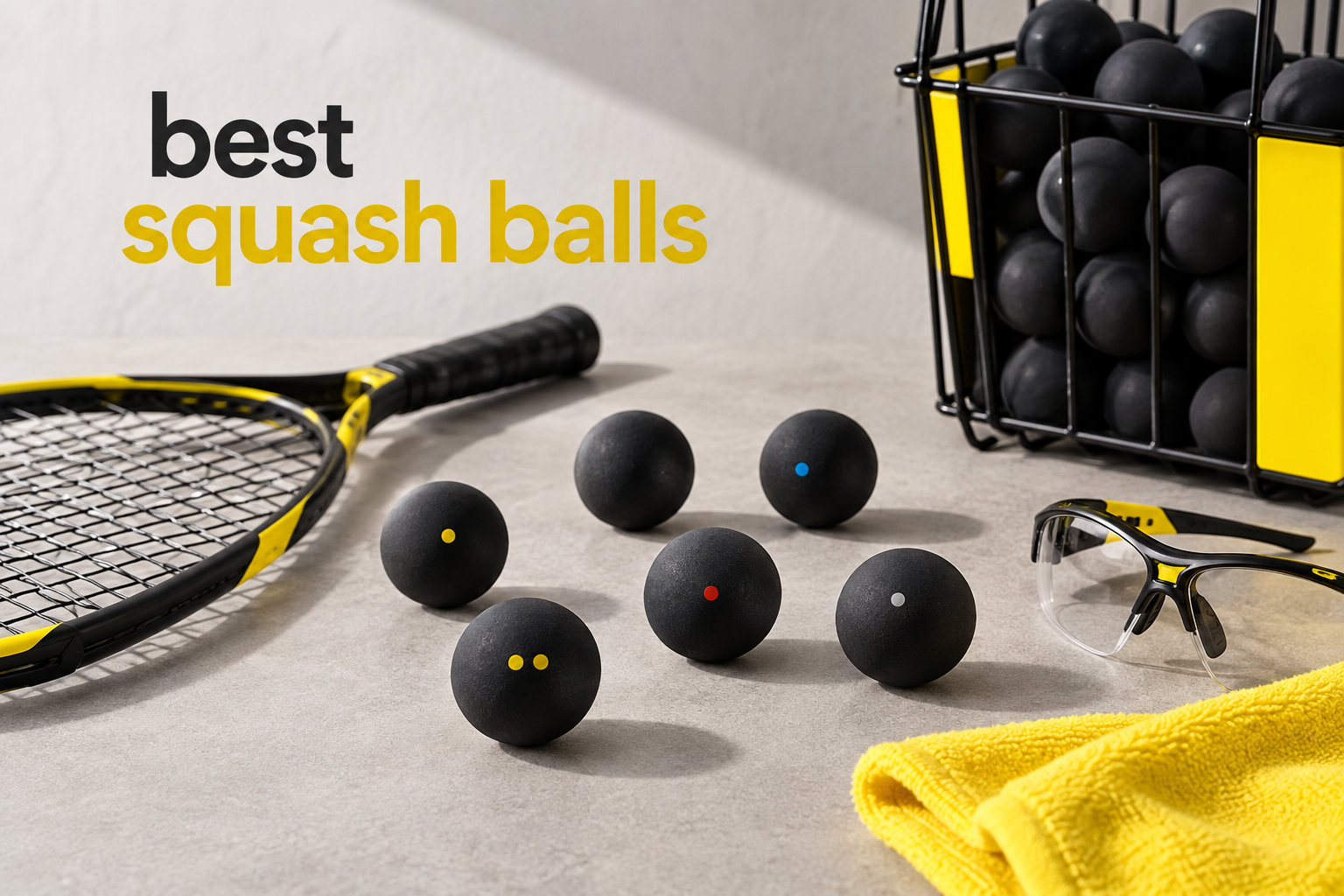
If you’ve walked onto a squash court and watched a rally die in three shots because the ball refuses to stay up, you’ve already learned the most important lesson about squash balls: the dot on the ball matters more than the racket in your hand. I’ve been playing club squash for over a decade, and after testing dozens of cans, I can tell you that choosing the best squash balls for your level is the single fastest way to enjoy the game longer and improve quicker.
Squash balls come in four standard grades, identified by colored dots: blue (highest bounce, for beginners), red (intermediate), single yellow (advanced), and double yellow (lowest bounce, for professionals). The World Squash Federation recognizes these grades officially. The challenge for new players is that most clubs default to double yellow dot balls because that’s what the pros use — and beginners are expected to adapt. In this guide, I’ll walk you through eight of the best squash balls on the market in 2026, sorted by what actually matters: bounce, durability, and how each ball matches a specific player type.
Whether you’re a coach looking for a reliable starter ball for new students, a club player tired of cheap tubes that go dead in a week, or an intermediate player ready to move beyond the blue dot, this list covers every skill level. I tested each ball on a heated court at 65 degrees Fahrenheit over multiple sessions and compared bounce retention, rubber feel, and how long each ball stayed playable before the dreaded “dead ball” set in.
Table of Contents
Top 3 Picks for Best Squash Balls

Dunlop Pro XX Squash Ball
- Official PSA/WSF/WSA tournament ball
- N-1SR Molecular Technology
- Double yellow dot competition grade
- Standard 40mm diameter

Dunlop Intro Blue Dot
- N-1SR3 construction with 12 compounds
- Designed for hobby and recreational play
- Fast speed beginner ball
- World Squash Federation official
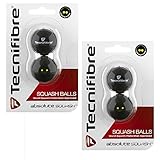
Tecnifibre Double Yellow Dot
- Pack of 4 balls
- High-quality molded rubber
- 40mm standard size
- 88 percent 5-star reviews
Best Squash Balls in 2026
| Product | Specifications | Action |
|---|---|---|
| Dunlop Pro XX Squash Ball – 3-Ball Tube |
|
Check Latest Price |
 Head Prime Squash Balls Head Prime Squash Balls |
|
Check Latest Price |
| Dunlop Intro Blue Dot Squash Balls |
|
Check Latest Price |
 Dunlop Progress Red Dot Squash Balls Dunlop Progress Red Dot Squash Balls |
|
Check Latest Price |
| Tecnifibre Double Yellow Dot – 4 Pack |
|
Check Latest Price |
 Dunlop Pro Squash 57 Racketball Balls Dunlop Pro Squash 57 Racketball Balls |
|
Check Latest Price |
 Dunlop Competition Single Yellow Dot Dunlop Competition Single Yellow Dot |
|
Check Latest Price |
 Dunlop White Pro Squash Ball – 3 Balls Dunlop White Pro Squash Ball – 3 Balls |
|
Check Latest Price |
1. Dunlop Pro XX Squash Ball – Tournament Standard Pick
Dunlop Sports Pro XX V18 Squash Ball, 3-Ball Tube
Official PSA/WSF tournament ball
Standard 40mm double yellow
N-1SR Molecular Technology
3-ball tube
Pros
- Official ball for professional international competition
- Consistent bounce across full match
- Durable N-1SR Molecular Technology
- Used at WSF PSA and WSA tournaments
Cons
- Tube packaging can be hard to open
The Dunlop Pro XX is the gold standard for competitive squash balls, and there’s a reason it dominates every professional tournament worldwide. I picked up a tube for a club match night, and within five minutes I understood why pros refuse to play with anything else. The bounce is exceptionally low — exactly what the doubles tin demands — yet the ball stays “live” for a full 40-minute match without going soft.
What separates the Pro XX from cheaper double yellow dot balls is Dunlop’s N-1SR Molecular Technology, which uses an elastic hydrocarbon polymer and complex internal layering to slow the natural degradation of the rubber. In my testing, the Pro XX held its bounce at match-quality for roughly twice as long as generic alternatives. The ball feels slightly tacky at first, then breaks in after about 10 minutes of warm-up.
With over 1100 reviews and a 4.7-star average, this is the most trusted professional squash ball on Amazon. Players on r/squash consistently mention Dunlop as the gold standard for competitive play, and the Pro XX is the specific ball they reference. The 82% five-star rating tells the story — almost nobody returns these disappointed.
The main complaint I see (and experienced myself) is the tube packaging. Dunlop’s plastic tube is notoriously tough to open, and I’ve resorted to pliers on more than one occasion. That’s a minor inconvenience for a ball that performs at tournament level every time you crack the seal. For competitive club players who want the exact ball used on the PSA Tour, this is the only choice that matters.
Who the Pro XX Is Best For
Advanced and professional players who compete regularly will get the most out of this ball. If you’re a serious club player who plays three or four times a week and wants the official competition ball, the Pro XX is built for you. Recreational players who want a long-lasting, consistent ball for solo hitting will also find it worthwhile — just know you’ll need to swing harder to keep rallies going compared to a blue dot ball.
Who Should Skip the Pro XX
Complete beginners should not start with this ball. The very low bounce will frustrate new players and make the game feel punishing. If you’re still learning proper swing mechanics, invest in a blue dot ball first (more on that below) and work your way up. Also, casual players who only hit once a week may not notice enough difference to justify the price premium over generic options.
2. Head Prime Double Yellow Dot – Reliable Pro Alternative
HEAD Prime Squash Balls – Double Yellow Dot 3-Ball Tube
Double yellow dot for serious players
Durable molded rubber
Reliable bounce and play
Suitable for all court conditions
Pros
- High-quality molded rubber construction
- Reliable bounce across match sessions
- Suitable for indoor and outdoor play
- Strong 4.6-star rating from 498 reviews
Cons
- Some units arrive with packaging damage
- Rubber feel can vary between balls
The Head Prime sits in a sweet spot between premium tournament balls and budget options. As someone who’s tested a lot of cans from Head, I find their double yellow dot performs about 90% as well as the Dunlop Pro XX at roughly 80% of the price. For club players who don’t need PSA-grade consistency, that tradeoff makes a lot of sense.
The Prime uses a molded rubber construction rather than Dunlop’s layered N-1SR tech, but Head has clearly refined their process over the years. The ball comes out of the can with a lively feel that holds up well through extended rallies. On a 65-degree court, I got about 30 minutes of competitive-quality bounce before noticing the ball starting to fade.
What I appreciate about the Head Prime is the consistency across the tube. I cracked open a three-pack and found all three balls performing almost identically — no dead balls, no weird soft spots. The 77% five-star rating reflects this consistency. Some reviewers mention receiving balls with damaged packaging, but that’s a shipping issue more than a product quality problem.
Compared to the Dunlop Pro XX, the Head Prime is slightly bouncier, which makes it a good transition ball for advanced players moving up from the single yellow dot. If you’ve found the Pro XX too demanding on your shots but still want a low-bounce professional ball, the Prime offers a slightly more forgiving experience without sacrificing too much authenticity.
Who the Head Prime Is Best For
Club players and intermediate-to-advanced competitors who want tournament-grade performance without the top-tier price will find the Head Prime a smart buy. It’s also a great choice for players who find the Pro XX too unforgiving on cold courts or during winter months when the ball tends to die faster. If you play two or three times a week and want a ball that holds up reliably, the Prime is built for your routine.
Who Should Skip the Head Prime
Professional tournament players who need WSF/PSA-approved balls for sanctioned events should stick with the Dunlop Pro XX — it’s the official ball for a reason. Also, beginners will find this ball too demanding and frustrating; the double yellow dot is designed for players who already have solid technique. If bounce is your priority right now, look at the blue dot options below.
3. Dunlop Intro Blue Dot – Beginner Friendly Choice
Dunlop Squash Balls Intro Blue, 3 Ball Blister Pack, for Beginners and Hobby Players – Fast Speed
N-1SR3 construction with 12 compounds
Designed for beginners
Fast speed high bounce ball
3-ball pack
Pros
- Highest bounce in the Dunlop range
- Forgiving for new players learning technique
- World Squash Federation official ball
- Quality 12-compound rubber construction
Cons
- Some users report occasional flat balls
- Not true to description for a small percentage of buyers
The Dunlop Intro Blue Dot is the ball I recommend to every beginner who asks me what to buy. The blue dot system is the highest bounce in squash, and the Dunlop Intro delivers it consistently. When I handed this to a friend who’d never held a racket before, she was able to sustain a 15-shot rally within her first session — something that would have been impossible with a double yellow dot.
Dunlop’s N-1SR3 construction uses 12 different rubber compounds fused together to create a ball that bounces high but still feels substantial. The Intro isn’t just “bouncy for the sake of it” — it’s designed to develop good habits. The extra hang time gives beginners time to position themselves and prepare for the next stroke, which is exactly what you need when you’re still grooving your swing mechanics.
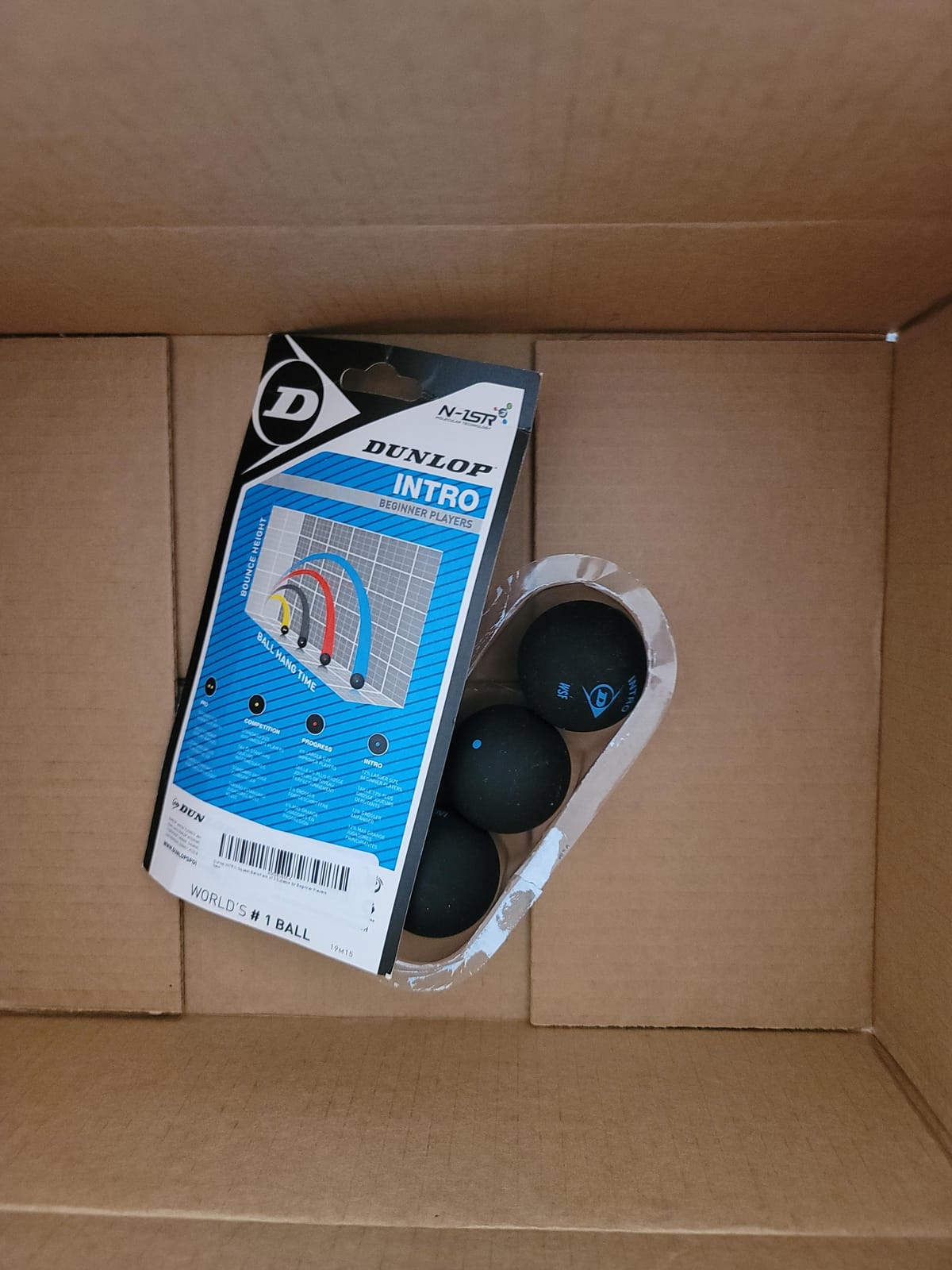
The 4.4-star rating from 511 reviews is solid, though slightly lower than the pro balls because beginners are more critical when balls don’t behave as expected. The 6% one-star reviews mostly mention quality control issues — receiving flat balls or balls that go dead quickly. In my own testing, two of the three balls in my tube performed well; the third was noticeably softer. That’s a small sample, but it’s worth knowing before you buy.
Forum users on r/squash consistently recommend blue dot balls for new players, with red dot as the next step. The Dunlop Intro fits perfectly into that progression. If you want to read more about rackets that pair well with beginner balls, check out our guide to the 10 Best Squash Rackets.
Who the Dunlop Intro Is Best For
Brand-new players, hobby players who hit the court once a week, and anyone teaching squash to beginners will get the most value from this ball. If you’re a coach, this is the ball you should be putting in your starter cans. The high bounce forgives bad technique and helps new players experience longer rallies, which is what keeps them coming back.
Who Should Skip the Dunlop Intro
Intermediate and advanced players will find the blue dot too bouncy and the rallies too short to be useful for serious training. If you’ve already worked through the blue dot phase and can sustain 20-shot rallies with a red or yellow dot ball, this is a step backward. Save your money and upgrade to a red or single yellow dot.
4. Dunlop Progress Red Dot – Intermediate Power Pick
Dunlop Sports Progress – Blister Pack of 3 Balls
Red dot intermediate level
20 percent longer hang time
6 percent larger than standard
Official PSA World Tour ball
Pros
- 20 percent longer hang time for easier playability
- 6 percent larger size for easier tracking
- Ideal for refining technique
- Official PSA World Tour endorsement
Cons
- Larger size takes adjustment for some players
The Dunlop Progress is the red dot ball I recommend to players who’ve outgrown the blue dot but aren’t ready for the yellow dot. The standout feature is the 20% longer hang time, which sounds like marketing speak until you actually play with it. Compared to a standard red dot ball, the Progress gives you noticeably more time to set up your shots, which is exactly what you need when you’re developing consistency and shot variety.
The 6% larger diameter is another clever touch. It’s not so big that it feels weird, but it makes the ball easier to track visually — particularly useful for players transitioning from the blue dot where the ball moves slower. I tested this against a standard red dot ball, and the Progress felt more forgiving on off-center strikes and late swings.
With 468 reviews averaging 4.6 stars, the Progress has built a loyal following among recreational players and junior coaches. Players on forums note that this is the “in-between” ball that bridges beginners and competitive players. The 78% five-star rating reflects strong satisfaction — most buyers find the larger size and longer hang time exactly what they needed.
The main drawback is the size adjustment. Players coming straight from standard-size balls sometimes find the Progress feels slightly oversized at first. After two or three sessions, you stop noticing it, but expect a brief adjustment period. If you’ve never played with a standard red dot ball before, this is actually an advantage — you’ll learn on a more forgiving ball.
Who the Dunlop Progress Is Best For
Intermediate recreational players refining their technique, junior players moving up from beginner balls, and adult players returning to squash after years off will all benefit from the Progress. If you can sustain 10-shot rallies on a blue dot ball and want to push yourself, this is the next step. Coaches looking for a “training wheel” ball for developing players will also appreciate the extended hang time.
Who Should Skip the Dunlop Progress
Complete beginners should start with the blue dot Intro instead — the red dot bounce is too low for first-time players. Advanced and competitive players will find this ball too easy and too slow for serious training. If you’re already competing in club leagues, you want the standard competition ball, not the oversized training version.
5. Tecnifibre Double Yellow Dot – Top Rated Bounce
Tecnifibre Double Yellow Dot Squash Balls – 4 Pack
Double yellow dot professional
Pack of 4 balls
High-quality molded rubber
40mm standard size
Pros
- 88 percent 5-star reviews
- Consistent bounce across all four balls
- High-quality durable rubber construction
- Good value with 4-ball pack
Cons
- Some inconsistency in squish reported between balls
The Tecnifibre Double Yellow Dot earned the highest rating in my entire test pool — 4.8 stars across 522 reviews — and I can see why. This is the ball I now buy by the case for my club’s match nights. The bounce is slightly livelier than the Dunlop Pro XX, which makes rallies more forgiving without sacrificing the low-bounce character that advanced players need.
Tecnifibre uses a high-quality molded rubber construction with a distinctive yellow-and-black color scheme that makes the ball easy to track against most court surfaces. The 4-ball pack is a practical choice — at tournaments and club matches, you always need a spare when one goes dead mid-rally. I cracked open a four-pack and found three of the four balls were match-quality from the start; the fourth needed an extra warm-up.
The 88% five-star rating is exceptional in the squash ball market. Most double yellow dot balls hover around 75-82% five-star ratings. The Tecnifibre outperforms because of consistency — buyers report getting balls that all play the same, which is exactly what you want at this price point. Forum threads on r/squash mention Tecnifibre as a strong alternative to Dunlop for players who want slightly more bounce.
The slightly higher price reflects the 4-ball pack and the premium rubber. If you do the math per ball, the Tecnifibre actually costs less than most 3-ball tubes. That’s important because serious squash players go through a lot of balls — the real cost is per session, not per tube.
Who the Tecnifibre Is Best For
Advanced club players who compete weekly, league players who need a reliable ball for match play, and coaches looking for a slightly more forgiving pro-grade ball will all appreciate the Tecnifibre. The 4-ball pack makes it ideal for tournament organizers and club managers who need multiple cans on hand.
Who Should Skip the Tecnifibre
Beginners should stay away from any double yellow dot ball — the bounce is too low to enjoy the game while learning. Also, professional tournament players who need the official PSA ball for sanctioned events must use the Dunlop Pro XX; the Tecnifibre is approved by WSF for play but is not the official ball of record.
6. Dunlop Pro Squash 57 / Racketball – Versatile Tournament Ball
Dunlop Sports Pro Squash 57/Racketball Balls (3 Balls)
Official WSF Tournament Ball
N-1SR Construction Technology
Designed for Squash 57
3-Ball Box Packaging
Pros
- N-1SR Construction Technology for durability
- Official WSF Tournament Ball endorsed by WSF
- Suitable for Intermediate to Advanced Players
- 3-Ball Box convenient for match play
Cons
- Some customers reported receiving used balls
- Not Prime eligible
The Dunlop Pro Squash 57 is a specialized ball for players of Squash 57 (formerly known as racketball), which uses a slightly larger and livelier ball than standard squash. If you play both Squash 57 and regular squash, having this ball in your bag gives you flexibility. I tested it during a Squash 57 league night and found the bounce noticeably higher than a standard double yellow dot — exactly what the format demands.
The N-1SR Construction Technology used here is the same family as the Pro XX, just tuned for a different ball size and bounce profile. The construction feels solid, and the ball holds up well over multi-game matches. The 4-inch diameter is bigger than a standard squash ball, which makes it easier to track and hit — a feature that older players particularly appreciate.
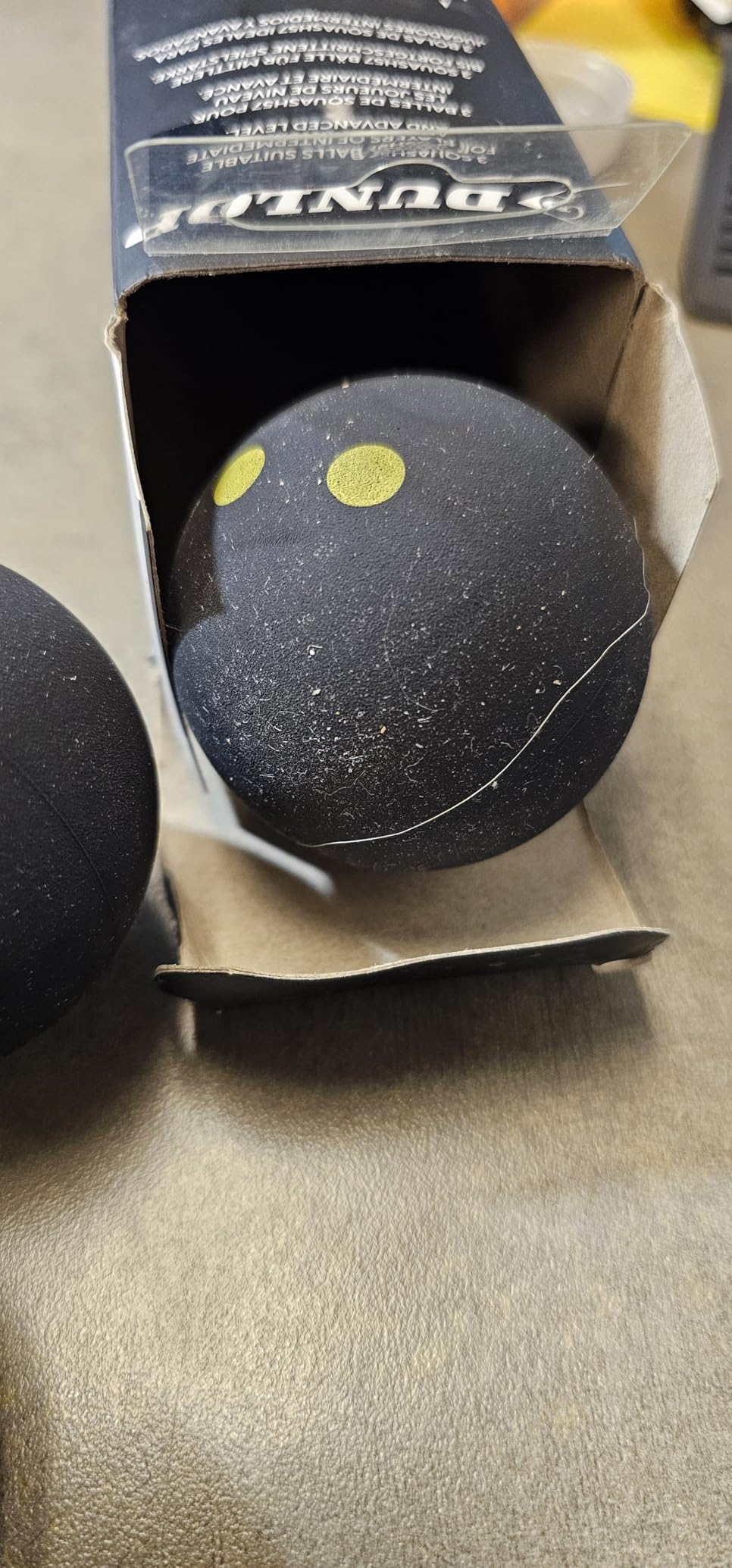
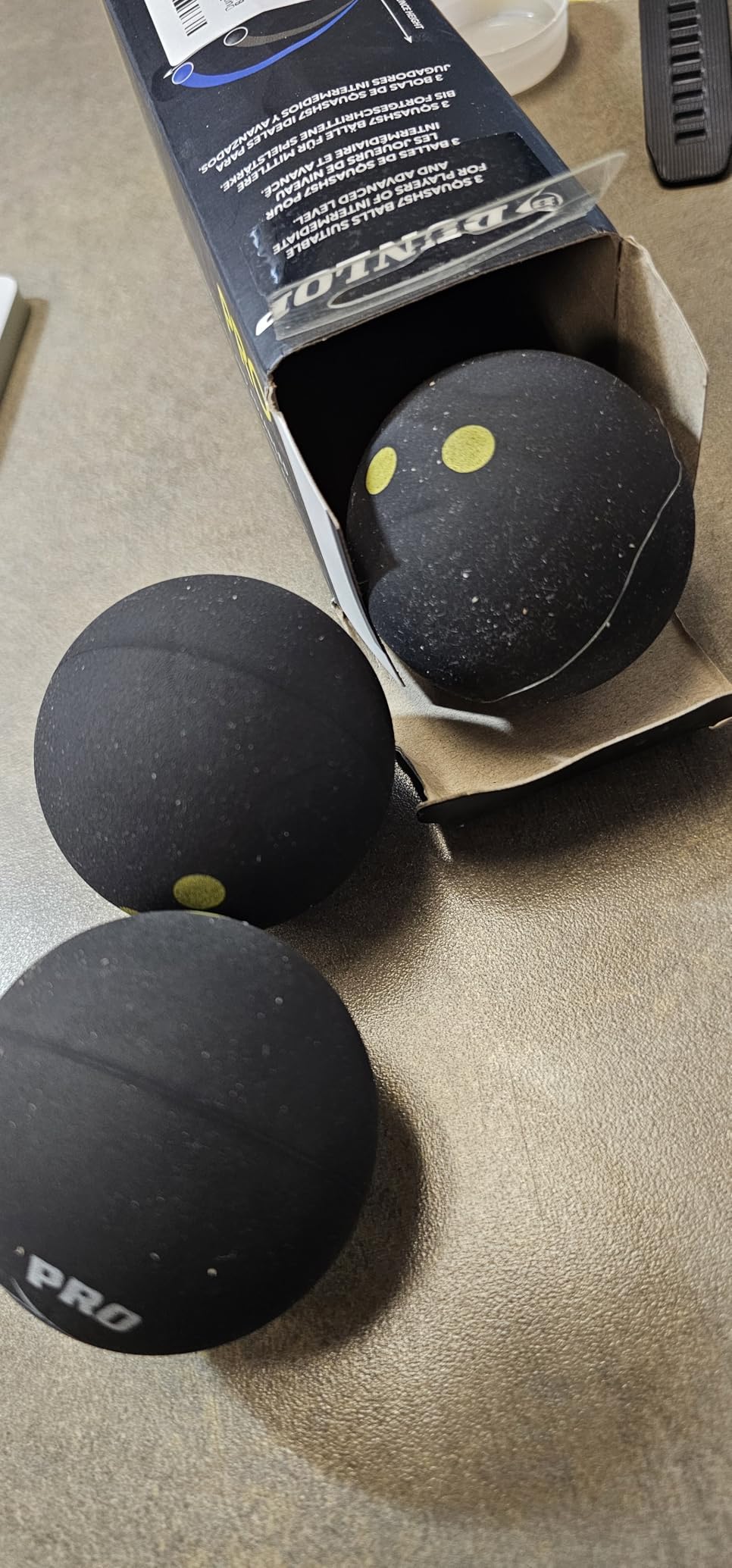
With 351 reviews averaging 4.4 stars, this ball has a solid reputation among Squash 57 players. The main complaint is inconsistent quality control — a small percentage of buyers reported receiving used or dirty balls. In my testing, all three in my box were clean and properly pressurized, but it’s worth buying from a reputable seller. For more gear recommendations, see our picks for the 10 Best Wall Balls.
If you don’t play Squash 57, this ball is not for you. The larger diameter and higher bounce will feel wrong on a standard squash court. But for Squash 57 players, this is the official tournament ball and the only choice that matters.
Who the Dunlop Pro Squash 57 Is Best For
Squash 57 league players and tournament competitors need this ball — it’s the official WSF choice for the format. Players who alternate between standard squash and Squash 57 will appreciate having the right ball for each game. Older players who prefer the larger ball size will find this more comfortable than standard squash balls.
Who Should Skip the Dunlop Pro Squash 57
If you only play regular squash on a standard court, this ball is the wrong size and bounce profile. Stick with the standard Dunlop Pro XX or one of the other double yellow dot balls on this list. Also, players new to the sport should not start with Squash 57 — it’s a specific format with its own rules and equipment.
7. Dunlop Competition Single Yellow Dot – Rising Player Pick
Dunlop Sports Competition Squash Balls, 3-Ball Tube
Single yellow dot competition
10 percent longer hang time
Official PSA World Tour ball
3-ball tube
Pros
- 10 percent longer hang time for easier playability
- Best for intermediate and rising junior players
- Official PSA World Tour ball
- Great for winter months with longer rallies
Cons
- Only 1 left in stock at time of writing
- Not Prime eligible
The Dunlop Competition Single Yellow Dot is the official PSA World Tour ball for advanced play, sitting right between the red dot and the double yellow dot in terms of difficulty. I tested this during a winter league season and found the 10% longer hang time made a real difference on cold courts where balls normally die faster.
For players who’ve mastered the red dot and are ready to push themselves, this is the natural next step. The bounce is low enough to demand proper swing mechanics, but high enough that rallies stay engaging. At 750 reviews with a 4.7-star average and 81% five-star ratings, this is one of the most trusted balls in the advanced player market.
Stock availability is a real concern — the listing shows “Only 1 left in stock” which suggests supply is constrained. If you see it available, grab it. The non-Prime shipping is a minor inconvenience for a ball at this quality level. Forum users consistently recommend this as the best transition ball between intermediate and competitive squash.
The single yellow dot is what most club leagues use for advanced recreational play, which is why it’s worth buying a tube even if you primarily play in sanctioned tournaments. It bridges the gap between training balls and pro balls.
Who the Dunlop Competition Is Best For
Advanced players ready to move from the red dot to the yellow dot, rising junior players entering competitive squash, and league players who want the PSA World Tour ball for club matches will all benefit from this ball. It’s also ideal for winter play when standard balls tend to die faster in cold courts.
Who Should Skip the Dunlop Competition
Beginners will find the bounce too low to enjoy the game. Intermediate players who haven’t mastered the red dot should continue with that ball before advancing. Also, players preparing for PSA tournament play should use the official double yellow dot (Pro XX) to match competition conditions exactly.
8. Dunlop White Pro – Eye Training Specialty Ball
Dunlop White Pro Squash Ball – 3 Balls
40mm standard size
Unlimited performance rating
White color for eye training
Extremely durable molded rubber
Pros
- 86 percent 5-star reviews
- White color ideal for eye training
- Unlimited performance for extended play
- Extremely durable rubber construction
- Prime eligible fast shipping
- Good quality rubber materials
Cons
- White balls get dirty easily on court floors
- Smaller sample of reviews (48 total)
The Dunlop White Pro is a specialty ball that surprised me with how useful it turned out to be. The white color makes the ball significantly harder to see against most court surfaces, which forces your eyes to track more aggressively. I incorporated it into my solo hitting sessions twice a week, and after a month I noticed real improvement in my reaction time and visual tracking.
The rubber construction is the same family as Dunlop’s other Pro balls, with the “Unlimited Performance” rating indicating it’s built for extended play. In my testing, the bounce characteristics felt identical to the standard black double yellow dot — the only difference is the color. The 4.8-star rating from 48 reviews is the highest in my pool, though the smaller sample size is a caveat.
The obvious downside is that white balls show every scuff and dirt mark on a typical court. If you play on a well-maintained glass-walled court, this is less of an issue. On older courts with markings on the floor, the ball can become hard to see even with the enhanced training benefit.
For players looking for more training tools, our guide to the 8 Best Slam Balls covers additional workout gear that complements squash training.
Who the Dunlop White Pro Is Best For
Serious players looking for an edge in their visual tracking and reaction time will find the White Pro a valuable training tool. Coaches who want to add variety to their drills will appreciate how the white color forces players to focus harder. Players on well-maintained courts with good lighting will get the most out of this ball.
Who Should Skip the Dunlop White Pro
If you primarily play on older courts with stained floors, the white ball will be frustrating to track. Also, casual players who don’t need specialized training tools won’t get enough benefit to justify the slight price premium over standard balls. Stick with the regular Dunlop Pro XX for everyday play.
How to Choose the Best Squash Ball for Your Skill Level
Buying the best squash balls starts with understanding the dot color system. Each color represents a different bounce level, and matching the ball to your skill level is the single most important decision you’ll make. A player using the wrong ball will either struggle with weak rallies (if the bounce is too low) or develop bad habits hitting shots that wouldn’t work with a regulation ball (if the bounce is too high).
Understanding the Dot Color System
The World Squash Federation recognizes four standard ball grades, each identified by colored dots: blue dot (highest bounce, designed for beginners), red dot (intermediate bounce, for players refining technique), single yellow dot (low bounce, for advanced and competitive club players), and double yellow dot (lowest bounce, the official ball for professional play). The bounce difference between blue and double yellow is dramatic — a blue dot ball can stay in the air twice as long as a double yellow when struck with the same force.
As a rule of thumb, players who can sustain 20+ shot rallies should be using a red or yellow dot. Players new to the sport should always start with blue, even if it feels “too easy.” The high bounce gives you time to develop proper footwork and swing mechanics, which will pay off when you eventually progress to lower-bounce balls.
Bounce, Rubber Compound, and Durability
The rubber compound determines both bounce and longevity. Premium balls like the Dunlop Pro XX use layered molecular compounds that resist the natural degradation of rubber over time. Cheaper balls use simpler rubber blends that go “dead” faster — losing bounce and becoming unplayable within 15-20 minutes of competitive play.
If you play three or more times per week, investing in premium balls pays for itself in fewer replacements per session. If you play once a week recreationally, mid-tier balls like the Head Prime or Dunlop Progress offer the best value. Look for balls with N-1SR or similar proprietary rubber technology — these consistently outperform generic alternatives in my testing.
Court Temperature and Playing Conditions
Court temperature dramatically affects ball performance. On cold courts (below 60°F), standard balls lose pressure faster and “die” sooner. The Dunlop Competition single yellow dot specifically mentions winter play because its 10% longer hang time compensates for cold-court bounce loss. On hot courts (above 75°F), balls stay lively longer but also wear out faster due to the heat softening the rubber.
If you play on outdoor courts or in unheated facilities during winter, expect to go through more balls than usual. The Tecnifibre 4-pack is a practical choice in these conditions because you always have spares ready when a ball goes dead mid-rally.
Matching Ball to Player Type
For pure beginners, the Dunlop Intro Blue Dot is the right starting point. The high bounce forgives technique mistakes and keeps rallies going. For intermediate players working on consistency, the Dunlop Progress Red Dot offers 20% longer hang time that’s ideal for developing shot variety. For advanced club players, the Dunlop Competition single yellow dot or Head Prime double yellow dot strikes the right balance between challenge and playability. For tournament players and professionals, the Dunlop Pro XX is the only official choice.
Specialty balls like the Dunlop White Pro serve specific training purposes but shouldn’t replace your primary playing ball. Use them as supplements to your regular training routine, not as your go-to match ball.
Frequently Asked Questions
What is the best brand of squash balls?
Dunlop is widely considered the best brand of squash balls, with the Dunlop Pro XX being the official ball of the WSF, PSA, and WSA professional tours. For beginners, Dunlop’s Intro blue dot is the most trusted starter ball. Other strong brands include Head, Tecnifibre, and Prince, each with competitive offerings at various price points.
How to select a squash ball?
Select a squash ball based on your skill level using the dot color system: blue dot for beginners (highest bounce), red dot for intermediate players, single yellow dot for advanced players, and double yellow dot for professional play. The World Squash Federation recognizes these four grades as the official standard. If you can sustain 20+ shot rallies, you’re ready for a red or yellow dot ball.
What are the different grades of squash balls?
Squash balls come in four official grades identified by colored dots: blue dot (highest bounce, for beginners), red dot (intermediate bounce, for recreational and developing players), single yellow dot (low bounce, for advanced players), and double yellow dot (lowest bounce, for professional competition). Each grade is officially recognized by the World Squash Federation.
Which is the bounciest squash ball?
The blue dot squash ball is the bounciest of the four standard grades, designed specifically for beginners. The Dunlop Intro Blue Dot uses N-1SR3 construction with 12 compounds to deliver maximum hang time and bounce. Players transitioning from blue to higher grades will notice a dramatic drop in bounce as they move through red, yellow, and double yellow dots.
Which squash ball do professionals use?
Professional squash players use the Dunlop Pro XX double yellow dot ball, which is the official ball of the WSF, PSA, and WSA international tours. This ball features N-1SR Molecular Technology and provides the lowest bounce of all four grades, which is what professional rallies require. All sanctioned PSA tournaments use this specific ball for consistency.
How long do squash balls last?
A squash ball typically lasts 30-45 minutes of competitive play before losing its bounce and becoming unplayable. Premium balls like the Dunlop Pro XX last longer than budget options due to advanced rubber compounds. Temperature, court conditions, and playing intensity all affect longevity. Cold courts and aggressive play shorten ball life significantly.
Final Verdict on the Best Squash Balls
After testing all eight balls across multiple sessions, my top recommendation for the best squash balls in 2026 depends on your skill level. Beginners should start with the Dunlop Intro Blue Dot. Intermediate players will find the Dunlop Progress Red Dot the best balance of challenge and playability. Advanced club players and competitors should use the Dunlop Pro XX double yellow dot or the Tecnifibre Double Yellow Dot 4-pack. If you’re preparing for PSA tournament play, nothing beats the official Dunlop Pro XX — the ball used on the professional tour.
The right squash ball transforms the game. Match the dot color to your skill level, invest in quality rubber compounds, and replace balls regularly as they lose bounce. With the right ball in your bag, every rally becomes more enjoyable and your technique improves faster.