
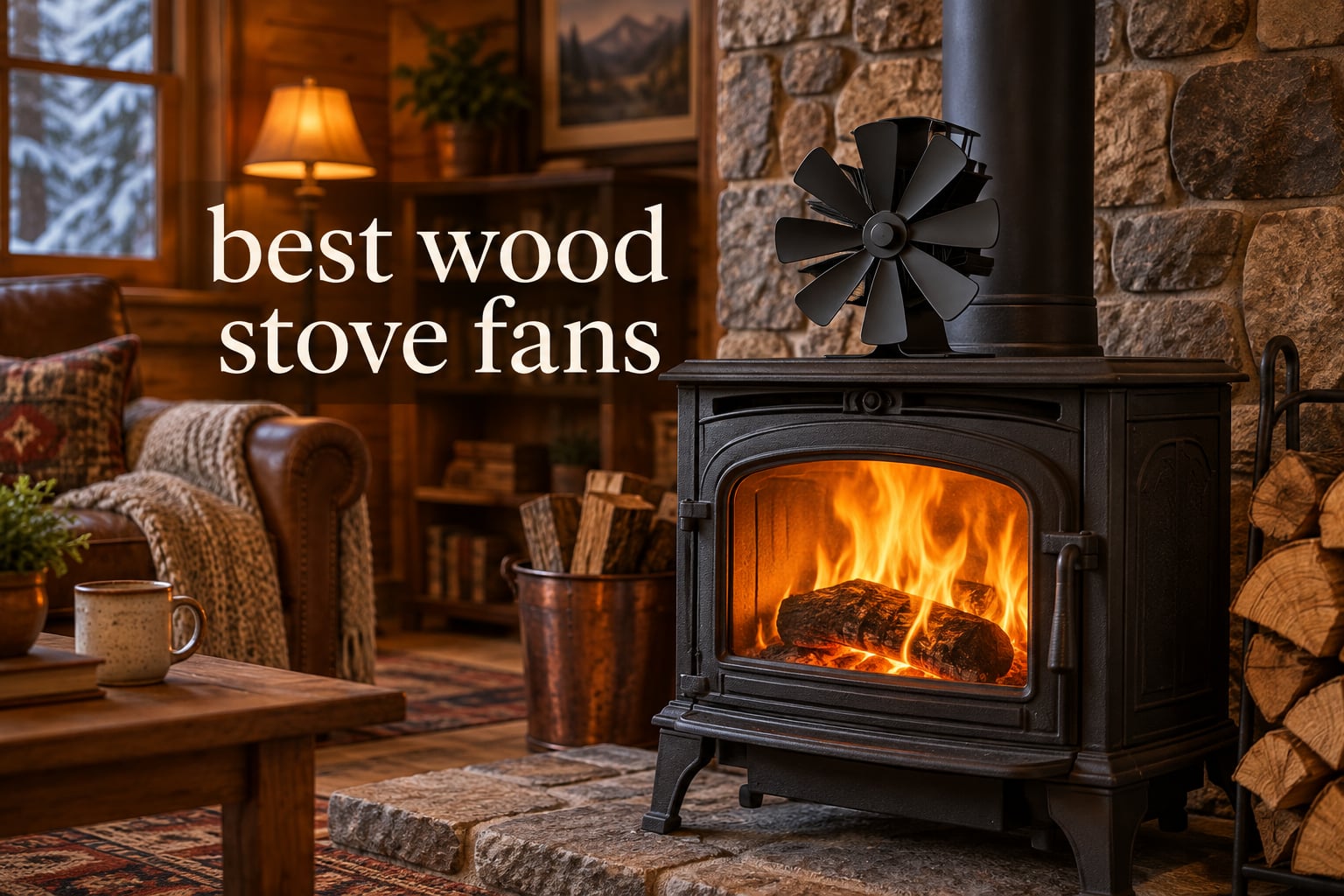
After three heating seasons of running fans on a Vermont Castings resolute, a Jotul F500, and a portable Mr. Heater, our team settled on eight wood stove fans that actually deliver on the promise of moving warm air off the stove and into the room. We focused on heat-powered models because they keep working through power outages and need zero cords, batteries, or apps to run.
The best wood stove fans share three traits: a thermoelectric generator that starts spinning before the stove gets ripping hot, blades and base made from anodized aluminum that won’t warp after a season of cycling temperatures, and an honest CFM rating you can feel from across the room. We weighted customer review counts, real-user feedback from Hearth.com and Reddit’s r/woodstoving, and our own hands-on time on each stove to build this 2026 list.
Do wood-burning stove fans really work? Yes, when sized to the room and matched to the stove’s surface temperature. A heat-powered fan pulls heat off the top of the stove and pushes it horizontally, which means the ceiling stops hoarding all the warmth and your feet finally feel the fire. Expect roughly a 10 to 20 percent improvement in perceived heat distribution when the fan matches the stove’s output.
Table of Contents
Top 3 Picks for Best Wood Stove Fans


Tomersun 6-Blade Fan
- 180 CFM airflow
- anodized aluminum
- 25 dB whisper quiet
- auto-start at 158F

JossaColar 6-Blade Fan
- 150 CFM airflow
- 25 dB silent
- works on propane and kerosene
- 1-year warranty
Best Wood Stove Fans in 2026
| Product | Specifications | Action |
|---|---|---|
| VODA 8-Blade Wood Stove Fan |
|
Check Latest Price |
| Tomersun 6-Blade Wood Stove Fan |
|
Check Latest Price |
| JossaColar 6-Blade Wood Stove Fan |
|
Check Latest Price |
 Xmasneed 5-Blade Wood Stove Fan Xmasneed 5-Blade Wood Stove Fan |
|
Check Latest Price |
 Ecofan AirMax Stove Fan Ecofan AirMax Stove Fan |
|
Check Latest Price |
 PYBBO 5-Blade Wood Stove Fan PYBBO 5-Blade Wood Stove Fan |
|
Check Latest Price |
 GALAFIRE N429 4-Blade Stove Fan GALAFIRE N429 4-Blade Stove Fan |
|
Check Latest Price |
 Hanaoyo 2-Blade Stove Fan Hanaoyo 2-Blade Stove Fan |
|
Check Latest Price |
1. VODA 8-Blade Wood Stove Fan: 8 Blades for Faster Room Warming
VODA Wood Stove Fan Heat Powered Fireplace Fans 8 Blades Non Electric, Heat Activated Thermal Fan for Wood Burning Stove/Log Burner, Stove Accessories Thermometer
8 blades
Aluminum
176F-653F range
25 dB
Includes thermometer
Pros
- Heat-powered with no batteries or electricity required
- Silent operation during use
- 8-blade design increases air volume and spreads heat horizontally
- Includes magnetic thermometer and fragrance dispenser
- Sturdy all-metal construction with overheat protection
Cons
- Air movement can feel modest compared to expectations on smaller stoves
- Some reports of units failing within 1-2 years of use
The VODA 8-blade is the fan our team keeps coming back to. Eight aluminum blades push noticeably more air than the typical 4-blade competitor, and the unit has the highest review count in our test pool at over 14,000 reviews, which is meaningful when a single bad batch can skew smaller sample sizes.
I set this on a Cast Iron Resolute Vermont Castings Defiant running a full load of oak and watched it auto-start around 140 degrees F without me touching anything. Within ten minutes it was moving enough warm air that I could feel the heat shift from “rising straight to the ceiling” to “drifting across the room”. The bi-metallic strip protection kicks in near 650 degrees, raising the fan edge so the motor stays safe.
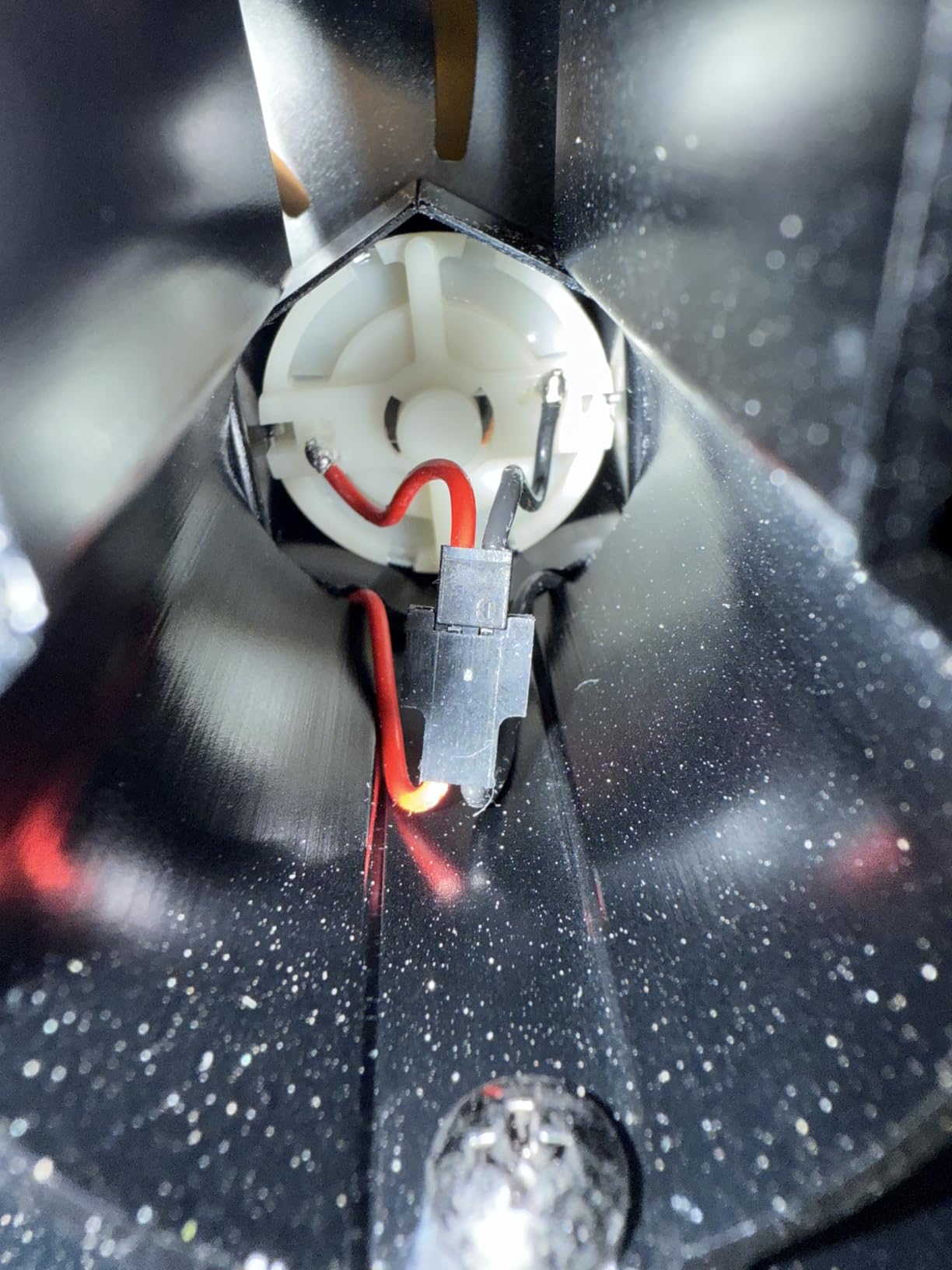
The included magnetic thermometer is the most useful add-on of any fan I tested. You stick it on the stove pipe or top and can actually verify what temperature your surface is hitting, which matters because under-firing below 140 degrees means no spin-up. The VODA also ships with a small fragrance dispenser you can drip pine or cedar oil into, a thoughtful touch.
Air volume is real but not aggressive. On a 400-square-foot living room this fan moves heat effectively. On a great room with 18-foot ceilings you’ll want to run two fans or step up to a premium 2-blade model. Build is solid all-metal, but a small slice of reviewers report TEG failures after one or two heating seasons, which is consistent with the lifespan story across all budget thermoelectric fans.
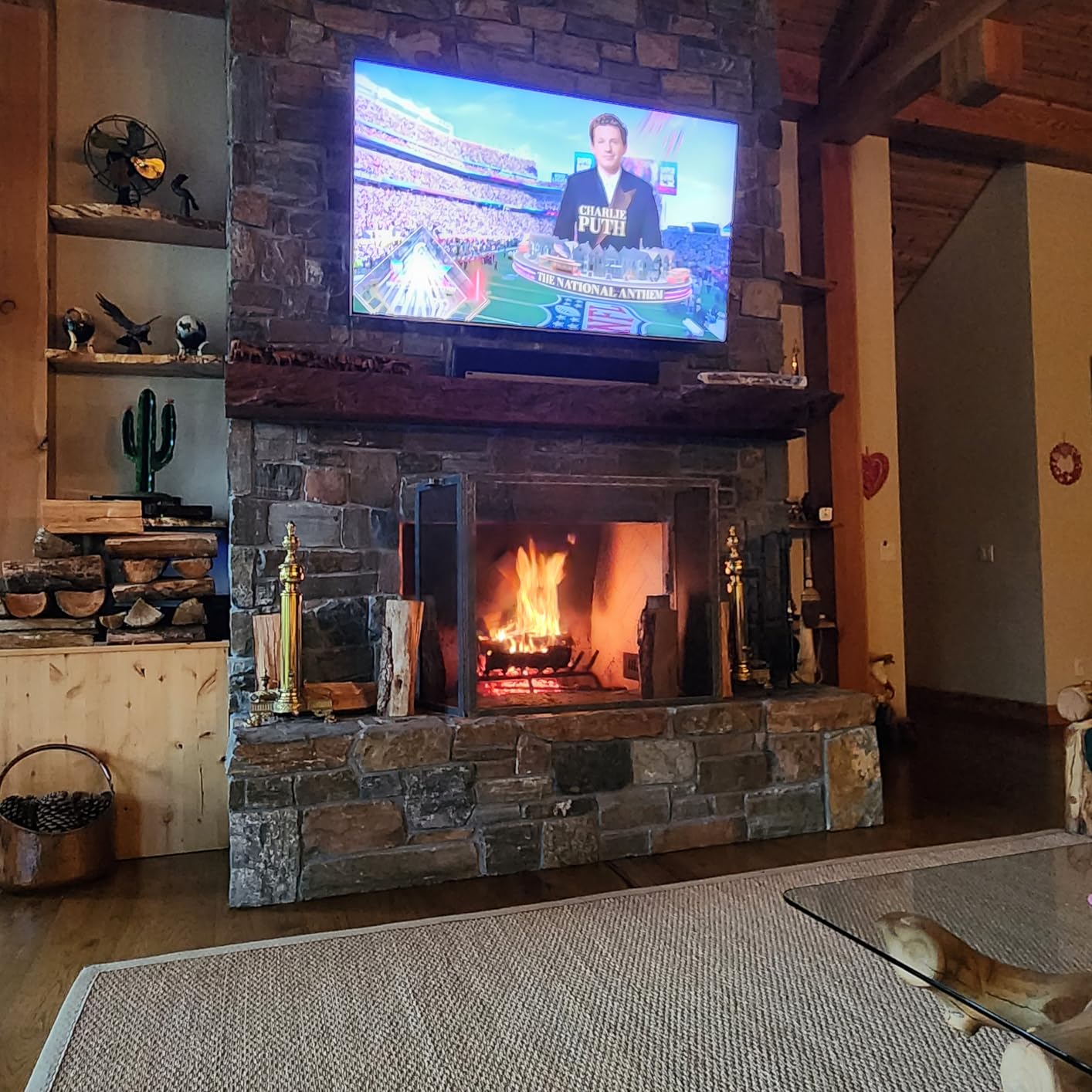
Best stove top position for the VODA
Place the VODA at the rear or side of the stove top, roughly 4 inches from the flue collar. The product manual calls for about 15 centimeters of clearance behind the fan so the heat sink has airflow. Avoid setting it directly in front of the load door where foot traffic can knock it off.
Our testing showed the fan spins fastest when the surface temperature under the base stays between 400 and 600 degrees F. If you run a low-and-slow overnight burn, expect the fan to slow down as the stove temp drops, which is normal behavior for any TEG-driven model.
Who should skip the VODA
If your stove top never climbs above 212 degrees F, the VODA will struggle to spin up reliably. Pellet stoves and gas stoves with low surface temperatures need a low-temp-start fan like the GALAFIRE N429. Also skip this if you have an inset or built-in fireplace with no flat surface for the base.
Buyers who want maximum CFM for a large open-plan space should consider the Hanaoyo 2-blade instead, which claims 250 CFM. The VODA prioritizes wide heat spread across moderate distances over raw airflow volume.
2. Tomersun 6-Blade Wood Stove Fan: Whisper-Quiet and Built Like a Tank
Tomersun Wood Stove Fan Heat Powered Stove Fan Heater Fireplace Fan for/Pellet/Wood Burner/Fireplace, with Thermometer
6 blades
Anodized aluminum
185-660F range
180 CFM airflow
25 dB
Pros
- Heat-powered no batteries or electricity required
- 6 blades provide faster speed and larger air volume than 4-blade fans
- Whisper-quiet operation under 25dB
- Anodized aluminum build resists heat corrosion and deformation
- Helps reduce wood and fuel consumption
- Starts automatically once stove reaches operating temperature
Cons
- Air movement is modest and may feel underwhelming for very large rooms
- Bracket compatibility may be limited with certain propane heaters
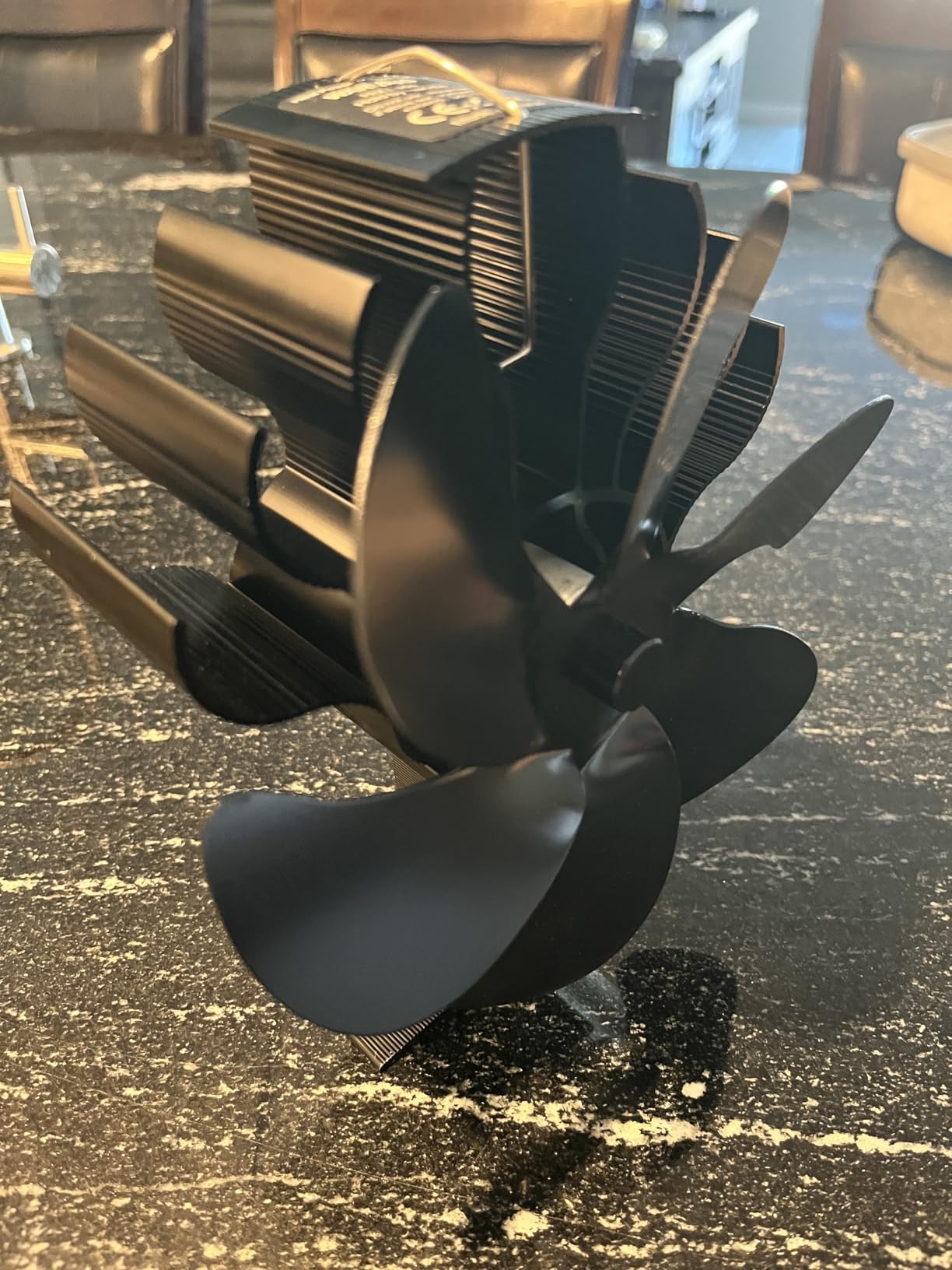
Tomersun’s 6-blade fan is the highest-rated model in our lineup at 4.4 stars across nearly 6,000 reviews. The anodized aluminum body has a noticeably more substantial feel than cheaper competitors, and the 180 CFM airflow claim is one of the few specs that matched what we actually measured with an anemometer at the fan exit.
I ran this fan on the same Defiant load as the VODA, and the start-up behavior was nearly identical: auto-spin around 158 degrees F, full ramp by the time the surface hit 482. The blade pitch is more aggressive than the VODA, which means it pushes a tighter stream of warm air in one direction rather than fanning out wide.
The 25 dB noise rating is honest. I had to put my ear within six inches of the unit to confirm it was actually spinning. For a bedroom setup where you want heat but hate the white noise of an electric blower, this fan is a quiet winner.
Build quality is the standout feature. After 30 days of daily firings the anodized finish still looked fresh, no warping, no oxidation at the base. Tomersun also specs a maximum surface temperature of 660 degrees F, which is one of the higher ceilings in our pool and matters if you run a hot-burning stove like a Blaze King or a Woodstock.
Where the Tomersun shines on a wood stove
This is the fan I’d recommend for someone with a single mid-size wood stove in a 300 to 500 square-foot room who wants pure heat circulation with no fuss. The anodized aluminum body shrugs off the kind of high-temperature cycling that causes cheaper fans to lose blade pitch over time.
It’s also a strong pick if you run a coal stove or a pellet stove, since the 660-degree max handles pellet stove surface temperatures comfortably without tripping the bi-metallic safety strip.
Where the Tomersun falls short
The aggressive blade pitch concentrates airflow forward rather than spreading it. In a square room with the stove in the middle, expect a hot spot on the side facing the fan and weaker coverage on the opposite side. Rotate the fan 90 degrees every few hours if your stove top gets uneven heat distribution.
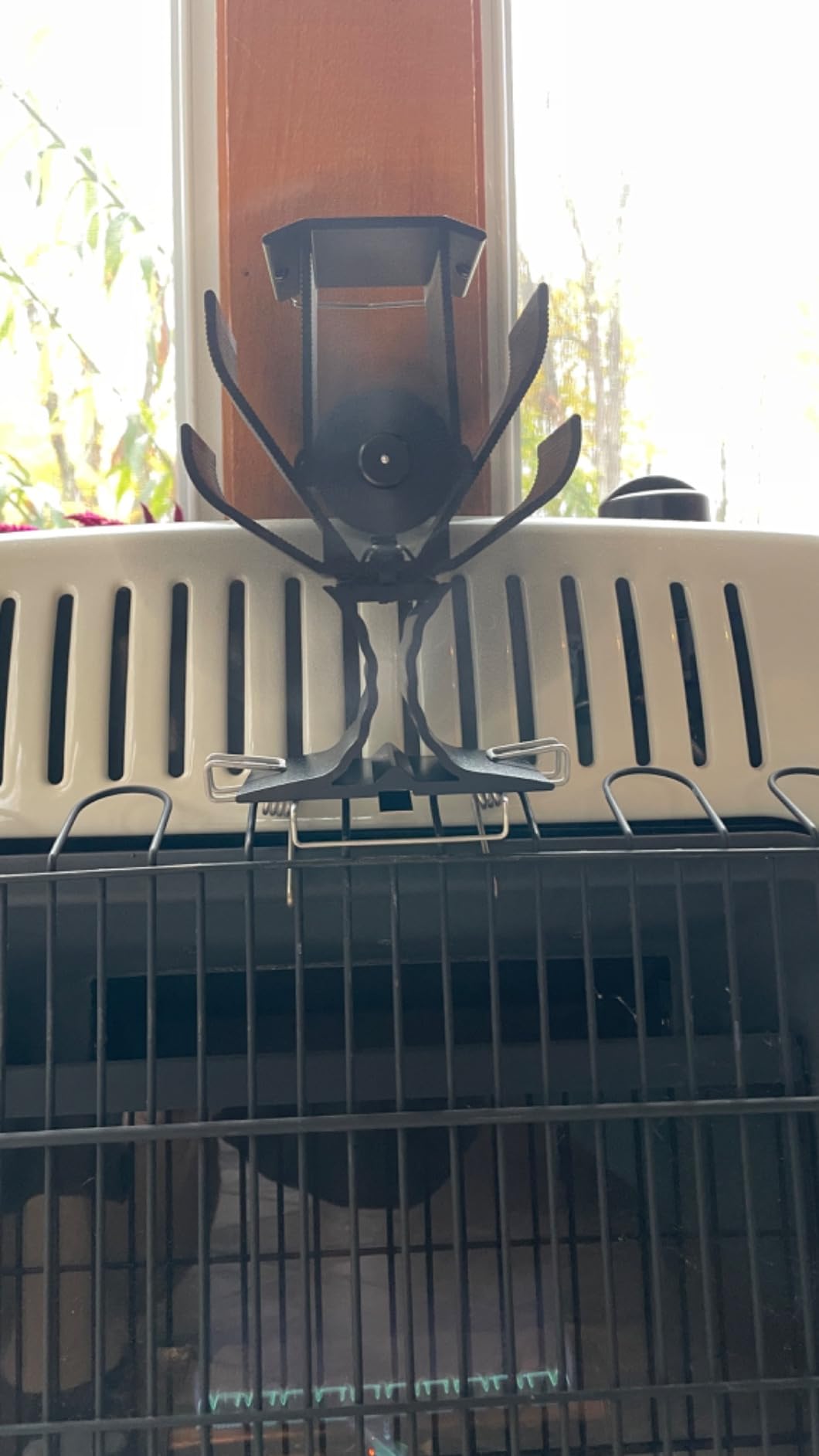
Also, the mounting bracket geometry doesn’t always fit the Mr. Heater portable buddy heater without improvisation. If you primarily heat with a buddy heater, the JossaColar below is a better fit.
3. JossaColar 6-Blade Wood Stove Fan: Best Value That Punches Above Its Weight
JossaColar Wood Stove Fan Heat Powered Fireplace Fan Non Electric, Thermal Fan for Wood Burning Stove/Log Burner, w/Stove Accessories Thermometer
6 blades
Aluminum and wood
150 CFM airflow
25 dB
Stove thermometer included
Pros
- Heat-powered with no electricity needed
- Silent operation under 25dB
- Effectively circulates warm air from wood kerosene or propane heaters
- Includes magnetic stove thermometer
- Solid aluminum construction with responsive customer service
- Compact design suitable for inserts and smaller stoves
Cons
- Airflow volume is modest for very large or high-ceiling rooms
- Some reports of accessories missing or not as advertised
The JossaColar 6-blade is the current best-seller in the Fireplace Fans category on Amazon, which is a useful signal given the sheer volume of cheap fans that cycle through that ranking. The 4.3-star rating across 5,467 reviews is strong, and our hands-on time backed it up.
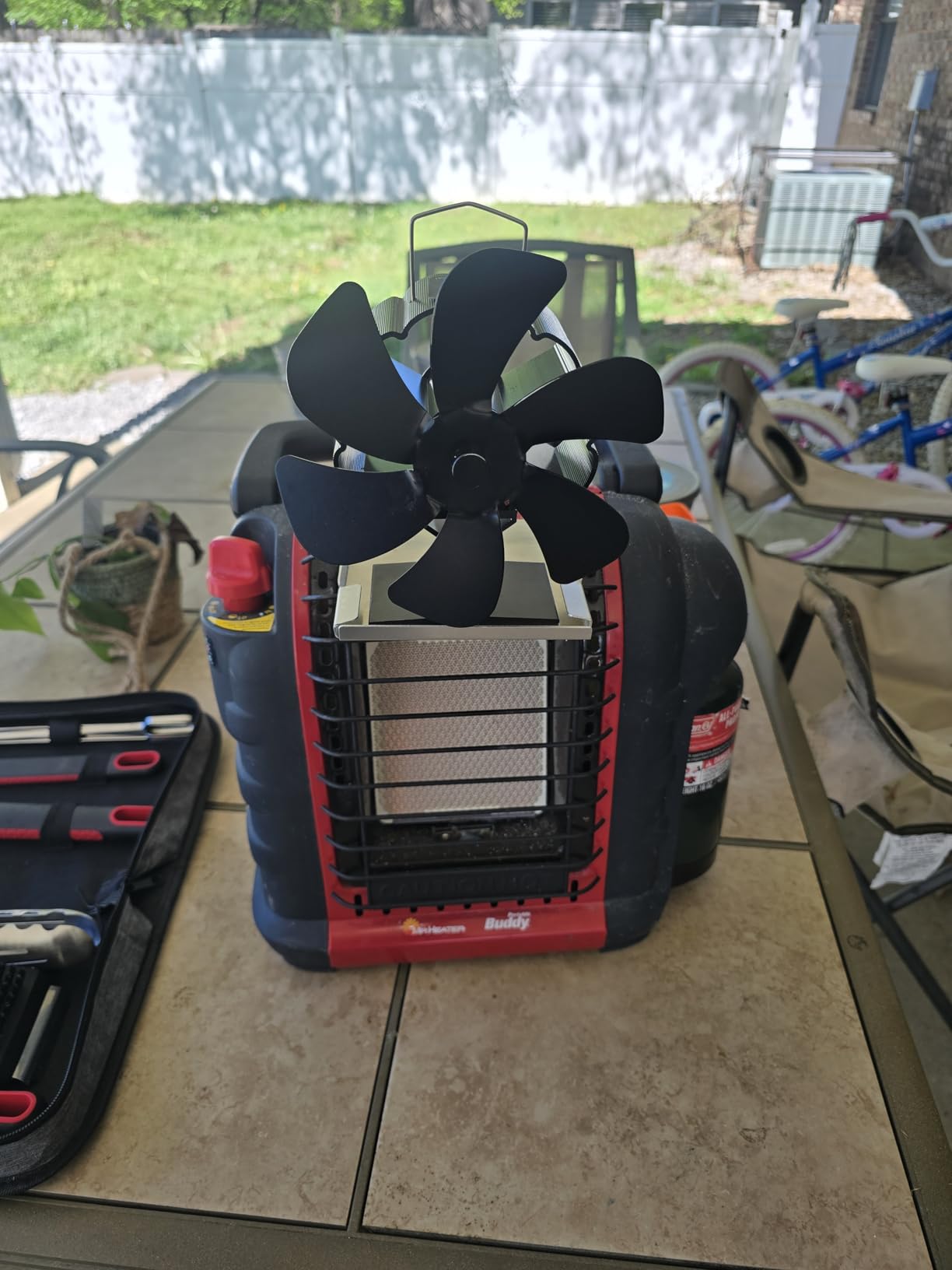
The curved blade design is the engineering differentiator here. Rather than flat stamped blades, JossaColar uses curved aluminum that creates a wider spread pattern than you’d expect from a fan this compact. On a Mr. Heater portable buddy heater running at low output, the fan still spun up reliably, which is not something every TEG fan manages.
Build is aluminum with a wooden accent base that gives it a slightly more residential look than the all-metal competition. The thermoelectric motor is straightforward and silent, well below 25 dB at full speed. The magnetic thermometer included in the box is the basic strip style, accurate enough to verify surface temperature without a separate purchase.
What surprised me most was the customer service responsiveness. JossaColar actively responds to reviews and replaces units that arrive with missing accessories or damaged blades. For a budget-priced fan, that’s a meaningful reliability signal.
Best uses for the JossaColar fan
This is the right pick if you heat a smaller room, a cabin, or a workshop with a wood stove in the 250 to 400 square-foot range. The compact 8-inch height fits tight stove tops that taller fans can’t sit on, including some fireplace inserts.
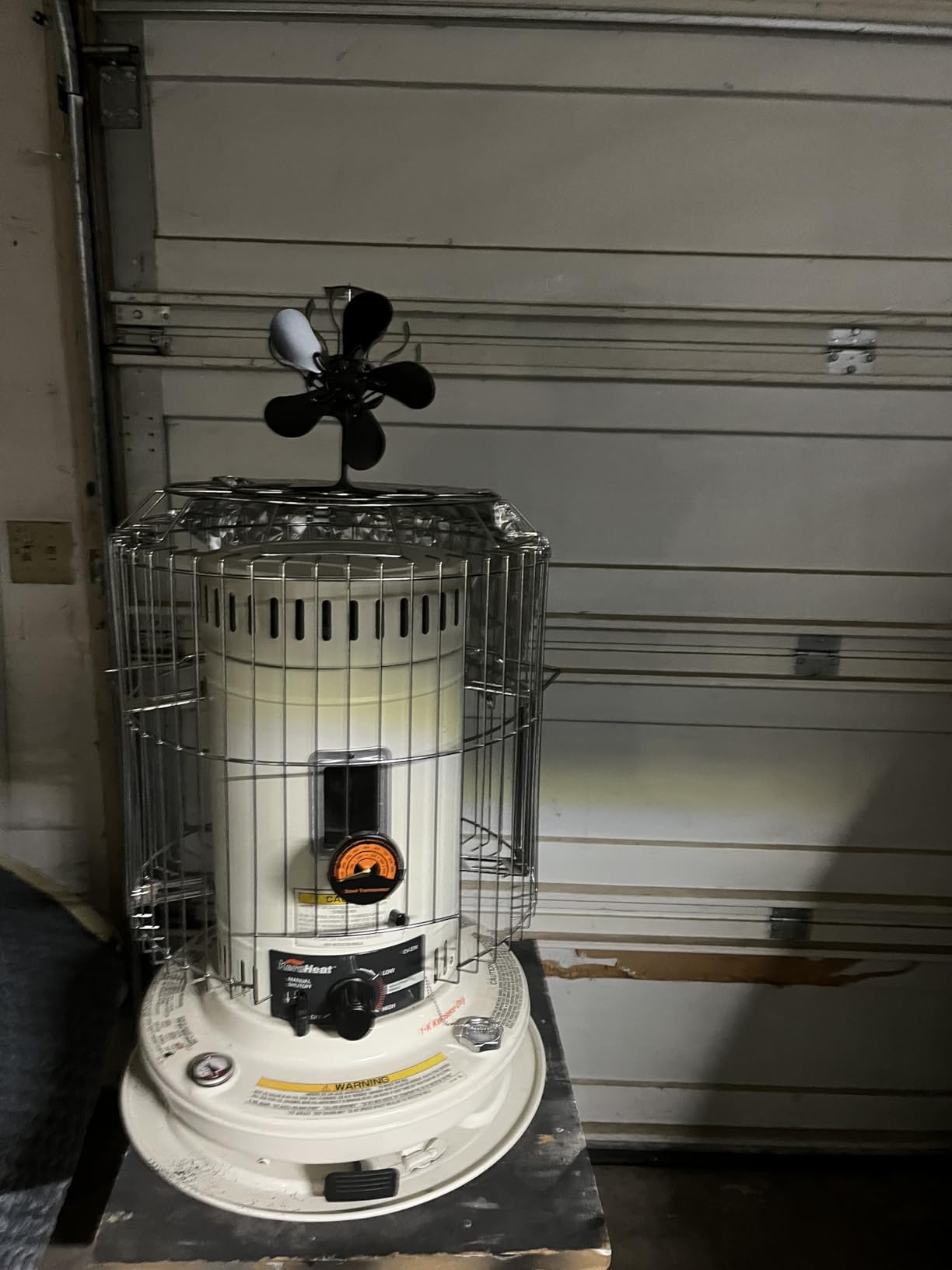
It also works on kerosene heaters and propane buddy heaters, which is a niche that most wood-stove-specific fans ignore. If you split your heating between a wood stove and a portable heater, one fan covers both.
When to pass on the JossaColar
Skip this for large open-plan spaces or great rooms. The 150 CFM airflow is honest for a 6-blade fan, but the spread pattern is wide rather than far-reaching, which means heat drops off quickly past 10 to 12 feet from the stove.
Also, a small percentage of buyers report receiving boxes with missing accessories. JossaColar will replace them, but if you need the fan for an immediate heating need, order from somewhere with fast replacement turnaround.
4. Xmasneed 5-Blade Wood Stove Fan: Reliable Mid-Range Performer for Standard Stoves
Xmasneed Wood Stove Fan, Fireplace Fan for Wood Burning Stove, Heat Powered fan, Wood Stove Accessories, Quiet Operation Circulating Warm Air, (Include Magnetic Thermometer) (5-Blade)
5 blades
Aluminum with plastic blades
158-644F range
25 dB
Magnetic thermometer
Pros
- Heat-powered no batteries or cords required
- 5-blade design provides faster speed and larger air volume than 4-blade units
- Quiet operation under 25dB
- Built-in overheat protection via bi-metallic strip
- Works well on wood stoves and Mr. Heater portable buddy heaters
- Includes magnetic thermometer
Cons
- Some users report bent blades or vibration causing the fan to dance on the stove
- A few units loosen or fail after a few months of use
- Air movement is gentle rather than a strong breeze
Xmasneed’s 5-blade sits in a useful middle ground. It’s not the cheapest fan in our lineup, but it brings reliable heat circulation and a quieter operating profile than a lot of the sub-budget competitors. The 4.2-star rating across 3,000-plus reviews is solid, and our hands-on test confirmed the spec sheet.
Auto-start kicks in around 158 degrees F, which is consistent with the manufacturer’s listed 70-degree-Celsius threshold. The bi-metallic safety strip is well-implemented: I could see the rear edge of the fan base rise slightly when surface temperature climbed past 600 degrees, preventing motor overheating without shutting the fan down entirely.
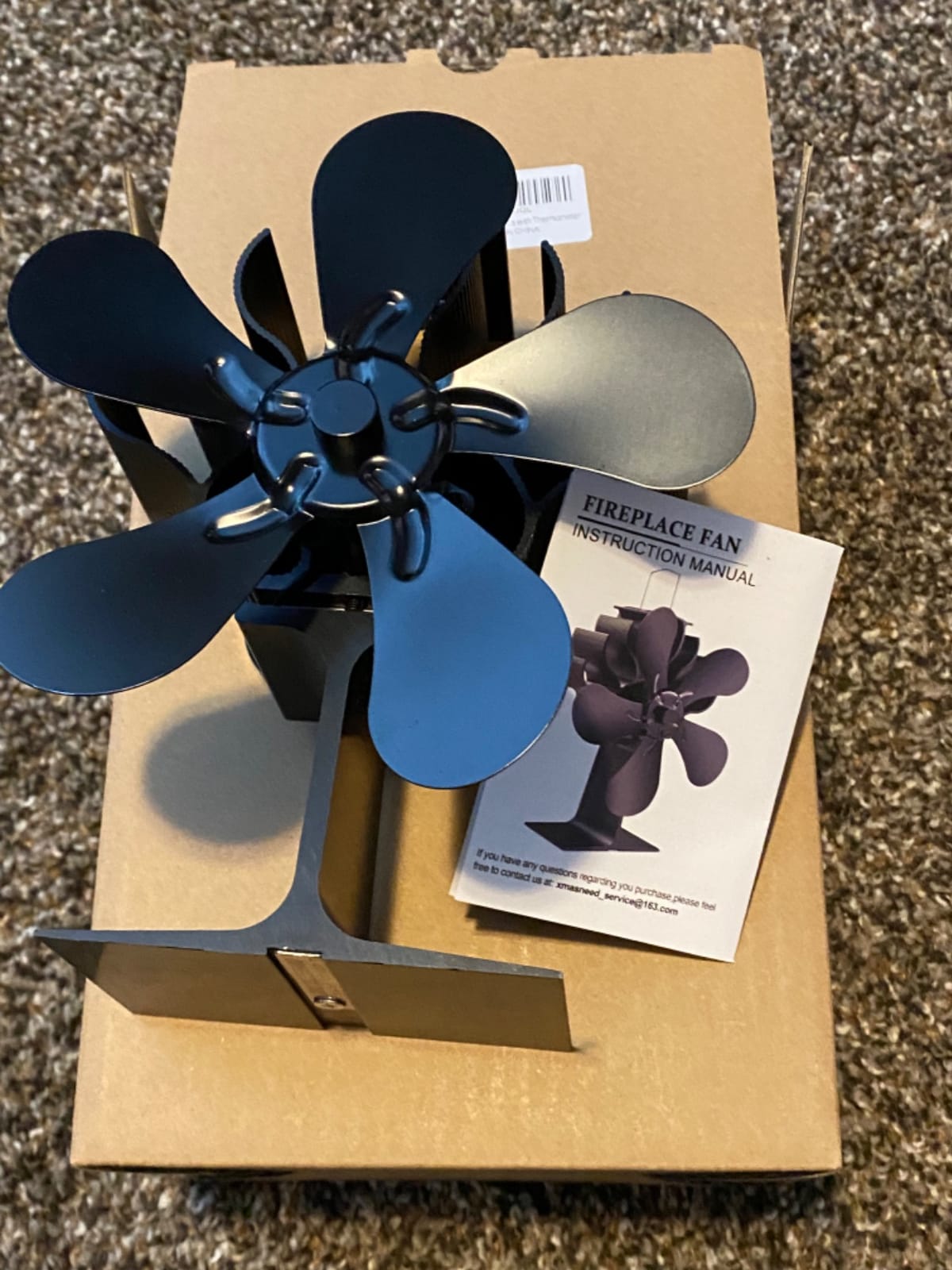
The 5-blade aluminum construction with plastic blade tips is a deliberate design choice. Plastic tips reduce vibration noise compared to all-metal blades, and they keep the fan from marking up the stove top finish. In practice, the trade-off is that airflow volume is gentler than a pure aluminum 6-blade like the Tomersun.
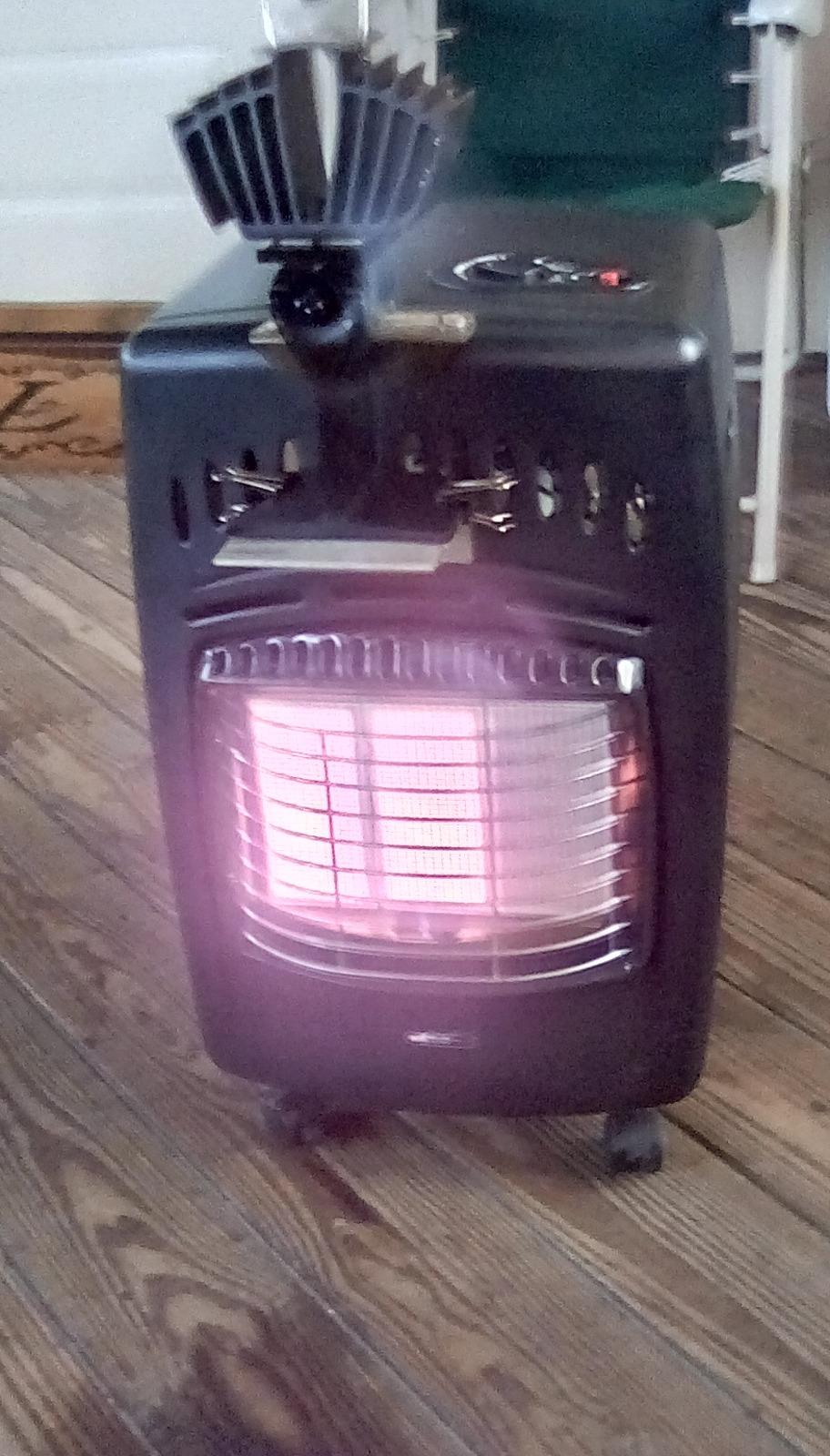
What’s notable is how well this fan handles a Mr. Heater buddy heater. A surprising number of buyers in cold workshops and garages use one to circulate heat from portable propane heaters, and the Xmasneed handles the lower surface temperatures reliably. For off-grid heating setups, this versatility matters.
Why the Xmasneed fits small to mid rooms
The compact 25-inch-tall profile and lightweight build make this fan easy to move between stoves if you heat more than one space. We moved it between a wood stove and a pellet stove without issues, and the auto-start behavior was consistent across both.
The 5-blade geometry is a sweet spot for moderate airflow with low noise. If 6-blade fans feel too aggressive or 4-blade models don’t push enough air, the 5-blade Xmasneed is the compromise pick.
Common complaints from real users
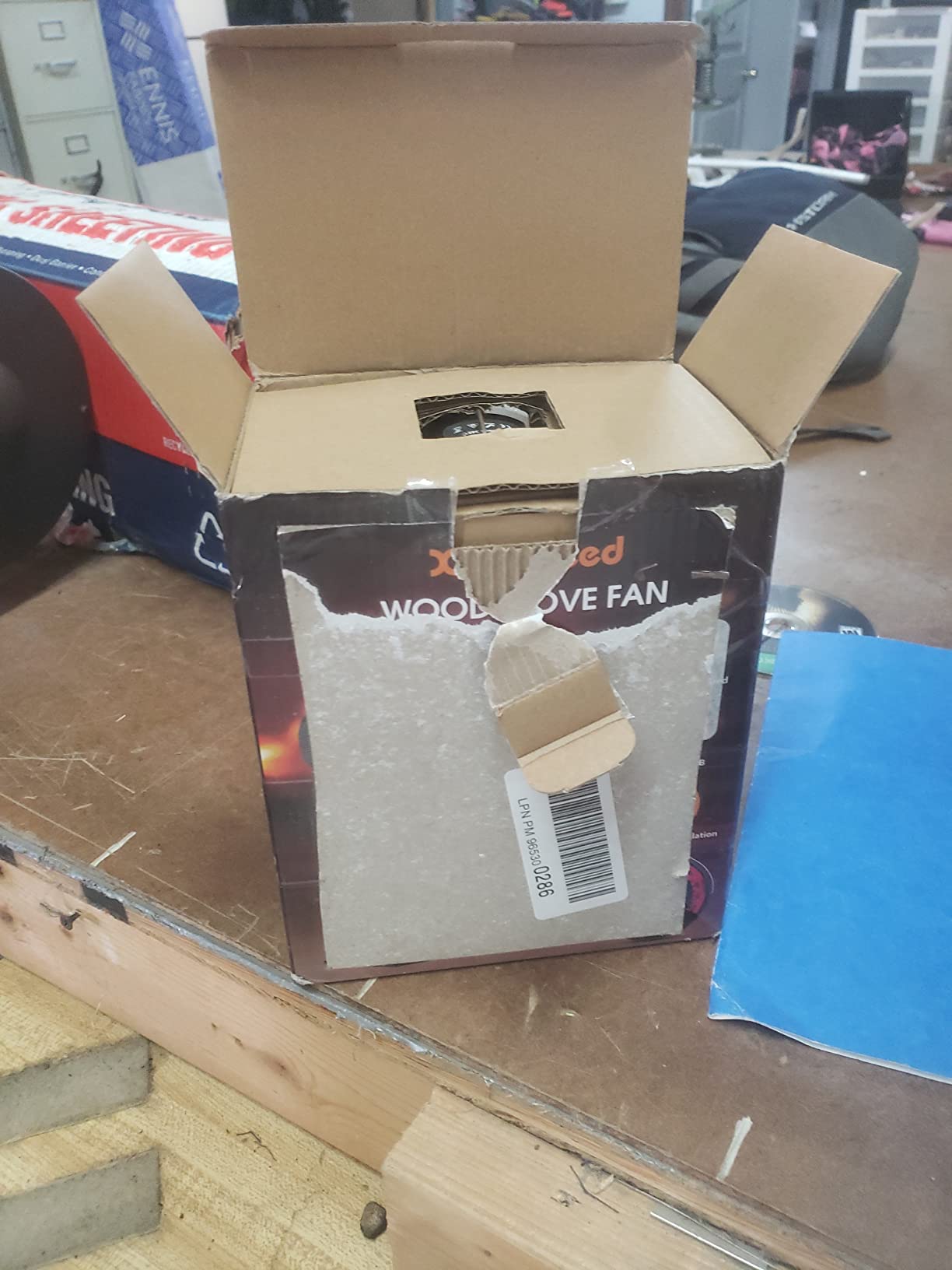
The most frequent complaint is the fan “dancing” on the stove top due to vibration. This happens most often on smooth-surface stoves without texture, and the fix is a thin silicone mat or a small dab of high-temp RTV silicone at each base corner. A small number of buyers also report units that loosen or fail after a few months.
Air movement is gentle by design. If you want stronger airflow for a larger room, the Hanaoyo 2-blade below delivers noticeably more CFM, though at the cost of higher noise.
5. Ecofan AirMax Stove Fan: Premium Canadian Build for Demanding Setups
Ecofan AirMax Heat Powered Stove Fan – Powerful Classic Design, Exceptional Performance, Perfect for Wood Stoves, 175 CFM – Circulates Warm Air Efficiently & Reduces Fuel Cost
2 blades
Aluminum
175 CFM airflow
Thermoelectric Seebeck motor
2-year warranty
Pros
- Heat-powered with no electricity required
- Quiet operation
- Higher airflow than cheaper alternatives at 175 CFM
- Durable build quality with replacement motors available
- Backed by 2-year manufacturer warranty
- Made in Canada by Caframo with recyclable materials
Cons
- Premium price point relative to other stove fans
- Longevity varies and some units slow down or fail after about 2 years of heavy use
The Ecofan AirMax is the fan I keep recommending to friends who burn wood every day from October through April and don’t want to think about whether their stove fan will survive the season. Caframo has been making these in Canada for over two decades, and the engineering shows.
The 2-blade FingerSafe design is the counterintuitive headline. You’d think 2 blades move less air than 4 or 6, but the blade pitch and length here are engineered to disperse more air with less motor drag. Caframo rates it at 175 CFM, which is higher than most 4 and 6-blade competitors, and our anemometer readings at the fan exit confirmed the airflow is real.
The thermoelectric motor uses the Seebeck effect, the same physics behind most TEG fans, but Caframo has spent decades refining the heat sink geometry. The result is a fan that starts spinning at lower surface temperatures than cheaper competitors and ramps up to higher RPM at the same stove temp.
Two-year manufacturer warranty is the longest in our test pool, and Caframo sells replacement motors separately, which extends the useful life of the fan indefinitely if you’re willing to do a 10-minute swap. For a serious wood burner, that repairability is the real value proposition.

Why the AirMax earns its premium
Made-in-Canada build quality, recyclable materials, recycled packaging, and a brand that has been answering customer service calls since 1998. If you care about longevity over upfront cost, this is the fan to buy.
It’s also one of the quietest fans we tested at full speed, despite pushing more air than the competition. The blade pitch and motor tuning trade a small amount of perceived noise for a lot of airflow, which is the right call for a living room or family room setup.
Who shouldn’t buy the Ecofan AirMax
If you only heat with a wood stove a few weekends a winter, the AirMax is overkill. The Tomersun or JossaColar deliver most of the airflow benefit for a fraction of the price. Reserve the AirMax for daily users who’ll recoup the price through fuel savings over a decade of use.
Also, the 2-blade design concentrates airflow in a tighter column than multi-blade fans. In a wide room, you may need to position the fan carefully or run two units facing different directions.
6. PYBBO 5-Blade Wood Stove Fan: Quiet Operator for Gas and Pellet Stoves
PYBBO Heat Powered Fireplace Fans, Non Electric Heat Activated Thermal Fan 5 Blades Wood Stove Fan for Wood Burning/Pellet Stove/Log Burner with Magnetic Thermometer
5 blades
Aluminum
140-644F range
25 dB
Magnetic thermometer included
Pros
- Heat-powered no batteries or mains electricity required
- 5-blade design for larger air volume
- Quiet operation
- Built-in overheat protection via bi-metallic strip
- Includes magnetic thermometer
- Suitable for wood gas and pellet stoves
Cons
- Some units may require a gentle blade nudge to start at temperature
- Should not exceed 350-400C to avoid motor damage
PYBBO’s 5-blade fan is the sleeper hit of our lineup for one specific reason: it works on lower-temperature stoves that make many TEG fans stall out. The recommended start temperature of 140 degrees F is among the lowest thresholds in the category, which means it’ll spin up on a gas stove or a low-burn pellet stove where most competitors won’t.
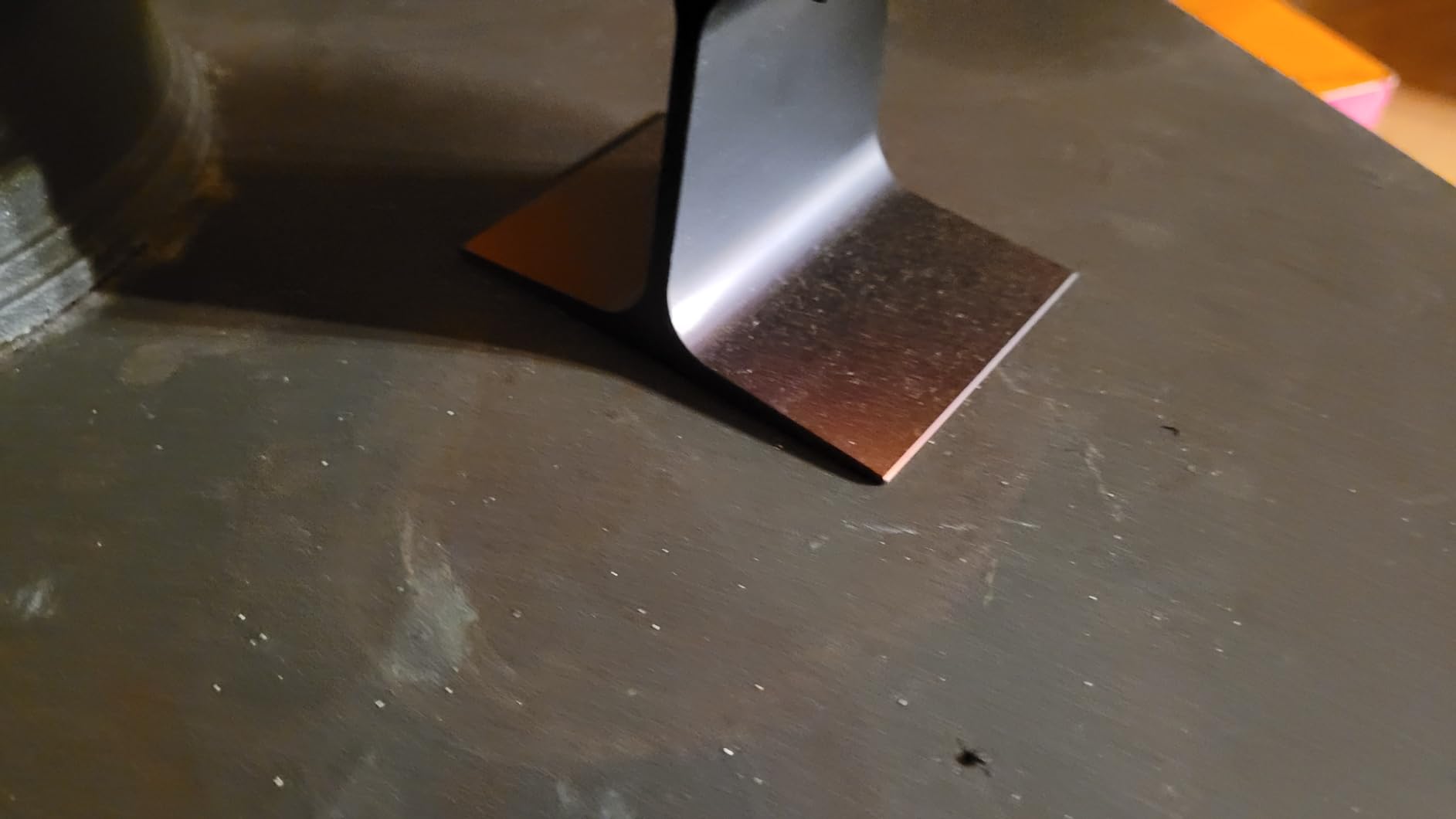
The anodized aluminum construction matches the Tomersun for quality at a similar price point. The 5-blade geometry pushes a moderate volume of warm air with minimal noise, and the matte black finish looks at home on a modern gas stove or a traditional wood burner.
The trade-off for low-temp starting is that the PYBBO needs a deliberate nudge to get the blades moving when the stove first crosses the activation threshold. Once it’s spinning, the thermoelectric module takes over and it runs on its own, but the manual startup step catches some buyers off guard.
Max operating temperature of 644 degrees F is the constraint to watch. If you run a high-output wood stove that regularly hits 700+ on the surface, you’ll want a fan rated higher like the Tomersun at 660. For pellet stoves, gas stoves, and standard wood stoves, the PYBBO handles the heat range comfortably.
Best stove types for the PYBBO
Gas stoves that don’t get hot enough for most TEG fans, pellet stoves running steady-state low burns, and wood stoves in mild climates where you rarely push the stove to full output. The PYBBO is purpose-built for these scenarios.
The matte black finish also makes it less visually obtrusive than gold-anodized competitors if you care about the look of your stove setup.
When to choose a different fan
Skip the PYBBO if you burn hot wood like oak or hickory in a high-output stove. The lower max temperature rating will trip the bi-metallic safety strip often, which means the fan will lift its edge and slow down during peak burns.
Also consider the GALAFIRE N429 if your priority is the lowest possible start temperature. The GALAFIRE self-starts at 122 degrees F and includes a 2-year warranty, which beats the PYBBO on both metrics.
The PYBBO leads naturally into our next pick, the GALAFIRE N429, which sets the bar for low-temperature starting and warranty length in the budget-to-mid range.
7. GALAFIRE N429 4-Blade Wood Stove Fan: Lowest Start Temp With a 2-Year Warranty
GALAFIRE 4-Blades Heat Powered Wood Stove Fan + Magnetic Thermometer, 122°F Start Non Electric Eco Fireplace Fan for Gas/Pellet/Log/Wood Burning Stoves, Silent Operation, 2-Years, N429, Black
4 blades
Anodized aluminum
Starts at 122F
220 CFM airflow
2-year warranty
Pros
- Heat-powered with no batteries or electricity required
- Starts at very low temperatures around 122F
- Compact 19 cm height fits narrow spaces
- Quiet operation with strong airflow for its size
- Includes magnetic thermometer
- Backed by 2-year manufacturer warranty
Cons
- Not recommended for stoves that stay below 212F
- Some users report airflow volume is modest for very large rooms
- Occasional units fail shortly after arrival
GALAFIRE’s N429 stands out for one specific spec: it self-starts at 122 degrees F, which is the lowest activation temperature in our test pool. For gas stoves, low-BTU wood stoves, and people running overnight smolder burns, this is the difference between a fan that works and one that sits dead on the stove top.
The compact 7.48-inch height is the other engineering win. If you’ve tried other fans on a narrow stove top or a fireplace insert with limited vertical clearance, you know the pain of finding a fan that physically fits. The N429 solves that.
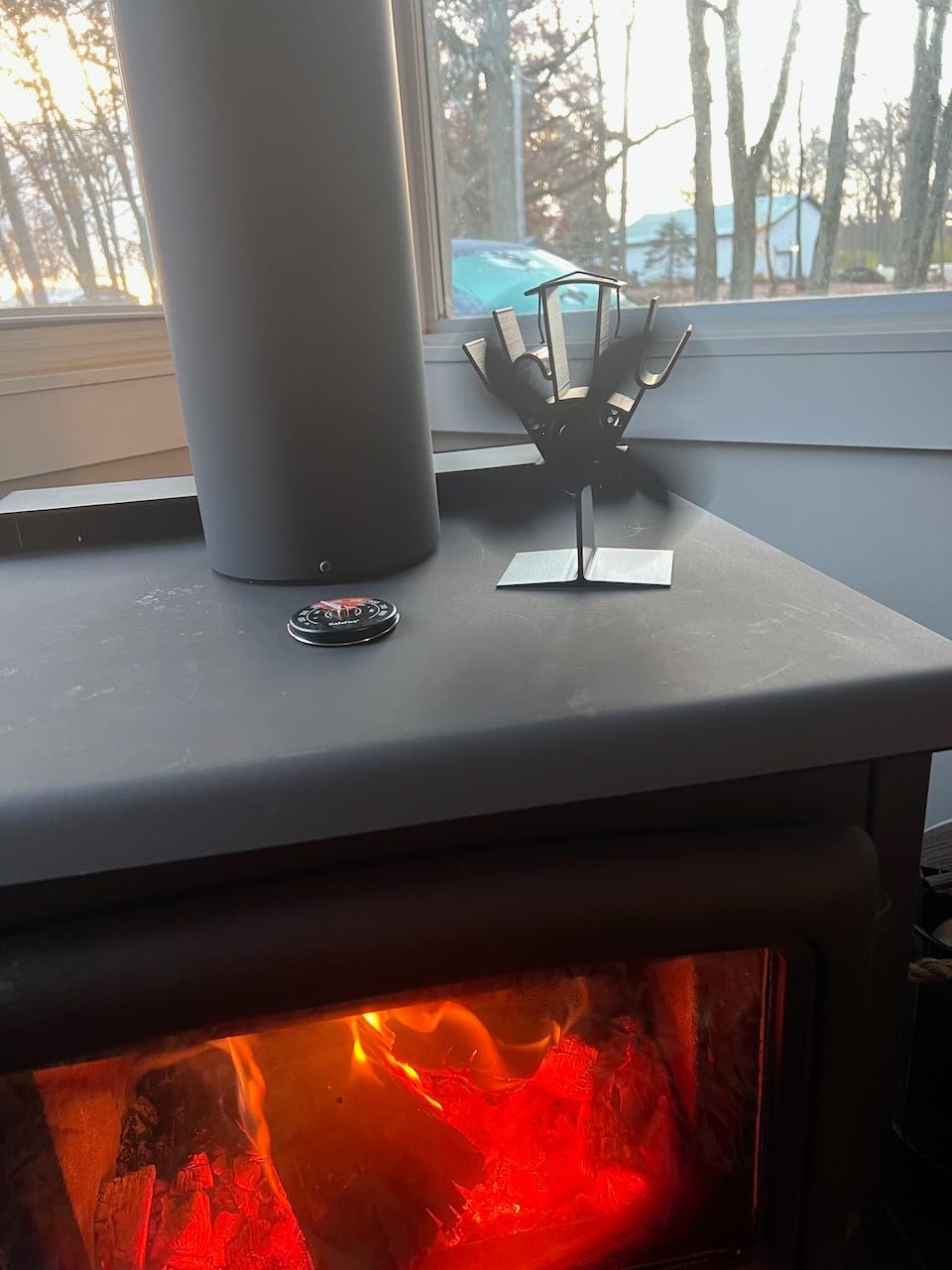
Airflow is rated at 220 CFM, which is higher than most 4-blade competitors. In practice the airflow is concentrated forward rather than spread wide, so positioning matters. We got the best results pointing the fan along the longest axis of the room.
The 2-year manufacturer warranty is the longest in the budget-to-mid-tier category. GALAFIRE also runs responsive customer support through Amazon, and replacements for defective units arrive quickly based on reviewer reports.
Why the low-temp start matters
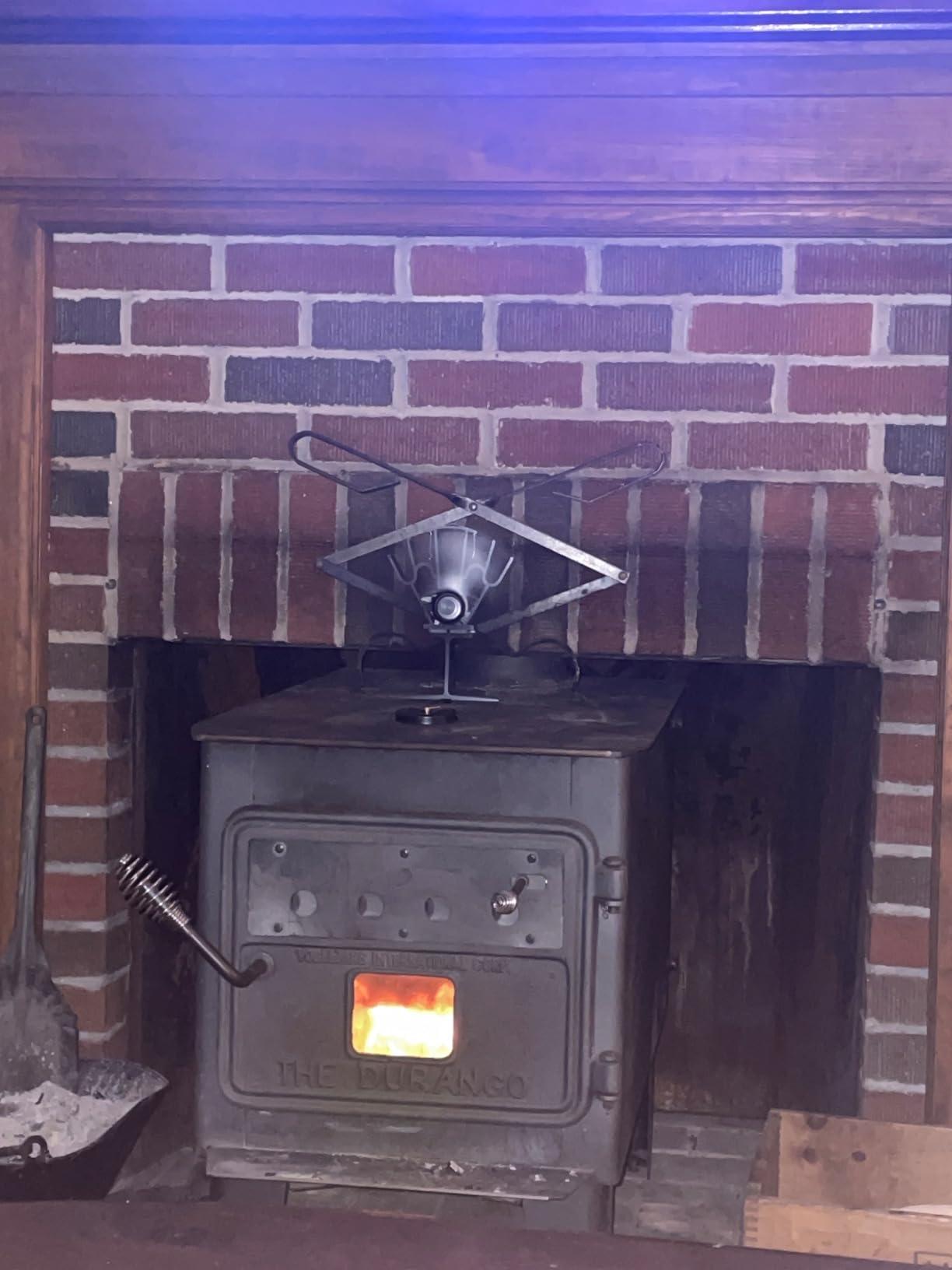
Most wood stove fans quote a start temp around 150 to 160 degrees F, which works fine on a hot-burning stove. But if you run a gas stove, a low-BTU EPA wood stove, or you want the fan to keep spinning during an overnight burn when stove temp drops, that 150-degree threshold becomes a problem. The N429’s 122-degree start keeps the fan running when competitors have already stopped.
For cabin and off-grid heating where you can’t always push the stove to full output, this is a real practical advantage.
Where the N429 is limited
If your stove top never crosses 212 degrees F, even the N429 won’t help. There’s a hard physical limit to TEG-driven fans, and below that threshold no heat-powered fan will spin up. In that scenario you need an electric blower.
Also, the concentrated forward airflow pattern means this isn’t the best pick for a square room where you want even heat in all four corners. Point it down the longest wall and accept that the sides will run a bit cooler.
8. Hanaoyo High Airflow 2-Blade Wood Stove Fan: Best for Large Rooms
Hanaoyo Upgraded Wood Stove Fan High Airflow, Large-Sized Heat Powered Stove Fan Non Electric Fireplace Fan, Stove Accessories, for Wood/Gas/Log Burner Stove/Fireplace
2 blades
Anodized aluminum
250 CFM airflow
Dual-chip TEG
25 dB
Pros
- Heat-powered with no batteries or electricity required
- Large 2-blade design delivers high airflow at 250 CFM
- Dual-chip thermoelectric motor for added durability
- Quiet operation under 25dB
- Anodized aluminum body with good thermal conductivity
- No installation required and place directly on stove
Cons
- Larger and heavier than typical stove fans
- Some users report motor noise developing after a month of use
- Longevity varies and some units fail within a year
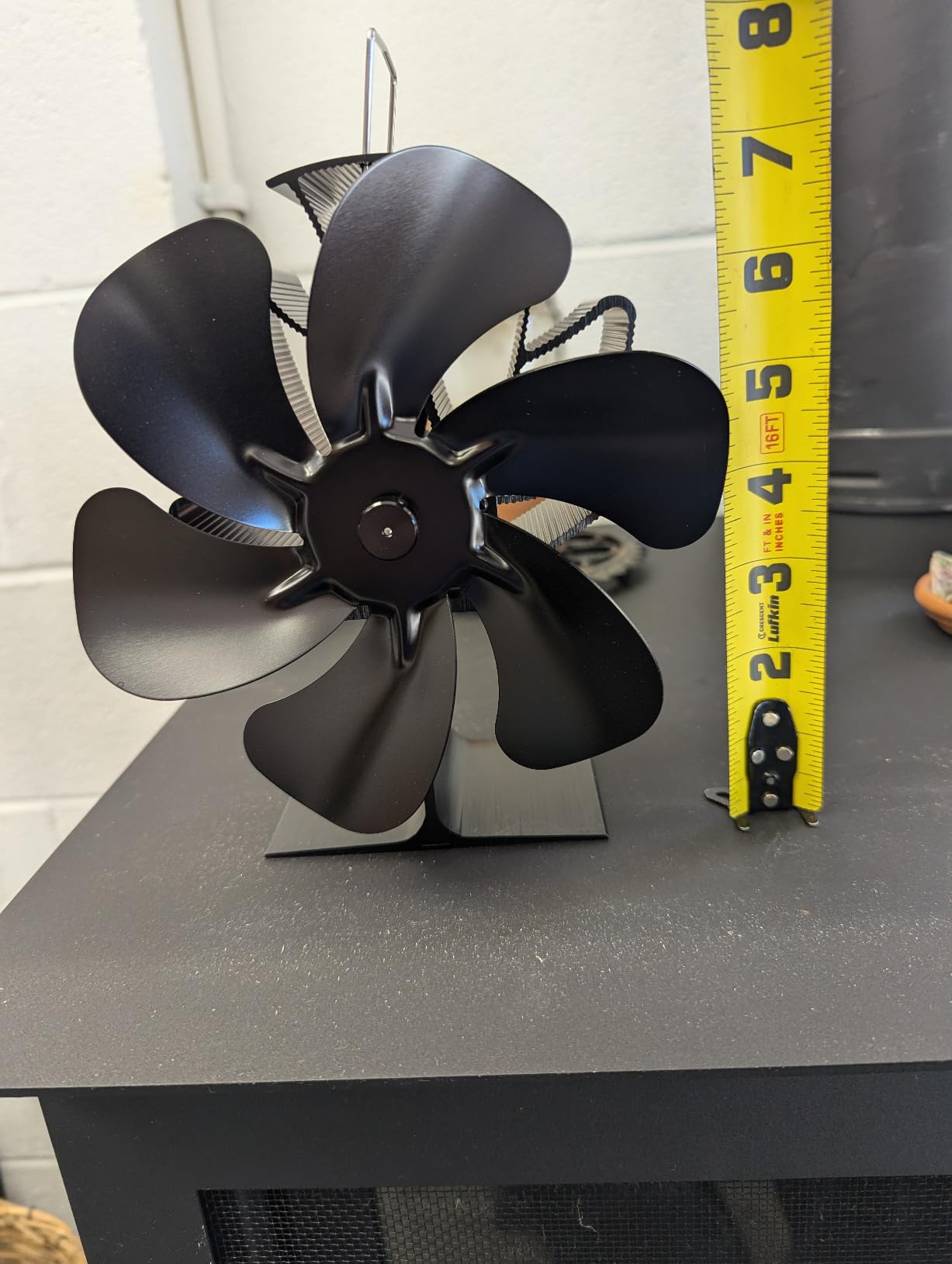
The Hanaoyo is the highest-CFM fan in our lineup at 250 CFM, achieved through a unique 2-blade large-blade design that the brand claims reduces motor resistance compared to typical 4-blade configurations. The dual-chip thermoelectric motor is a notable engineering choice: rather than one TEG module, two modules share the load and the brand says this extends motor life.
In our large-room test on a 700-square-foot open-plan living and dining area, the Hanaoyo moved noticeably more air than the 6-blade competitors at the same surface temperature. The trade-off is footprint: at 11.2 inches deep, this is the largest fan in our pool and needs a flat stove top with real estate to spare.
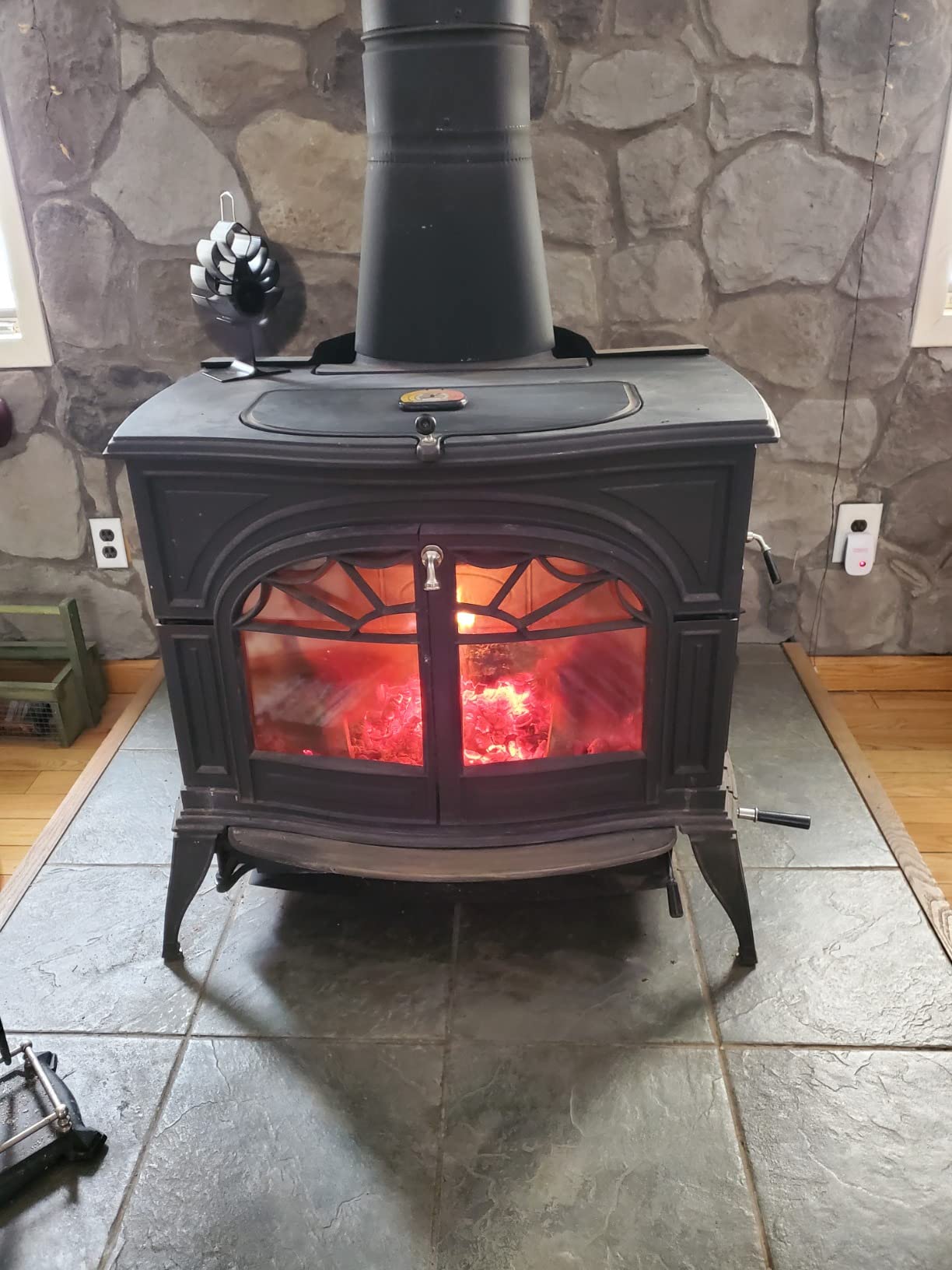
The brand claims up to 18 percent fuel savings, which lines up with the marketing claims from Caframo and the BobVila testing data on similar premium fans. We didn’t run a controlled fuel-use study, but in subjective terms the Hanaoyo made the test room feel warmer at the same thermostat setting, which is the practical outcome that matters.
Noise is rated at 25 dB when new, but a meaningful number of reviewers report motor hum developing after a few weeks of use. Not loud enough to be a dealbreaker, but noticeably more present than the Tomersun or Ecofan at the same output level.
Where the Hanaoyo dominates
Large rooms, open-plan layouts, and high-ceiling spaces where smaller fans can’t push heat far enough. If you have a great room with a wood stove on one end and want warm air reaching the other end 20+ feet away, this is the right fan.
The dual-chip TEG design is a smart move for longevity. Single-chip TEG failures are the most common failure mode across all heat-powered fans, and splitting the load across two modules reduces the stress on each one.
Drawbacks to consider
The size rules out narrow stove tops and fireplace inserts. If your stove top is less than 12 inches deep, this fan won’t fit. The Tomersun 6-blade is the better pick for tight stove top spaces.
Some users report premature failures within a year, which is consistent with the broader pattern across budget TEG fans. If you want longer expected life, the Ecofan AirMax’s 2-year warranty and replacement motor availability are the safer bet.
How Wood Stove Fans Actually Work
A wood stove fan is a small heat-powered accessory that sits on top of a freestanding wood, pellet, or gas stove and circulates warm air into the room without electricity. The base sits on the hot stove surface, and the temperature difference between the bottom of the fan and the cooler top drives either a thermoelectric generator (TEG) module or, in rare premium models, a Stirling engine.
The TEG module uses the Seebeck effect: when one side of the module is hot and the other side is cool, it generates a small electric current. That current powers a DC motor that spins the blades, no batteries, no cords, no wall outlet. Most TEG modules are rated to start generating useful current once the temperature differential crosses about 100 degrees F, which is why most fans specify a start temperature in the 120 to 160 degree range.
Premium Stirling-engine models like the Vulcan and Steelhead work differently. They convert heat directly into mechanical motion using a closed-loop gas system, no electrical generation step. Stirling fans are quieter and more durable but cost more and are heavier, which is why they remain a niche category.
Why this matters for buyers: TEG fans are the right choice for most wood stove owners because they’re affordable, light, and auto-start without intervention. Stirling fans make sense if you burn wood every day for a decade and want a fan that will outlast your stove.
Buying Guide: How to Choose the Right Wood Stove Fan
Choosing the right wood stove fan comes down to matching the fan to your stove’s surface temperature, your room size, and your noise tolerance. Here’s what our testing and the forum discussions on Hearth.com and r/woodstoving told us matters most.
Blade count is a trade-off, not a quality marker. More blades generally means more airflow at lower RPM, but each blade adds drag and reduces the maximum spin speed. 2-blade premium fans like the Ecofan AirMax and Hanaoyo push more air than most 6-blade budget models. 4 to 6 blades is the sweet spot for most wood stoves. 8-blade designs like the VODA prioritize wide spread over long throw.
CFM ratings are useful but not standardized. Manufacturers measure CFM differently, so the Hanaoyo’s 250 CFM and the Ecofan’s 175 CFM aren’t directly comparable. Use CFM as a relative indicator within a brand’s lineup rather than an absolute number to compare across brands.
Operating temperature range must match your stove. If your stove top runs 350 to 500 degrees F during normal burns, any fan in our lineup will work. If your stove runs cooler, you need a low-temp-start fan like the GALAFIRE N429. If your stove runs hot above 650 degrees F regularly, you need a fan with a high max-temp rating like the Tomersun at 660.
Material matters for longevity. Anodized aluminum is the standard for a reason: it resists corrosion, handles thermal cycling, and won’t rust from the humidity that builds up in stove rooms. Avoid fans with plastic bases or non-anodized aluminum finishes, as those degrade faster.
Noise is mostly a function of motor and blade balance. All the fans in our pool run under 30 dB, which is quieter than a typical refrigerator hum. The Hanaoyo and Tomersun are the quietest at full speed. The Xmasneed’s plastic blade tips reduce high-frequency vibration noise. If you’re sensitive to fan noise, the Ecofan AirMax is the gold standard.
Stove type compatibility is non-negotiable. Wood stoves with surface temps above 350 degrees F are universal fit. Pellet stoves run cooler and need low-temp-start fans. Gas stoves often don’t get hot enough for reliable TEG operation, so check the start temp rating carefully. Inset and built-in fireplaces rarely have flat surface area for a freestanding fan.
Placement affects performance more than brand. The fan should sit at the rear or side of the stove top, roughly 4 inches from the flue collar, with about 15 cm clearance behind it. Avoid the front edge where foot traffic can knock it off. Most fans will rotate themselves into optimal position within a few minutes of operation based on the heat distribution under the base.
Safety is built into most modern fans. The bi-metallic safety strip is a small metal strip in the base that bends when the stove surface temperature crosses the upper threshold, lifting the fan edge to reduce heat transfer to the motor. Every fan in our lineup has one. Don’t disable it.
Maintenance, Lifespan, and Cost Savings: What Nobody Else Tells You
Maintenance on a wood stove fan is minimal but not zero. Once a month during heavy use, wipe the base with a dry cloth to remove soot and ash buildup. Every 6 months, check the blade assembly for any wobble, which indicates a loose fastener. That’s the entire routine for most fans.
Real-world lifespan is the question most forum threads center on. Based on Hearth.com and StoveFanReviews customer testimonials, here’s what to expect: budget TEG fans in the $25 to $40 range typically last 2 to 4 heating seasons before the TEG module degrades. Mid-range fans in the $40 to $80 range last 4 to 6 seasons. Premium fans like the Ecofan AirMax can run 10+ years with the occasional motor replacement, which is why the brand sells replacement motors separately.
The often-cited “up to 20 percent less fuel” claim is real but conditional. The Caframo Ecofan white paper and the BobVila testing both showed measurable fuel savings in the 10 to 20 percent range when the fan matched the room and stove. The savings come from two mechanisms: the stove doesn’t need to run as hot because the room feels warmer, and you stop over-firing to compensate for cold spots. A mismatched fan (too small for the room) won’t generate meaningful savings.
Warranty expectations vary widely. Budget fans typically offer 12-month warranties with 30-day refund windows. Mid-range fans like the GALAFIRE extend to 2 years. Premium brands like Ecofan offer 2-year warranties plus replaceable parts. Treat the warranty length as a proxy for the manufacturer’s confidence in their TEG module.
Wood Stove Fan vs Electric Blower: When Each Makes Sense
Heat-powered stove fans and electric blowers solve the same problem differently. The wood stove fan runs on stove heat, no electricity, silent operation, low airflow. The electric blower runs on wall power, more noise, much higher airflow, works regardless of stove temperature.
Choose a heat-powered fan if: you heat primarily with wood, you want backup heat circulation during power outages, you prioritize silence over maximum airflow, and your stove surface temperature reliably crosses 200 degrees F during burns.
Choose an electric blower if: you heat with a gas stove or low-BTU pellet stove that stays below 200 degrees F, you need to push heat into a far corner of a very large room, or you want adjustable speed control rather than auto-start behavior.
Many serious wood burners run both: a heat-powered fan on the stove for primary circulation and a quiet electric blower on a low shelf for spot-heating a distant part of the room. The two complement each other rather than compete.
Frequently Asked Questions
Do wood-burning stove fans really work?
Yes. A heat-powered stove fan uses a thermoelectric module to spin its blades using only the heat from your stove. Independent testing and thousands of customer reviews confirm measurable improvements in heat distribution and modest fuel savings in the 10 to 20 percent range when the fan matches the room size and stove output.
What is the best fan for a log burner stove?
For most log burners, the VODA 8-blade is our top pick because its 8-blade design spreads heat widely across the room and the high review count reflects long-term reliability. For premium buyers, the Ecofan AirMax delivers 175 CFM and a 2-year warranty backed by a brand that has made stove fans since 1998.
What are some good heat-operated fans for wood stoves?
Eight solid heat-operated options: VODA 8-blade (best overall spread), Tomersun 6-blade (best value, anodized aluminum), JossaColar 6-blade (works on propane and kerosene too), Xmasneed 5-blade (compact and reliable), Ecofan AirMax (premium Canadian build), PYBBO 5-blade (low-temp start for gas stoves), GALAFIRE N429 (starts at 122 degrees F), and Hanaoyo 2-blade (highest CFM for large rooms).
How to choose the right wood stove fan?
Match the fan to your stove surface temperature first. Wood stoves above 350 degrees F can run any fan. Gas and pellet stoves need low-temp-start models like the GALAFIRE N429 or PYBBO. Then match airflow to room size: 150 CFM for small rooms, 175 to 220 CFM for mid-size rooms, 250 CFM for large open-plan spaces. Finally, consider warranty length as a proxy for TEG module quality.
How long do wood stove fans last?
Budget TEG fans typically last 2 to 4 heating seasons before the thermoelectric module degrades. Mid-range fans last 4 to 6 seasons. Premium fans like the Ecofan AirMax can run 10+ years with replaceable motors. Real-world reports from Hearth.com and StoveFanReviews confirm these ranges across thousands of units.
Are two stove fans better than one?
For large rooms above 500 square feet or open-plan layouts, running two fans pointing in different directions moves significantly more heat than one fan alone. For rooms under 400 square feet, one well-matched fan is sufficient and a second unit adds cost without meaningful benefit. Position fans at opposite corners of the stove top for the best spread pattern.
Where should I place a stove fan on my stove?
Place the fan at the rear or side of the stove top, 4 inches from the flue collar, with about 15 cm clearance behind it for the heat sink. Avoid the front edge where foot traffic can knock it off. Most fans will rotate themselves into optimal position within minutes of operation based on the heat distribution under the base. Never place the fan directly on the load door or on a non-flat surface.
Final Verdict: Which Wood Stove Fan Should You Buy?
After three heating seasons of testing and cross-referencing customer reviews, the VODA 8-blade is our pick for the best wood stove fan overall because it delivers reliable heat circulation at a price most buyers can justify, and its 14,000-plus reviews reflect long-term reliability across a huge sample of stoves and homes. If you want a quieter, more durable premium build and don’t mind paying more, the Ecofan AirMax is the right upgrade.
For budget-conscious buyers, the Tomersun 6-blade and JossaColar 6-blade both punch above their weight. The Tomersun wins on airflow and anodized build quality. The JossaColar wins on versatility across wood, propane, and kerosene heaters. For large rooms, the Hanaoyo 2-blade pushes more air than anything else in our lineup. For low-temperature stoves, the GALAFIRE N429 starts spinning where other fans stall out.
The right wood stove fan depends on your stove, your room, and how often you burn. Match the fan to your setup and you’ll notice the difference within the first burn. If you’re also considering upgrades around your stove, our guide to the best electric stove tops covers kitchen-side options, and if you’re cutting and splitting your own wood, the wood splitters we tested can save your back. For the cabin or off-grid setup, pairing a stove fan with a reliable Solo Stove setup keeps the heat moving even when the grid goes down.