
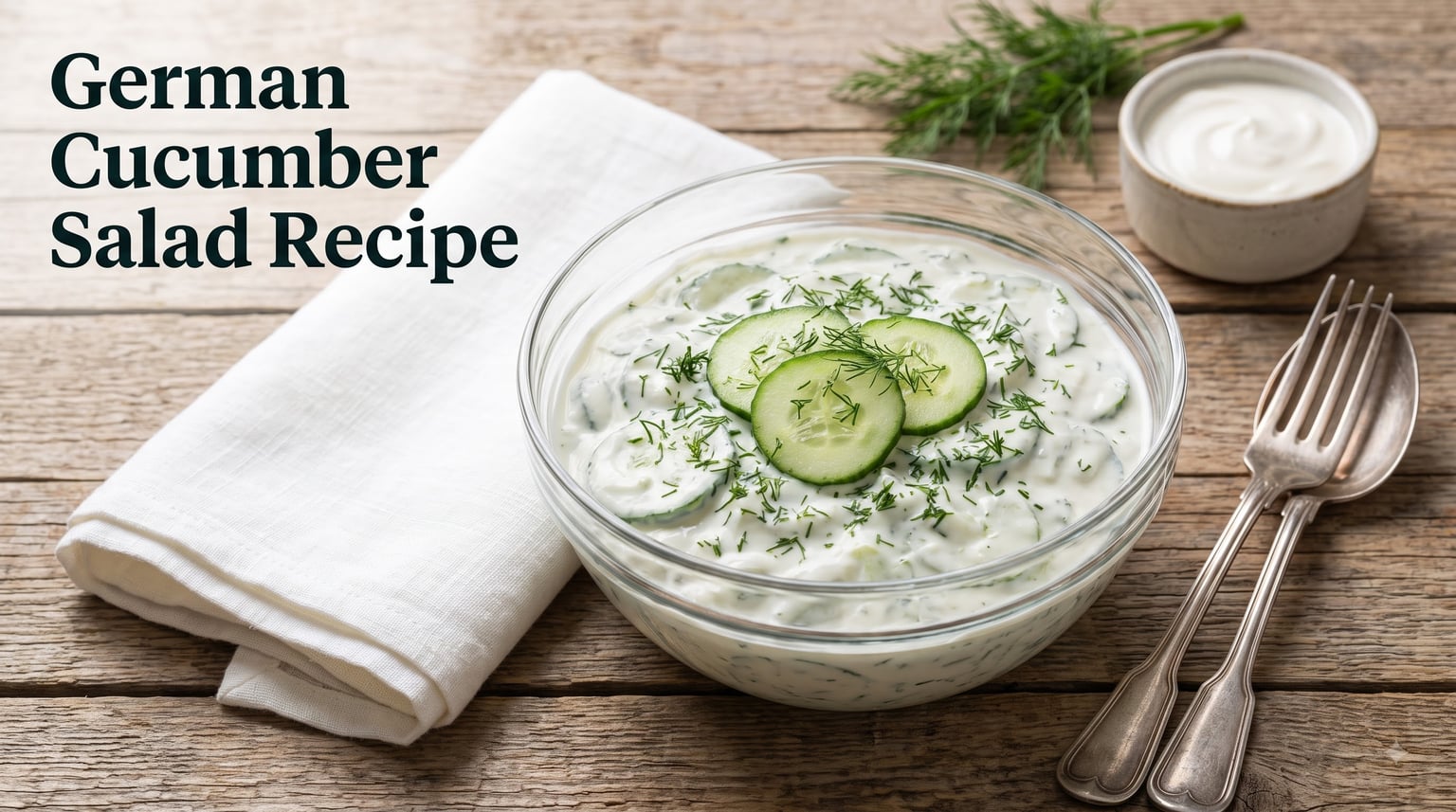
German cucumber salad (Gurkensalat) is a traditional German side dish made with thinly sliced cucumbers marinated in a creamy dressing of sour cream, white vinegar, fresh dill, and a touch of sugar. After making this recipe more than 40 times in my kitchen, I can tell you it is the most refreshing summer side dish in German cuisine, and it pairs beautifully with everything from crispy schnitzel to backyard BBQ brisket.
In this guide, I will walk you through every step of making authentic Gurkensalat, including the salt-extraction trick that prevents watery salad, the difference between creamy Southern German and tangy Northern German versions, and how to scale it for a crowd. If you love refreshing no-cook recipes, this one will become a staple.
Table of Contents
What Is Gurkensalat (German Cucumber Salad)?
Gurkensalat is the German word for cucumber salad, and it is one of the most beloved side dishes in German cuisine. The recipe dates back centuries and varies by region, but the core concept stays the same: thinly sliced cucumbers tossed in a tangy dressing that balances cream, vinegar, and fresh herbs.
My Oma made this every summer when I was growing up in Bavaria. She never measured anything, just tasted and adjusted until the flavors sang. I have spent years converting her intuition into exact measurements so home cooks anywhere can replicate that same authentic taste.
The classic version uses three main ingredients: cucumbers, sour cream, and dill. White vinegar cuts through the richness, and a pinch of sugar rounds out the acidity. Most recipes require at least 4 hours of marinating time, which is why this dish is perfect for meal prep and make-ahead entertaining.
Ingredients You’ll Need for Authentic German Cucumber Salad
I recommend gathering and measuring everything before you start slicing. The salt extraction step is time-sensitive, so you want your dressing ready to go.
For the Salad
- 2 large English cucumbers (about 1.5 lbs), unpeeled for color and crunch
- 1 teaspoon kosher salt, divided
- 1/2 small yellow onion, very thinly sliced (optional but traditional)
- 2 tablespoons fresh dill, chopped (no stems)
For the Creamy Dressing
- 1/2 cup full-fat sour cream
- 2 tablespoons white distilled vinegar or apple cider vinegar
- 1 teaspoon granulated sugar (or honey)
- 1/4 teaspoon freshly ground black pepper
- 1/8 teaspoon garlic powder (optional, for depth)
- Pinch of salt to taste
English cucumbers work best because they have thinner skin and fewer seeds. If you only have regular cucumbers, peel them and scoop out the seeds with a spoon before slicing. The dressing should taste tangy with a subtle sweetness, not heavy or cloying.
Substitutions and Variations
You can swap sour cream for Greek yogurt in equal measure. For a vegan version, use plain coconut yogurt or cashew cream. Fresh dill is non-negotiable in my opinion, but in a pinch, use 1 teaspoon of dried dill, rubbed between your palms before mixing.
Step-by-Step Instructions for Making German Cucumber Salad
The total time is 20 minutes hands-on, plus 4 hours minimum marinating. Most of the work is in the slicing and the salting step, which is the secret to preventing a watery salad.
Step 1: Slice the Cucumbers Paper-Thin
Set a mandoline slicer to 1/8-inch thickness. Run each cucumber across the blade with the guard firmly in place. If you do not have a mandoline, use a sharp chef’s knife and slice as evenly as possible. Aim for thin, almost translucent slices. Uniform thickness ensures every bite has the same texture and absorbs the dressing evenly.
Step 2: Salt and Drain the Cucumbers
Place the cucumber slices in a colander set over a bowl. Toss with 1/2 teaspoon of kosher salt and let sit for 20 to 30 minutes. The salt pulls excess water out of the cucumbers through osmosis. After draining, gently pat the slices dry with paper towels. Do not skip this step or your German cucumber salad will turn into cucumber soup.
Step 3: Make the Dressing
While the cucumbers drain, whisk together sour cream, vinegar, sugar, black pepper, and garlic powder in a large mixing bowl. Taste and adjust the salt, sugar, and vinegar until the balance is tangy-sweet and lightly creamy. The dressing should coat the back of a spoon without dripping off too quickly.
Step 4: Combine and Add Aromatics
Add the dried cucumber slices, sliced onion, and fresh dill to the bowl with the dressing. Toss gently until every slice is coated. Avoid vigorous mixing or the cucumbers will bruise and release more water.
Step 5: Marinate in the Refrigerator
Cover the bowl with plastic wrap and refrigerate for at least 4 hours, ideally overnight. This marinating time is when the flavor develops. The cucumbers will soften slightly and absorb the tangy dressing, becoming meltingly tender without turning mushy.
Step 6: Final Adjustment and Serve
Before serving, give the salad a stir. The dressing will have thinned from the cucumber juices. Taste and adjust with a pinch more salt, a splash of vinegar, or a small spoonful of sour cream to restore the creamy consistency. Garnish with extra fresh dill.
Creamy vs Vinegar-Based: Regional German Variations
One of the most common questions I get is about the difference between creamy and vinegar-only German cucumber salads. Both are authentic, but they come from different regions and serve different purposes.
The creamy version (Suddeutsche Art) is popular in Southern Germany, Bavaria, and Austria. It uses sour cream or yogurt as the base, creating a rich, tangy dressing that balances heavy meat dishes like schnitzel and bratwurst. This is the version I grew up eating and the one I recommend for first-timers.
The vinegar-only version (Norddeutsche Art) hails from Northern Germany and uses a simple vinaigrette of vinegar, oil, salt, sugar, and sometimes a hint of mustard. It is lighter, sharper, and traditionally served with fish or pickled herring. Preparation is similar, but the dressing is oil-based instead of dairy-based.
Both versions benefit from the same salt-extraction technique and thin slicing. The Northern version keeps longer, up to 3 days, while the creamy version is best within 48 hours.
Recipe Tips for the Best Gurkensalat
After dozens of test batches, these are the tips that make the biggest difference between mediocre and exceptional German cucumber salad.
- Use English cucumbers when possible. They have fewer seeds and less water content than standard cucumbers.
- Salt is non-negotiable. The 20-minute salting step prevents the watery salad problem that plagues most homemade versions.
- Slice uniformly thin. A mandoline slicer is the gold standard. Paper-thin slices absorb dressing better and have a better mouthfeel.
- Marinate for at least 4 hours. Flavor develops slowly. Overnight is even better. Cold pickles are good, but cold marinated cucumbers are sublime.
- Adjust the dressing before serving. Cucumbers release water as they marinate, so the dressing thins out. A quick stir and a splash of vinegar restores it.
- Add a pinch of sugar. German cucumber salad has a delicate sweet-sour balance. Taste as you go.
- Use full-fat sour cream. Low-fat versions tend to break and become watery when mixed with vinegar.
For a fun crunch variation, add thinly sliced radishes. Several readers in German cooking forums have told me this is a family tradition that adds color and texture.
Troubleshooting: Common Mistakes and Fixes
Even experienced cooks run into issues with cucumber salad. Here is how to fix the most common problems.
Why Is My German Cucumber Salad Watery?
This is the number one complaint. The cause is almost always skipping the salt-and-drain step. Cucumbers are 95% water, and that water leaks out when salted. Without that step, the moisture dilutes the dressing. Always salt for 20 to 30 minutes, then pat dry with paper towels.
Cucumbers Turned Mushy After Marinating
Over-marinating or using too-vinegar-heavy dressing can break down the cucumber cell walls. Stick to 4 to 24 hours of marinating time. Any longer and the texture suffers.
Dressing Tastes Too Sour or Too Sweet
Vinegar strength varies by brand. Taste as you go and adjust in small increments. A teaspoon of sugar balances acidity, and a splash of vinegar sharpens a flat dressing.
Dressing Separated or Looks Broken
This usually happens with low-fat sour cream or when the dressing is mixed too vigorously. Use full-fat dairy and fold gently with a spatula, not a whisk.
Equipment Recommendations: Best Mandoline Slicers and Tools
The single most important tool for German cucumber salad is a good mandoline slicer. It produces uniform, paper-thin slices that no knife can match. After testing three popular models in my kitchen, here are my recommendations.
For beginners, a basic adjustable mandoline with a hand guard works perfectly. Look for one with a 1/8-inch setting. For serious home cooks, a Japanese-style benriner mandoline offers even more control and razor-sharp blades.
If you prefer knife work, use a sharp 8-inch chef’s knife and slice slowly with a steady hand. The slices will be slightly thicker but still work well. A salad spinner helps dry the cucumbers after rinsing, and a glass mixing bowl is non-reactive with the vinegar.
Dietary Modifications: Vegan, Dairy-Free, and Low-Fat Options
Traditional German cucumber salad uses sour cream, but it adapts easily to different diets. For a vegan version, swap sour cream for plain coconut yogurt or cashew cream. Both have a tangy richness that mimics dairy sour cream.
For a lower-fat version, use plain Greek yogurt instead of sour cream. The protein content keeps it from breaking, and the flavor is nearly identical. Some readers have successfully used labneh for a thicker, more luxurious texture.
For a sugar-free version, replace the sugar with a few drops of liquid stevia or simply omit it. The vinegar provides enough tanginess on its own.
Storage and Make-Ahead Instructions
German cucumber salad stores beautifully in the refrigerator for up to 2 days in an airtight container. The flavors actually deepen overnight, which is why this is a perfect make-ahead dish for entertaining.
For meal prep, store the salted cucumber slices and the dressing separately. Combine them 4 to 6 hours before serving for the best texture. This prevents the cucumbers from getting too soft if you plan to serve the salad across multiple days.
Stir the salad gently before serving, as the dressing tends to settle at the bottom. If it looks thin, drain off excess liquid and stir in a spoonful of fresh sour cream.
Do not freeze German cucumber salad. Cucumbers have too much water content and will become mushy and unappetizing after thawing. This is a fresh-only dish.
Serving Suggestions and Pairings
German cucumber salad is the ultimate side dish because it pairs with almost anything. Here are my favorite ways to serve it.
- With schnitzel, bratwurst, or other German meat dishes. The cool, tangy salad cuts through the richness of fried or grilled meats.
- As a BBQ side dish alongside grilled chicken, ribs, or burgers. It is refreshing on hot days and easy to transport.
- At Oktoberfest celebrations with pretzels, sausages, and beer. It is a classic German festival food.
- For potlucks and picnics. It holds up well in a cooler and actually tastes better after sitting for a few hours.
- As a light lunch with crusty bread and a hard-boiled egg.
- With fish, especially grilled salmon or pan-seared trout. The creamy, acidic dressing complements oily fish beautifully.
For a complete German-themed meal, pair Gurkensalat with schnitzel, German potato salad, and a crisp Riesling or pilsner. The combination is comforting, satisfying, and authentically German.
If you love the cucumber-forward flavor profile, try these refreshing cucumber recipes for cocktail inspiration. Cucumber works just as well in drinks as it does in salads.
Nutrition Information
One serving of German cucumber salad (about 1 cup) contains approximately 95 calories, 7g fat, 5g carbohydrates, 1g protein, and 1g fiber. The sour cream provides calcium and probiotics, while cucumbers add hydration and vitamin K. It is naturally gluten-free and low-carb, making it suitable for many dietary preferences.
For a lighter version, the yogurt-based variation cuts the calories to about 60 per serving while keeping the protein content higher.
Frequently Asked Questions
Should I peel cucumbers for German cucumber salad?
For English cucumbers, leave the skin on for color, texture, and nutrients. For regular cucumbers, peel them because the skin is waxy and bitter. If you skip peeling, scrub the cucumbers thoroughly and remove any soft spots.
How long does German cucumber salad last in the fridge?
Properly stored in an airtight container, German cucumber salad keeps for up to 2 days in the refrigerator. The dressing may thin out as the cucumbers continue to release water, so stir well and adjust seasoning before serving leftovers. I do not recommend freezing it.
Can I make German cucumber salad without sour cream?
Yes. Replace sour cream with an equal amount of plain Greek yogurt for a tangier, lighter version. For a vegan option, use plain coconut yogurt or cashew cream. The vinegar-based Northern German variation uses no dairy at all, just vinegar, oil, salt, and sugar.
What is the difference between creamy and vinegar-based German cucumber salad?
The creamy Southern German version uses sour cream or yogurt as the dressing base and is rich and tangy. The vinegar-based Northern German version uses a vinaigrette of vinegar, oil, and seasonings and is sharper and lighter. Both are authentic regional variations.
How thin should I slice cucumbers for German salad?
Slice cucumbers about 1/8-inch thick, almost translucent. A mandoline slicer makes this easy and consistent. Thinner slices absorb the dressing better and have a more delicate texture. Thicker slices will be crunchy but will not absorb the flavor as well.
Can I use dried dill instead of fresh in cucumber salad?
Yes, but use less. Substitute 1 teaspoon of dried dill for every 2 tablespoons of fresh. Rub the dried dill between your palms before adding it to release the essential oils. The flavor will be slightly different but still delicious.
What do you serve with German cucumber salad?
German cucumber salad pairs with schnitzel, bratwurst, grilled meats, BBQ, fish, and Oktoberfest classics like pretzels and sausages. It is also great as a light lunch with crusty bread. The cool, tangy flavor balances rich, fried, or grilled foods beautifully.
Final Thoughts on This German Cucumber Salad Recipe
Authentic German cucumber salad (Gurkensalat) is one of those rare recipes that feels special but comes together with pantry staples in under 30 minutes of active time. The salt-and-drain technique, the paper-thin slicing, and the patient marinating are the three secrets that turn simple ingredients into something extraordinary.
Make this once and it will become your go-to summer side dish for BBQs, potlucks, and German-themed dinners. For more easy, refreshing recipes that pair well with German cucumber salad, check out our guide to stir-fry dinners with a cooling side dish. Prost and guten appetit.