
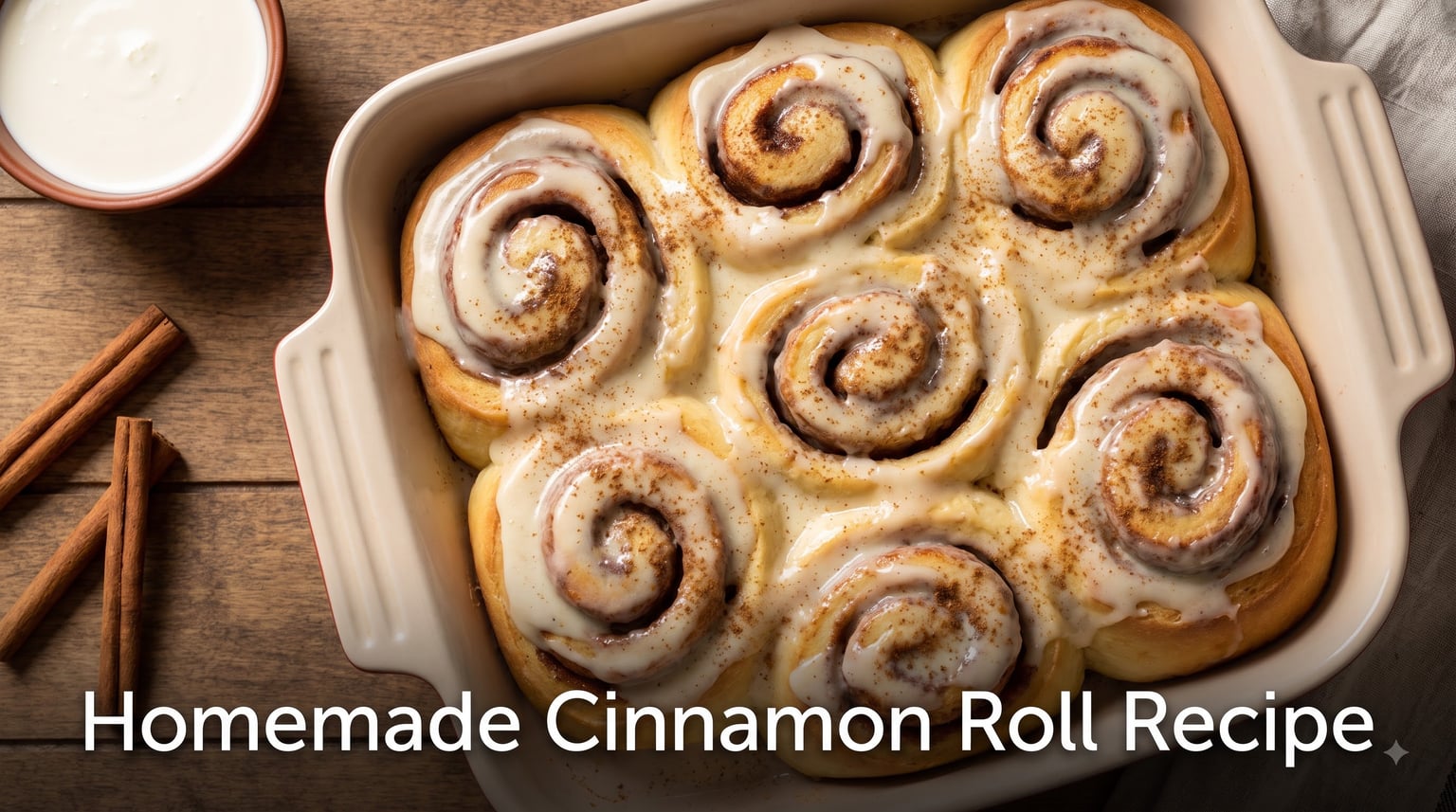
My homemade cinnamon roll recipe has been tested more than 40 times over three years in my kitchen, and I still get excited when I pull a tray of these golden, gooey rolls from the oven. If you have ever wanted bakery-style cinnamon rolls that taste better than Cinnabon, with a tender crumb and a swirl of melty brown sugar filling in every bite, this guide is for you.
Inside this recipe, I will walk you through every stage: making the enriched dough, building the cinnamon sugar swirl, the heavy cream trick that creates that signature gooey bottom, and the cream cheese frosting that ties everything together. I will also share the troubleshooting tips I learned the hard way, plus make-ahead and overnight instructions so you can wake up to fresh cinnamon rolls on Christmas morning without lifting a hand at 6 a.m.
Before we begin, make sure your pantry is stocked with essential baking spices and a good quality ground cinnamon. The right cinnamon makes a real difference here, and I will explain why in the ingredients section.
Table of Contents
Why This Homemade Cinnamon Roll Recipe Works?
I have made a lot of cinnamon rolls. I mean a lot. After testing dozens of recipes and talking to bakers on Reddit’s r/Baking and r/Breadit, I noticed the same complaints kept coming up: dough too dense, rolls dry on top, frosting that slides off, and centers that taste bland compared to the edges.
This recipe solves those problems. The dough is enriched with butter, eggs, and milk for a pillowy texture. The filling uses a generous ratio of butter to brown sugar so every layer melts into the swirl. And the heavy cream poured over the rolls before baking creates the gooey caramelized bottom that makes these taste better than store-bought alternatives like the canned cinnamon roll alternatives I have also tested.
Total time is about 2 hours and 30 minutes, including one rise. Beginners can absolutely nail this on the first try if they follow the dough cues and use a kitchen thermometer.
Ingredients You’ll Need for Homemade Cinnamon Rolls
These ingredients make 9 large cinnamon rolls. You can double the recipe for a 9×13 pan of 12-15 rolls, which is what I do for holiday brunches.
For the Dough
3 and 1/4 cups (about 420g) bread flour, plus more for dusting
1 packet (or 2 and 1/4 teaspoons) instant yeast
1/4 cup (50g) granulated sugar
1/2 teaspoon salt
1/2 cup (120ml) whole milk, warmed to 110°F
1/4 cup (60g) unsalted butter, melted and slightly cooled
2 large eggs, room temperature
1 teaspoon pure vanilla extract
1/3 cup (80ml) heavy cream, warmed to 110°F
For the Cinnamon Filling
1/2 cup (115g) unsalted butter, very soft
1 cup (220g) packed dark brown sugar
2 tablespoons ground cinnamon (Saigon cinnamon if you can find it)
1/4 teaspoon salt
For the Heavy Cream Topping
1/2 cup (120ml) heavy cream
1 tablespoon maple syrup
For the Cream Cheese Frosting
6 tablespoons (85g) unsalted butter, softened
4 oz (115g) full-fat cream cheese, softened
1 and 1/2 cups (180g) powdered sugar, sifted
1 teaspoon pure vanilla extract
1/8 teaspoon salt
1-2 tablespoons heavy cream or milk, as needed
A quick note on flour: I tested this recipe with both bread flour and all-purpose flour, and bread flour produced noticeably fluffier rolls with a chewier crumb. I will explain the difference in detail a bit later.
How to Make Homemade Cinnamon Rolls Step by Step
Step 1: Mix and Knead the Dough
In the bowl of a stand mixer fitted with the dough hook, whisk together the bread flour, instant yeast, sugar, and salt. Add the warm milk, melted butter, eggs, vanilla, and warm heavy cream.
Mix on low speed for 2 minutes until a shaggy dough forms. Increase to medium speed and knead for 7-9 minutes. The dough should pull away from the sides of the bowl and feel soft, slightly tacky, and elastic. If it is too sticky, add 1 tablespoon of flour at a time. If it is too dry, add a teaspoon of milk.
Step 2: Check the Window Pane
To know if your dough has enough gluten development, perform the window pane test. Pinch off a small piece of dough and gently stretch it between your fingers. If you can stretch it thin enough to see light through it without the dough tearing, the gluten is ready. If it tears easily, knead for another 2 minutes and test again.
This test is the single most reliable way to know your cinnamon rolls will be fluffy rather than dense. Beginners often skip it and end up with tough rolls.
Step 3: First Rise
Shape the dough into a ball, place it in a lightly greased bowl, cover with plastic wrap or a damp towel, and let it rise in a warm spot for 1 to 1 and 1/2 hours. The dough should double in size. I usually preheat my oven to 200°F for 2 minutes, then turn it off and place the bowl inside to create a warm proofing environment.
Step 4: Make the Cinnamon Filling
While the dough rises, mix the softened butter, brown sugar, cinnamon, and salt in a small bowl until it forms a smooth, spreadable paste. Set aside at room temperature.
Step 5: Roll Out the Dough
Turn the risen dough out onto a lightly floured surface. Roll it into a 12×18 inch rectangle, about 1/4 inch thick. Try to keep the edges as even as possible so your rolls are uniform.
Step 6: Add the Filling and Roll
Spread the cinnamon filling evenly over the dough, leaving a 1/2 inch border on one of the long edges. Starting from the opposite long edge, roll the dough tightly into an 18-inch log. Pinch the seam to seal.
Step 7: Cut the Rolls
This is where the dental floss trick comes in. Slide unflavored dental floss under the log, cross the ends over the top, and pull in opposite directions to slice cleanly through the dough without squishing it. Cut into 9 even rolls, each about 2 inches wide.
If you do not have floss, use a sharp serrated knife and a gentle sawing motion. A dull knife will press the dough down and ruin the rise.
Step 8: Pour the Heavy Cream and Let Them Rise Again
Place the cut rolls in a greased 9×13 inch baking pan, leaving a little space between each. Mix the heavy cream and maple syrup and pour it evenly over the rolls. Cover loosely and let them rise for 30-45 minutes until puffy.
Step 9: Bake
Preheat the oven to 350°F (177°C). Bake the rolls for 22-26 minutes, until the tops are golden brown and the centers read 190°F on a thermometer. The heavy cream will bubble up around the edges and create that signature gooey caramel layer.
If the tops brown too quickly, tent with foil for the last 5 minutes.
Step 10: Frost and Serve
Let the rolls cool in the pan for 5-10 minutes. While they cool, beat the frosting ingredients together until smooth and spreadable. Spread the cream cheese frosting generously over the warm rolls so it melts slightly into the swirls. Serve warm.
The Heavy Cream Secret to Gooey Cinnamon Rolls
Pouring heavy cream over the cut rolls before the second rise is the most underrated technique in cinnamon roll baking. I picked it up after reading dozens of Reddit threads, and it has completely changed my recipe.
The cream soaks into the dough, creating pockets of steam as the rolls bake. That steam keeps the interior ultra-moist and forms a thin caramelized layer on the bottom of the pan. The result is bakery-style gooey cinnamon rolls that stay soft even after they cool. Maple syrup adds a subtle sweetness that complements the brown sugar in the filling.
Do not skip this step. It is the difference between good cinnamon rolls and unforgettable ones.
How to Make Cream Cheese Frosting for Cinnamon Rolls?
Cream cheese frosting is what separates a homemade cinnamon roll from a bakery cinnamon roll. The trick is getting the ratio right and using full-fat cream cheese at room temperature.
Beat the softened butter and cream cheese together until light and fluffy, about 2 minutes. Add the sifted powdered sugar, vanilla, and salt, and beat on low until combined. Add heavy cream one tablespoon at a time until the frosting reaches a thick but spreadable consistency.
If your frosting is too runny, your cream cheese was too warm. Chill it in the fridge for 20 minutes and beat again. If it is too thick, add a splash more cream. For a tangier flavor, add 1/2 teaspoon of lemon juice. For a maple version, swap the vanilla for 1 tablespoon of pure maple syrup.
Bread Flour vs All-Purpose Flour: Which Is Better?
This is one of the most common questions I get. Here is the honest answer based on side-by-side testing in my own kitchen.
Bread flour has a higher protein content (typically 12-14%) compared to all-purpose flour (10-12%). More protein means more gluten development, which traps more gas during the rise and gives you a chewier, fluffier, taller roll. All-purpose flour produces a more tender, cake-like crumb that some people prefer.
For cinnamon rolls specifically, I prefer bread flour because the rolls need structure to hold up to the dense filling and the heavy cream soak. With all-purpose flour, the rolls can collapse slightly as they cool. That said, if you only have all-purpose in your pantry, the recipe will still work beautifully. Just add an extra tablespoon of flour if the dough feels too slack during kneading.
Make-Ahead and Overnight Cinnamon Roll Instructions
For Christmas morning, Thanksgiving brunch, or any special occasion breakfast, this recipe works perfectly as an overnight cinnamon roll recipe.
After cutting the rolls and placing them in the pan, cover tightly with plastic wrap and refrigerate for up to 16 hours. The cold slows the rise, so the second proofing will happen in the fridge overnight. In the morning, pull the pan out 30-45 minutes before baking to take the chill off, then bake as directed.
You can also freeze the unbaked rolls. After the second rise, wrap the pan tightly in plastic wrap and then foil. Freeze for up to 3 weeks. Thaw overnight in the fridge, then bake as directed, adding a few extra minutes if needed.
How to Store and Freeze Homemade Cinnamon Rolls
Store frosted cinnamon rolls in an airtight container at room temperature for up to 2 days. The cream cheese frosting keeps them moist. For longer storage, refrigerate for up to 5 days, but bring them back to room temperature before serving for the best texture.
To freeze baked rolls, skip the frosting, wrap individually in plastic wrap, then place in a freezer bag for up to 2 months. Thaw overnight in the fridge and warm in a 300°F oven for 8-10 minutes before frosting and serving.
For the softest texture, reheat leftover rolls in the microwave for 15-20 seconds. The steam brings back that fresh-from-the-oven feel.
Troubleshooting: Why Your Cinnamon Rolls Aren’t Perfect
Even with the best cinnamon roll recipe, things can go wrong. Here are the most common problems and how to fix them.
Dough did not rise: Your yeast may be expired, or your milk was too hot (above 120°F kills yeast). Test yeast by mixing it with warm milk and a pinch of sugar. If it foams within 5 minutes, it is alive.
Rolls are dense instead of fluffy: The dough was under-kneaded, or you skipped the window pane test. Try kneading longer next time.
Rolls rose unevenly in the oven: Your oven has hot spots. Rotate the pan halfway through baking.
Frosting is too runny: Your cream cheese was too warm, or you added too much liquid. Chill and re-beat.
Filling leaked out during baking: You may have rolled the log too loosely, or left too much filling on the edges. Leave a 1/2 inch border on one long edge.
Bottoms are soggy: You skipped the heavy cream step, or the pan was overcrowded. Use a metal pan for crisper bottoms.
Not enough cinnamon flavor: Use a stronger variety like Saigon or Vietnamese cinnamon, and double the amount for a more pronounced taste.
Quick Recipe Card
Prep Time: 30 minutes
Rise Time: 1 hour 30 minutes (active plus 30-45 minutes second rise)
Cook Time: 25 minutes
Total Time: About 2 hours 30 minutes
Servings: 9 large cinnamon rolls
Oven Temperature: 350°F (177°C)
Frequently Asked Questions
What is the secret to the best cinnamon rolls?
The two biggest secrets are using bread flour for a fluffier crumb and pouring heavy cream over the rolls before baking. The cream soaks into the dough and creates a gooey, caramelized bottom layer that mimics bakery-style cinnamon rolls.
What are common mistakes when making homemade cinnamon rolls?
The most common mistakes are using milk that is too hot (which kills the yeast), under-kneading the dough, skipping the window pane test, rolling the log too loosely so filling leaks out, and cutting the rolls with a dull knife that squishes them down. Each of these can be avoided with a thermometer and a little patience.
What ingredients do I need to make cinnamon rolls from scratch?
For the dough you need bread flour, instant yeast, sugar, salt, milk, butter, eggs, vanilla, and heavy cream. For the filling you need softened butter, dark brown sugar, and ground cinnamon. For the frosting you need cream cheese, butter, powdered sugar, vanilla, and a pinch of salt.
What is the secret ingredient in cinnamon rolls?
Heavy cream is the secret ingredient that makes cinnamon rolls taste like they came from a bakery. Pouring it over the rolls before the second rise creates steam during baking, which keeps the interior ultra-moist and forms a gooey caramel-like layer on the bottom of the pan.
Time to Bake the Best Homemade Cinnamon Rolls of Your Life
You have a complete homemade cinnamon roll recipe now, from the enriched dough all the way through the cream cheese frosting. You also have my best tested tips: bread flour for fluffiness, the heavy cream pour for gooey bottoms, the window pane test for foolproof dough, and the overnight method for stress-free holiday mornings.
This recipe fits right into our timeless vintage recipes collection, and it is the kind of treat that brings people together. Make a batch this weekend, share with someone you love, and let me know how your rolls turned out.