
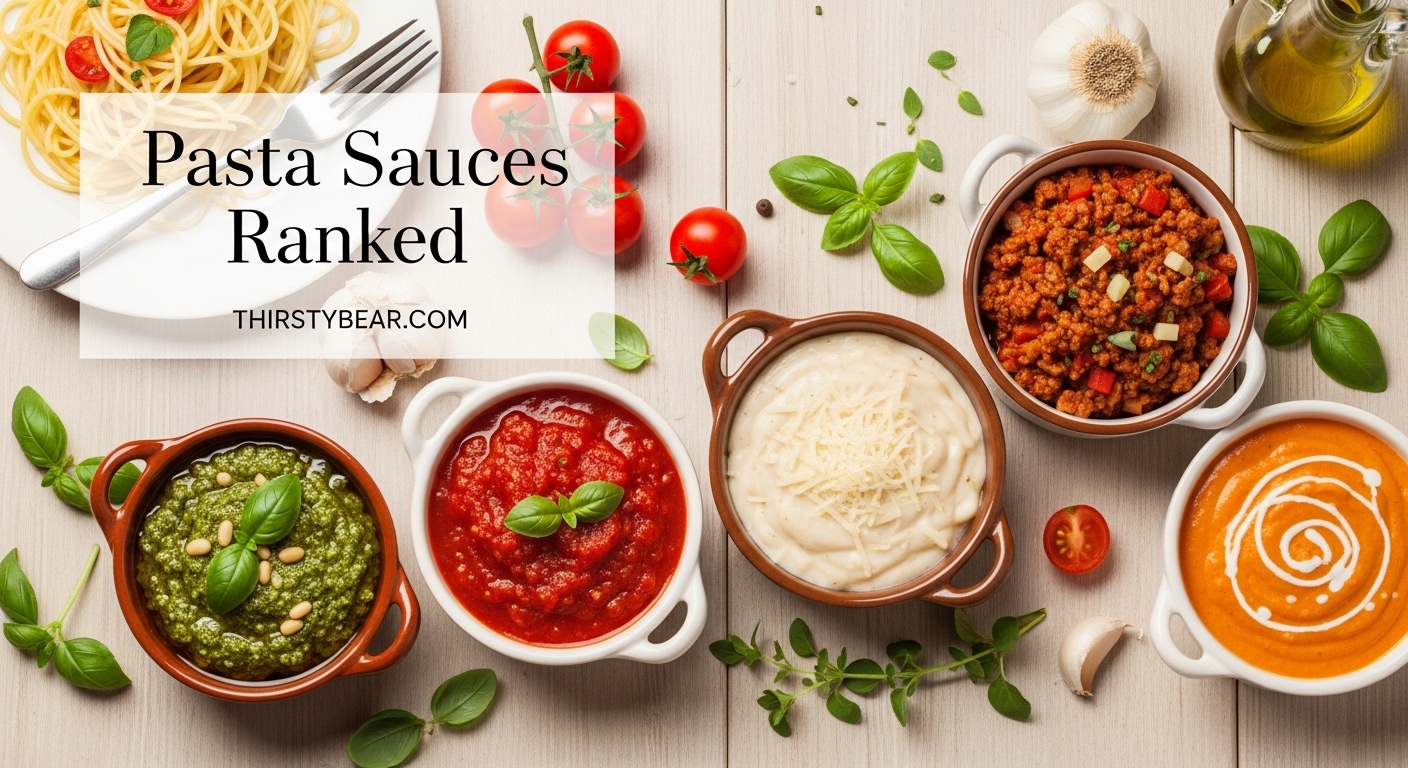
When I first started cooking pasta at home, I reached for the same jar of marinara every single time. It took years of experimenting and a trip through Italy to realize that the world of pasta sauces extends far beyond the red sauce aisle at your local grocery store. Understanding the different pasta sauces ranked by their versatility, accessibility, and flavor profiles completely transformed how I approach weeknight dinners and special occasion meals alike.
In this guide, I am ranking the ten most significant pasta sauce types from a home cook’s perspective. I have evaluated each sauce based on four criteria: global popularity, versatility across different dishes, accessibility of ingredients, and ease of preparation. This is not about which jarred brand tastes better. I am talking about the foundational sauce types that define Italian cuisine and home cooking worldwide. Whether you are exploring beer pairings with pasta or planning your weekly menu, knowing these sauces will elevate every bowl you serve.
Let me walk you through each sauce type, explain what makes it special, and help you understand when to reach for it in your kitchen.
Table of Contents
How We Ranked These Pasta Sauces
Before diving into the rankings, I want to explain my methodology. I spent three months researching, cooking, and tasting these sauces with my family. We tested each one multiple times with different pasta shapes and preparation methods.
- Popularity (30% of score): How widely recognized and consumed is this sauce globally? Does it appear on restaurant menus worldwide? Is it a staple in home kitchens?
- Versatility (25% of score): Can this sauce work with multiple pasta shapes? Does it pair well with proteins and vegetables? Can you use it in dishes beyond pasta?
- Accessibility (25% of score): Are the ingredients available at standard grocery stores? Do they require specialty shops or seasonal availability?
- Preparation Difficulty (20% of score): Can a beginner make this successfully? Does it require special techniques or equipment?
Pasta Sauces Ranked: The Complete List
Here is my definitive ranking of the ten essential pasta sauce types, from most versatile and beloved to more specialized options worth exploring.
1. Marinara – The Universal Favorite
Marinara rightfully claims the top spot as the most popular pasta sauce in the world. This simple tomato-based sauce originated in Naples and has become the gateway sauce for pasta lovers everywhere. Its beauty lies in the balance of San Marzano tomatoes, garlic, olive oil, and fresh herbs.
The flavor profile is bright and tangy with just enough sweetness from ripe tomatoes. It is incredibly forgiving for beginners while still satisfying for experienced cooks. I have made marinara from fresh summer tomatoes and from high-quality canned options, and both deliver excellent results.
What makes marinara truly special is its versatility. It works with virtually every pasta shape, from thin spaghetti to chunky rigatoni. You can use it as a base for countless variations, add protein directly to the sauce, or keep it vegan and simple. It is naturally gluten-free and dairy-free, making it accessible to nearly every dietary preference.
- Best pasta pairings: Spaghetti, penne, rigatoni, linguine
- Dietary notes: Vegan, gluten-free, dairy-free, nut-free
- Difficulty: Beginner-friendly (20 minutes)
2. Alfredo – The Creamy Indulgence
Alfredo secures second place through sheer comfort factor. This Roman creation combines butter, heavy cream, and parmesan cheese into something that feels like a warm hug on a plate. It is the sauce people crave when they want pure indulgence without complicated preparation.
The flavor is rich, cheesy, and deeply satisfying. Authentic Alfredo relies on the emulsion between butter and parmesan, creating a glossy coating that clings beautifully to pasta. I have found that using high-quality parmesan makes an enormous difference here. Pre-grated cheese simply does not melt the same way.
Where Alfredo loses points is versatility. It pairs best with flat, long pasta like fettuccine that can hold the creamy coating. It is also dairy-heavy, which excludes vegans and many people with dietary restrictions. However, for those who can enjoy it, Alfredo remains a beloved choice for date nights and comfort food cravings.
- Best pasta pairings: Fettuccine, linguine, pappardelle
- Dietary notes: Vegetarian, gluten-free, contains dairy
- Difficulty: Intermediate (15 minutes, technique matters)
3. Pesto – The Fresh Herb Powerhouse
Pesto from Genoa represents everything wonderful about Northern Italian cooking. This vibrant green sauce combines fresh basil, pine nuts, garlic, parmesan, and olive oil into a flavor explosion that tastes like summer in every bite. I make pesto at least twice a month during basil season.
The flavor profile is herbaceous, nutty, and bright. Traditional preparation uses a mortar and pestle, though a food processor works well for home cooks. The key is using the freshest basil possible and high-quality olive oil. If you are interested in a healthier version, check out my low-sodium homemade pesto recipe that does not sacrifice flavor.
Pesto pairs beautifully with short pasta shapes that can hold the thick sauce, as well as long strands that get coated evenly. It is versatile beyond pasta too. I use leftover pesto on grilled vegetables, sandwiches, and even as a pizza base. The main limitation is that truly great pesto requires fresh basil, making it seasonally dependent unless you grow herbs indoors.
- Best pasta pairings: Trofie, linguine, penne, fusilli
- Dietary notes: Vegetarian, gluten-free, contains dairy and nuts
- Difficulty: Beginner-friendly (10 minutes)
4. Bolognese – The Hearty Meat Sauce
Bolognese ranks fourth due to its complexity and time investment, though it scores perfectly on flavor and satisfaction. This meat-based sauce from Bologna requires slow cooking to develop its deep, rich character. It is not a Tuesday night sauce unless you have planned ahead.
The traditional recipe uses a combination of ground beef and pork, simmered with soffritto (onion, celery, carrot), tomatoes, wine, and a touch of milk. The result is savory, complex, and substantial. I typically make a large batch on Sundays for meal planning with pasta throughout the week.
Bolognese demands wide, flat pasta that can support the heavy sauce. Tagliatelle is the traditional choice, though pappardelle and rigatoni work wonderfully. The sauce is naturally gluten-free and dairy-free (the small amount of milk is optional), though obviously not suitable for vegetarians or vegans.
- Best pasta pairings: Tagliatelle, pappardelle, rigatoni
- Dietary notes: Contains meat, gluten-free, can be dairy-free
- Difficulty: Intermediate (2-4 hours simmering)
5. Carbonara – The Roman Classic
Carbonara represents Italian culinary ingenuity at its finest. This Roman classic transforms eggs, pecorino romano, guanciale, and black pepper into something creamy without a drop of cream. The technique creates an emulsion between the hot pasta water, cheese, and eggs that coats each strand perfectly.
The flavor is salty, peppery, and deeply savory from the cured pork. Guanciale provides the authentic taste, though pancetta works as a substitute. The key technique is tempering the eggs with pasta water to create creaminess without scrambling. I ruined three batches before mastering this, so beginners should expect a learning curve.
Carbonara works best with long pasta like spaghetti, though rigatoni is also traditional in Rome. It is not versatile for dietary restrictions, containing both eggs and cheese. However, for those who can enjoy it, carbonara delivers one of the most satisfying pasta experiences possible.
- Best pasta pairings: Spaghetti, rigatoni, bucatini
- Dietary notes: Contains eggs, dairy, and pork
- Difficulty: Advanced (technique-critical, 20 minutes)
6. Arrabbiata – The Spicy Option
Arrabbiata, meaning “angry” in Italian, brings heat to the pasta sauce world. This Roman sauce takes the marinara base and adds red chili peppers for a spicy kick that wakes up your taste buds. It is perfect for spice lovers who find traditional tomato sauces too mild.
The flavor profile combines the brightness of tomatoes with a building heat that lingers pleasantly. You control the spice level by adjusting the chili quantity. I find arrabbiata particularly satisfying during cold months when I want something warming and bold.
This sauce pairs traditionally with penne, creating the famous Penne all’Arrabbiata dish found throughout Italy. It works with any pasta that can hold the chunky sauce. Arrabbiata is naturally vegan, gluten-free, and dairy-free, making it one of the most accessible options on this list.
- Best pasta pairings: Penne, rigatoni, spaghetti
- Dietary notes: Vegan, gluten-free, dairy-free
- Difficulty: Beginner-friendly (25 minutes)
7. Aglio e Olio – The Minimalist’s Choice
Aglio e Olio proves that great pasta sauces do not require complex ingredients. This Neapolitan sauce uses just four components: garlic, olive oil, red pepper flakes, and parsley. It is the sauce I make when my pantry is nearly empty but I still want something delicious.
The flavor is clean, garlicky, and slightly peppery. The technique involves slowly cooking sliced garlic in olive oil until golden but not burned. The pasta cooking water emulsifies with the oil to create a light coating that does not overwhelm the pasta itself.
This sauce works almost exclusively with spaghetti, allowing the simple preparation to shine. It is vegan, gluten-free, dairy-free, and nut-free. Every home cook should master Aglio e Olio because it demonstrates how quality ingredients and proper technique create magic from almost nothing.
- Best pasta pairings: Spaghetti (traditional), linguine
- Dietary notes: Vegan, gluten-free, dairy-free, nut-free
- Difficulty: Beginner-friendly (15 minutes, attention required)
8. Vodka Sauce – The Pink Sensation
Vodka sauce occupies a unique position as a hybrid creation beloved in both Italy and America. This pink sauce combines tomatoes, heavy cream, and vodka for a result that bridges red and white sauces. The vodka helps emulsify the ingredients and releases flavors in the tomatoes that alcohol alone achieves.
The flavor is tangy, creamy, and slightly sweet with a depth that surprises first-time tasters. Despite the name, the alcohol cooks off completely, leaving only enhanced flavor behind. I find vodka sauce particularly appealing to picky eaters who find plain marinara too acidic or Alfredo too heavy.
Penne alla Vodka is the classic pairing, though this sauce works with many shapes. It is vegetarian and gluten-free but contains dairy. The preparation is straightforward, requiring only about 30 minutes from start to finish.
- Best pasta pairings: Penne, rigatoni, farfalle
- Dietary notes: Vegetarian, gluten-free, contains dairy
- Difficulty: Beginner-friendly (30 minutes)
9. Amatriciana – The Bucatini Partner
Amatriciana comes from the town of Amatrice and represents the perfect balance of pork, tomato, and pecorino cheese. This Lazio sauce is similar to Arrabbiata but adds guanciale for richness and depth. It is less common outside Italy but worth seeking out for its distinctive character.
The flavor is porky, tangy, and savory with a pleasant saltiness from the cured meat. Traditional preparation requires guanciale, which is cured pork jowl with a specific texture and flavor. Pancetta substitutes work but do not quite capture the authentic taste.
Bucatini is the traditional pasta pairing, a thick hollow spaghetti that captures sauce inside and out. The sauce is naturally gluten-free and dairy-free if you skip the cheese topping, though pecorino is traditionally considered essential.
- Best pasta pairings: Bucatini, spaghetti, rigatoni
- Dietary notes: Contains pork, gluten-free, can be dairy-free
- Difficulty: Intermediate (30 minutes)
10. Puttanesca – The Bold and Briny
Puttanesca rounds out our ranking as the most polarizing sauce on this list. Its name roughly translates to “in the style of the prostitute,” with colorful folklore about its quick preparation between clients. This Neapolitan sauce combines tomatoes, olives, capers, anchovies, and garlic into something intense and unforgettable.
The flavor is salty, briny, and punchy. You either love Puttanesca or you do not. There is rarely a middle ground. I adore it for its boldness, but I recognize that the anchovies and capers create a assertive profile that not everyone enjoys.
Spaghetti is the traditional pairing, though this sauce works with various shapes. It is naturally dairy-free, gluten-free, and contains fish. The preparation is quick, making it ideal for weeknight dinners when you want something with serious flavor impact.
- Best pasta pairings: Spaghetti, linguine, penne
- Dietary notes: Contains fish, gluten-free, dairy-free
- Difficulty: Beginner-friendly (20 minutes)
Quick Comparison: All 10 Pasta Sauces at a Glance
| Sauce | Origin Region | Key Ingredients | Difficulty | Best Pasta | Dietary Notes |
|---|---|---|---|---|---|
| Marinara | Campania (Naples) | Tomatoes, garlic, herbs | Easy (20 min) | Spaghetti, penne | Vegan, GF, DF |
| Alfredo | Lazio (Rome) | Butter, cream, parmesan | Medium (15 min) | Fettuccine, linguine | GF, contains dairy |
| Pesto | Liguria (Genoa) | Basil, pine nuts, parmesan | Easy (10 min) | Trofie, linguine, penne | GF, contains dairy/nuts |
| Bolognese | Emilia-Romagna | Meat, tomatoes, soffritto | Medium (2-4 hrs) | Tagliatelle, pappardelle | GF, contains meat |
| Carbonara | Lazio (Rome) | Eggs, pecorino, guanciale | Hard (20 min) | Spaghetti, rigatoni | Contains eggs/dairy/pork |
| Arrabbiata | Lazio (Rome) | Tomatoes, chili, garlic | Easy (25 min) | Penne, rigatoni | Vegan, GF, DF |
| Aglio e Olio | Campania (Naples) | Garlic, olive oil, chili | Easy (15 min) | Spaghetti | Vegan, GF, DF, NF |
| Vodka Sauce | Italy/American hybrid | Tomatoes, cream, vodka | Easy (30 min) | Penne, rigatoni | GF, contains dairy |
| Amatriciana | Lazio (Amatrice) | Tomatoes, guanciale, pecorino | Medium (30 min) | Bucatini, spaghetti | GF, contains pork |
| Puttanesca | Campania (Naples) | Tomatoes, olives, capers, anchovies | Easy (20 min) | Spaghetti, linguine | GF, DF, contains fish |
Legend: GF = Gluten-Free, DF = Dairy-Free, NF = Nut-Free
The Complete Pasta-to-Sauce Pairing Guide
Understanding which pasta shape works with which sauce transforms a good meal into a great one. Italian tradition developed these pairings over centuries based on how different shapes hold and distribute sauce. When I started making fresh pasta at home, these principles became even more important.
Long and Thin Pasta (Spaghetti, Linguine, Capellini)
These shapes work best with light, oil-based or thin sauces that coat evenly without overwhelming. Think Aglio e Olio, Marinara, and Puttanesca. The smooth surface allows sauce to slide and distribute rather than collecting in crevices.
Long and Tubular Pasta (Bucatini, Perciatelli)
The hollow center captures sauce inside, making these perfect for Amatriciana and other chunky tomato sauces. The tube also provides structure that supports heavier sauces better than thin spaghetti.
Flat and Wide Pasta (Fettuccine, Pappardelle, Tagliatelle)
Wide surfaces support creamy, heavy sauces that need area to adhere. Alfredo and Bolognese were practically designed for these shapes. The flat surface also creates pleasant textural contrast with chunky meat sauces.
Short with Ridges (Rigatoni, Penne Rigate, Tortiglioni)
The external ridges grab onto sauce, while the hollow center captures it inside. These are the most versatile shapes, working with everything from Arrabbiata to Vodka sauce. The structure also stands up to baking in casseroles.
Short and Smooth (Penne Lisce, Ziti)
Without ridges, these require sauces that actively cling. Cream-based sauces work well here because their thickness adheres to smooth surfaces. They are also traditional for baked pasta dishes.
Shaped and Curled (Fusilli, Rotini, Cavatappi)
The spirals and curves trap chunky sauces with bits of vegetable or meat. Pesto works beautifully here because the sauce collects in all the crevices. These are particularly good for cold pasta salads too.
Northern vs Southern Italian Sauces
Italy’s regional diversity created two distinct sauce traditions that reflect local climate, ingredients, and history. Understanding this division helps explain why certain sauces taste the way they do.
Northern Italian Sauces
Northern Italy’s cooler climate and proximity to the Alps created a butter and cream culture. Cattle farming meant plenty of dairy, while shorter growing seasons made fresh vegetables more precious. The sauces here are richer, heavier, and more suited to cold weather.
Representative sauces include Alfredo, Pesto (though basil grows better in the south, Genoa’s unique microclimate made it possible), and cream-based preparations. These sauces pair traditionally with fresh egg pasta, which is more common in the north. If you are looking to experiment with these classics, explore our collection of modern pasta recipes that reimagine these traditional favorites.
Southern Italian Sauces
Southern Italy’s hot, dry Mediterranean climate created the tomato, olive oil, and garlic tradition. These ingredients store well and thrive in southern conditions. The sauces here are lighter, brighter, and often spicy from local chili peppers.
Marinara, Arrabbiata, Puttanesca, and Aglio e Olio all come from this tradition. These sauces use dried pasta traditionally, which holds up better to the bold flavors and does not compete with the sauce itself.
Homemade vs Store-Bought: What Works Best
After years of testing both approaches, I have developed some strong opinions about which sauces demand homemade preparation and which work perfectly well from a jar.
Sauces That Excel Homemade
Pesto requires fresh basil for the bright flavor that defines the sauce. Jarred pesto tastes muted and often overly oily. The five minutes of preparation yields dramatically better results.
Carbonara demands precise technique that jarred versions cannot replicate. The emulsion of eggs, cheese, and pasta water must happen at the right temperature, and pre-made versions invariably scramble or separate.
Aglio e Olio is so simple that homemade is actually easier than buying. The fresh garlic flavor disappears quickly after cutting, making jarred versions taste flat and stale.
Sauces That Work Store-Bought
Marinara has excellent jarred options, particularly those using San Marzano tomatoes. The slow-cooked flavor actually benefits from industrial processing in some cases. I keep quality marinara in my pantry for weeknights.
Bolognese requires hours of simmering that most home cooks cannot manage on a Tuesday. High-quality refrigerated fresh versions or well-made jarred options can deliver excellent results with significantly less effort.
Tips for Doctoring Jarred Sauces
Even good jarred sauces benefit from a few additions. I always finish marinara with fresh basil and a pat of butter for richness. A splash of pasta cooking water helps any sauce cling better. Red pepper flakes wake up bland sauces instantly.
Frequently Asked Questions About Pasta Sauces
What is the most popular pasta sauce?
Marinara is the most popular pasta sauce globally, beloved for its bright tomato flavor, versatility with any pasta shape, and accessibility. It originates from Naples and serves as the foundation for countless Italian-American and traditional Italian dishes. Its simple ingredient list of tomatoes, garlic, olive oil, and herbs makes it approachable for beginners while still satisfying experienced cooks.
What are the different types of pasta sauce?
The main pasta sauce categories include tomato-based sauces (marinara, arrabbiata, puttanesca), cream-based sauces (alfredo, vodka sauce), oil-based sauces (aglio e olio, pesto), and meat-based sauces (bolognese, amatriciana). Each category represents different regional Italian traditions and pairs with specific pasta shapes for optimal results.
Which pasta sauce is the healthiest?
Aglio e Olio and Marinara are the healthiest pasta sauce options. Aglio e Olio contains only olive oil, garlic, and herbs with minimal calories and heart-healthy fats. Marinara provides lycopene from tomatoes with no added dairy. Both are naturally vegan, gluten-free, and dairy-free while delivering significant flavor without heavy cream or excessive sodium.
What sauce goes with spaghetti?
The classic spaghetti pairing is Marinara sauce, creating the iconic Spaghetti al Pomodoro. Other excellent options include Aglio e Olio for a light garlic-forward dish, Carbonara for a creamy egg and cheese preparation, and Puttanesca for those who enjoy bold, briny flavors. The thin, smooth surface of spaghetti works best with lighter sauces that coat evenly.
What is the difference between marinara and tomato sauce?
Marinara is a specific type of tomato sauce that cooks quickly with garlic, olive oil, and herbs for a bright, fresh flavor. General tomato sauce often simmers longer with onions, celery, and carrots for deeper, sweeter flavor. Marinara is designed for pasta specifically, while tomato sauce may be used for pizza, braising, or other applications.
What pasta sauce has no dairy?
Several pasta sauces contain no dairy: Marinara, Arrabbiata, Aglio e Olio, Puttanesca, and Amatriciana (without cheese topping). These tomato-based and oil-based sauces rely on herbs, spices, cured meats, or vegetables for flavor rather than cream or cheese. They are ideal for lactose-intolerant individuals, vegans, and those avoiding dairy for health reasons.
Which Italian pasta sauce is the best for beginners?
Marinara is the best pasta sauce for beginners because it requires minimal technique, uses pantry staples, forgives mistakes, and cooks in just 20 minutes. Aglio e Olio is equally approachable with only four ingredients. Both teach fundamental Italian cooking skills while delivering restaurant-quality results that build confidence for more complex sauces later.
Final Thoughts
These pasta sauces ranked by versatility and popularity represent just the beginning of Italian culinary tradition. Each sauce tells a story of regional ingredients, historical necessity, and generations of refinement. The beauty of mastering these ten sauces is that they cover nearly every occasion, dietary need, and flavor preference you might encounter.
I encourage you to start with Marinara and Aglio e Olio to build your confidence, then venture into the more complex territory of Carbonara and Bolognese. Keep the comparison table bookmarked for quick reference when planning meals. Most importantly, do not be afraid to experiment with the pairings and make these recipes your own.
The perfect pasta sauce is ultimately the one that brings you joy at the dinner table. Whether that is a simple plate of spaghetti with garlic and oil or a labor-intensive Sunday Bolognese, the best choice is the one that fits your life and satisfies your cravings.