
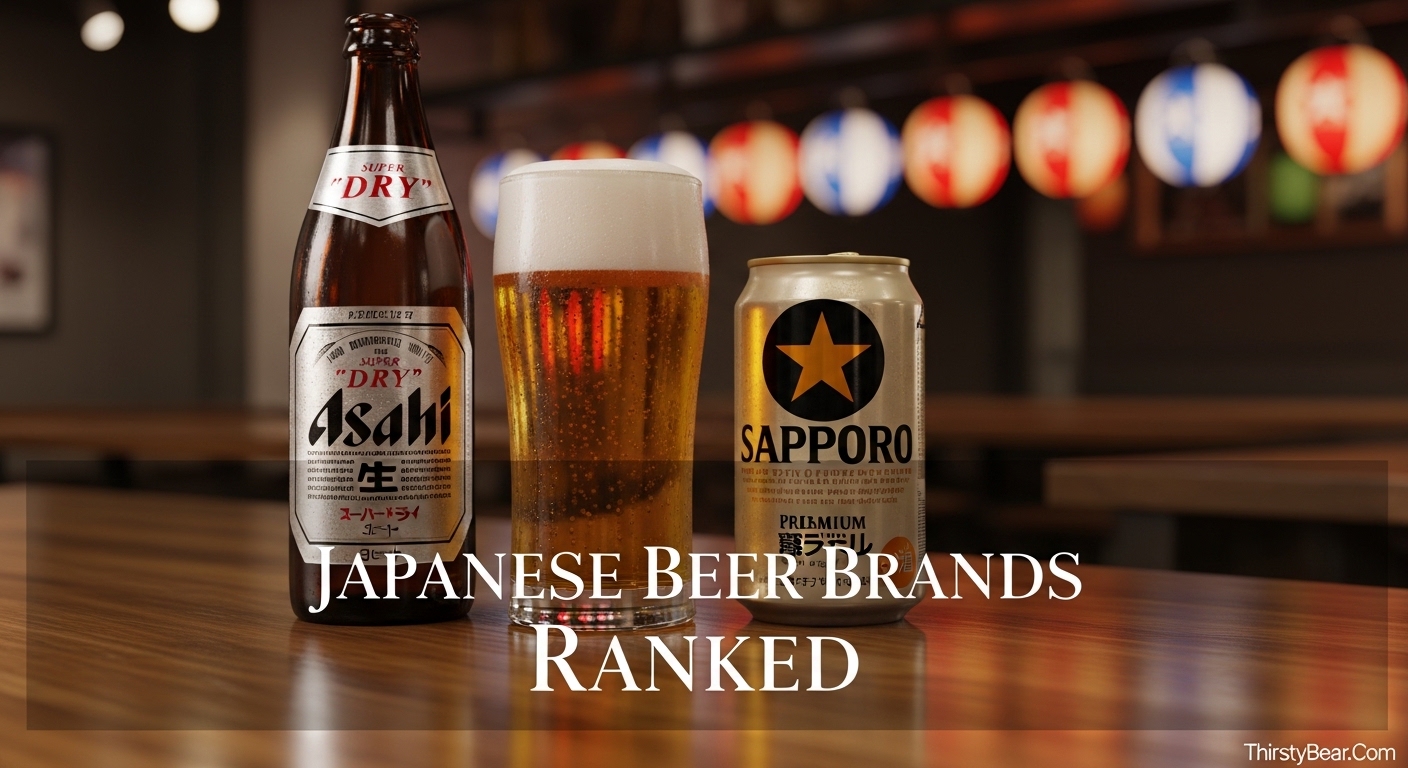
When it comes to crisp, refreshing lagers, this list of japanese beer brands ranked by quality and popularity is the only guide you need. Japan has mastered the art of beer brewing, creating styles that are clean, distinct, and incredibly drinkable. From the iconic dry lagers that dominate the global market to hidden craft gems, there is a Japanese brew for every palate.
In this article, you will learn:
- Which brands dominate the “Big Four” brewery scene.
- The difference between Happoshu and traditional beer.
- My personal tasting notes on the top 12 brews.
- Which Japanese beer pairs best with your favorite foods.
- Where to find these beers in the US and online.
I’ve spent years exploring the beer aisles of Tokyo and my local specialty stores here in the States to bring you a definitive ranking. Whether you are a seasoned beer snob or just looking for something crisp for your next sushi night, I’m here to help you navigate the delicious world of Japanese brewing.
Table of Contents
Japanese Beer Brands Ranked: My Definitive List
I’m going to be honest with you right off the bat: ranking these beers was harder than I expected. Japanese brewers have a knack for consistency. You don’t just drink a Sapporo; you experience a reliable, high-quality standard every single time. But there are nuances that separate the good from the legendary.
I’ve judged these based on availability in the US, flavor profile, mouthfeel, and that intangible “crushability” factor. Here is how the brands stack up.
1. Asahi Super Dry
There is a reason Asahi Super Dry is almost synonymous with Japanese beer globally. It is the quintessential “dry” lager. When I crack one of these open, I’m immediately hit with a light, floral hop aroma that doesn’t overpower the senses.
The taste? It’s incredibly crisp. The “Karakuchi” (dry) taste profile means there’s very little aftertaste. It finishes clean, almost like water in the best way possible. I find this to be the absolute best pairing for greasy foods like yakitori or fried chicken. The carbonation cuts through the fat like a knife, refreshing your palate for the next bite. In almost every conversation I have about japanese beer brands ranked, Asahi takes the top spot for its pioneering dry style.
2. Kirin Ichiban Shibori
Kirin holds a special place in my heart (and my fridge). The name “Ichiban Shibori” translates to “First Press,” referring to the brewing process where they use only the first press of the wort. I know it sounds like marketing jargon, but I swear you can taste the difference.
It has a slightly richer body than Asahi. It’s less “dry” and more “malty-sweet” on the finish. It’s incredibly smooth. If I’m sitting down for a casual drink without food, this is usually my go-to. It has a bit more character to savor.
Pro Tip: If you are in Japan, try “Kirin Lager” (the red label). It’s different from the export “Ichiban” and has a beautiful, classic lager taste. But here in the US, Ichiban is the king of the Kirin lineup.
3. Sapporo Premium Beer
We all know the can. That iconic silver can with the gold star and red star is a fixture in restaurants and grocery stores. Sapporo is the oldest beer brand in Japan, and that history shows.
It’s a perfectly balanced beer. It’s not as dry as Asahi and not as malty as Kirin. It sits right in that sweet spot of refreshment. I’ve noticed that Sapporo retains its head better than many other Asian lagers, which I appreciate. The foam adds a creamy texture that contrasts nicely with the sharp carbonation. It’s a safe, reliable bet for anyone new to the category.
4. Orion Premium Draft
If you ask a true beer geek about their favorite Japanese brew, they might whisper “Orion.” Hailing from Okinawa, Orion is a little different from the mainland giants. It’s brewed with a focus on the tropical climate of the islands.
I’ve found Orion to be slightly sweeter and have a softer mouthfeel than the others. It’s incredibly easy to drink. It feels like a vacation in a can. Because Okinawa has a strong US military presence, Orion has a unique history and flavor profile that appeals to American palates. If you see a blue can with a black star, grab it immediately.
5. Suntory The Premium Malt’s
Suntory is famous for whiskey, but don’t sleep on their beer. “The Premium Malt’s” is exactly what it sounds like: a step up in quality and price.
This is a “pilsner” style, and you can tell. It uses 100% select malts and has a distinct aroma hops fragrance. When I pour this into a glass, it smells almost floral, like a European pilsner but cleaner. It has a bit more bitterness—think herbal and grassy—which I love when I’m eating lighter fare like sashimi or a crisp salad. It’s sophisticated and incredibly well-made.
6. Hitachino Nest White Ale
Now we are venturing into craft territory. Kiuchi Brewery, the makers of Hitachino Nest, has gained a cult following in the US. Their White Ale is iconic, recognizable by the cute owl on the label.
This isn’t your standard lager. It’s a witbier brewed with coriander, orange peel, and nutmeg. I remember the first time I tried it; I was shocked at how complex it was compared to the big lagers. It’s cloudy, spicy, and refreshing. It bridges the gap perfectly for people who love Belgian whites but want that Japanese precision. It definitely deserves a top spot on any list of japanese beer brands ranked for its sheer uniqueness.
7. Yoho Brewing Tokyo Black
If you think Japanese beer is only for light lagers, Yoho Brewing will change your mind. They focus on sessionable craft beers—meaning they are lower in alcohol but packed with flavor.
Tokyo Black is a dark lager (Schwarzbier). It looks intimidating, pouring a deep dark brown, but the taste is surprisingly light. It has notes of chocolate and coffee but finishes dry and crisp. It’s one of my favorites to introduce to people who say, “I don’t like dark beer.” It’s the perfect gateway into the darker side of brewing without being heavy.
8. Coedo Shiro
Coedo is another fantastic craft brewery, and their bottles are easily recognizable by their elegant, wine-like labeling. Shiro is their Hefeweizen.
I’m a huge fan of Hefeweizens, and Coedo does it right. It’s unfiltered, hazy, and smells of banana and clove. It’s a summer staple for me. The carbonation is lively, and it pairs amazingly well with spicy food. If you are having Thai or spicy ramen, skip the lager and grab a Shiro.
9. Aooni IPA
Aooni, meaning “Blue Demon,” is a staple in the Japanese craft beer scene. This is an IPA, and it brings the hops.
It’s bitter, piney, and resinous. It’s a stark contrast to the subtle lagers I mentioned earlier. I appreciate that Japanese craft brewers aren’t just copying American IPAs; they are putting their own spin on them. Aooni is balanced—the malt backbone holds up the bitterness so it doesn’t wreck your palate. It’s a must-try for hop heads.
10. Ebisu Beer
Ebisu is actually one of the oldest brands, originally launched in 1890 (even before Sapporo became a big conglomerate). It’s now owned by Sapporo, but it maintains its reputation as a premium “real” beer.
I find Ebisu to have a distinctive yeast character. It’s a “Kölsch-style” beer technically, which gives it a slightly fruity, almost ale-like finish despite being a lager. It’s very drinkable and has a nice golden color. It’s a classic that often gets overshadowed by its bigger brother, Sapporo Premium.
11. Minoh Beer White Ale
Minoh Beer is a microbrewery located in Osaka. They are harder to find in the US, but if you spot a can, it’s like striking gold.
Their White Ale is fantastic—soft, wheaty, and perfectly carbonated. It reminds me of a lazy afternoon in a small bar. The smaller breweries in Japan often have this artisanal quality that the big four just can’t replicate. It feels handmade.
12. Ginga Kogen “Summer Snow”
Rounding out the list is a wheat beer from Ginga Kogen Brewery. “Summer Snow” is the perfect name for it. It’s unfiltered and milky white.
It has a distinct wheat sourness that is incredibly refreshing. It’s not a sour beer, but it has that twang you get from good wheat. I find it to be a perfect brunch beer or a midday refresher. It’s a gentle way to end the ranking, proving that Japanese beer has range beyond the fizzy yellow stuff.
Understanding “Happoshu” and “Third Beer”
If you are shopping for Japanese beer in Japan (or in very specialized Asian markets), you might notice some confusing labels and prices. You need to know about “Happoshu” and “Third Category” beers.
Japan has a complicated tax system based on malt content.
- Beer: Must have high malt content. This is your Asahi, Kirin, and Sapporo.
- Happoshu (Sparkling Spirit): Low malt content. It tastes similar to beer but usually has a slightly different, sometimes sweeter or thinner profile. It’s cheaper because of lower taxes.
- Third Beer (Third Category): No malt. It uses peas, soy, or other proteins. It’s the cheapest option.
I generally avoid the Third Category stuff. It doesn’t taste right to me—it lacks that crisp finish I crave. Happoshu is drinkable, especially if you are on a budget in Tokyo, but for this ranking, I stuck to the real deal: full-malt beers and craft brews.
Food Pairings: Eat Like a Local
You can’t talk about beer without talking about food. Japanese cuisine and beer are a match made in heaven. Here’s how I pair them:
- Yakitori & Asahi: The charcoal grill flavor of yakitori needs the dry cut of a Super Dry lager. It cleanses the palate perfectly.
- Ramen & Sapporo: Rich, fatty tonkotsu ramen needs bubbles. Sapporo’s balanced profile won’t fight the complex pork broth.
- Sushi & Suntory Premium Malt’s: With delicate raw fish, you don’t want to overpower the taste. The floral notes of Suntory complement the subtle sweetness of the rice and fish.
- Spicy Curry & Coedo Shiro: The clove and banana notes of a Hefeweizen cool down the heat of a spicy Japanese curry. It’s a game changer.
If you explore these pairings, you’ll quickly see why these japanese beer brands ranked so highly in my book—they are built for dining.
The Rise of Craft Beer in Japan
It wasn’t always this diverse. Until the late 1990s, the “Big Four” (Asahi, Kirin, Sapporo, and Suntory) had a stranglehold on the market. Strict laws prohibited small breweries.
Once those laws relaxed, the craft scene exploded. Breweries like Hitachino and Baird Beer started experimenting. I’ve noticed that Japanese craft brewers tend to respect the ingredients immensely. They rarely make “extreme” beers just for shock value. Instead, they refine styles. They take a German Weizen or an American IPA and polish it until it shines. It’s a reflection of the culture’s dedication to craftsmanship, or “Shokunin” spirit.
Where to Buy Japanese Beer in the US?
Ten years ago, finding a Hitachino Nest in a grocery store was impossible. Now, it’s surprisingly easy.
- Total Wine & More: They usually have a dedicated “Asian Beer” section where you can find the big lagers.
- Whole Foods: Often stocks craft options like Hitachino Nest or Baird.
- Drizly / Instacart: Great for getting the standards delivered quickly.
- Specialty Bottle Shops: If you want the obscure stuff (like Minoh or seasonal releases), find a high-end bottle shop in a major city.
Always check the dates! Japanese lagers are meant to be drunk fresh. That crispness fades if the can has been sitting on a warm shelf for six months. I always check the bottom of the can for the production date code.
Pro Tips for the Ultimate Experience
Before you run to the store, here are a few things I’ve learned over the years:
- Glassware Matters: I know it’s tempting to drink straight from the can, but pour it into a glass. Japanese beers, especially the lagers, are designed to create a thick, foamy head. That foam changes the texture and aroma. Use a pilsner glass if you have one.
- Temperature: Drink them ice cold. I’m talking fridge temperature (around 35-40°F). The crisp profile of a dry lager gets lost if the beer warms up.
- Don’t Ignore the Cans: While bottles feel premium, Japanese canning technology is incredible. The linings inside Sapporo and Asahi cans are designed to keep the beer tasting fresh and metallic-free.
Save This Guide!
I update this list frequently as new breweries pop up and seasonal brews hit the shelves. Bookmark this page or save it to your beer folder so you don’t lose the ranking the next time you are staring at a wall of silver and gold cans at the liquor store.
Conclusion
So, who wins? For me, Asahi Super Dry remains the king of the hill for its unparalleled crispness and food-pairing ability. But the rich malt of Kirin and the craft complexity of Hitachino Nest make the choice difficult every time.
The landscape of japanese beer brands ranked is evolving, with craft breweries breathing new life into a market once dominated by giants. My advice? Grab a few from this list, invite some friends over for some ramen or sushi, and do your own taste test. There is no wrong answer when the beer is this good.
FAQ: Japanese Beer Brands Ranked
Q: What is the most popular Japanese beer?
A: Without a doubt, Asahi Super Dry is the most popular and best-selling beer in Japan and globally. Its “Karakuchi” dry taste revolutionized the Japanese beer market in the late 80s and remains the standard today.
Q: Why are Japanese beers so crisp?
A: Japanese brewers focus heavily on attenuation, which is the process where yeast converts sugar into alcohol. High attenuation means less residual sugar, resulting in a dry, crisp finish. This style became popular as a refreshing alternative to heavier European lagers.
Q: Is Sapporo brewed in Japan?
A: It depends on where you buy it. Much of the Sapporo Premium Beer sold in North America is actually brewed in Canada or the USA under license. However, the recipe is strictly controlled to match the Japanese standard. For the authentic Japanese-made version, look for the “Sapporo Yebisu” brand or check the label for the country of origin.
Q: Are there any dark Japanese beers?
A: Yes! While lagers dominate the market, brands like Yoho Brewing (Tokyo Black) and Hitachino Nest (Sweet Stout) produce excellent dark beers. Even the big breweries like Suntory offer dark lager variations like “The Premium Malt’s Dark.”
Q: How does this ranking of japanese beer brands ranked compare to American beers?
A: Japanese beers generally prioritize a cleaner, lighter, and more “crisp” finish compared to many American mass-market lagers which can have a slightly sweeter corn profile. Japanese craft beers, however, often mimic American styles (like IPAs) but with a distinct, polished balance.