
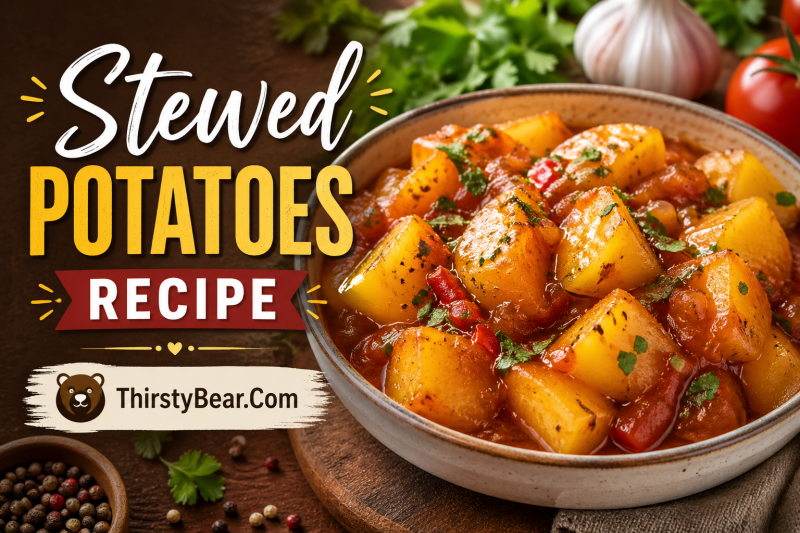
There is something magical about a dish that costs pennies to make yet feeds the soul like a feast. This stewed potatoes recipe has been a staple in Southern kitchens for generations, and once you taste it, you will understand why. I grew up eating this at my grandmother’s table, where she called them “thicken potatoes” and served them with a side of hot cornbread.
In this guide, you will learn exactly how to make authentic stewed potatoes from scratch. We will cover the traditional method, regional variations, and all the tips I have gathered from testing this recipe over 20 times in my own kitchen. Whether you call them Irish potatoes, arsh potatoes, or just good old comfort food, this recipe will become a family favorite.
Table of Contents
What Are Stewed Potatoes
Stewed potatoes are a traditional Southern dish made by simmering cubed potatoes in water or broth until they become fork-tender, then thickening the cooking liquid to create a creamy, sauce-like consistency. Unlike mashed potatoes, which are drained and beaten with butter and milk, stewed potatoes keep their cooking liquid and transform it into part of the dish.
The texture falls somewhere between a soup and a side dish. Some families prefer theirs thick enough to eat with a fork, while others like a looser, more soupy consistency that begs for cornbread sopping. Both are correct. The key difference between stewed potatoes and potato soup is that stewed potatoes are served as a side dish with distinct potato chunks, while potato soup is typically thinner, fully blended, and served as a main course.
This old-fashioned comfort food represents everything practical about Southern cooking. It stretches humble ingredients into something deeply satisfying, feeds a crowd for next to nothing, and tastes even better the next day.
Why They Are Called Irish Potatoes, Arsh Potatoes, and More
Ask ten Southern families what they call this dish, and you might get ten different answers. The regional names for stewed potatoes tell a story of migration, family traditions, and local dialects that have shaped Southern cooking.
Regional Names Across the South
In Tennessee and parts of Kentucky, many families call them “Irish potatoes.” My grandmother in North Carolina always called them “thicken potatoes” because of how the liquid thickens during cooking. Travel down to Louisiana and parts of Mississippi, and you might hear “arsh potatoes” or “mammy taters.” Some Texas families simply call them “buttered potatoes” or “soupy taters.”
According to forum discussions I have followed, the name “Irish potatoes” likely came from the large number of Irish immigrants who settled in the Appalachian region during the 1800s. These immigrants brought their potato-cooking traditions, which blended with local Southern techniques to create the dish we know today. The name stuck even though the dish is distinctly American.
The term “arsh potatoes” appears to be a phonetic spelling of how some Southern families pronounce “Irish” with a regional accent. Whatever you call them, the technique remains remarkably consistent across regions: potatoes, liquid, butter, and a thickening method.
Ingredients You Will Need
This budget-friendly recipe uses simple pantry staples. I have tested this with both Russet and Yukon Gold potatoes, and both work beautifully.
Main Ingredients
- 3 pounds Russet or Yukon Gold potatoes, peeled and cubed into 1-inch pieces
- 4 cups water (or enough to barely cover potatoes)
- 4 tablespoons butter (half a stick)
- 1/4 cup all-purpose flour (for thickening)
- 1 teaspoon salt, plus more to taste
- 1/2 teaspoon black pepper
- 1/4 cup milk or half-and-half (optional, for extra creaminess)
Optional Additions
- 1 medium onion, diced
- 2 cloves garlic, minced
- 2 tablespoons bacon drippings (traditional Southern method)
- 1/2 teaspoon paprika
- Fresh parsley, chopped (for garnish)
Substitutions
For a vegetarian version, simply use all butter instead of bacon drippings. Gluten-free cooks can substitute cornstarch for the flour, using half the amount. If you prefer a lighter dish, use olive oil instead of butter, though the flavor will be less rich.
How to Make Stewed Potatoes
This one-pot method is the traditional way to make stewed potatoes. Follow these steps exactly, and you will achieve that perfect creamy consistency every time.
Step 1: Prepare the Potatoes
Peel your potatoes and cut them into uniform 1-inch cubes. Uniform size matters because it ensures even cooking. Place the cubed potatoes in a large Dutch oven or heavy-bottomed pot.
Step 2: Add Liquid and Seasonings
Cover the potatoes with water, adding just enough to barely cover them. This is important: too much water means longer cooking time and potentially watery results. Add the salt and pepper now so the potatoes absorb flavor as they cook. If using onion or garlic, add them at this stage.
Step 3: Bring to a Boil
Place the pot over high heat and bring the water to a rolling boil. This should take about 8-10 minutes depending on your stove. Do not cover the pot completely; leave the lid slightly ajar to allow steam to escape.
Step 4: Simmer Until Fork Tender
Once boiling, reduce the heat to medium-low and maintain a gentle simmer. Cook for 15-20 minutes until the potatoes are fork-tender. You should be able to pierce them easily with a fork, but they should not fall apart completely.
Step 5: Thicken the Liquid
Remove about 1 cup of the hot cooking liquid and set aside. In a small bowl, whisk the flour into this reserved liquid until completely smooth, creating a slurry. This prevents lumps from forming in your finished dish.
Step 6: Combine and Cook Until Creamy
Stir the flour mixture back into the pot with the potatoes. Add the butter at this stage. Continue cooking on medium-low heat for another 5-8 minutes, stirring occasionally. The liquid will thicken and become creamy. If using milk or half-and-half, add it now.
Step 7: Taste and Adjust
Taste your stewed potatoes and adjust the seasoning. Add more salt or pepper as needed. The dish should be creamy, not watery, with distinct potato chunks suspended in the thickened sauce.
Tips for the Perfect Stewed Potatoes Every Time
After making this dish dozens of times, I have learned a few tricks that separate good stewed potatoes from truly exceptional ones.
Controlling the Thickness
The biggest question people have is about thickness. For thicker stewed potatoes, use less water initially or cook longer after adding the thickener. For a looser, more soup-like consistency, add extra water or milk in the final stage. Remember that the dish will continue to thicken as it cools, so aim for slightly looser than your target when removing from heat.
Flavor Boosters
If your potatoes taste bland, the issue is usually insufficient salt. Potatoes absorb a surprising amount of seasoning. Taste at multiple stages and season as you go. For extra depth, add a bay leaf during simmering or stir in a tablespoon of nutritional yeast for umami richness.
Make-Ahead Strategy
Stewed potatoes are perfect for making ahead. Prepare them up to 24 hours in advance and refrigerate. When reheating, add a splash of milk or water to restore the creamy consistency, as they will thicken considerably in the refrigerator.
Avoiding Common Mistakes
Do not overcook the potatoes before thickening, or they will disintegrate into mush. Do not add flour directly to the hot pot without creating a slurry first, or you will have lumps. And never use cold milk or cream when the pot is very hot, as it can cause curdling.
What to Serve with Stewed Potatoes
Stewed potatoes shine as a side dish alongside hearty mains. The traditional pairing is cornbread, and I strongly recommend you do not skip it. There is something about dragging a piece of hot, buttery cornbread through the creamy potato sauce that defines Southern comfort food.
These potatoes pair beautifully with old-fashioned stewed potatoes recipe accompaniments like meatloaf, fried chicken, pork chops, or country-style steak. For a lighter meal, serve alongside a simple green salad with buttermilk dressing.
Some families enjoy stewed potatoes as a main course, especially during lean times or Meatless Mondays. A big bowl with cornbread and pickled vegetables makes a complete, satisfying meal that costs just a few dollars to prepare.
You might also enjoy learning about stewed potatoes as part of a broader exploration of traditional Southern ingredients and comfort food classics that have fed families for generations.
Delicious Variations to Try
Once you master the basic recipe, try these variations to keep things interesting.
With Bacon
Cook 4-5 slices of bacon until crisp, remove and crumble. Use 2 tablespoons of the bacon drippings instead of butter for cooking, then garnish with the crumbled bacon at the end.
Loaded Style
Top finished stewed potatoes with shredded cheddar cheese, sour cream, and sliced green onions for a loaded baked potato experience in a bowl.
Herb-Infused
Add fresh thyme, rosemary, or sage during simmering for an aromatic twist. Remove the herbs before thickening.
Spicy Version
Add a pinch of cayenne pepper or a few dashes of hot sauce for heat lovers. Smoked paprika also adds wonderful depth.
Storage and Reheating Instructions
Stewed potatoes store beautifully, making them ideal for meal prep or leftovers.
Refrigerate in an airtight container for up to 4 days. The dish will thicken considerably when cold. To reheat, place in a pot over medium-low heat with a splash of milk or water. Stir occasionally until warmed through and creamy again. Avoid microwaving if possible, as it can make the texture gummy.
You can freeze stewed potatoes for up to 2 months, though the texture will be slightly softer upon thawing. Freeze in portion-sized containers and thaw overnight in the refrigerator before reheating.
Frequently Asked Questions
What is the difference between stewed potatoes and potato soup?
Stewed potatoes are thicker, served as a side dish with distinct potato chunks, and have a creamy sauce-like consistency. Potato soup is thinner, often blended partially or fully, and served as a main course. Stewed potatoes also use a thickening agent like flour or rely on broken-down potatoes to create the sauce.
Why are they called Irish potatoes?
The name Irish potatoes likely originated from Irish immigrants who settled in the Appalachian region during the 1800s. They brought potato-cooking traditions that blended with Southern techniques. In some regions with distinct accents, Irish sounds like arsh, leading to the alternative name arsh potatoes.
How do you thicken stewed potatoes?
The traditional method uses a flour slurry. Remove some hot cooking liquid, whisk in flour until smooth, then stir back into the pot. Alternatively, you can mash some of the cooked potatoes against the side of the pot and stir them back in, or simply cook longer to reduce the liquid naturally.
Can you make stewed potatoes ahead of time?
Yes, stewed potatoes are excellent for making ahead. Prepare up to 24 hours in advance and refrigerate. When reheating, add a splash of milk or water to restore the creamy consistency. They can also be frozen for up to 2 months, though the texture will be softer after thawing.
What are the best potatoes for stewed potatoes?
Russet potatoes are the traditional choice because they break down slightly and help thicken the sauce naturally. Yukon Gold potatoes are also excellent, holding their shape better while still creating a creamy texture. Avoid waxy potatoes like red potatoes, as they will not break down properly.
Can you make stewed potatoes without bacon?
Absolutely. Simply use butter or olive oil instead of bacon drippings. The dish is just as delicious and becomes vegetarian-friendly. For extra flavor without meat, try adding smoked paprika or nutritional yeast.
Final Thoughts on This Classic Stewed Potatoes Recipe
This stewed potatoes recipe represents everything I love about traditional cooking. It requires no fancy equipment, uses ingredients you probably already have, and creates something far greater than the sum of its parts. Whether you call them Irish potatoes, thicken potatoes, or just good old comfort food, this dish connects us to generations of home cooks who understood that the best meals are often the simplest ones.
I encourage you to make this recipe your own. Adjust the thickness to your preference, experiment with seasonings, and most importantly, serve it to people you care about. That is how traditions stay alive.