
If you want one bike that works for a complete beginner, the Schwinn High Timber is the one to look at first. It pairs an aluminum frame, a front suspension fork, twist shifters and mechanical disc brakes in a package that is light enough to steer at walking pace and simple enough that you will not be fighting unfamiliar controls on your first ride. The Schwinn Traxion is the alternative if your local trails are rocky or rooty and you want suspension at both ends.
That is the honest split we kept coming back to while putting this list together. The best mountain bikes for beginners are not the most expensive bikes on the market, and they are not the cheapest either. They are the bikes that are easy to ride slowly, easy to service at a normal bike shop, and forgiving when your technique is still rough.
We compared ten bikes across aluminum and steel frames, 26, 27.5 and 29 inch wheels, hardtail and full-suspension layouts, rim brakes and mechanical disc brakes. For each one we looked at the same things: how forgiving the steering is at low speed, whether the shifting can be fixed with one allen key, how wide the rider range is, and what owners report after a few months rather than after a weekend. Review counts and ratings are copied straight from the verified listing data so you can see how well documented each bike is.
One thing to clear up before we start, because it stops a lot of people buying anything at all. There is no age where mountain biking stops being possible. The most common reason first-timers stall is not fitness or age, it is buying a bike that does not fit their height properly and then feeling clumsy on it. Fix the fit and most of that disappears.
If you want the wider category rather than only this list, our [10 best mountain bikes roundup](https://www.thirstybear.com/best-mountain-bikes/) covers hardtails, full-suspension trail bikes and electric platforms side by side. Electric models are a separate purchase decision, so we have kept them out of this beginner-focused roundup.
Table of Contents
Top 3 Best Mountain Bikes for Beginners in 2026
Three bikes came out ahead once we started comparing ride quality, serviceability and how well they suit a rider who has never been on a mountain bike before. The High Timber is the all-rounder, the Traxion is the one for rough ground, and the WEIZE dual suspension gets you suspension on a shoestring.

Schwinn High Timber
- Aluminum frame
- 21-speed twist shifting
- Mechanical disc brakes
- 26 inch wheels

WEIZE Dual Suspension MTB
- Dual suspension steel frame
- 18-speed
- Linear pull brakes
- 24/26/27.5 sizes
The Best Mountain Bikes for Beginners in 2026 Full Comparison
Here is every pick in one place. Frame material, suspension layout, wheel size and brake type are the four things that change how a bike feels under a beginner, and they are the columns worth reading before anything else.
| Product | Specifications | Action |
|---|---|---|
| Schwinn High Timber |
|
Check Latest Price |
 Schwinn Traxion Schwinn Traxion |
|
Check Latest Price |
| WEIZE Mountain Bike 24/26/27.5 |
|
Check Latest Price |
 Huffy Stone Mountain Bike Huffy Stone Mountain Bike |
|
Check Latest Price |
 Huffy 26/27.5 Aluminum Hardtail Huffy 26/27.5 Aluminum Hardtail |
|
Check Latest Price |
 Mongoose Flatrock Mongoose Flatrock |
|
Check Latest Price |
 Ktaxon Mountain Bike 24/26/27.5/29 Ktaxon Mountain Bike 24/26/27.5/29 |
|
Check Latest Price |
 WEIZE Hardtail Mountain Bike 29 WEIZE Hardtail Mountain Bike 29 |
|
Check Latest Price |
 AVASTA Earth 26/27.5 AVASTA Earth 26/27.5 |
|
Check Latest Price |
 Outroad 26 Inch Folding Mountain Bike Outroad 26 Inch Folding Mountain Bike |
|
Check Latest Price |
1. Schwinn High Timber: The Best All-Round Beginner Mountain Bike
Schwinn High Timber ALX Mountain Bike for Adult Men Women, 26-Inch Wheels, 21-Speeds, Front Suspension, Aluminum Frame, Mechanical Disc Brakes, Red
16.5 inch aluminum frame
26 inch wheels
21-speed twist shifters
15.98 kg
Pros
- Lightweight aluminum frame that steers easily at low speed
- Alloy crank and twist shifters with low maintenance
- Quick-release seat post makes fit adjustments fast
- Mechanically simple parts that any bike shop can service
Cons
- Front suspension only so big hits reach the rider
- Twist shifters are less precise on technical ground
- Arrives 80 percent assembled so budget an hour for setup
This is the bike we keep coming back to, and it lines up with the forum advice to start on a hardtail. The 16.5 inch aluminum frame is the single biggest reason it works. Aluminum is noticeably lighter than the steel frames at this tier, and light matters more than people expect when you are learning to pick a wheel up, turn around on a narrow path, or walk a bike up a set of steps.
The 21-speed drivetrain runs off an alloy crank with a rear derailleur and twist shifters on the grips. That sounds old-fashioned compared with the trigger shifters on the pricier bikes, and it is less precise. In exchange you get a drivetrain that does not need a specialist to adjust and costs very little to keep running, which is a good trade for someone on their first bike.
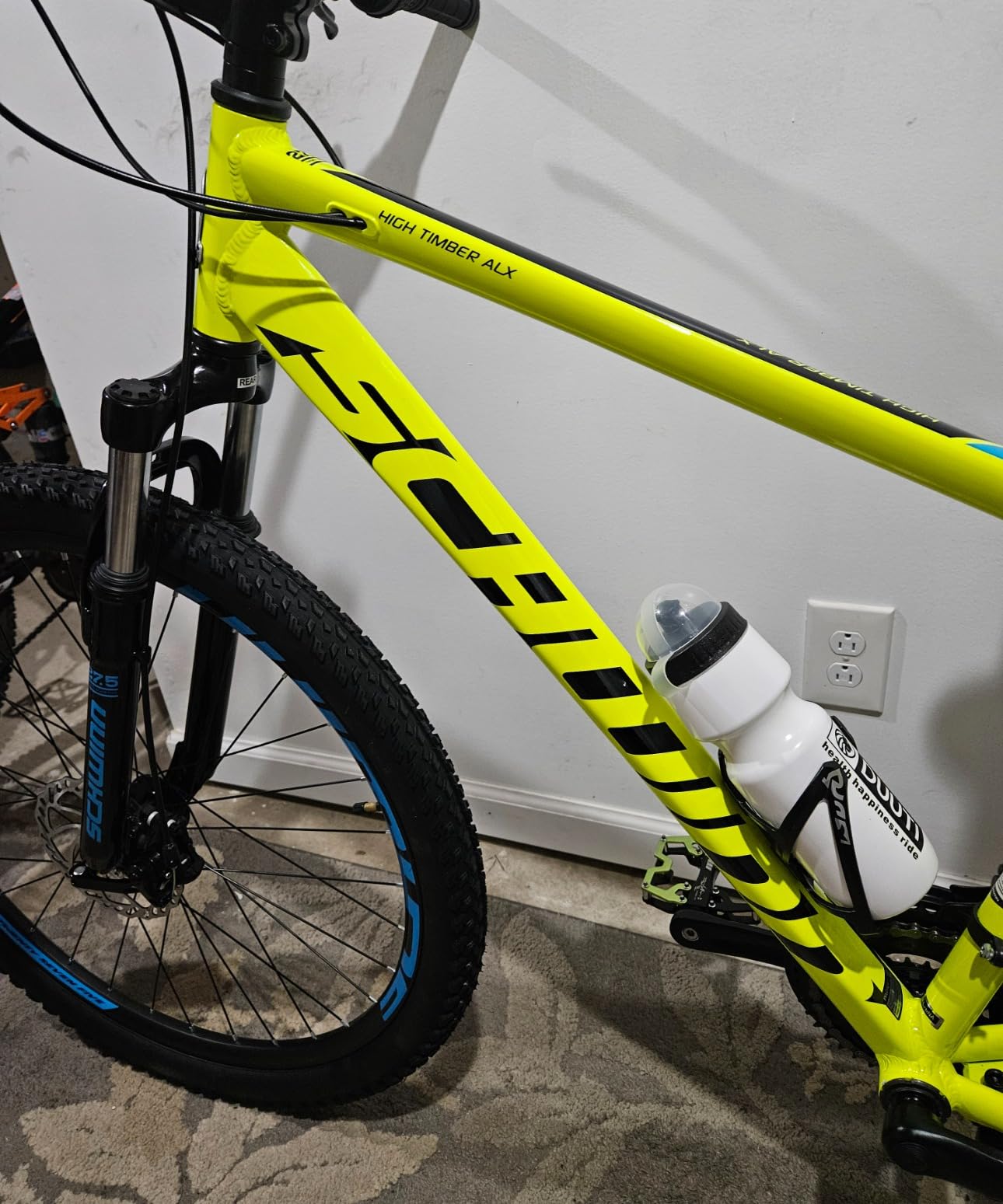
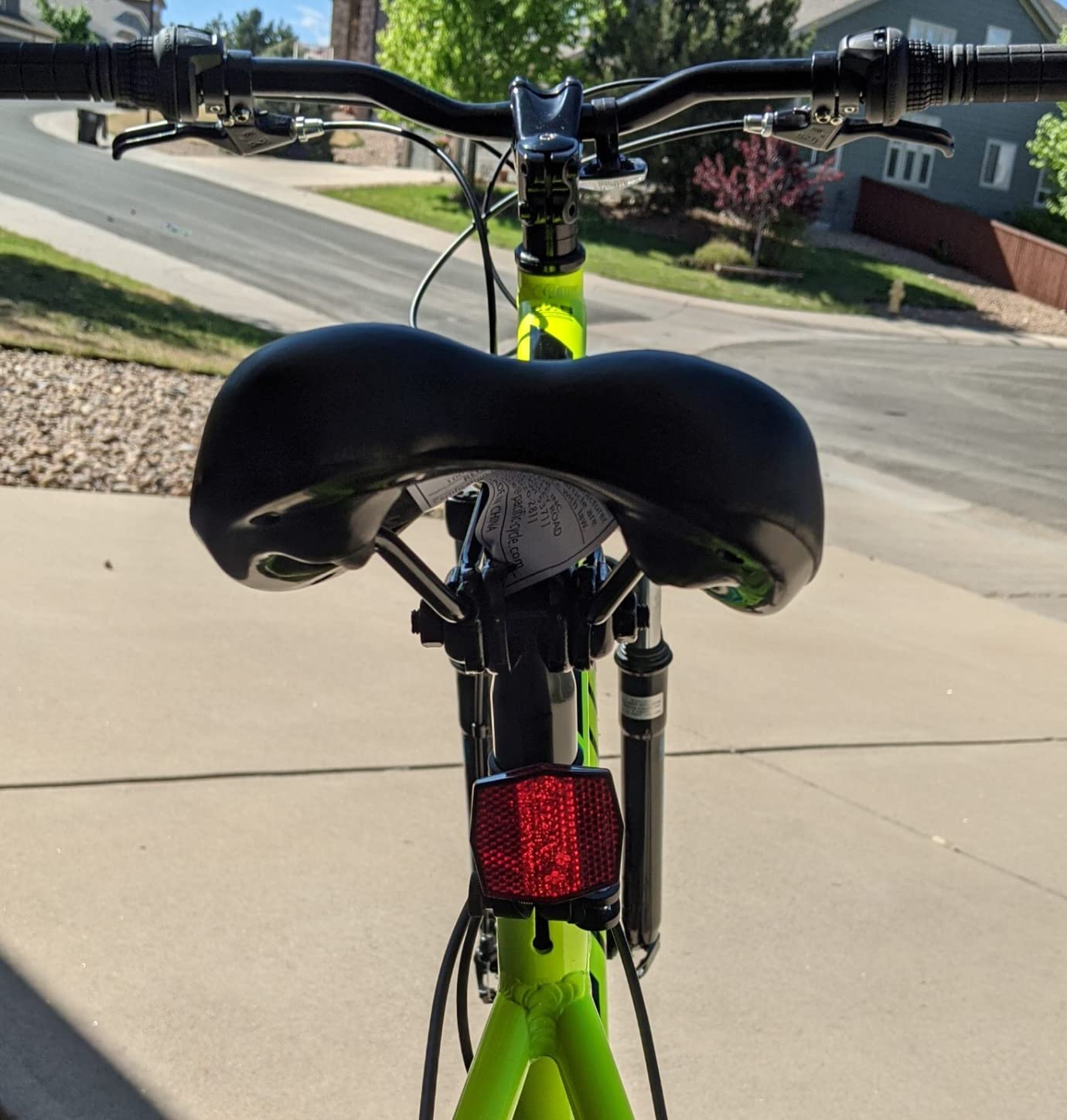
Owners consistently point to the wide knobby mountain tires and alloy wheels as the reason the bike feels planted on loose dirt. The quick-release seat post is a small detail that matters a lot in practice, because most beginners end up raising or lowering the saddle the first time they ride it properly. Frames cover riders from 5 foot 4 to 6 foot 2, which is a genuinely wide window.
Be clear-eyed about the trade. This is front suspension only, so a drop off a small rock or root still goes straight into your arms and seat. The knobby tires take the edge off, but if your local riding is technical, the extra comfort of a rear shock is worth paying for. The one-star reviews in this listing cluster around assembly and fit rather than failures, which tells you the bike itself is holding up.
What a new rider should know before buying it
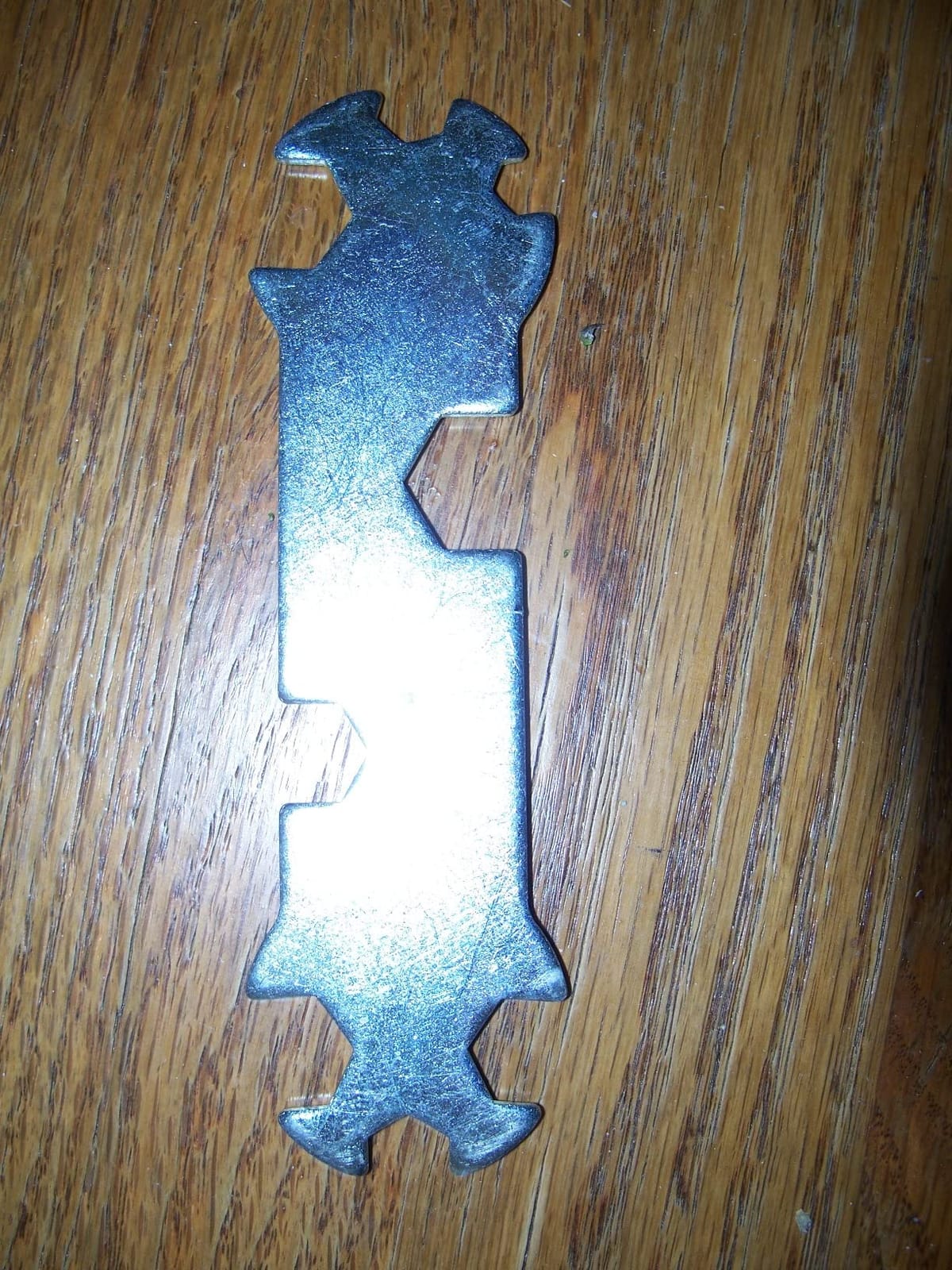
It arrives 80 percent assembled. The remaining work needs a Phillips screwdriver, a set of allen wrenches, an adjustable wrench and pliers with a cable cutter, and most people should allow an hour for the first build plus brake and shifting adjustments. Plenty of local shops will build and tune it for you, and that is money well spent on a first bike.
Because the wheel and frame sizes run from 20 up to 29 inch across the range, check the size you are actually ordering. This particular frame and wheel pairing is specced for riders between 5 foot 4 and 6 foot 2.
Who should skip it
Skip it if your riding is all rooty, rocky singletrack and you are sensitive to impacts. In that case the Schwinn Traxion further down the list handles the same terrain with suspension at both ends. Also consider skipping it if you want a bike you can carry on a train, since this frame does not fold.
2. Schwinn Traxion: Best for Riders on Rocky Trails
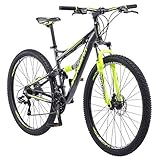
Schwinn Traxion Mountain Bike for Adult Men Women, 29-Inch Wheels, Full Suspension, 24-Speed Shimano Drivetrain, Trigger Shifter, 18-Inch Aluminum Frame, Mechanical Disc Brake, Matte Grey/Neon Green
Front and rear suspension
24-speed Shimano
29 inch wheels with 2.25 inch tires
49 lbs
Pros
- Full suspension takes the sting out of roots and rocks
- 29 inch tires roll over large obstacles
- 24-speed Shimano drivetrain climbs easily
- Long-term owners report hundreds of miles with no failures
Cons
- Entry suspension has no rebound or preload adjustment
- Vinyl saddle is uncomfortable on long rides and usually gets replaced
- Heavy at 49 lbs compared with cheaper hardtails
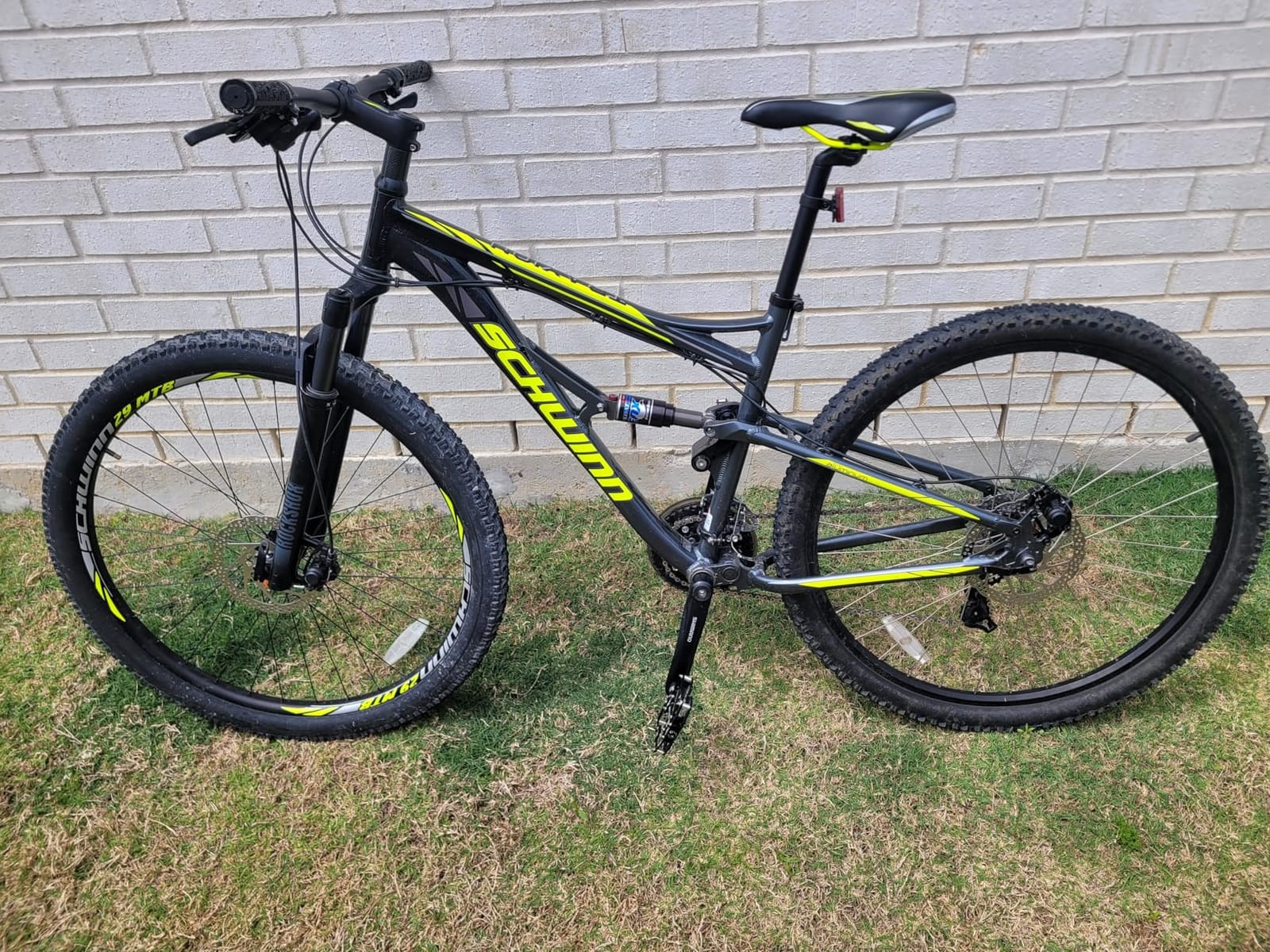
This is the highest-rated bike in the list, sitting at 4.4 stars, and the reason is the suspension. A high-performance suspension fork up front and a rear shock behind it means roots, loose rock and chatter get absorbed instead of arriving at your elbows and lower back.
That matters more for a beginner than it does for an experienced rider. When a bike bucks under you, a new rider tightens the handlebars and loses balance. Owners who bought this bike specifically to ride rough trail describe the difference from a hardtail as night and day, and several mention that the comfort benefit reduces fatigue on long rides.
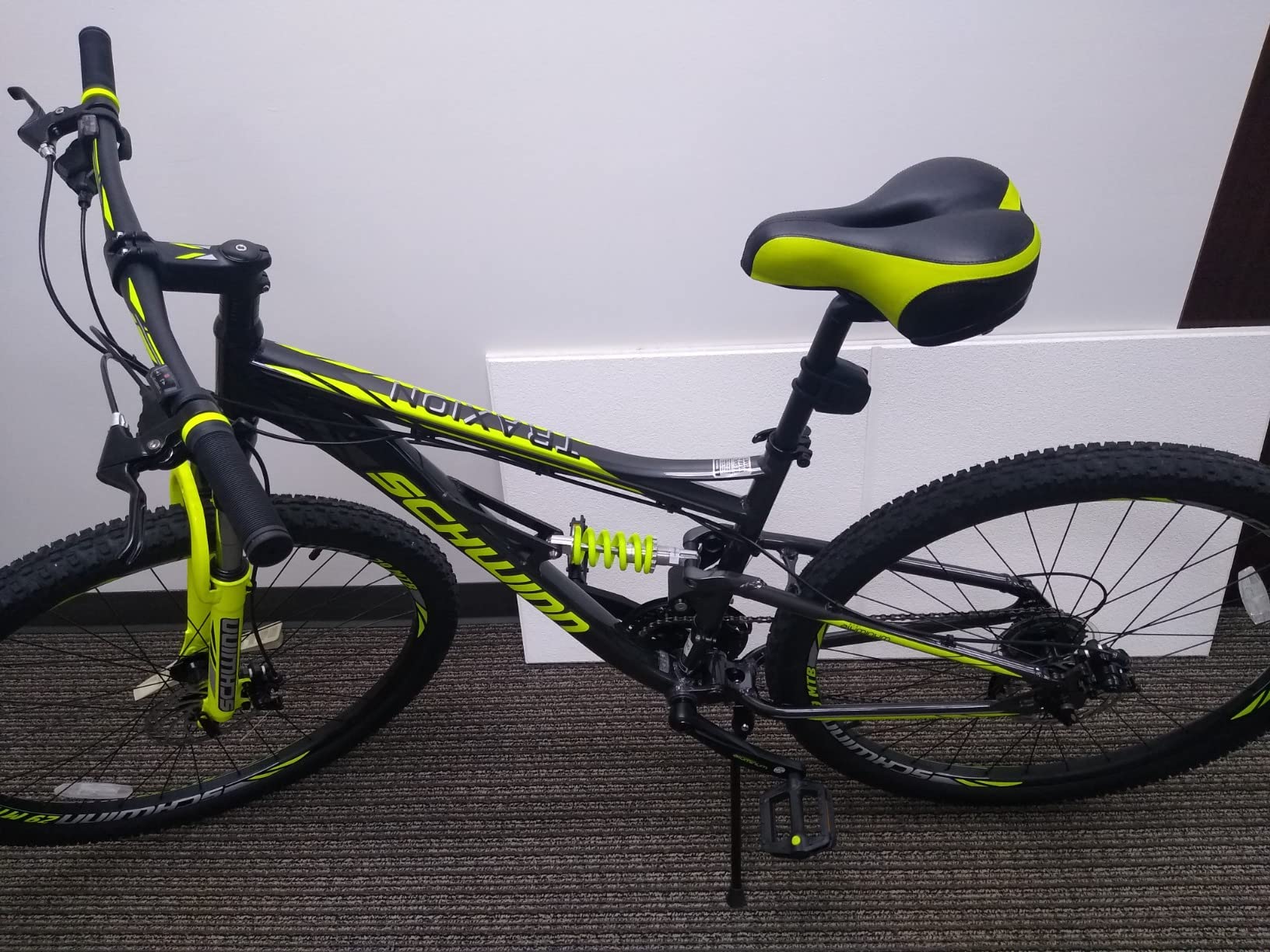
The drivetrain is a 24-speed Shimano setup with front and rear derailleurs and trigger shifters, which is a real step up from the twist shifters on the cheaper bikes. Precise gear selection is what lets you hold a steady gear on a climb instead of lurching every time the chain skips a tooth. Front and rear mechanical disc brakes give consistent stopping in wet grass and mud where rim brakes struggle.
The extra-wide double-wall alloy rims carry 2.25 inch knobby mountain tires on 29 inch wheels, and those tires roll over large rocks and roots almost silently. Fit is rated for riders roughly 5 foot 8 to 6 foot 2 with a 300 pound maximum, so check your height against that range. The seat post has generous adjustment for taller riders within it.
What a new rider should know before buying it
The suspension is entry-level and has no rebound or preload adjustment, so you cannot fine tune it. Riders who decide they want that control are looking at a fork and shock swap, which is a real cost on a first bike. Brake and shifter tuning after assembly is normal on this model.
At 49 pounds this is the heaviest bike here. If your riding involves carrying the bike up stairs, loading it into a car solo, or storing it in a small flat, the weight is a genuine consideration. Some owners also reported examples arriving with transit damage or a bent rear wheel, so inspect the bike on arrival before riding away.
Who should skip it
Skip it if you ride on smooth paved paths and fire roads, because you are carrying suspension weight for terrain you never touch. It is also the wrong pick for riders below about 5 foot 8. If you want trail capability without the weight, the WEIZE hardtail with 29 inch wheels is a lighter alternative at a lower tier.
3. WEIZE Mountain Bike: Dual Suspension on a Shoestring
WEIZE Mountain Bike, 26 27.5 inch Outdoor Hybrid Bike,18-Speed/High-Carbon Steel/Dual Full Suspension, Adjustable Ergonomic Seat for Men Women Adult, MTB Bicycle with Suspension Fork,Sleek Colors
Steel dual suspension frame
18-speed twist shifting
Linear pull brakes
24, 26 and 27.5 inch
Pros
- Full dual suspension at a very low price point
- Customer service has issued free whole-bike replacements
- Steel frame has solid welds and holds up well
- Tool kit included and wide size range for teens and adults
Cons
- Narrow saddle that most owners replace
- Twist shifters are imprecise and one derailleur can skip clicks
- Pedals and crank threads are low quality
Full dual suspension at this end of the market is genuinely unusual, and that is the entire argument for this bike. A steel frame carries a front suspension fork and a rear coil shock, which means gravel roads, hardpack and gentle singletrack all feel softer than they would on a rigid bike.
It ranks as the best seller in its category, and the review base reflects that. Buyers broadly describe it as a solid example of a full-suspension bike rather than a trail machine, which is exactly how we would frame it. If your riding is gravel roads, towpaths, park tracks and the occasional easy trail, it does the job without pretending to be something it is not.
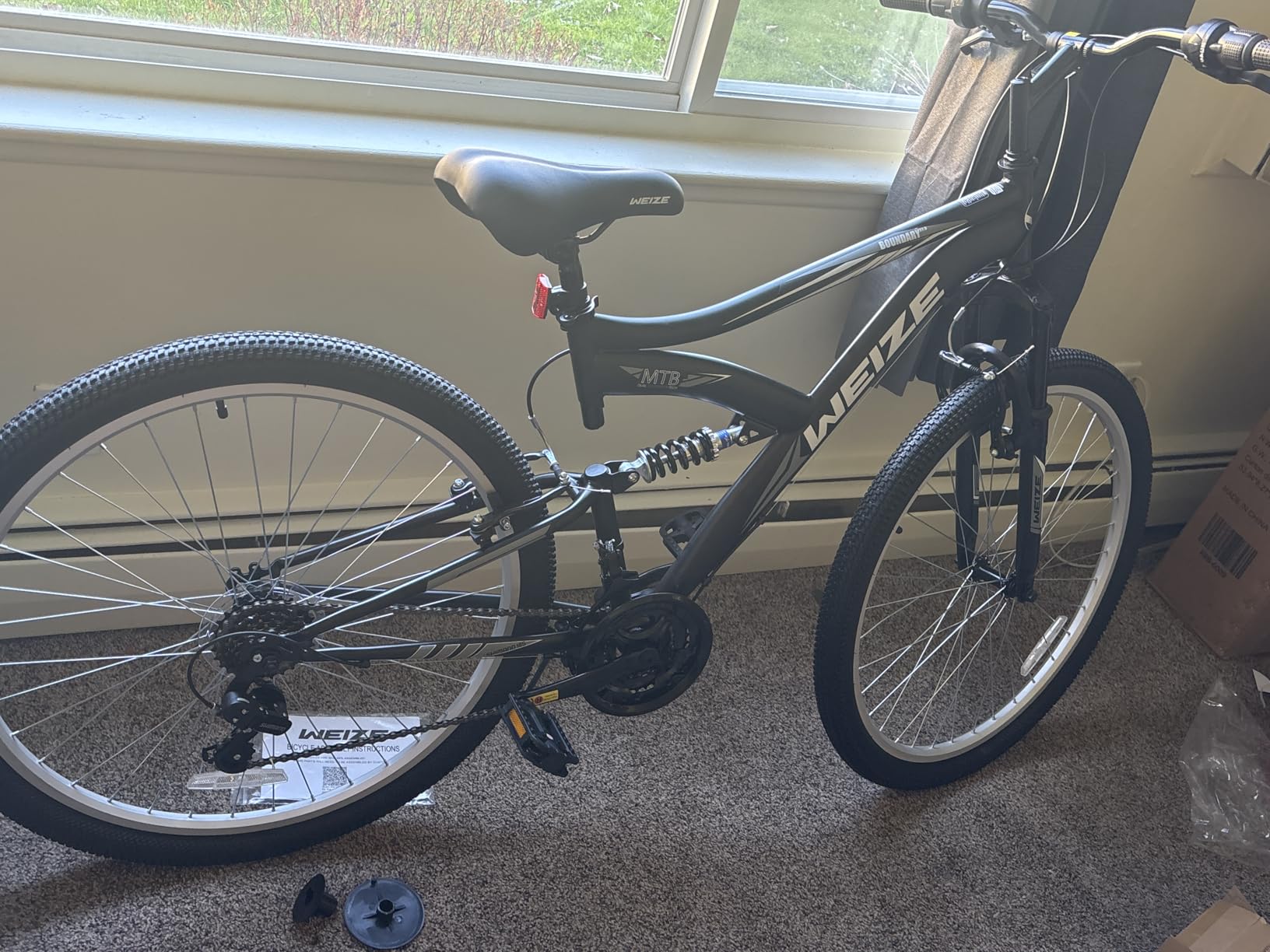
The 18-speed drivetrain uses twist shifters with front and rear derailleurs, and gears and brakes generally work without adjustment once you have assembled it. The 26 inch all-terrain tires are rated for riders between 5 foot 2 and 6 foot 2, and the same model comes in 24 and 27.5 inch sizes, so it covers teens through adults in one family of bikes.
The customer service story deserves a mention because it is unusual in this category. Owners report that WEIZE replaced complete bikes when defects appeared rather than issuing repair parts or pointing them at a parts supplier. That removes a lot of the anxiety around buying your first bike online from a brand you have never dealt with before.
What a new rider should know before buying it
The saddle is narrow and most owners replace it, which is a predictable and inexpensive first upgrade. The supplied pedals are low quality, and pedal and crank threads have stripped on some examples, so budget for a set of pedals. Some riders also report rear inner tubes going shortly after purchase.
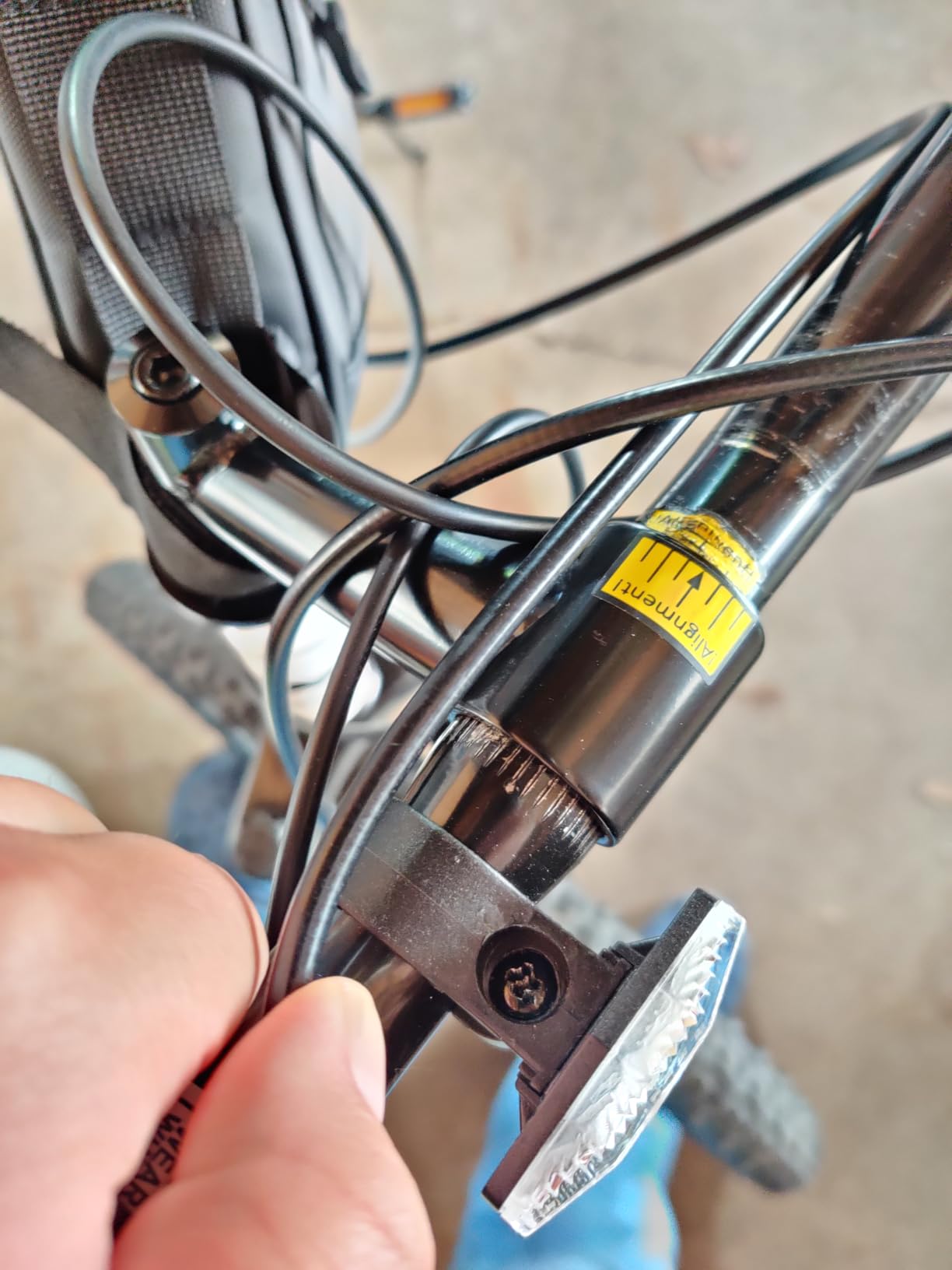
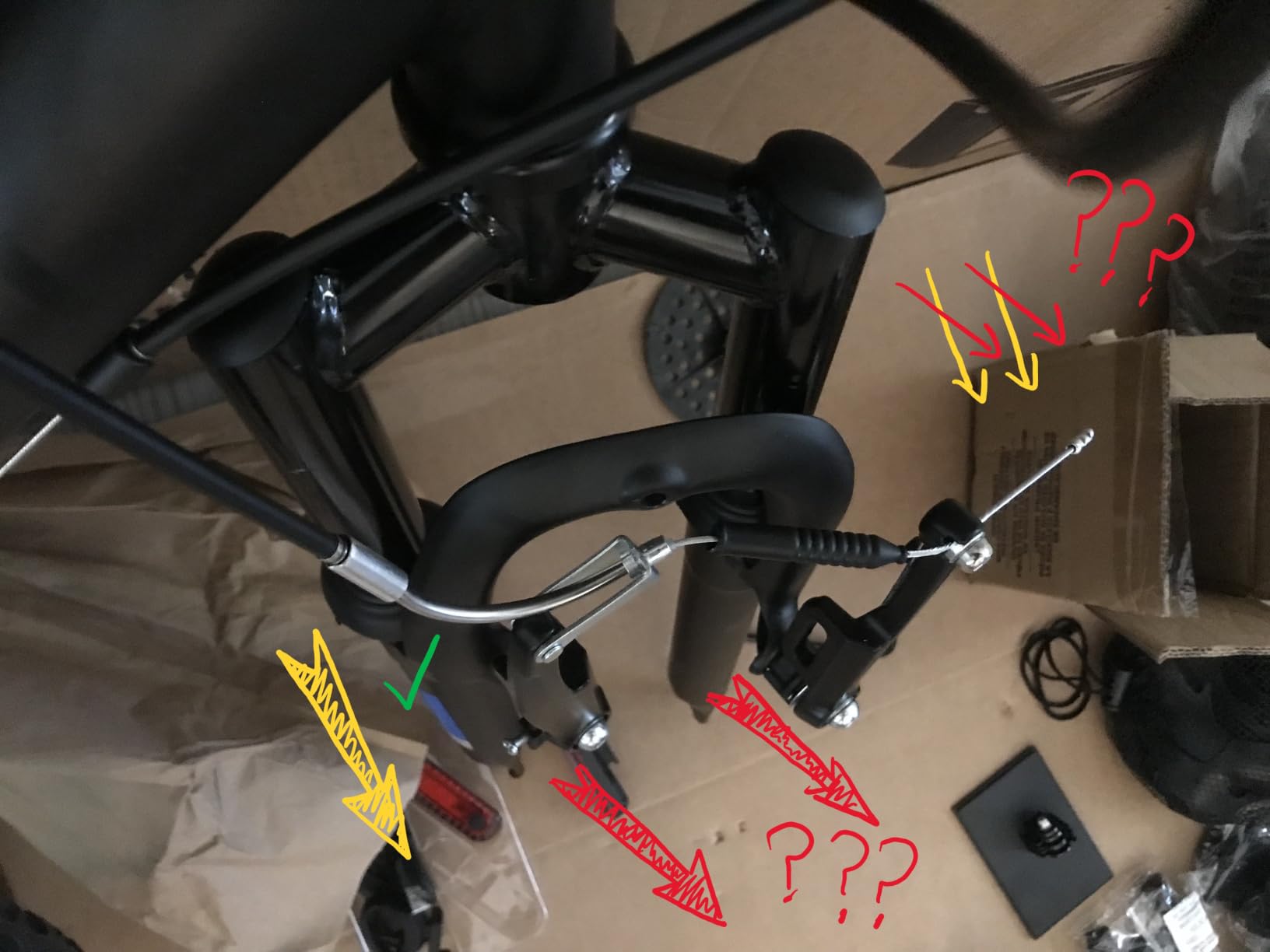
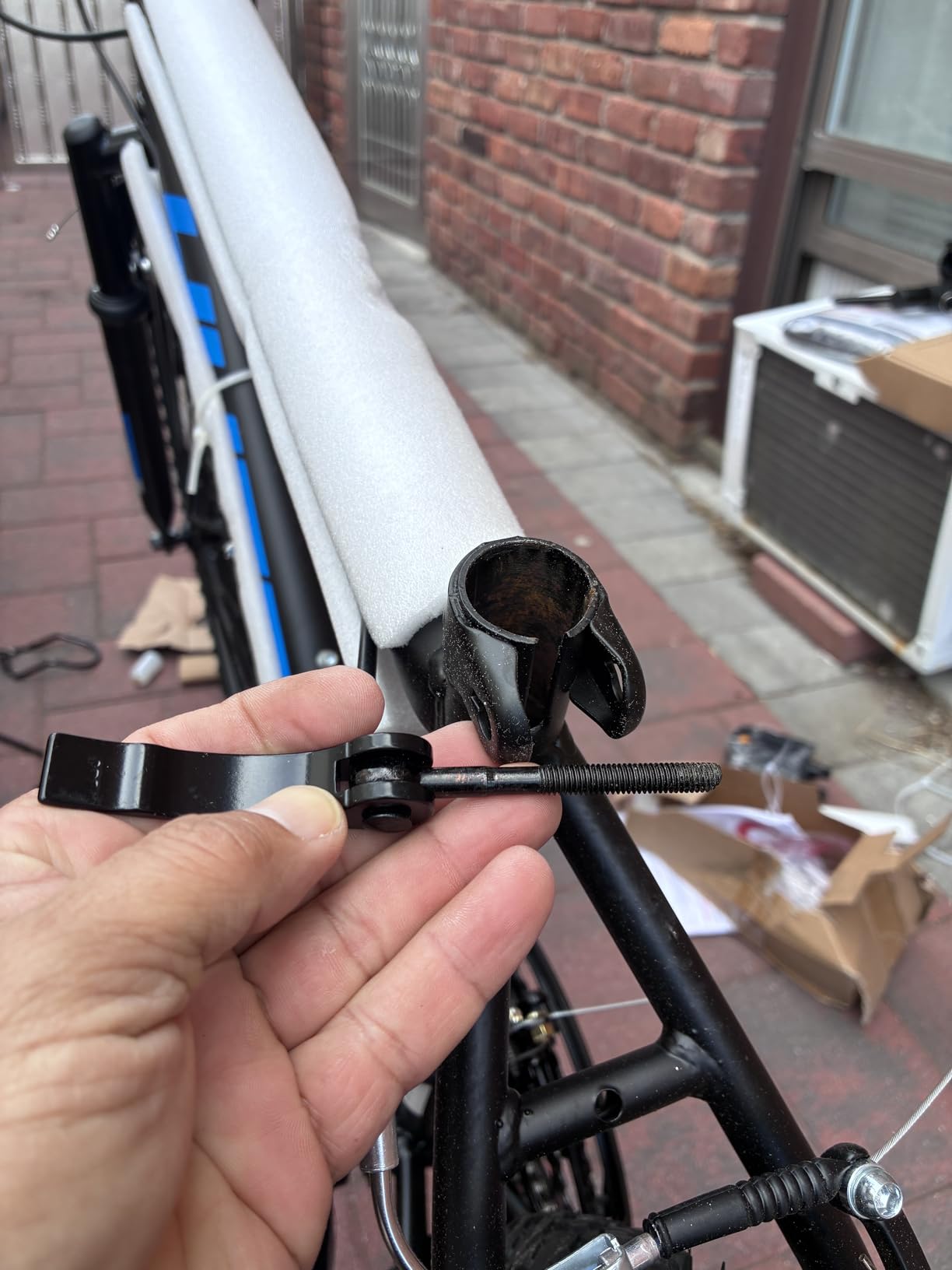
Assembly instructions are thin on the parts already fitted, and some bikes have arrived with derailleurs mounted the wrong way round. Allow extra time for assembly, or pay a shop to build it.
Who should skip it
Skip it if your trails are steep, rocky or technical, because a coil shock in a steel frame has no adjustment and no reserve of travel. Also skip it if you care about precise gear changes, since twist shifters at this level skip clicks under load. Riders who want a folding frame for commuting have a dedicated option further down.
4. Huffy Stone Mountain Bike: The Most Documented First Bike
Huffy Stone Mountain Mens 26 Inch Mountain Bike, Cloudy Grey Gloss Frame, 21-Speed Shimano Twist Shifting, Dual Suspension, Comfort Saddle | 20″/24″/26″ Sizes, 6-21 Speeds, Dual Suspension Available |
Steel frame with rear spring shock
21-speed Shimano
26 inch knobby tires
35.3 lbs
Pros
- Largest review base of any pick here at nearly 4000 ratings
- 21-speed Shimano rear derailleur shifts precisely on steep hills
- Three wheel sizes let a whole family buy the same model
- Tool kit and kickstand included in the box
Cons
- Rim brakes are less powerful and less weather resistant than discs
- Lowest average rating here at 3.9 stars
- Rear shock is basic with no adjustment
With nearly 4000 ratings, this is the most thoroughly documented bike in the roundup, and that is genuinely useful when you are nervous about buying the wrong thing. You can read years of owner reports about the same frame, the same gears and the same tires before you commit.
What those reports show is a bike that is well liked for its price. The 21-speed Shimano rear derailleur is the surprise on a bike at this level, and owners mention that it shifts precisely even on steep hills. A front suspension fork and a rear spring shock smooth out bumps on trails, gravel and uneven roads, which is more than a plain rigid budget bike gives you.
The knobby 26 inch all-terrain tires measure 1.95 inch wide and grip loose dirt, gravel and pavement without complaint. The steel frame with a grey gloss finish feels durable, and the bike comes with a kickstand, a manual and a tool kit, which saves a trip to the shop.
Fit is rated for riders 5 foot 0 and taller, with a 225 pound maximum recommended weight. The same model is made in 20, 24 and 26 inch wheel sizes, so it is easy to buy one bike for an entire family and have everyone matched roughly correctly.
What a new rider should know before buying it
Brakes are the weak point. Dual linear pull rim brakes are less powerful and less weather resistant than discs, and that shows up in a steady stream of one-star reviews alongside seat comfort and finish quality. If you ride in rain or mud, add disc brake service to your first-year plan.
The 3.9 star average is the lowest in this group, and it is worth understanding why. Most of the negative reviews are about feel rather than failure. Check the saddle fit in person if you can, because some riders report a poor seat match at certain frame sizes.
Who should skip it
Skip it if you are above the 225 pound recommended weight, or if you ride in wet conditions often enough that brake feel matters to you. If you want the same family-friendly approach with mechanical disc brakes instead, the Ktaxon further down is the alternative.
5. Huffy 26/27.5 Aluminum Hardtail: Lightweight Handling on a Budget
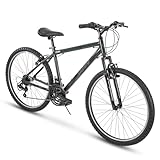
Huffy Hardtail Mountain Trail Bike 24 inch, 26 inch, 27.5 inch, 26 Inch Wheels/17 Inch Frame, Military Green Gloss
17 inch aluminum frame
21-speed drivetrain
Front suspension
33 lbs
Pros
- Light aluminum frame makes low-speed handling easy
- Knobby tires grip loose dirt and rocky trail well
- Ergonomic saddle and comfortable grips included
- Kickstand fitted at the factory
Cons
- Front suspension only with no rear shock
- Linear pull rim brakes are weaker in wet conditions
- Listed as intermediate skill level rather than beginner
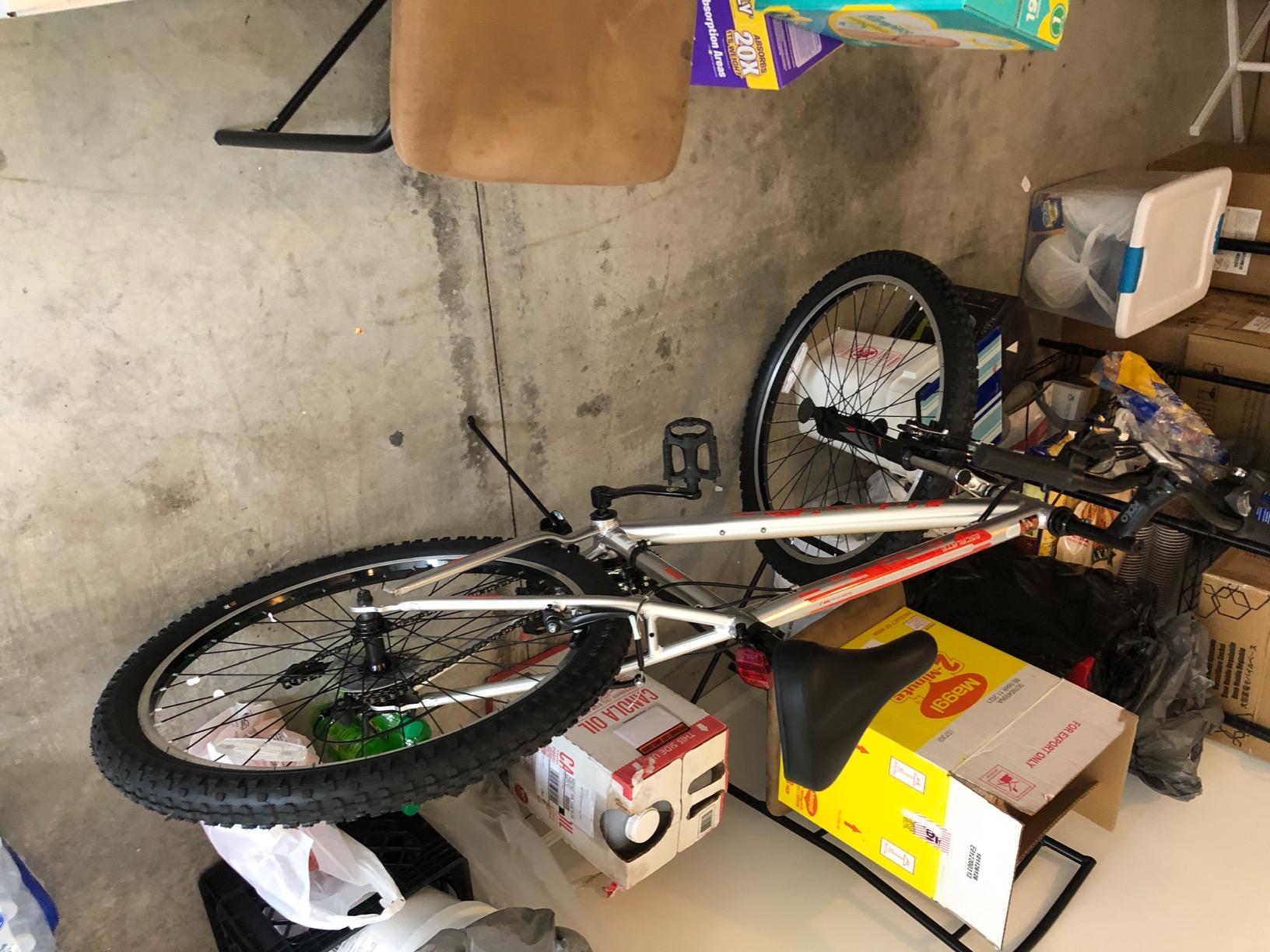
This is the step up from the very cheapest first bikes, and the change that makes it noticeable is the aluminum frame. At 33 pounds it is the lightest stated weight of any bike in this list, and you feel every pound of it when you need to turn the bike around on a narrow path.
Owners describe predictable handling as the main advantage over steel-frame budget bikes. Lighter bikes are easier to balance at low speed, easier to lift over obstacles and less tiring on a long day when your legs are already tired. For a first-time rider, that matters more than suspension travel.
The 21-speed drivetrain handles hills, rough trail and flat cruising without drama, and the knobby all-terrain tires give dependable traction on rocky trails and gravel. Alloy linear pull brakes deliver stopping power that most riders find predictable, as long as they are used in dry conditions.
Fit is rated for riders 60 inches and taller, with a 150 kilogram maximum recommended weight, so it covers a wide range of adults. The 17 inch frame, ergonomic saddle, comfortable grips and kickstand are all fitted, and this model is offered in 26 and 27.5 inch wheel sizes.
What a new rider should know before buying it
It is listed as intermediate skill level rather than beginner, which mostly reflects the fact that it is a hardtail with rim brakes. In practice plenty of first-timers ride one happily on gravel paths and fire roads. Know that the listing calls it a step up rather than a first bike, so check fit carefully in person.
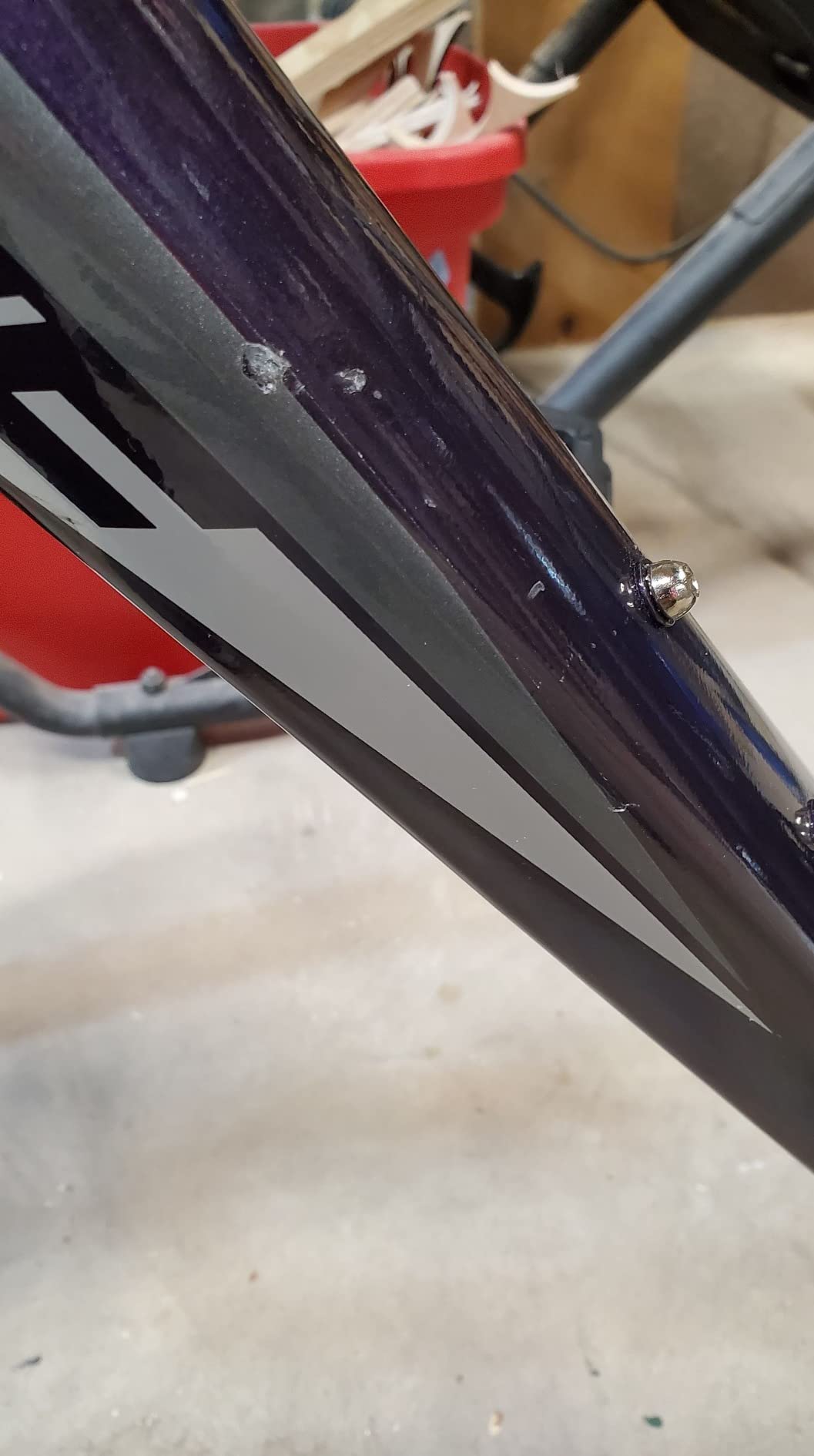
Aluminum frames dent rather than flex if the bike is dropped, and rim brakes are weaker in rain. Both are normal traits at this tier rather than defects, but they are worth weighing.
Who should skip it
Skip it if your terrain is rooty or rocky and you want suspension to absorb impacts, or if you ride in wet weather often. Riders who want the same light aluminum feel with disc brakes and a wider gear range should look at the 29 inch WEIZE hardtail instead.
6. Mongoose Flatrock: Seven-Speed Simplicity With a Five Year Frame Warranty
Mongoose Flatrock Mountain Bike, 26 Inch Bike for Men and Women, 7 Speed, Aluminum Frame, Front Suspension Fork for a Smooth Ride, Twist Shifters, Linear Pull Brakes, Adult and Teen Bicycle
Aluminum mountain frame
7-speed twist shifting
26 inch wheels
V-brakes
5 year frame warranty
Pros
- Strongest warranty in this roundup at 5 years on the frame
- Lightweight aluminum frame that stays responsive
- Simple reliable twist shifters for a 7-speed drivetrain
- Two frame and wheel options cover a wide rider range
Cons
- Only 7 speeds so climbing options are limited
- V-brakes are weaker than discs in mud or rain
- Marketed mainly toward youth riders so fit guidance is thin
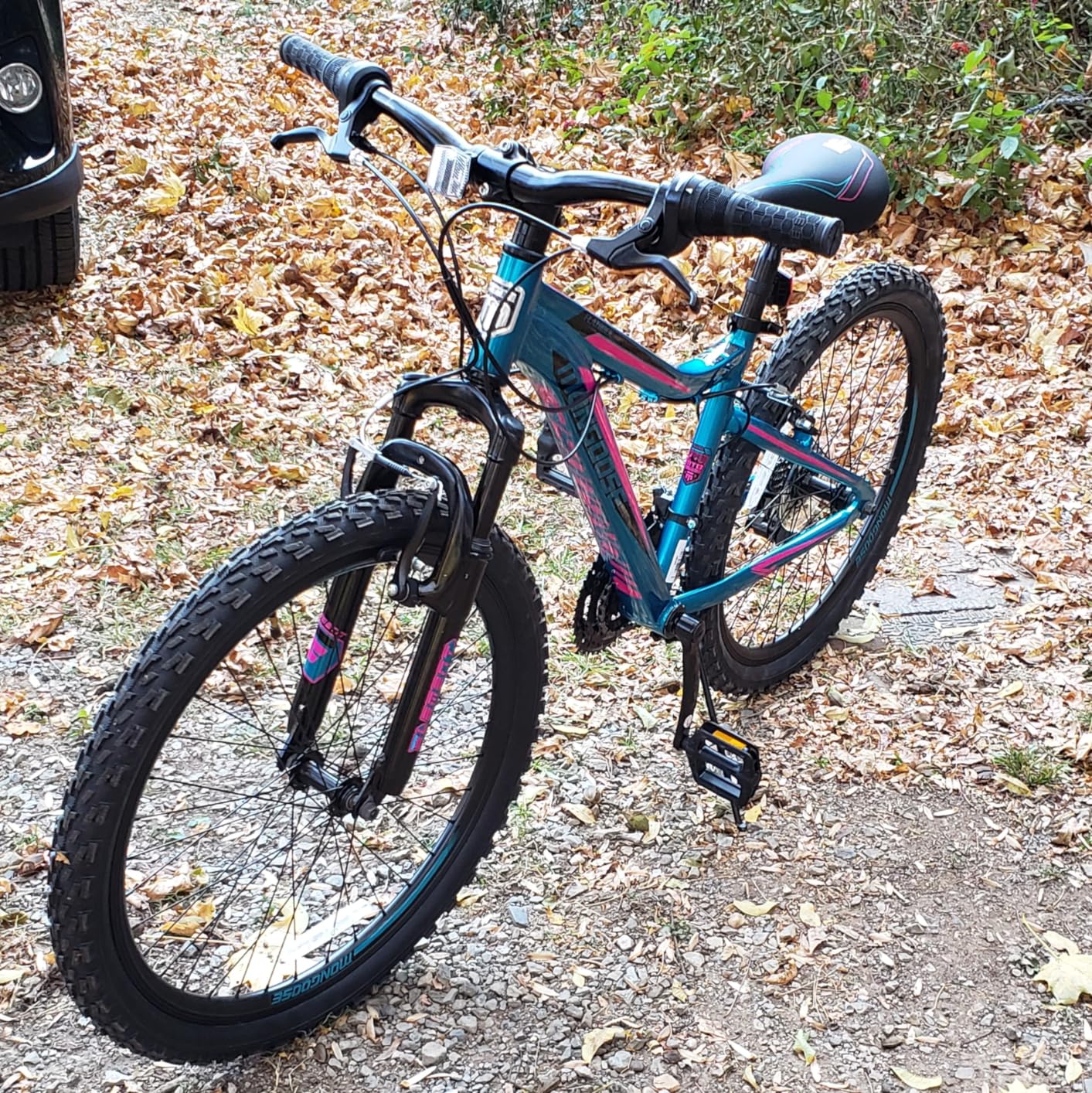
The Mongoose Flatrock stands out on warranty terms. A five year limited warranty on the frame, one year on parts and thirty days on wear items is the best cover of any bike in this roundup, and for a first bike that gets dropped in a car park it is a real advantage.
Everything else about it is deliberately simple. The aluminum mountain frame keeps the bike light and responsive, the suspension fork and knobby mountain tires take the edge off bumps and uneven ground, and the 7-speed drivetrain with twist shifters is the least complicated shifting setup here. Few things to break means few things to adjust.
The 26 inch wheels are sized for riders between 5 foot 4 and 6 foot 2, and the frame is offered in 17 inch and 14.5 inch variants, which gives useful flexibility if the fit is not right in one size. Brakes are linear pull V-brakes on the rims, which are straightforward to service and cheap to replace pads for.
Owners like the fact that the bike does exactly what it is designed to do without needing tuning. The trade is range: seven speeds is the narrowest drivetrain here, which means fewer gear options on technical climbs where you want to spin rather than mash.
What a new rider should know before buying it
Seven speeds is the real limitation. On a steep hill, a wider range lets you find a comfortable cadence. With seven gears you may end up grinding up a climb in too hard a gear, which is tiring for a beginner who does not yet have the leg strength to compensate.
It is listed as intermediate skill level and marketed mainly toward youth riders, so published fit guidance is thinner than the other picks. Measure your inseam or check in a shop rather than relying on height alone.
Who should skip it
Skip it if you ride steep terrain regularly, or if you ride in mud and rain where rim brakes lose their advantage. It is also the wrong choice for anyone who plans to add racks, baskets or other loads, because the simplest frames in this category rarely have mounting points. For those riders, the Ktaxon is a better fit.
7. Ktaxon Mountain Bike: Mechanical Disc Brakes on a Budget
Ktaxon Mountain Bike 27.5 Inch Men & Women Mountain Bike 21Speed Adult Bike
High carbon steel frame
21-speed
Lock-out front fork
Mechanical dual disc brakes
Pros
- Dual mechanical disc brakes are a genuine upgrade over rim brakes
- Lock-out fork firms up the ride for pavement and towpaths
- Arrives 85 percent assembled and takes about 20 minutes to build
- Quick-adjust seat post clamp makes fit changes fast
Cons
- Front suspension only with a basic non-adjustable fork
- Front wheel can arrive out of true and cause brake rub
- Customer support is largely automated
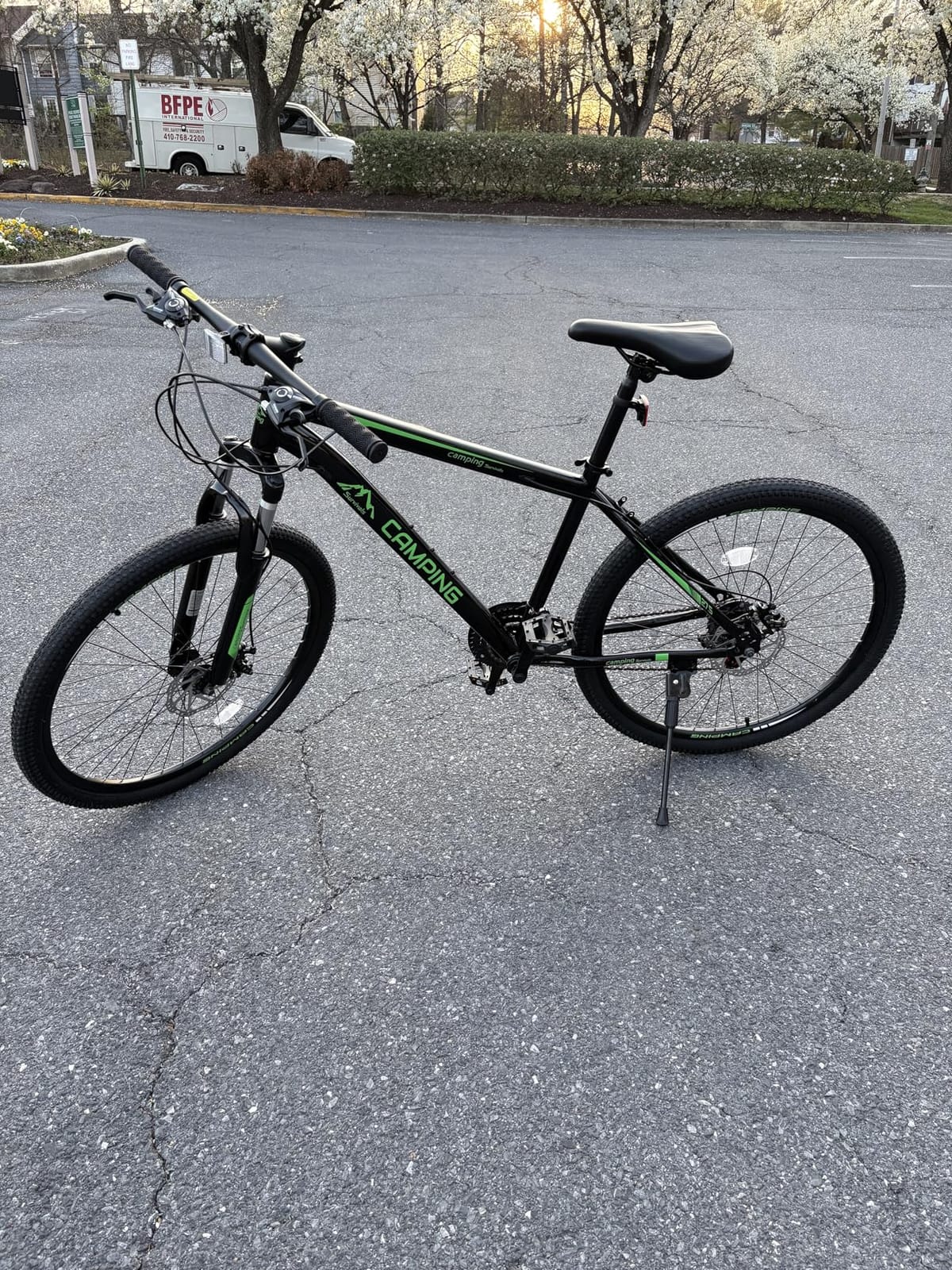
Brakes are the component you cannot work around, and this is the bike where they are the standout. Multiple owners single out the mechanical dual disc brakes as the reason they bought it, with several coming from clamp-brake bikes and immediately noticing the difference in stopping control.
The other feature that changes the ride is the lock-out lever on the front fork. Flicking it firm removes most of the suspension action, which makes the bike much better on pavement, gravel and towpaths where a soft fork wastes your energy. Very few bikes at this tier give you that control.
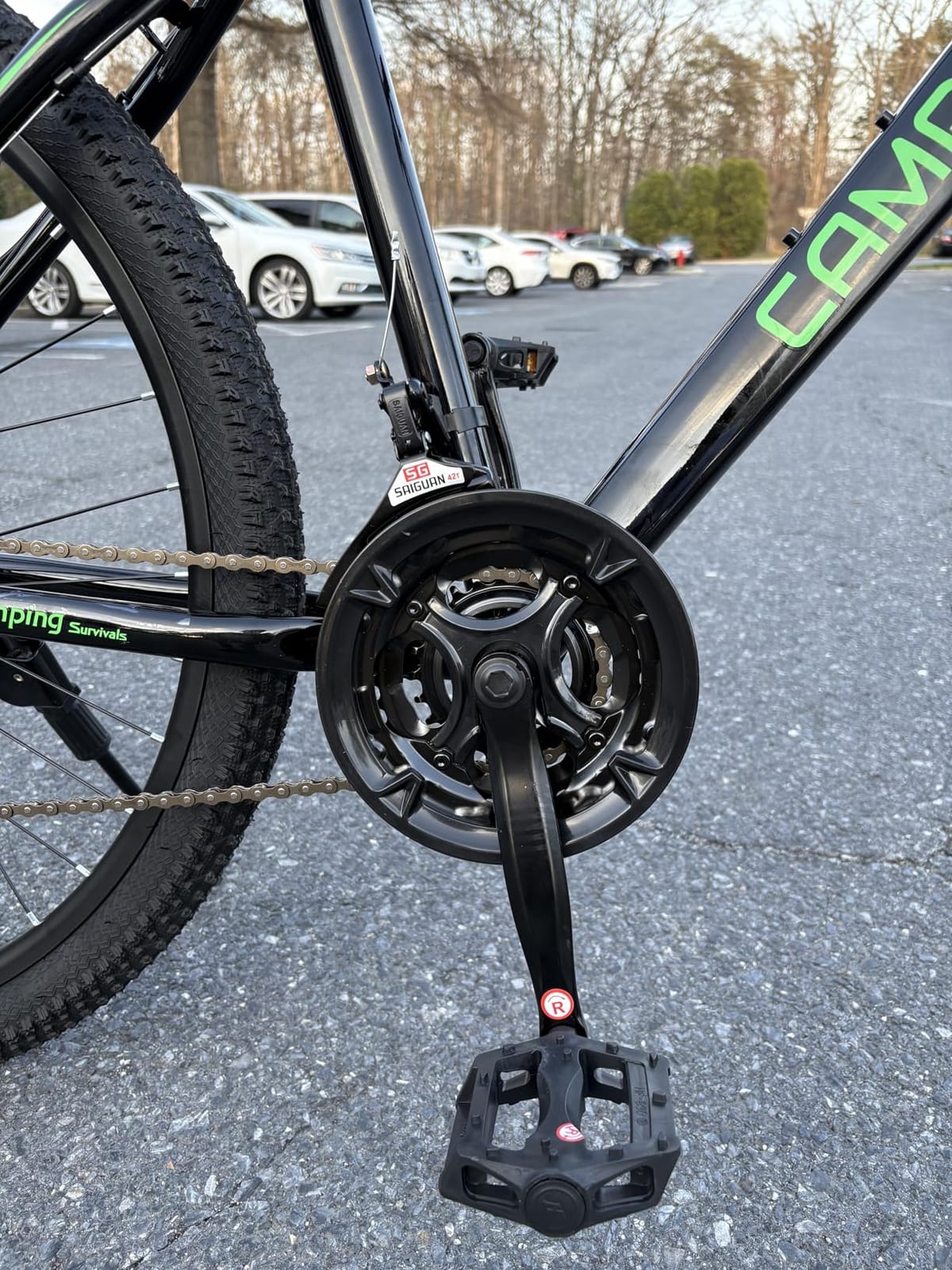
The 21-speed transmission with front and rear derailleurs shifts smoothly once adjusted, and the high carbon steel frame is strong without deforming. Quick-release hubs, a quick-adjust seat post clamp and non-slip tires for gravel, dirt and rocky roads round out a well-considered package.
Size choice is unusually broad, with 24, 26, 27.5 and 29 inch versions and lightweight aluminum alloy wheels designed to cut wind resistance. The bike arrives 85 percent assembled, so you fit the handlebar, seat, front wheel and pedals, then adjust brakes and gears. Owners report about 20 minutes of work.
What a new rider should know before buying it
The front wheel can arrive out of true on some examples, which shows up immediately as disc brake rub. Check the wheel before your first ride and have it trued if needed. The highest gears can also be hard to reach on some bikes until the shifting is adjusted, so budget a short service visit.
Customer service response is largely automated with little real human support, so if something is wrong, expect to handle diagnostics yourself or take it to a shop.
Who should skip it
Skip it if you need a rear shock for technical trail, since this is a front-suspension hardtail with a non-adjustable fork. Riders who want more precise shifting with less tuning should look at a bike with trigger shifters rather than twist shifters.
8. WEIZE Hardtail 29 Inch: Best for Taller Riders
WEIZE Hardtail Mountain Bike, 29 Inch Wheels Outdoor Cycling Bike, 21-Speed Trigger Shifter, Aluminum Frame for Women and Men, Comfort Saddle, MTB Bicycle with Suspension Fork, White
6061 aluminum frame
29 inch wheels
21-speed trigger shifting
Front suspension
Pros
- 6061 aluminum frame is light and suits riders up to 6 foot 2
- 29 inch wheels roll smoothly over campus paths and gravel
- Trigger shifters give a wide
- precise gear range
- Tool kit included and setup takes about 30 minutes
Cons
- V-brake rim brakes rather than discs
- Shifting can slip until it is tuned
- Front suspension is stiff with no adjustment
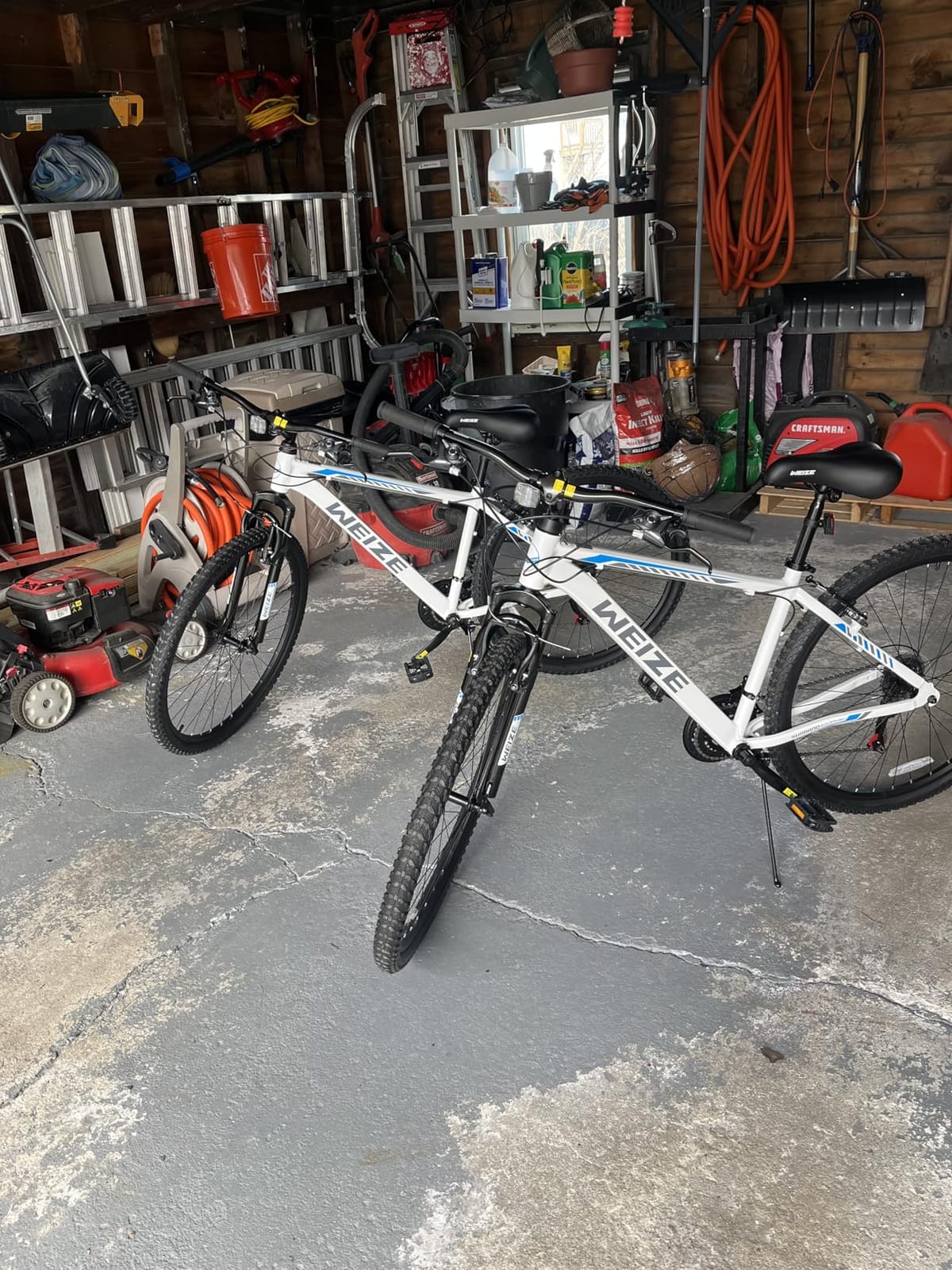
This is the pick for a taller rider who wants a light bike for mixed surfaces. The 6061 aluminum frame is the same alloy grade used on higher-tier frames, and combined with 29 inch wheels it suits riders from 5 foot 4 up to 6 foot 2 without feeling stretched over the front wheel.
The 29 inch wheels are the reason it rolls. Bigger wheels carry speed over campus paths, gravel roads and smooth trail far better than 26 inch wheels, and owners who moved up from a smaller-wheeled bike describe the difference as a noticeable improvement in efficiency.
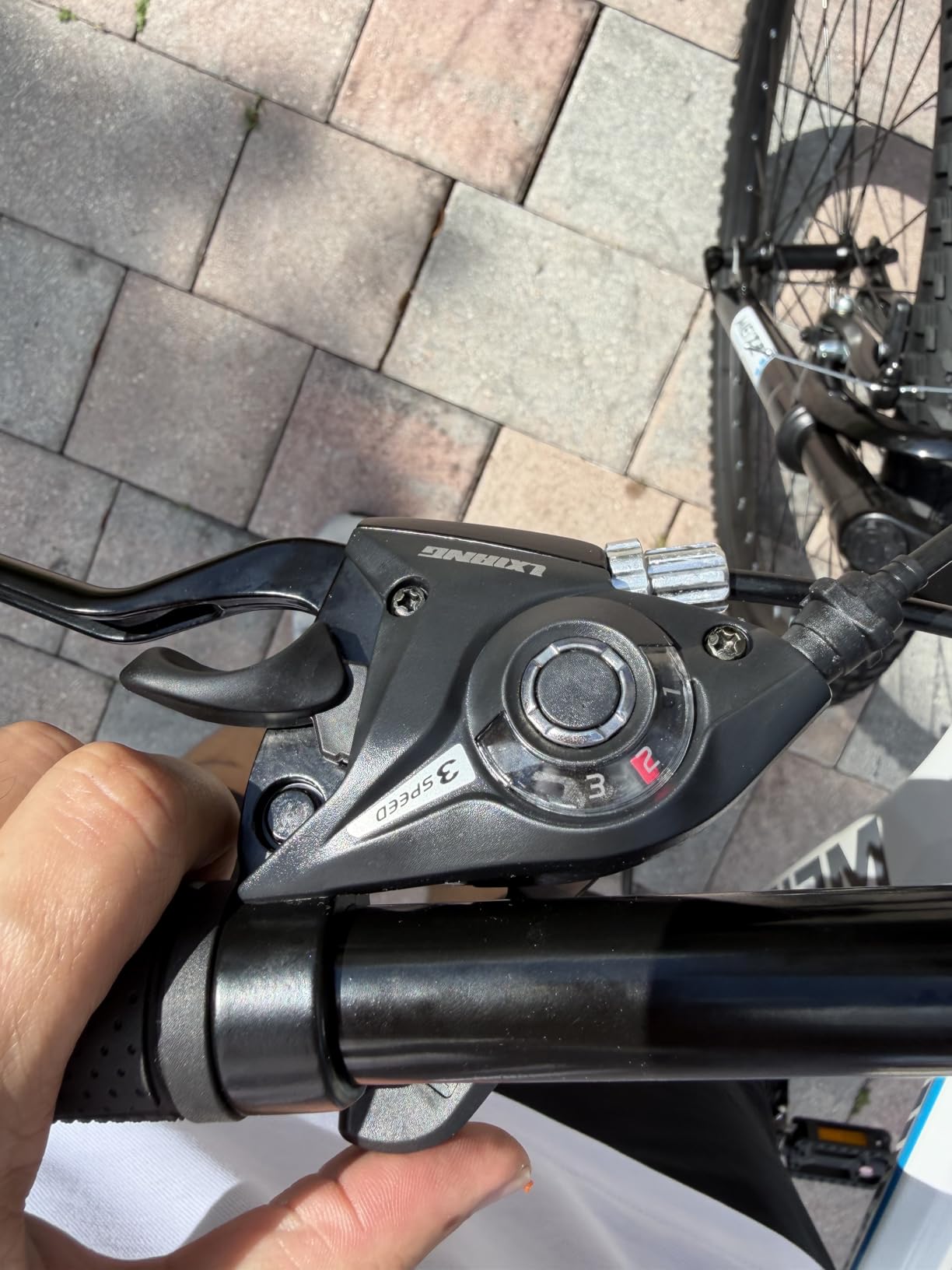
Unlike most bikes at this tier, the drivetrain uses 21-speed trigger shifters with front and rear derailleurs. That gives a wider gear range and cleaner single-finger changes than twist shifters, which helps when you are pedalling uphill with one hand on the bar. The bike arrives roughly three quarters assembled with a tool kit, and owners report setup in about half an hour.
It is a popular first bike for teens and college students, and it comes in white or black. The front suspension fork takes the edge off uneven ground, though it is stiff and offers no adjustment, so treat it as a comfort feature rather than real suspension control.
What a new rider should know before buying it
Brakes are V-brakes on the rims, not discs. They are perfectly adequate in dry conditions but noticeably weaker in rain and mud, and a lot of riders end up replacing them later. Shifting can slip and only reach part of the range until it is properly tuned, so factor in one service appointment.
The warranty is one year, the shortest in this group, and some examples have arrived with a crooked wheel, mis-wired brakes or a derailleur that was never connected. Inspect everything on unpacking.
Who should skip it
Skip it if you ride technical trail where you need a rear shock, or if shorter riders need the extra agility of smaller wheels. Anyone who rides in wet weather should prefer a disc brake bike such as the Ktaxon or the Schwinn High Timber.
9. AVASTA Earth 26/27.5: Best for Quick, Simple Setup
AVASTA 26 Inch Mountain Bike MTB for Adult Man Women Male, Blue
Aluminum alloy frame
Switchable suspension fork
21-speed
Disc brakes
Pros
- Consistently positive owner feedback on 140 ratings
- Rear wheel and brakes arrive pre-tuned
- Quick-start guide with step-by-step diagrams
- Easy one-person assembly in about 30 minutes
Cons
- Small saddle becomes uncomfortable after about 30 minutes
- Gears can skip and wheels or cranks can arrive warped
- No local repair network for the brand
The AVASTA Earth has the smallest review base in this roundup at 140 ratings, and owner feedback skews strongly positive. Most owners use it for commuting and light trail work and describe it as very good value.
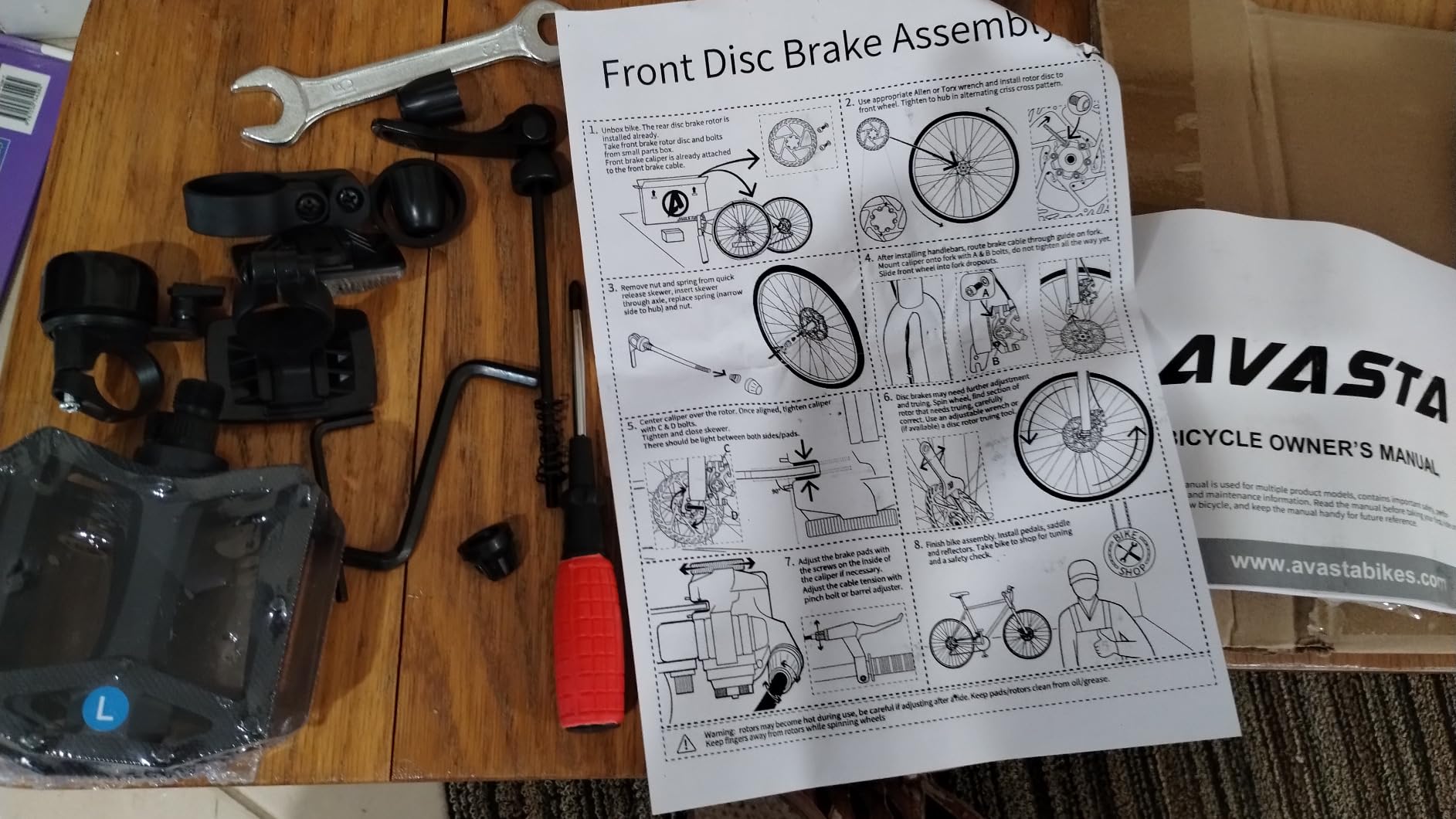
What stands out is the assembly experience. The bike arrives 75 percent assembled with an installation video and a well-illustrated quick-start guide, and the rear wheel and brakes are pre-tuned so only the front brake cable needs connecting. Owners report finishing the build alone in about half an hour, which matters if you have no local bike shop nearby.
The switchable suspension fork is a rare feature at this level and lets you firm the front end up for pavement. The 21-speed derailleur system with disc brakes gives precise shifting and reliable stopping, and the aluminum alloy frame and rims keep the bike light and agile.
Tire options are 26 by 1.95 inch or 27.5 by 1.95 inch all-terrain on quick-release hubs, with ten color and size combinations. A bell, kickstand, reflectors and a tool kit are all included, which is a generous box.
What a new rider should know before buying it
The saddle is the most common complaint and it is small. Expect to replace it within the first few rides if you are taller, and treat that as a planned first expense rather than a fault.
Assembly defects are the other theme in the negative reviews: warped rims or cranks, and a quick-release front wheel that can fail if not tightened properly. Check the front wheel retention carefully before your first ride. There is also no local repair network for the brand, so mechanical problems mean a general bike shop.
Who should skip it
Skip it if you want a large, well-documented review history to guide your decision, since 140 ratings is a thin basis compared with the rest of this list. Also skip it if you ride technical trail, since the fork has no travel adjustment and there is no rear suspension.
10. Outroad Folding Mountain Bike: Best for Travel and Small Spaces
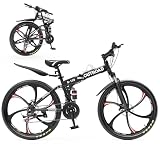
Outroad 26 Inch Folding Mountain Bike, 21 Speed Full Suspension High-Carbon Steel MTB Foldable Bicycle, Dual Disc Brake Non-Slip Adjustable Seat Folding Bikes for Adults/Men/Women, LH-Black
Folding steel dual suspension
21-speed
Dual disc brakes
39 lbs
Pros
- Folds small enough for a car boot or public transport
- Light enough at 39 lbs to carry and load
- Dual disc brakes work well once adjusted
- Free pedals
- seat and a full tool kit included
Cons
- Rear shock has no damping and is effectively cosmetic
- Instructions are unclear and cranksets can bend
- Fixed handlebar height limits fit for shorter riders
Folding bikes solve a problem no other bike here does. If you live in a flat, travel by train, or share a car with other riders, this folds small enough to fit in a boot or carry on public transport, and at 39 lbs you can lift it without asking for help. It is the only folding option in this roundup.
As a commuter and travel bike the reviews are strongly positive. Owners praise the easy folding, the ride quality for the class, the packaging that protected the frame in transit, and the customer service that handled a return by home pickup. Free pedals, a seat and a full tool kit are included, and you finish the last few percent of assembly yourself.
The spec sheet reads well on paper: a folding high carbon steel dual suspension frame, 26 inch wheels on a 17 inch frame, a 21-speed drivetrain and front and rear disc brakes with quick releases. Adjustable seat height and a recommended rider range of 5 foot 3 to 6 foot 0 with a 300 pound maximum.
What owners actually report is a clear split by use. Trail riders are let down by the rear shock, which is essentially a metal piece in a plastic tube with no damping, and by bent cranksets and out-of-true rims. Commuters and travellers are happy. One detailed review concludes that a trail rider would replace everything except the frame.
What a new rider should know before buying it
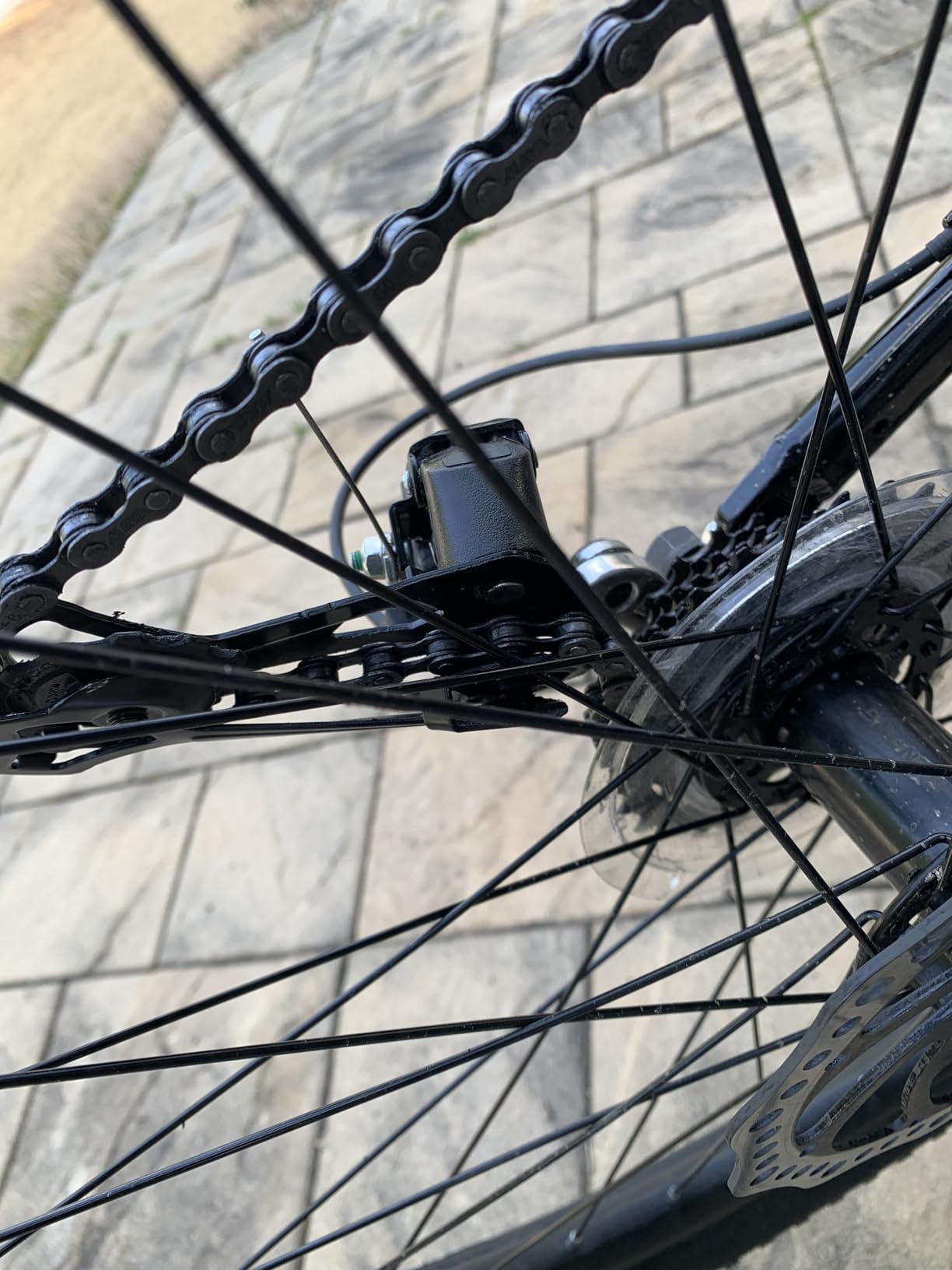
Instructions are unclear, and several owners had to find video tutorials to complete assembly. The folding mechanism can arrive seized and need penetrating oil to move, and the chain has occasionally been bolted into the spoke assembly. Rims can arrive out of true, which makes the whole bike wobble.
Handlebar height is fixed, which limits fit for shorter riders, and the crankset arms bend with light use and cannot be replaced with an off-the-shelf unit. Tires arrive deflated and the supplied seat is uncomfortable. For commuting, the quick setup and the fold are worth the trade-offs. For trail riding, they are not.
Who should skip it
Skip it if you want to ride trails. This is a commuting and travel bike with a suspension look rather than a suspension bike, and the fixed handlebar makes it a poor fit for riders under about 5 foot 3. Anyone chasing trail capability should spend that money on a real hardtail such as the Schwinn High Timber.
How to Choose Your First Mountain Bike in 2026
Once you have a shortlist, the deciding factors are simpler than the spec sheets suggest. Suspension type, frame material, brakes and fit decide almost everything. Here is how we would weigh each one, in the order that matters for someone riding for the first time.
Hardtail or full-suspension for a first bike?
Buy a hardtail if your local riding is smooth. Forum consensus splits on this, but the argument for a hardtail is consistent: you learn better body position on a bike that does not absorb your mistakes, the bike is lighter, and it needs less servicing. That is why the Schwinn High Timber, the Huffy aluminum hardtail and the 29 inch WEIZE hardtail earn their place on this list.
Buy a full-suspension bike if your trails are rocky, rooty or root-strewn, or if you have back or joint issues that make harsh impacts tiring. Suspension keeps the wheels on the ground, which is genuinely safer on rough ground and easier on a body that has not built up tolerance yet. The Schwinn Traxion and the WEIZE dual suspension cover that need.
Terrain decides this, not budget. Plenty of riders on greenways and gravel paths are better served by a light hardtail even with money to spend on suspension.
Wheel size: 26, 27.5 or 29 inch
Bigger wheels roll faster over rough ground and obstacles; smaller wheels are easier to maneuver and suit shorter riders. For most adults between 5 foot 4 and 6 foot 2, 29 inch wheels are the modern default and appear in the Schwinn Traxion and the 29 inch WEIZE hardtail. 27.5 inch wheels are a good compromise for riders in the lower half of that range, and 26 inch wheels still work well on tighter, twistier trails and for shorter riders.
Rider height is the practical guide rather than wheel size itself. If you are under about 5 foot 4, start with 26 or 27.5 inch wheels, because a 29 inch bike can feel twitchy and hard to place. If you are above 6 foot 2, 29 inch wheels give you the roll-over you want and help keep the front end from feeling too low.
Steel or aluminum: which frame material matters
Aluminum is lighter and stiffer than steel, which is why most of the picks in this list use it. Steel frames are heavier but tough and cheap, and the WEIZE dual suspension, the Huffy Stone and the Ktaxon use steel to put the money into suspension and brakes instead. For a beginner, aluminum in a hardtail is the better balance, because handling weight matters more to a new rider than frame compliance does.
Carbon frames do not really appear at these prices, and you do not need one. The only material decision worth making is whether you want the light handling of aluminum or the durability and value of steel.
Drivetrain and brakes: where the money goes
Brakes matter more than gears. The jump from rim brakes to mechanical disc brakes is the single biggest handling upgrade available on a budget bike, and it is why the Ktaxon and the Schwinn High Timber sit well. Gears are second priority: a 21-speed twist shifter drivetrain is perfectly adequate for learning, and trigger shifters are a refinement rather than a requirement.
On these bikes, expect 18 to 24 speeds and a mix of twist and trigger shifters. Shimano drivetrains appear on several picks. If you have a bike shop nearby, it is worth asking what drivetrain and brake parts they service most often for the brand you are considering, since parts availability is a real long-term consideration.
Sizing: the part most beginners get wrong
Height alone is a poor guide to frame size, and buying too large is the most common beginner mistake reported in forums. A beginner who buys a frame that is too large cannot easily reach the ground, cannot shift weight properly and ends up believing they are bad at the sport. The fix is simple: stand over the frame with both feet on the ground and check there is clearance to your inseam, then check that the manufacturer size chart matches your height.
Between sizes, take the smaller one. Riders who regularly share a bike between two heights, or who ride very technical trail, may want the larger frame, but for a first bike the smaller frame is more forgiving. Test rides are the only reliable way to settle it, which brings us to the last point.
For related reading, our [best mountain bike shoes roundup](https://www.thirstybear.com/best-mountain-bike-shoes/) covers the footwear that makes your first season comfortable and safe, and [our electric mountain bike picks](https://www.thirstybear.com/best-electric-mountain-bikes/) are worth a look if you want assistance on longer climbs later.
What your first year really costs
The bike is usually the cheapest part of getting into mountain biking. Budget for a helmet before anything else, then a pump with a pressure gauge, a multi-tool with a chain breaker, flat pedals if the supplied ones look cheap, and a few lessons on a local trail. Add lift passes if you plan to ride bike park terrain. Owning a bike that a shop can service is worth more than owning a cheaper bike that nobody will touch.
What to replace first, and in what order
On most of the bikes here, the saddle is the first thing owners replace, followed by the pedals, then the tires, then the brakes if they started as rim brakes. The Schwinn Traxion and the WEIZE dual suspension both draw consistent comments about the supplied saddle being uncomfortable, and the Huffy Stone ships with rim brakes that are worth planning to replace early. The Mongoose Flatrock and the 29 inch WEIZE hardtail are built for riders who will mostly stay in dry conditions, so their V-brakes are less urgent a priority.
The general principle is the 80/20 rule of mountain biking: 80 percent of the cost of a bike sits in 20 percent of the parts, and the parts that matter most for how it feels are the frame, the suspension and the brakes. On a budget bike, that means do not chase the drivetrain and save nothing for the brakes.
How to test ride a bike before you buy
Test ride on the terrain you will actually ride, not a smooth car park loop. Ride out of the saddle, then seated, and notice whether you can place your feet on the ground while seated. Roll the bike to a stop and see whether the brakes feel controllable at walking pace. Shift through the full range and note whether any gear clicks feel unreliable. If the bike wobbles, stops crooked or the bars flex, that is your answer.
If no bike in the shop fits you, ask about demo days and rental programs at local trail centers. Riding a rental for a season before you commit is the cheapest way to find out whether mountain biking is for you and which size you actually need.
Frequently Asked Questions
What type of mountain bike should a beginner get?
Most beginners should start with a hardtail mountain bike with an aluminum frame, a front suspension fork and mechanical disc brakes. A hardtail is lighter, cheaper to service and better for learning body position on smooth ground. Choose a full-suspension bike instead if your local trails are rocky or rooty, because the rear shock keeps the wheels on the ground and takes impact off your body.
What is the best mountain bike for a beginner?
The Schwinn High Timber is the best all-round beginner mountain bike in this roundup. Its 16.5 inch aluminum frame keeps the bike light and easy to steer at low speed, the 21-speed twist shifter drivetrain is simple to service at any bike shop, and mechanical disc brakes give confident stopping. Riders from 5 foot 4 to 6 foot 2 are covered by the sizing.
Is 30 too old to start mountain biking?
No. There is no age at which starting mountain biking becomes unrealistic. The most common reason first-time riders give up is not age or fitness, it is buying a bike that does not fit their height properly and then feeling clumsy on it. Get sized correctly, start on easy green or blue trails, and consider a lesson, and most people find the skill comes within a few rides.
How do I choose the right size mountain bike?
Do not rely on height alone. Stand over the frame with both feet flat on the ground and check there is clearance between you and the top tube. Then compare that against the manufacturer’s size chart, and if you fall between two sizes take the smaller one for a first bike, because a smaller frame is more forgiving at low speed. A test ride is the only reliable way to confirm fit.
Do I need a dropper post and hydraulic brakes as a beginner?
Neither is essential for your first season. A dropper post helps on steep descents, but on a budget bike it is a sensible upgrade to consider in your second year once you are riding trails confidently. Hydraulic brakes are better than mechanical discs in wet conditions, so if you ride in rain or mud often, factor them into your upgrade plan rather than buying them immediately.
The Best Mountain Bikes for Beginners: Our Final Word
The Schwinn High Timber is the best mountain bike for beginners overall, because the aluminum frame makes it light, the parts are simple enough for any shop to service, and its 1523 ratings give you a real owner history to read before committing. If your trails are rough rather than smooth, the Schwinn Traxion is the alternative, adding suspension at both ends and 29 inch wheels with a wider Shimano drivetrain.
The rest of the list covers specific situations. The WEIZE dual suspension is the value pick if you want suspension for gravel and easy trail, the Huffy Stone has the largest review base at nearly 4000 ratings, and the Ktaxon is the one to shortlist first if braking confidence is your priority. For storage and transport the Outroad folding bike is the only option here that solves that problem.
Whatever you choose, get sized properly before you buy, keep the saddle and pedals in your first-year budget, and start on easy terrain. Fit is the difference between a frustrating first season and a good one, and it costs nothing to get right. Use the buttons above to check the current listing for any of these bikes, and get out on a trail.