
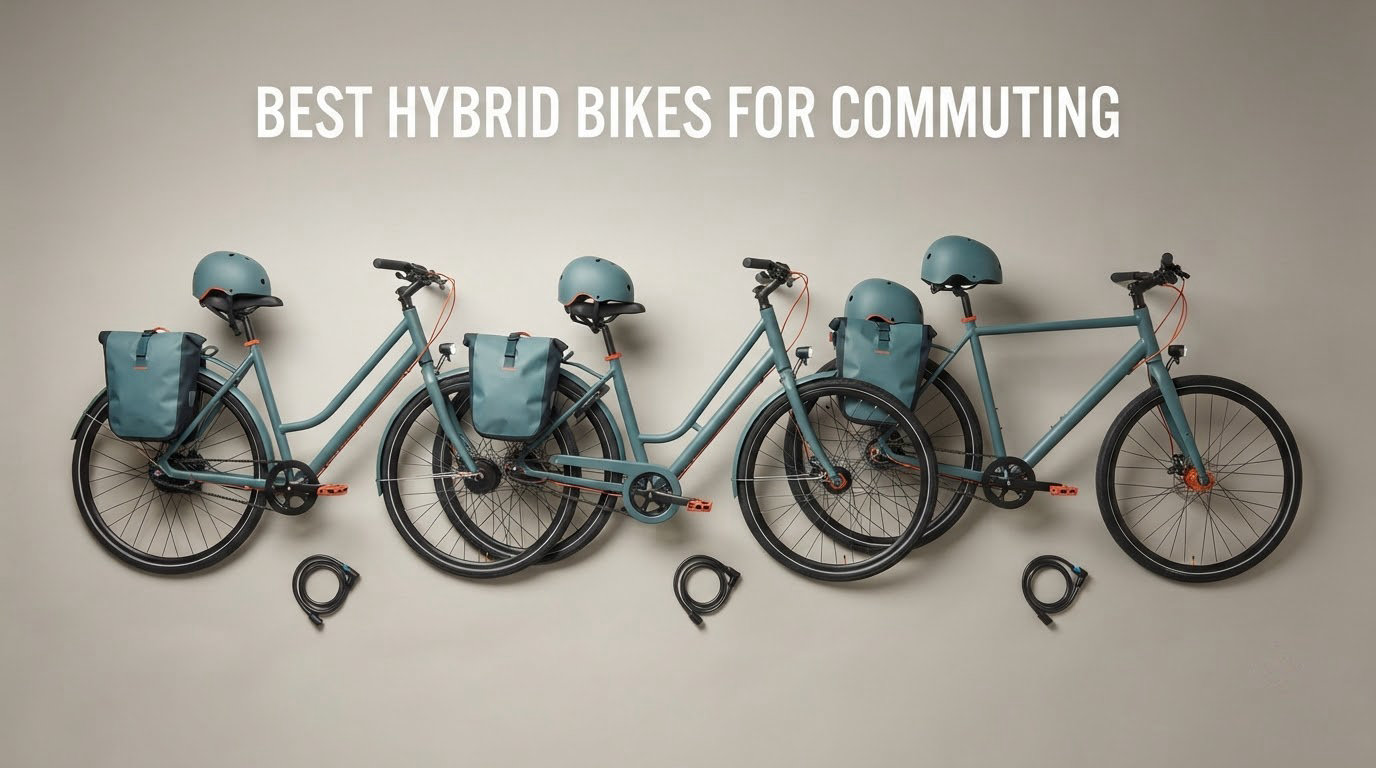
Yes, a hybrid bike is good for commuting, and for most city riders it is the best all-round choice. A flat-bar hybrid gives you the efficient pedalling of a road bike, the upright position and durable wheels of a mountain bike, and the rack and fender mounts you need for a daily ride. That makes it the most useful bike for broken pavement, rain, hills and errands, and it costs far less to run than a car.
We spent weeks reading owner reviews and comparing specs across the ten bikes below, and this guide is organised the way commuters actually shop. First, a short answer to what matters most. Then the full list of picks, each with the honest drawbacks owners report. After that, a buying guide that matches the bike to your commute distance, road surface and hills.
One thing to set straight early: a hybrid is not a cheap road bike, and it is not a lighter mountain bike either. It is a distinct category built around commuting, which is why the bikes here carry fenders, racks, kickstands and lights in the box far more often than a road bike does. If you also ride weekend trails, our picks of the best mountain bikes cover that end of the market.
Table of Contents
Key Features to Look For in a Commuter Hybrid
Rack and fender eyelets: Look for threaded mounting points on the frame and fork. A bike without them cannot take panniers or full mudguards later, and retrofitting the mounts is far more work than buying a bike that already has them.
Brakes: Disc brakes handle rain and wet paint far better than rim brakes. Among disc brakes, hydraulic types need no cable adjustment and give one-finger stopping power on hills.
Tire width: Tires in the 32c to 40c range are the commuter sweet spot. Narrower tires feel faster but punish potholes, and much wider ones add drag and weight.
Gear range: Count total gears, not just the number of sprockets at the front. A steep climb from a standing start needs a genuinely low bottom gear.
Frame material and weight: Aluminum is the best balance for a bike you may carry up stairs or onto a train. Steel is comfortable and durable but noticeably heavier.
Top 3 Picks for Best Hybrid Bikes for Commuting in 2026
These three cover most commuting situations. The Schwinn Wayfarer wins on owner satisfaction and included accessories, the VIRIBUS is the strongest build quality at the money, and the Schwinn Network 3.5 handles rougher routes better than anything else here.
Schwinn Wayfarer
- 7-speed twist shifter
- Full fenders and rear rack included
- Step-through steel frame
- 34.8 lb weight

VIRIBUS 700C 7-Speed
- Dual disc brakes
- Sealed bearings and three-piece crank
- 330 lb capacity
- 85% pre-assembled
Schwinn Network 3.5
- 21-speed wide gear range
- Front suspension fork
- Aluminum frame
- 31 lb weight
All 10 Hybrid Bikes for Commuting Compared in 2026
Every bike in the table below appears in the detailed reviews further down, in the same order.
| Product | Specifications | Action |
|---|---|---|
| Schwinn Wayfarer |
|
Check Latest Price |
| VIRIBUS 700C 7-Speed |
|
Check Latest Price |
| Schwinn Network 3.5 |
|
Check Latest Price |
 HILAND Clifford HILAND Clifford |
|
Check Latest Price |
 AVASTA Vela 26 AVASTA Vela 26 |
|
Check Latest Price |
 DEYGIA 24-Speed DEYGIA 24-Speed |
|
Check Latest Price |
 MOONCOOL 700C 8-Speed MOONCOOL 700C 8-Speed |
|
Check Latest Price |
 RegalRider 700C RegalRider 700C |
|
Check Latest Price |
 HILAND 700C Low-Step HILAND 700C Low-Step |
|
Check Latest Price |
 Goplus 18-Speed Goplus 18-Speed |
|
Check Latest Price |
1. Schwinn Wayfarer: Best Overall Hybrid Commuter Bike
Schwinn Wayfarer Hybrid Bike, 700c Mens and Womens Bike, 7-Speed Hybrid Bicycle, Retro Steel Frame, Front and Rear Linear Pull Brakes, Fenders, Cargo Space, Adult Bicycle
Steel frame
7-speed twist shifter
Front and rear fenders plus rear rack
34.8 lb
Pros
- Upright swept-back riding position
- Fenders and rear rack in the box
- Light for a steel bike
- Large owner review base
Cons
- Hard vinyl saddle that most owners replace
- Assembly takes patience for beginners
- Thin retro tires suit smooth pavement
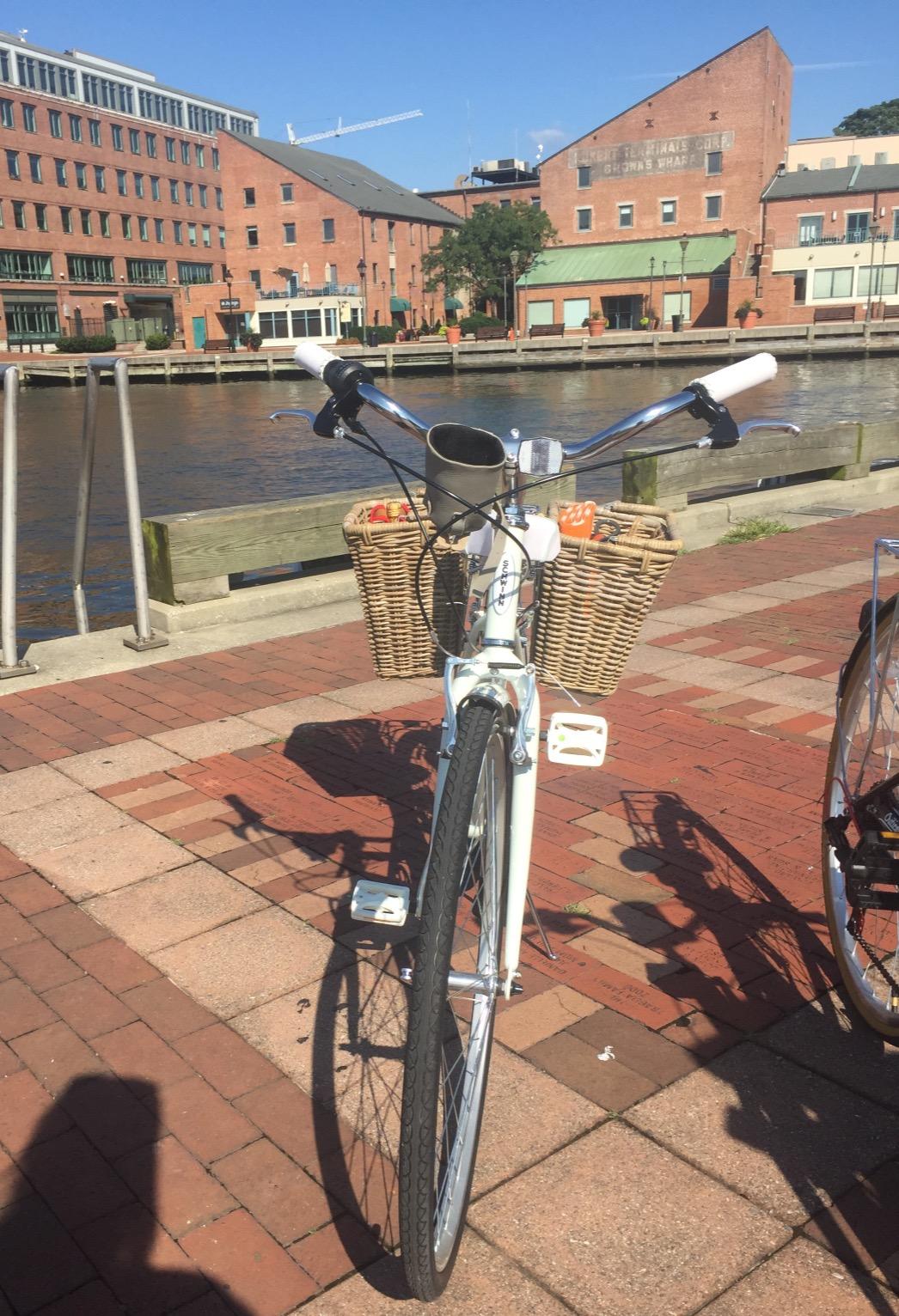
The Wayfarer has the largest owner review base of anything we looked at, and the reason is simple: it arrives with the commuter kit already fitted. Chrome fenders front and rear, a rear cargo rack and a swept-back handlebar are all part of the package, so there is no accessory spending before your first ride.
Owners repeatedly describe the position as upright and comfortable, and note that at 34.8 lb the bike carries far less weight than a typical steel cruiser. The 7-speed twist shifter needs a moment to break in, but once adjusted it handles hills without complaint, and the linear pull brakes are simple to service at any shop.
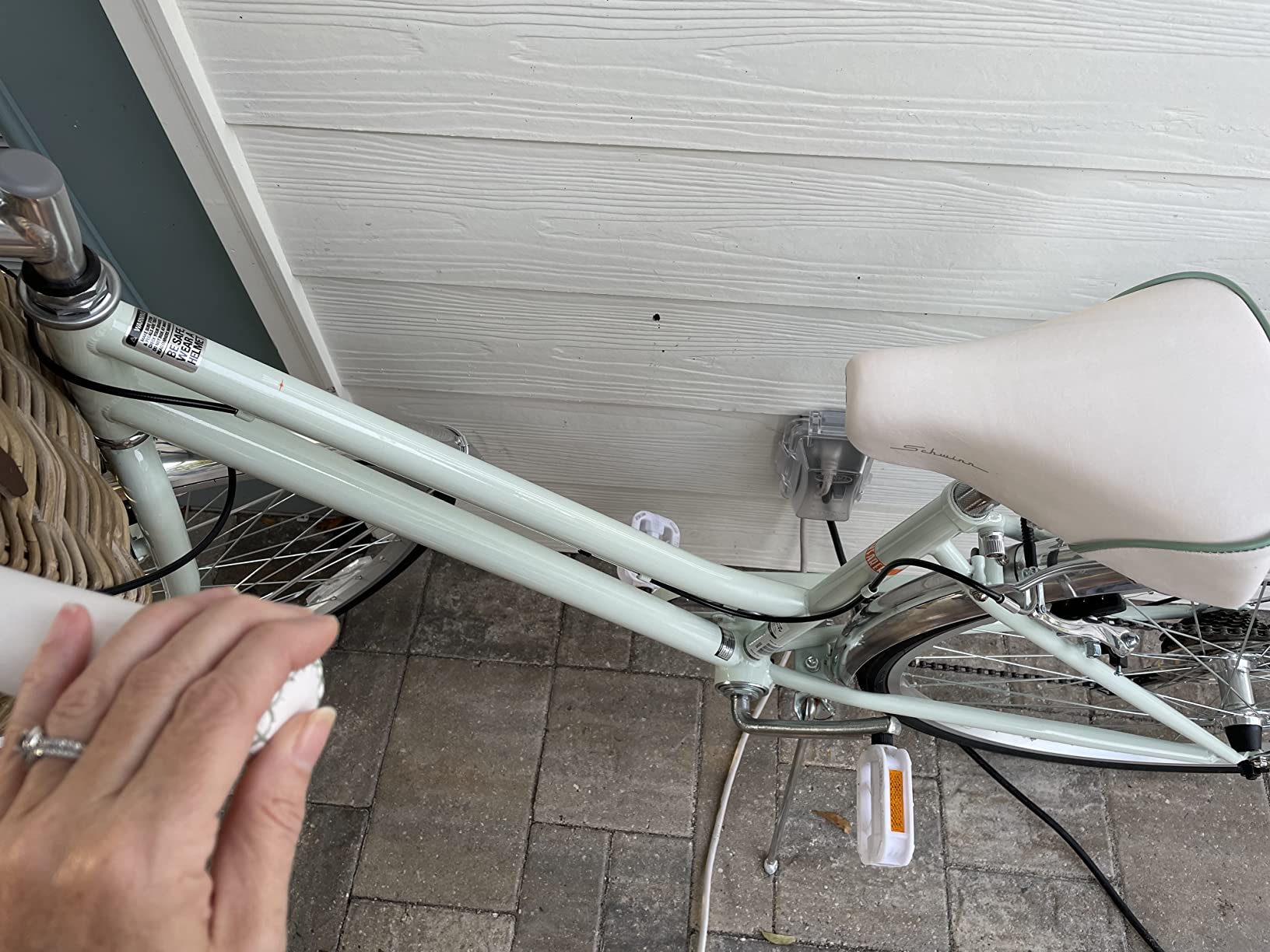
The retro styling is not cosmetic marketing. The curved handlebar, a long stem and a fairly upright saddle height put your weight over the bike rather than reaching forward, which is what makes long neighborhood and park commutes comfortable. The step-through frame is also the practical version of that idea, since there is no top tube to swing a leg over.
The catch is the saddle. Vinyl seats are firm, and the most repeated comment in the reviews is that owners swap it out within the first few months. Grip diameters also differ between sides, which some riders find awkward on a commute where you are holding the bar for 30 minutes at a stretch.
Who the Wayfarer suits
Riders on smooth pavement who want racks and fenders fitted from day one, and anyone who values a low-step frame over sporty geometry. The limited lifetime warranty is the strongest warranty cover in this group, and 972 reviews mean there is a lot of long-term feedback to read before you buy.
It is also a sensible first bike. Riders report the bike rides well once the brake and fender adjustments from assembly are sorted out, and the standard commuting job of short trips, errands and a couple of miles to work is exactly what it handles best.
Who the Wayfarer does not suit
Rough-road riders. The thin retro tires have little volume for potholes, and the frame has no suspension to soften broken pavement. If your route is chipseal, concrete slabs or gravel, look at the Network 3.5 or a bike with wider tires.
Long-distance comfort seekers should budget for a saddle replacement and be honest about the linear pull brakes, which need more hand strength than a hydraulic disc. Neither is a dealbreaker, but both are known costs rather than surprises.
2. VIRIBUS 700C 7-Speed: Best Value Hybrid Commuter Bike
VIRIBUS Hybrid Bikes, 28 inch Mens Bike with Lightweight Aluminum Frame, 700C Vintage Retro Hybrid Bicycles 7 Speed for City Commuters, Gravel Road Adult Bicycle for Male Men
Aluminum frame
7-speed thumb shifter
Dual disc brakes
Rated to 330 lb
Pros
- Sealed bearings and three-piece crankset
- Light aluminum frame
- Dual disc brakes in all weather
- 85% pre-assembled with front and rear lights
Cons
- Derailleur and wheels usually need tuning out of the box
- Plastic bell splits easily
- Some owners report early chain and cassette wear
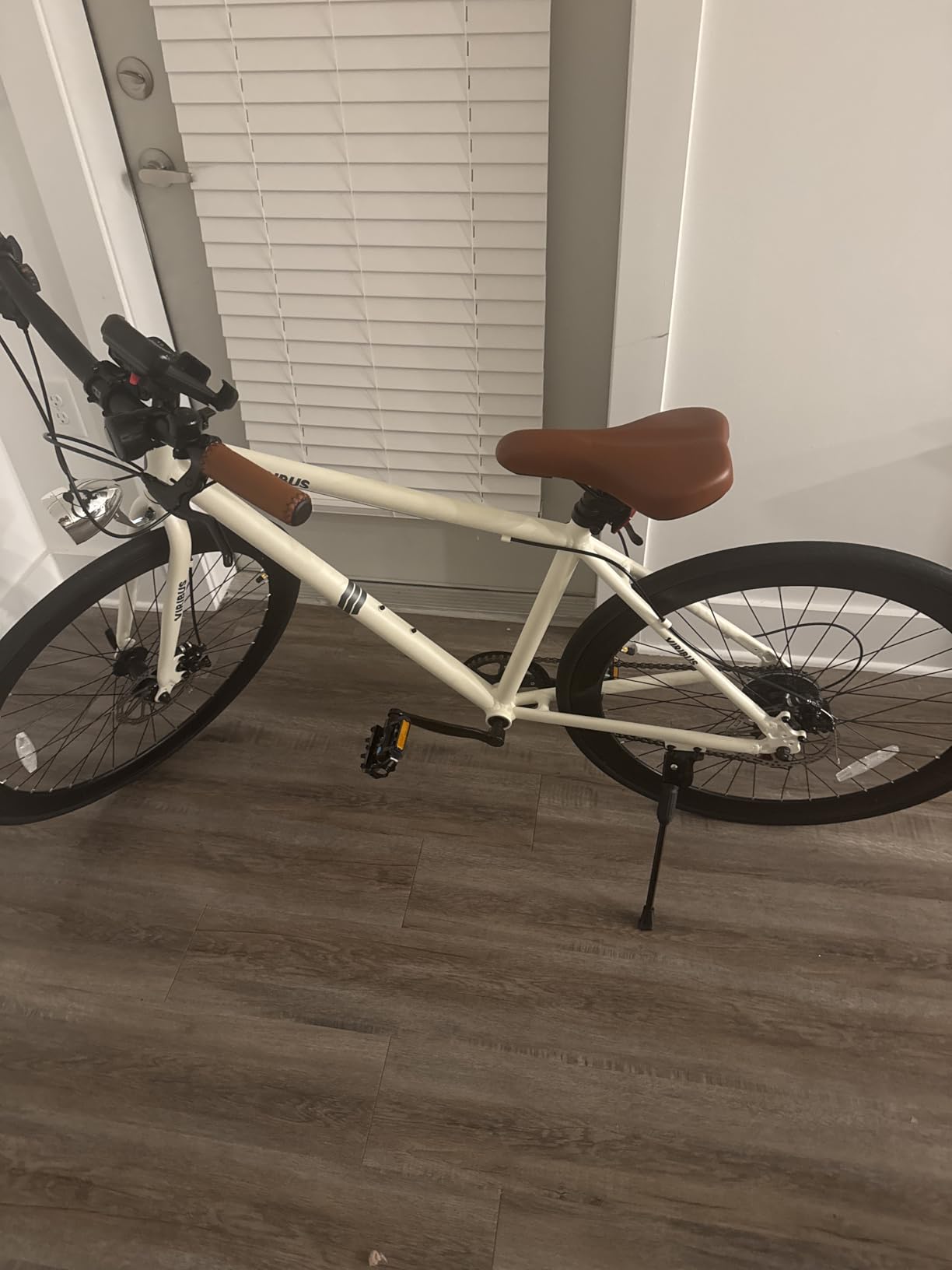
Component quality is where this bike separates itself from its class. Owners single out the sealed headset, bottom bracket and hubs, plus a three-piece crankset where most bikes at this level use a one-piece crank, and those are the parts that decide whether a budget bike still feels good in year two.
Light aluminum tubing keeps the weight down, and the 330 lb rating is the second highest we saw, which matters if you are a larger rider. Front and rear IPX4-rated lights and a kickstand are included, which covers the visibility problem that catches out most new commuters.
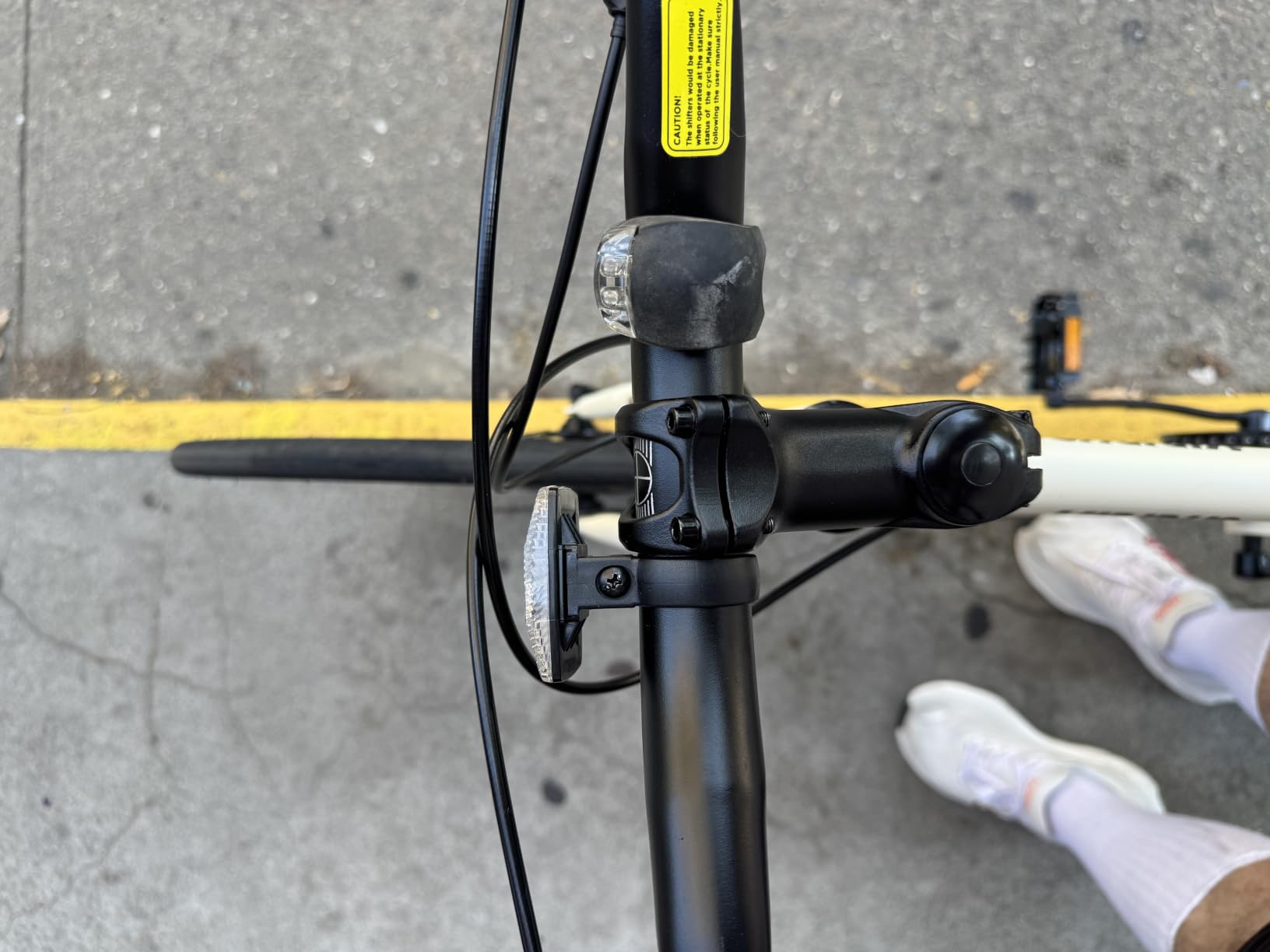
Setup is the main task. It arrives 85% assembled, so the job is largely finishing the handlebar, pedals and front wheel, and reviewers estimate well under an hour for anyone comfortable with basic tools. Budget time for a brake and derailleur adjustment before riding in traffic.
The dual disc brakes are a genuine upgrade over the rim brakes on cheaper hybrids, particularly in rain, and they need no routine cable tuning once set. The 7-speed thumb shifter is simple enough for a first-time rider to use without instruction.
Who the VIRIBUS suits
Anyone who wants disc brakes, sealed bearings and a light frame without moving up a tier, and riders who plan to carry the bike up stairs or onto a train. The 5 foot 3 inch to 5 foot 9 inch recommended height range fits most riders, and the M frame suits shorter commutes on smooth urban paths.
It is also a good match for a first bike, because the components that usually fail first on cheap frames are the ones built properly here. If you ride smooth city routes, the reported after-sales service is responsive, which matters more than people expect.
Who the VIRIBUS does not suit
Riders who refuse to touch a spanner. Out-of-the-box tuning of derailleurs, wheels and brakes is the most common complaint, and it is worth a local shop check before you ride to work for the first time.
A long-term owner also reported the chain and rear cassette wearing faster than expected, and the included plastic bell is a known weak point. Riders on steep, sustained climbs may also find a 7-speed drivetrain narrower than they need.
3. Schwinn Network 3.5: Best Hybrid for Mixed Roads
Schwinn Network 1 Hybrid Bike, 700c Mens and Womens Bike, 21-Speed Hybrid Bicycle, Aluminum Frame, Suspension Fork, Alloy Linear Pull Brakes, Adult Bicycle
Aluminum frame
21-speed twist shift
Front suspension fork
31 lb
Pros
- Widest useful gear range here
- Suspension fork softens broken pavement
- Light 31 lb aluminum frame
- Upright high-rise stem
Cons
- Vague assembly instructions
- Brakes and gears need post-assembly adjustment
- Factory saddle is uncomfortable
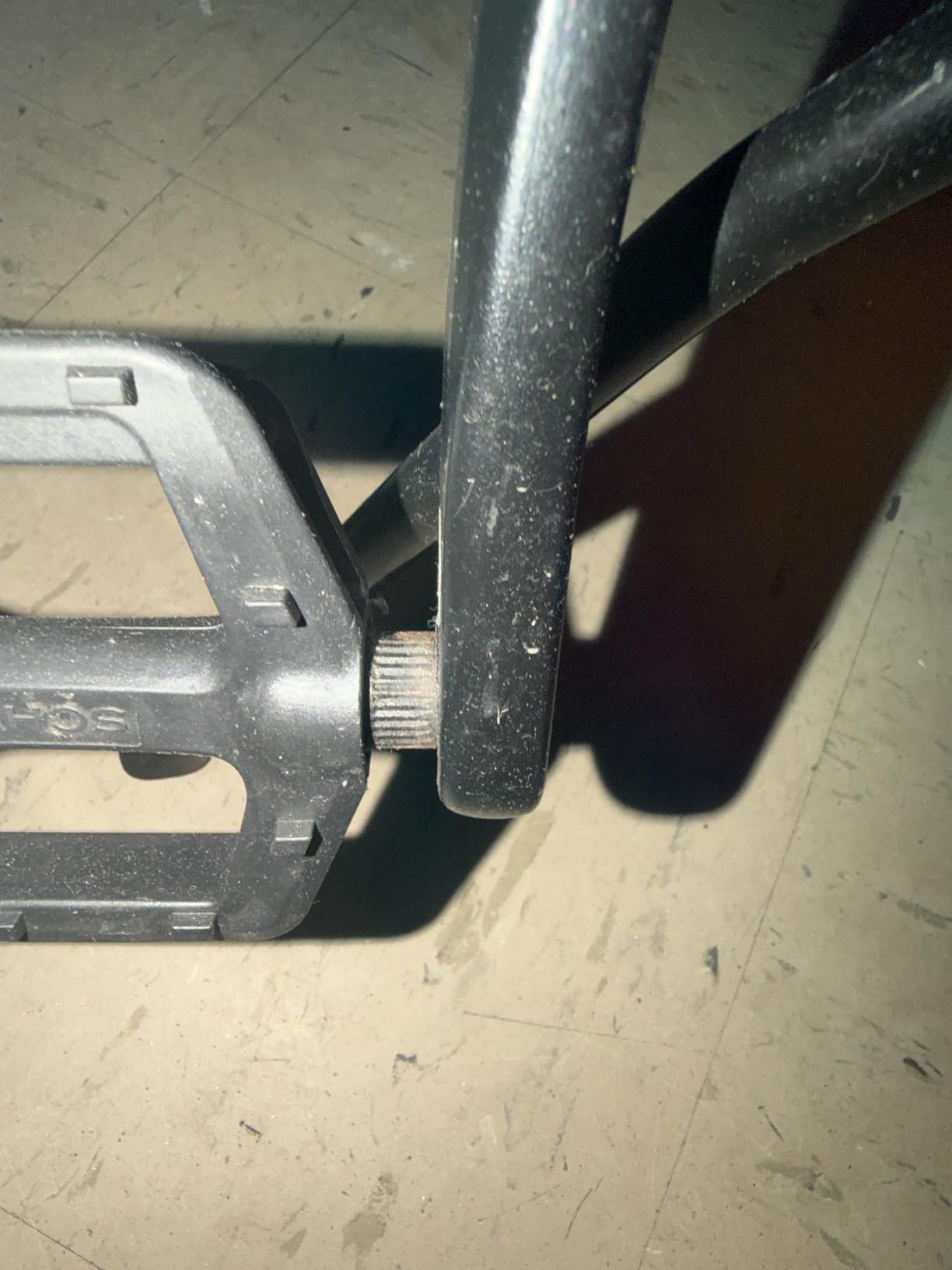
This is the bike to buy if your commute mixes good asphalt with bad. The 21-speed drivetrain spans city flats, rolling country routes and short unpaved sections, and the front suspension fork takes the sting out of cracks and gravel shoulders that would bounce a rigid bike.
At 31 lb it is one of the lighter frames here, and the aluminum frame and rims keep that weight down. The high-rise stem and swept-back bar give a noticeably upright position, which owners who ride long distances consistently praise.

The 300 lb maximum rider weight is stated on the spec sheet, and it is worth checking against your own build before buying. The 15-inch frame is listed for shorter riders from about 65 inches, so taller riders may need a different size, which is another reason to test fit in person where possible.
Ride quality is the draw. Reviewers describe it as smooth and well suited to pavement and light trails, and the 21-speed range means you are rarely stuck grinding up a hill in too high a gear or spinning out on the flat.
Who the Network 3.5 suits
Riders with mixed routes who want a suspension option without a mountain bike’s weight, and anyone moving up from a first bike who wants real gear range. It handles light trail sections and rough park paths as well as city streets, which widens what one bike can do.
The limited lifetime warranty also applies here, matching the Wayfarer, and the comfort hardware means long commutes are realistic. Riders who carry a laptop in a pannier will need to add a rack, since this one does not include one.
Who the Network 3.5 does not suit
Minimalist commuters who want zero setup. Instructions are described as vague and not model-specific, and brakes and gears commonly need adjustment after assembly, so budget an afternoon or a shop visit.
The saddle is the other recurring complaint, and many owners replace it. The suspension fork also adds weight and maintenance compared with a rigid frame, which is a fair trade for rough roads and a poor one if your route is smooth.
4. HILAND Clifford: Best Entry Hybrid for Taller Riders
HILAND 700C Hybrid Bike, Road City Commuter Bicycle for Men Women Adult, L
Aluminum frame
7-speed thumb shift
Dual disc brakes
Fenders in the box
Pros
- Two frame sizes for taller riders
- Upright flat bar reduces neck strain
- Fenders included
- 90% assembled with tools and pedals
Cons
- Rear derailleur indexing often disagrees with the shifter
- Some hardware stripped after light use
- Seatpost clamp may need a tool
Size availability is the reason this one earns a place. The M frame at 53 cm fits riders from 5 foot 9 inches and the L frame at 57 cm suits 6 foot 1 inches to 6 foot 5 inches, so taller riders have a realistic option rather than stretching a small frame.
The flat handlebar produces a genuinely upright posture, and owners specifically mention less strain in the back, arms and neck compared with a leaning-forward bike. Fenders come in the box, which keeps road spray off you through the winter months.
It arrives 90% assembled with free tools and pedals, so setup is short. Dual disc brakes suit the light frame and give low-maintenance stopping in wet conditions, and the whole bike is easy to move around a hallway or up a garage step.
Quality control is where care is needed. A small number of owners report stripped pedal and wheel hardware after light use, and a front brake that did not engage until adjusted, so give the bike a full safety check in the first week.
Who the Clifford suits
Taller riders who struggle to find a frame that fits, and commuters on flat urban streets who want a light, simple bike with fenders already fitted. The upright bar position is a good fit for riders who feel strain in their neck and shoulders on a forward-leaning bike.
It is also a straightforward first commute bike, since the 7-speed drivetrain is easy to use and there is nothing to learn beyond shifting. Plan a proper assembly and safety check before riding in traffic.
Who the Clifford does not suit
Riders on hilly routes. Reviewers point to the rear derailleur jumping cogs and the shifter disagreeing with the actual gear, and a 7-speed range is narrow for sustained climbing. Riders who want the limits tested beyond light use should be cautious.
The assembly directions are also not model-specific, and the seatpost clamp may not tighten by hand. It suits paved, flat city riding rather than rough or hilly terrain.
5. AVASTA Vela 26: Best Step-Through Hybrid for City Riding
AVASTA Vela Women’s 26″ Hybrid Bike, Black Frame, Cream Tires
High tensile steel frame
6-speed
Sprung saddle, full fenders and 25 lb rack
35 lb
Pros
- Low-step frame makes mounting easy
- Full fenders and 25 lb rack included
- Comfortable sprung saddle
- Two-year manufacturer warranty
Cons
- 26-inch wheels suit shorter riders
- Only 6 speeds for hills
- Included headlight is low quality
The Vela is the most genuinely commuter-ready of the step-through bikes here. Fenders, a 25 lb rear rack, a kickstand and a bell all arrive in the box, and the low-step frame with swept-back bars and a sprung saddle means you can stop and start at traffic lights without swinging a leg over a high top tube.
Owners rate build quality highly for the money, and the sprung saddle is a real step up from the flat vinyl seats most bikes in this bracket use. The four-foot-eleven to six-foot range covers most riders, and the two-year warranty is longer than most here.

The 35 lb weight is the trade-off for a steel frame, and the six-speed drivetrain is the narrowest in this roundup. That is fine on flat streets and short trips, but on a hilly commute you will be working harder than on the 21-speed or 24-speed bikes listed here.
Size is the other consideration. The 26-inch wheels suit shorter riders, and taller adults can find the frame too small, which is a common note among owners. The included headlight is widely regarded as disposable, so plan to add a proper light.

Who the Vela suits
City riders on flat routes who want fenders, a rack and mudguards without a second purchase, and anyone who prefers a step-through frame to swinging over a top tube. It is also a strong weekend and errand bike, since the rack carries groceries and bags.
For riders returning to cycling after time away, the sprung saddle and upright position reduce the soreness that normally ends a restart. It suits mixed urban terrain rather than aggressive trails.
Who the Vela does not suit
Hilly commutes, where six speeds and a 35 lb steel frame make climbing noticeably harder than on a lighter bike with a wider gear range. Taller riders may find the 26-inch wheel size and 16.5-inch frame too small for a comfortable fit.
A few orders turned up with a missing saddle or a reversed fork, and some owners replaced the chain early because it felt cheap. Check the bike carefully on arrival.
6. DEYGIA 24-Speed: Best Gear Range for Hills
DEYGIA Hybrid Bike, 24-Speed 700C Wheel Hybrid Bicycle with Dual Disc Brakes, Trigger Shifting, Internal Wiring Frame, Lightweight City Commuter Bicycle for Men Women Adult, Size M-Light Silver
Carbon steel frame
24-speed 3x8 trigger shift
700 x 32C tires
Dual disc brakes
Pros
- Widest gear range in this group
- 700 x 32C tires handle pavement and gravel
- Trigger shifting is fast and precise
- Internal cable routing
Cons
- Quality control issues with tubes and small parts
- Grips and seat post can loosen in use
- Instructions are minimal
Twenty-four speeds in a 3×8 layout is the widest range on this list, and that is the whole argument for this bike. On a route with a real climb, or with a headwind on the way home, the extra low gears mean you can spin at a comfortable cadence instead of grinding.
The 700 x 32C tires are wider than most bikes here, which helps on gravel paths and rough edges, and the dual disc brakes give controlled stopping in the wet. Internal cable routing keeps the lines off the frame and cuts drag slightly at speed.
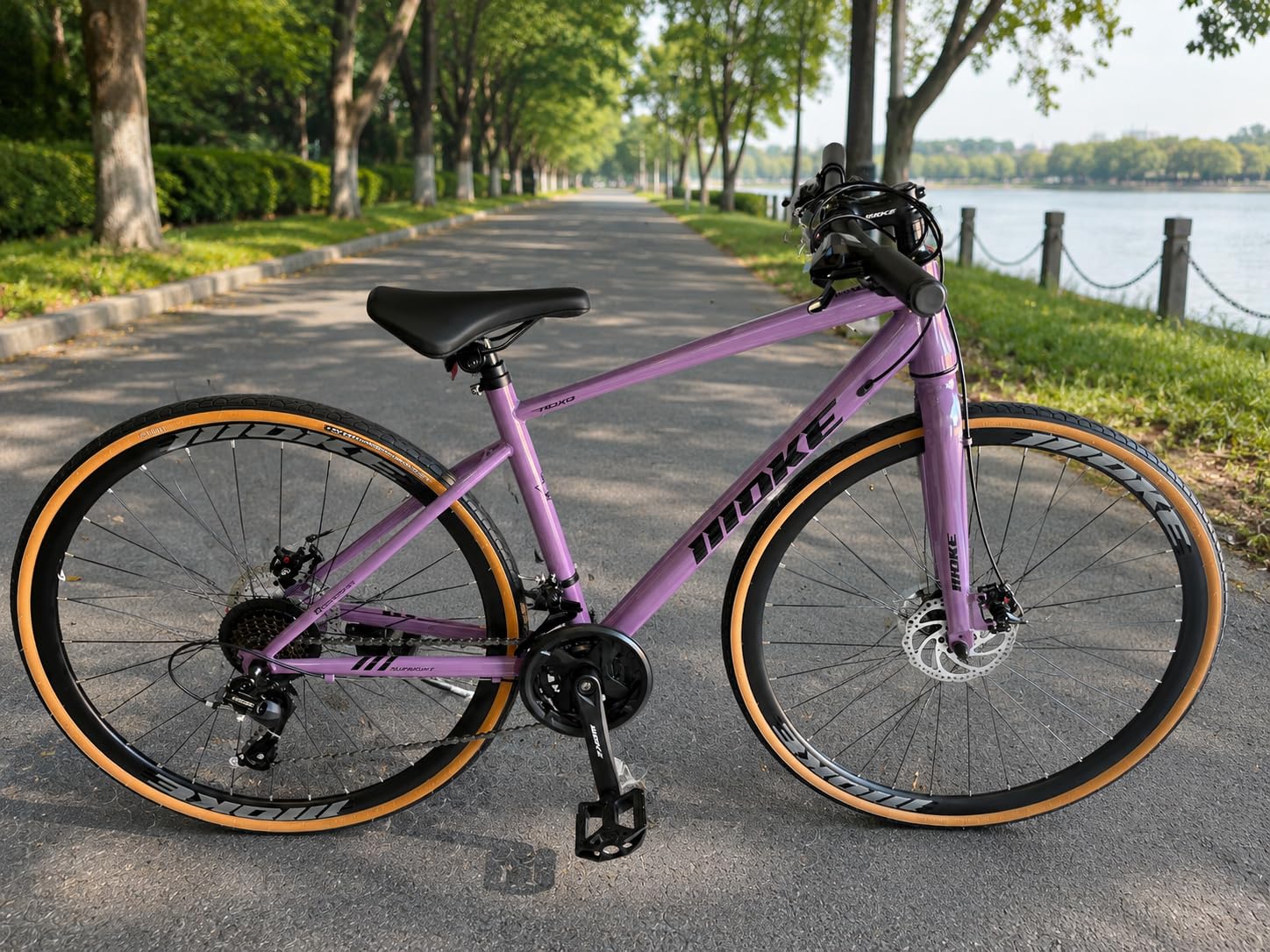
Setup is straightforward at 90% pre-assembled, typically half an hour to finish, and the frame comes in two sizes, from 5 foot 1 inch to 6 foot 1 inch. The dual suspension and responsive steering make it feel planted rather than twitchy on city streets.
Quality control is the issue to plan around. Reviews mention punctured inner tubes, stripped pedal threads, bent forks or seat posts, and grips or the seat post loosening during rides, so budget time for a careful check and periodic tightening.
Who the DEYGIA suits
Riders on hilly routes who want maximum gear range at a low weight, and anyone mixing pavement with gravel paths on the way to work. The trigger shifters are quick once learned, and the wide range means you rarely have to think about gear choice.
Customer service is a genuine strength here, with at least one owner receiving a replacement bike. If you ride a route with elevation or a long exposed stretch, this is the bike that makes the effort manageable.
Who the DEYGIA does not suit
Riders who want a step-through frame or a very light bike to carry up stairs, since the steel frame is not among the lightest here. It also suits paved and urban terrain, not technical trails, despite the dual suspension.
The 3.9 rating reflects real assembly and hardware issues, and the instructions are minimal enough that a video walkthrough helps. Check bolts and tires carefully in the first month.
7. MOONCOOL 700C 8-Speed: Best Lightweight Hybrid for Basket Errands
MOONCOOL Hybrid Bike for Men, 700C Commuter Bicycle for Adults
Aluminum frame
8-speed trigger shift
29.5 lb
350 lb capacity
Pros
- Light 29.5 lb aluminum frame
- Highest rider capacity at 350 lb
- Two frame sizes plus a front basket
- Suspension seatpost and 700 x 1.75 tires
Cons
- Only 8 speeds for hills
- Small review base of 18
- Trigger shifting is less intuitive for beginners
Weight is the headline. At 29.5 lb this is one of the easiest bikes here to lift into a car, carry up an apartment stairwell or take onto a train, which matters more for urban commuters than raw speed on a straight road.
It is also rated to 350 lb, the highest capacity in this group, and the reinforced frame is backed by two frame sizes so you can pick a proper fit. A basket is included in the box, which turns it into a genuine errand and grocery bike rather than a pure commute machine.
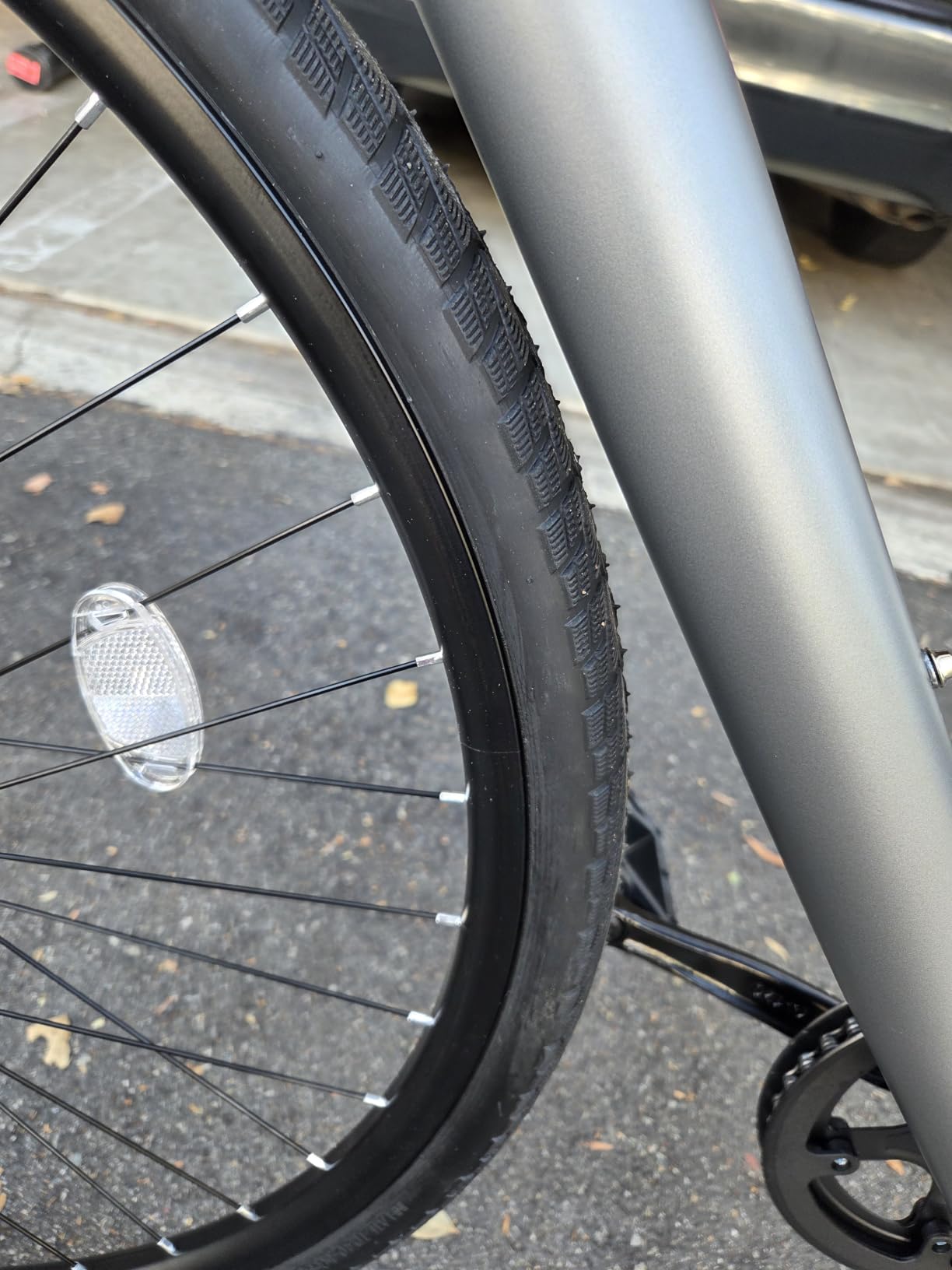
The 700 x 1.75 tires are the widest here, and the four-inch seatpost travel adds comfort on rough pavement. The eight-speed drivetrain is a middle ground: enough range for gentle slopes, not enough for a steep sustained climb.
Setup takes about half an hour at 85% pre-assembled, and the review base is small, so long-term durability is less well documented than for the bikes with hundreds of reviews. The trigger shifters also take longer to learn than a simple thumb shifter.
Who the MOONCOOL suits
Larger riders, at a 350 lb rating, and anyone who carries their bike regularly. The wide tires and suspension seatpost suit rough city streets, and the basket makes short errands and shopping runs practical without panniers.
It also works for riders who want a comfortable position on longer trips, since the seatpost travel absorbs a lot of small impacts. Two frame sizes from 5 foot 2 inches to 6 foot give a real fitting option.
Who the MOONCOOL does not suit
Hilly commutes. Eight speeds is less range than most competitors here, and with only 18 reviews the long-term record is thinner than the numbers on the Schwinn bikes suggest. Trigger shifting is a learning curve if you have never used it.
It is built for paved and gravel urban routes rather than trails. If your riding is mostly flat and short, the weight and gearing work well; if it is steep and long, choose a wider-range bike instead.
8. RegalRider 700C: Best Hybrid for First-Time Riders
RegalRider Mens Hybrid Bike, 700C Adult Bicycle for Commuting
High-strength steel frame
7-speed Shimano
Step-through
300 lb capacity
Pros
- Step-through frame is easy to mount
- Shimano 7-speed shifting is clean
- Adjustable seat and bar reduce strain
- Kickstand and a basic lock included
Cons
- Only 13 reviews so little long-term data
- 6-month warranty is the shortest here
- Steel frame is heavy to carry
Everything about this bike is aimed at someone who has not owned a bike in years. The step-through frame removes the biggest first-day hurdle, and the adjustable seat and handlebars with a foam saddle mean you can set the fit without a shop visit.
The Shimano 7-speed derailleur is a real step up from generic shifting at this money, and owners mention clean, easy changes. The rust-resistant steel frame is rated to 300 lb and absorbs road vibration, which is why it still feels planted on broken surfaces.
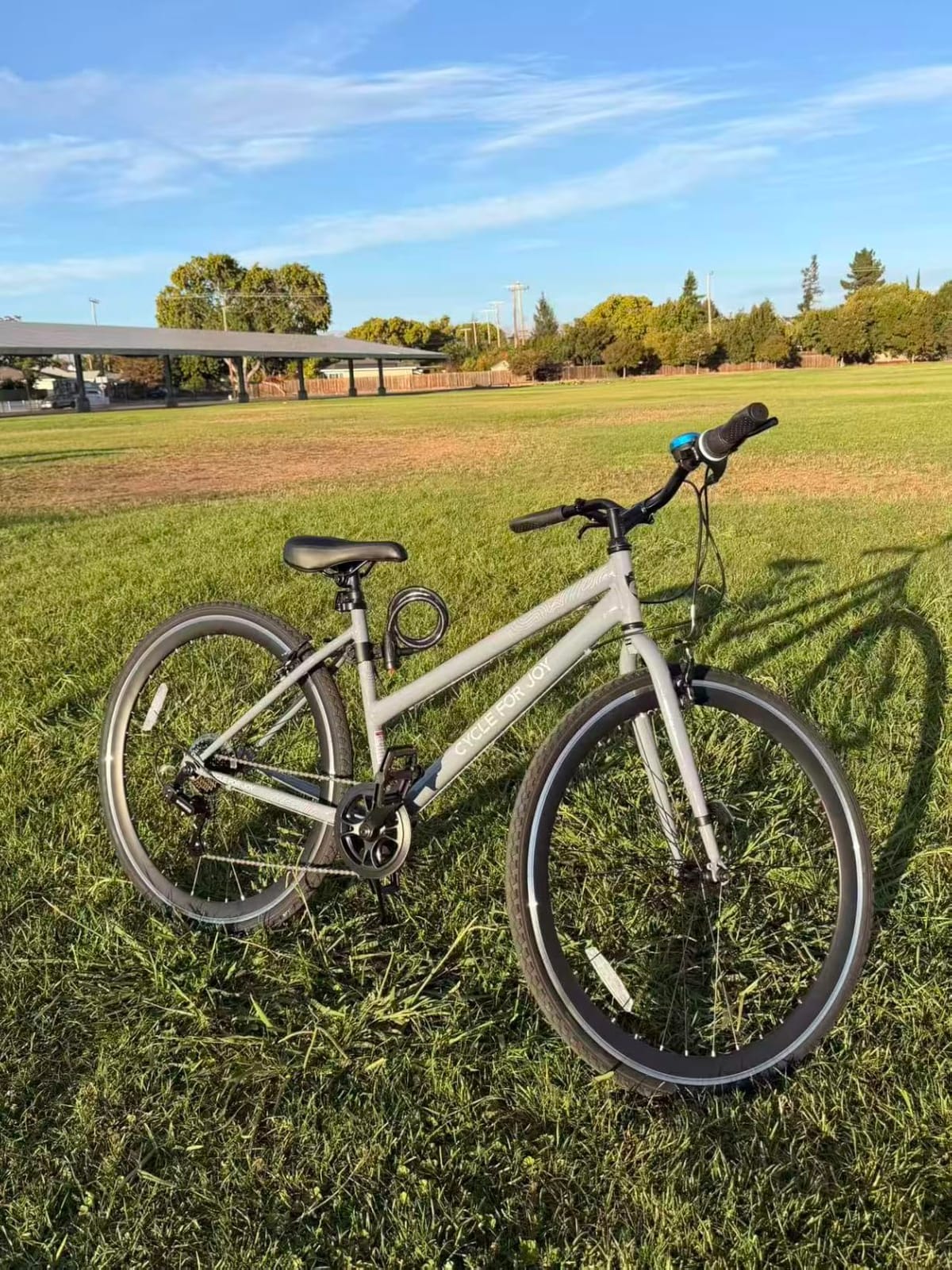
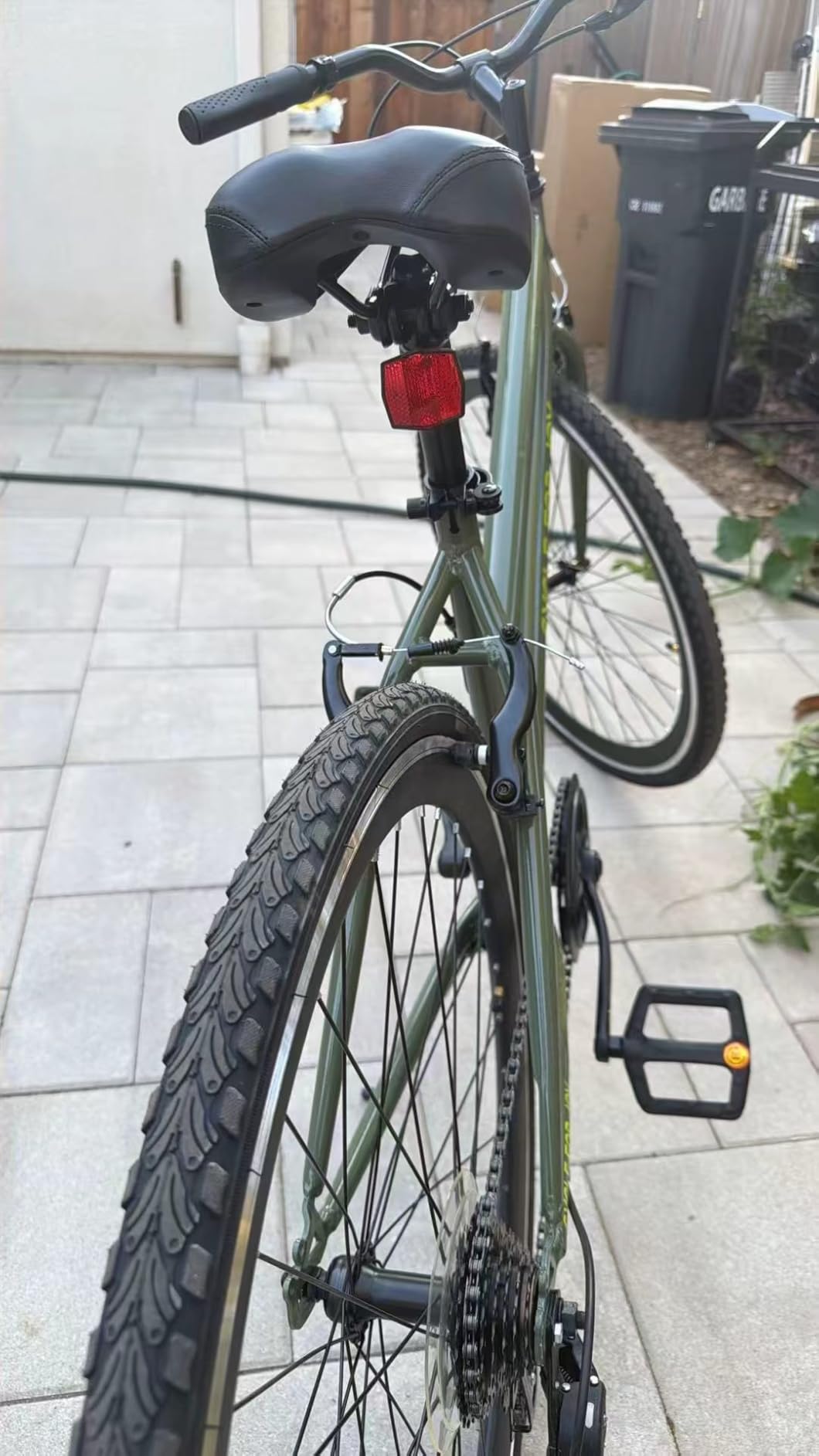
V-brakes with front and rear pads are simple, cheap to replace and easy to adjust yourself, and reflectors are included for visibility. A kickstand and a basic lock come in the box, which covers two of the three accessories commuters always need.
The steel frame is the main drawback for anyone who has to carry the bike. At 700C the wheels roll well on pavement, and the 6-month warranty is the shortest in this group, so factor in more frequent checks early on.
Who the RegalRider suits
Complete beginners, and riders returning to cycling who want the easiest possible frame to mount. The adjustable fit and simple V-brakes mean you can service and set up the bike yourself with basic tools.
It suits paved urban routes and short commutes on flat ground, and the lock and kickstand included reduce the first-week shopping list. The 300 lb rating covers most riders comfortably.
Who the RegalRider does not suit
Riders who want to carry a bike up stairs or onto public transport, since a steel frame is the heaviest approach here. It is also a poor match for wet-weather descents, where rim brakes are less consistent than discs.
With only 13 reviews there is limited long-term reliability data, and the 6-month warranty is the shortest in the group. Riders on hills will want more than seven speeds.
9. HILAND 700C Low-Step: Best Hybrid for Light Gravel Paths
HILAND 700C Road Hybrid Bike, 7 speeds Bikes Urban City Commuter Bicycle with Disc Brake for Men Women Adult Comfortable Bicycle Black
6061 aluminum low-step frame
7-speed trigger shift
Dual disc brakes
700C wheels
Pros
- Light low-step aluminum frame
- Disc brakes work in poor weather
- Handles pavement paths and light gravel
- 85% assembled with tools and pedals
Cons
- Highest share of one-star reviews here
- Needs brake and wheel adjustment after setup
- Rigid frame limits rough-surface comfort
- Basic saddle and grips
The low-step 6061 aluminum frame is the reason to look here. Aluminum keeps the bike light while the step-through shape makes mounting simple, and the same frame size options run from 5 foot 9 inches to 6 foot 5 inches for taller riders.
Dual disc brakes are a genuine advantage on a commute that includes rain or winter grime, and the 700C wheels roll smoothly over pavement, bike paths and light gravel, which covers the most common weekend detour for city riders.
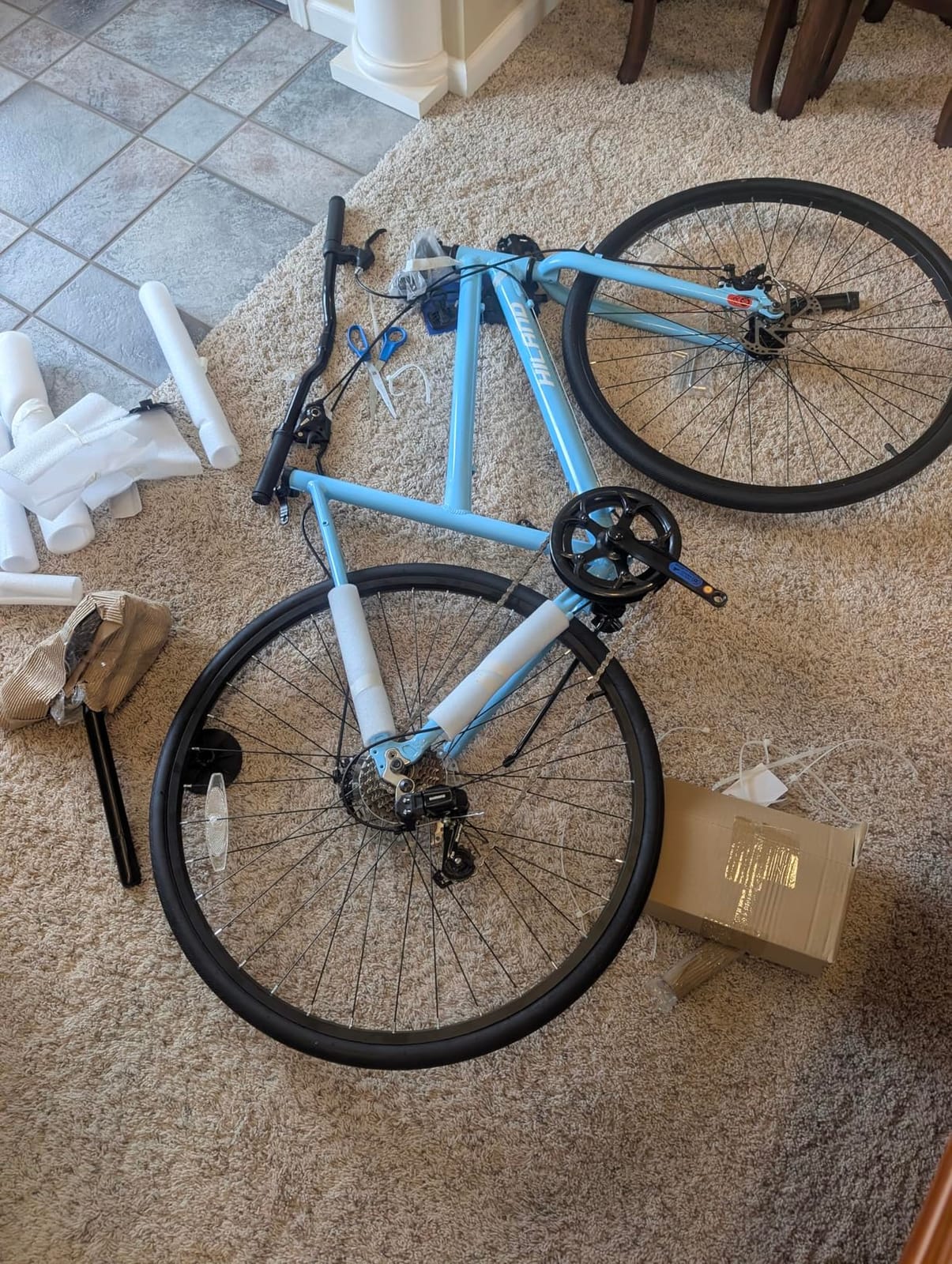
That comfort advantage has a limit. The frame is rigid, with no suspension fork or seatpost, so chipseal, broken pavement and gravel shoulders transmit more to the rider than they would on a bike built for mixed roads.
Quality control is the honest weakness. Of 129 reviews, roughly one in six is a one-star rating, with reports of stripped fasteners and the need for post-assembly tuning of the brakes, derailleur and wheels, so treat it as an entry-level bike and give it a careful safety check before the first commute.
Who the HILAND 700C suits
Riders who want a light, easy-to-mount aluminum bike for city streets, dedicated paths and the occasional gravel section. Disc brakes make it a good wet-weather option, and the low-step frame appeals to riders with limited hip mobility.
It suits flat-to-moderate commuting on paved surfaces. Setup is short at 85% assembled, with tools and pedals included.
Who the HILAND 700C does not suit
Riders on genuinely rough roads, since there is no suspension to take the edge off, and anyone who wants to climb steep hills, because seven speeds is a narrow range. The saddle and grips are basic and are likely the first upgrades.
Buyers who cannot accept some post-assembly adjustment should look elsewhere, given the volume of one-star reviews here. It is an entry-level commuter, not a long-distance tourer.
10. Goplus 18-Speed: Budget Hybrid with Phone Holder
Goplus Hybrid Bike, 18-Speed 700C Urban Commuter Bicycle, Shimano Drivetrain, Lightweight Aluminum Frame, Dual Caliper Brakes, Phone Holder, 85% Pre-Assembled City Bicycle for Men Women Adult (Black)
Aluminum alloy frame
18-speed Shimano
700 x 35C tires
28 lb
Pros
- Shimano 18-speed drivetrain shifts smoothly
- Very light 28 lb frame
- Phone holder is useful for navigation
- Tool-free quick-release saddle
Cons
- Rated to only 175 lb
- Lowest rating in this group
- Thin paint and thin saddle
- Missing hardware on some orders
The spec sheet is the surprise here. An 18-speed Shimano drivetrain, 700 x 35C all-terrain tires and a 28 lb aluminum frame is a lot of equipment, and owners consistently praise the light weight and smooth gear changes for the money.
The phone holder is a genuinely useful commuter feature rather than a gimmick, since it turns the bike into a navigation device for unfamiliar routes. The tool-free quick-release saddle means you can adjust the height at a kerbside without tools.
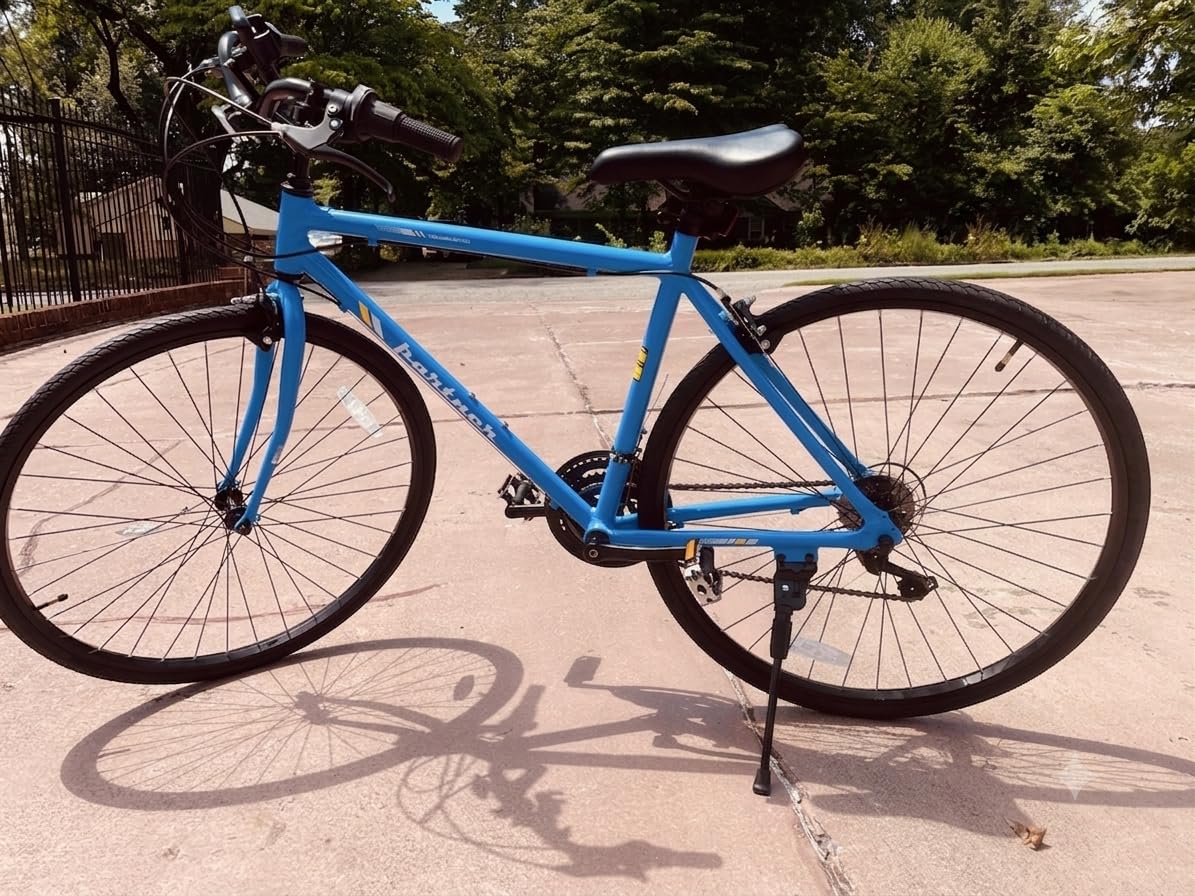
Two constraints matter more than anything else. The 175 lb maximum rider weight is the lowest here, which can feel tippy for larger riders, and the dual caliper brakes are the least capable in rainy conditions among the disc-brake bikes on this list.
Build quality is where the 3.6 rating comes from. Reviews mention scratched paint, a thin saddle, missing front wheel hardware and a defective front brake, and one owner had parts arrive unassembled and needed paid shop assembly.
Who the Goplus suits
Riders within the 175 lb limit who want maximum gear range, wide tires and the lowest weight in this group, and anyone who navigates by phone. It suits paved streets, urban paths and light gravel on a flat route.
If you are buying on a tight budget and want a Shimano drivetrain, this is the pick. Confirm the frame fits your inseam, since it is sized for riders from 64 to 74 inches tall.
Who the Goplus does not suit
Riders above 175 lb, where the weight limit is a hard constraint rather than a guideline. It is also a poor match for steep hills, since the wide tires and light frame trade climbing efficiency for comfort.
Expect to inspect the bike on arrival and allow for small hardware issues, and expect to replace the saddle. Among the ten bikes here, this one has the lowest rating and the thinnest record of long-term use.
How to Choose a Hybrid Bike for Daily Commuting
Most wrong-fit purchases come from buying a bike before answering three questions: how far is the commute, what is the surface like, and how steep is it. Answer those and the specification list narrows fast.
Match the bike to your commute distance
For 0 to 3 miles each way, weight and convenience matter most, so a light aluminum bike with a step-through frame and a kickstand is the right target. At 3 to 8 miles, comfort takes over, and a swept-back bar, wider tires and a rack matter for a longer time in the saddle.
From 8 to 15 miles, saddle choice and fit become decisive, and a wider gear range pays off on any route with a headwind. Beyond 15 miles, treat the ride like a touring day, which means a comfortable saddle, reliable disc brakes and a frame light enough to carry up stairs.
Match the bike to your road surface
Smooth asphalt rewards narrow, fast tires. Chipseal, concrete slabs and potholes reward 32c to 40c tires for volume, and a suspension fork or seatpost if the route is genuinely broken. Riders who want one bike for pavement and gravel paths should look for tires in the 35c range.
Choose brakes for the weather you ride in
Rim brakes are fine in dry cities but fade in rain and cost more effort on hills. Mechanical discs are a step up. Hydraulic discs need no routine adjustment and give the lightest, most consistent stopping, which is why they are the first thing to prioritise if your commute runs year-round.
Size the gear range for hills, not the flat
Buy the lowest gear you can pedal from a standstill on your steepest climb, and test that before you commit. Wide ranges such as 21 or 24 speeds cover hills easily, while six and seven-speed drivetrains are best limited to flat or gently rolling routes.
Step-through or step-over?
Step-through frames make mounting and dismounting easy in traffic, dress or rain, and suit riders with limited hip mobility. Step-over frames are more traditional and often feel more stable at speed. Several bikes here, including the Wayfarer, the HILAND low-step and the AVASTA Vela, come in low-step form.
Check mounts before you buy
Confirm the frame and fork have threaded eyelets for a rear rack and fenders, and check whether lights and a kickstand are included. Riders already owning a hybrid can add a rack, fenders, lights and a kickstand separately rather than replacing the bike.
Owners consistently say carrying a laptop, panniers and groceries is what separates a real commuter from a leisure bike, so treat mount points as essential rather than optional. Riders new to hybrids often start with our broader guide to the best hybrid bikes for general riding before narrowing to a commute model.
Frequently Asked Questions
Is a hybrid bike good for commuting?
Yes. A hybrid’s flat bar, upright geometry and moderately wide tires make it comfortable for long urban rides, while disc brakes, rack and fender eyelets and a low weight suit daily use. It is generally more comfortable than a road bike and far lighter than a mountain bike, which is why it is the default commuter choice.
What are the disadvantages of a hybrid bike?
The main drawbacks are weight compared with a road bike and lower stiffness for pure speed, since the upright position and wider tires trade efficiency for comfort. Budget models often need brake and gear adjustment after assembly, and a six or seven-speed drivetrain can be too narrow for steep hills. Steel frames are also heavy to carry.
What type of bike is best for lower back pain?
A flat-bar hybrid with a swept-back or riser handlebar puts you upright instead of leaning forward, which reduces pressure on the lower back. Add a correctly sized saddle, set roughly so the knee is slightly bent at the bottom of the pedal stroke, and consider a suspension seatpost for vibration damping. A recumbent is another option if back pain is severe.
Which bike is best for both off and on road?
A hybrid with 35c to 40c tires and some form of suspension, either a fork or a seatpost, covers pavement, hardpack paths and light gravel without the weight of a mountain bike. The Schwinn Network 3.5 and the DEYGIA 24-Speed are the strongest mixed-terrain picks here. A true mountain bike is only needed for trails.
Do hybrid bikes have rack and fender mounts?
Most commuter hybrids do, and you can confirm it by looking for threaded eyelets on the frame near the seat tube, under the down tube and on the fork crown. Bikes that already include fenders and a rack, such as the Schwinn Wayfarer and the AVASTA Vela, save you that work. Always check before buying if you plan to carry a laptop or panniers.
How far can you reasonably commute on a hybrid bike?
Most riders settle into 5 to 10 miles each way comfortably and manage 15 to 20 miles with a good fit and saddle. Beyond 20 miles an electric assist option removes the fatigue that sets in on the return leg. Riders covering 8 miles each way with around 150 feet of climbing report a mid-range hybrid handled it well.
Our Verdict on the Best Hybrid Bikes for Commuting in 2026
The Schwinn Wayfarer takes our top spot for the best hybrid bike for commuting because it arrives ready to ride, with fenders, a rear rack and a step-through frame, and it carries the largest owner review base in the group. Riders who want better hardware under the paint should look at the VIRIBUS, and anyone on broken roads should take the Schwinn Network 3.5 for its suspension and 21-speed range.
Whatever you choose, buy the frame size that fits you, check the eyelets for racks and fenders, and give the bike a safety check after assembly. Then use the current price listings to compare, and ride it before you spend on accessories.