
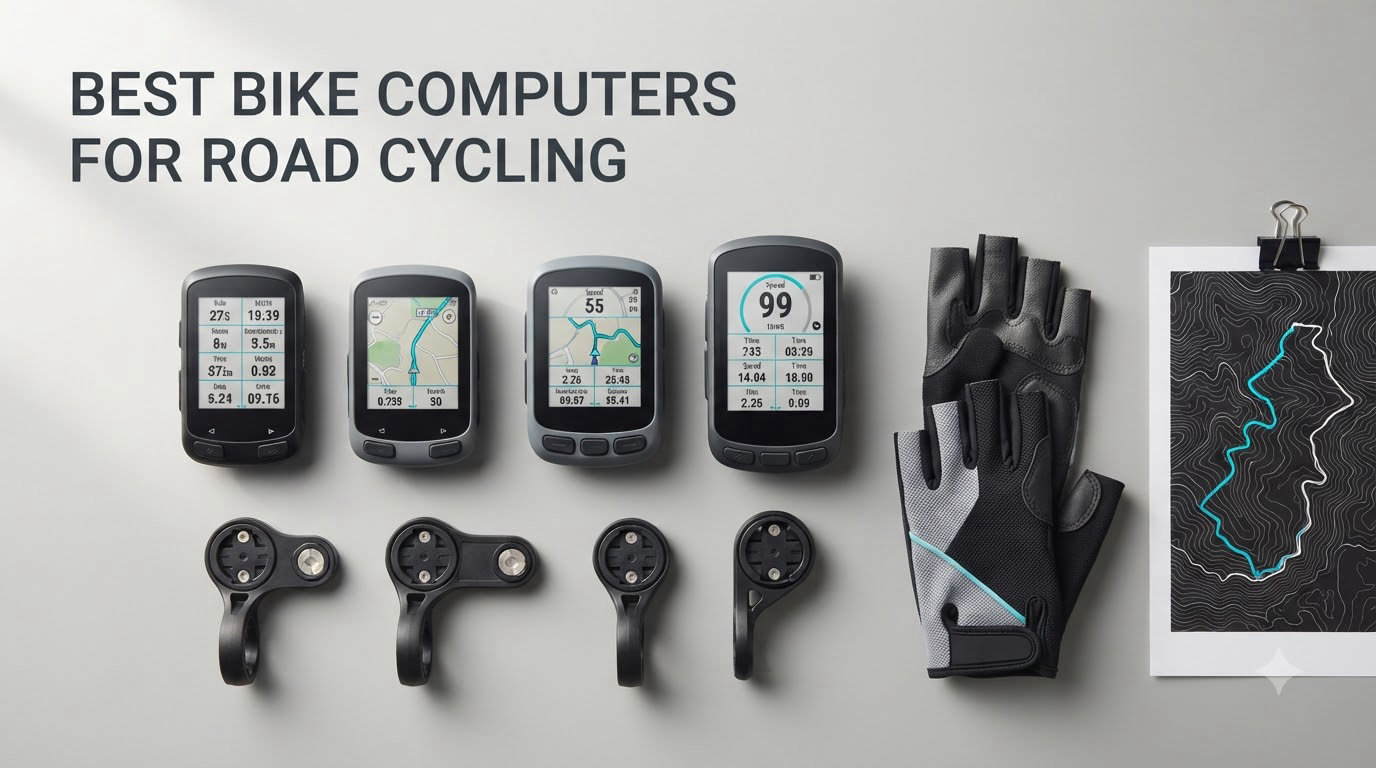
Most bike computer roundups are written for tourers. They measure a unit by how well it plots a week across the Pyrenees, and they treat weight in grams as a rounding error. Road riding is the opposite problem: you ride fast, in bunches, in gloves, in rain, and you glance down maybe once every eight minutes. The best bike computers for road cycling are the ones that survive that specific set of demands.
We spent a full season working through twelve of the most capable head units on the market, from the top of the Garmin line down to the button-driven speedometers that new riders actually start with. We read the spec sheets, cross-checked them against owner reviews, and weighted our judgement toward the things that matter when your bike is a race bike rather than a touring rig.
If you are starting from scratch, our broader bike computer guide covers the hardware categories in more depth. Here we stay strictly on the road, and we also assume you have already sorted the rest of your kit. Pairing a computer with the right road cycling shoes and a set of cycling sunglasses that work with your helmet is where most of the comfort gains live.
Table of Contents
Top 3 Best Bike Computers for Road Cycling in 2026
The three units below are the ones we would put on a road bike tomorrow. The Edge 1050 is the most complete riding computer available, the Edge 540 is the one we recommend to almost everyone else, and the Magene C506 proves that navigation and sensor pairing do not have to be expensive.

All 12 Bike Computers for Road Cycling Compared in 2026
This is the full field at a glance. Every unit below also gets its own section later in the article with the detail that decides whether it suits your particular kind of riding.
| Product | Specifications | Action |
|---|---|---|
| Garmin Edge 1050 |
|
Check Latest Price |
 Garmin Edge 540 Garmin Edge 540 |
|
Check Latest Price |
 Wahoo ELEMNT ROAM V3 Wahoo ELEMNT ROAM V3 |
|
Check Latest Price |
 Wahoo ELEMNT ACE Wahoo ELEMNT ACE |
|
Check Latest Price |
 Garmin Edge Explore 2 Garmin Edge Explore 2 |
|
Check Latest Price |
 Hammerhead Karoo Hammerhead Karoo |
|
Check Latest Price |
 Bryton Rider 460 Bryton Rider 460 |
|
Check Latest Price |
 Magene C506 Magene C506 |
|
Check Latest Price |
 iGPSPORT BSC300T iGPSPORT BSC300T |
|
Check Latest Price |
 GEOID CC700 Pro GEOID CC700 Pro |
|
Check Latest Price |
 CYCPLUS G1 CYCPLUS G1 |
|
Check Latest Price |
 CATEYE Velo Wireless CATEYE Velo Wireless |
|
Check Latest Price |
How We Picked and Judged These Computers
Every unit here was assessed on the same five criteria, weighted for road use. Glanceability and control came first, because a computer you cannot read at 40 km/h in a bunch is worse than no computer at all.
Second was sensor pairing, covering power meters, heart rate straps, cadence, electronic shifting and radar. Third was claimed battery life measured against what owners actually report once GPS, navigation and a power meter are all running at once. Fourth was navigation quality on paved roads with long unserved stretches, and fifth was unit weight in grams, which nobody in the touring world bothers to mention but every road rider notices on a climb.
We also leaned on long-term owner reports rather than launch impressions, because the most common complaints in cycling forums are not about hardware. They are about Bluetooth units that stop syncing after a couple of years and firmware updates that wipe out a carefully built data field setup. Riders on r/cycling consistently describe Garmin, Hammerhead and Wahoo as safe defaults, with the final pick usually decided by whichever sensors they already own.
1. Garmin Edge 1050 – the most complete road computer you can buy
Garmin Edge® 1050, Premium Cycling Computer
3.5 inch color touchscreen
20 hr demanding use
5.7 oz
64 GB storage
Built-in speaker
Pros
- Vivid 3.5 inch screen readable in direct sun
- Fast interface with deep data field customization
- On-device course creation showing road surface type
- Built-in speaker for audible prompts and a digital bell
- GroupRide messaging and incident detection
Cons
- Search needs exact addresses rather than point of interest names
- Default alerts can be noisy out of the box
- 161 g feels heavy beside compact units
The Edge 1050 is the only unit in this test with a speaker built into the chassis, and on a fast road descent that changes how you navigate. Audible prompts mean you can keep your eyes on the road through a sequence of junctions instead of reading a banner at speed.
I found the 3.5 inch color screen the most legible unit here in hard sun. It responded to damp full-finger gloves without the delay you get on smaller capacitive panels, and the depth of customization is unmatched: ride profiles, data pages, and course creation directly on the device with road surface type shown on the map.
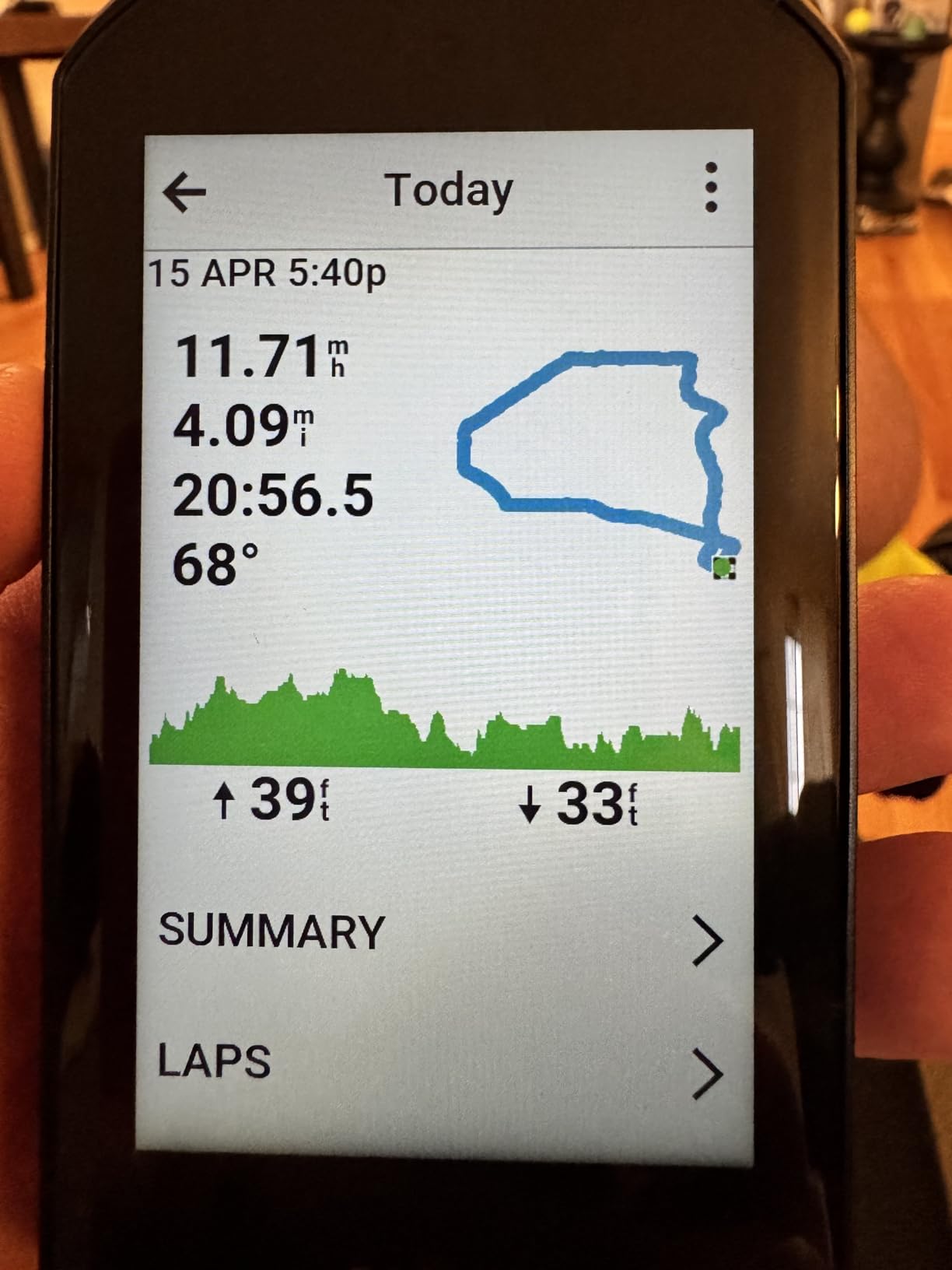
Owner reports on battery life are the standout story. One reviewer still had 58 percent remaining after a ride of more than ten hours at full brightness, and the claimed figures are up to 20 hours in demanding use or up to 60 hours in battery saver mode.
The Garmin Pay contactless payment and the GroupRide features add up to a genuinely different category of device. Live locations, in-ride messaging, climb leaderboards and incident detection mean the unit is as much a safety tool as a data logger, and road hazard alerts reported by other cyclists feed into your route planning.
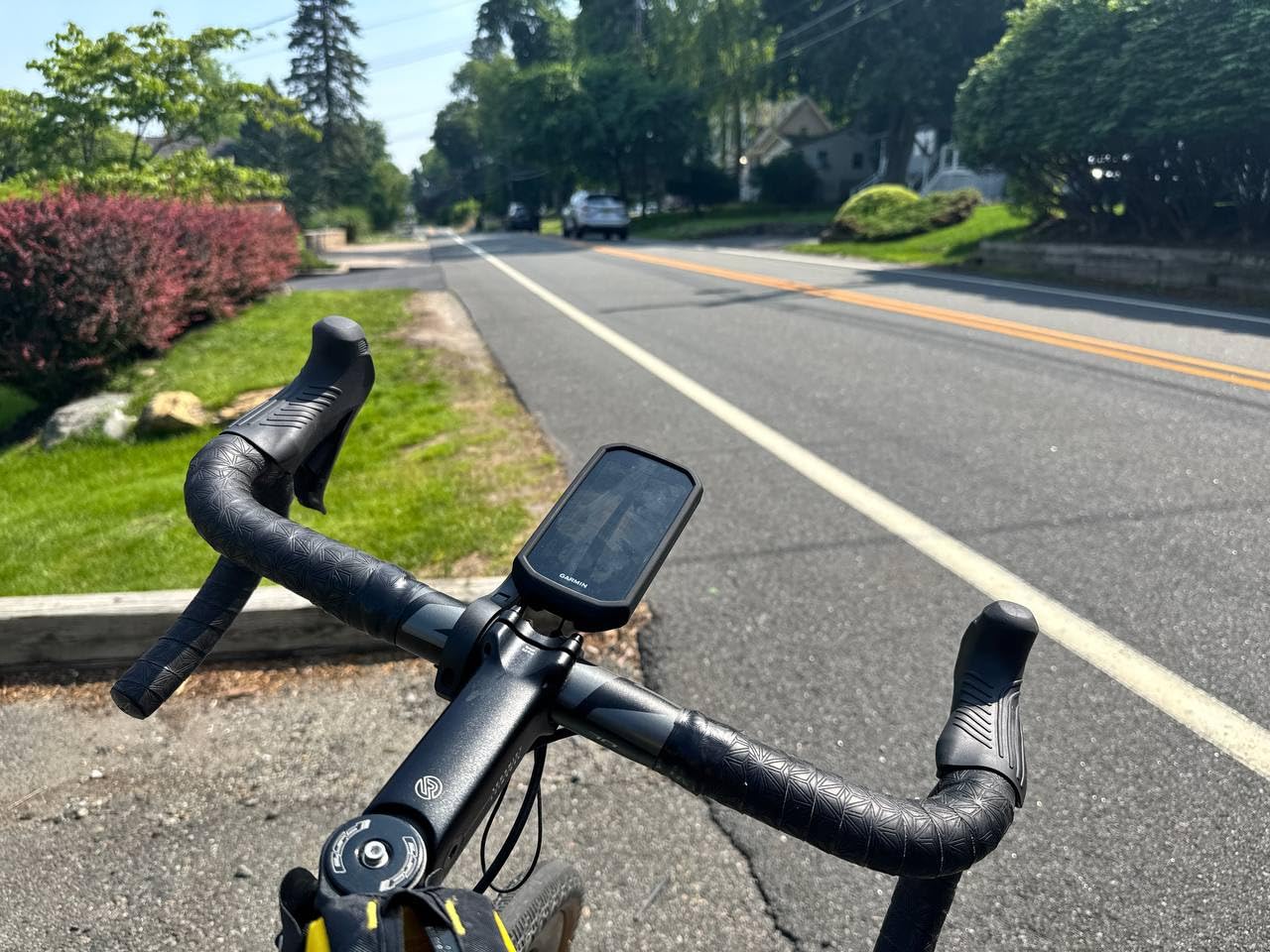
Who the Edge 1050 suits
It suits the rider with a full sensor stack who wants the phone to stay in a jersey pocket. If you run a power meter, a heart rate strap, Di2 or AXS shifting, and Garmin Varia radar, the pairing reliability here is the smoothest in the group.
It also suits anyone who navigates by voice. For a rider with imperfect hearing or an interest in keeping their head up, spoken prompts are a real safety gain rather than a gimmick.
Who the Edge 1050 does not suit
It does not suit a rider chasing minimum weight. At 161 g it is the second-heaviest unit we tested, which you notice on every steep pitch.
It also frustrates anyone who plans routes by typing place names on the device. The search wants exact addresses, and the default eat, drink and rest alerts need to be stripped back before the first ride.
2. Garmin Edge 540 – the best value in the Garmin line
Garmin Edge 540, Compact GPS Cycling Computer
2.6 inch LCD
26 hr demanding use
2.8 oz
16 GB storage
Multi-band GNSS
Pros
- Multi-band GNSS locks fast even under tree cover
- Buttons work with wet hands and gloves
- ClimbPro paces every climb without a course
- 16 GB storage with North America maps
- Owners rate it near identical to pricier Garmin models
Cons
- Setup and firmware updates take patience
- Included mount is basic
- Must be fully powered down between rides
The Edge 540 is the recommendation we give most often, and the reason is simple: the data quality and positioning accuracy sit close to the top of the range on a screen you can read at a glance. Multi-band GNSS acquires satellites quickly even under tree cover, which matters more on a country road ride than most buyers expect.
Physical buttons are the quiet winner for road riding. You can change screens and answer prompts with a gloved thumb while out of the saddle, and you never have to think about whether a wet screen registered your tap.
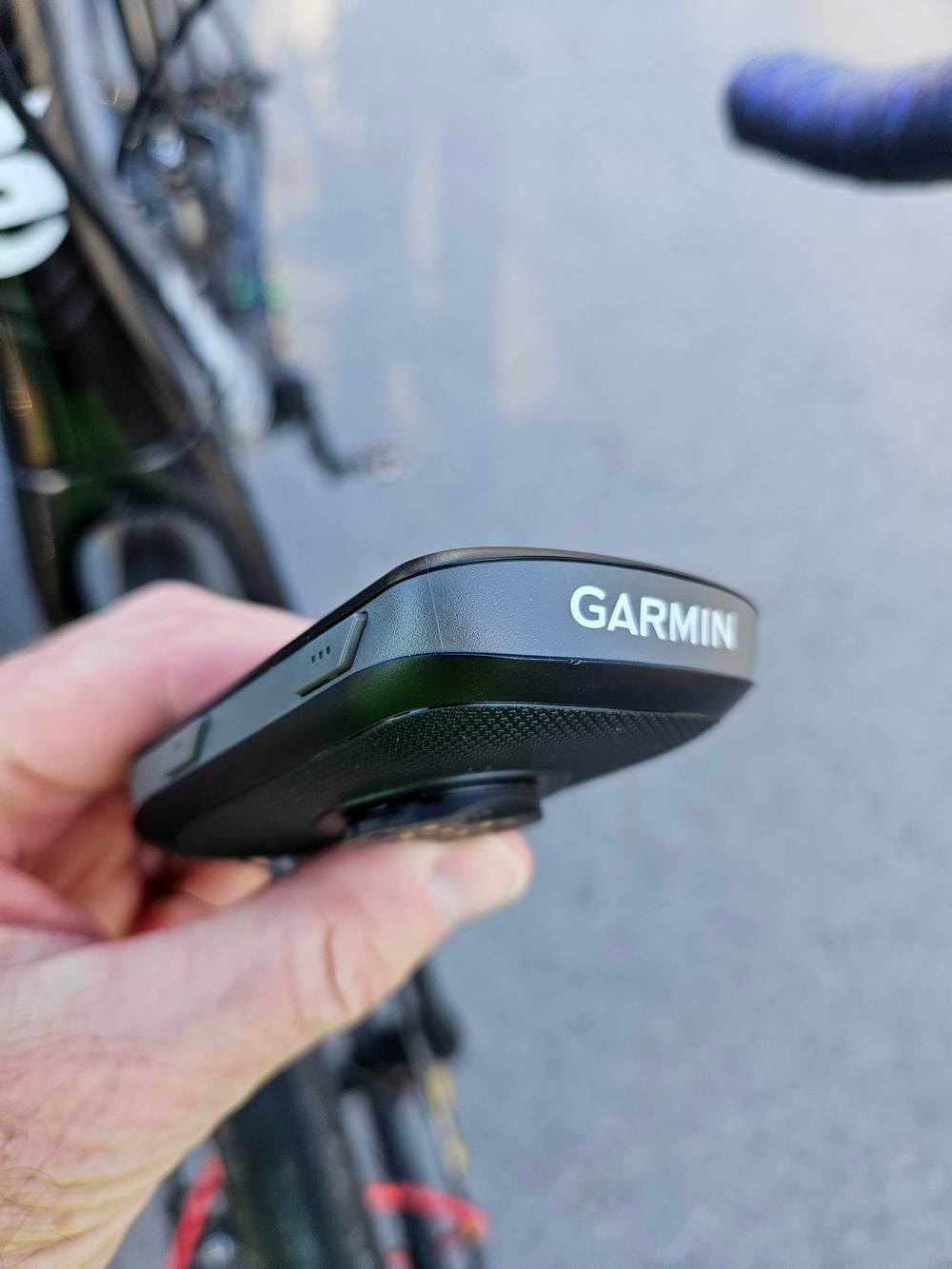
Battery life is up to 26 hours in demanding use and up to 42 hours in battery saver mode, which comfortably covers a full day in the saddle. Owners also report that the training and navigation output is nearly identical to the more expensive Garmin units they compared it against.
ClimbPro is the feature road riders mention most. It flags the ascent ahead and shows remaining distance and grade, so you can hold a target power without constantly checking the map page.
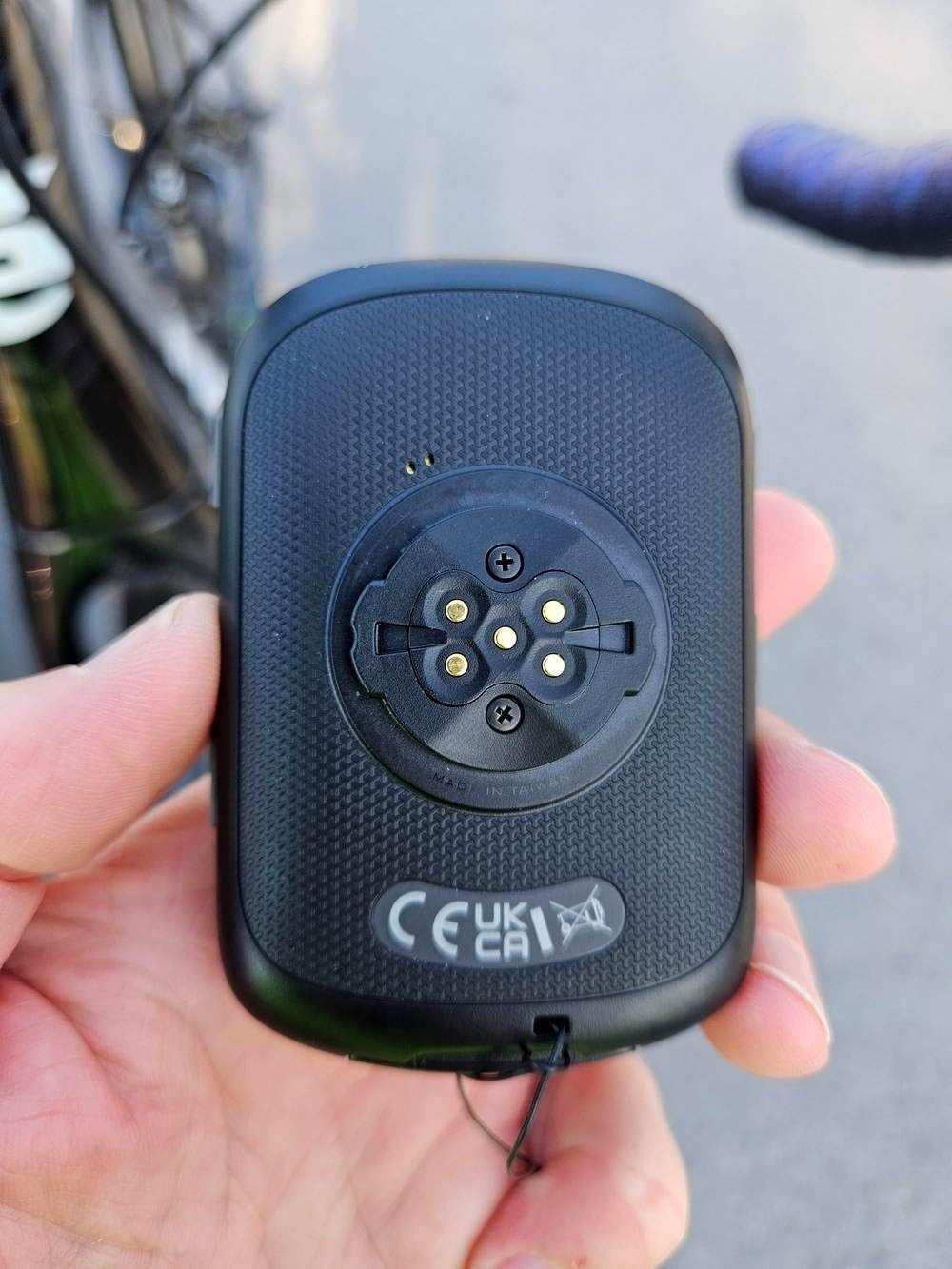
Who the Edge 540 suits
It suits riders who want full Garmin training metrics without the flagship feature set. Daily suggested workouts, adaptive coaching and a power guide for stamina and target power all work with a power meter and heart rate strap.
At 2.8 ounces it also suits anyone upgrading from a much older Garmin and finding the older unit heavy on the bars.
Who the Edge 540 does not suit
It does not suit anyone who wants to type a destination on the device rather than build a route in the app. There is no speaker here, so navigation is visual and silent.
Owners also report that the first setup and firmware update can be clunky, and that a small number of units arrived unable to pair at all. Fully power the unit down between rides or standby will eat the battery.
3. Wahoo ELEMNT ROAM V3 – the endurance and navigation workhorse
Wahoo ELEMNT ROAM V3 GPS Cycling/Bike Computer,Black
2.8 inch touchscreen
25 hr battery
109 g
IPX7
Dual-band GPS
Pros
- Battery outlasts comparable Garmin units on long rides
- Spoken prompts carry more detail than simple beeps
- Anti-glare 2.8 inch screen readable in bright sun
- Every function also reachable from physical buttons
- Out-front and stem mounts both included
Cons
- Auto-dimming can darken the screen in shade
- Screen layouts edited in the app rather than on the unit
- Voice cues are limited and quiet at max volume
The ROAM V3 is the Wahoo unit to own if your week includes a 200 km day. Dual-band GPS covers GPS, GLONASS, BEIDOU, Galileo, QZSS, SBAS and NavIC, and one owner finished a 14 hour 200 mile ride with roughly half the battery still available.
Its spoken directions are more useful than the simple beeps on budget units, announcing the turn rather than just chirping. The 2.8 inch anti-glare screen stays readable in direct sunlight, which is the condition that breaks most of the cheaper color displays.
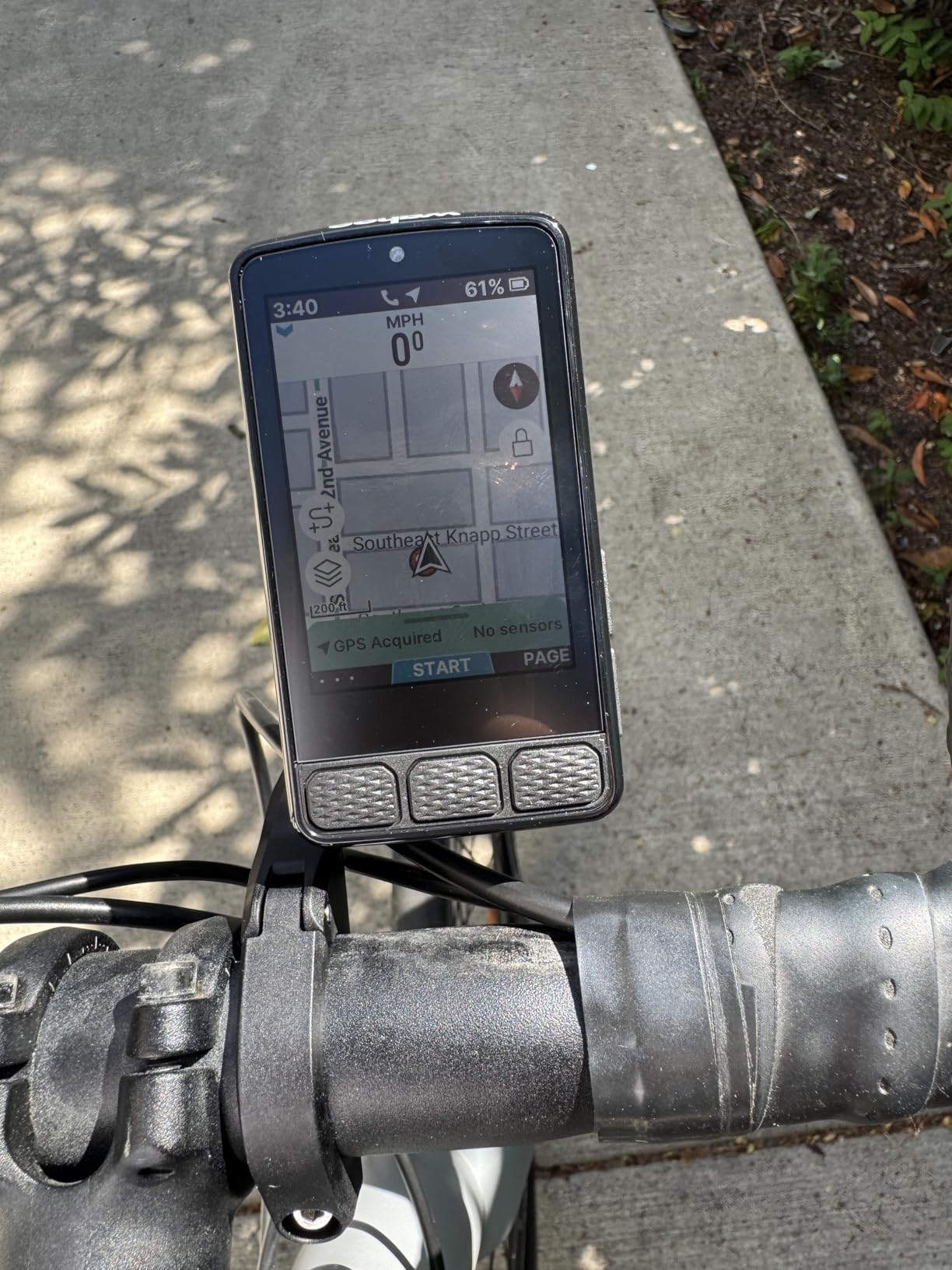
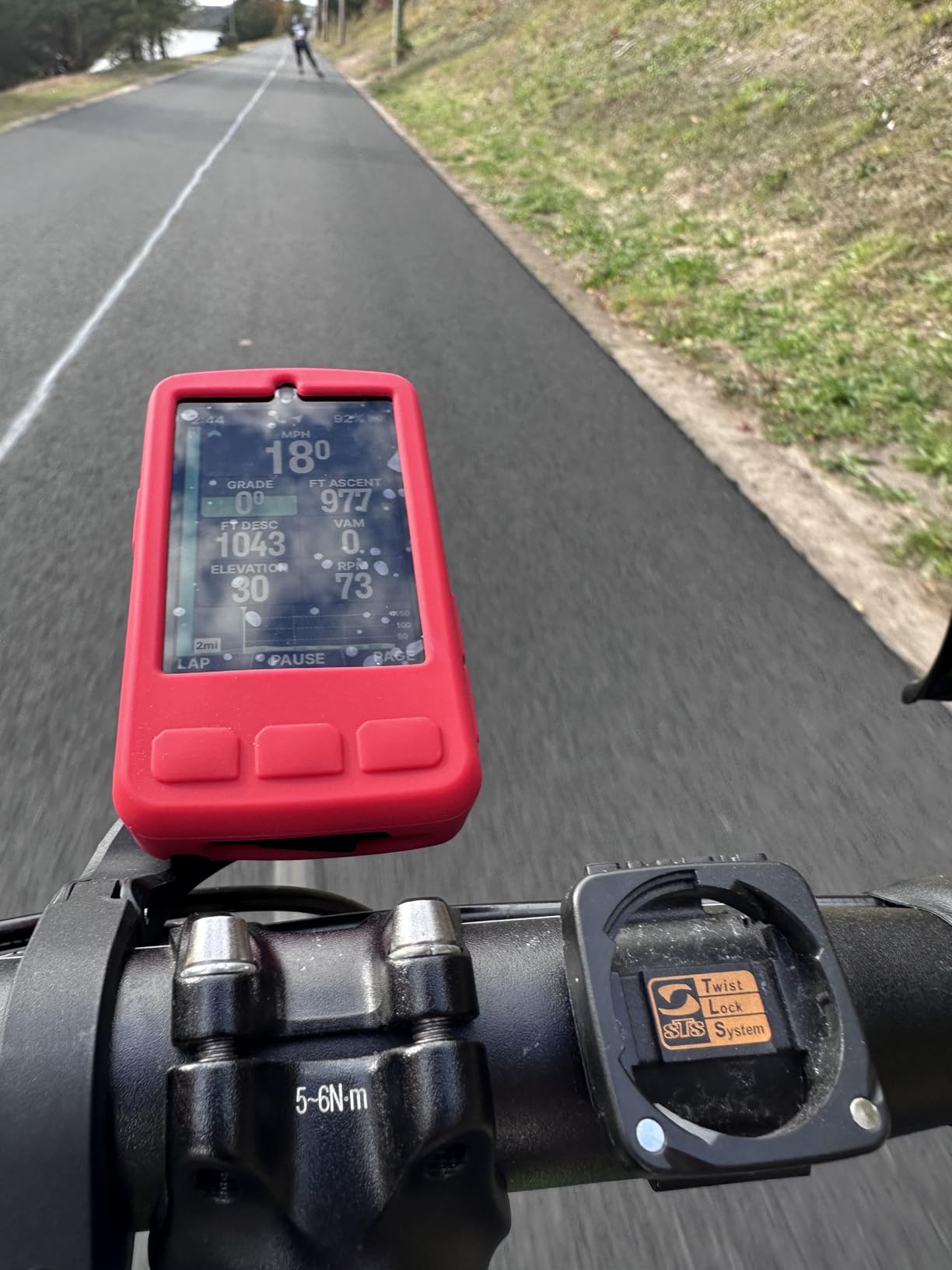
Both out-front and stem mounts are included, which is unusual and saves you solving the mounting question yourself. Everything the touchscreen does is also reachable from physical buttons, so rough road surfaces and rain do not lock you out of a menu.
Navigation comes from routes and GPX or TCX files, plus direct imports from Strava, Ride With GPS and Komoot. You can also generate a route on the device by panning the map, and public route sharing lets nearby Wahoo users load what you are riding.
Who the ROAM V3 suits
It suits long-distance road riders and anyone who cares more about endurance than training analytics. Twenty-five hours of rated battery and IPX7 water resistance cover multi-day plans without a mid-ride charge.
It also suits riders who already use the Wahoo app, since setup and syncing are quick and Komoot integration is handled smoothly.
Who the ROAM V3 does not suit
It does not suit riders who build courses in a desktop mapping tool. There is no map-making tool on the device, so GPX workflows from other platforms are clunky.
Automatic dimming in shade can make the screen too dark, particularly with sunglasses on, and a minority of owners report pairing problems or crashes on very long rides. Its 4.0 rating reflects a noticeably larger share of one-star reviews than the Garmin units.
4. Wahoo ELEMNT ACE – the biggest screen in the group
Wahoo ELEMNT ACE Cycling Computer
3.8 inch touchscreen
30 hr battery
208 g
Dual-band GNSS
IPX7
Pros
- Huge 3.8 inch color screen is easy to read at speed
- 30 hour battery with fast and reliable syncing
- Pressure sensor feeds wind insights into the Wahoo app
- Hill profile display and digital bike bell
- Clean integration with Wahoo radar and lights
Cons
- 208 g is heavy and bulky on a road bike
- Screen contrast is weaker in direct sun than smaller Wahoo units
- Map swipes change pages instead of panning
The ACE exists for riders who want to read a map at a glance rather than interact with one. A 3.8 inch color screen driven by press, pinch and swipe makes the hill profile and data pages legible in a way the smaller units cannot match, and the 30 hour battery is the second longest here.
Its headline feature is the built-in pressure sensor, which tracks air resistance and feeds AirBoost and AirDrag metrics into the Wahoo app after the ride. Be clear-eyed about what that means: the wind data is a post-ride summary, not live guidance you can ride against.
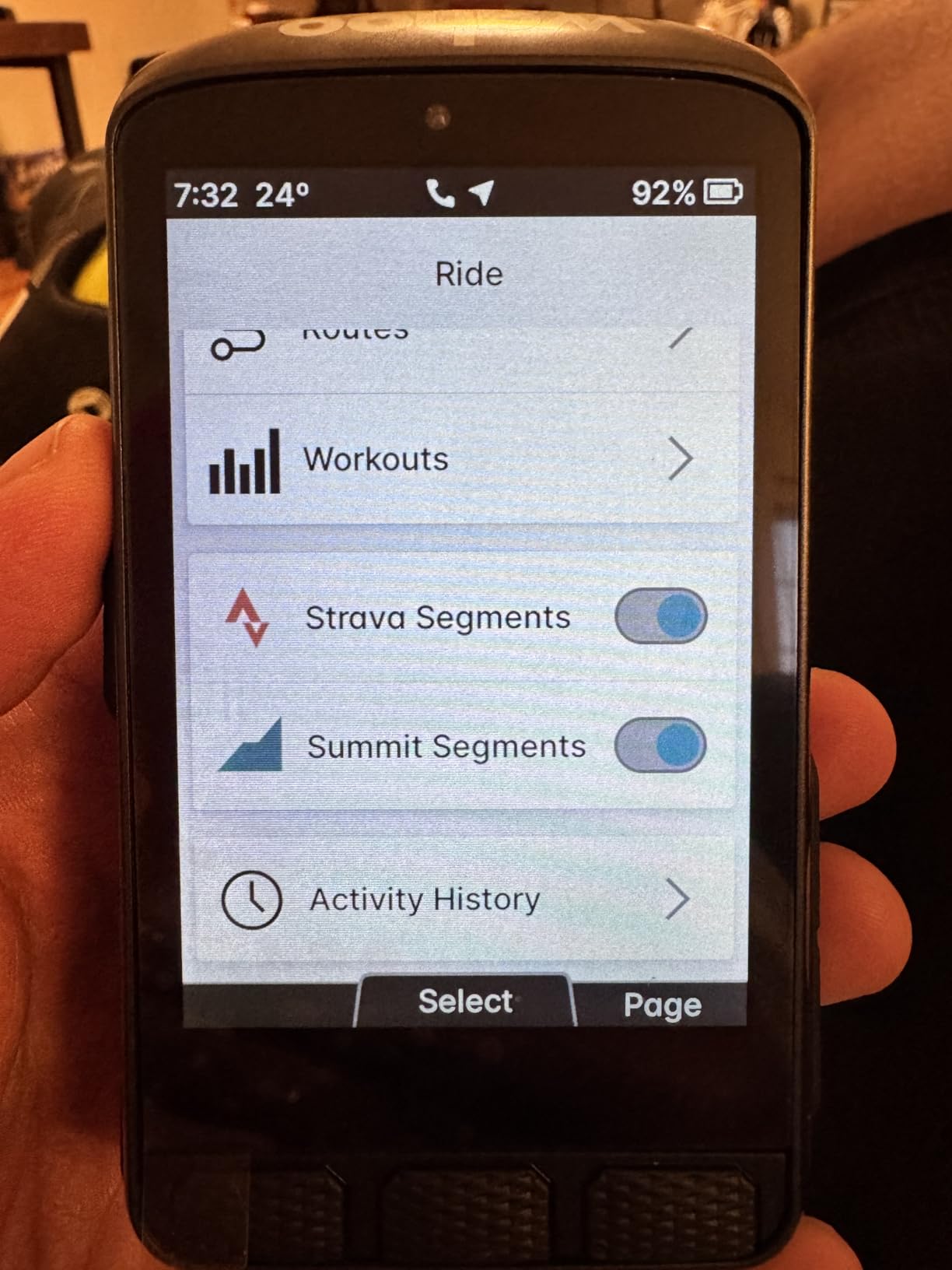
ANT+, Bluetooth, USB and Wi-Fi are all present, the Ready-To-Ride dashboard removes the wait before each ride, and the digital bike bell is a nice touch in a bunch. Syncing is fast and fluid, including with Komoot.
Two year manufacturer coverage is the longest warranty in this roundup, and spare parts are listed as available for two years.
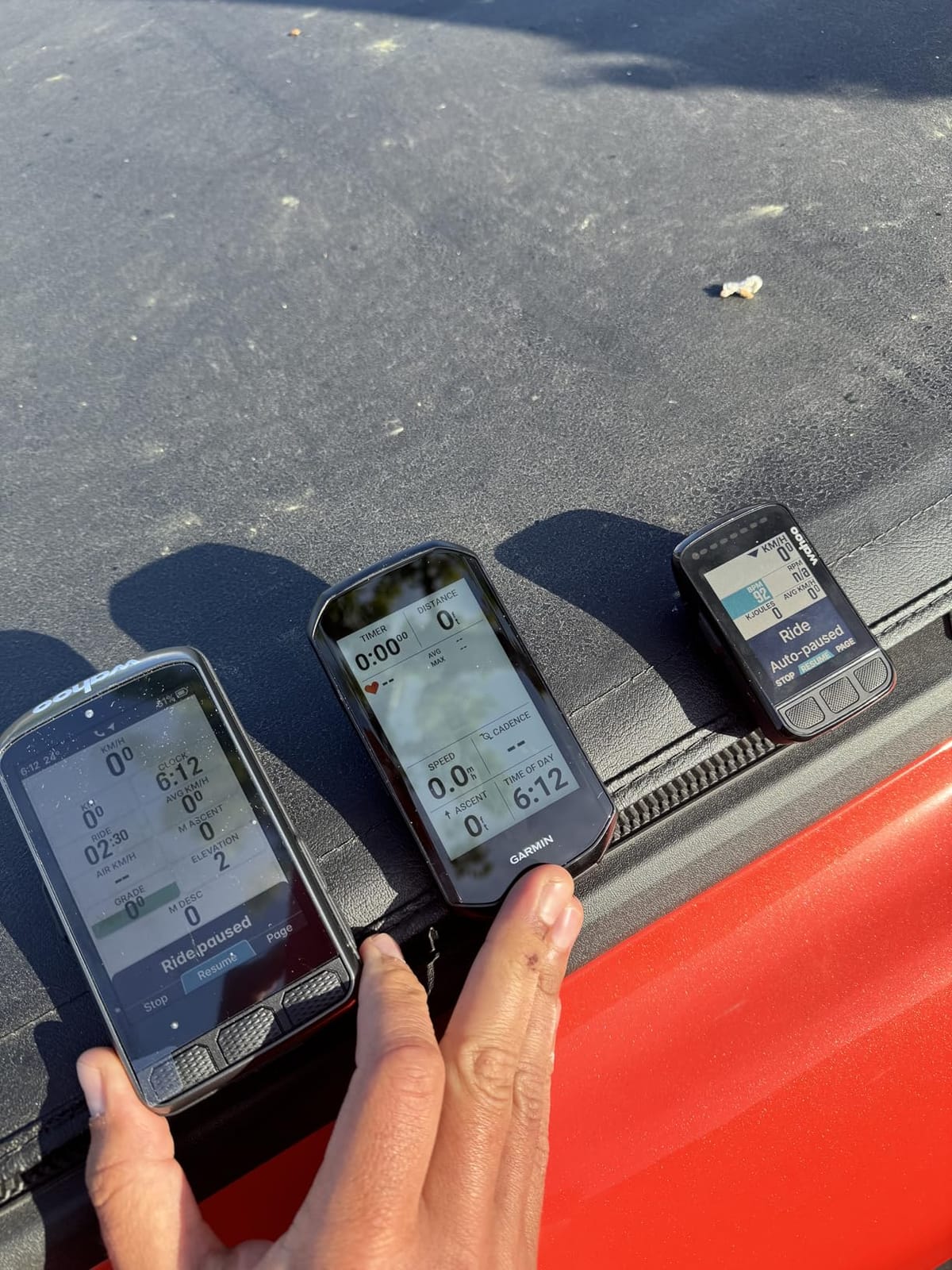
Who the ELEMNT ACE suits
It suits older riders and anyone who finds small fonts a problem on the road. Nothing else in this test is this easy to read without putting your face close to the bars.
It also suits long days with navigation, since the battery and the large map view are both built for time in the saddle.
Who the ELEMNT ACE does not suit
It does not suit a weight-conscious road setup. At 208 g it is the heaviest unit here, and it will not fit older ELEMNT mounts, so you may need fresh hardware.
Screen contrast is weaker in direct sun than on the smaller ROAM, map handling is awkward because horizontal swipes change pages rather than pan, and button and Di2 mapping options are limited enough that the bell cannot be triggered from the brake hood.
5. Garmin Edge Explore 2 – the easiest Garmin to set up
Garmin Edge® Explore 2, Easy-to-Use GPS Cycling Navigator
3 inch touchscreen
16 hr battery
4.1 oz
16 GB storage
LiveTrack and GroupTrack
Pros
- Easiest Garmin to set up with road profiles ready to ride
- 3 inch screen readable in sun and usable with gloves
- eBike routing shows assist level battery and range
- Incident detection and rider messaging built in
- Pairs with Varia radar and smart lights
Cons
- 16 hour battery is the shortest in this group
- Touch only control is fiddly with wet hands
- Map styling looks denser than simpler Wahoo graphics
The Explore 2 is the Garmin to buy if you want a road computer without a learning curve. Road, off-road and indoor activity profiles are preloaded and ready to ride, and the ride type-specific maps highlight popular roads, high-traffic streets and searchable points of interest.
At 4.1 ounces it is one of the lighter units here, and the 3 inch capacitive screen is described as readable in direct sunlight and workable with gloves. The safety stack is genuinely useful on the road: LiveTrack, GroupTrack, smart notifications, rider-to-rider messaging and incident detection.
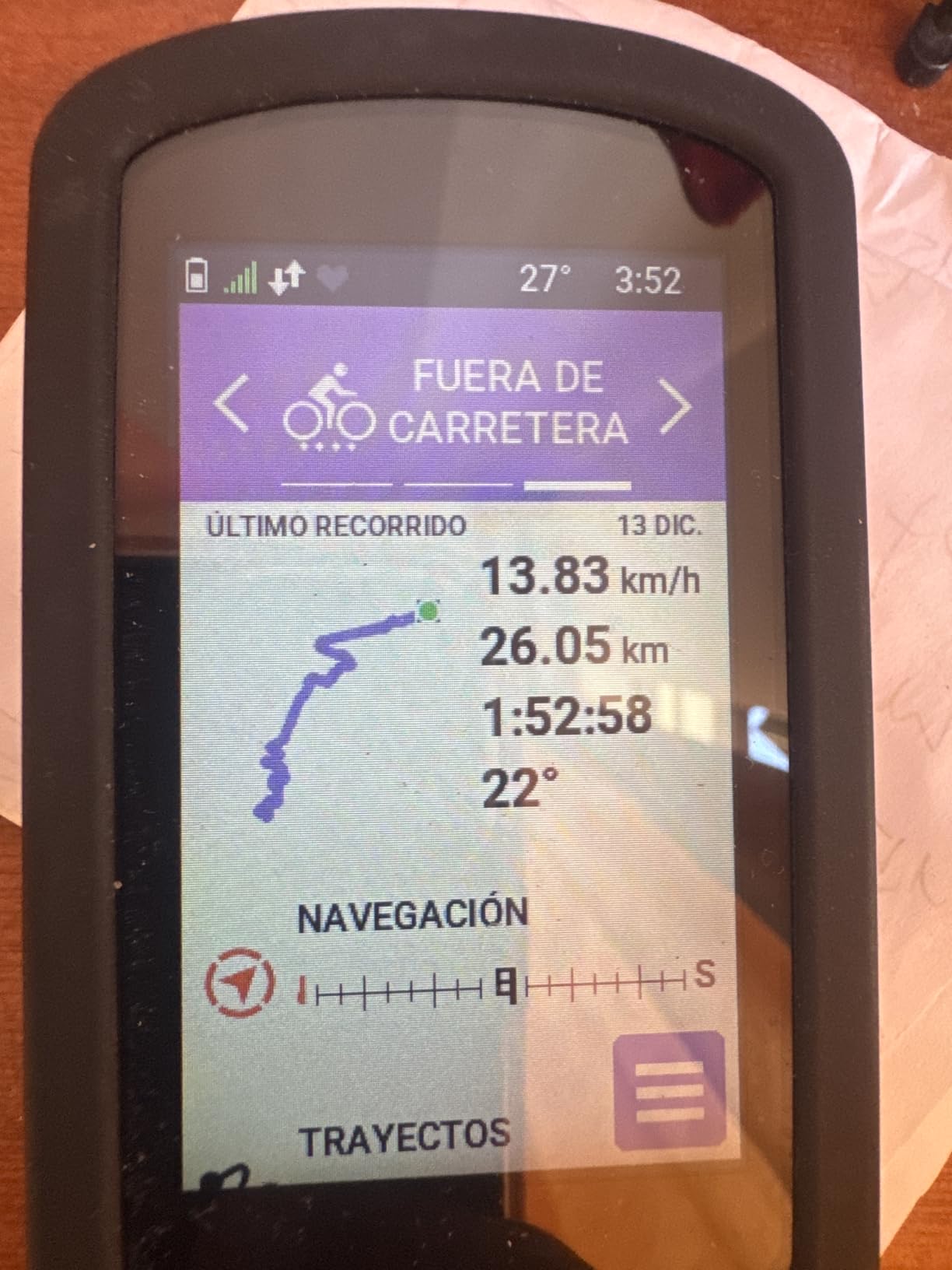
The eBike integration is the standout. Connect a compatible e-bike and the unit shows battery status, assist level and range guidance, then routes you along roads that suit an electric bike rather than treating it like a road bike with a heavy battery.
It is also compatible with Varia smart lights and rearview radar, plus optional heart rate, speed and cadence sensors, and it can control indoor music when paired with a smartphone.
Who the Edge Explore 2 suits
It suits first-time Garmin buyers and anyone who wants navigation over training depth. The setup is genuinely turnkey and the map detail level suits riders who do not want to fiddle.
E-bike owners get more from this unit than from any other pick in the list, because the assist and range guidance is a first-class feature rather than an afterthought.
Who the Edge Explore 2 does not suit
It does not suit riders planning a day longer than about 16 hours. The 16 hour rated battery is the shortest in this roundup and is the single most common reason owners move up a tier.
There is no physical button fallback, so wet gloves in a downpour are genuinely awkward, and some riders find the map styling denser and harder to follow than the simpler Wahoo graphics.
6. Hammerhead Karoo – the natural home for SRAM AXS
Hammerhead Karoo Bike Computer Wireless GPS ANT+/BLE/GPS/GNSS
3.2 inch touchscreen
15 hr battery
Multi-band GNSS
SRAM AXS pairing
Handlebar mount
Pros
- Multi-band GNSS holds position through city streets
- Ample memory keeps map rendering fast
- Deep pairing with SRAM AXS components
- Works with e-bikes and ANT+ lights
Cons
- 15 hour battery is short for long road days
- Listed weight of 0.41 kg is heavy for a road bike
- Smaller software ecosystem than Garmin or Wahoo
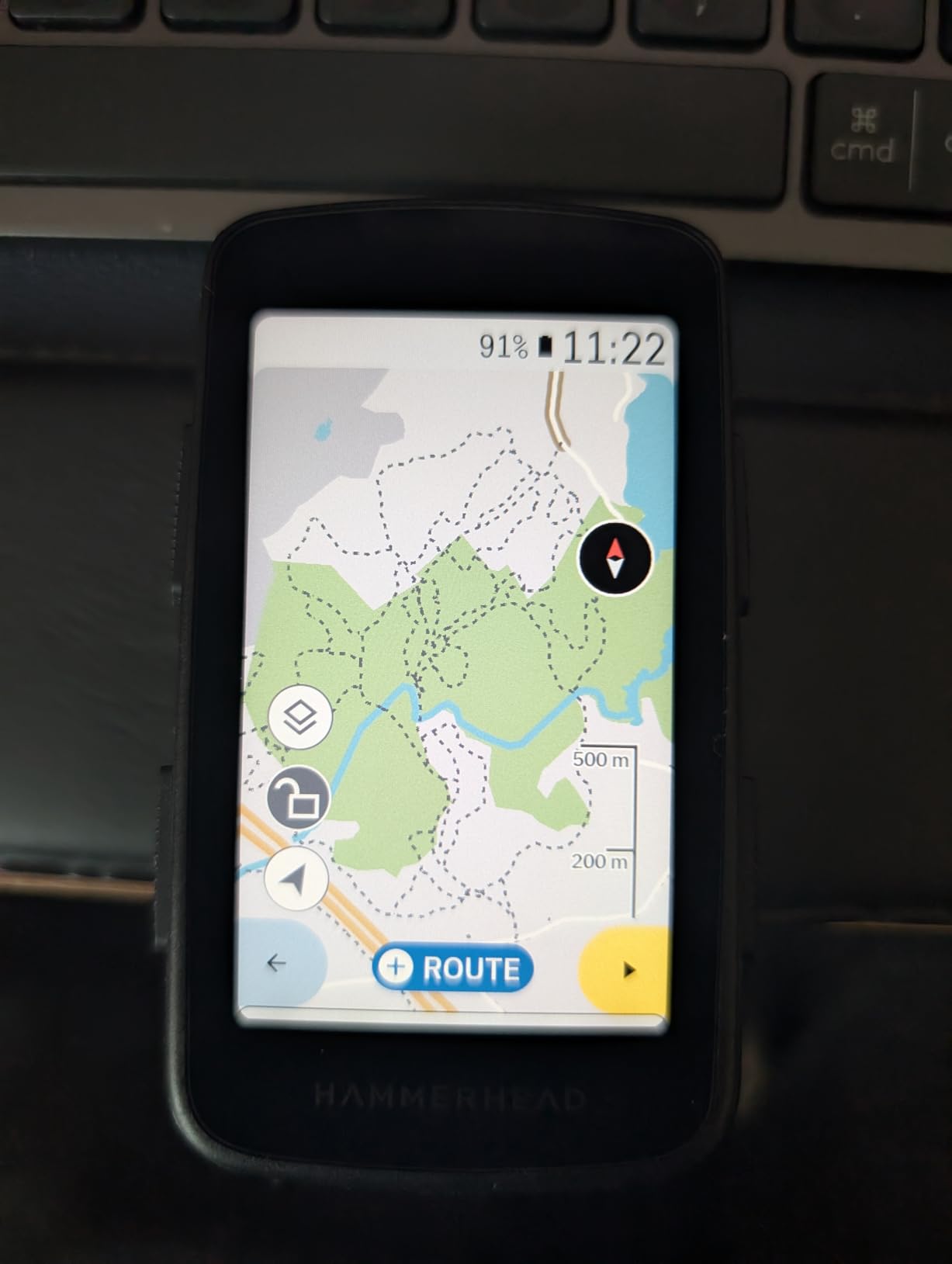
The Karoo is the pick to shortlist if your bike runs SRAM AXS. The integration with AXS drivetrain components is the deepest of any unit here, and the hardware and software are deliberately quiet, keeping ride data and maps manageable without turning into a distraction.
Multi-band GNSS holds an accurate position across city streets and rural lanes alike, and the generous internal memory means maps render fast and the device stays responsive longer into a long ride.
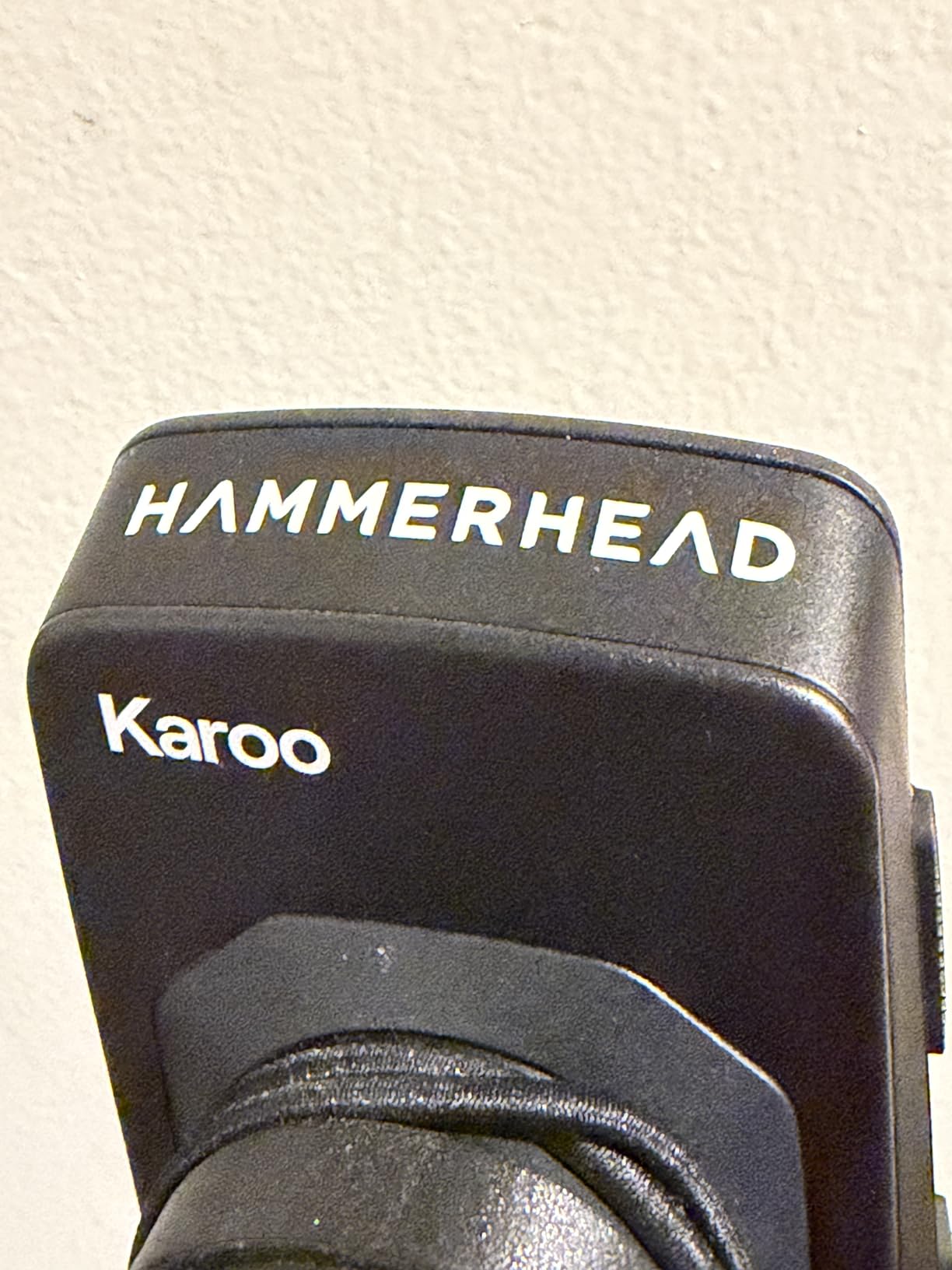
It also plays well outside the SRAM ecosystem, working with e-bikes, ANT+ lights and other wireless accessories, so an AXS rider is not boxed in. Controls combine buttons and a 3.2 inch touchscreen, which gives you a usable fallback in the wet.
Users focused on structured workouts have singled out Hammerhead out on the Slowtwitch forum for dependable workout upload and data export, which is a real consideration if you train indoors half the time.
Who the Karoo suits
It suits SRAM AXS riders who want their shifting, gearing and ride data on one device without third-party bridges. If you also ride electronic shifting from another brand, verify compatibility before you commit.
It suits riders who prioritise position accuracy and map responsiveness over training metric depth.
Who the Karoo does not suit
It does not suit anyone planning long road days. The 15 hour rated battery is among the shortest here, and you will want a charging plan for a full century.
At a listed 0.41 kg it is the heaviest unit in our group, and the app ecosystem has less polish than Garmin or Wahoo for post-ride analysis.
7. Bryton Rider 460 – the battery life champion
Bryton Rider 460 2.6 Inch LCD GPS Bike Computer Innovative Navigation Assistance, Compatible with E-Bike and Bike Radar, 32hrs Long Battery Life, Bluetooth ANT Waterproof
2.6 inch monochrome LCD
32 hr battery
58 g
ANT+ FE-C trainer control
Button controls
Pros
- 32 hour battery outlasts most rivals
- Physical buttons work with gloves in the rain
- Pairs with e-bikes Di2 speed cadence and heart rate
- ANT+ FE-C smart trainer control is included
- Climb Challenge previews show gradient ahead
Cons
- GPS trails premium units on twisty wooded routes
- Turn by turn routing supports gpx files only
- Bryton Active app is thin and Strava syncing is manual
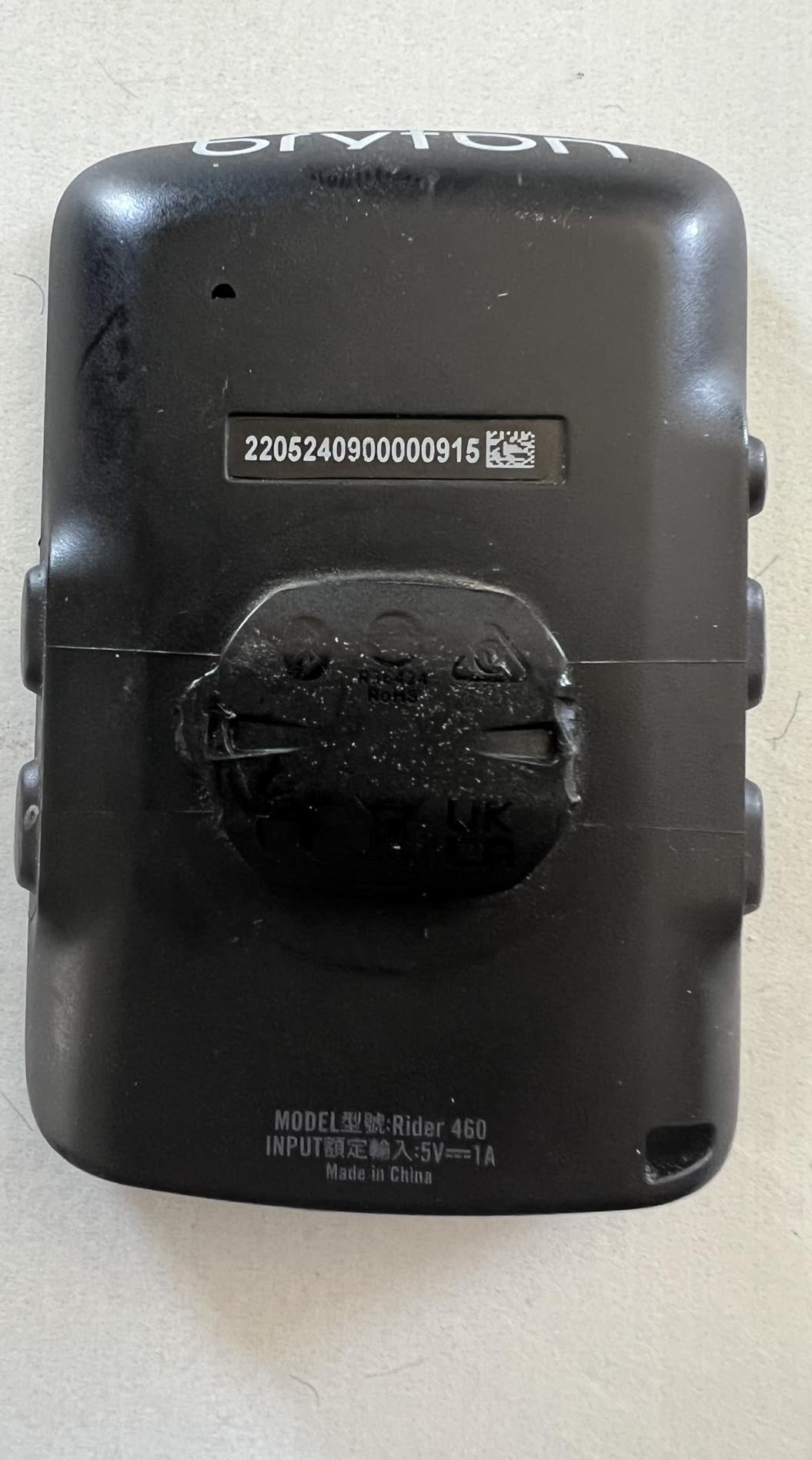
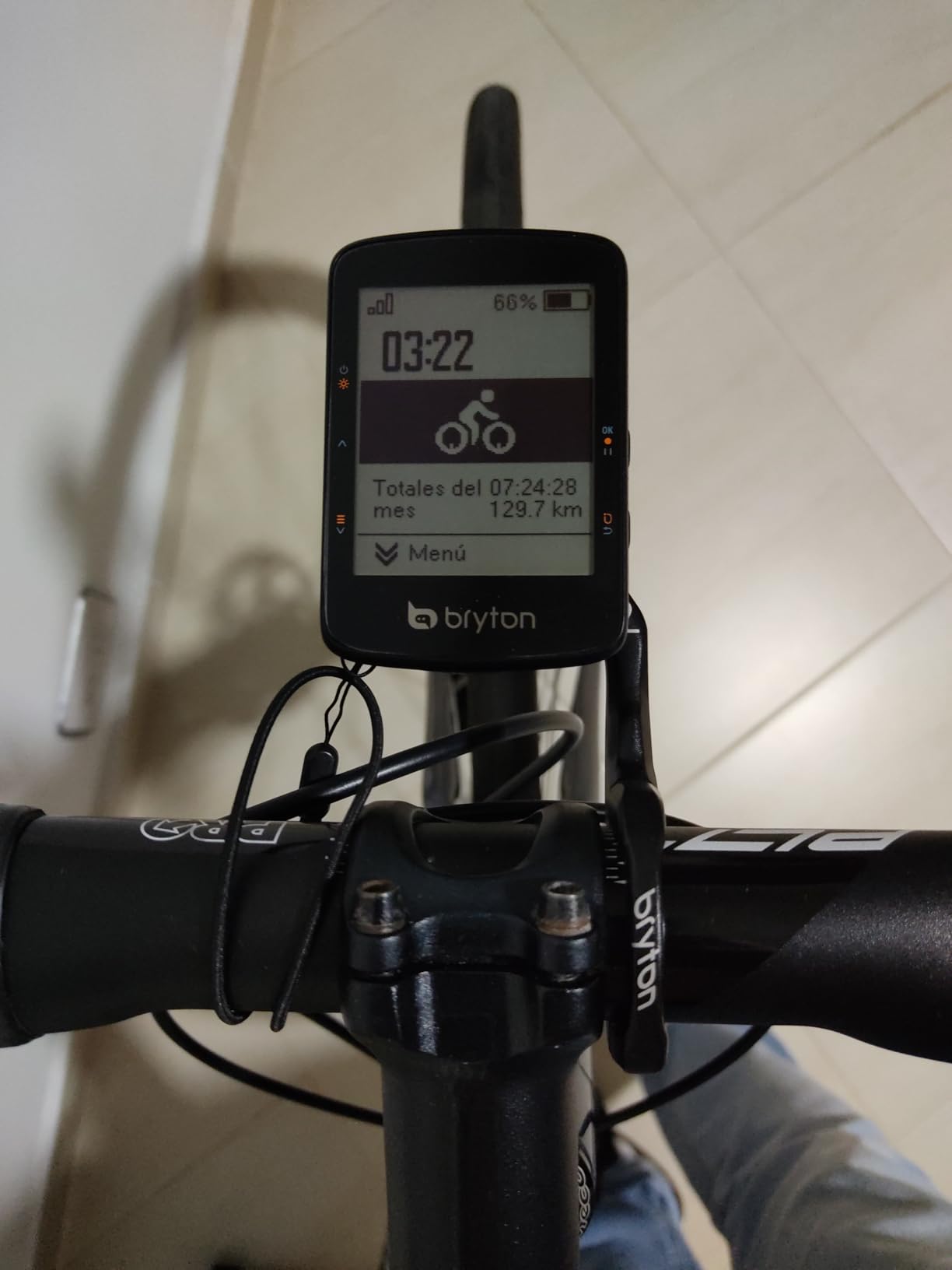
The Rider 460 wins on endurance. Thirty-two hours of rated battery and 58 grams of unit weight means you can forget the charging cable in a way that no touchscreen competitor allows, and the monochrome 2.6 inch display with large customizable stats is readable in direct sun.
Every function is driven by physical buttons, which removes the single most common complaint we heard about touchscreens in wet conditions. It also pairs with ANT+ rear-view bike radar at three warning levels, e-bikes, and electronic shifting from SRAM and Shimano Di2 with battery, gear ratio and combo display.
ANT+ FE-C smart trainer control is included, so it will drive resistance on an indoor setup directly from the bars. Climb Challenge previews show distance, altitude and ascent as a climb approaches, and the unit auto-reroutes you back to the nearest point on course when you stray.
The 32 hour figure is the longest rated battery of any device we tested, which makes it a strong choice for a rider who does long routes with no charging opportunities.
Who the Bryton Rider 460 suits
It suits riders who want a full sensor setup on a small budget. Core functions are intact, and the pairing list covers power meters, heart rate, cadence, radar and electronic drivetrains.
It also suits anyone who refuses to use a touchscreen on a bicycle, and indoor riders who want FE-C trainer control without extra hardware.
Who the Bryton Rider 460 does not suit
It does not suit riders who navigate by voice or by typing. Routing supports gpx files only, with no custom cues or point of interest alerts, and there is no audible turn beep at all.
GPS accuracy trails the premium units on twisty or heavily treed routes, Strava and Komoot integration requires moving files by hand, and the bundled rubber-band mount is widely replaced with something better.
8. Magene C506 – the value pick that keeps the essentials
Magene C506 GPS Bike Computer – 2.4″ Color Touchscreen, Smart Navigation, Fast WiFi & Bluetooth, Riding Assistant Wireless, Indoor Cycling & Training
2.4 inch color touchscreen
24 hr endurance mode
76 g
WiFi sync
Nine sensor types
Pros
- Core navigation and sensor support at a fraction of flagship cost
- WiFi sync uploads rides far faster than Bluetooth
- Airoha chipset locks GPS in about 5 seconds
- Supports nine device types including radar and Di2
- 76 g with up to 24 hours in endurance mode
Cons
- OnelapFit app is less refined than Garmin or Wahoo
- Map download flow needs setting up in the app first
- No Strava Live Segments on this model
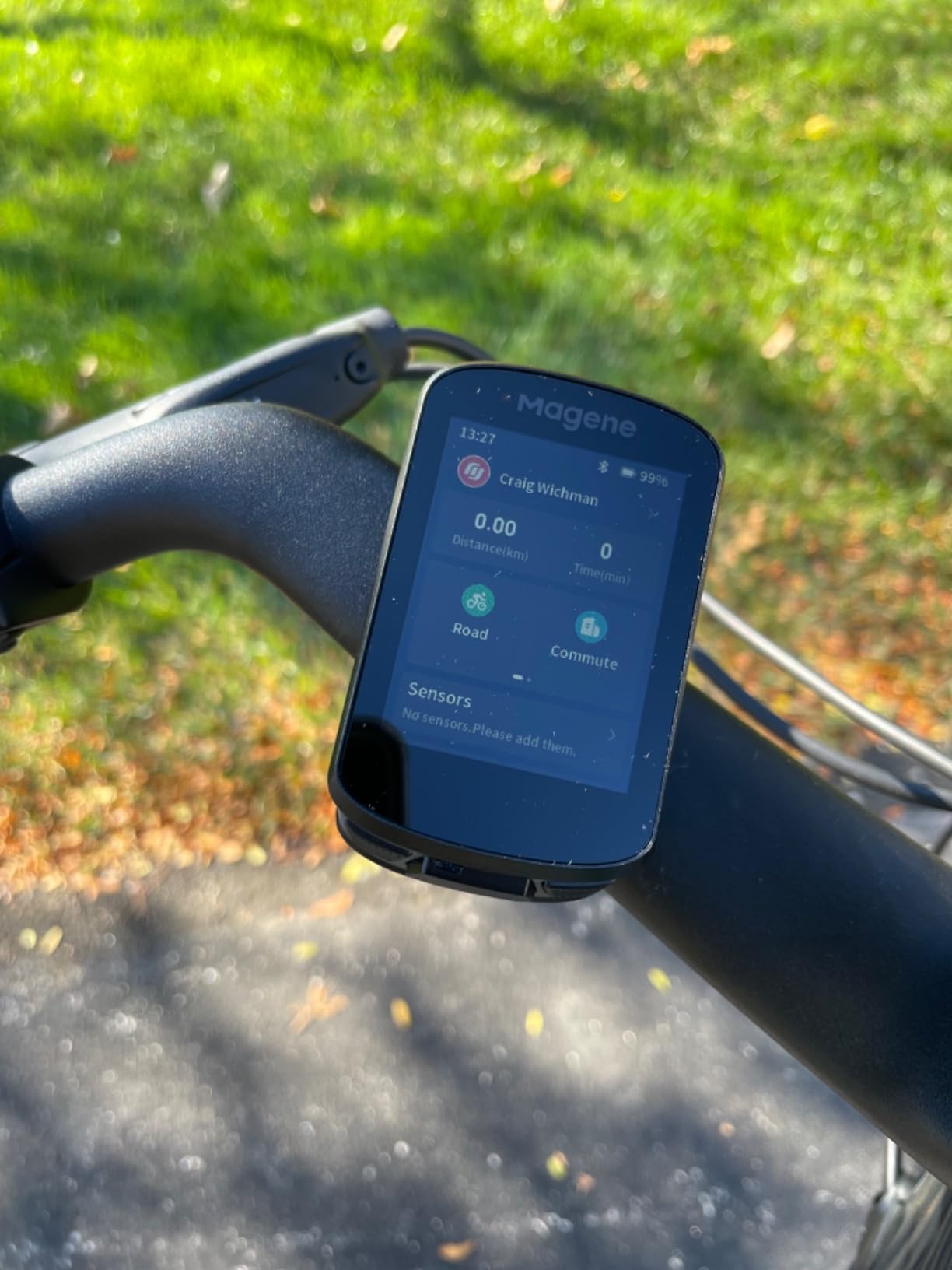
The C506 is the unit that makes this list interesting. For a compact color touchscreen, global free map downloads, turn-by-turn navigation, WiFi syncing and support for nine categories of accessory, the specification is closer to the premium tier than the price suggests.
WiFi is the quiet hero here. Owners report automatic uploads to Strava, TrainingPeaks and health apps far faster than Bluetooth, and the Airoha chipset can hold a GPS lock in as little as five seconds, which is a genuine improvement when you start a ride in a car park.
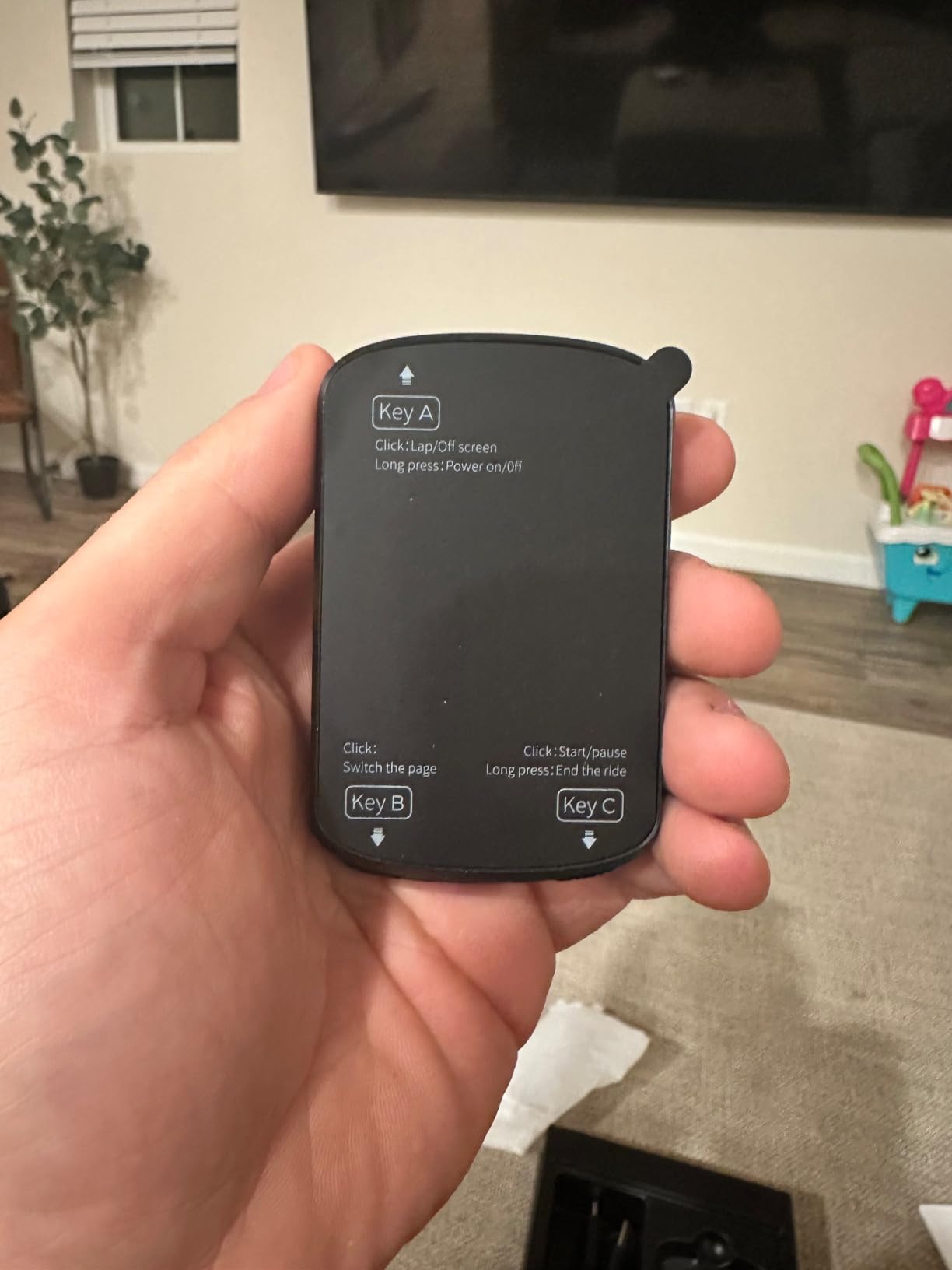
The sensor support is broad for the money: radar tail lights, power meters, smart trainers and Di2 or eTap shifting all pair over ANT+ and Bluetooth. Layouts offer 105 data items across 14 categories including dials, line graphs and bar charts, and automatic start and stop during navigation stops you logging empty segments.
Indoor training is supported too, with FIT file upload to smart trainers plus power target, resistance and gradient control, which is rare at this level.
Who the Magene C506 suits
It suits a first serious bike computer. A rider moving up from a basic speedometer gets navigation, sensor pairing and app syncing without a large step up in cost.
It also suits riders who ride indoors in the off-season, since FIT upload and trainer control are included at no extra cost.
Who the Magene C506 does not suit
It does not suit riders who want a mature ecosystem. The OnelapFit app is less refined than Garmin Connect or the Wahoo app, and the map download process is unintuitive because it requires WiFi setup in the app and then a separate download on the device.
Strava Live and Starred Segments are not supported on this model, and a few riders report GPS inventing paths that do not exist or routing home if the start position is slightly off course.
9. iGPSPORT BSC300T – the group riding pick
iGPSPORT BSC300T GPS Bike Computer, Smart Map Navigation 2.4” Touch Screen
2.4 inch touchscreen
20 hr battery
67 g
8 GB storage
Worldwide offline maps
Pros
- Touchscreen plus six buttons for flexible control
- Five satellite systems give fast and accurate fixes
- Worldwide offline map downloads with saved routes
- Off course warning persists until you return
- Real-time teammate tracking for group rides
Cons
- No USB-C cable included in the box so a cable may need to be sourced separately
- App ecosystem is less developed than Garmin or Wahoo so post-ride analysis is thinner
The BSC300T is aimed squarely at the road bunch. Real-time tracking shows teammate locations during a group ride, and the off-course warning keeps notifying until you are genuinely back on the route, which is a useful safeguard on unfamiliar roads at speed.
It is also light at 67 g and flexible to operate, combining a 2.4 inch capacitive touchscreen with six physical buttons. That is more physical controls than any other unit in this roundup, and it means you can drive menus by feel in gloves.
Five-satellite positioning covers GPS, BeiDou, GLONASS, Galileo and QZSS for fast, accurate fixes, and 8 GB of storage holds worldwide offline maps with route preview, saved routes and turn prompts.
Over 130 ride data fields cover speed, distance, grade, cadence, calories, time and temperature, and ANT+ with Bluetooth 5.0 connects speed, cadence, heart rate, e-bike and smart trainer devices. A two year warranty is the joint longest here.
Who the iGPSPORT BSC300T suits
It suits group riders who want teammate positions without paying for a dedicated tracker. The dual protocol means almost any sensor in your existing kit will pair.
It also suits riders who want offline maps for riding somewhere without phone signal or predictable coverage.
Who the iGPSPORT BSC300T does not suit
It does not suit riders who want deep post-ride analysis, because the companion app ecosystem is less developed than the major brands.
The box does not include a Type-C cable, so you may need to source one before the first charge, and the 20 hour battery is unremarkable next to the Bryton and CYCPLUS units.
10. GEOID CC700 Pro – the offline navigation value pick
GEOID CC700 Pro 2.8″ Color Touchscreen GPS Bike/Cycling Computer, Map Navigation with Re-Route Planning, WiFi Auto-Sync, ANT+/Bluetooth, Message Notification, IPX7 Waterproof, Free Indoor Training
2.8 inch color TFT
IPX7
WiFi auto-sync
4 GB offline maps
Re-route planning
Pros
- Bright 2.8 inch color screen readable in sunlight
- Offline maps with re-route planning when you stray
- WiFi auto-sync moves rides and firmware fast
- Heart rate power cadence and Di2 accessories supported
- Free indoor training with power and gradient targets
Cons
- Companion app is confusing to set up
- Map downloads run on the device not the app
- Advertised battery is about half the real figure
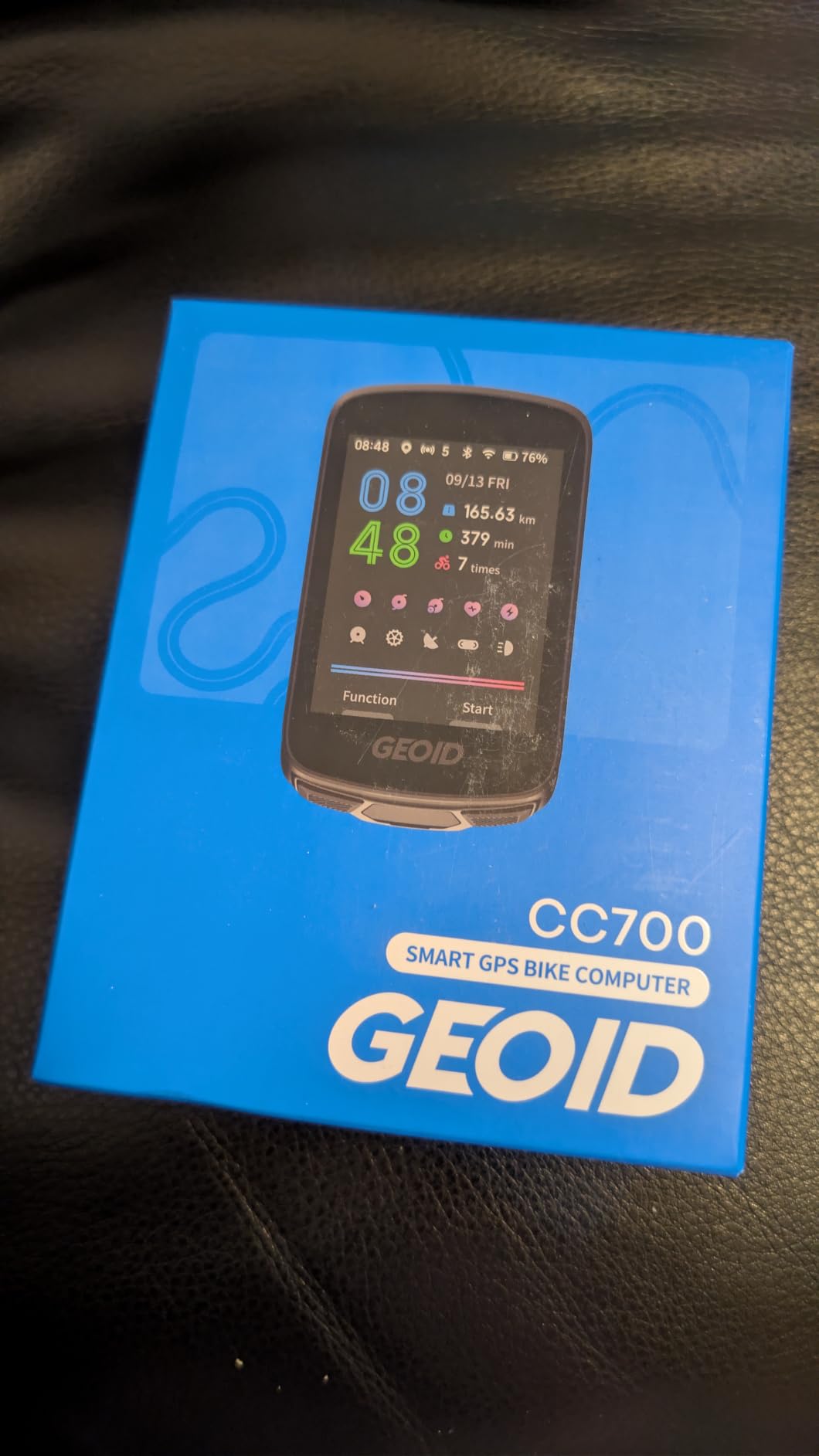
The CC700 Pro pairs a 2.8 inch color TFT screen with global offline map downloads, 4 GB of storage and automatic re-route planning that recalculates your path when you leave the route. Color-coded maps show street names, turn prompts, zoom control and dual-perspective views.
Positioning uses five satellite systems plus AGNSS for roughly five second acquisition, and WiFi handles both ride sync and direct firmware updates on the device, which is much faster than a Bluetooth-only workflow. FIT file export auto-syncs to Strava and TrainingPeaks once your account is bound.
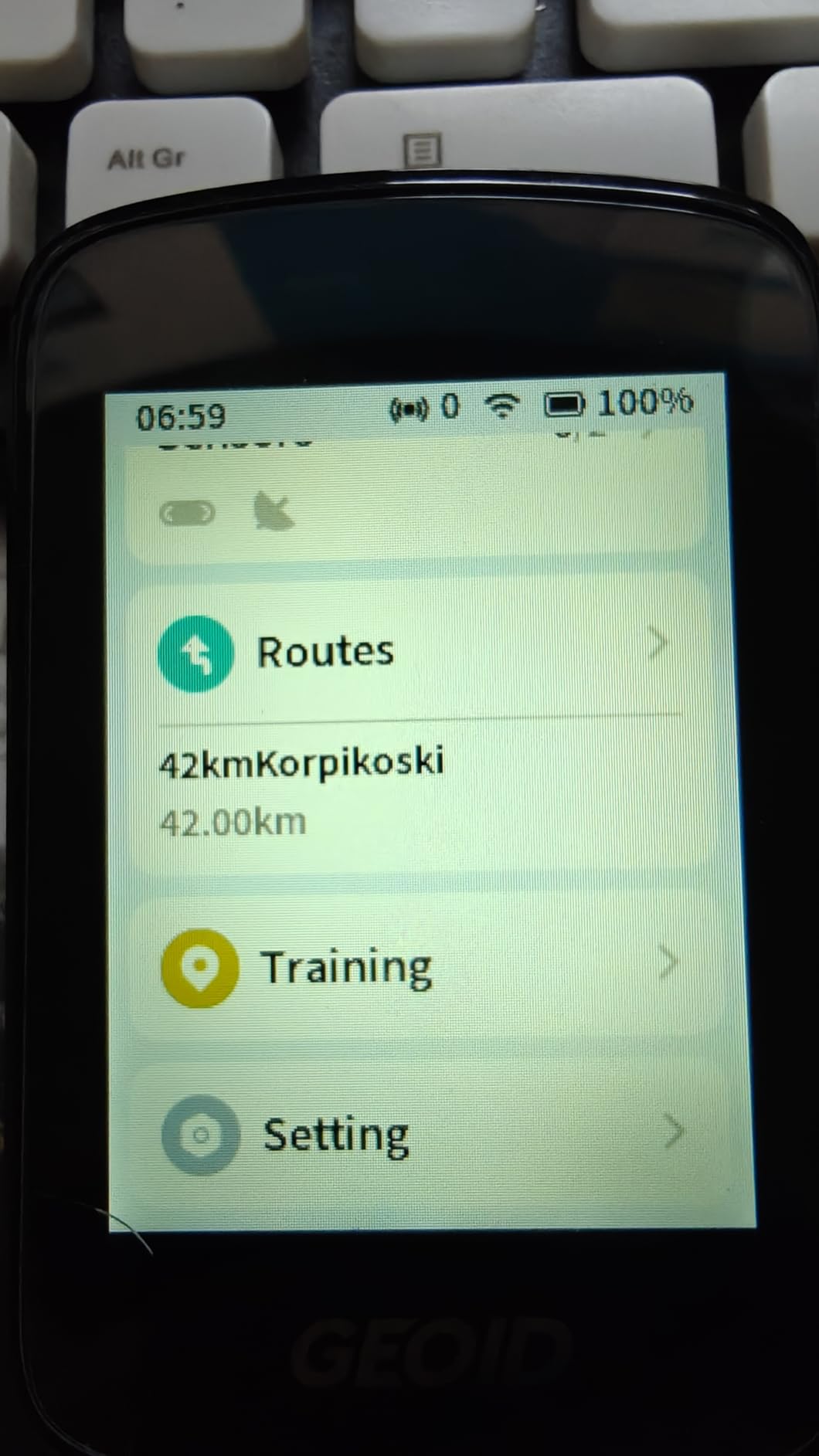
Accessory support covers heart rate monitors, speed and cadence sensors, power meters and Di2, and free indoor training supports custom power, resistance and gradient targets. IPX7 waterproofing, a tempered glass screen protector and stem mounts are all in the box, and DJI Action camera integration adds a control dial.
Who the GEOID CC700 Pro suits
It suits riders who ride roads with no coverage and want real re-routing rather than a breadcrumb trail. The offline map library and re-route planning are the reason to buy it.
It also suits owners of compatible DJI action cameras who want on-bike camera control without another remote.
Who the GEOID CC700 Pro does not suit
It does not suit anyone who wants a polished setup experience. The companion app is the most commonly cited weakness, map downloads happen on the device rather than in the app, and the shipped instructions are thin enough that some buyers cannot configure it at all.
Battery expectations need managing too. Several riders report the advertised figure of around 20 hours landing closer to 10 in practice, and re-route recalculation needs your phone connected to the device.
11. CYCPLUS G1 – the simple GPS speedometer that just works
CYCPLUS Wireless GPS Bike Computer G1, 70g, 2.0″ Screen, IPX6, 1200mAh
2 inch LED
50 hr battery
70 g
IPX6
Automatic backlight
Pros
- Dependable speed and distance logging for new riders
- FSTN glare-free backlit screen reads day and night
- 1200mAh battery with more than 55 hours of working time
- Cable-free install takes under two minutes
- Two-year warranty and responsive support
Cons
- No Bluetooth ANT+ or app syncing at all
- GPS drifts under tree cover and in tunnels
- Must be switched on by hand before each ride
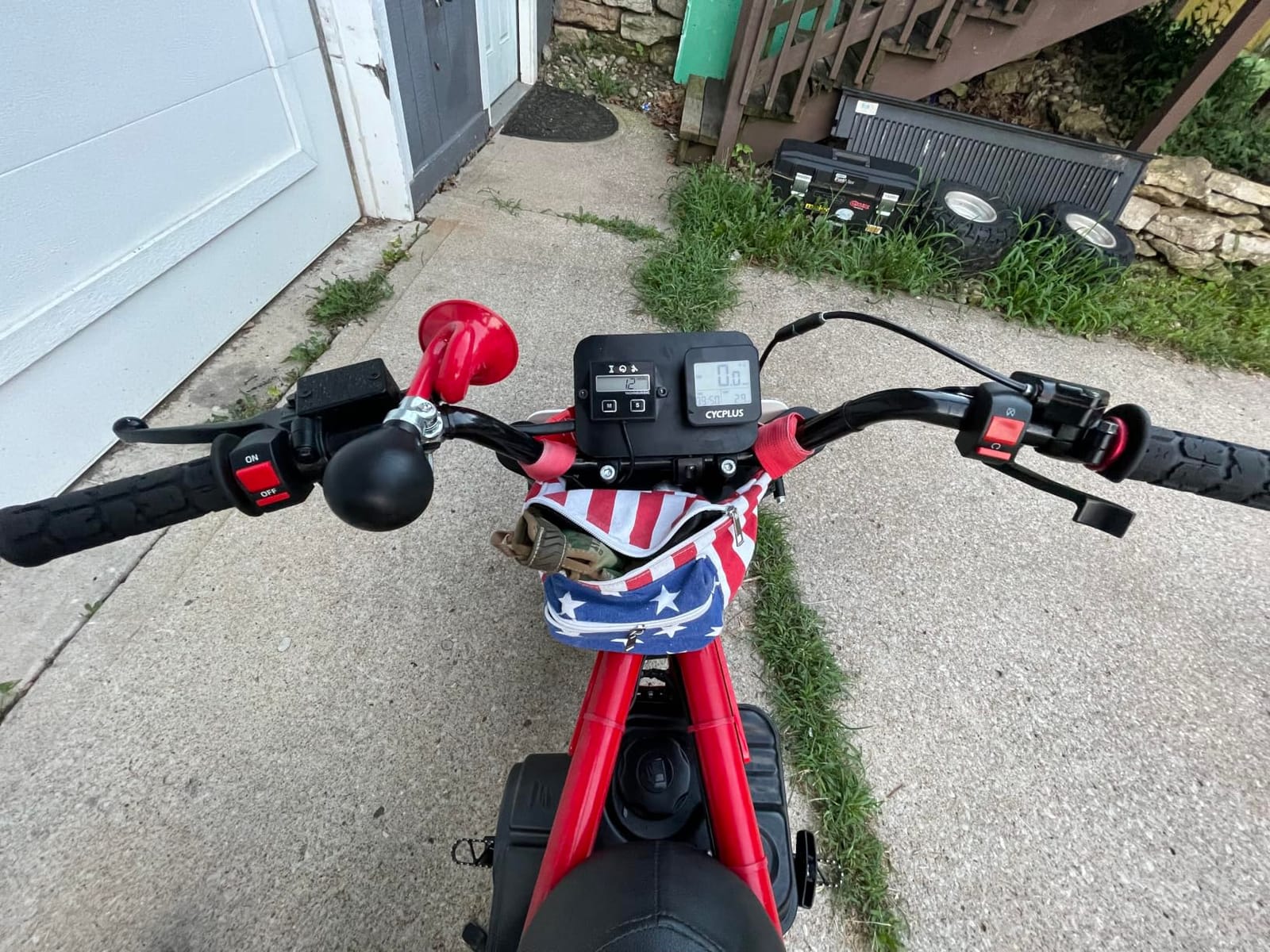
The G1 is where a lot of road cyclists should genuinely start. It does one job: it records speed, distance, ride time, total mileage, clock and altitude on a glare-free FSTN backlit screen, and it does it for a very long time on a single charge.
Riders report 16 or more hours of actual riding per charge against a rated figure of more than 55 hours of working time, with automatic sleep after 10 minutes of inactivity that keeps your last ride data on wake. Two buttons toggle current, average and maximum speed plus trip data.
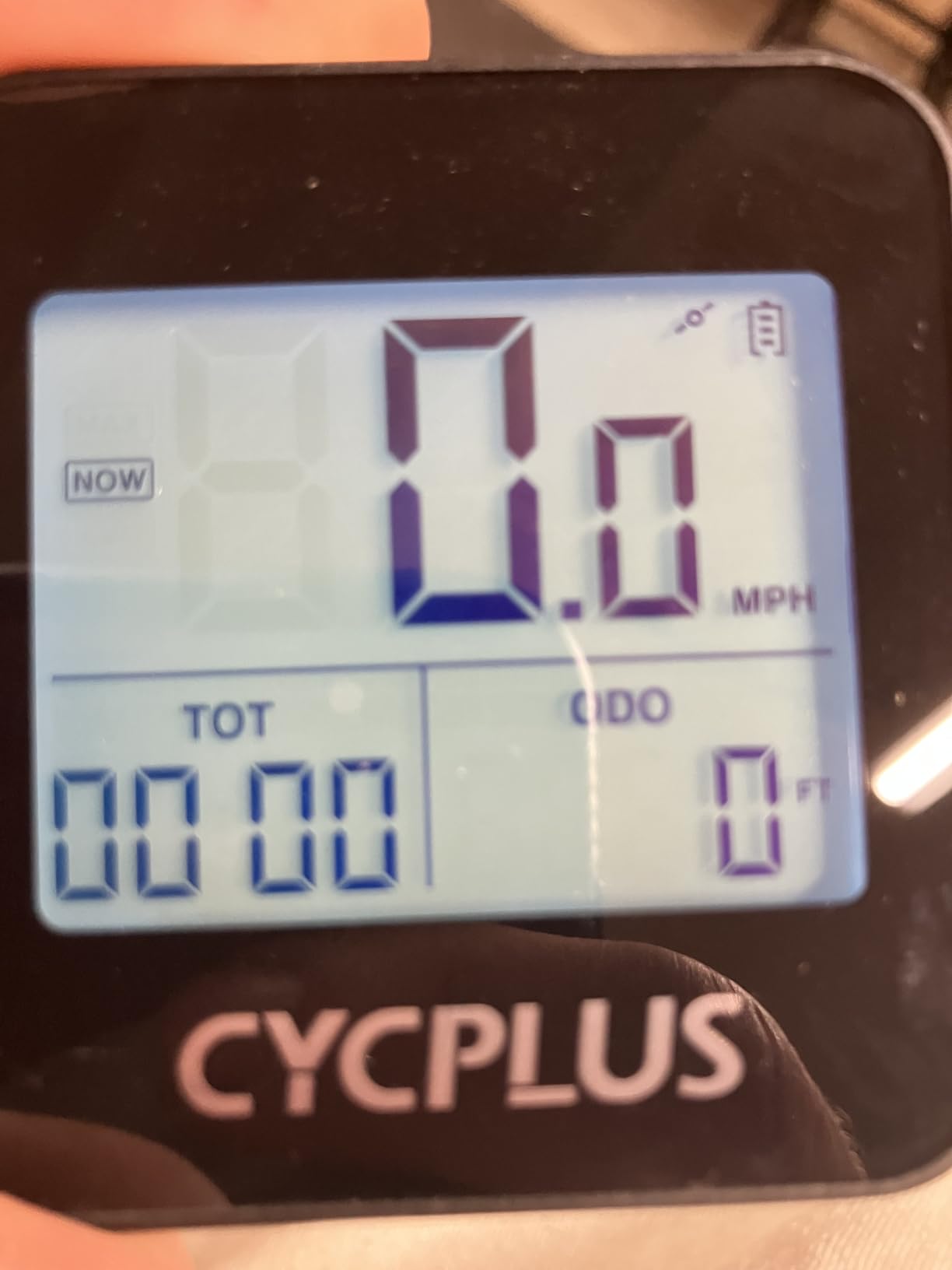
GPS accuracy lands within 1 to 2 percent of Strava on open roads, and automatic pause and resume means stops at traffic lights and coffee stops do not distort your average. Installation is cable-free and takes under two minutes, and the whole unit moves between bikes easily.
Tempered glass takes the knocks, IPX6 covers wet winter riding, and a two year warranty sits alongside genuinely responsive seller support.
Who the CYCPLUS G1 suits
It suits new riders, commuters and anyone who just wants a reliable record of distance without a phone. It has more than four thousand reviews behind it, which makes its long-term behaviour easy to judge.
It also suits riders who ride a lot without ever charging, since a full charge covers weeks of commuting.
Who the CYCPLUS G1 does not suit
It does not suit anyone who wants navigation, a power meter or heart rate data. There is no Bluetooth, no ANT+ and no app, so nothing syncs to Strava or a computer.
GPS-only measurement drifts badly under tree cover, in tunnels and between tall buildings, and there is no auto-start, so a forgotten power-on means a missed ride. The bundled handlebar mount can loosen on rough roads.
12. CATEYE Velo Wireless – the most accurate unit without GPS
CATEYE Velo Wireless Bike Computer (Black)
Wheel-sensor accuracy
1.12 oz
IP65
Settable odometer
Auto start/stop
Pros
- Wheel sensor measures within a fraction of a mile of a reference
- Auto start and stop handles lights and coffee stops
- Settable odometer survives a battery change
- Extremely light at 1.12 ounces
- Two-year warranty and a long durability record
Cons
- No backlight makes night riding hard to read
- Zip-tie mounts can rotate on the handlebar
- No Bluetooth or ANT+ beyond its own sensor
The Velo Wireless is the oldest design in this roundup and still the most accurate measurement here. Because it counts wheel revolutions rather than satellites, owners report it lands within 0.02 miles of a reference watch once you fine-tune the circumference. In a tunnel or under dense tree cover, it simply does not care.
It is also the lightest thing we tested, at 1.12 ounces, which matters if you care about every gram on a climbing bike. Setup is about ten minutes with clear picture-based instructions, and auto start and stop handles your stops without any input.
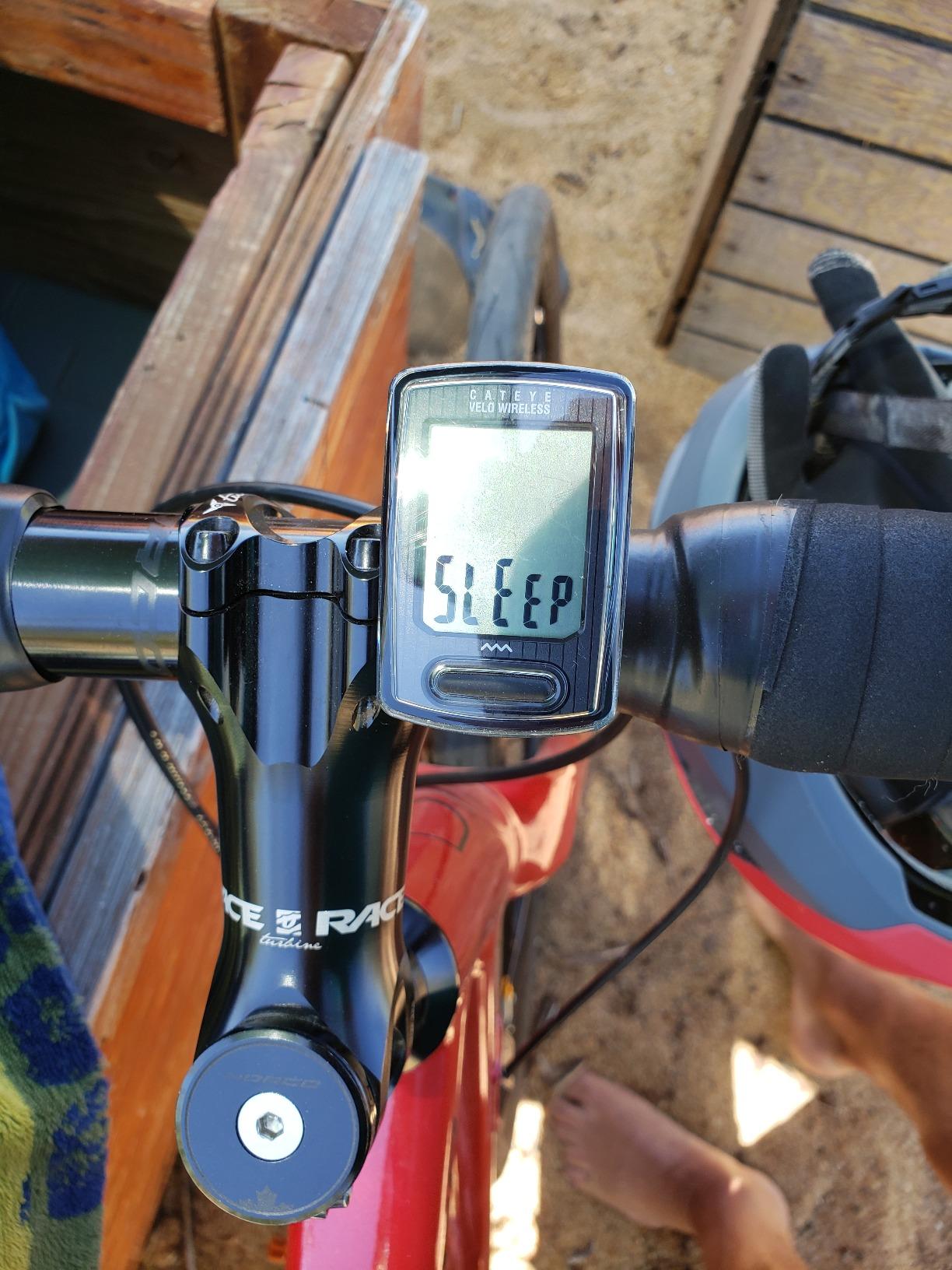
The manually settable odometer is an underrated feature: accumulated miles survive a battery change, so the unit never resets on you after a long winter. IP65 water resistance and a two year warranty back a hardware record that several long-term owners say has outlived several computers.
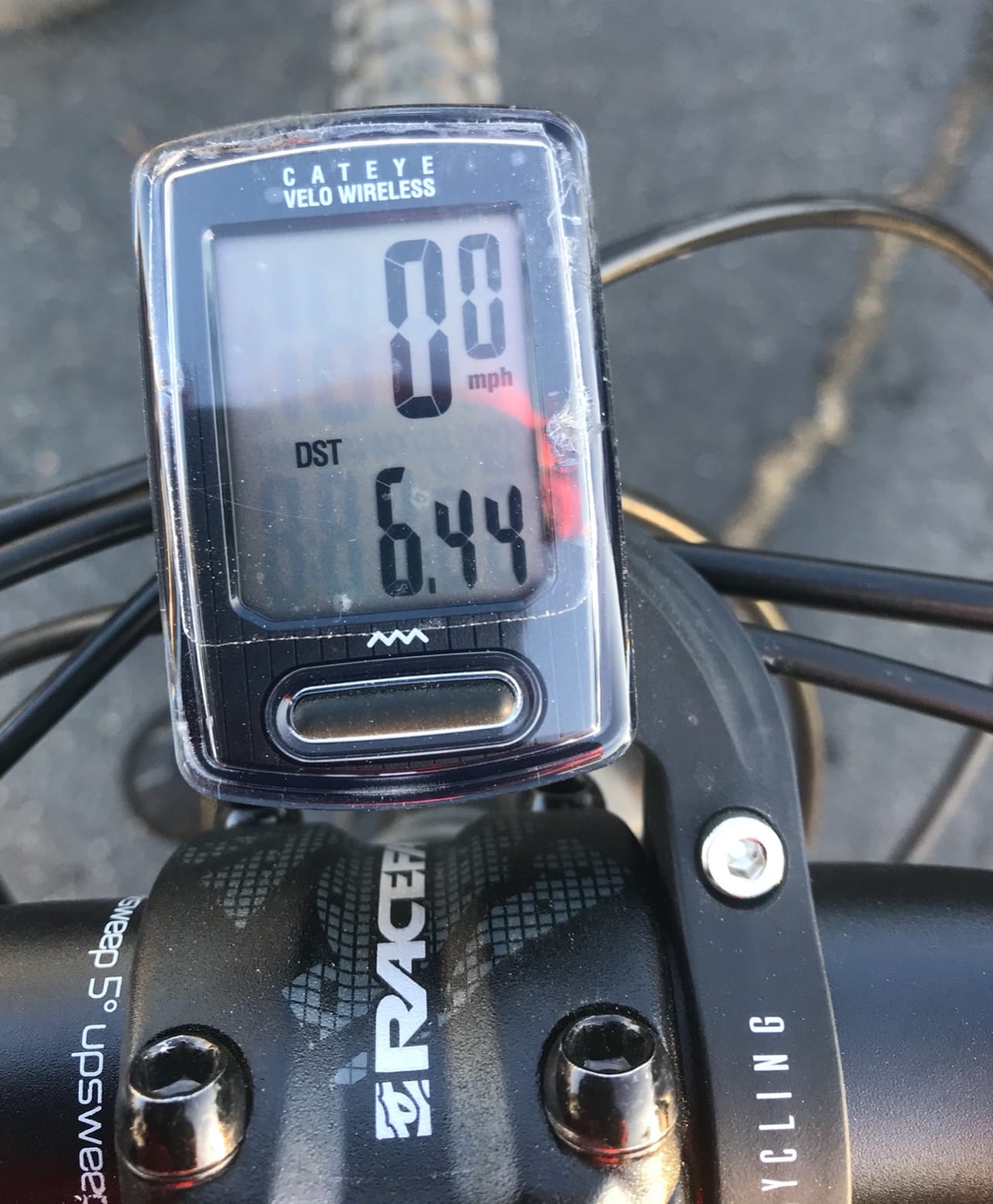
The display shows current, maximum and average speed, total and trip distance, elapsed time, calories, a pace arrow for speed above or below your ride average, and a clock.
Who the CATEYE Velo Wireless suits
It suits riders who only need speed, distance and time and want that data to be exactly right. The absence of a GPS signal makes no difference to it at all.
It also suits anyone who has been put off GPS computers by setup complexity, and anyone riding a fixed gear or track bike with no room for cables.
Who the CATEYE Velo Wireless does not suit
It does not suit night riders, because there is no backlight and the screen becomes very hard to read in the dark.
It only works with its own included speed sensor, with no Bluetooth or ANT+ for anything else, the zip-tie mounts are flimsy and can rotate on the bar, and calibration requires removing the unit to set wheel circumference to 1 cm resolution.
How to Choose a Bike Computer for Road Cycling in 2026
Start with what your bike already has, not with the specification sheet. Almost every road computer on this list runs ANT+ and Bluetooth, so a Garmin power meter, a Garmin heart rate strap and a Wahoo head unit will happily coexist. The ecosystem lock-in that riders fear mostly affects the phone app, Varia radar integration and map quality, not the sensors. If you already own Di2, confirm the specific unit lists electronic drivetrain support, because that display is genuinely useful on a road bike.
Touchscreen or buttons is the second decision, and for road riding we lean toward buttons. The forum complaint that comes up most often is a touchscreen that will not respond to a wet gloved hand while the rider is out of the saddle. The Edge 540, the Bryton Rider 460 and the iGPSPORT BSC300T all give you physical controls, and only the iGPSPORT combines them with a color touchscreen. Buttons do mean smaller screens, which is the trade you make for reliability.
Battery life deserves a reality check. Claimed figures assume standard use. The moment you add continuous navigation, a power meter, heart rate and a heart rate strap, expect the real number to be meaningfully lower. The longest rated battery figures here belong to the Bryton Rider 460 at 32 hours and the Edge 1050 at up to 20 hours in demanding use or 60 in battery saver mode, while the Karoo at 15 hours and the Explore 2 at 16 hours will need a charging plan for a full century.
Weight is the road-specific factor that touring roundups skip. The CATEYE Velo Wireless at 1.12 ounces and the Magene C506 at 76 g disappear on the bars, while the Wahoo ELEMNT ACE at 208 g and the Karoo at a listed 0.41 kg are noticeable on a steep pitch. If you race, that difference is part of the argument.
Mounting is simpler than most guides make it sound. An out-front mount puts the screen closer to your eyeline and is easier to read at speed, at the cost of some drag on an aero bike. A stem mount keeps the bars clean and the drag down, but pushes the screen further away and further below your line of sight. The ROAM V3 and ACE both ship with an out-front and a stem mount, so you can try both and settle it on the first long ride.
Finally, do you even need a computer? If you ride with a smartwatch and only care about time, distance and pace, a watch is enough and cheaper. You need a dedicated head unit the moment you want navigation away from your phone, power meter data you can read at a glance, a record that survives a crash into the tarmac, or a screen you can operate with gloves on. Riders on indoor trainers also need one that speaks ANT+ FE-C, which narrows the list quickly. For trainers specifically, our indoor cycling shoes guide covers the rest of that setup.
Frequently Asked Questions
What is the best bike computer for road cycling?
The Garmin Edge 1050 is the most complete road cycling computer, with a 3.5 inch color touchscreen, a built-in speaker for spoken prompts, GroupRide features and up to 20 hours of battery in demanding use. The Garmin Edge 540 is the better value for most riders, offering multi-band GNSS, button control and 26 hours of battery in a 2.8 ounce body. At the budget end, the Magene C506 brings color navigation, WiFi syncing and broad sensor pairing to a much lower cost.
What bike computer do professional cyclists use?
Riders in r/cycling describe the recent models from Garmin, Hammerhead and Wahoo as the safe defaults, and the final choice is usually decided by the sensor stack a rider already owns rather than by the computer itself. Garmin dominates because of its integration with power meters, Di2 and Varia radar. Hammerhead is common among SRAM AXS riders, and Wahoo is popular for its simple setup and readable screens. Structured-workout riders on the Slowtwitch forum single out Hammerhead and Stages for dependable workout upload.
Which bike computer is better, Garmin or Wahoo?
Garmin offers the deeper training ecosystem, stronger Varia radar and light integration, and more reliable long-term Bluetooth pairing, which is why we see fewer long-horizon failure reports about it. Wahoo wins on battery life, screen readability, spoken navigation and a simpler setup, and is often better value at equivalent hardware levels. Riders report Bluetooth reliability deteriorating on a Wahoo unit after a few years of ownership, so the right answer usually follows the sensors and the phone app you already use.
Do Wahoo bike computers work with Garmin?
Yes for sensors. Wahoo units pair with Garmin power meters, heart rate straps, cadence sensors and speed sensors over both ANT+ and Bluetooth, so mixed-brand sensor setups work without any bridge. The limits are in the software, not the radio: you lose Garmin Varia light and radar integration, and the map and coaching features come from the Wahoo app rather than Garmin Connect. The same applies in reverse, since Garmin computers read Wahoo sensors just as happily.
Do you need a bike computer for a power meter?
No, not strictly. A good cycling watch will record and display power meter data over ANT+ or Bluetooth. You want a dedicated computer when you need power and navigation on the same screen at the same time, when you want the data visible in a group without stopping, or when you want the ride recorded by a device that is not also running notifications on your wrist. For structured indoor work, look for ANT+ FE-C smart trainer control, which the Bryton Rider 460 and the Magene C506 both support.
Final Verdict: Which Bike Computer Should You Buy?
The best bike computers for road cycling in 2026 fall into three clear groups. Buy the Garmin Edge 1050 if you want the most complete riding computer available, including a speaker, group features and a large readable screen. Buy the Garmin Edge 540 if you want the same training data, reliable buttons and multi-band positioning in a body you will forget is there. Buy the Magene C506 if you want real navigation and sensor pairing without spending flagship money.
Beyond those, the Wahoo ELEMNT ROAM V3 is the long-day specialist, the Hammerhead Karoo belongs on an SRAM AXS bike, and the Bryton Rider 460 wins on endurance. Riders just starting out should look at the CYCPLUS G1 or the CATEYE Velo Wireless and upgrade when they need a power meter or a map. Whatever you choose, pair it with the right sensors first, then set the screen up once and forget about it.