
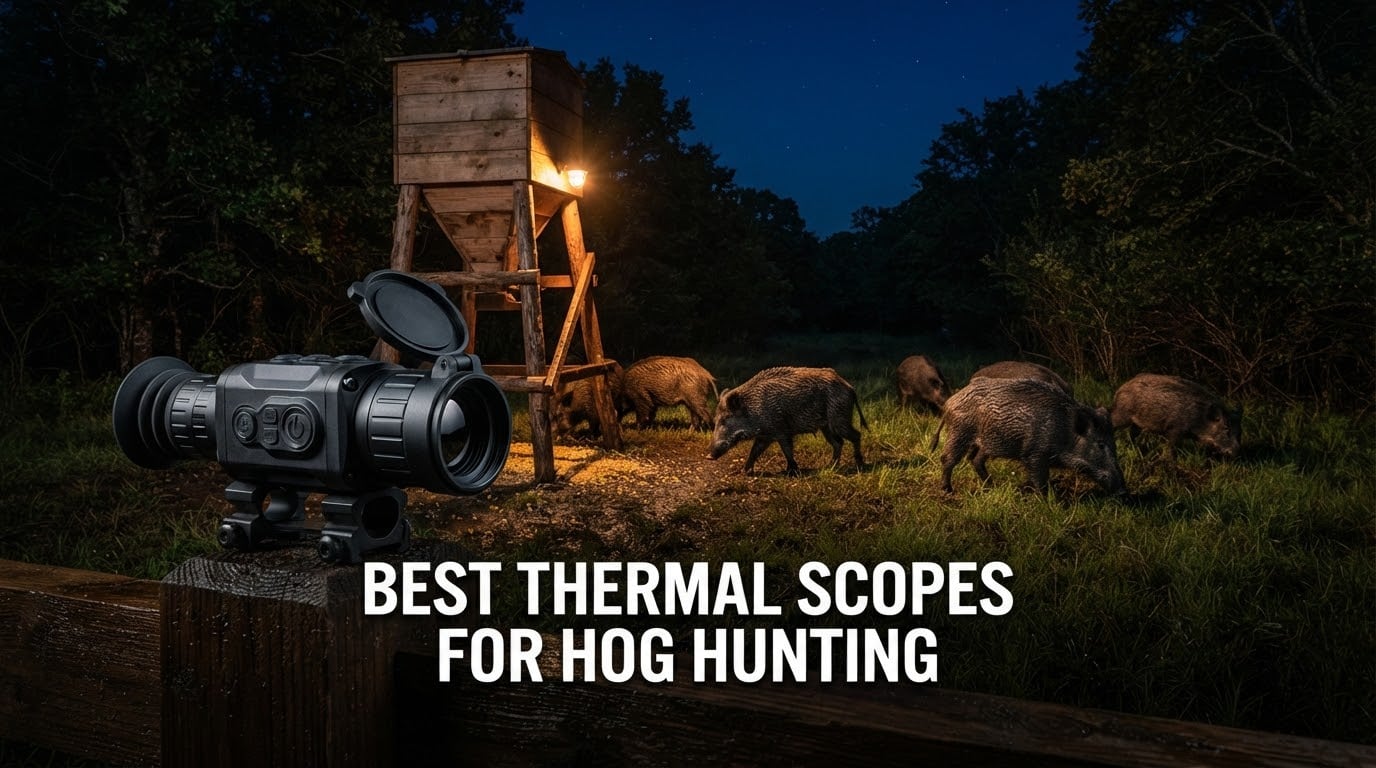
The best thermal scopes for hog hunting are the ones that give you a wide view first and magnification second. Our pick for most hunters is the AGM Global Vision Rattler V2 19-256, which pairs a 2.5x base magnification with a 9.3 degree field of view and a dual battery system rated for up to 11.5 hours of runtime, so a sounder walking into a feeder does not disappear off the screen.
That framing matters more than any spec sheet. Wild hogs are nocturnal, they travel in groups, and they usually show up against a background of wet grass, mud and standing timber that hides a body better than almost any other backdrop. A thermal imaging riflescope reads body heat instead of reflected light, so the animal separates from the background in total darkness, in fog, and through light brush cover that defeats night vision.
This roundup covers 10 dedicated and clip-on thermal scopes for hogs, from a 256×192 entry optic to 640-class sensors with a built-in rangefinder. We compared published specifications, owner review patterns, battery claims, mounting options and lens choices, and we matched each scope to the hunting setup it actually suits. Our recommendations are spec-based and reader-review based rather than lab-tested, and we say so plainly so you can weigh that yourself.
One note before we start: night-vision and thermal use for hogs is regulated differently in every state, and bait or feeder rules vary just as widely. Check your state wildlife agency rules before you buy.
Table of Contents
Top 3 Best Thermal Scope for Hog Hunters in 2026

AGM Rattler V2 19-256
- 2.5x base magnification
- 9.3 degree FOV
- 19mm lens with 256x192 sensor
- Dual battery up to 11.5 hours
Pulsar Thermion 2 Pro
- 384x288 sensor with germanium optics
- 2x to 10x with 50mm eye relief
- IPX7 waterproof
- Stream Vision 2 app
The Rattler V2 wins on the combination hunters actually argue about: a low base magnification, a wide field of view, long battery runtime and a large enough review base to trust. The Thermion 2 Pro is the pick if you want a 384×288 sensor and can live with a heavier chassis. The Thor LTV is the one to buy when weight on a small-caliber hog rifle is your main constraint.
Best Thermal Scopes for Hog Hunting at a Glance
| Product | Specifications | Action |
|---|---|---|
| AGM Rattler V2 19-256 |
|
Check Latest Price |
 DNT Optics Hydra HS225 DNT Optics Hydra HS225 |
|
Check Latest Price |
| Pulsar Thermion 2 Pro |
|
Check Latest Price |
 ATN Tico 6 Clip-On ATN Tico 6 Clip-On |
|
Check Latest Price |
 ATN Thor LTV 256 ATN Thor LTV 256 |
|
Check Latest Price |
 Pulsar Talion XG35 Pulsar Talion XG35 |
|
Check Latest Price |
 ATN ThOR 6 Mini ATN ThOR 6 Mini |
|
Check Latest Price |
 DNT Optics Hydra-LRF HS635R DNT Optics Hydra-LRF HS635R |
|
Check Latest Price |
 ATN ThOR 6 Mini 2.5-20x ATN ThOR 6 Mini 2.5-20x |
|
Check Latest Price |
 CVLIFE 19-256 CVLIFE 19-256 |
|
Check Latest Price |
Sensor tier is the first filter most people apply, but base magnification is the one that decides whether a sounder stays in view. Read the table as a starting point, then use the setup matching section below to narrow it down.
1. AGM Global Vision Rattler V2 19-256 – Best Overall for Feeder Hogs
AGM Global Vision Rattler V2 19-256 Thermal Scope High-Sensitivity Sensor
19mm lens, 256x192 12um sensor
2.5x base, 8x max, 9.3 deg FOV
6.34 oz, dual battery, 11.5 hrs
Pros
- 9.3 degree field of view at a 2.5x base for fast sounder scans
- Up to 11.5 hours of runtime per charge on a dual battery system
- Only 6.34 ounces so it barely changes rifle balance
- 10 reticle styles
- 4 color options and a stadiametric rangefinder
Cons
- 256x192 sensor is the entry resolution tier and loses detail past mid range
- Digital zoom beyond 2.5x base softens the image
- WiFi and app features add setup steps in the field
This is the scope I keep coming back to for hog work, and the reason is unglamorous: it does the boring things well. A 2.5x base magnification with a 9.3 degree field of view means a group of four or five hogs walking out of timber at 120 yards stays inside the picture instead of drifting edge to edge as it does on a 4x-base scope.
The 19mm objective paired with a 256×192, 12um sensor gives up long-range detail, and I want to be straight about that. Past roughly 200 yards on a cold night you are guessing at species rather than confirming it. Inside that envelope, reviewer feedback consistently describes fast detection in thick brush and dependable identification of hogs and predators at close to mid range.
What separates it from the other budget-tier optics here is battery behaviour. The dual battery design is rated for up to 11.5 hours per charge, which covers a full sit from dusk to first light without a mid-night recharge scramble, and the listed operating range of -22F to 131F means a January feeder camera does not become a paperweight.
Reviewers also call out how well it holds together: recoil resistance, IP67 sealing and a 6.34 ounce all-up weight that keeps the front end of a lightweight hog rifle honest. The 10 reticle styles and four colour options let you tune the picture for a dark tree line or a warm hay field.
Who this scope suits
This is the feeder hunter’s scope. If your shots happen at a known camera or feeder between 75 and 150 yards, the wide view and long runtime matter far more than pixel count, and this optic delivers both without asking you to re-mount anything.
It also suits anyone running a light or suppressed hog rifle where every ounce forward of the trigger is felt during a close-range follow-up shot, and first-time thermal buyers who want a simple menu and a scope that does not need a manual to get through the first night.
Who should pass on it
If you regularly shoot past 300 yards at coyotes or need to positively ID a distant animal, the 256×192 core runs out of detail and you should step up to a 384 or 640 sensor instead.
Digital magnification is the other weak point. Pushing to 8x interpolates the image rather than adding real sensor resolution, so treat the useful magnification as the lower half of that range and no further.
2. DNT Optics Hydra HS225 256×192 25mm – Best 3-in-1 Value Setup
DNT Optics Hydra HS225 Thermal Scope, 256×192 25mm, High-Sensitivity Sensor
25mm objective, 256x192 12um at 25mK
3x to 12x magnification
13.1 oz, 6061 aluminum, IP67
Scope, clip-on and handheld
Pros
- One body works as a mounted scope
- handheld monocular and clip-on module
- AI Super Resolution keeps usable detail at higher digital magnifications
- Quick-swap replaceable batteries mean no downtime on an internal charge
- Owners report reliable animal identification at 400 yards
Cons
- 256x192 sensor goes grainy and blob-like at higher magnification
- Heavier than ultralight scopes at 13.1 ounces
- Menu controls take practice for first-time thermal users
The Hydra HS225 is the value pick for a specific kind of hunter: the one who does not want to commit to a dedicated thermal scope yet. The same body mounts on a rifle, clips onto an existing optic or comes off entirely as a handheld monocular, which means you can scout a sounder from the truck before you ever set up on the feeder.
The 25mm objective gives a slightly tighter view than the 19mm scopes in this group, and magnification runs 3x, 4.5x, 6x, 9x and 12x. The 50fps frame rate and the AI Super Resolution algorithm are doing real work to keep the picture usable at the higher digital steps.
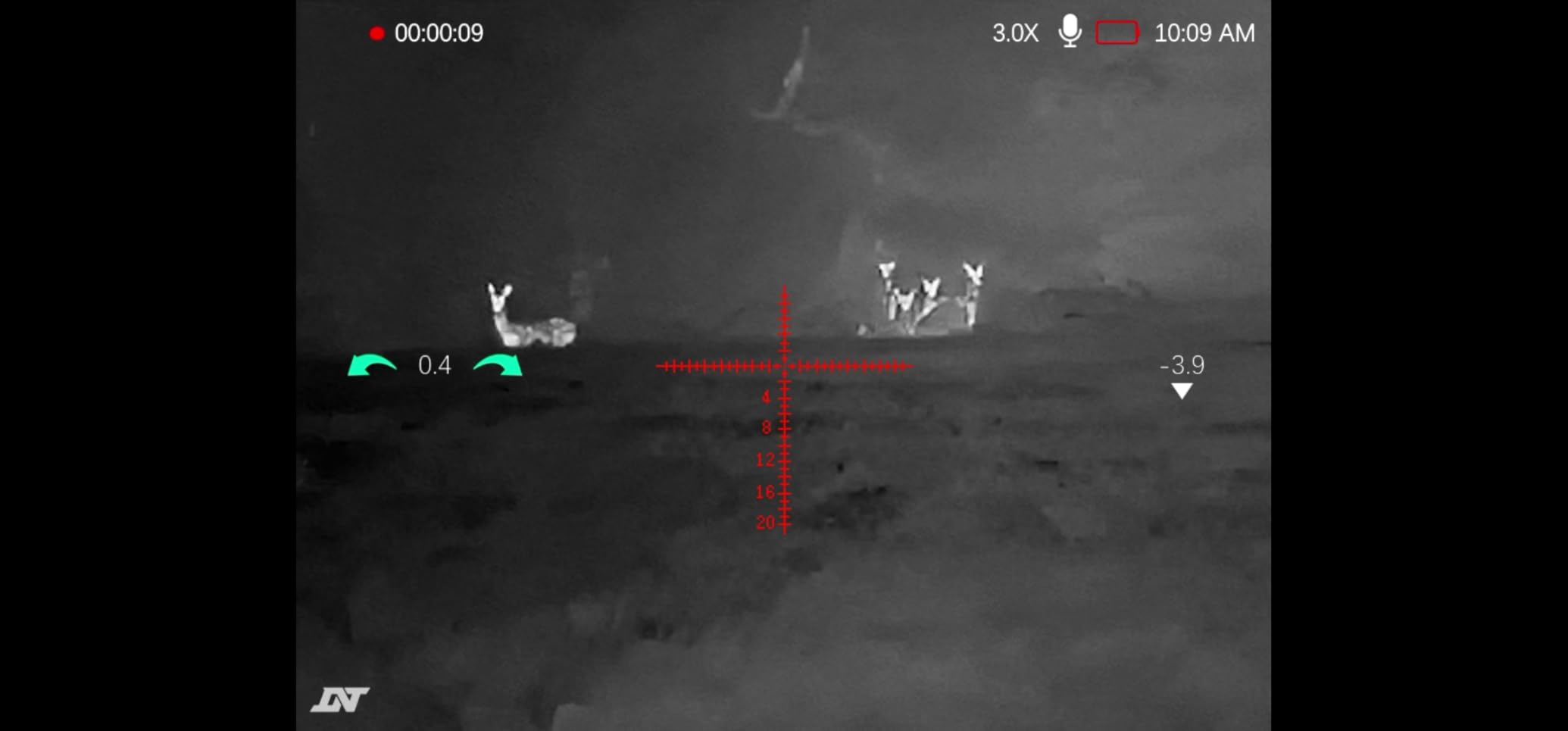
Construction is where this one overdelivers for the money. The housing is 6061 aircraft-grade aluminum, rated IP67 for waterproofing and tested to .50 BMG recoil, which is more than most hunters need and reassuring when the rifle is a hard-recoiling magnum.
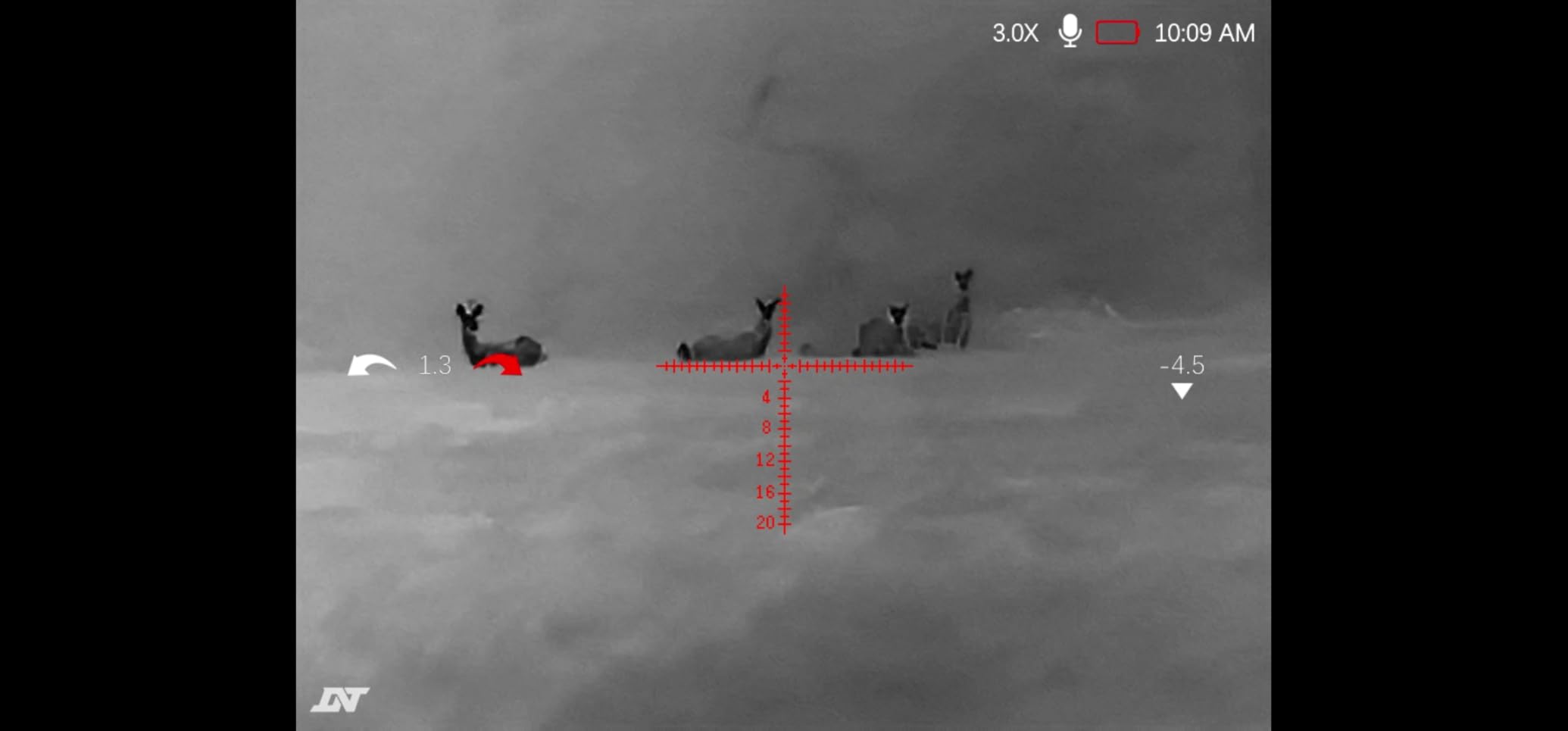
Two batteries and a charger are in the box, and the replaceable-battery approach means a dead cell is a 30-second swap instead of an overnight wait. That matters on a multi-hour sit more than any menu feature.
Who this scope suits
Buy this one if you are not sure how much thermal you will actually use, or if your hog hunting splits between truck scouting and feeder work. Being able to pull the unit off and glass a brush pile from a hillside is a genuine advantage.
It is also a solid match for mixed-caliber hunting, since the manufacturer rates it for rifle, shotgun and handgun use, which covers everything from an AR hog build to a lever-action backup gun.
Who should pass on it
The 256×192 sensor is the limiting factor. Reviewers consistently note the image turns grainy and blob-like above moderate magnification, so this is not the scope for long-range confirmation work.
At 13.1 ounces it is one of the heavier units here, and if your rifle is already heavy with a suppressor or a loaded chassis, look at the lighter options before committing.
3. Pulsar Thermion 2 Pro XQ50 384×288 – Best Value at 384
Pulsar Thermion 2 XQ50 Pro Thermal Riflescope
384x288 17um sensor, germanium optics
2x-10x, 7.5 deg FOV, 50mm eye relief
2 lb magnesium chassis, IPX7
Pros
- 384x288 microbolometer with germanium optics
- 2x base magnification holds a sounder in view
- 50mm eye relief makes long glassing sessions comfortable
- Picture-in-picture zeroing confirms zero without losing the view
- Stream Vision 2 app for live streaming and software updates
Cons
- Heaviest optic here at 2 pounds on a light hunting rifle
- 384x288 platform is one generation behind the 640x480 XP50 in the same family
- Menu and app setup takes a few extra steps in the field
Stepping up to a 384×288 sensor is the single biggest jump in image quality you can make for hogs, and the Thermion 2 Pro is where that step makes financial sense. Owners highlight detection reach and image clarity as the standout strengths, with picture-in-picture zeroing and the Stream Vision 2 wireless ecosystem as the most-used extras.
The 2x base magnification is on the wider side for a 384-class scope, which is exactly what you want when a sounder spreads out. A 7.5 degree field of view and 50mm eye relief give you room to scan and a comfortable eye position for long sits.
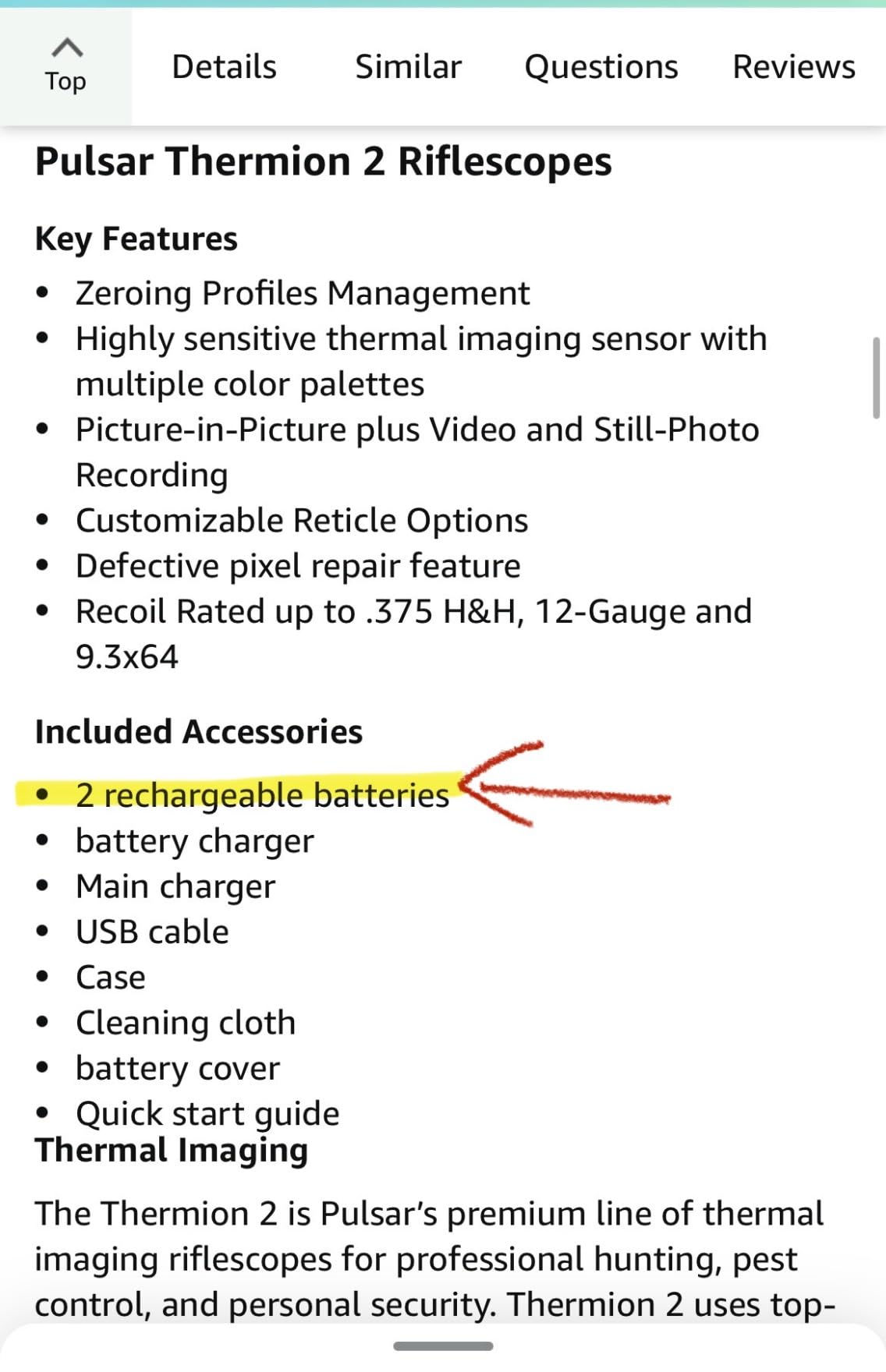
Germanium optics on a magnesium alloy chassis with an IPX7 rating and submersibility to 1 meter for 30 minutes means this scope shrugs off the heavy dew and rain that come with a full night on a hog field. The Picatinny mount and mil-dot or ballistic reticle options make it straightforward to pair with whatever rifle you have.
App support is genuinely useful after the fact. Stream Vision 2 lets you pull imagery and photos off the device and push firmware updates without emailing anything, which matters if you buy this scope in a season and want improvements later.
Who this scope suits
Hunters who want real 384 detail without paying for 640 will find their balance here. It is the pick for a mixed-terrain hunter who shoots feeders at 100 yards but also works open ground out to 300.
Long-sitting hunters also benefit from the 50mm eye relief, which reduces the black-eye and head-lift you get from long glassing sessions on a smaller-bodied scope.
Who should pass on it
At two pounds, this is the heaviest optic in the roundup. On a lightweight bolt-action hog rifle it will change your balance noticeably, and on a carry-in hunting rig it is a lot of glass to move around.
If you need to confirm species at 400 yards or beyond, note this is the older 384×288 platform rather than the 640×480 XP50 variant in the same line. For long-range work, look at a 640 sensor instead.
4. ATN Tico 6 Clip-On Thermal – Best Clip-On for an Existing Day Scope
ATN Tico 6 Thermal Imaging Clip-On Scope Attachment, 256×192, Coyote & Hog
256x192 sensor at 20mK or less
1x to 8x as a clip-on
0.32 inch 800x600 OLED
1.1 lb, 5-year warranty
Pros
- Converts an existing day scope to thermal without changing zero
- magnification or reticle
- Sixth-generation sensor at 20mK or less cuts through fog
- brush and smoke
- SharpIR AI processing sharpens edges so animals read as defined shapes
- Hot Point Tracking
- 64GB onboard recording and recoil-activated video
- 5-year manufacturer warranty
Cons
- 256x192 base resolution is the lowest tier and limits long-range identification
- Requires a compatible day scope plus the correct adapter or spacer
- Small 0.32 inch OLED is tiring for prolonged glassing
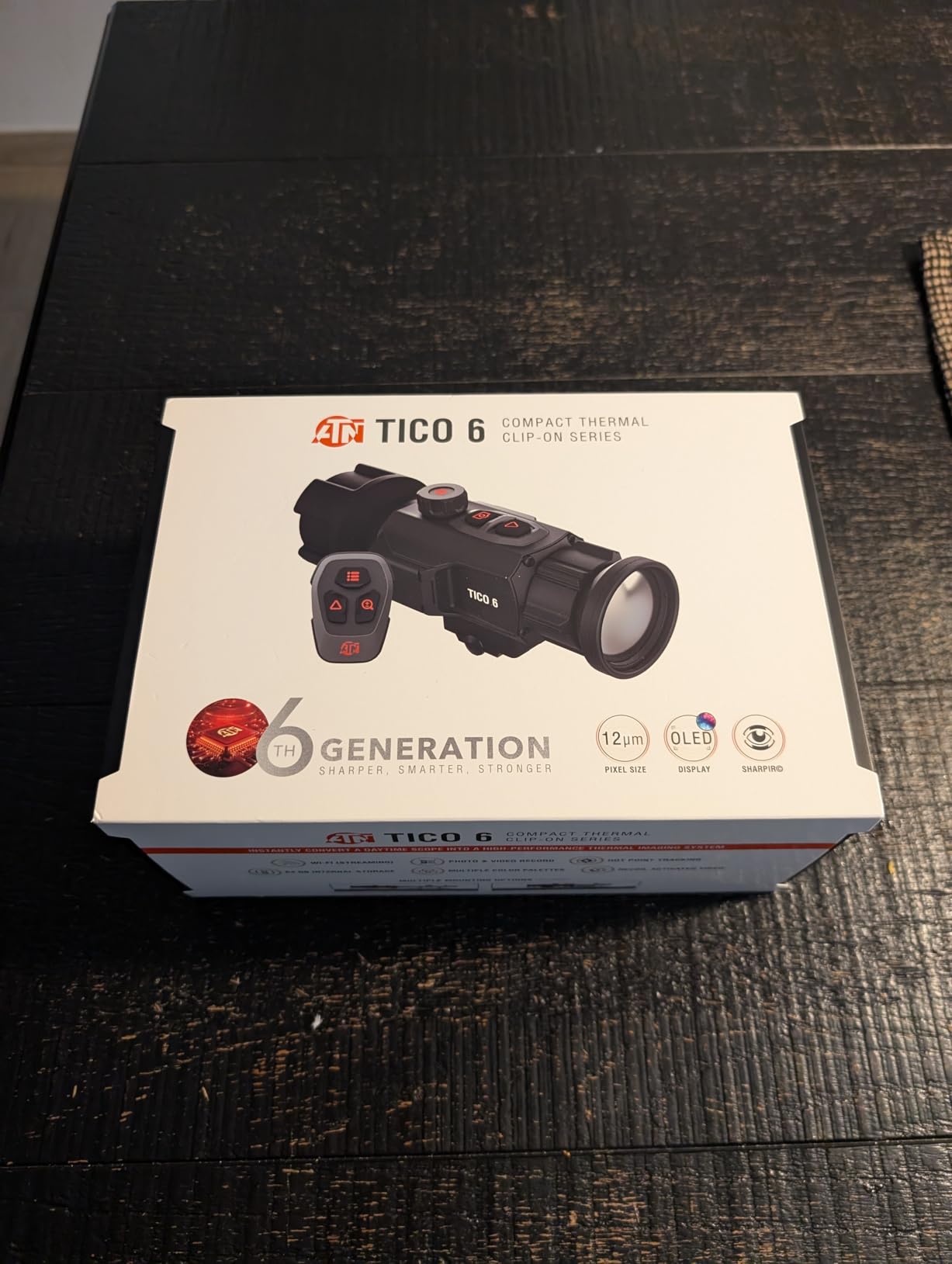
Clips solve a specific problem: you already own a day scope you are happy with, and you want thermal at night without buying a second complete optic. The Tico 6 sits in front of an existing scope and gives you thermal without re-zeroing, changing magnification or losing your reticle.
The sixth-generation 256×192 sensor is rated at 20mK NETD or less, which is more sensitive than several dedicated scopes on this list. Owners single out the SharpIR AI processing, which sharpens edges and improves contrast so an animal reads as a defined shape rather than a soft blob.
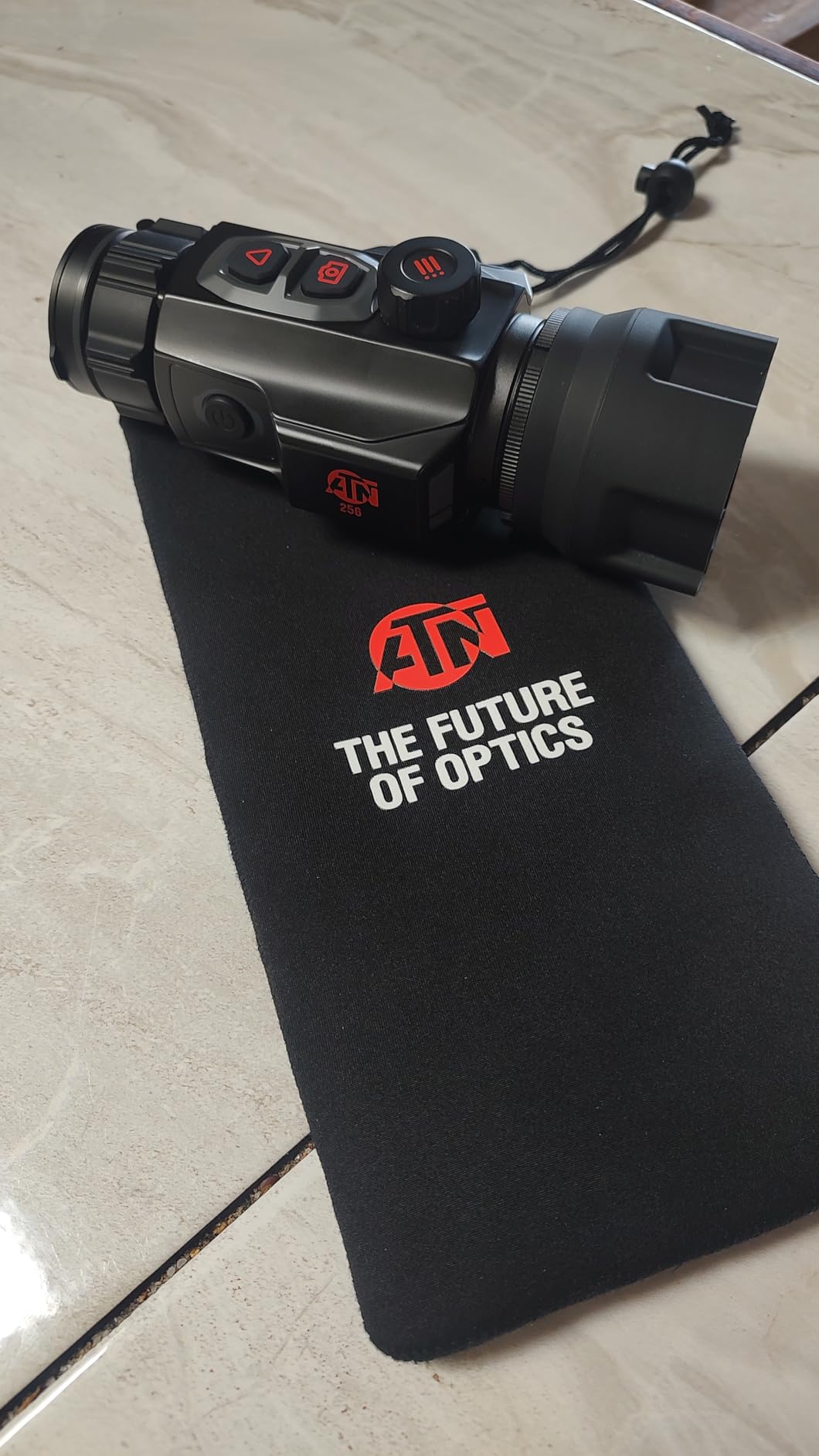
Recording is where this unit earns its keep. Hot Point Tracking, 64GB of onboard storage and recoil-activated video mean a shot happens and the footage exists whether or not you were looking. For hog population control work where documentation matters, that is worth more than another two digits of magnification.
It also pulls off the rifle and works as a handheld monocular for scouting, which is a nice bonus on a two-person crew where one person is glassing while the other holds the blind.
Who this scope suits
This is the buy for a hunter who already has a day optic they trust, especially one running on an AR platform where rail space is tight and stacking a full thermal tube on top of a red dot is not practical.
It also suits anyone who wants thermal only seasonally. A dedicated scope is a permanent commitment on a rifle, while a clip-on is equipment you can choose to bring.
Who should pass on it
If you do not already own a compatible day scope, this stops being the economical option fast, because the adapter or spacer is part of the cost. Buy a dedicated thermal instead.
The 0.32 inch OLED is small, and reviewers mention that for prolonged glassing sessions a larger display is easier on the eye. Expect to add weight, too, since the clip adds 1.1 pounds to the front end.
5. ATN Thor LTV 1.5-4.5x 256×192 – Best Lightweight Scope for Tight Woods
ATN Thor LTV Ultra-Light Weight Thermal Scope. The Thor LTVs are Premium Thermal Scopes for Hunting That utilize Advanced Thermal Vision. Easy to use Advanced Thermal Scopes
256x192 12um sensor, 60Hz refresh
1.5x to 4.5x, 90mm eye relief
1.4 lb aluminum chassis
Standard 30mm ring mount
Pros
- Owners rate it 4.7 stars with 83 percent of ratings at five stars
- Only 1.4 pounds so it mounts on virtually any rifle platform
- 12um sensor with a 60Hz refresh rate for a smooth
- distortion-free picture
- SharpIR AI technology produces sharp
- detailed target views
- 90mm extended eye relief is comfortable for long sessions
Cons
- 256x192 on this configuration cannot resolve fine detail such as antlers
- 1.5x to 4.5x range in this variant is short
- Some buyers wish they had stepped up to a higher-resolution model
The Thor LTV is built around a simple idea: if your hogs are in creek bottoms and post oak timber, you need a wide, fast view and a scope that does not upset a light rifle. A 1.5x base magnification, a 12um sensor running at 60Hz and a 1.4 pound chassis cover exactly that.
That 60Hz refresh rate is worth calling out. Higher refresh means moving hogs stay in the picture instead of smearing, and on a sounder trotting toward a feeder in the dark that difference is the difference between a shot and a follow-up.
Owners describe image quality as better than expected for the weight class, and several specifically use this scope on hogs inside 100 yards where the wide field of view and short-range clarity decide the encounter. If you want to compare daytime glass options too, our picks for the best rifle scopes cover that side of the setup, and the best spotting scopes round it out for glassing open country.
Who this scope suits
Tight woods and brush hunters who work inside 150 yards and who care about keeping their rifle light. At 1.4 pounds with standard 30mm ring mounting, it drops onto almost any bolt gun, AR build or lever action without special rings.
The 90mm extended eye relief is a real advantage over compact scopes on a fast semi-auto, because it gives you a consistent cheek weld regardless of how the optic sits on the receiver.
Who should pass on it
The recurring complaint is the 256 sensor at 4.5x max: it will not resolve fine detail, and several buyers regret not stepping up a resolution tier. If you ever want to ID a deer at distance or shoot coyotes long, this is the wrong shape of scope.
There is also a learning curve on first zeroing for some owners. Budget an evening with the One Shot Zero process before you rely on it in the field.
6. Pulsar Talion XG35 640×480 – Best High-End Sensor Detail
Pulsar Talion XG35 Thermal Riflescope with Mount, 640×480 Sensor
640x480 12um sensor
2x-16x, 35mm objective
APS 5T battery up to 7 hrs
1.5 lb magnesium, IPX7
Pros
- 640x480 12um sensor gives clearly more detail than 256 and 384 scopes
- 2x to 16x covers close hogs through longer shots
- Fin lever focuses the optic at night without leaving the eyepiece
- APS 5T batteries swap by touch in the dark with up to 7 hours per charge
- Stream Vision 2 WiFi app for live streaming and remote control
Cons
- Highest-priced unit in this roundup
- Lowest average rating among the premium scopes here at 4.1
- Software and menu complexity draws complaints from some owners
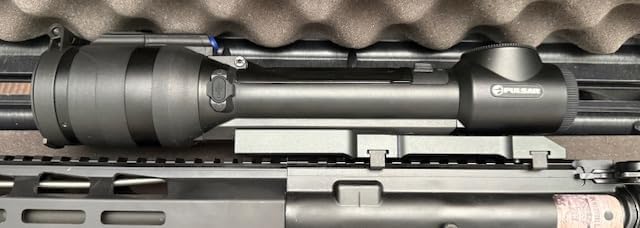
The Talion XG35 is the resolution play in this group. A 640×480, 12um microbolometer with a 35mm objective is a genuinely different class of sensor from the 256 and 384 units above it, and hunters who spend time confirming species at range will feel that difference immediately.
Magnification runs 2x to 16x, so it covers both ends of the hog problem: a sounder walking in tight at 2x and a distant coyote at 16x. The fin lever focus adjustment, calibrated at 76 yards, lets you refocus at night without taking your eye off the glass.
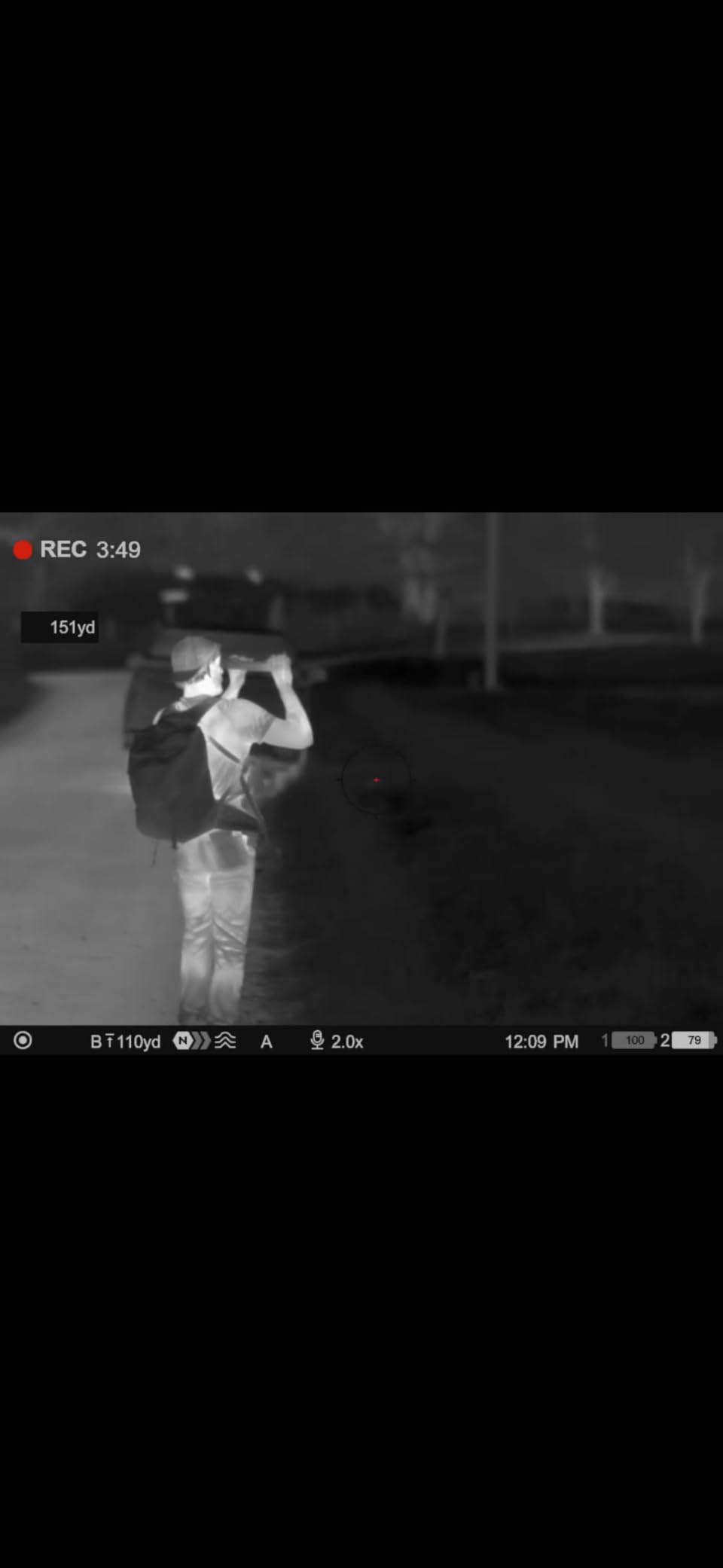
The battery system deserves a mention because it is designed around a night hunt. The APS 5T packs swap by touch under a blind-swap cover in complete darkness and deliver up to 7 hours of active use per charge, which is enough for a typical sit with room to spare.
Three sensitivity levels plus full brightness and contrast control let you tune the picture as conditions change through the night, and the Stream Vision 2 app handles live streaming, software updates and remote control from a phone.
Who this scope suits
Hunters who control a large property and shoot across open ground, or anyone who splits time between hogs and coyotes and wants one optic that covers both. The 640 detail is also what you want if you are running cameras and need to be certain of what you are looking at.
The 2x base magnification keeps the field of view usable for sounders, which many 640-class scopes fail to do. That combination of base magnification and sensor tier is the reason this one is worth the money to the right buyer.
Who should pass on it
If your hunting is feeder-only inside 150 yards, this resolution is more than the job needs, and the money buys you very little in that scenario. A 384 sensor handles feeder work without trouble.
Also note the 4.1 average rating, the lowest among the premium scopes here, with a notable share of one-star reviews pointing at menu complexity and results that fell short of expectations at this price point.
7. ATN ThOR 6 Mini 256/384/640 – Best Sensor Tier Choice
ATN Thor 6 Mini Thermal Rifle Scope, 256×192, 3.5-28x, Hog & Coyote Hunting
256x192 at 20mK, 384x288 or 640x512 at 18mK
50Hz refresh, SharpIR AI
780 g magnesium body
Picatinny mount, IP67
Pros
- Three sensor tiers so you can choose 256x192
- 384x288 or 640x512
- 50Hz refresh rate plus SharpIR AI for smooth tracking of moving hogs
- 64GB internal memory removes the need for SD cards in the field
- OLED options up to 0.49 inch 1920x1080 with picture-in-picture
- IP67 magnesium housing with under 7 second startup
Cons
- Review base is very small at 7 ratings so long-term reliability is not established
- Listed under a third-party storefront brand rather than ATN directly
- 256x192 variant has the lowest resolution of the three options
What makes this listing unusual is that the same body is offered in three sensor tiers. The 256×192 configuration is rated at 20mK NETD or less, while the 384×288 and 640×512 options come in at 18mK or less, so you are choosing the resolution that matches your ground rather than accepting whatever the manufacturer picked.
The 50Hz refresh rate and SharpIR AI enhancement handle moving targets well, and reviewers point to smooth tracking of both hogs and coyotes as the feature that stands out. At 780 grams with a magnesium housing and IP67 sealing, it is compact without feeling fragile.
Storage is 64GB internal with video and audio recording, gallery playback and USB-C transfer, plus a WiFi hotspot and ATN Connect 6 app support. One-Shot Zero and 10 reticle styles with adjustable transparency round out a well-loaded feature set.
Who this scope suits
This is the option for a hunter who is not sure yet how far they shoot, or who wants the option to move up a tier later without changing platforms. The Picatinny rail mount and compact magnesium body suit an AR-15 hog build particularly well.
It also fits hunters who record a lot. Internal memory with audio removes the failure point of a corrupted SD card in the middle of a night hunt.
Who should pass on it
Be honest about the evidence here. Seven verified ratings is a small pool, and while all of them are positive, a 4.8 average on that sample is encouraging rather than conclusive.
The listing is also sold through a third-party storefront brand rather than by ATN directly, which is worth factoring in if warranty service matters to you. Check who handles returns before you buy.
8. DNT Optics Hydra-LRF HS635R 640×512 – Best With a Rangefinder
DNT Optics HS635R Hydra-LRF 640×512 35mm Thermal Scope, Hunting Riflescope
640x512 12um sensor at 18mK
35mm objective, LRF to 1300 yards
1.5x base to 6x digital
1.6 lb, IP67, .50 BMG rated
Pros
- 640x512 12um sensor at 18mK is the highest resolution core in this roundup
- Integrated laser rangefinder measures 5 to 1300 yards without extra gear
- Onboard ballistic calculator with drop compensation and adjustable profiles
- Works as scope
- clip-on
- handheld monocular or rangefinder
- IP67 rated
- recoil tested to .50 BMG
- 5-year warranty
Cons
- Very small review base at 8 ratings so long-term field reliability is unproven
- Quick detach mount is listed as sold separately for some configurations
- Digital magnification tops out at a modest 6x
The Hydra-LRF is the only unit in this roundup with a 640×512 sensor and a built-in rangefinder, and those two features together cover most of what a serious hog hunter asks for. A 12um uncooled core at 18mK NETD or less is the highest resolution and one of the more sensitive sensor packages here.
The integrated laser rangefinder measures 5 to 1300 yards, and the onboard ballistic calculator applies drop compensation with adjustable profiles. If you shoot a magnum out of a feeder where ranging by eye is guesswork, that combination removes two variables from the shot.
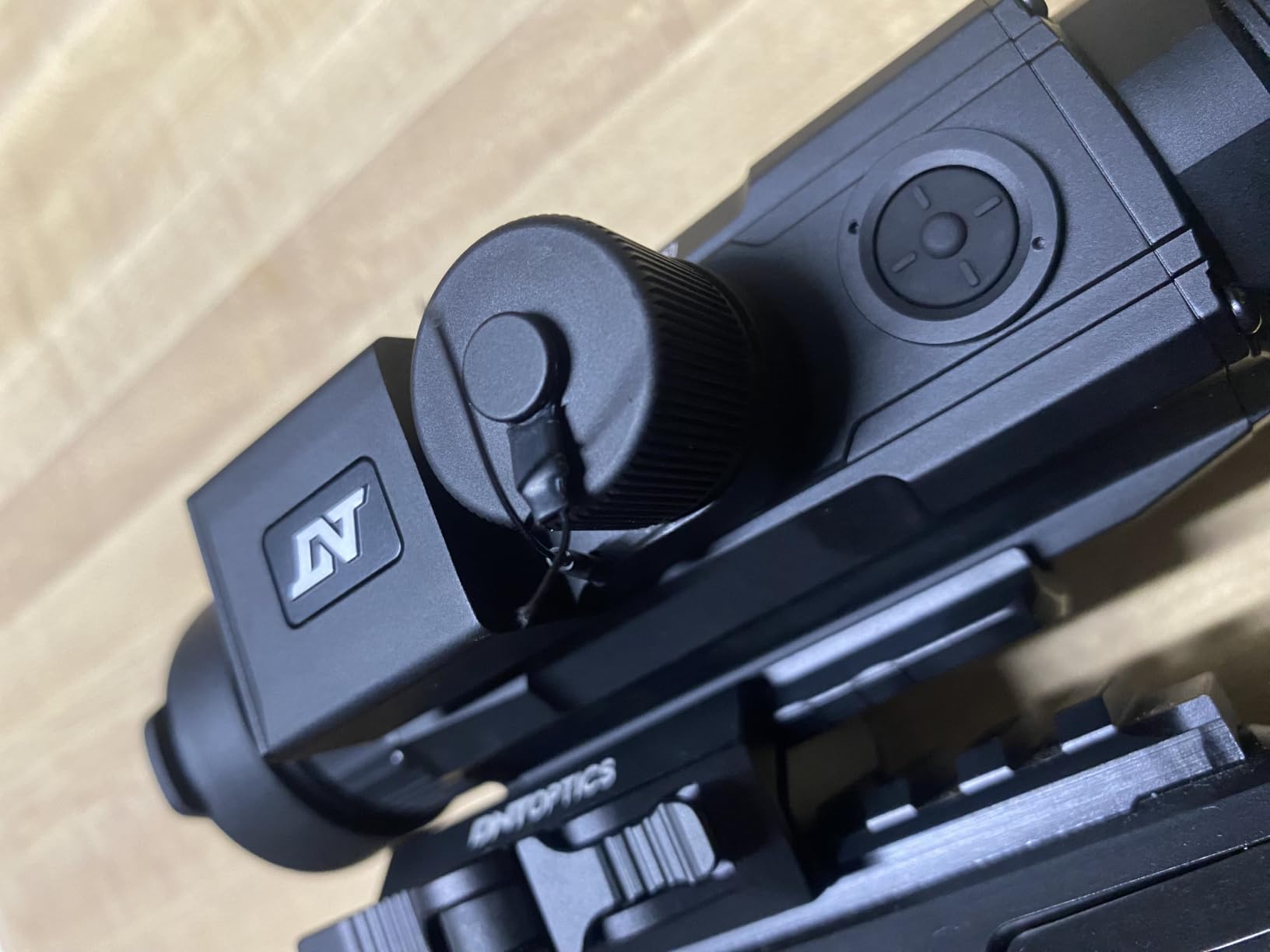
Magnification runs 1.5x base to 6x digital with Image Super Resolution, which keeps the picture usable on a moving group. A 35mm objective collects enough light for those long feeder distances, and 6.5cm of eye relief keeps the eye position forgiving.
Like its sibling in this roundup, it works in four roles: standalone scope, clip-on, handheld monocular and rangefinder. The QDM150 quick detach mount is included, so switching modes takes seconds in the field.
Who this scope suits
Hunters who want a rangefinder and do not want a second device on the belt. It is a natural fit for magnum and bolt-action hog rifles where a precise zero and a known distance are worth real money.
The 1.5x base magnification gives a genuinely wide view for a 640-class sensor, so a sounder crossing an open field stays framed. That combination is the reason it earns its place despite the 6x maximum.
Who should pass on it
A 6x digital ceiling is modest. If your hunting includes long-range coyote work where you want to lean on 8x or beyond, this is not the scope.
Eight verified ratings, all four or five stars, is a very small sample. There are no negative reviews to learn from, which means there is also very little long-term field data on this unit yet.
9. ATN ThOR 6 Mini 2.5-20x 384×288 – Best for Long Glassing Sessions
ATN Thor 6 Mini Thermal Rifle Scope, 384×288, 2.5-20x, Hog & Coyote Hunting
384x288 at 18mK, 12um pixel pitch
2.5x to 20x with Full HD OLED
Under 500 g magnesium body
5-year warranty
Pros
- 384x288 sensor at 18mK NETD and 12um pixel pitch for sharp contrast
- 0.49 inch 1920x1080 Full HD OLED reduces eye strain on long sits
- Detection range stated up to 2710 meters
- Picture-in-picture
- Hot Point Tracking and Zeroing Freeze built in
- Integral or cantilever mount options
Cons
- Review base is only 4 ratings
- all five stars
- so there is little data
- Zooming to 20x on a 384x288 core produces interpolated digital detail
- LCD panel refresh makes fast panning slightly softer than OLED rivals
The display is the reason to look at this one. A 0.49 inch 1920×1080 Full HD OLED is the largest screen in this roundup, and on a five-hour sit at a feeder, a screen you can actually read is a genuine quality-of-life improvement over a compact panel.
Underneath it is a 384×288 sensor at 18mK NETD or less with 12um pixel pitch, which is a stronger sensitivity rating than most 384 units in this price class. Published detection range goes up to 2710 meters, though real-world identification distance for hogs will be far shorter than that figure suggests.
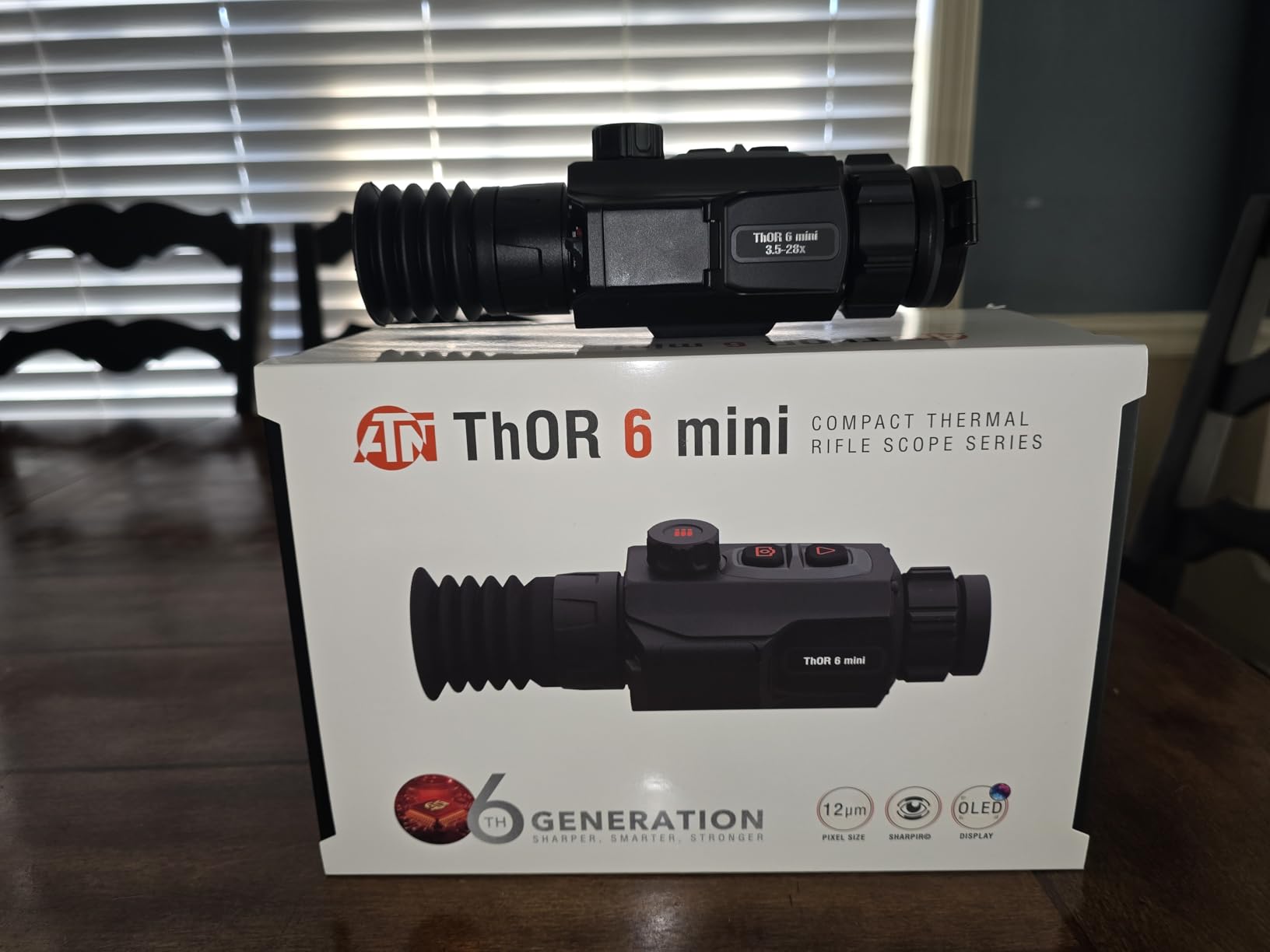
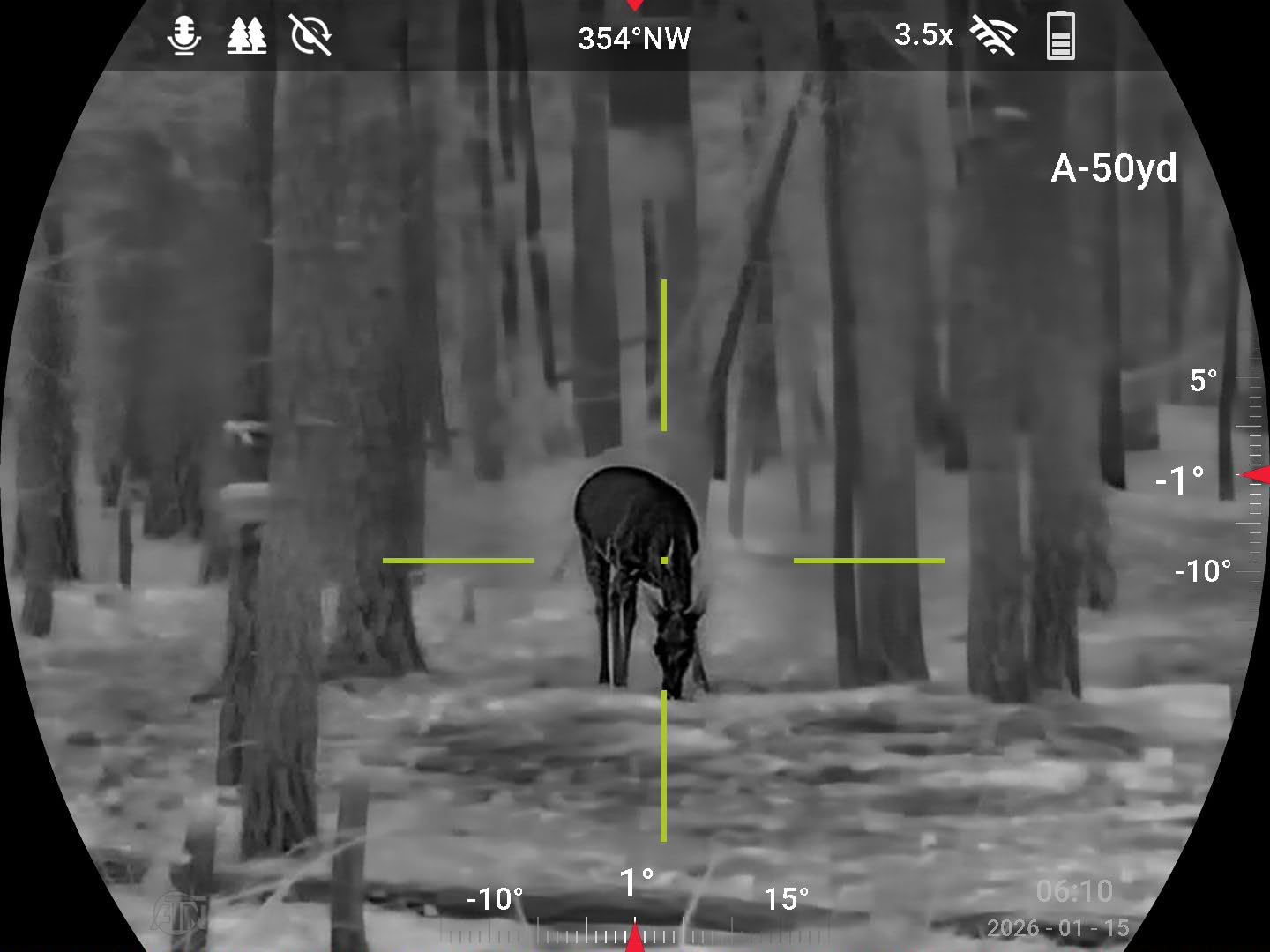
Smart features are unusually complete. Picture-in-picture lets you confirm a zero without losing the scene, Hot Point Tracking keeps a moving animal locked, Reticle Transparency keeps the reticle from covering a hog’s body, and Zeroing Freeze holds the picture steady while you adjust.
The magnesium body is under 500 grams, which makes it the second-lightest dedicated scope here, and it accepts an integral or cantilever mount. A heated target for zeroing is included in the box, which is a nice touch given how many new owners struggle with zeroing a thermal.
Who this scope suits
Long-sitting hunters who will spend hours glassing, and anyone sensitive to eye strain. If you have struggled with compact displays, the screen alone justifies the choice.
The light magnesium build also suits an AR-15 or a bolt-action rig where you do not want a heavy optic on the front end, and the tracking and zeroing features help when a sounder moves while you are trying to dial in.
Who should pass on it
At 20x the magnification is entirely digital on a 384×288 core, so the last several steps of zoom produce interpolated detail rather than real magnification. Judge the scope at 2.5x through roughly 8x.
Four ratings, all five stars, tells you very little about long-term reliability. Treat the perfect score as encouraging rather than established.
10. CVLIFE 19-256 Thermal Scope – Budget Pick
CVLIFE 19-256 Thermal Scope for Hunting – 12μm Thermal Imaging Rifle Scope – 50Hz Refresh Rate High Sensitivity Waterproof Optic
256x192 12um sensor, 50mK or less NETD
2.4x base, 1-4x electronic zoom
18.7 oz, up to 10 hours
IP66 waterproof, 1000G shock rated
Pros
- Compact 8-inch
- 18.7-ounce body that stays light on the front of a rifle
- 50Hz refresh rate on a 1024x768 OLED for smooth tracking
- Up to 10 hours of total runtime for long night sits
- One-Shot Zero
- six colour palettes and hot spot tracking
- 16GB internal photo and video storage with WiFi streaming
Cons
- NETD under 50mK is the least sensitive sensor spec here
- 256x192 resolution limits ID range on distant hogs
- Only a 1-year manufacturer warranty
The CVLIFE 19-256 is the entry point for someone who wants to know whether thermal actually changes their hog hunting before they invest heavily. At 18.7 ounces and 8 inches long, it is one of the smallest packages here, and the 2.4x base magnification keeps the view usable on a sounder.
The 1024×768 OLED at a 50Hz refresh rate is a better paper spec than most scopes at twice the money, and owners describe the picture as smooth and capable for close-range work. Runtime is rated at up to 10 hours total, which covers a full night sit.
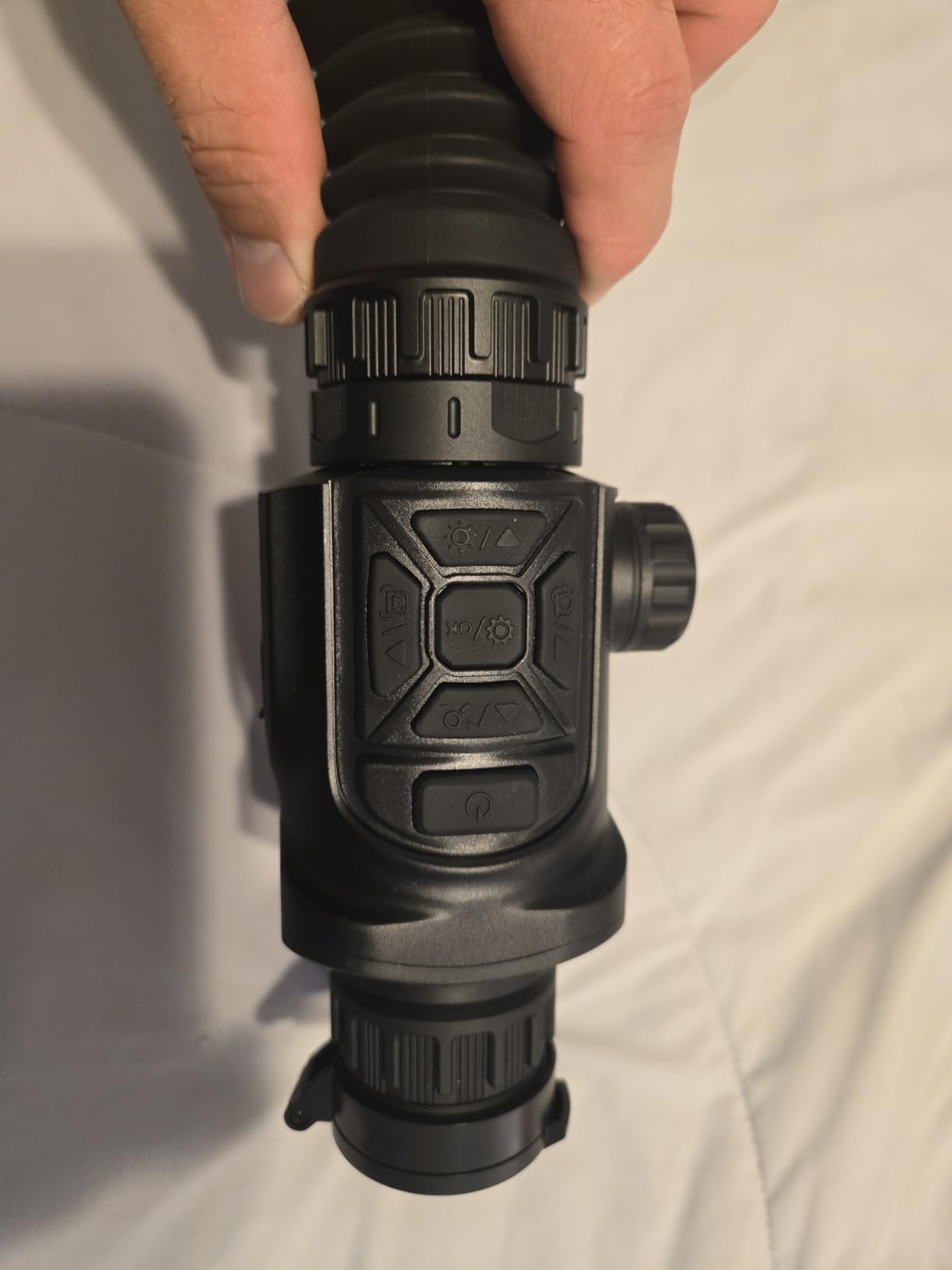
One-Shot Zero, six colour palettes, hot spot tracking and 16GB of internal photo and video storage with WiFi live sharing round out a feature list that would have been exceptional a few years ago. Glove-friendly buttons matter more than they sound at 4am in the rain.
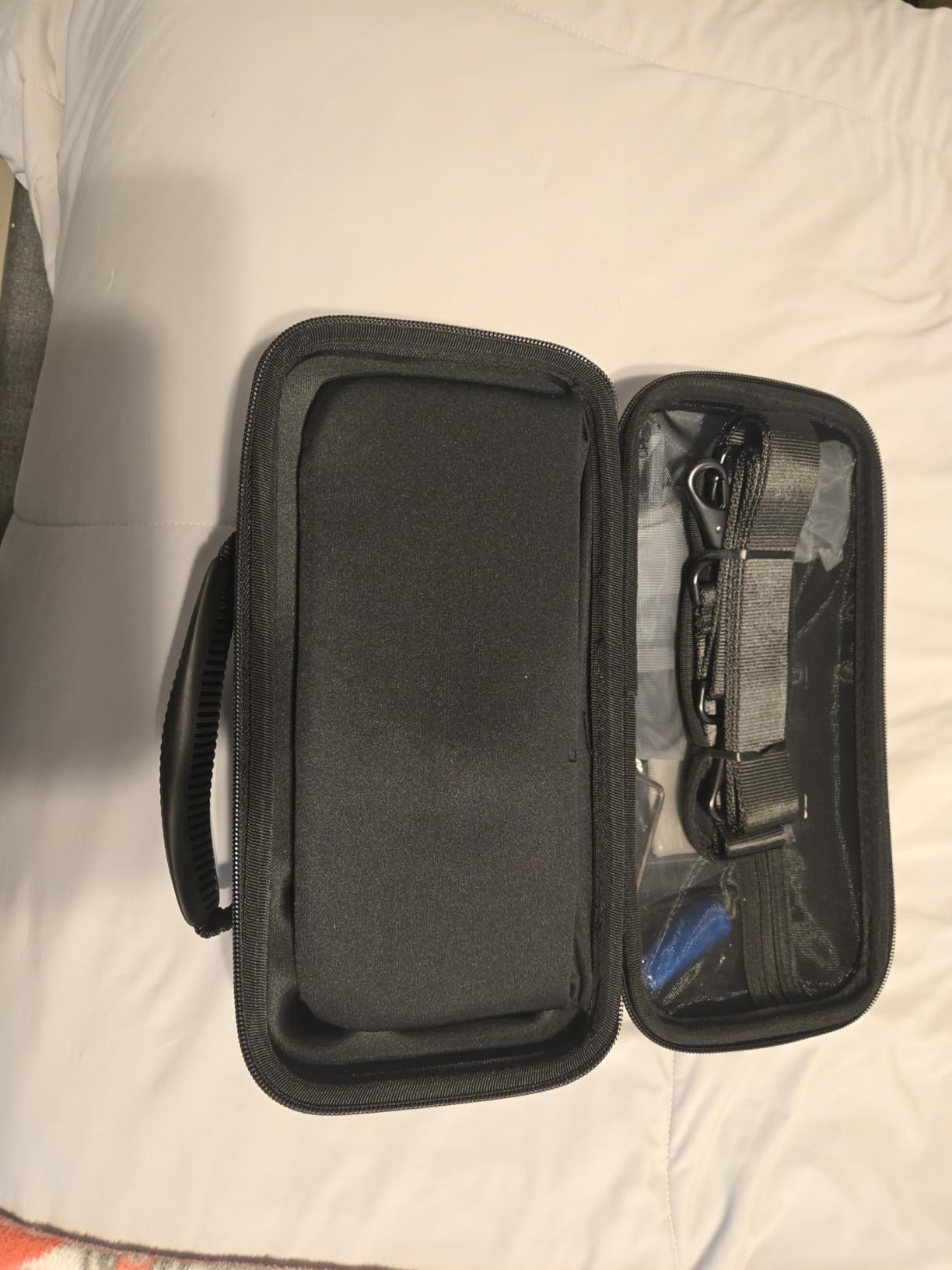
The body is IP66 waterproof with 1000G shock resistance, and the box includes a mount, power dock, carrying bag and cleaning cloth.
Who this scope suits
Budget-constrained hunters working inside roughly 150 yards, and anyone who wants a dedicated thermal rather than running a clip-on in bad weather. The light weight and small footprint suit a light hog rifle or an airsoft-style training platform.
It is also a reasonable backup optic. A second lightweight thermal for a second rifle costs far less than duplicating a flagship scope.
Who should pass on it
The NETD rating under 50mK is the least sensitive figure in this roundup, and buyers report it picking up distant animals in fog and brush more slowly than 18mK to 25mK sensors.
The 256×192 resolution also puts a ceiling on identification distance, and the 1-year manufacturer warranty is the shortest coverage here. If you hunt past 200 yards regularly, save up for a 384 sensor.
Match Your Thermal Scope to Your Hog Hunting Setup
Most wrong purchases happen when the scope is chosen before the situation. Work down this list and the answer usually narrows to two or three models from the roundup.
Known feeder at 75 to 150 yards. You need the widest field of view and the longest battery you can get. The AGM Rattler V2 19-256 is the default here, with a 2.5x base and a 9.3 degree field of view, and the ATN Thor LTV works if rifle weight is your constraint. This is the scenario where a 640 sensor adds nothing.
Tight woods and short-range brush. Look for a low base magnification and a high refresh rate so moving hogs stay in the picture. The ATN Thor LTV at 1.5x base and 60Hz, or the DNT Hydra HS225 at 50fps, both suit brushy ground. Leave the 16x and 20x scopes at home.
Mixed terrain with a feeder and open field. This is where a 384 sensor earns its keep. The Pulsar Thermion 2 Pro gives you detail out past the feeder without giving up a 2x base magnification.
Large agricultural open ground. You are looking at long identification distances and probably coyotes too. The Pulsar Talion XG35 with its 640×480 sensor and 35mm objective is built for this, as is the DNT Hydra-LRF if you want ranging built in.
You want a rangefinder. Only the DNT Hydra-LRF HS635R in this group pairs a rangefinder and ballistic calculator with a 640×512 sensor. Otherwise you are carrying a separate laser rangefinder and remembering to use it.
You want the widest view and the lightest rig. The AGM Rattler V2 at 6.34 ounces is the lightest dedicated scope in this roundup, followed by the DNT Hydra HS225 at 13.1 ounces and the CVLIFE 19-256 at 18.7 ounces. All three put a wide picture in front of you.
You already own a good day scope. The ATN Tico 6 clip-on adds thermal without a second optic and without re-zeroing. It is the least invasive way to test whether night hunting suits you.
Sensor Resolution Tiers: 256 vs 384 vs 640 for Hogs
256×192 (256 class). Entry resolution found on the AGM Rattler V2, the DNT Hydra HS225, the ATN Tico 6, the ATN Thor LTV and the CVLIFE 19-256. This tier is functionally adequate inside roughly 200 yards, which covers the majority of feeder hog shots, and it falls apart past that.
384×288 (384 class). The sweet spot for most hog hunters. The Pulsar Thermion 2 Pro and the ATN ThOR 6 Mini 2.5-20x sit here, and this is the tier where you start confirming species on an animal rather than assuming it is a hog.
640×480 and 640×512 (640 class). The Pulsar Talion XG35 and the DNT Hydra-LRF HS635R. Meaningful gains in fine detail, and where the cost jump is steepest. It becomes worth the money when you are shooting across open ground or working coyotes alongside hogs.
What resolution does not tell you. A high pixel count on a slow or low-refresh sensor still smears on a moving hog, and NETD sensitivity matters more in fog and standing water than raw resolution. Judge refresh rate and NETD before you judge resolution.
Objective Lens and Base Magnification for Sounder Hunting
The objective lens sets how much light the sensor collects, which is what decides whether you see a hog in fog or rain. The 19mm lenses here are the widest and gather light fastest at short range, the 25mm is a middle option, and the 35mm lenses on the Talion and Hydra-LRF are built for longer shots.
Base magnification matters even more. The recurring hunter rule is simple: hogs are found with a wide field of view and low base magnification, not with high zoom. Several scopes in this category ship with a 4x base, which is too narrow to hold a sounder at a feeder comfortably.
Field of view is the number to compare across scopes, since two units can share a magnification range and still show you very different amounts of the scene. The AGM Rattler V2 lists a 9.3 degree field of view at a 2.5x base, and the ATN Thor LTV starts at 1.5x, so both are built for close-range scanning rather than magnification hunting.
Eye relief deserves its own note. The Pulsar Thermion 2 Pro at 50mm, the ATN Thor LTV at 90mm and the DNT Hydra-LRF at 6.5cm all give you a comfortable, consistent weld on a fast semi-auto or across a long sit, and that comfort translates directly into steadier shots.
Thermal vs Night Vision for Hog Hunting
Thermal reads infrared radiation and renders the temperature difference between a warm body and a cool background. Night vision amplifies available light, which is why it struggles in total darkness and behind dense foliage without an IR illuminator.
For hogs specifically, thermal has the advantage. Wild hogs are nocturnal and habitually work in heavy cover, and the recurring forum consensus among hog hunters is that a wide field of view and low base magnification matter more than maximum magnification, which favours thermal optics built for scanning.
Night vision is the cheaper option at close range where there is moonlight or an illuminator, and some hunters deliberately run both: thermal to scan a distant sounder, night vision to confirm the animal at close range. If you are pairing thermal with a handheld unit, our picks for the best thermal monoculars cover that workflow.
How We Picked These 10 Thermal Scopes
Our recommendations come from published specifications and owner review patterns, not from lab testing, and we prefer to say that rather than imply otherwise. Here is the criteria list we worked through.
1. Base magnification and field of view. The single most important pair of numbers for hog hunting, because a sounder that leaves your picture is a hunt you cannot finish.
2. Sensor resolution tier. 256 for feeder work, 384 for mixed terrain, 640 for open ground and coyotes.
3. NETD sensitivity. Lower numbers detect faint heat signatures in fog and brush sooner.
4. Refresh rate. Higher rates keep moving hogs sharp instead of smeared.
5. Objective lens diameter. 19mm for wide and fast, 35mm for reach and light gathering.
6. Battery runtime and cold-weather tolerance. Rated hours are meaningless without knowing how many cells you can carry.
7. Mounting and rifle fit. Picatinny, 30mm rings, cantilever options and weight on the front end.
8. Weather sealing. IP66 and IP67 ratings matter for all-night sits in rain and mud.
9. Recording and app support. Useful for confirming shots and for population control documentation.
10. Warranty and support. Longer coverage and a clear service path reduce the risk on an imported unit.
We also weighted review volume heavily. A scope with a small rating pool can look perfect on paper and tell you nothing about how it performs after two seasons of rain, so we treated low review counts as a caution rather than a ranking bonus.
Frequently Asked Questions
What is the best thermal scope for hog hunting?
For most hunters, the AGM Global Vision Rattler V2 19-256 is the best all-round choice because a 2.5x base magnification and 9.3 degree field of view hold a sounder in view at a feeder, and the dual battery system is rated for up to 11.5 hours per charge. Hunters working open ground past 300 yards should step up to a 640 sensor such as the Pulsar Talion XG35 or the DNT Hydra-LRF.
Is 384 resolution good enough for hogs?
Yes, for the large majority of hog hunting. A 384×288 sensor is functionally adequate inside roughly 200 yards, which covers most feeder shots, and it is the tier where you start confidently confirming species instead of assuming. It falls short when you are shooting across open agricultural ground at coyote ranges.
Which thermal scope has the highest resolution?
Among these picks, the DNT Optics Hydra-LRF HS635R runs a 640×512, 12um sensor rated at 18mK NETD or less, which is the highest resolution core in the roundup. The Pulsar Talion XG35 follows at 640×480 with a 12um pixel pitch. Higher resolution helps at range but does not help much inside 150 yards.
Is thermal better than night vision for hog hunting?
For hogs, generally yes. Thermal reads heat signatures and works in total darkness, fog and light brush cover without an illuminator, while night vision amplifies available light and degrades in deep shade and heavy foliage. Some hunters deliberately pair the two, scanning with thermal and confirming at close range with night vision.
What magnification do I need for hog hunting?
A low base magnification of roughly 1.5x to 3x is what you want, because it gives you the widest field of view for holding a group of hogs. Maximum magnification matters far less. The recurring rule among hog hunters is that you find animals with a wide view and low base magnification, not with high zoom.
Do I need a laser rangefinder for hog hunting?
Only if you hunt open ground where distance is hard to judge. At a feeder under 150 yards, most hunters range by sight without trouble. For cross-country shots the DNT Optics Hydra-LRF HS635R is the only pick here with a built-in rangefinder measuring 5 to 1300 yards plus a ballistic calculator.
How long do thermal scope batteries last in the cold?
Cold weather shortens every lithium runtime, and the rated figures here are laboratory numbers. The AGM Rattler V2 carries a dual battery system rated at up to 11.5 hours per charge, the CVLIFE 19-256 claims up to 10 hours total, and the Pulsar Talion’s APS 5T pack delivers up to 7 hours per charge with a blind-swap cover for changing cells in the dark.
Should I buy a thermal scope or a clip-on for hogs?
Buy a clip-on if you already own a day scope you trust and want thermal only in season, since the ATN Tico 6 adds thermal without changing your zero, magnification or reticle. Buy a dedicated scope if you hunt at night regularly, because you get a wider view, a larger display and better low-light handling over a long night.
Which Thermal Scope Should You Buy for Hog Hunting?
Start with the AGM Global Vision Rattler V2 19-256. It has a 9.3 degree field of view, a 6.34 ounce weight and a battery runtime rated at up to 11.5 hours per charge, which is the combination feeder and brush hunters need. If you hunt open ground, move up to the Pulsar Thermion 2 Pro for 384 detail or the Pulsar Talion XG35 for 640.
If weight is the problem on your rifle, the ATN Thor LTV at 1.4 pounds or the ATN ThOR 6 Mini at under 500 grams solve it. If you need ranging, the DNT Hydra-LRF is the one to buy. If you already own a day scope, the ATN Tico 6 clip-on is the least invasive way in.
Whichever you choose, check your state’s night-hunting and feeder rules before the season starts, and spend an evening zeroing it before you need it at 2am.