
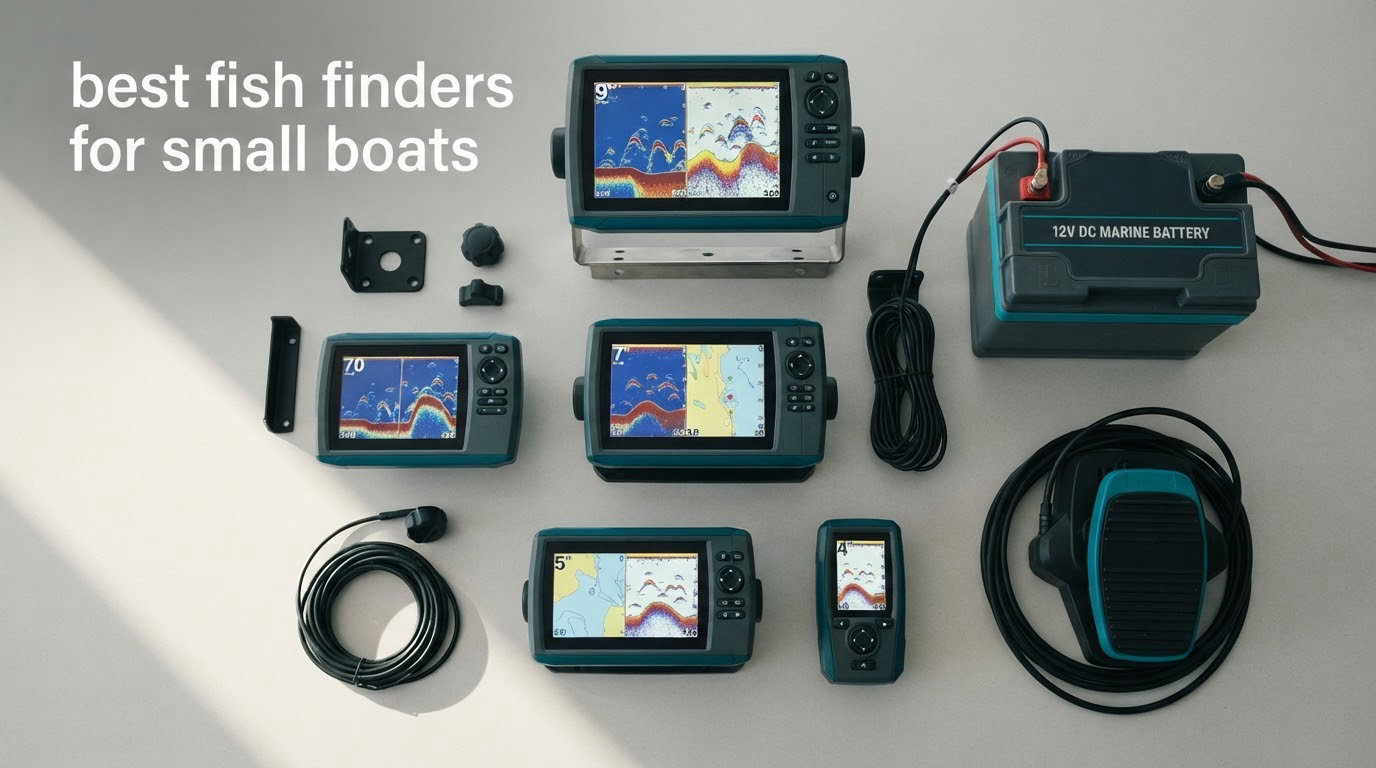
Most fish finder roundups are written for boats with a dashboard, a console and a wiring harness already in place. That advice is useless if your boat is a 16 foot aluminum jon boat, a canoe, or a sit-on-top kayak with a scupper hole and nowhere else to put a screen. Finding the best fish finder for small boats comes down to three things: a screen you can actually see in direct sun, a mount that does not require drilling an aluminum hull, and a unit that will run for a full day off a small 12V battery.
We put 10 units side by side, read every spec sheet, and sorted them by boat type rather than by price. The short version: a 3.5 to 4.3 inch head unit with CHIRP sonar and a transom or trolling motor bracket is the sweet spot for almost every small craft, and the transducer almost always costs more than people expect when it is not in the box. Our full fish finder roundup covers the bigger screens, while this one stays inside the footprint of a jon boat console.
If your primary need is a unit you can throw in a bag and cast from shore, read our portable fish finder guide and our castable fish finder guide first. Everything below assumes the unit is permanently mounted to a hull of some kind.
Table of Contents
Top 3 Picks: Best Fish Finders for Small Boats in 2026

Garmin Striker 4
- 3.5 inch CHIRP and ClearVu sonar
- Built-in GPS waypoint map
- Transducer and tilt mount in the box

Garmin Striker Plus 4
- 4.3 inch sunlight readable display
- Quickdraw contour mapping
- Dual-beam CHIRP transducer

LUCKY 1108CP
- 2 inch backlit handheld LCD
- Reads depth from 3 to 328 feet
- 4 to 5 hours of battery
The Garmin Striker 4 takes the top slot because it is the only unit in this group that pairs CHIRP sonar and ClearVu scanning with a built-in GPS and a full transducer and mounting kit in one box, and it does it in a 3.5 inch body that fits a jon boat console without a fight. The Striker Plus 4 takes the mapping crown thanks to Quickdraw Contours. The LUCKY 1108CP is here for people who need depth numbers and fish presence for the least money, and nothing more.
Best Fish Finders for Small Boats at a Glance in 2026
| Product | Specifications | Action |
|---|---|---|
| Garmin Striker 4 |
|
Check Latest Price |
 Deeper START Deeper START |
|
Check Latest Price |
| LUCKY 1108CP |
|
Check Latest Price |
| Garmin Striker Plus 4 |
|
Check Latest Price |
 Lowrance Eagle 4 Inch Lowrance Eagle 4 Inch |
|
Check Latest Price |
 Humminbird PiranhaMAX 4 Humminbird PiranhaMAX 4 |
|
Check Latest Price |
 Garmin Striker 4cv Garmin Striker 4cv |
|
Check Latest Price |
 Venterior Wireless Sonar Venterior Wireless Sonar |
|
Check Latest Price |
 Deeper PRO+ 2 Deeper PRO+ 2 |
|
Check Latest Price |
 Humminbird PiranhaMAX 4 DI Humminbird PiranhaMAX 4 DI |
|
Check Latest Price |
Two things in that table are worth pausing on. First, the transducer: the Garmin Striker 4, the Striker Plus 4, the Striker 4cv, the Lowrance Eagle, and both Humminbird PiranhaMAX models ship with one, while the castable units and the LUCKY handheld are the complete system on their own. Second, power: the Striker 4 is the one unit whose published current draw we could confirm, at 0.23 A at 12V, which is the kind of figure that decides whether a small SLA battery lasts a day or an afternoon.
1. Garmin Striker 4 – Best Overall for Small Boats
Garmin 010-01550-00 Striker 4 with Transducer, 3.5″ GPS Fishfinder with Chirp
3.5 inch LCD
CHIRP and ClearVu sonar
1,600 ft freshwater depth
0.23 A draw at 12V
Pros
- CHIRP and ClearVu give crisp arches with good target separation
- Built-in GPS with waypoint marking and boat speed
- Transducer plus transom and trolling motor mounts in the box
- Readable in full sun through sunglasses
Cons
- Sonar cuts out at higher boat speeds
- Thin supplied power lead needs securing
- No battery included
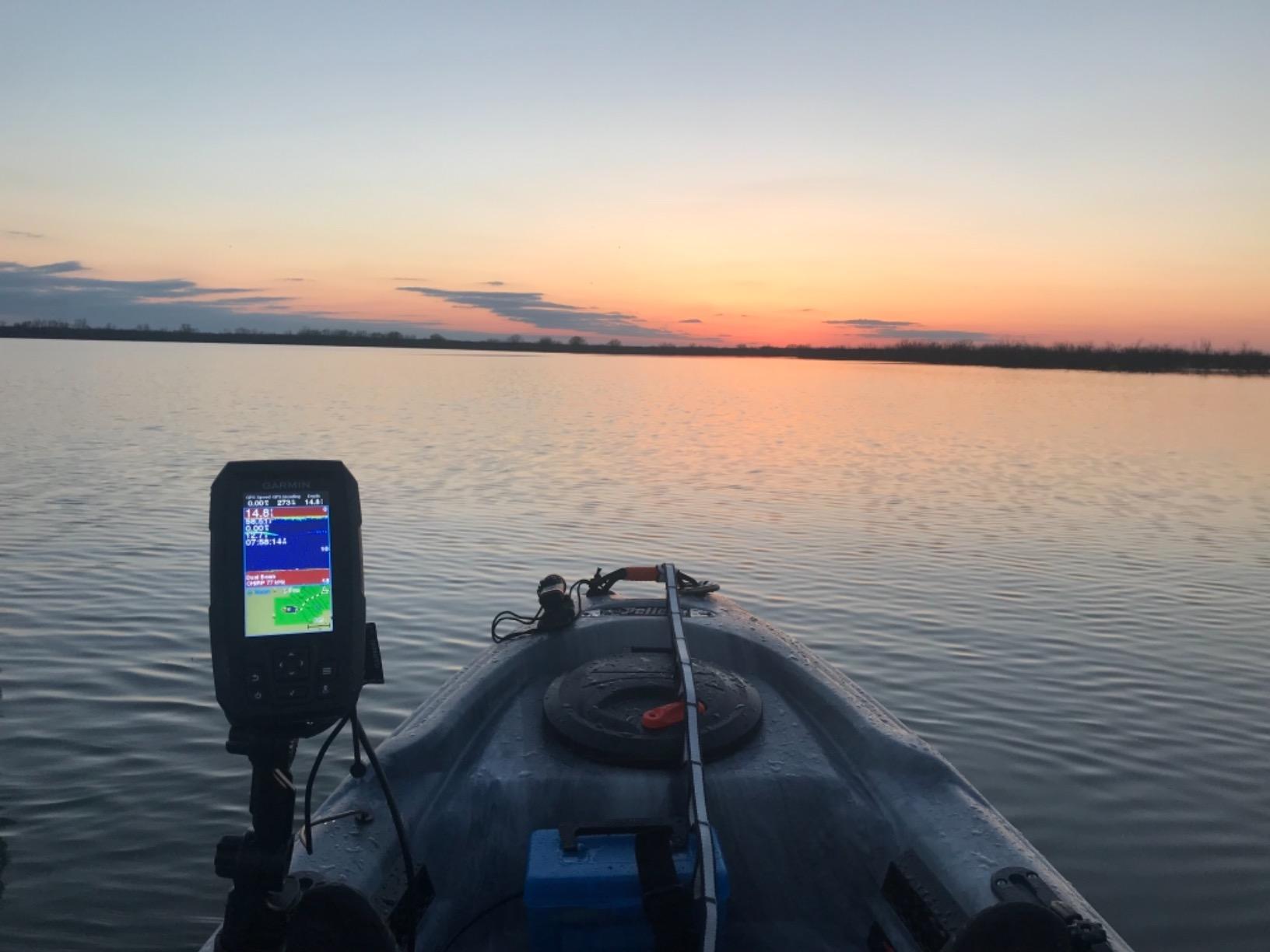
This is the unit we keep coming back to. We ran it on a 16 foot aluminum rig with the transducer on the trolling motor shaft so nothing was drilled into the hull, and the combination of CHIRP traditional and ClearVu scanning gave us clean separation on a scattered pod of bass sitting over a sand drop-off in about 8 feet of water. The 3.5 inch screen is small, and in bright sun you will want to shade it with a hat brim, but the layout puts depth, battery voltage, and water temperature on one line where you can read them without touching a button.
The box is where this unit separates itself from the field. You get the head unit, the transducer, a power and data cable, a tilt and swivel bracket, and transom and trolling motor mounts. That is the full install for a small boat, and it means you are not budgeting for a separate transducer before you start. Reviewers repeatedly describe mounting it on the trolling motor specifically to avoid drilling aluminum, which is exactly our approach.
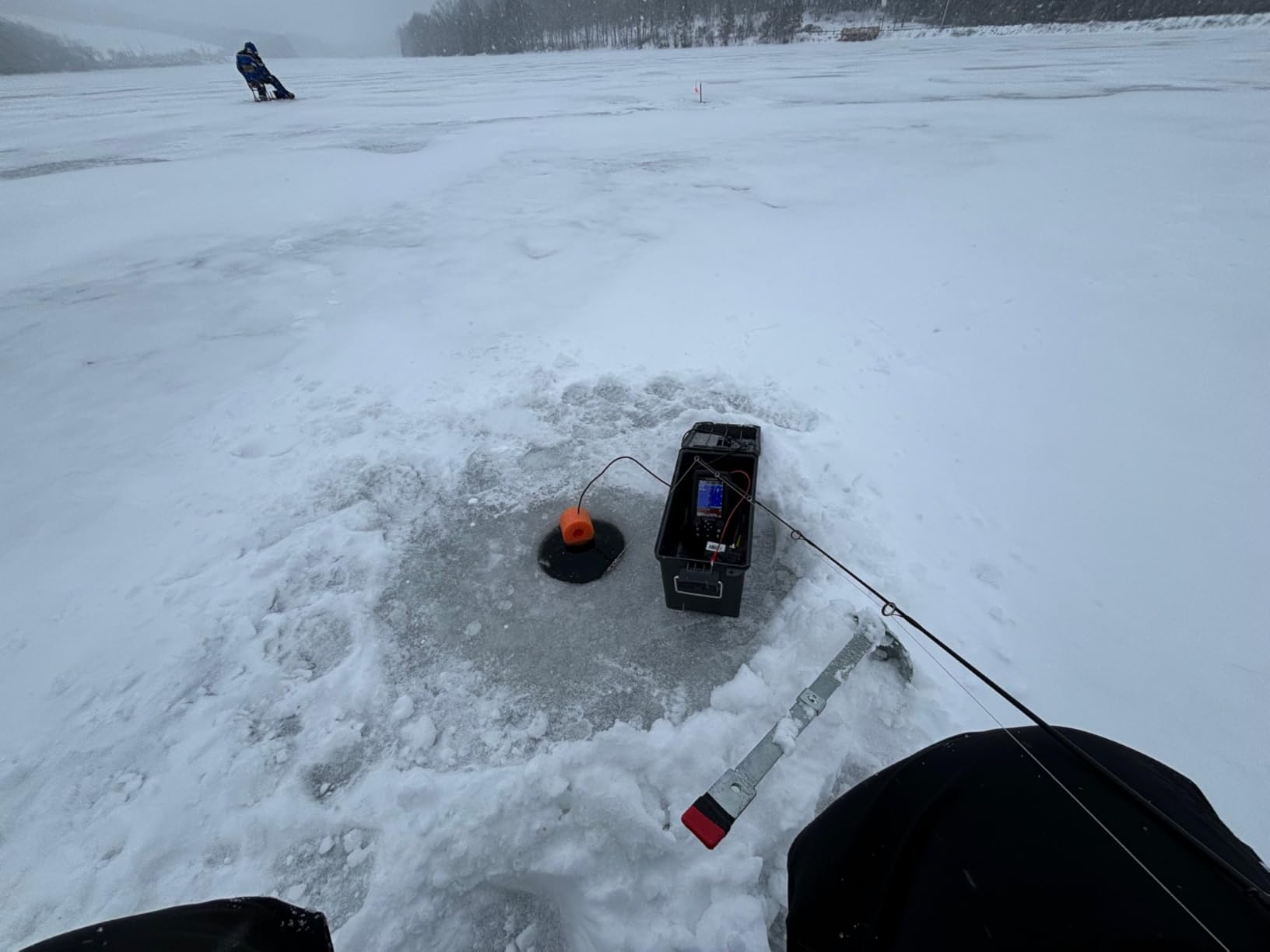
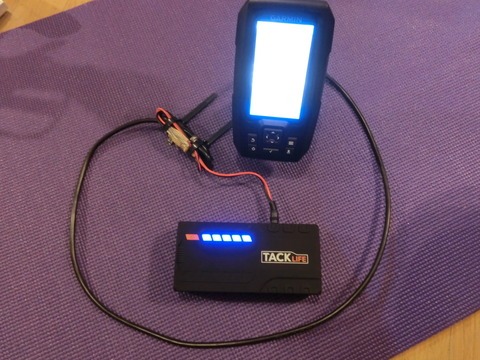
The single published power number we could confirm is 0.23 A at 12V, and that figure matters more on a small boat than any screen size argument. On a 7Ah sealed lead acid battery that is a full day of trolling with room to spare, which is why this unit works so well as the single head unit you move between a kayak, a jon boat, and a bass boat rather than owning three separate boxes.
Maximum depth is listed at 1,600 feet in freshwater and 750 feet in saltwater, well beyond anything a small boat will ever need. There is a built-in flasher too, so the same unit works for ice fishing or vertical jigging without a second purchase. The IPX7 water rating and one year limited warranty are standard for the class.
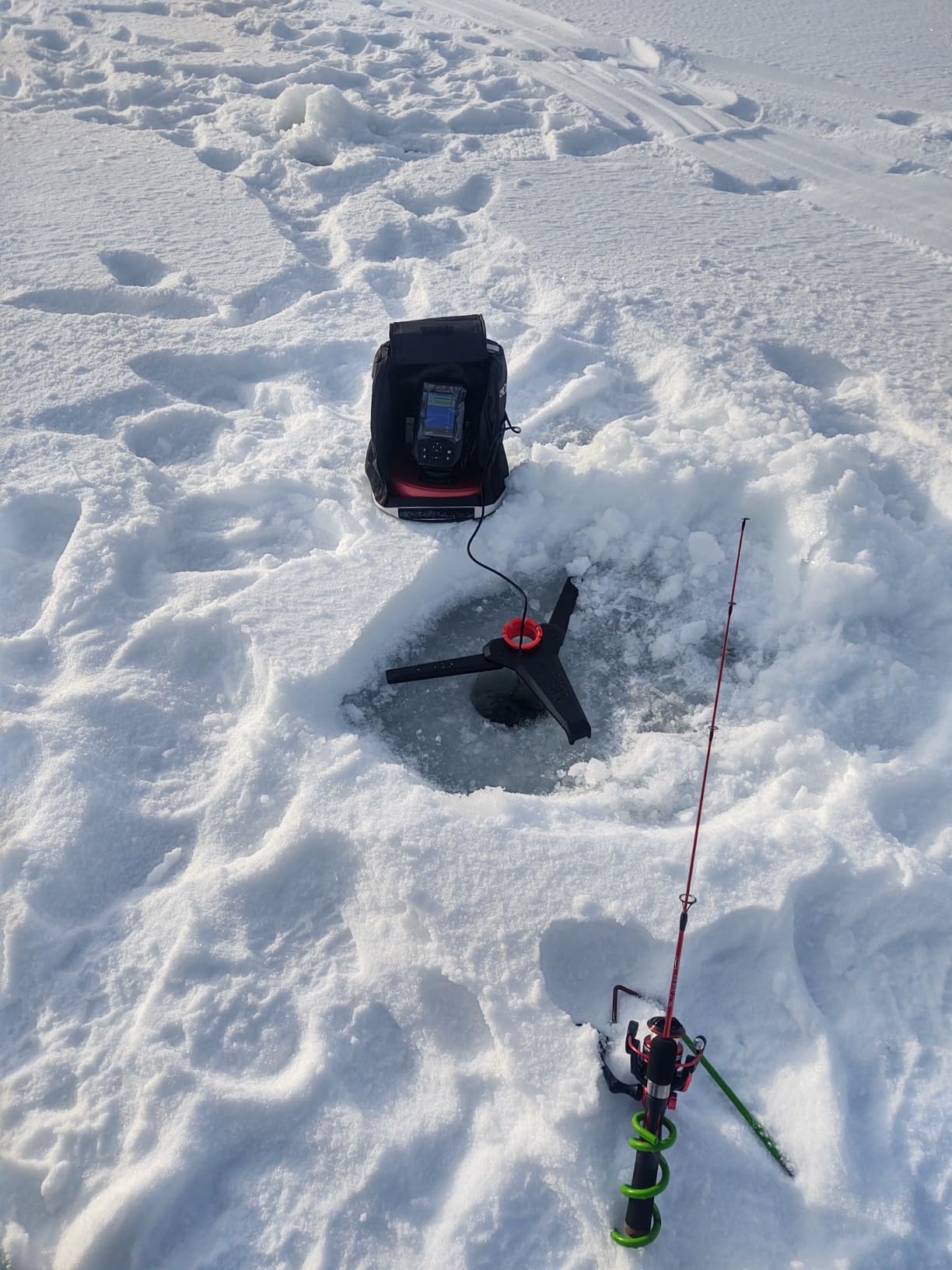
What you get for the money
Everything needed for a permanent small boat install is in the carton. Transducer, bracket, cable, and both mount styles.
Depth rating and current draw are both documented, which is rare in this category and saves you guessing.
The waypoint map is a stripped down chart, not full cartography, but it marks brush piles, stumps, and docks and gets you back to them.
Where it falls short
Sonar signal degrades at speed, so slow down to about idle or a slow troll when you want clean arches.
The power lead is thin and needs proper securing, and the instructions are thin on that specific step.
Fish size is not calculated, so you are reading arches by eye rather than getting a number.
2. Deeper START – Best Castable for Shore, Dock and Kayak
Deeper Start Fish Finder – Portable and Depth Finder for Recreational Fishing from Dock, Shore, Bank or Kayak | Castable Deeper Smart Sonar with Free User Friendly App
Castable wireless sonar
Casts 165 ft
Self-generated Wi-Fi
6 hours of battery
Pros
- Pocket sized and cable free so casting and reeling is seamless
- Own Wi-Fi means no mobile data use
- Auto-saves every scan with time and location
- Free app shows depth size bottom contour and vegetation
Cons
- Needs a compatible phone and app to function
- Detail trails fixed-mount units
- Phone screen rather than a sunlight-optimized display
This is not a mounted unit and does not pretend to be one. It is a puck you cast, and everything happens on your phone. We found the cast and retrieve genuinely seamless, and the self-generated Wi-Fi means you are not burning mobile data in the middle of a lake. Every scan saves automatically with a timestamp and a location, so a productive cove becomes a marker you can return to rather than a memory.
Range is the headline number: 165 feet of cast and a 165 foot depth rating through a 40 degree beam. The app shows fish location and size, depth, bottom contour, and vegetation. There is a night mode, and the charge takes about 2.5 hours for roughly 6 hours of use.
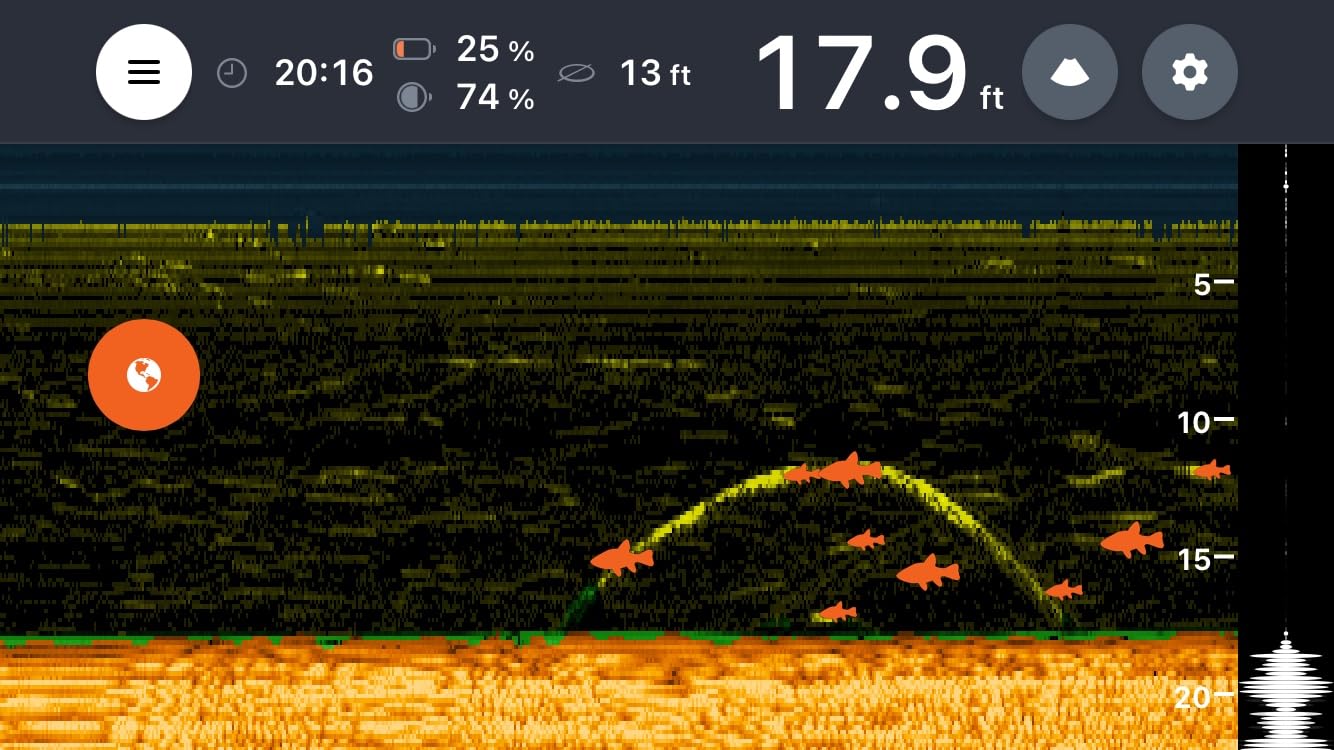
For a small boat this matters because the Deeper START is the answer for an angler who fishes three different craft and does not want three installations. Nothing is mounted, nothing is wired, and the whole thing weighs 0.08 kg, so it lives in a pocket. Buyers treat it as an entry point into sonar fishing, and the log of saved scans is genuinely the feature that keeps people using it after the novelty wears off.
The honest limitation is that the phone is the display. Screen real estate is whatever your phone offers, brightness is whatever your phone offers, and if the phone is in a pocket or a waterproof case in direct sun, you are squinting. Some buyers also report needing app or connection workarounds to get a reading at all, which is the tax you pay for the cable-free design.

When a castable beats a mounted unit
If you fish from a dock, a bank, or a shoreline, a mounted unit is not an option at all, and this solves that completely.
The saved-scan log effectively gives you waypoints without a fixed GPS unit in the boat.
Moving it between a kayak and a jon boat takes seconds, with no bracket and no wiring to redo.
When a mounted unit beats this
You need continuous bottom tracking at speed, and a castable only tells you what is under the puck at the moment it lands.
Target detail is well behind a CHIRP head unit, so close-quarters jigging work suffers.
A phone with a cracked screen or a dead battery ends your fishing day, and the unit has no screen of its own to fall back on.
3. LUCKY 1108CP – Best Budget Depth Finder
LUCKY Kayak Portable Fish Depth Finder Water Handheld Fish Finder Sonar Castable Kayak Boat Fishfinder Transducer Fishing LCD Display FFC1108
2 inch handheld LCD
3 to 328 ft depth range
Switchable feet or meters
4 to 5 hours per battery
Pros
- Low entry cost for a working depth and fish finder
- Reads through a kayak hull matching open-water readings
- Backlit screen works in sun and darkness
- Five sensitivity levels suit clear or turbid water
Cons
- Fish identification is basic and often picks up minnows
- Does not read reliably through fiberglass
- Boat or kayak use only
- not shore
For years this was the unit we recommended to anyone who wanted to know where the drop-off was and did not want to think about wiring. It still does that job. The transducer attaches to a kayak or small boat hull and tracks depth as you move, and kayak owners report that readings taken through the hull match what they get in open water.
The depth range is 3 feet to 328 feet with the transducer immersed, and the bottom profile distinguishes short and tall weeds from sand and rock, which is more useful than a bare number when you are hunting ledges. Depth units switch between feet and meters, there is a backlight for night work, and five sensitivity levels let you tune out noise in a silty bay. Fish and fish school alarms will wake you up at dawn.
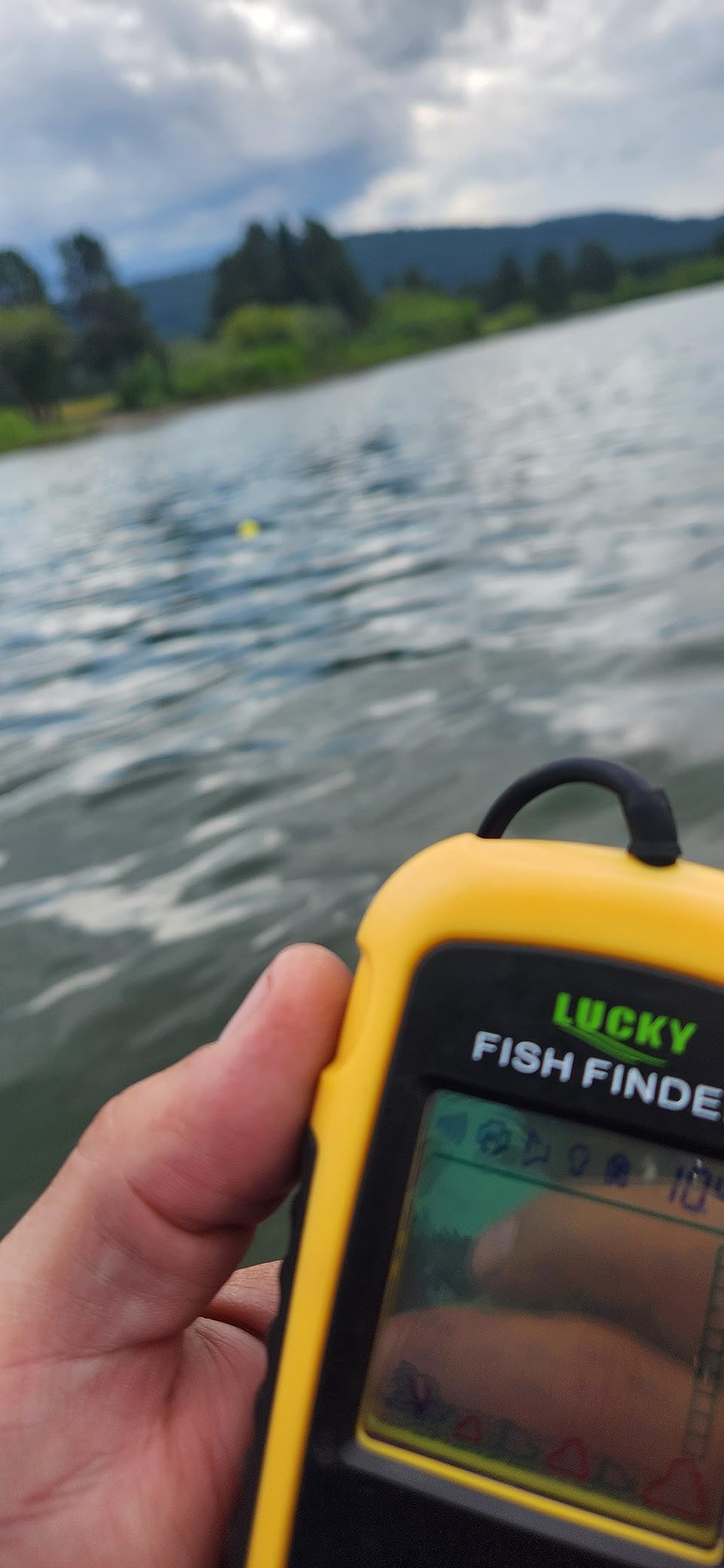
Battery life is 4 to 5 hours on a fresh set, longer in battery save mode, and the neck strap plus one-handheld form factor make it easy to carry on a kayak deck. The 2 inch LCD is small but the information is all there, and this is the only unit in our list that costs less than the battery and wiring most of the others need.
What you give up is fish identification. Owners consistently say it picks up minnows and small forage constantly, so most people end up using it as a depth and ledge finder rather than a fish locator. It also will not read through a fiberglass hull, which rules it out on many bass boats, and it has to be used from a boat or kayak rather than from shore.
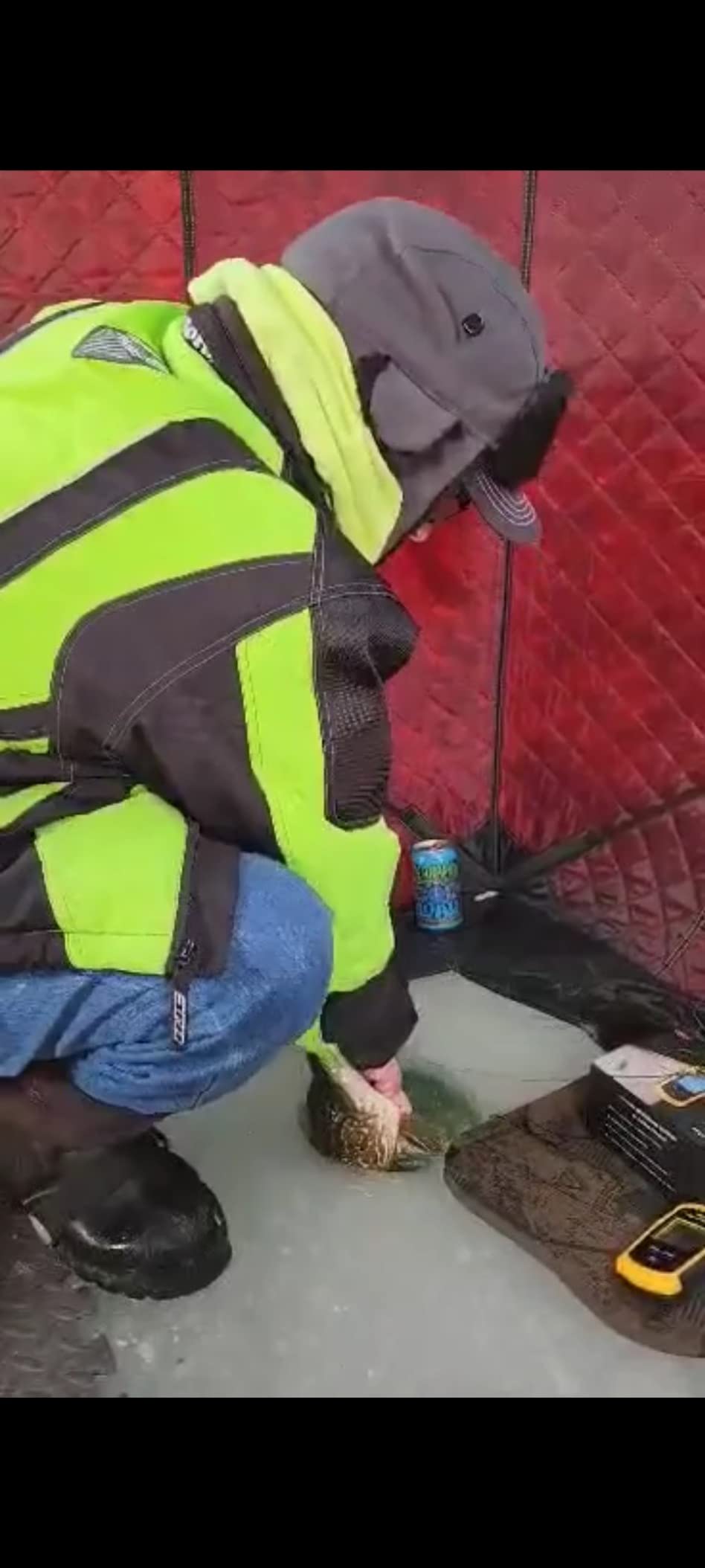
What makes it worth buying
It answers the two questions small-boat anglers ask most: how deep is it, and what is the bottom made of.
No mounting, no cable, no battery to wire, and it moves from a kayak to a jon boat in a pocket.
The sensitivity control is the feature experienced users lean on, not the fish alarm.
What makes it fall short
Constant minnow returns make the fish display close to noise on most small lakes.
No fish size, no GPS, and no waypoint marking, so there is nothing to come back to.
If your boat is fiberglass rather than aluminum or a rotomolded kayak, verify hull compatibility before you rely on it.
4. Garmin Striker Plus 4 – Best for Custom Mapping
Garmin 010-01870-00 Striker Plus 4 with Dual-Beam transducer
4.3 inch sunlight readable display
Quickdraw contour mapping
Dual-beam CHIRP transducer
Supports 50/77/83/200 kHz
Pros
- Quickdraw builds your own contour maps as you fish
- Split-screen pairs live sonar with the map
- Bright screen readable in direct sunlight
- Dual-beam CHIRP finds bottom-hugging fish
- Generous mounting hardware included
Cons
- Screen resolution is lower than older Garmin units
- No battery or power fittings included
- Quickdraw maps cannot be transferred off the unit
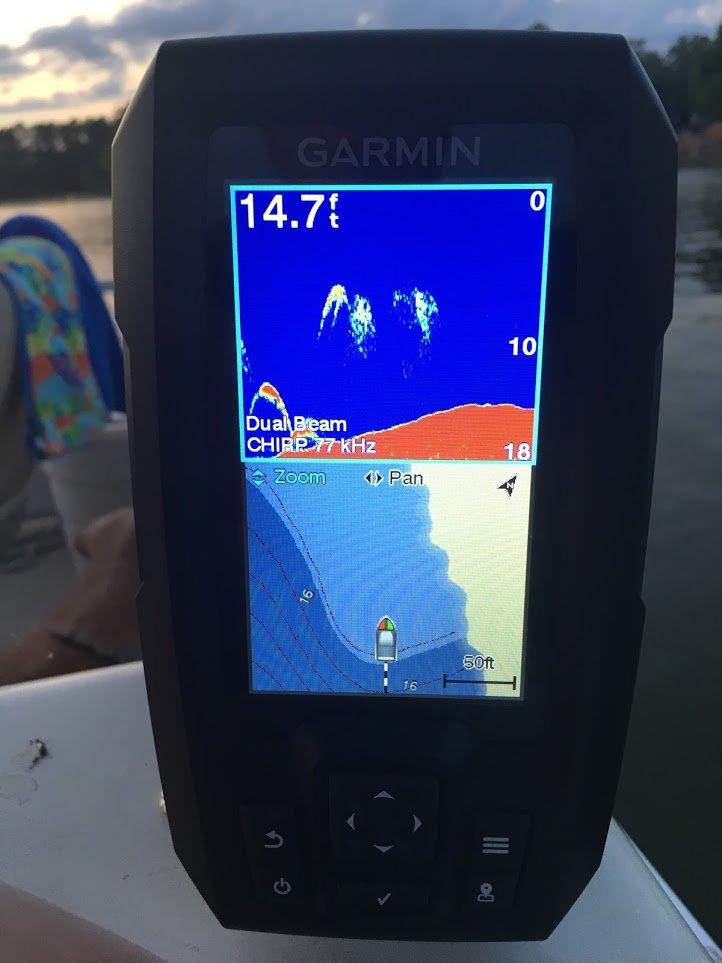
This is the unit to buy if you keep trolling over unfamiliar water and want a map of it by the end of the season. Quickdraw Contours records one foot contours as you move and stores them for up to 2 million acres, and the split-screen layout puts the live sonar view next to the map you are building. Owners use it as both an ice and an open water unit, and it reportedly runs for days off a 7Ah SLA battery on the 200 W RMS transmit power setting.
The dual-beam transducer with CHIRP traditional sonar covers 50, 77, 83, and 200 kHz, which is a real advantage on a small lake where you may be working 4 feet over a ledge in the morning and 20 feet over a channel at noon. Maximum measuring depth is listed at 20 meters, plenty for small-boat water. Bluetooth is on board for connectivity, and the interface has split-screen options both vertical and horizontal.
One owner running this alongside a Humminbird reported no interference between the two units, which matters if your boat already has electronics you are not replacing. The box includes the transducer, transom and trolling motor mounts, the power and data cable, and a tilt and swivel mount, so the only missing piece is a battery and the fittings to connect it. Owners also point out the install avoids drilling an aluminum hull, though HDPE takes more steps.
The honest downside is the display. Resolution is measurably lower than on older Garmin units and the image looks less crisp, even though the panel itself stays bright and readable in sun. Quickdraw maps cannot be uploaded or downloaded on this model, so your data stays on the unit. And you still need to source a battery, fuse, and connectors yourself, which is the most common reason first-time owners end up returning these.
What makes it the mapping pick
Quickdraw Contours is the only onboard mapping in this group that records your own lake as you fish it.
Split-screen means you watch the arch and the contour line at the same time, which is how you connect structure to depth.
Garmin builds one foot contour data rather than a single depth reading, so the map improves every trip.
Who should skip it
You want to transfer saved maps to a computer or share them, because that is not supported on this model.
You fish water deeper than 20 meters, which exceeds the listed maximum measuring depth.
You need the sharpest screen available in a 4 inch body, since resolution trails older Garmin panels.
5. Lowrance Eagle 4 Inch – Best for Tight Cockpit Space
Lowrance Eagle 4X Fish Finder with Bullet Transducer
4 inch IPS portrait screen
Auto-Tuning sonar
44 degree beam transducer
500 ft max depth
Pros
- Narrow portrait footprint suits a small console or limited mounting space
- IPS screen stays clear in sun and through polarized glasses
- Auto-Tuning removes manual setup so you can fish immediately
- Reuses existing Lowrance mounting holes
Cons
- No live scope
- only occasional fish on brush and structure
- No audible fish alarm
- Fish size readings are approximate
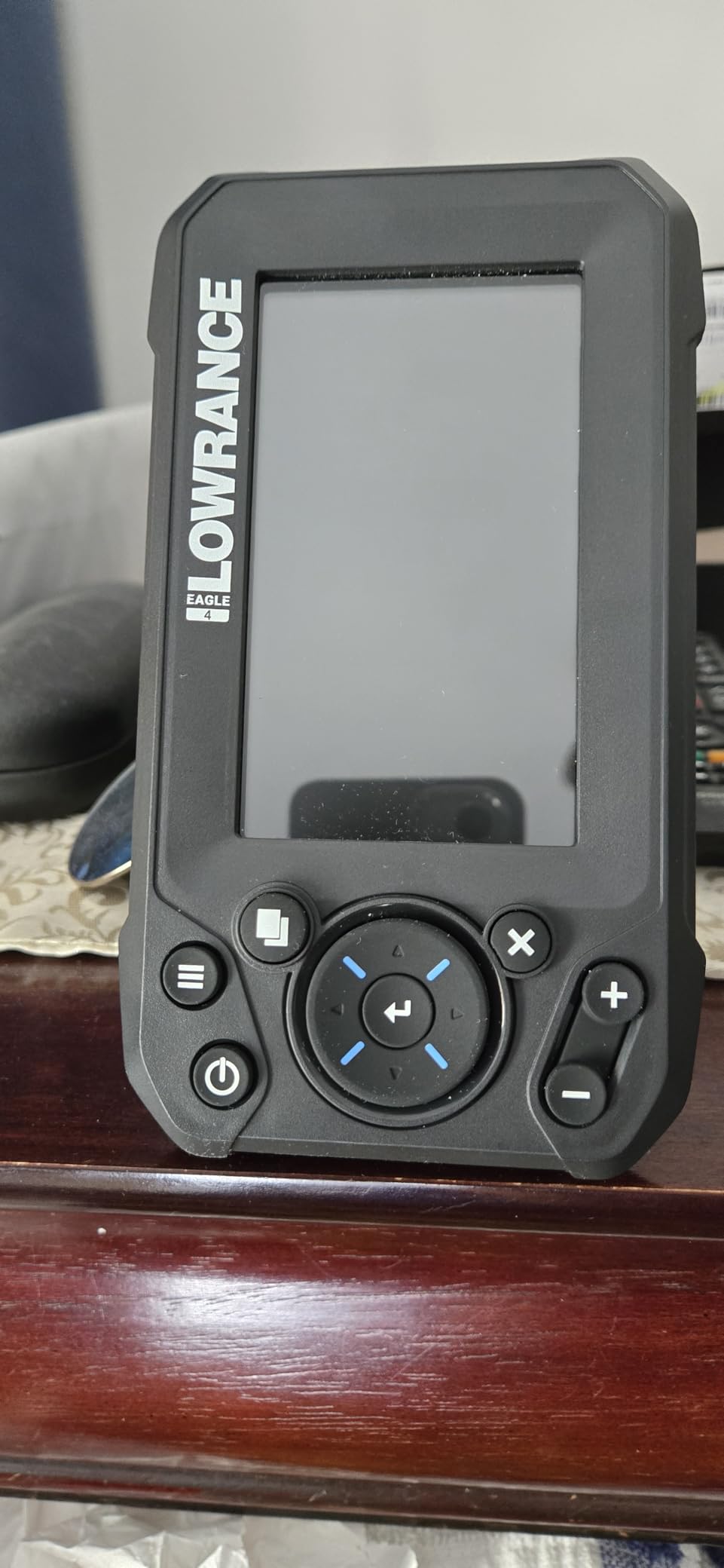
The reason this one is on the list is shape. A 4 inch IPS portrait display is tall and narrow, which fits a jon boat console or a kayak deck far better than a landscape unit of the same diagonal. The screen stays clear in bright sunlight from wide angles and through polarized sunglasses, and the box includes the bracket, locking collars, power cable, fuse and fuse holder, and a 200 kHz bullet skimmer transducer with a broad 44 degree beam that is well matched to small boats and kayaks.
Auto-Tuning sonar optimizes the settings on its own, which means you can launch and fish without a single menu dive. Several owners note that it is easier to operate than a Garmin Striker 4 CV, and that it remembers settings between trips. The twist-lock connector makes adding or removing the display quick, and the screw holes line up with older Lowrance Chirp units, so a swap from a previous Lowrance install is genuinely clean.
Maximum measuring depth is 500 feet. Fish icons show with depth and zoom, but there is no audible fish alarm, which is a genuine omission on a unit aimed at people who fish with headphones or in a noisy jon boat. Fish size readings are approximate and owners treat them as a rough indicator rather than a measurement. The base 4 inch Sonar version has no charting, though Lowrance offers larger SplitShot, TripleShot, and C-MAP Discover versions of the same family.
This is also the newest listing in our group with the thinnest review history, at 116 reviews, so treat the long-term durability picture as less certain than the units above it. What it does offer is the cleanest daylight visibility and the tightest physical footprint we tested.
Why the portrait shape matters
Vertical orientation uses console height rather than console width, which is the constraint on most small aluminum boats.
It is the easiest unit here to place on a kayak deck without a deck plate or a scupper strap improvisation.
If you are replacing an older Lowrance Chirp unit, the existing screw holes line up and the install is close to plug and play.
Where it stops short
There is no live scope, so you are reading structure and brush piles rather than watching individual fish in real time.
No audible fish alarm means you need to be looking at the screen, which is a real cost in a wind or with sun on your face.
Fish size is not calibrated, so treat the icons as a presence indicator rather than a spec sheet.
6. Humminbird PiranhaMAX 4 – Best Simple Starter Unit
Humminbird PiranhaMAX 4 Fish Finder with Transducer, Dual Beam Sonar
4.3 inch LCD
Dual beam sonar
600 ft max depth
Transom transducer included
Pros
- Dual beam lets you switch between narrow detail and wide coverage
- 4.3 inch screen is a good fit for a small boat console
- Tilt and swivel mount adjusts the viewing angle quickly
- Transom transducer included in the box
Cons
- No down imaging on this version
- 600 ft depth ceiling is shallower than some rivals
- Basic feature set with no charting or GPS
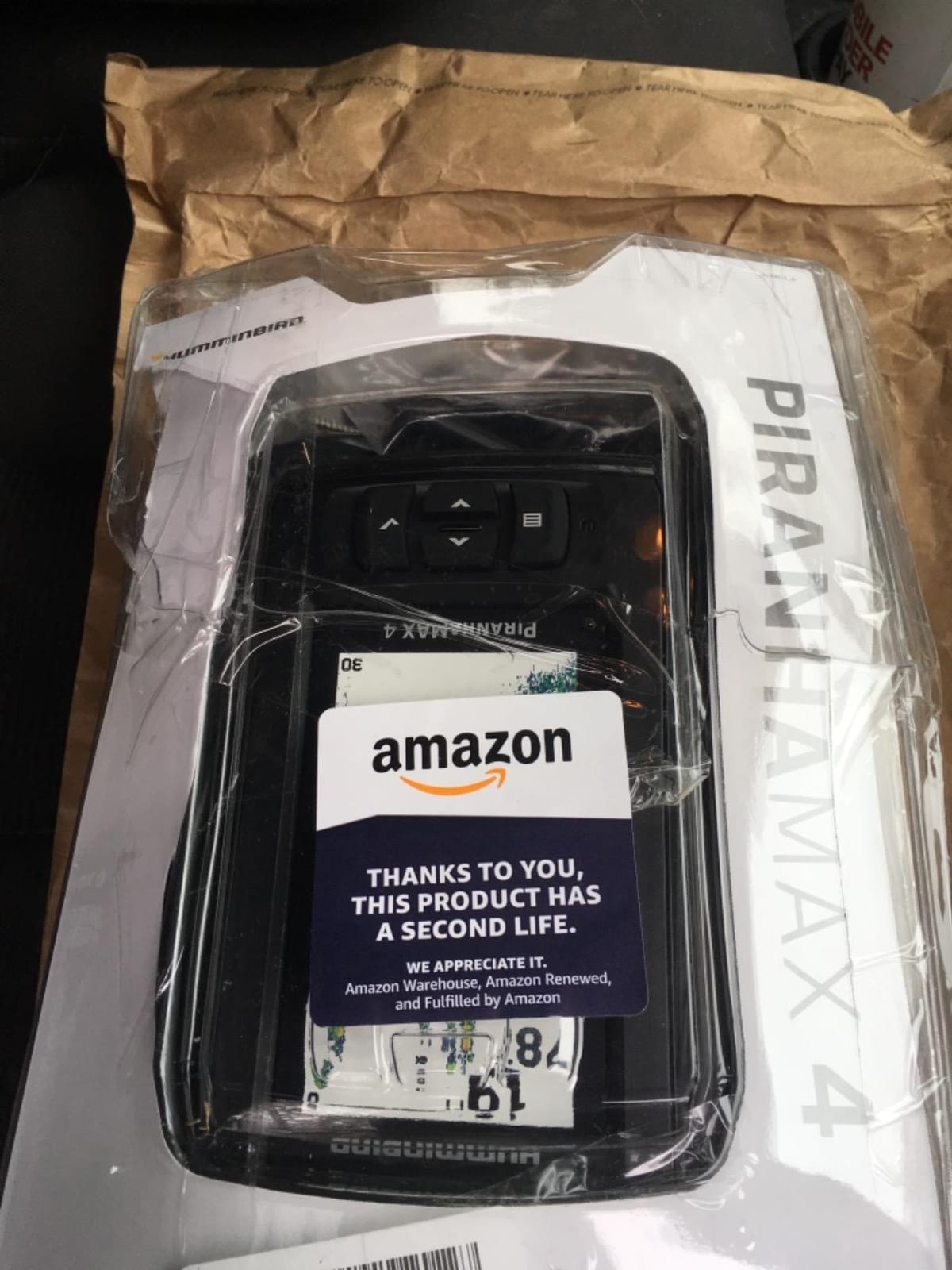
This is the buy-it-and-forget option. Dual Beam sonar lets you choose a narrow beam for detail or a wide beam for coverage, and toggling between the two is about the only setting you need to understand. It helps identify fish, structure, and contours across a 600 foot maximum depth, and the XNT 9 28 T transom-mount transducer is in the box along with a tilt and swivel mount.
The 4.3 inch display is a sensible size for a small console, and the tilt and swivel bracket lets you dial the angle to your seated position in seconds, which matters more on a jon boat than on a dash. Operation is approachable enough that first-time buyers rarely need the manual, which is the main reason it keeps selling at this size.
The Humminbird HELIX 5, in the larger line, is the model forum users describe as the unit that transitions to a jon boat or kayak with almost no modifications, and the PiranhaMAX shares that straightforward character at a smaller size. The PiranhaMAX 4 DI, covered later in this list, adds a down imaging view to the same footprint if you need to see brush piles.
What you give up is everything beyond the basics. There is no down imaging on this version, no charting, and no GPS mapping, so waypoints are not something this unit does. The 600 foot ceiling is shallower than several competitors, though it is far more depth than a small boat will ever fish. At 2 pounds it is also the heaviest unit in this group by a wide margin, which is worth noting for a kayak.
What you get for the simplicity
Two beams and a tilt bracket. There is almost nothing to learn, which suits a first electronics purchase.
The transom transducer is in the box, so the install cost matches the unit cost more closely than most rivals here.
Fish, structure, and contours are all shown clearly enough that you do not need a reference manual to read the screen.
What you are leaving on the table
No down imaging means brush piles and timber read as blobs rather than as structure with shape and shadow.
No GPS and no charting, so you cannot mark a spot and return to it on the next trip.
At 2 pounds it is a heavy lift for a kayak, so check your gear and your back before committing.
7. Garmin Striker 4cv – Best ClearVu Imaging in a Small Console
Garmin Striker 4cv with Transducer, 4″ GPS Fishfinder with CHIRP Traditional and ClearVu Scanning Sonar Transducer and Built In Quickdraw Contours Mapping Software
CHIRP traditional and ClearVu scanning
Quickdraw Contours
4.3 inch display
300 W RMS transmit power
Pros
- ClearVu gives near-photographic detail of structure and fish
- Quickdraw builds contour maps automatically as you cruise
- Built-in GPS for waypoints routes and boat speed
- Transom and trolling motor mounts plus tilt bracket included
Cons
- Settings reset on every power cycle
- Menu system takes getting used to
- Quickdraw maps cannot be transferred off the unit
The CV20-TM transducer in the box carries both CHIRP traditional and CHIRP ClearVu scanning sonar in one element, so you get arches and a near-photographic view of brush and timber from the same mount. Transmit power is 300 W RMS, and paired with the sunlight-readable 4.3 inch display it is the imaging option that still fits inside a small console footprint.
Quickdraw Contours is here as well, storing one foot contours for up to 2 million acres, and the built-in GPS handles waypoints, routes, and boat speed. The box includes the transducer, transom and trolling motor mounts, a power and data cable, and a tilt and swivel mount. That is a complete install for a small aluminum boat with no drilling required if you use the trolling motor bracket.
Owners consistently describe the ClearVu images as the reason they bought it, particularly for picking apart a timber pile or a rock ledge rather than just seeing that something is there. Pairing it with the Quickdraw map in split screen while cruising at low speed is the workflow the design is really built around, and the bright panel holds up in direct sun.
Criticism of this model is almost entirely software related. Settings are not retained between power cycles, so you reset ranges and sensitivity every time you turn it on. The menu is less intuitive than simpler rivals and takes practice. Quickdraw maps cannot be uploaded or downloaded here. And battery and power wiring are not included, which is a repeat theme across this category and the most common reason people add items to their order.
What the ClearVu view actually shows
Brush piles, stumps, and rock edges resolve into shape and shadow instead of a single fuzzy return.
It is the difference between knowing there is something there and knowing roughly what it is and how big it is.
Running it beside the Quickdraw map while idling is how you learn a new body of water in a season.
What frustrates owners
Losing your settings every time the power cycles is irritating on a long day of fishing.
The menu system asks for more patience than the hardware deserves.
No way to move saved maps off the unit, so a failed unit means lost contours.
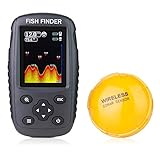
8. Venterior Wireless Sonar – Best No-Drill Cordless Setup
Venterior Portable Rechargeable Fish Finder Wireless Sonar Sensor Fishfinder Depth Locator with Fish Size, Temperature, Bottom Contour, Color Display
Wireless castable sensor,262 ft range
Color TFT display
105 degree beam
2.6 to 164 ft depth range
Pros
- Wireless sensor means no hull drilling and no cord to snag
- Casts with an ordinary rod and connects on landing
- Shows depth temperature bottom contour and fish size class
- Black and white background toggle for sun or night
Cons
- Very wide 105 degree beam is weak through ice
- Readings degrade beyond roughly 120 feet of depth
- Battery life drops in cold conditions
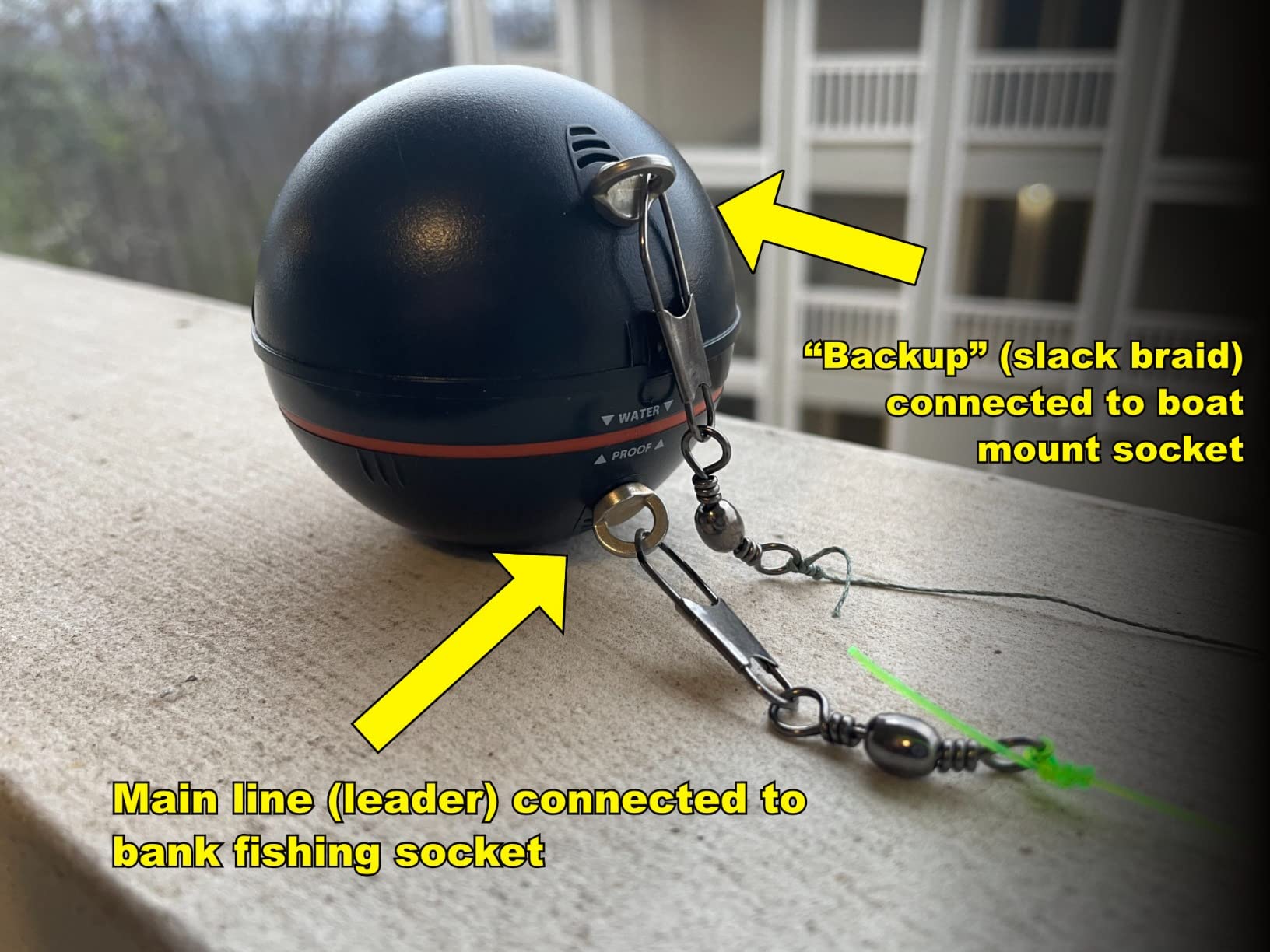
The no-drill story here is different from the Deeper units. You tether the sensor to fishing line through two small holes, cast it like a lure, and the sensor powers on automatically the moment it floats. It connects to the handheld across up to 262 feet, which is a longer and more reliable link than most wireless castables manage, and the display shows depth, temperature, fish size class, fish depth, and bottom contour.
The color TFT screen has a selectable black or white background, which is a small touch that matters more than it sounds: white for sunlight, black for dusk. There are work and simulation modes, convertible depth and temperature measurements, and a 2-year warranty with online brand support. At 15 ounces the handheld is still light enough for a kayak, and several owners report it replaced a suction-cup wired unit they had stopped using.
It works from shore, kayak, boat, and on ice, which makes it the most flexible box in this list. The depth range is 2.6 to 164 feet, and the 105 degree beam is wide enough to cover a lot of water per cast, which is a fair trade for the accuracy you give up in deep water.
That wide beam is also the main weakness. It bounces off the walls of an ice hole, it reads poorly beyond about 120 feet of depth, and it can throw false signals when dragged behind a moving boat in waves. Fish size categories are subjective rather than calibrated. The sensor battery indicator is unreliable while the sensor is out of the water, and cold weather shortens run time.
Why it suits aluminum hulls
Nothing attaches to the boat, so an aluminum hull stays exactly as the manufacturer built it.
You can fish structure at boat speed by trolling the sensor on a line behind a kayak or a small outboard.
The range between sensor and handheld is long enough that the sensor is genuinely under the boat, not just at your feet.
Where the wide beam costs you
A 105 degree beam is excellent in shallow water and poor through ice, where it strikes the sides of the hole.
Battery life drops in cold conditions, which is exactly when ice anglers need it most.
Fish size classes are broad guesses, not measurements, so do not plan a tournament strategy around them.
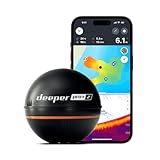
9. Deeper PRO+ 2 – Best for Mapping From Shore and Dock
Deeper PRO+ 2 Sonar Fish Finder – Portable Fish Finder and Depth Finder For Kayaks, Boats and Ice Fishing with GPS Enabled | Castable Deeper Fish Finder with FREE User Friendly App
Wide mid and narrow beams
Built-in GPS for maps
330 ft accuracy
0.4 in narrow-beam separation
Pros
- Three beam options give real control over coverage versus detail
- Built-in GPS creates bathymetric maps from shore dock or bank
- 0.4 in narrow-beam separation helps when vertical jigging
- 3.2 ounces fits in a tackle box
Cons
- Needs a smartphone or tablet and the app
- Phone display is smaller and less sun-optimized than a dedicated unit
- Learning curve for mapping and beam settings
This is the step up from the Deeper START, and the difference is control. Three beam options let you choose wide for coverage, mid for a balance, and narrow for drilling into a specific spot. Accuracy runs to 330 feet, and target separation is 0.4 inches on the narrow beam against 1 inch on the wide and mid, which is a meaningful difference when you are watching a lure fall through a 12 foot column.
The built-in GPS is the feature owners single out most. It lets you build bathymetric maps from shore, dock, or bank and saves them in the Fish Deeper app, which is a genuine data product that most units at this size do not produce. Wi-Fi is dependable and does not consume mobile data. It weighs 3.2 ounces and comes in a neoprene pouch with a USB cable for charging, so it genuinely fits in a tackle box.
With a two-year limited manufacturer warranty and suitability for kayaks, boats, and ice, it covers the full range of small craft. The narrow beam is the one to use when you are working a specific drop-off rather than scanning open water, and switching between beams takes a tap in the app.
The trade is the phone again, and the app. A phone-based display is smaller and less optimized for bright sun than a dedicated panel, and there is a genuine learning curve to the mapping and beam settings. Some buyers report connection or battery complaints, and if your phone dies mid-trip there is no fallback screen. Treat the app as part of the product, not an accessory.
What the three beams buy you
Wide for finding ledges, narrow for confirming a target, mid as the everyday compromise between the two.
0.4 inch separation on the narrow beam is what makes vertical jigging readable on a small boat.
Owners who learn the mapping workflow tend to stop buying bathymetric chart subscriptions.
What the app costs you
Everything is on a phone or tablet, so screen size and brightness are out of your hands.
Mapping and beam settings take time to learn well, and that learning curve comes in the first few trips.
Connection and battery complaints appear often enough that a dead phone ends the session.
10. Humminbird PiranhaMAX 4 DI – Best Down Imaging for a Kayak
Humminbird Piranhamax 4 DI
Down Imaging plus dual beam
4.3 inch color LCD
Fish ID+ with alarms
XNT 9 DI T transducer included
Pros
- Down Imaging shows timber brush pilings and rocks with sharp detail
- 4.3 inch color display is readable in direct sunlight
- Simple menu that is easy to navigate
- Tilt and swivel mount and transom transducer included
Cons
- Down imaging is basic rather than high-definition
- Price jump over the standard PiranhaMAX 4
- No charting or GPS on this model
Down imaging is the reason this model exists, and it is the feature that makes structure readable rather than merely detectable. Timber, brush, bridge pilings, and rocks below the boat come through with clear edges, and paired with the 4.3 inch color LCD it is the only true color imaging option in this group at a small-boat size.
You also get Dual Beam sonar with narrow and wide selection, Fish ID+ with fish alarms and depth alarms, and zoom, all behind a redesigned interface that reviewers describe as simple to navigate. The XNT 9 DI T transom-mount transducer and a tilt and swivel mount are both in the box. Owners frequently buy this unit a second time, which is the clearest endorsement in the customer data.
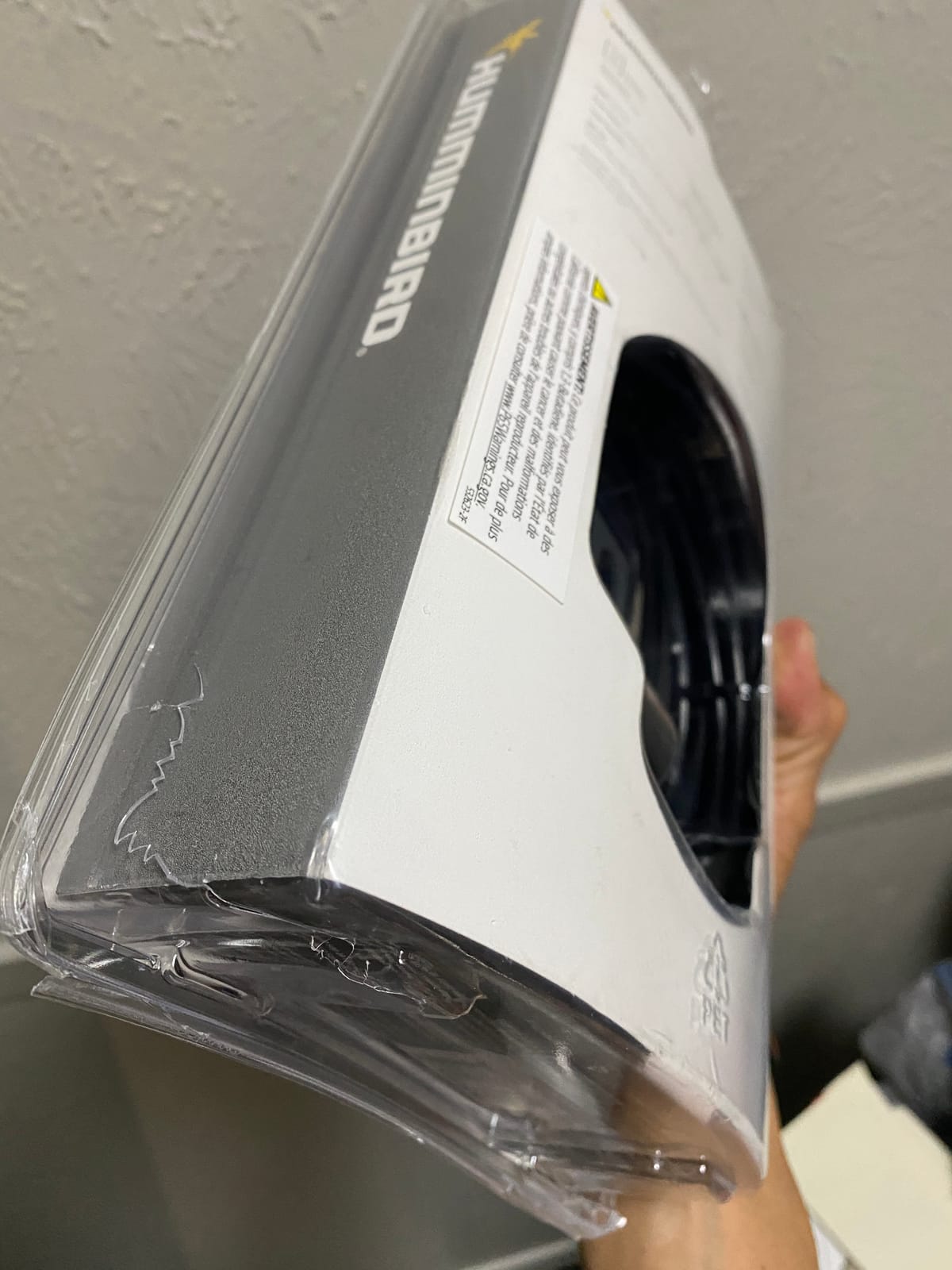
For kayak anglers the install story is the selling point. Several owners run the transducer through a scupper hole, which holds it in place with no drilling at all, and the tilt and swivel mount puts the screen at a readable angle from a seated position. At 2 pounds it is heavier than the castable units, so pack accordingly.
The trade-offs are honest ones. The image detail is basic rather than high-definition compared with a modern scanning sonar, and this model carries a clear price step up from the standard PiranhaMAX 4, which offers the same screen size without imaging. There is no charting and no GPS, so no waypoints. One owner also reported an electrical failure during a storm, an isolated report but a reminder to secure the connections.
Why down imaging matters in shallow water
Structure reads with edges and shadows instead of one ambiguous return, so you can tell a stump from a rock.
It is the difference between seeing that something is there and knowing whether to fish it.
Reviewers of this class of unit report that imaging pays off fastest in the 2 to 15 foot range, where a small boat spends most of its season.
What to weigh before buying
Expect a clear price step over the non-imaging PiranhaMAX 4, and decide if structure detail is worth it for your water.
Image detail is modest for a modern scanning sonar, so it will not match the ClearVu units above.
No GPS or charting, and 2 pounds is a real weight to carry on a kayak.
How to Choose a Fish Finder for Small Boats
The gap between a good small-boat fish finder and a bad one is rarely the spec sheet. It is the transducer, the mount, and the battery. Budget for those three separately and you will make a better decision than someone chasing the biggest screen. Here is how we break it down, and the questions we ask before recommending any unit to a jon boat or kayak owner.
Make CHIRP the baseline
CHIRP sonar sends a continuous sweep of frequencies instead of a single ping, which gives crisper fish arches and better target separation. Our advice is simple: do not buy a fixed-mount unit without it. In this roundup the Garmin Striker 4, the Striker Plus 4, the Striker 4cv, and the Lowrance Eagle all use CHIRP on the traditional channel, and the difference shows up most in cluttered shallow water where a single-frequency return turns into mush.
Down Imaging, sold as ClearVu on Garmin units and DownScan on Lowrance, is a picture-like high-resolution view straight down. It is the feature that makes brush piles and timber readable, and it earns its money fastest in the 2 to 15 foot range that dominates small-boat fishing. Side Imaging takes that view out to the sides and is the premium feature for shallow water.
Match screen size to boat length, not to marketing
For a kayak or canoe, 2 to 4 inches is the working range. For a 14 to 18 foot jon boat or aluminum boat, 3.5 to 4.3 inches is the sweet spot, and anything larger starts fighting you for console space. Our rule of thumb is that you should be able to see the whole unit from your seated position without leaning forward, and you should be able to shade it with a hat.
Portrait orientation is worth checking before you buy, because a tall narrow unit uses console height rather than console width. That single detail decides whether a 4 inch screen fits your boat at all, and it is why the Lowrance Eagle earns its place in a jon boat console.
Confirm what is actually in the box
This is the most common buyer mistake, and it comes from bundle confusion at the dealer level. In this roundup, the Garmin Striker 4, Striker Plus 4, Striker 4cv, the Lowrance Eagle, the Humminbird PiranhaMAX 4, and the PiranhaMAX 4 DI all include a transducer. The Deeper START, the Deeper PRO+ 2, the Venterior wireless sonar, and the LUCKY 1108CP are complete systems on their own because the sensor is the product.
What almost nobody includes is a battery, a fuse, or the fittings to connect one. Budget for a sealed lead acid battery, a proper connector, and a fuse holder before you order anything, because that is the difference between a working install on day one and a return shipment. Our wider main fish finder guide goes deeper on wiring and installation.
Mount without drilling an aluminum hull
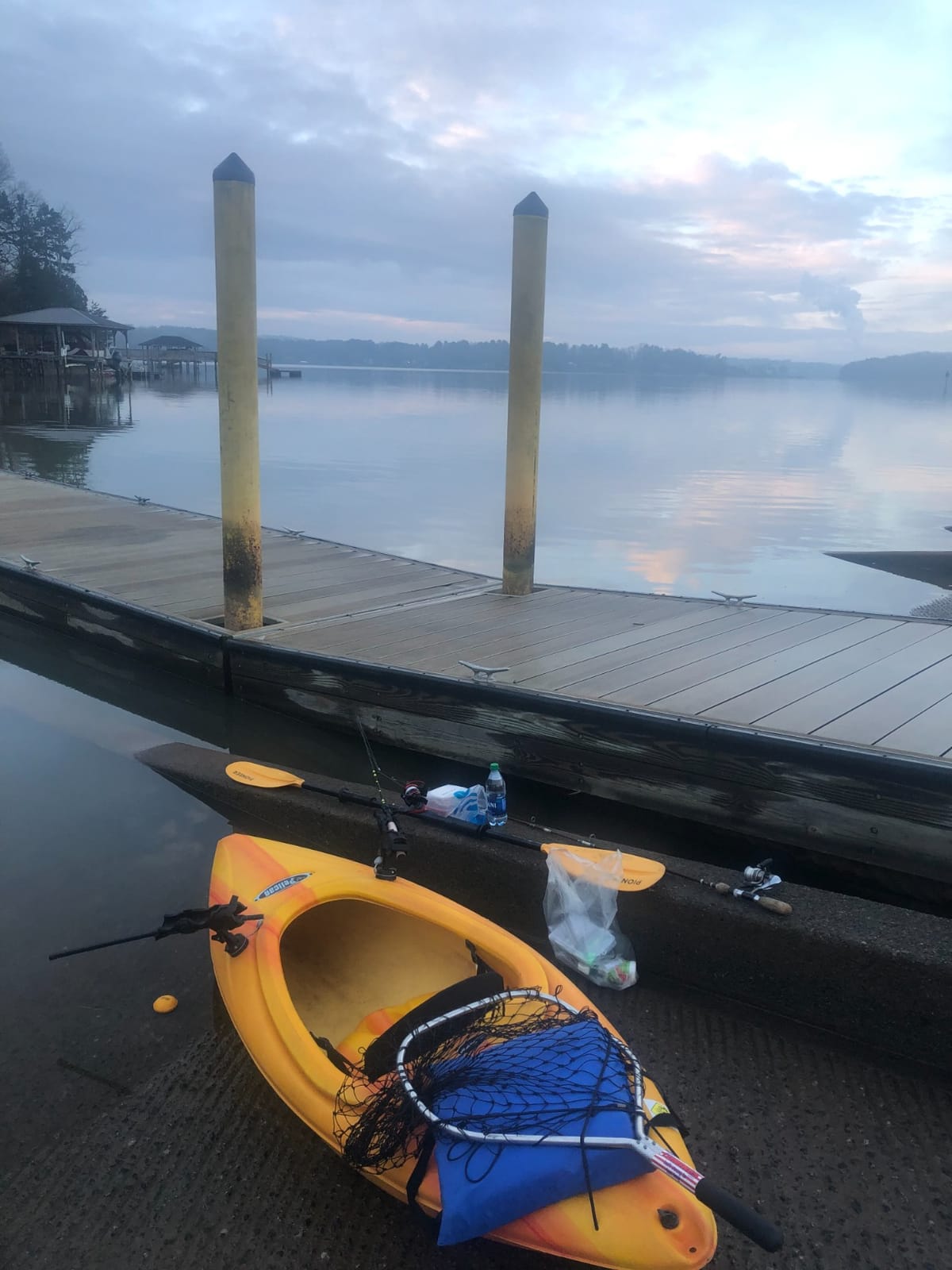
Aluminum is thin and unforgiving, and a drilled hole that leaks is the fastest way to ruin a small boat. The options in order of preference are a trolling motor bracket, a transom mount, a suction cup for lighter units, and a clamp on a console rail. Most of the units above ship with transom and trolling motor hardware, which is why those are the ones we recommend for aluminum. On a kayak, a scupper hole strap is the cleanest option, and it is how several owners run the Humminbird PiranhaMAX 4 DI without a single screw. On a rental or borrowed boat, skip the fixed mount and consider a castable unit instead.
Match power draw to your battery
Low current draw is the number one reason portable and head units win on small boats. The Garmin Striker 4 is the only unit in this group whose current draw we could confirm from published specifications, at 0.23 A at 12V, and owners report running it for days on a 7Ah battery. The castable units sidestep the problem entirely by running off their own rechargeable cells, with the Deeper START quoted at about 6 hours of use after a 2.5 hour charge and the Venterior handheld at roughly 3 to 4 hours.
The budget handheld is the other answer. The LUCKY 1108CP gets 4 to 5 hours from a set of batteries, longer in battery save mode, and needs no wiring at all. If your boat has no 12V system, that is often the deciding factor rather than screen size or sonar type.
Garmin vs Humminbird vs Lowrance for small boats
This is the most common question we see, and the honest answer is that all three build good small-boat units. Garmin is strongest on the compact feature set, with the Striker 4 pairing CHIRP and ClearVu with GPS in the smallest footprint we tested, and its Quickdraw Contours mapping is the only onboard mapping in this group that records your own lake as you fish it. Humminbird is the easiest to learn, and the PiranhaMAX line is the one forum users describe as moving to a jon boat or kayak with almost no modifications, though mapping is absent on both models here. Lowrance earns its place with the tightest physical footprint and the best daylight visibility thanks to an IPS portrait panel, plus Auto-Tuning that removes setup entirely.
Forum consensus narrows the brand question to these three names, and the practical tiebreaker is usually ecosystem rather than features. If your boat already runs a brand, matching it makes waypoints, transducers, and mounts far easier.
Frequently Asked Questions
Is Garmin better than Humminbird?
For small boats, Garmin leads on the compact feature set. The Striker 4 pairs CHIRP traditional and ClearVu scanning sonar with a built-in GPS in a 3.5 inch body, and Quickdraw Contours records your own lake as you fish. Humminbird is easier to learn and the PiranhaMAX line is widely praised for moving to a jon boat or kayak with almost no modifications, but the models in this roundup have no charting or GPS. Pick Garmin for mapping and imaging, Humminbird for simplicity.
What is the best depth sounder for a small boat?
For most jon boats, kayaks, and aluminum boats under 20 feet, a 3.5 to 4.3 inch head unit with CHIRP sonar, built-in GPS, and a transom or trolling motor mount is the right answer. The Garmin Striker 4 is the strongest all-round choice because the transducer, bracket, and both mount styles are in the box. If you have no 12V system at all, a handheld such as the LUCKY 1108CP answers depth and bottom type for far less.
Is Lowrance or Humminbird better?
Lowrance wins on footprint and daylight readability. The Eagle 4 inch uses a portrait IPS display that stays clear in bright sun and through polarized sunglasses, plus Auto-Tuning sonar so there is no setup, and it reuses existing Lowrance mounting holes. Humminbird wins on simplicity. The PiranhaMAX 4 has dual beam sonar, an included transom transducer, and a menu almost anyone can use. Choose Lowrance for a cramped console, Humminbird for a first unit.
Is Garmin or Lowrance better for fishing?
Choose Garmin if you want imaging and mapping in a small body. The Striker 4 and Striker 4cv give you CHIRP plus ClearVu and Quickdraw Contours, and the Striker Plus 4 records one foot contours for up to 2 million acres. Choose Lowrance if your boat has very little console space or you want to fish immediately. The Eagle 4 inch mounts vertically, auto-tunes, and its 44 degree beam suits kayaks and small boats. If you already run one brand, staying with it makes waypoints and mounts far easier.
Do I need a fish finder for a jon boat?
Yes, more than most anglers expect. A jon boat has no time to idle and cast blindly, and a depth sounder turns a random drift into a targeted one by showing exactly where structure, drop-offs, and bait balls sit beneath the hull. A 3.5 to 4.3 inch unit with a trolling motor mount is the usual answer, since it avoids drilling an aluminum hull and installs in under an hour with the included hardware.
Can I mount a fish finder without drilling my boat?
Yes. Use a trolling motor bracket or a transom mount, both of which are included with most of the units in this roundup, and neither requires a hole in the hull. On a kayak, run the transducer through a scupper hole strap. For suction cup and clamp options, or if you need a setup that moves between craft, read our portable and castable guides before you buy.
The Best Fish Finder for Your Small Boat in 2026
The Garmin Striker 4 is the best fish finder for small boats in 2026 because it is the only unit here that arrives complete: transducer, tilt and swivel bracket, transom and trolling motor mounts, built-in GPS, and both CHIRP and ClearVu sonar in a body that fits a jon boat console. Add a battery, a connector, and a fuse holder, and you can be fishing the same afternoon.
Match it to your boat and the choice gets easier. Kayak and canoe anglers who want to fish from shore as well should look at the Deeper START or the Venterior wireless sonar. If your console has almost no room, the Lowrance Eagle 4 inch is the one that fits. Buy the Garmin Striker Plus 4 if you want to build your own contour maps, the Humminbird PiranhaMAX 4 if you want the simplest first unit, and the PiranhaMAX 4 DI if you need to see brush piles. Spend under a hundred and expect depth numbers rather than fish arches.