
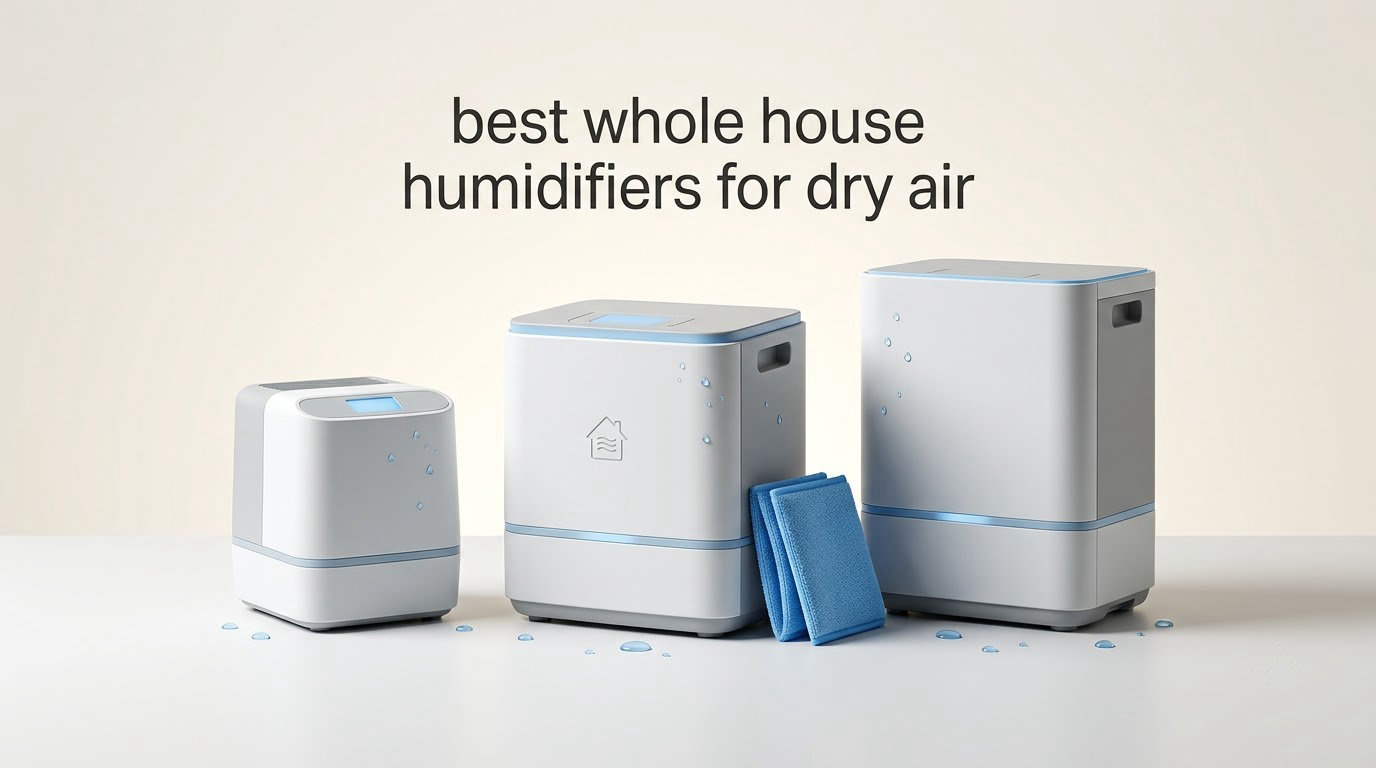
Winter air inside a house can drop to the bone-dry range even when the weather outside is mild. If you are chasing static shocks, cracked hardwood floors and sinuses that sting the moment the heat comes on, the fix is not another small humidifier on the nightstand. It is a machine that conditions every room at once and holds the number where you set it.
That is what a whole-house humidifier does. It connects to your forced-air furnace or runs as a floor unit, adds moisture to the air moving through the house, and stops on its own once relative humidity reaches your target. The band most HVAC technicians aim for is 30-50% RH, and staying inside it fixes far more complaints than most people expect. If the problem is moisture in the other direction, our whole-house dehumidifier guide covers that side instead.
We spent weeks going through the specs, warranty terms, install requirements and owner feedback on the twelve whole-house humidifiers below, and the short version is that the right choice depends almost entirely on two questions: do you have forced-air ductwork, and how big is the space you are trying to humidify? Get those two answers and the list narrows fast. Getting the water right matters just as much, so we also cover whole-house water filters and what hard water does to a wick.
What follows is the 2026 list of the best whole house humidifiers for dry air, starting with the units that mount on the furnace plenum and working down to the large-room evaporative and smart models that need no ductwork at all.
Table of Contents
Top 3 Whole-House Humidifier Picks for 2026
12 Best Whole House Humidifiers for Dry Air (October 2026)
| Product | Specifications | Action |
|---|---|---|
| AprilAire 500 |
|
Check Latest Price |
| AIRCARE MA1201 Console |
|
Check Latest Price |
| AIRCARE Space Saver 831000 |
|
Check Latest Price |
 AIRCARE EP9 800 Pedestal AIRCARE EP9 800 Pedestal |
|
Check Latest Price |
 AprilAire 700M AprilAire 700M |
|
Check Latest Price |
 AprilAire 600M AprilAire 600M |
|
Check Latest Price |
 GeneralAire 1042-LH GeneralAire 1042-LH |
|
Check Latest Price |
 Honeywell HM750A1000 Honeywell HM750A1000 |
|
Check Latest Price |
 Levoit Superior 6000S Levoit Superior 6000S |
|
Check Latest Price |
 Lacidoll 16L Smart Lacidoll 16L Smart |
|
Check Latest Price |
 Lacidoll 16L Cool Mist Lacidoll 16L Cool Mist |
|
Check Latest Price |
 DREO 16L Smart Humidifier DREO 16L Smart Humidifier |
|
Check Latest Price |
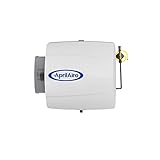
1. AprilAire 500 – Best Overall Furnace Humidifier for Dry Air
AprilAire 500 Whole-House Humidifier, Automatic Compact Furnace Humidifier, Large Capacity Whole-House Humidifier for Homes up to 3,600 Sq. Ft., White
Bypass evaporative
12 GPD
Up to 3,600 sq ft
5 year warranty
Pros
- Dual-sensor auto control with outdoor temperature compensation
- 12 GPD covers 3600 sq ft in tight homes
- No moving parts so it runs silently
- Digital display with service and panel indicators
- Reversible for either-hand plenum mounting
Cons
- Install needs sheet metal and 24V wiring skills
- DIY install voids the 5 year warranty
- Only a schematic for wiring
- Control does not display the outdoor reading
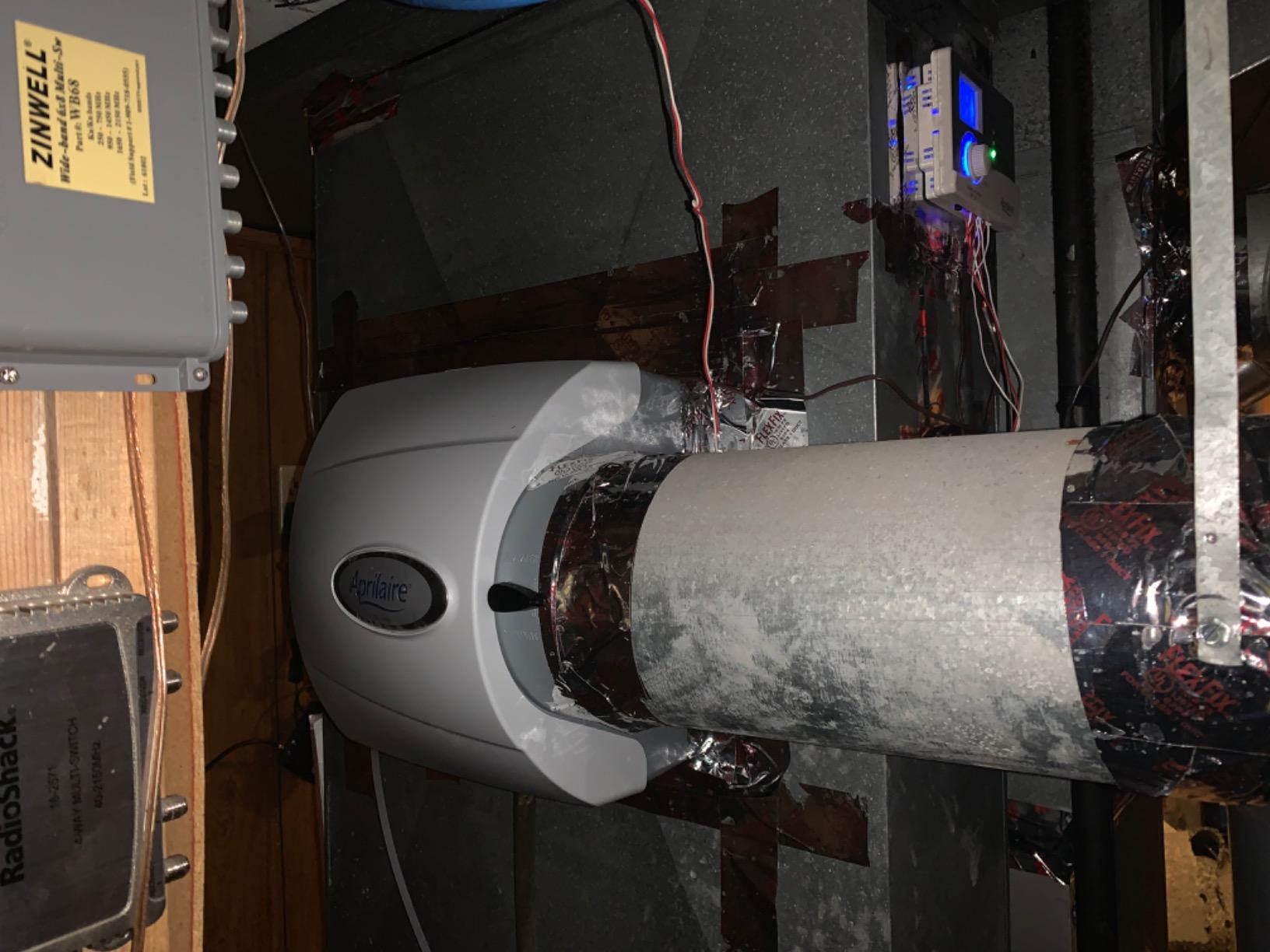
The AprilAire 500 is the unit most people end up with, and after reading through well over a thousand owner reports it is the one we would put on a furnace first. It mounts on the supply plenum, sends warm supply air across a saturated water panel, and evaporates the moisture into the duct stream. With 12 gallons per day of capacity it is rated for homes up to 3,600 square feet in a tightly built envelope.
What makes it our pick is the control, not the hardware. The automatic version watches both indoor relative humidity and outdoor temperature, then slows or stops output on a mild day so you are not walking into condensation. Owners consistently report the house settling in the 40-50% range and staying there through a full season without adjusting anything.
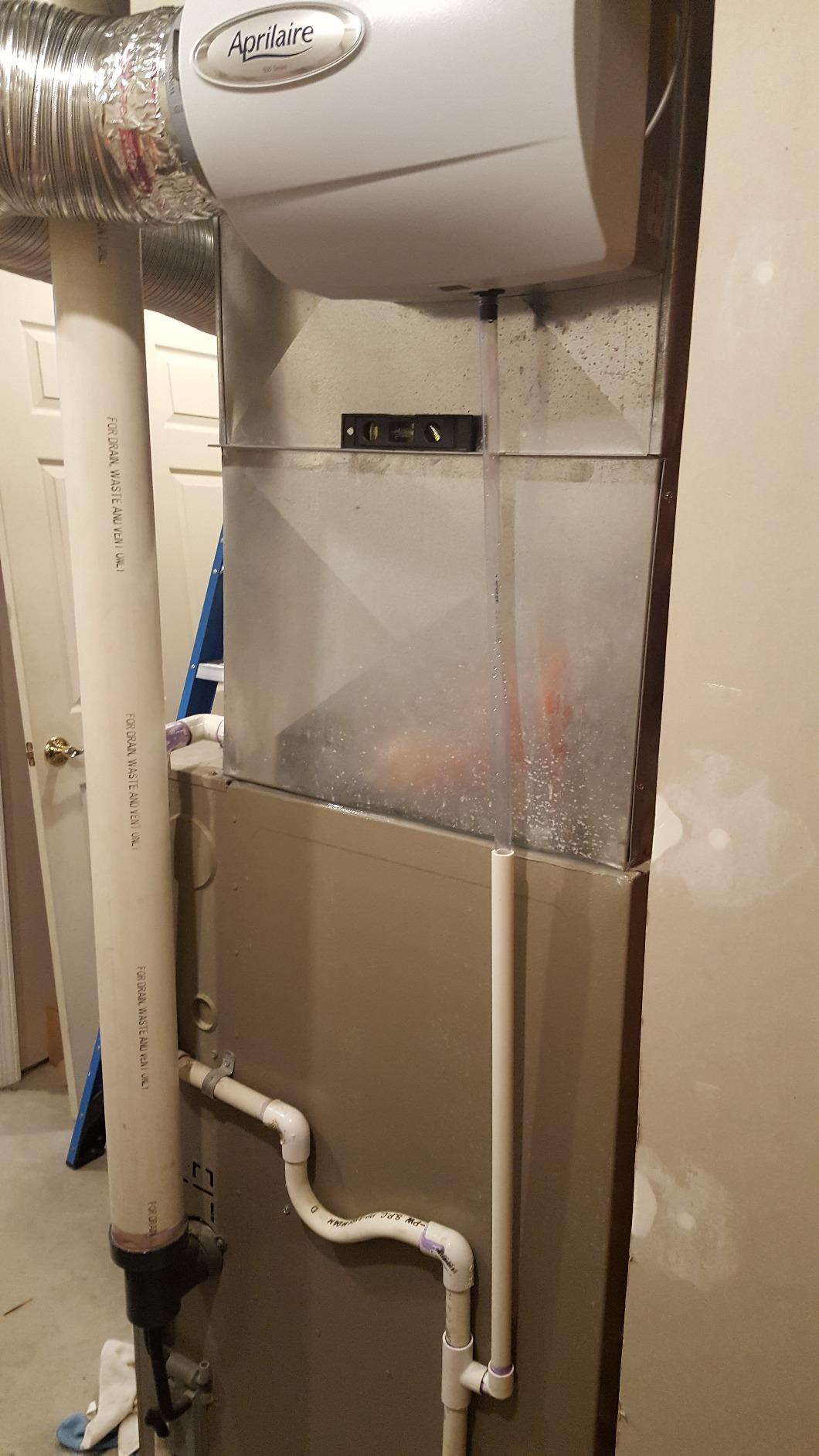
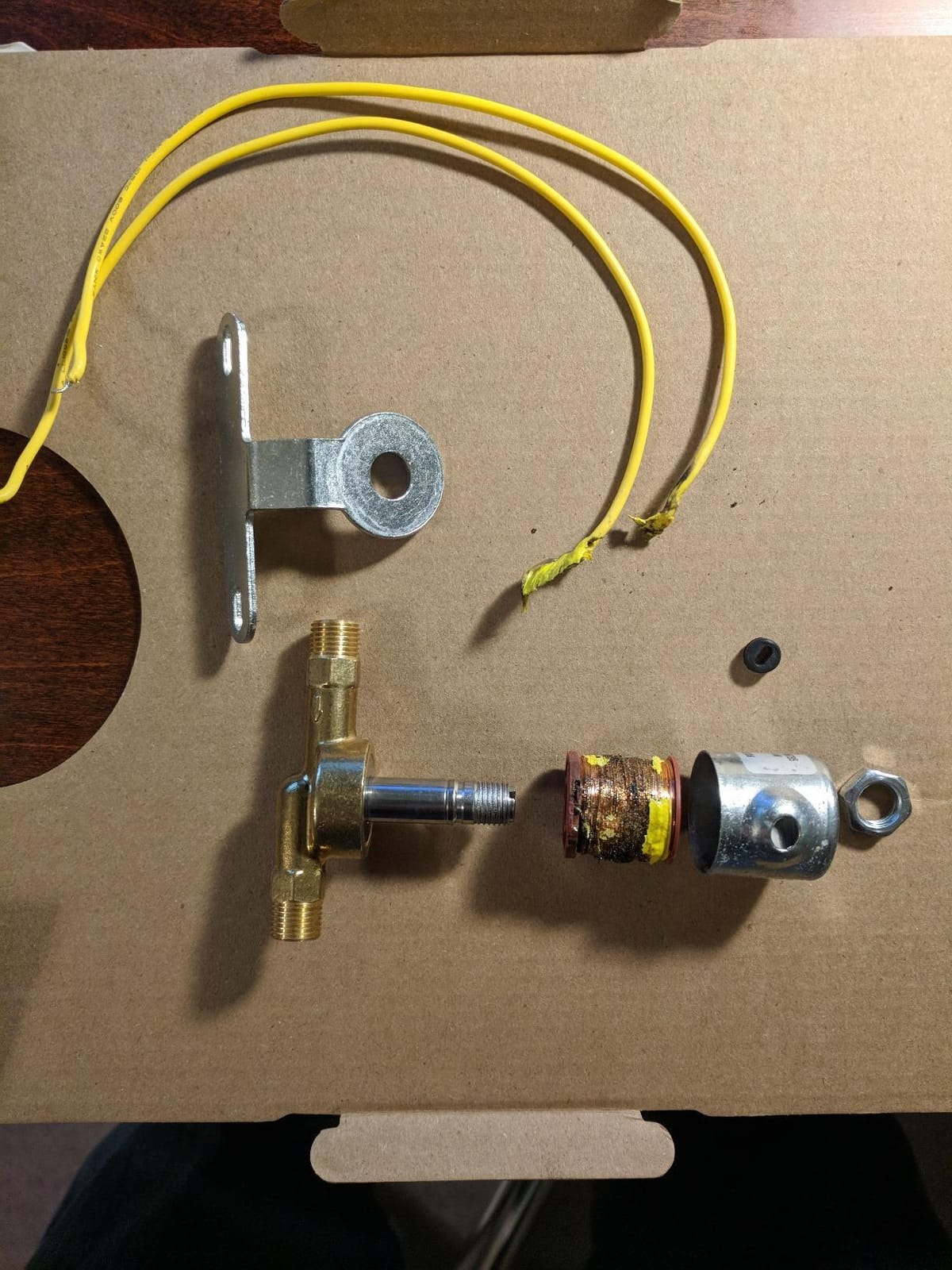
The install is the honest drawback. It needs a plenum collar, a water line, a drain, a solenoid and low-voltage wire, none of which come in the box. A metal hole saw, tin snips and extra thermostat wire are on the list, and a self-install reportedly voids the 5-year manufacturer warranty. If you are not comfortable with sheet metal, budget for an HVAC tech.
One small tip from the owner feedback: if the first week of near-continuous running worries you because the woodwork is absorbing moisture faster than normal, throttle the supply valve slightly rather than lowering the humidistat setting. Many owners also recommend a vinegar rinse through the unit once a season in hard-water areas.
Who should buy the AprilAire 500
Buy it if you have a forced-air furnace, you are inside the 3,600 square-foot range, and you want a set-and-forget system that no one has to refill. It is also the model we would pick for a home with a gas furnace, where the extra capacity of a larger unit is wasted.
Who should skip the AprilAire 500
Skip it if you rent, have no ductwork, or want something you can move between rooms. It also is the wrong call if you refuse to touch a humidistat setting, because the manual version is a different product at a different price point.
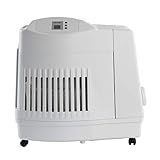
2. AIRCARE MA1201 – Best Value Console for a Whole Floor
AIRCARE MA Whole-House Console-Style Evaporative Humidifier (Console)
Evaporative console
3,600 sq ft
3.6 gal tank
2 year warranty
Pros
- Real humidity gains across an open floor plan
- Digital humidistat with four speeds plus auto mode
- Removable side tank is easy to carry to a sink
- No belts pulleys or wheels in the air path
- Auto shut-off at target and at empty
Cons
- Loud on the top fan speed
- Cord hygrometer reads high from across the room
- Tank cannot be opened for cleaning and needs daily refills
The MA1201 is the console model that has the deepest well of owner feedback of anything on this list, and that history matters more than any spec line. Owners report moving a whole open floor plan from the high 20s into the 45-55% range within a day of switching it on. For an apartment, a finished basement or a house with a boiler instead of a furnace, that is the outcome you are buying.
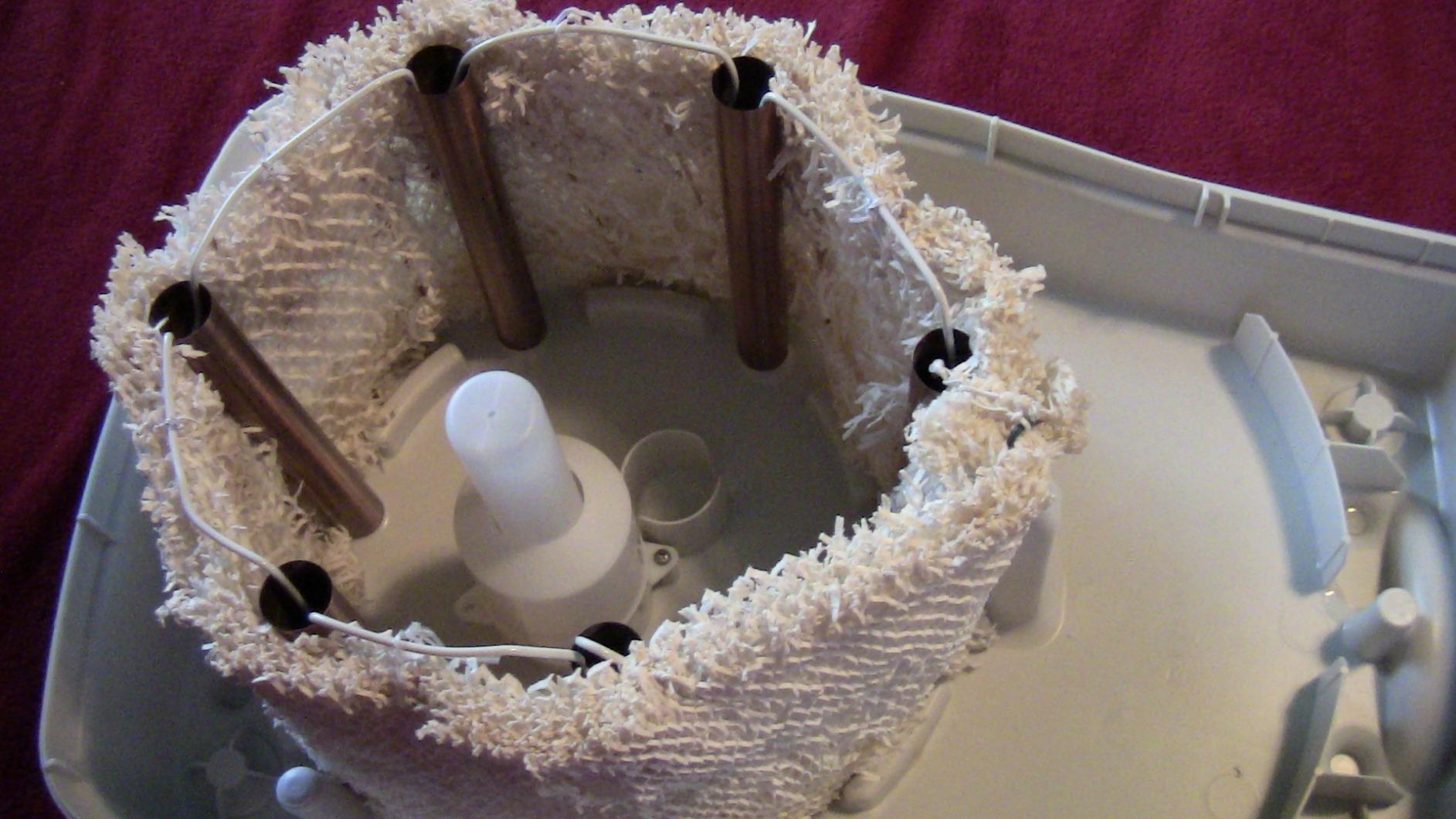
It uses a wick filter rather than a furnace water panel, the same job with different branding. Air is drawn through the saturated wick and blown back out with its own fan, so nothing mineral reaches your furniture. The digital humidistat runs four fan speeds plus an auto mode, and auto mode is the one to use most of the time because the top speed is genuinely loud.
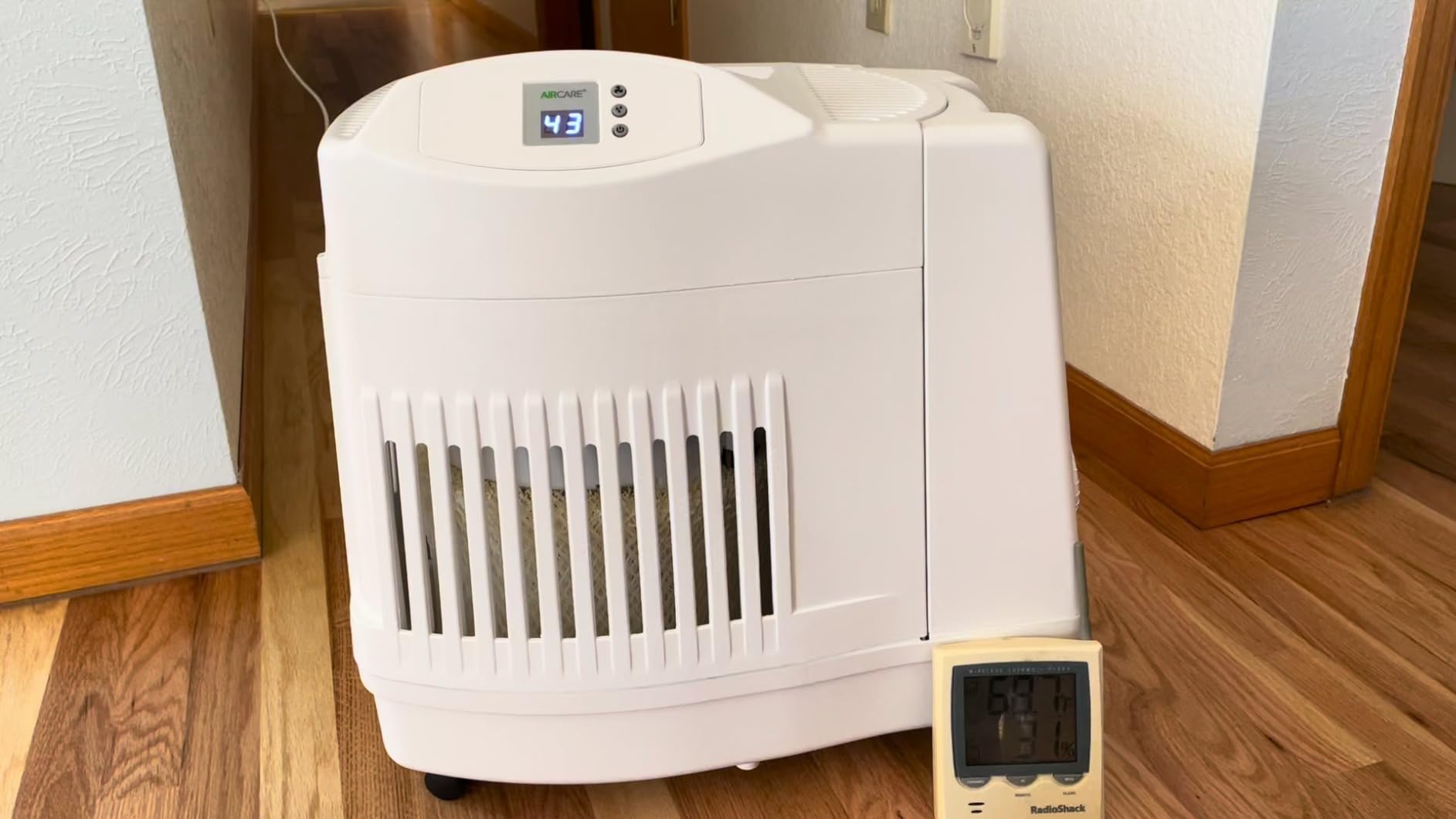
Two quirks come up repeatedly. The removable side tank is easy to carry and impossible to overfill, but it cannot be opened for cleaning, so you are refilling roughly once or twice a day in winter. The cord hygrometer also reads several points higher than a meter placed across the room, which is the usual reason a console seems to quit early.
There is a documentation mismatch worth knowing about. The supplied manual describes a four-button control while the unit carries a three-button panel. It is a printing issue rather than a defect, but it confuses first-time owners more than it should.
Who should buy the AIRCARE MA1201
Buy it if you have no ductwork, you are heating one large open space, and you are willing to refill it daily. It is the strongest pick for renters and for anyone who wants whole-floor results without hiring an installer.
Who should skip the AIRCARE MA1201
Skip it if daily refilling is going to bother you, or if the unit is going in a bedroom where the top fan speed would be a problem. Homes with hard water should budget for frequent wick replacement or plan on distilled water.
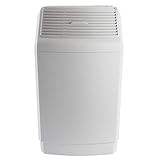
3. AIRCARE Space Saver 831000 – Best Budget Console with a Big Tank
AIRCARE Space Saver Large Evaporative Whole House Commercial 6 Gallon Humidifier for Large Rooms 2,700 sq ft. With Digital Controls, Auto Humidistat and Automatic Shut Off
Evaporative console
2,700 sq ft
6 gal tank
2 year warranty
Pros
- 6 gallon tank means long run time between fills
- Compact footprint for the coverage
- Digital controls with auto humidistat and shut off
- Trapmax filter technology
- Casters included and first wick in the box
Cons
- Wick replacement needed regularly and hard water encrusts it
- 10 percent one-star share over multi-year use
- Noticeably loud on higher fan settings
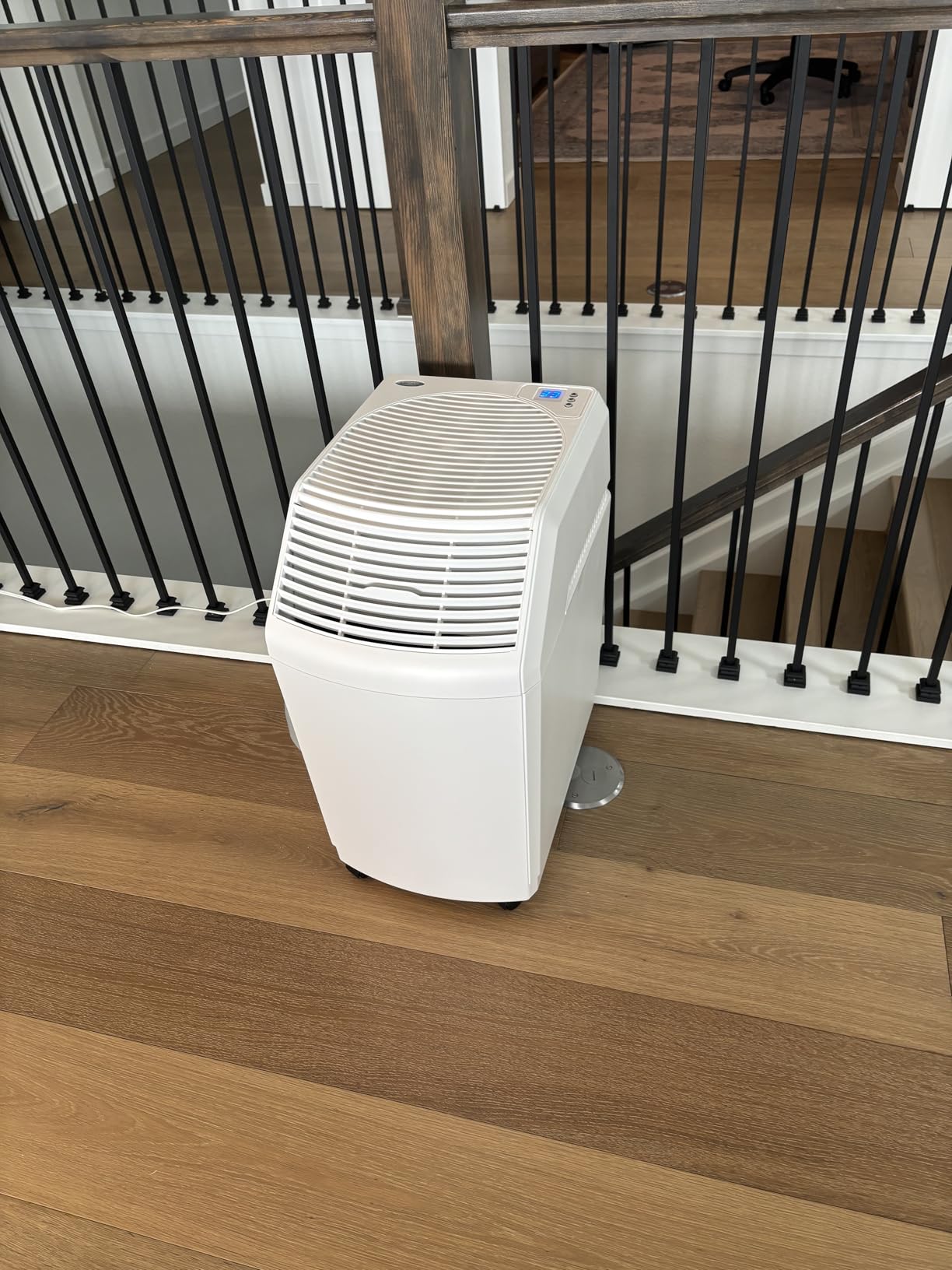
The Space Saver answers the most common console complaint, which is constant refilling. At 6 gallons it holds roughly twice the water of most console models in a body only 12.5 inches deep, and the castors let you roll it room to room instead of carrying it. Rated coverage is 2,700 square feet, so it suits a main floor or a large basement rather than a whole two-story house.
Everything else is standard good console hardware: digital controls, an auto humidistat, automatic shut-off when the tank empties or the target is reached, and the first 1043 Super Wick included. You will need a spare wick before the next season, since only one ships in the box.
Reliability is the tradeoff to weigh. About 10% of long-term owners leave a one-star rating, and the complaints cluster around wick upkeep in hard water and failures after a few seasons. If you run a vinegar rinse once a season and replace the wick on schedule, most of that friction disappears. Reviewers frequently pair this unit with the same AIRCARE wicks used on the larger consoles.
It is also worth noting how the wick behaves. A saturated wick that has dried out at the top is awkward to reseat while wet, and hard water will crust it faster than in a soft region. If you are in the Mountain West or the upper Midwest, treat the wick as a consumable you will buy twice a year.
Who should buy the AIRCARE Space Saver 831000
Buy it if you want console convenience without daily refills, your space is under 2,700 square feet, and you will keep fresh wicks on hand. It is a strong pick for a finished basement or a main-floor living area.
Who should skip the AIRCARE Space Saver 831000
Skip it if you need coverage well past 2,700 square feet, if you cannot keep wick replacements coming, or if you want it quiet at its highest setting. A ducted unit is the better answer for very large homes.
4. AIRCARE EP9 800 – Best Pedestal-Style Furnace Alternative
AIRCARE Digital Whole-House Pedestal-Style Evaporative Humidifier (Nutmeg)
Evaporative pedestal
2,400 sq ft
3.5 gal tank
2 year warranty
Pros
- Pedestal footprint tucks into a corner or alcove
- Digital panel with low water indicator and shut off
- Covers up to 2400 sq ft for a main floor
- Nutmeg finish blends into neutral decor
- 1043 Super Wick and cord included
Cons
- Heaviest unit here at 25 pounds so refilling is a two-handed job
- Wick replacement and descaling needed in hard water
- Noticeable sound on higher fan settings
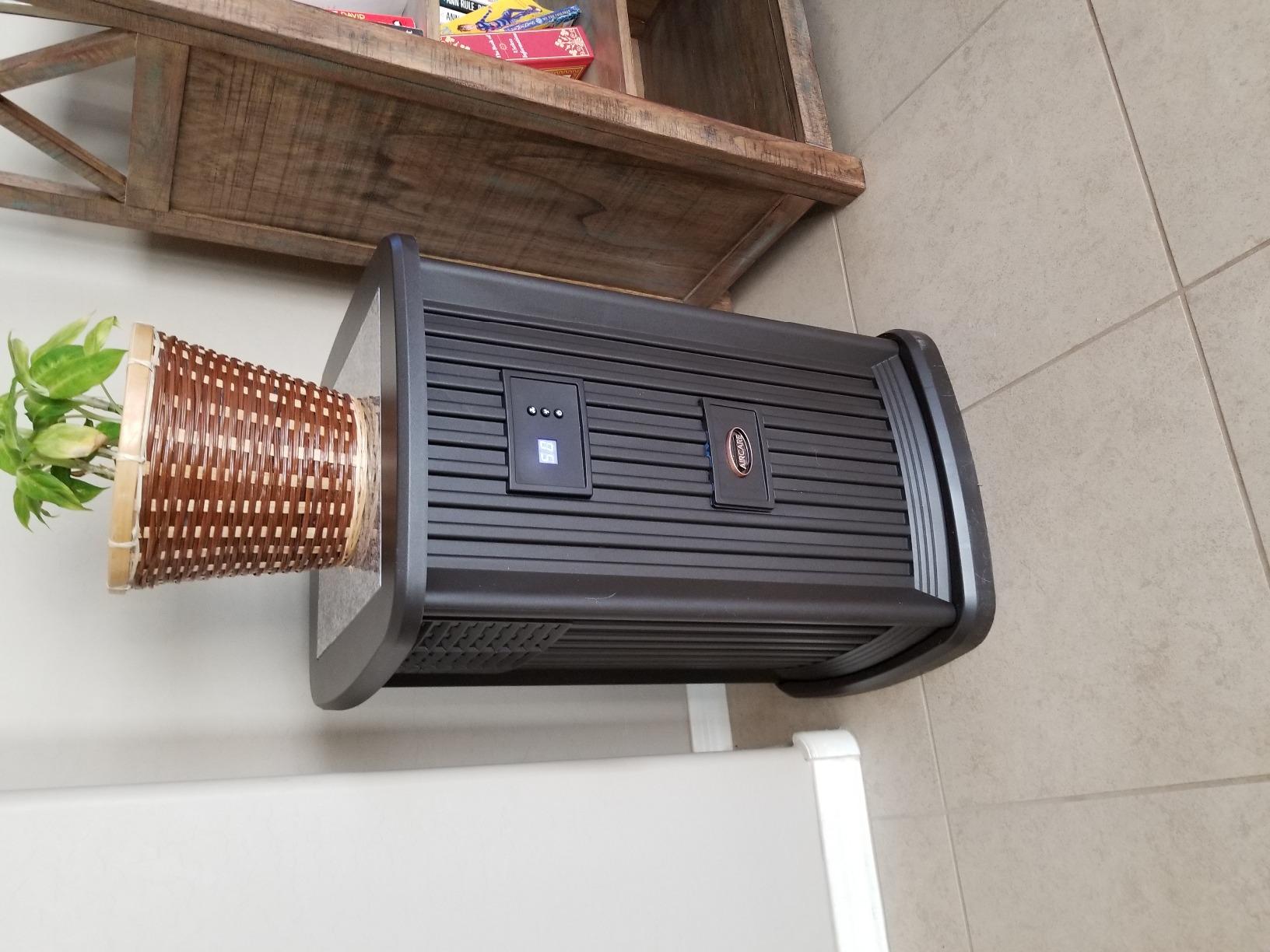
The EP9 800 exists for one reason: floor space. Its pedestal cabinet is 18 by 18 inches and slides into a corner or an alcove where a square console would block a walkway. At 2,400 square feet of rated coverage it is sized for a main floor or a two-bedroom apartment, and owners confirm it delivers meaningful whole-floor humidity on its low setting.
Controls are digital with a low water indicator and automatic shut-off when the tank empties, and a 1043 Super Wick plus the power cord ship in the box. The Nutmeg finish is a neutral brown rather than white, which makes it easier to blend into a room that is not styled around an appliance.
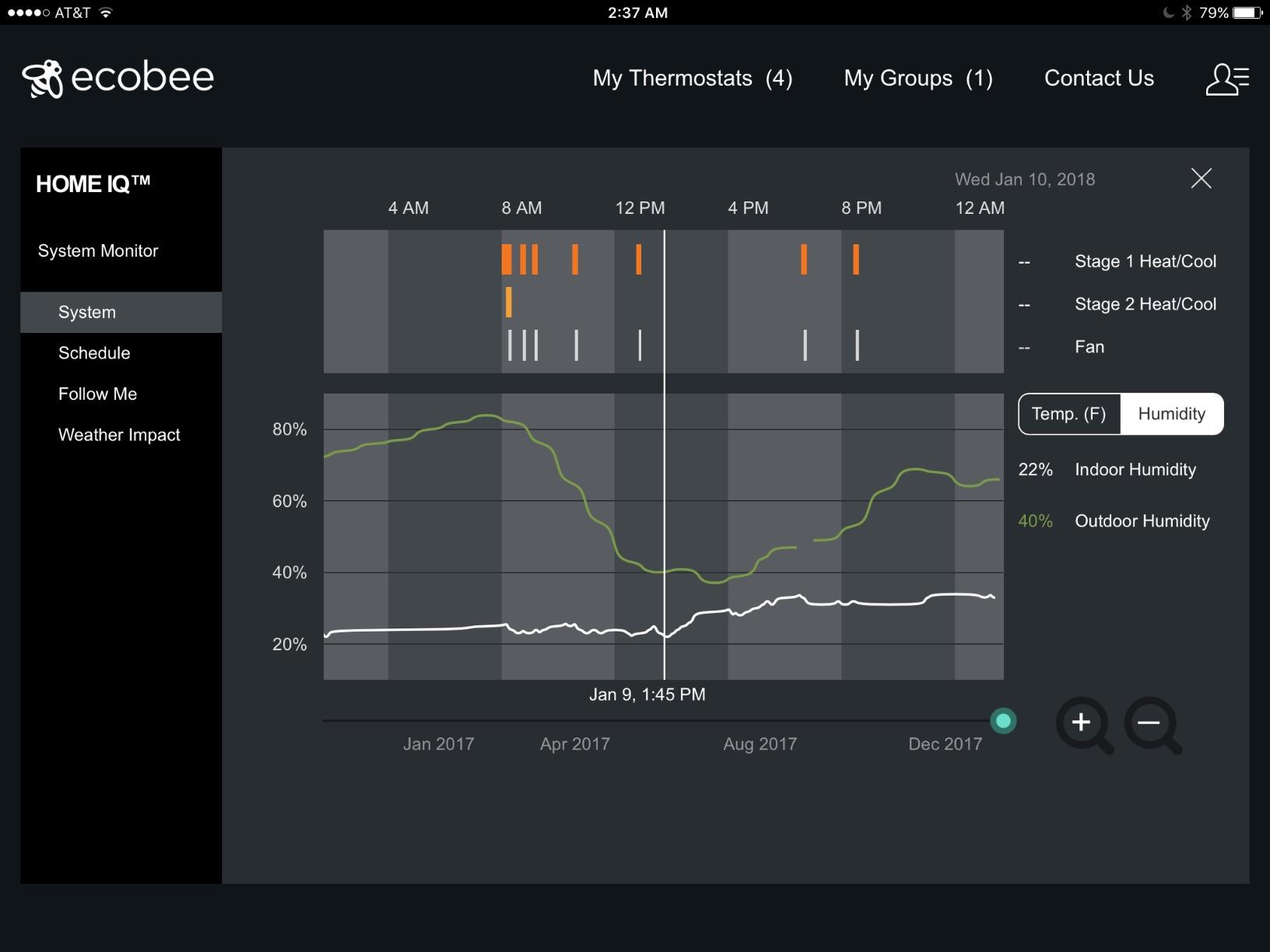
The practical problem is the weight. At 25 pounds when full, this is the heaviest console on the list, and refilling it takes a deliberate two-handed lift. Owners who bought it for a tight spot accept that trade happily; owners who planned to carry it between rooms do not. Descaling and wick replacement in hard water are the other recurring maintenance notes.
Sound is worth a note too. It is quiet on low, and it becomes noticeable on the higher settings. If the unit will sit near a bed or a desk you work at, plan to run it on low rather than auto.
Who should buy the AIRCARE EP9 800
Buy it if your floor plan is tight and the unit is going into a corner or alcove rather than being moved around. It is a good match for a main floor under 2,400 square feet and a fixed location you can reach easily.
Who should skip the AIRCARE EP9 800
Skip it if you will need to carry it to refill often, if you have hard water and no plan to use distilled water, or if the location requires high fan speeds. A lighter console is a better fit for those cases.
5. AprilAire 700M – Best for Large Homes Over 4,000 Square Feet
AprilAire 700M Whole-House Fan Powered Humidifier, Manual Control, Large Capacity, Up to 5,300 Sq. Ft., 18GPD, Gray
Fan-powered evaporative
18 GPD
Up to 5,300 sq ft
5 year warranty
Pros
- Highest output here at 18 GPD
- Built-in fan pulls heated air through the panel
- Manual single-sensor humidistat is simple and reliable
- 5 year manufacturer warranty
- Made in the USA with no white dust
Cons
- Manual control gives no outdoor temperature compensation
- Install still needs a plumber or HVAC tech
- Highest cost among the furnace-mounted models
- Water panel needs annual replacement
The 700M is the pickup for anyone whose house is genuinely large. At 18 gallons per day it carries the highest output in this group, and it is rated for 5,300 square feet in a tight envelope. Owners in severe winters credit the raw capacity with holding their target humidity even in big, well-insulated homes, which is exactly where smaller bypass units fall short.
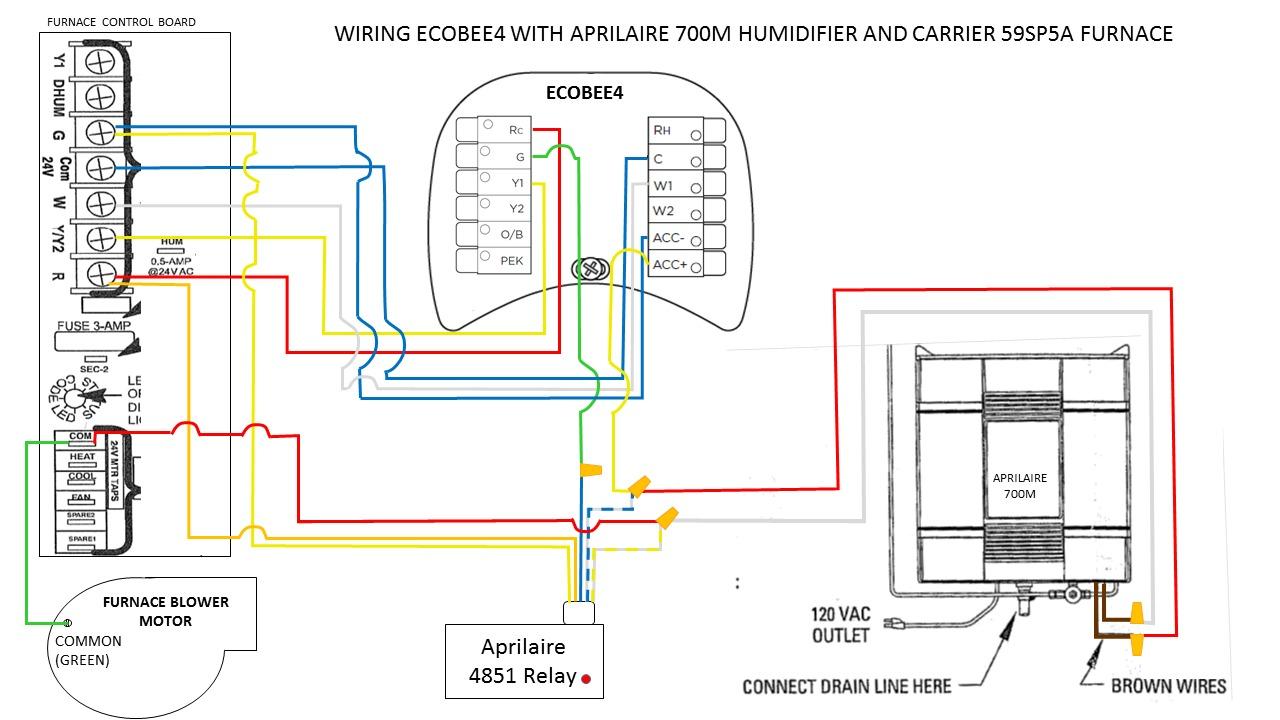
Unlike a bypass model, the 700M has its own fan. That fan pulls heated air from the furnace through the humidifier and pushes it into the duct, so moisture delivery does not depend on the furnace blower running at full speed. It also means a 120V power connection in addition to the 24V control circuit, which is one more thing in the install.
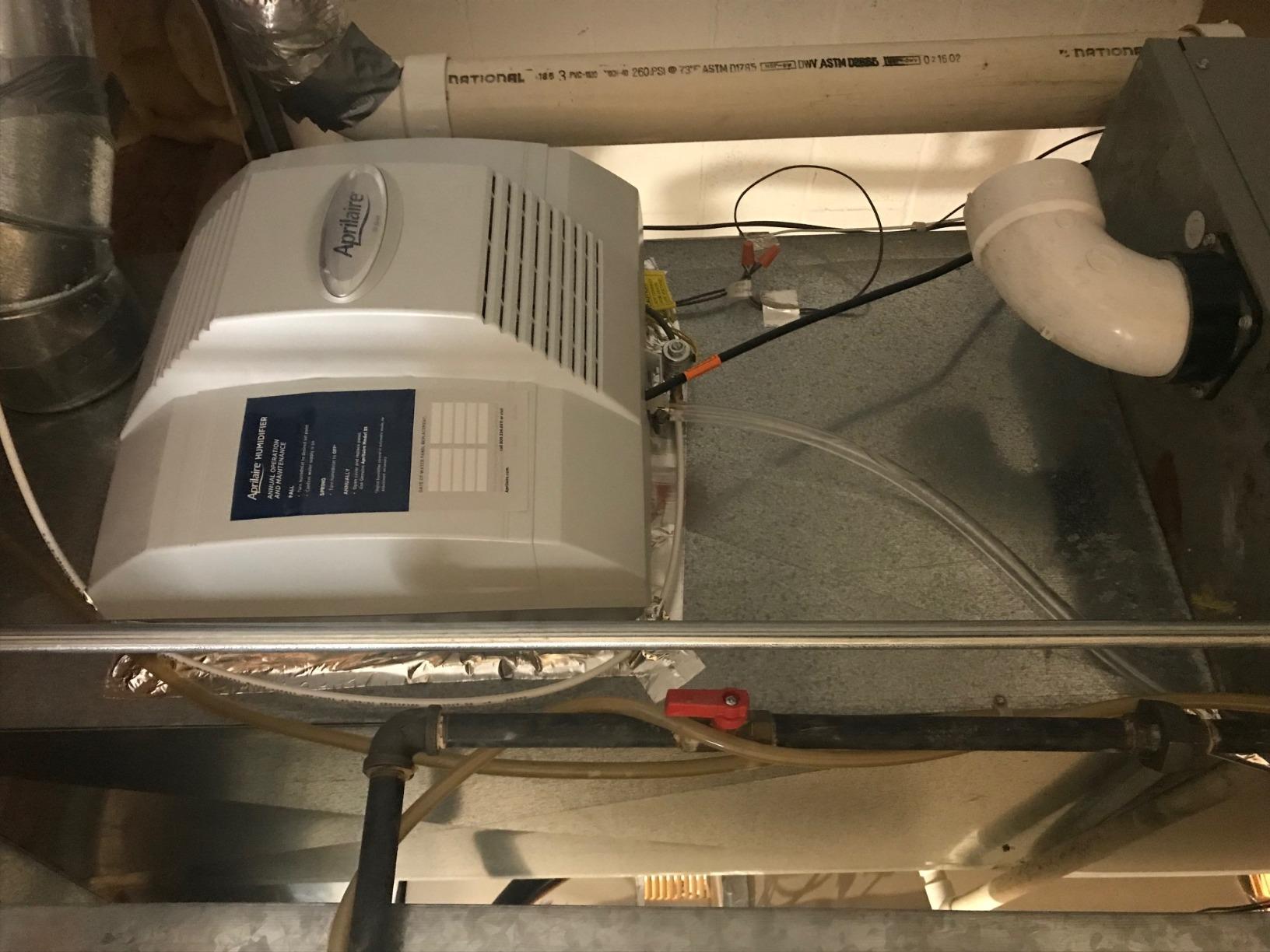
The manual humidistat is the main caveat. With a single sensor, it does not anticipate outdoor temperature the way the automatic models do, so on a mild sunny afternoon you may need to dial it back to avoid window condensation. Owners who prefer hands-off control should look at the automatic 500 instead.
The other thing to plan for is consumables. The water panel needs annual replacement, and the install is still a real HVAC job involving the bypass duct and 24V wiring. The 5-year warranty is one of the longer commitments in the category.
Who should buy the AprilAire 700M
Buy it if you are past 4,000 square feet, you have a cold climate, and you are willing to set the humidistat yourself at the start of each season. It is also a sensible second-stage upgrade when a bypass unit cannot keep up.
Who should skip the AprilAire 700M
Skip it if you want automatic outdoor compensation, if you would rather not run a 120V circuit to the furnace area, or if your home is comfortably under 4,000 square feet and already humidifying fine with a bypass model.
6. AprilAire 600M – Highest-Rated Manual Bypass Humidifier
AprilAire 600M Whole-House Humidifier, Manual High Output Furnace Humidifier, Large Capacity Whole-House Humidifier for Homes up to 5,000 Sq. Ft., White
Bypass evaporative
17 GPD
Up to 5,000 sq ft
5 year warranty
Pros
- Highest average rating in the group with 81 percent five-star votes
- 17 GPD handles homes up to 5000 sq ft
- Runs quietly with no fan motor
- Transformer humidistat sensor valve and panel all included
- 5 year manufacturer warranty
Cons
- Manual humidistat with no outdoor compensation
- Install needs sheet metal and plumbing skills
- Water panel needs annual replacement
- Can be tight in a small plenum
The 600M carries the highest average rating of any product we reviewed, and the reason shows up in the review text: owners describe stable, quiet whole-home humidity with no white dust and no surprises. It is a manual bypass unit rated at 17 gallons per day for homes up to 5,000 square feet, so it is far more capable than the compact bypass models it usually gets compared against.
Being a bypass design, it has no fan motor at all. Warm supply air moves across the water panel naturally whenever the furnace blower runs, which is why owners describe it as quiet. Because it evaporates rather than sprays, mineral dust never enters the supply air.
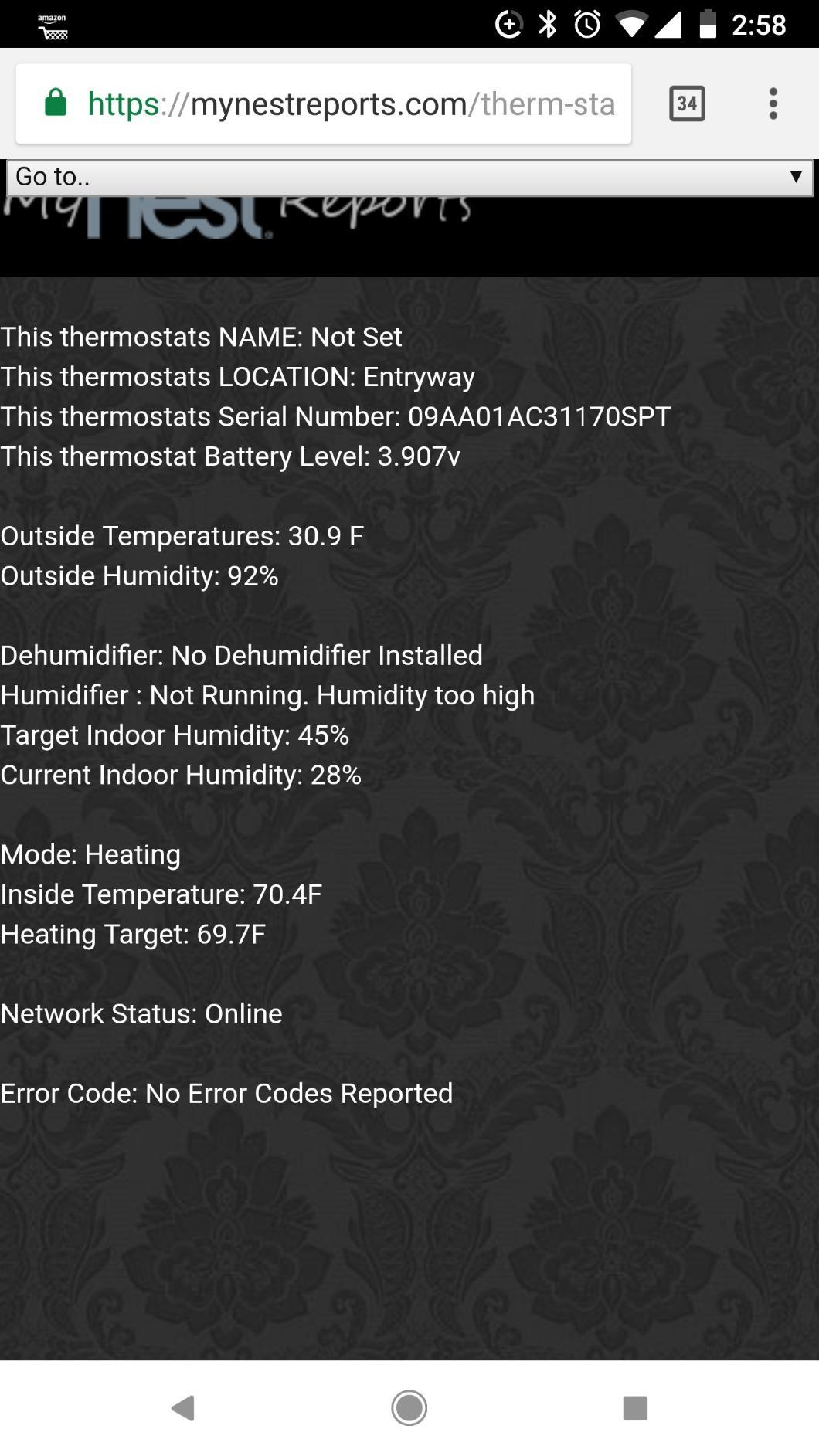
The box is unusually complete. The transformer, humidistat, outdoor sensor, valve and the first water panel all ship in the box, which cuts down the extra parts shopping that makes furnace humidifier installs more expensive than expected. You will still need a plenum collar, a water line, a drain and the low-voltage run to the humidistat.
The recurring caveat is the manual control. With one sensor and no outdoor compensation, it cannot predict a cold snap, so owners often reset the target at the start of winter and again when spring arrives. A few also note that the cabinet can be a tight fit in a small plenum, so measure before you order.
Who should buy the AprilAire 600M
Buy it if you want the quietest possible operation, you are comfortable setting the humidistat yourself, and you would rather have the install kit as complete as possible. It is a strong match for large homes up to 5,000 square feet.
Who should skip the AprilAire 600M
Skip it if you want the system to self-adjust through seasonal swings, if your plenum is unusually shallow, or if you are not prepared to replace the water panel every year. The automatic 500 is the simpler choice for set-and-forget households.
7. GeneralAire 1042-LH – Best Drop-In Replacement for an Older Bypass Unit
GeneralAire Humidifier Unit 1042-LH, Furnace Mount Bypass Type
Bypass evaporative
17 GPD at 120F plenum
Up to 2,800 sq ft
120V transformer included
Pros
- Rated 17 GPD at 120F plenum temperature
- Direct swap using the existing humidistat and 24V supply
- Reversible housing fits either-hand plenum
- Quiet with consistent house-wide humidity
- 120V transformer in the box
Cons
- Cutting template is misaligned so you must mark by hand
- Supplied screws are not self-tapping metal screws
- Drain fitting is oversized for the supplied hose
- Water line and saddle valve not included
Most of the feedback on the GeneralAire 1042 comes from owners replacing a humidifier that has been in their furnace for a decade or more, and the reaction is consistently positive once it is running. It is rated at 17 gallons per day based on a 120F plenum temperature, which is a strong output number for the class, and the housing is reversible for either-hand 6-inch duct connections.
Because it is a conventional 24V bypass unit, you can usually reuse the humidistat and the 24V supply you already have. That turns the project into a swap rather than a fresh install, and it is why this model shows up in repair threads more than new-construction ones. The 120V transformer is included in the box.
The install hardware is where the complaints live. The printed cutting template is reportedly misaligned, so installers end up using the housing itself to mark the plenum opening. The supplied screws will not self-tap sheet metal, and the drain fitting is too large for the hose included, which takes heat to fit. The summer/winter damper also only opens about a third because the cabinet is not deep enough.
None of that is fatal, but each one adds time to a job you are probably paying someone for. Plan on a ball valve or a push-to-connect fitting rather than the saddle valve, and buy your own sheet-metal screws.
Who should buy the GeneralAire 1042-LH
Buy it if you already have a working 24V humidistat and control circuit and just need a newer cabinet with higher output. It suits homes up to 2,800 square feet and owners who value field-serviceable parts.
Who should skip the GeneralAire 1042-LH
Skip it if you are starting from zero, since you would be buying a humidistat, transformer, water line and valve separately. It is also a poor fit if you want a clean install without sheet-metal fuss, or if you need coverage past 2,800 square feet.
8. Honeywell HM750A1000 – Best Electrode Steam Humidifier
Honeywell HM750A1000 Electrode Steam Humidifier
Electrode steam
Hardwired 120V or 240V
Digital humidistat with outdoor sensor
13 pounds
Pros
- Steam reaches the plenum directly for far more moisture per cabinet
- Boiled water means no standing water or bacterial growth
- Pre-mineralized cylinder starts up quickly
- Smallest footprint and mounts on duct or wall
- Dimmable 120V or 240V with output doubling on 240V
Cons
- Must be hardwired with no 120V plug
- Homeowner install voids the warranty
- Water canister is a yearly consumable
- Inlet valve kit is hard to find and not a generic part
Steam is a genuinely different category from everything else on this list. The Honeywell HM750A1000 boils water into steam and injects it directly into the plenum, which means a far smaller cabinet can move far more moisture than an evaporative panel. Reviewers who are happy with it praise how quickly a dry house responds and how clean the output stays.
There is a genuine hygiene argument for steam. There is no standing reservoir inside the cabinet, so there is nowhere for bacteria or mold to colonize, and no white dust because nothing mineral is being aerosolized. The pre-mineralized cylinder also means faster startup and commissioning than a raw canister.
At 21 by 8 by 10 inches it is the smallest footprint in its class and can be mounted on the duct or a wall. Output doubles when it is configured for 240V instead of 120V, and the digital humidistat includes an outdoor temperature sensor to help limit window condensation on mild days.
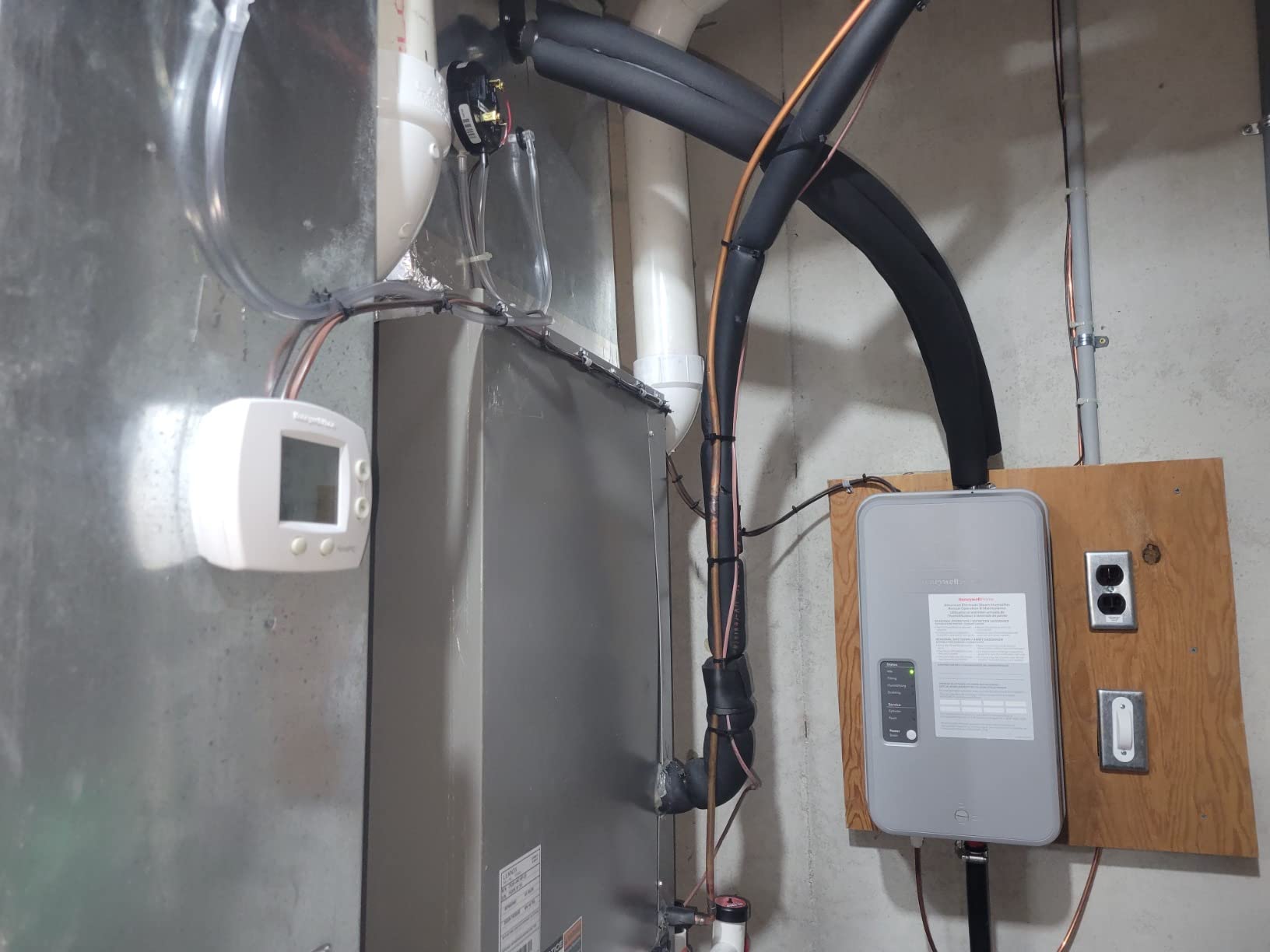
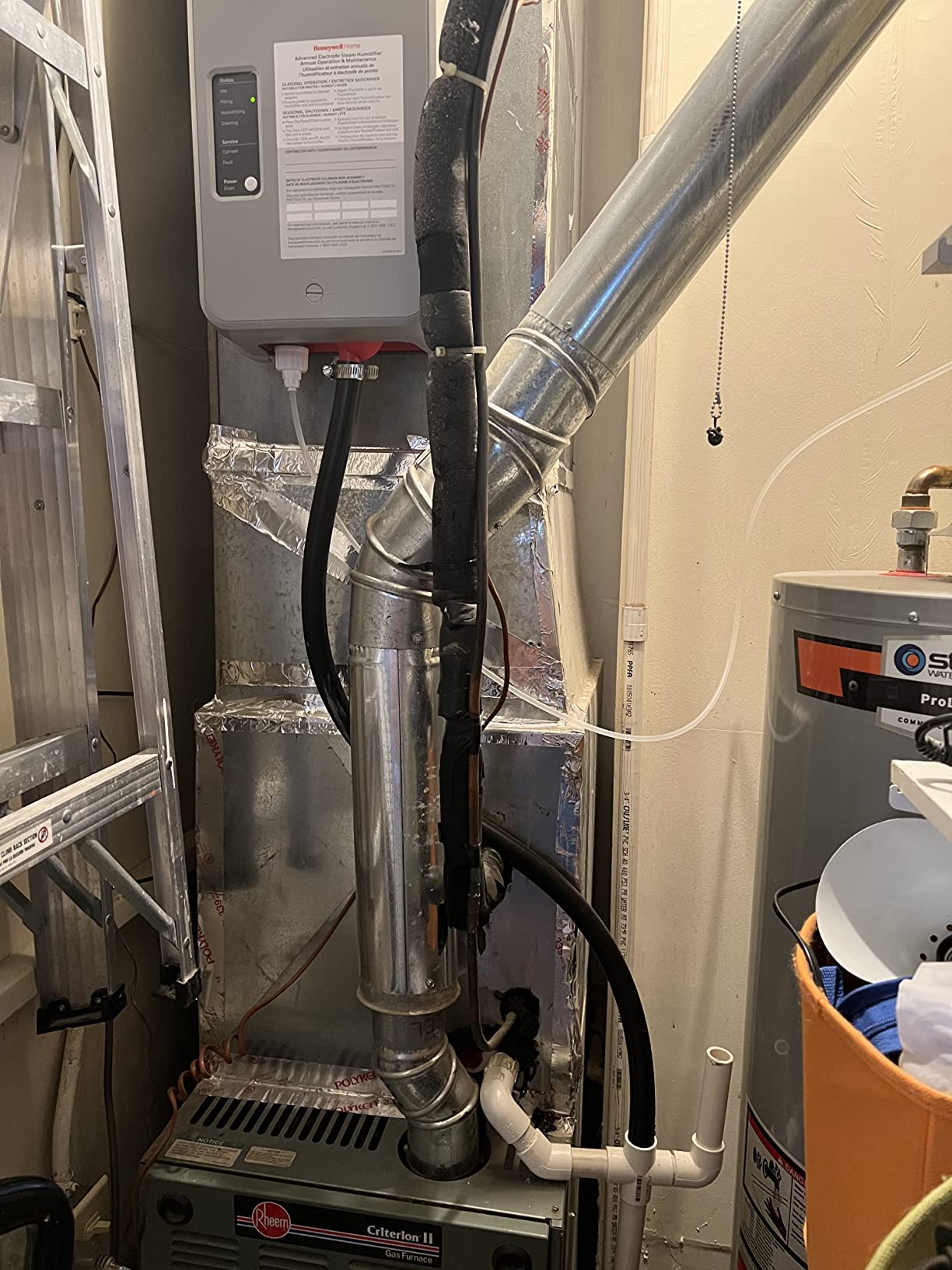
The honest downsides are installation and serviceability. It must be hardwired with no 120V plug option, and a homeowner install reportedly voids the Honeywell warranty, which is not spelled out in the listing or the manual. The water canister is a yearly consumable, and the replacement inlet valve kit is not a generic part, which is the failure point HVAC-competent buyers watch most closely.
Who should buy the Honeywell HM750A1000
Buy it if you have hard water that would destroy an evaporative pad, if you want maximum moisture delivery from a small cabinet, or if you are comfortable with a hardwired installation and an annual canister. It is a serious option for very large or very dry homes.
Who should skip the Honeywell HM750A1000
Skip it if you want a plug-and-play install, if a yearly consumable canister does not fit your maintenance habit, or if replacement parts matter to you.
9. Levoit Superior 6000S – Best Evaporative Console with App Control
Levoit Evaporative Humidifiers for Home Whole House, 23L Superior 6000S
Evaporative console
3,000 sq ft
23L tank
App and voice control
Pros
- Tap water compatible with no white dust and no wet surfaces
- 23L tank runs up to 72 hours on low
- 1500 mL per hour covers 3000 sq ft
- Detachable pump makes deep cleaning simple
- VeSync app and voice assistant support
Cons
- Wick filters need replacing every 3 to 6 months
- Tank discoloration from water impurities
- Sensor accuracy stated as plus or minus 5 percent RH
- Evaporative output drops as the filter ages
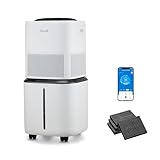
The Superior 6000S is the newest design in the console category and the only one here that combines evaporative output, a genuinely large tank and app control in a single cabinet. At 23 liters, or 6 gallons, it runs up to 72 hours on low speed, which is the longest gap between refills of any evaporative model in the group.
Because it evaporates through a wick rather than atomizing, it is safe with ordinary tap water. No white dust, no wet furniture, no mineral film. Output is rated at 1,500 mL per hour for up to 3,000 square feet, and the total draw is only 30 watts, which is less than a single incandescent bulb you would leave on all night.
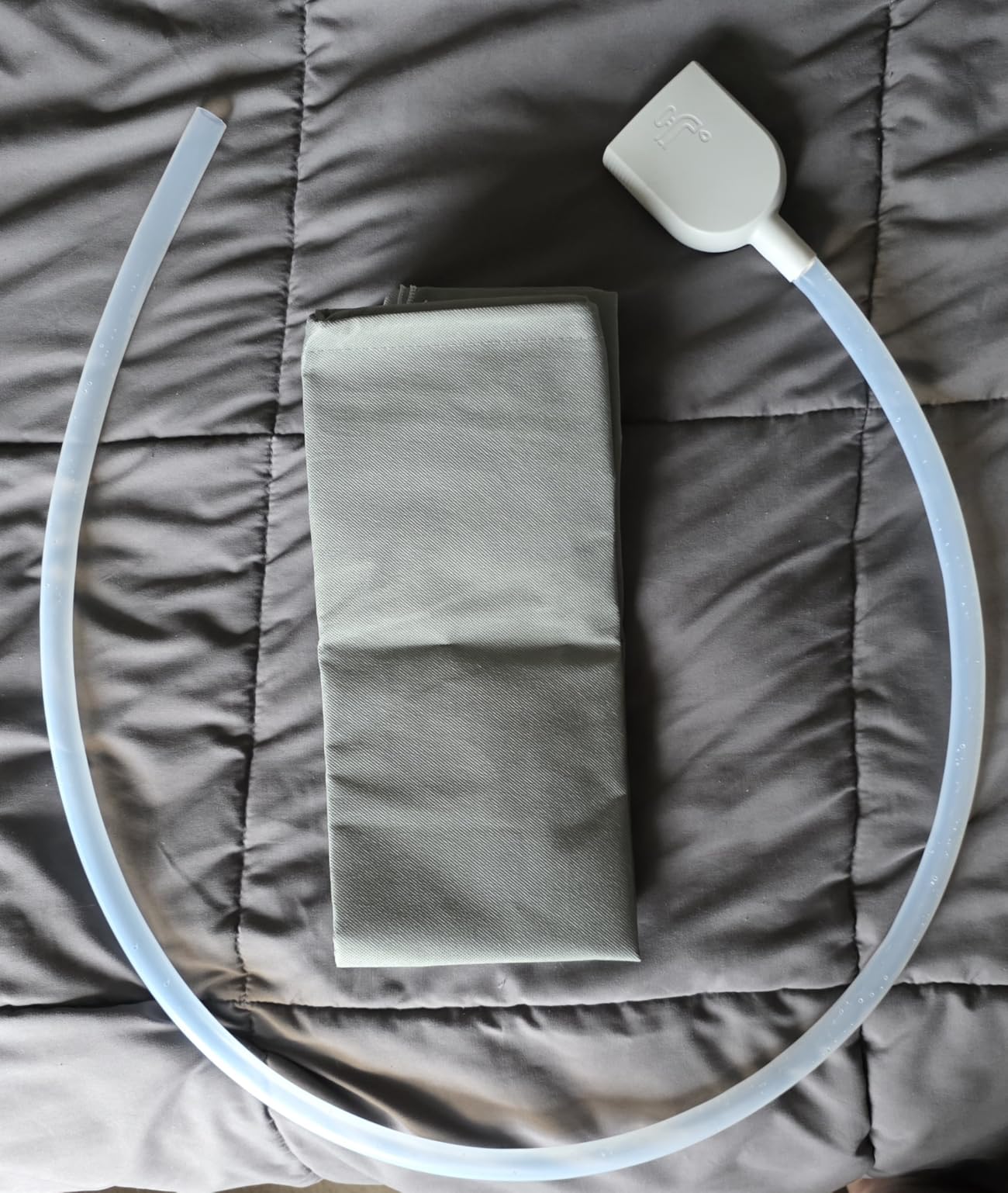
Smart control is the differentiator. The VeSync app and voice assistant support offer two automatic modes, and the humidity sensor is quoted at plus or minus 5% RH. That tolerance is worth remembering, and it is another reason to verify with a handheld meter rather than trusting the display alone.
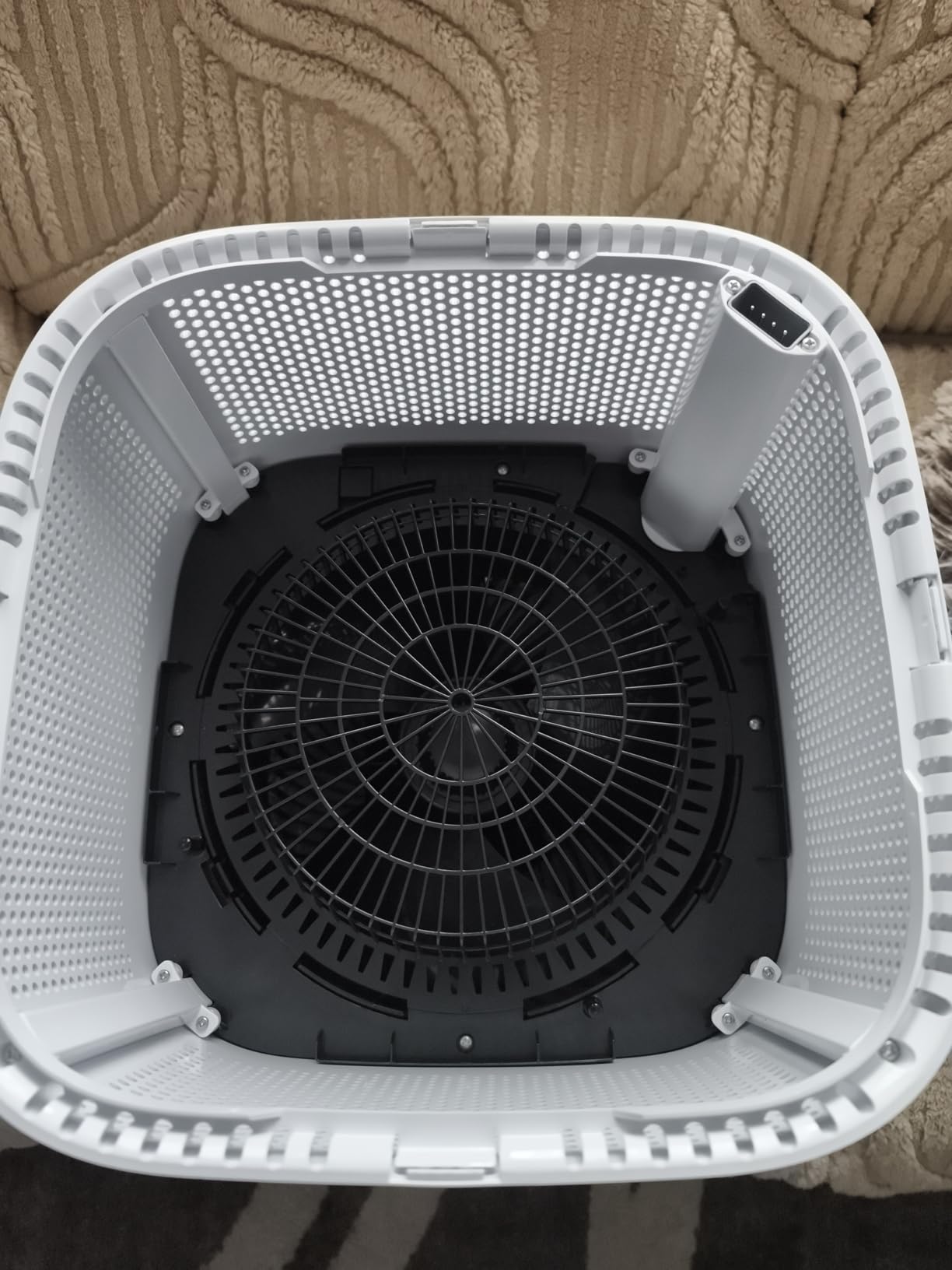
The detachable pump is a small design win that matters more than it sounds. Pulling the pump out lets you clean the tank and the base properly instead of swabbing around a fixed assembly. The recurring cost is the wick, which needs replacing every three to six months, and output falls off as it ages.
Who should buy the Levoit Superior 6000S
Buy it if you want a console that can run three days without attention, you already use app-based home control, and you want to avoid distilled water. It is a good match for a main floor up to 3,000 square feet.
Who should skip the Levoit Superior 6000S
Skip it if you are looking for the highest possible output in a very cold climate, or if you would rather not set a reminder for wick replacement every few months. It is also unnecessary if you have no interest in the app.
10. Lacidoll 16L Smart – Best for Bedrooms and Quiet Rooms
Lacidoll 16L Smart Humidifier large room, Whole house Humidifier for Home 1500 sq.ft with APP/Voice/Remote Control, Ultrasonic Cool Mist Humidifiers for Bedroom, Plants, office with Tube, White
Ultrasonic cool mist
1,500 sq ft
16L tank
35 dB sleep mode
Pros
- 16L tank runs 48 hours on one fill at 800 mL per hour
- Smart Life app plus Alexa and Google Assistant control
- Humidistat from 40 to 90 percent with auto shut off
- 35 dB sleep mode with panel lights off
- Top-fill wide opening tank and aroma tray
Cons
- Ultrasonic output leaves white dust with hard tap water
- Built-in humidity reading is higher than across the room
- No visible water level below 75 percent
- No casters so it must be lifted to move
At 35 decibels in sleep mode with the panel lights off, the Lacidoll 16L Smart is the quietest option on this list, and that is why it lands in bedrooms and nurseries rather than main living spaces. The 16-liter tank delivers roughly 48 hours of mist per fill, and the humidistat ranges from 40% to 90% RH with automatic shut-off at target.
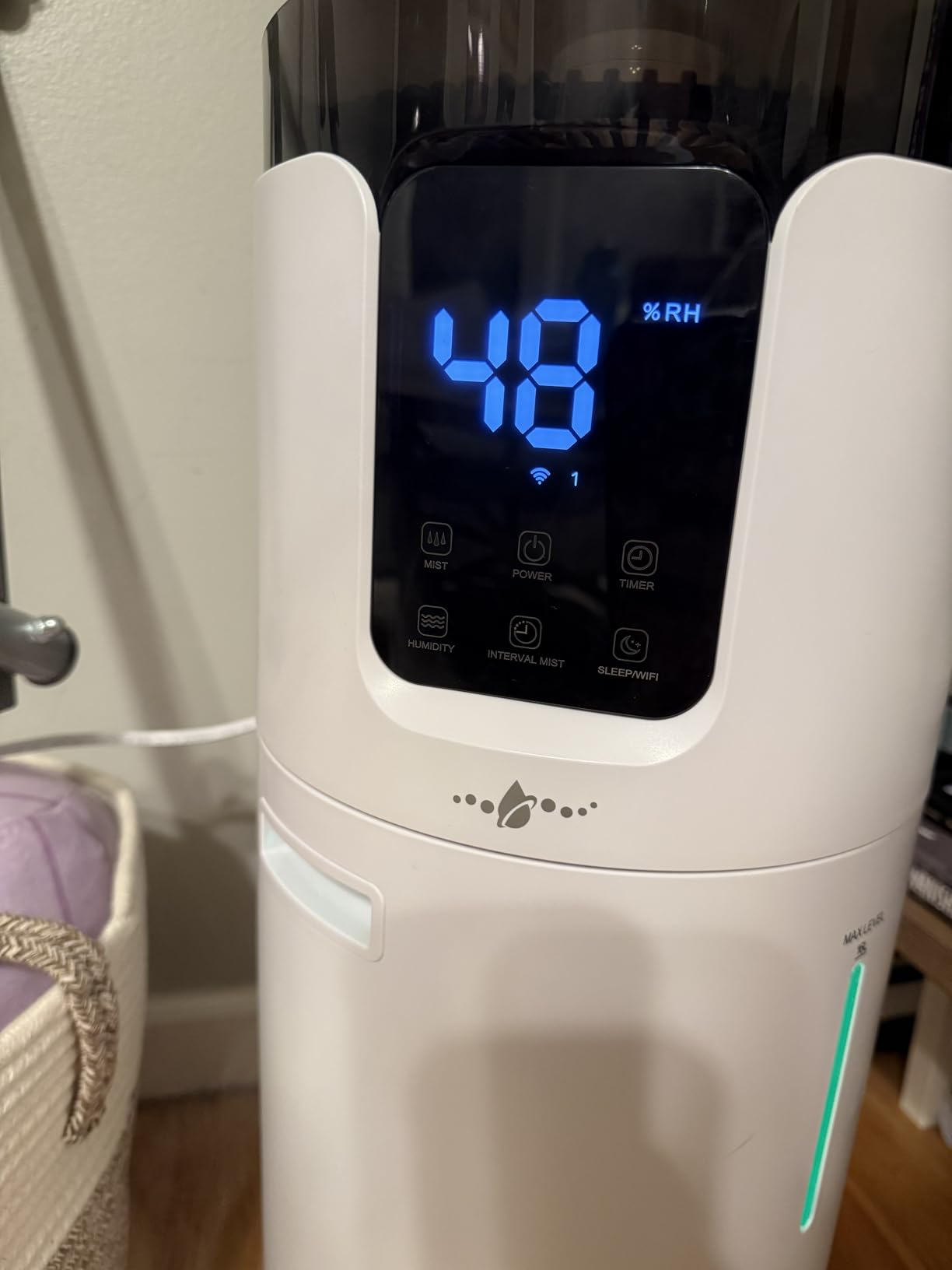
Control is unusually thorough for this class. The Smart Life app, Amazon Alexa and Google Assistant voice control all work, and four mist speeds plus three intermittent modes give you fine control over duty cycle. Note that the app shortcut levels do not map cleanly onto the four hardware mist levels, so fine-tuning still needs the physical panel.
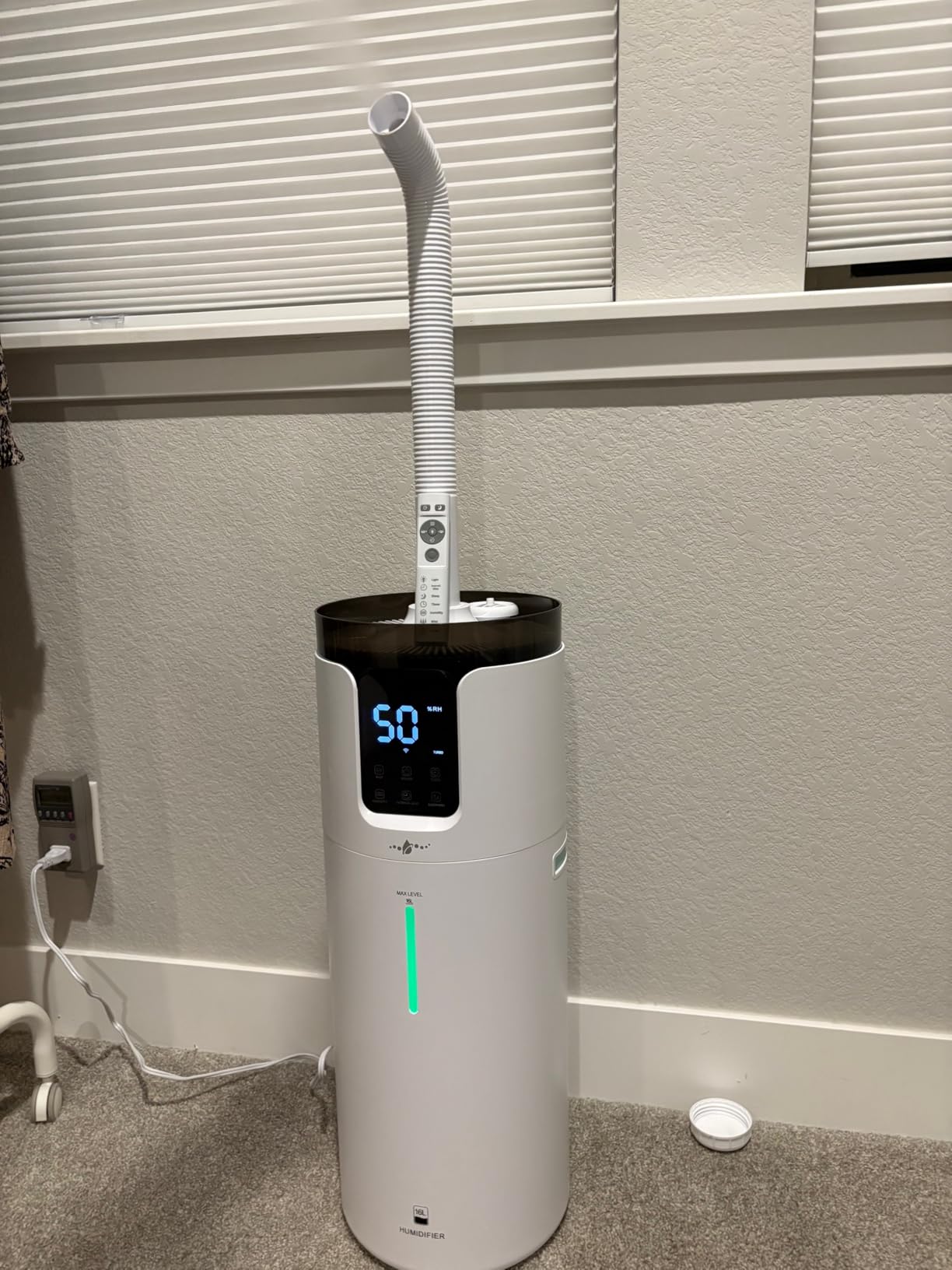
There is one significant caveat and it is a technology issue, not a quality issue. Ultrasonic cool mist deposits white dust when you use hard tap water, and it can scale the pump over time. In a soft-water region this is a non-issue; in the Mountain West or the upper Midwest you should use distilled or purified water.
Two smaller things: the humidity reading right next to the unit runs higher than a meter placed across the room because the mist does not mix instantly, and there is no visible water level once the tank drops below 75% without lifting the top section. Customer service has been responsive, including a replacement sensor head offer when one was needed.
Who should buy the Lacidoll 16L Smart
Buy it if the unit is going in a bedroom, a nursery or an office where noise and app control matter, and if you are past the worst of the hard-water areas. It is a strong pick for a specific room rather than a whole open floor plan.
Who should skip the Lacidoll 16L Smart
Skip it if you have hard well or tap water and do not want to buy distilled water, or if you need to move the unit regularly since there are no casters. An evaporative model is the safer choice in mineral-heavy regions.
11. Lacidoll 16L Cool Mist – Best Basic Large-Room Coverage
16L Cool Mist Humidifier Large Room Whole House & Commercial 1500 sq.ft
Ultrasonic cool mist
1,500 sq ft
16L tank
1 year warranty
Pros
- Lowest cost of any whole-house-capable model here
- 16L tank runs up to 48 hours on one top fill
- Extension tube and 360-degree rotating nozzle aim the mist
- Four mist levels with 40 to 90 percent auto control
- 12 hour timer and night light for bedroom use
Cons
- Ultrasonic output leaves white dust with hard tap water
- No app or voice control unlike the smart version
- Only a 1 year warranty
- HEPA designation means another consumable
- Not an in-duct unit so humidity concentrates nearby
Strip away the smart features and what remains here is the most cost-efficient way to add moisture to a 1,500 square foot area. The 16-liter, 4.2-gallon tank holds roughly 48 hours of continuous mist on a single top fill, and buyers consistently confirm real humidity gains for the money spent.
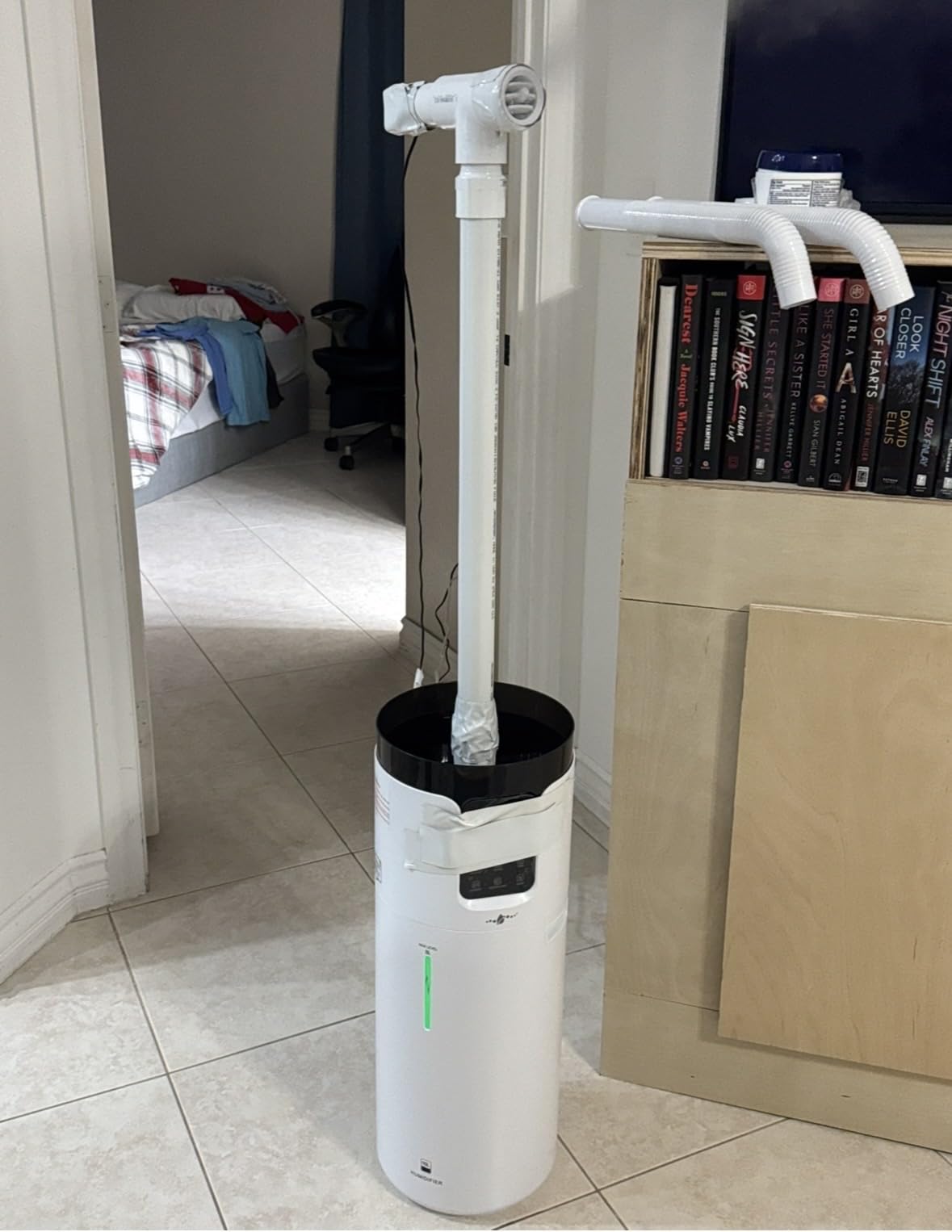
The physical controls are straightforward. Four mist levels including a turbo setting, humidity control from 40% to 90%, a 12-hour timer, a night light and an aroma diffuser tray. The extension tube and the 360-degree rotating nozzle let you aim the mist away from walls, which helps with the wall-dampness problem ultrasonic models can create.
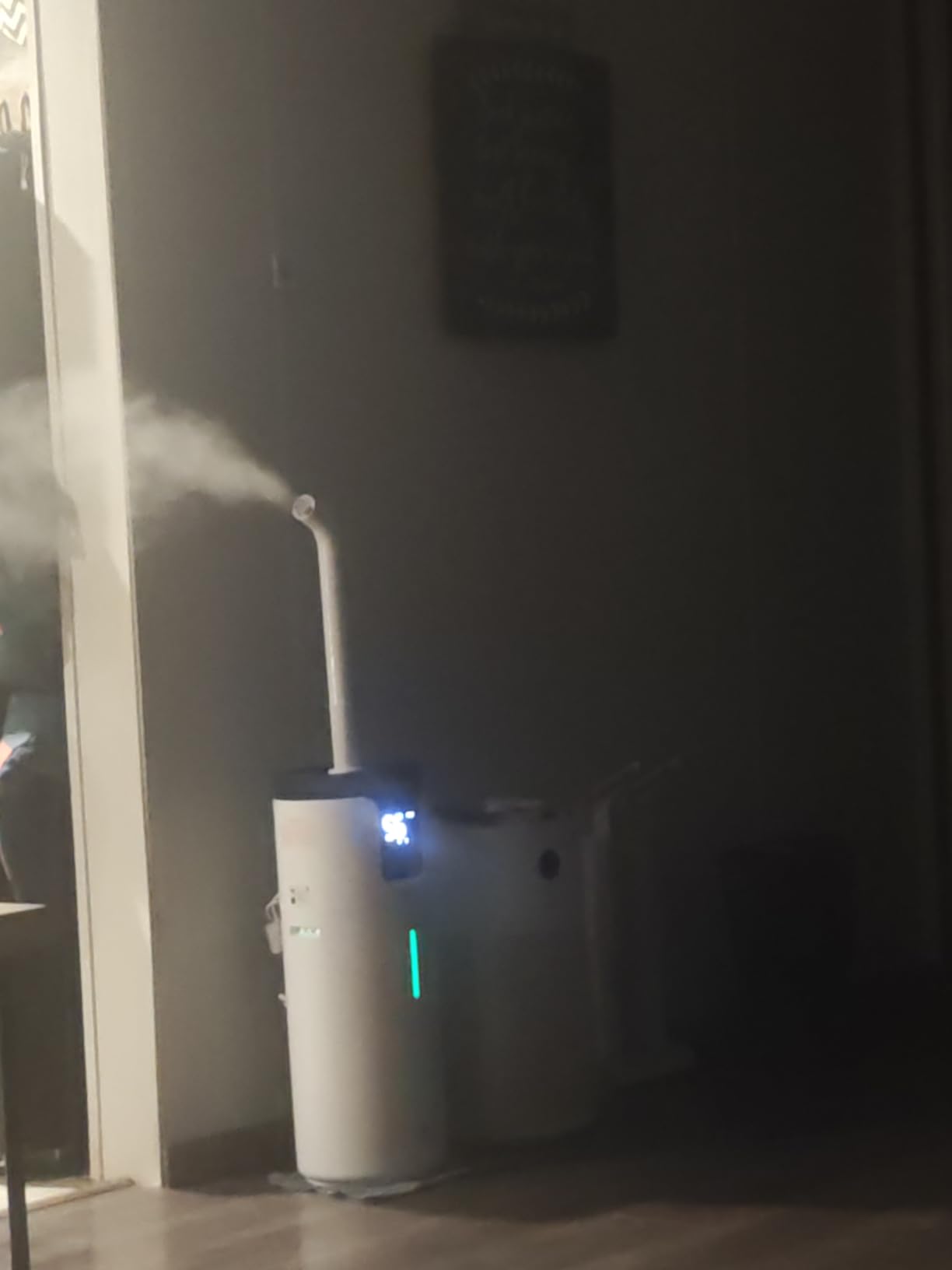
Two tradeoffs versus the smart Lacidoll. There is no app and no voice control, which is not a big loss if you plan to set a target and leave it. The 1-year warranty is thinner than the rest of the field, and the stainless atomizer and detachable pump are a plus but the HEPA designation adds a consumable to think about.
As with any ultrasonic cool mist unit, hard tap water produces white dust. Since this is not an in-duct model, moisture also concentrates near the appliance, so placement in the middle of a large room matters more than it would for a console.
Who should buy the Lacidoll 16L Cool Mist
Buy it if you want the lowest cost path to meaningful humidity in a large room, you are comfortable setting it with physical controls, and your water is reasonably soft. It suits a 1,500 square foot living area, office or basement.
Who should skip the Lacidoll 16L Cool Mist
Skip it if you are in a hard-water region, if you want voice and app control, or if a one-year warranty is not enough for you. It is also not the answer for humidifying more than one closed-off level of a house.
12. DREO 16L Smart – Best Runtime at 130 Hours
DREO 16L Smart Humidifier Large Room 1000 ft², 130H Runtime, 30dB, Top Fill
Ultrasonic cool mist
1,000 sq ft
16L tank
30 dB operation
Pros
- 16L tank runs up to 130 hours
- 6 foot mist column at 400 mL per hour mixes well in tall rooms
- 5 percent humidity sensor with status light
- App voice remote and programmable schedules
- Self-cleaning tank with detachable parts at 26 watts
Cons
- A small cluster of sensor accuracy complaints
- Still produces some white dust with tap water
- Scale inhibitor cartridge is a monthly replacement
- Smallest coverage claim here at 1000 sq ft
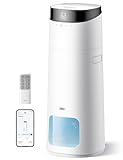
The DREO 16L is defined by one number: 130 hours of runtime. On the low setting that is roughly five days without a refill, and it comes from the tall tower format and a large tank rather than from any clever pump design. If refilling is the task you most want to avoid, this is the unit that does it best.
At 25 inches tall it sends a 6-foot mist column upward at 400 mL per hour, and owners in dry climates and large basements report humidity climbing from the high 20s into the 40-50% range within a couple of days. At 30 decibels it is the second quietest unit here, with a dimmable display for sleeping.
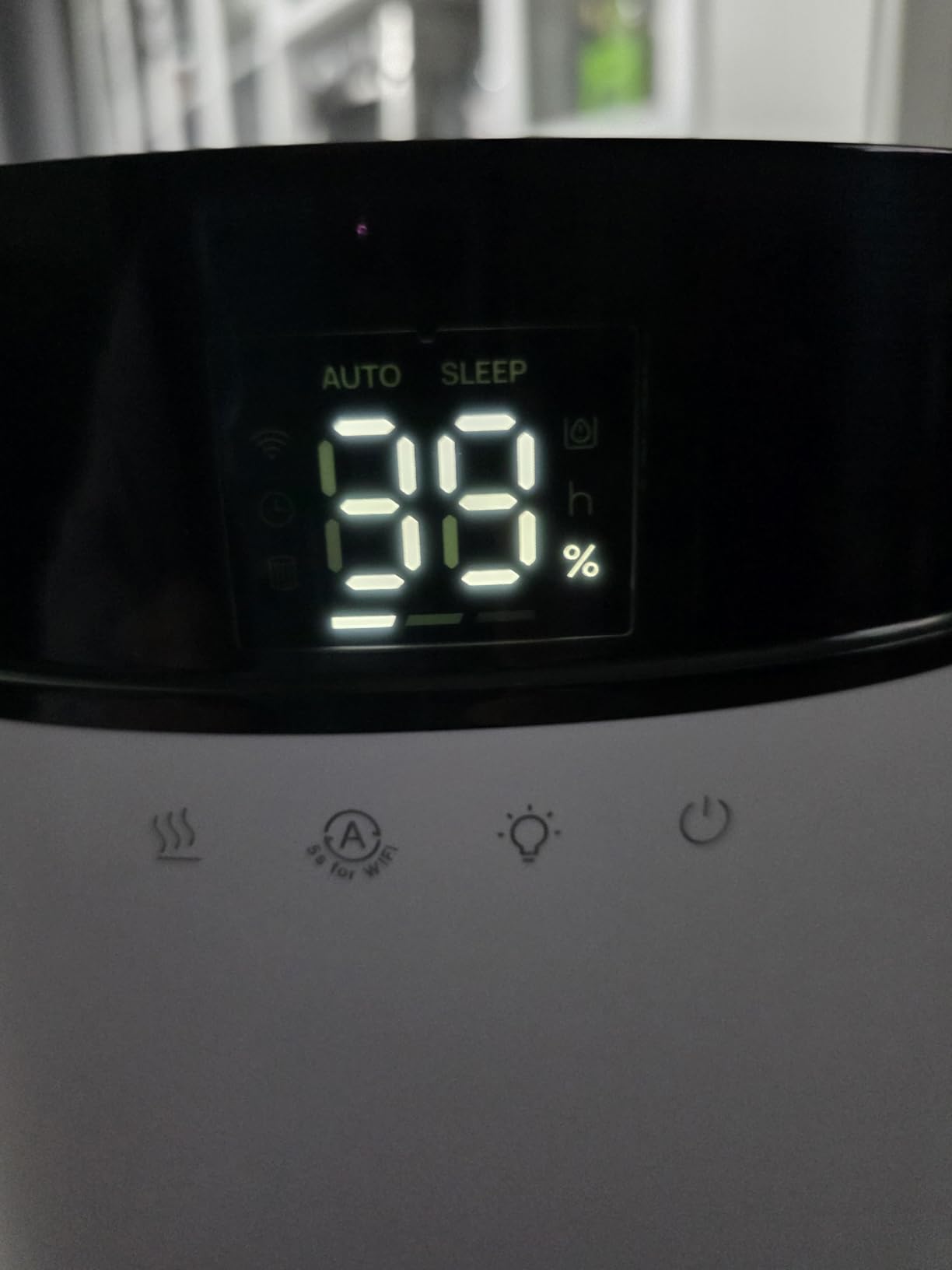
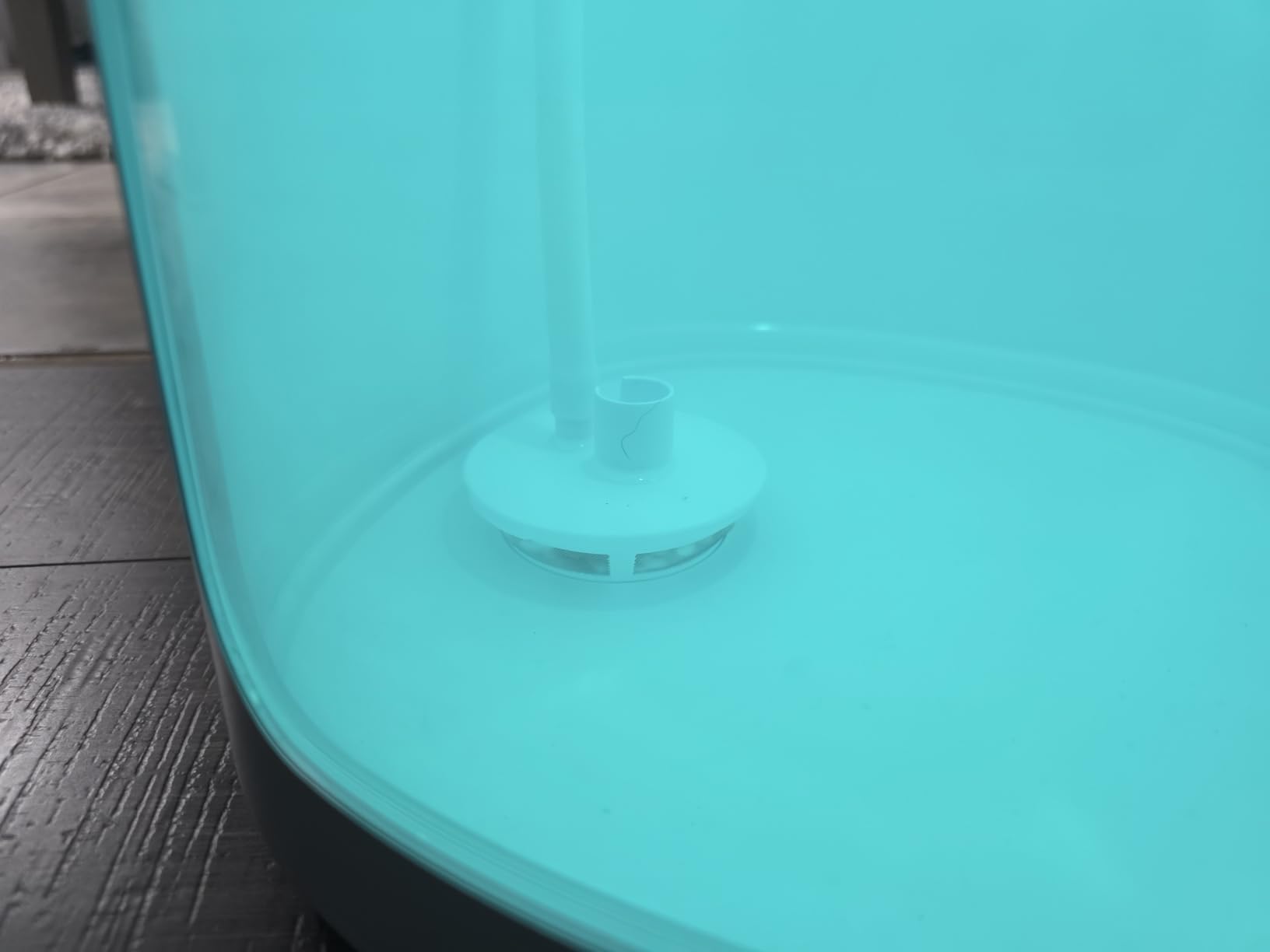
The cartridge and UV combination is credited with eliminating pink slime compared with earlier tank-style units, and the tank self-cleans with detachable parts. Draw is only 26 watts, and an illuminated water-level window takes some of the guesswork out of refilling.
Two things to weigh. There is a small but real cluster of reports that the humidity sensor drifts high and cuts the unit off early, and one owner received a replacement without warranty support, so the sensor is worth monitoring with a handheld meter. Dust is reduced by the cartridge rather than eliminated, so hard water still calls for distilled water.
Who should buy the DREO 16L Smart
Buy it if you want the longest possible time between refills, you need a quiet unit for a tall room, and you like scheduling the run time through the app. The 1,000 square foot rating suits one large room rather than a whole floor.
Who should skip the DREO 16L Smart
Skip it if you need coverage past 1,000 square feet, if you would rather not replace the scale-inhibitor cartridge monthly, or if hard tap water rules out distilled water in your household. An evaporative console is the more forgiving choice.
How to Choose a Whole-House Humidifier for Dry Air
What kind of humidifier is best for dry air?
For dry winter air in a home that is heated, an evaporative model is the standard answer, and it comes in two shapes: mounted on the furnace plenum, or a free-standing console. Evaporative units add moisture at the temperature of the air they sit in, which means no condensation, no white dust and no chill factor. If you cannot modify ductwork, a console is the only realistic option.
The five humidifier types explained
Bypass evaporative – Mounts on the warm supply plenum. Warm air passes across a water-saturated pad and the moisture is carried into the duct. Needs a humidistat, 24V control, a water line, a drain and a collar.
Fan-powered evaporative – Same pad, plus a built-in fan that pulls air from the furnace and pushes it into the duct. Delivers moisture faster and covers more square footage, and needs a 120V outlet near the furnace.
Evaporative console – A floor unit with a wick filter and its own fan. No ductwork, no installation, and no plumbing beyond carrying water to it.
Electrode steam – Boils water and injects steam into the plenum. Very high output in a small cabinet and no standing water inside the unit, but it is hardwired and needs an annual mineral canister.
Ultrasonic cool mist – Atomizes water into a cool fog. Cheapest and quietest, but it puts minerals into the air and needs distilled or purified water in hard-water regions.
What size humidifier do I need? Use the GPD rule
The sizing rule of thumb is 0.4 to 0.5 gallons per day of output for every 1,000 square feet of conditioned space. Below that, the unit will run continuously and still miss its target on a cold night. Above that, you are paying for capacity you will not use.
GPD ratings assume warm air and a tight building envelope, so treat them as optimistic. Forum owners report a well-sized bypass unit delivering 15 to 30% relative humidity gains in the first week, and separately report that a tight, leaky house in very cold weather simply will not climb past roughly 30-32% no matter which unit you install.
Ducted or console: which one fits your home
Choose a ducted unit if you have forced-air ductwork, a furnace plenum and the willingness to have it installed. It is the only option that reaches every room, and it is the right answer for two-story homes, open floor plans and any space more than about 3,000 square feet.
Choose a console if you rent, have a boiler, radiant floor heat or mini-splits, or simply do not want an install. Keep the doors between rooms open, because a closed interior door isolates the console and the rest of the house stays dry. A useful trick is to place it near the stairwell opening in a two-story home so air moves to both levels.
What number should you set your humidistat to in winter?
Set the humidistat to 35 to 45% for most homes in cold weather, and treat 45% as the practical ceiling in a cold climate. That range sits comfortably inside the 30-50% band while leaving margin against condensation on cold windows. In shoulder seasons, drop the target 5 to 10 points because the house gains moisture from outside air on its own.
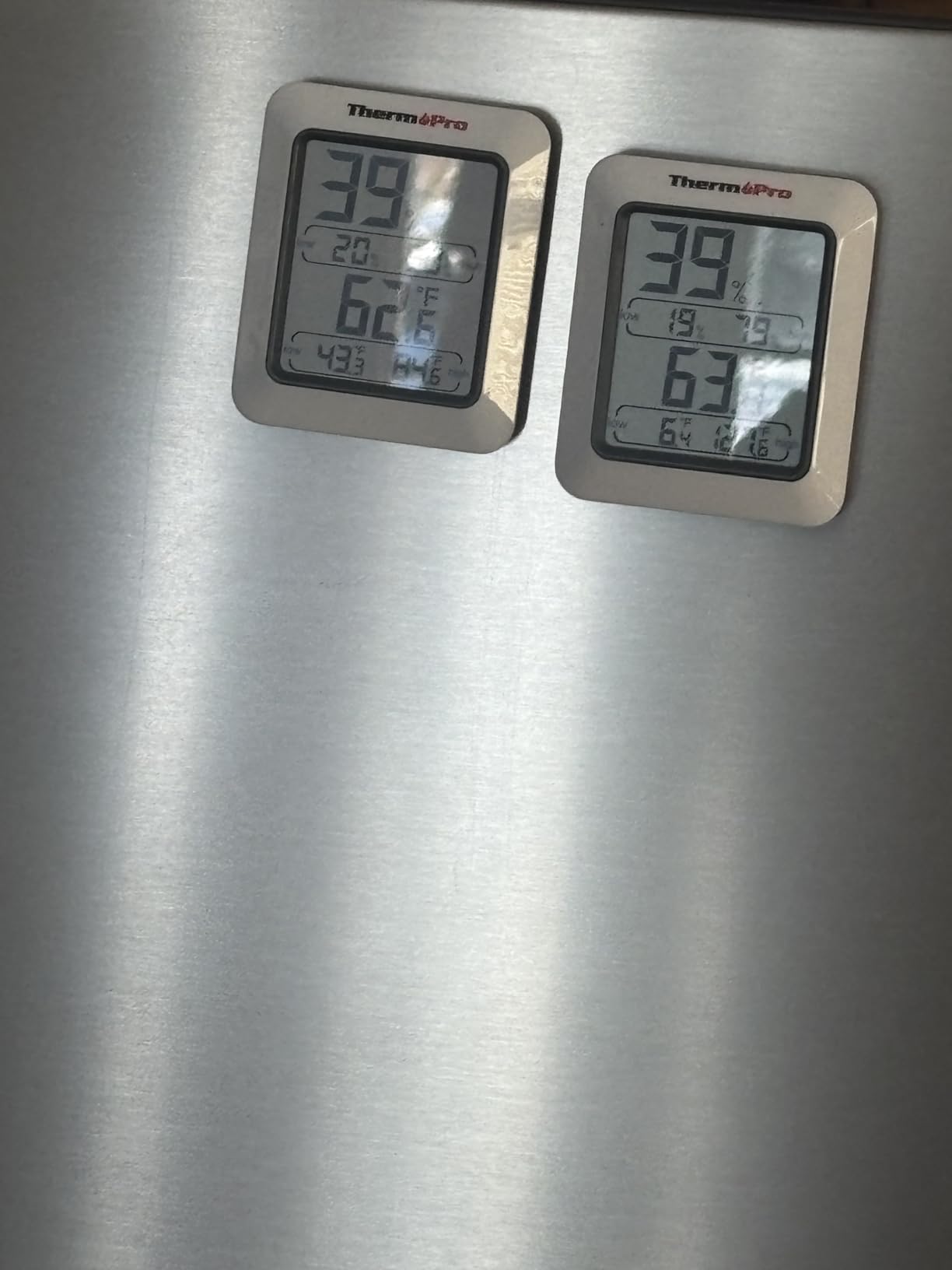
Calibrate before you trust it. Built-in console hygrometers are commonly accurate only to plus or minus 5% RH, and owners frequently report reading 5 to 20 points high compared with a meter placed across the room. Put a cheap hygrometer on the far wall, compare the two readings, and if the console reads high, set the console below the number you actually want. A valve on the water supply is the fine-tuning control once the humidistat is set.
Hard water, white dust and mineral buildup
Evaporative models are far more tolerant of hard water than ultrasonic ones, but minerals still crust wicks and pads. In hard-water states, use distilled water in console units, replace water panels and wicks on the shorter end of the schedule, and run one cup of vinegar through the unit for a 30-minute cycle once a season. A whole-house water softener solves the problem upstream if you are in that situation.
Ultrasonic cool mist is the opposite case. It atomizes the water rather than evaporating it, so minerals travel with the mist and settle on furniture as white dust. Distilled or purified water is the fix, and skipping it in hard water can also scale the pump.
Total cost of ownership beyond the unit
Budget in three parts. The unit itself, the install materials a furnace humidifier needs but does not include, and the annual consumables. For a ducted install, the extra material list typically runs 30 to 50% of the unit cost once you add copper line, a drain, a transformer, a plenum collar, a ball valve and low-voltage wire, before any labour.
Ongoing cost is simpler. A bypass unit needs one water panel a year, a fan-powered unit needs a panel plus a check on its own fan, a console needs wicks every three to six months depending on water, and a steam unit needs a mineral canister every year. Owners who plan for that up front avoid the “it stopped working” surprise.
Why is my whole-house humidifier not helping with dry air?
Work through this list in order, most likely cause first. The failures repeat so often that it is worth keeping the sequence handy.
Clogged or mineral-crusted water panel – The most common cause. The unit runs and sounds normal but moisture output has collapsed. Replace the panel or wick.
Failed solenoid or closed supply valve – No water reaches the pad. Listen for the solenoid click at the start of a cycle, and check that the valve is not throttled partway closed.
Humidistat reading high – A sensor reading 5 to 20 points above reality shuts the unit off early. Verify with a handheld hygrometer placed across the room.
Closed interior doors – Very common in console setups. The unit is working perfectly inside a sealed room while the rest of the house stays dry.
House too tight or too leaky – A very leaky envelope in cold weather can cap achievable humidity regardless of unit size. Blower-door testing and air sealing raise the ceiling.
Undersized unit for the load – If it runs continuously and never reaches target, the output is simply too low for the square footage and the temperature.
Over-humidifying is the opposite failure, and it is the one that causes mold. Watch for condensation on window glass and exterior walls, musty smells in closets and soft floors, and lower your setpoint a few points when you see any of them. Our humidifier basics for enclosed spaces covers the safe-range question in more detail.
Frequently Asked Questions
What kind of humidifier is best for dry air?
For dry winter air in a home heated by a furnace, an evaporative humidifier is the standard answer, either mounted on the supply plenum or run as a free-standing console. Evaporative units add moisture at the temperature of the surrounding air, so there is no condensation, no white dust and no cold chill. Steam units deliver more moisture in a smaller cabinet but require hardwiring, and ultrasonic cool mist is the cheapest option but needs distilled water in hard-water regions.
Will a humidifier help with dry air in the house?
Yes, if your indoor relative humidity is falling below 30%. Dry air causes static electricity, cracked hardwood floors and furniture, chapped skin, nosebleeds and dry coughs, and it makes winter heating feel colder. Properly sized and set units commonly deliver 15 to 30% relative humidity gains in the first week, though a very leaky house in severe cold may cap out around 30 to 32%.
What is the best humidifier for a whole house?
For a forced-air home up to about 3,600 square feet, the AprilAire 500 is the strongest all-round choice, with 12 gallons per day of output, automatic dual-sensor control and a 5-year warranty. Larger homes up to 5,000 or 5,300 square feet are better served by the AprilAire 600M or 700M. Without ductwork, the AIRCARE MA1201 console is the proven pick.
What size humidifier do I need for a whole house?
Use the rule of 0.4 to 0.5 gallons per day of output for every 1,000 square feet of conditioned space. That means roughly 8 to 10 GPD for a 2,000 square foot home, 12 to 15 GPD for 3,000 square feet, and 17 to 20 GPD for 4,000 square feet or more. Manufacturer coverage ratings assume a tight envelope, so lean toward the higher end in a cold or leaky house.
How much does a whole house humidifier cost?
The unit is only the first part. A ducted furnace humidifier needs a plenum collar, copper water line, a drain, a solenoid or ball valve, a 24V transformer, a humidistat and low-voltage wire, none of which are usually included, and those parts often add 30 to 50% on top of the unit. Ongoing cost is one water panel a year for a bypass unit, wicks every three to six months for a console, and a mineral canister each year for steam.
Do whole-house humidifiers cause mold?
Only when they over-humidify. Running a humidifier above roughly 50 to 60% relative humidity condenses moisture on cold windows and inside wall cavities, which is where mold starts. Set your humidistat to 35 to 45% in winter, calibrate it against a handheld hygrometer placed across the room, and reduce the target when you see window condensation. Evaporative and steam designs also leave no standing water in a cabinet for mold to colonize.
What number should I set my AprilAire humidifier to in winter?
Set it to 35 to 45% relative humidity in winter and treat 45% as the ceiling in a cold climate. In shoulder seasons, drop the target 5 to 10 points because outside air adds moisture on its own. If your readings seem inconsistent, check with a cheap hygrometer on the far wall, because built-in sensors can read 5 to 20 points high, and throttle the water supply valve for finer control once the humidistat is set.
Why is my humidifier not helping with dry air?
Start with the water panel, because a clogged or mineral-crusted panel is the most common cause and the unit will still run and sound normal. After that, check the solenoid and supply valve for a stuck or throttled closed, verify the humidistat against a handheld meter, and make sure interior doors are open. In console setups a closed door is the number one reason the rest of the house stays dry.
What are the downsides of a whole-house humidifier?
The main downsides are installation complexity, ongoing maintenance and the risk of over-humidifying. Ducted units need sheet metal, plumbing and 24V wiring, and a self-install can void the manufacturer warranty. Every model needs consumables, from an annual water panel to wicks every few months. A console unit needs daily refilling, and a hygrometer that reads high can leave you chronically under-humidified without you noticing.
Can I sleep with AC on dry mode?
Dry mode pulls moisture out of the air rather than adding it, so running it in a dry climate can make a bedroom noticeably worse rather than better. If you sleep with air conditioning on, set it to auto or normal cooling and use a separate humidifier for the room. In humid regions dry mode is useful for controlling condensation, but in a dry winter it works against you.
The Best Whole-House Humidifier for Dry Air in 2026
After working through all twelve, the AprilAire 500 is still the best whole house humidifier for dry air for most forced-air homes. It holds the band without babysitting, the automatic control handles seasonal swings you would otherwise manage by hand, and the 5-year warranty is among the longest in the category. Just accept that the install is an HVAC job.
Buy the AIRCARE MA1201 if you have no ductwork and want a whole open floor covered. Buy the Space Saver 831000 if refilling every morning is the one thing you want to avoid. Go bigger to the AprilAire 600M or 700M past 4,000 square feet or in a genuinely cold climate, and consider the Honeywell HM750A1000 steam unit if hard water would destroy an evaporative pad.
Whichever you pick, set the humidistat to 35 to 45%, verify it against a handheld meter, and keep the water panel or wick on a replacement schedule. That is what separates a humidifier that works from one that sits there running and never fixes anything. Use the links below to check current availability and compare the models side by side.