
The best retro gaming console for most people is the Sega Genesis Mini: it comes with 42 officially licensed games, the cleanest emulation on any licensed mini console, two wired controllers and an HDMI cable, so it works on any modern TV the second you open the box. If your nostalgia lives in physical cartridges rather than software, buy a cartridge console instead, and if you want something a child can pick up and use without a setup lesson, a licensed pocket unit is the safer bet.
There are really only three routes into retro gaming, and the mistake most buyers make is buying the wrong one. Original hardware plays the cartridges and discs you already own, but needs an upscaler to reach a modern television. Clones and FPGA-style devices read those same physical cartridges and output clean HDMI video. Emulation boxes and Android handhelds run software copies and can cover dozens of systems in one device, with no cables or carts involved at all.
We spent weeks putting all ten of the consoles below through the same routine: unboxing, first-time setup, an hour of play on a modern flatscreen, a second session on a CRT, and a look at what you actually get in the box versus what the listing implies. We scored build quality, output resolution, controller feel, library breadth, input lag and setup difficulty. Prices change constantly, so we have deliberately left them out and linked every product to its current listing instead.
Two of the picks on this list are dedicated cartridge machines, three are licensed mini consoles with fixed libraries, two are arcade hardware, and three are portable emulation devices. We also cover what legally ships in the box and what you must supply yourself, because that expectation gap causes more returns than any other factor in this category.
If you specifically want the portable side of this category, our guide to the best retro gaming handhelds goes deeper on screens, battery life and form factor, and we round up more portable options in best handheld gaming consoles.
Table of Contents
Top 3 Picks for Retro Gaming in 2026
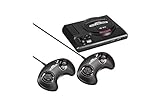
Sega Genesis Mini
- 42 games included
- M2 emulation
- Two 3-button USB controllers
- 1080p HDMI output
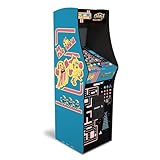
Arcade1Up Ms. Pac-Man Cabinet
- 17-inch BOE LCD
- 12 licensed arcade games
- Real joystick and buttons
- Wi-Fi leaderboards

Retro-Bit Super Retro Trio HD Plus
- NES SNES and Genesis slots
- 720p HDMI output
- SoC architecture
- Original controller support
All 10 Retro Gaming Consoles at a Glance in 2026
| Product | Specifications | Action |
|---|---|---|
| Sega Genesis Mini |
|
Check Latest Price |
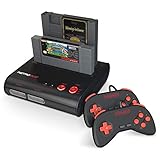 Retro-Bit Retro Duo 2-in-1 Retro-Bit Retro Duo 2-in-1 |
|
Check Latest Price |
 Pandora Treasure 3D Arcade Console Pandora Treasure 3D Arcade Console |
|
Check Latest Price |
| Retro-Bit Super Retro Trio HD Plus |
|
Check Latest Price |
| Arcade1Up Ms. Pac-Man Deluxe |
|
Check Latest Price |
 My Arcade Atari Pocket Player My Arcade Atari Pocket Player |
|
Check Latest Price |
 TEFELE X36 Ultra Handheld TEFELE X36 Ultra Handheld |
|
Check Latest Price |
 Hyperkin Megaretron HD Hyperkin Megaretron HD |
|
Check Latest Price |
 Hyperkin RetroN 2 HD Hyperkin RetroN 2 HD |
|
Check Latest Price |
 Anbernic RG353V Anbernic RG353V |
|
Check Latest Price |
1. Sega Genesis Mini – The Best Overall Retro Gaming Console
Sega Genesis Mini – Genesis
42 games included
Two 3-button USB controllers
1080p HDMI output
1.9 lb replica shell
Pros
- Largest licensed library of any official mini console with 42 games
- M2-developed emulation with accurate FM synth audio
- Two authentic 3-button USB controllers with a strong D-pad
- Four save slots per game with quick menu on Start
- Regional ROM switching adds Japanese and Western game variants
Cons
- Closed system with no way to add or remove games
- Only 3-button controllers included so six-button fighters need a Start press
- Save slot management is less polished than Nintendo mini consoles
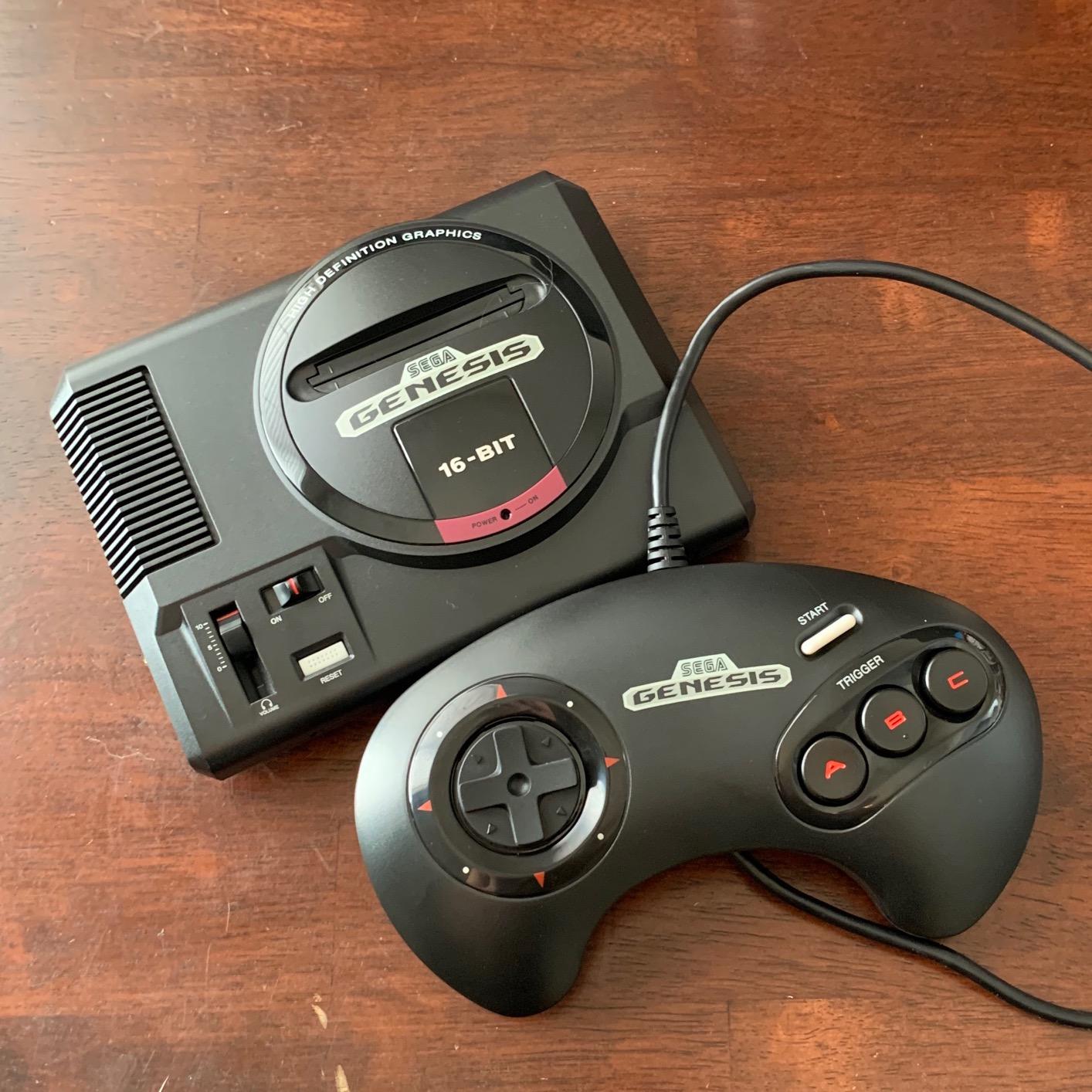
This is the console I put in front of anyone who says they want a retro console and then hesitates. The Mini reproduces the original shell down to the working cartridge-port dust flaps, the volume slider on the side and the power and reset switches on top, so it earns its shelf space on looks alone before a single game loads.
Picture and sound are the real argument. Emulation was developed by M2, and the FM synth audio is widely regarded as the most accurate implementation on any licensed mini console. Output is 1080p over HDMI, which is crisp on a flatscreen without the softness you get from upscaled composite.
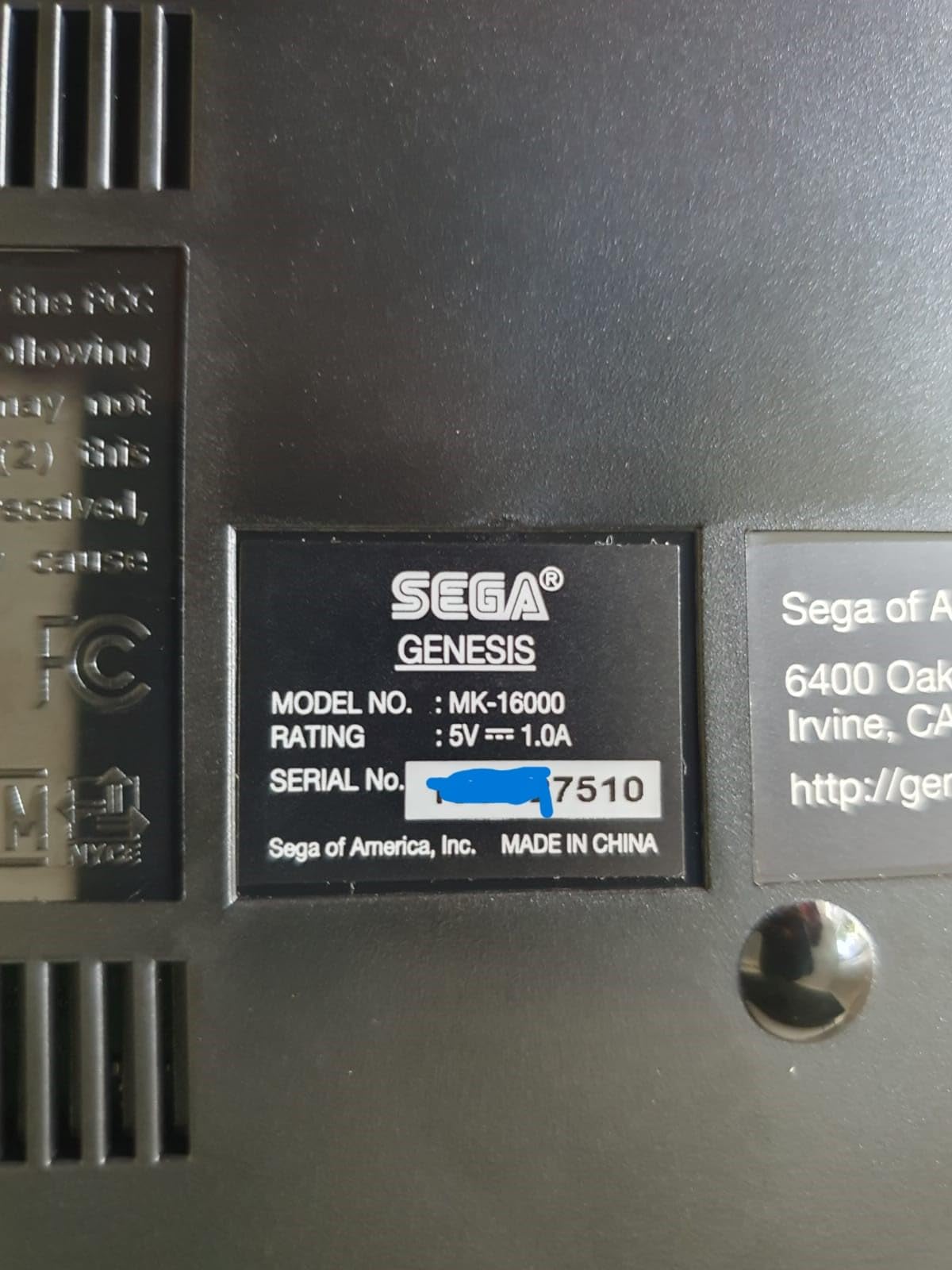
Where it earns its place on our list is library depth. Forty-two games is more than any other official mini console ships, and it spans the full 16-bit era rather than leaning on a handful of demos. Language switching exposes regional ROM variants, which matters if you grew up on the Japanese releases. Four save slots per game, reachable by holding Start, means you can keep a roguelike run going without a penalty.
It is also completely sealed. There is no way to add a game, remove a title or load anything from a flash cart, and the save state screen gives you no rename or delete option. Some owners question a few of the library picks while noting staples such as Aladdin, Sonic 3, Streets of Rage and Revenge of Shinobi are missing.
What you get and what you do not
Everything needed is in the box: the console, two wired 3-button USB controllers, 40 games plus 2 bonus titles, a power cable with USB adapter and an HDMI cable. Nothing else is required, which makes it the lowest-friction first console in this roundup.
What you do not get is a six-button pad. Street Fighter II and Eternal Champions are playable, but the extra buttons are mapped to a Start press mid-fight. Owners also note the included controller and HDMI cables are short, so plan your seating accordingly.
Who should pass on it
If you own a shelf of physical Genesis carts, this console is useless to you, because it reads no cartridges at all. The Megaretron HD or the Super Retro Trio HD Plus exist for exactly that shelf.
If your nostalgia is 8-bit rather than 16-bit, the library skews hard toward Genesis and Master System, and you will finish the built-in games quickly. A cartridge console or an emulation handheld gives you a much longer runway.
2. Retro-Bit Retro Duo 2-in-1 – Best for Original NES and SNES Cartridges
Retro-Bit Retro Duo 2 in 1 Console System – for Original NES/SNES – Black
Plays original NES and SNES carts
Two dedicated slots
AV and S-video output
1 kg unit
Pros
- One box plays both NES and SNES original cartridges
- Strong SNES compatibility including Super Metroid and Star Fox
- Works with original controllers and controller-port accessories
- Bundled AV and S-video cables
- Much better cartridge pin connector design than most clones
Cons
- NES side has muffled audio and washed-out colours
- Cartridge slots are very tight and risk bent pins
- Light build and reviewers report units failing after modest use
Two dedicated cartridge slots, one for NES and one for SNES, in a single unit roughly the size of one small console. That is the whole pitch, and it works. For anyone with two Nintendo cartridge collections and no desire to swap machines, it removes the single most annoying part of original hardware.
The SNES half is the stronger side. Super Mario RPG, Super Metroid and Star Fox all run, which is not a given on cheaper two-in-one clones. It also accepts original NES and SNES controllers through an adapter, so the Game Genie and Super Game Boy adapter work too, which is a genuinely rare feature at this level.
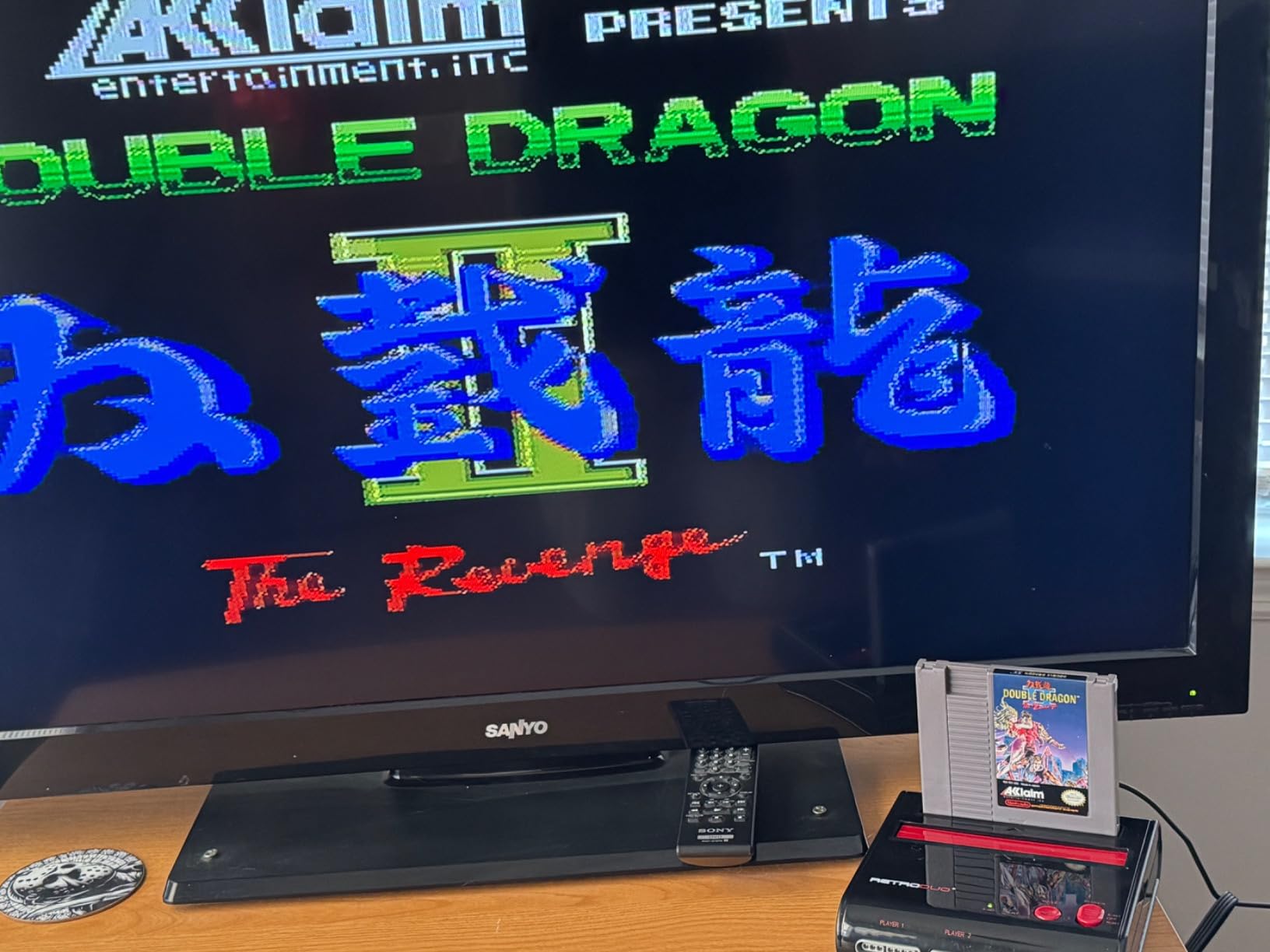
There is no HDMI here, which surprises people. Output is AV and S-video, so on a modern flatscreen you need an inexpensive converter, and that converter is a real cost and a real source of confusion. On a CRT or a well-equipped older television the picture is genuinely good, and the S-video lead is included.
The honest weaknesses are physical. The cartridge slots are extremely tight, and owners repeatedly warn that forcing a cart in or out is how pins bend. A handful of NES titles are reported to fail or glitch, and the NES side has muffled audio and slightly faded colours next to real hardware.
What the box actually contains
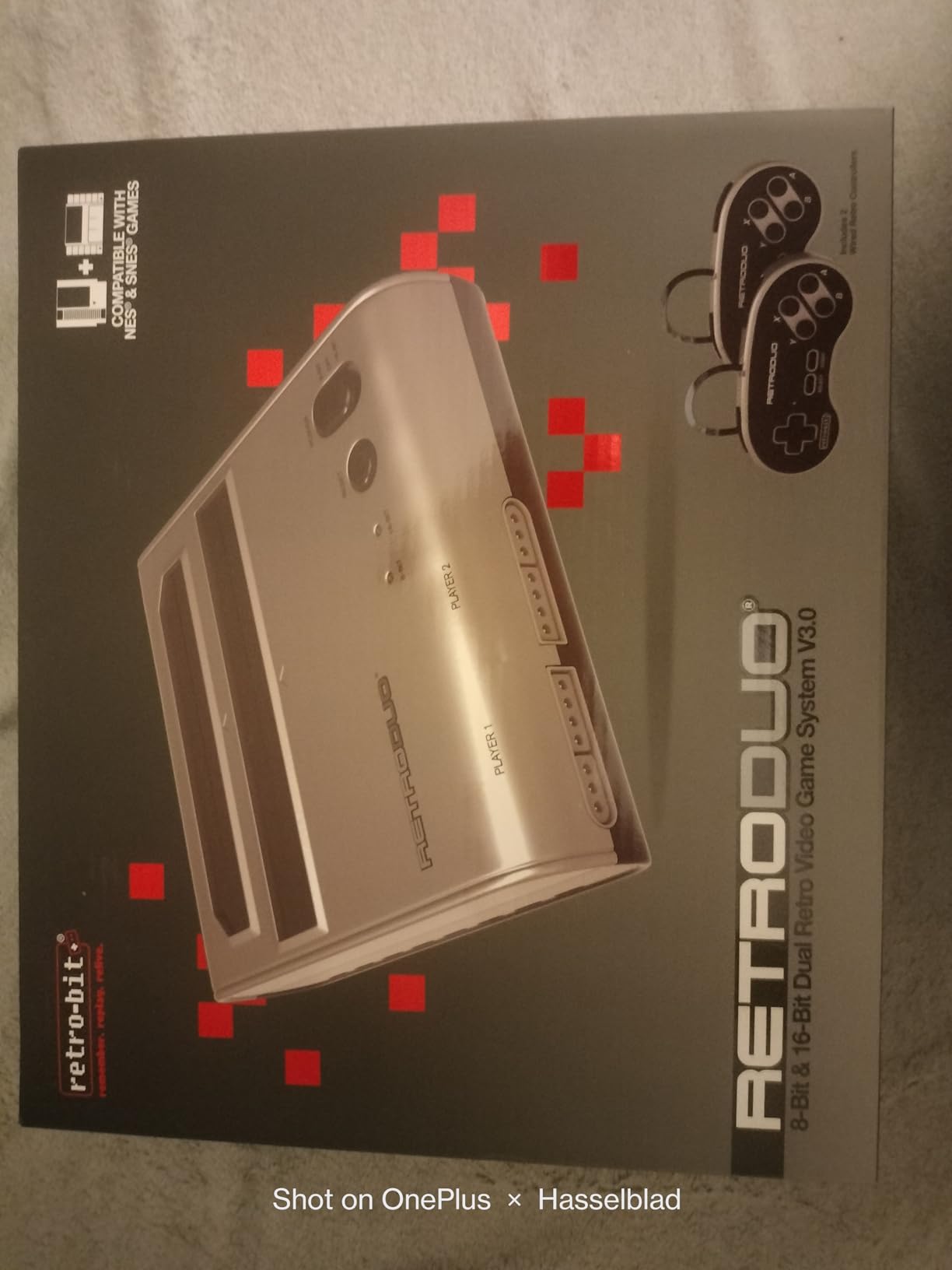
Two wired controllers, an AV and S-video cable and an AC power adapter. You get a complete console experience, but the controller situation depends on the revision, and the 2.0 revision’s bundled pads are widely disliked while the 3.0 revision pads are much better.
You supply your own games. That is the point of a cartridge console, but it also means this device does nothing at all on day one unless you already own physical carts.
Who should pass on it
If you are starting from nothing with no cartridge collection, this is a poor first purchase. You are buying a media reader for media you do not have.
If you play on a modern flatscreen only, budget for a converter and expect the NES picture to look softer than the SNES picture. Anyone with a CRT will be happier here than anyone without one.
3. Pandora Treasure 3D Arcade Console – Best for Multiplayer Arcade Nights
30000 Games in 1 Arcade Game Console ,Pandora Treasure 3D Double Stick,30000 Classic Arcade Games,Search Game, Support 3D,Favorite List, 4 Players Online,1280X720 Full HD Video
30000 games claimed
1280x720 HDMI or VGA
Two arcade sticks
25 inch metal and acrylic chassis
Pros
- Enormous library spanning 2D and 3D titles
- Full 1280x720 output over HDMI or VGA
- Arcade sticks with adjustable button mapping
- Supports up to four players online and local
- Metal and acrylic chassis feels more premium than plastic clones
Cons
- No real instruction manual so setup is trial and error
- Much of the library is unrecognisable filler rather than arcade classics
- Not all titles advertised as 3D actually play in 3D
- Reports of consoles failing to power on within months
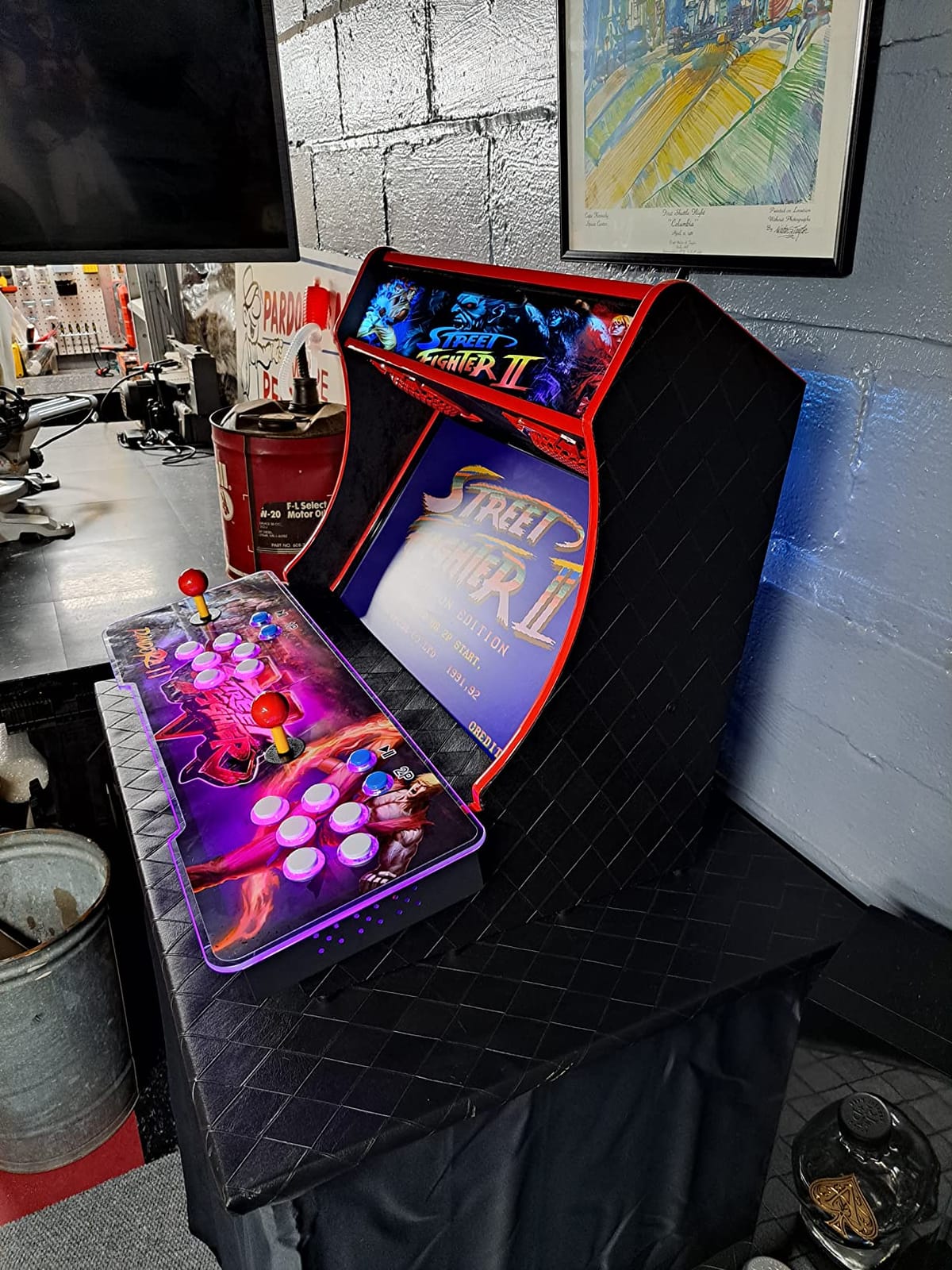
Two full-size arcade sticks attached to a slim all-metal and acrylic body, 25.1 inches wide, with two sticks and a built-in speaker. This is a living-room party machine rather than a single-player nostalgia device, and it is the only arcade-cabinet-style unit in the roundup that fits on a normal shelf instead of a floor.
Video output is the surprise. Instead of the 480p that most stick clones manage, this one does 1280×720 over HDMI or VGA, which is a visible step up on the same television. USB output also lets it connect to other devices, and adjustable button mapping helps with the 3D titles.
Multiplayer is where this earns its badge. It supports local play and up to four players online, so a group can play together in the same room or remotely, and the sticks feel like real arcade sticks rather than repurposed gamepads.
The library number on the box is the marketing, not the substance. Reviewers note a large share of the included titles are unrecognisable filler rather than genuine arcade classics, and there are reports of dead hardware and poor supplier support. The rating of 3.8 reflects that reliability pattern more than anything else.
Setup and what ships with it
There is no usable manual, and owners describe the first hour as trial and error. Know that going in, and budget an evening rather than an afternoon.
You do get the sticks and the built-in speaker in the box, so it is playable out of the box. Cables for HDMI and power are the other thing to confirm for your setup before you commit.
Who should pass on it
Skip this if you care about authentic arcade libraries. If you want Pac-Man, Galaga and Ms. Pac-Man specifically, a licensed cabinet on this list has a curated list rather than a headline number.
Skip it too if reliability over a multi-year horizon matters. Forum regulars consistently warn each other away from no-name bulk libraries for exactly this reason, and this product falls into that category.
4. Retro-Bit Super Retro Trio HD Plus – Best Value Three-in-One Cartridge Console
Retro-Bit Super Retro Trio HD Plus 720P 3-in-1 Console System – Red/White
NES SNES and Genesis slots
720p HDMI output
Composite AV for CRTs
2 lb unit with two pads
Pros
- Only widely sold unit playing NES SNES and Genesis carts in one box
- Crisp 720p HDMI output
- Strong original cartridge compatibility
- Accepts flashcarts including Mega Everdrive and SD2SNES
- SoC design means near-zero input lag and instant loading
Cons
- Older units output 16:9 only so games look stretched
- A few carts will not run including Stunt Race FX
- NES audio emulation is slightly off
- Tight slots and an awkward front port flap risk bent pins
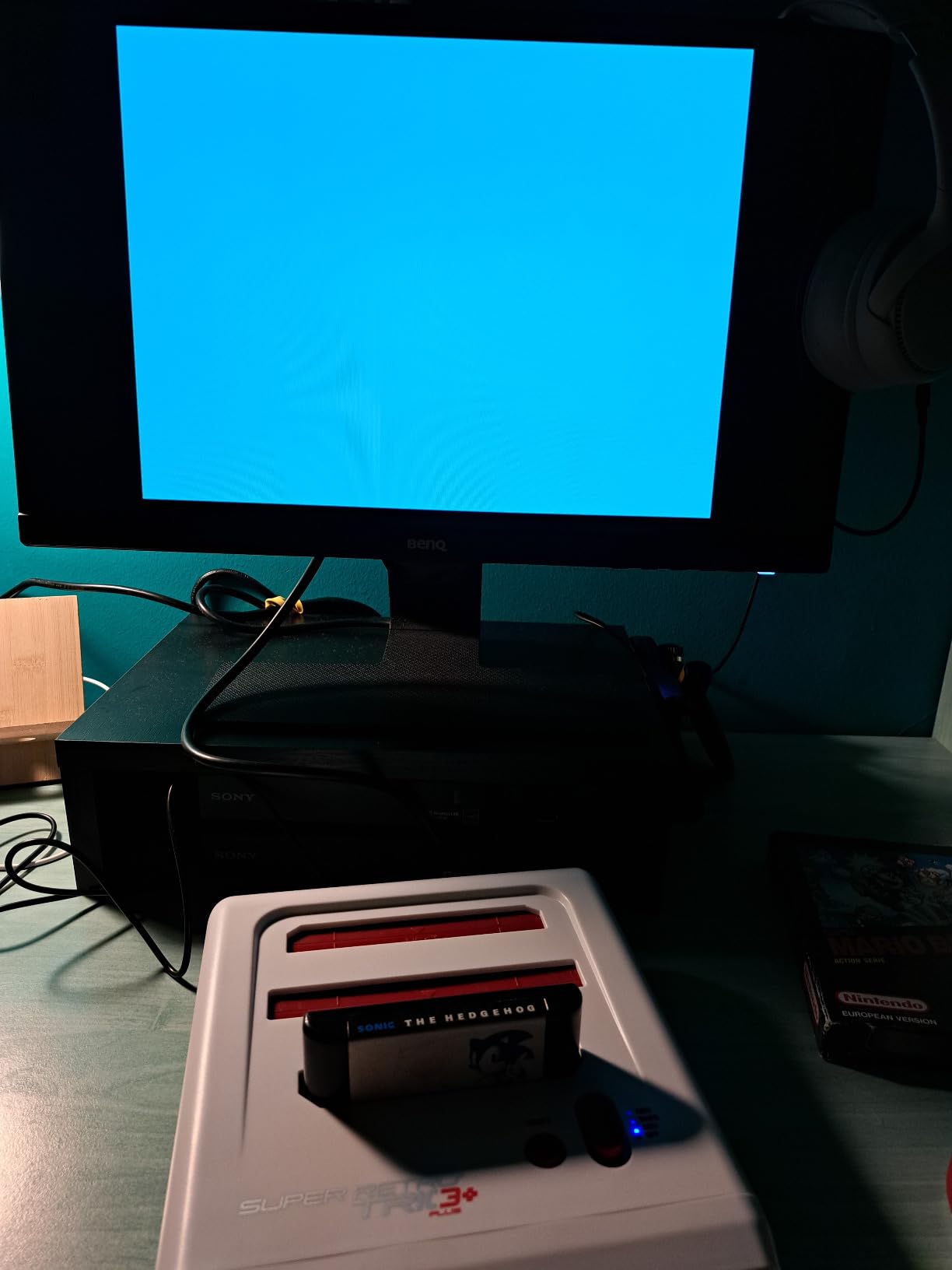
Three cartridge slots in a 2-pound unit: NES, SNES and Genesis. That combination is the reason this console exists, and it is still the only widely sold box that covers all three of the biggest 8-bit and 16-bit libraries in a single machine.
Unlike software emulation, this runs on a system-on-a-chip architecture, which means games load instantly and input lag is effectively zero. The 720p HDMI output is clean and noticeably better than composite clones, and composite RCA output is still on the back for CRT owners.
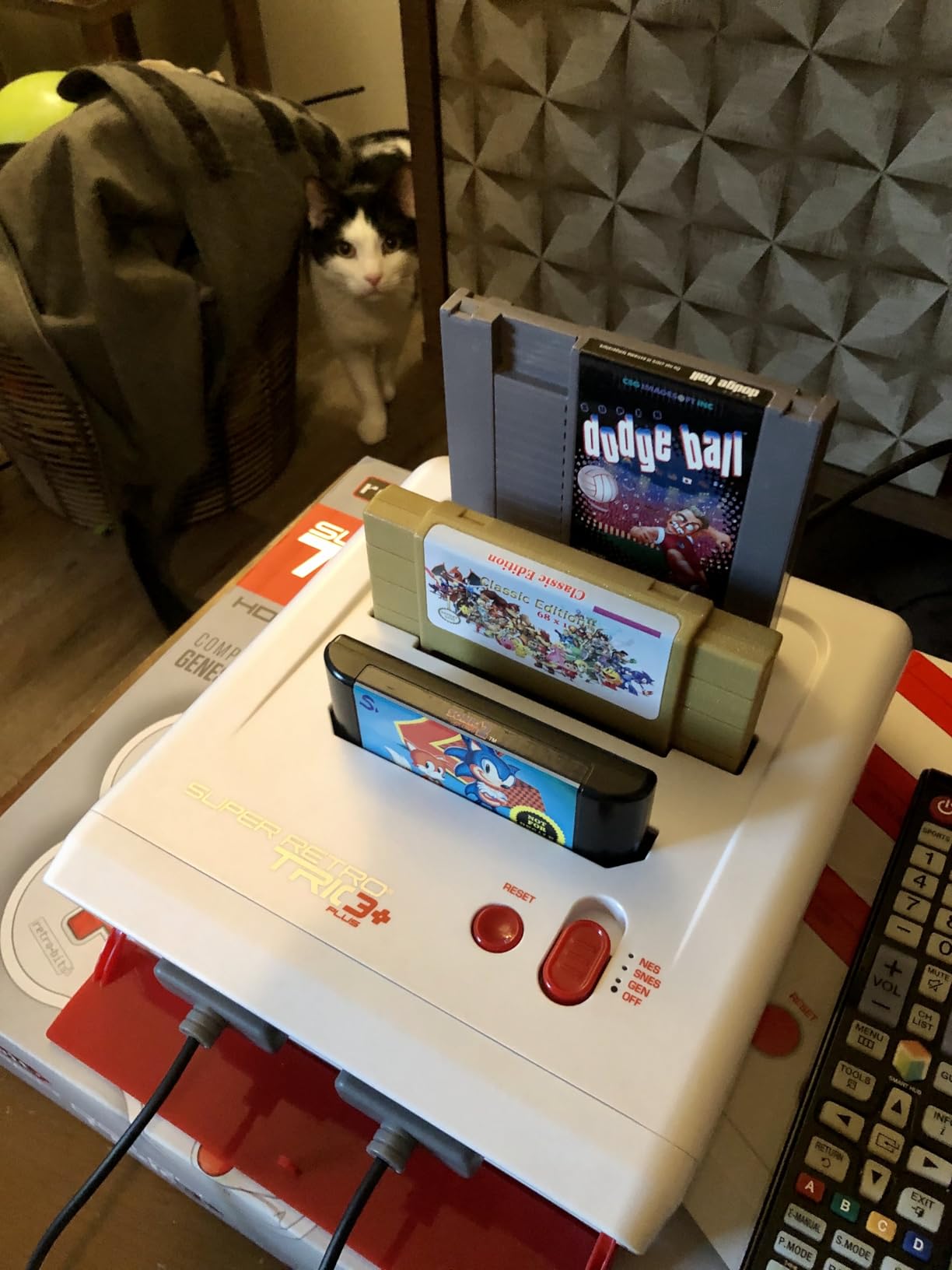
Accessory support is the quiet strength. It works with original NES, SNES and Genesis controllers, and owners report successfully running a Mega Everdrive and an SD2SNES flash cart in the appropriate slots, which is a flexibility the two-slot Retro Duo cannot offer.
Two cautions. Earlier stock outputs 16:9 only, so games look stretched unless you adjust the television manually, and newer units added a hardware aspect-ratio switch, so check the revision before buying. Some carts also refuse to boot, and the tight slots demand a light touch.
What you get and how it plays
The unit, an HDMI cable, composite cable, AC adapter and two well-made SNES-style controllers are included. The bundled pads get good marks for button feel, though the Genesis button mapping is awkward and needs a bumper press for the C button.
No save states and no SD card slot. This is a pure cartridge reader, so there is no way to add software that is not in your own hands.
Who should pass on it
If you want to try retro games without owning any carts, start with the Genesis Mini instead. This console is silent and inert on day one without a physical collection.
If stretchy widescreen output ruins your patience and the listing does not confirm the aspect-ratio switch, look at the RetroN 2 HD, which has had that switch from the start.
5. Arcade1Up Ms. Pac-Man Class of ’81 Deluxe – Best Arcade Cabinet Recreation
Arcade1Up Ms. Pac-Man Class of ’81 Deluxe Arcade, 12 Retro Games
17-inch BOE LCD
Twelve licensed arcade games
81 lb wood cabinet
Over 5 feet tall
Pros
- Authentic 1981 cabinet recreation with lit marquee and faux coin door
- Twelve curated licensed classics rather than thousands of filler titles
- Crisp 17-inch BOE LCD with accurate pixel colours
- Responsive joystick and buttons with loud stereo sound
- Wi-Fi global leaderboards with no subscription
Cons
- Assembly takes two to three hours and the printed instructions contain errors
- Wrong screw pack can punch through the cabinet wall
- Fragile joysticks that can snap if pushed hard
- Cabinet rocks during play unless anchored to the wall
Over five feet tall, 81 pounds, and the most authentic object in this roundup. The cabinet reproduces a 1981 Ms. Pac-Man machine down to the light-up marquee, the faux coin door and the original cabinet graphics, and it is the one product here that genuinely changes a room.
The game list is the opposite approach to the bulk-library arcade boxes. Twelve licensed titles, including Ms. Pac-Man, Pac-Man, Galaga, Galaxian, Dig Dug and Rolling Thunder, all genuine arcade conversions rather than unrecognisable filler. The 17-inch BOE LCD is bright enough to render the original pixel art faithfully, with dual stereo speakers for the classic soundtracks.
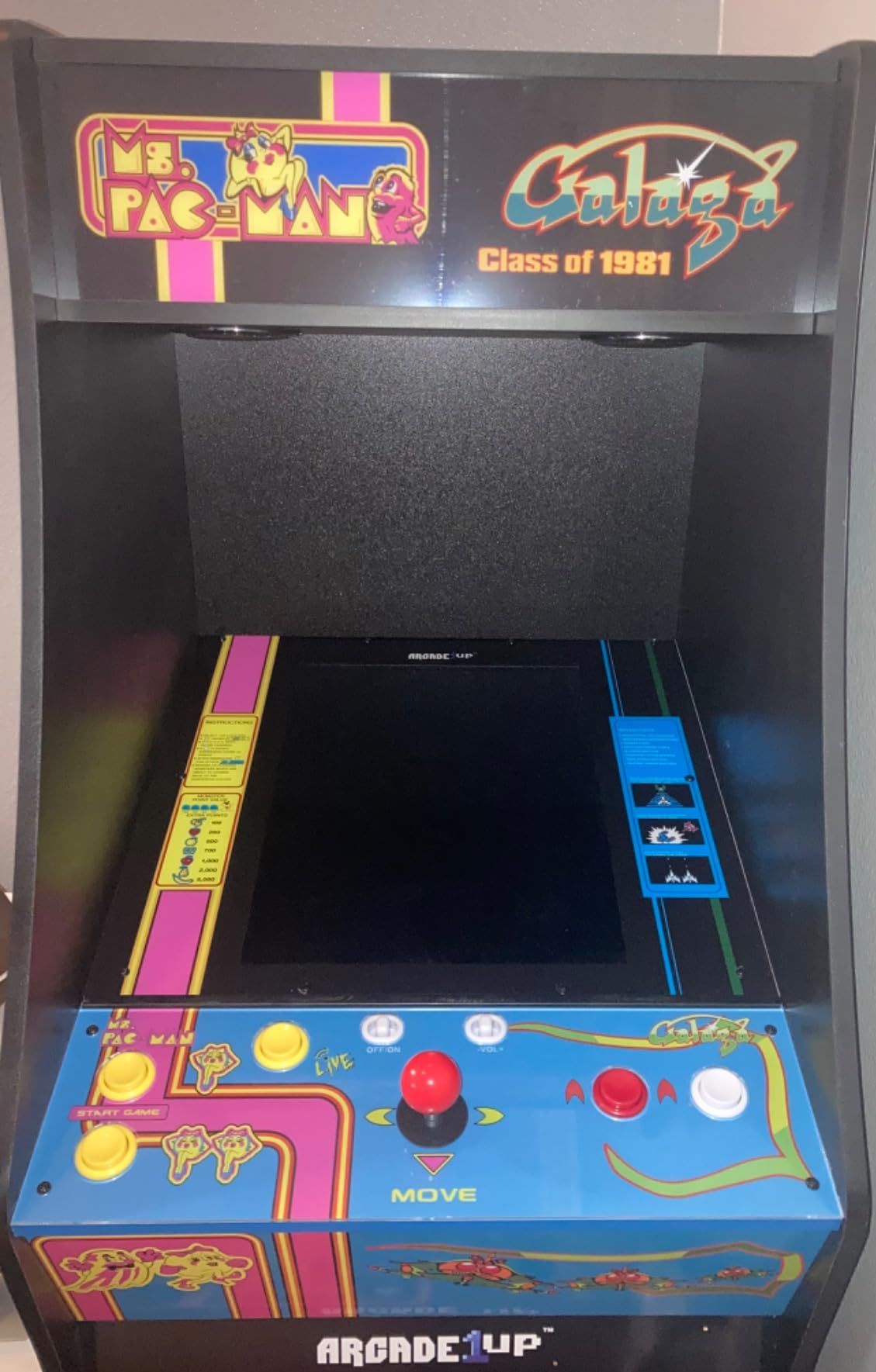
It carries the highest owner rating in this group at 4.6, and the reason is straightforward: the joystick and buttons feel like real arcade controls, not repurposed console pads. Wi-Fi global leaderboards add genuine competitive stakes without a subscription, which is unusual at this level.
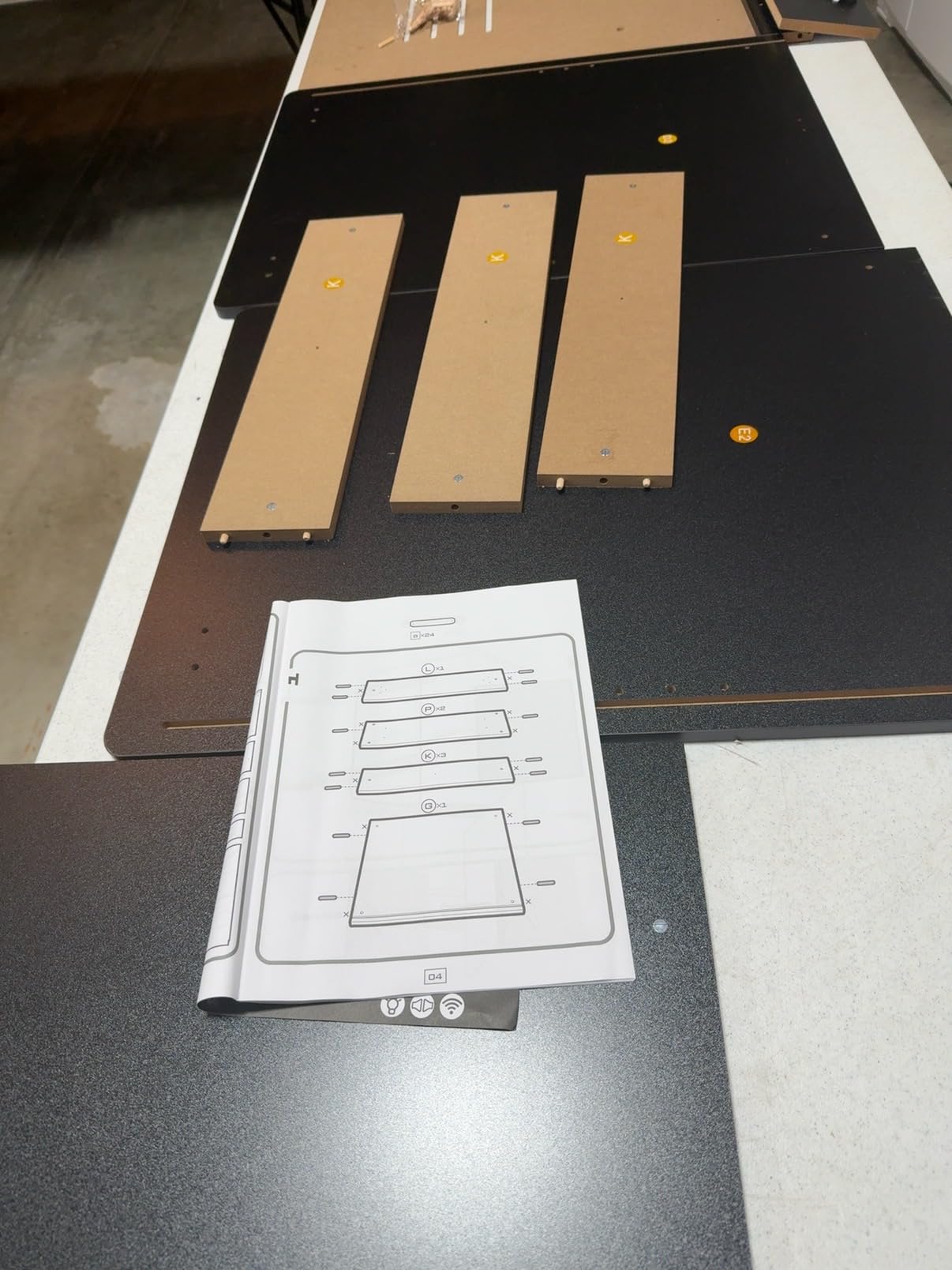
The single biggest drawback is assembly. Owners budget two to three hours, and the printed instructions contain mistakes, out-of-order steps and unclear part orientation. The single worst failure mode reported is using the wrong screw pack at the final bracket step, which punches through the cabinet wall.
What to know before you build it
Clear a floor and a wall. At 18.82 by 22.44 by 61 inches, it needs space and it should be anchored, because owners report the cabinet rocking or shaking during play on an unbolted floor. The joystick is also fragile and has no easy replacement path.
Occasional units arrive with a missing control board button or need a replacement main board for audio failure, and customer service resolves those. Buy through a seller with straightforward returns and check the box on arrival.
Who should pass on it
This is a display piece and a party machine. If your goal is a hundred games to play alone on a sofa, it is a very expensive way to get to a small curated list, and we cover cheaper handhelds further down.
Anyone who wants an arcade experience without a two-hour build, or without floor space, should look at the two-stick console instead. Both approaches deliver joystick play; only one requires a screwdriver.
6. My Arcade Atari Pocket Player – Best for Kids, Gifts and Travel
My Arcade Atari Pocket Player-Console preloaded with 100 Games, 2.8″ Screen
100 licensed Atari games
2.75-inch LCD
250g body
Headphone jack and speaker
Pros
- 100 officially licensed Atari titles including Pong Breakout and Asteroids
- Genuinely pocketable at under six inches and 250g
- Headphone jack and brightness control for private or dark play
- Simple controls suited to younger players
- 70s-inspired Atari styling with collector appeal
Cons
- Small 2.75-inch screen with washed-out colours off-axis
- Battery compartment is screw-secured and the manual does not mention the screw
- Runs on 4 AA batteries only despite the USB-C port
- Some included games are unresponsive or missing
This is the easiest retro console on the list to hand to somebody who has never held one. At 5.8 by 1.5 by 2.8 inches and 250 grams it fits in a jacket pocket, and every game is an officially licensed Atari title, which matters enormously if the player is a child.
The library is the appeal. One hundred titles including Pong, Breakout, Asteroids, Centipede, Missile Command and Yars’ Revenge, plus bonus 8-bit and 16-bit games, all selectable from a simple menu with difficulty and volume settings rather than a complicated front end.

For private listening there is a 3.5mm headphone jack and a built-in speaker with volume control, plus a brightness adjustment for playing in the dark. That combination of features is unusually thoughtful for a gift unit.
Two practical irritations. The screen is only 2.75 inches and colours wash out when you are not looking straight at it, and the battery compartment is held shut with a screw that the manual never mentions, which owners report stripping and ruining. It also takes 4 AA batteries only, with no rechargeable support despite the USB-C port.

What is in the box and what is not
The unit, a user guide in nine languages and nothing else. You need your own 4 AA batteries, and the manual specifically asks for standard non-rechargeable ones. No cable is included, so plan for a single dedicated battery pack.
A 120-day warranty against manufacturer defects covers the usual early failures, and the licensed library is the safest legal story in this category since you are not sourcing anything yourself.
Who should pass on it
Adults with a long backlog will outgrow it in a weekend. The library is 8-bit Atari only, there is no way to add games, and there is no save state for anything.
If your gift recipient wants 16-bit and beyond, look at the Android handhelds on this list instead, where the library runs to thousands of titles. Our best kids video game consoles guide covers that decision in more depth.
7. TEFELE X36 Ultra Handheld – Best for a Big Library on a Handheld
X36 Ultra Retro Handheld Game Console, WiFi Support YouTube TikTok, 28000+ Games, Portable Android 10.0 Handheld, 4.2 Inch 720×720 OCA IPS Screen, 3500mAh Pocket Gaming Console
28000 plus preloaded games
4.2-inch 720x720 IPS screen
Android 10 with WiFi
3500mAh and 8 hour battery
Pros
- 28000 plus preloaded games with plug-and-play setup
- 4.2-inch OCA laminated IPS screen with less reflection
- Full Android 10 with WiFi for streaming video apps
- 3500mAh battery for up to 8 hours and a 2 hour recharge
- Local multiplayer for up to four players with TF expansion to 256GB
Cons
- Only 1GB RAM and 8GB storage limits demanding titles
- Unusual square 720x720 ratio can letterbox or stretch content
- Plastic shell feels basic beside metal handhelds
- Generic Android setup of emulators and game files can be fiddly
This is the screen-first handheld in the roundup. A 4.2-inch 720×720 OCA-laminated IPS panel is unusual because it is square rather than widescreen, and the lamination cuts reflection and colour shift in a way that unlaminated budget panels do not.
It runs Android 10 with built-in Wi-Fi, so it is not only a game machine. Owners use it to stream YouTube and TikTok on the same device, which changes what it is: a small media player with a controller attached. RGB-lit joysticks and a 210g body make it look and feel like a toy, in the best sense.
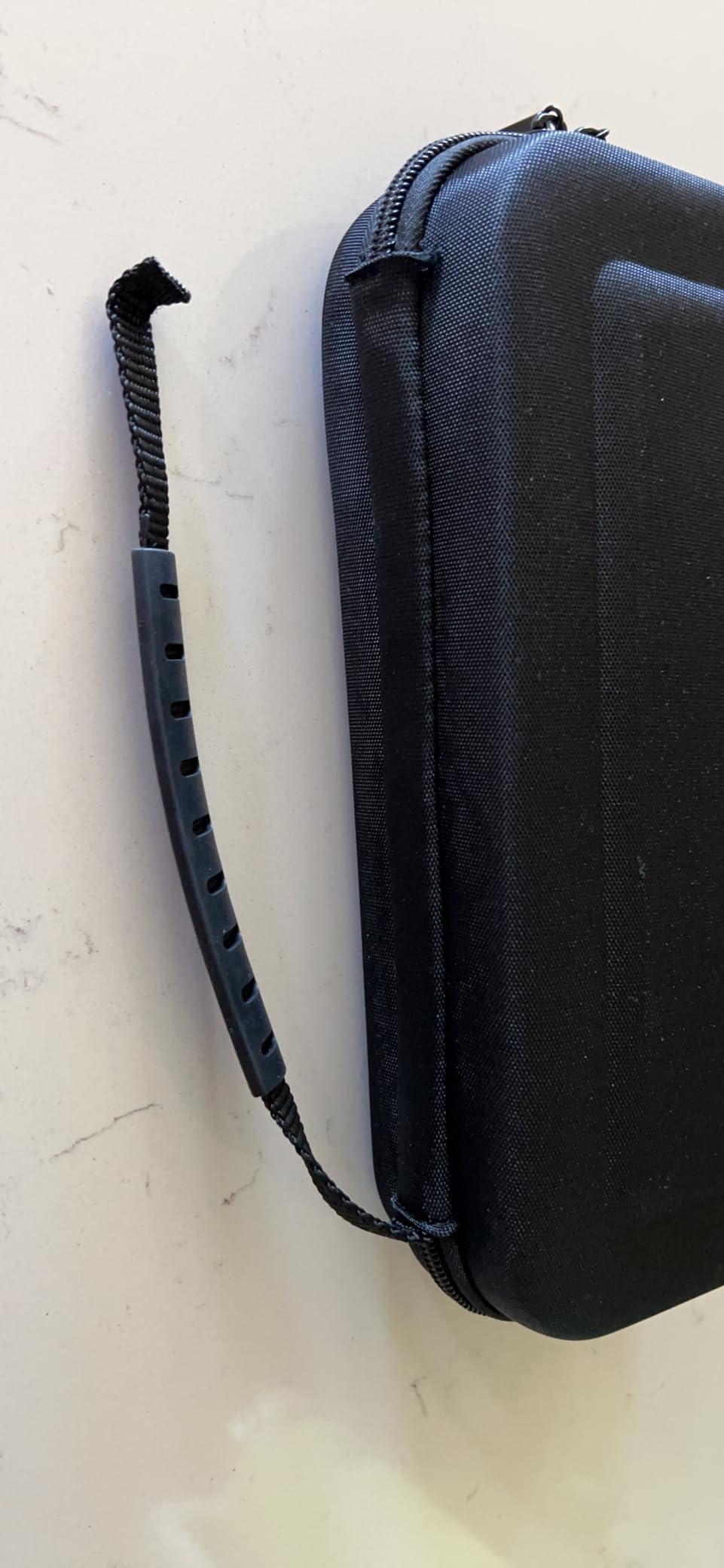
Battery life is the quiet win. The 3500mAh cell gives up to eight hours of continuous play and recharges fully in about two hours over USB-C, and the 8W cavity speaker is loud enough for a commute.
The internal specification is the limit. A Qualcomm Gen1 quad-core chip with Mali 450 graphics, 1GB of RAM and 8GB of storage will not run demanding titles, and TF card expansion from 16GB to 256GB is how you add more. The square aspect ratio also letterboxes or stretches some widescreen content.
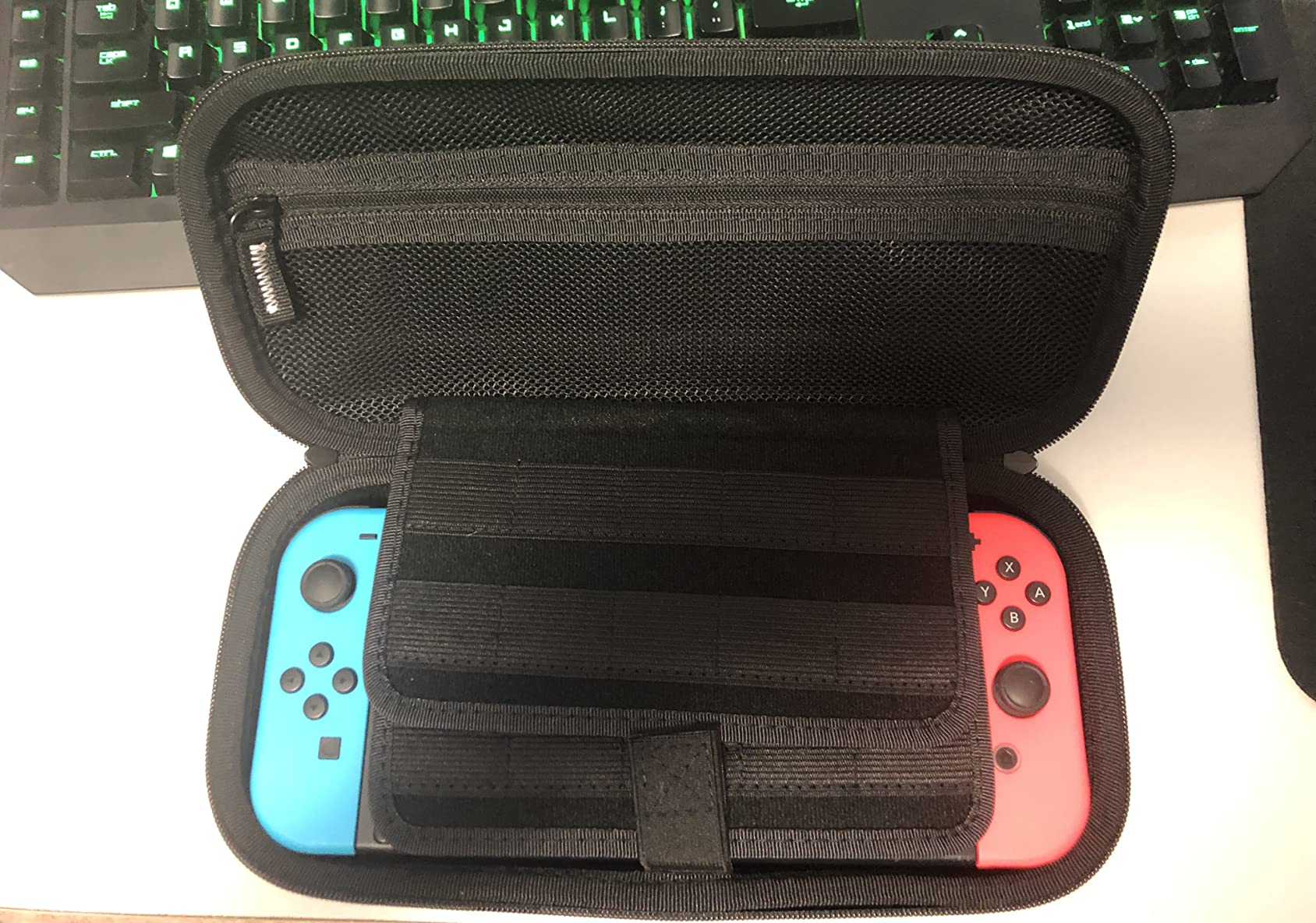
Setting it up and adding your own games
It is plug-and-play out of the box with the preloaded library, and the 28000-game figure is real in scope even though owners note some entries are low quality or duplicates. Adding your own files means working through a generic Android interface, which some buyers find fiddly but most manage in an afternoon.
Storage is the practical constraint. 8GB of internal storage is small, so a 32GB or larger card is the first accessory to buy, and local room multiplayer works for up to four players.
Who should pass on it
Skip it for emulation purists. Forum regulars consistently say that experienced players move to a dedicated Linux handheld because the custom firmware route is smoother and the hardware lasts longer, and 1GB of RAM is the reason.
Also skip it if you want a widescreen display for 16-bit titles. The square screen is striking, but for SNES and Mega Drive a wider panel is simply the better tool.
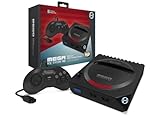
8. Hyperkin Megaretron HD – Best for Genesis Collectors
Hyperkin Megaretron HD Gaming Console for Genesis/Mega Drive – Sega Genesis
Plays original Genesis carts
720p HDMI output
NTSC and PAL switch
2.6 lb unit
Pros
- Reliable Genesis and Mega Drive cartridge playback in 720p HD
- Hardware NTSC and PAL switch covers Japanese and European libraries
- Works with original Sega Genesis controllers
- Simple dedicated design with no setup
Cons
- Cartridge-only with no built-in games so it needs a physical collection
- No save states and no aspect-ratio switch
- Some rarer or third-party cartridges do not boot
- Mostly plastic shell feels less premium than the build suggests
A dedicated Genesis machine, and nothing else. If your collection is entirely Mega Drive or Genesis carts, a single-purpose unit is the tidier answer than a three-slot console with two empty bays taking up the same space.
It outputs 720p over HDMI, and the switch on the underside of the case toggles NTSC and PAL, which is the feature that most often decides this purchase. Japanese and European cartridge libraries are notoriously incompatible, and a hardware switch handles that without any software fiddling.
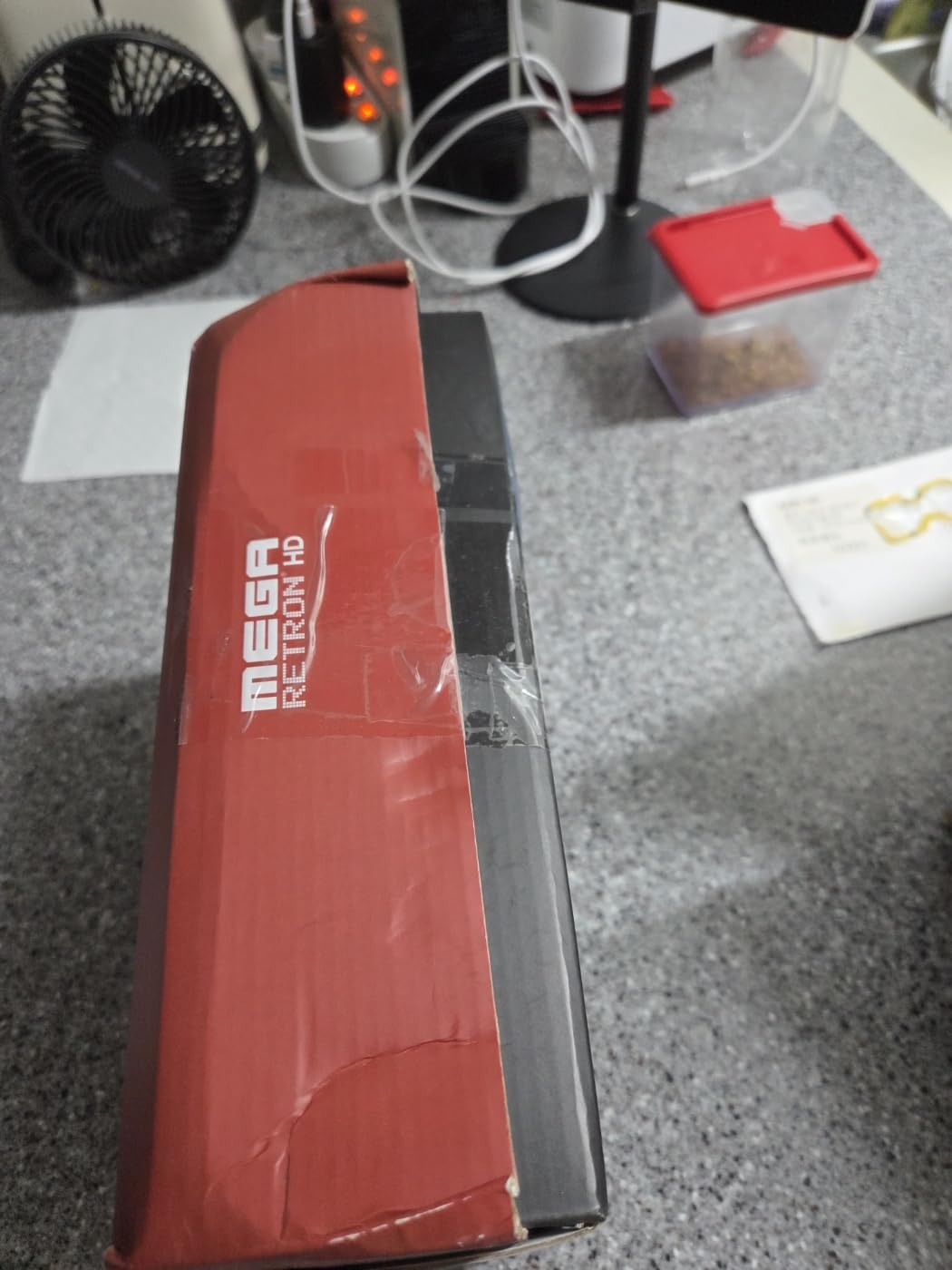
Original Sega controllers work, so the feel of playing stays authentic. Owners rate it highly for exactly the reason the design implies: it does one thing, reliably, with no menu to navigate.
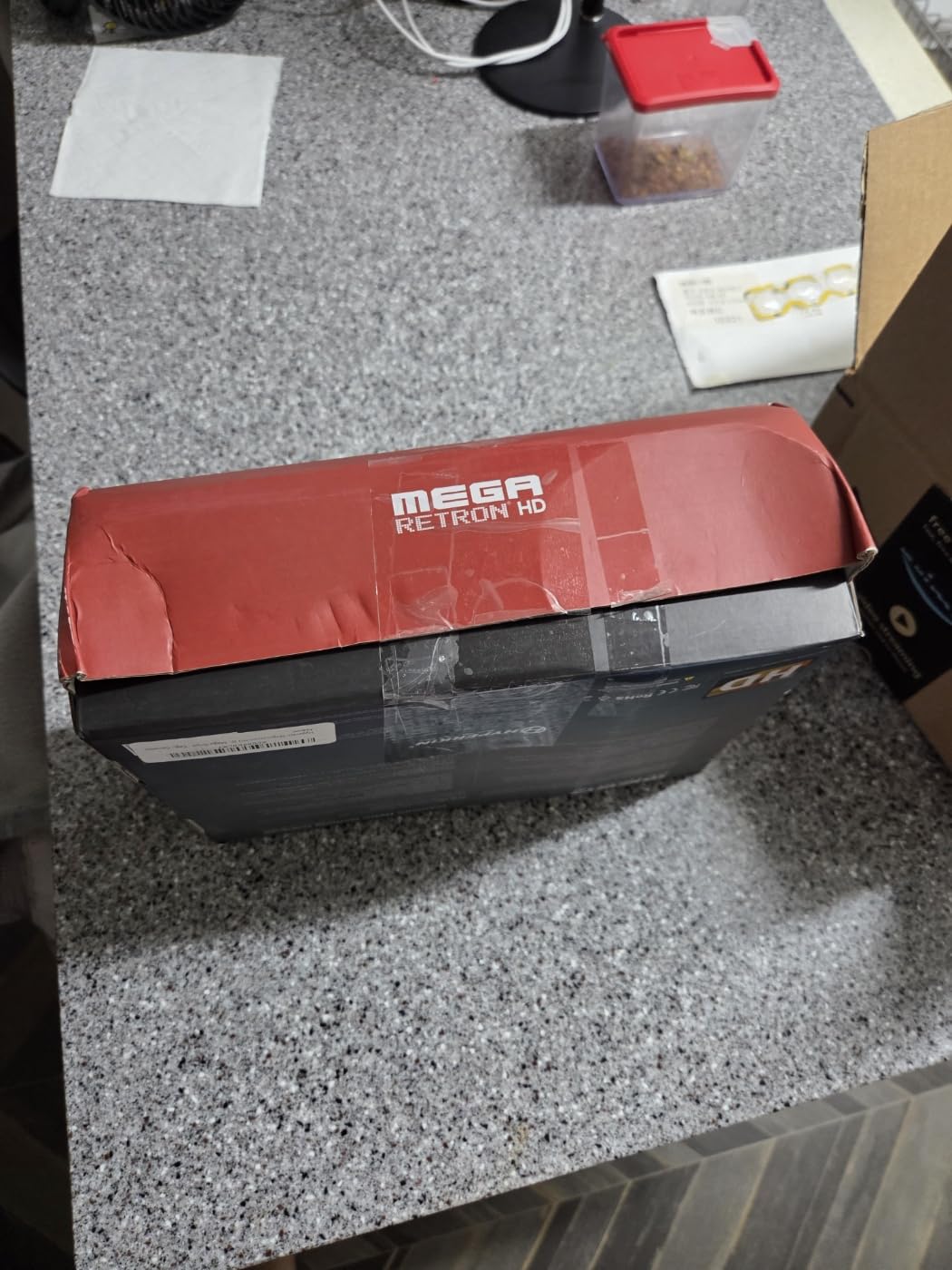
There is no save state, no aspect-ratio switch and no enhancement options, so games output at whatever geometry the hardware gives you. A few rarer and third-party cartridges refuse to boot, and at 2.6 pounds the shell is mostly plastic and feels lighter than the build suggests.
What is in the box
Just the console, the HDMI cable and the AC adapter. No controllers are included, so budget for original Genesis pads or a compatible modern alternative before you can play.
No games are included either. This is a cartridge reader, and on day one it will sit on a shelf showing a black screen unless you own carts.
Who should pass on it
If your collection spans more than one system, the Super Retro Trio HD Plus covers NES, SNES and Genesis in the same footprint and is the better buy. You are paying for two empty slots with this one.
If you want conveniences like save states or a hardware aspect-ratio switch, this is the wrong cartridge console. It is deliberately minimal, and the value depends entirely on how many Genesis carts you already own.
9. Hyperkin RetroN 2 HD – Best for a Hardware Aspect-Ratio Switch
Hyperkin RetroN 2 HD Gaming Console for NES/Super NES/Super Famicom
NES SNES and Super Famicom
720p HDMI
16:9 and 4:3 hardware switch
Two controllers included
Pros
- Handles NES SNES and Super Famicom carts in one unit
- Hardware 16:9 and 4:3 aspect-ratio switch fixes stretched output
- Perfect Pin connector design is easier to use and more durable
- Two premium classic-style controllers included
- AV output and cable for CRT use
Cons
- Some cartridges still fail to boot including Super Mario All-Stars
- Included controller cables are short
- No save states and no way to run games without cartridges
- Fanless design gives slightly softer audio and muddy colours
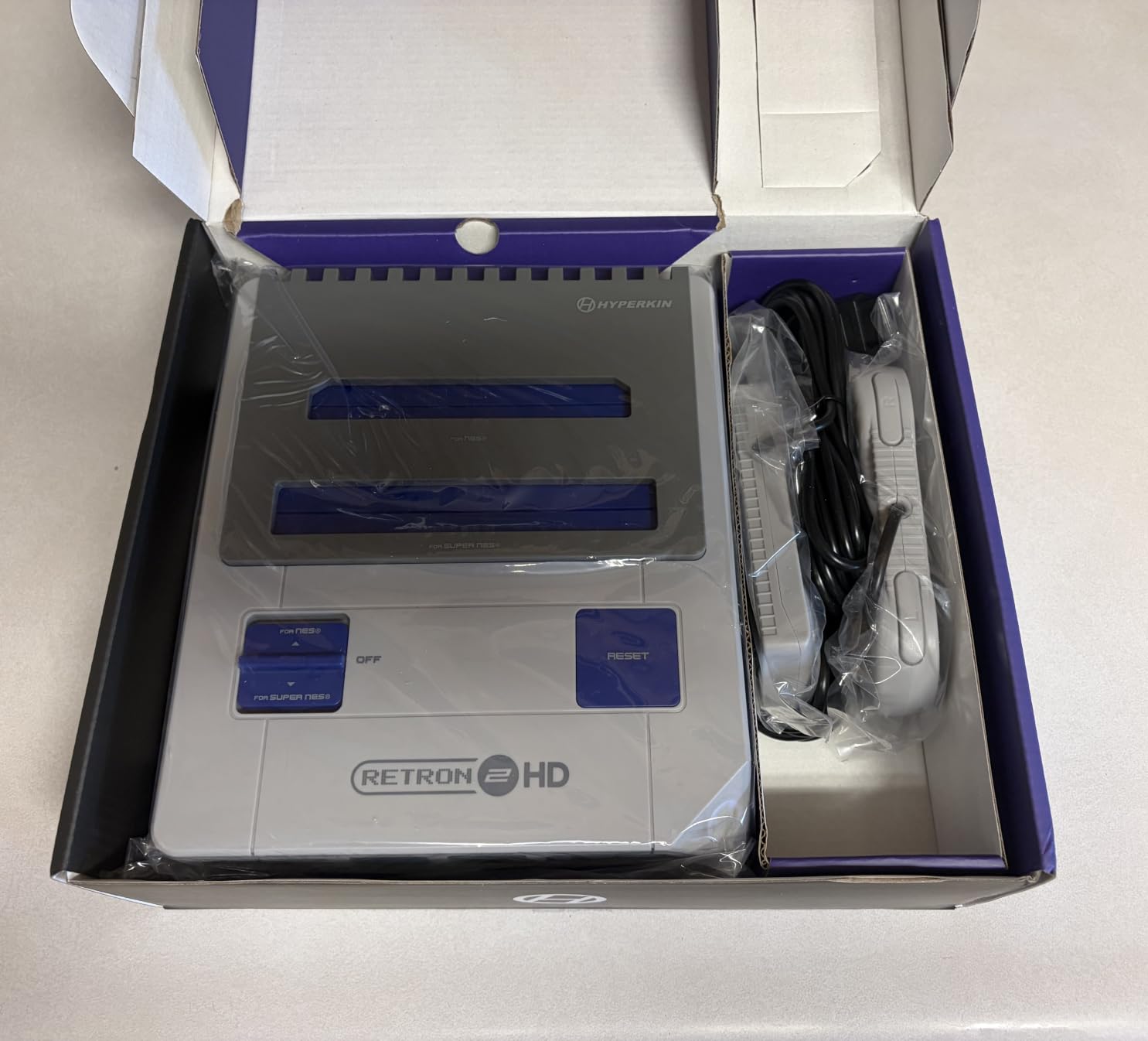
The Hyperkin RetroN 2 HD is the clone hardware answer to the stretched-graphics problem. It has a physical 16:9 and 4:3 switch, so you can flip to the correct geometry with a switch rather than fiddling with television menus every time a different system comes on screen.
It covers NES, Super NES and Super Famicom cartridges in one unit with high compatibility across NTSC and PAL libraries. The Super Famicom support is a nice touch for anyone whose childhood library was the Japanese version.
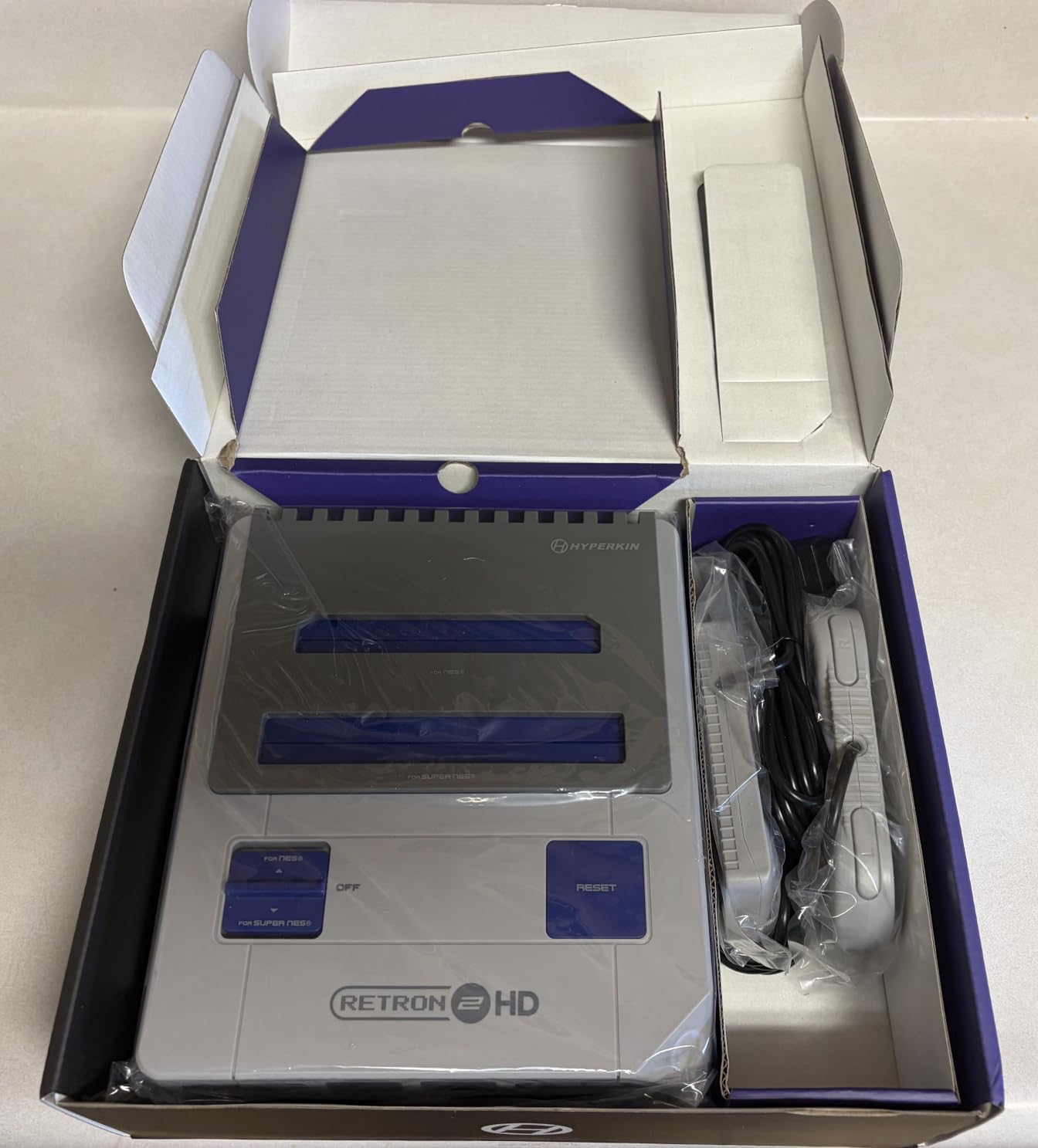
Connector design is Hyperkin’s real contribution here. Their Perfect Pin technology makes cartridges noticeably easier to insert and remove and is more durable than earlier clone hardware, which directly addresses the bent-pin problem that afflicts this whole category.
Two controllers are in the box, a Cadet and a Scout, in a classic console style, and it also accepts original NES and SNES pads. Output covers 720p HDMI plus AV ports with a cable included, so a CRT owner is covered.
Set-up notes that save you a return
The included controller leads are short, which limits how far players can sit from the screen. That is the complaint owners raise most often and it is not solvable without buying longer cables.
The power supply matters too. Hyperkin recommends a USB wall adapter of at least 5V 1A, and an underpowered adapter will cause the console to misbehave. A six-foot charge cable and an AC adapter are included.
Who should pass on it
Skip it if you have no cartridges or if you want save states, because this machine has neither. It is a dedicated Nintendo cartridge reader with a better-than-average aspect-ratio switch.
Skip it if you own Genesis carts as well. The Super Retro Trio HD Plus covers the same Nintendo generations plus Sega in one box, and for most collectors the extra slot is worth more than the aspect-ratio switch.
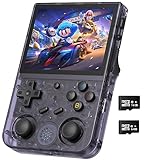
10. Anbernic RG353V – Best for Dual-OS Android Play
Anbernic RG353V Retro Handheld Game Console , Dual OS Android 11 and Linux System Support 5G WiFi 4.2 Bluetooth Moonlight Streaming TV Output 64G SD Card 4452 Games(Transparent Purple)
Dual Linux and Android 11
3.5-inch 640x480 IPS
64GB SD card with 4452 games
3200mAh battery
Pros
- Dual boot open-source Linux and Android 11 in one device
- 64GB SD card preloaded with 4452 curated games
- RK3566 Cortex-A55 chip handles demanding titles with less frame-drop
- 3.5-inch 640x480 OCA laminated IPS screen with wide viewing angle
- 3200mAh battery for about 6 hours plus Moonlight streaming
Cons
- 640x480 native resolution looks soft on modern displays
- 2GB RAM and 32GB storage constrain demanding Android titles
- Transparent plastic shell feels less premium than metal handhelds
- Fan noise is audible during longer sessions
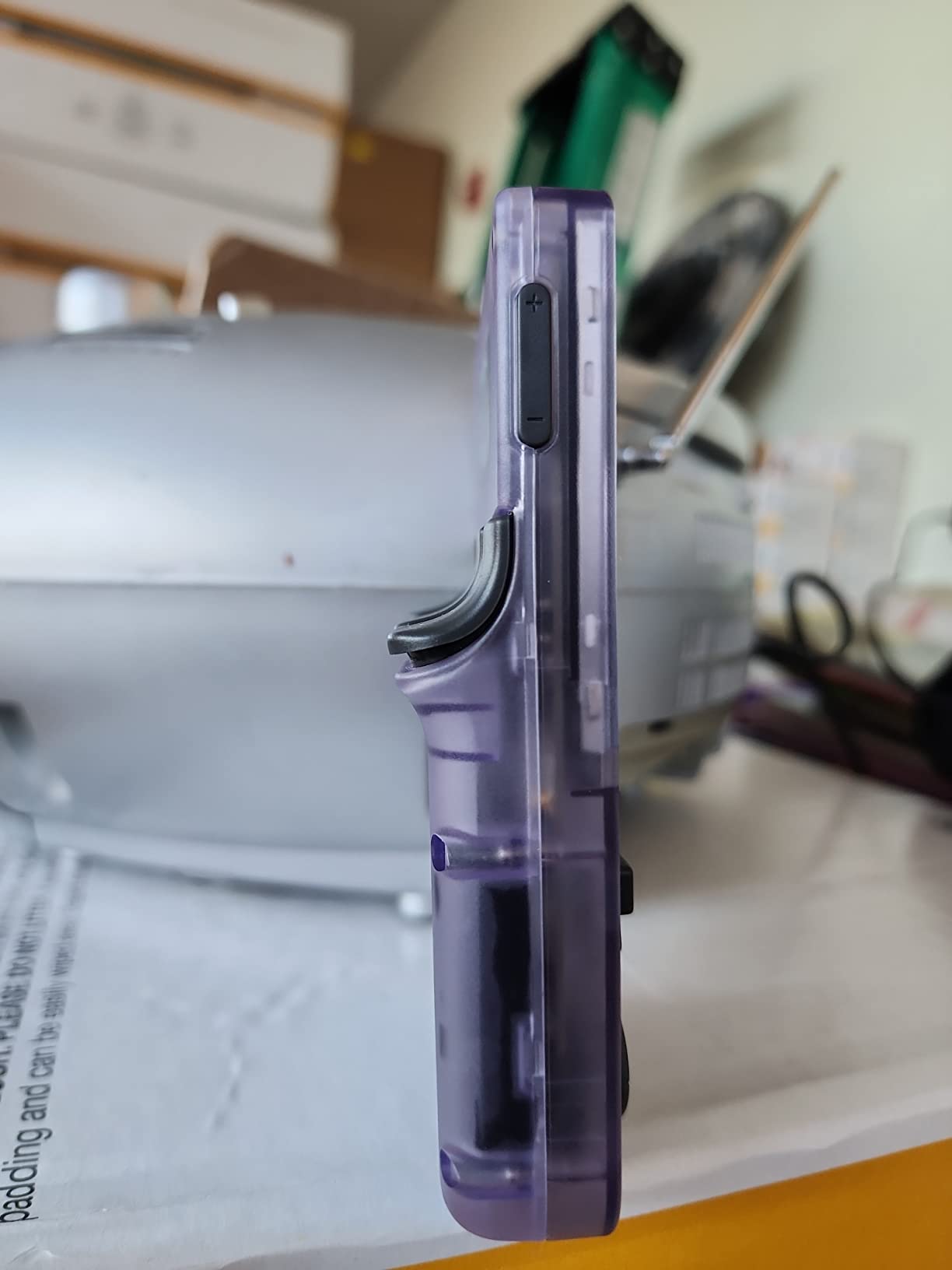
The RG353V is the sensible middle ground in the handheld tier. It boots an open-source Linux system for gaming and Android 11 for everything else, so you get a dedicated retro machine and a general-purpose Android handheld in the same body, and the Linux side runs the game-focused emulators more smoothly than Android does.
The silicon is the differentiator at this tier. An RK3566 quad-core 64-bit Cortex-A55 at up to 1.8GHz with 2GB of LPDDR4 handles demanding titles with far less frame-dropping than the entry-level Android boxes, and the 64GB SD card arrives preloaded with 4452 games across roughly 20 formats.
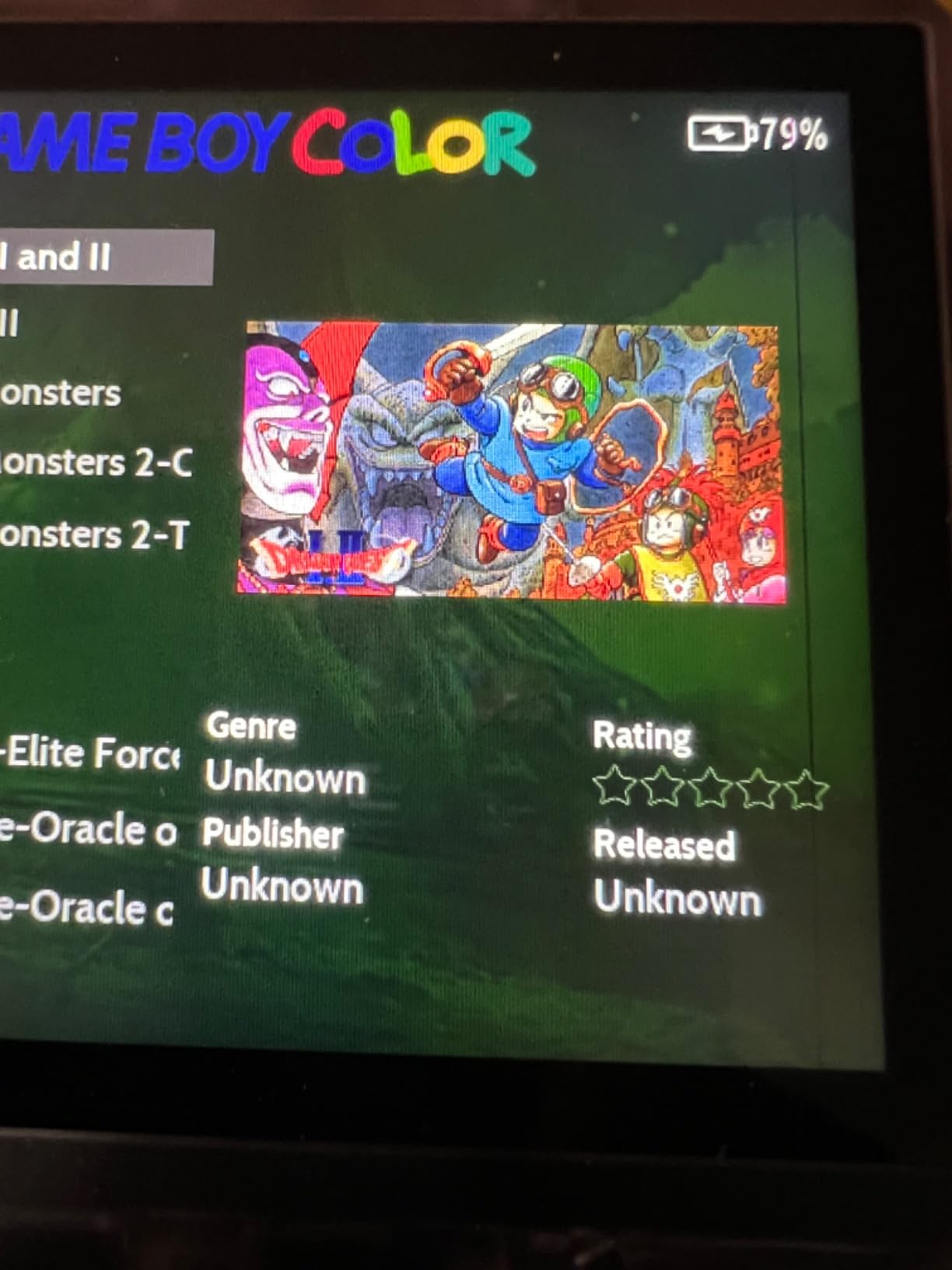
Connectivity is better than most rivals: 2.4 and 5GHz Wi-Fi, Bluetooth 4.2, TV output and Moonlight streaming for playing games from a PC. The 3200mAh battery gives roughly six hours with USB-C fast charging, and the 3.5-inch 640×480 OCA-laminated tempered glass IPS panel has a genuinely wide viewing angle.
The compromise is the screen resolution. 640×480 is a soft, low-resolution image that is noticeable on any modern high-resolution display, and 2GB of RAM with 32GB of storage will not satisfy demanding Android titles. The transparent plastic shell also feels less premium than metal-cased rivals, and owners mention audible fan noise in long sessions.
What to buy alongside it
Plan on adding a larger microSD card rather than relying on the included 16GB. The 64GB card is preloaded, but it fills quickly once you start adding your own library.
Expect some setup work. Forum discussions about this tier repeatedly converge on the same point: the hardware is only as good as the operating system you install, and first-timers should budget an afternoon for firmware and file organisation before the first game boots.
Who should pass on it
Skip it if picture quality on a handheld screen is your top priority. At 640×480 you are giving up visible sharpness that the wider-screen Android handhelds on this list do not.
Skip it if you want a pocket device. At roughly 300 grams with a 3.5-inch screen this is a small tablet, not a clamshell or a pocket unit, and for pure Game Boy Advance and Game Boy colour play there are dedicated handhelds with far better screen proportions.
How to Choose a Retro Gaming Console in 2026
The decision comes down to one question: what do you want to play, and where do you already have it? If you own cartridges, you are shopping for a cartridge console. If you do not, you are shopping for a licensed mini or an emulation handheld. Everything else in this guide follows from that.
Original hardware gives you the authentic feel and the original controller ports, and it remains the only way to play a physical collection. Its weakness is video output: original consoles output composite or RF, so a modern television usually needs an inexpensive converter, and a CRT television is the destination where original hardware looks its best.
Clones and FPGA-style hardware read the same physical cartridges but output clean HDMI. They add conveniences original machines never had, including hardware aspect-ratio switches and near-zero input lag, and they remove the converter expense. FPGA-based designs go further by re-rendering the original signal in high resolution rather than scaling it, which is why collectors who care most about picture quality favour them.
Emulation boxes and Android handhelds run software copies. They cover the most systems per device and need no media at all, and the community consensus on forums is clear that this is where beginners should start. The trade-off is that you must source the games yourself, and the setup involves formatting a card and installing emulators.
On the question people ask most often: the console hardware itself is not illegal. Devices sold with a preloaded library are legal to buy, and the legality question concerns the game files, not the machine. What ships with the device varies, and that is the trap. A licensed mini console such as the Genesis Mini or the Atari Pocket Player includes its games legally. A cartridge console includes none. An Android handheld arrives with thousands of titles already loaded, and many buyers have no idea which of those they are permitted to keep. The safe, well-trodden path is to use your own dumps of cartridges you physically own, or to use the officially licensed subscription catalogs available on current hardware.
Controller inclusion is the other expectation gap. The Genesis Mini, Super Retro Trio, Retro Duo and RetroN 2 HD all include controllers. The Hyperkin Megaretron HD does not. The Arcade1Up cabinet has arcade sticks built in. Check before you commit, because a console without pads means a second purchase before you can play.
For picture quality, match the output to the screen. 720p or 1080p over HDMI is the right target on a flatscreen, and hardware aspect-ratio switching saves an argument with your television every time you change system. If you own a CRT, prefer units with composite RCA output and confirm the aspect ratio your display expects.
Finally, weigh build quality above emulation power. Forum regulars are blunt on this point: a device that simply does not break is worth more than one that runs more formats. Tight cartridge slots, screw-secured battery compartments, fan noise and fragile joysticks are the four failure patterns that show up repeatedly in owner reports, and they are all reasons to choose a different model rather than a different brand.
For audio, our best gaming headsets guide covers the headsets that pair well with longer play sessions on any of these systems.
Frequently Asked Questions
What is the best retro game console to get?
The Sega Genesis Mini is the best retro gaming console for most people in 2026. It ships with 42 officially licensed games, M2-developed emulation with accurate FM synth audio, two wired 3-button USB controllers and an HDMI cable, so it works on any modern television with no setup, no converters and no game sourcing required.
Which retro consoles are worth buying?
Worth buying are the devices that match what you already own. Cartridge consoles are worth it if you have physical NES, SNES or Genesis carts. Licensed mini consoles are worth it for a legal, fixed library with no setup. Android and Linux handhelds are worth it for the largest library across the most systems. No-name bulk library boxes are rarely worth it, and forum buyers consistently warn each other away from them.
What is the best quality retro game console?
Quality means build, output and controller feel rather than raw library size. The Arcade1Up Ms. Pac-Man cabinet rates highest with owners at 4.6 for its authentic build, 17-inch BOE LCD and real arcade controls. Among console-shaped devices, the Sega Genesis Mini wins on replication accuracy and audio, and the Hyperkin RetroN 2 HD wins on connector durability.
What is the best console for playing retro games?
The best console depends on your media. For physical cartridges on a modern television, the Retro-Bit Super Retro Trio HD Plus covers NES, SNES and Genesis with 720p HDMI output and near-zero input lag. For a fixed, legal, zero-setup library, the Sega Genesis Mini. For the widest range of systems, a Linux or Android handheld such as the Anbernic RG353V.
Is the R36S legal?
The console hardware is not illegal to buy or own, and the same is true of devices that arrive with games preloaded. The legal question is about the game files rather than the machine. You are on solid ground using your own dumps of cartridges you physically own, or using officially licensed catalogs. Be cautious with large libraries of unknown provenance on any device you did not configure yourself.
Do retro consoles come with games?
It depends entirely on the type. Licensed mini consoles such as the Sega Genesis Mini and the My Arcade Atari Pocket Player include their games in the box. Cartridge consoles such as the Super Retro Trio HD Plus and the RetroN 2 HD include none and require cartridges you own. Android handhelds typically arrive with a large preloaded library of unclear provenance alongside empty storage you can add your own files to.
The Best Retro Gaming Console Verdict for 2026
The Sega Genesis Mini is the best retro gaming console overall in 2026, and it wins for a simple reason: nothing else in this roundup gives you a legal, complete, instantly playable experience with that much library for that little friction. The largest officially licensed selection, the most accurate audio, two controllers in the box and HDMI output that works on the television you already own.
Buy something else if your situation is specific. With physical cartridges, the Super Retro Trio HD Plus covers the most generations in one box, and the RetroN 2 HD wins if stretched widescreen output drives you mad. For an arcade feel at floor level, the Arcade1Up cabinet is the most authentic object here and the most rewarding to build. For a legal, kid-friendly, pocketable gift, the Atari Pocket Player does the job with none of the setup.
And for the largest library across the most systems in a portable body, the Android and Linux handhelds are where the community actually lives, though buyers should expect a firmware setup afternoon. Our retro handheld guide goes deeper on that tier if you want to go that way.
Whichever you choose, check what is in the box before you order, because that single detail causes more disappointment than any other in this category.