
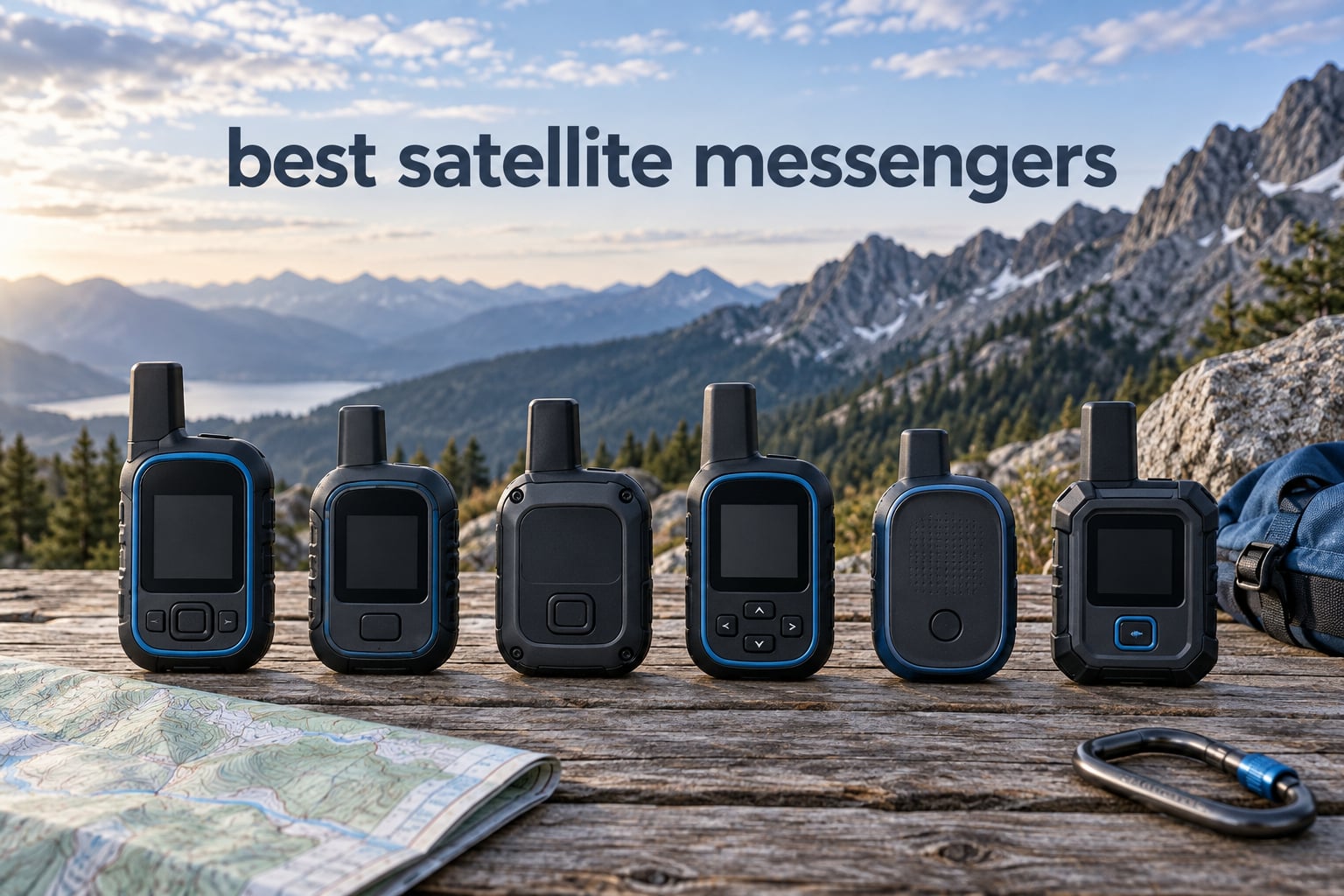
If you have ever had a route change go unannounced for three days, you already understand the gap a satellite messenger fills. Cellular coverage ends exactly where the interesting terrain begins: deep canyons, forested drainages, open water, and every border crossing between here and the trailhead. A satellite messenger borrows a different set of antennas, the ones in orbit, to send a text message, share your coordinates, or press one button and start a rescue.
That last function is the one that gets sold. The one that actually changes trips is quieter. It is the check-in that tells your partner you slept above treeline, the message that says the river crossing is out, and the location link that lets someone watch your breadcrumb trail instead of guessing from a text description. Every device in this guide does all three, and the differences between them come down to five things: which satellite network it rides on, whether it works on its own or only through a phone app, how many days of battery you get, how well it holds a signal under tree canopy, and what the service costs once the hardware is paid for.
We spent 2026 putting six of the best satellite messengers through their paces, reading the long-form reviews, checking the network each one uses, and weighing what each gives up. Six is not a round number, and it is worth explaining why before we get into the list. The satellite messenger category is narrower than it looks. SOS-only personal locator beacons do not send messages, so they are not in this roundup. One-way trackers fire off an alert and then go quiet, which is a different product with a different use case. That leaves six devices that genuinely send and receive two-way text over satellite, and every one of them has enough owner feedback to judge properly.
Table of Contents
Top 3 Picks for Satellite Messenger Picks for 2026
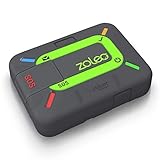
ZOLEO Satellite Communicator
- Iridium two-way satellite messaging
- 200+ hours of battery life
- IP68 waterproof housing
- Unlimited check-ins

Garmin inReach Mini
- Global Iridium two-way text messaging
- Interactive 24/7 SOS
- Sunlight-readable monochrome display
- Downloadable NOAA charts

Garmin inReach Mini 2
- Up to 14 days of battery in tracking mode
- TracBack navigation
- MapShare live location page
- Wearable and handheld pairing
The ZOLEO is the pick we keep coming back to because it does the one thing most buyers care about most: it runs on the same Iridium network as the Garmins, and it costs materially less to keep connected. The inReach Mini and Mini 2 earn their places on build quality and battery life respectively, with a 4.6 average each across several thousand reviews.
6 Best Satellite Messengers (October 2026)
| Product | Specifications | Action |
|---|---|---|
| ZOLEO Satellite Communicator |
|
Check Latest Price |
| Garmin inReach Mini |
|
Check Latest Price |
| Garmin inReach Mini 2 |
|
Check Latest Price |
 Garmin inReach Explorer+ Garmin inReach Explorer+ |
|
Check Latest Price |
 SPOT X Bluetooth 2-Way Satellite Messenger SPOT X Bluetooth 2-Way Satellite Messenger |
|
Check Latest Price |
 ACR Bivy Stick Iridium Communicator ACR Bivy Stick Iridium Communicator |
|
Check Latest Price |
Two numbers in that lineup shape almost every decision. Four of the six devices run on the Iridium network, which is the only one of the major networks with genuine worldwide coverage today. One runs on Globalstar, which is regional and has real gaps. And the battery figures range from 30 hours to more than 200, which is the difference between a device that survives a weekend and one that survives a season of sporadic use.
1. ZOLEO Satellite Communicator – The Best Overall Pick for Most Buyers
ZOLEO Satellite Communicator (Slate Grey)
Weight: 12 oz
Battery: 200+ hours
Network: Iridium
Water: IP68
Pros
- Same Iridium network as Garmin inReach
- Messaging routes over Wi-Fi and cellular first
- 200+ hours of battery life
- Dedicated ZOLEO SMS number for inbound contacts
Cons
- Smartphone app is not intuitive
- Automatic location pings eat into message allowance
- Needs a clear view of the sky to transmit
The ZOLEO is the device we recommend to people who want a Garmin inReach experience without the Garmin airtime bill. It runs on the Iridium network, the same low-orbit constellation behind every inReach unit, which means coverage behaves the same way in the field. Owners report messages typically delivering in one to four minutes, and considerably faster with an unobstructed patch of sky overhead.
What makes it genuinely different is the routing logic in the companion app. Instead of forcing every message through satellite, the ZOLEO app checks Wi-Fi first, then cellular, then satellite, and only spends airtime when it has to. On a trip that starts with three days of trailhead camping, that routing alone can cut your monthly message bill substantially, and it happens without you thinking about it.
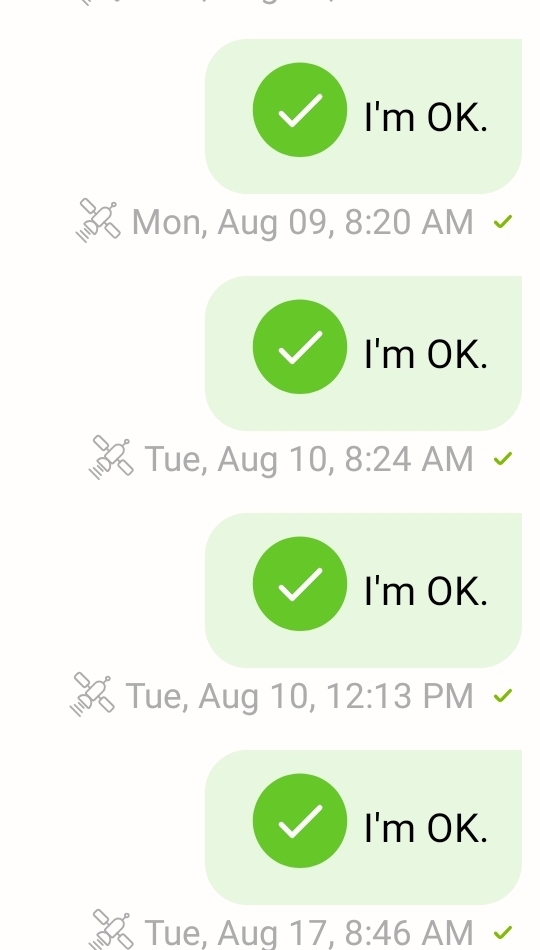
Battery life is where this device pulls away from the field. The listed average is over 200 hours, and reviewers consistently describe getting a week or more of continuous use out of a charge. Compare that to the Garmin options in this roundup, where endurance ranges from 30 hours on the Explorer+ to 14 days in low-power tracking mode on the Mini 2, and the ZOLEO is the one you can forget to charge. The housing carries an IP68 rating, so rain, river crossings, and a dunk in a pack wash are not the end of the trip.
The physical design is refreshingly simple. At 12 ounces it is not the smallest unit here, but it is a palmable rectangle with a carabiner and lanyard in the box, and it carries on a lanyard, a shoulder strap, or a pack strap without any fuss. You activate it, get your own ZOLEO SMS number and email address, and people off-grid can reach you on it directly rather than through a relay chain.

What the ZOLEO gets right when you have no signal bars
Check-ins are unlimited and free, and you can set location sharing to fire on a fixed interval so family can follow along without you doing anything. That combination is unusual at this level of simplicity. Garmin charges more for comparable tiers and layers rescue insurance as a separate line item, while the ZOLEO plan structure keeps unlimited SOS and check-in messaging in the base package.
The subscription can also be paused for a few dollars a month when you are not using it, which matters for the two-trips-a-year hiker. That is a real answer to the most common objection we hear, which is not about capability but about paying monthly for gear that sits in a drawer eleven months of the year.
Where the ZOLEO will frustrate you
The app is the weak point, and it is not close. Onboarding and account setup confuse a lot of first-time owners, and the documentation is thin enough that many settings only become obvious through trial and error. If you dislike learning an interface in the field, budget an evening with it before your trip rather than the morning of.
The second issue is message accounting. Automatic location pings count against your monthly allowance, and unlimited auto-messaging is a separate charge on top of the base plan. Turn the interval up to a sensible number before you leave rather than discovering the drain halfway through a week. It is also strictly text, with no mapping or navigation on the device itself, so you are still carrying a phone or a separate GPS unit if you need a route.
2. Garmin inReach Mini – The Most Compact Communicator
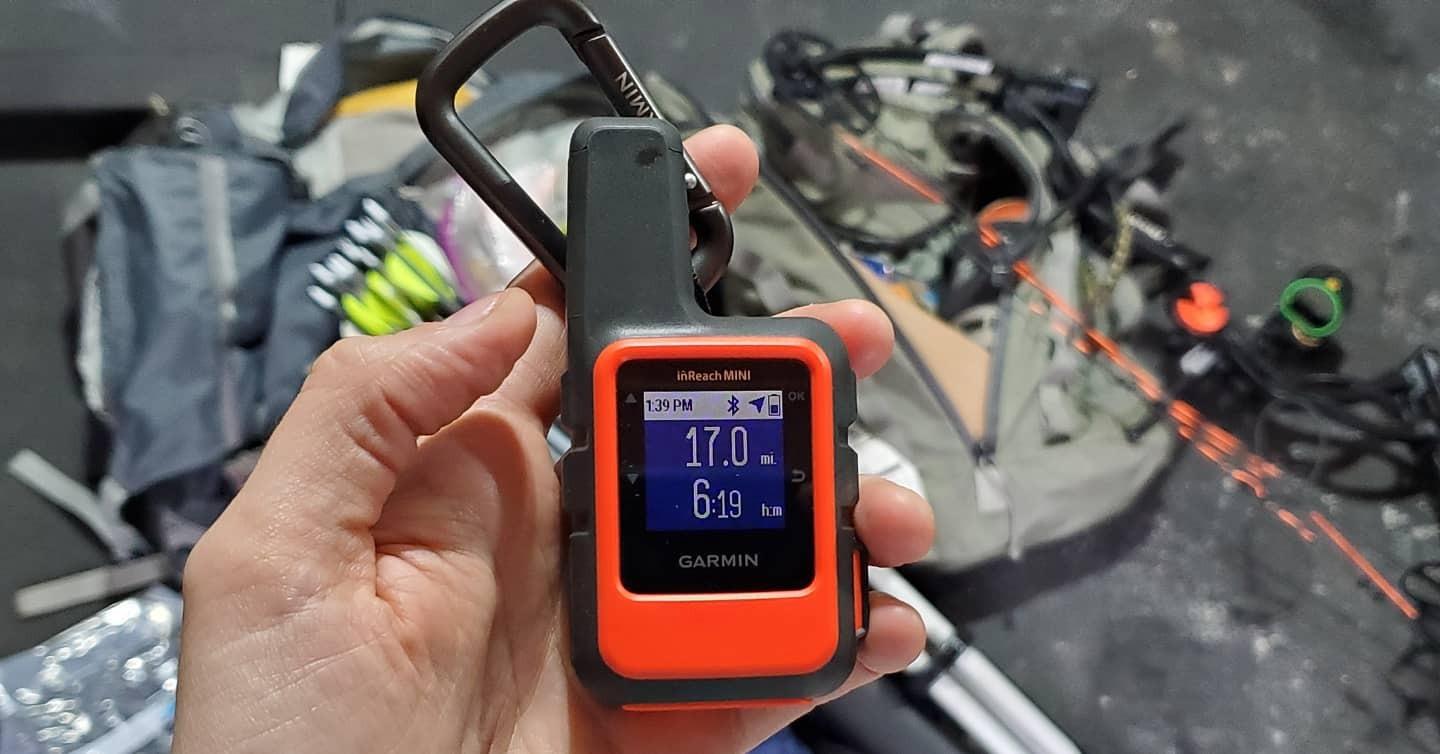
Garmin 010-01879-00 InReach Mini, Lightweight and Compact Satellite Communicator, Orange
Weight: 0.1 kg
Battery: 90 hours
Network: Iridium
Display: 1.27 inch
Pros
- Pocketable and light for a full communicator
- Interactive 24/7 SOS with monitoring center
- Free Earthmate app for charts and aerial imagery
- Physical buttons work by feel in gloves
Cons
- Very small low-resolution screen
- 90 hours of battery trails newer models
- Original subscription tiers rather than current ones
The original inReach Mini is the device that made two-way satellite messaging a normal purchase rather than an expedition expense. It still holds a 4.6 average across close to 3000 reviews, and that rating reflects something durable: a device that is small enough to forget, simple enough to operate in gloves, and connected to a monitoring center that answers when you press the button.
Messaging runs over 100% global Iridium coverage, and the SOS function is interactive, meaning a human at the search and rescue monitoring center can talk back to you and coordinate rather than just broadcasting your coordinates into the void. That two-way conversation is the single biggest functional advantage over an SOS-only beacon, and it is the reason we limited this roundup to two-way devices.

The 1.27-inch transflective memory-in-pixel display is genuinely excellent in direct sun and essentially unreadable in the dark, which is the correct trade-off for an outdoor device. Because the screen is monochrome and driven by physical buttons, it also sips power compared with a color touchscreen. The listed average battery life is about 90 hours, which covers a solid week of intermittent check-ins.
The free Garmin Earthmate app is a quiet strength. It pulls down NOAA charts, topographic maps, and color aerial imagery ahead of your trip so you have them offline, and it pairs the Mini with other Garmin wearables and handhelds so a message sent from your watch or GPS can carry the same SOS capability. Owners consistently rate the setup process as painless, which matters more than it sounds when a subscription has to be activated before a trip.
When the original inReach Mini is the right buy
If you want the most proven, most widely owned two-way satellite communicator on the market, this is it. The Iridium footprint and the monitoring infrastructure behind it are the category benchmark, and the accessory ecosystem means you are not locked into one device. It clips to a pack, sits in a chest pocket, or mounts on a shoulder strap via the included spine mount adapter.
It also makes sense as a first device for anyone who wants Garmin messaging without the current-generation pricing. Owners frequently note that it delivers the core function, interactive SOS plus two-way text, for materially less than the newer touchscreen models, and the maps still come through the free app rather than as a locked-in upgrade.
Where this generation shows its age
The screen is the honest limitation. At 128 by 128 pixels, reading a received message means squinting, and composing anything longer than a preset is genuinely unpleasant. This is a send-and-receive device for short check-ins, not a place to answer email.
Battery life of roughly 90 hours is also shorter than what newer inReach hardware achieves, and the subscription tiers on this model are the original ones rather than the current structure. If your trips are a week or longer with infrequent charging opportunities, the Mini 2 below solves that problem directly, and buyers who upgrade usually say the reason is endurance and typing, not messaging reliability.
3. Garmin inReach Mini 2 – The Best Battery Life in a Pocket Unit
Garmin inReach® Mini 2, Satellite Communicator, Orange
Weight: 99 g
Battery: up to 14 days
Network: Iridium
Display: 1.27 inch
Pros
- Up to 14 days of battery in 10-minute tracking mode
- TracBack navigation to retrace your route
- MapShare page for live family tracking
- Pairs with Garmin wearables and handhelds
Cons
- Typing on the tiny touchscreen is slow
- Screen is too small for real mapping
- Activation and firmware setup takes patience
The Mini 2 is the version of the inReach Mini that most people should actually be buying, and reviewers treat it that way. It keeps the same pocketable footprint at 99 grams, adds a capacitive touchscreen, and delivers battery life measured in weeks rather than days. Up to 14 days in 10-minute tracking mode is a different category from the 90 hours of the original, and it is the single biggest practical improvement in this lineup.
TracBack is the feature that gets left out of most comparisons and probably should not be. Once you have sent a message, the device records the path you took to get there and can route you back to your starting point along your own breadcrumb trail. For anyone who communicates for a living, or who has ever sent coordinates and then wished they had not, that is worth more than any extra screen inch.
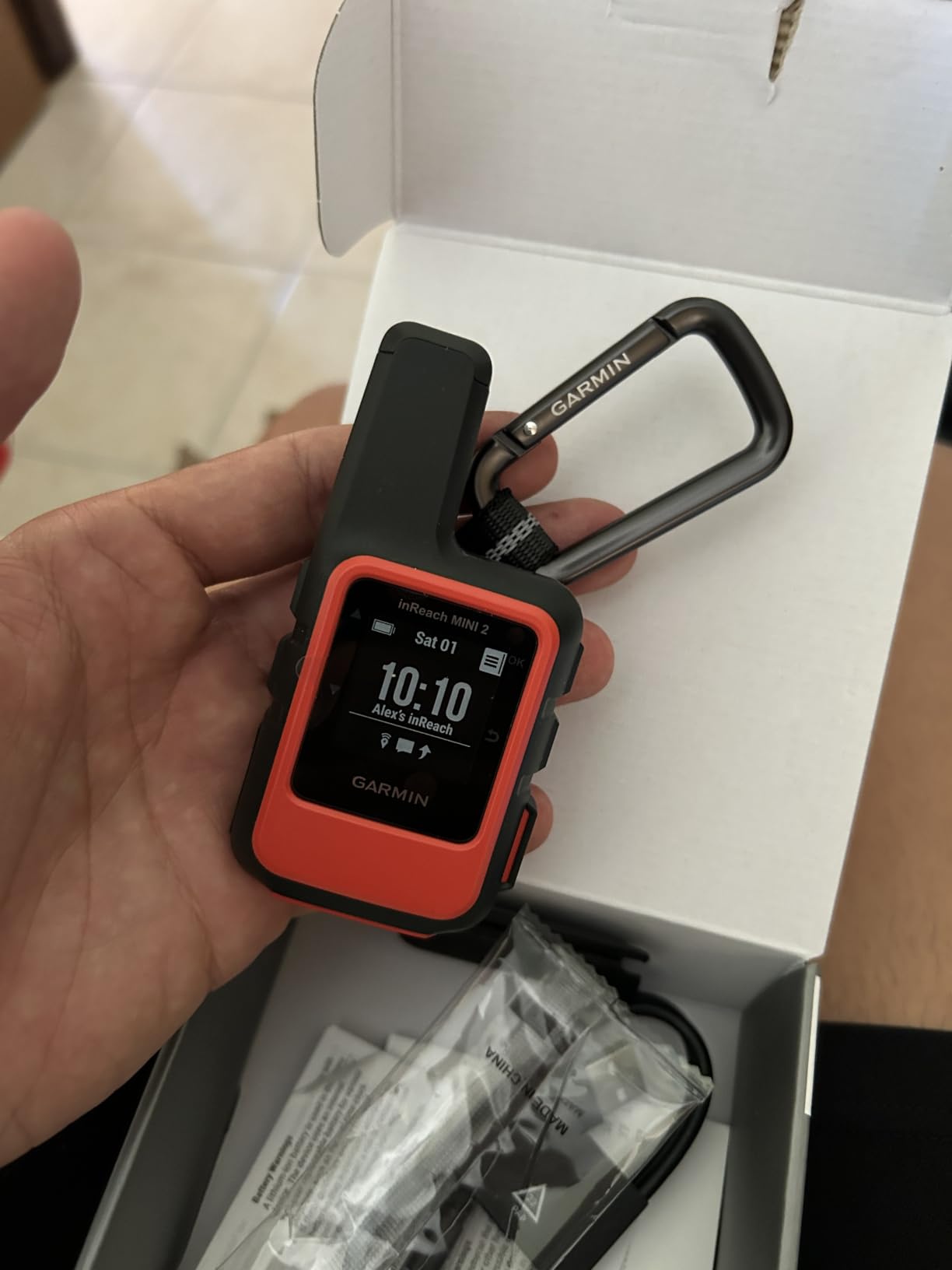
MapShare is the other quiet workhorse. It gives you a shareable page that family can follow as a live location trail, and coordinates can be embedded directly into outgoing messages, which means a text recipient does not need the app or the subscription to know roughly where you are. For a thru-hike where you message twice a week, that is the feature that reduces the number of messages you need to send.
The Mini 2 also syncs with the Garmin Explore app and website for trip planning, courses, waypoints, and collections before you leave, and weather forecasts arrive over Bluetooth to a paired phone. Pair it with a compatible Garmin watch or handheld and you can send and receive messages and trigger SOS from your wrist, which is a meaningful safety improvement on scree, in gloves, or while both hands are busy.
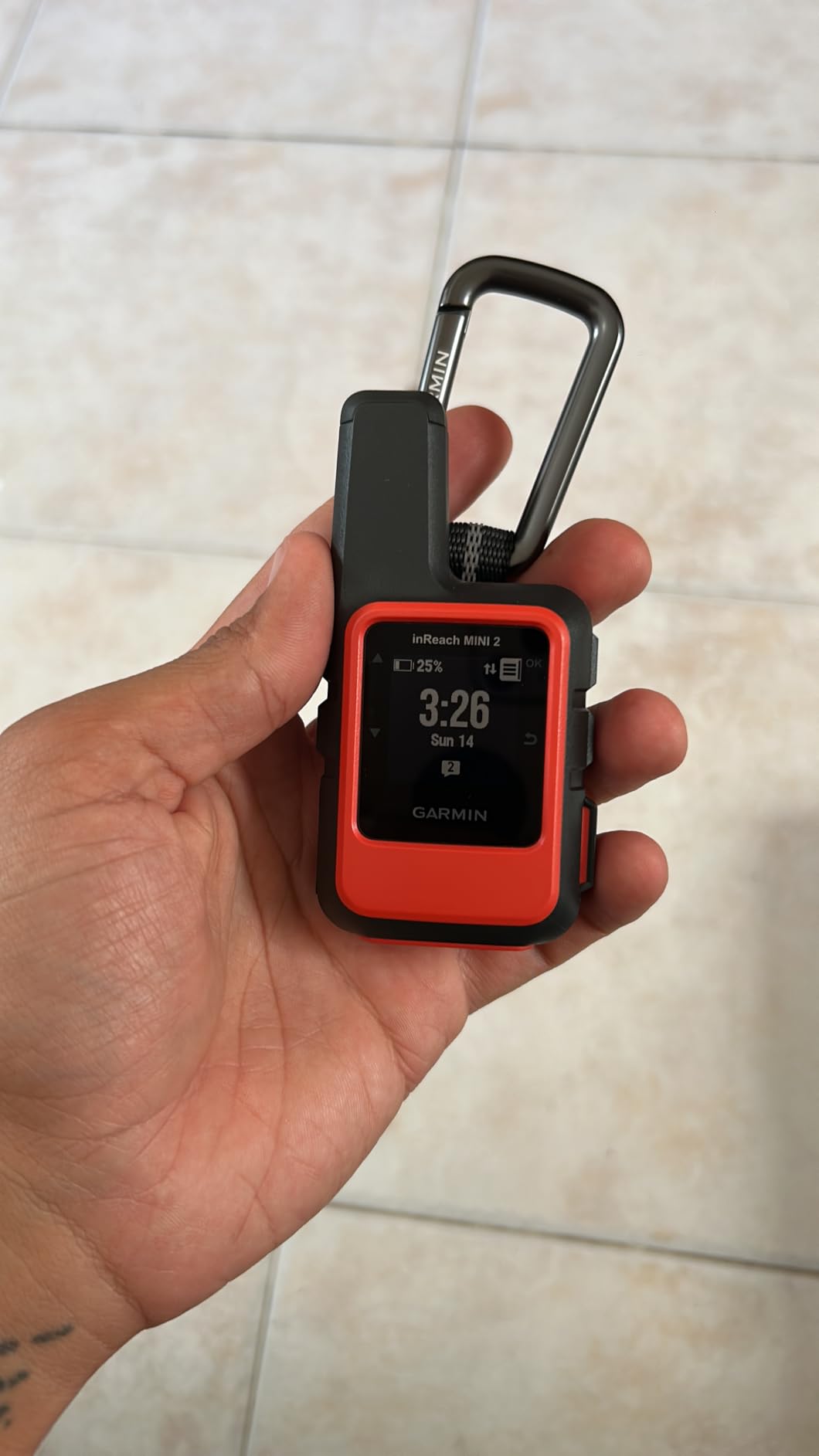
What makes this the endurance pick
Two weeks of tracking on one charge changes the mental model of the device. You stop treating it as gear that needs managing and start treating it as something that is simply there, which is the correct relationship with a safety device. Users describe it as peace of mind on solo trips, and that language matches exactly what a messenger is supposed to provide.
The 99-gram weight means it disappears on a pack strap or a motorcycle rig, and the digital compass gives you accurate heading even when you are stationary and not moving, which is when a phone compass tends to read poorly.
What you trade for that battery
Composing custom messages on a touchscreen this small is slow, and reviewers are consistent about it. Preset check-ins and short replies work fine. Anything longer becomes a typing exercise, so pair it with a phone for real correspondence and use the device itself for the operational stuff.
Two more things to know. The screen is far too small to serve as a practical mapping device, so if navigation is part of your plan you need a separate handheld or your phone. And the subscription tiers include extras such as separate rescue insurance, while the app cannot fall back from satellite to cellular the way the ZOLEO app does, so every message spent is a message spent. Message delivery over Iridium can also take five to twenty minutes in poor conditions, which is worth remembering before you start stressing about an undelivered text.
4. Garmin inReach Explorer+ – The Only One With Onboard Navigation
Garmin 010-01735-10 inReach Explorer+, Handheld Satellite Communicator with Topo Maps and GPS Navigation
Weight: 8 oz
Battery: 30 hours
Network: Iridium
Screen: 2.3 inch color
Pros
- Only device here with preloaded topo maps and routing
- 2.3-inch color screen is easy to read
- Compass altimeter and accelerometer built in
- Highest average rating in the lineup
Cons
- Shortest battery life here at about 30 hours
- Highest hardware cost of the group
- Older design generation with dated internals
The Explorer+ is the only device in this roundup that does not need your phone to be useful. It carries preloaded Delorme topographic maps, does on-screen GPS routing, and pairs via the free Earthmate app for NOAA charts, aerial imagery, and downloadable maps for other regions. If you are the kind of person who wants one device to do messaging and navigation, this is the one.
It also carries the highest average rating of the group at 4.7 across more than 1600 reviews, and the reason is fairly obvious once you hold it. The 2.3-inch color touchscreen is a genuine upgrade for reading maps and longer replies, and the sensor suite, digital compass, barometric altimeter, and accelerometer, is the kind of hardware that still feels like a proper handheld.
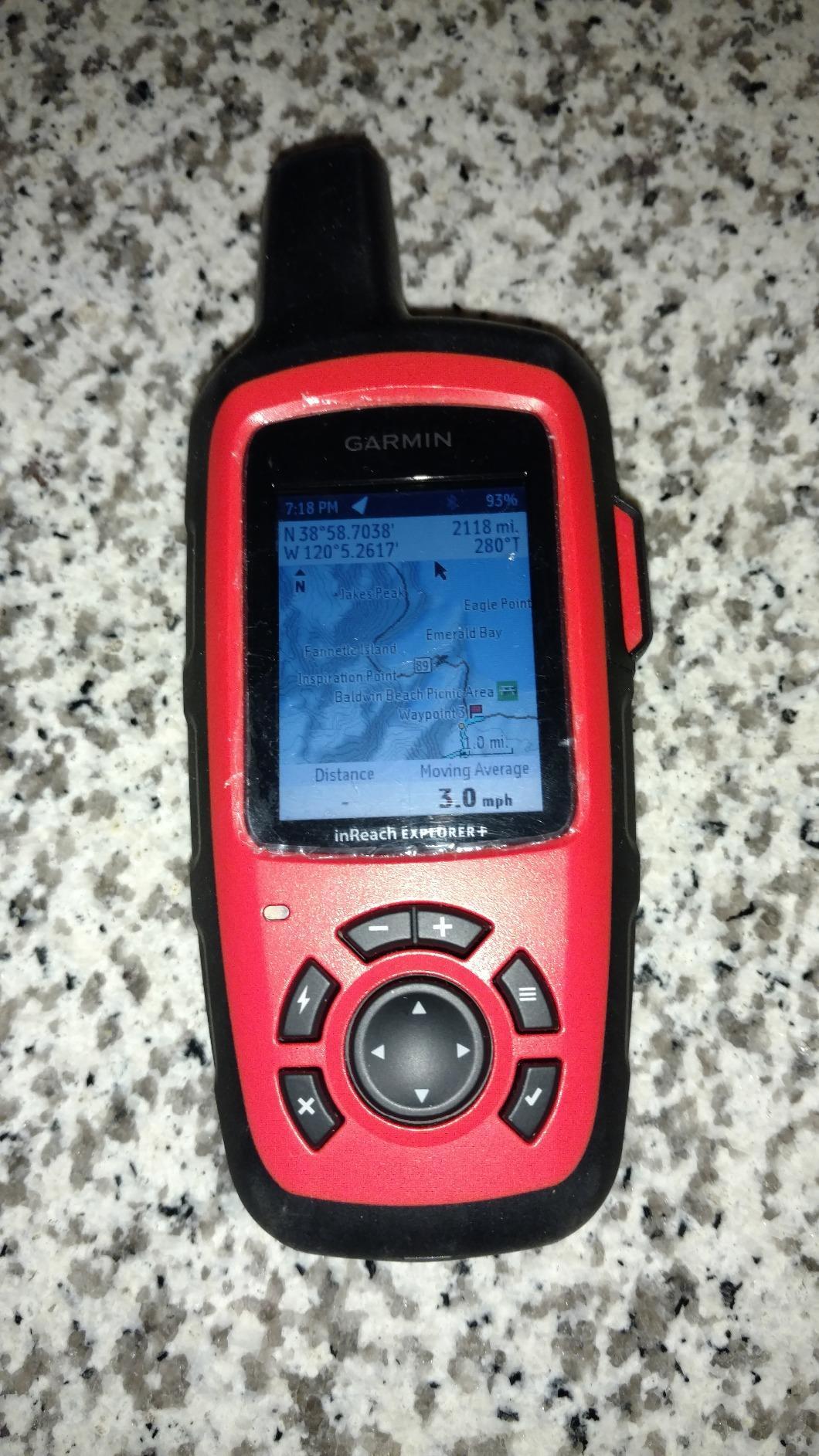
Messaging and SOS are the same proven Iridium, two-way text and interactive 24/7 search and rescue setup used across the inReach line, so you are not trading away the core safety function to get the navigation. Location sharing with family and friends is built in, and the IPX7 water rating means it handles rain, spray, and an accidental dunk.
At 8 ounces it is one of the lighter devices here, so despite the larger screen it does not feel burdensome in a hand or on a sternum strap. For anyone whose trip involves more than messaging, whether that is a multi-day route with real navigation decisions or guiding work where a lost party is a genuine emergency, the combination is hard to argue with.
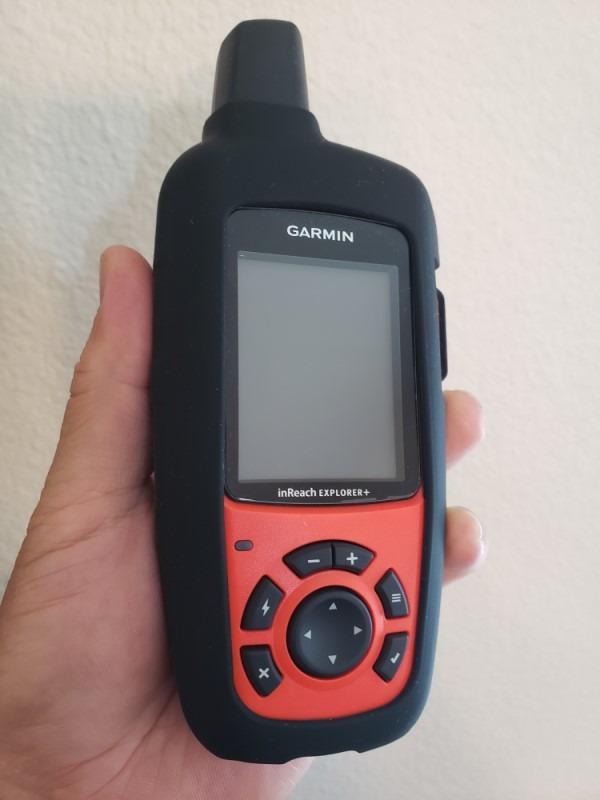
Where the onboard maps actually pay off
The argument for preloaded maps is that they work with no phone, no battery-charged phone, and no subscription state to worry about. You can leave the device powered on and still be looking at terrain if everything else is dead. The Earthmate pairing also means you can preload imagery for regions beyond the bundled North America coverage before you fly, which is a step most people skip and later regret.
For expedition-style travel, that redundancy is the whole argument. A messenger that dies is an inconvenience, and a messenger plus navigator that dies is a much bigger problem.
The compromises you accept for a bigger screen
Battery life is listed at about 30 hours, the shortest in this lineup, and that is a direct consequence of the color touchscreen, brighter display, and GPS doing real work at the same time. Owners who want multi-day autonomous power pair it with an external battery or accept a top-up routine.
It is also the most expensive unit here and carries an older design generation, so you are buying a previous processor generation and no modern solar charging. There is a further wrinkle worth flagging: the part number overlaps with the original inReach Explorer listing, which occasionally causes duplicate-listing confusion when shopping. If you want a screen to read and navigate on, this is the pick. If you only need messaging, the money is better spent on the Mini 2.
5. SPOT X – The Best Standalone Messenger With a Physical Keyboard
Spot X with Bluetooth 2-Way Satellite Messenger
Weight: 7.04 oz
Battery: 240 hours
Network: Globalstar
Standalone with own number
Pros
- Works on its own with a dedicated mobile number
- Physical keyboard usable without looking
- Two-way SOS conversation with rescue service
- Long 240 hour battery life
Cons
- Inbound messages unreliable in 5G areas
- Clunky menu and slow buttons
- Micro-USB charging and no two-way coverage in Australia
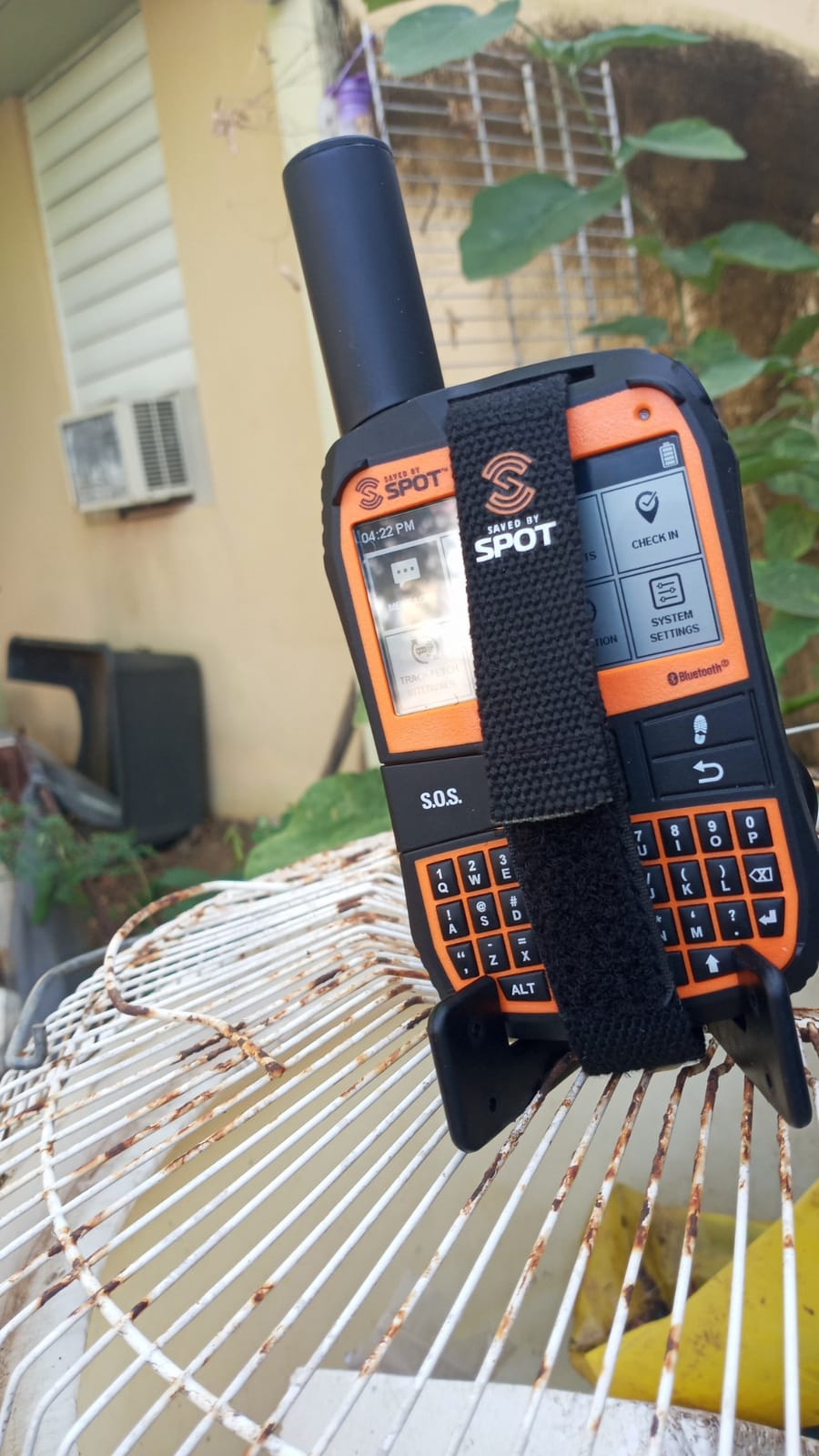
The SPOT X is the most genuinely standalone device here, and that is both its appeal and the reason its reviews are split. It has its own dedicated mobile number and works on its own physical keyboard, so you can send and receive text with no phone, no app, and no paired device of any kind. If your phone is dead, wet, or in a river, the SPOT X does not care.
Its 240-hour listed battery life is exceptional, and the physical keyboard with backlight and 14 configurable preset messages is a genuinely good idea in a storm with gloves on. SOS goes to a 24/7 search and rescue service with two-way emergency messaging and confirmation when help is en route, which is the interaction you want in a real emergency rather than a silent beacon ping.
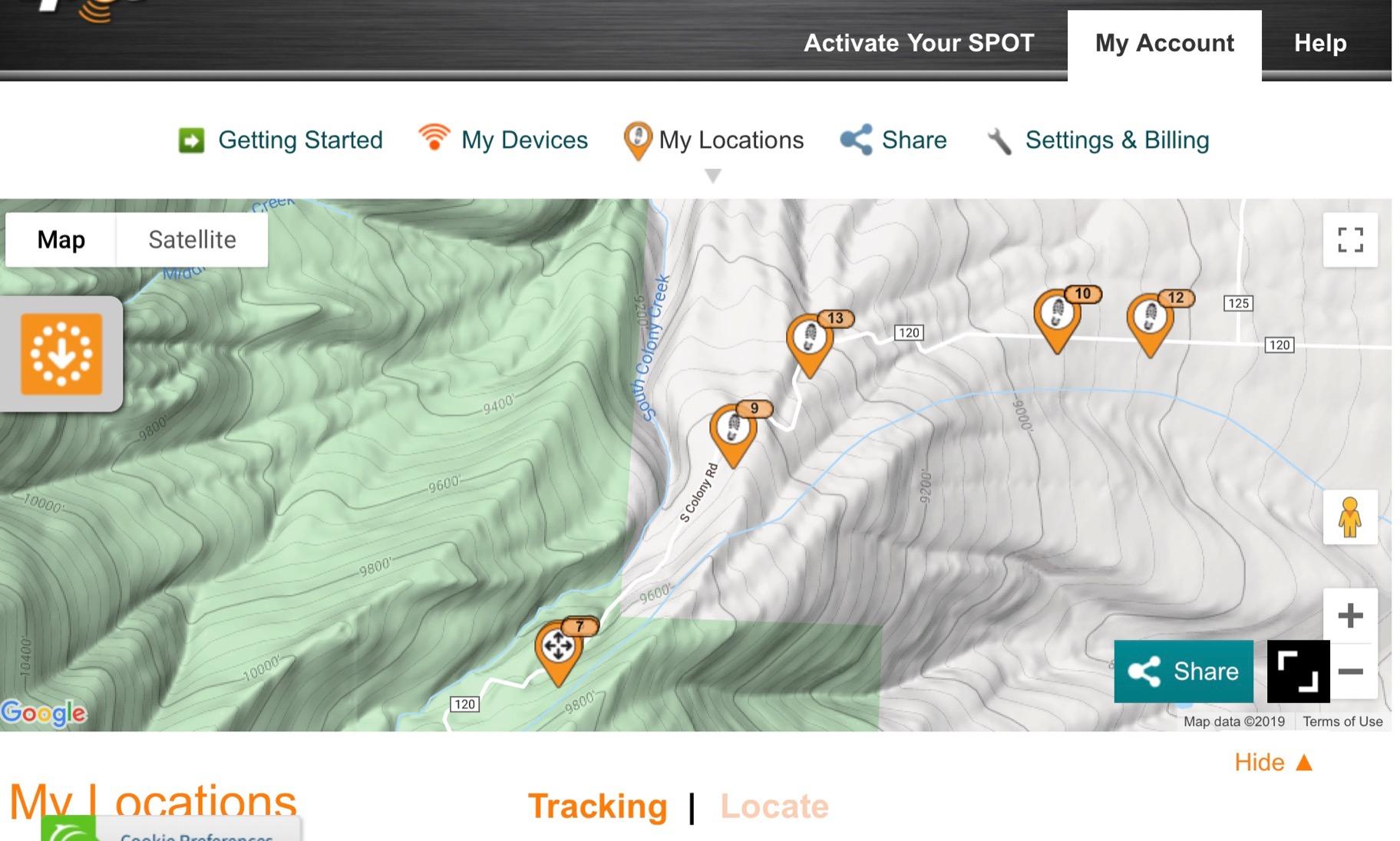
It also runs on the Globalstar satellite network rather than Iridium, and that is the single most important fact for anyone outside North America. Globalstar coverage is regional, and there is no two-way coverage in Australia at all, which is a real limitation for the exact kind of traveler who might want this device. Buyers treating it as a truck or go-bag backup in domestic terrain rate it well and describe it as staying functional through cellular and internet outages.
The 3.9 average across roughly 740 reviews sits at the bottom of the accepted range here, and about 15 percent of reviews are one-star, the largest negative share in the group. Owners who wanted a phone-like messaging experience rate it accordingly.
Why the standalone design still matters
There is a specific trip profile where a fully independent device is the right tool: long-distance motorcycle touring, overland driving, working alone in rural areas, or anywhere you are routinely away from a vehicle. Bluetooth pairing to a phone is useful for composing longer messages, but it is optional rather than required, and that optionality is rare among modern two-way messengers.
Unlimited check-ins and preset messages on annual plans also make the ongoing cost predictable, which is nice for someone who will use it every week of the year rather than twice.
What the 3.9 rating is telling you
The most common technical complaint is specific and consistent: receiving messages is unreliable in 5G cell areas, which is precisely where people most expect the device to work. If you buy a Globalstar device and stand in a town with a cell signal, inbound texts often do not arrive. Understand that behavior before you decide it is broken.
The interface is also widely described as clunky, with a cumbersome menu, notification icons that need the manual, and slow buttons that make even a preset status message tedious. Charging is micro-USB and slow, and the recurring complaint about not being able to confirm a delivery is a real one for anyone coordinating with family. If reliable global coverage matters more than independence from a phone, the Iridium devices in this roundup are the safer bet.
6. ACR Bivy Stick – The Best Choice for Group Tracking
ACR Bivy Stick – Iridium Satellite Communicator, GPS Tracker & SOS
Weight: 3.35 oz
Battery: 120 hours
Network: Iridium
App-based with SOS button
Pros
- Lightest device in the group at 3.35 ounces
- GroupTrack shares location with up to 12 people
- Two-way SMS and email over Iridium
- Offline maps and 50000+ guides in the app
Cons
- Lowest rated at 3.8 with app reliability complaints
- Requires a 3-month commitment before switching to monthly
- No screen for reading or writing messages
The ACR Bivy Stick is the smallest device in the group at 3.35 ounces, which makes it the natural choice for anyone whose kit list is built around a base weight. It is a phone-dependent unit, and the Bivy app is the whole interface, but underneath that it runs on 100% global Iridium coverage with two-way SMS and email, SOS monitored by Global Rescue, and a dedicated number and email address on activation.
What genuinely sets it apart is GroupTrack, which lets up to 12 people share messages and live location on one plan. For a family, a hunting party, or a guiding team, that is a feature none of the other devices here match. Unlimited customizable GPS check-ins and live breadcrumb tracking on a shareable map are also included, and the app carries offline maps plus a library of more than 50000 curated adventure guides.
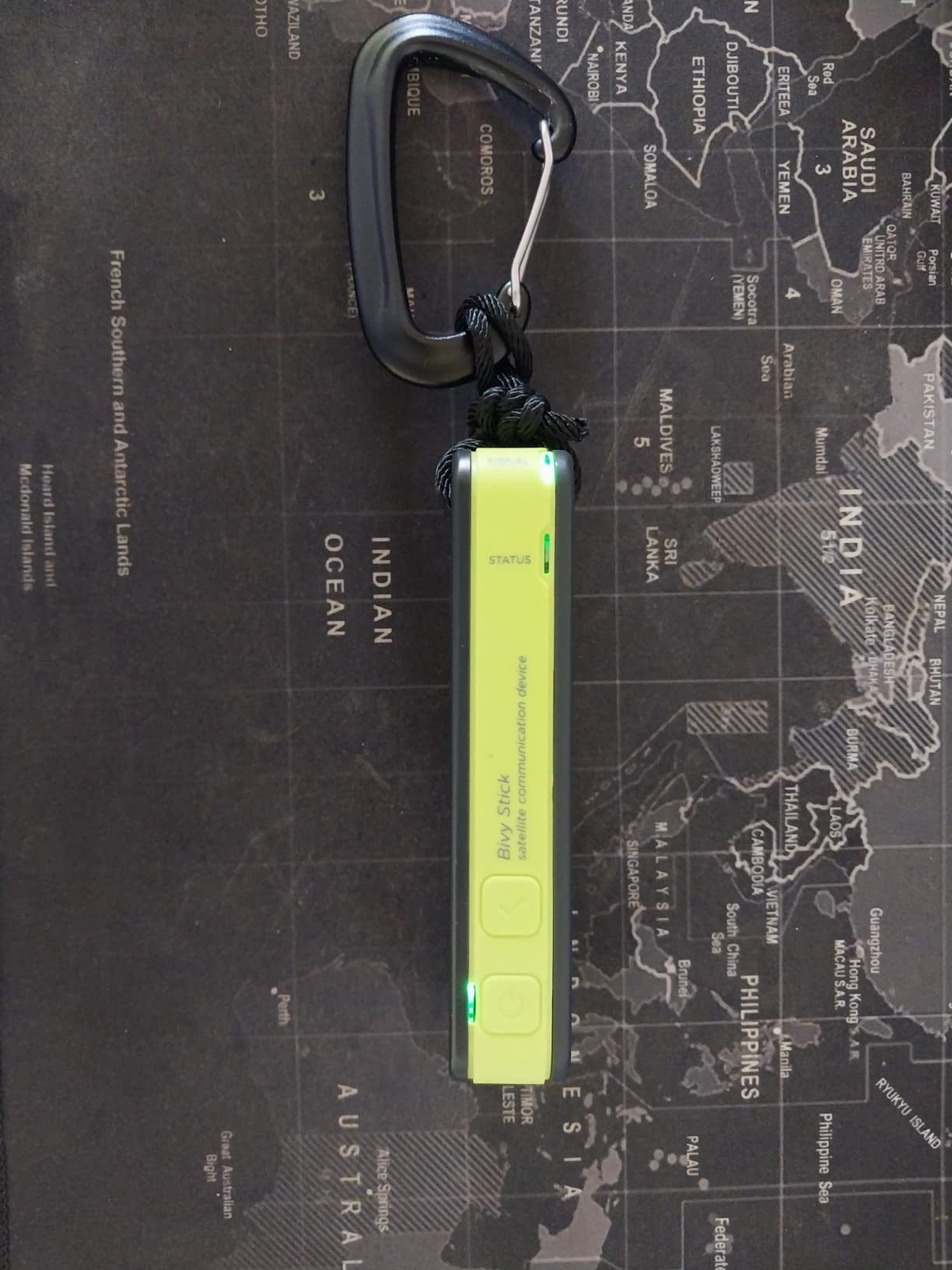
Enclosure construction is compliant with IPX7 and MIL-STD-810 standards, listed battery life is around 120 hours, and the box includes a carabiner, lanyard, charging cable, and mounting adapter. The 24/7 emergency SOS can be triggered from the app or from the device button, and real-time location sharing goes to the monitoring center once you activate it.
Its subscription structure is unusually transparent, with three monthly tiers and three annual tiers at lower per-month rates, so you can match the plan to how often you actually use the device. That transparency matters when the review pool is small and you are trying to decide without much owner history to lean on.
Where the Bivy Stick earns its place
Two situations justify it immediately. First, ultralight travel, where 3.35 ounces is the difference between carrying a messenger and leaving it in the resupply cache. Second, groups, where a shared plan covering up to 12 people with live location is cheaper and simpler than issuing individual devices to everyone.
It is also a reasonable first satellite messenger for someone who already lives in their phone app and has no interest in typing on hardware buttons, which is a real category of buyer that the standalone devices serve poorly.
Why the 3.8 rating deserves a second look
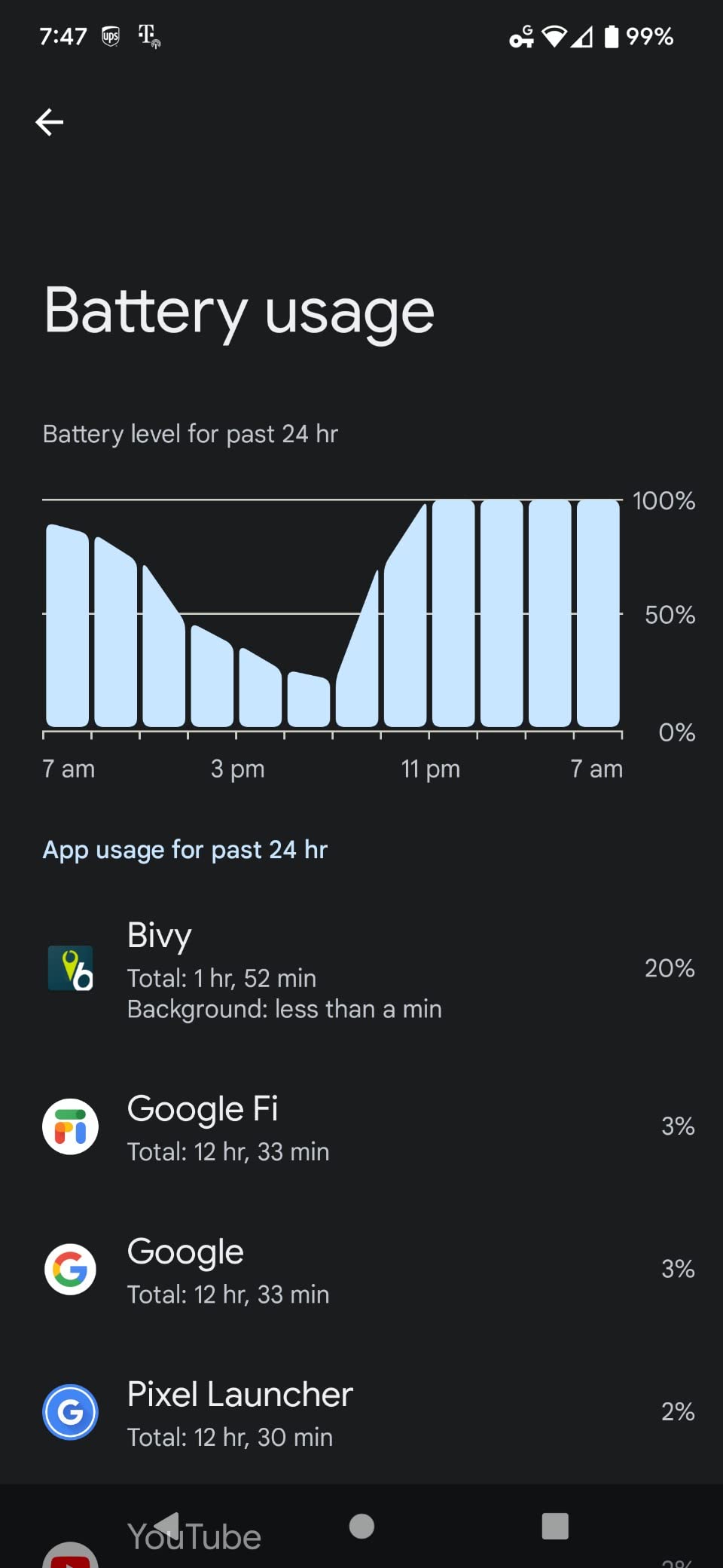
About 16 percent of reviews are one-star, and the pattern behind them is app dependence and reliability rather than hardware. With no built-in screen, if your phone dies the Bivy Stick cannot send a routine message by itself, which is a genuine gap when the whole point of the device is surviving a bad day.
There is also a three-month commitment per device before you can move to a month-to-month plan, which locks up money in a way none of the other manufacturers require. And the Bivy app is less mature than the Garmin and ZOLEO apps, which shows up in reviews as friction during setup and in the field. The rating pool is also the smallest here at just over 200 reviews, so there is less history to lean on when something goes sideways.
How to Choose a Satellite Messenger in 2026
What a satellite messenger actually is
A satellite messenger is a compact device or service that uses orbiting satellites rather than cell towers to send and receive text messages, share a GPS location, and trigger an SOS rescue alert from places with no cellular coverage. The signal travels up to a constellation such as Iridium or Globalstar, which relays it to a monitoring center for emergencies or routes it to a phone number, email, or messaging app for everything else.
Two practical consequences follow from that definition. First, the device needs a reasonably clear view of the sky, because the radio has to reach a satellite. Second, the round trip is not instant. Depending on sky view, a message can land in under a minute or take several minutes, and users in mountain terrain report times ranging from roughly 20 seconds to several minutes for Iridium connections. Nothing is broken if a text takes a few minutes to arrive.
One-way versus two-way, and why beacons are not on this list
A one-way tracker sends a signal and tells someone where you are. It cannot receive a reply, cannot carry a conversation, and cannot negotiate with a rescue coordinator. A two-way messenger, which is everything in this roundup, does both: you send a check-in and you receive an answer, and during an emergency a human at the monitoring center can talk back and coordinate the response.
A personal locator beacon, or PLB, is a third category. It registers on the public COSPAS-SARSAT network at 406 MHz, needs no subscription at all, and is built for one purpose: a silent distress signal with a unique identifier that search and rescue services worldwide can home in on. It is a superb rescue tool and a terrible communicator, which is why beacons are excluded from this list of satellite messengers.
Standalone hardware versus phone-paired hardware
This is the decision most people get wrong, and the honest framing is that you are choosing what you want to happen when your phone is dead. A standalone device like the SPOT X sends and receives on its own keyboard and its own number, which is reassuring in a specific way. A phone-paired device gives you a much better composing experience, better maps, and richer apps, and it stops working for routine messages if the phone is off or flat.
Most buyers end up fine with phone pairing, because the realistic failure mode of a modern phone is a flat battery, not a shattered circuit board, and most people carry a small battery pack anyway. Choose standalone if your trips regularly involve a broken, lost, or drowned phone, and choose paired if you want a real app and a real keyboard on a big screen.
Iridium versus Globalstar, and why it decides your trip
Four of the six devices here, including every Garmin and the ACR Bivy Stick, use the Iridium network, which is a low-orbit constellation with coverage essentially everywhere on Earth. That is the only major satellite network built for truly global two-way messaging, and it is why inReach and ZOLEO devices are the default recommendation for international travel.
The SPOT X uses Globalstar, which is regional. Coverage is strong in North America and patchier elsewhere, and there is no two-way coverage in Australia at all. Some Globalstar services have also been restricted or shut down in certain countries, so if your itinerary leaves North America, check the current legal and service status for every country on your list before you buy.
For context on the wider picture: COSPAS-SARSAT is the public distress-only network that beacons use, Skylo and Starlink serve different categories of device and bandwidth, and none of them replace a two-way Iridium messenger for the use case of talking to your family from a valley. Coverage is the one spec you cannot upgrade later.
Subscription, activation, and the real cost of ownership
Almost every device here requires an active satellite subscription to do anything except turn on. That is the deal. It is why the hardware looks cheap for what it is, and it is why the question worth asking is not what the device costs but what the plan costs across the number of trips you actually take.
The structures differ in ways that matter. The ZOLEO keeps unlimited SOS and check-in messaging in the base package, routes messages over Wi-Fi and cellular before spending airtime, and can be paused for a few dollars a month when idle. Garmin inReach tiers exist in more granularity and can add separate rescue insurance as an extra line. The Bivy Stick publishes three monthly and three annual tiers, with annual rates lower per month, but requires a three-month commitment per device before you can go month to month. SPOT plans bundle unlimited check-ins and preset messages on annual terms.
Do the math honestly before committing. If you take two week-long trips a year, the lowest tier that covers your messaging and an SOS-capable plan is usually the right answer, and pausing a service between trips beats paying twelve months for one week of use. If you are away every weekend, the annual tier is obviously cheaper per month. If you cannot stomach a recurring charge at all, the honest answer is that a subscription-free two-way satellite messenger does not exist, and you should be looking at an SOS-only beacon instead.
Battery, weight, and what actually kills these devices
Endurance ranges from 30 hours on the Explorer+ to more than 200 on the ZOLEO, and that spread should drive your choice more than any feature list. A device you recharge every other day is a device you will stop trusting, and a device you trust is the entire value proposition.
Weight is the second filter. At 3.35 ounces the Bivy is barely noticeable, the two inReach Minis sit under 100 grams, and the Explorer+ is 8 ounces. None of these will wreck a pack, but if you are running an ultralight setup the difference between 3 and 12 ounces is a real percentage of your food weight.
The failure modes to plan for are all mundane. A dead battery, a device left in a wet pack, a unit that froze overnight, or an app that will not log in. Carry a small USB battery, keep the device in a sealed bag, and do a full test send of a message and an SOS cancellation on every subscription before you rely on it, so you know exactly how the confirmation flow works when nobody is panicking.
Performance under tree canopy, in canyons, and in bad weather
Sky view is the variable everyone underestimates. In an open meadow, a satellite messenger acquires quickly. Under dense canopy, in a slot canyon, or in a whiteout, acquisition slows dramatically and transmission may fail entirely. This is physics rather than a brand defect, and the practical answer is to climb, move to an opening, or walk to a ridgeline before concluding that nothing works.
A second real-world detail worth knowing: messages send fastest from the highest available point, so if you can choose between waiting in the trees and walking out to a saddle to send your check-in, take the walk. Reviewers consistently describe the same behavior across brands, which tells you the difference is the constellation, not the device.
Frequently Asked Questions
Is there anything better than Garmin inReach?
For most buyers, no. The inReach line sits on the Iridium network with an established 24/7 monitoring center and deep accessory support, which is the category benchmark. The ZOLEO is the genuine alternative: same Iridium network, comparable two-way messaging and SOS, longer battery life, and lower airtime. The ACR Bivy Stick is lighter and better for groups, while the inReach Explorer+ is the only unit here with onboard topographic navigation.
Is there a satellite phone with no monthly fee?
Not if you want two-way messaging. Every two-way satellite messenger on the market requires an active subscription, because the network access is the recurring cost, not the hardware. The only satellite devices with no monthly fee are SOS-only personal locator beacons, which transmit a distress signal on the public COSPAS-SARSAT network and cannot send or receive text. If you refuse a recurring charge, a beacon plus a paper map is your realistic option.
Is there a satellite communicator that doesn’t require a subscription?
No two-way satellite communicator exists without a subscription. All of the devices in this roundup, including the ZOLEO, the three Garmin models, the SPOT X, and the ACR Bivy Stick, transmit nothing until a plan is activated. The closest alternatives are SOS-only personal locator beacons, which need no subscription but only send a distress signal, and smartphone-based satellite messaging services that attach to an existing carrier bill.
Is Garmin inReach better than ZOLEO?
They run on the same Iridium network, so coverage and message speed are effectively identical. The Garmin offers better hardware, stronger apps, pairing with wearables, and TracBack navigation on newer models. The ZOLEO wins on battery life at over 200 hours, on a simpler hardware design, and on lower airtime, and its app routes over Wi-Fi and cellular first to save messages. Pick Garmin for ecosystem and features, ZOLEO for endurance and cost.
Can you send messages between different brands of satellite messenger?
No. Devices from different manufacturers cannot exchange messages directly, because each brand runs its own app and its own account on the backend that routes the text. Your Garmin inReach messages go through Garmin, your ZOLEO messages go through ZOLEO, and neither can read the other. The workaround is to send to a SMS number or email address rather than to another device, which is exactly why every messenger in this roundup assigns a dedicated number.
Conclusion: The Best Satellite Messenger for 2026
After working through all six, the ZOLEO Satellite Communicator is our best satellite messenger for 2026 because it runs on the same Iridium network as the Garmins, delivers more than 200 hours of battery, and costs the least to keep connected month to month. If you want a better app, wearable pairing, and TracBack navigation, the Garmin inReach Mini 2 is the strongest all-round alternative, with up to 14 days of battery in tracking mode.
Pick the Garmin inReach Mini if you want the most proven device in the category, the inReach Explorer+ if you need a map and a navigator in one box, the SPOT X if you need a device that works with no phone at all and your travel stays in Globalstar territory, and the ACR Bivy Stick if you are ultralight or coordinating a group of up to 12 people. Whatever you choose, activate the plan, send a test message, and confirm an SOS cancellation before you rely on it in the backcountry.