
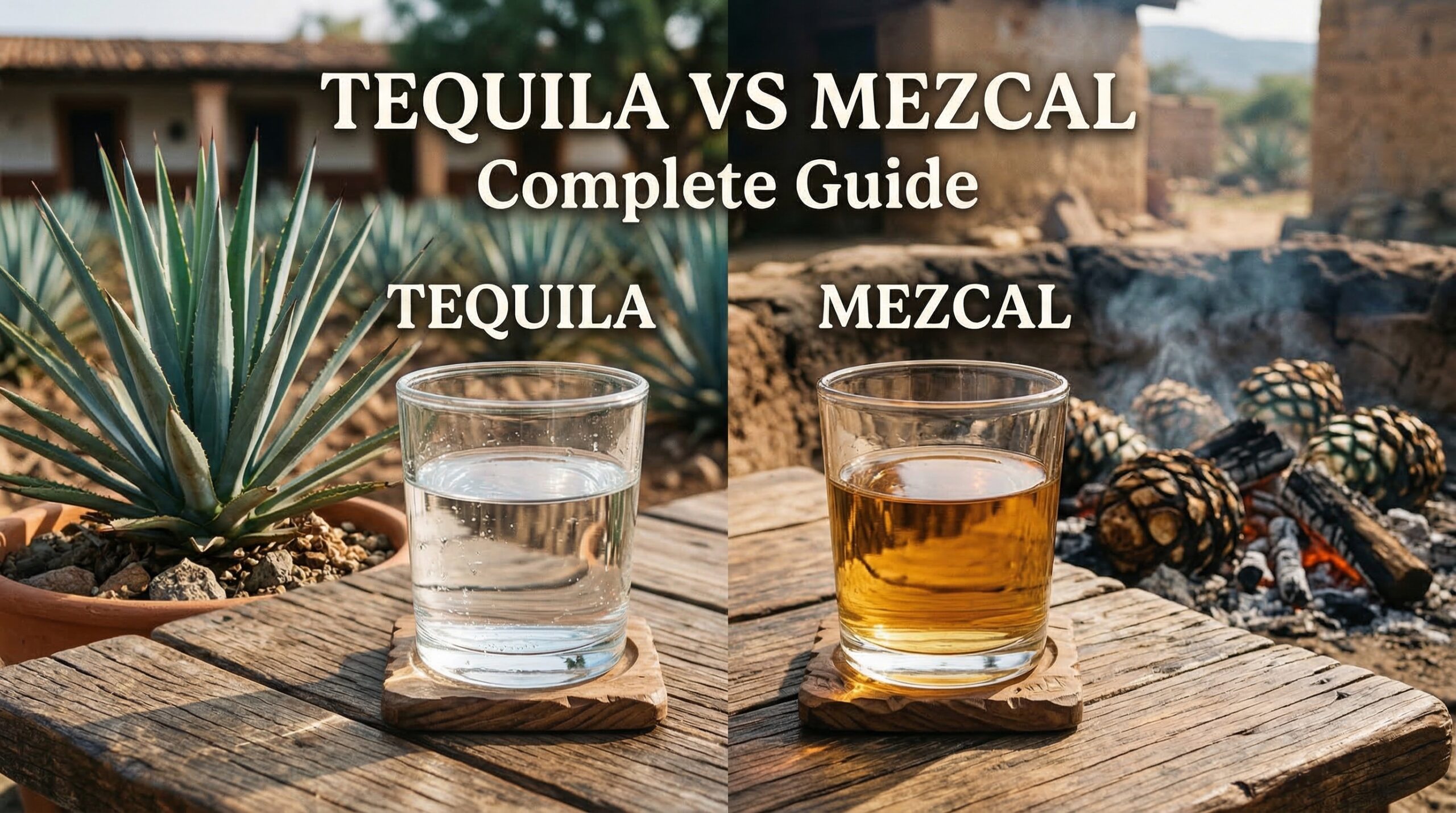
If you have ever stood in front of a liquor store shelf wondering about the difference between tequila and mezcal, you are not alone. The short answer: all tequila is mezcal, but not all mezcal is tequila. Think of it like bourbon and whiskey. Every bourbon is whiskey, but whiskey covers a much broader category.
Tequila and mezcal are both Mexican agave spirits with deep cultural roots, but they differ in how they are made, where they come from, and what they taste like. Tequila tends to be cleaner and more approachable, while mezcal offers smoky complexity that can surprise first-time sippers.
In this complete guide to tequila vs mezcal, we will break down everything you need to know. We cover production methods, aging classifications, flavor profiles, and even bust some common myths. By the end, you will understand exactly what makes each spirit unique and how to choose the right one for your next drink.
Table of Contents
What Is Tequila and Mezcal? The Key Difference Explained
The most important thing to understand about tequila vs mezcal is their relationship. Mezcal is the broad category of Mexican spirits made from agave. Tequila is a specific type of mezcal that can only be made from one particular agave variety in specific regions of Mexico.
Tequila must be made from Blue Weber agave (agave tequilana weber azul). This requirement is strictly enforced by Mexican law through the Denomination of Origin system. If a spirit is not made from Blue Weber agave in an approved region, it cannot legally be called tequila.
Mezcal, on the other hand, can be made from more than 30 different agave varieties. The most common is espadin, but you will also find mezcal made from tobala, tepeztate, arroqueno, and many others. Each agave variety brings its own flavor characteristics to the final spirit.
Here is a quick comparison to keep things straight:
- Tequila: Made only from Blue Weber agave, primarily in Jalisco and a few other states. Production is more industrialized with steam cooking.
- Mezcal: Made from 30+ agave varieties, primarily in Oaxaca but also eight other states. Production often remains artisanal with pit roasting.
- Shared traits: Both are Mexican agave spirits, both go through fermentation and distillation, and both have aging classifications.
This distinction matters because it explains why tequila tastes more consistent bottle to bottle, while mezcal offers incredible variety. A mezcal made from wild-harvested tobala will taste dramatically different from one made with cultivated espadin, even from the same producer.
Production Process: Steam vs Fire
The production process is where tequila and mezcal really start to diverge. Both spirits start with harvesting agave plants, but the cooking method creates their defining flavor differences.
Harvesting: Jimadores (agave farmers) harvest mature agave plants by cutting away the leaves to reveal the heart, called the piña because it resembles a pineapple. These piñas can weigh anywhere from 50 to 300 pounds depending on the agave variety.
Cooking (The Key Difference):
Tequila producers steam-cook their piñas in large industrial ovens called autoclaves or in traditional brick ovens called hornos. Steam cooking happens at controlled temperatures over 24 to 48 hours. This method preserves the clean, bright flavors of the Blue Weber agave.
Mezcal producers pit-roast their piñas in underground earthen pits lined with stones. They build a fire with oak or mesquite wood, let it burn down to hot coals, then cover the piñas with agave fibers and earth. The piñas roast for three to seven days, absorbing smoke from the wood fire. This is why mezcal has that signature smoky character.
Crushing and Extraction:
After cooking, both spirits need to extract the sweet juice from the piñas. Tequila producers often use mechanical shredders or roller mills, though some traditional producers still use the tahona, a massive stone wheel pulled by a horse or mule.
Many mezcal producers also use the tahona method, though smaller operations may hand-mash the piñas with wooden mallets. The tahona method is prized for producing a more textured, complex spirit.
Fermentation:
The extracted juice (called mosto) ferments with wild or cultivated yeasts. Tequila fermentation typically happens in stainless steel tanks over several days. Mezcal fermentation often occurs in wooden vats or even animal skins, allowing wild yeasts to contribute unique flavor compounds.
Distillation:
Both spirits are distilled at least twice. Tequila typically uses copper pot stills or column stills for a cleaner, more refined spirit. Mezcal producers use copper pot stills, clay pots, or even bamboo stills in some traditional communities. The choice of still affects the final flavor, with clay pots often producing earthier, more rustic mezcals.
Some premium mezcals use the pechuga technique, where raw chicken breast, fruits, and spices hang inside the still during the third distillation. The vapor passes through these ingredients, picking up subtle flavors. Do not worry, no chicken taste remains, just incredible complexity.
Geographic Origins: Jalisco vs Oaxaca
Location plays a huge role in the character of both spirits. The Denomination of Origin system legally defines where each spirit can be produced, similar to how Champagne must come from the Champagne region of France.
Tequila Regions:
Tequila production centers on the state of Jalisco, particularly around the town of Tequila (yes, the spirit is named after the town). Five Mexican states are authorized for tequila production: Jalisco (which produces the vast majority), plus parts of Nayarit, Tamaulipas, Michoacan, and Guanajuato.
The red volcanic soil around Tequila creates ideal growing conditions for Blue Weber agave. This terroir contributes mineral notes and a distinctive earthy quality to tequilas from different subregions.
Mezcal Regions:
Mezcal production spans nine Mexican states, with Oaxaca producing about 85% of all mezcal. Other mezcal-producing states include Durango, Guerrero, San Luis Potosi, Zacatecas, Guanajuato, Tamaulipas, Michoacan, and Puebla.
Each region produces distinctively different mezcals. Oaxacan mezcal tends to be fruitier and more balanced, while mezcals from Durango often show more aggressive smoke and mineral notes. The specific microclimate, soil composition, and local traditions all contribute to regional character.
The Filipino Connection:
Here is a piece of history most guides miss. Filipino immigrants who arrived in Mexico during the Spanish colonial period played a crucial role in developing mezcal distillation. They brought knowledge of distilling coconut palm wine (tuba), which evolved into vino de coco, and eventually influenced agave distillation techniques. This cross-cultural exchange helped shape the mezcal we know today.
Agave Varieties: One vs Many
The agave variety is perhaps the single biggest factor affecting flavor in these spirits. This is where tequila’s consistency meets mezcal’s incredible diversity.
Tequila: Blue Weber Only
Tequila must be made from Blue Weber agave (agave tequilana weber variedad azul). This restriction creates consistency. If you buy a blanco tequila from one producer and another from across the region, you will recognize them both as tequila. The flavor profile stays within a recognizable range.
Blue Weber agave takes 7 to 10 years to reach maturity for harvesting. The long growing period allows the plant to develop complex sugars that translate into tequila’s characteristic flavors.
Mezcal: A World of Agave
Mezcal can be made from over 30 agave varieties, and each brings something different to the glass:
- Espadin (agave angustifolia): The workhorse of mezcal production, accounting for about 90% of all mezcal. Flavors range from citrusy to earthy with moderate smoke.
- Tobala (agave potatorum): A wild agave that grows at high altitudes. Produces elegant, floral mezcals with less smoke. Very expensive due to scarcity.
- Tepeztate (agave marmorata): Another wild agave that takes 25 to 30 years to mature. Produces intensely savory, herbaceous mezcals with remarkable complexity.
- Arroqueno (agave americana): A massive agave that can weigh up to 400 pounds. Makes rich, fruity mezcals with notes of tropical fruit and spice.
Wild agaves like tobala and tepeztate cannot be cultivated commercially, so producers must forage for them. This scarcity drives up prices but also creates some of the most sought-after mezcals in the world.
Agave maturation varies dramatically. Espadin reaches maturity in 7 to 10 years, while tepeztate might need 30 years. This long wait contributes to mezcal’s higher cost and makes sustainable harvesting practices essential.
Aging Classifications: From Blanco to Extra Anejo
Both tequila and mezcal use aging to develop additional flavors, though the categories differ slightly between the two spirits.
Tequila Aging Categories:
- Blanco (Silver/Plata): Unaged or aged less than 2 months. Shows the purest expression of Blue Weber agave with bright citrus and pepper notes.
- Reposado: Aged 2 to 12 months in oak barrels. Picks up vanilla, caramel, and subtle spice while maintaining agave character.
- Anejo: Aged 1 to 3 years in oak. Develops rich butterscotch, dried fruit, and toasty oak flavors.
- Extra Anejo: Aged 3+ years. Deep, complex, almost whiskey-like with heavy oak influence.
- Cristalino: Aged tequila (usually anejo) filtered to remove color while keeping the barrel-aged flavors.
Mezcal Aging Categories:
- Joven (Blanco): Unaged, clear mezcal. Shows the purest expression of the agave variety and production method.
- Reposado: Aged 2 to 12 months in oak or other wood barrels. Takes on subtle wood notes while maintaining smoky character.
- Anejo: Aged over 12 months. Develops deeper complexity with notes of dried fruit, nuts, and chocolate alongside the smoke.
Not all mezcals benefit from aging. Many producers believe the complex agave flavors and smoke should shine unobstructed, so they release only joven expressions. When shopping, know that aged mezcal is less common than aged tequila.
Flavor Profiles: Clean vs Complex
Taste is where tequila vs mezcal becomes very personal. Each spirit offers a distinct experience, and understanding these differences helps you choose the right one for any occasion.
Tequila Flavor Profile:
Good tequila tastes clean, bright, and focused. Blanco tequilas showcase pure agave flavors with citrus (lime, lemon), pepper (white and black), herbal notes (mint, cilantro), and subtle earthiness. As tequila ages, it picks up vanilla, caramel, butterscotch, baking spices, and oak from the barrel.
Tequila is approachable and versatile. The flavors stay within a recognizable range, making it easy for beginners to explore. A quality blanco tequila works beautifully in cocktails or sipped neat.
Mezcal Flavor Profile:
Mezcal is all about complexity and variation. The signature smoky character comes from pit roasting, but that is just the starting point. Beyond smoke, you might find earthy notes, tropical fruit, floral elements, savory herbs, cheese-like funk, and even meaty umami in some varieties.
The flavor range is staggering. A mezcal made from cultivated espadin might show bright citrus alongside moderate smoke. A wild tobala could be delicate and floral with barely any smoke at all. A tepeztate might hit you with intense green herbs and minerals.
A Common Misconception:
Not all mezcal is heavily smoky. While pit roasting does introduce smoke, the level varies dramatically based on the producer’s technique and the agave variety. Some mezcals show almost no smoke at all. If you tried mezcal once and found it overwhelming, try a different producer or agave variety.
Alcohol Content: How Strong Are They?
Both spirits pack a punch, but mezcal typically clocks in at higher alcohol content.
Tequila: Usually bottled at 35% to 40% ABV (70 to 80 proof). Standard tequilas sold in the US are typically 40% ABV, making them comparable to most other spirits.
Mezcal: Usually bottled at 40% to 55% ABV (80 to 110 proof). Many artisanal mezcals are bottled at 45% to 48% ABV, giving them more intensity and a fuller mouthfeel.
The higher alcohol content in mezcal is intentional. Traditional mezcaleros believe higher proof preserves more flavor compounds and provides a better drinking experience. When you see a mezcal at 48% ABV or higher, think of it as concentrated flavor rather than just stronger booze.
What does this mean for drinking? Mezcal’s higher ABV means a little goes a longer way. Sip slowly and appreciate the intensity. If you are new to mezcal, start with lower-proof bottles around 40% to 43% ABV.
Myth Busting: The Worm, Hangovers, and Health Claims
Let us clear up some persistent misconceptions about tequila and mezcal. These myths confuse consumers and sometimes discourage people from trying excellent spirits.
The Worm Myth:
The worm (actually a larva from the agave plant) has nothing to do with quality or tradition. It was a marketing gimmick started in the 1940s to differentiate certain mezcal brands. Quality mezcal producers never put worms in their bottles. If you see a worm, you are looking at a novelty product, not a quality spirit.
The worm is also not a hallucinogen, will not prove your bravery, and should not be eaten. Just ignore it entirely when shopping for mezcal.
Hangover Claims:
Some people claim mezcal gives worse hangovers, while others insist tequila is cleaner and easier on the body. Neither claim has scientific backing. Both spirits contain ethanol, and hangover severity depends on how much you drink, your hydration, and your individual metabolism.
The one factor that matters: choose 100% agave spirits. Mixto tequilas (which can contain up to 49% non-agave sugars) are more likely to cause headaches and rough mornings. Always look for “100% agave” on the label.
Health Claims:
You may have heard that tequila is healthy or aids weight loss because agave contains agavins, a type of sugar that does not spike blood glucose. Here is the reality: by the time agave becomes tequila or mezcal, those agavins have fermented into alcohol. Both spirits are alcohol, plain and simple.
Moderate consumption is fine for most adults, but neither spirit offers health benefits. Enjoy them for their flavors and cultural significance, not as wellness products.
Tequila as “Colonized Mezcal”:
Some mezcal enthusiasts dismiss tequila as an industrialized, less authentic version of mezcal. This view is unnecessarily reductive. Tequila has its own rich traditions, and quality tequilas from producers like Fortaleza, Siete Leguas, and Cascahuin demonstrate incredible craftsmanship. Both spirits deserve respect.
How to Drink: Serving Suggestions for Both
The way you serve tequila and mezcal can dramatically affect your experience. Here is how to get the most from each spirit.
Sipping Tequila:
Quality tequila deserves to be sipped neat. Use a tulip-shaped glass or a snifter to concentrate the aromas. Pour a small amount (about an ounce) and let it sit for a minute to open up. Swirl gently, then taste in small sips.
Room temperature works best for sipping. Blanco tequilas show bright, fresh flavors while anejos develop more slowly on the palate. Avoid shot glasses and lime wedges for quality tequila. That ritual is for masking the harshness of cheap mixto tequilas.
Sipping Mezcal:
Traditional mezcal service uses small clay cups called copitas or veladoras (small, shallow bowls). The wide surface area helps the aromas develop while the clay material subtly affects the spirit. A wine glass also works well for capturing aromatics.
Mezcal is traditionally sipped alongside orange slices sprinkled with sal de gusano (worm salt). This might sound strange, but the combination works beautifully. The salt and fruit complement mezcal’s smoky, savory character. Feel free to skip this tradition if you prefer the spirit on its own.
Cocktails with Tequila:
Tequila shines in classic cocktails. The margarita (tequila, lime, agave nectar) is the most obvious choice. A well-made margarita with quality blanco tequila, fresh lime juice, and agave nectar is far superior to the sugary frozen drinks at chain restaurants.
The paloma (tequila, grapefruit soda, lime) offers a refreshing alternative that has become Mexico’s most popular tequila cocktail. For something spirit-forward, try a tequila old fashioned with anejo tequila, agave, and bitters.
Cocktails with Mezcal:
Mezcal adds incredible depth to cocktails, especially when used as a modifier. A mezcal negroni substitutes mezcal for gin, creating a smoky, complex version of the classic. A mezcal margarita splits the base spirit between tequila and mezcal, adding smoke without overwhelming the drink.
For cocktail ideas beyond the classics, check out our cocktail recipes for inspiration on building your home bar skills.
Substituting One for the Other:
Can you substitute mezcal for tequila in cocktails? Absolutely, but understand that you will change the drink’s character. A mezcal margarita will be smokier and more assertive. Start by substituting half the tequila with mezcal, then adjust based on your taste preferences.
Food Pairing: What to Eat with Each
Both tequila and mezcal pair beautifully with food. The key is matching the spirit’s intensity and flavor profile to complementary dishes.
Tequila Food Pairings:
Blanco tequila works well with fresh, bright flavors. Try it with ceviche, fish tacos, guacamole, or citrus-marinated dishes. The clean agave character and citrus notes complement seafood and fresh preparations.
Aged tequilas pair with richer dishes. Reposado works with grilled meats, aged cheeses, and dishes with mole sauce. Anejo tequilas can stand up to red meat, strong cheeses, and even chocolate desserts.
Mezcal Food Pairings:
Mezcal’s smoky character naturally pairs with grilled and smoked foods. Try it with barbacoa, grilled vegetables, or anything cooked over an open flame. The smoke in the spirit echoes the smoke in the food.
Mezcal also pairs beautifully with cheese. The spirit’s savory, sometimes funky character works well with aged cheeses, washed-rind cheeses, and even blue cheese. A cheese board with mezcal makes for a memorable tasting experience.
For a traditional approach, serve mezcal with chapulines (toasted grasshoppers), peanuts, or orange slices. These simple accompaniments have been paired with mezcal for generations.
Price and Value: Why Mezcal Costs More
If you have shopped for mezcal, you probably noticed it costs more than most tequilas. Several factors explain the price difference.
Production Scale: Tequila production has scaled to industrial levels. Large distilleries can process massive quantities of agave efficiently. Most mezcal production remains small-scale and artisanal, with producers making a few hundred or thousand liters per year rather than millions.
Agave Scarcity: Wild agave varieties like tobala and tepeztate cannot be cultivated. Producers must forage for them, and overharvesting threatens some populations. This scarcity drives prices up significantly.
Maturation Time: While Blue Weber agave matures in 7 to 10 years, some mezcal agaves take 25 to 30 years. The investment required to grow or source these plants is substantial.
Labor Intensity: Traditional mezcal production involves far more manual labor than industrial tequila production. Hand-harvesting, pit roasting, tahona crushing, and small-batch distillation all require skilled labor and time.
Is mezcal worth the premium? For enthusiasts seeking complexity and unique flavors, absolutely. For everyday sipping or mixing, quality tequila offers excellent value. Both spirits have their place in a well-stocked bar.
Choosing Between Tequila and Mezcal
So which should you choose? The answer depends on your experience level, taste preferences, and how you plan to drink.
For Beginners: Start with quality tequila. A good blanco or reposado from brands like Fortaleza, Cascahuin, or El Tesoro will introduce you to agave spirits without overwhelming your palate. Save mezcal for when you are ready for more intense flavors.
For Complexity Seekers: Mezcal offers endless exploration. Each agave variety and producer brings something different. Start with espadin mezcals before exploring wild agaves like tobala or tepeztate.
For Cocktails: Tequila works better for balanced, approachable cocktails where you want the spirit to play nicely with other ingredients. Mezcal adds drama and depth, perfect for cocktails where you want smoke and complexity to shine.
For Sipping: Both spirits reward slow, contemplative sipping. Blanco tequilas show bright, fresh character while aged tequilas develop richness. Mezcals offer incredible variety, from delicate and floral to bold and smoky.
The best approach? Explore both. Keep a quality tequila for cocktails and casual sipping, then add mezcal to your collection when you want something more adventurous.
FAQs
Is mezcal tequila?
Is mezcal stronger than tequila?
What does mezcal taste like compared to tequila?
Which is healthier, tequila or mezcal?
Why drink mezcal instead of tequila?
Can I substitute mezcal for tequila in cocktails?
Is mezcal more expensive than tequila?
Why is mezcal smoky?
Conclusion
Understanding tequila vs mezcal opens up a world of agave spirits with incredible depth and variety. Tequila offers approachable consistency with its Blue Weber agave foundation and clean, bright flavors. Mezcal delivers adventure through its many agave varieties, artisanal production methods, and complex flavor profiles that can include everything from delicate florals to bold smoke.
Neither spirit is better than the other. They serve different purposes and appeal to different moments. A quality blanco tequila makes the perfect margarita or casual sipper. A complex mezcal invites contemplation and conversation. Both deserve a place in your collection.
The most important thing is to explore. Try different brands, different aging levels, and different agave varieties. Discover what you enjoy. Whether you gravitate toward tequila’s clean character or mezcal’s smoky complexity, both spirits offer a direct connection to centuries of Mexican tradition and craftsmanship.