
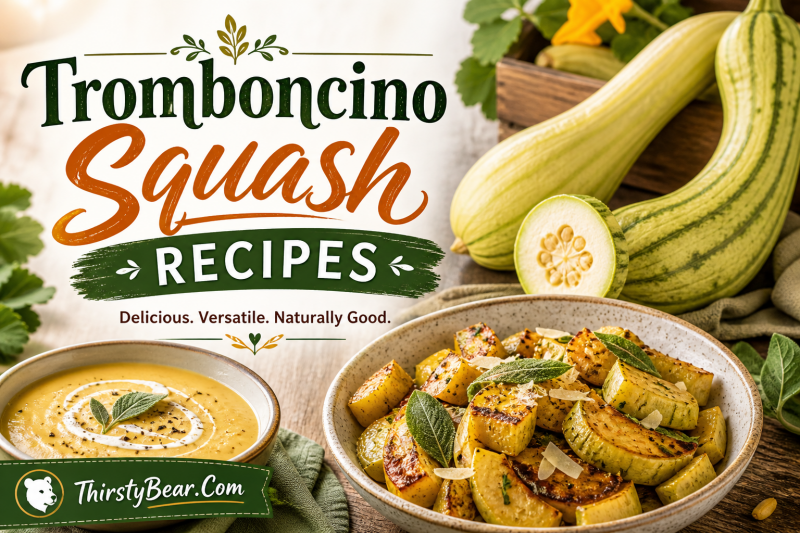
If you have ever wondered how to cook tromboncino squash, you are about to discover one of the most versatile vegetables in the garden. This unique Italian heirloom goes by many names including zucchetta rampicante, serpentine squash, and climbing zucchini. Unlike regular zucchini that turns mushy when overcooked, tromboncino squash stays firm and holds its shape beautifully.
In this guide, you will learn everything about tromboncino squash recipes from summer preparations when the squash is young and green to winter recipes when it has matured into a butternut-like squash. Whether you are a gardener drowning in harvest or a curious cook looking for something new, these recipes will become staples in your kitchen.
Table of Contents
What is Tromboncino Squash?
Tromboncino squash is an Italian heirloom variety that grows on climbing vines rather than bushy plants like regular zucchini. Its name comes from the Italian word for trombone, which describes its distinctive curved shape that can grow up to three feet long. You might also find it labeled as zucchetta rampicante, serpentine squash, or climbing zucchini at farmers markets.
The magic of tromboncino squash recipes lies in the vegetable’s dual personality. When harvested young and green, it tastes like a sweeter, nuttier version of zucchini with a firmer texture that does not turn to mush. When left to mature on the vine until the skin turns tan, it develops a flavor similar to butternut squash and can be stored for months like a winter squash.
The seedless neck makes tromboncino incredibly easy to prepare. All the seeds cluster in the bulbous end, so you can slice the straight neck into uniform pieces without dealing with seeds throughout. The skin is edible though slightly tougher than zucchini skin, which gives it structure when cooked.
Summer vs Winter Tromboncino: How to Choose and Cook
Understanding when to use tromboncino as a summer squash versus a winter squash unlocks its full potential in your kitchen. The cooking method you choose depends entirely on the stage of ripeness when you harvest or purchase it.
Young Green Tromboncino (Summer Stage)
Pick tromboncino when the skin is bright green and the flesh feels firm for summer-style preparations. At this stage, it works beautifully in any recipe calling for zucchini or yellow squash. You can eat it raw in salads, spiralize it as a pasta substitute, or cook it quickly over high heat.
The flavor is mild and slightly sweet with none of the bitterness that older zucchini can develop. Because the flesh is denser than zucchini, it will not fall apart when tossed with pasta or layered in casseroles.
Mature Tan Tromboncino (Winter Stage)
When tromboncino turns tan or pale orange and the skin hardens, it becomes a true winter squash. At this stage, the flesh becomes more orange, the flavor deepens into something resembling butternut, and the texture becomes perfect for roasting, pureeing into soup, or baking.
You can store mature tromboncino squash for three to six months in a cool, dry place just like butternut or acorn squash. The hard skin becomes difficult to cut through, so use a sharp chef’s knife and stable cutting board.
| Characteristic | Summer Stage (Green) | Winter Stage (Tan) |
|---|---|---|
| Skin | Soft, edible | Hard, needs peeling |
| Flesh Color | Pale green-white | Orange |
| Flavor | Mild, sweet, zucchini-like | Rich, nutty, butternut-like |
| Best Methods | Saute, grill, raw, quick roast | Roast, bake, soup, stuff |
| Storage | 1-2 weeks refrigerated | 3-6 months room temperature |
How to Cook Tromboncino Squash: 5 Essential Methods
Tromboncino squash recipes work with nearly any cooking technique you would use for other squash varieties. Here are the five methods that produce the best results.
1. Roasting
Roasting brings out the natural sweetness in tromboncino squash. Cut the neck into half-moon slices about half-inch thick, toss with olive oil, salt, and pepper, then roast at 425°F for 25 to 30 minutes until golden and caramelized. Flip halfway through for even browning.
For mature winter squash, peel first and cut into cubes. Roast at 400°F for 35 to 40 minutes until fork-tender and slightly crispy at the edges.
2. Grilling
Grilling is where tromboncino really shines compared to regular zucchini. Cut young tromboncino into lengthwise planks or thick rounds, brush with olive oil, and grill over medium-high heat for 4 to 5 minutes per side. The firm texture prevents it from falling through the grates.
The high heat creates beautiful grill marks and a smoky flavor that pairs wonderfully with fresh herbs and lemon. Unlike zucchini that can get watery on the grill, tromboncino maintains its structure and develops a satisfying char.
3. Sautéing
For quick weeknight sides, slice young tromboncino into half-moons or cubes and sauté in a hot skillet with olive oil for 8 to 10 minutes. Add minced garlic in the last minute of cooking and finish with grated Parmesan and fresh basil.
Do not crowd the pan or the squash will steam instead of brown. Work in batches if necessary to get those crispy golden edges.
4. Steaming
Steaming preserves the delicate flavor and nutrients. Cut into chunks and steam for 8 to 10 minutes until just tender. Mash with butter and herbs for a simple side, or puree into soups.
5. Raw Preparations
Young tromboncino can be eaten raw. Use a spiralizer to create noodles for a low-carb pasta alternative, shave thin ribbons with a vegetable peeler for salads, or cut into sticks for crudités. The flavor is mild and slightly sweet with a pleasant crunch.
Tromboncino Squash Recipes: Our Favorite Ways to Cook
These five tromboncino squash recipes showcase the vegetable’s versatility across both summer and winter preparations. Each recipe serves four people.
1. Roasted Tromboncino with Garlic Yogurt Sauce
This recipe from the Reddit cooking community has become a favorite for its simplicity and bold flavors. The combination of caramelized squash and tangy yogurt sauce is irresistible.
Ingredients:
- 1 medium young tromboncino squash, sliced into half-moons
- 3 tablespoons olive oil
- 1 teaspoon smoked paprika
- Salt and pepper to taste
- 1 cup Greek yogurt
- 2 cloves garlic, minced
- 1 tablespoon lemon juice
- Fresh mint for garnish
Instructions:
- Preheat oven to 425°F. Toss squash slices with olive oil, paprika, salt, and pepper.
- Spread on a baking sheet in a single layer and roast for 25 minutes, flipping halfway.
- While squash roasts, mix yogurt, garlic, lemon juice, and a pinch of salt.
- Serve roasted squash topped with garlic yogurt and fresh mint.
2. Crispy Parmesan Tromboncini Discs
These make an excellent snack or side dish that comes together in under 20 minutes. The Parmesan creates a crispy crust while the squash stays tender inside.
Ingredients:
- 1 young tromboncino squash, sliced into quarter-inch rounds
- Half cup grated Parmesan cheese
- Half cup breadcrumbs
- 1 teaspoon garlic powder
- 2 eggs, beaten
- Olive oil for frying
- Salt and pepper
Instructions:
- Mix Parmesan, breadcrumbs, garlic powder, salt, and pepper on a plate.
- Dip each squash round in egg, then coat in the Parmesan mixture.
- Heat olive oil in a skillet over medium heat. Fry discs for 3 to 4 minutes per side until golden and crispy.
- Drain on paper towels and serve immediately.
3. Creamy Tromboncino Soup
This soup works with either young or mature tromboncino. When made with mature squash, it develops a rich, velvety texture similar to butternut squash soup.
Ingredients:
- 1 large tromboncino squash, peeled and cubed
- 1 onion, diced
- 3 cloves garlic, minced
- 4 cups vegetable broth
- Half cup heavy cream
- 2 tablespoons butter
- 1 teaspoon cumin
- Salt and pepper
- Toasted pumpkin seeds for garnish
Instructions:
- Sauté onion in butter until soft, about 5 minutes. Add garlic and cumin, cook 1 minute.
- Add squash and broth. Bring to a boil, then simmer 25 minutes until squash is tender.
- Blend until smooth using an immersion blender or countertop blender.
- Stir in cream and season with salt and pepper. Serve garnished with pumpkin seeds.
4. Stuffed Tromboncino Boats
When tromboncino grows large, the bulbous end becomes perfect for stuffing. This recipe treats the mature squash like a vessel for savory filling.
Ingredients:
- 2 mature tromboncino squash, halved lengthwise and seeded
- 1 pound Italian sausage
- 1 onion, diced
- 2 cups spinach or kale
- 1 cup cooked quinoa or rice
- Half cup goat cheese or feta
- 2 tablespoons olive oil
- Salt, pepper, and Italian herbs
Instructions:
- Preheat oven to 375°F. Scoop out seeds from squash halves and brush with olive oil.
- Place cut-side down on a baking sheet and roast 20 minutes to soften.
- Brown sausage with onion. Add greens and cook until wilted.
- Mix sausage mixture with quinoa and half the cheese. Stuff into squash halves.
- Top with remaining cheese and bake 25 minutes until golden and bubbling.
5. Grilled Tromboncino with Lemon and Herbs
This simple preparation lets the natural flavor of tromboncino shine. The high heat of the grill caramelizes the natural sugars while creating an appealing smoky char.
Ingredients:
- 2 young tromboncino squash, cut lengthwise into planks
- Quarter cup olive oil
- Zest and juice of 1 lemon
- 2 tablespoons fresh rosemary, minced
- 2 tablespoons fresh thyme leaves
- Salt and pepper
Instructions:
- Whisk olive oil, lemon zest, lemon juice, rosemary, thyme, salt, and pepper.
- Brush mixture generously over squash planks.
- Grill over medium-high heat for 4 to 5 minutes per side until grill marks appear and squash is tender.
- Drizzle with additional lemon juice before serving.
Storage and Preservation Tips
Knowing how to store tromboncino squash extends your enjoyment of this versatile vegetable. The storage method depends entirely on the stage of ripeness.
Storing Fresh Tromboncino
Store young green tromboncino in the refrigerator crisper drawer for up to two weeks. Keep it dry and unwashed until ready to use. The skin may develop small spots but the flesh inside remains good.
Mature tan tromboncino should be stored in a cool, dry place between 50 and 60 degrees Fahrenheit. A basement, pantry, or cool closet works well. Properly cured tromboncino lasts three to six months. Check periodically and use any that develop soft spots.
Freezing Tromboncino Squash
Freezing is an excellent option when you have an abundant harvest. For young squash, shred using a box grater or food processor, squeeze out excess moisture, and pack into freezer bags. Frozen shredded tromboncino works perfectly in fritters, breads, and soups.
For mature squash, peel, cube, and blanch in boiling water for 3 minutes. Cool in ice water, drain well, and freeze in single layers on a baking sheet before transferring to freezer bags. This prevents clumping and makes it easy to use just what you need.
Frequently Asked Questions About Tromboncino Squash
How to eat tromboncino squash?
You can eat tromboncino squash raw when it is young and green, spiralized as a pasta substitute, or shaved into salads. It can also be roasted, grilled, sautéed, steamed, or pureed into soup. The mild, slightly sweet flavor works in both summer preparations like zucchini and winter preparations like butternut squash.
What can I make with tromboncino squash?
Popular tromboncino squash recipes include roasted tromboncino with garlic yogurt sauce, crispy Parmesan discs, creamy soup, stuffed squash boats with sausage and greens, and grilled planks with lemon and herbs. It also works in fritters, casseroles, pasta dishes, and as a low-carb noodle substitute.
Does tromboncino squash taste good?
Yes, tromboncino squash has a pleasant mild flavor that is slightly sweeter and nuttier than zucchini. When young and green, it tastes like an improved zucchini with a firmer texture. When mature and tan, it develops a rich, sweet flavor similar to butternut squash. It stays firm when cooked unlike regular zucchini that can get mushy.
Do you need to peel tromboncino squash?
Young green tromboncino does not need peeling as the skin is thin and edible. The skin is slightly tougher than zucchini skin but softens nicely when cooked. Mature tan tromboncino should be peeled before cooking as the skin becomes hard and inedible like other winter squashes.
What is Tromboncino good for?
Tromboncino is excellent for gardeners because the climbing vines save space and produce abundantly. In the kitchen, it works as a dual-purpose vegetable: use it like zucchini when young or like butternut squash when mature. The seedless neck makes it easy to slice and prepare, and the firm texture holds up better than zucchini in grilling and roasting.
How to tell when a Tromboncino squash is ripe?
For summer harvest, pick tromboncino when the skin is bright green and the flesh feels firm. The squash should be between 12 and 18 inches long. For winter storage, leave on the vine until the skin turns tan or pale orange and becomes hard enough that you cannot pierce it with a fingernail. The stem should be dry and woody.
What is another name for Tromboncino squash?
Tromboncino squash is also known as zucchetta rampicante, serpentine squash, climbing zucchini, and Italian trombone squash. In Italy, it is called zucca trombetta or zucchina rampicante. The name comes from its distinctive curved shape resembling a trombone.
Conclusion
Tromboncino squash recipes offer something unique in the kitchen: a vegetable that transforms from a tender summer squash into a hearty winter storage crop. Whether you are spiralizing the young green necks for a light dinner or roasting the mature bulbs for a warming winter soup, this Italian heirloom brings versatility and flavor to your table.
The next time you spot zucchetta rampicante at the farmers market or find yourself with an abundant garden harvest, you now have the knowledge and recipes to make the most of this special squash. Start with the simple roasted preparation with garlic yogurt sauce, and you will quickly understand why so many gardeners and cooks have made tromboncino a permanent part of their growing and cooking repertoire.