
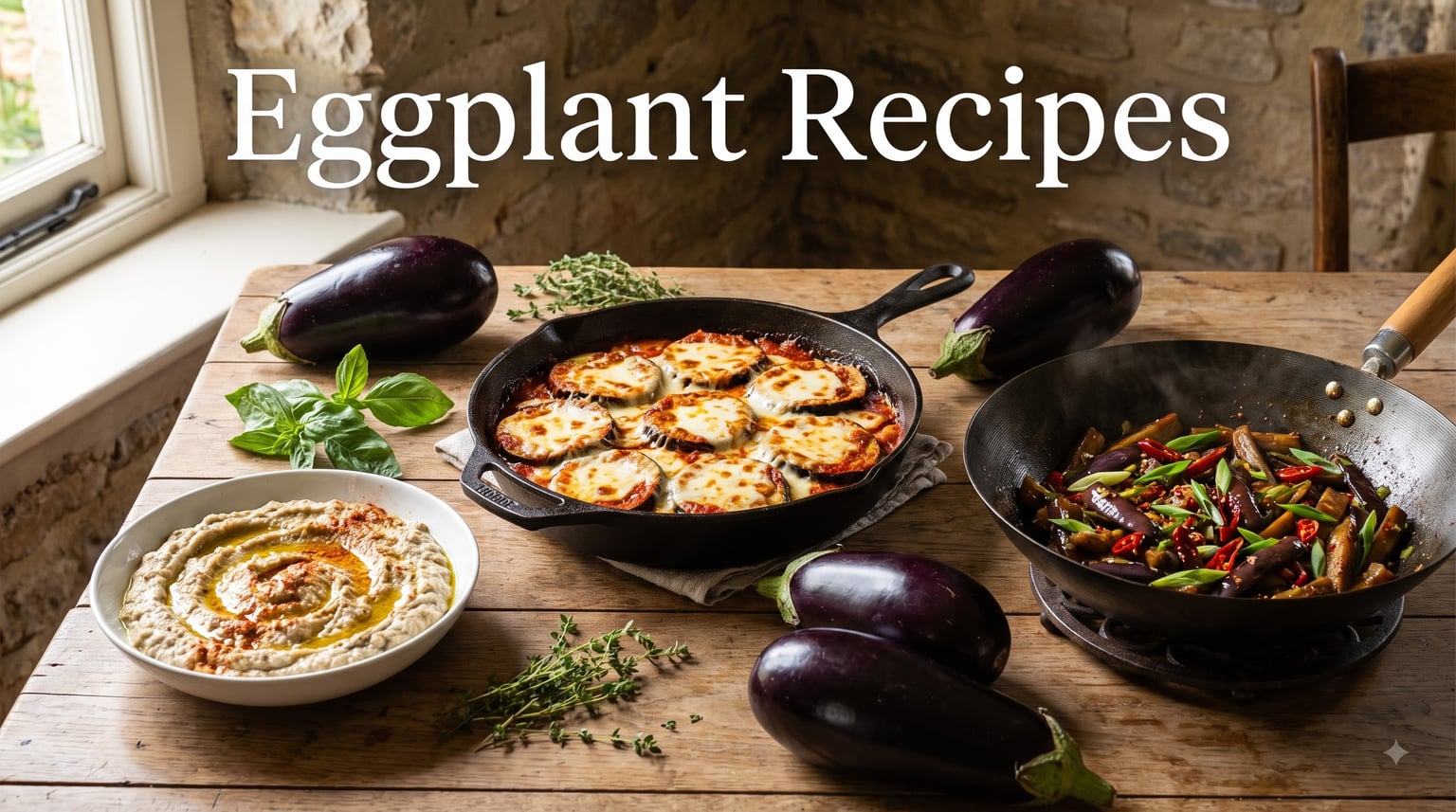
I spent two months cooking my way through eggplant recipes from eight different cuisines, and I’m still finding new preparations to love. This collection brings together the best dishes our team has tested, from weeknight sautéed eggplant to slow-baked Sicilian parmigiana.
Eggplant has a reputation for being tricky, but the truth is that with the right preparation and a few simple techniques, it transforms into one of the most rewarding vegetables in any cook’s repertoire. Whether you’re craving comfort food, exploring plant-based meals, or looking for global flavors, this guide will walk you through 20 of the best eggplant recipes you can make at home.
You’ll find classic Italian favorites like eggplant parmesan and pasta alla Norma, smoky Mediterranean dips like baba ganoush, and bold Asian dishes like Sichuan eggplant and gochujang-glazed bites. I’ll also share troubleshooting tips, nutritional information, and pairing ideas to help you get the most out of every eggplant you buy. For readers interested in plant-based comfort food, our vegan eggplant casserole recipes collection offers additional inspiration.
Table of Contents
How to Choose the Best Eggplant for Your Recipes?
Selecting the right eggplant makes a noticeable difference in your finished dish. I learned this the hard way after buying a softball-sized globe eggplant that turned out seedy and bitter.
There are five main eggplant varieties you’ll find at grocery stores and farmers markets:
Globe Eggplant: The large, deep-purple American variety. Best for stuffing, moussaka, and dishes where you want substantial slices.
Italian Eggplant: Slightly smaller and sweeter than globe. Excellent for eggplant parmesan and grilling.
Japanese Eggplant: Long, slender, and tender with thin skin. Perfect for quick stir-fries and grilling whole.
Chinese Eggplant: Similar to Japanese but with a slightly more delicate flavor. Ideal for braised dishes like Sichuan eggplant.
Graffiti (Sicilian) Eggplant: Striped purple and white, mild and creamy. Beautiful for roasting and caponata.
To pick a ripe eggplant, press the skin gently. It should spring back slightly but not feel rock-hard. The skin should be glossy and smooth without wrinkles or soft spots. A fresh eggplant feels heavy for its size and has a bright green cap. If the cap looks brown and dried out, the eggplant has been sitting too long.
Eggplant season peaks in late summer, from July through September, when you’ll find the best prices and freshest picks at farmers markets. Off-season eggplants tend to have thicker skins and more seeds, which can add bitterness to your recipes.
Essential Eggplant Preparation Techniques Every Cook Should Know
Before you start cooking, mastering a few preparation techniques will dramatically improve your eggplant dishes. Most home cooks skip these steps and end up disappointed with soggy or bitter results.
Salting and Sweating Eggplant
Salting eggplant pulls out excess moisture and some of the bitter compounds that can develop in older fruits or certain varieties. Cut your eggplant into the shape your recipe calls for, sprinkle generously with kosher salt, and let it sit in a colander for 30 to 60 minutes.
You’ll see beads of moisture form on the surface. Pat the slices dry with paper towels before cooking. This step is essential for fried eggplant, helpful for grilled eggplant, and optional but recommended for roasted preparations.
Peeling vs. Skin-On Decisions
Whether to peel eggplant depends on the variety and the dish. Japanese and Chinese eggplants have thin, tender skins that don’t need peeling. Globe eggplants have thicker skins that can be tough in some preparations.
For dishes like baba ganoush where you roast the eggplant whole, the skin becomes soft enough to blend in. For eggplant parmesan, most recipes call for peeled slices. When in doubt, try a small piece raw. If the skin is bitter or chewy, peel it.
Cutting Methods for Different Recipes
Match your cut to your cooking method. Round slices (about half an inch thick) work for grilling and layering in casseroles. Cubes (one-inch pieces) are ideal for sautés and curries. Planks (long, thin slices) are great for grilling and rolling. Halved or quartered eggplants work for roasting and stuffed preparations.
Why Soaking Matters
Some cooks soak sliced eggplant in cold water for 15 to 30 minutes after cutting. This serves a different purpose than salting. Soaking prevents oxidation that turns cut eggplant brown, which matters for dishes where appearance counts, like grilled appetizers or layered casseroles.
Classic Italian Eggplant Recipes You Need to Make
Italian cuisine has elevated eggplant to an art form, and these classic recipes are where most home cooks begin their eggplant journey. Each dish showcases a different technique, from breading and frying to slow-roasting and layering.
Eggplant Parmesan (Parmigiana di Melanzane)
Eggplant parmesan is the dish that converts skeptics. I made this for a friend who claimed to hate eggplant, and she asked for seconds. The key is proper salting, thorough breading, and using good-quality tomatoes.
Slice two medium Italian eggplants into half-inch rounds. Salt them and let them sweat for 45 minutes. Pat dry, dredge in flour, dip in beaten egg, and coat with seasoned breadcrumbs. Fry in olive oil until golden on both sides, then layer with marinara sauce, fresh mozzarella, and grated Parmesan.
Bake at 375°F for 25 minutes until the cheese bubbles and the edges turn golden. Let it rest for 10 minutes before serving. This is restaurant-quality eggplant parmesan that rivals anything you’d find at an Italian restaurant. For more Italian-American inspiration, check out our restaurant-style eggplant parmesan guide.
Pasta alla Norma
This Sicilian classic combines fried eggplant with a simple tomato sauce, basil, and ricotta salata. The name honors Vincenzo Bellini’s opera “Norma,” and the dish has been a Catania staple since the 19th century.
Cube and salt one globe eggplant, then fry the cubes until deeply golden. Meanwhile, prepare a quick sauce with garlic, San Marzano tomatoes, and fresh basil. Toss with rigatoni or penne, top with shaved ricotta salata, and finish with a drizzle of olive oil. The contrast between the rich fried eggplant and the bright tomato sauce is unforgettable.
Eggplant Caponata
Caponata is Sicily’s answer to relish, a sweet-and-sour eggplant dish that improves with time. Dice one large eggplant and salt it for 30 minutes. Sauté with onions, celery, and garlic in olive oil until everything softens.
Add crushed tomatoes, capers, green olives, a splash of red wine vinegar, and a tablespoon of sugar. Simmer until the flavors meld, about 20 minutes. Caponata is even better the next day, served at room temperature with crusty bread or as part of an antipasto spread.
Eggplant Rollatini
Rollatini takes thin slices of eggplant, fills them with ricotta and mozzarella, and rolls them up like little cigars. The result is more elegant than layered parmigiana and makes a stunning dinner party dish.
Grill or broil thin eggplant planks until tender. Mix ricotta with grated Parmesan, fresh herbs, and a beaten egg. Spread the mixture on each plank, roll up, and place seam-side down in a baking dish. Top with marinara and mozzarella, then bake at 400°F for 20 minutes until bubbly.
Eggplant Lasagna
For a lower-carb alternative to traditional lasagna, eggplant lasagna uses thin roasted eggplant slices in place of pasta. The eggplant becomes meltingly tender and absorbs all the flavors of the meat sauce, ricotta, and cheese.
Roast thin eggplant slices at 400°F for 15 minutes before layering. Build the lasagna with your favorite meat sauce, a ricotta-egg mixture, shredded mozzarella, and the roasted eggplant. Bake covered for 30 minutes, then uncovered for 15 minutes until the top turns golden.
Mediterranean and Middle Eastern Eggplant Recipes
Across the Mediterranean and Middle East, eggplant appears in countless preparations, from silky dips to hearty stews. These recipes highlight the vegetable’s ability to absorb bold flavors and create satisfying vegetarian meals.
Baba Ganoush
Baba ganoush is the eggplant dish that makes believers out of everyone. The smoky, creamy dip is surprisingly simple once you know the trick: roast the eggplant whole until the skin chars and the flesh turns custardy.
Pierce a globe eggplant all over with a fork and roast at 425°F for 45 to 60 minutes until completely collapsed. Let it cool, then scoop out the flesh and discard the skin. Mash with tahini, lemon juice, minced garlic, and salt. Drizzle with olive oil and sprinkle with paprika before serving.
For impressive no-cook appetizers that feature this classic dip, our baba ganoush and eggplant appetizers guide has additional serving ideas.
Moussaka
Moussaka is Greece’s most famous eggplant dish, a layered casserole with spiced meat sauce and a creamy béchamel topping. While it takes time to prepare, the results are worth every minute.
Slice and salt two globe eggplants, then grill or broil until tender. Brown ground lamb with onions, garlic, tomatoes, cinnamon, and oregano for the meat sauce. Make a béchamel with butter, flour, milk, and a beaten egg yolk. Layer everything in a baking dish and bake at 350°F for 45 minutes until golden and bubbling.
Ratatouille
This Provençal vegetable stew celebrates summer produce, and eggplant is essential to the authentic flavor. Unlike a quick sauté, traditional ratatouille cooks low and slow to develop deep, complex flavors.
Dice eggplant, zucchini, bell peppers, onions, and tomatoes separately. Sauté each vegetable until lightly browned, then combine in a large pot with garlic, herbs de Provence, and olive oil. Simmer for 30 minutes until everything melds together. Ratatouille is excellent as a main course with crusty bread or as a side dish for grilled fish.
Stuffed Eggplant (Imam Bayildi)
This Turkish dish translates to “the imam fainted,” supposedly because it was so delicious. The name aside, imam bayildi features whole eggplants stuffed with onions, garlic, tomatoes, and aromatic spices.
Halve two small Italian eggplants and scoop out some of the flesh, leaving a shell. Sauté the scooped flesh with onions, garlic, tomatoes, parsley, and a pinch of sugar. Stuff the mixture back into the eggplant shells, drizzle with olive oil, and bake at 375°F for 40 minutes. Serve at room temperature as a vegetarian main course.
Grilled Eggplant with Tahini
One of the simplest and most satisfying Mediterranean preparations, grilled eggplant with tahini sauce requires only a handful of ingredients. Slice one large eggplant into thick rounds, brush with olive oil, and grill over medium-high heat for 4 minutes per side until nicely charred.
Drizzle with tahini sauce (tahini whisked with lemon juice, garlic, and water) and sprinkle with pomegranate seeds and chopped parsley. The combination of smoky, nutty, and bright flavors is irresistible.
Asian-Inspired Eggplant Recipes from Around the World
Asian cuisines have embraced eggplant for centuries, using it in everything from fiery curries to delicate steamed dishes. Asian eggplants tend to be thinner-skinned and more tender than globe varieties, which means they cook faster and absorb flavors more readily.
Chinese Sichuan Eggplant
This dish from Sichuan province features meltingly tender eggplant in a savory, slightly spicy sauce with garlic, ginger, and Sichuan peppercorns. The technique of cooking eggplant in oil until soft gives it a custardy texture that absorbs the bold sauce.
Cut two Chinese eggplants into batons and shallow-fry in oil until completely soft. Remove the eggplant and stir-fry garlic, ginger, and dried chilies in the same oil. Add soy sauce, black vinegar, sugar, and a splash of stock, then return the eggplant to the pan and toss until glazed. Garnish with sliced scallions.
Indian Baingan Bharta
Baingan bharta is a smoky mashed eggplant curry from Punjab. The signature flavor comes from roasting the eggplant over an open flame or directly on a gas burner until the skin blackens.
Mash the roasted flesh and cook it with cumin, onions, tomatoes, garlic, ginger, green chilies, and garam masala. Finish with fresh cilantro and a squeeze of lemon. Serve with warm naan or basmati rice for a satisfying vegetarian meal.
Japanese Nasu Dengaku
This elegant Japanese preparation features grilled eggplant halves topped with a sweet-savory miso glaze. The name means “eggplant from the mountain,” referencing the eggplant’s purple color.
Halve two Japanese eggplants lengthwise and score the flesh in a diamond pattern. Brush with sesame oil and grill until tender. Mix white miso, mirin, sake, and sugar to make the glaze, then brush it onto the grilled eggplant and broil for 2 minutes until caramelized. Sprinkle with sesame seeds and serve.
Korean Gochujang Eggplant
Korean cuisine uses gochujang (fermented chili paste) to add depth and heat to vegetable dishes. This quick eggplant side dish comes together in under 20 minutes and pairs perfectly with rice and grilled meats.
Cube one Korean or Japanese eggplant and stir-fry in sesame oil until tender. Add a sauce made from gochujang, soy sauce, honey, garlic, and rice vinegar. Toss until the eggplant is evenly coated and the sauce thickens slightly. Top with toasted sesame seeds and sliced scallions.
Thai Green Curry Eggplant
Thai green curry traditionally includes Thai eggplants, small round green or purple fruits that hold their shape during cooking. If you can’t find Thai eggplants, Japanese eggplants are an acceptable substitute.
Sauté green curry paste in coconut cream until fragrant, then add coconut milk, fish sauce, and palm sugar. Add the eggplant and simmer until tender, about 8 minutes. Finish with Thai basil leaves and a squeeze of lime. Serve over jasmine rice for a quick, aromatic meal.
Quick and Easy Weeknight Eggplant Recipes
When you need dinner on the table fast, these simple eggplant recipes come together in 30 minutes or less. They’re perfect for busy weeknights when you want something satisfying without a lot of fuss.
Sauteed Eggplant with Garlic
This is the dish that taught me to love eggplant. Cut one Italian eggplant into half-inch cubes and salt for 15 minutes. Heat olive oil in a large skillet, add minced garlic, and cook until fragrant.
Add the eggplant cubes and cook over medium-high heat, stirring occasionally, until golden and tender, about 12 minutes. Season with salt, pepper, and a pinch of red pepper flakes. Finish with fresh parsley and a squeeze of lemon juice. This dish works as a side, a pasta topping, or a sandwich filling.
Eggplant and Zucchini Pasta
Summer vegetables shine in this simple pasta dish. Cube one eggplant and two zucchini, then sauté with garlic and olive oil until caramelized. Toss with cooked pasta, cherry tomatoes, fresh basil, and grated Parmesan.
A splash of pasta water helps create a silky sauce that coats every strand. This recipe works with any short pasta shape and adapts easily to whatever vegetables you have on hand.
Roasted Eggplant Sandwiches
Roasted eggplant makes a satisfying vegetarian sandwich filling that holds its own against any meat. Slice one globe eggplant into thick rounds, brush with olive oil, and roast at 425°F for 25 minutes.
Layer the roasted eggplant on crusty bread with roasted red peppers, fresh mozzarella, arugula, and a smear of pesto. Press the sandwich on a panini press or in a hot skillet until the cheese melts. For a lighter option, skip the pesto and use our low-sodium sauces for eggplant instead.
Eggplant ‘Meatballs’
These vegetarian meatballs have a meaty texture that satisfies even committed carnivores. Cube and roast two eggplants until very soft, then mash and mix with breadcrumbs, Parmesan, eggs, garlic, and Italian herbs.
Form into balls and bake at 400°F for 20 minutes. Serve over pasta with marinara sauce, or stuff into submarine rolls with melted provolone. The meatballs freeze beautifully for quick future meals.
Sheet Pan Eggplant and Vegetables
Sheet pan dinners are the ultimate low-effort meal. Cube one eggplant, two bell peppers, one red onion, and a zucchini. Toss with olive oil, salt, pepper, and Italian seasoning.
Spread on a sheet pan and roast at 425°F for 25 minutes, stirring halfway through. Serve over quinoa or rice, or tuck the roasted vegetables into pita bread with hummus. This recipe is endlessly customizable based on what vegetables you have.
Cooking Methods Compared: Grilling, Roasting, Frying, and Baking
Different cooking methods produce dramatically different results with eggplant. Understanding when to use each technique will help you choose the right approach for any dish.
Grilling
Grilling gives eggplant a smoky char and concentrates its flavor. Slice eggplant into half-inch rounds or planks, brush with olive oil, and grill over medium-high heat for 4 to 5 minutes per side. Grilling works best with Japanese or Italian eggplants, which have tender skins that don’t need peeling.
Grilled eggplant is excellent in salads, sandwiches, and as a side dish. The high heat creates a slightly crispy exterior while keeping the interior creamy.
Roasting
Roasting is the most versatile eggplant cooking method. Cut eggplant into cubes, slices, or halves, toss with olive oil, and roast at 400 to 425°F until tender and caramelized. Roasting brings out eggplant’s natural sweetness and works for everything from simple side dishes to the base for dips and sauces.
Cube-form roasted eggplant takes about 25 minutes. Slices need 15 to 20 minutes. Whole eggplants need 45 to 60 minutes.
Frying
Frying produces the richest, most indulgent eggplant dishes. Pan-frying thin slices in olive oil creates the classic texture for eggplant parmesan and rollatini. Deep-frying cubes gives you the golden exterior needed for pasta alla Norma.
Fried eggplant absorbs a lot of oil, so salting beforehand is essential. Pat the salted slices dry before breading and frying to reduce oil absorption and prevent sogginess.
Baking
Baking works well for layered dishes like eggplant parmesan and moussaka. The dry, even heat of an oven helps set custards, melt cheese, and develop a golden crust on top.
Most baked eggplant recipes call for temperatures between 350 and 400°F and cook times of 25 to 45 minutes depending on the dish.
Troubleshooting Common Eggplant Cooking Problems
Even experienced cooks run into trouble with eggplant. Based on feedback from home cooking forums, these are the most common problems and how to fix them.
Problem: Bitterness
If your eggplant tastes bitter, it’s usually because of age or variety. Older eggplants and larger globe varieties tend to develop more bitter compounds. Salting for at least 30 minutes before cooking draws out much of this bitterness.
If you’re still getting bitter results, try a different variety. Japanese and Italian eggplants are naturally sweeter than globe types.
Problem: Mushy Texture
Mushy eggplant usually means it was overcooked or not salted properly. Salting removes excess moisture that would otherwise steam the eggplant from the inside. Also, avoid overcrowding the pan when sautéing, which causes steaming instead of browning.
Cook eggplant over medium-high heat and resist the urge to stir too often. Let it develop a crust before turning.
Problem: Oil Absorption
Eggplant’s spongy flesh soaks up oil like a sponge, which can leave dishes greasy. Salting is the best defense. After salting and patting dry, the eggplant absorbs significantly less oil during cooking.
For fried preparations, use enough oil to partially submerge the slices and maintain proper temperature (around 350°F). Oil that’s too cool makes eggplant absorb more.
Problem: Uneven Cooking
Eggplant cooks unevenly when pieces are different sizes. Cut everything uniformly for even heat distribution. Also, salt draws moisture to the surface, so pat the pieces very dry before cooking to ensure proper browning.
Health Benefits and Nutritional Highlights of Eggplant
Eggplant is low in calories and high in fiber, making it a nutritious addition to any diet. A one-cup serving of cooked eggplant contains about 35 calories, 3 grams of fiber, and small amounts of many essential vitamins and minerals.
Eggplant is rich in antioxidants, particularly nasunin, a pigment found in the purple skin that helps protect brain cell membranes from damage. Research suggests these antioxidants may support heart health and reduce inflammation.
The fiber in eggplant supports digestive health and helps maintain stable blood sugar levels. Eggplant also contains potassium, manganese, and folate, which contribute to cardiovascular health and cellular function.
One question that comes up frequently is what organ eggplant is good for. The answer is the heart. Eggplant’s combination of fiber, potassium, and antioxidants supports cardiovascular health by helping regulate blood pressure and cholesterol levels.
Eggplant belongs to the nightshade family, which includes tomatoes, peppers, and potatoes. Most people can enjoy eggplant without issues, but those with sensitivities should know that eggplant also contains some histamine, which can trigger reactions in sensitive individuals. Our low-histamine cooking considerations guide has more information for those with dietary restrictions.
Best Wine, Beer, and Beverage Pairings for Eggplant Dishes
The right beverage can elevate an eggplant dish from good to memorable. Here are my favorite pairings based on testing different combinations.
Italian Wines for Hearty Eggplant Dishes
Eggplant parmesan and pasta alla Norma pair beautifully with medium-bodied Italian red wines. Chianti, Sangiovese, and Montepulciano d’Abruzzo offer enough acidity to cut through the richness without overpowering the eggplant’s subtle flavor.
For lighter eggplant preparations like caponata, try a chilled red like Bardolino or a dry rosé.
Mediterranean Wines for Smoky Dishes
Baba ganoush and grilled eggplant call for wines with enough body to match the smoky flavors. Greek Assyrtiko or a Spanish Albariño work beautifully with these dishes, offering bright acidity and mineral notes.
For moussaka, try a Greek red like Agiorgitiko or a French Côtes du Rhône.
Beer Pairings for Eggplant
Grilled eggplant and eggplant curry pair well with hoppy IPAs, which complement the smoky char and stand up to bold spices. Wheat beers and Belgian ales also work nicely with eggplant’s earthy flavor. If you’re looking for alcohol-free options, our guide to beer pairings for eggplant dishes includes excellent non-alcoholic IPA recommendations.
For BBQ-glazed eggplant, try a brown ale or amber lager. Our grilled eggplant with BBQ sauce guide has more pairing suggestions.
Make-Ahead, Storage, and Freezing Tips for Eggplant Recipes
Knowing how to store eggplant properly extends its shelf life and helps you prep meals ahead of time. Fresh eggplant keeps in the refrigerator for 5 to 7 days when stored unwashed in a plastic bag in the crisper drawer.
Refrigerating Cut Eggplant
Once cut, eggplant browns quickly due to oxidation. To prevent browning, brush cut surfaces with lemon juice or store in acidulated water. Use cut eggplant within 2 to 3 days for best quality.
Freezing Cooked Eggplant
Cooked eggplant freezes well for up to 6 months. Dishes like eggplant parmesan, moussaka, and caponata all freeze beautifully. Cool the dish completely, then store in airtight containers or freezer bags.
For best results, freeze individual portions so you can thaw only what you need. Thaw overnight in the refrigerator before reheating.
Reheating Without Sogginess
Reheated eggplant can turn mushy if not handled carefully. Reheat in a 375°F oven rather than the microwave to maintain texture. For fried eggplant, reheat on a wire rack set over a baking sheet to keep the bottom from getting soggy.
Meal Prep Strategies
Roasted eggplant cubes are an excellent meal prep ingredient. Cook a big batch on Sunday and use them throughout the week in pasta, grain bowls, sandwiches, and salads. Properly stored, roasted eggplant keeps for 4 to 5 days in the refrigerator.
Frequently Asked Questions About Eggplant Recipes
What is the tastiest way to eat eggplant?
The tastiest way to eat eggplant depends on your preference, but many home cooks consider properly roasted or grilled eggplant the most flavorful preparation. High heat caramelizes the natural sugars and creates a creamy texture. Dishes like baba ganoush, eggplant parmesan, and pasta alla Norma consistently rank as the most popular ways to enjoy eggplant.
Why do you need to soak eggplant before cooking?
Soaking eggplant in cold water for 15 to 30 minutes prevents oxidation that turns cut surfaces brown. This matters for dishes where appearance counts, such as grilled appetizers or layered casseroles. Some cooks also soak eggplant after salting to remove excess salt. The combination of salting and soaking gives you the best of both worlds: reduced bitterness and better color.
What is the famous eggplant dish?
The most famous eggplant dish worldwide is eggplant parmesan (also called eggplant parmigiana), a layered Italian casserole with breaded eggplant slices, tomato sauce, and melted cheese. In the Middle East, baba ganoush is the iconic eggplant preparation. Greece is known for moussaka, while Sicily claims pasta alla Norma as its signature eggplant dish.
What organ is eggplant good for?
Eggplant is particularly good for heart health. Its combination of fiber, potassium, and antioxidants like nasunin helps regulate blood pressure, supports healthy cholesterol levels, and reduces inflammation. The antioxidants in eggplant skin may also protect brain cell membranes from oxidative damage.
Do you really need to salt eggplant?
Salting eggplant is not strictly required for all recipes, but it improves texture and flavor in most preparations. Salting draws out excess moisture that would otherwise make dishes soggy and removes some bitter compounds, especially in older or larger eggplants. For grilled, roasted, and fried eggplant, salting is highly recommended. For soups and stews where you want the eggplant to absorb liquid, you can skip this step.
Can you eat eggplant raw?
Yes, eggplant can be eaten raw, though most people find cooked eggplant more palatable. Raw eggplant has a slightly bitter taste and a spongy texture that some find unpleasant. Young, fresh eggplants have a milder flavor when raw. If you want to try raw eggplant, slice it thin, salt it briefly, and use it in salads or as a garnish. Cooking develops the sweet, creamy flavor that most people associate with eggplant.
How do you know when eggplant is bad?
A bad eggplant shows several warning signs. The skin becomes wrinkled, dull, and may develop soft spots or brown patches. Pressing the eggplant will leave an indentation that doesn’t spring back. A sour or off smell indicates spoilage. Inside, the flesh turns brown rather than creamy white. If the seeds inside have darkened significantly and the flesh feels mushy, the eggplant should be discarded. Fresh eggplant should feel firm and heavy with glossy, smooth skin.
Final Thoughts on Cooking with Eggplant
Eggplant deserves more credit than it typically gets. After cooking through 20 different eggplant recipes for this guide, I’m convinced that anyone who claims to dislike eggplant simply hasn’t had it prepared properly. From the smoky depth of baba ganoush to the comforting layers of eggplant parmesan, this vegetable delivers satisfaction on every level.
The key to great eggplant recipes is understanding the fundamentals: choose fresh, firm eggplants; salt them when appropriate; and match the cooking method to the dish. Once you master these basics, you’ll find eggplant one of the most versatile ingredients in your kitchen. For more ideas on pairing eggplant with other dishes, explore our mediterranean eggplant dips collection for additional inspiration.
Start with a simple sautéed eggplant if you’re new to cooking with this vegetable, then work your way up to more ambitious dishes like moussaka or eggplant lasagna. Before long, you’ll be adding eggplant to your regular rotation and discovering new favorites along the way.