
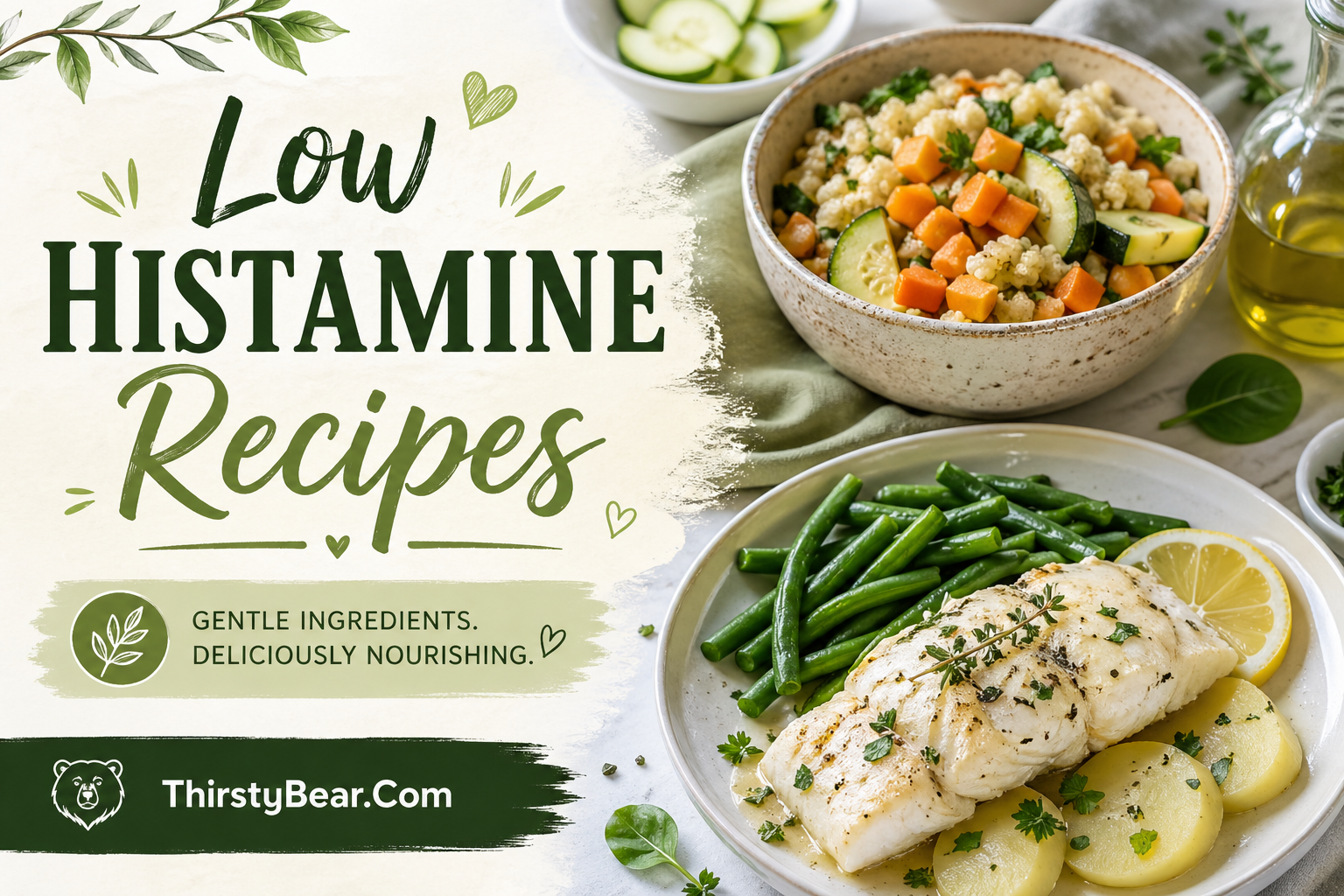
I remember standing in my kitchen three years ago, staring at my grocery bags and feeling completely overwhelmed. I had just been told I needed to follow a low histamine diet, and every recipe I loved suddenly seemed off-limits. The conflicting information online made things worse. One site said tomatoes were fine, another said they were the enemy. Sound familiar?
If you are struggling with histamine intolerance or mast cell activation syndrome (MCAS), you are not alone. Our team has spent months testing and refining low histamine recipes that actually taste good. You do not have to eat bland, boring food to feel better. This guide will show you exactly what to eat, what to avoid, and how to cook meals that bring joy back to your table.
Table of Contents
What Is a Low Histamine Diet
A low histamine diet is an eating approach designed for people whose bodies cannot properly break down histamine, a natural compound found in many foods. When histamine builds up in your system, it can trigger symptoms that mimic allergies: headaches, hives, digestive problems, nasal congestion, and fatigue.
The root cause is often a deficiency in DAO (diamine oxidase), the enzyme responsible for breaking down histamine in your gut. Some people are born with low DAO production, while others develop it after gut infections, hormonal changes, or as part of mast cell activation syndrome (MCAS). MCAS is a condition where mast cells release excessive amounts of histamine and other chemicals into the body.
Following low histamine recipes is not about deprivation. It is about choosing fresh foods over aged ones and understanding which cooking methods help reduce histamine levels. The goal is to give your body a break from excess histamine while you work with healthcare providers to address the underlying cause.
High Histamine Foods to Avoid
Knowing what to avoid is just as important as knowing what to eat. Here are the foods that are highest in histamine or trigger histamine release in your body.
Aged and Fermented Foods
Aged cheeses like parmesan, cheddar, and blue cheese are some of the highest histamine foods. Fermented foods including sauerkraut, kimchi, kombucha, and yogurt also pack high histamine levels. Even fermented beverage guides highlight how fermentation increases histamine.
Processed and Cured Meats
Bacon, salami, pepperoni, hot dogs, and smoked fish are all aged or cured, which dramatically increases histamine content. Fresh meat is safe, but even one day in the refrigerator raises histamine levels.
Certain Vegetables and Fruits
Tomatoes, spinach, eggplant, and avocado are surprisingly high in histamine. Citrus fruits, strawberries, bananas, and papaya can trigger histamine release in some people.
Alcohol and Vinegar
All alcoholic beverages, especially wine and beer, are high in histamine. Vinegar and vinegar-containing foods like pickles, mustard, and mayonnaise are also problematic.
Histamine Liberators to Watch
Some foods do not contain high histamine but trigger your body to release it. These include shellfish, nuts, chocolate, food additives, and preservatives. Pay attention to how these affect you personally.
Low Histamine Ingredients You Can Enjoy
Now for the good news. There are plenty of delicious foods you can eat on a low histamine diet. The key word is fresh.
Safe Proteins
Fresh beef, lamb, turkey, and chicken are excellent choices if cooked and eaten immediately or frozen. Fresh fish like cod, trout, and sole are safe when truly fresh. Eggs are generally well-tolerated. Young cheeses like cream cheese, mascarpone, and fresh mozzarella are lower in histamine than aged varieties.
Fresh Vegetables
Most fresh vegetables are your friends. Zucchini, carrots, broccoli, cauliflower, asparagus, cucumbers, bell peppers, sweet potatoes, and butternut squash are all excellent choices. Leafy greens like kale and lettuce are safe, though spinach should be avoided.
Low Histamine Fruits
Apples, pears, blueberries, mangoes, melons, and pomegranates are typically well-tolerated. Fresh is always better than dried or canned.
Safe Grains and Starches
Rice (all varieties), oats, quinoa, buckwheat, and gluten-free pasta made from rice or corn are safe options. Many people on low histamine diets find they feel better avoiding gluten, though this varies by individual.
Herbs and Seasonings
Fresh herbs are your secret weapon. Basil, cilantro, parsley, rosemary, thyme, and oregano add incredible flavor without the histamine. Garlic, ginger, and turmeric are also safe and anti-inflammatory. Avoid pre-mixed spice blends which often contain fillers.
The SIGHI Food List
The Swiss Interest Group Histamine Intolerance (SIGHI) maintains a detailed food compatibility list that assigns numerical values to foods based on their histamine content. This resource is trusted by the MCAS and histamine intolerance communities because it is evidence-based and regularly updated. We recommend using it as a reference when planning your meals.
Best Cooking Methods for Low Histamine Recipes
How you cook matters just as much as what you cook. Different cooking methods affect histamine levels in surprising ways.
Boiling: Your Best Friend
Boiling is the most histamine-friendly cooking method. When you boil meat or vegetables, histamine actually decreases and dissolves into the cooking water. This is why soups and stews made with boiled ingredients are often better tolerated. Just be sure to discard the cooking water rather than making stock from it.
Steaming and Pressure Cooking
Steaming retains nutrients while keeping histamine levels stable. Pressure cooking is another excellent option, especially for tougher cuts of meat. The high heat and pressure break down proteins quickly, reducing the time histamine has to develop.
Methods to Limit
Grilling, roasting, and slow cooking can actually increase histamine levels in food. The longer food cooks at lower temperatures, the more histamine can form. If you love roasted vegetables, roast them quickly at high heat rather than low and slow.
Freezing Is Essential
Freezing stops histamine formation completely. This is why buying frozen fish is often safer than buying fresh fish that has been sitting in a display case for days. Cook extra portions and freeze them immediately in individual containers for easy meals later.
Meal Planning and Batch Cooking Tips
Success on a low histamine diet requires planning. You cannot wing it when fresh food is essential.
Shop Strategically
Buy meat and fish from the back of the display case where turnover is highest. Ask the butcher when deliveries arrive and shop then. Look for vacuum-sealed packages, which slow histamine formation. Freeze proteins the same day you buy them if you are not cooking immediately.
Batch Cooking Strategy
Set aside two hours on the weekend to batch cook. Boil a large pot of chicken or beef, steam a tray of mixed vegetables, and cook a big batch of rice or quinoa. Portion everything into freezer-safe containers immediately after cooling. You now have a week of lunches ready to go.
Keep a Food Diary
Every person with histamine intolerance has different triggers. What bothers one person might be fine for another. Track everything you eat and any symptoms that follow. After a few weeks, patterns will emerge. This personalized data is more valuable than any online list.
Travel and Work Solutions
Pack frozen meals in an insulated bag for work. Bring safe snacks like rice cakes, fresh fruit, and cucumber slices. When dining out, choose simple grilled proteins with plain vegetables, and always ask about ingredients.
Low Histamine Breakfast Recipes
Start your day right with these simple, satisfying options.
Apple Cinnamon Oatmeal
Cook rolled oats in water or coconut milk. Top with diced fresh apple, a sprinkle of cinnamon, and a drizzle of honey. Add a tablespoon of coconut cream for richness.
Sweet Potato Hash
Dice sweet potatoes and sauté with zucchini, bell peppers, and fresh herbs. Top with a fried egg cooked in coconut oil. This savory option keeps you full until lunch.
Rice Flour Pancakes
Mix rice flour with eggs, coconut milk, and a pinch of salt. Cook like traditional pancakes and serve with fresh blueberries. These freeze well for busy mornings.
Low Histamine Lunch and Dinner Recipes
These meals prove that low histamine eating can be flavorful and satisfying.
Zucchini Noodles with Basil Pesto
Spiralize fresh zucchini into noodles. Blend fresh basil, garlic, pine nuts, and olive oil for a simple pesto. Toss together and top with grilled chicken breast cooked immediately after thawing.
Lemon Herb Chicken with Roasted Vegetables
Marinate fresh chicken breasts in lemon juice, olive oil, garlic, and fresh rosemary. Grill quickly over high heat. Serve with roasted carrots and broccoli cooked at 425°F for 20 minutes.
Turkey and Vegetable Stir-Fry
Slice fresh turkey breast thinly. Stir-fry in coconut oil with zucchini, bell peppers, and snap peas. Season with fresh ginger, garlic, and coconut aminos. Serve over jasmine rice.
Creamy Carrot and Ginger Soup
Simmer chopped carrots, fresh ginger, and onions in water until soft. Blend until smooth with coconut milk. This comforting soup freezes beautifully in individual portions.
Low Histamine Snacks and Desserts
You do not have to skip treats. These options satisfy cravings without triggering symptoms.
Fresh Fruit Platter
Apple slices, pear wedges, blueberries, and mango chunks make a colorful, refreshing snack. Add a sprinkle of hemp seeds for protein.
Cucumber Rounds with Herbed Cream Cheese
Slice cucumbers into thick rounds. Top with cream cheese mixed with fresh dill and chives. These are perfect for parties or afternoon cravings.
Coconut Rice Pudding
Simmer rice in coconut milk with a cinnamon stick until creamy. Sweeten with honey and serve warm or cold. This tastes decadent but uses only safe ingredients.
Chia Seed Pudding
Mix chia seeds with coconut milk and refrigerate overnight. Top with fresh mango and a drizzle of maple syrup for a healthy dessert or breakfast.
FAQs
What is a good low-histamine dinner?
Good low-histamine dinner options include grilled fresh chicken with roasted vegetables, turkey stir-fry with zucchini and bell peppers, poached cod with steamed broccoli, or zucchini noodles with basil pesto. The key is using fresh proteins cooked simply with fresh herbs and vegetables.
What can I eat that is low in histamine?
You can eat fresh meats like beef, lamb, turkey, and chicken, fresh fish like cod and sole, eggs, most fresh vegetables except spinach and tomatoes, fruits like apples, pears, blueberries, and melons, grains like rice, oats, and quinoa, and fresh herbs including basil, cilantro, and parsley.
What cuisine is low in histamine?
Simple, fresh cuisines that emphasize unprocessed foods tend to be lower in histamine. Traditional cuisines from regions with access to fresh ingredients often work well when modified. Asian cuisines can work if you avoid soy sauce and fermented ingredients. Mediterranean flavors are great when you skip the aged cheeses and cured meats.
Are oats low histamine?
Yes, plain oats are generally considered low histamine and safe for most people with histamine intolerance. Choose plain rolled oats or steel-cut oats rather than flavored instant varieties, which may contain additives. Oatmeal makes an excellent breakfast base with fresh fruit toppings.
Is honey low histamine?
Pure honey is generally considered low histamine and safe in small amounts. However, some people with severe histamine intolerance may react to it, so test your personal tolerance. Use raw, unprocessed honey and avoid honey blends with added ingredients.
Is butter low histamine?
Fresh butter is typically low in histamine and well-tolerated. However, cultured or fermented butter should be avoided as the culturing process increases histamine. Ghee is also a safe option for cooking. Always check that you are buying fresh, not cultured, varieties.
What is the best cooking method for low histamine?
Boiling is the best cooking method for low histamine diets because it actually reduces histamine levels in food. Pressure cooking and steaming are also excellent choices. Avoid slow cooking, aging, or fermenting foods as these processes increase histamine content.
How do I cook meat on a low histamine diet?
Cook meat immediately after purchasing or thawing from frozen. Boiling is ideal as it reduces histamine. If grilling or sautéing, use high heat for a shorter time. Never eat meat that has been refrigerated for more than 24 hours. Freeze cooked portions immediately if not eating right away.
Conclusion
Living with histamine intolerance does not mean giving up on delicious food. These low histamine recipes prove that you can eat well while managing your symptoms. Start with the basics: fresh proteins, plenty of vegetables, and simple cooking methods like boiling and steaming.
Keep a food diary to learn your personal triggers. Batch cook and freeze portions to make daily eating easier. And remember, the SIGHI food list is your friend when you need a reliable reference.
You have got this. With the right recipes and a little planning, you will find your way back to enjoying meals without the worry.