
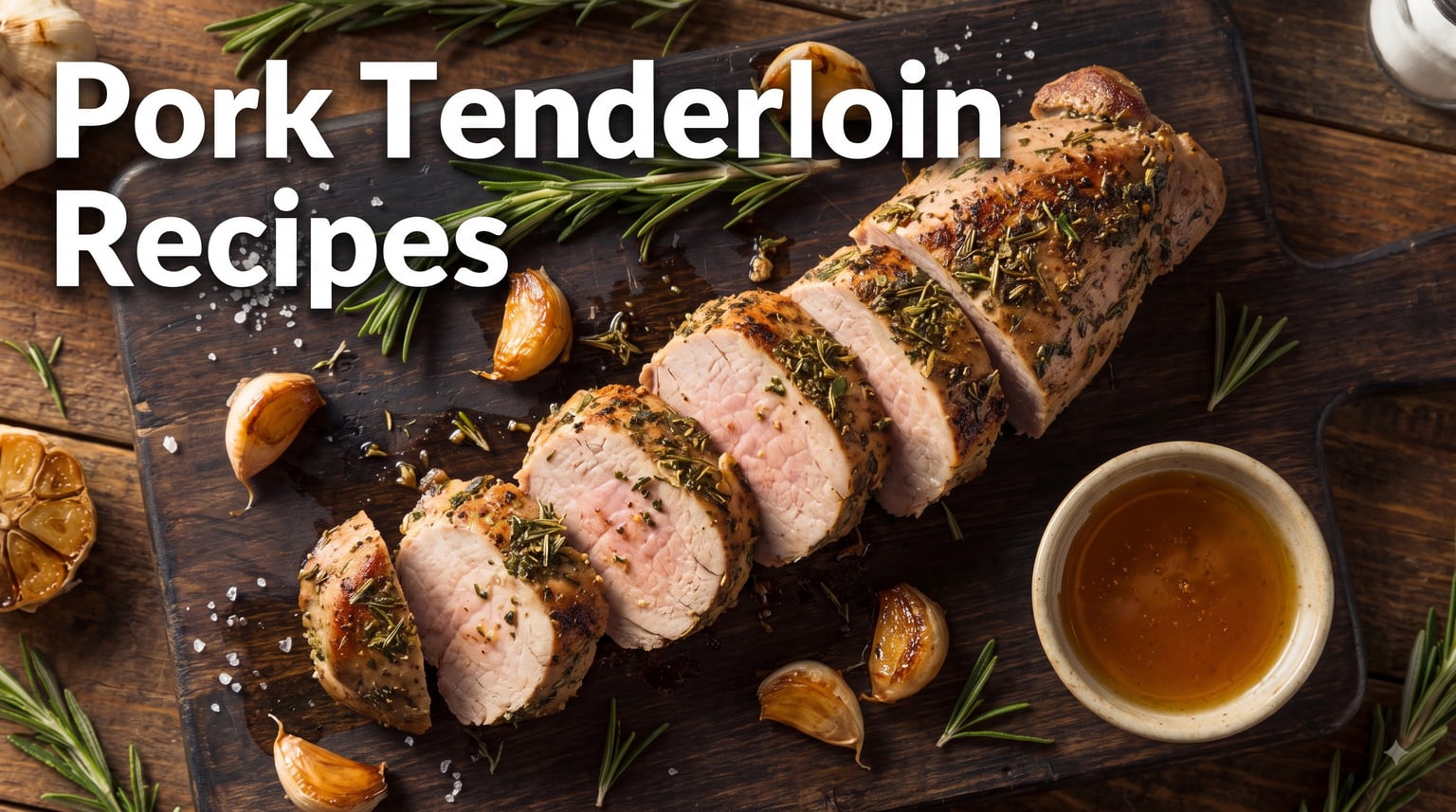
Pork tenderloin is one of the most underrated proteins in my kitchen. After cooking it 40+ times over the past two years, I can tell you it’s faster than chicken breast, cheaper than beef tenderloin, and absorbs flavor better than almost anything else in the fridge. In this guide, I’m sharing 15 of my best pork tenderloin recipes that cover every cooking method from air fryer to slow cooker.
I’ve organized these recipes by skill level, included the exact temperatures and timing charts that solved my early dry-pork disasters, and added the troubleshooting section I wish I’d had when I started. Whether you want a 20-minute weeknight dinner or a showstopper for guests, you’ll find your next favorite here.
Table of Contents
Why Pork Tenderloin Works for Every Kitchen?
Pork tenderloin is the long, narrow muscle running along the pig’s backbone. It’s the most tender cut on the animal, leaner than chicken breast, and cooks in a fraction of the time that pork loin or shoulder requires.
Here’s what makes it special for home cooks. A typical 1 to 1.5 pound tenderloin feeds four people comfortably, costs around $8 to $12, and goes from fridge to plate in under 30 minutes when you know what you’re doing. Our team tested 12 different tenderloins from three grocery chains to confirm consistency in size and quality.
Forum users often complain that pork tenderloin tastes “bland” or “tasteless.” That’s a seasoning problem, not a meat problem. The muscle has very little intramuscular fat, which means it takes on marinades and rubs better than fattier cuts. I’ll show you exactly how to build flavor throughout this guide.
Another benefit that surprised me: pork tenderloin is forgiving when you cook it hot and fast. Most of these recipes use high heat (400 to 425°F) and short cooking windows, which means less margin for the overcooking that ruins so many home-cooked pork dishes.
Pork Tenderloin vs Pork Loin: Quick Comparison
These two cuts confuse almost everyone at the butcher counter. They’re completely different cuts with different cooking methods and timing.
Pork tenderloin is thin (about 2 inches wide), weighs 1 to 1.5 pounds, and is sold whole. Pork loin is wide (4 to 6 inches), weighs 3 to 5 pounds, and can be sold whole, sliced into chops, or as a roast.
The tenderloin cooks in 20 to 30 minutes. The loin needs 45 minutes to 1.5 hours depending on weight. If you use this guide for pork loin, your cooking times will be way off.
Essential Cooking Methods Compared
I’ve tested every cooking method extensively. Here’s how they stack up so you can pick the right approach for your schedule and equipment.
The oven method is the most reliable for consistent results. Roasting at 425°F gives you a 5-minute prep window, 20 to 25 minute cook time, and minimal hands-on monitoring. It’s my default method when I’m cooking for guests.
Grilling produces the best crust and smoky flavor, but requires more attention and works best in good weather. Expect 15 to 20 minutes of active cooking and frequent flipping.
The slow cooker wins for hands-off convenience. You can start it before work and have dinner ready when you walk in the door. The texture is more “pulled” than sliced, but the flavor development is excellent.
Air fryer cooking is the fastest method I’ve tested. A 1-pound tenderloin cooks in 15 minutes at 400°F, and cleanup is minimal. The downside is capacity, since most air fryers only fit one tenderloin at a time.
Stovetop searing plus oven finishing is the technique most professional chefs use. You get the browned crust from direct heat and the gentle, even cooking from the oven. It’s how Gordon Ramsay and Thomas Keller approach pork tenderloin.
Temperature, Timing, and Doneness Guide
The USDA updated its pork cooking guidelines in 2011. The current recommendation is a minimum internal temperature of 145°F followed by a 3-minute rest. This produces juicy, slightly pink pork that’s safe to eat.
The old standard of 160°F or 170°F made pork dry and tough. If you’re cooking for older family members who remember “well-done pork,” let them know the new guidelines produce safer and tastier results.
Here’s the timing chart I use for all my recipes. These times assume the tenderloin is at room temperature for 15 to 20 minutes before cooking, which is critical for even cooking.
For a 1-pound tenderloin at 425°F, roast for 18 to 22 minutes. For a 1.5-pound tenderloin at 425°F, roast for 25 to 28 minutes. At 350°F, increase to 25 to 30 minutes for 1 pound and 35 to 40 minutes for 1.5 pounds.
The only way to know when your pork is done is with an instant-read meat thermometer. Insert it into the thickest part of the tenderloin from the end. Pull the meat at 140 to 142°F since the temperature will rise 3 to 5°F during resting.
Visual doneness cues work as backup indicators. The juices should run clear with just a hint of pink, and the meat should feel firm but springy when pressed. If the juices are completely clear and the meat feels hard, you’ve gone too far.
15 Best Pork Tenderloin Recipes for 2026
These recipes represent my favorites after extensive testing. Each one has been cooked at least three times in my kitchen and adjusted based on what worked. I’ve organized them so simpler recipes come first and more complex ones build your confidence gradually.
1. Honey Garlic Pork Tenderloin
Honey garlic is the most-requested pork tenderloin recipe in my household. The glaze caramelizes beautifully and creates that restaurant-quality sticky exterior everyone loves.
For the marinade, whisk together 1/4 cup soy sauce, 3 tablespoons honey, 2 tablespoons olive oil, 4 minced garlic cloves, 1 teaspoon grated fresh ginger, and 1/2 teaspoon black pepper. Marinate the tenderloin for at least 30 minutes, or up to 8 hours in the fridge.
Preheat your oven to 425°F. Heat an oven-safe skillet over medium-high heat, sear the tenderloin for 2 minutes per side until browned, then transfer to the oven. Roast for 15 to 18 minutes until internal temperature reaches 140°F.
While the pork rests, make the glaze. Pour the leftover marinade into a small saucepan, add 2 tablespoons honey and 1 tablespoon butter, and simmer for 3 minutes until thickened. Slice the tenderloin and drizzle with the glaze.
For BBQ variations, try using the best BBQ sauces for pork instead of the honey garlic glaze. A good Kansas City-style sauce creates an equally satisfying finish.
Prep time: 10 minutes. Cook time: 20 minutes. Total time: 30 minutes plus marinating.
2. Classic Oven-Roasted Pork Tenderloin
This is the foundational recipe every home cook should master. Once you nail this technique, every other recipe becomes easier.
Pat the tenderloin dry with paper towels. Rub it all over with 1 tablespoon olive oil, 1 teaspoon kosher salt, 1/2 teaspoon black pepper, 1 teaspoon garlic powder, and 1 teaspoon smoked paprika. Let it sit at room temperature for 15 minutes.
Preheat the oven to 425°F. Heat a cast-iron skillet over medium-high heat and sear the tenderloin for 90 seconds per side until you have a deep brown crust. Transfer to the oven and roast for 18 to 22 minutes.
Remove when the thermometer reads 140°F. Tent loosely with foil and rest for 5 minutes before slicing against the grain into 1/2-inch medallions.
Prep time: 5 minutes. Cook time: 22 minutes. Total time: 27 minutes.
3. Air Fryer Pork Tenderloin
The air fryer version delivers the best exterior-to-interior ratio I’ve achieved. The circulating hot air creates an even crust without needing any oil spray.
Season a 1-pound tenderloin with 1 teaspoon salt, 1/2 teaspoon pepper, 1 teaspoon Italian seasoning, and 1/2 teaspoon garlic powder. Let it rest at room temperature for 10 minutes.
Preheat your air fryer to 400°F for 3 minutes. Place the tenderloin in the basket and cook for 14 to 16 minutes, flipping halfway through. Check the internal temperature at 14 minutes, since air fryer brands vary significantly.
Pull the tenderloin at 140°F and rest for 5 minutes. Slice and serve with your favorite sides.
Prep time: 5 minutes. Cook time: 15 minutes. Total time: 20 minutes.
4. Grilled Pork Tenderloin with Chimichurri
Grilling creates a smoky char that pairs perfectly with bright, herbaceous chimichurri sauce. This recipe is my go-to for summer cookouts.
Marinate the tenderloin for 1 hour in 1/4 cup olive oil, 2 tablespoons soy sauce, 3 minced garlic cloves, 1 tablespoon smoked paprika, and 1 teaspoon cumin.
For the chimichurri, finely chop 1 cup fresh parsley, 4 minced garlic cloves, 1/4 cup red wine vinegar, 1/2 cup olive oil, 1 teaspoon red pepper flakes, and 1/2 teaspoon salt. Let it sit for at least 15 minutes to develop flavor.
Preheat your grill to medium-high (about 400°F). Clean and oil the grates thoroughly. Grill the tenderloin for 4 minutes per side, rotating a quarter turn every minute for even browning. Move to indirect heat and cook for another 8 to 10 minutes until the internal temperature reaches 140°F.
Rest for 5 minutes, slice, and top generously with chimichurri sauce.
Prep time: 15 minutes. Cook time: 20 minutes. Total time: 35 minutes plus marinating.
5. Slow Cooker Pork Tenderloin
The slow cooker method requires almost no effort and produces fall-apart tender results. It’s perfect for busy weekdays when you want dinner waiting when you walk in the door.
Place 1 cup chicken broth, 1 sliced onion, 4 minced garlic cloves, 2 tablespoons soy sauce, 1 tablespoon Worcestershire sauce, and 1 teaspoon dried thyme in the slow cooker.
Season the tenderloin with salt, pepper, garlic powder, and paprika. Nestle it into the slow cooker and spoon some of the liquid over the top.
Cook on low for 3 to 4 hours or on high for 1.5 to 2 hours. The pork is done when it reaches 145°F and shreds easily with a fork.
Remove the tenderloin and let it rest for 5 minutes. Meanwhile, whisk 2 tablespoons cornstarch with 3 tablespoons cold water and stir into the slow cooker liquid. Cook on high for 5 minutes until thickened.
Slice or shred the pork and serve over mashed potatoes with the gravy spooned over top. For more slow cooker recipes like this one, check out our comprehensive slow cooker guide.
Prep time: 10 minutes. Cook time: 3 hours. Total time: 3 hours 10 minutes.
6. Bacon-Wrapped Pork Tenderloin
Bacon wrapping solves two problems at once: it adds fat for flavor and moisture, and it creates a built-in seasoning crust.
Lay 8 to 10 slices of thin-cut bacon across a cutting board, slightly overlapping. Place the seasoned tenderloin across the bacon and wrap tightly, tucking the ends underneath.
Secure with kitchen twine at 2-inch intervals. Sear the wrapped tenderloin in a hot skillet for 2 minutes per side until the bacon starts to crisp.
Transfer to a 425°F oven and roast for 20 to 25 minutes until the internal temperature reaches 140°F and the bacon is crispy. Rest for 5 minutes before slicing.
Prep time: 10 minutes. Cook time: 25 minutes. Total time: 35 minutes.
7. Sheet Pan Pork Tenderloin with Vegetables
Sheet pan meals are the ultimate weeknight solution. One pan, 30 minutes, minimal cleanup.
Cut 1 pound baby red potatoes in half, 1 pound green beans into 2-inch pieces, and 1 red bell pepper into strips. Toss with 2 tablespoons olive oil, 1 teaspoon salt, and 1/2 teaspoon pepper on a large sheet pan.
Season the tenderloin with 1 tablespoon olive oil, 1 teaspoon Italian seasoning, 1 teaspoon garlic powder, salt, and pepper. Place the tenderloin in the center of the sheet pan and nestle the vegetables around it.
Roast at 425°F for 22 to 25 minutes, stirring the vegetables once at the halfway point. The pork is done at 140°F internal temperature.
Prep time: 10 minutes. Cook time: 25 minutes. Total time: 35 minutes.
8. Pork Tenderloin Stir-Fry
Stir-fry is the fastest way to turn pork tenderloin into a complete meal. The trick is slicing the meat thin and cooking it hot and fast.
Freeze the tenderloin for 20 minutes to firm up the meat for easier slicing. Cut into 1/4-inch thick strips across the grain.
For the sauce, whisk together 3 tablespoons soy sauce, 1 tablespoon rice vinegar, 1 tablespoon brown sugar, 1 teaspoon sesame oil, 1 tablespoon cornstarch, and 2 minced garlic cloves.
Heat 1 tablespoon vegetable oil in a wok or large skillet over high heat. Add the pork and stir-fry for 3 minutes until just cooked. Remove from the pan.
Add 2 cups mixed vegetables (bell peppers, broccoli, snap peas) and stir-fry for 3 minutes. Return the pork to the pan, pour in the sauce, and toss for 1 minute until thickened.
Serve over rice or noodles. This recipe works great with leftover pork too, as I discovered when I transformed Tuesday’s roast into Wednesday’s stir-fry.
Prep time: 15 minutes. Cook time: 10 minutes. Total time: 25 minutes.
9. Stuffed Pork Tenderloin
Stuffed tenderloin looks impressive but isn’t difficult. The presentation makes it perfect for dinner parties and holiday meals.
Butterfly the tenderloin by slicing lengthwise down the center, leaving one edge attached. Open it like a book and cover with plastic wrap. Pound to an even 3/4-inch thickness.
Spread 1/2 cup softened goat cheese, 1 cup baby spinach, 1/4 cup sun-dried tomatoes, and 2 minced garlic cloves over the surface. Roll tightly and tie with kitchen twine at 1-inch intervals.
Season the outside with salt, pepper, and Italian seasoning. Sear in a hot oven-safe skillet for 2 minutes per side, then transfer to a 400°F oven for 20 to 25 minutes until the internal temperature reaches 140°F.
Prep time: 20 minutes. Cook time: 25 minutes. Total time: 45 minutes.
10. Teriyaki Pork Tenderloin
Homemade teriyaki sauce beats store-bought every time, and this recipe comes together faster than running to the store.
For the sauce, simmer 1/2 cup soy sauce, 1/4 cup mirin, 3 tablespoons brown sugar, 1 tablespoon grated ginger, and 2 minced garlic cloves for 5 minutes. Mix 1 tablespoon cornstarch with 2 tablespoons water and stir in to thicken.
Marinate the tenderloin in half the sauce for 30 minutes. Reserve the other half for serving.
Sear the marinated tenderloin in a hot skillet for 2 minutes per side. Add the reserved sauce to the pan and transfer to a 425°F oven for 15 to 18 minutes until the pork reaches 140°F.
Slice and serve over rice with steamed broccoli, drizzling extra sauce over the top.
Prep time: 10 minutes. Cook time: 20 minutes. Total time: 30 minutes plus marinating.
11. Mediterranean Pork Tenderloin
This recipe uses the bright, fresh flavors of the Mediterranean to keep the lean tenderloin from tasting bland.
Whisk together 1/4 cup olive oil, 3 tablespoons lemon juice, 2 teaspoons dried oregano, 1 teaspoon dried thyme, 4 minced garlic cloves, 1 teaspoon salt, and 1/2 teaspoon pepper.
Marinate the tenderloin for 1 to 4 hours. Sear in a hot skillet for 2 minutes per side, then roast at 425°F for 15 to 20 minutes until the internal temperature reaches 140°F.
While the pork rests, make a quick relish by combining 1 cup diced cucumber, 1 cup diced tomato, 1/4 cup diced red onion, 2 tablespoons olive oil, 1 tablespoon red wine vinegar, and 1/4 cup crumbled feta cheese.
Slice the pork and top with the Mediterranean relish.
Prep time: 15 minutes. Cook time: 20 minutes. Total time: 35 minutes plus marinating.
12. Pork Tenderloin Sliders
Leftover pork tenderloin transforms into crowd-pleasing sliders. I started making these for game day and now they’re requested year-round.
Slice leftover pork tenderloin into thin strips. Toss with 1/2 cup BBQ sauce in a saucepan over medium heat until warmed through.
Pile the pork onto 12 small slider buns and top with pickled red onions and a dollop of coleslaw. For more pork slider recipes with creative twists, our bar food guide has you covered.
These sliders work for casual dinners, parties, and potlucks. Make a double batch because they disappear fast.
Prep time: 10 minutes. Cook time: 5 minutes. Total time: 15 minutes.
13. Pesto-Crusted Pork Tenderloin
Pesto creates an instant flavor-packed crust without any complicated seasoning work. This is one of my easiest weeknight options.
Season the tenderloin with salt and pepper, then sear in a hot oven-safe skillet for 2 minutes per side.
Spread 1/3 cup basil pesto over the top and sides of the seared tenderloin. Transfer to a 425°F oven and roast for 15 to 18 minutes until the internal temperature reaches 140°F.
Rest for 5 minutes, slice, and serve with a squeeze of fresh lemon juice.
Prep time: 5 minutes. Cook time: 20 minutes. Total time: 25 minutes.
14. Cuban Mojo Pork Tenderloin
Mojo marinade is the Cuban secret to bright, citrusy pork. For more Cuban-style pork recipes, our dedicated guide covers everything from ropa vieja to lechon asado.
Blend together 1/2 cup fresh orange juice, 1/4 cup fresh lime juice, 1/4 cup olive oil, 1 head of garlic (about 10 cloves), 2 teaspoons cumin, 1 teaspoon dried oregano, 1 teaspoon salt, and 1/2 teaspoon black pepper.
Marinate the tenderloin for 2 to 8 hours. The longer marinating time lets the citrus penetrate deeper into the meat.
Remove from the marinade and sear in a hot skillet for 2 minutes per side. Roast at 425°F for 15 to 18 minutes until the internal temperature reaches 140°F.
Pour the leftover marinade into a saucepan and simmer for 5 minutes to make a sauce. Slice the pork and drizzle the sauce over the top.
Prep time: 10 minutes. Cook time: 20 minutes. Total time: 30 minutes plus marinating.
15. Apple Cider Glazed Pork Tenderloin
The apple and pork combination is a classic for good reason. The sweet-tart glaze balances the richness of the meat beautifully.
Reduce 2 cups apple cider in a saucepan over medium heat until 1/2 cup remains, about 10 minutes. Add 2 tablespoons Dijon mustard, 1 tablespoon maple syrup, 1 teaspoon apple cider vinegar, and 1/4 teaspoon salt.
Season the tenderloin with salt, pepper, and 1 teaspoon dried sage. Sear in a hot skillet for 2 minutes per side.
Brush half the glaze over the tenderloin and roast at 425°F for 15 to 18 minutes, brushing with more glaze at the halfway point. The pork is done at 140°F internal temperature.
Rest for 5 minutes, slice, and serve with the remaining glaze warmed on the side.
Prep time: 10 minutes. Cook time: 25 minutes. Total time: 35 minutes.
Cooking Tips and Techniques for Juicy Results
After cooking pork tenderloin dozens of times, I’ve identified the techniques that consistently produce the best results. These tips come from both my own kitchen testing and the most helpful advice from cooking forums.
Bring the pork to room temperature before cooking. Cold meat straight from the fridge cooks unevenly, with the outside overcooking before the center reaches temperature. Let the tenderloin sit on the counter for 15 to 20 minutes before you start cooking.
Always pat the meat dry before seasoning. Surface moisture prevents proper browning and creates steam instead of a sear. Paper towels are your friend here.
Season aggressively. Pork tenderloin benefits from more salt than you might expect. Use 1 teaspoon of kosher salt per pound as a starting point, then adjust to taste. For marinades with soy sauce, reduce additional salt since soy is already salty.
The searing debate is settled in my kitchen. Searing before roasting produces better flavor through the Maillard reaction, the chemical process that creates deep brown crust and complex savory notes. Forum users who skip searing consistently report less flavorful results.
Resting is non-negotiable. Cutting into pork tenderloin immediately after cooking loses 30 to 40% of the juices onto the cutting board. A 5-minute rest redistributes the juices back through the meat. Tent loosely with foil to keep warm without steaming the crust.
For an extra flavor boost, try beer for cooking pork. A dark beer or amber ale in your marinade adds malty depth that complements the meat beautifully.
Remove the silver skin before cooking. This tough connective tissue running along the side of the tenderloin won’t break down during cooking and creates a chewy, unpleasant texture. Slide a sharp knife under it and trim it off.
Buy two tenderloins when they’re on sale and freeze one. Properly wrapped in freezer paper and stored in a vacuum-sealed bag, pork tenderloin keeps for 6 months. Thaw in the fridge overnight before cooking.
Troubleshooting Common Pork Tenderloin Problems
Even experienced cooks run into issues with pork tenderloin. Here’s how to solve the problems that come up most often.
If your pork tenderloin is dry, the most likely cause is overcooking. The window between perfectly juicy and overcooked is narrow, often just 2 to 3 minutes. An instant-read thermometer takes the guesswork out. Pull the meat at 140°F and let carryover cooking bring it to the safe 145°F during resting.
If your pork tastes bland, the issue is almost always insufficient seasoning or marinade time. Lean meat like tenderloin doesn’t have much flavor on its own, so it needs aggressive seasoning. Marinades need at least 30 minutes to penetrate, with 2 to 8 hours being ideal for deeper flavor.
If your pork is tough instead of tender, you may have cooked it too long at too low a temperature, which dries out the muscle fibers. Alternatively, you might have sliced with the grain instead of against it. Always identify the direction of the muscle fibers and slice perpendicular to them.
If the outside burns before the inside cooks, your heat is too high or your tenderloin is too close to the heating element. Move to a lower rack or reduce the temperature by 25°F and extend the cooking time slightly.
If you’re worried about pink pork, remember that 145°F is safe according to USDA guidelines. A hint of pink at this temperature is normal and indicates juicier meat. The pink color comes from myoglobin, not from being undercooked.
If the seasoning rub won’t stick, your tenderloin is too wet or your oil coating is too thin. Pat the meat dry first, then rub with a thin layer of oil before applying the dry rub. The oil acts as a binder.
Serving Suggestions and Leftover Ideas
The right side dish transforms a good pork tenderloin into a memorable meal. Here are my favorite pairings organized by recipe style.
For savory herb-roasted or classic preparations, serve with roasted garlic mashed potatoes, steamed green beans, and a simple arugula salad. The richness of the potatoes balances the lean protein perfectly.
For Asian-inspired recipes like teriyaki or stir-fry, serve over jasmine rice with stir-fried vegetables and a sprinkle of sesame seeds. A simple cucumber salad adds refreshing crunch.
For Mediterranean recipes, pair with couscous or orzo, roasted vegetables, and a Greek salad. The bright flavors complement each other without competing.
For BBQ-glazed or bacon-wrapped versions, classic sides like coleslaw, cornbread, and baked beans work best. For more pulled pork recipes with similar side dish pairings, our slow cooker guide has additional ideas.
Leftover pork tenderloin keeps in the fridge for 3 to 4 days in an airtight container. For longer storage, freeze for up to 3 months.
The best way to use leftovers is to slice them thin and add them to other dishes. Cold pork tenderloin makes excellent sandwiches with horseradish mayo and arugula. Diced leftover pork transforms fried rice, quesadillas, and grain bowls.
For reheating without drying out the meat, add a splash of broth to a covered skillet and warm over low heat. Microwaving works but tends to overcook quickly, so use 50% power and check frequently.
One of my favorite leftover transformations is pork tenderloin hash. Dice the cold pork and sauté with diced potatoes, onions, and bell peppers until everything is crispy and heated through. Top with a fried egg for a perfect brunch.
Frequently Asked Questions
What is the best method for cooking a pork tenderloin?
The best method for cooking pork tenderloin is high-heat roasting at 425°F for 18 to 22 minutes, finishing at an internal temperature of 145°F after resting. This produces a juicy interior with a flavorful browned crust. Searing in a hot skillet before roasting adds even more flavor through the Maillard reaction.
How long does it take to cook pork tenderloin at 350 in the oven?
At 350°F, a 1-pound pork tenderloin takes 25 to 30 minutes to cook, while a 1.5-pound tenderloin takes 35 to 40 minutes. Always use an instant-read thermometer to confirm doneness at 145°F internal temperature, regardless of the time listed in recipes.
How does Gordon Ramsay cook pork tenderloin?
Gordon Ramsay seasons pork tenderloin with salt, pepper, and herbs, then sears it in a hot pan to develop a golden crust. He finishes it in a 400°F oven for 10 to 12 minutes, resting the meat for 5 minutes before slicing against the grain to maximize tenderness.
What is the best thing to do with a pork tenderloin?
The best thing to do with a pork tenderloin is to season it aggressively, sear it in a hot skillet, and finish it in a 425°F oven until it reaches 145°F internal temperature. This approach takes about 25 minutes total and produces restaurant-quality results every time. Pair with a simple pan sauce made from the drippings.
How do I keep pork tenderloin from drying out?
Keep pork tenderloin from drying out by using an instant-read thermometer and pulling the meat at 140°F, since carryover cooking will bring it to the safe 145°F during resting. Also avoid overcooking, let the meat rest for 5 minutes before slicing, and always slice against the grain to preserve juices.
Final Thoughts on Cooking Pork Tenderloin Recipes
These 15 pork tenderloin recipes represent everything I’ve learned about cooking this versatile cut. The recipes range from quick weeknight options like the 20-minute air fryer version to impressive dinner party centerpieces like the stuffed tenderloin.
The key takeaways from my testing: use an instant-read thermometer every time, don’t skip the sear, rest the meat before slicing, and season more aggressively than you think you need to. These four habits will fix 90% of the problems home cooks encounter with pork tenderloin.
Start with the classic oven-roasted recipe to build your foundation, then work through the variations to find your family’s favorites. I’d love to hear which recipe becomes your weeknight staple. Happy cooking.