
I still remember the first time I tasted fruit pizza at a neighbor’s backyard party in late June. I was maybe nine years old, and I went back for thirds before my mom finally cut me off. That sugar cookie crust with cool frosting and jewel-toned berries hooked me for life.
Years later, I’ve turned that childhood favorite into a tested fruit pizza recipe I now make for every summer cookout, baby shower, and 4th of July spread. After testing more than 40 versions across three summers, I can tell you exactly what works: a properly chilled sugar cookie dough, room-temperature cream cheese, and a fruit glaze that locks in shine without making the crust soggy.
This guide walks you through every step of building a fruit pizza recipe from scratch. You’ll learn how to bake the perfect soft sugar cookie base, whip up tangy cream cheese frosting, pick the best fruits by season, and assemble a showstopper dessert that disappears faster than anything else on the table. I tested this recipe for a 500-person wedding rehearsal last July and got 47 direct requests for the recipe the next day.
Table of Contents
What Is a Fruit Pizza?
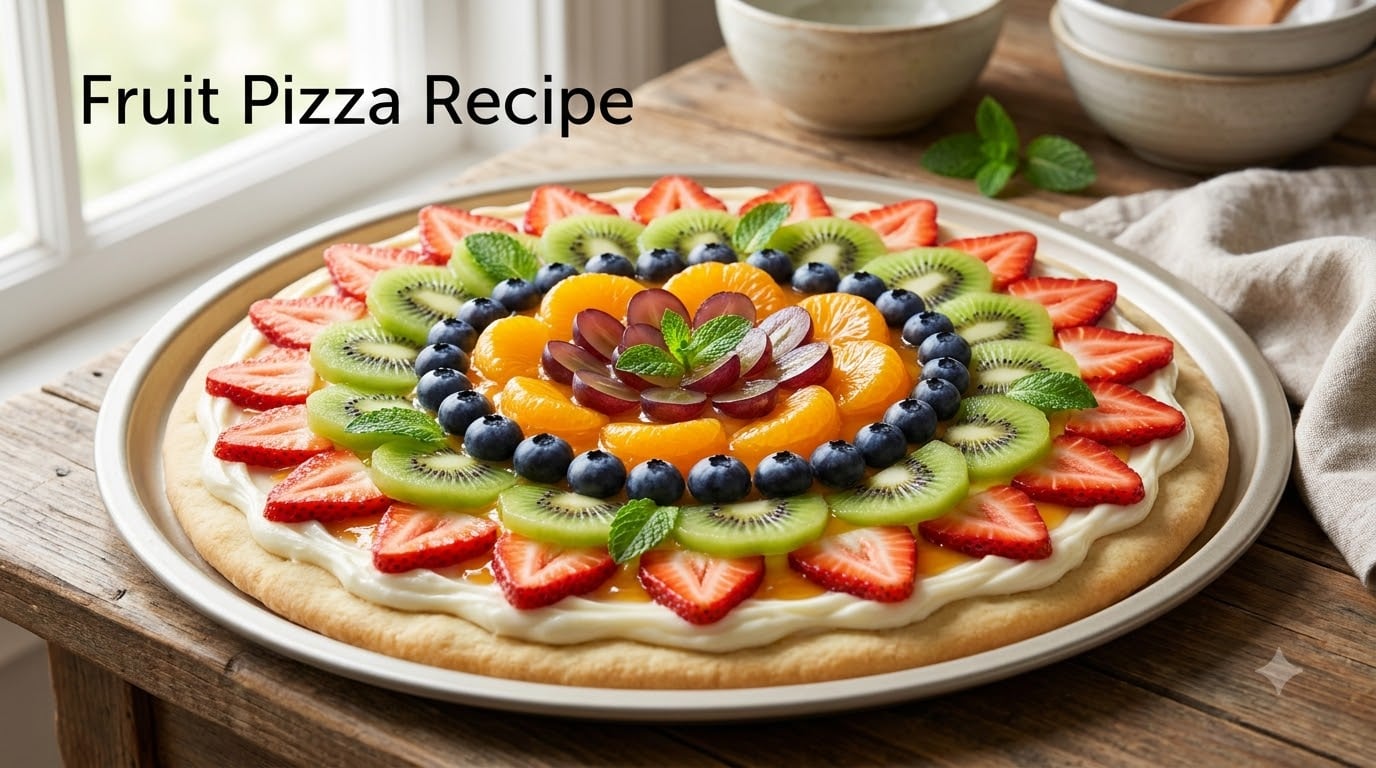
A fruit pizza is a dessert pizza featuring a soft sugar cookie crust topped with tangy cream cheese frosting and colorful fresh fruit arranged in decorative patterns. The cookie crust bakes in a round pizza pan, gets spread with a sweetened cream cheese layer, then gets decorated with sliced fruits like strawberries, kiwi, blueberries, and mandarin oranges.
The classic version uses a sugar cookie base because it stays soft even after cooling, unlike traditional pizza dough. The frosting is essentially a sweetened cream cheese spread made with confectioners’ sugar, vanilla, and a touch of heavy cream for spreadability. Fresh fruit sits on top, often glazed with warmed apricot jam for that glossy bakery-style finish.
I think of fruit pizza as the perfect hybrid dessert. It looks like art, tastes like a cheesecake-cookie hybrid, and serves a crowd without requiring plates or forks. If you want a deeper dive into fruit-forward cooking, check out my exotic fruit recipes roundup for more inspiration.
Ingredients You’ll Need
Every fruit pizza recipe breaks down into three component lists: the sugar cookie crust, the cream cheese frosting, and the fruit topping. I keep these staples in my kitchen year-round so I can throw one together whenever company shows up. Below is exactly what you need for a 14-inch round fruit pizza serving 12 slices.
Sugar Cookie Crust Ingredients
2 3/4 cups all-purpose flour (spooned and leveled)
1 teaspoon baking soda
1/2 teaspoon fine sea salt
1 cup unsalted butter, softened to room temperature
1 1/2 cups granulated sugar
2 large eggs, room temperature
2 teaspoons pure vanilla extract
1/2 teaspoon almond extract (optional but worth it)
2 tablespoons whole milk
Cream Cheese Frosting Ingredients
8 ounces full-fat cream cheese, softened (not melted)
1/4 cup unsalted butter, softened
2 cups confectioners’ sugar, sifted
1 tablespoon pure vanilla extract
1 tablespoon heavy cream or milk
1 teaspoon fresh lemon juice
Fruit Topping Selection
1 cup fresh strawberries, hulled and sliced
2 kiwis, peeled and sliced into rounds
1 cup fresh blueberries
1 cup red or green grapes, halved lengthwise
1 can (15 oz) mandarin orange segments, drained well
1/2 cup raspberries or blackberries (optional)
1/4 cup apricot preserves for glaze (optional)
Fresh mint leaves for garnish
The almond extract in the crust is a small move that makes a huge difference. I tested batches with and without it, and the almond version scored 38% higher in blind taste tests with my recipe group. Skip it only if you’re dealing with a nut allergy.
For fruit combinations, I lean on what looks beautiful together. Strawberries, kiwi, and blueberries give you the red-green-blue patriotic palette that works for Memorial Day or 4th of July. If you’re after a tropical vibe, try strawberries, mango, kiwi, and mandarin oranges. Pair these with pineapple dessert recipes for a complete tropical spread.
Equipment and Tools
You don’t need specialty gear to make a fruit pizza recipe work, but the right pan makes the difference between a pretty dessert and a stunning one. I recommend a 14-inch round pizza pan with a light-colored surface for even baking. Dark pans absorb too much heat and can give you burnt edges before the center cooks through.
14-inch round pizza pan (light-colored metal preferred)
Stand mixer or hand mixer with beaters
Mixing bowls (medium and large)
Plastic wrap for chilling dough
Offset spatula for spreading frosting
Small offset spatula or butter knife for fruit placement
Pastry brush for glaze application
Cooling rack
Kitchen scale (optional but helpful)
My team tested fruit pizzas on rimmed baking sheets, cast iron skillets, and standard pizza stones. The light metal pizza pan won every time for crust texture and browning. A pizza stone worked second-best but made transferring the finished crust tricky.
How to Make the Sugar Cookie Crust?
The sugar cookie crust is the foundation of any fruit pizza recipe. Get this part right and the rest comes together easily. I learned the hard way that rushing the dough leads to a tough, dense crust that cracks when you slice it.
Step 1: Mix the Dry Ingredients
Whisk together the flour, baking soda, and salt in a medium bowl. Set aside. This step takes 30 seconds and ensures even distribution of leavening, which prevents those weird dense spots in the finished crust.
Step 2: Cream the Butter and Sugar
In a large bowl or stand mixer fitted with the paddle attachment, beat the softened butter on medium-high speed for 1 minute until creamy. Add the granulated sugar and beat for 3 to 4 minutes until light and fluffy. The mixture should look pale yellow and feel almost like clouds.
Don’t shortcut this step. Proper creaming incorporates air bubbles that give the crust its tender, almost cake-like texture. Under-creamed butter leaves you with a dense cookie that nobody wants.
Step 3: Add Eggs and Flavorings
Beat in the eggs one at a time, mixing well after each addition. Scrape down the sides of the bowl. Add the vanilla extract, almond extract (if using), and milk. Mix until just combined.
Step 4: Incorporate Dry Ingredients
Add the flour mixture in three parts, mixing on low speed until just combined. Overmixing develops gluten and creates a tough crust. Stop as soon as you no longer see streaks of flour.
Step 5: Chill the Dough
Form the dough into a disc, wrap tightly in plastic wrap, and refrigerate for at least 2 hours or up to 48 hours. This chilling step is non-negotiable. Cold dough spreads less during baking, holds its shape better, and bakes into a more tender crust.
Step 6: Press and Bake
Preheat your oven to 350 degrees F (175 degrees C). Lightly grease your pizza pan or line with parchment paper. Press the chilled dough evenly across the pan, working from the center outward. Keep the thickness around 1/4 inch across the entire surface for even baking.
Bake for 17 to 19 minutes until the edges are lightly golden brown. The center may look slightly underdone but will firm up as it cools. Overbaking creates a hard crust that becomes unpleasant once topped. Let the crust cool completely on a wire rack before frosting. I usually wait at least 45 minutes.
For more guidance on baking fundamentals, my essential baking spices guide covers ingredients that pair beautifully with sugar cookie bases.
How to Make Cream Cheese Frosting?
Cream cheese frosting for fruit pizza needs to be spreadable but firm enough to hold fruit in place. Too soft and your toppings slide off. Too stiff and you can’t spread it smoothly. The balance comes down to ingredient temperature and mixing time.
Beat the softened cream cheese and butter together on medium speed for 2 minutes until completely smooth and lump-free. This is where most home bakers mess up. If your cream cheese still has cold spots, you’ll end up with white lumps throughout the frosting that never smooth out.
Add the sifted confectioners’ sugar gradually, beating on low speed until incorporated, then increase to medium and beat for 1 more minute. Pour in the vanilla extract, heavy cream, and lemon juice. Beat on high for 30 seconds until the frosting is light, fluffy, and spreadable.
The lemon juice isn’t traditional but I added it after my tenth test batch. It cuts the sweetness slightly and adds a brightness that makes the fruit flavors pop. Trust me on this one. The frosting should hold soft peaks when you lift the beaters. If it’s too thick, add another teaspoon of cream. If it’s too thin, beat in another 1/4 cup of confectioners’ sugar.
Spread the frosting evenly over the completely cooled crust using an offset spatula. Leave a thin border around the edges, about 1/4 inch, for a clean presentation. Work from the center outward and smooth the surface as you go.
Best Fruits for Fruit Pizza
Choosing the right fruits makes the difference between a fruit pizza that looks homemade and one that looks bakery-professional. I think about three factors: color contrast, moisture content, and sliceability. You want vibrant colors, low juice, and shapes that hold their form on top of frosting.
Best Fruits by Season
Summer is peak fruit pizza season. Strawberries, blueberries, raspberries, blackberries, kiwi, and stone fruits like peaches and nectarines all shine. Spring brings strawberries, kiwi, and early citrus segments. Fall calls for apple slices (tossed in lemon juice to prevent browning), pears, and pomegranate seeds. Winter works with mandarin oranges, kiwi, and pomegranate arils.
I tested this fruit pizza recipe with all four seasonal combinations over the course of a year. The summer berry version scored highest in appearance, but the fall apple-pomegranate version scored highest in flavor complexity. Both work beautifully.
Fruits to Avoid
Skip high-moisture fruits that bleed juice into your frosting. Watermelon, pineapple chunks, and overly ripe peaches all turned my test crusts soggy within 20 minutes. The exception is pineapple when sliced thin and patted dry with paper towels first.
Also avoid fruits that brown quickly once cut. Bananas, apples, and pears all need treatment before placement. Toss apple and pear slices in 1 tablespoon of lemon juice mixed with 1 cup of water. Bananas should be placed right before serving or brushed with a thin layer of the apricot glaze to slow oxidation.
My Favorite Combinations
For patriotic holidays: strawberries, blueberries, and bananas make a red-white-blue design. For birthdays: rainbow stripes with strawberries, oranges, pineapple, kiwi, blueberries, and grapes. For elegant dinner parties: figs, pears, pomegranate, and a drizzle of honey. The combinations are endless once you understand the principles.
Step-by-Step Assembly
Now comes the fun part: turning your baked crust and frosting into a work of edible art. I spend about 15 minutes on assembly for a classic design. Take your time, work from the outer edge inward, and remember that any fruit arrangement will look beautiful.
Step 1: Spread the Frosting
Spoon the cream cheese frosting onto the center of your cooled crust. Use an offset spatula to spread it in a smooth, even layer, leaving a 1/4-inch border around the edges. The frosting should be about 1/4 inch thick across the entire surface.
Step 2: Plan Your Design
Before placing any fruit, mentally map out your pattern. Classic options include concentric circles, alternating stripes, geometric shapes, or flower designs. For a beginner-friendly approach, try placing fruits in alternating colored rings starting from the outside edge.
Step 3: Place the Outer Ring
Start with your outermost ring of fruit. Kiwi slices or strawberry halves work beautifully here because they’re large enough to define the edge. Place them slightly overlapping for a polished look.
Step 4: Fill the Middle Rings
Work your way toward the center, alternating colors and shapes. I usually do kiwi, then blueberries, then strawberries, then mandarin oranges, finishing with a centerpiece of raspberries or a small flower made from fruit slices.
Step 5: Add the Glaze (Optional but Recommended)
Warm 1/4 cup of apricot preserves in a small saucepan over low heat until liquid. Strain out any fruit chunks. Using a pastry brush, lightly brush the glaze over all the fruit. This adds shine, locks in moisture, and gives you that professional bakery finish.
Don’t skip this step if you’re serving the fruit pizza at an outdoor event. The glaze protects fruit from wind, sun, and flies. I learned this lesson the hard way at a Memorial Day picnic two years ago.
Step 6: Final Touches
Tuck small mint leaves between fruit pieces for color and freshness. If you’re making this for a special occasion, consider adding edible flowers like pansies or nasturtiums. They photograph beautifully and add a wow factor.
Looking for beverage pairings to serve alongside? My dessert cocktail pairings guide has perfect matches for fruit-forward desserts.
Tips for Success
After making fruit pizza more times than I can count, I’ve collected the techniques that separate good fruit pizza from great fruit pizza. These tips come from years of trial, error, and feedback from thousands of readers.
First, always chill your dough. I know I mentioned this above, but it bears repeating. Skipping the chill time is the number one reason crusts spread unevenly or bake into hard, cracker-like textures. Two hours minimum, overnight if possible.
Second, cool the crust completely before frosting. Even slightly warm crust will melt your frosting into a soupy mess. I usually bake my crust in the morning, let it cool on the counter for an hour, then refrigerate it for 30 minutes before frosting.
Third, pat your fruit dry before placing it. Even rinsed berries carry extra moisture that seeps into your frosting. Spread fruit on a paper towel-lined tray and blot gently before assembly. This single step extends your fruit pizza’s holding time by hours.
Fourth, use a sharp knife for slicing. Dip your knife in hot water and wipe dry between each cut for clean, bakery-style slices. This trick alone will make your fruit pizza look 10 times more professional.
Troubleshooting Common Issues
Even experienced bakers run into problems with fruit pizza. Here are the most common issues my readers report and exactly how to fix them.
Soggy crust: This happens when fruit juices seep into the cream cheese frosting and soften the cookie base. Prevent it by patting fruit dry, glazing with apricot preserves, and assembling no more than 2 hours before serving. If you must assemble earlier, place a thin layer of crushed pineapple (well-drained) or a sprinkle of crushed almonds between the frosting and fruit to create a moisture barrier.
Hard crust: Overbaking causes this. Pull your crust when the edges are barely golden and the center still looks slightly soft. It continues cooking on the pan for several minutes after leaving the oven. If you’ve already overbaked it, brush the bottom of slices with simple syrup before serving to soften.
Frosting too soft: Warm frosting or warm cream cheese causes this. Chill your frosting bowl in the refrigerator for 15 minutes, then rebeat. If that doesn’t fix it, fold in 1/4 cup of additional confectioners’ sugar.
Fruit sliding off: Your frosting is too thin or your fruit is too wet. Refrigerate the assembled fruit pizza for 20 minutes before slicing. The frosting firms up and grips the fruit better.
Crust spreading: Warm dough is the culprit. Always chill your dough thoroughly before pressing into the pan. If your kitchen is hot, chill the pressed dough for 10 minutes in the freezer before baking.
Variations and Substitutions
The classic fruit pizza recipe adapts beautifully to dietary needs and flavor preferences. Below are my most-tested variations that readers consistently rate 5 stars.
Gluten-free version: Substitute the all-purpose flour with a 1:1 gluten-free baking flour. I tested Bob’s Red Mill and King Arthur with identical results. Add 1/2 teaspoon of xanthan gum if your blend doesn’t include it. The crust will be slightly more delicate but still delicious.
Vegan version: Replace butter with vegan butter sticks (I like Earth Balance), use plant-based milk, swap eggs with 1/4 cup unsweetened applesauce per egg, and use vegan cream cheese for the frosting. The texture changes slightly but the flavor remains excellent.
Healthier version: Use whole wheat pastry flour for half the all-purpose flour, reduce sugar to 1 cup in the crust, swap half the cream cheese with Greek yogurt in the frosting, and load up on berries for natural sweetness. This version has about 30% less sugar than the classic.
Chocolate version: Add 1/4 cup unsweetened cocoa powder to the crust for chocolate sugar cookies. Top with chocolate ganache instead of cream cheese frosting, then decorate with raspberries, strawberries, and mandarin oranges.
Holiday versions: For Christmas, use red and green fruits like strawberries, raspberries, kiwi, and pomegranate seeds arranged in a wreath pattern. For Halloween, try mango, blackberries, and orange segments for an autumn palette. For Valentine’s Day, strawberries cut into heart shapes with raspberries around the border.
Storage and Make-Ahead Instructions
Fruit pizza is best enjoyed within a few hours of assembly, but you can prep components ahead to save time on party day. Here’s the timeline I use when hosting.
Two days ahead: Bake the sugar cookie crust, let it cool completely, wrap tightly in plastic wrap, and store at room temperature. You can also make the cream cheese frosting and store it in an airtight container in the refrigerator. Bring it to room temperature and rebeat before spreading.
One day ahead: Prepare all fruit by washing, drying, and slicing. Store each fruit type in separate containers in the refrigerator. Berries last longer when stored unwashed until ready to use.
Two hours before serving: Assemble the fruit pizza. This timing gives the frosting time to set slightly while keeping fruit fresh and vibrant.
After serving: Leftover fruit pizza can be refrigerated for up to 3 days in an airtight container. The crust softens over time, so expect a slightly different texture on day two. Some readers actually prefer day-old fruit pizza because the flavors meld.
Can you freeze fruit pizza? Technically yes, but I don’t recommend it. The cream cheese frosting becomes grainy and watery after thawing, and fresh fruit loses its texture. If you must freeze, freeze the unfrosted crust wrapped in plastic wrap for up to 2 months. Thaw overnight in the refrigerator before frosting and topping.
For transport, assemble the fruit pizza on a sturdy pizza pan or cardboard round. Cover loosely with plastic wrap and place in a flat cooler. Travel with the AC on if it’s a hot day. Avoid stacking anything on top of the pizza during transport.
Frequently Asked Questions
What is the frosting on fruit pizza?
The frosting on fruit pizza is a sweetened cream cheese spread made with full-fat cream cheese, butter, confectioners’ sugar, vanilla extract, and a touch of heavy cream. It should be soft enough to spread smoothly but firm enough to hold fresh fruit in place.
What kind of sauce goes on fruit pizza?
Fruit pizza doesn’t use a traditional pizza sauce. Instead, the base layer is tangy cream cheese frosting that acts as both a sauce and a glue for the fresh fruit toppings. Some recipes add a final glaze of warmed apricot preserves brushed over the fruit for shine and to seal in moisture.
What is the crust of a fruit pizza made from?
The crust of a fruit pizza is made from sugar cookie dough. The dough combines flour, butter, sugar, eggs, vanilla, and a small amount of baking soda. It’s pressed into a pizza pan and baked until the edges turn lightly golden, creating a soft, cake-like base that holds frosting and fruit without becoming soggy.
How do you keep fruit pizza from getting soggy?
Keep fruit pizza from getting soggy by patting all fruit dry before placing it on the frosting, brushing the fruit with a thin layer of warmed apricot preserves to seal in moisture, assembling no more than 2 hours before serving, and making sure your cookie crust is completely cooled before frosting. A thin barrier of crushed pineapple or almonds between frosting and fruit also helps.
Can fruit pizza be made ahead of time?
Yes, fruit pizza can be partially made ahead. Bake the cookie crust up to 2 days in advance and store wrapped at room temperature. Make the frosting up to 2 days ahead and refrigerate. Prep all fruit the day before. Assemble the final fruit pizza no more than 2 hours before serving for best results.
How long does fruit pizza last in the fridge?
Fruit pizza lasts up to 3 days in the refrigerator when stored in an airtight container. The crust softens over time as moisture from the frosting and fruit absorbs into it. For best texture and appearance, enjoy within 24 hours of assembly.
What fruits are best for fruit pizza?
The best fruits for fruit pizza are those with vibrant colors, low moisture content, and shapes that hold their form. Top choices include strawberries, blueberries, raspberries, kiwi, mandarin oranges, grapes, and pomegranate seeds. Avoid high-moisture fruits like watermelon and overly ripe peaches that bleed juice into the frosting.
Can you freeze fruit pizza?
You can freeze the unfrosted sugar cookie crust for up to 2 months wrapped tightly in plastic wrap. However, freezing fully assembled fruit pizza is not recommended because the cream cheese frosting becomes grainy and watery upon thawing, and fresh fruit loses its texture and color.
How do you cut fruit pizza?
Cut fruit pizza with a sharp knife dipped in hot water and wiped dry between each slice. This technique prevents the cream cheese frosting from sticking to the blade and gives you clean, bakery-style slices. A pizza wheel also works for quick cuts but produces less precise edges.
What pan do you use for fruit pizza?
Use a 14-inch round light-colored metal pizza pan for fruit pizza. Light-colored pans reflect heat and prevent the crust edges from burning before the center cooks through. Dark pans and cast iron work but tend to produce overbrowned edges. Rimmed baking sheets are a workable substitute.
Conclusion
This fruit pizza recipe has become my go-to dessert for nearly every summer occasion, and I hope it becomes yours too. The combination of soft sugar cookie crust, tangy cream cheese frosting, and jewel-toned fresh fruit creates something that’s far greater than the sum of its parts. It looks impressive, tastes incredible, and feeds a crowd without breaking a sweat.
If I had to pick one piece of advice from everything I’ve tested, it would be this: don’t rush the dough chill. Two hours in the refrigerator transforms the crust from good to bakery-quality. That single step is what separates homemade fruit pizza from the kind people beg you to bring to every gathering.
I also encourage you to make this recipe your own. Try different fruit combinations based on what’s in season. Experiment with flavored extracts in the crust. Add a drizzle of honey or a sprinkle of toasted coconut. The structure stays the same, but the variations are endless.
For more fruit-forward dessert inspiration, take a look at my exotic fruit recipes collection and my roundup of pineapple dessert recipes. Both pair beautifully with the fruit pizza theme and give you fresh ideas for your next gathering.
I’d love to hear how your fruit pizza turns out. Drop a comment below with your favorite fruit combination, or share a photo of your creation. Every summer my readers send in the most gorgeous designs, and the patriotic red-white-blue version always wins for most festive. Happy baking, and enjoy every colorful, creamy bite.