
I still remember the first time I bit into a Biscoff cookie on a Delta flight. The cabin pressure, the lukewarm coffee, and that crisp, caramel-spiced biscuit somehow made it the most memorable snack of my trip.
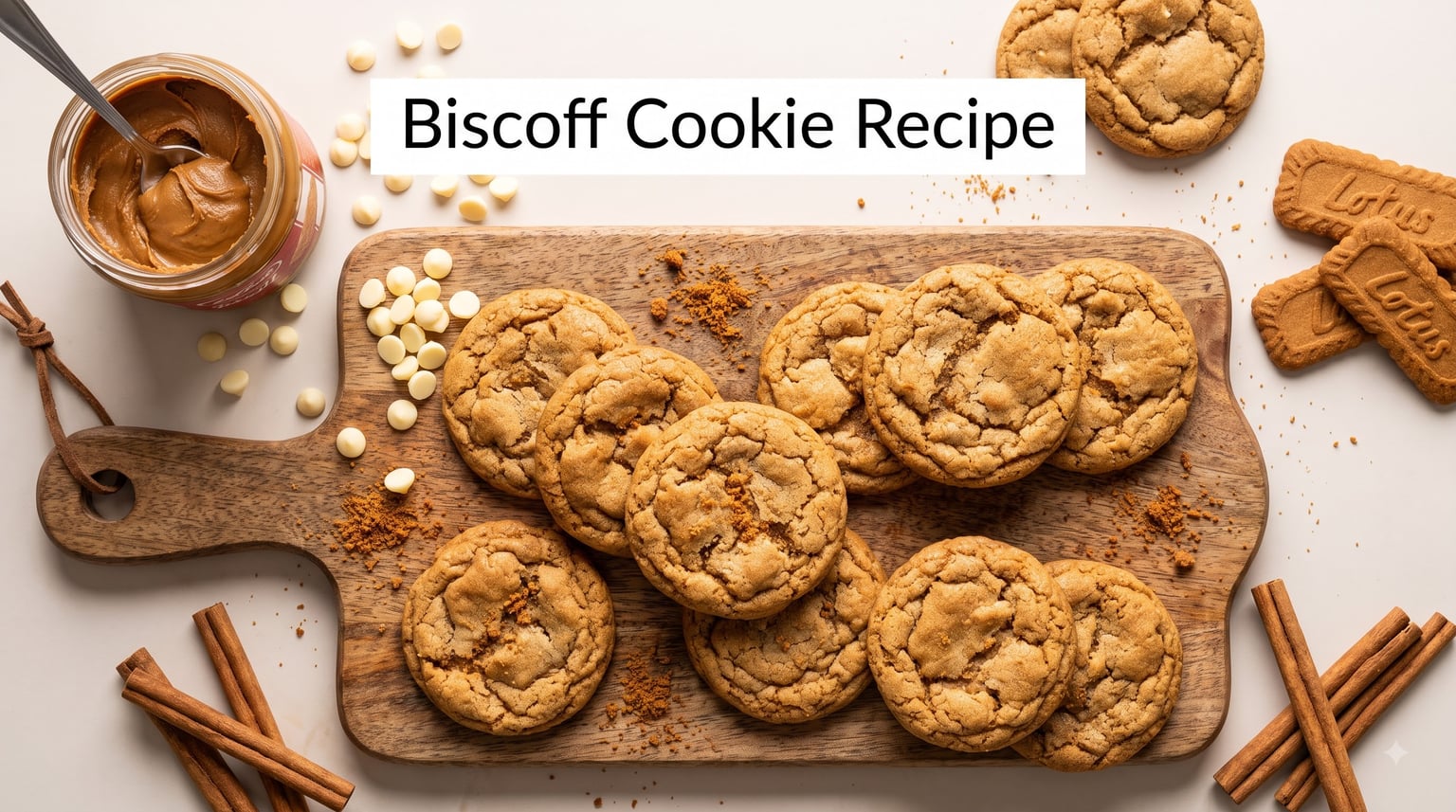
When I got home, I spent the next three weekends testing homemade Biscoff cookie recipes until I cracked the version I’m sharing with you today. We’re talking thick, chewy centers with crispy edges, pockets of melty white chocolate, and chunks of real Biscoff cookies scattered throughout. The spice blend is balanced enough to taste authentic without overwhelming anyone at the cookie exchange.
This Biscoff cookie recipe uses no-chill dough, which means you can go from craving to eating in under 30 minutes. I’ve tested it with both Biscoff cookie butter spread and chunks of crushed Biscoff biscuits, so I’ll show you exactly how to handle each option. Whether you’re baking for a holiday cookie tray, a weeknight treat, or just trying to recreate that airplane cookie magic, this recipe delivers every single time.
Table of Contents
What Are Biscoff Cookies and Why Everyone Loves Them?
Biscoff cookies are crunchy, caramelized spiced shortbread biscuits that originated in Belgium in 1932, made famous by Lotus Bakeries. The name “Biscoff” is a clever portmanteau of “biscuit” and “coffee,” because these cookies were designed as the perfect companion to your morning cup.
The flavor profile is what sets them apart from any other cookie on the shelf. Each bite delivers a deep, caramelized sweetness from Belgian-style brown sugar, balanced by warm cinnamon and a whisper of nutmeg, ginger, allspice, and cloves. When you toast those spices properly, the cookies develop an almost floral aroma that no plain sugar cookie can match.
You might hear these cookies called “speculoos” in Belgium and the Netherlands. Speculoos is actually the traditional name for this style of spiced shortbread, and Biscoff is Lotus Bakeries’ specific branded version. They’re essentially the same cookie, but Biscoff has become shorthand worldwide, especially after Delta started serving them on flights in the 1980s.
The airline connection made Biscoff a household name in the United States. Travelers would disembark craving that little rectangular biscuit, which eventually led Lotus Bakeries to launch the famous cookie butter spread in 2008. Suddenly, home bakers had a shortcut to that signature flavor, and recipes like this one exploded in popularity.
If you want to understand the spices better before diving into the recipe, my guide on essential baking spices breaks down exactly what each one contributes to a cookie’s final flavor. Cinnamon alone won’t get you there; it’s the layered spice blend that creates the authentic Biscoff taste.
Key Ingredients and What Each One Does
Every ingredient in this Biscoff cookie recipe pulls weight. Skip one or substitute blindly, and you’ll end up with a cookie that tastes “almost right” but not quite authentic. Let me walk you through what each component does and why it matters.
The Butter and Sugar Base
You need 1 cup (226g) of unsalted butter, and the temperature matters more than most recipes admit. I use cold butter straight from the fridge for thicker cookies, but room temperature butter works if you prefer a slightly thinner, chewier result. Brown sugar is non-negotiable; it brings the molasses notes that give Biscoff its caramel backbone.
The creaming process matters too. When you beat butter and sugar together for 3 to 4 minutes, you’re forcing air into the mixture, which creates lift in the oven. Stop too early and your cookies will be dense. Go too long and the butter warms up, leading to excessive spread.
The Signature Spice Blend
This is where Biscoff cookies earn their name. You’ll need ground cinnamon, nutmeg, ginger, allspice, and cloves. The cinnamon dominates, but the other four spices create depth and complexity. If you’ve ever wondered why commercial Biscoff tastes different from a basic cinnamon cookie, the secret is that layered spice combination.
I measure 2 teaspoons of cinnamon, 1/4 teaspoon each of nutmeg, ginger, and allspice, plus 1/8 teaspoon of cloves. Trust me on the ratios; they took me four batches to perfect.
Flour, Leavening, and a Secret Ingredient
All-purpose flour works perfectly. I use 2 3/4 cups and always spoon it into the measuring cup, then level it off with a knife. Scooping directly from the bag packs the flour and ruins the texture.
Baking soda gives the cookies their slight spread and chew. Cornstarch is my not-so-secret ingredient. Just 1 tablespoon keeps the cookies soft and thick for days. Without it, your cookies will firm up and turn crunchy within 24 hours, which isn’t the texture we’re going for.
The Mix-Ins That Make It Special
You need 1 cup of white chocolate chips and 1 cup of roughly chopped Biscoff cookies. The chips melt into creamy pools, while the cookie chunks add texture and pockets of pure spiced flavor. If you can’t find Biscoff cookies locally, you can substitute speculoos from any brand; they’re the same thing.
Optional but recommended: 1/2 cup of Biscoff cookie butter spread swirled into the dough or dolloped on top of each cookie before baking. It creates those gorgeous ribbons you see in bakery-style cookies.
Equipment You Need Before You Start Baking
You don’t need fancy gear to make these Biscoff cookies, but a few tools make the process much smoother.
A stand mixer is helpful but not required. A hand mixer works just as well for the creaming step. You’ll need at least two large baking sheets so you can rotate them in and out of the oven. Line them with parchment paper or silicone baking mats to prevent sticking and ensure even browning.
A medium cookie scoop (about 1.5 tablespoons capacity) gives you uniform cookies that bake at the same rate. Without it, you’ll end up with some cookies burning while others stay doughy. A cooling rack is also essential because hot cookies continue baking on the baking sheet, and trapped steam will make the bottoms soggy.
Optional but useful: a kitchen scale for precise flour measurement, a cookie stamp for authentic patterns, and an offset spatula for swirling the cookie butter.
How to Make Biscoff Cookies From Scratch
This recipe moves fast. Set up your ingredients before you start because the active work takes only about 15 minutes. Total time from start to cooling is around 30 minutes.
Step 1: Cream the Butter and Sugars
Beat the cold butter, granulated sugar, and brown sugar together in your stand mixer on medium speed for 3 to 4 minutes. The mixture should turn pale yellow and look fluffy. Scrape down the sides of the bowl halfway through to make sure everything incorporates evenly.
Step 2: Add the Wet Ingredients
Add 1 large egg and 2 teaspoons of pure vanilla extract. Mix on low speed just until combined, about 30 seconds. Overmixing at this stage introduces too much air and can lead to cookies that collapse in the oven.
Step 3: Whisk the Dry Ingredients Separately
In a separate bowl, whisk together the flour, baking soda, cornstarch, salt, cinnamon, nutmeg, ginger, allspice, and cloves. Whisking distributes the spices evenly so you don’t end up with one super-spicy cookie and one bland one.
The creaming technique I use here is similar to what I explain in my single chocolate chip cookie recipe, but with the cold butter twist that keeps these Biscoff cookies extra thick.
Step 4: Combine Wet and Dry
Add the dry ingredients to the wet mixture in two batches, mixing on low speed until just combined. Stop as soon as you no longer see streaks of flour. Overmixing develops gluten, which makes cookies tough instead of tender.
Fold in the white chocolate chips and chopped Biscoff cookies by hand using a spatula. If you’re using the Biscoff spread, drop small dollops over the dough and gently swirl them in with a knife. Don’t fully mix it; you want distinct ribbons.
Step 5: Scoop and Bake
Preheat your oven to 350°F (175°C) while you scoop the dough. Use your cookie scoop to portion out balls and place them 2 inches apart on the prepared baking sheets. I bake 8 cookies per sheet to give them room to spread.
Bake for 11 to 13 minutes. The edges should look set and lightly golden, while the centers still appear slightly underdone. They’ll continue cooking on the hot pan after you pull them out, so don’t wait until they look fully baked in the oven.
Step 6: Cool Properly
Let the cookies rest on the baking sheet for 5 minutes before transferring them to a cooling rack. This resting time is critical because the cookies are still fragile and need to firm up before you move them. Trying to lift them too early will leave you with broken cookies and a sticky mess.
Pro Tips I Use for Perfect Biscoff Cookies Every Time
After testing this recipe eight times, I’ve learned what separates good cookies from great ones. Here are the insider tips that make all the difference.
First, measure your flour by weight if possible. One cup of flour can weigh anywhere from 120 to 145 grams depending on how packed it is. I use 330 grams for this recipe, and the consistency is noticeably better than measuring by volume.
Second, don’t skip the cornstarch. It sounds like an odd addition, but it inhibits gluten formation and keeps the cookies soft for days. Without it, your cookies will turn into crisp biscuit-like rounds, which isn’t the chewy texture we’re targeting.
Third, bake one test cookie first. Scoop a single dough ball onto a corner of your baking sheet and bake it for 11 minutes. This gives you a preview of how the full batch will turn out, and you can adjust the baking time before committing to the whole tray.
Fourth, rotate your baking sheets halfway through. Ovens have hot spots, and rotating the pan 180 degrees at the 6-minute mark ensures even browning.
Finally, store the cookie butter in the fridge if your kitchen is warm. Cold Biscoff spread holds its shape better when you dollop it on top of the dough. Soft, melted spread just disappears into the cookie.
Biscoff Cookie Recipe Card
Here’s the printable version you can screenshot or save for your recipe binder. Everything you need is in one place.
Prep Time: 15 minutes | Cook Time: 12 minutes | Total Time: 27 minutes | Yield: 24 cookies
Ingredients:
1 cup (226g) unsalted butter, cold
3/4 cup granulated sugar
3/4 cup packed brown sugar
1 large egg
2 teaspoons pure vanilla extract
2 3/4 cups (330g) all-purpose flour
1 tablespoon cornstarch
1 teaspoon baking soda
1/2 teaspoon salt
2 teaspoons ground cinnamon
1/4 teaspoon ground nutmeg
1/4 teaspoon ground ginger
1/4 teaspoon ground allspice
1/8 teaspoon ground cloves
1 cup white chocolate chips
1 cup chopped Biscoff cookies
1/2 cup Biscoff cookie butter spread (optional)
Instructions:
Preheat oven to 350°F (175°C). Line baking sheets with parchment paper.
Cream butter and both sugars for 3-4 minutes until fluffy.
Add egg and vanilla, mix until combined.
Whisk dry ingredients separately, then add to wet mixture in two batches.
Fold in white chocolate chips and chopped Biscoff cookies.
Scoop dough onto prepared sheets, 2 inches apart.
Bake 11-13 minutes until edges are golden but centers look slightly soft.
Cool on pan for 5 minutes, then transfer to wire rack.
Troubleshooting Common Biscoff Cookie Problems
Even experienced bakers run into issues. Here are the most common problems I see reported in baking forums and how to fix them.
Cookies spreading too much: Your butter was too warm, or your oven temperature runs hot. Chill the dough for 30 minutes before baking, and verify your oven temp with an inexpensive oven thermometer. Spreading can also mean too much sugar or too little flour, so double-check your measurements.
Dough is too crumbly: This usually happens when the butter is too cold or the dough is undermixed. Let the dough sit at room temperature for 5 minutes, then mix briefly to bring it together. If it’s still crumbly, add a teaspoon of milk.
Cookie butter melting out: The spread turns liquid in a hot oven. Freeze the Biscoff spread in small dollops on a parchment-lined tray for 30 minutes before pressing them into the dough. They’ll stay intact longer during baking.
Cookies too hard or too soft: Hard cookies mean overbaking or too much flour. Soft cookies that stay doughy even after cooling mean underbaking or too much butter. Adjust your bake time by 1-2 minutes in either direction next batch.
Spice flavor not coming through: Your spices are probably old. Ground spices lose potency after 6 months. Buy fresh spices and toast them lightly in a dry pan before adding to the dough to wake up the flavors.
How to Store and Freeze Biscoff Cookies
These cookies stay fresh for up to 5 days when stored properly. The cornstarch in the recipe helps them retain their soft, chewy texture much longer than a standard cookie would.
For counter storage, place cooled cookies in an airtight container with a slice of white bread. The bread keeps the cookies soft by giving up its moisture. Replace the bread slice every two days.
For longer storage, freeze baked cookies in a freezer-safe bag with the air pressed out. They’ll keep for up to 3 months. Thaw at room temperature for 20 minutes before serving, or warm them in a 300°F oven for 5 minutes for that fresh-baked taste.
You can also freeze the cookie dough. Scoop the dough into balls, freeze them on a parchment-lined tray until solid, then transfer to a freezer bag. Bake directly from frozen, adding 1-2 minutes to the bake time. Frozen dough balls keep for 2 months and are perfect for fresh cookies on demand.
For stuffed cookies specifically, freeze the Biscoff spread in small dollops on parchment paper. Once solid, store the dollops in a freezer bag and stuff them into fresh dough as needed.
Delicious Biscoff Cookie Variations to Try
Once you’ve mastered the base recipe, you can riff on it endlessly. Here are the variations my team has tested and approved.
Biscoff Stuffed Cookies: Scoop a tablespoon of dough, flatten it, place a frozen Biscoff spread dollop in the center, then top with another tablespoon of dough. Seal the edges and bake as directed. The cookie butter melts into a gooey center.
White Chocolate Drizzle Version: Skip the white chocolate chips in the dough and instead melt 1/2 cup of white chocolate chips with 1 tablespoon of heavy cream. Drizzle over cooled cookies for an elegant bakery presentation.
Brown Butter Twist: Brown the butter before creaming it with the sugars. Cook it in a saucepan over medium heat until it smells nutty and turns amber. Let it solidify in the fridge, then proceed with the recipe. Brown butter adds a deeper, toffee-like note that pairs beautifully with the spices.
Holiday Spice Boost: During Christmas, increase the cinnamon to 1 tablespoon and add 1/4 teaspoon of cardamom. The extra warmth makes these cookies feel festive and pairs perfectly with eggnog.
Vegan Version: Substitute the butter with vegan butter sticks and use a flax egg (1 tablespoon ground flaxseed mixed with 3 tablespoons water). Skip the white chocolate chips or use vegan chocolate chips. The texture changes slightly but the flavor stays true.
For more stuffed cookie inspiration, check out my Cookie Monster cookie recipe, which uses a similar stuffing technique with different mix-ins.
Frequently Asked Questions
What is the actual flavor of a Biscoff cookie?
Biscoff cookies have a distinctive caramelized sweetness with warm cinnamon as the dominant spice, supported by subtle notes of nutmeg, ginger, allspice, and cloves. The flavor comes from Belgian-style brown sugar and the spice blend working together to create a deep, almost butterscotch-like taste that pairs perfectly with coffee.
What is the main ingredient in Biscoff cookies?
The main ingredient in Biscoff cookies is wheat flour, followed closely by brown sugar and butter. The signature flavor comes from the spice blend, which is heavy on cinnamon with smaller amounts of nutmeg, ginger, allspice, and cloves. These five spices together create the iconic Biscoff taste.
Can I make my own Biscoff cookies at home?
Yes, you can absolutely make authentic-tasting Biscoff cookies at home using butter, brown sugar, flour, and the signature spice blend of cinnamon, nutmeg, ginger, allspice, and cloves. This homemade version delivers the same caramel-spiced flavor as the commercial Lotus Biscoff cookies, and you can add white chocolate chips or cookie butter for extra richness.
Is Biscoff just gingerbread?
No, Biscoff cookies are not the same as gingerbread, although they share some spice overlap. Biscoff cookies are a Belgian speculoos-style shortbread with a lighter texture and a more delicate spice profile than gingerbread. The dominant flavor is caramelized sugar with cinnamon, while gingerbread has a stronger molasses and ginger taste.
How long do homemade Biscoff cookies last?
Homemade Biscoff cookies stay fresh for up to 5 days when stored in an airtight container at room temperature. Adding a slice of bread to the container helps maintain their soft texture. For longer storage, freeze baked cookies for up to 3 months or freeze the raw dough balls for up to 2 months and bake them fresh when needed.
Why are Biscoff cookies served on airplanes?
Biscoff cookies became an airline staple in the 1980s when Delta started serving them on flights. The cookies were ideal for airline service because they stay fresh for long periods, don’t crumble easily, and their caramel-spiced flavor pairs well with the often-bland airline coffee. Today, many airlines worldwide serve some version of spiced shortbread cookies inspired by the Biscoff tradition.
Final Thoughts on This Biscoff Cookie Recipe
This Biscoff cookie recipe has earned a permanent spot in my baking rotation. The balance of warm spices, caramelized brown sugar, and creamy white chocolate hits every flavor note I want in a cookie, and the no-chill dough means I can satisfy a craving without planning ahead.
If you’re new to baking with Biscoff, start with the basic recipe and master the technique. Once you’re comfortable with the timing and texture, experiment with the variations. The stuffed version is a guaranteed hit at parties, and the brown butter twist makes an already great cookie even more complex.
I’d love to hear how your batch turns out. Drop a comment below with your favorite variation, or tag me on social media if you share your cookies online. Happy baking, and may your kitchen smell like warm cinnamon and caramel for the rest of the week.