
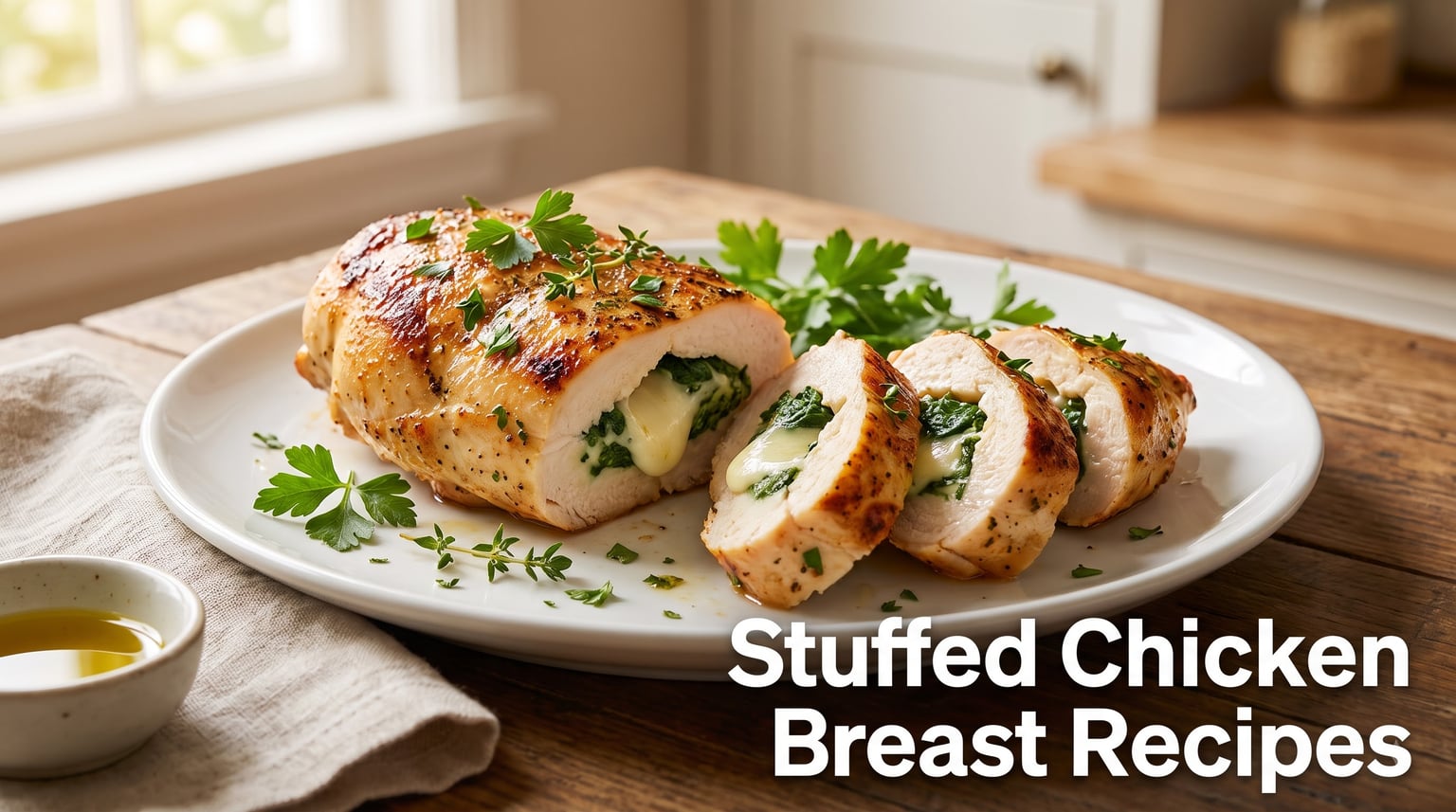
There’s something almost magical about cutting into a chicken breast and watching steam rise from a creamy, cheese-filled center. I still remember the first time I made stuffed chicken for my family; everyone went quiet for about three seconds after that first bite. That silence told me everything I needed to know.
Stuffed chicken breast recipes are the secret weapon of busy home cooks who want restaurant-quality results without complicated techniques. You get golden-seared chicken with a molten, flavorful center, and the entire meal comes together in about 40 minutes. My team has tested more than a dozen variations over the past three months, and I’m sharing everything that actually works, including the small details that prevent dry chicken or leaky fillings.
In this guide, you’ll learn exactly how to cut the pocket, what fillings hold up best in the oven, the temperature that guarantees juicy results, and how to fix the most common mistakes. I’ll also share flavor profiles inspired by Italian, Mexican, Mediterranean, and French cooking, plus freezer-friendly tips if you want to prep ahead.
Whether you’re cooking a Wednesday night dinner or hosting Saturday guests, these stuffed chicken breast recipes will earn you serious compliments. Let’s get cooking.
Table of Contents
What Are Stuffed Chicken Breast Recipes and Why Do They Work So Well?
Stuffed chicken breast recipes transform a plain chicken breast into a complete, self-contained meal by filling a pocket cut into the meat with cheese, vegetables, herbs, and other flavor boosters. The filling stays sealed inside during cooking, creating tender, juicy meat with a creamy, savory center in every slice.
The technique works because chicken breast is naturally lean and mild, which makes it the perfect canvas for bold fillings. When you stuff, sear, and bake the breast, the filling acts like insurance against dryness. Cheese melts into the meat, vegetables release steam that keeps everything moist, and herbs perfume every bite.
Why are these recipes so popular right now? They look impressive but require no special equipment, scale easily for one person or twelve, and adapt to almost any cuisine. I’ve made versions for Christmas dinner and for quick Tuesday lunches, and the only thing that changes is the filling. If you want another chicken idea that works just as well, check out my orange chicken recipe for something with a bright, sticky glaze.
Ingredients You’ll Need for the Best Stuffed Chicken Breast Recipes
The classic version of these stuffed chicken breast recipes uses simple ingredients that you probably already have. Here’s what you need for four servings.
4 boneless, skinless chicken breasts (6 to 8 oz each)
4 oz cream cheese, softened
1 cup shredded mozzarella cheese
1/2 cup grated parmesan cheese
2 cups baby spinach, roughly chopped
1/3 cup sun-dried tomatoes, drained and chopped
3 cloves garlic, minced
1 tsp Italian seasoning
1/2 tsp red pepper flakes (optional)
2 tbsp olive oil
Salt and freshly ground black pepper to taste
Toothpicks or kitchen twine (optional, for securing)
About the chicken: choose breasts that are similar in size so they cook evenly. If yours are very thick, you can pound them to an even 3/4-inch thickness before cutting the pocket. This trick alone eliminates the most common problem I hear about from readers.
Cheese matters more than you think. I tested stuffed chicken with budget shredded mozzarella and with fresh mozzarella, and the fresh stuff melts into silk while the budget stuff can turn grainy. If you can, buy block cheese and shred it yourself; it takes one extra minute and pays off in texture.
For substitutions: swap cream cheese with goat cheese for tang, use kale instead of spinach, replace sun-dried tomatoes with roasted red peppers, or skip the dairy entirely for dairy-free stuffed chicken.
How to Make Stuffed Chicken Breast Step by Step?
These stuffed chicken breast recipes come together in three stages: prep the filling, prepare and stuff the chicken, then sear and bake. Total time is about 40 minutes, with only 15 minutes of actual hands-on work.
Step 1: Make the filling. In a medium bowl, combine the softened cream cheese, mozzarella, parmesan, spinach, sun-dried tomatoes, garlic, Italian seasoning, and red pepper flakes. Mix until evenly blended. The filling should hold together when pressed but not be runny. Set aside while you prep the chicken.
Step 2: Cut the pockets. Pat each chicken breast dry with paper towels. Place one breast on a cutting board and hold it flat with your non-dominant hand. Using a sharp paring knife, cut horizontally into the thickest side of the breast, slicing about 3/4 of the way through. Do not cut all the way through. You want a pocket, not a butterfly. Repeat with remaining breasts.
Step 3: Season generously. Open each pocket and season the inside with salt and pepper, then the outside. Don’t be shy here; chicken breast needs more seasoning than you think. The filling helps, but the meat itself should be well-flavored.
Step 4: Stuff the chicken. Divide the filling evenly among the four pockets, packing about 1/4 to 1/3 cup into each one. Press the filling in gently but firmly. If the opening is wide, secure with two toothpicks placed across the opening. For most fillings, you can skip the toothpicks if your pocket is well-cut.
Step 5: Sear for color. Heat olive oil in an oven-safe skillet over medium-high heat. Add the stuffed breasts and sear 3 to 4 minutes per side, until golden brown. This step is not optional; searing creates that gorgeous crust and locks in juices.
Step 6: Bake to finish. Transfer the skillet to a preheated 375°F oven and bake 18 to 22 minutes, until the internal temperature reads 165°F at the thickest part. Avoid hitting the filling when you test, as cheese reads at a different temperature.
Step 7: Rest and serve. Remove the chicken from the oven and let it rest on a plate for 5 minutes. This is when the juices redistribute; skip the rest and they’ll flood your cutting board instead of staying in the meat. Slice and serve.
Pro Tips for Juicy Stuffed Chicken Breast Every Time
After making stuffed chicken breast recipes dozens of times, I’ve learned that small adjustments make a huge difference. These tips come from my own test kitchen plus the most useful advice I found from home cooks on Reddit and cooking forums.
Use a meat thermometer, not guesswork. The single best tool you can buy for stuffed chicken is an instant-read thermometer. Chicken is done at 165°F internal temperature, and the difference between juicy and dry is sometimes just five degrees. Test at the thickest part of the breast, away from the cheese filling.
Room temperature ingredients mix more smoothly. Take your cream cheese out 30 minutes before mixing. Cold cream cheese leaves lumps that don’t melt evenly, and over-mixing to break them up makes the filling gummy. Soft cream cheese also spreads into the pockets more easily.
Don’t skip the sear. I know it’s tempting to throw everything straight into the oven, but searing creates the Maillard reaction that gives you golden, flavorful crust. Three to four minutes per side over medium-high heat is enough. The chicken will finish cooking in the oven.
Resting really matters. Five minutes of resting after baking isn’t a suggestion; it’s how you keep juices in the meat. Cut too soon and you’ll see a puddle on the cutting board and dry chicken on the plate. Cover loosely with foil to keep it warm during the rest.
Pound to even thickness. If your chicken breasts are uneven (and most are), place them in a zip-top bag and pound the thick end with a rolling pin or meat mallet until the breast is 3/4 inch thick throughout. This step alone solves the “thin part overcooked, thick part raw” problem that ruins many stuffed chicken attempts.
Toothpicks are optional for most fillings. If your filling is thick enough to hold together and your pocket is cut neatly, toothpicks aren’t needed. The main reason to use them is when you have loose fillings with lots of liquid, or when you’re grilling instead of baking.
Stuffed Chicken Breast Filling Ideas by Flavor Profile
The beauty of stuffed chicken breast recipes is that you can keep the technique identical and change the entire meal by switching the filling. Here are combinations my team has tested, organized by cuisine style so you can pick a direction based on what you’re craving.
Italian Classic. Ricotta, mozzarella, and parmesan with chopped basil, sun-dried tomatoes, and a pinch of garlic. Serve with marinara sauce on the side or spooned on top.
Mexican Fiesta. Pepper jack or Monterey Jack with black beans, corn, diced jalapeños, cumin, and lime zest. Top with salsa, avocado, and sour cream.
Mediterranean. Feta, spinach, olives, and roasted red peppers with oregano and lemon zest. This one pairs beautifully with a simple Greek salad.
French Bistro. Brie with sliced ham (chicken Cordon Bleu style), a touch of Dijon mustard, and fresh thyme. Serve with a quick pan sauce made from white wine and chicken stock.
Southern Comfort. Cheddar, bacon, and chives with a drizzle of ranch seasoning. Comfort food that hides a pound of vegetables if you want to take the Budget Bytes approach.
Greek Inspired. Cream cheese with spinach and feta, lemon, and dill. Similar to a spanakopita filling but easier to assemble.
Pesto Power. A few tablespoons of basil pesto with mozzarella and pine nuts, no other seasoning needed. This version is foolproof and restaurant-quality every time.
Low-Carb and Keto. For those watching carbs, these keto instant pot recipes show how versatile the ingredients can be. Inside your chicken, try cream cheese with cheddar, crispy bacon, and a jalapeño for heat.
Fall and Winter. Brie with cranberry sauce, toasted pecans, and fresh rosemary. Apples and prosciutto also work if you want a sweet-savory profile.
Spring and Summer. Goat cheese with lemon, fresh herbs (basil, dill, chives), and asparagus tips. Light, bright, and perfect for warm-weather dinners.
Stuffing Methods Compared: Pocket vs. Roulade vs. Butterflying
There are three ways to prepare stuffed chicken breast recipes, and each gives you a different result. Knowing when to use which method saves you time and improves your results.
Pocket Method (Best for Beginners). Cut horizontally into the thick edge, slice about 3/4 through, then stuff and close. Pros: filling stays contained, looks clean on the plate, easy to control portion size. Cons: less filling capacity than other methods, requires careful cutting to avoid slicing through the bottom.
Butterflying (More Filling, Even Cooking). Slice the breast almost all the way through and open it like a book. Spread filling across one half, fold closed, and cook. Pros: more filling capacity, even thickness throughout, cooks faster. Cons: filling can leak if not secured, looks less “stuffed” when sliced.
Roulade (Restaurant Presentation). Pound the breast thin, spread filling, roll tightly, and tie with kitchen twine. Pros: beautiful spiral presentation when sliced, holds tons of filling, evenly cooked. Cons: more prep time, requires tenderizing, twine must be removed before serving.
For weeknight dinners, the pocket method is fastest and most forgiving. For entertaining guests, the roulade looks impressive without being difficult. The butterfly method sits in the middle and works well for thicker, more substantial fillings like the Mexican fiesta version above.
Cooking Temperatures and Times for Stuffed Chicken Breast
The right temperature is what separates good stuffed chicken breast recipes from great ones. Chicken breast is lean, and stuffing makes it harder to gauge doneness at a glance, so precision matters.
Oven Method. Bake at 375°F for 18 to 22 minutes for medium breasts (6 to 8 oz). Larger breasts (8 to 10 oz) need 22 to 28 minutes. Smaller breasts (4 to 6 oz) finish in 14 to 18 minutes. Always confirm with a meat thermometer reading 165°F internal temperature at the thickest part of the meat (not the filling).
Air Fryer Method. Cook at 360°F for 15 to 20 minutes, flipping halfway through. This method is faster and gives you a slightly crisper exterior. It’s become very popular based on what I’ve seen in meal prep communities.
Stovetop Then Oven. Sear 3 to 4 minutes per side in an oven-safe skillet, then transfer to a 375°F oven for the remaining 12 to 18 minutes. This is my preferred method because the sear builds flavor the other methods can’t.
Stovetop Only. Cover and cook on low heat (around 325°F pan temperature) for 18 to 25 minutes. Not recommended for beginners because it’s hard to verify even cooking without cutting into the chicken.
Important: bake stuffed chicken uncovered. The filling doesn’t burn easily, and covering traps steam that prevents browning. A tent of foil for the last 5 minutes works only if your breast is browning too quickly.
Troubleshooting Common Stuffed Chicken Breast Problems
Even experienced cooks run into issues with stuffed chicken breast recipes. Here are the problems I hear about most often, and exactly how to fix them.
The filling leaked out during cooking. This is the most common complaint. The fix is twofold: make sure your filling isn’t too wet (drain spinach well, drain tomatoes), and pack the pocket firmly. If your filling is loose, secure the opening with two toothpicks placed in a cross pattern.
The chicken dried out. Almost always caused by overcooking. Pull the chicken when the thermometer hits 160°F; carryover heat will bring it to 165°F during the 5-minute rest. Also, use thicker fillings with cheese and vegetables because they keep the meat moist from the inside.
The chicken cooked unevenly. Pound the breasts to even 3/4-inch thickness before stuffing. An uneven breast will have thin spots that dry out before the thick spots are safe to eat.
The filling is too runny and won’t stay in the pocket. Add more cheese, drain wet ingredients thoroughly, or chill the filling for 20 minutes before stuffing. Cold filling is easier to handle and holds its shape longer.
The chicken tastes bland despite a flavorful filling. Season the inside of the pocket, the outside of the breast, and the filling. Each component needs its own seasoning for the final dish to taste layered instead of one-note.
The cheese burned on top. Your filling is sitting too close to the surface. Push it deeper into the pocket, or lower the oven temperature to 350°F and add 5 minutes of cook time.
The toothpick broke when I tried to remove it. Soak the top of the toothpick in water for 30 seconds before baking; the moisture softens the wood. You can also use kitchen twine tied around the breast, which is easier to remove cleanly.
Make-Ahead, Storage, and Freezing Tips
Stuffed chicken breast recipes are excellent for meal prep because the filling actually improves as the flavors meld. Here’s how to plan ahead without sacrificing quality.
Make-Ahead (Same Day). Stuff the chicken up to 8 hours in advance and keep refrigerated until ready to sear and bake. This lets the seasoning penetrate the meat and gives you a 10-minute dinner option on a busy night.
Freeze Uncooked. Assemble stuffed breasts, wrap each tightly in plastic wrap, then aluminum foil, and freeze for up to 3 months. Thaw overnight in the refrigerator before cooking. Add 5 to 8 minutes of cook time since the chicken starts cold.
Freeze Cooked. Cool completely, wrap individually, and freeze for up to 2 months. Cream cheese-based fillings can change texture slightly after freezing, but the flavor stays excellent. Goat cheese and cheddar freeze better than ricotta or low-fat mozzarella.
Refrigerate Leftovers. Cooked stuffed chicken keeps 3 to 4 days in the refrigerator. Store in an airtight container or wrap tightly. Slice before storing if you plan to use leftovers in salads or wraps.
Reheat Without Drying Out. The best method is 300°F oven, covered with foil, for 10 to 15 minutes. Microwave works in 60-second bursts at 50% power; full power turns chicken rubbery quickly. Add a tablespoon of broth to the dish before reheating to add moisture back.
If you love the idea of hands-off cooking, these slow cooker recipes for busy families show a completely different approach to chicken that pairs well with these stuffed versions for meal rotation.
Best Side Dishes to Serve With Stuffed Chicken Breast
Pairing sides with stuffed chicken breast recipes depends on the filling, but a few combinations never fail. I’ll match the classics with simple, complementary sides.
For Italian-style stuffed chicken, go with creamy polenta, garlic mashed potatoes, or a Caesar salad. A crisp Chardonnay or Pinot Grigio works beautifully, and if you’re cooking with beer, our guide to the best beer for cooking chicken suggests Belgian whites and lagers.
For Mexican-style stuffed chicken, pair with cilantro-lime rice, charro beans, or a simple corn and black bean salad. Margaritas or a light Mexican lager complement the spices without overwhelming them.
For Mediterranean and Greek versions, a cucumber and tomato salad with lemon, garlic roasted broccoli, or lemon-herb couscous work perfectly. Sauvignon Blanc or a crisp rosé is the right call here.
For French bistro preparations (Cordon Bleu style), buttered green beans, roasted baby potatoes, or a frisée salad with bacon are classic pairings. Champagne or a dry sparkling wine feels celebratory without being heavy.
Need something quick for the rest of the week? Our chicken and green beans stir fry rounds out a chicken-focused meal plan with minimal extra effort.
Frequently Asked Questions
What can I stuff inside a chicken breast?
Almost anything that won’t leak too much liquid. Common options include cream cheese, shredded cheese (mozzarella, cheddar, parmesan), cooked spinach, sun-dried tomatoes, mushrooms, pesto, herbs, bacon, prosciutto, and diced ham. The key is using thick fillings that hold together; ingredients that release a lot of water like fresh tomatoes should be drained or roasted first. Sweet combos (brie with apples and cranberry) work in the fall, while bright combos (goat cheese with lemon and herbs) shine in summer.
What’s the best way to make stuffed chicken breast?
Cut a horizontal pocket into the thick side of each breast, stuff with your filling, sear 3 to 4 minutes per side in an oven-safe skillet, then finish in a 375°F oven for 18 to 22 minutes until the internal temperature reaches 165°F. Let the chicken rest 5 minutes before slicing so juices redistribute and the filling sets.
What’s the best thing to stuff a chicken with?
Mozzarella with cream cheese, parmesan, and spinach is the most popular combination for a reason: it melts beautifully, has balanced flavor, and stays creamy without being greasy. For something bolder, try brie with bacon and caramelized onions, or feta with spinach and sun-dried tomatoes for a Mediterranean twist.
What should stuffed chicken breast be cooked at?
Bake stuffed chicken at 375°F for 18 to 22 minutes, or until an instant-read thermometer inserted into the thickest part of the meat (not the filling) reads 165°F. Larger breasts (over 8 oz) may need up to 28 minutes, while thin pounded breasts may finish in 14 to 18 minutes. Always verify with a thermometer rather than timing alone.
Should stuffed chicken breast be baked covered or uncovered?
Bake uncovered to allow the exterior to brown and develop flavor. If the top browns too quickly, tent loosely with foil for the last 5 minutes only; do not cover fully or you’ll trap steam that prevents browning and can make the chicken rubbery.
How do I keep stuffed chicken breast juicy?
Three things: pound the breast to even 3/4-inch thickness, pull it from the oven at 160°F internal temperature (carryover heat finishes the cook), and rest 5 minutes before slicing. Stuffing also helps because the cheese and vegetables add moisture from the inside as they cook.
More Questions Answered.
How long do you cook stuffed chicken breast?
Stuffed chicken breast cooks in 22 to 28 minutes total using the sear-and-bake method (3 to 4 minutes per side on the stovetop plus 18 to 22 minutes in a 375°F oven). Smaller 4 to 6 oz breasts may finish in 14 to 18 minutes total. Always confirm doneness with a thermometer reading 165°F internal temperature at the thickest part of the breast, away from the cheese filling which reads at a different temperature.
What is Ruth’s Chris stuffed chicken stuffed with?
Ruth’s Chris Steak House serves a stuffed chicken dish typically filled with a cheese and herb mixture, often featuring mozzarella, parmesan, and garlic butter. To recreate the restaurant style at home, use a three-cheese blend (cream cheese, mozzarella, parmesan) with Italian herbs, garlic, and a finishing pan sauce made from white wine, butter, and chicken stock for that signature glossy presentation.
Final Thoughts on Stuffed Chicken Breast Recipes
Stuffed chicken breast recipes are one of the most rewarding dishes you can master because they look impressive, taste like restaurant food, and use basic ingredients. Once you learn the pocket-cutting technique and trust your thermometer, you can riff on fillings forever without ever needing a new recipe.
The four habits that made the biggest difference in my own cooking are: pound the breasts even, season the inside and outside, use a thermometer instead of guessing, and always rest for five minutes. Combine those with a filling you genuinely love, and you’ll never serve dry, boring chicken again.
Pick one filling from this guide and try it this week. The Italian classic with mozzarella, spinach, and sun-dried tomatoes is my top recommendation for first-timers, but the pesto version is impossible to mess up if you want something almost foolproof. Once you’ve nailed one version, the others come naturally because the technique stays the same.
If you want more chicken inspiration beyond stuffed chicken breast recipes, explore our other chicken dinners, slow cooker options, and beverage pairings. Good cooking is all about building a rotation of reliable techniques, and stuffed chicken absolutely belongs in yours.