

The best kayaks in 2026 match the water you paddle, not the spec sheet you read. For most people, that means the Pelican Argo 100X, a 10-foot sit-inside recreational kayak that stays stable, tracks straight, and weighs only 36 pounds. Anglers should start with the Pelican Catch Mode 110 and its stand-and-cast tunnel hull, warm-water paddlers get the Perception Tribe 9.5 sit-on-top, travelers and apartment dwellers get the Sea Eagle RazorLite inflatable, budget buyers get the Intex Explorer K2 tandem, and families with young kids get the Lifetime Youth Wave.
We built this guide after comparing 10 of the most-purchased kayaks on the market, digging through thousands of owner reviews, and logging our own hours on lakes, slow rivers, and protected coastal water. That mix matters. A kayak that feels great for the first ten minutes can wreck your back by hour three, and no marketing page will tell you that.
Our team looked for the same things you probably care about: stability, real-world weight capacity, seat comfort, how hard the hull is to load on a car, and whether it survives more than one season. We also paid attention to the complaints, because a cracked seat clip or a leaky rivet shows up in reviews long before it shows up in a product description.
Here is how the guide works. We open with our top three picks and a category-by-category shortlist, then a comparison table of all ten kayaks. After that, each kayak gets a full review covering what it is like on the water, the technical details, the honest downsides, and the questions buyers ask right before checkout.
We close with a buying guide that answers the questions paddlers actually argue about online, including the famous “buy once, cry once” philosophy from r/Kayaking, plus a FAQ built from the questions people search most. No single kayak wins every category, so we focused on matching hulls to humans.
Table of Contents
Our Top 3 Kayak Picks for 2026

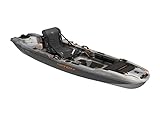
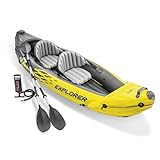
These three cover the widest range of paddlers. The Argo 100X is the hard-shell we hand to almost any beginner, the Explorer K2 is the cheapest legitimate way to get two people on the water, and the Catch Mode 110 is the fishing platform we trust for full days with rods, tackle, and a wet dog.
Quick Picks by Category
- Best all-around recreational kayak: Pelican Argo 100X — a stable, light sit-inside that handles lakes and slow rivers with ease.
- Best fishing kayak: Pelican Catch Mode 110 — tunnel hull stability you can stand on, with rod holders and rigging tracks.
- Best budget fishing kayak: Lifetime Tamarack Angler 100 — rugged HDPE hull, three rod holders, and a 5-year warranty.
- Best sit-on-top kayak: Perception Tribe 9.5 — self-bailing, easy re-entry, and a high-back frame seat for warm-water days.
- Best tandem kayak: Perception Rambler 13.5 — room for two adults plus a child or dog on a 34-inch beam.
- Best inflatable touring kayak: Sea Eagle RazorLite 393rl — drop-stitch rigidity that cruises up to 5 mph and packs into a trunk.
- Best inflatable for families: Sea Eagle 370 Pro — a 3-person boat rated for Class III water with a 650 lb capacity.
- Best budget tandem: Intex Explorer K2 — a complete two-person package that fits in a car trunk.
- Best starter solo kayak: Intex Challenger K1 — 26 pounds, inflates in minutes, ideal for calm flat water.
- Best kayak for kids: Lifetime Youth Wave — an 18-pound kids hull with a swim-up step and included paddle.
Best Kayaks in 2026: At a Glance
Here is the full lineup side by side, ordered from all-around hard-shells through fishing, tandem, inflatable, and youth picks.
| Product | Specifications | Action |
|---|---|---|
| Pelican Argo 100X |
|
Check Latest Price |
| Pelican Catch Mode 110 |
|
Check Latest Price |
 Lifetime Tamarack Angler 100 Lifetime Tamarack Angler 100 |
|
Check Latest Price |
 Perception Tribe 9.5 Perception Tribe 9.5 |
|
Check Latest Price |
 Perception Rambler 13.5 Perception Rambler 13.5 |
|
Check Latest Price |
 Sea Eagle RazorLite 393rl Sea Eagle RazorLite 393rl |
|
Check Latest Price |
 Sea Eagle 370 Pro Sea Eagle 370 Pro |
|
Check Latest Price |
 Intex Explorer K2 Intex Explorer K2 |
|
Check Latest Price |
 Intex Challenger K1 Intex Challenger K1 |
|
Check Latest Price |
 Lifetime Youth Wave Lifetime Youth Wave |
|
Check Latest Price |
1. Pelican Argo 100X — Best All-Around Recreational Kayak
Pelican Argo 100X – Recreational Sit-in Kayak – 10 ft – Fade Deep Blue/White
10 ft sit-in recreational
36 lbs
275 lb capacity
RamX polyethylene
Pros
- Nearly impossible to tip on flat water
- Light enough to car-top solo
- Twin-arched multi-chine hull tracks well
- Adjustable ERGOFORM padded backrest
- Internal foam flotation for safety
Cons
- Paddle sold separately
- Front hatch access is awkward
- Seat comfort trails premium recreational kayaks
I have spent more time in the Argo 100X than in any other kayak on this list, and it is the one I hand to nervous first-timers. The twin-arched multi-chine hull sits planted on flat water, and even a paddler who has never held a stroke before will track reasonably straight. One friend of mine capsized it on purpose in waist-deep water just to see how hard recovery was, and she climbed back in without drama.
At 36 pounds, it is a genuine one-person kayak. I slide it onto the roof rack of a sedan without a loader, and my partner carries it down a gravel launch on her own. The ERGOFORM padded backrest adjusts while you sit, the cockpit opening is wide enough for easy entry, and there is a small cockpit table with a bottle holder that sounds trivial until you spend a hot afternoon on a lake.
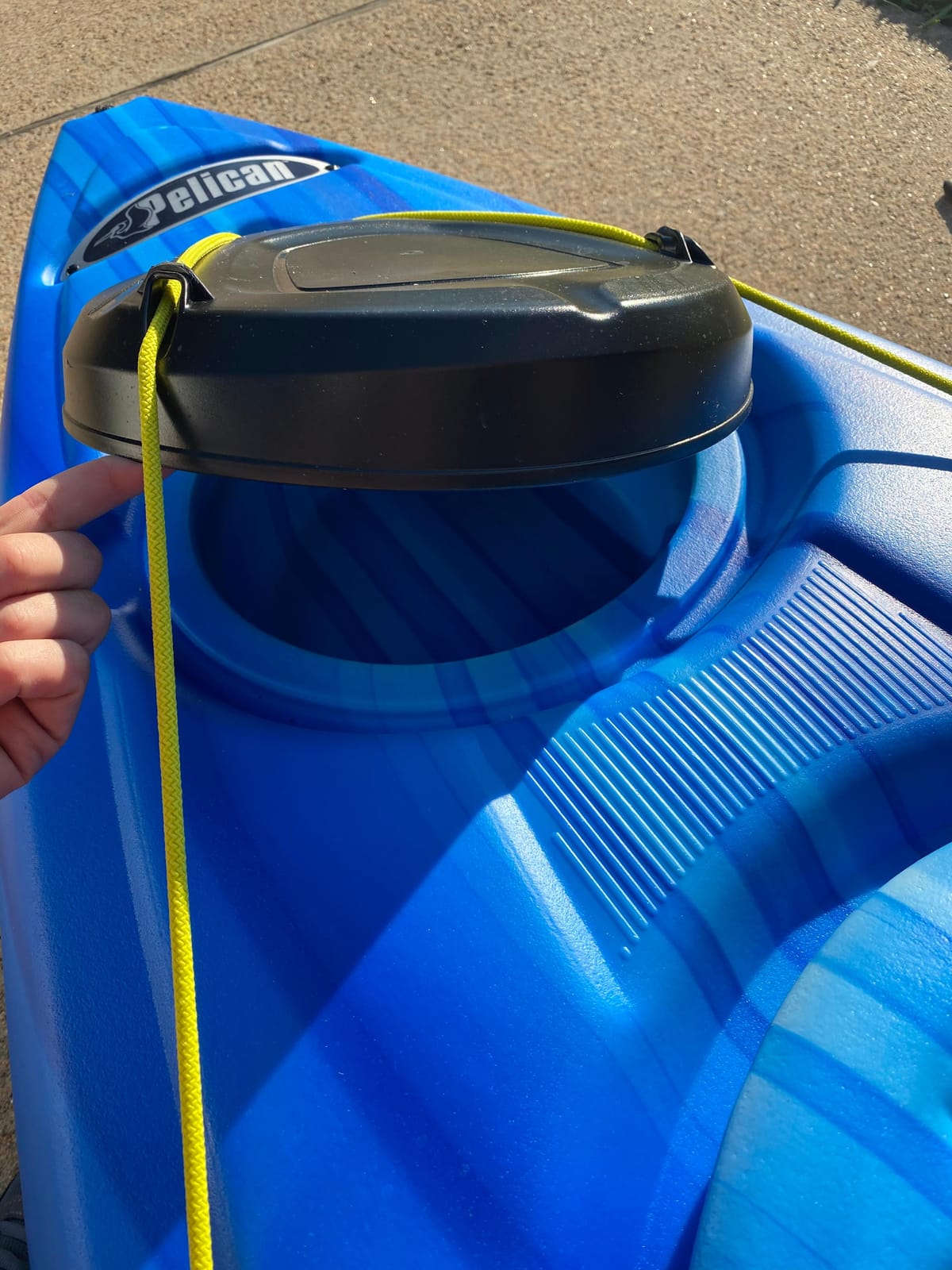
The construction is where the value lives. The hull is Pelican’s patented RamX polyethylene, which flexes on impact instead of cracking, and there is extra internal foam flotation so a swamped boat stays at the surface rather than sinking. Capacity is 275 pounds, the footrests adjust for different leg lengths, and Pelican backs the hull with a lifetime limited warranty against manufacturing defects.
The downsides are real but small. There is no paddle in the box, which surprises a lot of first-time buyers, so budget for one. The front storage hatch is clumsy to reach, and the mesh-covered rear tank is fine for a drybag but nothing more. Compared with the best kayaks in the premium recreational class, the seat padding is merely good rather than great, and a few owners report cosmetic shipping scratches.
Transport and Storage: Can One Person Handle It?
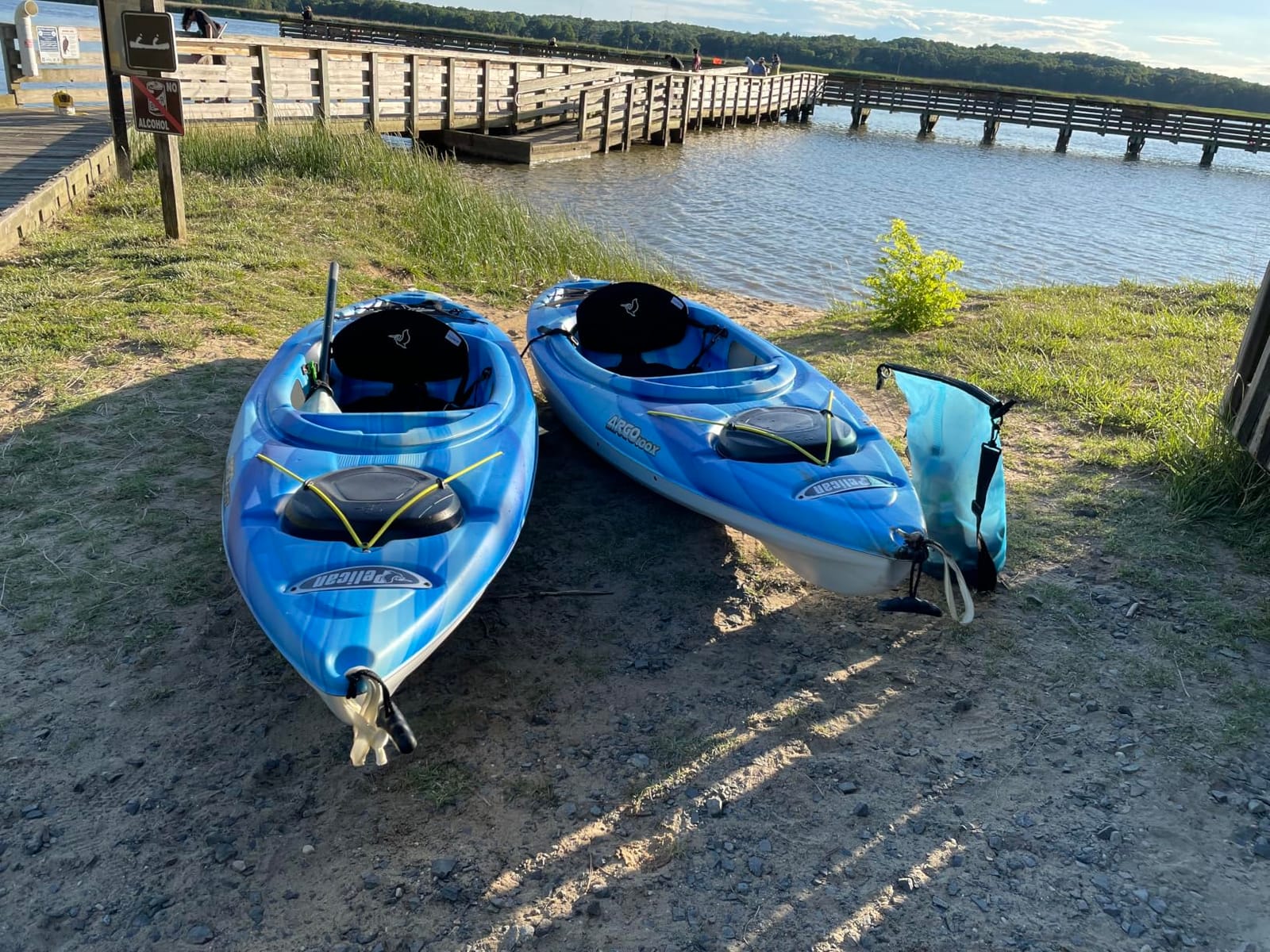
Yes, and that is the Argo’s biggest practical advantage. At 36 pounds and 10 feet, it fits on economy-car roof bars, in a truck bed, and on wall hooks in a garage corner.
If you live in an apartment, it will also stand on end in a hall closet or lean against a balcony wall. One person can carry it with the molded handles, though two makes portages to the water faster.
What Extra Gear Do You Need to Buy?
Plan on a paddle, a PFD, and ideally a cockpit cover. A 230 cm paddle suits most paddlers in this beam width.
If you will ever paddle cool water, add a sprayskirt and a bilge pump. None of it is expensive compared with the kayak itself, and it converts the Argo from a fair-weather boat into a three-season one.
2. Pelican Catch Mode 110 — Best Fishing Kayak for Standing and Casting
Pelican Catch Mode 110 Fishing Kayak – Premium Angler Kayak with Lawnchair seat, Granite – 10.5 Ft.
10 ft 8 in fishing sit-on-top
67 lbs
375 lb capacity
Tunnel hull
Pros
- Tunnel hull lets you stand and cast
- ERGOBOOST seat is comfortable all day
- Three rod holders plus two rigging tracks
- Front and rear tank wells
- Exceeds ABYC flotation standards
Cons
- Hull scratches
- keel guard recommended
- No dry storage compartments
- Wide beam catches paddle strokes
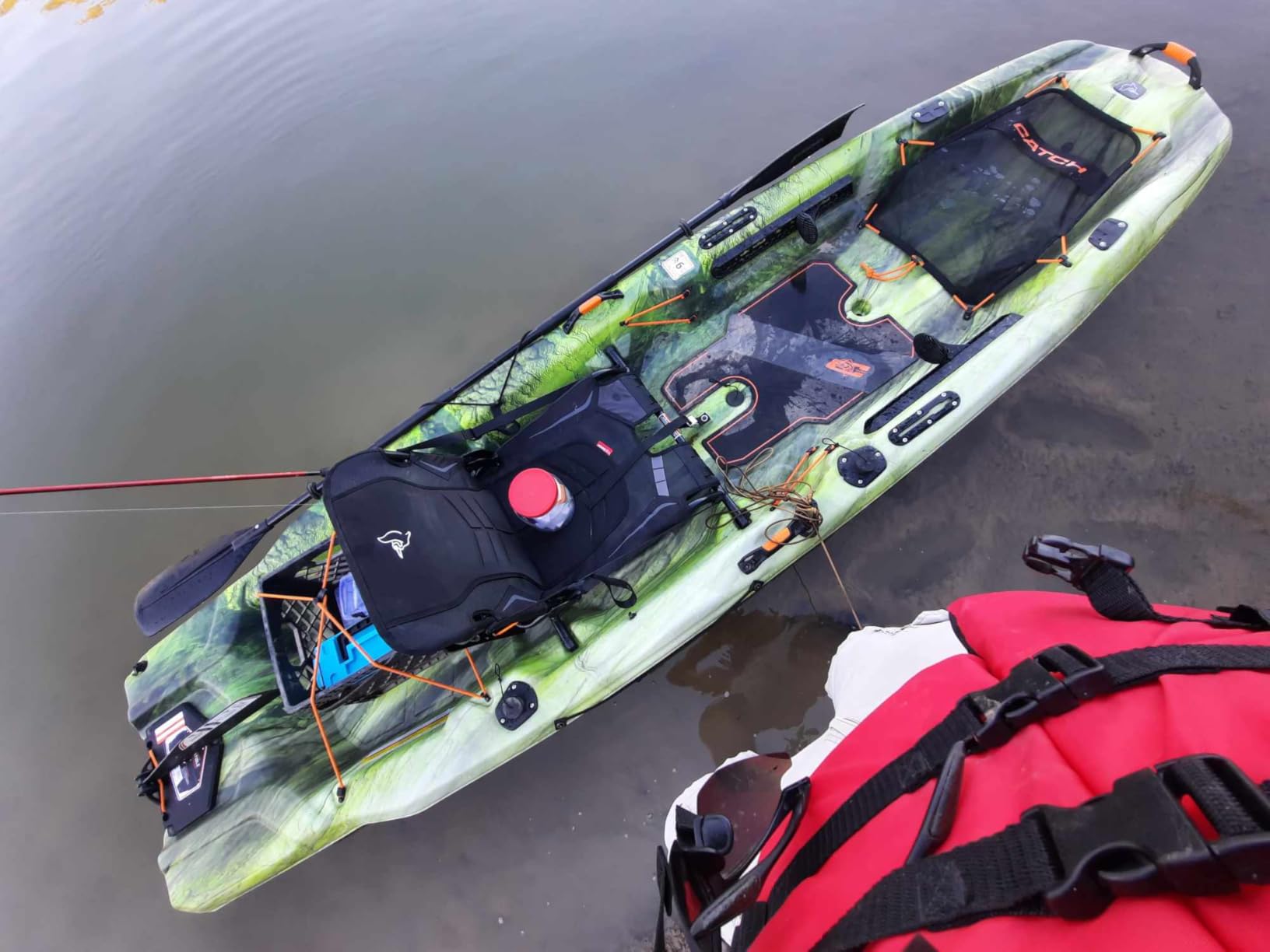
The first time I stood up in the Catch Mode 110 to sight-cast along a weed line, I understood why tunnel hulls took over kayak fishing. The twin hulls under your feet push water out to the sides, so the boat barely wobbles when you shift weight, and I could cast, set the hook, and land a fish without sitting down. Multiple owners in the review section report the same thing, including bigger anglers well past 250 pounds.
This is also the most comfortable seat in the roundup. The ERGOBOOST system adjusts for position and recline, and the EVA pad stays tolerable through a six-hour session where my old fishing kayak had me numb by hour two. Storage is generous: front and rear tank wells, under-seat space, two bottle holders, three flush-mount rod holders, and two 4 inch rigging tracks for a fishfinder or camera mount.

The numbers tell the story of a workhorse. The 375 lb capacity covers a rider, tackle, a cooler, and a medium dog, and the hull meets or exceeds ABYC safety flotation standards. It is built from high molecular weight polyethylene, and the spec sheet lists 67 pounds, which is respectable for a boat this wide with this much deck. Several owners run trolling motors on it without issue.
It is not fast, and it is not trying to be. The 34.5 inch beam that makes standing safe also catches your paddle strokes until you shorten your stroke angle. The hull scratches if you drag it, so a keel guard is smart, and every storage space is open and ventilated rather than dry. The skeg can pop loose if you back into a stump and needs re-seating, and a few owners have broken the foot peg connector.
Can You Mount a Trolling Motor?
Plenty of owners do, and the hull’s buoyancy and stability handle the weight well. The two rigging tracks make transom and bow mounts straightforward.
Check your local registration rules before motoring, since many states require registration once a boat is motorized. Keep the total load under the 375 lb cap with the motor battery counted.
Solo Transport at 67 Pounds: What It Takes
Plan for a kayak cart or a truck bed. Loading this solo onto a tall SUV roof is a two-person job, which matches what owners say in the forums.
A center-mounted cart with the straps over the tank wells moves it across a parking lot easily. If your launches are short walks, this stops being a real problem.
3. Lifetime Tamarack Angler 100 — Best Budget Fishing Kayak
Lifetime Muskie Angler Sit-On-Top Kayak with Paddle, Tan, 120″
10 ft sit-on-top angler
51 lbs
275 lb capacity
HDPE hull
Pros
- UV-protected HDPE hull built to last
- Three rod holders included
- Adjustable padded seat back
- Front and rear T-handles
- 5-year limited warranty
Cons
- Included paddle is short and flimsy
- Seat connector clip can break
- Drifts when you stop paddling
I keep recommending the Tamarack Angler 100 to people who want to try kayak fishing without committing to a mortgage payment. The flat-bottom HDPE hull is absurdly stable for its class, and owners regularly report carrying 200-plus pounds of paddler and gear without a hint of tipping. On a calm morning it does everything a new angler actually needs.
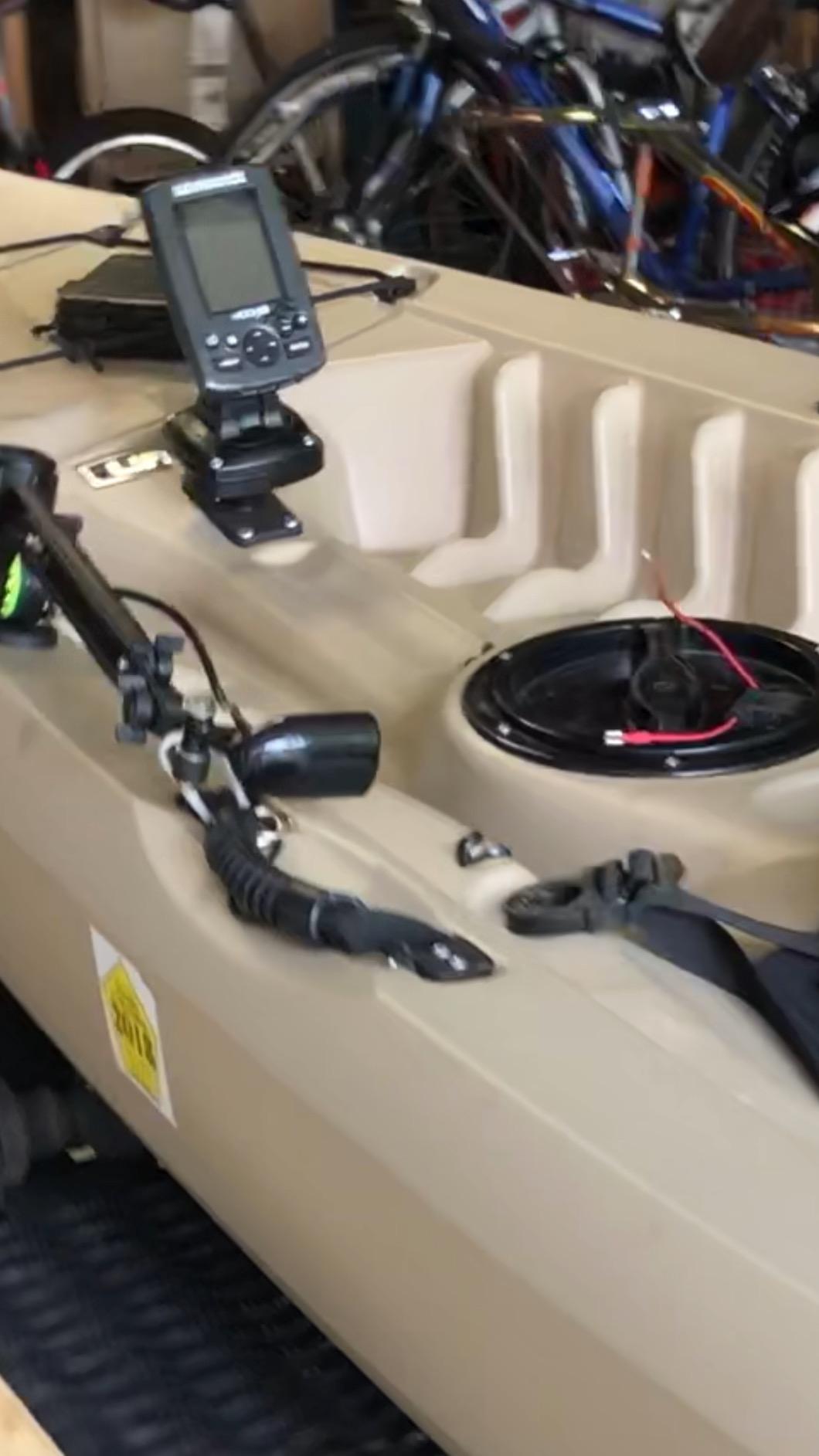
The fishing kit is more complete than the price suggests. You get three rod holders, two flush-mount and one top-mount, plus a paddle keeper with shock cords, two 6 inch storage compartments, and multiple footrest positions for different riders. The adjustable padded seat back is comfortable enough that I have done full days on it, and the paddle ships in the box.
The hull material is UV-protected high-density polyethylene, the same family of plastic used in far more expensive boats, and it shrugs off rocky launches. A sharp bow entry plus deep tracking channels and a skeg keep it moving straight while you are paddling. Lifetime backs it with a 5-year limited warranty, which is rare at this end of the market and says a lot about expected longevity.
The complaints are consistent and cheap to fix. The included paddle is short and soft, and nearly everyone upgrades it. The seat connector clip is a known weak point that breaks and needs an aftermarket replacement part. It also drifts to the right when you stop paddling, there are no true dry compartments, and a few units ship with plastic shavings inside that need a quick vacuum.

Tracking and Drift: What to Expect on the Water
Under paddle it tracks fine thanks to the skeg and hull channels. The moment you stop to fish, expect a slow drift and plan your anchor or stake-out pole accordingly.
A drift chute or a small anchor trolley kit solves most of it. Anglers who fish windblown lakes usually add one within the first season.
Warranty and Long-Term Ownership
The 5-year limited warranty is the strongest coverage in this roundup at this tier. Lifetime has a real parts network, and the seat clip is cheap and easy to source.
Owners report hulls lasting many seasons with basic care, which supports the “buy once, cry once” argument even at a budget tier. Store it out of the sun and the UV protection keeps the plastic from getting brittle.
4. Perception Tribe 9.5 — Best Sit-On-Top Kayak for Warm Water
Perception Tribe 9.5 – Recerational Kayak Sit on Top – Large Rear Storage with Tie Downs – 9.5 ft – Déjà Vu
9.5 ft sit-on-top
46 lbs
300 lb capacity
Polyethylene
Pros
- Self-bailing scupper holes
- High-back frame seatback with recline
- Easy to remount from the water
- Stackable for multi-boat households
- Made in the USA
Cons
- Seat straps can rub your arms
- Dry storage area runs small
- Average speed on flat water
The Tribe 9.5 is the kayak I reach for on a hot July day when the plan involves swimming. Because it is a sit-on-top, you can slide off, cool down, and pull yourself back on from the water, and the self-bailing scupper holes mean there is nothing to bail out afterward. That freedom is exactly why sit-on-top kayaks dominate warm-water paddling.
Comfort is a genuine strength here. The high-back frame seatback reclines and gives real lumbar support instead of the floppy strap seats common at this length, and the 300 lb capacity leaves room for a cooler or a small dog on the rear tank. It maneuvers quickly, handles small chop and mild ocean swell without drama, and there is enough rear deck with tie-downs for overnight gear in a pinch.
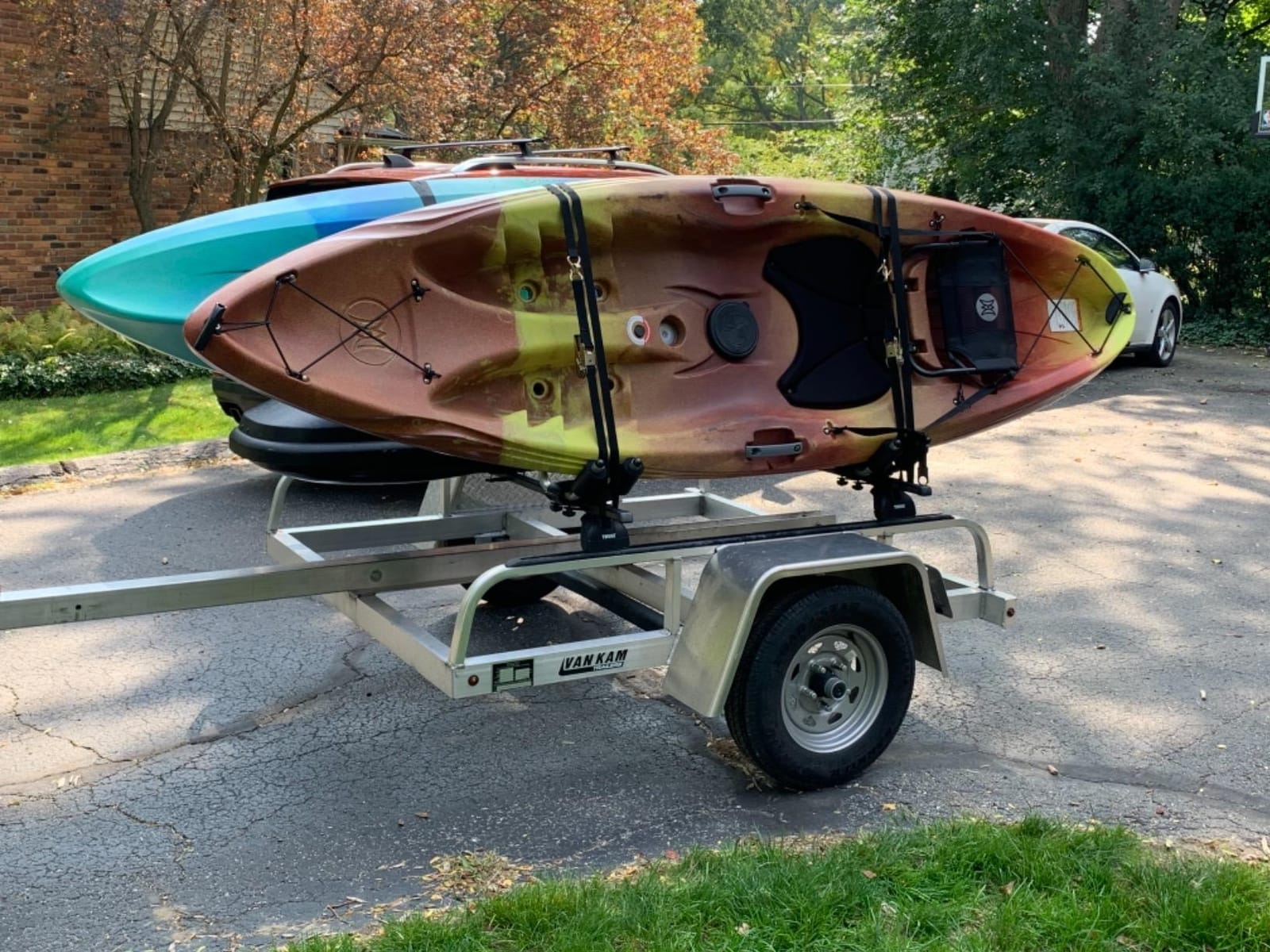
Perception builds the Tribe in the USA from rotomolded polyethylene, and the construction feels like it. The hull is 46 pounds with side carry handles, the boat stacks neatly on top of another sit-on-top for families buying two, and Perception covers hull and deck with a 5-year limited warranty. At 9.5 feet with a 31.5 inch beam, it splits the difference between playful and planted.
It is not flawless. Forty-six pounds is light for the class but still awkward for one person on a long carry, and the seat strap design can rub your forearms until you adjust the routing. The dry bag area behind the seat is small and not fully watertight, speed is average, and the sit-on-top riding position raises your center of gravity slightly compared with a sit-inside hull of the same size.
Sit-On-Top vs Sit-Inside: Which Fits Your Water?
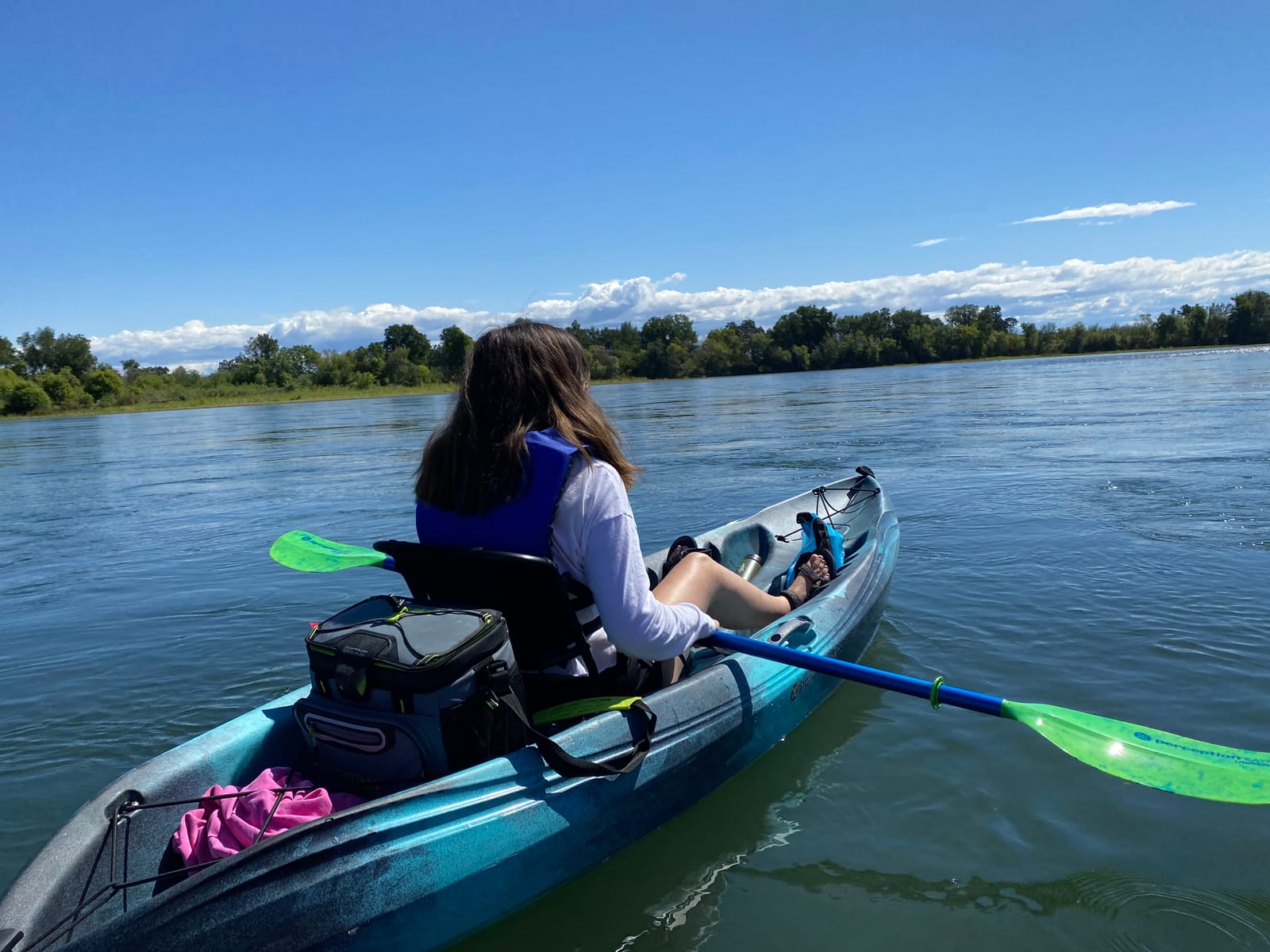
Choose sit-on-top like the Tribe for warm water, swimming stops, fishing, and easy re-entry. Choose sit-inside if you paddle cool water or want a drier, faster ride.
Sit-on-top hulls scupper-bail automatically and are simpler for beginners. The tradeoff is a wetter seat and slightly less glide, which matters on long crossings but not on a lake afternoon.
Comfort on Full-Day Paddles
The frame seatback is the reason this boat handles long days. Pair it with a gel seat cushion and your tailbone will forgive you by hour five.
Owners who paddle back-to-back long days sometimes swap in an upgraded seat pad. For most people, the stock setup is more than adequate.
5. Perception Rambler 13.5 — Best Tandem Kayak for Families
Perception Kayaks Rambler Sit On Top for Recreation, Sunset, 13’6″
13.5 ft tandem sit-on-top
78 lbs
550 lb capacity
Center seat for child or pet
Pros
- Room for two adults plus a child or dog
- Stable 34 inch beam
- Removable padded seats with backrests
- Large rear storage with tie-downs
- Made in the USA
Cons
- 78 pounds needs two people or a cart
- Long hull is hard to store
- Occasional shipping scuffs
Our team has paddled the Rambler 13.5 with two adults, and then again with an adult in the stern and a seven-year-old and a golden retriever sharing the middle. Both configurations worked, and that flexibility is the entire point of this boat. The 34 inch beam keeps it steady when a passenger leans suddenly, which happens constantly with kids and dogs aboard.
The molded-in center seat is the detail families will love. A child can ride there between two adults, or it becomes a dog deck with decent footing, and the 550 lb capacity absorbs everyone plus a picnic cooler. The removable padded seats adjust for back support, footrests suit a range of leg lengths, and the rear open storage with bungee tie-downs swallows drybags for a full day out.
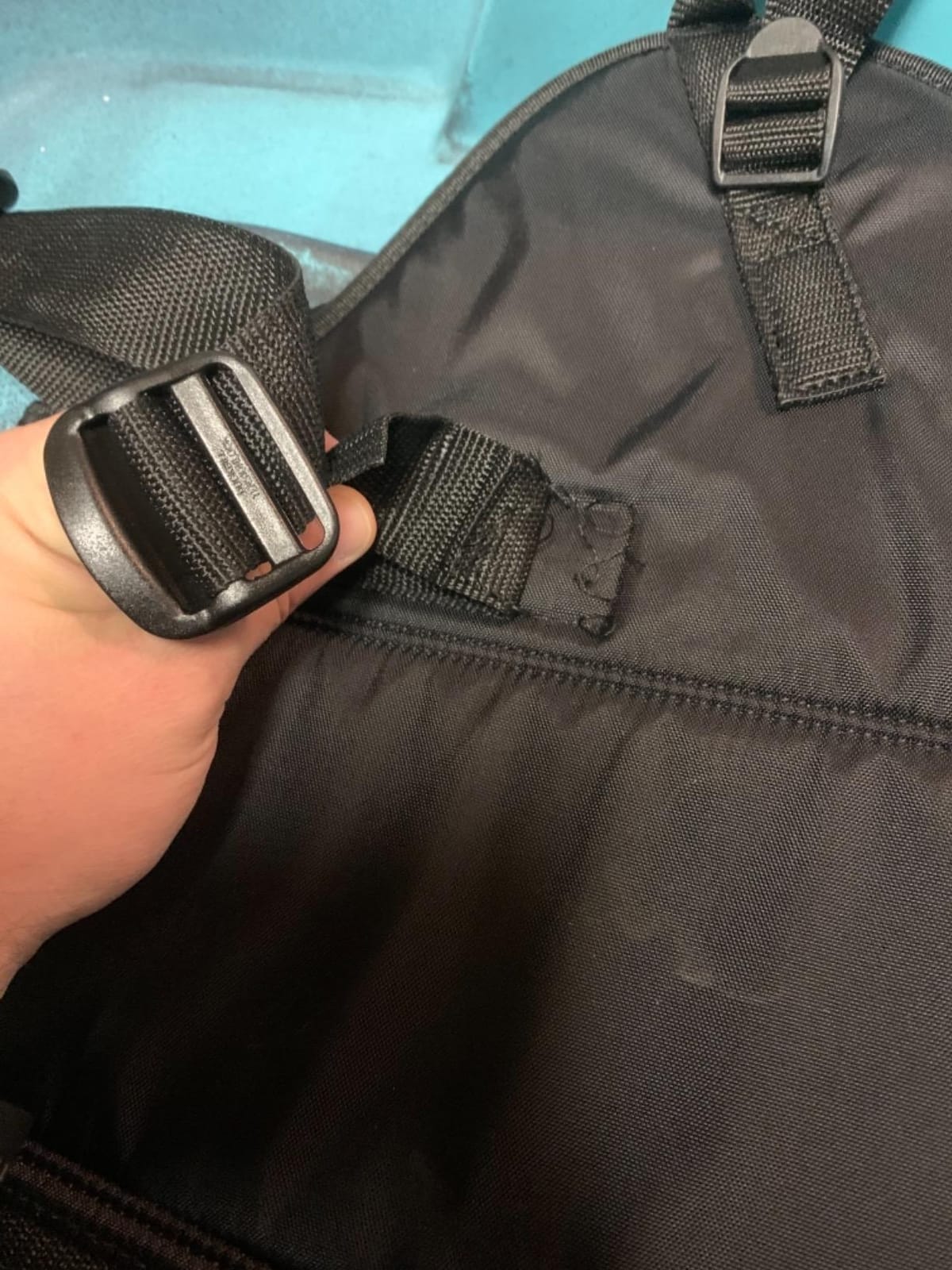
Perception molds the Rambler in the USA from polyethylene and covers it with a limited lifetime warranty. At 13.5 feet it has real glide for its width, so two adults paddling in rhythm move at a respectable pace, and it turns well enough for slow rivers when you use the sweep stroke from the stern. Anglers run it as a two-person fishing platform without complaint.
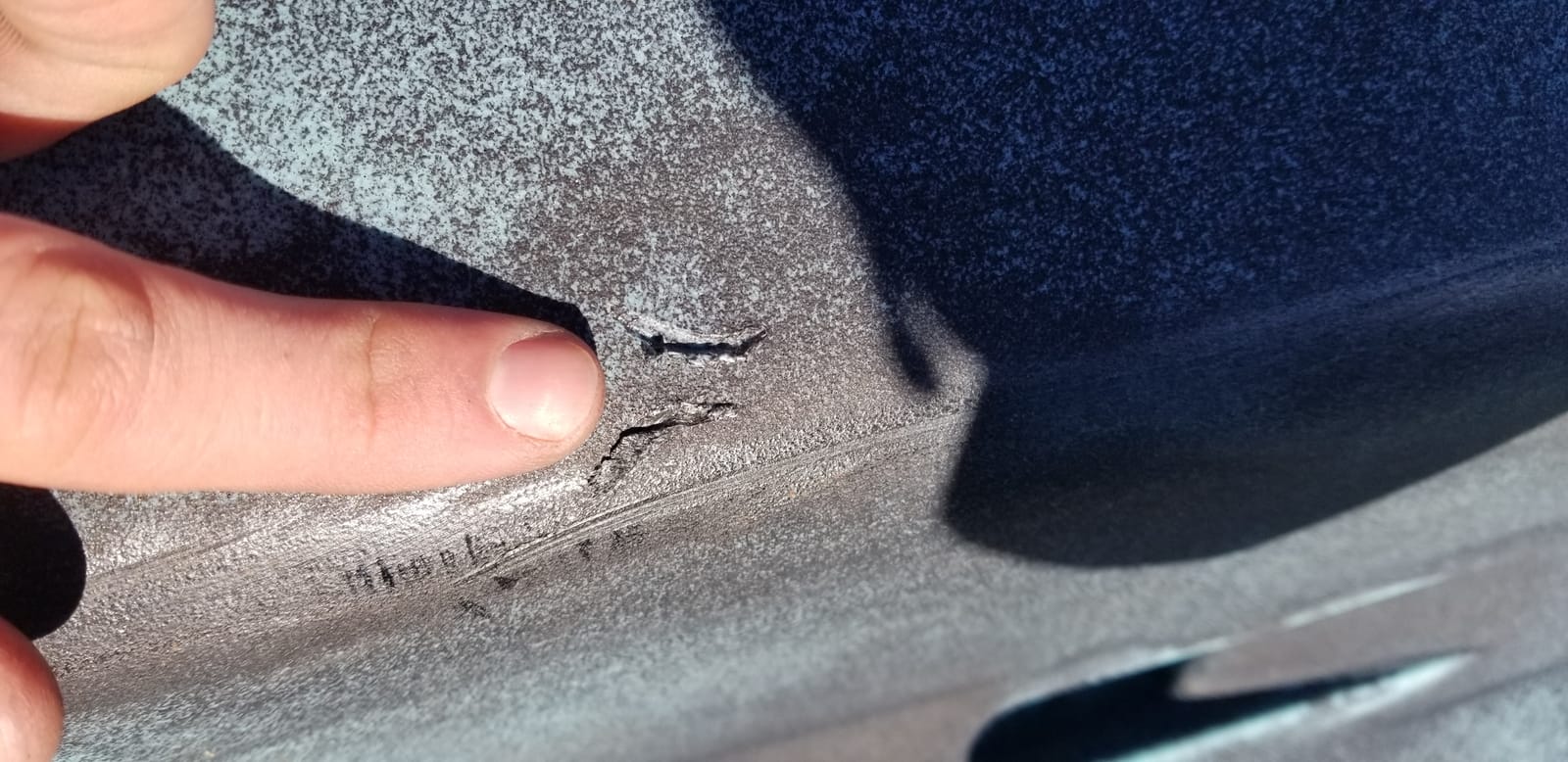
The honest problem is logistics. At 78 pounds and 13.5 feet, one person cannot comfortably roof-rack it, and even garage storage needs wall space or ceiling hoists. Some buyers report shipping scuffs and scratches, which is cosmetic but annoying. If you can store it and load it with a partner, none of this matters much.
Can One Person Use It Solo?
You can paddle it alone from the rear seat, and it works, but you will feel the length in a crosswind. It is happiest with at least two people aboard.
For solo transport, a kayak cart is close to mandatory. Slide it under the hull near the center and one adult can roll the boat from garage to launch unaided.
Bringing a Dog or a Third Rider
The center seat area is the dog zone, and the molded deck gives claws something to grip. Keep the dog leashed until aboard and seated.
For a third small human, the center position sits low and between the adults, which is the safest spot on the boat. Stay under the 550 lb cap with everyone and the cooler counted together.
6. Sea Eagle RazorLite 393rl — Best Inflatable Kayak for Touring
Sea Eagle Razorlite 393rl Inflatable Kayak Pro Carbon Solo Package
12 ft 10 in drop-stitch inflatable
35 lbs
500 lb capacity
Up to 5 mph
Pros
- Drop-stitch hull feels rigid underfoot
- Cruises up to 5 mph
- Three separate air chambers
- Rigid bow and stern cut through wind
- Packs into a backpack
Cons
- Smaller owner review pool
- Setup and inflation take time
- Not Prime eligible
The RazorLite changed what I expect from an inflatable. Most air kayaks squirm under you like a pool toy, but the drop-stitch construction pumped to pressure becomes a stiff plank, and the patented rigid bow and stern molds slice wind chop instead of riding over it. Sea Eagle rates it up to 5 mph, and a fit paddler can genuinely hold a touring pace.
The open cockpit is the second surprise. Instead of climbing into a fabric tube, you sit in an open deck with space to stretch your legs, shift position, and exit easily for a swim. The whole boat weighs 35 pounds, roughly half a rigid touring kayak, and it converts between solo and tandem configurations with a seat move.
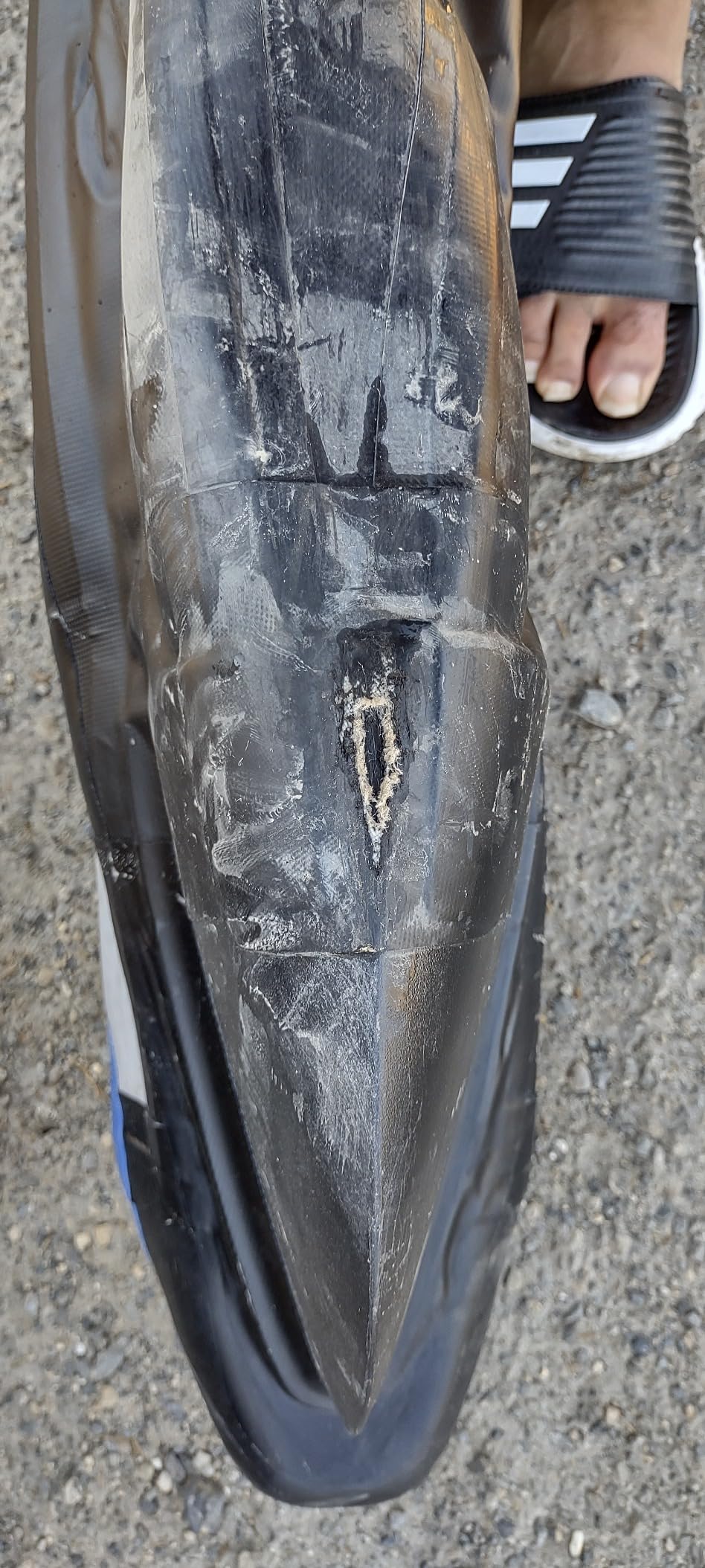
Safety engineering is better than the category standard. Three separate air chambers at 10 psi each mean a single puncture leaves two-thirds of your buoyancy intact, and the package includes paddles, a backpack, a skeg for straight-line tracking, and a pump. Capacity is a huge 500 pounds, and Sea Eagle backs the boat with a 3-year manufacturer warranty.
Now the caveats. This is a niche product with a smaller review pool than the mass-market boats on this list, so there is less long-term crowd data to lean on. It is not Prime eligible, and every outing starts with an inflation routine rather than a toss in the water. It sits at the top of the inflatable market, so it competes with hard-shell touring kayaks on performance rather than on being the cheap option.

Setup and Inflation: The Real Routine
Expect roughly ten minutes from trunk to waterline with the included pump, faster if you add an electric one. The three chambers inflate in sequence with a gauge.
Deflation and drying take longer than inflation, especially if you paddle in silty water. Rinse and dry the hull fully before long storage to protect the fabric and the welds.
Speed and Tracking vs a Hard-Shell Touring Kayak
The RazorLite closes most of the gap, which no cheap inflatable does. The skeg keeps it pointed, and cruising speed is close enough that recreational touring paddlers will not feel shortchanged.
A hard-shell still wins final efficiency, rough-water control, and instant launch. Choose the RazorLite when storage or travel constraints rule a rigid boat out, because that is where it is unbeatable.
7. Sea Eagle 370 Pro — Best Inflatable Kayak for Families and Groups
Sea Eagle 370 Pro 3 Person Inflatable Sport Kayak with Pro Package Includes Paddles, Deluxe Seats, Pump, and Carry Bag
12.5 ft inflatable
33 lbs
650 lb capacity
Class III rated
Pros
- Carries three people or two plus gear
- Rated for Class III whitewater
- Twin skegs for tracking
- Pro seats with real back support
- 3-year warranty
Cons
- Valve setup is tricky the first time
- Seats shift without careful placement
- Slower than rigid kayaks
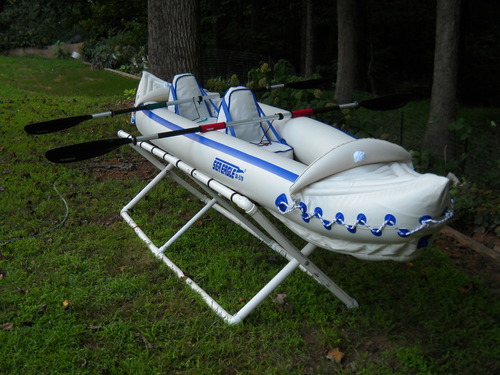
We have used the Sea Eagle 370 Pro as the group workhorse: two adults and a teenager on one trip, two adults loaded with camping gear on another. The 650 lb capacity is enormous for a boat that packs into a duffel, and the I-beam floor stiffens the hull so it does not banana under a heavy load. For families who camp and paddle, this is the one inflatable that does both jobs.
The Pro package is genuinely complete. You get two deluxe inflatable seats that give real back and rear support rather than a limp cushion, two paddles, a foot pump, a repair kit, and a carry bag, and the boat sets up in ten to fifteen minutes. Twin skegs along the keel line keep it tracking straight, which matters when you are loaded heavy and tired at the end of a day.
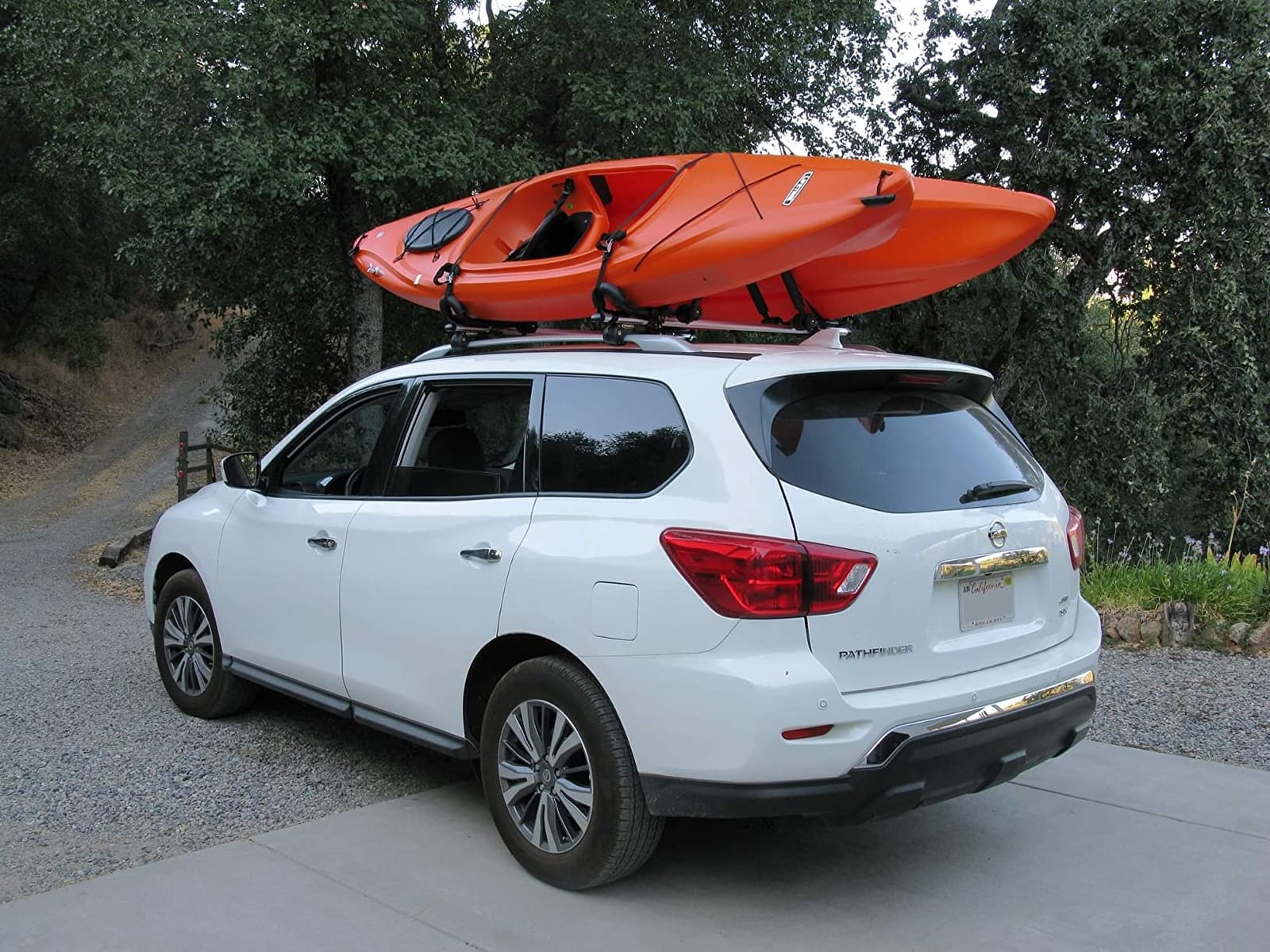
The rating that gets attention is Class III whitewater. This is not a dedicated whitewater boat, but it is built from tough PVC with enough rocker and buoyancy to run moderate rapids when paddled by someone who knows what they are doing, and owners regularly take it down moving water. Sea Eagle covers it with a 3-year manufacturer warranty.
The annoyances are mostly first-day problems. Valve installation is fiddly and really wants two people the first time until the fittings seat, the deluxe seats can slide if you do not position them carefully, and fully loaded it is slower than any hard-shell. It is also heavier in the bag than people expect once you add the seats and pump, and the inflation gauge is small and easy to lose.
What the Class III Rating Actually Means
It means the boat can survive moderate rapids with waves and rocks, paddled competently and wearing a helmet and PFD. It is not a substitute for skills or instruction.
For typical buyers, treat the rating as durability headroom. The same tough hull that shrugs off rocks handles rocky lake launches and gravel beaches without worry.
Three-Person Reality: Capacity and Comfort
Three adults fit but paddle efficiency drops, so it is best as a two-adult-plus-gear or two-adult-plus-child boat. The 650 lb capacity gives you room to be realistic.
Count everything you load, including water, cooler, and the dog. Staying comfortably under the limit keeps the deck above the waterline and the handling predictable.
8. Intex Explorer K2 — Best Budget Tandem Inflatable Kayak
INTEX Explorer Inflatable Kayak 2-Person Portable Set with Paddles and Pump
10.3 ft inflatable tandem
35 lbs
400 lb capacity
Pump and paddles included
Pros
- Complete package ready to paddle
- Inflates in minutes with Boston valves
- Very stable on calm water
- Packs into a car trunk
- Bright yellow hull is highly visible
Cons
- Included paddles run short
- Seats lack long-term back support
- More drag than a hard-shell
The Explorer K2 is the best-selling inflatable kayak on Amazon, with more than 30k reviews, and I think the reasons are simple. It costs about the same as a single day of kayak rentals for two, it inflates in minutes, and it is stable enough that my cautious mother-in-law climbed aboard without hesitating. On flat evening water it is genuinely fun rather than merely tolerable.
Everything you need ships in the box: two 86 inch aluminum oars, a high-output hand pump, two inflatable seats with backrests, a repair patch, and a carry bag. The Boston valves on the side chambers make inflation and deflation fast, the high-buoyancy side chambers and low-profile deck keep it planted, and the removable skeg improves tracking enough that you are not constantly correcting course.

Construction is SuperStrong PVC vinyl with an inflatable I-beam floor, and the durability reports are better than the price implies. Owners describe three to four years of regular seasonal use without punctures, which matches what our team has seen from similar Intex hulls. The 400 lb capacity suits two average adults, and the bright yellow color with sporty graphics is genuinely useful for visibility on shared lakes.
Keep expectations honest. The included paddles are short and most couples upgrade them, the seats give limited back support on long paddles, and the hull has more drag than any hard-shell so you work harder for speed. It is not for ocean swells, whitewater, or choppy days, and the carry bag is flimsy. There is also a known packaging quirk where paddles and seats sometimes arrive not individually bagged.

Durability: How Many Seasons Will It Last?
With rinsing, drying, and shaded storage, owners commonly report three to four seasons or more. Sunlight and dragging are what kill these hulls, not paddling.
Keep the repair patch in your drybag anyway. A pinhole is a fifteen-minute fix on the waterline if you catch it early.
Inflation and Setup in the Field
Count on five to twenty minutes depending on your pump and energy level. The numbered inflation ports keep the sequence obvious even without useful instructions.
Note that the floor valve is a different type than the Boston valves on the sides. It is a minor design quirk that surprises people the first time.
9. Intex Challenger K1 — Best Entry-Level Solo Kayak
INTEX 68305EP Challenger K1 Inflatable Kayak Set: Includes Deluxe 86in Kayak Paddles and High-Output Pump – Adjustable Seat with Backrest – Removable Skeg – 1-Person – 220lb Weight Capacity
9 ft inflatable solo
26 lbs
220 lb capacity
Pump and paddle included
Pros
- One of the cheapest ways onto the water
- 26 pounds and truly portable
- Inflates in under two minutes
- Adjustable seat with backrest
- Cargo storage net included
Cons
- Cramped legroom for tall paddlers
- Included paddle is fragile
- Skeg is easy to lose
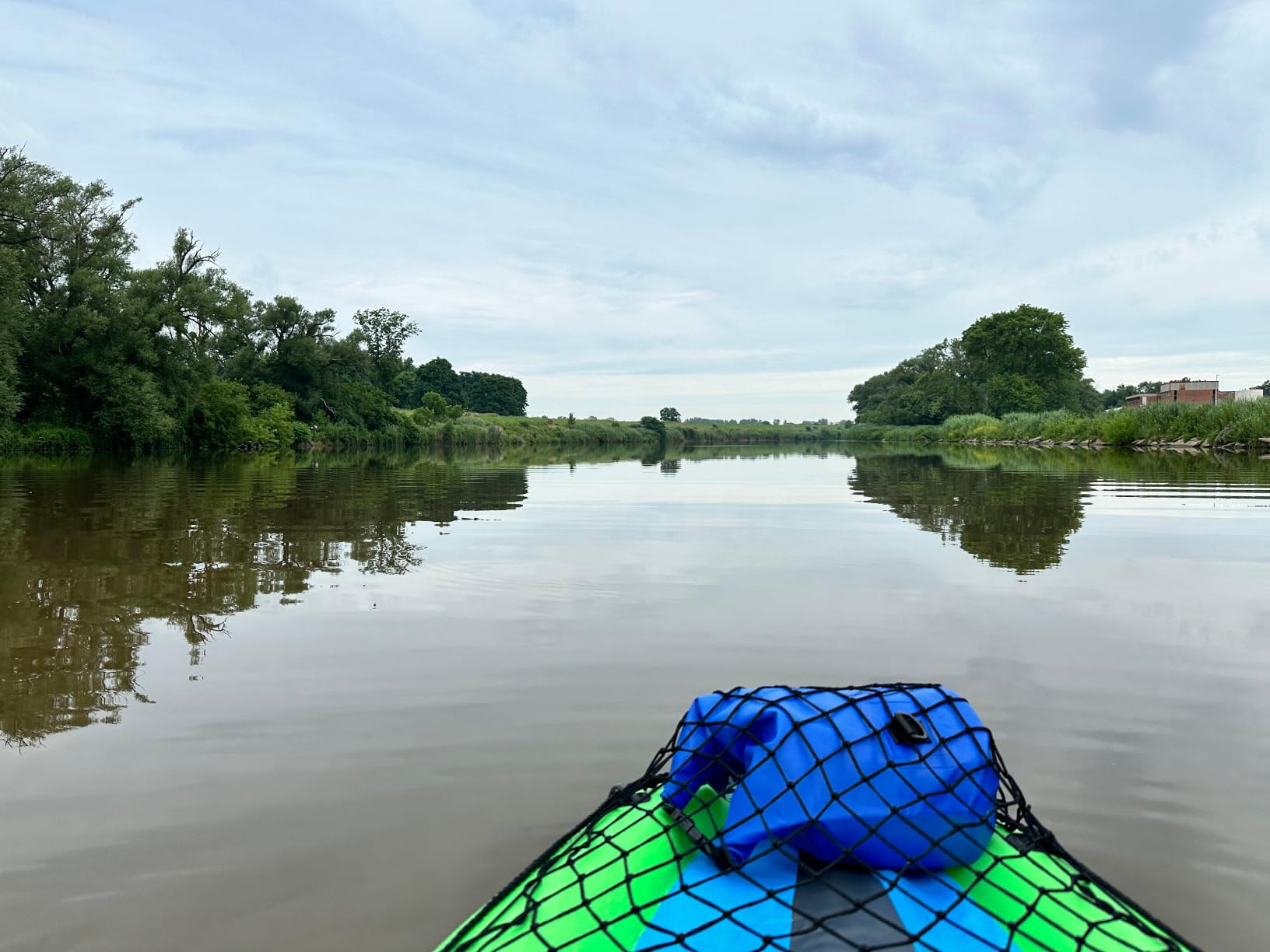
With more than 21k reviews, the Challenger K1 is the kayak that gets people hooked. Mine served a full summer of after-work lake loops, and I still recommend it for exactly that use: calm flat water, solo, close to shore. It weighs 26 pounds, inflates in under two minutes with the included pump, and fits in a closet, which removes the two excuses that stop most beginners.
The package includes a deluxe 86 inch paddle, the high-output pump, an adjustable seat with a backrest, a cargo net, and a carry bag. The SuperStrong PVC shrugged off abuse that surprised me, and the review section contains stories of these boats surviving fallen trees, tornado debris, and ocean use without puncturing. A removable skeg keeps it pointing where you stroke.
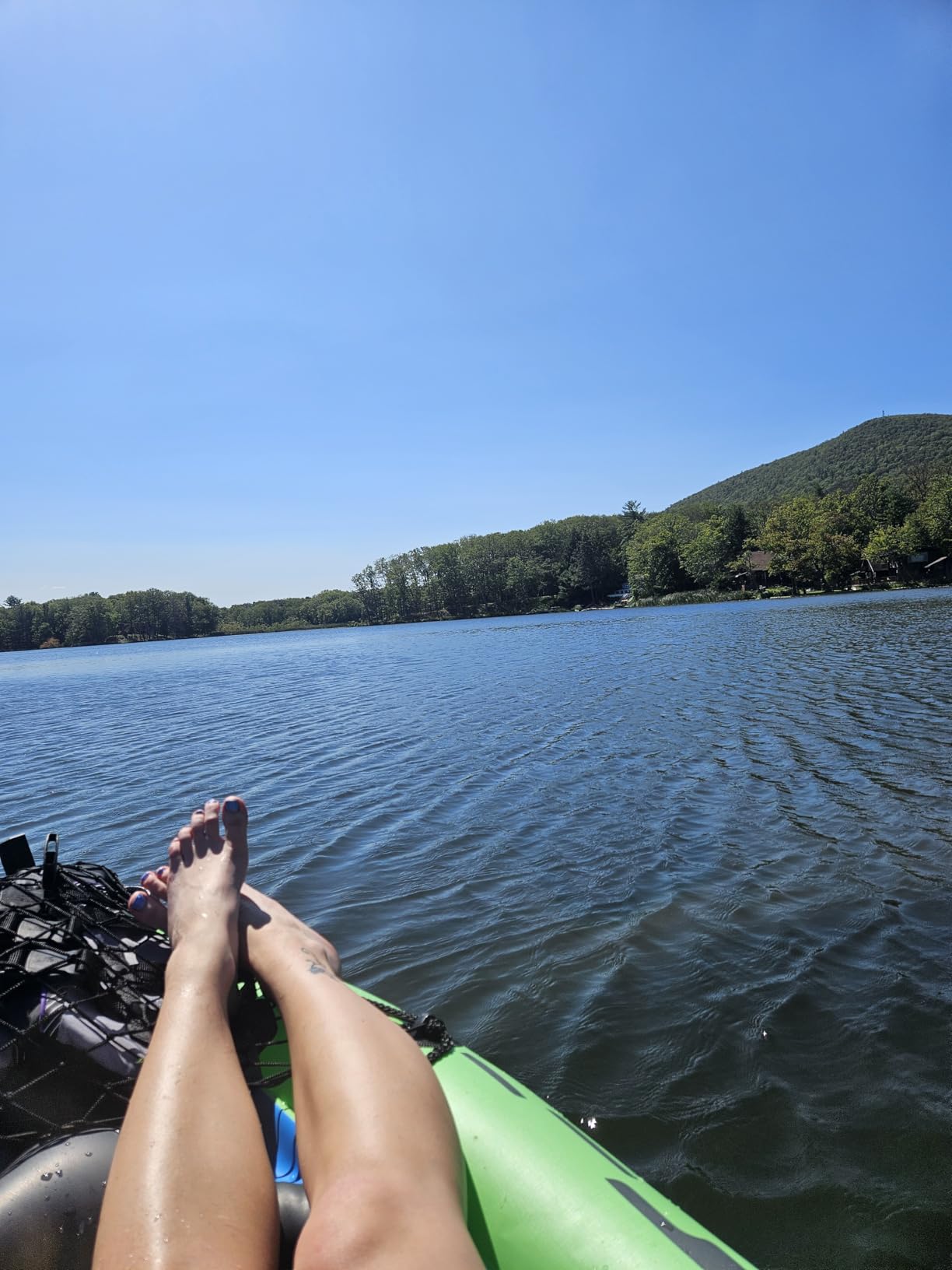
The hull is a proven design rather than a new gamble. The cockpit is enclosed enough to keep you drier than a sit-on-top, the inflatable I-beam floor adds stiffness, and the 220 lb capacity suits most solo paddlers with a drybag. It is rated for calm water and it means it, which is a feature if you are honest with yourself about where you will actually paddle.
The weaknesses are the ones owners report over and over. Legroom is cramped if you have a 36 inch or longer inseam, the included paddle is fragile enough that spares are cheap insurance, and the skeg is awkward to remove and easy to lose on a beach. The carry bag tears, the small dry storage is not fully waterproof, and the pump hose can separate mid-inflation.
Legroom and Fit for Taller Paddlers
Paddlers under about six feet fit comfortably. Taller riders report their knees riding high and their feet pressing the bow fabric.
Sitting slightly forward on the seat pad buys a few inches. If you are tall and paddling weekly, a longer hard-shell or the Explorer K2 will serve you better.
When to Skip This and Upgrade
If you paddle more than a dozen times a season, want to fish, or plan river trips, move up now. This boat is a low-risk way to discover what you actually want.
Plenty of people buy the K1, love a summer on it, and then buy a boat from higher on this list. That progression is not wasted money, it is tuition, and it usually costs less than renting.
10. Lifetime Youth Wave — Best Kayak for Kids
Lifetime Youth Wave Kayak (Paddle Included), Blue, 6′
6 ft kids kayak
18 lbs
130 lb capacity
Ages 5 and up
Paddle included
Pros
- Reverse chine hull resists tipping
- Kids can carry it themselves
- Swim-up step for easy re-entry
- Scupper holes drain automatically
- Paddle included
Cons
- Kids only
- adults exceed the limit
- Riveted serial plate can leak
- Small footrests need adjusting for little kids
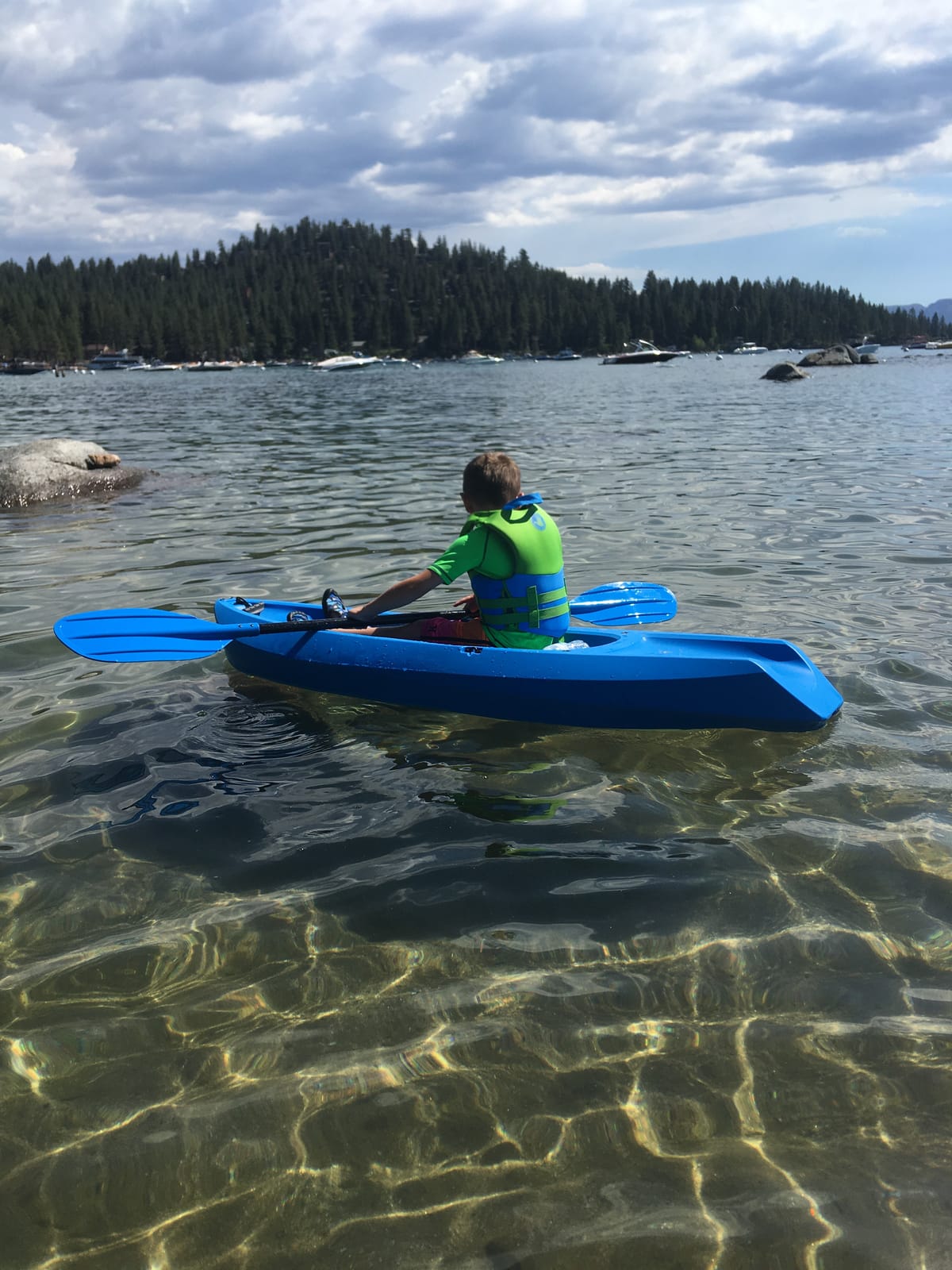
We put a nervous six-year-old in the Youth Wave last summer and she was paddling loops within ten minutes. The reverse chine hull pushes out wide at the waterline, so it actively resists tipping, and the 18 pound weight means kids can drag it to the water and load it themselves. Around 85 percent of owners rate it five stars, which is remarkable for anything children use.
The details are well thought out for small paddlers. A swim-up step at the stern lets a kid climb back on from the water without help, scupper holes drain splashes automatically so there is nothing to bail, and molded finger handles on both sides suit small hands. A color-matched paddle is included, so there is nothing else to buy before the first launch.
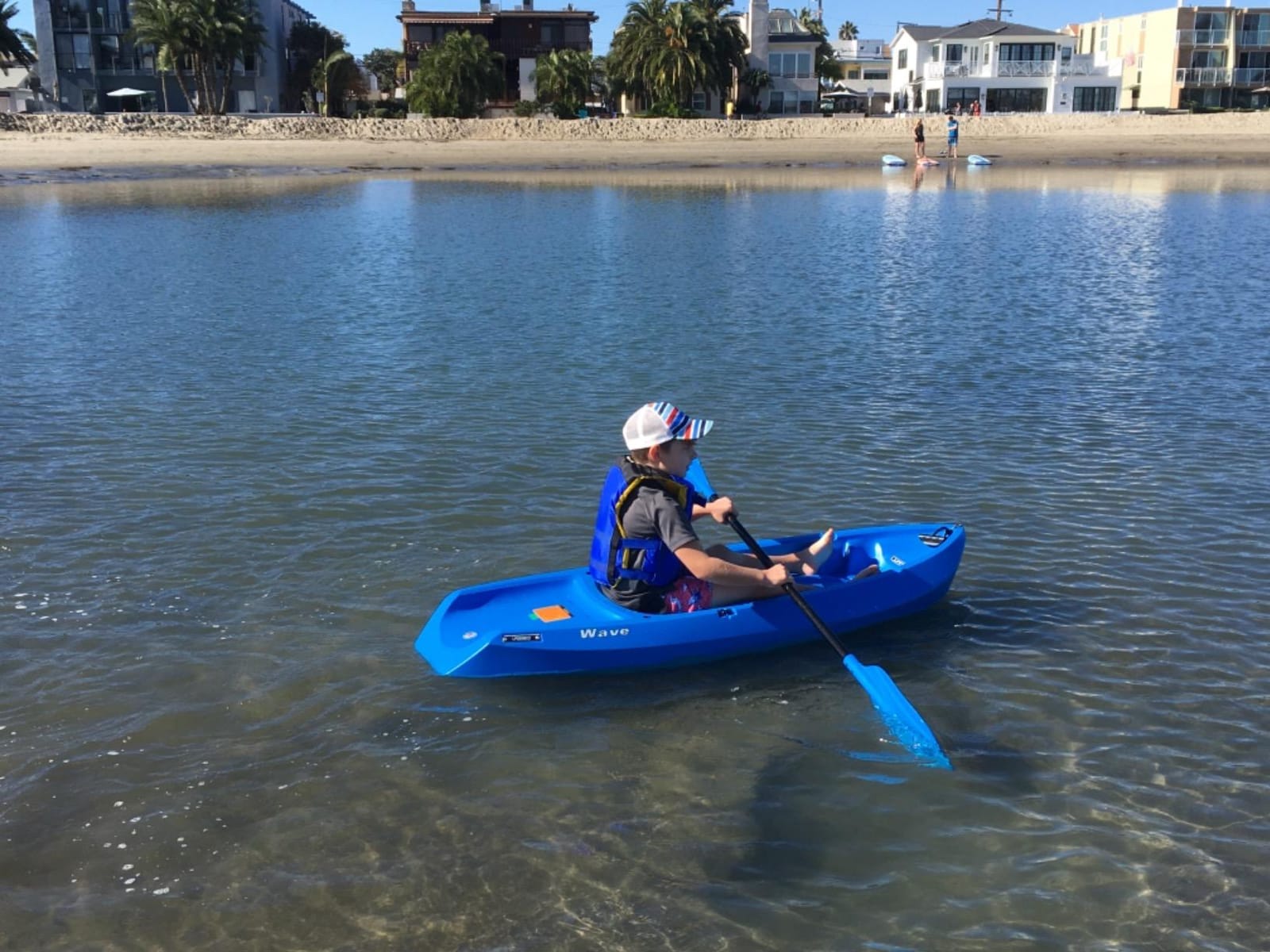
The hard-shell construction is the real advantage over inflatable kids boats. There is nothing to puncture on a rocky shore, the ergonomic cockpit design helps young paddlers develop balance and motor skills, and multiple footrest positions adjust as they grow. Lifetime rates it for ages five and up with adult supervision and a 130 pound maximum capacity.
Two honest warnings from owners. Some units have a riveted serial number plate that lets water seep in slowly, and the fix is a bead of silicone sealant over the rivets, which takes five minutes. The footrest positions can also be too far apart for the smallest five-year-olds until they grow a little, and there is no real storage space for gear.
Age and Weight Limits: When They Outgrow It
It suits roughly ages five through ten, ending whenever your child passes 130 pounds dressed. Most kids get three to four summers out of it.
After that, the Perception Tribe 9.5 or the Intex Challenger K1 are the natural next steps, and both appear earlier in this guide. The Youth Wave then becomes a hand-me-down with real resale demand.
Safety Essentials for Young Paddlers
A properly fitted youth PFD is non-negotiable, every single time, and adult supervision stays within arm’s reach on the water. Drowning is the leading cause of kayaking fatalities and a worn life jacket changes that math.
Stick to warm, calm, shallow water while they learn, and check those serial plate rivets when the boat arrives. Sealing them on day one removes the only leak complaint owners report.
How to Choose the Best Kayak in 2026
Choosing among the best kayaks comes down to five questions: what water you paddle, who rides along, how you will transport it, where you will store it, and how often you will go. Answer those honestly and the shortlist usually shrinks to one or two boats on its own.
Kayak Types: Recreational, Touring, Fishing, and Inflatable
Recreational kayaks are 9 to 12 feet, stable, and built for lakes and slow rivers, which is why they suit most beginners. Touring kayaks run longer and narrower with better glide for covering distance, and they reward experienced paddlers.
Fishing kayaks prioritize stability and gear mounting over speed, while inflatables trade a little performance for trunk-sized portability. There is no universal best type, only the type that matches your water.
Length and Width: Stability vs Speed
Longer kayaks track straighter and glide farther per stroke, so they suit open water and distance. Shorter hulls turn faster and feel playful on small creeks and ponds.
Width works in reverse. A wide beam, 31 to 34 inches, adds initial stability that beginners and anglers want, while narrower boats feel tippy for a day and then reward you with speed.
Weight Capacity Includes You and Your Gear
This is the most common mistake we see in buyer questions. The stated capacity counts your body weight plus everything you bring, including cooler, tackle, dog, and water.
Stay comfortably below the limit rather than right at it, because a boat loaded to its maximum sits low, handles sluggishly, and takes on water through scuppers. If your load lands within about 30 pounds of the cap, buy the bigger boat.
Hull Materials: Polyethylene, HDPE, and Drop-Stitch PVC
Rotomolded polyethylene is the industry standard for hard-shells because it flexes on impact, survives rocky launches, and lasts for years with basic care. Pelican’s RamX and Lifetime’s UV-protected HDPE are variations on the same proven theme.
Thermoform hulls are lighter and glossier but cost more, while drop-stitch PVC, used in the Sea Eagle RazorLite, inflates rigid enough to rival hard-shell performance. For durability per dollar, polyethylene remains hard to beat.
Sit-Inside vs Sit-On-Top
Sit-inside kayaks keep you drier, warmer, and slightly faster, which makes them the pick for cool water and longer distances. Sit-on-top hulls are easier to enter, impossible to swamp, and simpler to remount from the water.
Families, anglers, and warm-water swimmers usually live happily on a sit-on-top. Paddlers in colder climates should treat a sit-inside with a sprayskirt as safety gear, not a luxury.
Transport and Storage: The Overlooked Dealbreaker
The forums are full of people who bought the right kayak and the wrong roof rack. Anything over about 50 pounds genuinely needs two people, a cart, or a loader, and long tandems need wall or ceiling storage space.
Apartment dwellers and small-car owners should look at the inflatables in this guide, which is exactly the problem they solve. Decide where the boat lives on the days you are not paddling before you fall in love with a hull.
Buy Once, Cry Once: Resale Value and Long-Term Cost
The r/Kayaking community repeats “buy once, cry once” for a reason. Cheap big-box boats often get replaced within a season, and that second purchase costs more than buying properly the first time.
Quality polyethylene hulls from brands like Perception, Pelican’s upper lines, and Sea Eagle inflatables hold resale value and last a decade or more. One practical tip from the forums: buy from a dedicated paddling shop where you can sit in, and sometimes demo, the boat before committing.
Safety: PFDs, Cold Water, and Knowing Your Limits
Wear your life jacket rather than stowing it, because capsizes never announce themselves. US Coast Guard statistics consistently show most paddling fatalities involve paddlers who were not wearing a PFD.
Dress for the water temperature, not the air temperature, check the forecast, and file a simple float plan with someone ashore. None of this is exciting and all of it is what lets you come back tomorrow.
Frequently Asked Questions
What brand of kayak is the best?
Perception, Pelican, Lifetime, and Sea Eagle are the most reliable brands in this roundup, and community consensus on paddling forums also ranks Wilderness Systems and Old Town among the strongest overall. Perception and Old Town earn praise for bulletproof USA-made hulls that hold resale value, Pelican leads in affordable recreational and fishing models, and Sea Eagle dominates the premium inflatable category. Match the brand to your use case rather than chasing a single winner.
What brand is the most stable kayak?
For stand-up stability, the Pelican Catch Mode 110 and its tunnel hull are the standout, since anglers routinely cast while standing. Among general recreational hulls, the Pelican Argo 100X and Lifetime Tamarack 100 are the steadiest on flat water thanks to multi-chine and flat-bottom designs. In the inflatable class, the wide-beamed Intex Explorer K2 and Sea Eagle 370 Pro feel almost untippable in calm conditions. Width is the fastest clue: wider beam means more initial stability.
Is a 10 foot or 12 foot kayak better?
A 10-foot kayak is better for beginners, small lakes, and slow rivers because it turns easily, weighs less, and is far simpler to transport and store alone. A 12-foot kayak tracks straighter, glides farther per stroke, and carries more gear, so it suits open water, longer day trips, and paddlers covering distance. Most casual paddlers are happier starting at 10 feet, then moving up once they know what they want.
What are the best kayaks for beginners?
The best kayaks for beginners are the Pelican Argo 100X for all-around lake and river paddling, the Intex Challenger K1 for the cheapest solo start, and the Intex Explorer K2 for couples starting together. The Argo is stable, light enough to car-top alone, and backed by a lifetime limited warranty, while the two inflatables let you try the sport before committing to a hard-shell. Kids should start on the Lifetime Youth Wave, which is built for ages five and up.
What is the leading cause of death for kayakers?
Drowning is the leading cause of death for kayakers, and US Coast Guard accident data consistently shows that the vast majority of paddling fatalities involve people who were not wearing a life jacket. Cold-water immersion and hypothermia are major contributing factors, along with paddling alone in conditions beyond skill level. Wear a properly fitted PFD every trip, dress for water temperature, and keep to water you can handle.
Final Thoughts on the Best Kayaks of 2026
After logging hours on all ten of these boats, our headline picks are unchanged. The Pelican Argo 100X is the best kayak for most paddlers, the Pelican Catch Mode 110 is the fishing machine, and the Intex Explorer K2 is the easiest yes for anyone testing the water on a budget.
Families should look hard at the Perception Rambler 13.5 and Sea Eagle 370 Pro, travelers and apartment dwellers at the Sea Eagle RazorLite, and young kids at the Lifetime Youth Wave. The right hull is the one that fits your roof rack, your storage closet, and the water outside your door.
Pick the category that matches your paddling, check the current price on the buttons above, and get on the water before the season passes. See you out there.