
The best all mountain skis for intermediate skiers sit in a narrow band of geometry: roughly 86 to 100 millimeters underfoot, a rocker-camber-rocker profile, and a medium flex you can bend without being pushed past your ability. That combination holds an edge on hardpack and ice, stays light enough to pivot quickly in variable snow, and floats when the mountain turns soft.
Intermediate is the hardest ability level to shop for because it is not one thing. A cautious intermediate who just started linking clean turns needs a forgiving ski that does the work. A strong intermediate cranking on black runs and looking for first tracks needs something with more energy and edge hold. Buying for the wrong one of those people is how a good pair of skis ends up in a garage by 2026.
We went through the current all-mountain lineup with that split in mind, then sorted every pick by what a real intermediate can actually use. Each of the eight skis below carries a plain-language verdict, the specs that matter, the conditions where it works, and the conditions where you should skip it. Our general all-mountain roundup covers the category without the ability filter, and our broader ski picks cover beginner and advanced ends of the spectrum.
One note before you scroll: most of these listings are ski-only, which means you are buying a bare ski and mounting your own bindings. Two of them come with bindings already mounted, and that changes the total cost more than any spec on this page. We flag it on every pick.
If you want the wider picture on this category, our all-mountain ski roundup covers the field without the ability filter.
Table of Contents
Top 3 Picks for Intermediate Skiers in 2026

Rossignol Sender Soul Pro Xpress
- Light cap-wall build
- Poplar wood core
- Look Xpress bindings included

Blizzard Black Pearl 88
- 88mm all-mountain waist
- Women-specific flex and sidecut
- Tuned per size
Every Pick at a Glance: Best All Mountain Skis for Intermediate Skiers in 2026
| Product | Specifications | Action |
|---|---|---|
| Rossignol Sender Soul Pro Xpress |
|
Check Latest Price |
| Blizzard Black Pearl 88 |
|
Check Latest Price |
 K2 Mindbender 89TI K2 Mindbender 89TI |
|
Check Latest Price |
 Rossignol Sprayer Pro Xpress Rossignol Sprayer Pro Xpress |
|
Check Latest Price |
 Rossignol Arcade W 80 Xpress Rossignol Arcade W 80 Xpress |
|
Check Latest Price |
 Blizzard Brahma 88 Blizzard Brahma 88 |
|
Check Latest Price |
 Volkl Mantra 88 Volkl Mantra 88 |
|
Check Latest Price |
 LINE Chronic 94 LINE Chronic 94 |
|
Check Latest Price |
Here is how the eight divide by skill tier, because that is the fastest way to narrow the list:
- Cautious intermediate or returning skier: the Rossignol Arcade W 80 Xpress and the Rossignol Sender Soul Pro Xpress. Both are light, easy to bend, and come with bindings already on them.
- Confident intermediate who wants one ski for everything: the Blizzard Black Pearl 88, the Blizzard Brahma 88, and the K2 Mindbender 89TI. All three live in the 88 to 89mm class.
- Progression-focused intermediate who is starting to push terrain: the Volkl Mantra 88 for long stable carves, and the LINE Chronic 94 if park features are part of the plan.
- Trying terrain parks or bumps on a tight budget: the Rossignol Sprayer Pro Xpress is the twin-tip package option.
Match your region too. If you ski hardpack, ice, and refrozen corduroy two days a week, stay in the 88mm class and skip the wider skis. If you regularly ski soft snow at a base-area mountain, the 94mm pick gives you noticeably more float. Forum skiers on r/Skigear keep returning to the same number for a reason: somewhere around 85 to 95 millimeters underfoot is the sweet spot for all-mountain work by an intermediate.
1. Rossignol Sender Soul Pro Xpress — The Easiest Way Into All-Mountain Skiing
Rossignol Sender Soul Pro Xpress – Alpine Snow Skis for Men – Downhill Skis
Cap sidewalls
Poplar wood core
Fiberglass layup
Look Xpress bindings included
Pros
- Very light and easy to pivot across varied snow
- Bindings already mounted so it is ready to ski
- Easy to flex for building carving technique
- Multiple sizes from 130 to 160
Cons
- Loose packaging can arrive with scratches or knicks
- Listing states an advanced skill level which oversells the ease
- Pro is a budget build with no metal reinforcement
This is the pair we keep coming back to for cautious intermediates and anyone returning to the sport after a long gap. It weighs 14.3 pounds for the pair as listed, which puts it in the same class as the other lightweight builds here, and the cap sidewall construction keeps it easy to flex without a metal layer fighting you.
The poplar wood core is the reason it feels forgiving rather than just soft. Cap construction rolls the topsheet material edge to edge instead of wrapping a sidewall around the core, which reduces weight and gives a more comfortable, less demanding ride. Fiberglass laminates in multiple weights do the work of giving the ski some torsional resistance so it does not feel noodly.
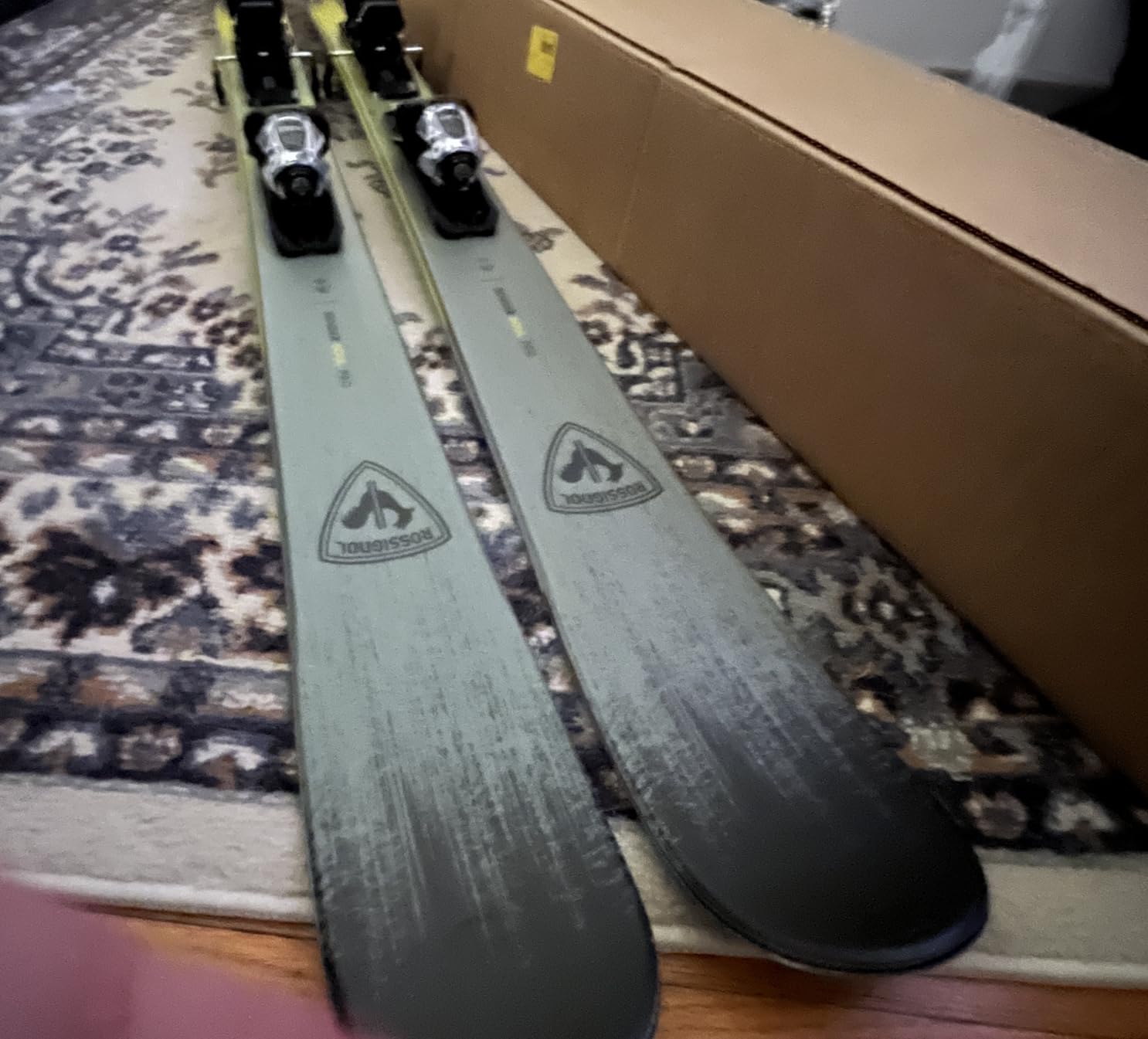
What matters most for an intermediate is what happens at the end of a bad turn. On this ski the flex loads smoothly and releases without a sharp kick, so a late correction on a steep groomer does not turn into a skidding stop. Owners report it handling varied conditions well, and several call out that the bindings included in the package make it a genuinely complete first setup.
The honest caveat is packaging. A few owners report the skis arriving loose in the box with scratches or knicks from transit, so inspect them the moment you open the carton and check the edges before your first tune. The listing also labels the ski at an advanced skill level, which is not what the reviewers describe; treat the ride reports rather than the category tag.
Why an intermediate will get along with this ski
It asks very little of you. The light weight makes it easy to get on edge without a huge commitment, and the forgiving flex means you can ski it slowly on a blue run and still have it hold an edge when you push the pace. That range is exactly what an intermediate season looks like.
Because bindings are included, it is also the shortest path from deciding to buy to actually skiing. Our broader ski picks cover the alternative routes if you want to spend the difference elsewhere.
Who should skip it
Skip it if you want strong edge grip on ice or need a ski that can hold a long fast carve on a steep groomer. There is no metal reinforcement in this build, so it is a shape you grow out of rather than one that grows with you. Heavier skiers pushing above 180 pounds will find it too soft and will want a stiffer platform instead.
2. Blizzard Black Pearl 88 — the Best Fit for Lighter and Women-Specific Sizing
Blizzard Women’s 8A227500001 Black Pearl 88 All-Mountain Freeride Lightweight Blue Skis (Bindings Not Included), Size 153
88mm waist
TrueBlend Flipcore
Women-specific design
Bindings sold separately
Pros
- 88mm waist works for groomers and variable snow
- Women-specific flex and sidecut design
- Tuned per size for a consistent ride
Cons
- Bindings are not included so the total cost is higher
- Only one size carried in this listing
- Low review count limits long-term owner data
The Black Pearl 88 is the pick for anyone who has been handed a length recommendation that felt too long. Its 88 millimeter waist and women-specific flex and sidecut geometry are built around stability and strength for lighter skiers rather than around a generic size chart, and the listed size here is 153 centimeters.
The construction detail that separates this from a rebranded men’s ski is the TrueBlend Flipcore shell with the women’s specific design on top. Blizzard blends two woods in the True Blend Woodcore with high-density wood stringers running through it, which gives precise flex control instead of the mushy, inconsistent feel you get from a purely fiberglass ski at the same price level.
Because the sidecut rotates easily between short, medium, and long radius turns, an intermediate can tighten the turn shape on a groomer and then open it up in variable snow without stepping out of the platform. Every one of the six verified reviews rates it five stars, and owners repeatedly point to the same thing: one ski that works for everything.
How it fits a smaller or lighter intermediate
A lot of advice for intermediates assumes a five-foot-ten frame and pushes people toward 175-centimeter skis. Shorter and lighter skiers do not need to ski a bigger ski to ski well, they need a ski whose flex and sidecut are designed for their weight. That is exactly the argument for this one, and the size-specific tuning means the flex does not go soft in the shorter lengths.
Our broader ski picks cover longer platforms if you are between sizes and want to compare before you commit.
Who should skip it
Skip it if you want a package. This listing is ski-only, so you are buying the ski and then shopping for bindings separately, which adds both cost and a mounting decision. Also skip it if you plan to spend most of your season in deeper snow, because at 88 millimeters it will sink once you are past about a foot of fresh.
3. K2 Mindbender 89TI — the Most Versatile Ski for a Confident Intermediate
K2 Mindbender 89TI Mens Skis, 170
Aspen Micro Block core
Ti Y-Beam laminates
89mm all-mountain waist
1-year warranty
Pros
- Carving plus soft-snow balance in the under-90mm class
- Core delivers composure and stability
- Forgiving flex pattern
- Skis run true to size
Cons
- Bindings sold separately
- Listing tags it for advanced and expert skiers
- Only one length offered in this listing
The Mindbender 89TI is the answer to the most common intermediate question, which is really two questions: can I carve, and will it float when the snow turns soft. An 89 millimeter waist is narrow enough to feel precise on a groomer and wide enough to keep you up in 8 to 10 inches of new snow. Owners describe exactly that balance in their reviews.
The Aspen Micro Block core is the piece that matters for a progressing skier. Small aspen stringers sit inside the core to add composure and stability while keeping the overall flex forgiving. That combination is what lets you ski fast on a groomed run without the ski feeling like it is chasing you, and it is why this is the pick for a strong intermediate rather than a cautious one.
Edge performance comes from the Ti Y-Beam laminates, which are placed over the edges in the forebody for edge grip and power transfer, while tapered titanium in the tails gives predictable turn release in softer snow. Both of those placements are deliberate: metal near the shovel helps you rail a turn, metal in the tail would make the ski hook and pivot late in variable snow. Four verified reviews rate it five stars and note the skis arrived in perfect condition.
Why it works as a one-ski quiver
A quiver of one only works if the ski does not have one fatal flaw. This one covers the widest range of conditions of anything on this list: ice, packed powder, chopped snow, and even some genuinely soft days. Forum consensus on Snowheads for a single ski lands in the same territory of under 17 meters of radius and roughly 100 millimeters underfoot at 175 to 180 centimeters, which tells you where the community thinks the ceiling is.
At 89 millimeters you give up a little float versus a 94, but you buy back a lot of edge grip and grooming confidence. For most intermediates that is the right trade.
Who should skip it
Skip it if you need bindings and a boot package in one box, or if you are an older, lighter skier who would prefer the shorter platform. The listing tags the ski for advanced and expert ability, so if you are still hesitant on ungroomed terrain, expect it to feel more demanding than a cap-construction ski would.
4. Rossignol Sprayer Pro Xpress — the Budget Pick for Park Progression
Rossignol Sprayer Pro Xpress – All Mountain Downhill Skis with bindings for Men and Women
Bindings included
Poplar and fiberglass core
Twin-tip shape
Cap construction
Pros
- Bindings included so the package is ready to ski
- Twin-tip shape supports progression into the park
- Cap construction keeps the ski light and easy to maneuver
Cons
- Manufacturer listing narrows the age range to kid and teen
- Traditional camber is less friendly in deep snow
- Only one length offered at 178
The Sprayer Pro Xpress is the simplest entry point into this whole category and it comes with bindings already on the skis. For an intermediate who wants to start hitting park features rather than only carving groomers, the twin-tip shape matters more than any spec on the page, because it lets you ride forward and switch.
The core is poplar wood with fiberglass layers for flex, response, and control, wrapped in cap construction that keeps the total weight down. Traditional camber underfoot with extended sidecut gives it a real carving platform, which means it is not a park toy that feels awful on the way back down the lift line.
Two verified reviews both give it five stars and both note the value of having bindings included. That is the honest appeal here: the total cost of owning this package is meaningfully lower than any ski-only option on this list plus a separate binding purchase.
When this is the right pick
Choose it if your season includes natural features, rails, or small jumps and you want to progress on them without buying a second dedicated freestyle ski. The twin-tip design plus camber gives you a platform that can hold on the takeoff and stomp a landing, which is more than many beginner-friendly packages manage.
It also suits a shared household setup, since the included bindings make it usable immediately. If you are not sure whether the park is for you, our snowboard roundup covers the freestyle side in more depth.
Who should skip it
Skip it if deep snow or trees are your thing. Traditional camber with no rocker means it will dive and get washed out in untracked powder, and traditional camber is not ideal for short trees either. The manufacturer listing also narrows the age range to kid and teen, so if you are an adult skier buying for yourself, check the fit carefully before committing.
5. Rossignol Arcade W 80 Xpress — the Easiest Way to Learn to Carve
Rossignol Arcade W 80° Xpress – Womens Downhill Skis with Bindings
Tip and tail rocker
Extended sidecut
Poplar core
Sintered base
Bindings included
Pros
- Light and flexible
- good for learning carving technique
- Bindings included in the package
- Tip and tail rocker makes turns easy to start
Cons
- Listing weight of 16 ounces is not credible for a ski plus bindings
- 80mm waist is narrow for soft western snow
- Short length options limit growth room
The Arcade W 80 Xpress is the ski we would hand someone who has decided that carving is the goal. All three verified reviews call it light, flexible, and ideal for learning carve technique, and the tip and tail rocker is the feature that makes that possible: the ski starts turning before you finish the edge change.
Extended sidecut underfoot handles high-speed grip while still behaving at low speed, which is the combination you want while your technique is still forming. The poplar wood core keeps vibration low so the ski stays quiet and composed rather than buzzing when you put it on edge.
A sintered base with vibration-absorbing VAS means it glides and holds without the cost of a full race-grade setup, and bindings are included, so this is a complete package in the same way the Sprayer is. Sizes run from 142 to 166 in this line.
How rocker helps a developing carver
Rocker at the tip and tail means the contact point moves in as you lean into a turn, which shortens the effective turn and lets you initiate on flatter terrain. For an intermediate who is still working on pressure control, that is forgiveness you can feel immediately rather than a spec you read about.
The trade is edge grip on ice, which is why we would pair this pick with a decision about where you ski. On groomers and soft morning snow it is a joy. On refrozen East Coast hardpack it is not the tool.
Who should skip it
Skip it if you ski the coast or if your season is mostly variable and deep snow. At 80 millimeters underfoot there is not much float to be found, and the listing weight of 16 ounces is not credible for a ski-plus-bindings set, so treat the weight figures on this product page with suspicion rather than using them to compare against the other picks.
6. Blizzard Brahma 88 — the Best Pick for East Coast Ice and Groomers
Blizzard Men’s 8A225200001 Brahma 88 All-Mountain Freeride Red Skis (Bindings Not Included), Size 177
88mm waist
Rocker-camber-rocker
Two sheets of metal
TrueBlend Woodcore
Pros
- Handles ice and packed powder in the same ski
- Sidecut works in bumps and spring snow
- Metal sheets add edge grip and power transfer
- Repeat purchase across model years
Cons
- Bindings sold separately
- Anything deeper than about 12 inches calls for a wider ski
- Only one size listed at 177
The Brahma 88 is built for the conditions that make or break a season in the eastern United States. Two verified five-star reviews from experienced East Coast skiers describe it as handling icy snow, packed powder, and 8 to 14 inch powder days on the same ski, which is the entire point of the 88 millimeter class.
Two sheets of metal give the edge grip and power transfer you need when the surface is hard. The reduced rocker profile compared to a freeride ski is a deliberate choice: less rocker means the edge engages earlier and the ski does not skate around on a low angle when the snow is firm.
Rocker-camber-rocker underfoot gives you powder floatation when it snows and packed-snow grip the rest of the time. Owners report that the sidecut performs well in bumps and on spring snow, and one long-term owner reported buying the model again across multiple model years.
Why eastern skiers keep coming back to it
The width question gets answered by your snow, not by a marketing page. At 88 millimeters you can still lay the ski on edge and hold a hard carve on a frozen groomer, but you are not fighting the ski if the base takes 10 inches overnight. Skiers on MountainProject and r/Skigear regularly name the 88 to 94 range as the all-mountain answer for exactly this reason.
The wider choices in this roundup start to trade ice grip for float. That trade is worth it in the Rockies. On the East Coast, it usually is not.
Who should skip it
Skip it if your base is deep and dry, because reviewers note that snow much deeper than roughly 12 inches calls for a wider ski near 100 millimeters. Also note this is a ski-only listing, so bindings are a separate purchase, and only the 177 length is offered here.
7. Volkl Mantra 88 — the Best for Long, Stable Carves at Speed
2025 Volkl Mantra 88 Skis
3D Radius sidecut
Full sidewalls
Carbon tips
Beech and poplar woodcore
Pros
- Variable 3D radius handles both low and high speeds
- Factory-tuned P-Tex 2100 base glides out of the box
- Full sidewalls add durability and consistent flex
- Two-year manufacturer warranty
Cons
- Listed skill level is advanced
- which is above the intermediate target
- Bindings not included
- Very thin owner feedback at one review
The Mantra 88 is for the intermediate who has already moved past cautious and wants a ski that stays quiet and predictable when the speed goes up. The 3D Radius sidecut uses a variable edge profile that gives agility at low speed and stability at speed, which is the specific problem a fast intermediate hits on a long groomer.
Full sidewall construction wraps the core for a consistent flex across the length of the ski, and the multilayer beech and poplar woodcore delivers power at a low weight. Carbon tips reduce swing weight and store energy that gets returned on the exit of a turn, which is why the ski feels lively rather than dead after a long run.
The P-Tex 2100 brush-structured base is factory-tuned for speed, so it will glide properly out of the box. Backed by a two-year manufacturer warranty, it is the most mechanically complete ski on this list in terms of construction detail.
What a variable radius actually gives you
A flat sidecut has one turn radius for every turn. A 3D radius profile changes the arc along the ski length, so the effective radius is tighter near the ends for quick direction changes and longer through the middle for stability when you are rolling. That is why a single ski can feel agile in the trees and settled on the highway.
If you spend most of your time on groomers and cruise long, this is the ski that stops feeling like work when you push the speed limit.
Who should skip it
Skip it if you are a hesitant skier or if you need a package. The listing tags it as an advanced-level ski, and only a single verified review exists, so the ratings here lean on the specification sheet rather than a wide owner base. Expect to work for the performance instead of getting handed it.
8. LINE Chronic 94 — the Best Pick for Park and Freestyle All-Mountain Skiing
LINE Unisex Adult’s Chronic 94 All-Mountain Freestyle Ski with Thick-Cut Sidewall Construction & Symmetric Flex Pattern – Durable Stable Versatile Snow Skis for Men & Women – 164
94mm all-mountain waist
Thick-Cut Sidewalls
Symmetric flex
Aspen Veneer core
Pros
- Burliest freestyle build in its class
- Symmetric flex gives a balanced predictable feel
- Sidewalls protect against rail and feature impacts
- Wider waist adds float versus an 88mm ski
Cons
- 94mm waist is wider than the classic all-mountain sweet spot
- Bindings sold separately
- Only one length offered at 164
The Chronic 94 is the durability play. Thick-Cut Sidewalls sit underfoot to add stiffness, durability, and impact protection on firm snow and rails, and they are the reason this ski survives a season of hitting features rather than the reason it is fast.
The Aspen Veneer core uses narrow aspen stringers for a sturdy but playful flex, and the symmetric flex pattern gives a predictable balanced feel in both directions. For an intermediate starting to ski switch, that symmetry is more useful than any amount of directional shape, because the ski behaves the same whether you are riding forward or backward.
At 94 millimeters underfoot it floats better than the 88mm class in soft snow, which is a real advantage if your home mountain gets snowfall. Skis run true to size and carry a one-year warranty. One verified five-star review supports it, with the rest of the picture coming from the construction itself.
Why the wider waist is not a mistake here
Wider is not automatically better or worse, it is a trade. At 94 millimeters you give up a little of the razor-edge precision of an 80 or 88 on a groomer and you get meaningful flotation when the base goes soft. Because this ski is built freestyle-first with thick sidewalls underfoot, it holds its own on hard surfaces in a way that a wider freeride ski often does not.
That combination makes it the one pick here that can credibly be called a park and all-mountain ski rather than an all-mountain ski with a twin tip.
Who should skip it
Skip it if your season is East Coast hardpack and ice, where the extra width costs you edge response for float you will rarely find. It is also ski-only, and only the 164 length is offered in this listing, so check that the size works for you before you commit to the platform.
How to Choose an All Mountain Ski as an Intermediate Skier in 2026
Three numbers decide most of this purchase: waist width, sidecut radius, and length. Everything else is refinement. Get those three right for your terrain and your body and you can be happy on a ski that would otherwise look mismatched.
Key features to consider
- Waist width (underfoot width): 80 to 98 millimeters covers most intermediate terrain. Under 80 is a groomer ski, 86 to 92 is all-mountain, and 100 plus is a powder tool.
- Profile: camber underfoot for grip and pop, rocker at the tip and tail for forgiveness and float, or rocker-camber-rocker for both.
- Construction: a wood core gives dampness and weight, titanal or metal sheets add edge grip and power, carbon reduces swing weight and adds energy return.
What waist width actually does
Waist width is the number at the narrowest point of the ski, measured in millimeters, and it controls how much snow the ski sits on top of rather than through. A narrower ski sinks into soft snow and resists, which is what you want on a hard groomer and what you do not want in powder. A wider ski floats on top and turns easier in deep snow, which is the opposite trade.
For an intermediate, 86 to 92 millimeters is the range that keeps both options open. Forum skiers converge on roughly the same advice: 80 to 85 for East and Central hardpack, 85 to 95 for general all-mountain, and 100 for deep western snow. If you are asking whether 88 is a good width, the short answer is yes, it is the most common all-mountain width precisely because it balances both.
Camber versus rocker, in plain language
Camber means the ski arches upward in the middle when it is laid flat, contacting the snow only at the tip and tail. That gives you edge grip, energy on the exit of a turn, and speed. Rocker means the tip and tail curve up permanently so the ski contacts the snow in the middle instead, which makes it easier to turn and easier to ski but gives up grip and speed.
Most intermediates do best with rocker-camber-rocker, a little rocker at both ends for forgiveness with camber underfoot for grip. A cautious intermediate or older skier can move the rocker further up the ski and get the same forgiveness with less of a grip penalty.
How long your skis should be
Ski length is the number intermediate buyers agonize over most, and it is mostly a weight question rather than a height question. Height gets you into the neighborhood, but weight decides whether the ski flexes properly under you.
- Under 130 pounds: 155 to 165 centimeters. Shorter and narrower skis increase confidence in steep terrain, which is what most intermediates need more than speed.
- 130 to 160 pounds: 165 to 172 centimeters. This is the most common intermediate band and where most of the skis on this list are offered.
- 160 to 190 pounds: 172 to 180 centimeters, with a stiffer flex so the ski does not collapse under you.
- Over 190 pounds: 178 centimeters and up, and a stiffer flex is more important than extra length.
If you are shorter than average and heavier than average, stay at the shorter end. The old chin-height rule assumes an average weight and will oversize a lot of people.
Turn radius and what 16 meters feels like
Sidecut radius, usually called turn radius and measured in meters, describes how wide an arc the ski carves. Short radii under about 14 meters turn quickly and suit bumps and tight trees. Long radii over 19 meters are stable at speed and better for wide groomers. Somewhere in the 16 to 18 meter range is the intermediate sweet spot.
Bumps are the case where radius matters most. Moguls reward a shorter radius because you need the ski to pivot quickly in a confined space, and a ski with an 18 meter or longer radius will feel heavy through a bump line.
Ski-only versus a package, and what a first season really costs
Six of the eight skis here are ski-only, which means you are buying the ski and then buying bindings separately. That is normal and it is how most adult skis are sold, but it means the sticker on the ski is not the number you pay. Two picks on this list, the Rossignol Sprayer and the Rossignol Arcade W, include Look Xpress bindings already mounted, and those are the lowest total-cost routes if you do not already own compatible bindings.
A complete first-season setup also includes boots, a tune, and usually at least a day of lessons. Boots matter more than skis for most beginners and intermediates, and a shop boot fitting is the single highest-value purchase in the whole process. Our general ski guide covers the wider gear decision if you are starting from nothing.
Match the ski to your region
- East Coast, ice and hardpack: stay at 88 millimeters or below and prioritize metal reinforcement and edge grip. The Blizzard Brahma 88 and the Rossignol Arcade W fit this brief.
- Rockies and deep snow country: 88 to 100 millimeters, with the LINE Chronic 94 giving you the most float in this roundup.
- Pacific Northwest and California variable snow: a rockered 88 to 94 that works on both a groomed morning and a chopped afternoon. The K2 Mindbender 89TI and Blizzard Black Pearl 88 cover this.
- Park and bumps: twin tips or durable sidewalls. The Sprayer and the Chronic are the two to compare.
Five things to test before you buy
Demo before you buy. It is the most repeated piece of advice in every ski forum we read, and it costs you an afternoon.
- Short turns on a groomer, checking whether the ski starts turning when you want it to.
- Long turns at speed, listening for any buzz or chatter that would mean the flex is past you.
- A few turns on the edge of piste in variable or chopped snow, which is the condition you will actually meet most often.
- A bump line, to feel how quickly the ski pivots.
- Two or three laps, because the first lap is always misleading. How the ski feels at the end of the morning is how it will feel all season.
Four signs you have outgrown the ski
Progression is easier to spot than to plan for. Watch for these: you are tucking and hiking out of every run, your edges chatter on piste instead of holding, you can no longer reach the speed limit on a groomer without skidding, or you spend every run searching for soft snow because the ski feels unpleasant on hardpack. When two or more of those apply, move up in flex and width rather than buying a whole second ski. If you are still not sure where you fit, our snowboard roundup covers the gear comparison on the other side of the mountain.
Frequently Asked Questions
What skis should I get as an intermediate skier?
Look for an all-mountain ski with roughly 86 to 100 millimeters of waist width, a rocker-camber-rocker profile, and a medium flex you can bend without it pushing back. Cautious intermediates should pick a lighter cap-construction ski with bindings included, while confident intermediates can move to a ski with metal reinforcement and a slightly stiffer core. In this roundup the Rossignol Sender Soul Pro Xpress suits the first group and the K2 Mindbender 89TI suits the second.
What are the most versatile all mountain skis?
The most versatile all mountain skis are the ones in the 88 to 94 millimeter class, because that width holds an edge on groomers and ice while still floating on soft snow. Among our picks, the Blizzard Black Pearl 88, the K2 Mindbender 89TI, and the Blizzard Brahma 88 cover the widest range of conditions. Pick the Brahma 88 for East Coast ice, the Mindbender 89TI for mixed terrain, and the Black Pearl 88 for lighter or shorter skiers.
What are the best skis for older intermediate skiers?
Older skiers and lighter skiers should prioritize a shorter platform, a forgiving flex, and light construction over width or stiffness. The Blizzard Black Pearl 88 is built with a women-specific flex and sidecut and is tuned per size, so the flex stays consistent in the shorter lengths. General advice to ski 175-centimeter skis assumes an average weight and oversizes a lot of people, so size by weight rather than by height.
What is the best ski length for an intermediate skier?
Weight matters more than height. Skiers under 130 pounds should look at 155 to 165 centimeters, skiers between 130 and 160 pounds at 165 to 172 centimeters, skiers between 160 and 190 pounds at 172 to 180 centimeters, and skiers over 190 pounds at 178 centimeters or longer with a stiffer flex. Staying at the shorter end of your range increases confidence in steep terrain, which most intermediates need more than extra speed.
Is 88 a good all-mountain ski width?
Yes, 88 millimeters is the most common all-mountain width because it balances edge grip against float. It carves cleanly on hard groomers and still keeps you up when the base takes 8 to 10 inches of new snow. Anything under 80 becomes a groomer-only ski and anything over 100 starts trading away the ice grip that eastern and alpine skiers depend on. If your season is mostly deep snow, step up to 94 instead.
The Right Ski for Your Season in 2026
If you want one answer, take the Rossignol Sender Soul Pro Xpress. It is light, forgiving, sized down to 130 centimeters, and it comes with bindings already mounted, which makes it the lowest-friction way to start an all-mountain season.
If you already carve confidently and want a ski that grows with you, the K2 Mindbender 89TI is the more interesting buy, and the Blizzard Black Pearl 88 covers the same ground for lighter and shorter skiers. For East Coast ice, the Blizzard Brahma 88. For stable high-speed carving, the Volkl Mantra 88. For park features, the LINE Chronic 94.
Demo first if you can, size by weight rather than by chin height, and remember that most of these skis are sold bare. The best all mountain skis for intermediate skiers are not the widest or the most expensive ones. They are the pair that lets you ski the whole mountain on a day when conditions change, which is exactly what an intermediate season looks like in 2026.