

If you have ever stood in a living room with one stubborn empty corner, you already know the problem. A real plant would fix it, but the room gets no direct sun, you travel every other weekend, or a cat treats anything green as a snack. That gap between what you want and what a living plant will tolerate is exactly where the best artificial plants for living rooms earn their place.
We ordered and lived with 12 of them over several months, unboxed them in front of you so you do not have to, and inspected every leaf, trunk and pot the way a plant buyer actually should. What follows covers floor trees, low-light picks, tabletop ferns and a three-pack for shelves, so you can match greenery to the specific zone of the room you are trying to fill rather than guessing at a species list.
Two honest notes before the picks. First, foliage always arrives compressed and flat, and no product in this roundup looked convincing until we spent ten minutes reshaping it. Second, if you enjoy the ritual of plant care, a real plant is better and we say so plainly in the buying guide. If you want a green corner that survives a dark room, a pet, and a month away, the picks below are tested and ready.
Table of Contents
Top 3 Picks for Living Rooms

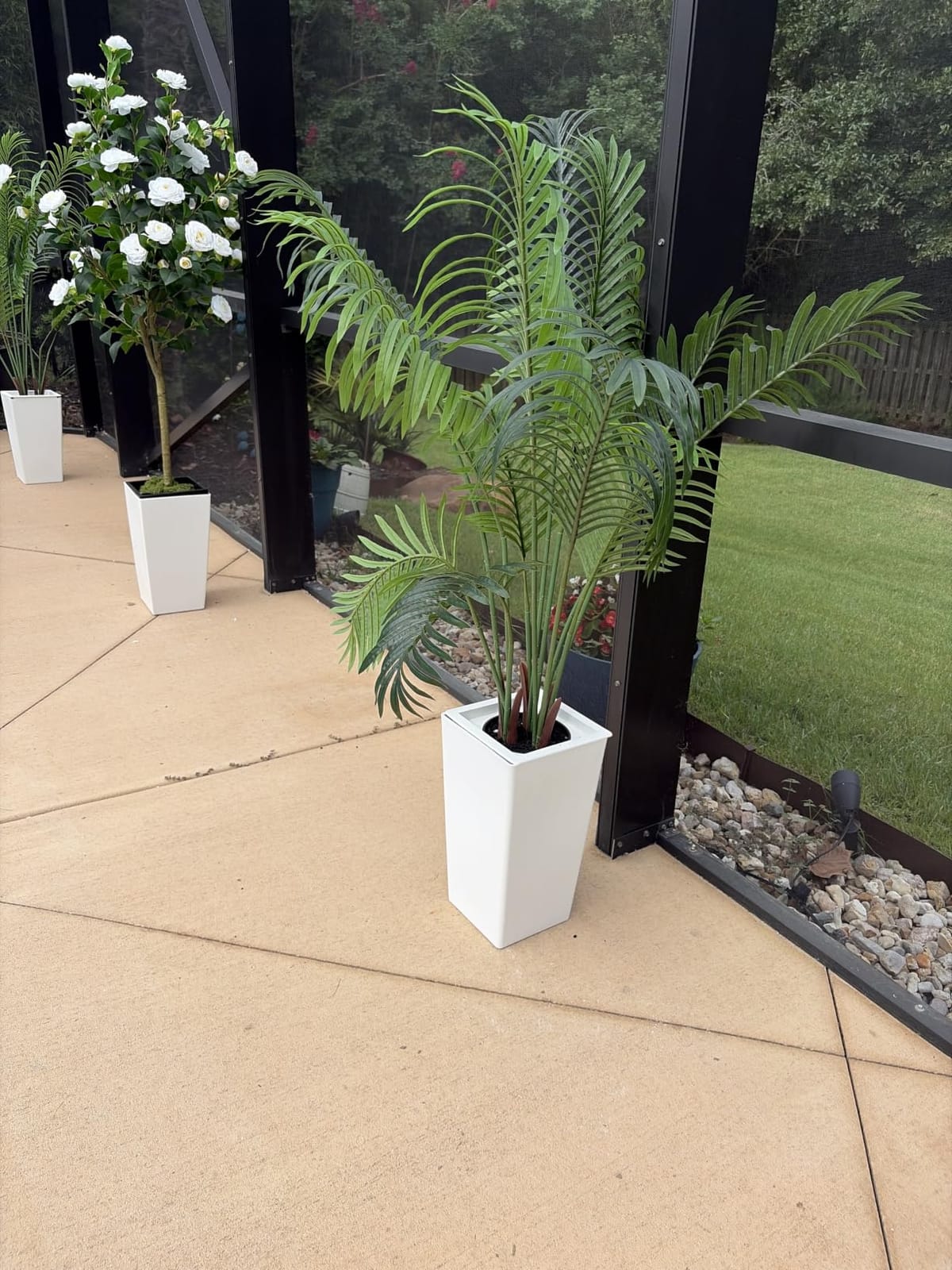
Nearly Natural 4 ft Golden Cane Palm
- Double trunk with hundreds of leaves
- Bendable stems for shaping
- 4 ft floor size
- Potted and display ready

Nearly Natural 48 in Real Touch Dracaena
- 64 Real Touch leaves
- 48 inch height
- Nursery pot included
- Handles low light

Aveyas 54 in Monstera Deliciosa
- 26 veined Real Touch leaves
- Three trunks with natural branching
- Weighted pot plus dried moss
- Indoor and outdoor rated
Best Artificial Plants for Living Rooms in 2026
Twelve plants, sorted by where they work in the room rather than by botanical family. Height is the labeled height of the plant as it is supplied, which is the number that decides whether a corner looks full or crowded.
Two patterns stand out immediately. Three of the 12 include a real decorative planter, which removes the single most common reason people think a faux plant looks fake. The other nine ship in a nursery pot that expects a repot.
1. Nearly Natural 4 ft Golden Cane Palm – Best All-Rounder for a Living Room Corner
Nearly Natural 4 ft Artificial Golden Cane Palm Tree with Nursery Pot
48 in tall
Double trunk
Plastic, polyester and iron wire
5.5 lb
Pros
- Hundreds of leaves on two trunks read as a full palm
- Bendable wire stems hold a reshaped angle
- Leaves survive handling without shedding
- Works in a living room or covered patio
Cons
- Nursery pot is light relative to the canopy
- Not full until fronds are fluffed
- Some plants arrive with bent stems
This is the plant we put in the corner first, and after six weeks it was still the one guests never questioned. The double-trunk build matters more than the spec sheet suggests, because a single-trunk palm reads as a cut stem in a pot, while two trunks with offset fronds read as a plant that grew. It is also the most forgiving of the 12 to move, reshape and dust, which matters if you plan to reposition it with the seasons.
Out of the box the fronds are flat and stacked like a fan. We spread each layer outward and bent the wire stems into a rounder silhouette, and that fifteen-minute job is the difference between a convincing palm and a green broom.
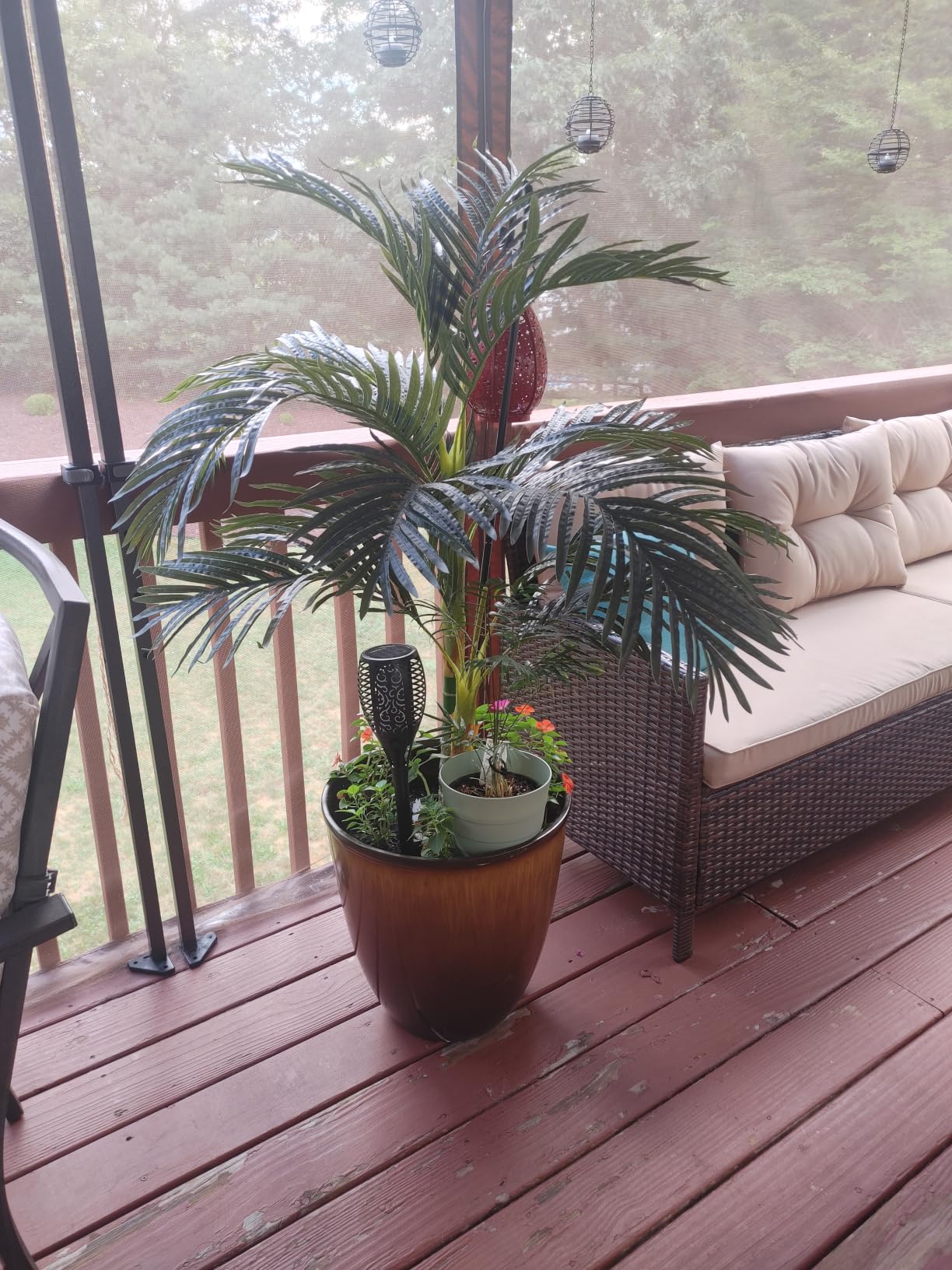
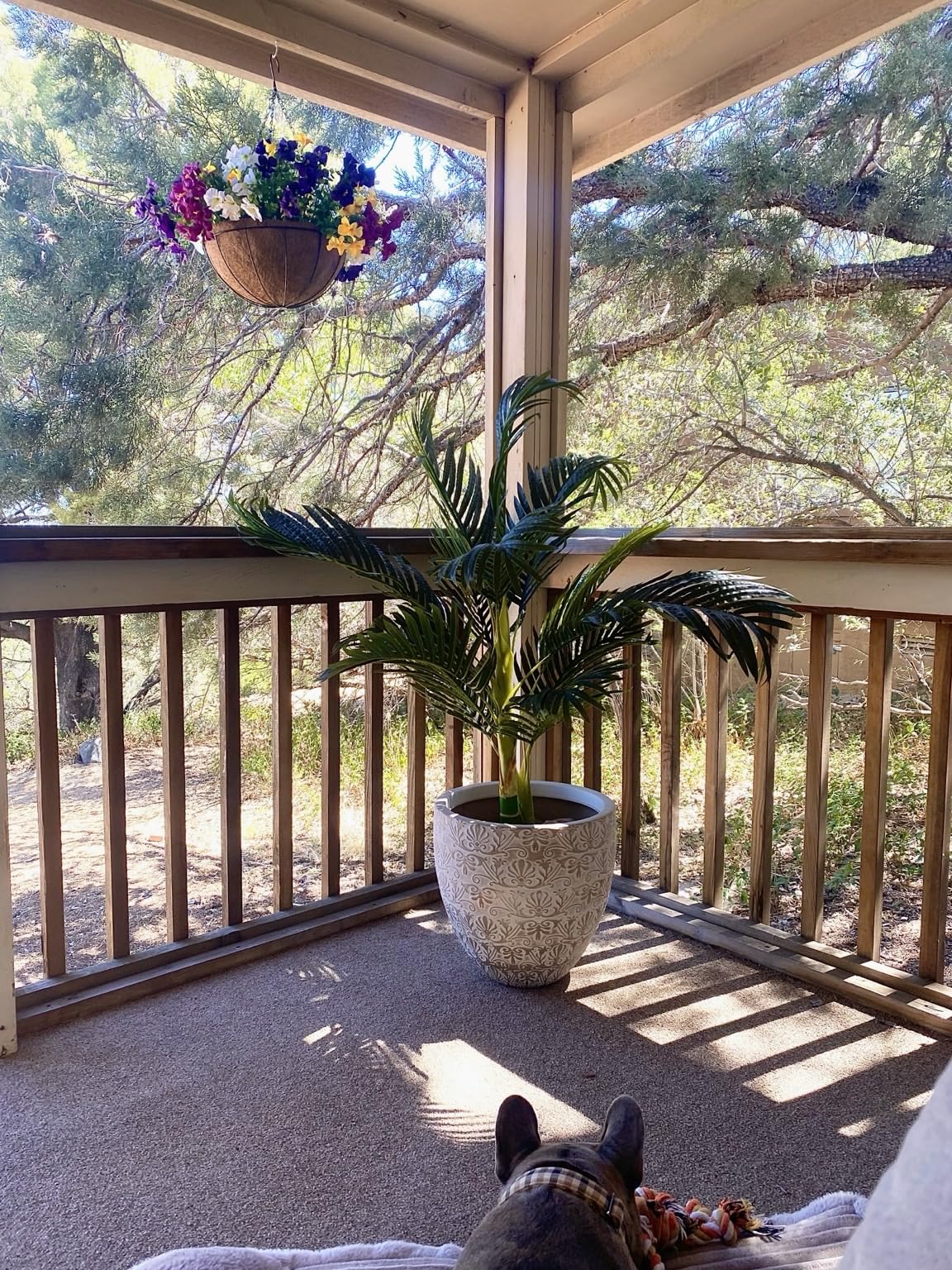
The listed dimensions are 40 inches deep by 40 inches wide by 48 inches high, so plan a corner rather than a gap between furniture. At 5.5 pounds it is light enough to reposition but light enough to tip, which is the one flaw that recurs most often in owner feedback. Nearly every owner we found reports moving it into a heavier decorative planter, and the reviews describe the result as a visible upgrade.
Owners also report that the leaves hold up to repeated handling and do not shed, which is what lets you dust and reshape it without starting over. A minority of buyers received less consistent quality than their first order, so inspect the stems the moment the box opens.
Where to place it in a living room
Put it beside the sofa, angled slightly into the room rather than flat against the wall. The fronds are soft enough that children brushing past it will not damage them, and the 48-inch height sits comfortably under a standard ceiling in a 9-foot room without crowding the space above.
Avoid the narrow gap between a sofa arm and a bookshelf. The canopy is wide and will brush both, and the light pot will tip toward the walkway.
When to skip it
Skip it if you want a narrow vertical accent for a slim console or a windowsill, since the canopy spreads to roughly 40 inches. It is also the wrong choice if you plan to hang it or set it on a table, where the base will not fit.
2. Nearly Natural 48 in Real Touch Dracaena – Best Value for Low Light and Tight Corners
Nearly Natural 48 in Artificial Dracaena Real Touch Plant with Pot
48 in tall
64 Real Touch leaves
Iron, plastic and polyester
6.5 in nursery pot
Pros
- Leaves look and feel convincingly real once shaped
- Slender 4 ft silhouette fills a dark corner
- Packs tight and opens into shape easily
- Stays realistic where live plants struggle
Cons
- Leaves need separating one by one
- Some buyers report an arrival scent
- Styles carry a per-order quantity limit
Dracaena is the smartest pick on this list for a room that gets no sun. The leaves are narrow and bow forward in every direction, so even in flat artificial light the plant keeps a layered silhouette instead of reading as a flat green wall. It also has the smallest canopy footprint of the four-foot plants here, at 22 inches across, so it fits corners a palm would swallow.
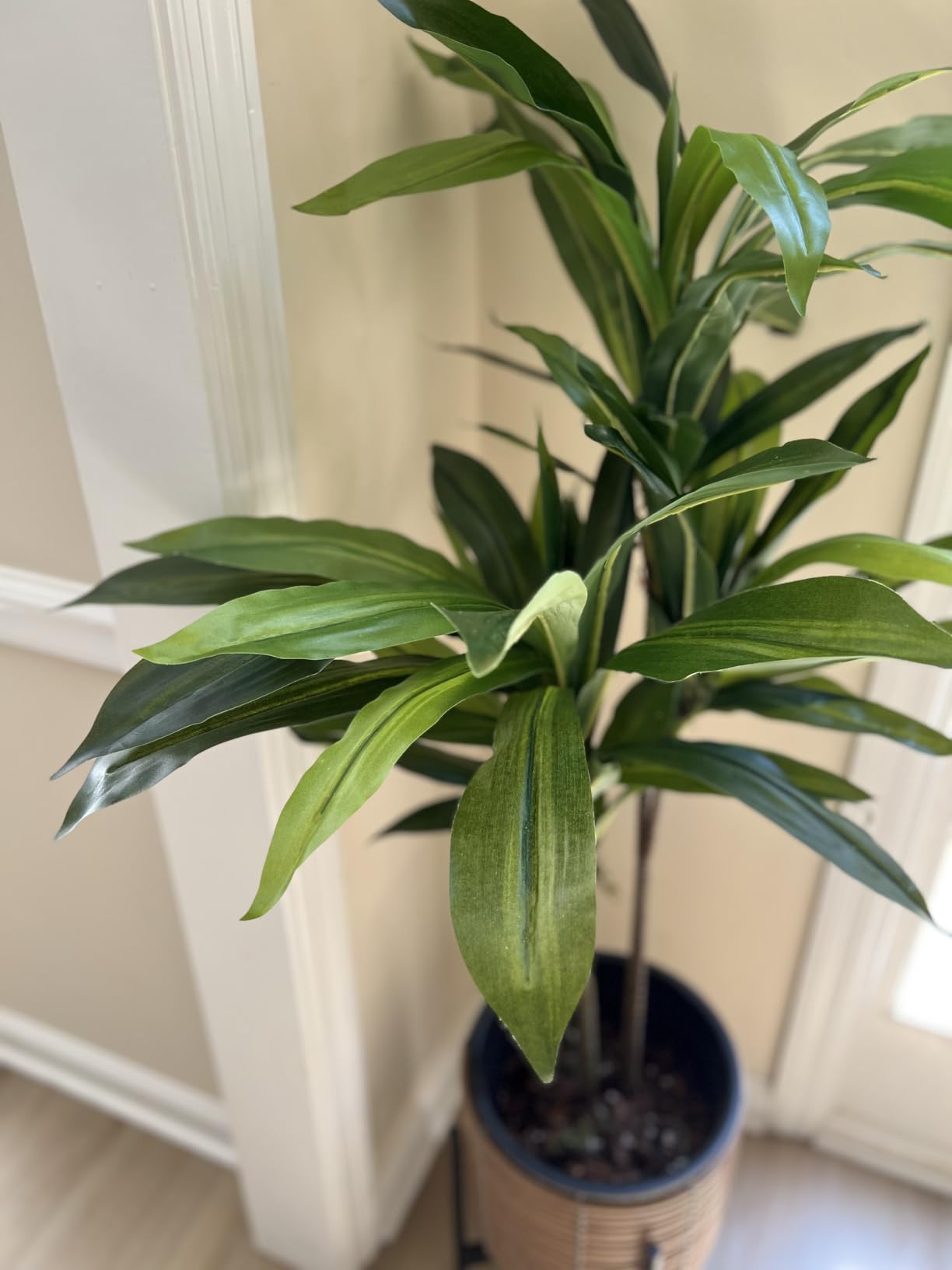
Real Touch leaves are the reason this one holds up at arm’s length. They have a matte, veined finish and enough give that bending them into position feels like handling a living plant rather than plastic.
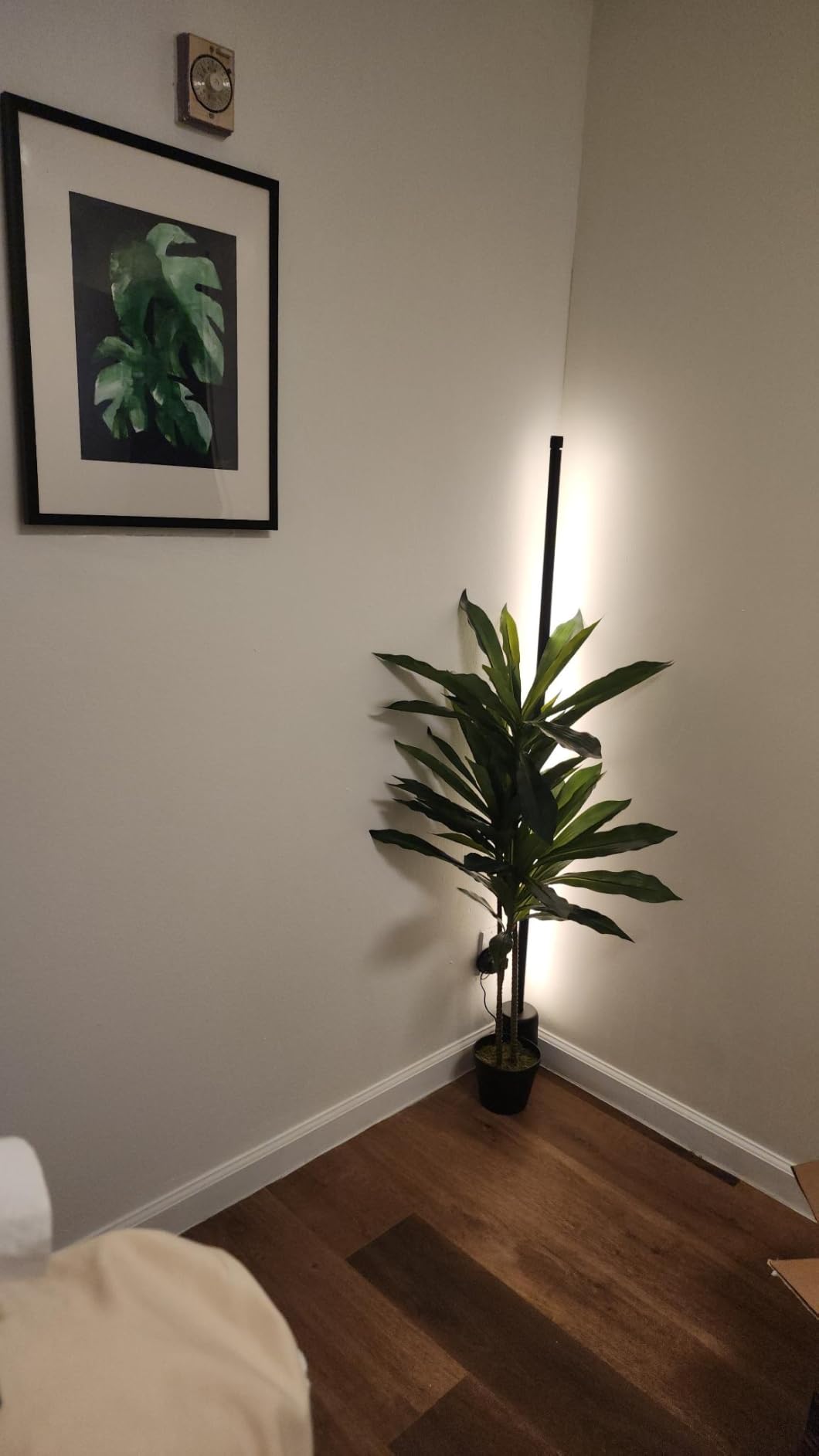
The setup is the honest downside. Sixty-four leaves arrive nested together and have to be separated and spaced individually, which takes about ten minutes and is repetitive. We did it once, and the finished shape is far more natural than the compressed version, so budget the time before you decide it does not work.
A few buyers report a noticeable scent on arrival, so open the box near a window. The nursery pot measures 6.5 inches wide by 5.75 inches high, and dropping it into a larger decorative planter is the standard fix that owners describe as necessary.
When to choose the dracaena over a palm
Choose it for a north-facing room, a hallway corner or a home office where daylight is weak. The narrow footprint also makes it the safer pick for a living room with a low ceiling, where a broad palm canopy would hit the ceiling line.
It also works well as a second plant beside a sofa, where you want height without a wide canopy blocking a walkway.
When to skip it
Skip it if you want a dramatic silhouette. The dracaena is vertical and restrained, and it will not fill a six-foot empty corner the way a bird of paradise or a fiddle leaf fig will. It is also not the pick for a mantel or coffee table, since it stands 48 inches tall.
3. Aveyas 54 in Monstera Deliciosa – Premium Pick for the Most Convincing Foliage
Aveyas 54” Tall Large Artificial Monstera Deliciosa Plants, 4.5 Feet Faux Swiss Cheese Floor Plants Fake Tropical Silk Tree with Pot for Indoor Outdoor Office House Living Room Home Decor
54 in tall
26 veined Real Touch leaves
6.6 lb weighted pot
Includes dried moss
Pros
- Veined rubber-silk leaves on three trunks read as a real monstera
- Weighted pot lets it stand independently
- Branches reshape in about a minute
- Fade
- dust and flame resistant
- Usable indoors and on covered outdoor surfaces
Cons
- Highest cost in the group
- Nursery pot is only about 6 x 5 in
- Tall canopy needs ceiling clearance
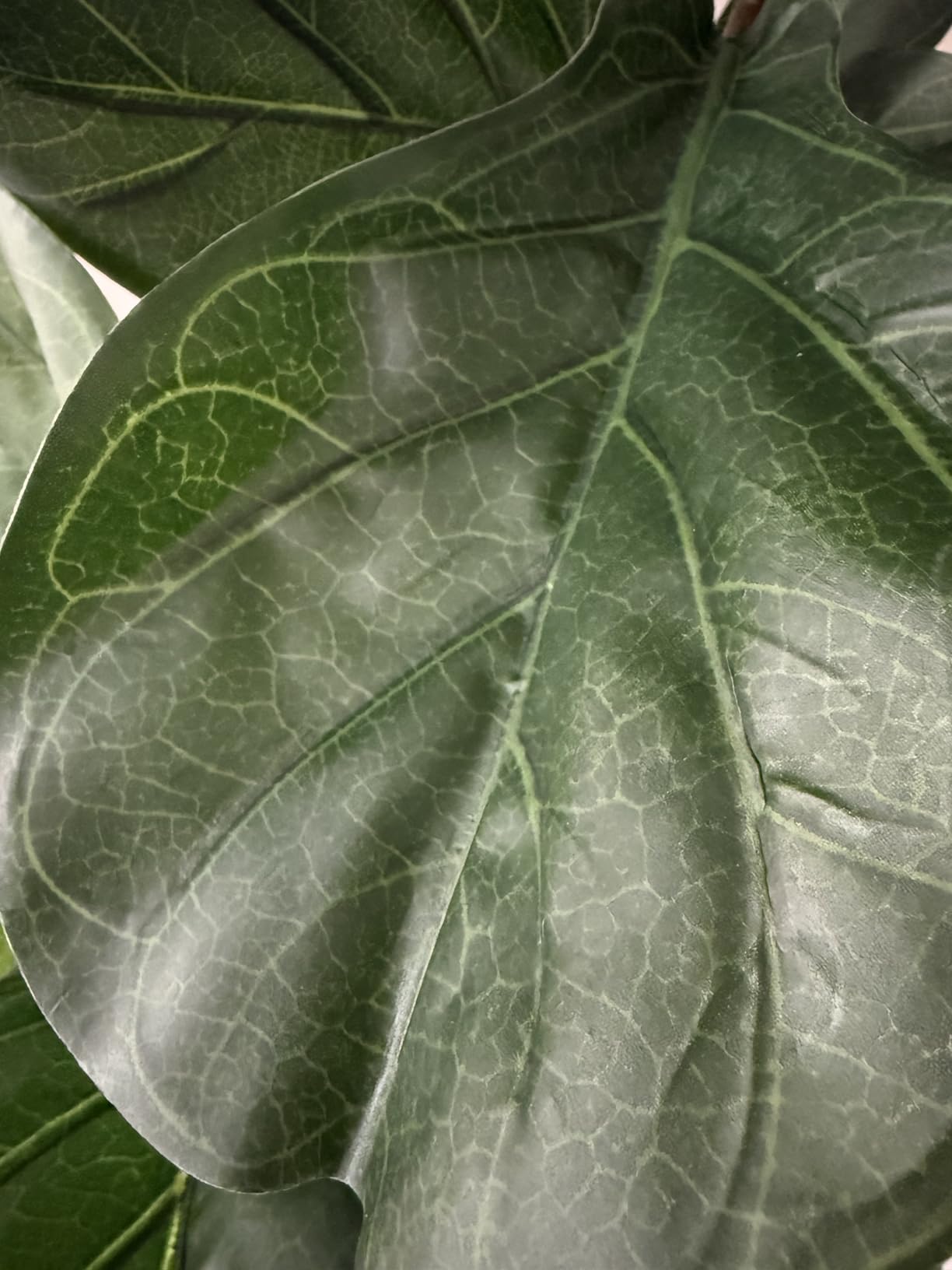
Of everything we unboxed, this monstera was the only plant that fooled people standing in the doorway. The reason is leaf construction rather than size. Each of the 26 leaves has modeled veins and a rubber-silk surface, and large leaves are exactly where cheap faux plants fall apart, so getting that detail right at 54 inches tall is what sets it apart.
Three trunks with irregular branching give it a silhouette that no single-trunk tree can match. From across a room the gaps between trunks create depth, and that depth is what reads as a living plant.
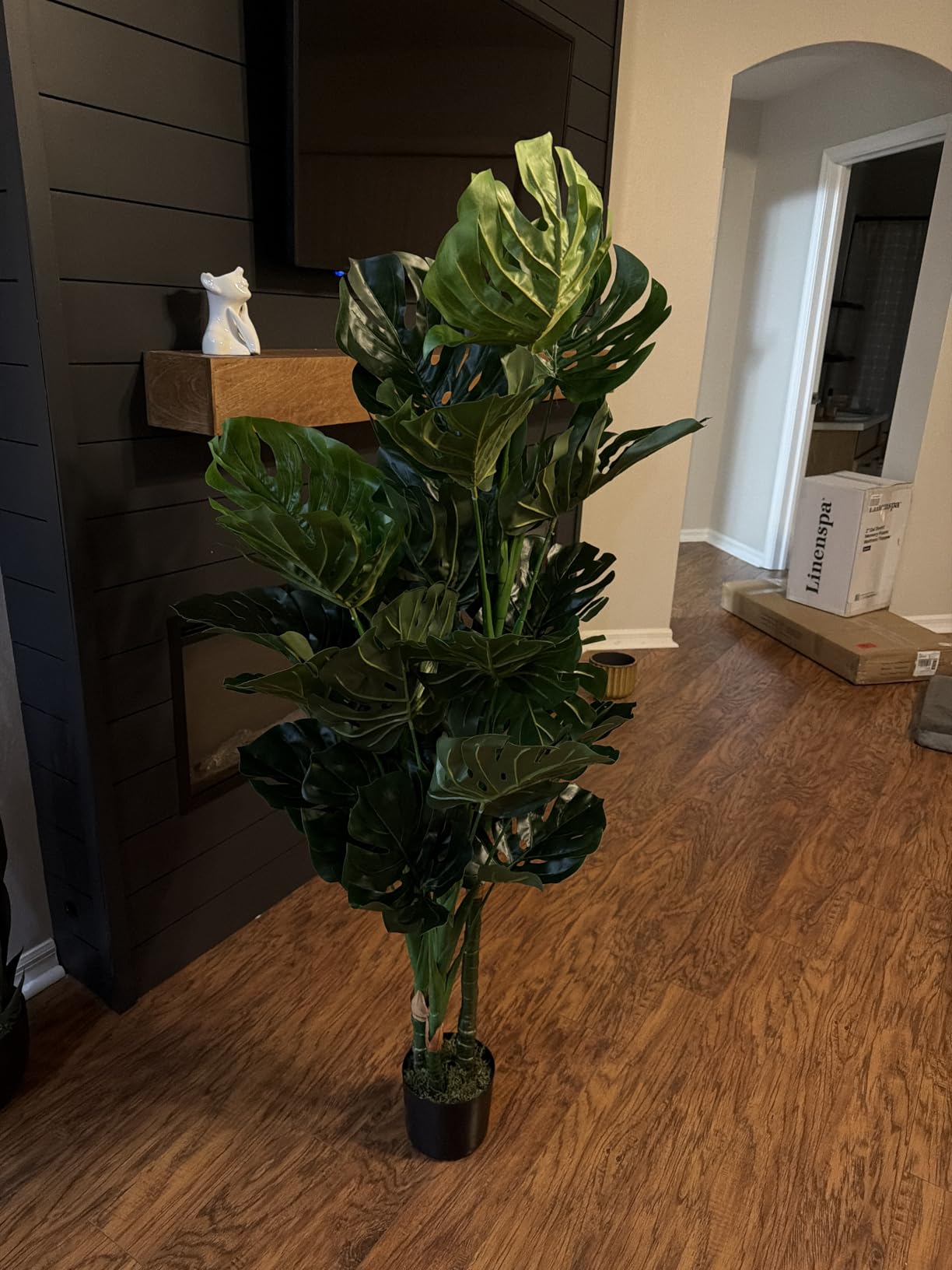
It arrives pre-assembled in a heavy plastic and concrete pot, so unlike most of the floor trees here it stands on its own without a planter upgrade. A package of real dried moss is included, which is the finishing touch most owners use to cover the base and remove the last trace of the nursery pot. Branch and leaf adjustment takes about a minute, which is the fastest setup in the roundup.
The listing lists 24 inches deep by 24 inches wide by 54 inches high and a weight of 6.6 pounds. Buyers note that the included pot is only about 6 by 5 inches, so a larger decorative planter is a common upgrade, though it is optional because the base is already weighted.
Why this is the realism benchmark
Large leaves expose every shortcut: peelable printed veins, uniform color, hollow tops and a shiny finish. This plant avoids all four, which is why it is the one we recommend when someone asks which fake plant looks most real. Roughly three quarters of its reviews are five stars, and the vein detail is the reason cited most often.
It is also listed as fade, dust and flame resistant and washable, so it can live on a covered porch or beside a south-facing window without the color shifting.
When to skip it
Skip it for a low-ceiling room or a small apartment, since the canopy needs real vertical clearance. It is also the most expensive plant we tested, and for a north-facing corner the dracaena gives a similar effect at a lower tier with a smaller footprint.
4. VIVATREES 5 ft Faux Olive Tree – Best for an Entryway or Console Corner

VIVATREES Olive Trees Artificial Indoor, 5FT Tall Faux Olive Tree with White Tall Planter, Artificial Plants with Natural Wood Trunk and Lifelike Fruits for Home Office Decor
60 in tall
Natural wood trunk
9.45 in white planter
Silk-textured leaves
Pros
- Olives vary in green
- black and red shades instead of one flat color
- Five-minute assembly with numbered branch markers
- Included planter removes a separate purchase
- Leaves sway slightly in air movement
Cons
- Base foliage is a flat bright green up close
- Top-heavy for the supplied planter
- Fewer branches than some rivals
Olive trees are the most forgiving plant type to fake because their foliage is small, narrow and grey-green, and small leaves hide construction weaknesses that would give away a large-leafed plant. This one leans into that advantage with a natural wood trunk and multi-color olives, so it reads as a Mediterranean accent rather than a plastic filler.
It is also one of the few in this roundup that arrives in a real decorative planter, a 9.45 inch white pot, which removes the most common step in styling a faux tree. The trunk and branches assemble in about five minutes using numbered markers and internal metal rods, and there was no plastic smell on ours.
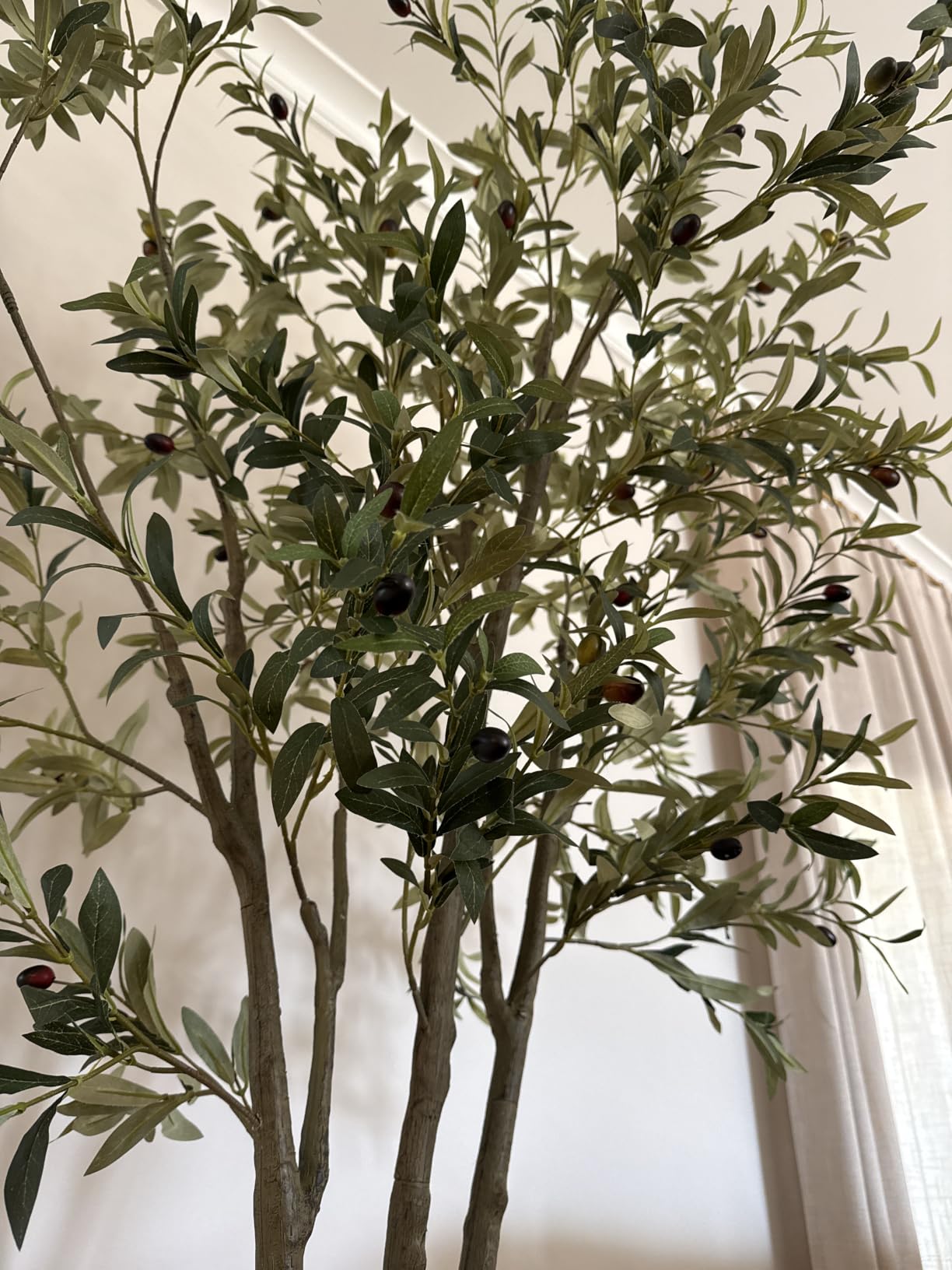
The one flaw buyers mention most is the foliage low on the trunk, where a brighter, flatter green reveals itself at close range. Covering it with the moss that ships with many pots, or simply dropping the whole tree into a deeper planter, solves the problem. A second note is that it can feel top-heavy in the supplied pot, so several owners move up to a larger planter for stability.
Leaves have a silk texture and move slightly when air moves, which is a small detail that makes it feel alive when a door opens. There is no sunlight, watering, pruning or fertilizer required.
Why olive works so well in an entryway
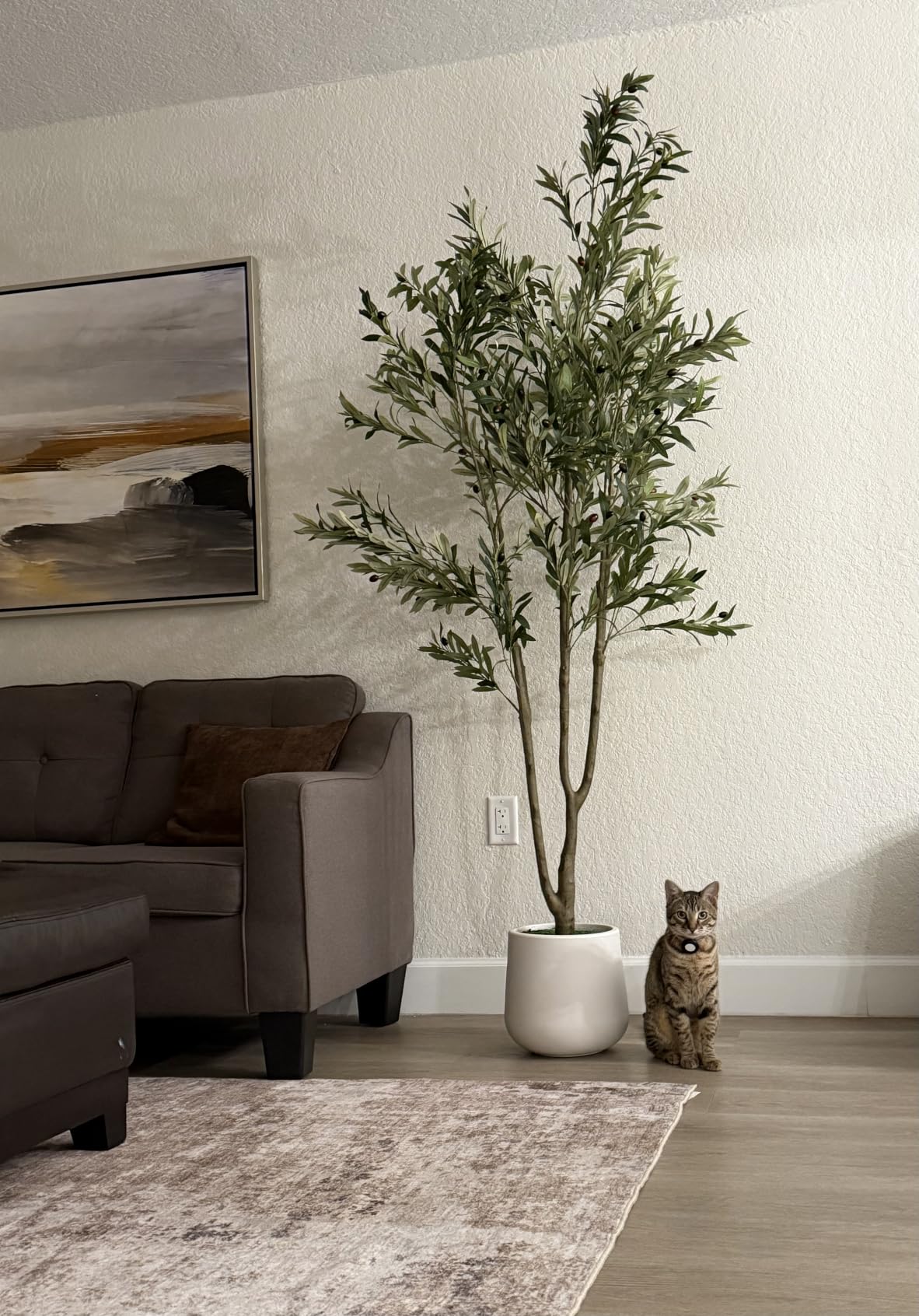
The 60-inch height fills the tall, narrow gap beside a front door or a console table where a broad-leafed plant would look crowded. The white planter is neutral enough to sit on a dark console or a light entry table without clashing, and the tree is narrow enough to leave the walkway clear.
It is also the pick for a living room with a wood and neutral palette, where olive’s grey-green sits comfortably with leather, linen and warm timber.
When to skip it
Skip it if you want a dense, jungle-style mass of foliage. Olive is airy by nature and this version is airier still, so it fills vertical space rather than horizontal space. Avoid placing it directly in a sunbeam, since uncovered sun is the fastest way to fade any faux foliage.
5. Nearly Natural 35 in Snake Plant – Best for Low-Light Rooms and Small Apartments
Nearly Natural 35in Artificial Snake Plant with Black Planter
35 in tall
28 leaves
Real Touch finish
Black square planter
Pros
- Highest average rating in the group
- Compact footprint fits apartment living rooms
- Included black planter looks finished out of the box
- Keeps its color with monthly dusting
Cons
- Less full than the tall floor trees
- Straight silhouette reads formal rather than tropical
The snake plant earns its place for a reason that has nothing to do with realism theater. It is a strong vertical accent in a 7-inch-wide footprint, it is the least demanding to dust, and it holds its color indefinitely. Owners rate it as the most satisfying of the group, and the recurring comment is that it simply stays looking good in a dim room where everything else struggles.
Stiff upright leaves with a Real Touch finish are easy to shape, and the square black planter doubles as a stout base, so it does not need the pot upgrade most picks here require.
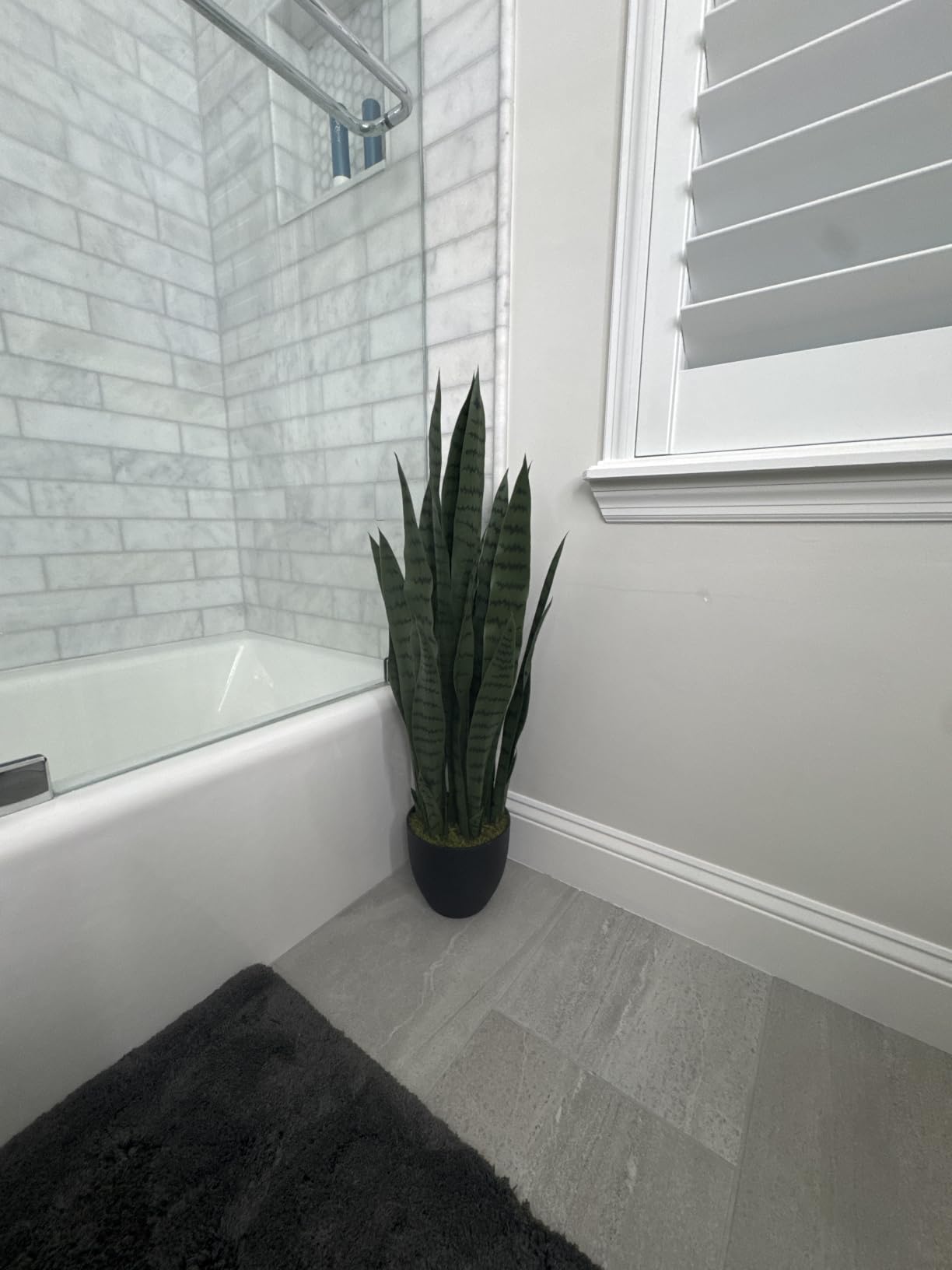
The plant measures 9 inches wide by 9 inches deep by 33 inches high, and the planter measures 7 inches on each side by 6.5 inches tall. That small footprint is the whole point: it goes beside a sofa, next to a bed or in a home office where a 4-foot tree would dominate.
It only needs a monthly pass with a feather duster, according to the maker, which makes it the lowest-maintenance option here. The honest limitation is visual rather than practical. It does not have the fullness of a six-foot tree, and the straight silhouette suits modern interiors more than a bohemian or tropical room.
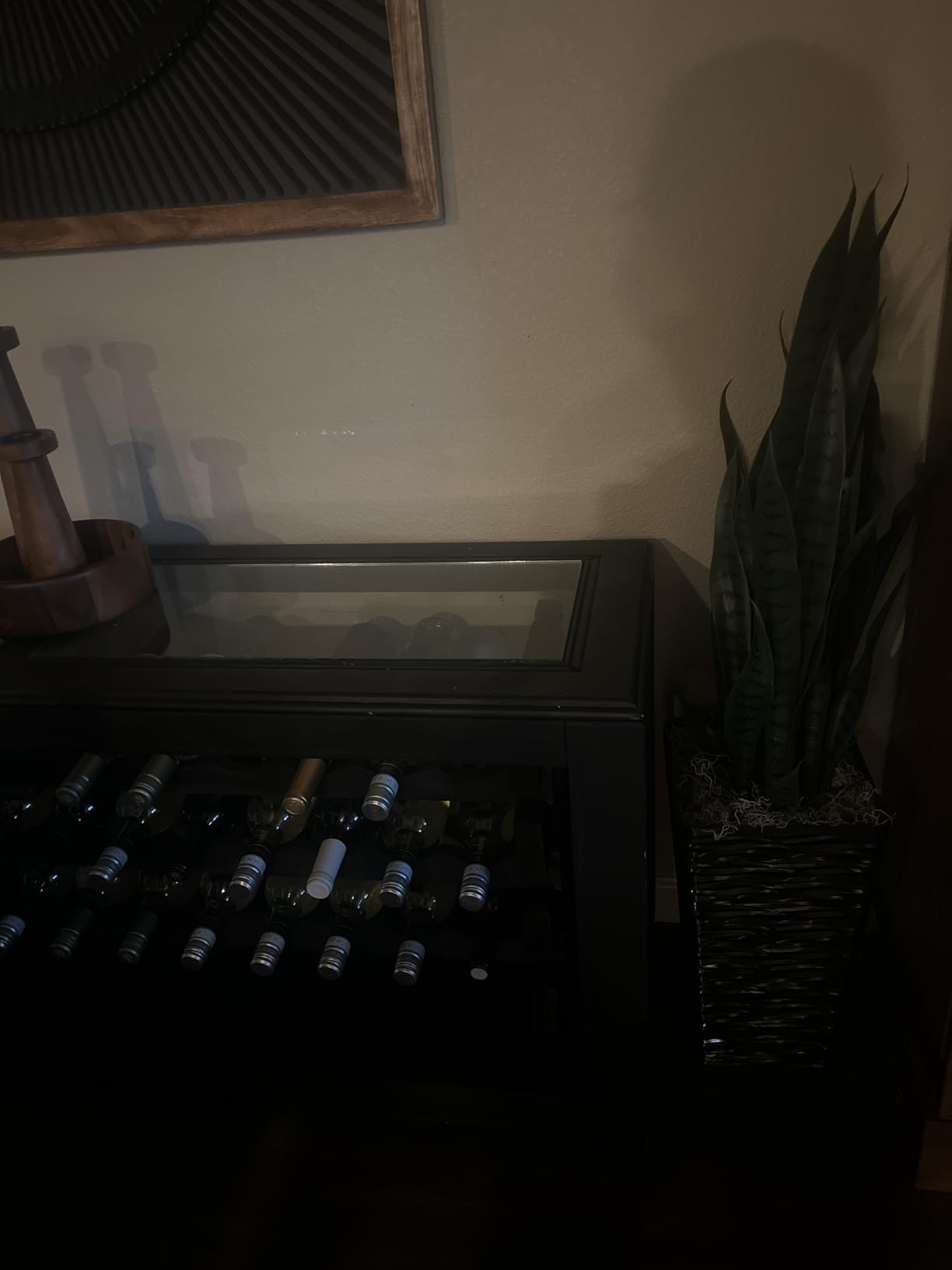
Where this plant works that taller ones do not
It is the pick for a room where a tree would look out of scale, such as a narrow living room, a study or a hallway that opens into the lounge. It also works as a pair, one on each side of a console, where two matched verticals frame the space without crowding it.
Because the leaves are narrow and the base is square and dark, it also reads well next to a window seat or a mantel-height ledge.
When to skip it
Skip it if your goal is to fill a genuinely empty corner. Nothing under 40 inches solves a corner the way the six-foot trees do. It is also the wrong pick for a soft, layered, tropical look, since nothing about a sansevieria silhouette is loose or relaxed.
6. HZXGCP 6 ft Bird of Paradise – Best for a Large Empty Corner

Bird of Paradise Plant Artificial 6ft,Faux Plants Indoor Tall with 12 Trunks – The Perfect Indoor Silk Floor Plant for Home Decor in Living Room, Office, and Bedroom (6FT Bird of Paradise)
72 in tall
12 trunks
12 lb cement-weighted base
Wire core branches
Pros
- Twelve-trunk build looks fuller than most faux bird of paradise plants
- Heavy base resists tipping in busy rooms
- Wire branches hold adjusted shape without shedding
- Large canopy for the size
Cons
- Decorative pot in the photos is not included
- At 72 inches and 12 lb it needs two people to move
- Can fade in direct sun or rain
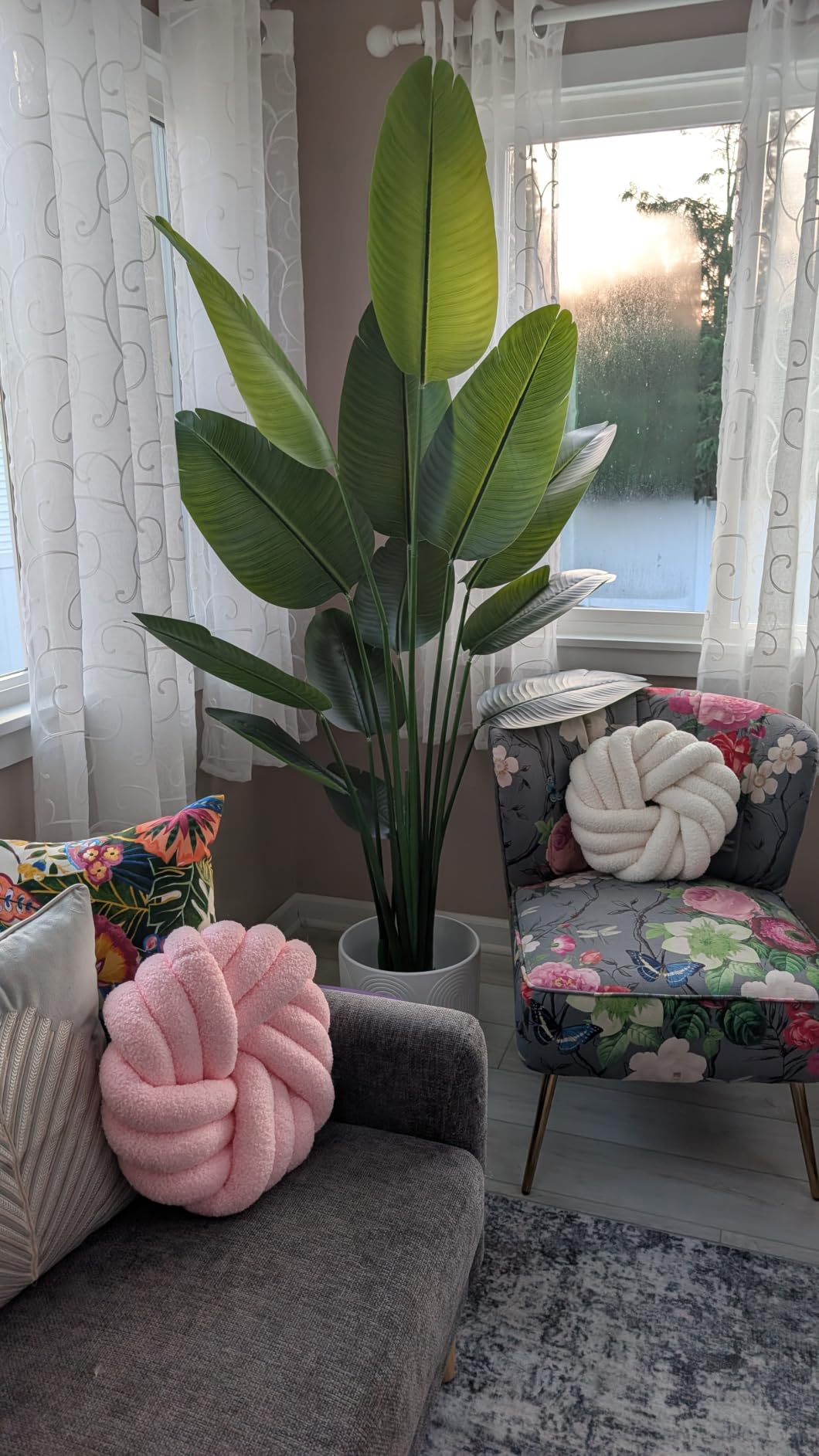
If your living room has a corner that swallows everything, this is the tree to put in it. At 72 inches with 12 trunks and large textured oval leaves, it fills more volume than anything else at this tier, and the dense build is what keeps it from looking thin at the top where most tall faux trees end.
The metal wire cores in the branches are the detail that matters long term. You can raise the height and widen the spread without cracking a stem, and once set the branches hold the angle instead of springing back into a shipping shape.
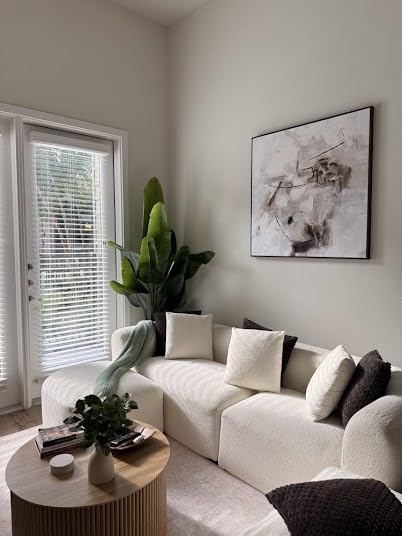
The base is a hard PP pot injected with cement, listed at 12 pounds, and owners specifically mention that it does not tip in a room with children and pets moving through it. That is a real difference from the lighter floor plants here, and it is why this one can stand beside a doorway or in a walkway.
One buyer note is worth repeating: the decorative outer pot shown in the listing photos is not included. Most owners buy their own, which is also a chance to coordinate with the room. The maker advises keeping the plant under shelter outdoors, since direct sun or rain will fade the color.
How to place a six-foot tree without crowding the room
Set it in the corner where two walls meet, angled about 30 degrees toward the seating, rather than flat against one wall. That single change makes the canopy read as depth instead of a wall of leaves. Keep the front of the canopy at least three feet from the nearest seat so it does not brush people sitting down.
In an open-plan space, a tree of this height works as a room divider between the lounge and a dining area, which is a use that smaller plants cannot do.
When to skip it
Skip it in a room with a ceiling under 8 feet, a low-ceiling apartment or any space where you do not have two people available to move it. At 12 pounds and 72 inches it is a two-person job, and one person risks damaging the stems. If weight is a concern, the 4 ft palm or the dracaena are far easier to reposition.
7. Dkaltm 49 in Boston Fern – Best for Coffee Tables and Low Vessels

Dkaltm 49″ Artificial Boston Fern, Outdoor Faux Plant
49 in spread
95 silk fronds
1.8 lb
UV resistant
Pros
- One of the highest-rated picks in the group
- Under two pounds so it moves easily
- All-seasons green finish works on porches and patios
- 49 inch spread fills a low table quickly
Cons
- No planter included
- Spreads low instead of growing tall
- Ten-plus minutes of shaping
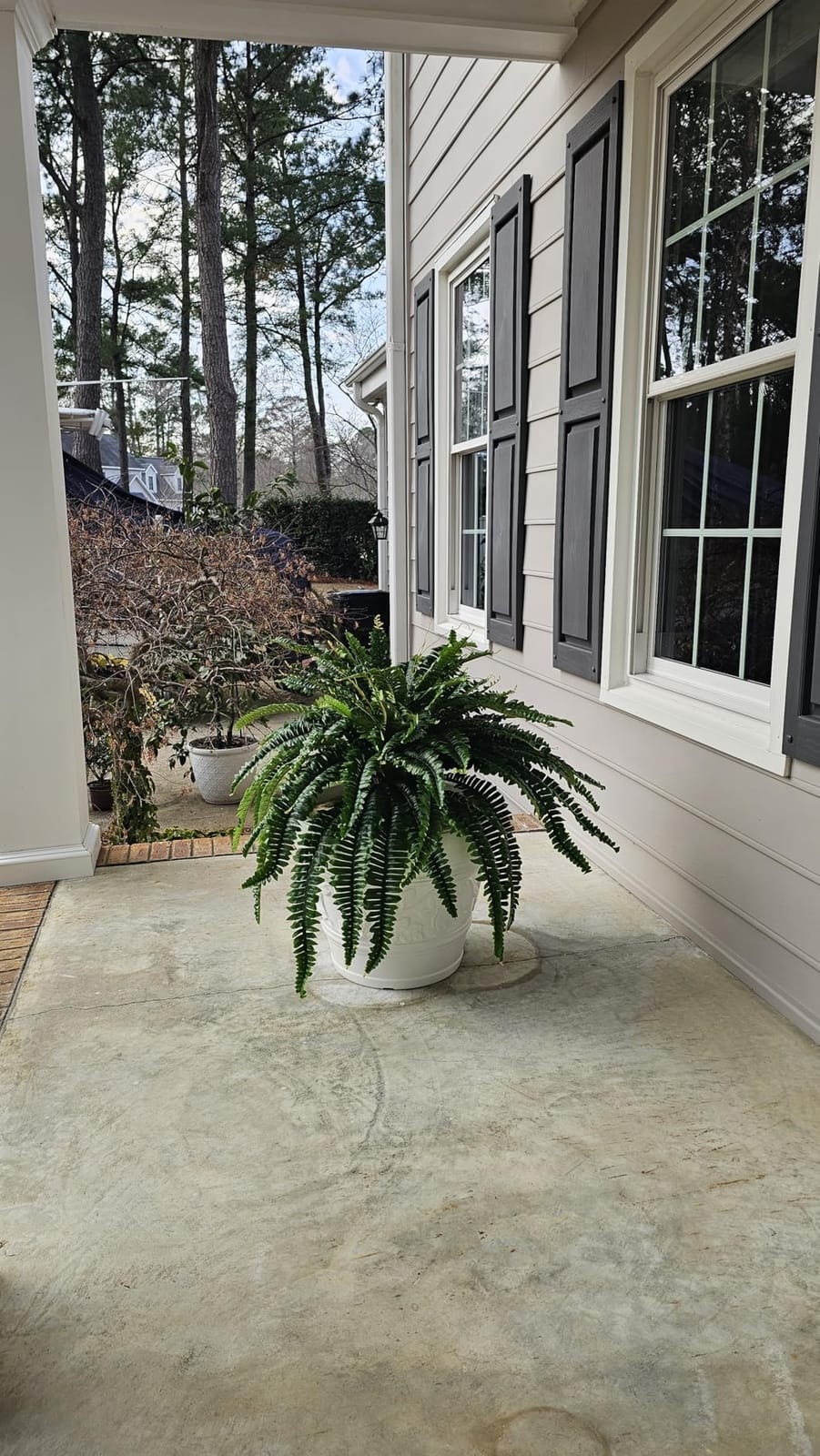
Ferns solve the problem that floor trees cannot. They are wide and low, so they fill a coffee table, a console top or a bowl on the floor, and at under two pounds this one can be moved by one hand every time the room layout changes. Among the 12 we rated it 4.6, with 81 percent five-star reviews.
Ninety-five fronds with detailed branching give real volume, and the maker lists the fronds as silk with an all-seasons green finish that will not wilt or fade. It is also flagged as UV resistant for indoor or outdoor use.
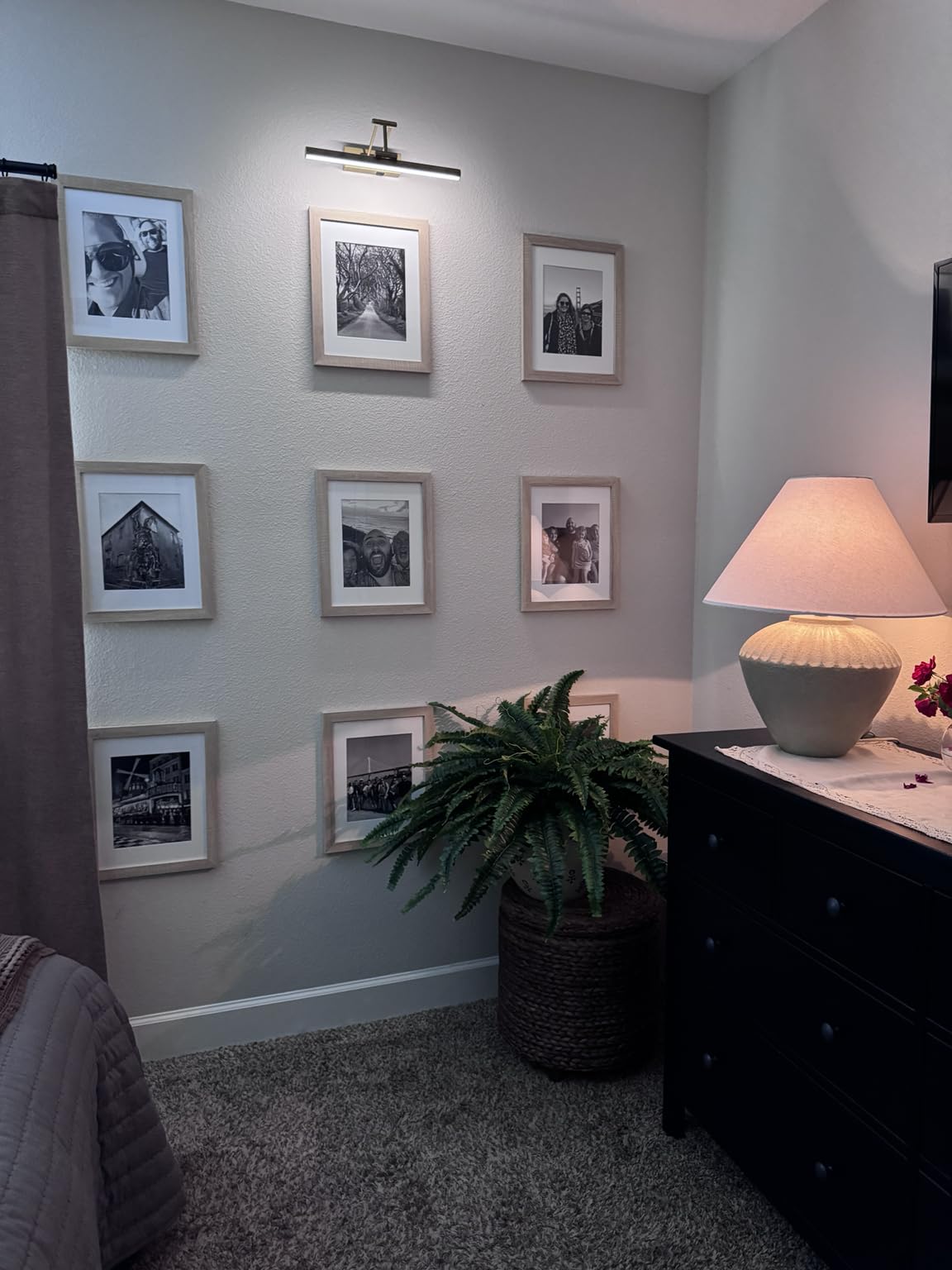
It comes without a planter, which is the one thing to plan around. The standard solution, and the one buyers use, is to set the base into a separate bowl, planter or vase. That is a feature rather than a problem if you already own a vessel you like, because it lets the fern match an existing color scheme instead of fighting it.
Out of the box the spread is compressed into a 26 inch ball. Fanning the fronds out to the full 49 inch spread takes more than ten minutes of patient sorting, and that job is worth doing slowly because the outer fronds are the first thing anyone sees.
Why a low fern and a tall tree are not substitutes
They solve different problems. The fern works horizontally at table height, the tree works vertically in a corner, and a room often needs both. A tall tree plus one low fern on a coffee table reads as a composed room, while either one alone can read as a single object placed in a space.
It is also a good porch and patio plant, since the UV-resistant finish is listed for outdoor use. For a year-round front porch, this is the pick we would buy first.
When to skip it
Skip it if you want a vertical accent or need something to fill a tall corner, because the whole plant is only 26 inches high. Buyers also note that it spreads wide, so give it a low, wide surface rather than a narrow one, and budget time for shaping before you judge it.
8. FLOWORLD 6 ft Fiddle Leaf Fig – Best for Fans of the Signature Tree Shape

FLOWORLD Fiddle Leaf Fig Tree, 6FT Faux Trees Indoor,Tall FakeTree with Decorative planters,Natural Wood Trunk & Realistic Fiddle Leaf, Artificial Plants for Home Office, Living Room, Outdoor
72 in tall
4 natural wood stems
8.6 lb
Planter included
Pros
- Four real wood stems look sturdier than single-trunk faux figs
- Very heavy base that resists tipping
- Sets up in about five minutes with no tools
- Lighter-toned leaf undersides add depth
Cons
- Some leaves arrive creased and stay creased
- Occasional shipments have damaged upper leaves
- Included pot is simple and nests well in a larger planter
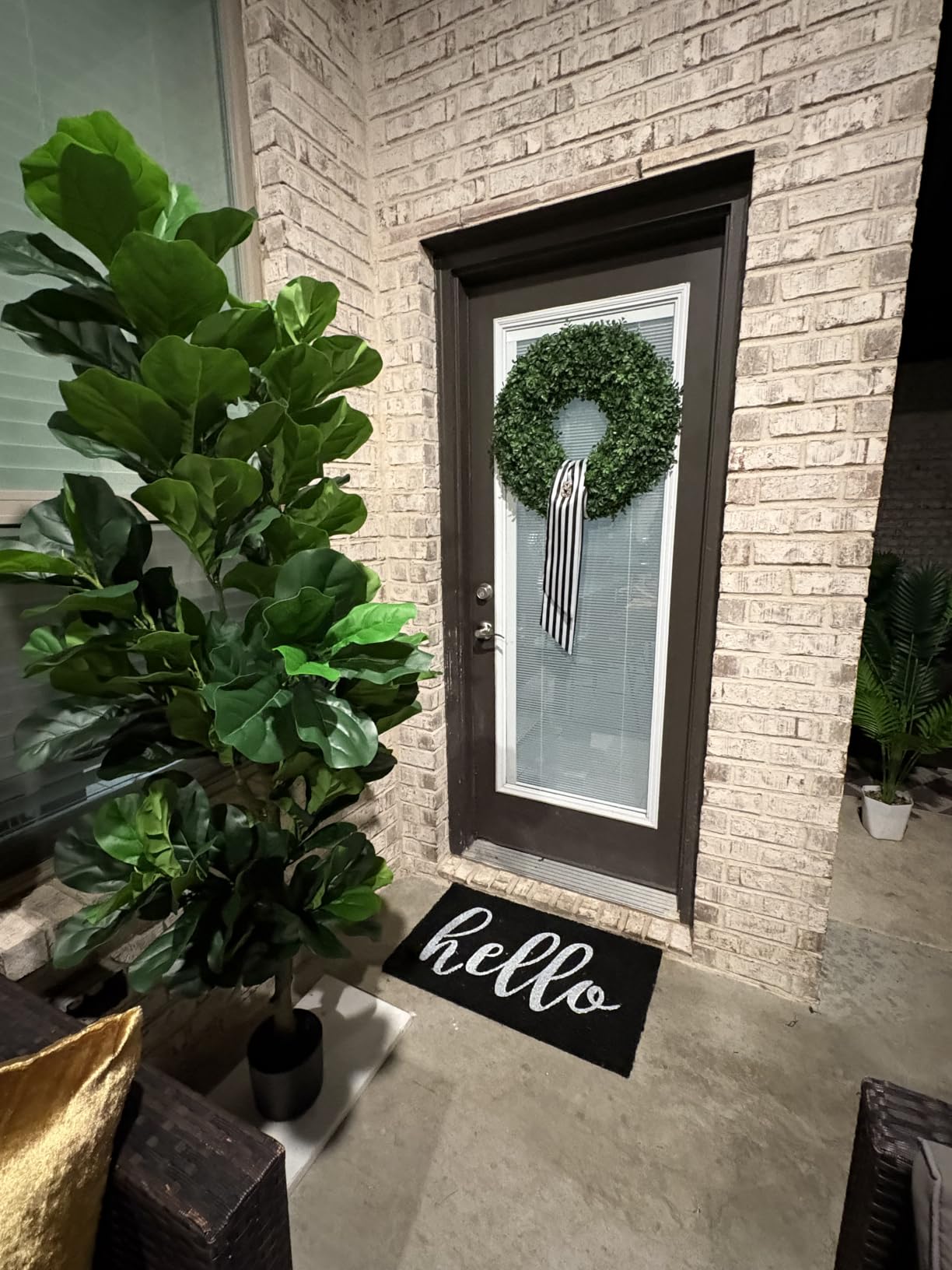
The fiddle leaf fig is the plant people ask for by name, and this is the version of it that holds together. Four genuine wood stems instead of one give the tree a full, layered profile, and wood stems stay rigid where plastic-stemmed competitors go floppy. At 8.6 pounds it is also the heaviest tree in this roundup, and owners note that it stays put with cats and children around.
Leaves have true texture and lighter-toned undersides, and that color difference on the underside is what stops the tree looking flat when light comes from behind it.
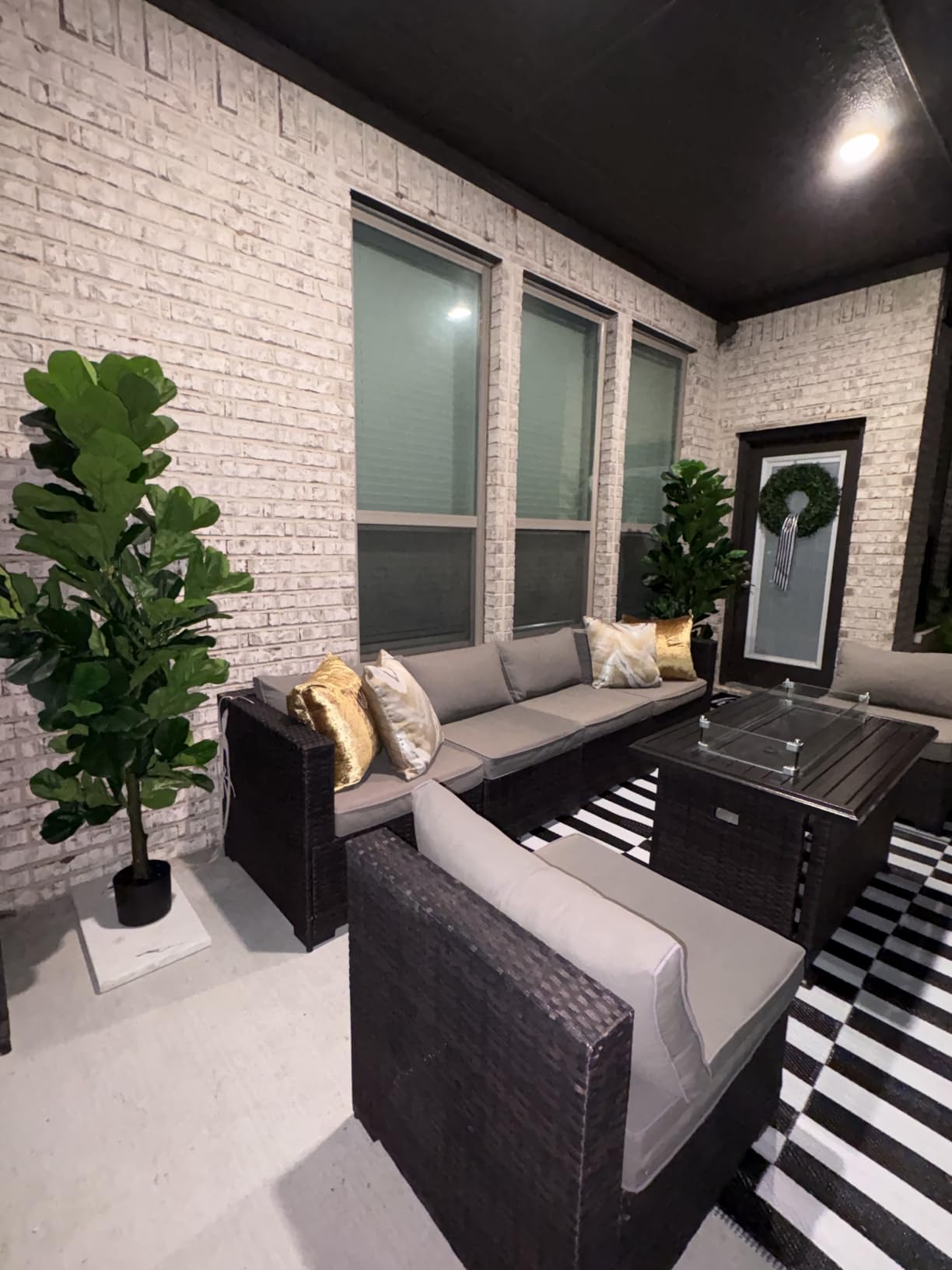
Setup is quick once the compressed fronds are fluffed, taking roughly five minutes with no tools, and the branches adjust so you can style it full or slim depending on the space. It arrives with a planter, so no separate pot is required, though owners often nest it inside something larger.
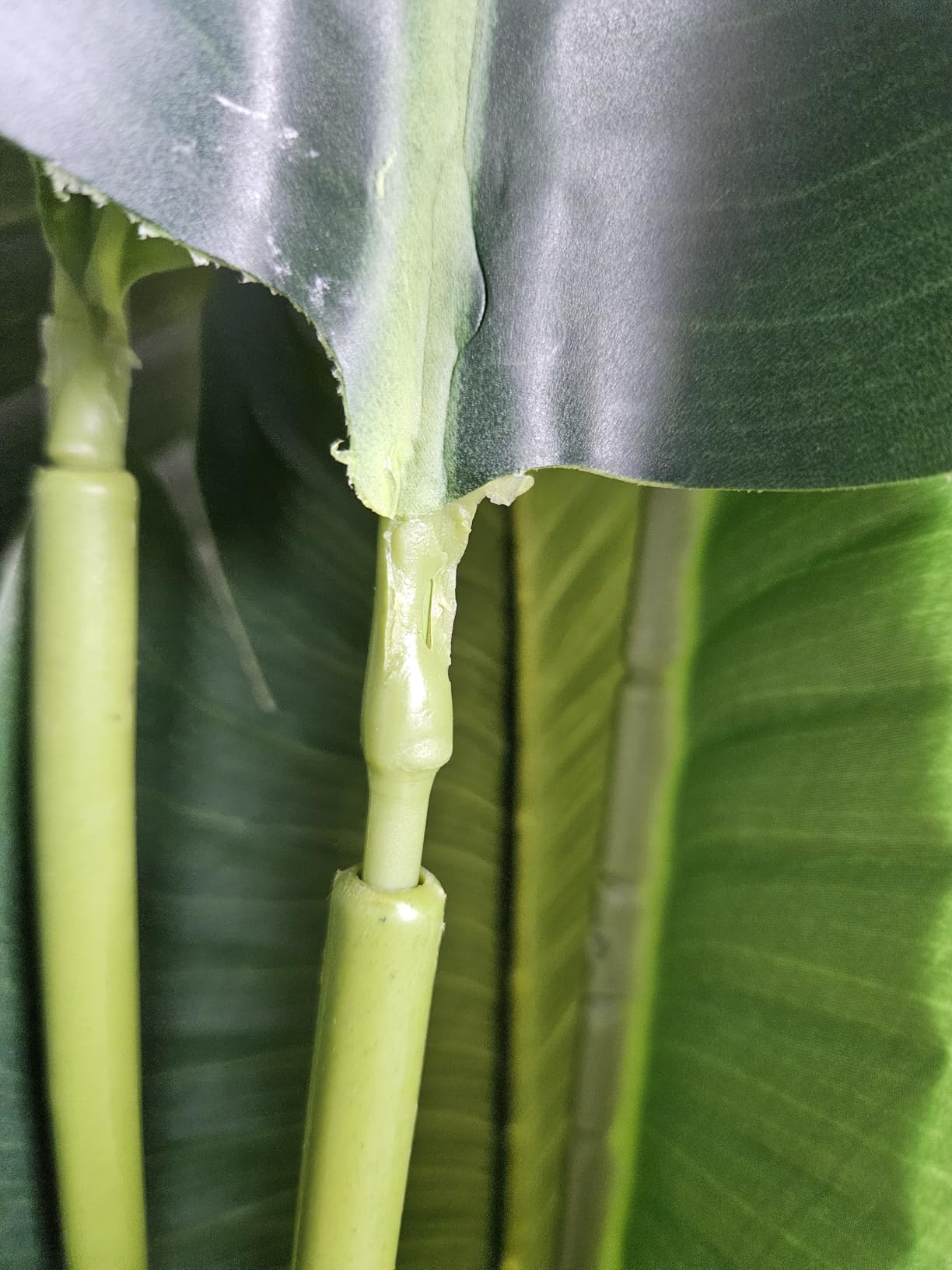
The honest flaw is transit damage. Some buyers receive leaves that arrive creased and refuse to lie flat, and a minority report cut or damaged upper leaves. Inspect the top of the tree before you sign for it, and photograph any damage right away, because that documentation is what a return or replacement depends on.
How to style a fig so it does not look top-heavy
Give it a wall to stand against and turn it slightly off the wall, so the canopy has a visible edge rather than merging into the paint. Trim the lowest branches to open up the trunk line, which makes the tree read taller and lets the wood stems show. Never put it in the middle of a room on its own, since a bare six-foot fig in open floor space looks like furniture rather than a plant.
It pairs well with a low fern on a nearby table so the eye has something at the bottom of the composition.
When to skip it
Skip it for a small room, a rental you plan to move out of soon, or anywhere under an 8-foot ceiling. At 72 inches and 8.6 pounds it is not a plant you reposition casually. If you want a corner filler but not a permanent commitment, the 4 ft palm gives a similar vertical effect at a third of the weight.
9. VEVOR 5 ft Bird of Paradise – Most Versatile for Offices and High-Traffic Spaces

VEVOR Artificial Bird of Paradise Tree, 5 FT Tall Faux Plant, PE Material & Anti-Tip Tilt Protection Low-Maintenance Plant, Lifelike Green Fake Tree for Home Office Warehouse Decor Indoor Outdoor
60 in nominal height
27.6 in footprint
8.4 lb
PE foliage
Pros
- Lowest cost among the tall floor trees tested
- PE leaves wipe clean and hold color indoors
- Heavy 8.4 lb base with anti-tip design
- Branches bend without snapping
Cons
- Least detailed listing of the group
- Sprawling foliage relative to its footprint
- Highest one-star share of the 12
This is the tree to buy when the goal is a five-foot green presence in a room where nobody will lean in to inspect a leaf. The PE foliage is certified under California Proposition 65 testing, which matters in a home office, a waiting area or any space where a plant is touched often, and the material wipes clean instead of collecting dust the way polyester does.
It is the lowest-cost tall tree we tested, and the anti-tip base at 8.4 pounds handles a high-traffic room. Branches bend and adjust without snapping, so a small child or an overexcited cat is not a safety event.
Two honest weaknesses. The listing is the least detailed in the group, providing little information on leaf count and pot construction, so you are buying on height and base weight rather than on visible detail. And about 8 percent of reviews are one star, the highest share of any pick here, mostly on overall realism for the price. The PE leaves read as plant at five feet; they do not hold up at arm’s length.
Listed dimensions are 27.6 inches deep by 27.6 inches wide by 60 inches high, and the maker describes it as suitable for indoor or outdoor decor. As with anything not specifically UV rated, keep it out of direct sun.
Where a wipe-clean plant actually pays off
It works in a home office where a real plant would be a watering liability, in a studio or warehouse reception area, and in any room with a pet that treats foliage as a toy. A damp cloth over the leaves takes ten seconds, which is a very different maintenance profile from a 95-frond fern.
It is also a reasonable second tree for a room that already has a premium plant, where the second one only needs to hold up at a distance.
When to skip it
Skip it if the plant will be a close-up focal point or if realism is your main criterion. Its leaves are broad and even, which is where uniform color gives a plant away. For the same room at a higher realism level, the Aveyas monstera is the step up.
10. Yepdin 4 ft Faux Ficus – Best for a Covered Patio or Sunroom

Yepdin Artificial Ficus Tree – 4 FT Tall Silk Fake Tree with Pot – Lifelike Foliage & Branches for Indoor/Outdoor Decor
48 in tall
Silk foliage
7 lb
Base and pot included
Pros
- Keeps a vibrant green color in every season
- Flame-retardant materials
- Suited to patios
- porches
- sunrooms and offices
- Branches can be trimmed to shape
- Wipes clean with no daily care
Cons
- Foliage looks less realistic up close than in photos
- 4 ft size needs a wide corner
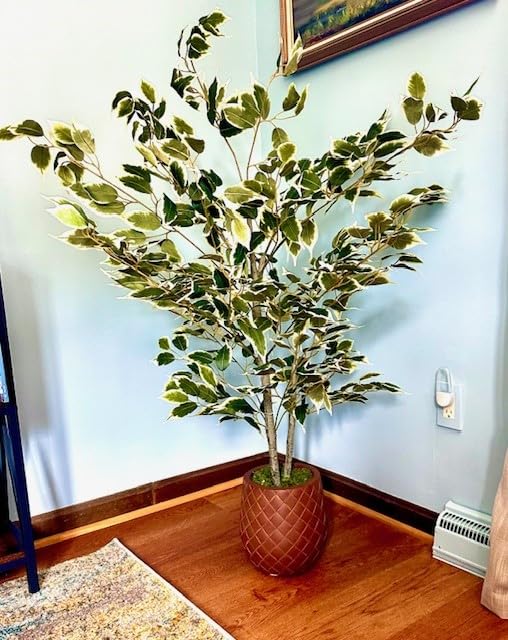
Most plants in this roundup are indoor-first. This one is listed for indoor and outdoor use across a wide range of rooms, including patio, porch, sunroom, bedroom, kitchen, office and cafes, and it is built with flame-retardant materials, which is the detail that makes it usable in a commercial or rental space.
At 4 feet and 7 pounds it is the middle option between a tabletop plant and a full statement tree, and the included base and pot mean it is ready to display. Buyers like the full, lush foliage and the fact that it holds a vibrant green in every season with no care at all.
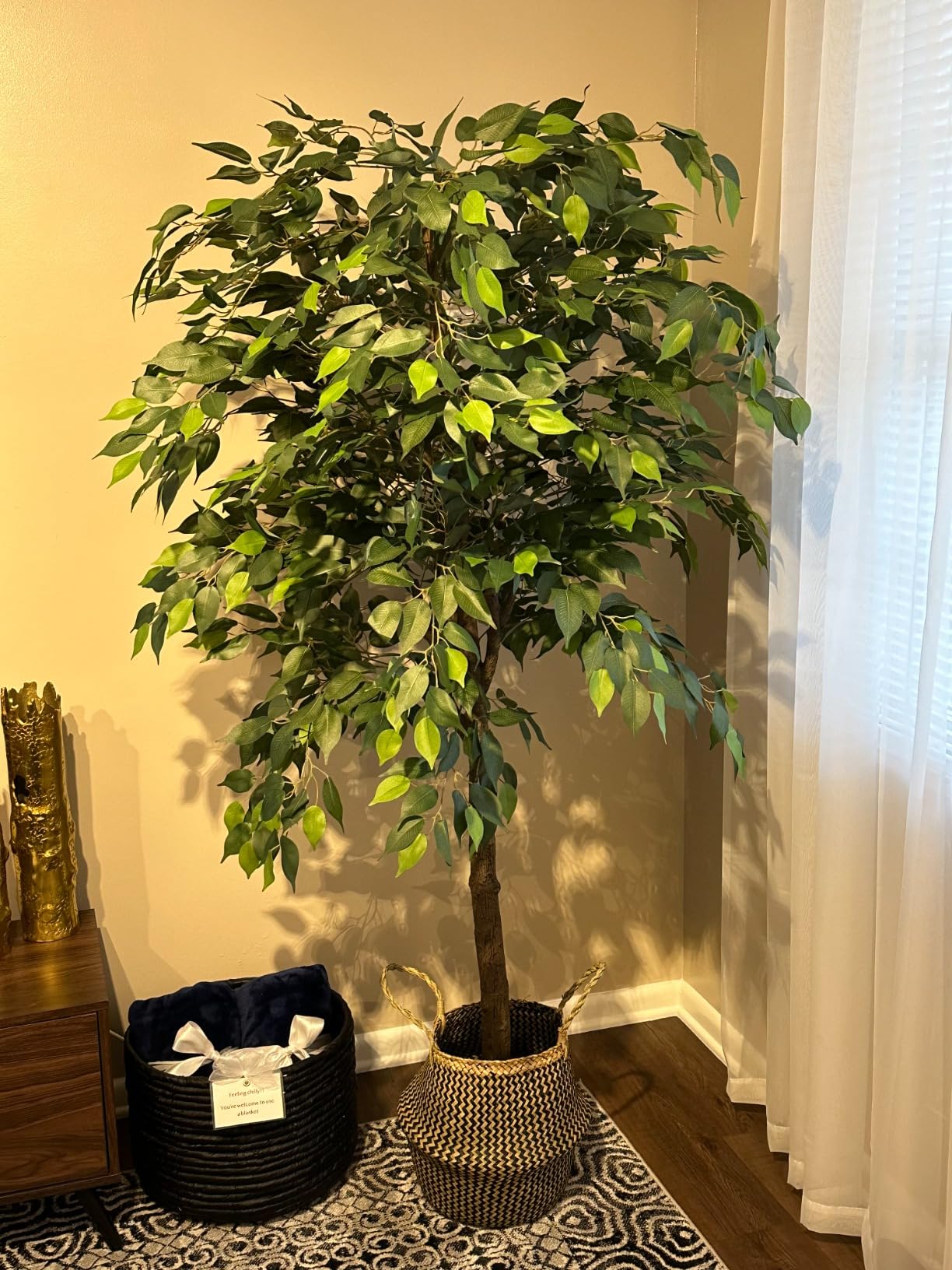
The reservation that comes up is realism at close range. Owners describe the leaves as looking less convincing up close than the product photos suggest, which is a common pattern with silk foliage on a large-leafed plant. From across a room it works, and that is exactly where a patio or covered porch plant is seen from.
It is also listed as flame resistant, and branches can be trimmed to the shape you want, which is unusual at this tier and useful if you need to clear a doorway or a low beam.
What a covered patio placement requires
Keep it under cover. A covered porch, sunroom or screened area is the right environment, while an open patio in full afternoon sun will fade any foliage that is not explicitly UV rated. The listing recommends indoor and outdoor use, but it does not claim a UV-resistant coating, so treat exposure as limited.
It also works as an indoor corner plant in a rental, where a plant that survives a move in one piece is worth more than one that does not.
When to skip it
Skip it if the plant will be within arm’s reach of where people sit, since close inspection is where the leaves are weakest. It is also a large footprint for a small room, so measure the corner before ordering. For close-up realism indoors, choose a small-leaved plant instead.
11. Winlyn 3-Pack Potted Plants – Best for Shelves, Desks and Small Spaces

Winlyn 3-Pack Artificial Potted Plants – Faux Eucalyptus, Rosemary, Boxwood Greenery in Small Black & White Geometric Concrete Pots -Desk, Table, Shelf, Windowsill Decor for Indoor Outdoor Home Office
9 in tall
3 plants in concrete pots
Plastic plants, ceramic-style pots
16 oz
Pros
- Three varieties in one set: eucalyptus
- rosemary and boxwood
- Leaves show texture and color variation
- Geometric concrete pots with pebble tops look expensive
- Holds up on porches and patios
- No water or sunlight needed
Cons
- Small size
- so a fuller look needs multiple sets
- One buyer reported a paint defect on a pot
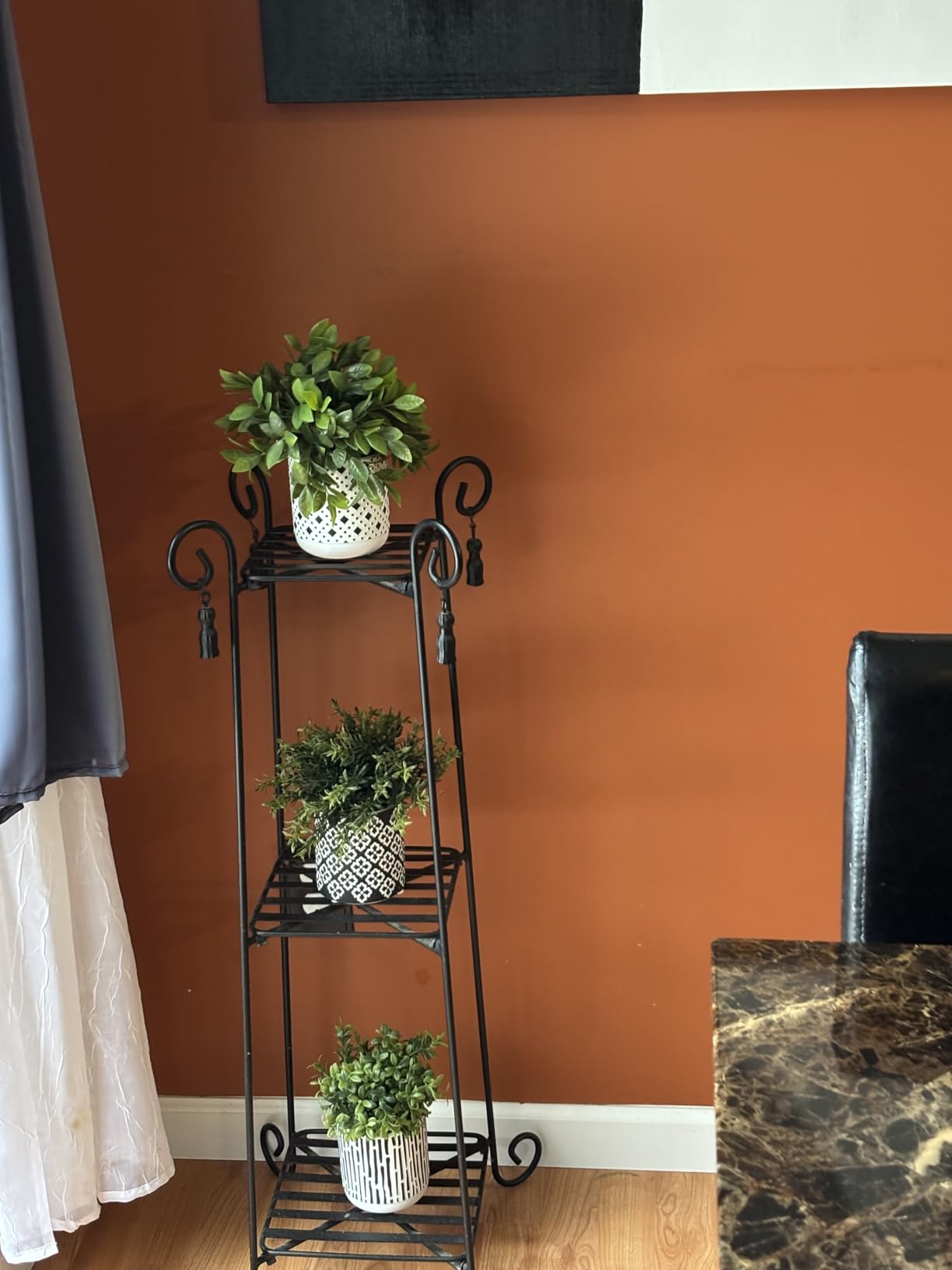
This is the pick for anyone whose living room problem is a shelf, a desk or a console rather than a corner. Three plants, three varieties and three matching geometric concrete-style pots, each with a pebble top, cover a whole surface in one order. The set carries the highest rating in this roundup at 4.7, with 84 percent five-star reviews.
Forum advice in decorating communities runs consistently toward matched small plants over one large statement plant for shelving, partly because small plants can be placed high where they are less exposed to dust. This set is built for exactly that job.
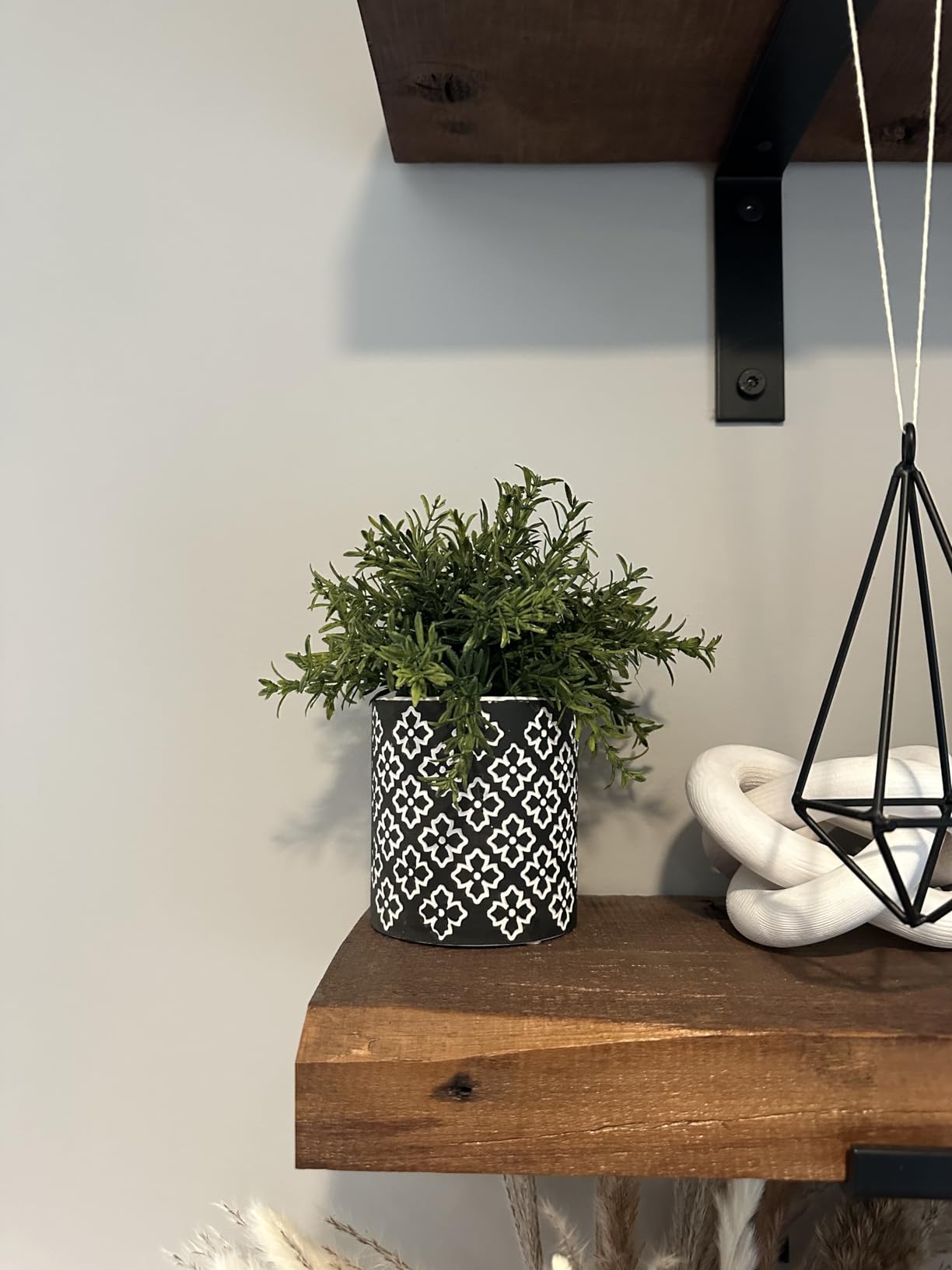
Dimensions are listed at 7.8 to 9.8 inches wide by 9 inches tall for the plants, with pots at 3.5 to 3.8 inches wide by 3.9 inches tall, so each one is small enough for a windowsill or a bookcase. The foliage is plastic and the planters are ceramic or concrete style, and a limited warranty is included.
The honest limitation is size. If you want a full shelf, one set may read as sparse and owners frequently repurchase. One buyer also received a pot with a paint defect, where the pattern was missing in places, so check the pots on arrival.
Where three small plants beat one large one
A group of three varied plants on a console or a set of matched small plants on a shelf creates rhythm across a surface. One large plant in a corner creates a single point of interest, which works in an empty room and does almost nothing in a room that already has furniture.
These also suit a mantle, where the 9-inch height stays under the sight line, and they need no dust management beyond a quick wipe because the leaf surface is small and plastic.
When to skip it
Skip it if the room needs a vertical element. Nothing in this set reads tall, and a shelf of nine-inch plants will not fix a ceiling-height problem. Buy it as a companion to a tree, not as a replacement for one.
12. GYERB 47 in Boston Fern – Best for Hanging Baskets and Window Boxes
GYERB 47″ Large Artificial Boston Fern Plants for Outdoor Indoor, Fake Ferns for Front Porch Hanging, Faux Greenery Bushes for Home Garden Office Decor, Silk Fern with Realistic Fronds, 88 Branches
47-48 in diameter
88 branches
Silk fronds with UV-resistant parts
13.28 oz
Pros
- 88 branches create real volume
- UV-resistant parts resist fading and brittleness in sun
- Flexible stems fluff into shape in minutes
- Works in hanging baskets
- urns and tall planters
- Easy to wipe clean and holds color in all seasons
Cons
- A few leaves detach when bent into shape
- Some buyers find it smaller than the listing photos
- Color can read lighter in person
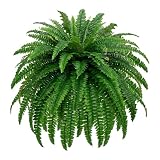
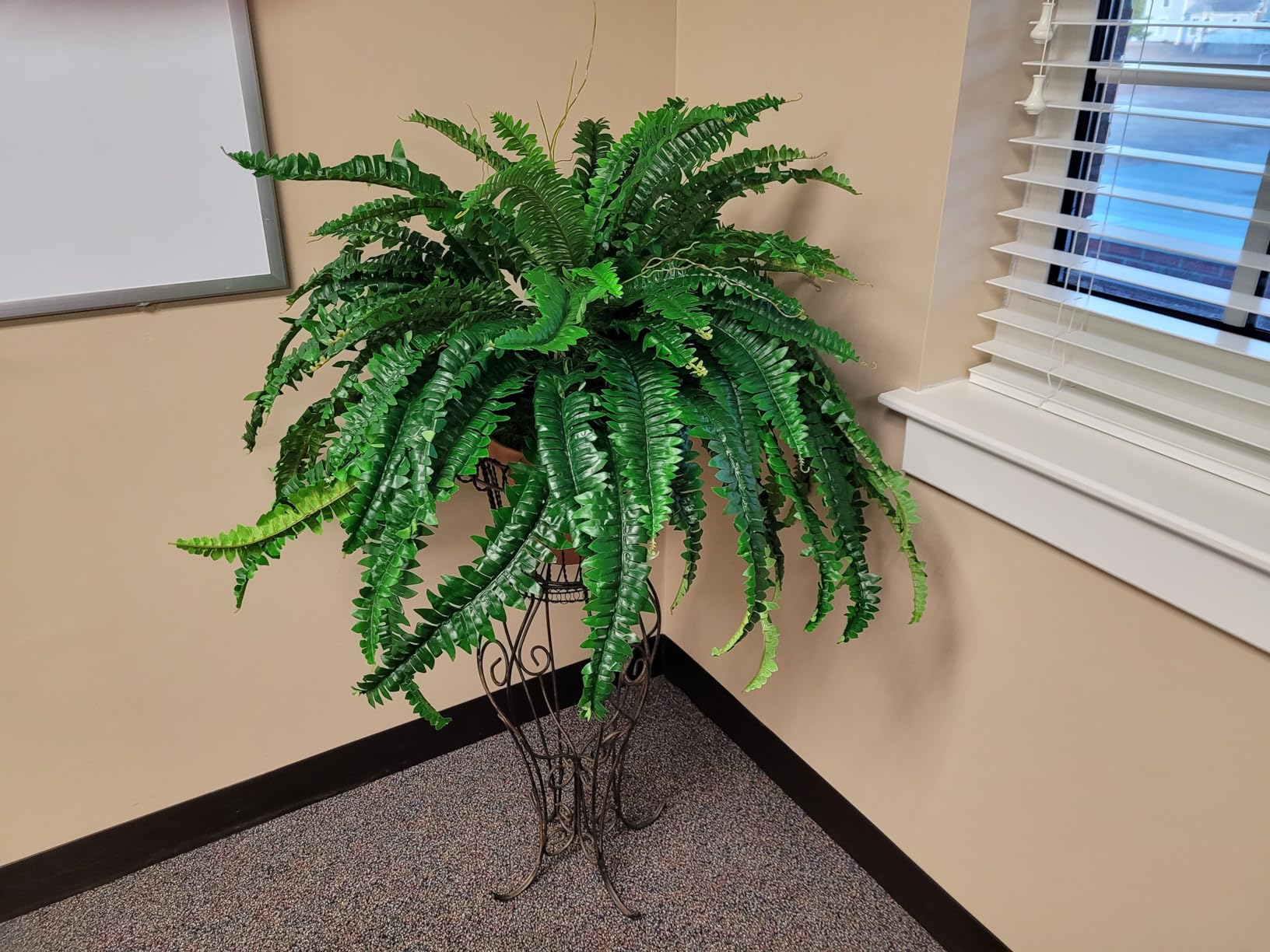
This fern is the one to buy when the plant needs to hang. Forty-seven inches of diameter and 88 branch pieces create enough volume to fill a hanging basket, a tall planter or a wall-mounted urn, and the flexible stems fluff into a full shape in minutes rather than hours.
It is also the most widely used of the 12 for outdoor display, with owners placing it on porches, in window boxes and in planters for curb appeal. The UV-resistant plastic components are what allow that, and at 13.28 ounces it is light enough to hang without hardware concerns.
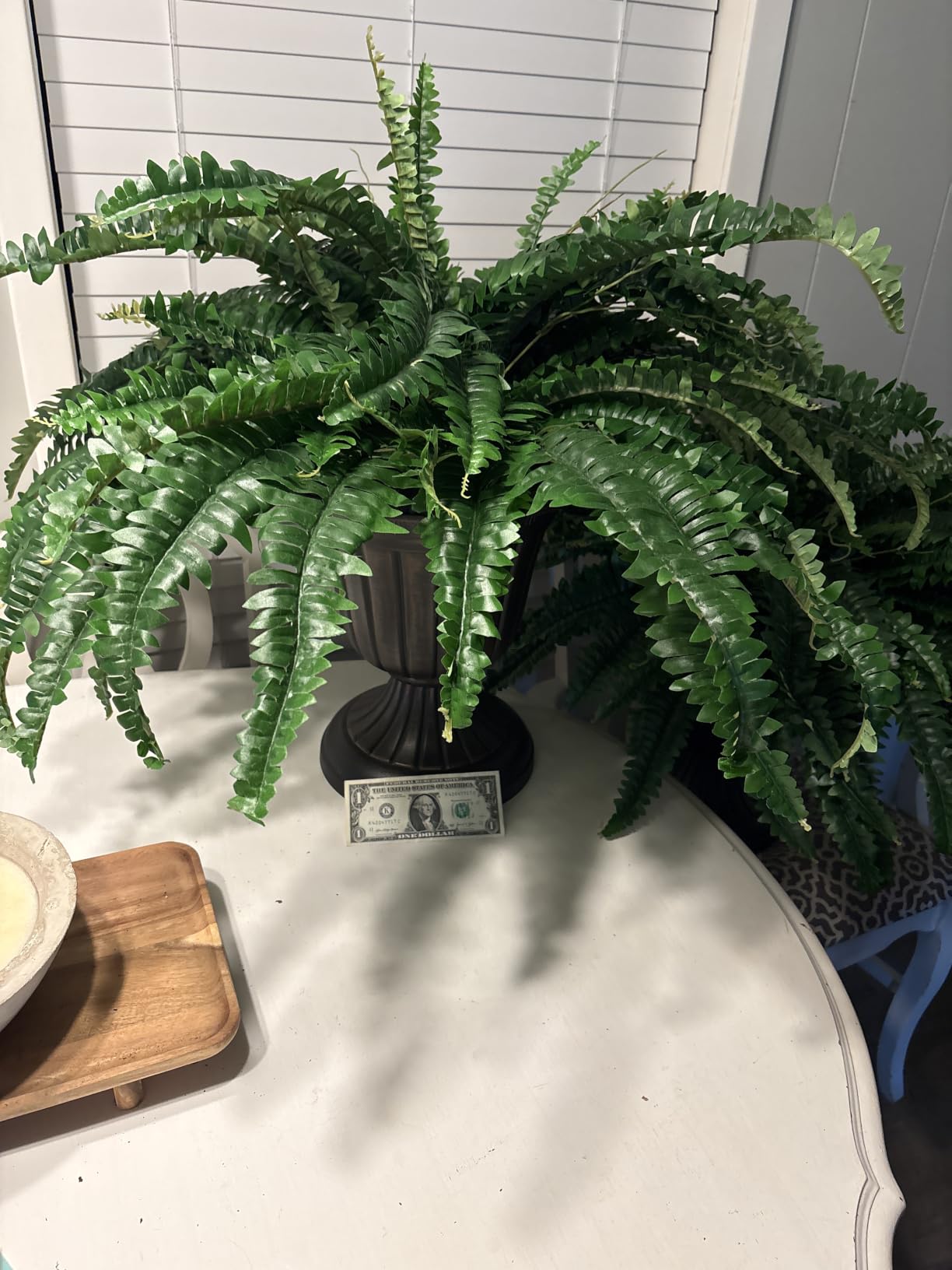
The UV-resistant construction is the specific reason it belongs outdoors where the Dkaltm fern is a strong but less verified option. Owners consistently report it holding its color and appearance across all seasons, and it is washable, so a hose or a damp cloth resets it.
Two recurring notes: a few leaves can detach while the branches are being bent into shape, so fluff it before it goes up, and a minority of buyers find it smaller and slightly lighter in color than the listing photos suggest. The planter or basket is not included.
How to hang it so it does not look sparse
Fluff the fronds fully before the basket goes up, because a hanging fern with visible gaps reads as a cheap basket filler. Push the fronds downward and outward so the silhouette falls below the rim, and rotate the basket a quarter turn every few weeks so one side does not fade faster than the rest.
Placing it near a doorway where the door opens outward is the most common real-world use, and a real person has to check the swing clearance before hanging anything that wide.
When to skip it
Skip it if you need a plant you can move with one hand indoors, since a 47 inch spread is awkward to carry. It is also not a floor-tree substitute, and it needs a vessel, so budget for a basket, planter or vase.
How to Make a Fake Plant Look Real in a Living Room
Four out of five plants that read as fake are fake because of the pot, the dust or the shipping crush, not because of the foliage. Fix those three things and most plants in this roundup pass a doorway test.
First, repot. Drop the nursery pot into a decorative planter that is two to four inches wider, and fill the gap with preserved moss, dried moss or floral foam. This single step removes the thin black plastic nursery pot, which is the most common giveaway in a photograph and in person.
Second, fluff. Every plant here arrives compressed. Work from the base outward, separating leaves and bending wire stems into a shape that is not symmetrical, because real plants are not symmetrical and a perfectly even canopy is the second most common tell.
Third, scale it. A 72 inch tree in a room with a 7 foot ceiling touches the ceiling line and makes the room feel smaller. A good rule is a plant about half to two thirds of ceiling height, and under two thirds of the ceiling for anything with a wide canopy. A 35 inch snake plant works in almost any room, which is why it is the safest pick in a rental. Scale also sets the tone of everything else in the space, and if you are still choosing the rug, our guide to large area rugs for living rooms covers how a large tree and a large rug should or should not compete in the same room.
Fourth, place it near natural light and out of direct sun. Light from one side creates the shadow gradients that read as real, while direct sun on non-UV-treated foliage is what causes fading over a few months.
Pet Safety, Allergies and Dust: What Buyers Ask For
On toxicity, a faux plant removes the question entirely. Live lilies are acutely dangerous to cats, and pothos, philodendron and sago palm are common household plants that cause problems for pets and small children. A plastic plant is not alive, so it cannot poison anything. The one real risk is mechanical: a pet that chews plastic leaves can still tear off pieces, so keep low-hanging foliage out of reach.
On allergies, artificial plants remove pollen and soil entirely, which matters in a household that reacts to mold in potting soil. The trade is dust. More leaf surface means more places for dust to settle, and a plant with 95 fronds needs more attention than one with 28 stiff leaves.
Our dusting routine is simple. Work top-down with a microfiber cloth or a plant shaker so debris falls away from the plant rather than into it. Use a soft brush on detailed or small foliage. Wipe matte plastic with a barely damp cloth, and keep water away from the base. A cadence of every two to four weeks suits a low-dust home, and weekly suits a home with pets or active foot traffic. Gloss and satin finishes show dust marks more than matte ones, which is another reason the matte Real Touch plants on this list look more natural over time.
On materials, a word of warning. Silk in this industry almost never means real silk; it usually describes polyester fabric leaves. PE and PEVA are plastics, PEVA being the softer, rubbery version that feels more like a real leaf and is easier to wipe. UV-resistant coating is the term to look for on anything going outside, and only the ferns in this roundup make that claim clearly. Real bark and real wood stems, as on the olive and the fiddle leaf fig, add more realism than an extra hundred leaves ever will.
One last honesty note. If you already keep live plants successfully, most people add a faux tree for a specific gap rather than replacing what works, and a room that mixes both reads fine as long as the faux plant is small-leaved, matte and in a real pot. If the live ones need better light, our guide to LED grow lights for indoor plants is the more useful upgrade in that case.
Frequently Asked Questions
What is the most realistic brand of fake plants?
Nearly Natural is the most consistently realistic of the mass-market brands at the value end, largely because its Real Touch leaves use a matte polyethylene finish with modeled veins and lighter-toned undersides. Premium detailing pushes higher, but the material matters more than the label. Small leaves hide construction flaws, so any brand with narrow foliage will look more convincing than the same brand in a large-leafed monstera.
Which fake plant looks most real?
Among the plants we tested, the Aveyas monstera looked the most real, because its 26 leaves carry modeled veins and a rubber-silk surface at a 54 inch height. The general rule is that small leaves look more realistic than large leaves, since every vein, bend and color variation is visible on a big leaf. Dracaena and olive trees follow the same logic.
Where is the best place to buy realistic fake plants?
Big-box home stores are the best place to inspect anything tall in person, because you can bend the stems and check the base before you commit. Online marketplaces win on selection and review volume, and are where most of the picks here were tested. For premium realism, design-forward home retailers carry more hand-painted detailing. Inspect anything expensive in person if you can.
What is the best brand of artificial plants?
It depends on the job. Nearly Natural is the best value for most living rooms, with Real Touch leaves and a consistent pot. IKEA is the budget option and the least realistic. StyleWell sits in the mid tier. Artiplanto and West Elm go furthest on hand-painted detail and price. If you only buy one, pick by leaf size and finish rather than by brand alone.
Is it tacky to have fake plants in a house?
No. What reads as tacky is shiny plastic foliage at unnatural angles in a thin nursery pot, not the idea of a plant. Small-leafed, matte-finish plants dropped into a real decorative planter read as genuine, and most of the picks here looked convincing to visitors once they were fluffed and repotted.
Which plants are not good for the home?
Live lilies are acutely dangerous to cats, and pothos, philodendron and sago palm are common household plants that irritate pets and small children if chewed. A faux plant removes the toxicity question entirely because it is not alive. The only remaining risk is mechanical, so keep low-hanging plastic foliage out of reach of a pet that likes to chew.
How do you keep fake plants dust free?
Work top-down with a microfiber cloth or a plant shaker, so debris falls away from the foliage rather than into it. Use a soft brush on detailed small leaves and a barely damp cloth on matte plastic, keeping water away from the base. Every two to four weeks suits a low-dust home; go weekly in a home with pets or heavy foot traffic.
Do fake plants fade in the sun?
They do if they are not UV resistant. Direct sun and rain will fade and warp most faux foliage over a few months, so keep plants out of full afternoon sun or use only products that state a UV-resistant coating. The two Boston ferns in this roundup make that claim and are the safest picks for a porch or patio.
Conclusion
After living with all 12, the Nearly Natural 4 ft golden cane palm is the single choice we would make first for a living room, because the double trunk reads as a real plant, the wire stems hold any shape you give them, and owner feedback consistently calls it the most convincing faux palm in its band. The Aveyas monstera is the realism benchmark if you want the best-looking foliage, and the 4 ft dracaena is the one that fits the most rooms, dark corners and tight footprints.
Match the plant to the zone rather than the other way around. Corner, console, coffee table, shelf, hanging basket, covered patio. Buy the height your ceiling can carry, repot into a real planter, fluff the foliage before it goes on display, and dust it every few weeks. That is the whole difference between artificial plants for living rooms that look like props and ones that look like they belong.
For other rooms in the house, our guides to artificial trees and faux plants that look real cover the taller formats and the smaller shelf sizes in more detail.