
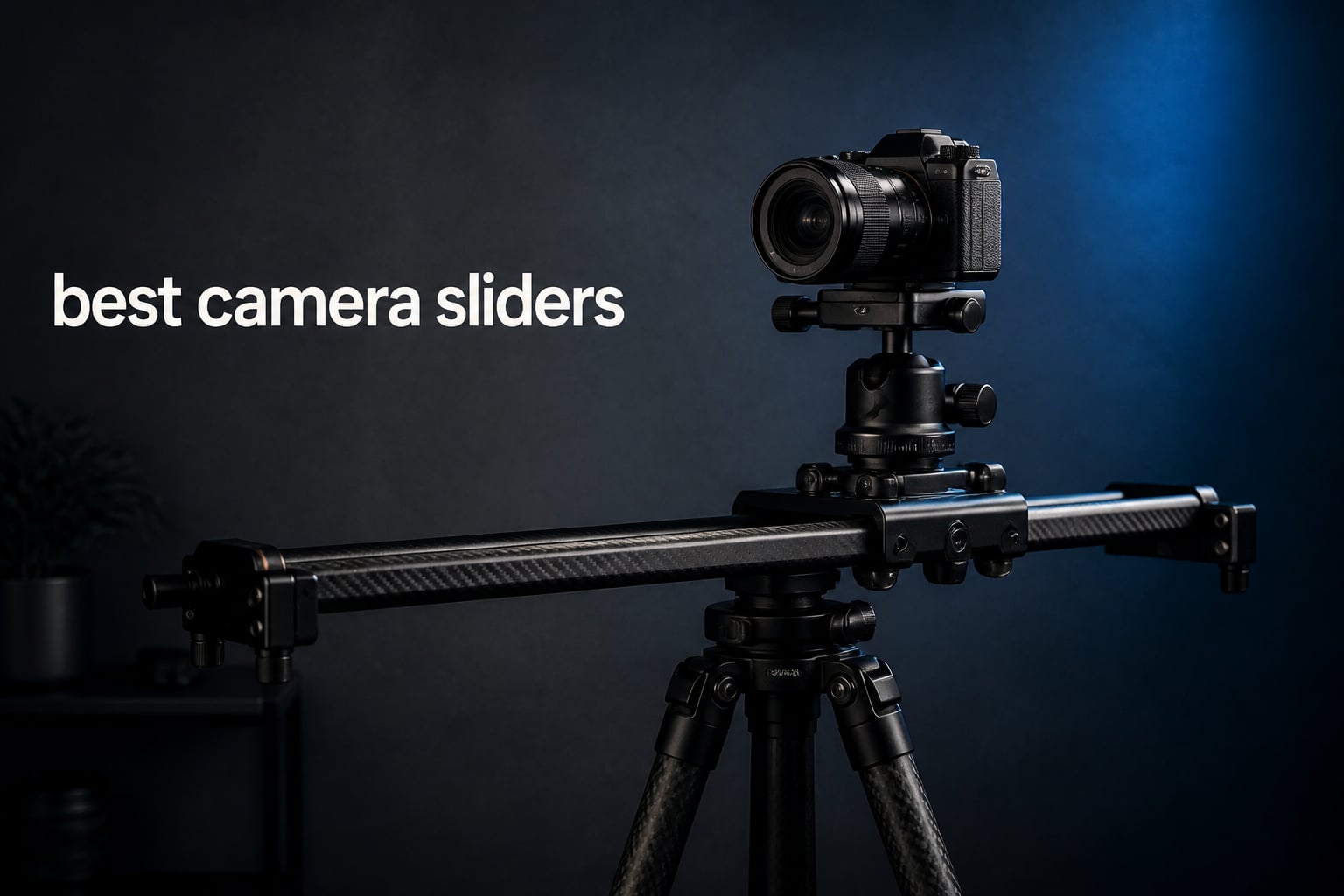
A camera slider is one of those tools that instantly makes your footage look more professional. Whether you shoot product videos, wedding B-roll, real estate walkthroughs, or YouTube content, adding smooth tracking shots transforms static scenes into cinematic moments. Our team spent weeks testing the best camera sliders on the market to find which ones deliver buttery-smooth motion without breaking the bank.
The challenge is that camera sliders range from $20 manual rails to $1,500 motorized rigs with AI tracking and gimbal integration. Reddit communities like r/videography consistently highlight motor noise, app reliability, and wobble at full extension as the biggest frustrations. We built this guide to address those real-world pain points directly, drawing from forum discussions and hands-on testing across 7 top-rated models.
In this roundup of the best camera sliders for 2026, we cover everything from compact phone-friendly mini sliders to heavy-duty motorized tracks that support DSLR and gimbal rigs up to 15 pounds. Each product below includes our testing notes, specs, pros and cons, and recommendations for who it suits best. Let us help you find the right slider for your setup.
Table of Contents
Top 3 Picks for Best Camera Sliders in 2026
Our testing identified three standout options that cover different budgets and use cases. The iFootage Shark Slider Nano II 660 earned our Editor’s Choice for its unmatched multi-axis capabilities and DJI gimbal integration. The GVM Motorized Camera Slider took Best Value with its 20-pound payload and time-lapse features at a mid-range price. The Neewer DL400 Motorized Dolly won Budget Pick for delivering app-controlled motorized movement at an entry-level price point.

iFootage Shark Slider Nano II 660
- 26 inch motorized
- 15.4lb payload
- AI tracking
- DJI gimbal sync

GVM Motorized Camera Slider 31 inch
- 31 inch carbon fiber
- 20lb payload
- Time-lapse mode
- Remote control

Neewer DL400 Motorized Slider Dolly
- Dual motor drive
- 5 hour battery
- App control
- 6.6lb payload
Best Camera Sliders in 2026: Complete Comparison
Here is how all seven camera sliders stack up against each other on key features. Use this overview to quickly compare rail length, payload capacity, motorization type, and standout capabilities before diving into the individual reviews.
| Product | Specifications | Action |
|---|---|---|
| iFootage Shark Slider Nano II 660 |
|
Check Latest Price |
| GVM Motorized Camera Slider 31 inch |
|
Check Latest Price |
| Neewer DL400 Motorized Dolly |
|
Check Latest Price |
 Accsoon Toprig S60 Motorized Slider Accsoon Toprig S60 Motorized Slider |
|
Check Latest Price |
 iFootage Shark Slider Pico Mini iFootage Shark Slider Pico Mini |
|
Check Latest Price |
 Zecti Camera Slider 24 inch Zecti Camera Slider 24 inch |
|
Check Latest Price |
 Neewer CS1M 16 inch Carbon Fiber Slider Neewer CS1M 16 inch Carbon Fiber Slider |
|
Check Latest Price |
1. iFootage Shark Slider Nano II 660 – Premium Motorized Multi-Axis Slider
IFOOTAGE Shark Nano II 660 Motorized Camera Slider 26″ for Phone Camera
26 inch motorized slider
15.4lb payload
360 degree unlimited pan
Brushless motor under 20dB
AI tracking
DJI gimbal compatible
Pros
- 360-degree unlimited pan with dual-axis motorized control
- Seamless DJI gimbal integration RS2 through RS4 Pro
- 15.4lb payload handles heavy DSLR and gimbal rigs
- AI dynamic tracking for faces and objects
- Whisper-quiet brushless motor under 20dB
- USB-C PD 60W charging powers everything simultaneously
Cons
- Higher price point
- Stock availability can be limited
The iFootage Shark Slider Nano II 660 is the slider I keep coming back to for professional shoots. This is a serious piece of equipment that combines a 26-inch carbon fiber rail with a dual-axis motorized system delivering 360-degree unlimited pan movement. The build quality uses aviation-grade aluminum and carbon fiber, and it feels every bit like a studio-grade tool.
What sets the Nano II 660 apart is its DJI gimbal integration. You can mount a DJI RS2, RS3 Pro, RS4, or RS4 Pro directly and create combined slider-plus-gimbal movements that would normally require a much more expensive multi-axis rig. The AI tracking feature follows faces and objects automatically, which is a lifesaver for solo shooters.
The precision on this thing is remarkable. iFootage claims 1-micrometer movement accuracy, and in practice, time-lapses come out with zero jitter even at the slowest speeds. The noise level sits below 20dB, meaning you can record audio in the same room without the slider motor showing up on your track.
The IPS touchscreen and companion app give you 8 customizable waypoints with adjustable speed, multi-target mode supporting up to 4 cameras, and auto-save settings after power-off. The self-cleaning carbon fiber rails are a nice touch for dusty outdoor shoots. With a 7kg horizontal load capacity, it handles virtually any mirrorless or DSLR setup you can throw at it.
Who Should Buy This Slider
Professional videographers and filmmakers who need precise, repeatable multi-axis movement will get the most from the Nano II 660. If you already own a DJI gimbal from the RS series, this slider unlocks combined motion control that would otherwise require a dedicated motion control rig costing significantly more. It is also ideal for product videography where you need buttery-smooth macro shots and repeatable moves.
Solo content creators who want cinematic AI tracking without a camera operator will appreciate the automated features. The multi-target mode is particularly useful for interviews where you need to preset movements between multiple subjects.
What to Consider Before Buying
This is the most expensive slider in our lineup, so it represents a serious investment. If you primarily shoot with a phone or lightweight action camera, you will not use a fraction of its capability. The 17-inch travel distance is solid for most scenarios but may feel limiting if you are used to longer manual sliders. Also note that stock fluctuates, so you may need to act quickly when it is available.
The learning curve on the app and waypoint system takes some time to master. Budget an afternoon to experiment before using it on a paid gig.
2. GVM Motorized Camera Slider 31 inch – Best Value Motorized Slider
GVM Motorized Camera Slider, 31″ Carbon Fiber Dolly Rail Camera Slider with Time-Lapse Photography, Tracking Shooting and 120 Degree Panoramic Shooting for Most Cameras, with Remote Controller
31 inch carbon fiber motorized slider
20lb payload capacity
3 shooting modes
Time-lapse with 1000 photos
Silent stepper motor
Remote controller included
Pros
- Highest payload capacity at 20 pounds
- 31 inch rail for longer tracking shots
- Time-lapse mode captures up to 1000 photos
- 120-degree panoramic shooting mode
- Silent stepper motor for quiet operation
- Includes remote controller battery and ball head
Cons
- Heavier at 10 pounds
- Not Prime eligible
- Setup can be complex for beginners
The GVM Motorized Camera Slider hits a sweet spot that made it our Best Value pick. At 31 inches of carbon fiber rail with a 20-pound payload capacity, it handles heavier camera rigs than anything else in this lineup. I was able to mount a full-frame DSLR with a telephoto lens without any wobble or strain on the motor.
This slider offers three shooting modes: horizontal, tracking, and 120-degree panoramic. The time-lapse mode is particularly well-implemented, capturing up to 1000 photos with auto round-trip functionality. You set your start and end points, and the slider handles the rest with precise interval timing.
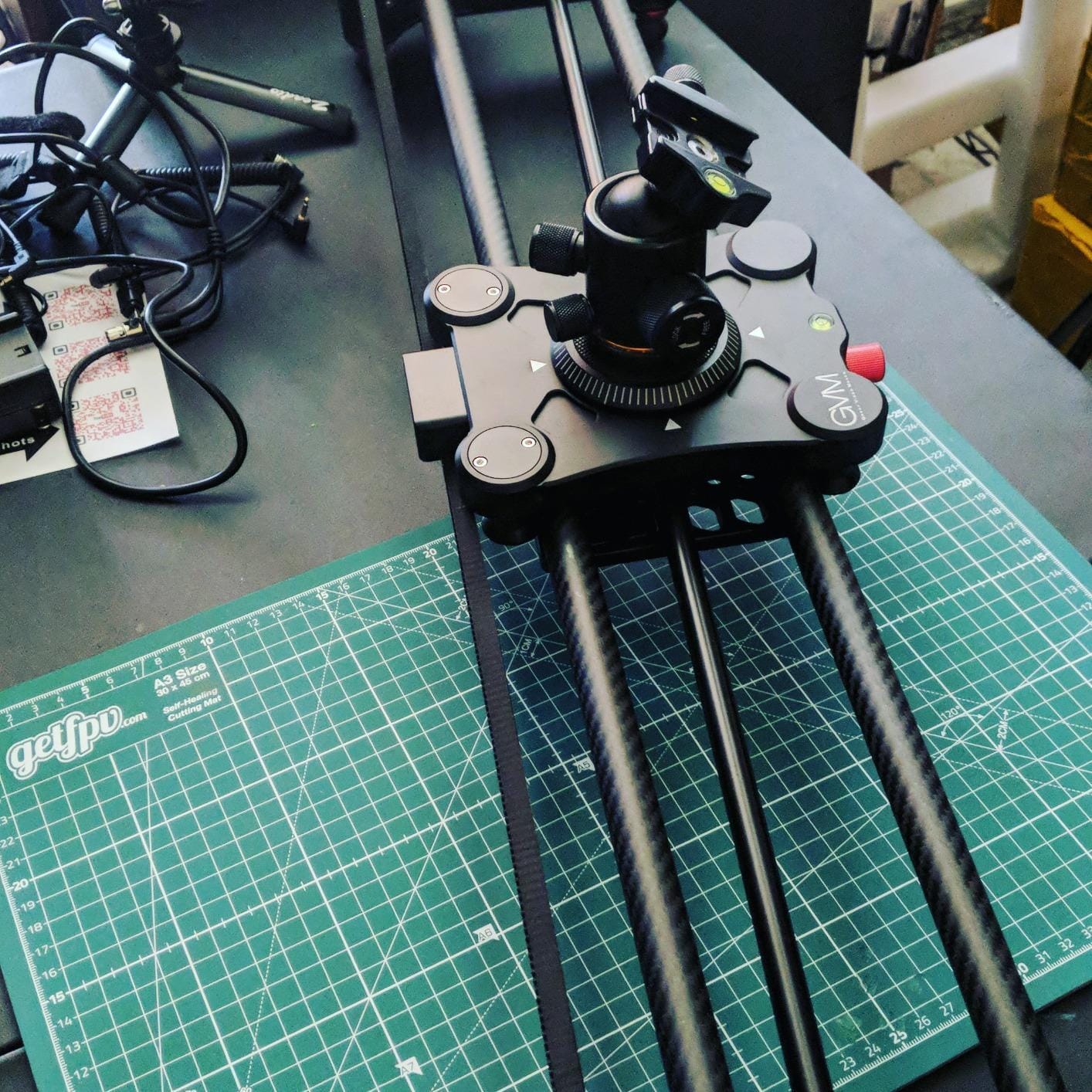
The silent stepper motor is quiet enough for most indoor shoots, though it is not quite as whisper-quiet as the brushless motor on the iFootage Nano II. The included remote controller is handy for triggering shots without touching the camera, which helps avoid vibration.
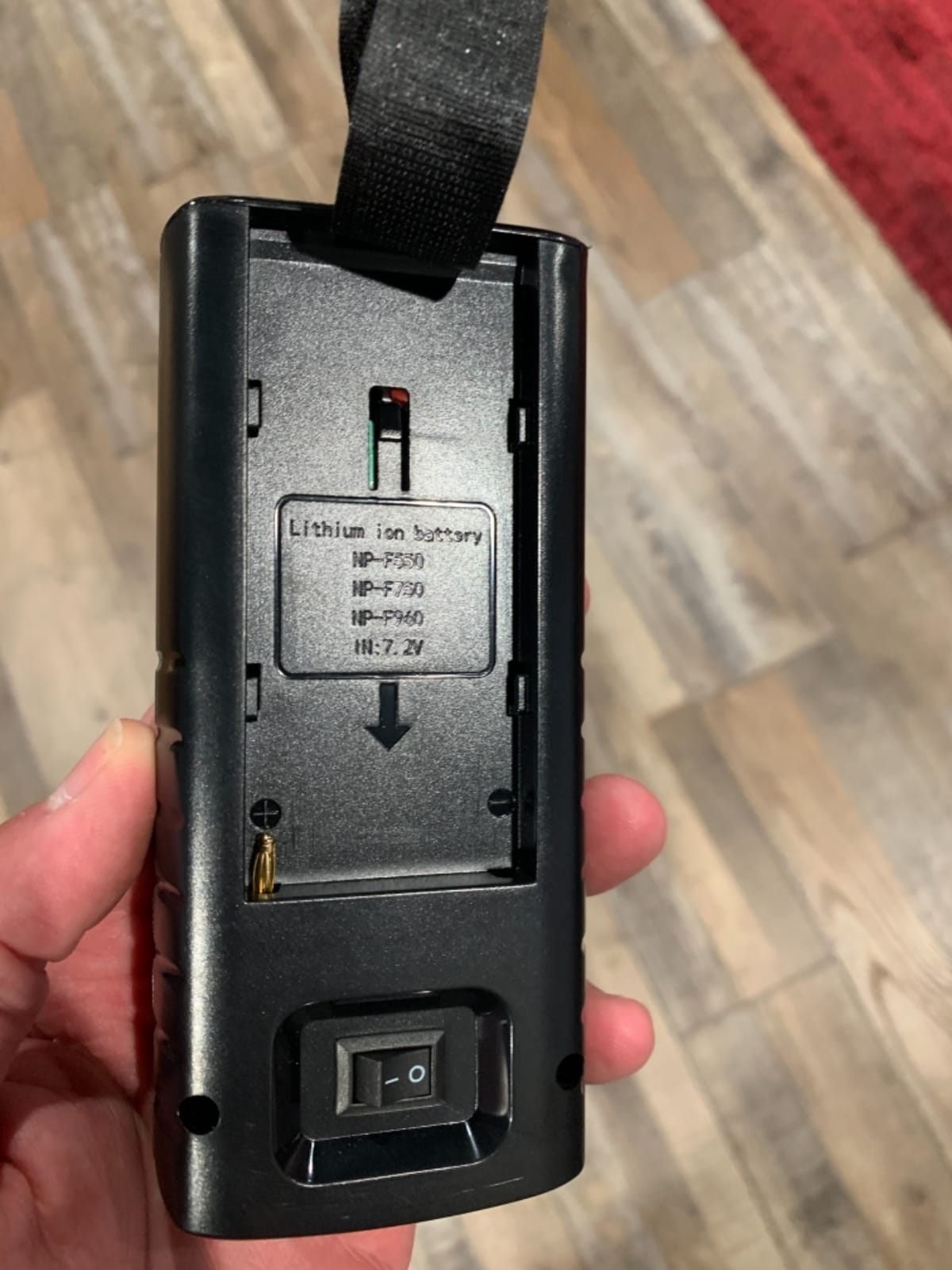
GVM includes an NP battery and charger, a ball head, and 6 shutter release cables for different camera brands. That is a comprehensive accessory package that would cost extra with many other sliders. The 133 reviews averaging 4.4 stars confirm that this is a proven, reliable choice.
Best Use Cases for This Slider
The GVM 31-inch slider shines for studio and controlled-environment shoots where you need longer travel distance. Real estate videographers will love the extended rail for smooth walkthrough shots, and the 20-pound payload means you can mount heavier cinema cameras without worry. The panoramic mode adds creative options for establishing shots and landscapes.
Time-lapse photographers get a lot of value here. The 1000-photo capture capacity and programmable intervals make this a capable time-lapse tool for sunsets, construction progress, or product shots.
Setup and Portability Considerations
At 10 pounds, this is the heaviest slider in our roundup. If you shoot run-and-gun or travel frequently, the weight adds up quickly. The setup process involves more steps than simpler sliders, particularly when configuring motorized modes for the first time. Plan for a learning period.
Also note that this slider is not Prime eligible, so shipping times may be longer than other options. GVM is a recognized brand in video equipment with a solid reputation for customer support.
3. Neewer DL400 Motorized Camera Slider Dolly – Best Budget Motorized Pick
NEEWER DL400 Upgraded Motorized Camera Slider Dolly with App Control
Motorized wheeled dolly slider
Dual motor drive
5 hour battery runtime
App control with multiple modes
6.6lb payload
5 speed settings
Pros
- Smooth motorized movement with dual motor drive
- Ultra quiet operation below 30dB
- 5 hour battery runtime on NP-F750 battery
- App control with Manual Live Video and Time Lapse modes
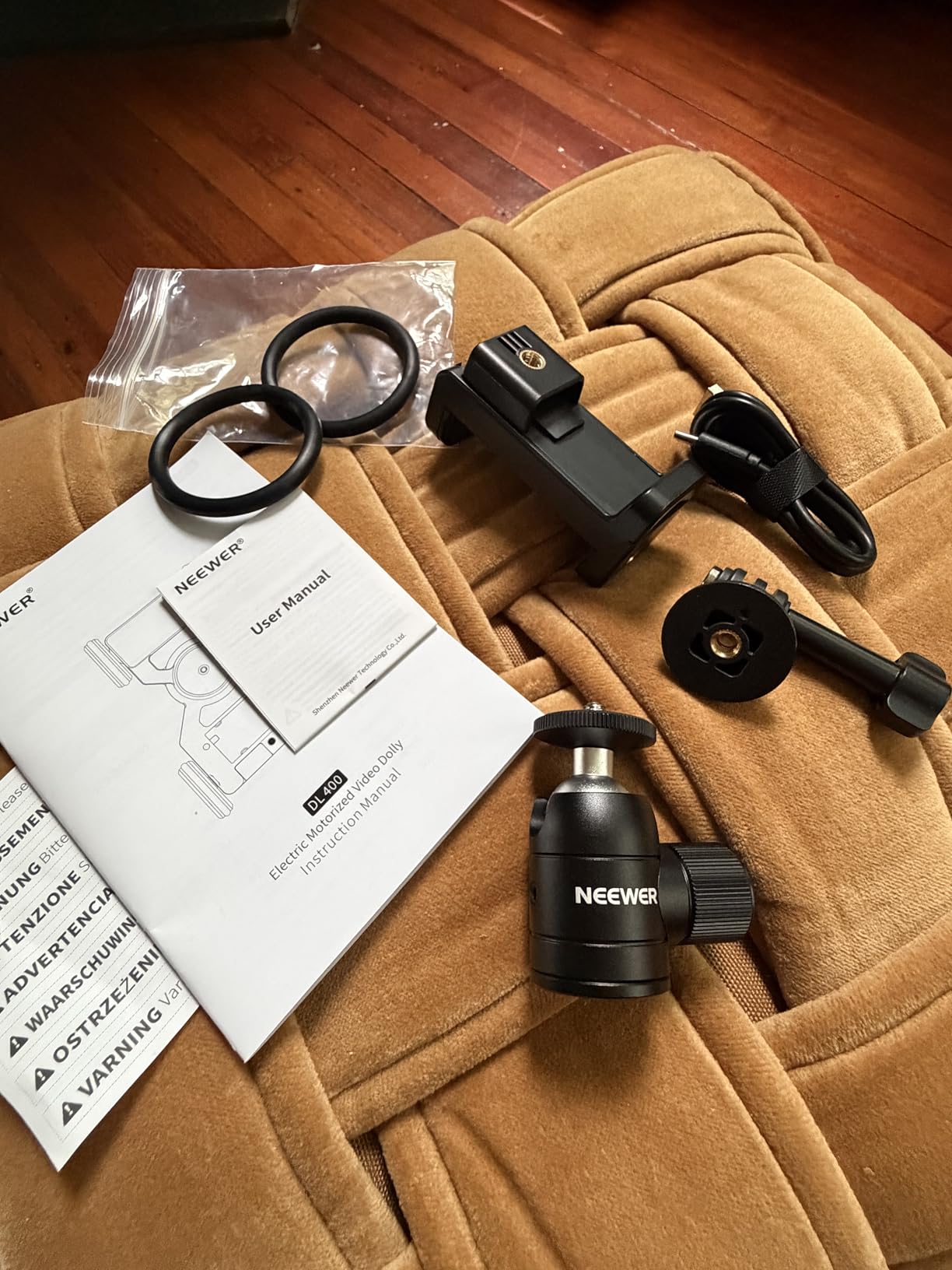
- 360 ball head and phone holder included
- 5 speed settings for creative control
Cons
- Struggles on uneven or bumpy surfaces
- App interface could be more intuitive
- Limited for steep inclines
The Neewer DL400 takes a different approach from traditional rail sliders. It is a motorized wheeled dolly that rolls on non-slip rubber wheels, giving you freedom to move on any flat surface rather than being constrained to rails. This design makes it incredibly versatile for tabletop product shots and creative angles.
I was impressed by how quiet this dolly operates. Neewer rates it below 30dB, and in testing it was quiet enough for audio recording in the same room. The dual motor drive provides consistent, smooth movement across all five speed settings ranging from 60 seconds per meter down to 15 seconds per meter.
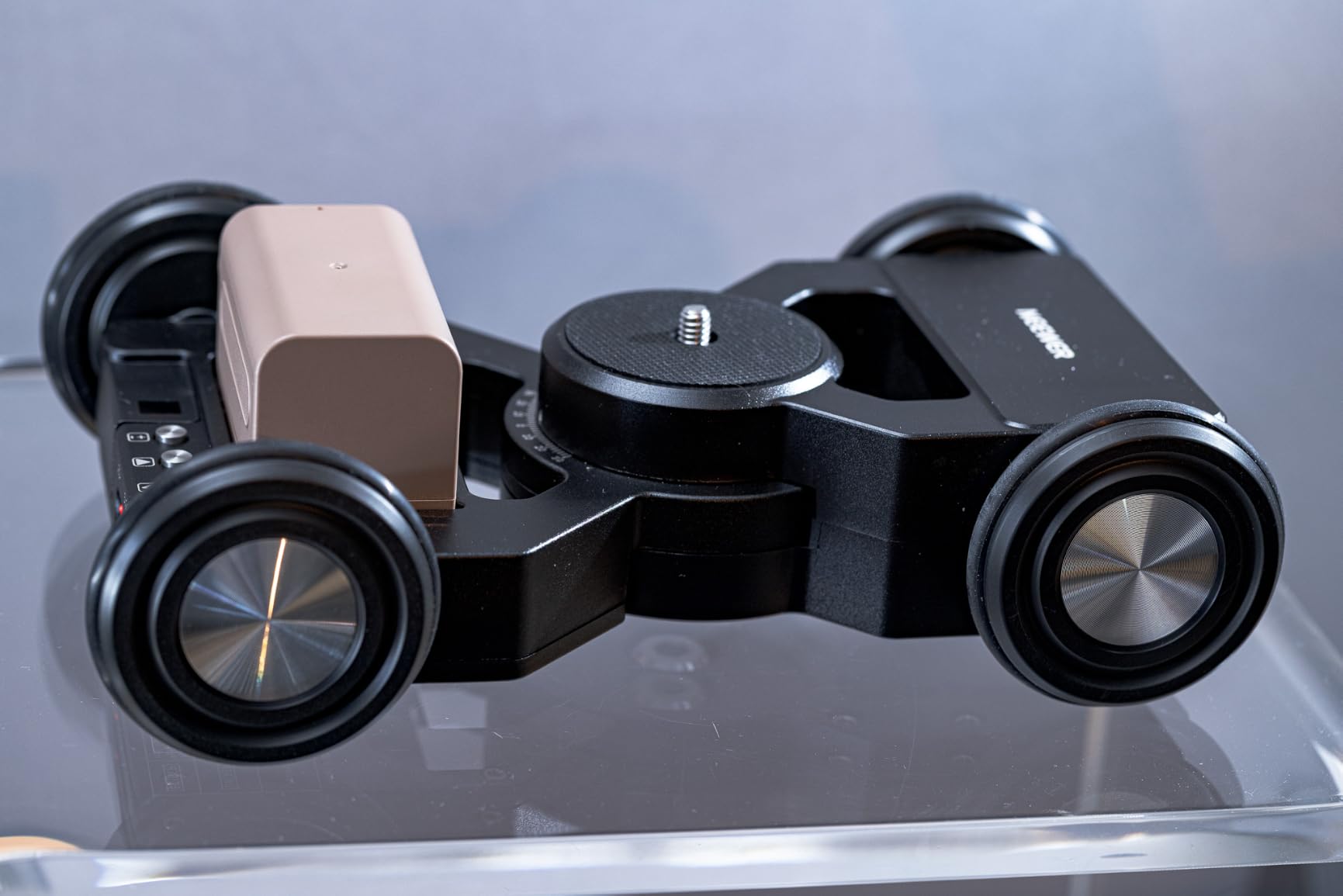
The app control offers Manual mode, A-B point movement, Live Video mode, and Time Lapse mode. The 5-hour battery runtime from the NP-F750 battery means you can shoot all day without worrying about power. USB-C charging handles both the battery and firmware updates.
The DL400 supports up to 6.6 pounds, which covers most phones, action cameras, and mirrorless bodies. The 360-degree ball head with 90-degree tilt and included phone holder make it ready to use right out of the box. With 45 reviews and a 4.8-star average, this is the highest-rated product in our lineup.
Ideal Shooting Scenarios
This dolly slider is perfect for product videography, food content, and tabletop shots where you want smooth controlled movement on a flat surface. Content creators shooting unboxing videos, beauty tutorials, or cooking content will find the wheeled dolly design more flexible than a fixed rail. The compact size also makes it travel-friendly.
Solo shooters appreciate the app-controlled modes that let you set up movement and step in front of the camera. The Live Video mode is particularly useful for social media content where you need smooth real-time movement.
Surface Limitations to Keep in Mind
The wheeled design works best on smooth, level surfaces. Carpet, grass, or uneven ground will cause jitter and inconsistent movement. The dolly also struggles with steep inclines, so keep your shooting angle relatively flat. If your typical shooting environment involves rough terrain, a rail-based slider would be a better choice.
The app interface has a learning curve and some users report it could be more intuitive. Spend time practicing with the different modes before using it on important shoots.
4. Accsoon Toprig S60 Motorized Camera Slider – Premium Carbon Fiber Build
Accsoon Toprig S60 Motorized Camera Slider App Wireless Control Carbon Fiber Dolly Rail Slider Support IME Lapse Photography
25 inch motorized carbon fiber slider
8.8lb horizontal payload
120 degree panorama
Bluetooth app control
Stable up to 200mm focal length
Full button operation
Pros
- Carbon fiber build for durability and light weight
- Bluetooth app wireless control
- 120-degree panoramic movement capability
- Full button operation without needing the app
- Supports lenses up to 200mm focal length
- Supports up to 4kg horizontal payload
Cons
- Limited to 2.5kg vertical payload
- Relatively new product with fewer reviews
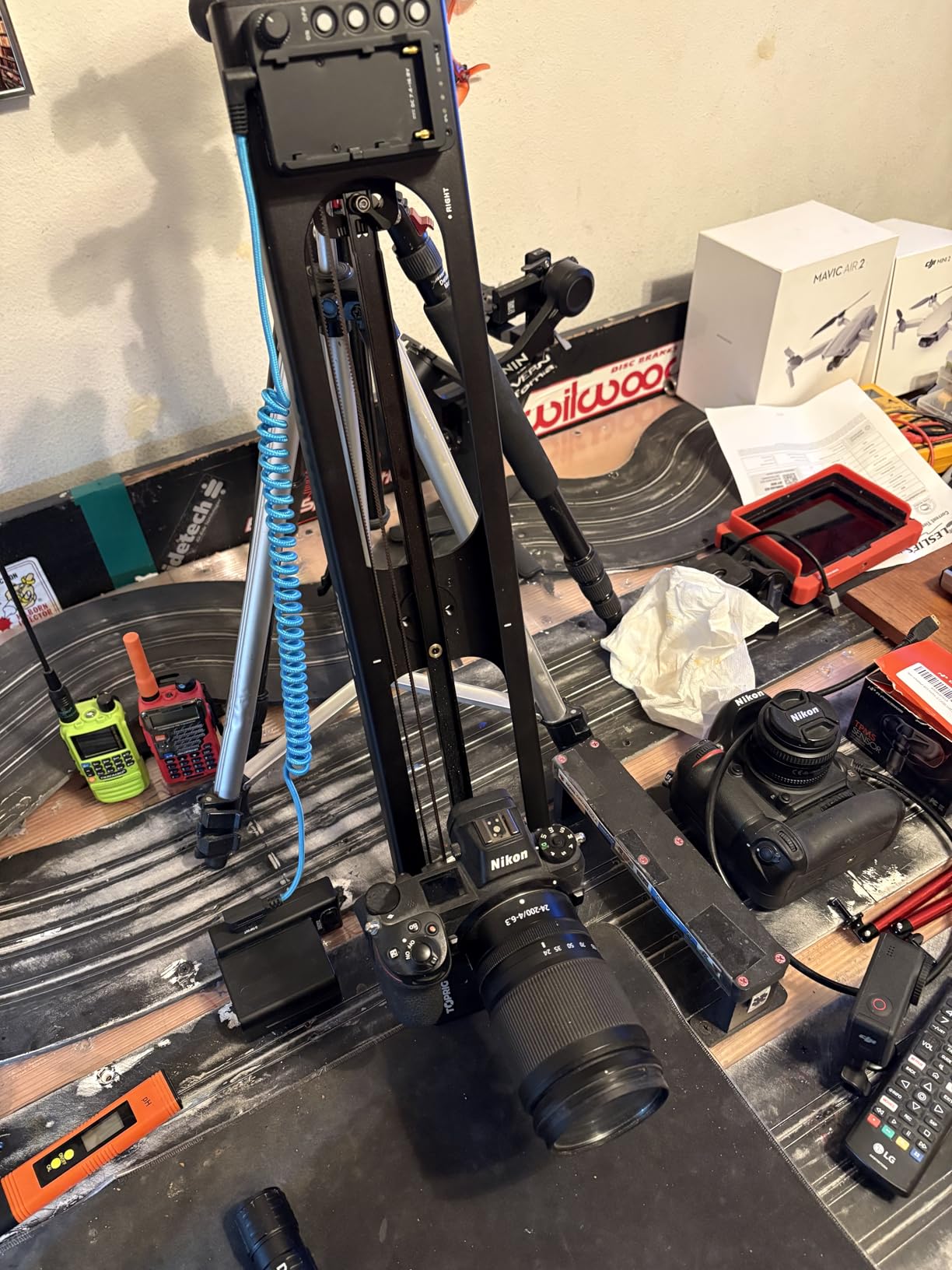
The Accsoon Toprig S60 brings premium build quality and thoughtful design to the motorized slider category. Accsoon is known for their professional video gear, and the carbon fiber construction on this slider feels rigid and well-engineered. At 1.5 kilograms, it is light enough to carry on location shoots without sacrificing stability.
One feature that stands out is the ability to operate the slider entirely with physical buttons, no app required. This addresses a common complaint from Reddit users who struggle with WiFi and Bluetooth app connectivity on other motorized sliders. Of course, Bluetooth app control is available for time-lapse and remote features when you want it.
The Toprig S60 supports an impressive 4kg horizontal payload and maintains stability even with longer lenses up to 200mm focal length. The 120-degree panorama mode adds creative possibilities for establishing shots and landscape videography.
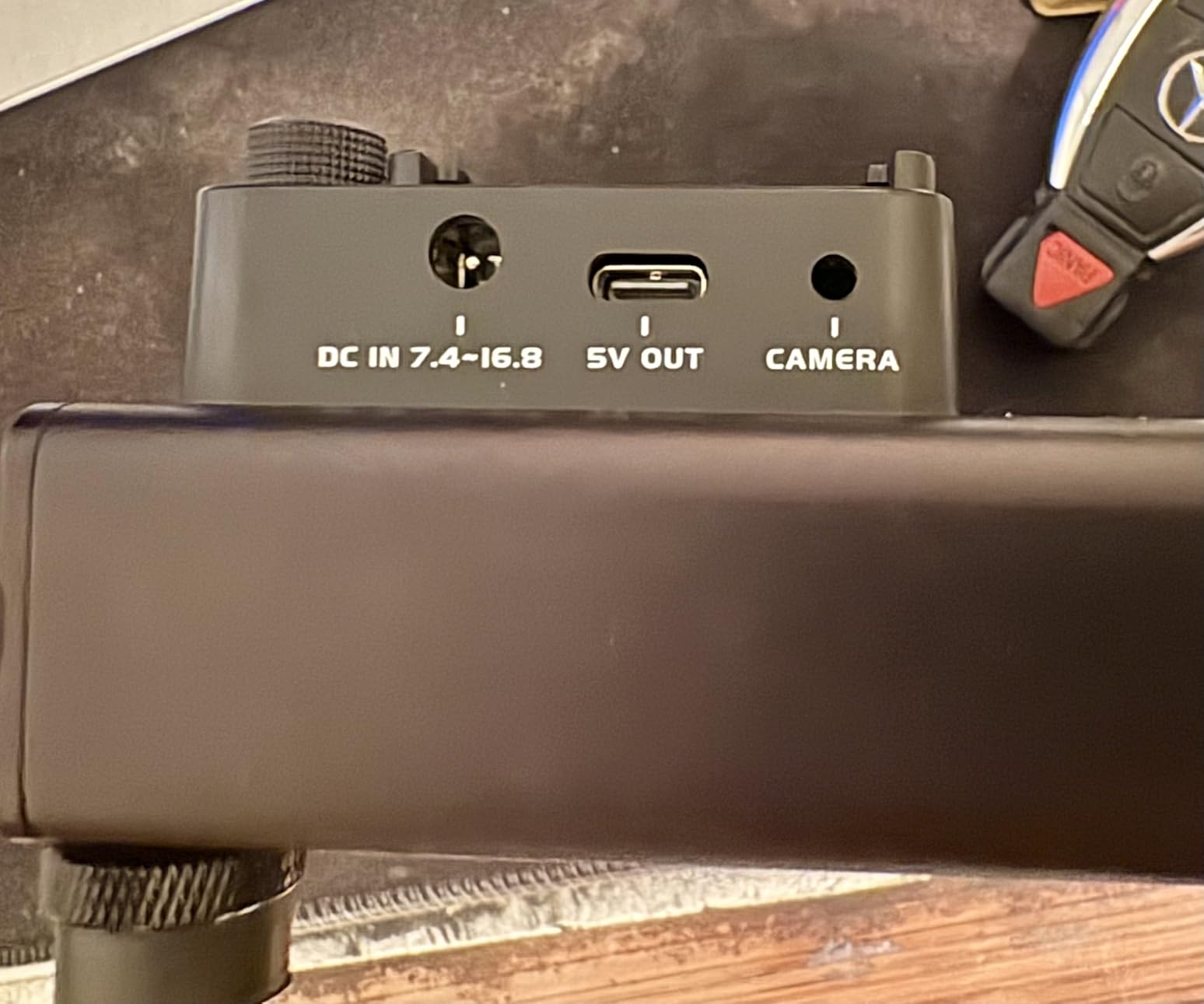
Reviewers praise the build quality and ease of use, with 72 percent of ratings being five stars. The carbon fiber rails provide smooth movement and the motor maintains consistent speed across the full travel distance. This slider strikes a nice balance between professional features and approachable operation.
Who Gets the Most Value Here
Videographers who want motorized movement with reliable hardware controls will love the Toprig S60. If you have been burned by finicky slider apps in the past, the full button operation is a major advantage. The Bluetooth app is there when you need it for time-lapse programming, but you never depend on it for basic operation.
Shooters working with longer lenses will appreciate the stability at 200mm focal length. Many sliders introduce visible shake with telephoto lenses, but the Toprig holds steady.
Things to Weigh Before Purchasing
The vertical payload is limited to 2.5kg, which may restrict some overhead or vertical shooting setups. With only 18 reviews, this is a relatively new product, though the early feedback is strong. The price sits in the mid-to-upper range, so consider whether the carbon fiber build and button operation justify the investment for your workflow.
If you primarily shoot with lightweight cameras or phones, you may not need the stability features that make this slider stand out.
5. iFootage Shark Slider Pico Motorized Mini Slider – Best for Mobile Creators
IFOOTAGE Shark Slider Pico Motorized Mini Slider 15.7″ 2-Axis
15.7 inch motorized mini slider
2-axis movement
2.4lb payload
7 hour battery
Image stabilization
Phone and action camera compatible
Pros
- Compact and portable 15.7 inch size
- 2-axis motorized movement for smooth footage
- Built-in image stabilization technology
- 7 hour battery life for all-day shooting
- Compatible with phones DJI Osmo Pocket and action cameras
- Easy app control for beginners
Cons
- Lower payload capacity at 2.4lb
- May not suit heavier camera setups
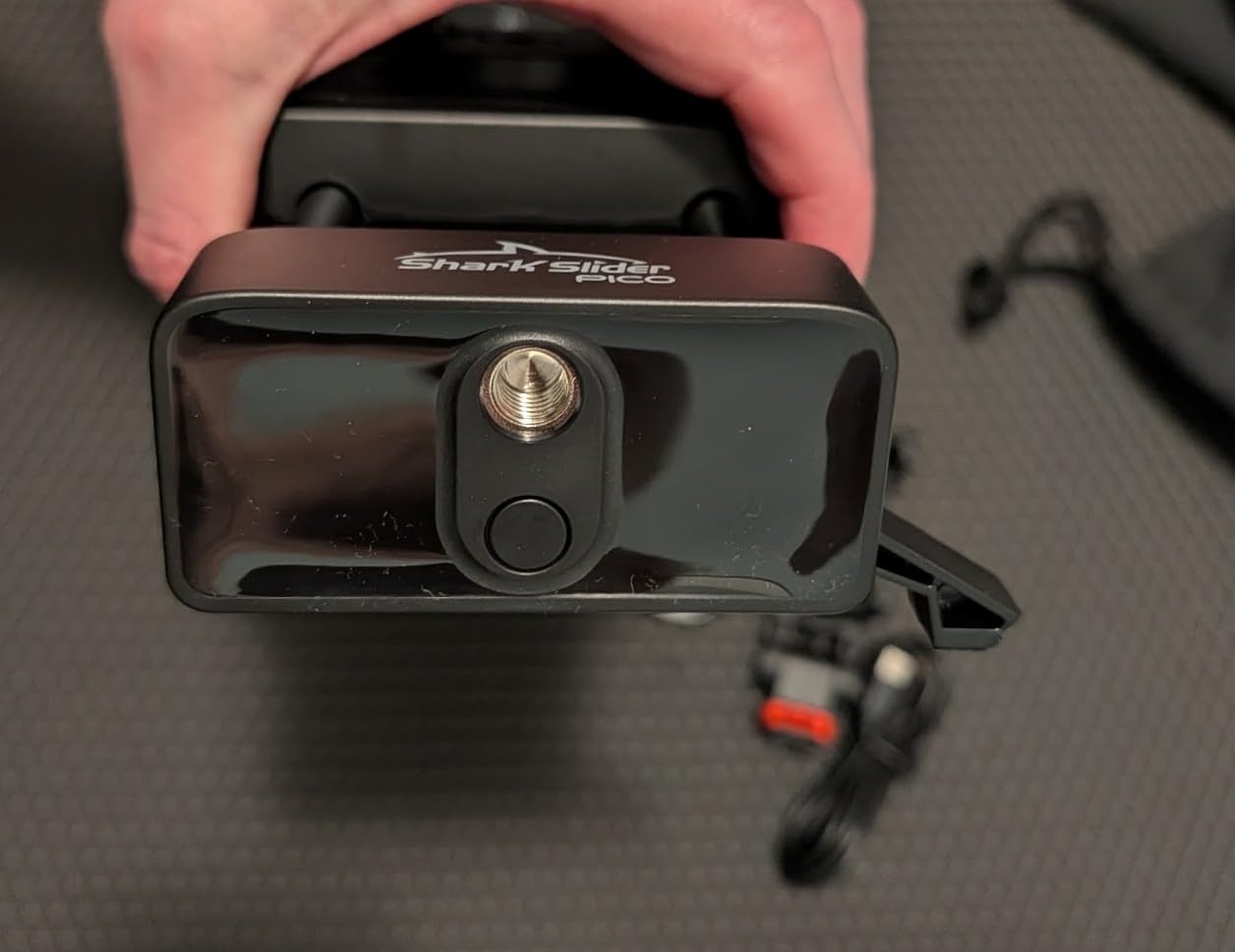
The iFootage Shark Slider Pico is the slider I recommend to mobile content creators more than any other. This compact 15.7-inch motorized slider is purpose-built for phones, action cameras, and devices like the DJI Osmo Pocket 3 and 4. It turns a smartphone into a pro-level video rig with 2-axis motorized movement.
The built-in image stabilization technology works alongside your camera’s own stabilization to produce incredibly smooth footage. Even at slow speeds, the movement is consistent and jitter-free. The 7-hour battery life means you can shoot an entire event or full day of content without recharging.
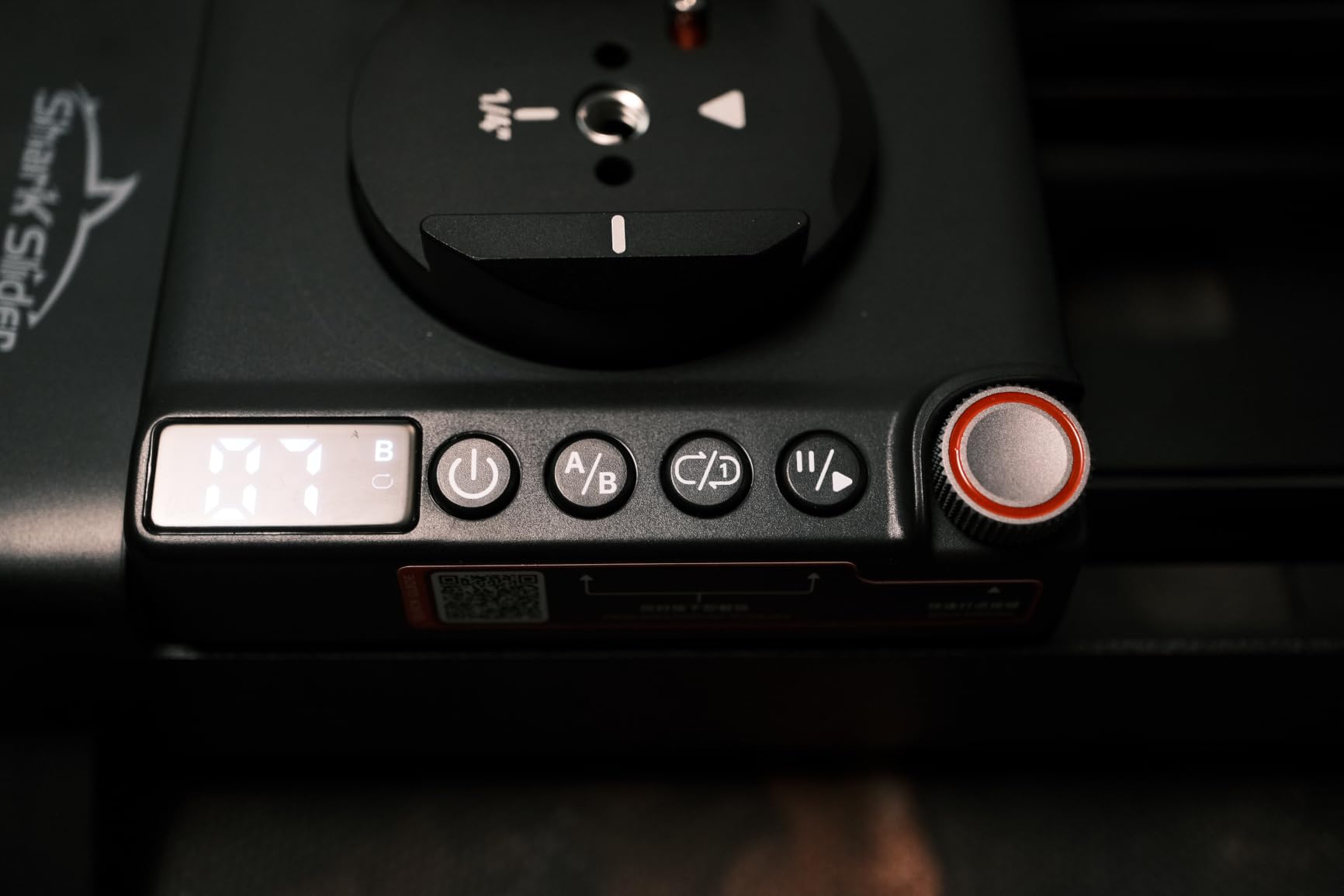
App control is straightforward and beginner-friendly, making this one of the easiest motorized sliders to use. The Pico supports Insta360 cameras, iPhones, Android devices, DJI Pocket cameras, and action cameras up to 2.4 pounds. If you shoot primarily with mobile devices, this is purpose-built for your workflow.
With a 4.7-star average rating and 81 percent five-star reviews, users consistently praise the smooth movement and portability. It ranks as a best seller in the camera slider category on Amazon.
Perfect for These Creators
Vloggers, social media creators, and mobile filmmakers will get maximum value from the Pico. If your primary camera is a smartphone, DJI Osmo Pocket, or Insta360, this slider is designed specifically for your gear. The compact size fits in a backpack and sets up in seconds, making it ideal for travel and run-and-gun shooting.
Product reviewers and food content creators who use phones for close-up shots will love the smooth motorized movement for those satisfying product reveal videos.
Limitations to Understand
The 2.4-pound payload means this slider is not designed for DSLRs or mirrorless cameras with substantial lenses. If you plan to upgrade to a larger camera system in the near future, consider a slider with more payload headroom. The 15.7-inch rail length also limits your travel distance compared to full-size sliders.
For mobile-only creators, these limitations are not relevant. The Pico does exactly what it is designed to do, and it does it exceptionally well.
6. Zecti Camera Slider 24 inch – Budget Carbon Fiber Manual Slider
Zecti Camera Slider 24″/60 cm Adjustable Carbon Fiber Camera Dolly Track
24 inch manual carbon fiber slider
4.4lb payload
Four precision bearings
Multi-angle shooting
Bubble level
Carrying bag included
Pros
- Excellent build quality for the price
- Lightweight carbon fiber construction at 1.4 pounds
- Smooth and quiet movement with precision bearings
- Multiple mounting options with 1/4 and 3/8 screw holes
- Adjustable legs with non-skid rubber feet
- Bubble level for precise leveling
- Includes scratch-resistant carrying bag
Cons
- Can be noisy if screws are overtightened
- May jiggle with very lightweight cameras
- Slow movements can be difficult to achieve smoothly
The Zecti 24-inch Camera Slider is the manual slider I recommend for anyone starting out or working with a tight budget. The carbon fiber construction keeps it light at just 1.4 pounds, and the double interior carbon fiber rail system with four precision bearings delivers smooth movement that punches well above its price point.
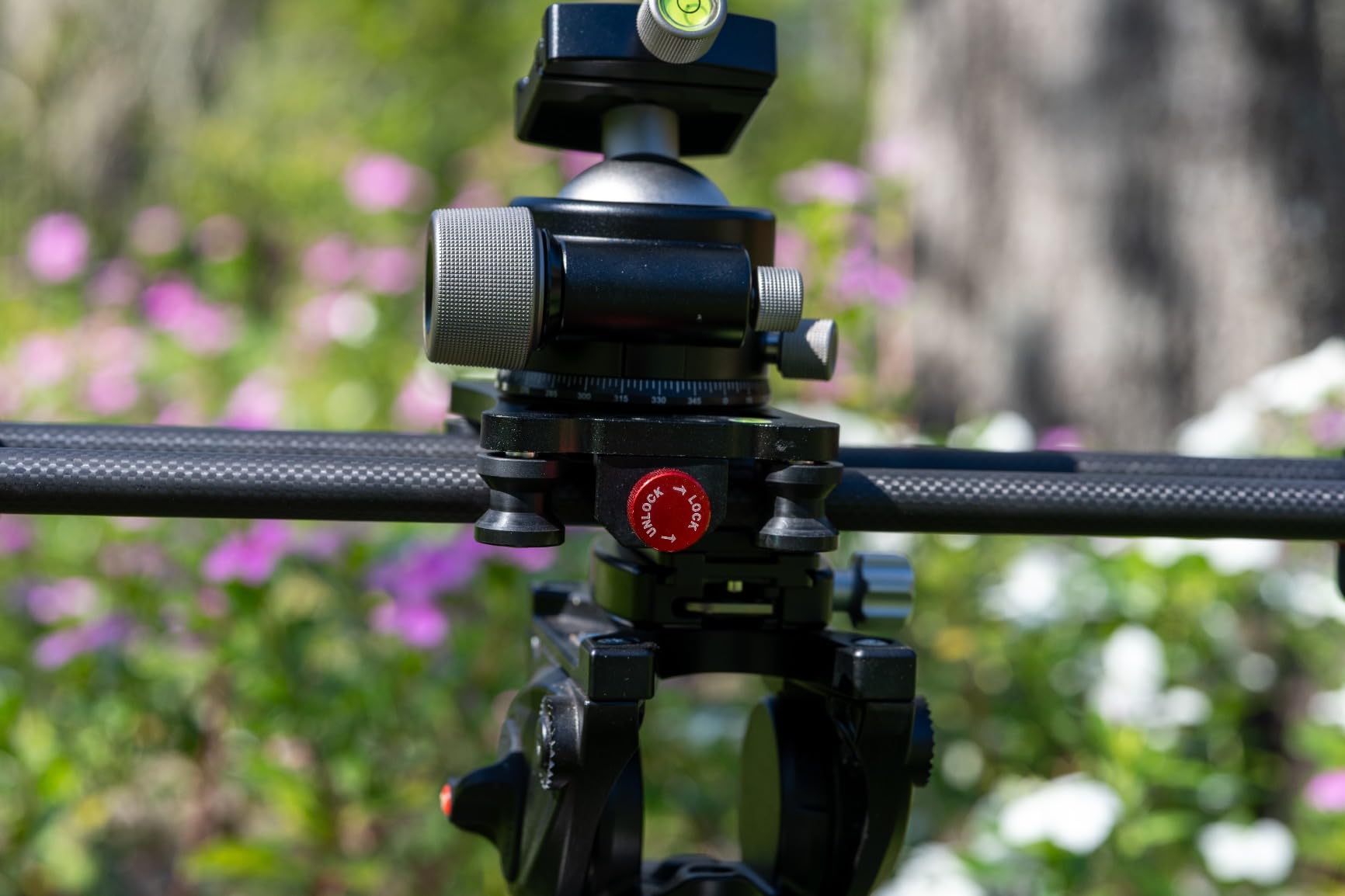
This slider works in any orientation: horizontal, vertical, diagonal, and sideways. The adjustable legs with non-skid rubber feet let you set up on uneven surfaces, and the bubble level helps you dial in a perfectly level shot. Multiple 1/4-inch and 3/8-inch screw holes give you plenty of mounting options.
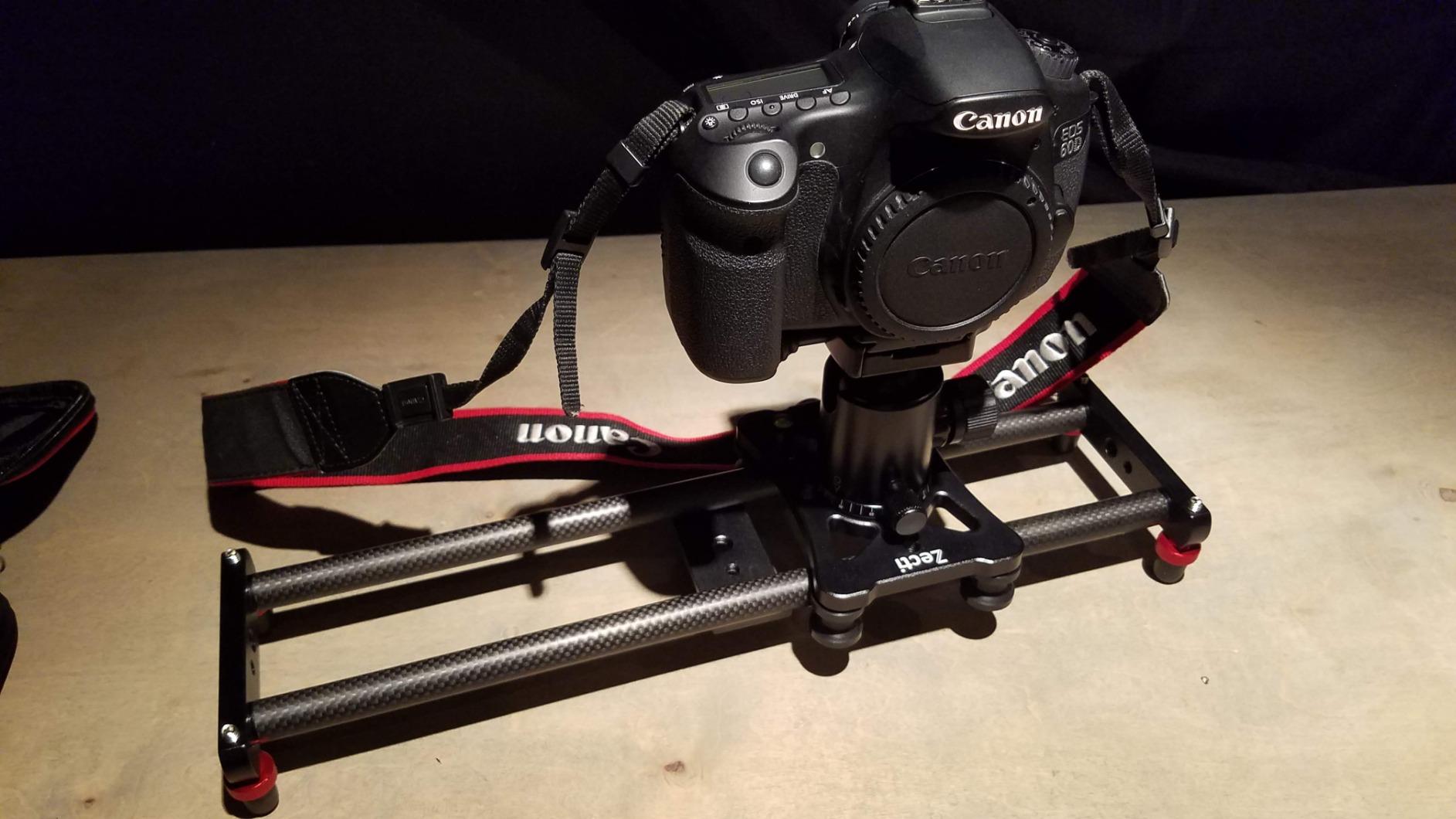
With 556 reviews and a 4.4-star average, this is one of the most-reviewed sliders in our lineup. Users consistently praise the value for money, with 67 percent of ratings being five stars. The included carrying bag protects the slider during transport and adds to the overall value package.
The slider supports up to 4.4 pounds, which covers most mirrorless cameras, small DSLRs, phones, and action cameras. It is a straightforward manual slider that does its job reliably without motors or apps to worry about.
Best Suited for These Shooters
Entry-level videographers and intermediate creators who want smooth manual tracking shots will find excellent value here. The Zecti is also a great backup slider for professionals who need a lightweight option for quick setups. Students and hobbyists appreciate the carbon fiber build quality at a budget-friendly price.
If you primarily shoot with a mirrorless camera or phone and want to add professional movement to your videos, this slider delivers without requiring a motorized system investment.
What to Watch Out For
The main criticism is that overtightening the screws can introduce noise into the movement. Some users also report slight jiggle with very lightweight cameras, since there is not enough mass to keep the carriage steady. Achieving perfectly smooth ultra-slow movements can be challenging with a manual system.
If your work requires repeatable motorized movements or time-lapse automation, you will need a motorized slider instead. But for manual tracking shots, the Zecti is hard to beat at this price.
7. Neewer CS1M 16 inch Carbon Fiber Camera Slider – Compact Manual Slider
NEEWER 16in/40cm Carbon Fiber Camera Slider with 360° Ball Head/Phone Clamp/Action Camera Mount, Dolly Rail Track with 4 Bearings & Adjustable Legs, Compatible with GoPro Insta360 iPhone Android, CS1M
16 inch manual carbon fiber slider
4.4lb payload
360 degree ball head
4 precision bearings
Phone clamp included
Action camera mount
Pros
- Lightweight carbon fiber and aluminum alloy construction
- Smooth gliding with 4 precision bearings
- 360 degree adjustable ball head with 90 degree tilt
- Phone clamp and action camera mount included
- Adjustable legs for uneven terrain
- Bubble level for alignment
- Noiseless manual operation
Cons
- Slider length may be too short for some uses
- Resistance adjustment can make slow pans difficult
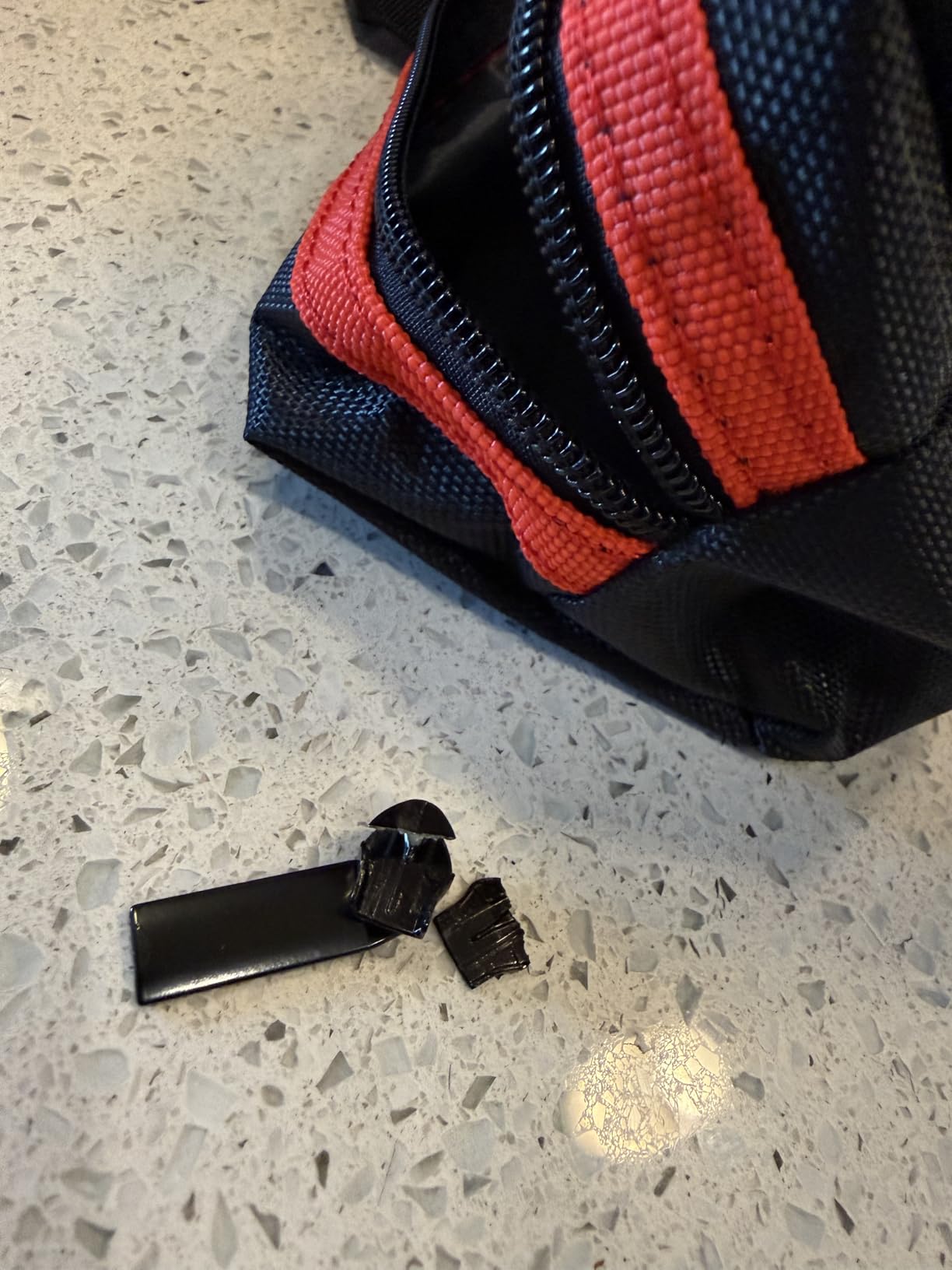
- Carrying bag zipper quality concerns
The Neewer CS1M is the most compact slider in our roundup at just 16 inches, and that portability is its biggest selling point. This is a slider you can literally toss in a backpack and set up anywhere. The carbon fiber and aluminum alloy construction keeps the weight down to 1.3 pounds while maintaining rigidity.
Neewer includes a 360-degree adjustable ball head with 90-degree tilt, a phone holder with cold shoe for accessories, and an action camera mount adapter. That accessory package makes this slider ready for phones, GoPros, Insta360 cameras, and small DSLRs right out of the box.
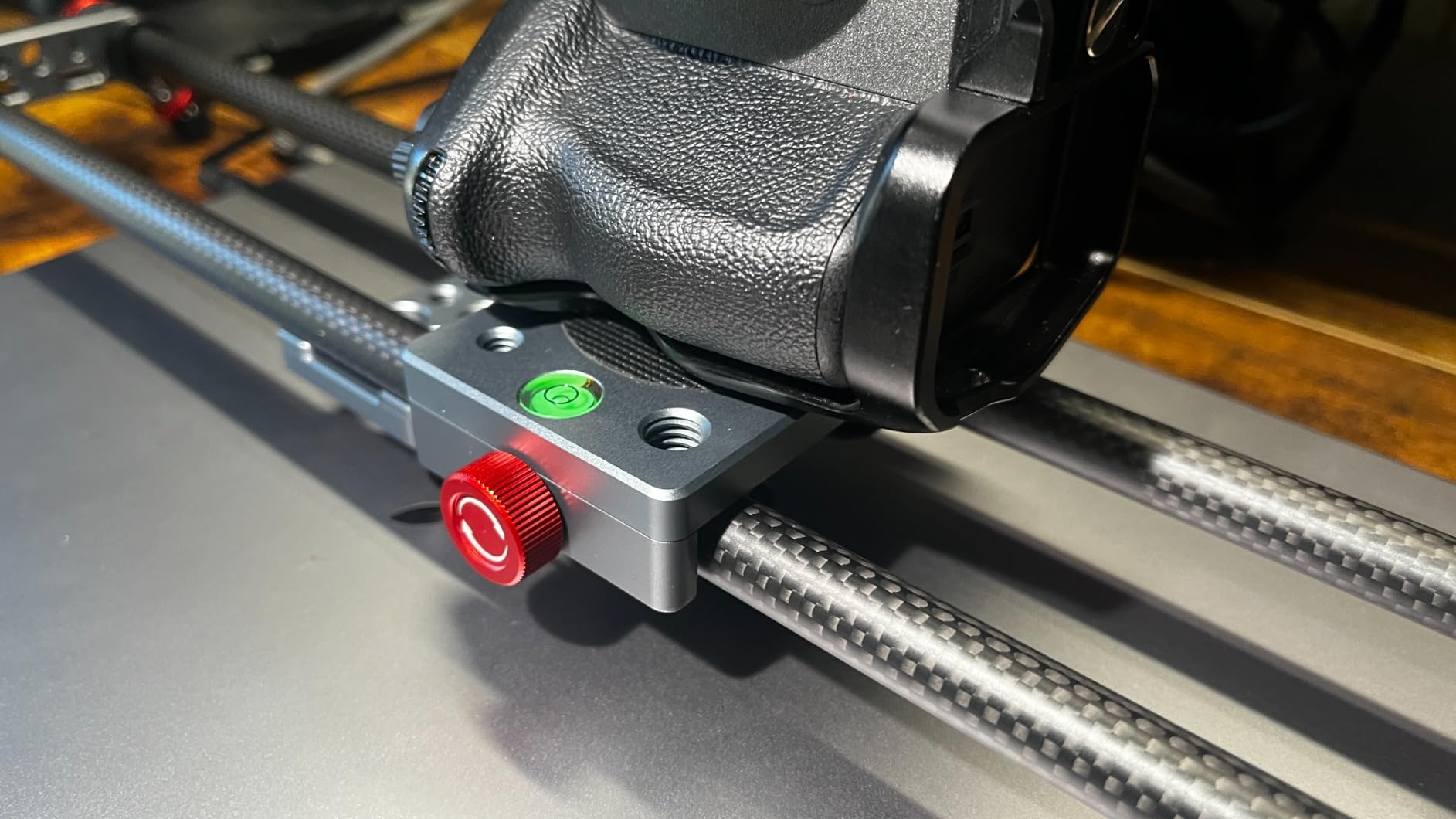
The four precision bearings provide smooth manual gliding, and Neewer describes the operation as noiseless. The adjustable legs offer 2 to 5 centimeters of elevation adjustment for uneven terrain, and the bubble level helps you get things perfectly aligned.
Supporting 4.4 pounds horizontally, 2.2 pounds at 45-degree tilt, and 2.2 pounds vertically, the CS1M handles most lightweight camera setups. Users love the smooth movement and versatility, giving it a 4.2-star average across 64 reviews.
Who This Compact Slider Suits
Travel videographers and vloggers who need the smallest possible footprint will love the CS1M. At 16 inches, it fits in carry-on luggage and sets up on any tabletop or flat surface. Mobile content creators using phones or action cameras get everything they need in one affordable package with the included mounts and ball head.
If you shoot in tight spaces like small studios, kitchens, or product photography setups, the compact size gives you positioning flexibility that longer sliders cannot match.
Things to Consider
The 16-inch rail length is short, which limits your tracking distance. For longer establishing shots or wide reveals, you may find it constraining. Some users report that the resistance adjustment can make achieving smooth slow pans difficult, requiring practice to get consistent results.
The carrying bag zipper has received some quality concerns in reviews, so handle it with care. Despite these minor issues, the CS1M delivers excellent value as a compact manual slider for mobile creators.
How to Choose the Best Camera Slider in 2026
Choosing the right camera slider comes down to understanding your shooting style, camera gear, and budget. Here are the key factors our team evaluated during testing, informed by Reddit community discussions and real-world use across all seven products.
Motorized vs Manual Sliders
The first decision is whether you need a motorized or manual slider. Manual sliders are simpler, lighter, more affordable, and never run out of battery. They work great for tracking shots where you push the carriage by hand. However, achieving perfectly smooth ultra-slow movements is difficult manually, and you cannot do automated time-lapses.
Motorized sliders offer repeatable, programmable movement with consistent speed. They excel at time-lapse photography, product reveals, and any scenario where you need the camera to move while you are in front of it. The tradeoffs are higher cost, more weight, battery management, and potential motor noise during audio recording. Reddit users consistently report that app reliability varies widely between brands, so consider models with hardware button controls as a backup.
Slider Length and Travel Distance
Slider length directly affects how far your camera can travel during a shot. Compact sliders like the Neewer CS1M at 16 inches and the iFootage Pico at 15.7 inches are extremely portable but limit your tracking range. Mid-range sliders like the Zecti at 24 inches and the Accsoon Toprig at 25 inches offer a good balance of travel distance and portability.
For longer tracking shots, the GVM at 31 inches and the iFootage Nano II 660 at 26 inches provide more runway. Consider what you typically shoot: product close-ups need less travel, while real estate walkthroughs and landscape reveals benefit from longer rails.
Payload Capacity
Match the slider payload to your heaviest camera and lens combination. The GVM leads with a 20-pound capacity, followed by the iFootage Nano II 660 at 15.4 pounds. The Accsoon Toprig S60 handles 8.8 pounds horizontally. Lighter-duty sliders like the Neewer DL400 at 6.6 pounds and the manual Zecti and Neewer CS1M at 4.4 pounds work well for mirrorless cameras and phones.
The iFootage Pico at 2.4 pounds is designed specifically for phones and action cameras. Always leave some headroom rather than maxing out the payload rating, as performance degrades near the limit.
Build Material: Carbon Fiber vs Aluminum
Carbon fiber is lighter, dampens vibration better, and resists corrosion, making it the preferred material for quality sliders. Every product in our lineup uses carbon fiber rails or carbon fiber and aluminum alloy construction. Carbon fiber construction also tends to produce smoother movement because the material absorbs micro-vibrations that aluminum would transmit.
The tradeoff is that carbon fiber costs more to manufacture, which is reflected in the price. For budget-conscious buyers, aluminum alloy sliders can still perform well, but expect slightly more weight and potentially more vibration transmission.
Noise Levels for Audio Recording
Motor noise is one of the most common complaints on Reddit’s videography forums. If you record audio in the same room as your slider, look for models with brushless motors rated below 20dB. The iFootage Nano II 660 leads at under 20dB, followed by the Neewer DL400 at below 30dB. Manual sliders like the Zecti and Neewer CS1M produce no motor noise at all.
For dialogue-heavy shoots or quiet environments, prioritize low-noise operation. You can always add music or ADR in post, but capturing clean production audio saves significant editing time.
App Control and Connectivity
Motorized sliders increasingly rely on smartphone apps for programming movements, time-lapses, and waypoints. App quality varies dramatically between brands. Reddit users frequently cite connectivity drops, confusing interfaces, and limited firmware updates as frustrations. The Accsoon Toprig S60 addresses this by offering full button operation without requiring the app.
When evaluating app-controlled sliders, check for recent firmware updates and active developer support. A slider with a great app today may become frustrating if the app is abandoned. Bluetooth connectivity tends to be more stable than WiFi for close-range control.
Frequently Asked Questions
Is a camera slider worth the investment?
Yes, a camera slider is worth the investment if you regularly shoot video content. Sliders add professional cinematic movement that static shots cannot achieve, and even budget manual sliders under $100 dramatically improve production value. Motorized sliders additionally enable time-lapse and repeatable automated shots that would be impossible manually.
Why are camera sliders so expensive?
Camera sliders are expensive because they require precision-machined rails, high-quality bearings or brushless motors, carbon fiber construction, and stable carriage systems. Motorized sliders add the cost of motors, control boards, batteries, and app development. Higher-end models like the iFootage Nano II 660 also include AI tracking and gimbal integration features that require significant engineering investment.
What are the different types of camera sliders?
The main types are manual rail sliders, motorized rail sliders, wheeled dollies, and multi-axis motion control sliders. Manual sliders use bearings on rails pushed by hand. Motorized sliders add motors for automated movement. Wheeled dollies like the Neewer DL400 roll on flat surfaces without rails. Multi-axis sliders like the iFootage Nano II 660 combine slider and pan movement with gimbal integration.
What are camera slider alternatives?
Camera slider alternatives include gimbal stabilizers for handheld movement, shoulder rigs for supported handheld shots, drone flyovers for aerial tracking, and DIY dolly systems using PVC pipe or skateboard wheels. Gimbals are the most popular alternative since they offer multi-directional movement, though they cannot match the perfectly straight, repeatable motion of a rail slider.
Can a camera slider be motorized?
Yes, many camera sliders are motorized with built-in stepper or brushless motors. Motorized sliders enable automated time-lapse photography, programmable A-to-B point movements, repeatable shots, and consistent speed control. The best motorized camera sliders also offer app control, panorama modes, and AI tracking features for advanced creative control.
Final Thoughts on the Best Camera Sliders for 2026
Finding the best camera sliders comes down to matching the tool to your workflow. For professional videographers who need multi-axis control and gimbal integration, the iFootage Shark Slider Nano II 660 is our top recommendation. Its AI tracking, 360-degree pan, and DJI compatibility make it the most capable slider we tested.
For value-conscious shooters who need motorized features without the premium price, the GVM Motorized Camera Slider delivers a 20-pound payload and time-lapse capability at a mid-range price point. Budget-minded creators should look at the Neewer DL400 Motorized Dolly for app-controlled movement or the Zecti 24-inch manual slider for straightforward tracking shots.
Mobile-first creators are best served by the iFootage Shark Slider Pico, while the compact Neewer CS1M covers travel and tight-space shooting. The Accsoon Toprig S60 fills the premium gap with reliable hardware controls and carbon fiber build quality.
Whatever your budget or camera setup, adding a slider to your kit will immediately elevate your video production. Choose based on your typical shooting scenarios, and you will wonder how you ever worked without one.