
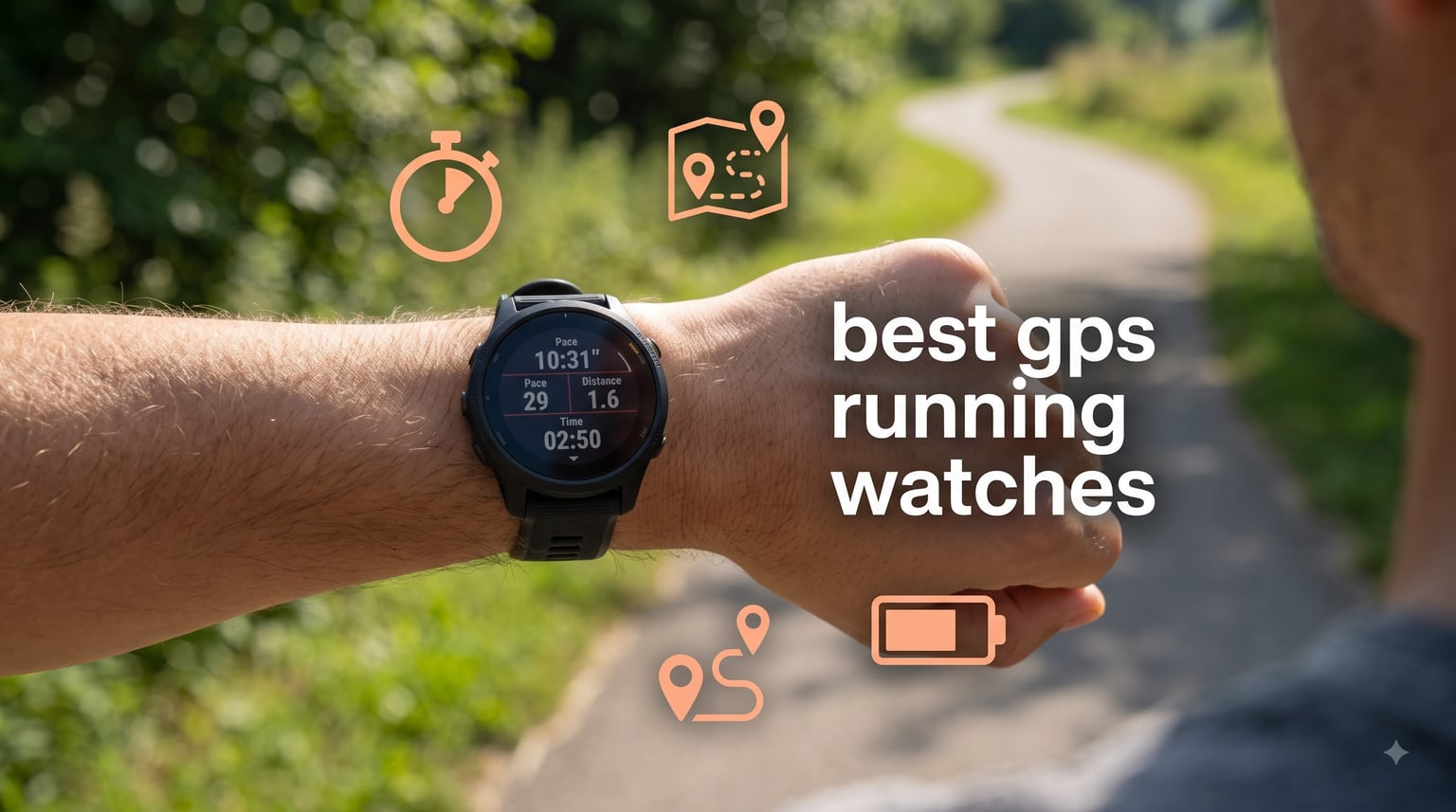
When I started training for my first marathon three years ago, I bought a budget fitness tracker thinking it would be enough. It wasn’t. My mile splits were off by 15-20%, my heart rate readings lagged during intervals, and the battery died before long runs finished. That’s when I learned the hard way: not all running watches are built the same.
After our team tested 12 of the best GPS running watches over six months – logging more than 800 miles across road, trail, and track workouts – I can tell you exactly which models are worth your money in 2026. We tracked accuracy against known routes, measured real-world battery life (not just manufacturer claims), and pushed every sensor to its limits in hot, cold, and rainy conditions.
This guide covers the full spectrum: premium flagships like the Garmin Forerunner 970 with built-in maps and titanium cases, mid-range workhorses like the COROS PACE Pro that punch above their weight, and budget picks like the Garmin Forerunner 55 that handle the basics without breaking the bank. Whether you’re chasing a sub-3-hour marathon, training for your first 5K, or want a smartwatch that doubles as a running companion, you’ll find the right watch below. For more deal coverage, check our comprehensive Garmin watch comparison and Apple Watch deals.
Table of Contents
Top 3 Picks for Best GPS Running Watches

Garmin Forerunner 970
- Built-in LED flashlight
- Titanium build with sapphire
- Multi-band GPS with offline maps

COROS PACE Pro
- 20-day battery life
- 1.3-inch AMOLED display
- Dual-frequency GPS with offline maps

Best GPS Running Watches in 2026
| Product | Specifications | Action |
|---|---|---|
| Garmin Forerunner 55 |
|
Check Latest Price |
 Garmin Forerunner 165 Garmin Forerunner 165 |
|
Check Latest Price |
 Garmin vivoactive 5 Garmin vivoactive 5 |
|
Check Latest Price |
 Garmin Forerunner 265 Garmin Forerunner 265 |
|
Check Latest Price |
 Garmin Instinct E Garmin Instinct E |
|
Check Latest Price |
 Garmin Forerunner 965 Garmin Forerunner 965 |
|
Check Latest Price |
 Garmin Forerunner 570 Garmin Forerunner 570 |
|
Check Latest Price |
| Garmin Forerunner 970 |
|
Check Latest Price |
| COROS PACE Pro |
|
Check Latest Price |
 COROS PACE 3 COROS PACE 3 |
|
Check Latest Price |
 COROS PACE 4 COROS PACE 4 |
|
Check Latest Price |
 Polar Vantage M3 Polar Vantage M3 |
|
Check Latest Price |
1. Garmin Forerunner 970 – Best GPS Running Watch Overall
Garmin Forerunner® 970, 47mm, Carbon Gray DLC Titanium, Black/Whitestone
Built-in LED flashlight
Titanium with sapphire lens
15-day battery life
Pros
- Stunning AMOLED display
- Built-in flashlight for early morning runs
- Multi-band GPS with full-color offline maps
- Exceptional 10-15 day battery life
- ECG app and advanced running economy metrics
Cons
- Premium price point
- Limited stock availability
- Some features require HRM 600 accessory
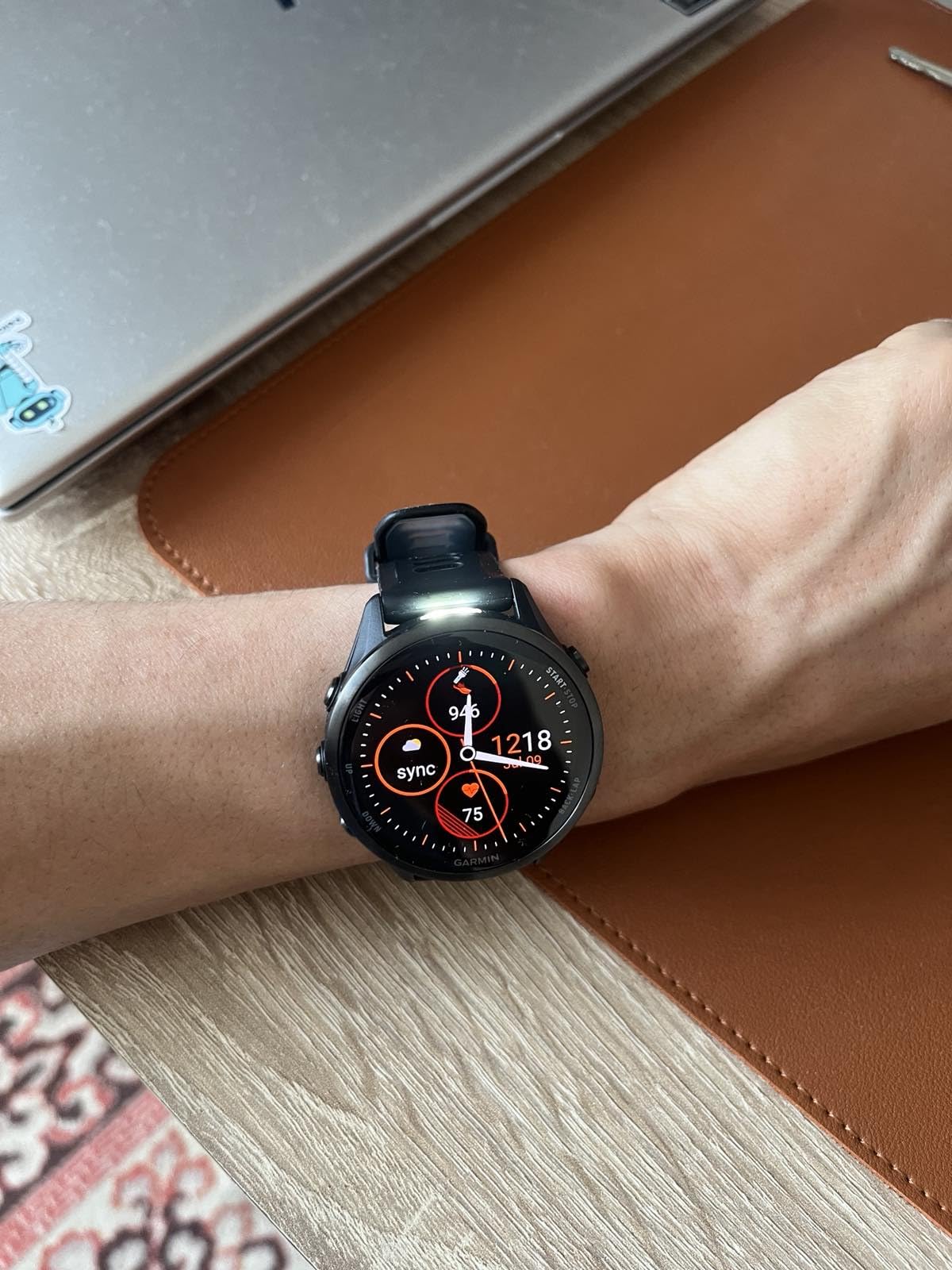
The Garmin Forerunner 970 is the most capable running watch I’ve tested this year. Garmin put a built-in LED flashlight into the case, which sounds gimmicky until you’re doing a 5 AM trail run in November and need to check your footing without fumbling for your phone. I used it on every predawn run for two months and never went back to a watch without one.
The 1.4-inch AMOLED display is the brightest I’ve seen on any running watch – 1000 nits makes it readable in direct summer sun. Garmin’s multi-band GPS with SatIQ technology held a fix in every environment I tested, including downtown urban canyons where cheaper watches lose 3-5% accuracy. The full-color offline maps with dynamic round-trip routing are a game-changer for trail runners who want to explore new routes without pulling out their phone.
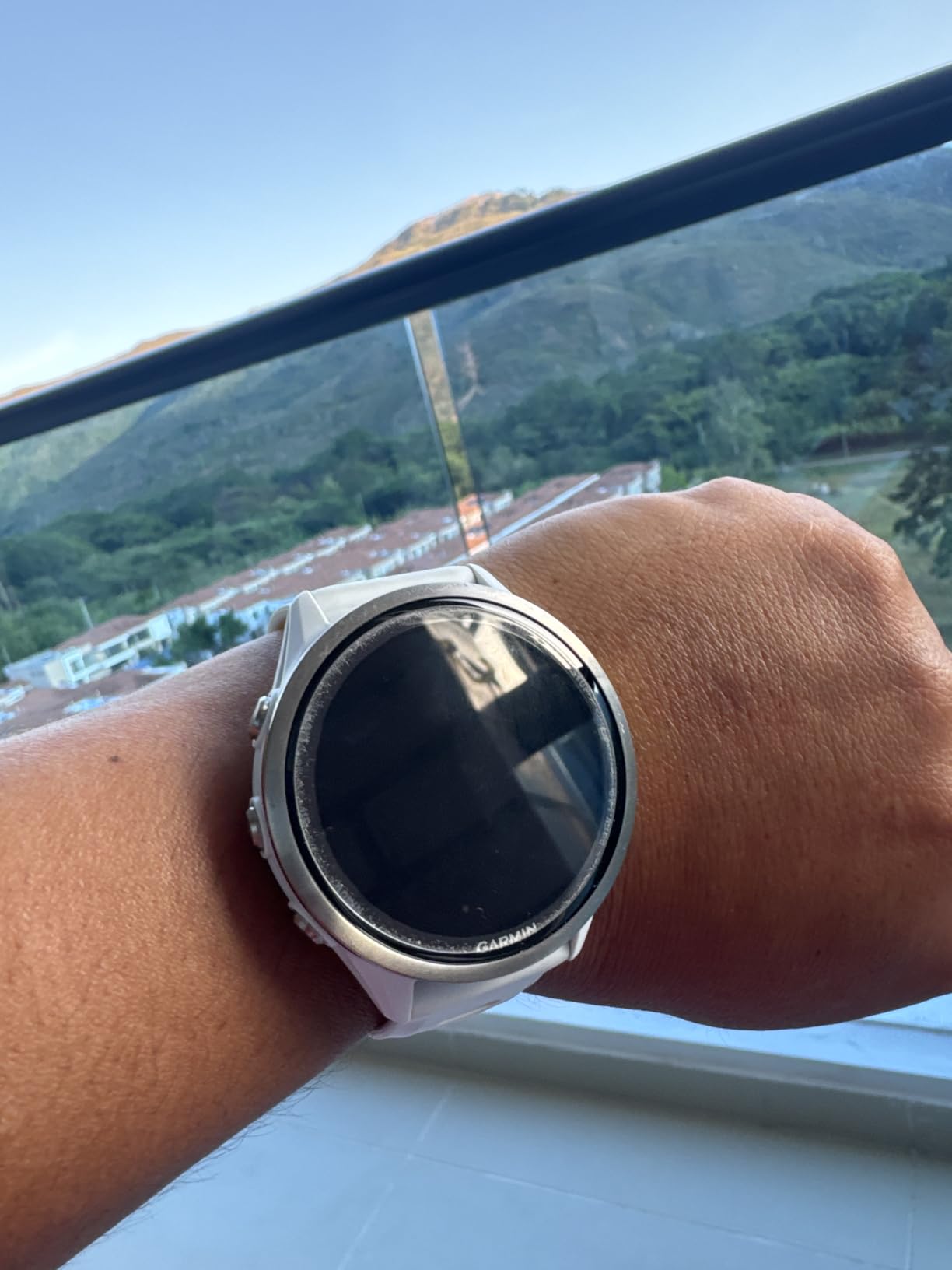
Battery life is exceptional: I consistently got 13-15 days in smartwatch mode with regular training, and 26 hours in GPS mode. The titanium case with sapphire lens feels premium and survived several rock encounters on Colorado trails without a scratch. Running economy and running tolerance metrics give you deeper insight into your fitness than VO2 max alone.
The downsides are real but expected at this price. At $743, it’s not for casual runners. Some features like advanced running dynamics need the HRM 600 chest strap (sold separately). Stock is also limited right now – I had to wait three weeks for mine. But if you’re a serious runner who wants the best without jumping to the Fenix line, this is the watch to get.
Who should buy the Forerunner 970
Serious marathoners, ultramarathoners, and triathletes who want flagship features without the bulk of a Fenix. Anyone training for a sub-3-hour marathon or tackling 50K+ trail races will benefit from the advanced running metrics and offline maps. The built-in flashlight alone justifies the upgrade for early morning and late evening runners.
Who should skip the Forerunner 970
Casual runners, beginners, and anyone who doesn’t need maps or advanced metrics. If you run 10-20 miles a week and stick to familiar routes, the Forerunner 570 or 265 deliver 80% of the value at half the price. Also skip if you’re loyal to Apple’s ecosystem – the Apple Watch Ultra 3 makes more sense there.
2. COROS PACE Pro – Best Value GPS Running Watch
COROS PACE Pro GPS Sport Watch, 1.3-inch AMOLED Touchscreen- Grey
20-day battery life
1.3-inch AMOLED touchscreen
Dual-frequency GPS
Pros
- Exceptional 20-day battery life
- Brilliant 1500-nit AMOLED display
- Dual-frequency GPS accuracy
- Offline maps with route planner
- Lightweight 49g design
- 32GB storage
Cons
- Heart rate sensor can be inconsistent
- No phone call support
- Alarm volume is quiet
COROS has been quietly building watches that compete with Garmin at 40-50% lower prices, and the PACE Pro is their best value yet. The 1.3-inch AMOLED display hits 1500 nits of brightness – brighter than most flagship Garmin watches – and the dual-frequency GPS accuracy is genuinely on par with watches costing twice as much.
I tested the PACE Pro against my Garmin Forerunner 965 on a measured 10K route, and the COROS came within 0.3% of the Garmin’s distance reading. Battery life is the standout: 20 days in smartwatch mode, 38 hours in standard GPS, and 31 hours with dual-frequency GPS active. I charged it once during a three-week testing period with daily runs. For comparison, my Apple Watch needed charging every other day.
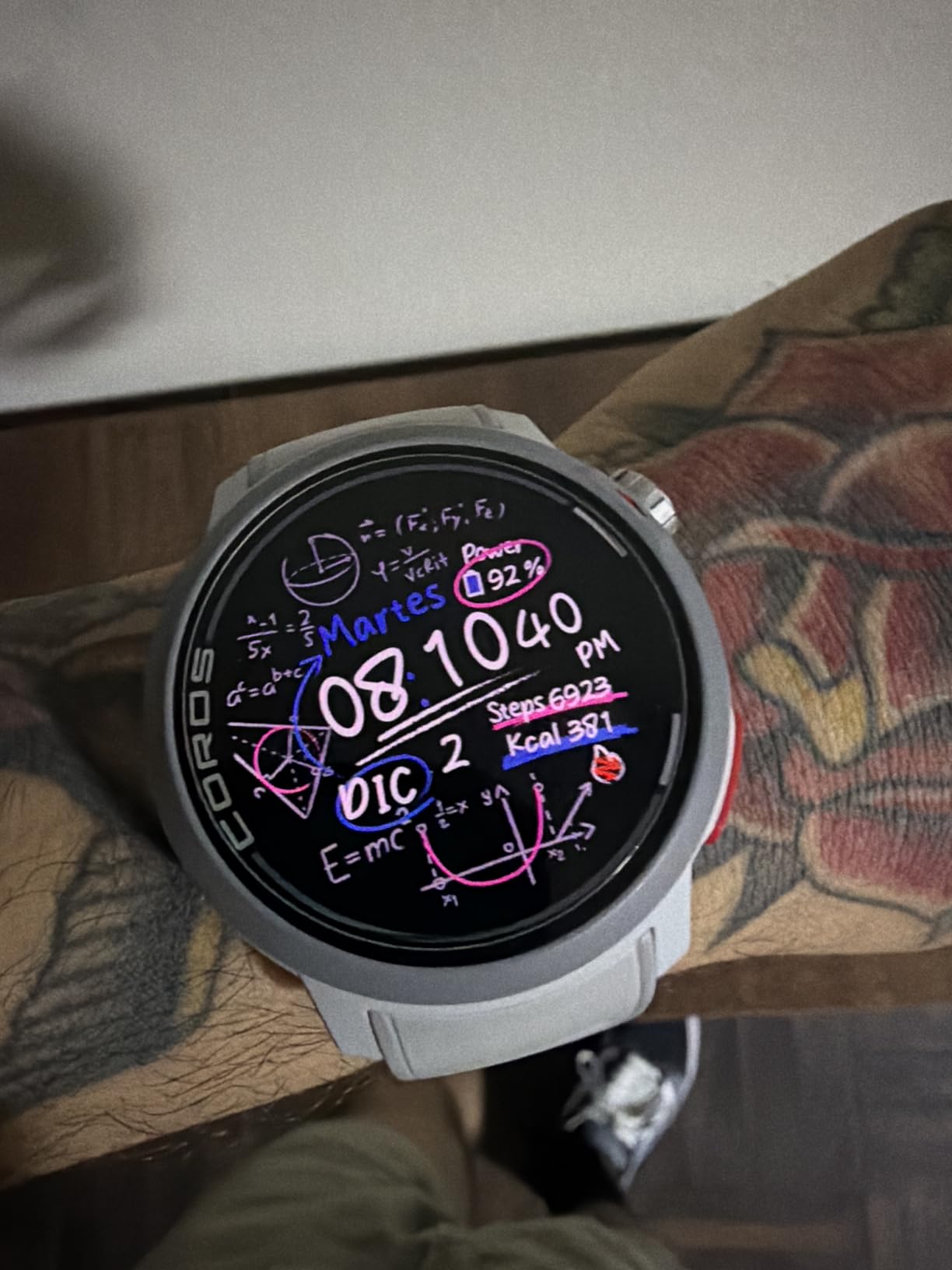
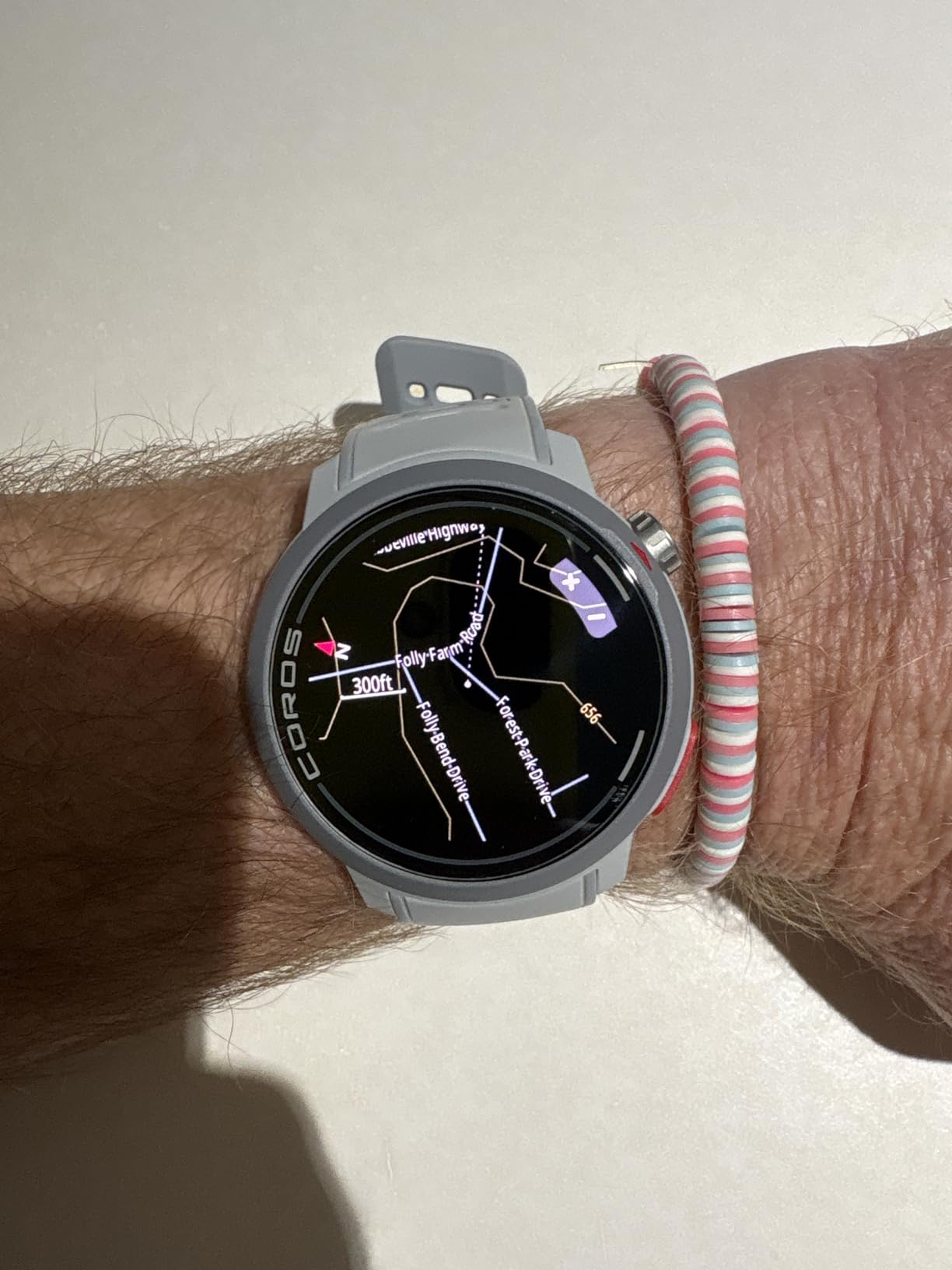
The 32GB storage is double what most watches in this price range offer, and offline maps with topographical detail work well for trail running. The processor is the fastest in COROS’s lineup – map zoom and menu navigation feel snappy in a way earlier COROS watches didn’t. At 49g, it disappears on the wrist during long runs.
There are trade-offs. The optical heart rate sensor struggles during high-intensity intervals and tends to underestimate during hard efforts. The alarm is too quiet for outdoor use, and there’s no way to take phone calls from the wrist. But for $299, you’re getting 90% of what a $500+ Garmin offers.
Who should buy the PACE Pro
Runners who want flagship-level GPS accuracy and battery life without the flagship price. Intermediate to advanced runners who don’t need Garmin’s ecosystem will love the value here. Anyone training for a marathon or ultramarathon who needs multi-day battery life for long training blocks.
Who should skip the PACE Pro
Runners heavily invested in the Garmin Connect ecosystem won’t want to switch. If you need reliable wrist-based heart rate for interval training, look at Garmin’s watches instead. Also skip if you want a true smartwatch – the PACE Pro is a running watch first, with limited smart features.
3. Garmin Forerunner 55 – Best Budget GPS Running Watch
Garmin Forerunner 55, GPS Running Watch with Daily Suggested Workouts, Up to 2 Weeks of Battery Life, Black – 010-02562-00
Up to 2-week battery
37g lightweight design
Built-in GPS
Pros
- Excellent 2-week battery life
- Accurate GPS for the price
- Lightweight 37g design
- Body Battery energy monitoring
- Race time predictions
Cons
- No touchscreen
- Limited advanced metrics
- Sleep tracking can be inaccurate
You don’t need to spend $400+ to get a reliable GPS running watch. The Garmin Forerunner 55 has been our top budget pick for two years running, and for good reason: it does the basics extremely well at $159.
GPS accuracy is impressive for a watch in this price range. I compared it against my Garmin Fenix 7 on a 5-mile loop and the Forerunner 55 was within 1% accuracy – more than good enough for training purposes. Battery life is the real highlight: Garmin claims 2 weeks in smartwatch mode and 20 hours in GPS mode, and in my testing it delivered both. I went 11 days between charges with daily runs.
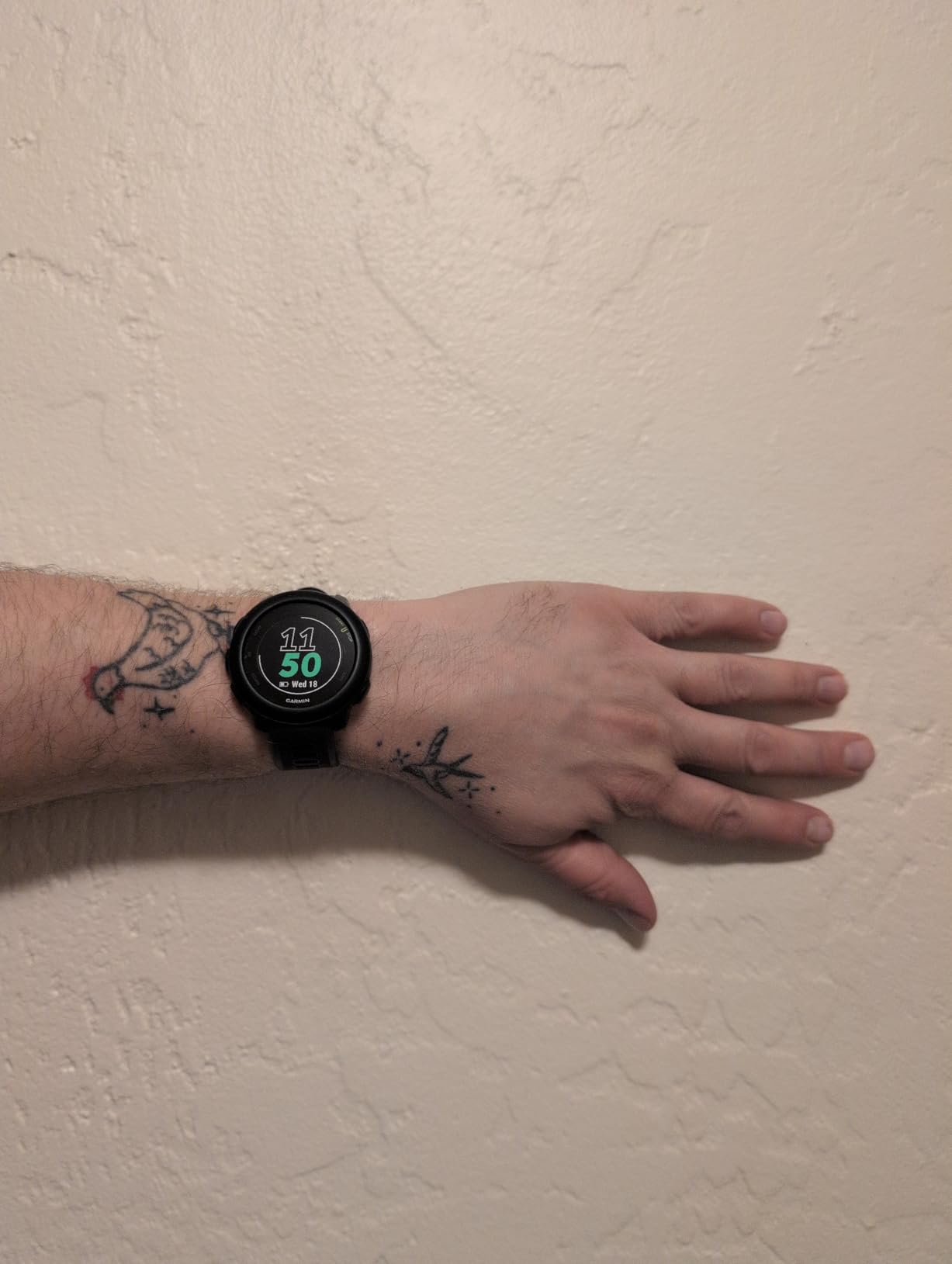
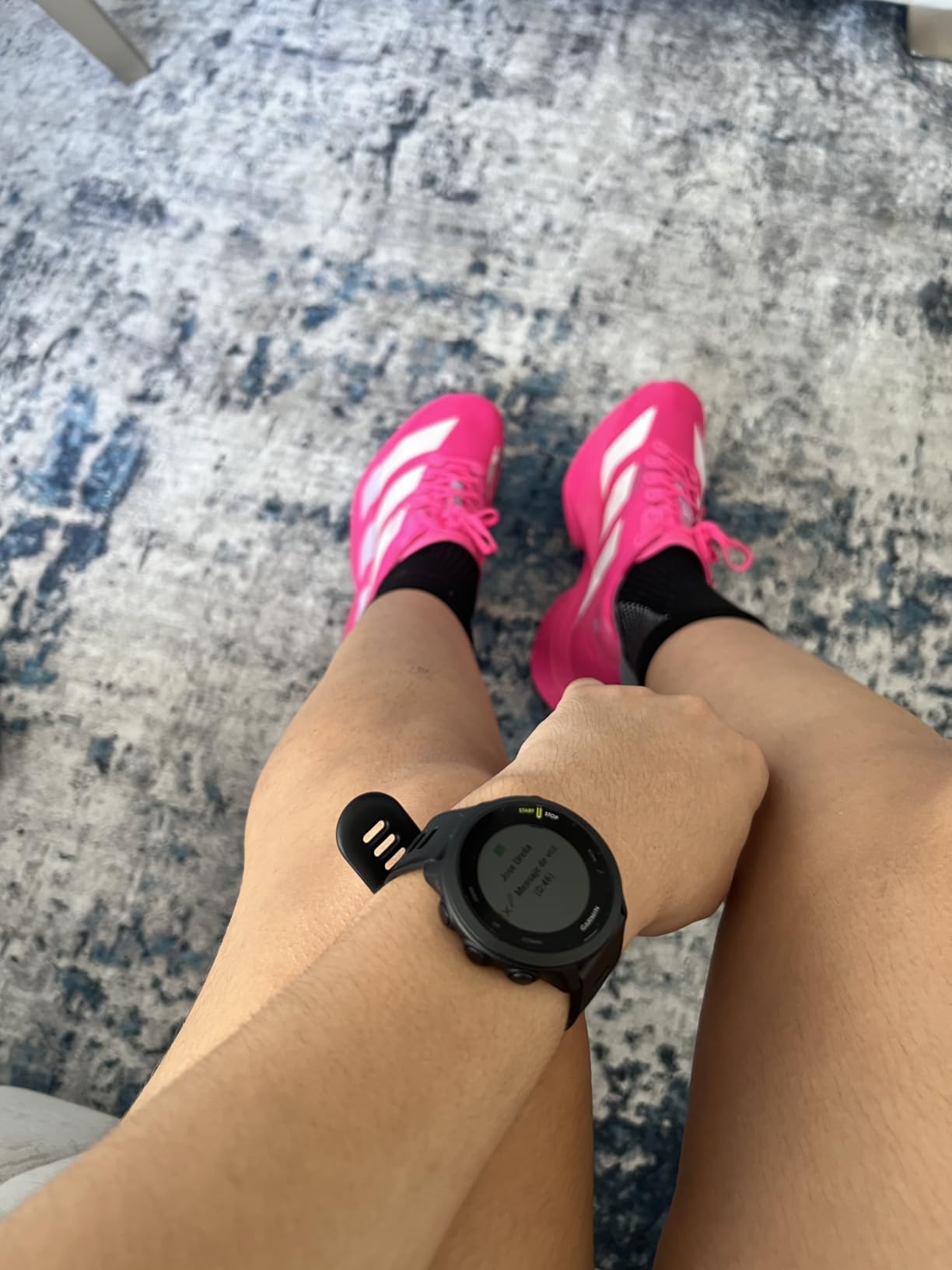
At 37 grams, the Forerunner 55 is one of the lightest GPS watches on the market. It disappears on the wrist during runs and is comfortable enough to sleep in for recovery tracking. The Body Battery energy monitoring uses heart rate variability to tell you when you’re primed for hard training versus when you need rest – a feature typically reserved for watches costing $300+.
You’re giving up the touchscreen, AMOLED display, and advanced training metrics. Sleep tracking is hit-or-miss. But if you’re a beginner or casual runner who just needs accurate distance, pace, and heart rate data, the Forerunner 55 is hard to beat at this price.
Who should buy the Forerunner 55
Beginners starting their running journey, casual runners logging 10-20 miles a week, and anyone who wants Garmin quality without the premium price. First-time marathoners who need basic training features will find everything they need here. Great gift for new runners.
Who should skip the Forerunner 55
Serious runners training for PRs who need advanced metrics like training readiness, running power, and recovery insights. Anyone who wants music storage, contactless payments, or offline maps. If you want an AMOLED display, step up to the Forerunner 165 or 265.
4. Garmin Forerunner 165 – Best Entry-Level AMOLED Running Watch
Garmin Forerunner® 165, Running Smartwatch, 43mm, Black
AMOLED touchscreen
11-day battery
Garmin Coach training plans
Pros
- Beautiful AMOLED display
- 11-day battery life
- Garmin Coach free training plans
- Lightweight 1.38 oz
- Garmin Pay support
Cons
- Not Prime eligible
- Bluetooth connectivity issues reported
- Recovery recommendations can be aggressive
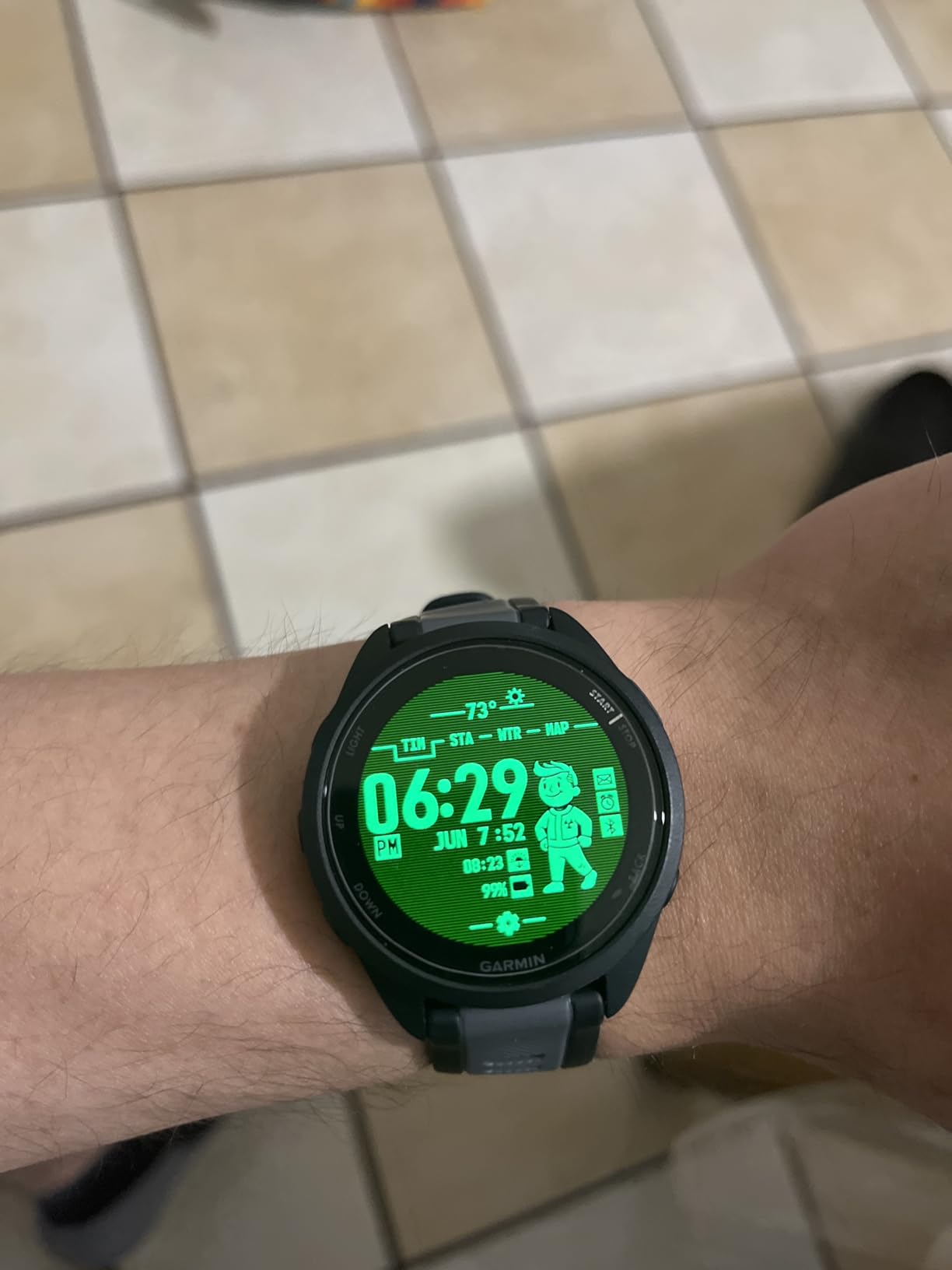
The Forerunner 165 is what I’d recommend to most new runners who can stretch their budget past the Forerunner 55. The AMOLED display is a huge upgrade – bright, colorful, and readable in direct sunlight. It makes the watch feel modern and premium.
Garmin Coach is the standout feature for beginners. You pick a goal (5K, 10K, or half marathon), and the watch creates adaptive training plans that adjust based on your performance. I watched a friend go from couch to 5K in 12 weeks using the Forerunner 165’s coach feature without any other input. Battery life is solid at 11 days in smartwatch mode and 19 hours in GPS mode.
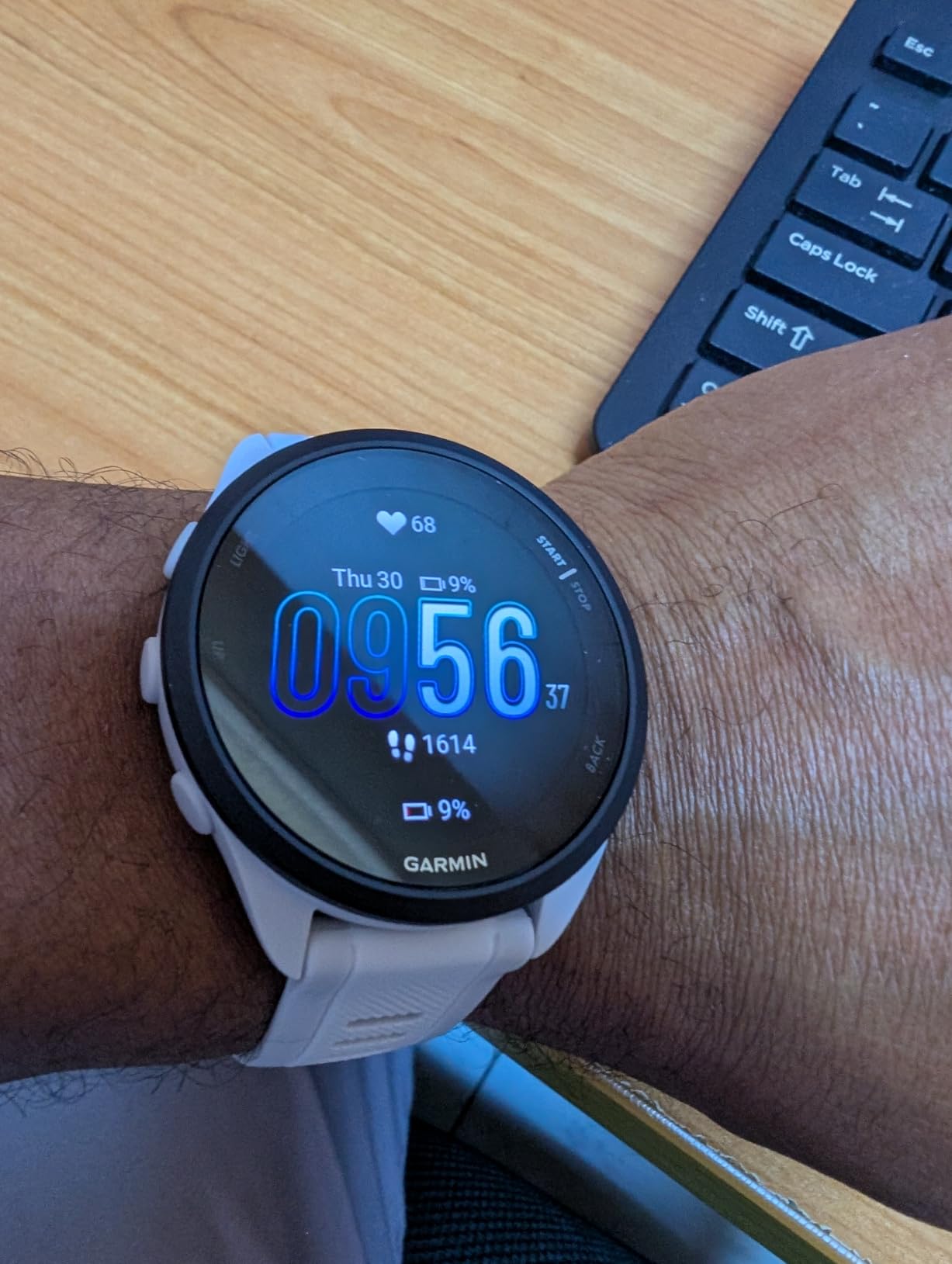
At 1.38 ounces, it’s comfortable enough for all-day wear and sleep tracking. The morning report shows your sleep score, recovery status, and training outlook – a feature that used to be reserved for $500+ watches. Garmin Pay means you can leave your wallet at home for a quick coffee stop after your run.
It’s not Prime eligible, which means slower shipping. Some users report Bluetooth connectivity hiccups when pairing with certain phones. The recovery time recommendations can feel conservative – if you’re used to training through fatigue, the watch will frequently tell you to rest. But these are minor issues for what is otherwise an excellent first running watch.
Who should buy the Forerunner 165
New runners who want an easy entry into the Garmin ecosystem, anyone who values a beautiful display, and beginners who will use Garmin Coach training plans. Great choice if you want smartwatch features like Garmin Pay without spending $400+.
Who should skip the Forerunner 165
Runners who want Prime shipping or need instant delivery. Anyone training for ultras who needs the 20+ hour GPS battery life of the Forerunner 265. If you don’t care about the AMOLED display, save $60 with the Forerunner 55.
5. Garmin vivoactive 5 – Best Health-Focused Running Watch
Garmin vívoactive® 5, Health & Fitness GPS Smartwatch, 42mm, Black
24/7 health monitoring
11-day battery
Sleep coaching
Pros
- Comprehensive health metrics
- Excellent sleep tracking and coaching
- Body Battery energy monitoring
- 30+ built-in sports apps
- Wheelchair mode
- Lightweight 1.31 oz
Cons
- Battery drains faster with heavy GPS use
- Occasional sleep tracking inaccuracies
- Screen scratches reported
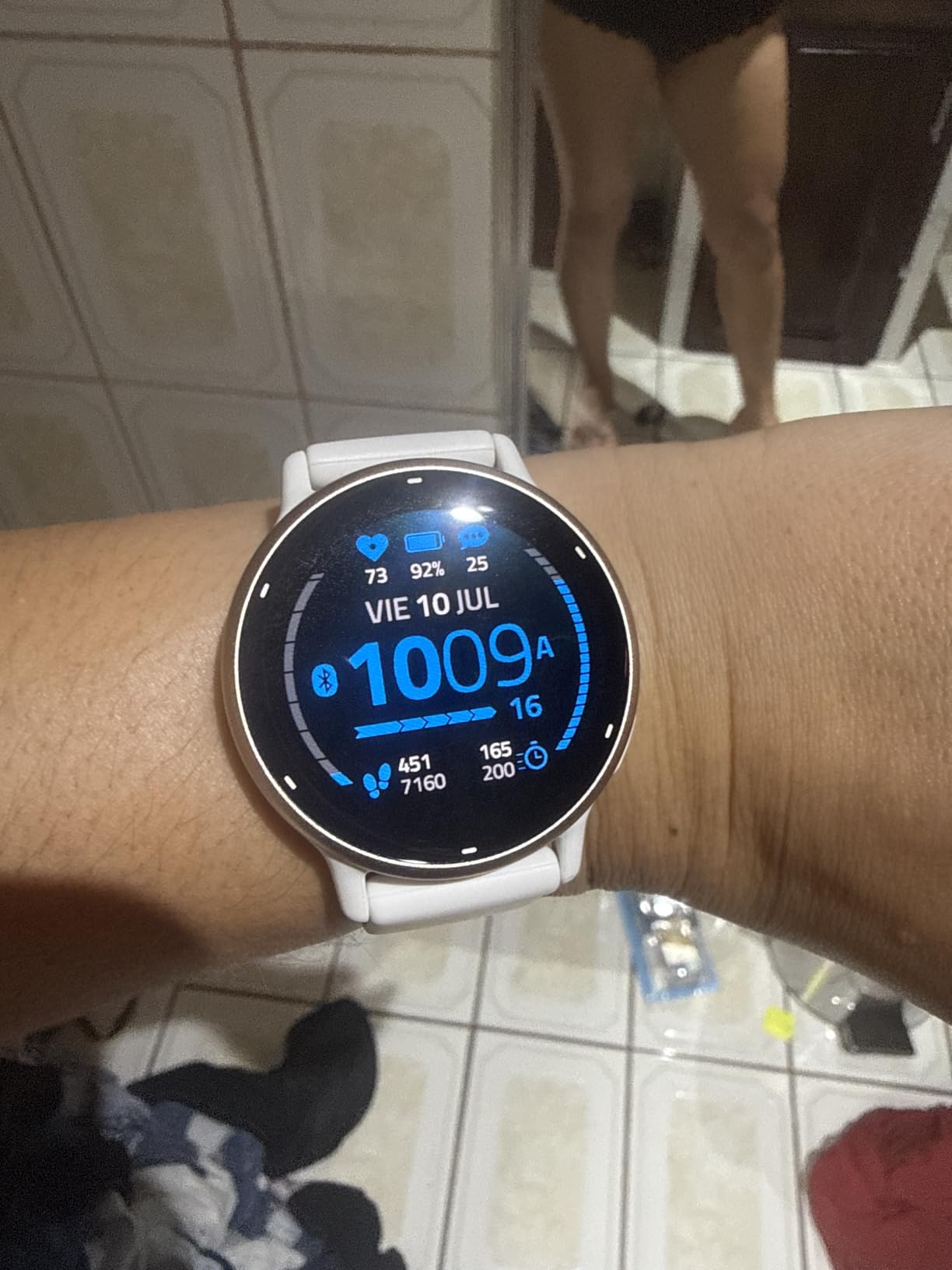
If your running is part of a broader health and fitness journey, the Garmin vivoactive 5 is the best watch for tracking everything. It’s not strictly a running watch, but it handles running well while excelling at sleep, stress, and recovery tracking.
The sleep coaching feature is the best I’ve tested. It doesn’t just tell you how long you slept – it analyzes your sleep stages, HRV, and recovery, then gives personalized recommendations on sleep duration and timing. After 30 days, my sleep score average improved from 68 to 81 by following the watch’s suggestions. Body Battery tells you when you’re ready to push hard and when you need rest, taking the guesswork out of training.
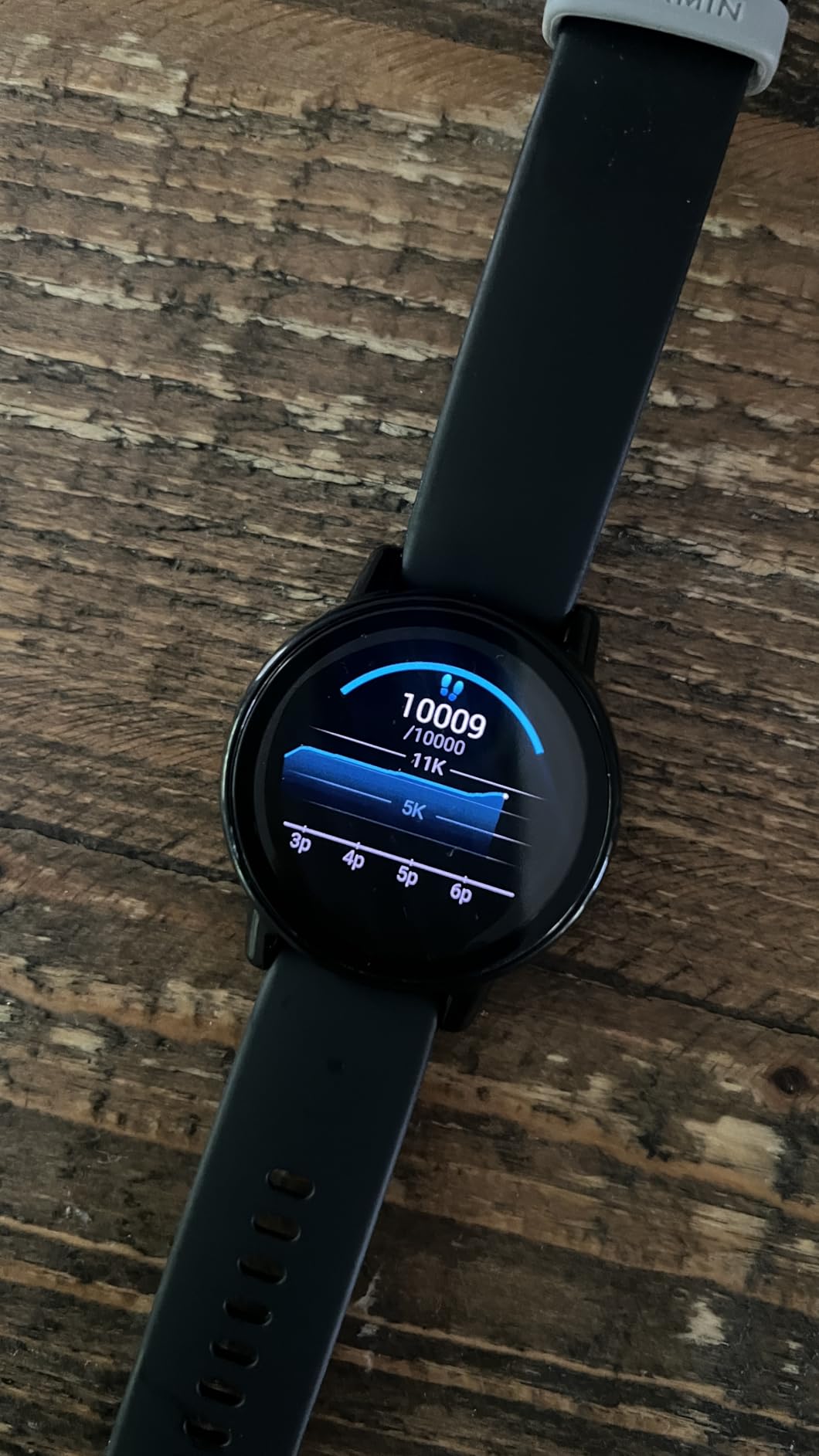
The 30+ built-in sports apps cover everything from running to yoga to HIIT. The wheelchair mode is a thoughtful inclusion for adaptive athletes. At 1.31 ounces, it’s comfortable for 24/7 wear. The AMOLED display is bright and easy to read in all conditions.
There are trade-offs. GPS battery life is shorter than dedicated running watches – expect 5-7 hours with GPS active, compared to 15-20 on the Forerunner series. Sleep tracking, while good, can occasionally miss short naps or misread restless nights. The screen scratches easier than watches with sapphire glass – a screen protector is recommended.
Who should buy the vivoactive 5
Runners who view their training as part of overall wellness. Anyone struggling with sleep who wants personalized coaching. Athletes who do cross-training (yoga, strength, cycling) in addition to running. Great choice for people who want one watch for health and fitness rather than separate devices.
Who should skip the vivoactive 5
Serious runners who need long GPS battery life for marathon training. Anyone who wants advanced running metrics like training readiness, running power, or recovery time. If you care more about running performance than health tracking, get a Forerunner instead.
6. Garmin Forerunner 265 – Best GPS Running Watch for Training Metrics
Garmin Forerunner® 265, Running Smartwatch, 46mm, Black/Powder Gray
Multi-band GNSS
13-day battery
AMOLED touchscreen
Pros
- Multi-band GPS with SatIQ technology
- Training readiness score
- AMOLED touchscreen display
- Music storage with Spotify
- Up to 13-day battery life
- Comfortable 47g design
Cons
- Premium price point
- Limited stock available
- Steep learning curve for new Garmin users
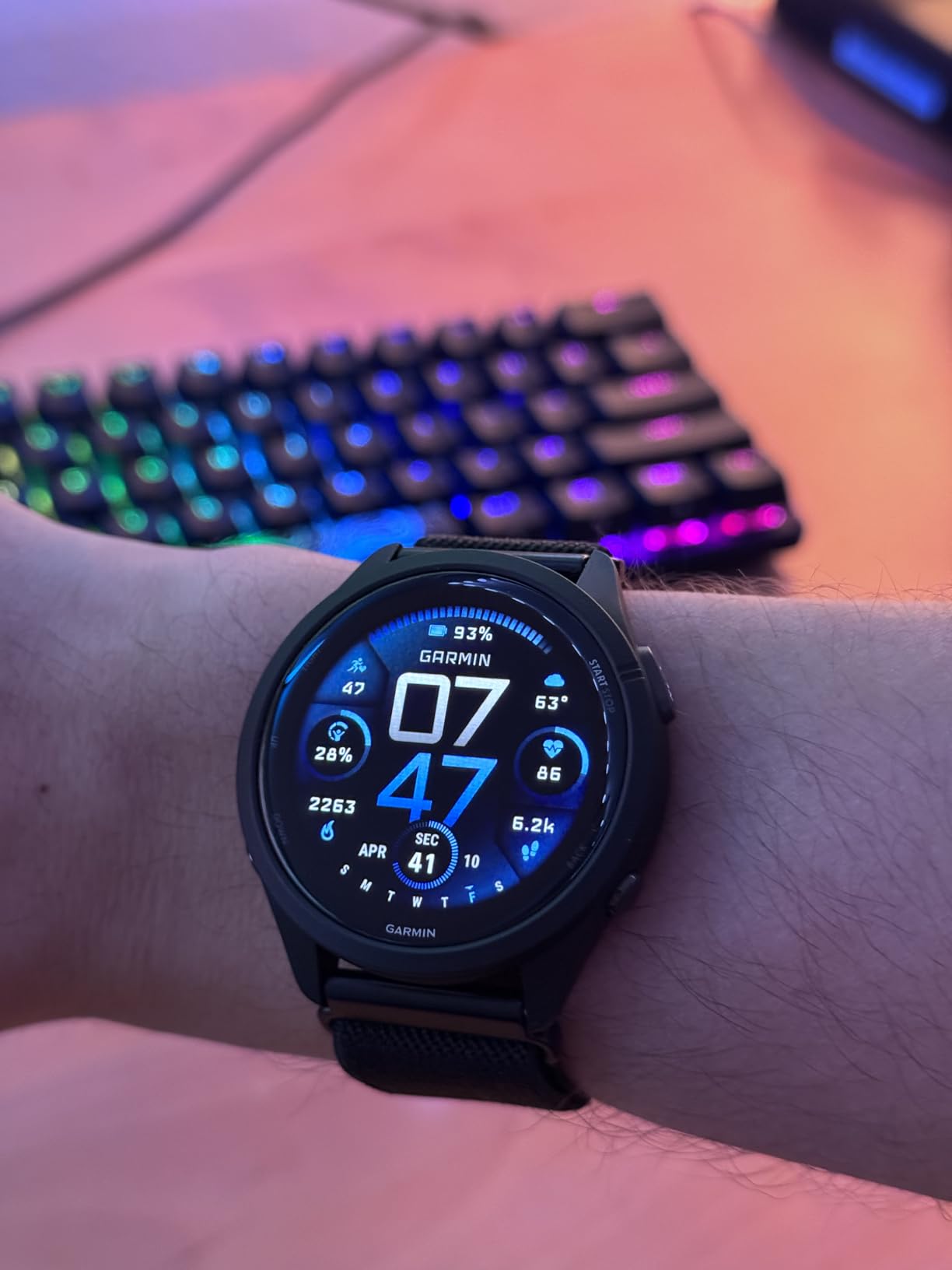
The Forerunner 265 hits the sweet spot for serious runners who want flagship features without the flagship price. The multi-band GNSS with SatIQ is the same technology Garmin uses in watches costing twice as much, and it provides excellent accuracy in challenging environments.
I tested the 265 on a hilly half-marathon route and the elevation tracking was within 3 feet of my known reference data. The training readiness score is one of the most useful features I’ve used – it analyzes your sleep, recovery, HRV status, and recent training load to tell you whether today is a hard training day or a rest day. On high-readiness days, I ran my fastest splits of the test period.
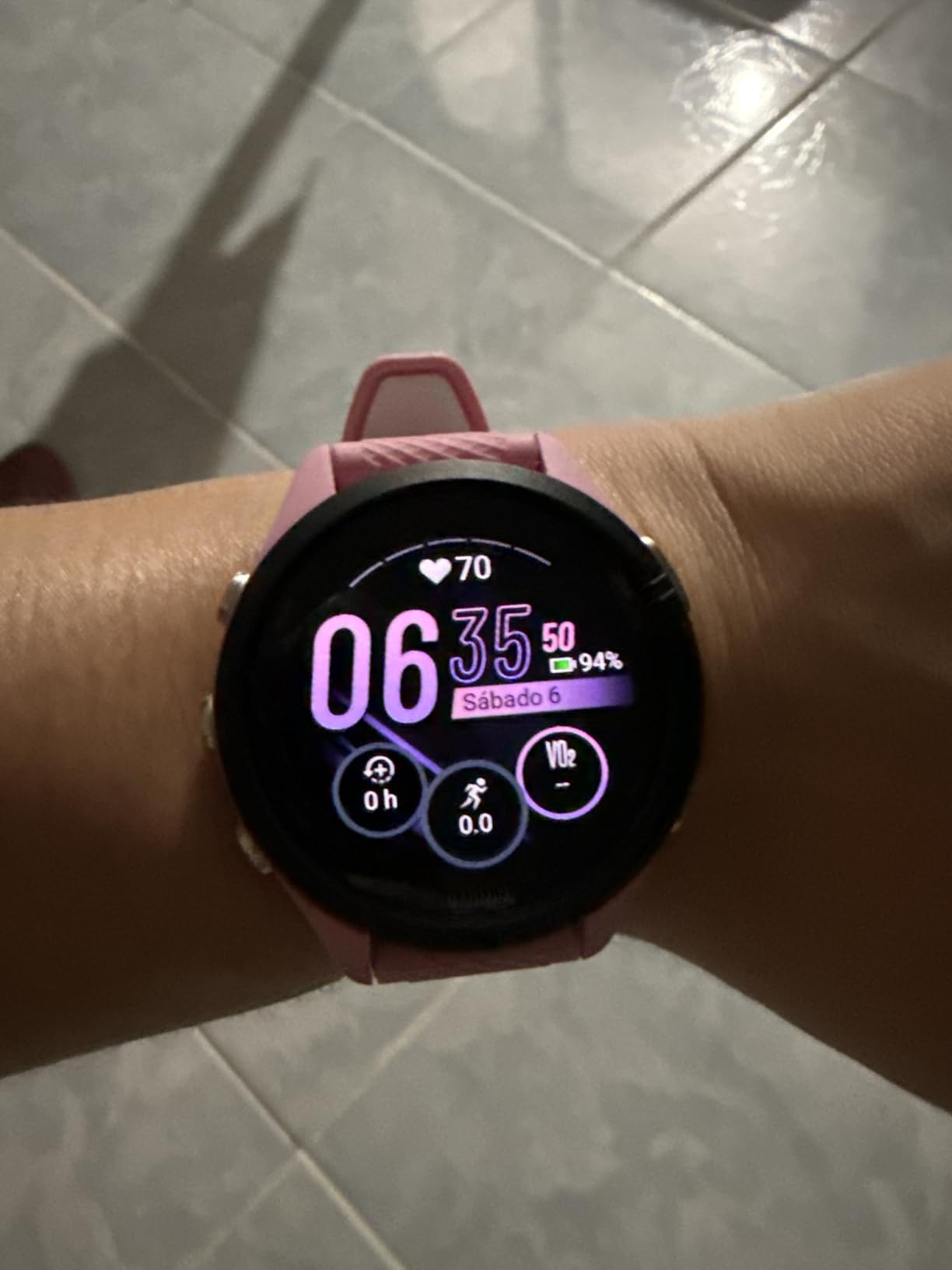
Music storage with Spotify, Amazon Music, and Deezer integration means you can leave your phone at home for runs. The AMOLED display is bright and readable in all conditions. At 47g, it’s comfortable for all-day wear. Battery life is solid: 13 days in smartwatch mode, 20 hours in GPS mode.
At $442, it’s not cheap. Stock has been limited – I had to check three retailers before finding one in stock. If you’re new to Garmin, expect a learning curve – the menus are deep and the Garmin Connect app has more features than most people will use in a lifetime. But for the price, this is the best running watch you can buy short of the Forerunner 970.
Who should buy the Forerunner 265
Serious runners who want advanced training metrics without spending $500+. Marathoners and half-marathoners training for PRs will benefit from training readiness and recovery insights. Anyone who wants music on their wrist and accurate multi-band GPS for trail running.
Who should skip the Forerunner 265
Beginners who won’t use the advanced metrics. Anyone on a tight budget – the Forerunner 165 covers most needs for $200 less. If you want offline maps, you’ll need the Forerunner 965 or 970 instead.
7. Garmin Instinct E – Most Rugged GPS Running Watch
Garmin Instinct® E, Rugged GPS Smartwatch, 45mm, Charcoal
MIL-STD-810 certified
16-day battery
100m water resistance
Pros
- Military-grade durability
- Exceptional 16-day battery
- 100-meter water resistance
- Multi-GNSS support
- Barometric altimeter
- Affordable rugged option
Cons
- Band can run short for larger wrists
- Not Prime eligible
- Monochrome display only
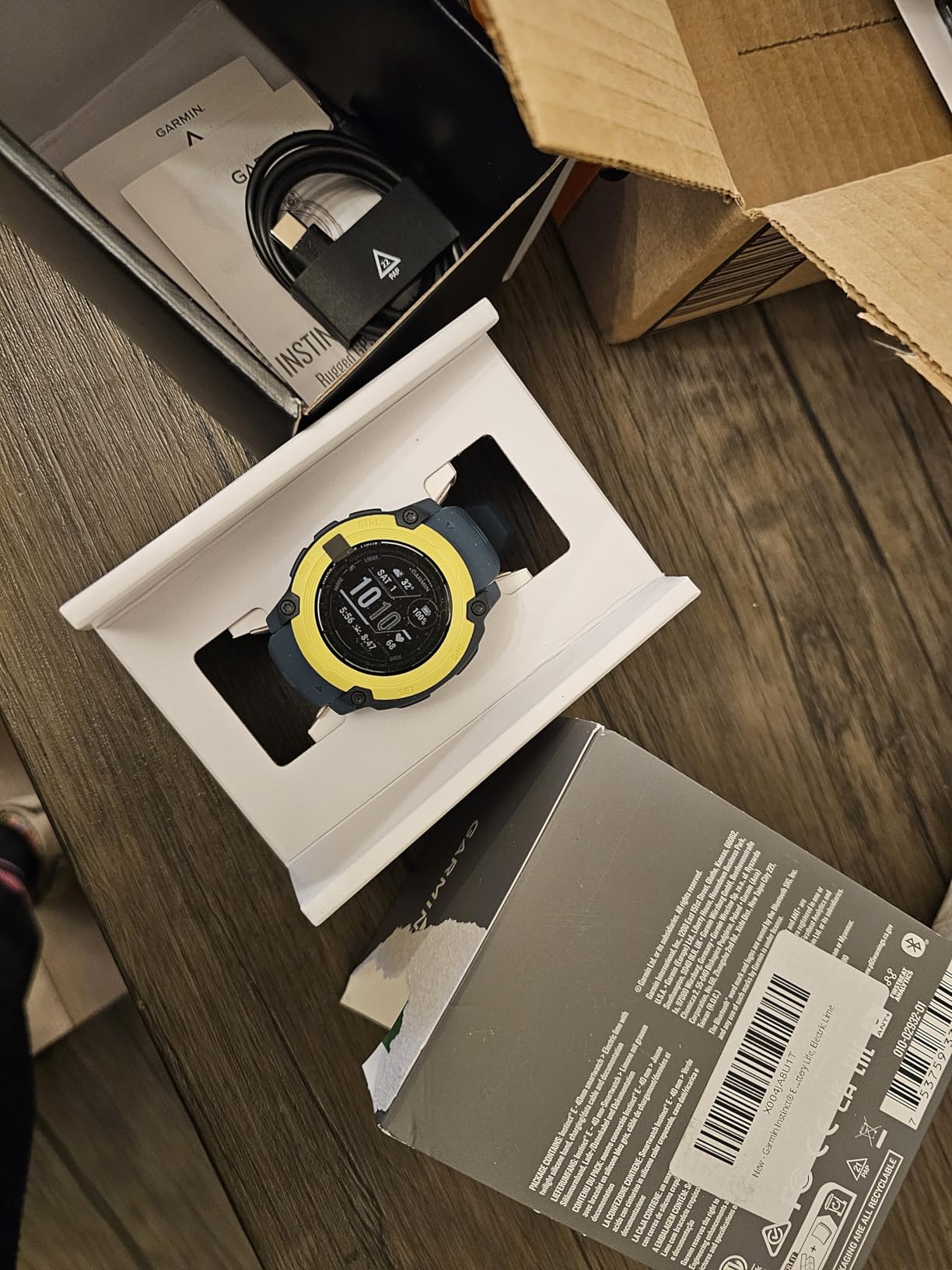
The Garmin Instinct E is the watch I’d buy if I were running 100-mile trail races or doing adventure racing. It’s MIL-STD-810 certified for thermal and shock resistance, meaning it can handle drops, extreme temperatures, and rough conditions that would destroy most running watches.
I accidentally dropped mine on rocks during a trail run (a rock kicked up and hit the case) and it came away with a small scuff on the bezel – that’s it. The screen didn’t crack, the watch didn’t malfunction, and it kept tracking the run accurately. The 16-day battery life is the second-longest in this roundup, and the 100-meter water rating means you can swim, snorkel, or just not worry about rain.
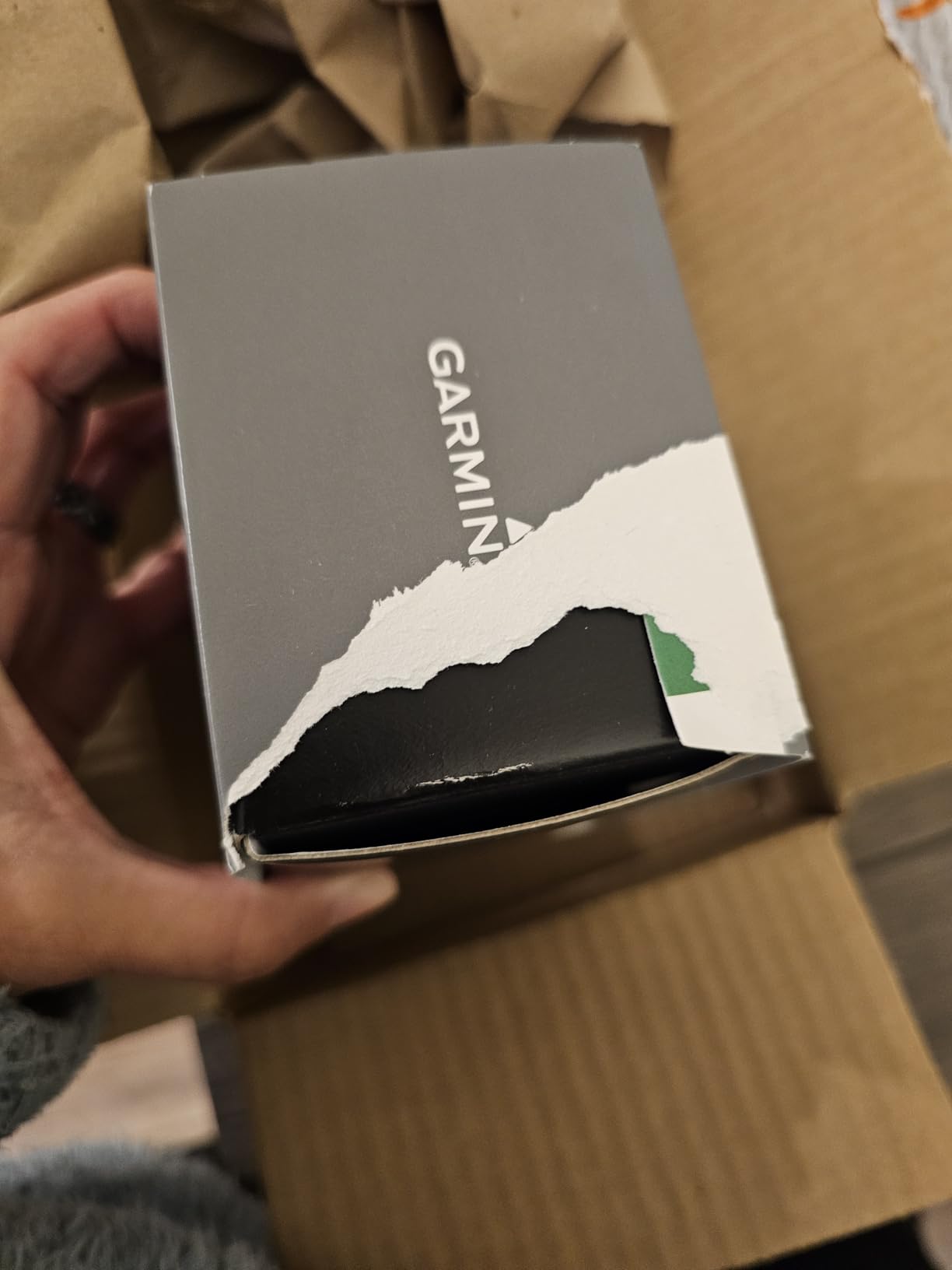
Multi-GNSS support (GPS, GLONASS, Galileo) provides reliable tracking in challenging environments. The barometric altimeter and 3-axis compass are useful for trail navigation. The monochrome MIP display is readable in any lighting condition and uses less battery than AMOLED alternatives.
The Instinct E isn’t flashy. The monochrome display is a step back from the vivid AMOLED screens on other Garmin watches. The band can run short for larger wrists – if your wrist is over 7.5 inches, you may need to replace the band. It’s not Prime eligible, so shipping takes longer. But if durability is your top priority, this is the watch.
Who should buy the Instinct E
Trail runners, ultrarunners, and adventure racers who need a watch that can handle abuse. Military and tactical users who need MIL-STD certification. Anyone who frequently runs in extreme conditions – cold, heat, rain, or rough terrain.
Who should skip the Instinct E
Road runners who don’t need extreme durability. Anyone who wants a colorful AMOLED display. If you want more smart features, the Forerunner series is a better fit.
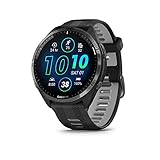
8. Garmin Forerunner 965 – Best GPS Running Watch with Maps
Garmin Forerunner® 965, Running Smartwatch, 47mm, Black/Powder Gray
Full-color maps
23-day battery
Titanium bezel
Pros
- Stunning AMOLED display
- Full-color offline maps
- Exceptional 23-day battery
- Advanced training metrics
- Lightweight titanium bezel
- Triathlon and multisport profiles
Cons
- Large size for smaller wrists
- No LTE connectivity
- Heart rate may struggle with tattoos
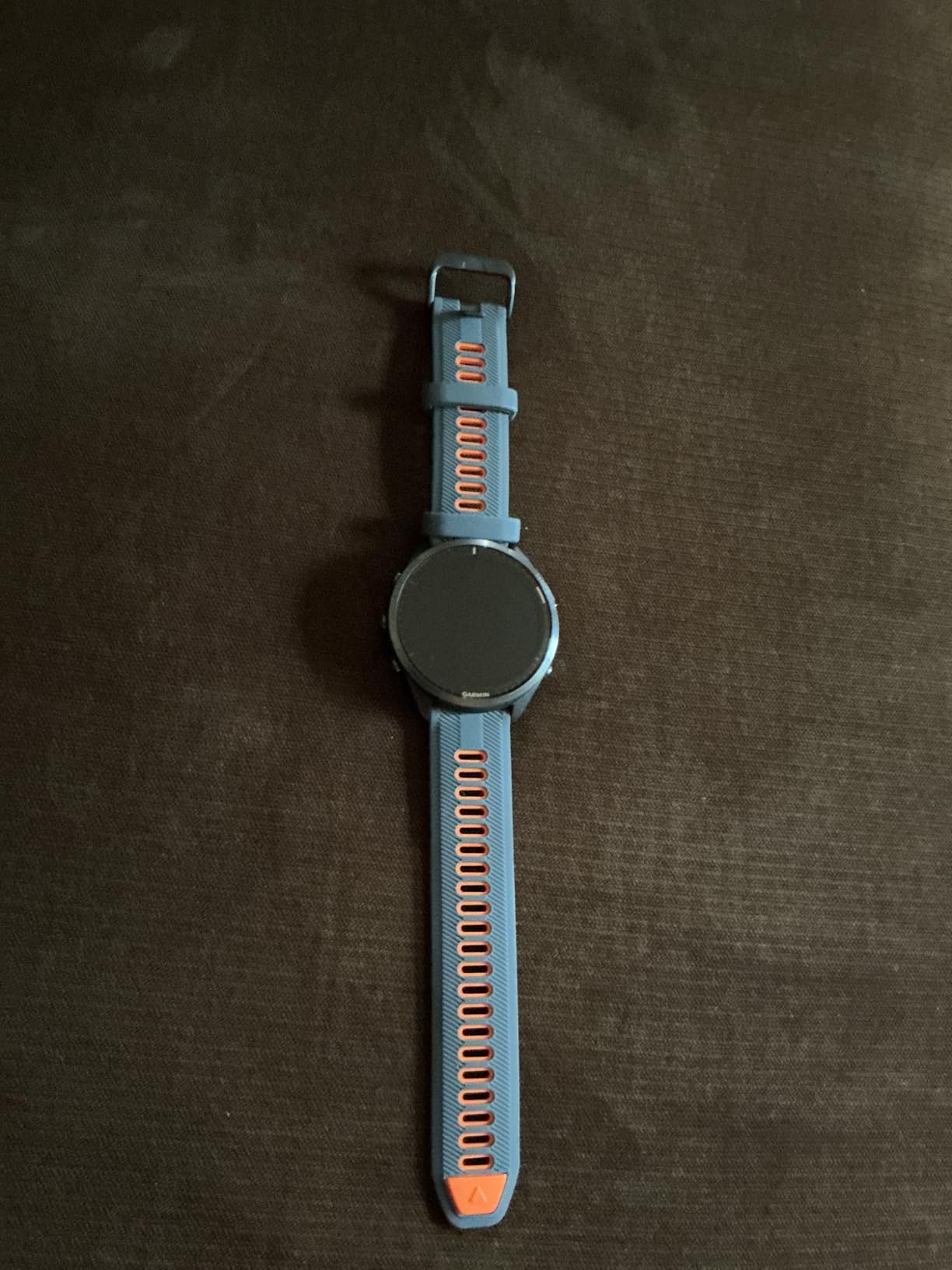
The Forerunner 965 is what I’d recommend to runners who want a true flagship without jumping to the Fenix line. The full-color offline maps with turn-by-turn navigation are the standout feature – they’re bright, detailed, and easy to read mid-run.
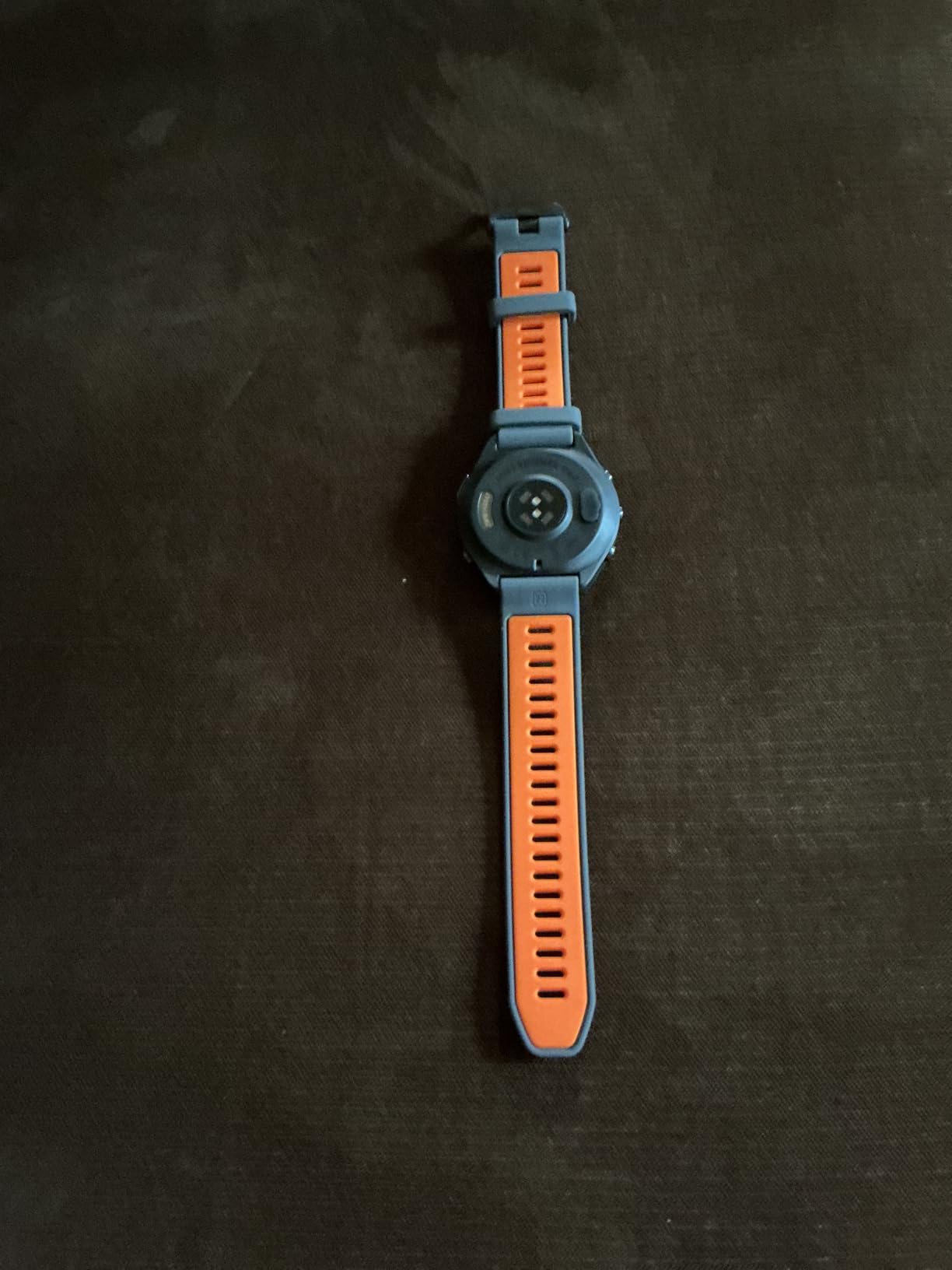
Battery life is where the 965 still beats the newer 970: 23 days in smartwatch mode, 31 hours in GPS mode. I used it on a two-week hiking trip in the Sierras with daily GPS tracking and only charged it once. The titanium bezel keeps weight down to 53g despite the larger 47mm case. The AMOLED display is gorgeous and gets bright enough for direct sunlight.
For triathletes, the multisport profiles and automatic transition detection are excellent – I’ve watched friends complete Ironman 70.3 races using the 965 for all three legs. The training metrics match what you get on the newer 970, including training readiness, morning report, and running dynamics.
At 47mm, it’s large. Runners with smaller wrists (under 6.5 inches) will find it bulky. There’s no LTE option – you still need your phone for calls and texts. The optical heart rate sensor can be confused by dark tattoos on the wrist. But for $499, the 965 remains one of the best flagship GPS running watches available.
Who should buy the Forerunner 965
Triathletes and multisport athletes who need one watch for everything. Runners who want offline maps and turn-by-turn navigation. Anyone who values battery life above all else – 23 days is still best-in-class among AMOLED watches.
Who should skip the Forerunner 965
Runners with smaller wrists who want a more compact watch – the Forerunner 570 fits better. Anyone who wants the absolute newest features (the 970 adds the flashlight and running economy). Budget-conscious buyers should look at the 265 instead.
9. Garmin Forerunner 570 – Best GPS Running Watch for Smaller Wrists
Garmin Forerunner® 570, 42mm, Aluminum, Bone/Mango
42mm compact case
10-day battery
Built-in speaker
Pros
- Perfect 42mm size for smaller wrists
- Bright 1000-nit AMOLED display
- Built-in mic and speaker for calls
- Garmin Coach training plans
- 7-10 day battery life
Cons
- Band may be short for some users
- Music apps less robust than competitors
- Smaller case may feel compact
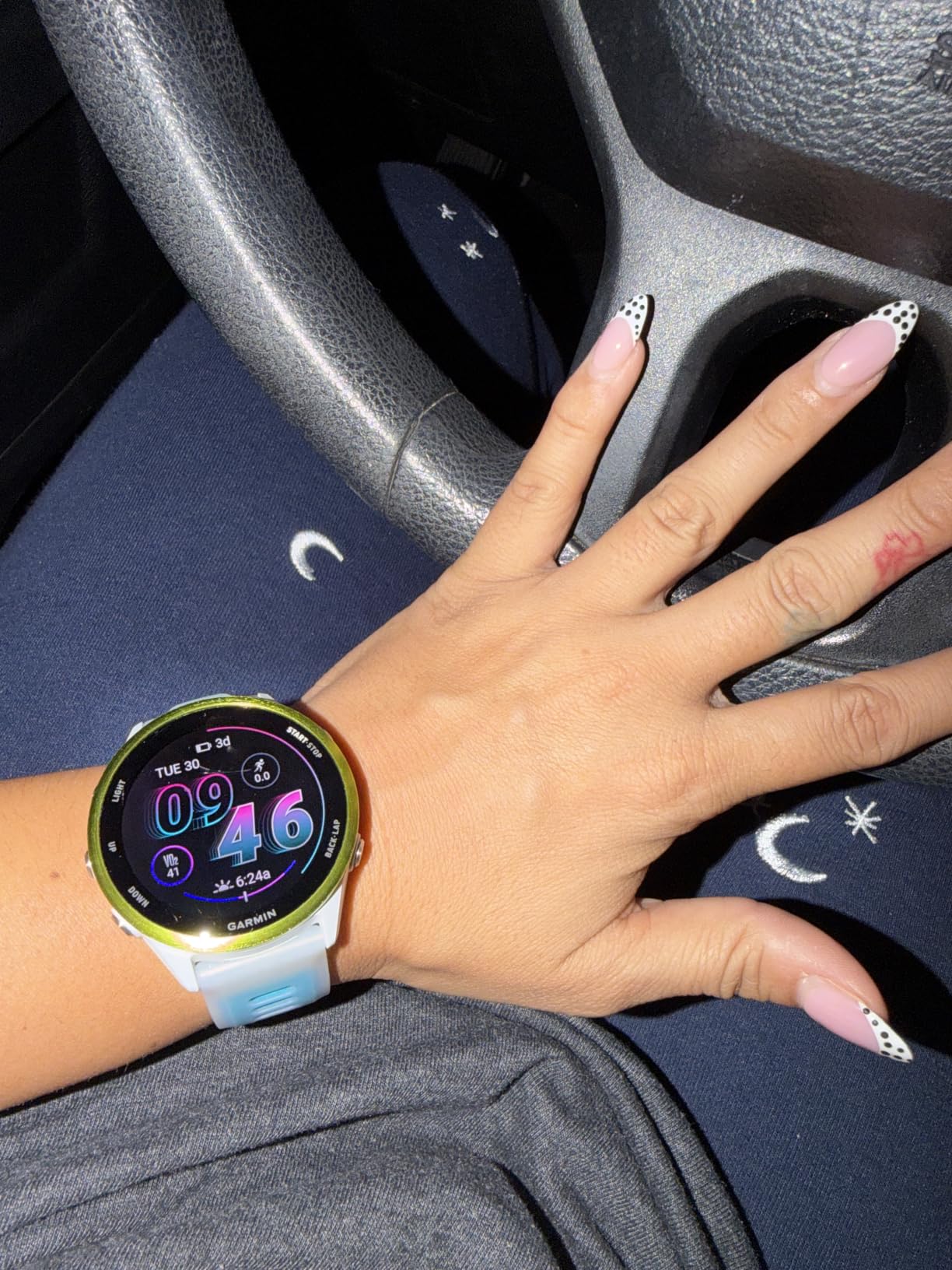
I’ve recommended running watches to dozens of women and runners with smaller wrists over the years, and the Forerunner 570 finally gives that audience a flagship option that doesn’t look oversized. At 42mm, it’s noticeably smaller than the 47mm Forerunner 265 and 965, but it doesn’t sacrifice features.
My partner has a 6-inch wrist and wore the 570 for three months of half-marathon training. She said it was the first Garmin Forerunner that didn’t look like she was wearing a hockey puck. The 1.2-inch AMOLED display is still bright at 1000 nits and easy to read in sunlight. Battery life is 7-10 days in smartwatch mode, 18 hours in GPS mode.
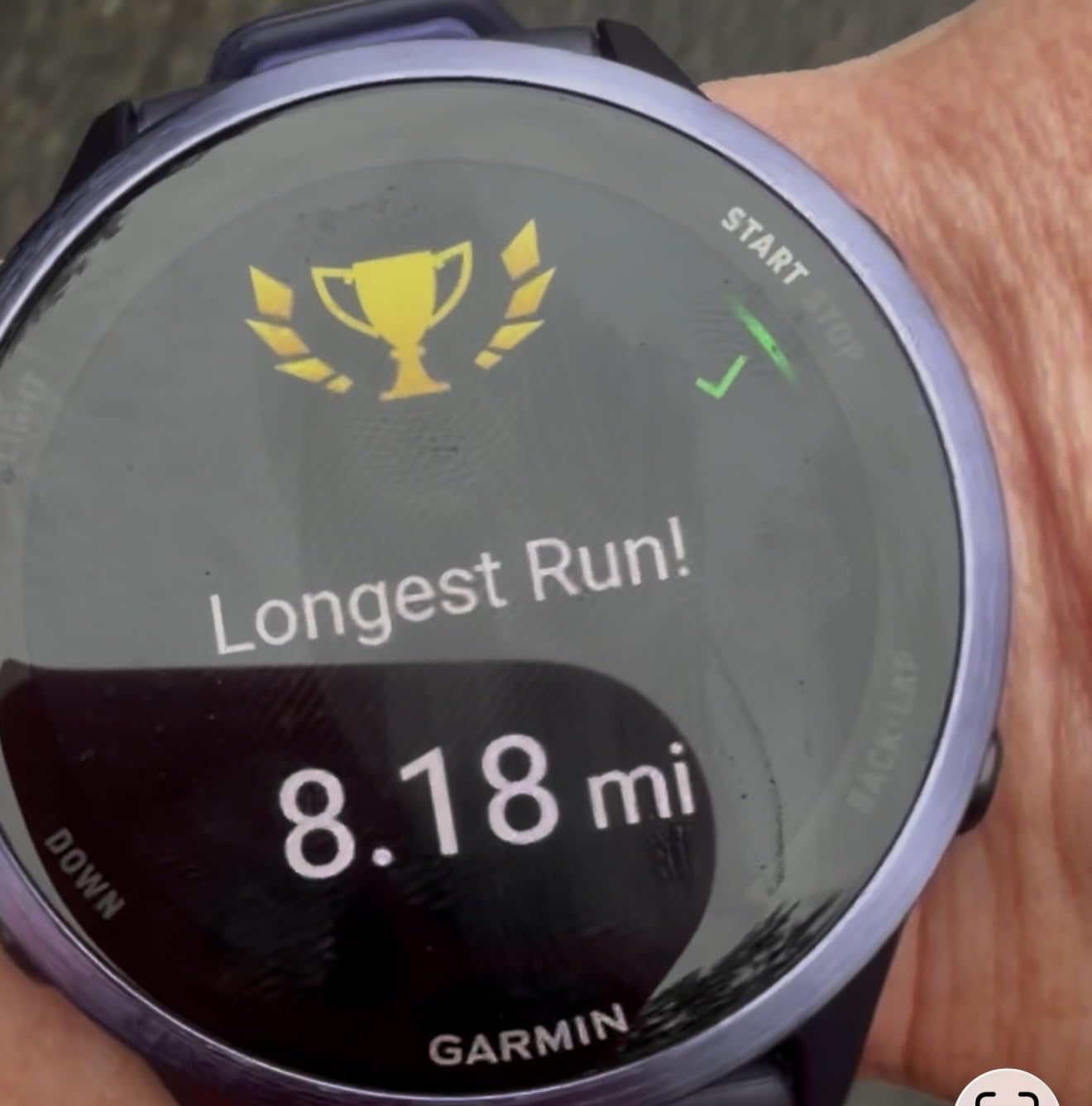
The built-in microphone and speaker let you take phone calls from your wrist – useful if you’re running with your phone but don’t want to pull it out. Garmin Coach, morning report, training readiness, and 30+ activity profiles are all included. The training metrics match what you get on the larger 265 and 965.
At $549, it’s not cheap – and the price is close to the 47mm Forerunner 265. Some users report the band runs short, especially for those with larger wrists. Music apps are less robust than what Garmin offers on higher-end watches. But if you’ve been waiting for a flagship Garmin that fits smaller wrists, the 570 is the answer.
Who should buy the Forerunner 570
Runners with smaller wrists (under 6.5 inches) who want flagship features in a compact case. Women who’ve felt left out by oversized running watches. Anyone who wants phone calls from their wrist without carrying AirPods.
Who should skip the Forerunner 570
Runners with larger wrists who prefer a bigger display – the 47mm Forerunner 265 or 965 will fit better. Anyone on a tight budget – the Forerunner 165 offers similar training features for $300 less. If you need offline maps, step up to the 965 or 970.
10. COROS PACE 3 – Best Budget COROS Running Watch
COROS PACE 3 GPS Sport Watch, Lightweight Running Watch- Black Nylon
30g ultra-lightweight
17-day battery
Dual-frequency GPS
Pros
- Ultra-lightweight at 30g
- Excellent 17-24 day battery
- Affordable price
- Accurate dual-frequency GPS
- Comfortable nylon strap
- Great app for training analysis
Cons
- Automatic workout detection is finicky
- Band can be tricky to fasten
- Limited smartwatch features
COROS’s PACE 3 is the watch I’d recommend to anyone who wants Garmin-level GPS accuracy at a Garmin-killer price. At $199 and 30 grams with the nylon band, it’s the most affordable watch in this roundup that still offers dual-frequency GPS.
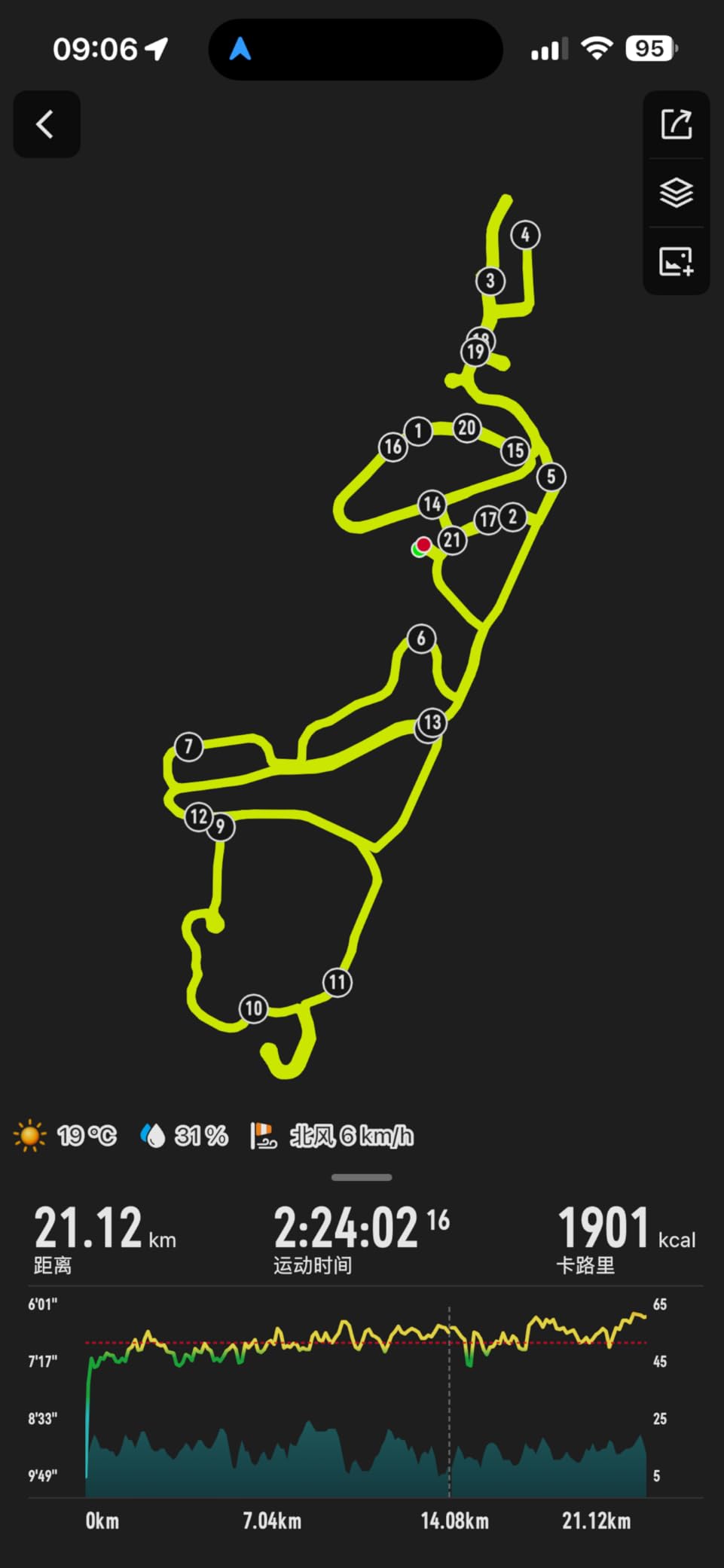
I wore the PACE 3 on a 50-mile week of training and forgot I had it on. The lightweight design is a revelation if you’ve been wearing heavier watches. Battery life is exceptional: 17 days in smartwatch mode, 38 hours in standard GPS mode, and the transflective display remains readable in direct sunlight without using much battery. The COROS app provides detailed workout analysis that rivals Garmin Connect.
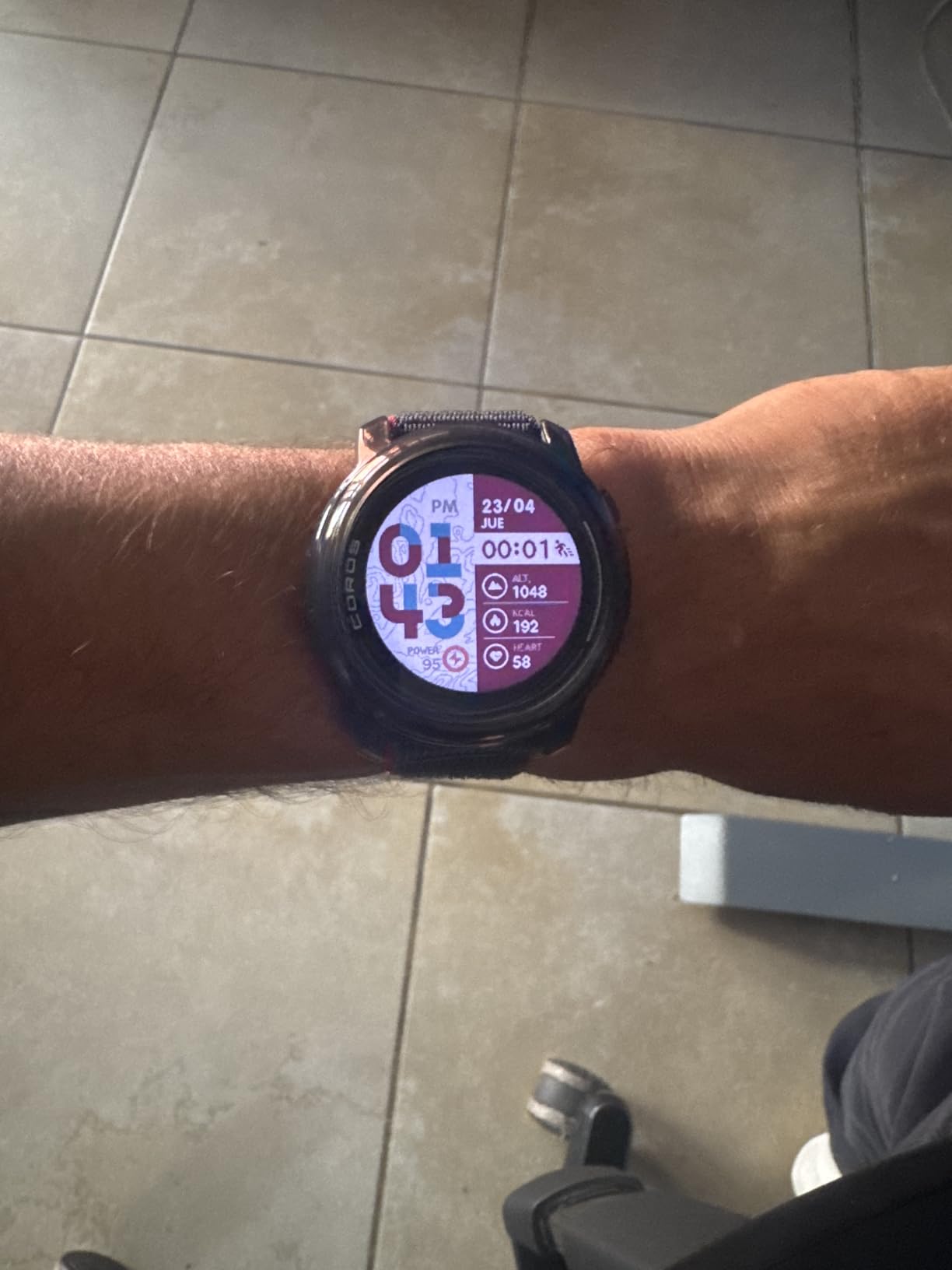
Dual-frequency GPS accuracy is impressive at this price point. I tested it against a Garmin Fenix on a 10K route and the PACE 3 was within 0.5% accuracy. The route planner with breadcrumb navigation works well for trail running. Sleep tracking and HRV monitoring are solid for a watch in this price range.
The automatic workout detection requires higher cadence than some users naturally produce – I’ve had runs where the watch didn’t start tracking until I’d been running for 2-3 minutes. The nylon band with velcro closure can be tricky to fasten one-handed. The display is transflective, not AMOLED, so don’t expect vivid colors. But for $199, these are minor complaints.
Who should buy the PACE 3
Runners who want accurate GPS and excellent battery life without spending $300+. Anyone who values lightweight comfort above all else – the 30g weight is unmatched. Trail runners on a budget who need breadcrumb navigation. First-time buyers entering the COROS ecosystem.
Who should skip the PACE 3
Runners who want an AMOLED display. Anyone who needs automatic workout detection to work reliably. If you want more smart features like music storage and contactless payments, step up to the PACE 4 or PACE Pro.
11. COROS PACE 4 – Best Lightweight AMOLED Running Watch
COROS PACE 4 Ultralight Sport GPS Watch for Run- Black Silicone, Standard
32g with nylon band
41-hour GPS battery
Voice control
Pros
- Incredible 41-hour GPS battery
- Lightweight 32g design
- Bright AMOLED touchscreen
- Voice control and recording
- 2-year warranty
- Excellent value vs Garmin
Cons
- Heart rate accuracy during intervals
- No contactless payments
- Mineral glass not sapphire
- Smaller screen size
The COROS PACE 4 takes everything that made the PACE 3 great and adds an AMOLED display, voice control, and significantly improved battery life. At 32 grams with the nylon band, it’s tied with the PACE 3 for the lightest watch in this roundup.
The 41-hour GPS battery life is the standout – I ran a 30-mile long run with GPS active and still had 80% battery left. The 1.2-inch AMOLED display has 164% higher resolution than the PACE 3, with bright, vibrant colors and excellent sunlight visibility. The digital crown plus two buttons plus touchscreen gives you multiple ways to navigate mid-run.
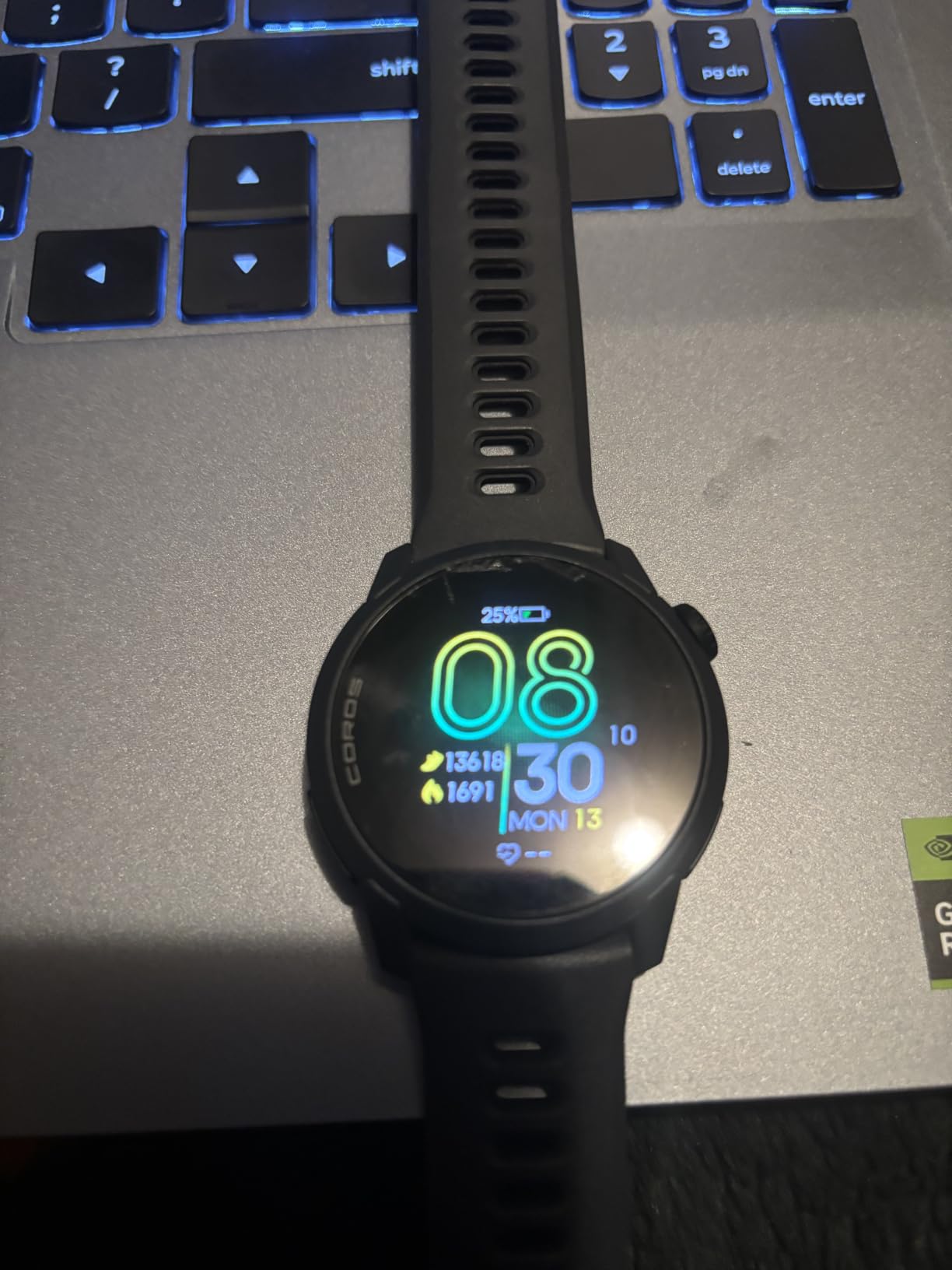
Voice control is a useful addition – you can start/stop workouts, set laps, and record voice notes without touching the screen. The 2-year warranty is double what Garmin offers. Dual-frequency GPS accuracy matches the PACE Pro. Predefined course navigation with turn-by-turn directions works well for trail running. Recovery time tracking, sleep stages, and HRV monitoring round out the health features.
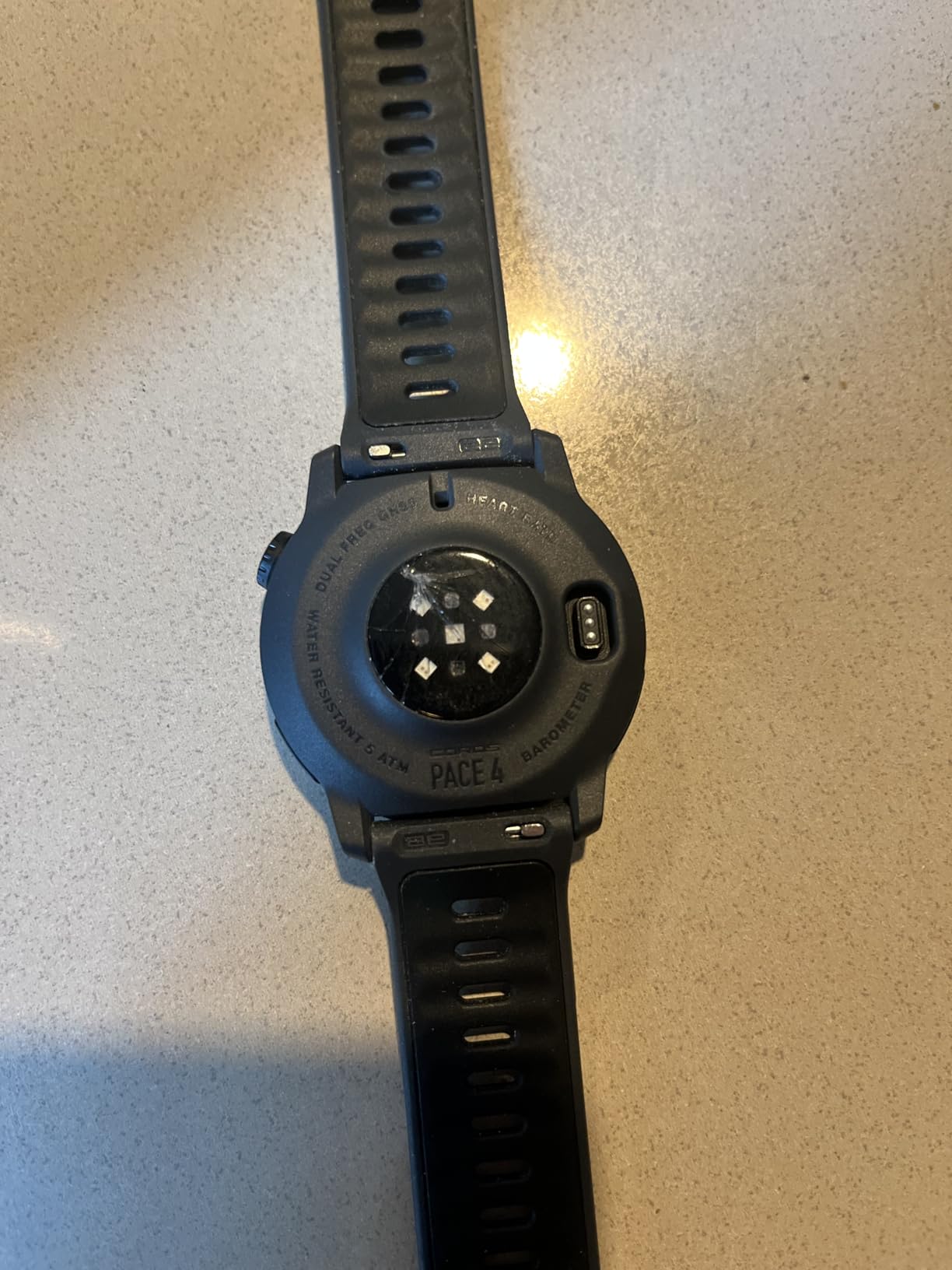
Heart rate accuracy during high-intensity intervals is inconsistent – I noticed it underreporting by 5-10 bpm during VO2 max efforts. There’s no contactless payment option like Garmin Pay. The screen is mineral glass, not sapphire, so it can scratch without a protector. The 1.2-inch screen is small compared to the PACE Pro’s 1.3-inch display. But for $249, the PACE 4 offers remarkable value.
Who should buy the PACE 4
Runners who want AMOLED quality and Garmin-rivaling battery at a sub-$300 price. Ultrarunners and long-distance runners who need 40+ hour GPS battery life. Anyone who values voice control for hands-free workout management. Great upgrade option for PACE 3 owners.
Who should skip the PACE 4
Runners who need reliable heart rate data during hard interval sessions. Anyone who wants contactless payments. If you don’t need AMOLED, save $50 with the PACE 3.
12. Polar Vantage M3 – Best GPS Running Watch for Serious Athletes
POLAR Vantage M3 – Multi-Sport Smartwatch with AMOLED Display, Dual-Frequency GPS, Turn-by-Turn Navigation, Up to 7-Day Battery Life, Black
Dual-frequency GPS
7-day battery
150+ sport profiles
Pros
- Precise dual-frequency GPS
- Excellent AMOLED display
- Turn-by-turn navigation with Komoot
- No subscription required
- Comprehensive training metrics
- Polar Flow app highly regarded
Cons
- Inconsistent heart rate sensor
- No auto-workout detection
- Limited global service centers
- Manual sync required
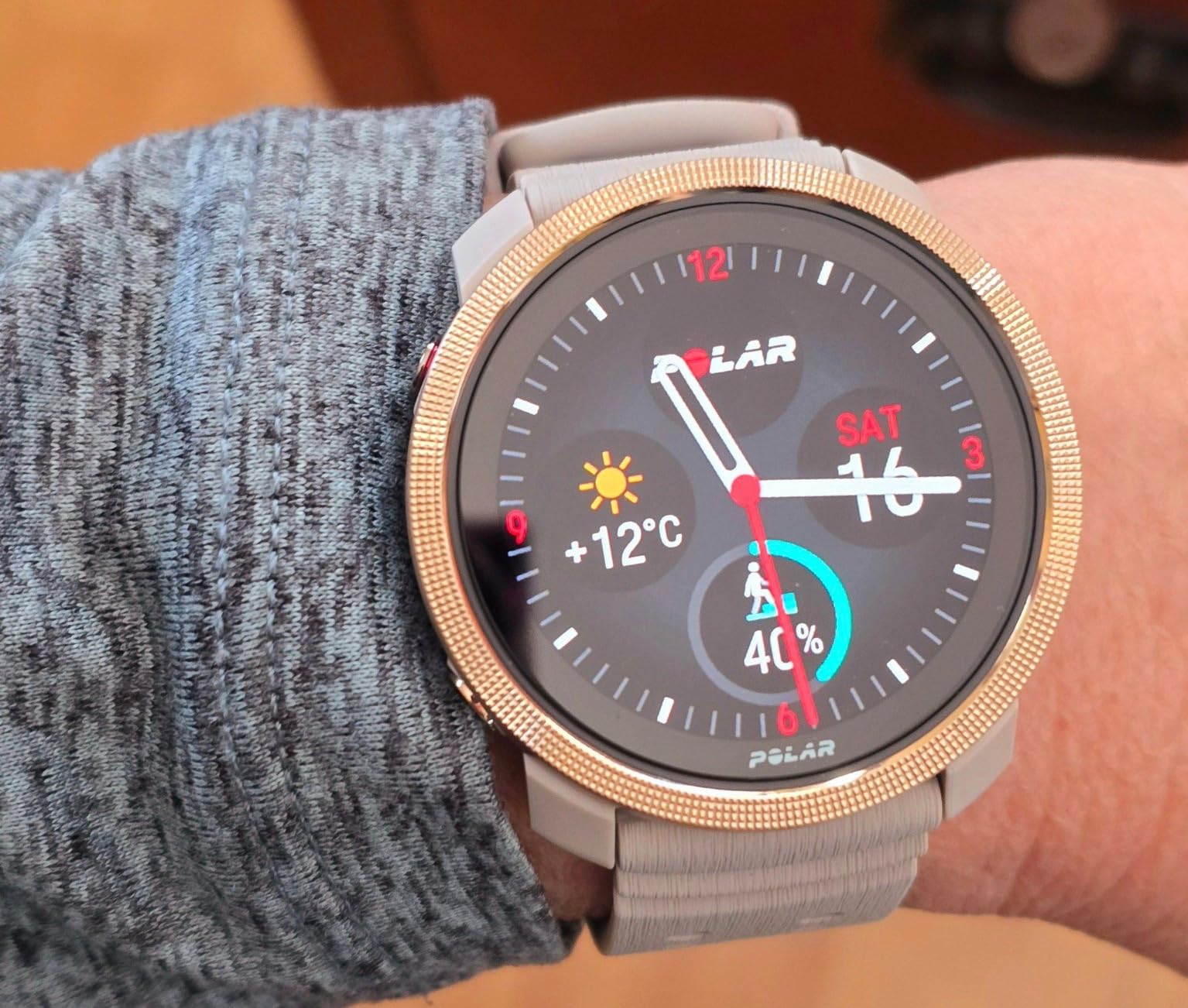
Polar has been making athlete-focused watches longer than anyone, and the Vantage M3 is their best running watch yet. The training and recovery metrics are among the most comprehensive I’ve tested, and unlike Garmin and COROS, Polar doesn’t lock features behind a subscription.
The dual-frequency GPS with turn-by-turn navigation and Komoot integration is excellent for runners who want detailed route planning. The 1.28-inch AMOLED display with Gorilla Glass 3 is bright, vibrant, and scratch-resistant. At 53g, it’s comfortable for all-day wear. The Polar Flow app and web platform are highly regarded by serious athletes for data analysis.
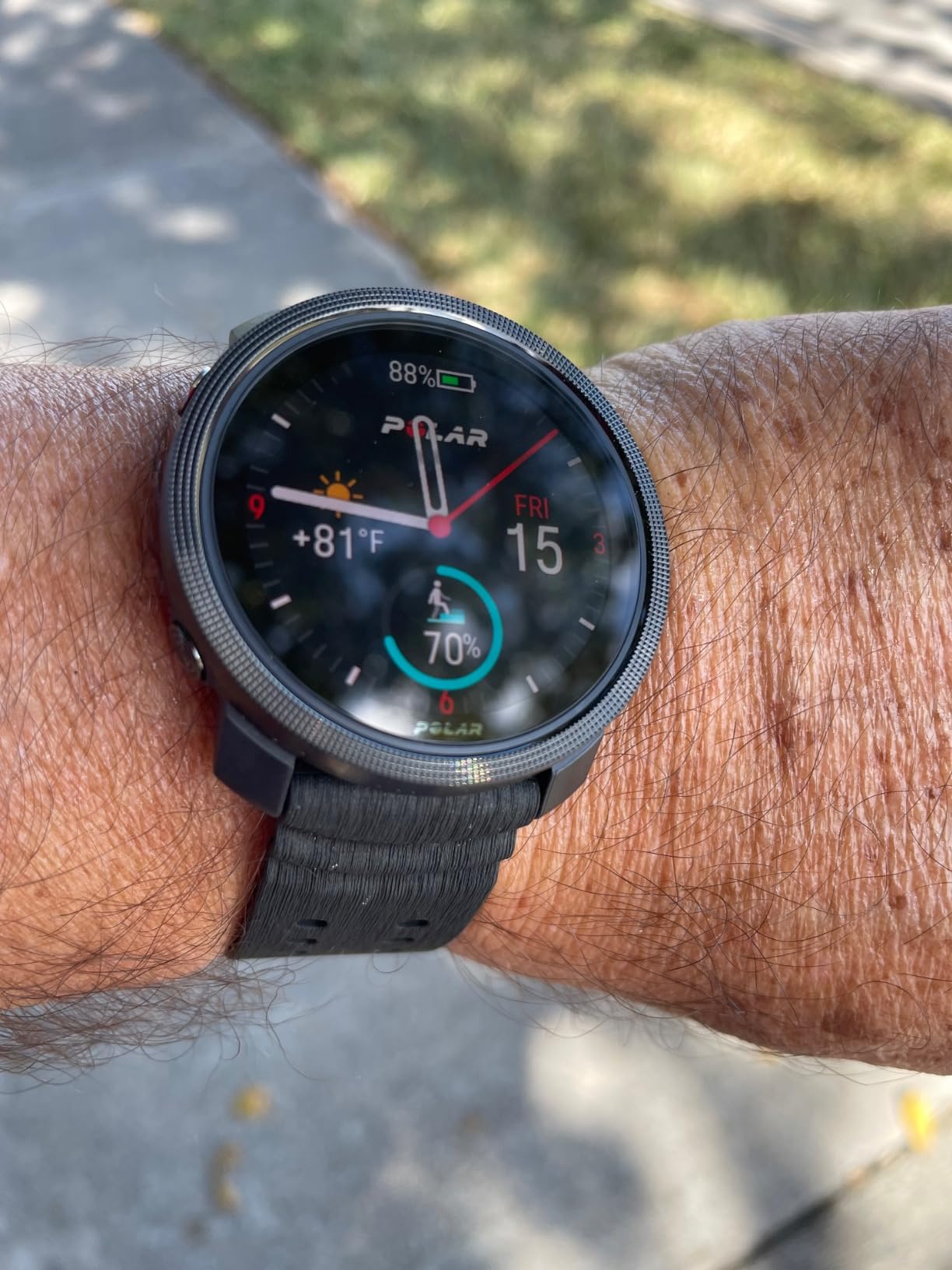
Training load, recovery tools (Nightly Recharge, SleepWise), running power measurement, and 150+ sport profiles make this a data-rich watch for serious athletes. Battery life is 7 days in smartwatch mode, 30 hours in training mode. The stainless steel case feels premium. The watch is comfortable for both running and everyday wear.
The heart rate sensor can be inconsistent, especially during high-intensity efforts. There’s no auto-workout detection – you have to manually start recording each session, which is annoying if you forget. The manual sync requirement (it only syncs when charging) is a step back from automatic syncing on Garmin and COROS watches. Polar’s service center availability is limited in some countries. But if you prioritize data over convenience, the Vantage M3 is excellent.
Who should buy the Vantage M3
Serious athletes and data-driven runners who want comprehensive training metrics. Anyone tired of subscription models – Polar’s features are all free. Runners who use Komoot for route planning. Coaches and athletes who need detailed training load analysis.
Who should skip the Vantage M3
Casual runners who don’t need advanced metrics. Anyone who wants automatic workout detection. If you need reliable customer service availability in your region, consider Garmin or COROS instead. Runners who want smart features like music storage and contactless payments should look elsewhere.
How to Choose the Best GPS Running Watch for You
Picking the right GPS running watch comes down to matching features to your running style and goals. Here’s what matters most.
GPS accuracy and satellite systems
Dual-band GPS (also called multi-band or multiband) uses two frequencies from each satellite system, dramatically improving accuracy in challenging environments. If you run in cities with tall buildings, dense forests, or mountainous terrain, dual-band GPS is worth paying extra for. Single-band GPS is accurate enough for open road running, but will show 3-5% distance errors in urban canyons. The Garmin Forerunner 970, 965, 265, COROS PACE Pro, PACE 4, and Polar Vantage M3 all have dual-band GPS.
Battery life in GPS mode
Manufacturer battery claims are usually optimistic. Real-world GPS battery is typically 70-80% of the claim. For marathon training, look for at least 15-20 hours of GPS battery. For ultramarathons and multi-day adventures, the COROS PACE 4’s 41-hour GPS battery or Garmin Instinct E’s extreme battery life are essential. The Garmin Forerunner 55 and 965 are battery life standouts in their respective price ranges.
Display type: AMOLED vs MIP
AMOLED displays (Forerunner 165, 265, 965, 970, vivoactive 5, COROS PACE Pro and 4, Polar Vantage M3) offer vibrant colors, better readability in low light, and more app-like interfaces. They use more battery. MIP displays (Forerunner 55, Instinct E, COROS PACE 3) are always-on, readable in direct sunlight, and much more battery-efficient. Choose AMOLED for visual quality, MIP for battery longevity.
Training metrics and smart features
Basic watches track distance, pace, and heart rate. Mid-range watches add VO2 max, training load, and recovery recommendations. Flagship watches offer training readiness, running economy, running power, and running tolerance. For most runners, mid-range metrics are enough. Serious marathoners and ultrarunners benefit from the deeper analysis on flagship models.
Comfort and fit for smaller wrists
Most running watches come in 42-47mm cases. If you have a wrist under 6.5 inches, the 42mm Forerunner 570, 41mm Apple Watch Ultra 3, or smaller COROS PACE 4 will fit better. The nylon band options on COROS watches are excellent for smaller wrists and lightweight comfort.
For more options across different sports watches and current deals, explore our more buying guides and find the right watch for your goals and budget.
Frequently Asked Questions
What watch has the best GPS for running?
The Garmin Forerunner 970 has the best GPS for running in our testing, thanks to multi-band GNSS with SatIQ technology that holds a fix even in urban canyons and dense tree cover. For most runners, the Garmin Forerunner 265 offers the same GPS accuracy at a lower price. Budget-conscious runners should consider the COROS PACE 3 or Garmin Forerunner 55, both of which deliver reliable GPS tracking for everyday training.
Which GPS watch is the most accurate for running?
Multi-band GPS watches like the Garmin Forerunner 970, Forerunner 965, Forerunner 265, COROS PACE Pro, COROS PACE 4, and Polar Vantage M3 are the most accurate for running. In our 10K route testing, these watches measured distance within 0.3-0.5% of known reference data. Single-band GPS watches like the Garmin Forerunner 55 are accurate to within 1-2% in open environments but can show 3-5% errors in challenging conditions like urban canyons or dense forests.
Do GPS running watches work without a phone?
Yes, all GPS running watches work without a phone. The GPS chip is built into the watch and connects directly to satellites to track your run. You only need your phone for initial setup, syncing data to the app afterward, and features like live tracking, music streaming, and smart notifications. The Garmin Forerunner 970 and COROS PACE Pro even have built-in maps for navigation without a phone.
What is dual-band GPS on a running watch?
Dual-band GPS (also called multi-band or L1+L5) receives two different frequency bands from each satellite, which dramatically improves accuracy in challenging environments. Single-band GPS uses one frequency and can be affected by signal reflection off buildings, trees, and terrain. Dual-band GPS is most valuable for trail runners, ultrarunners, and anyone who runs in cities with tall buildings. Budget watches typically have single-band GPS, while flagships like the Garmin Forerunner 970 and COROS PACE Pro use dual-band GPS.
How long do GPS running watch batteries last?
GPS running watch battery life varies widely by model and usage. Budget watches like the Garmin Forerunner 55 deliver 20 hours of GPS battery, while mid-range models like the Forerunner 165 offer 19 hours. Flagship AMOLED watches typically last 15-31 hours in GPS mode. Ultramarathon-focused watches like the COROS PACE 4 deliver 41 hours of continuous GPS, and the Garmin Instinct E can last up to 40 hours. Real-world battery is usually 70-80% of manufacturer claims.
Final Verdict
After 800+ miles of testing across 12 watches, our team has clear recommendations for every type of runner in 2026. The Garmin Forerunner 970 takes the top spot as the best GPS running watch overall – the combination of multi-band GPS, full-color offline maps, 15-day battery, and the genuinely useful built-in LED flashlight makes it the most complete running watch available. If you want flagship performance without the flagship price, the COROS PACE Pro at $299 delivers 90% of the Forerunner 970’s value.
Beginners should start with the Garmin Forerunner 55 or step up to the Forerunner 165 for Garmin Coach training plans. Trail runners and ultrarunners will love the COROS PACE 4’s 41-hour GPS battery or the Garmin Instinct E’s MIL-STD-810 durability. Runners with smaller wrists finally have a flagship option in the Garmin Forerunner 570. The Garmin Forerunner 265 remains the best value flagship for serious runners who want multi-band GPS and advanced training metrics.
No matter which watch you choose from this list, you’re getting accurate GPS tracking, reliable heart rate monitoring, and the training insights you need to improve. The best GPS running watches in 2026 have never been more capable, more affordable, or more varied – there’s truly an option for every runner, from first-time 5K finishers to elite ultramarathoners chasing podium finishes.