
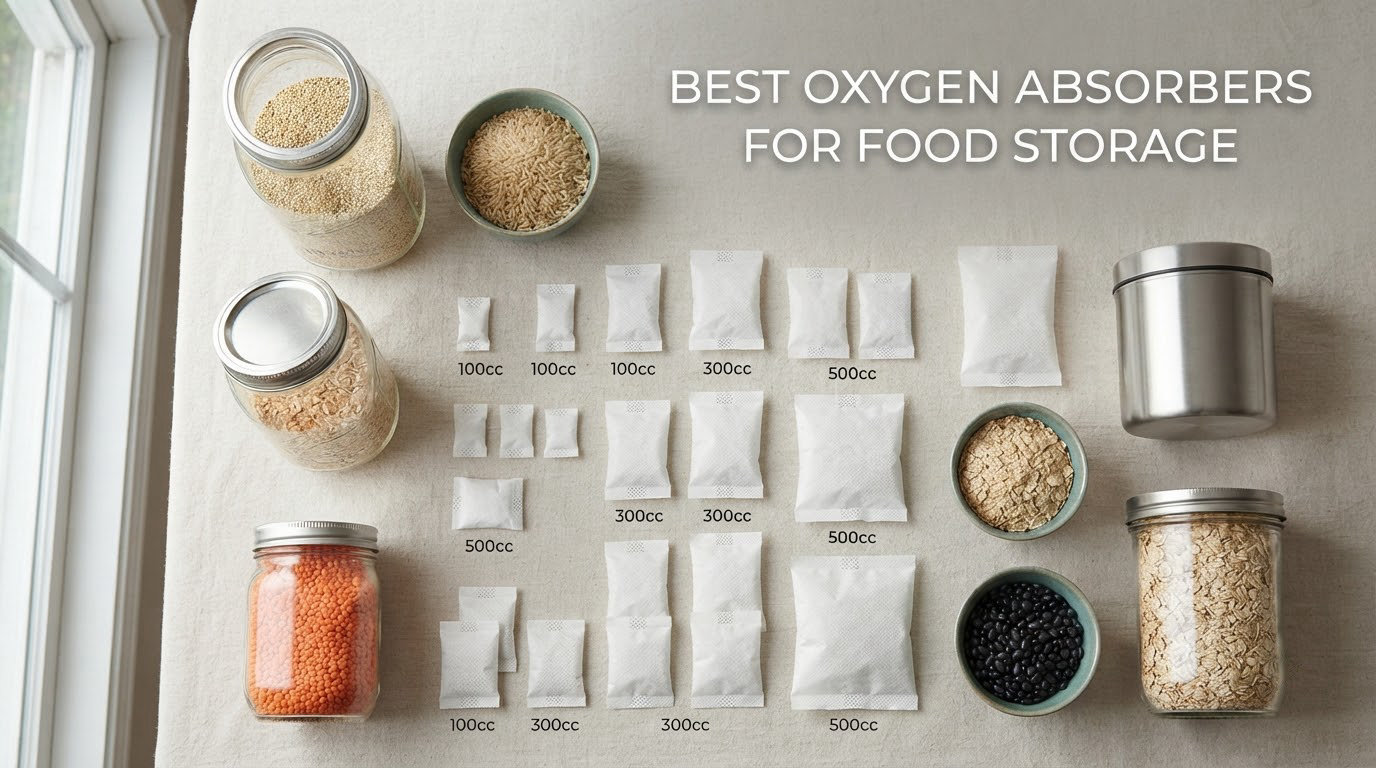
Most people buy oxygen absorbers the way they buy anything else on Amazon, which is to say they look at star ratings, sort by review count and order whatever looks popular. That approach lands you a packet of iron powder that works perfectly well, and it also lands you a bulk bag of 100 absorbers that have all started rusting the second you opened it.
The honest truth, and it comes up repeatedly on prepping forums, is that almost every food grade oxygen absorber on the market is the same basic chemistry in a slightly different wrapper. The iron powder is the iron powder. What genuinely separates a good pack from a disappointing one is the packaging format, the packet count, whether the outer bag keeps unused packets alive, and whether a freshness indicator comes in the box.
Our team ran ten of the most-reviewed absorbers through packing sessions in mason jars, half-gallon and one-gallon Mylar bags, and five-gallon buckets to see how they behave in real kitchens rather than in spec sheets. This guide covers the best oxygen absorbers for food storage in 2026, with an honest note on what each one actually does, what it costs you in wasted packets, and which foods you should never put it next to.
Two rules before we get into the list. Oxygen absorbers only work on dry food under about 10% moisture, and they only work inside a container that is genuinely airtight. Miss either one and the packet is decorative.
Table of Contents
Top 3 Best Oxygen Absorbers for Food Storage
Our best overall pick is the O2frepak 200cc 100-pack because it balances capacity, count and price better than anything else we tested, with the deepest review base in the category at more than 5,600 ratings. The ZRLEI 400cc pack is the one to buy for freeze-dryer output and one-gallon Mylar bags, and the LIFJOY 500cc 120-pack is the workhorse for anyone sealing bucket after bucket.
O2frepak 200cc 100-Pack
- 200CC capacity
- 100 packets
- Anti-oil film design
- 4-stage quality control

ZRLEI 400cc 100-Pack
- 400CC capacity
- 100 packets in packs of 5
- Double layer anti-oil film
- Heat sealed after production

LIFJOY 500cc 120-Pack
- 500CC capacity
- 120 packets
- 10 per vacuum bag
- Includes oxygen indicator
Best Oxygen Absorbers for Food Storage in 2026
Here is every absorber in our test group at a glance, with the capacity and pack format that actually determines whether it suits your containers. The single most important column is the third one, because cc is what sets the size of the container you can seal.
| Product | Specifications | Action |
|---|---|---|
| O2frepak 200cc 100-Pack |
|
Check Latest Price |
| ZRLEI 400cc 100-Pack |
|
Check Latest Price |
| LIFJOY 500cc 120-Pack |
|
Check Latest Price |
 FreshUs 300cc 100-Pack FreshUs 300cc 100-Pack |
|
Check Latest Price |
 Oxy-Sorb 100cc 100-Pack Oxy-Sorb 100cc 100-Pack |
|
Check Latest Price |
 OXYGONE 100cc 80-Pack OXYGONE 100cc 80-Pack |
|
Check Latest Price |
 Wallaby 500cc 100-Pack Wallaby 500cc 100-Pack |
|
Check Latest Price |
 auhanth 100cc 100-Pack auhanth 100cc 100-Pack |
|
Check Latest Price |
 PackFreshUSA 500cc 50-Pack PackFreshUSA 500cc 50-Pack |
|
Check Latest Price |
 Hombao 700cc 100-Pack Hombao 700cc 100-Pack |
|
Check Latest Price |
All ten carry the four-stage or ISO 9001 quality claims of some kind, so certification is not a useful way to separate them. Read the pack format column instead, because that is where the waste and the reliability differences actually live.
1. O2frepak 200cc 100-Pack: Best Overall for Everyday Dry Goods
O2frepak 200CC(100Packets) Food Grade Oxygen Absorbers Packets Food Storage
200CC capacity
100 packets
7.84 oz total
Anti-oil film
4-stage QC
Pros
- Four-stage quality control process during manufacturing
- Anti-oil film design works with high-oil foods like nuts and jerky
- Food grade materials tested under food regulations
- 100 packets in a single order
Cons
- 200CC is oversized for pint and small quart jars
- One bulk bag means opening exposes all 100 packets
- Absorption capacity claims are manufacturer-stated
We started our testing with the O2frepak 200cc pack because it has the most review history of anything we looked at, more than 5,600 ratings averaging 4.6 stars. That kind of volume does not guarantee perfection, but it does mean someone has probably already tried it on the food in your cupboard and written down what happened.
In practice the 200cc packet is the sweet spot for a surprising number of jobs. It handles a quart jar of oats with headspace to spare, it handles a half-gallon Mylar bag of rice comfortably, and it does not cost you much per sealed container. The listing describes an anti-oil film design, which matters more than it sounds. If you are storing nuts, seeds, jerky or anything with a decent oil content, an absorber without that film can gum up rather than absorb cleanly.
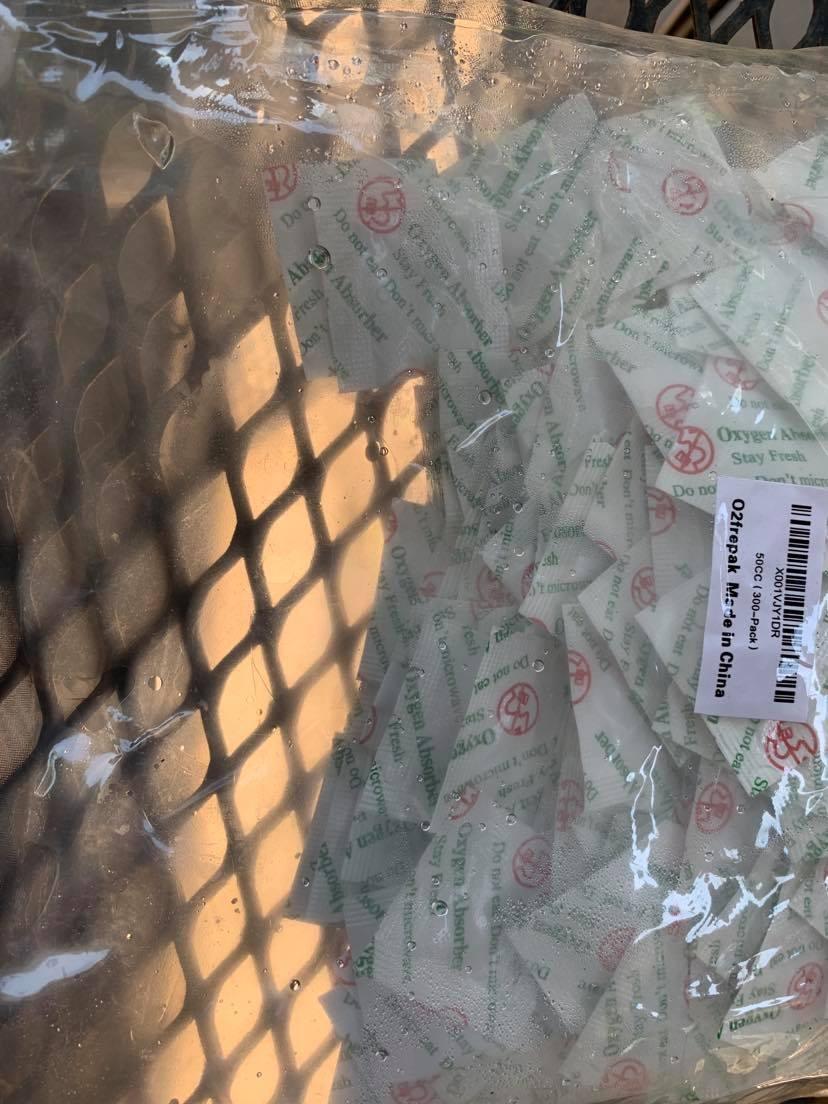
The trade-off is packaging. These 100 packets come as a single bag rather than ten separate ten-packs. Our advice is to decant the whole order into a mason jar with a desiccant packet the day it arrives, then pull two or three at a time as you need them. Users who do this report no difference in performance. Users who leave the bag open on the counter are the ones who end up with brick-like packets that do nothing.
Reviewers consistently mention two things in the positive column: the count, which is genuinely large for a single listing, and the anti-oil capability. The negative mentions cluster around sizing, since 200cc is more packet than a pint jar needs. The manufacturer states a four-stage quality control process and triple oxygen capacity testing, and it is worth knowing those are brand claims rather than independent test results.
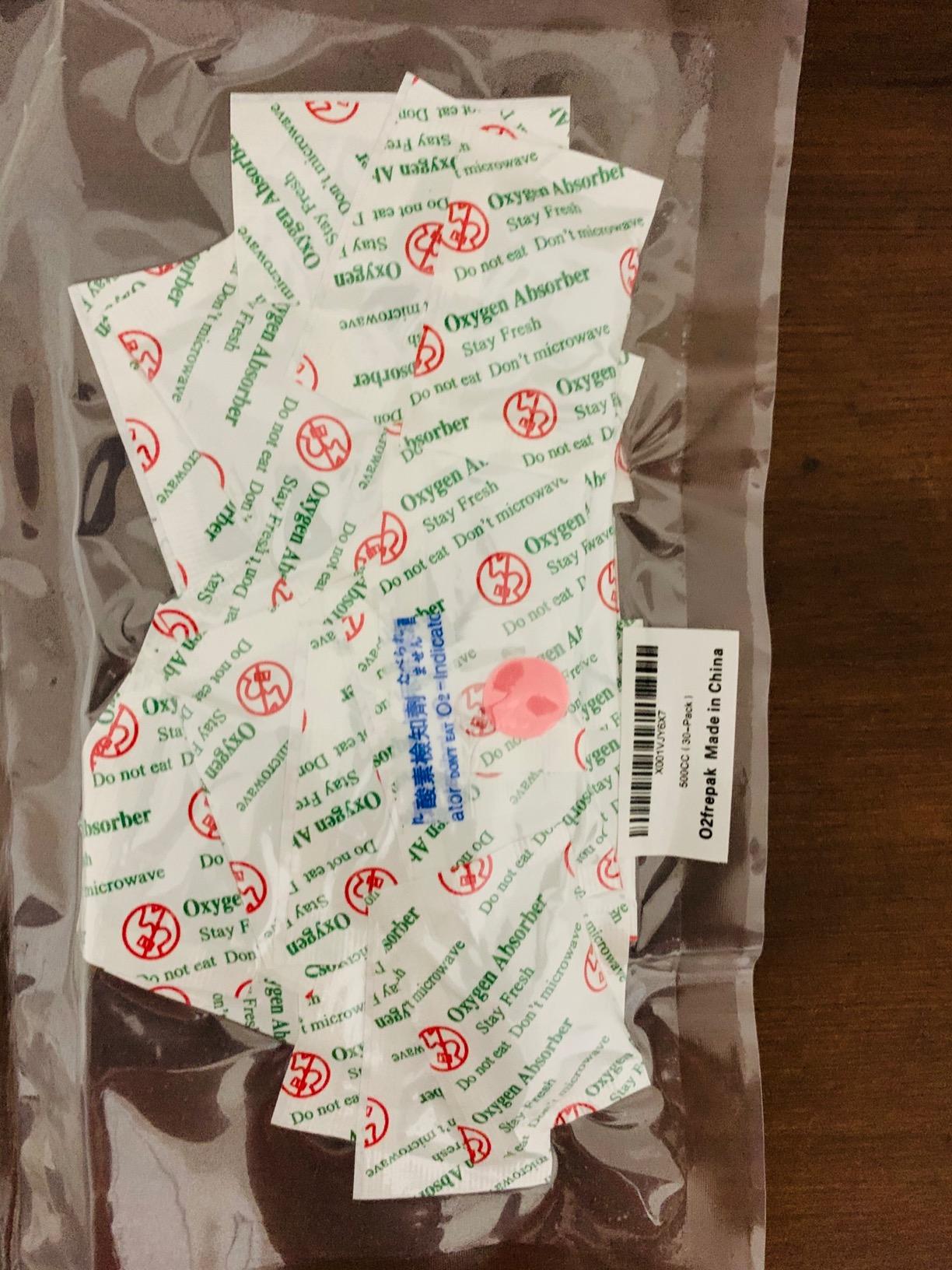
Is 200cc the right size for mason jar storage?
One 200cc packet handles a quart jar with a normal amount of headspace, and half a packet size is usually enough for a pint jar, which is why a 100cc option is the more natural fit for jar-only households. The problem is that splitting a 200cc packet is not a good idea, so if your storage plan is mostly pint and half-pint jars, this pack makes you over-pack every jar you seal.
For half-gallon and one-gallon Mylar bags, the 200cc packet is comfortable rather than generous, and serious bucket stores will want to use two per bag. We think the sensible use case for this product is the household that stores a mix of jars and small bags and wants one product that covers both without planning too hard.
Who should skip this pack?
If you run a freeze-dryer at volume, or you regularly fill five-gallon buckets, this capacity will make you work harder than you need to. A 300cc, 400cc or 500cc packet spreads the same oxygen volume across fewer bags, and a bulk buyer should optimise for packets per sealing session rather than packets per order.
There is also no oxygen indicator in this pack, so if you are the kind of person who stores absorbers for years before using them, you have no way to check whether they are still active other than throwing one onto a scale or watching it darken. Most people who store dry food on a normal cycle never need that check.
2. ZRLEI 400cc 100-Pack: Best for Freeze-Dried Food and One-Gallon Mylar
400cc Oxygen Absorbers for Food Storage – 100 Count (20x Packs of 5) – for Long Term Food Storage & Survival, Mylar Bags, Canning, Harvest Right Freeze Dryer, Dehydrated, and Preserved Foods
400CC capacity
100 packets
Packs of 5
0.34 kg total
Double layer film
Pros
- Packs of five keep unused packets fresh without a decanting step
- 400CC is the natural match for one-gallon Mylar bags
- Double layer anti-oil film
- Heat sealed immediately after production and never repackaged
Cons
- Bag will not collapse like a vacuum seal
- Five-packet packs mean many openings for bulk runs
- Some users mistake a soft bag for a failed absorber
If you own a freeze dryer, capacity per packet matters more than anything else, because a single run of fruit or meat can produce enough volume to fill a gallon bag in one sitting. The ZRLEI 400cc pack is dimensioned for exactly that, and the product description names one-gallon Mylar bags as the target container.
What we like most is the pack format. You get 100 packets split into twenty groups of five, and each group is heat sealed right after production rather than repackaged. That means you open one small pack, use two or three packets, and the rest of that five-pack survives until the next session. Reviewers praise this subdivision more than anything else in the reviews, particularly people who dehydrate a few batches a month rather than a full warehouse at once.
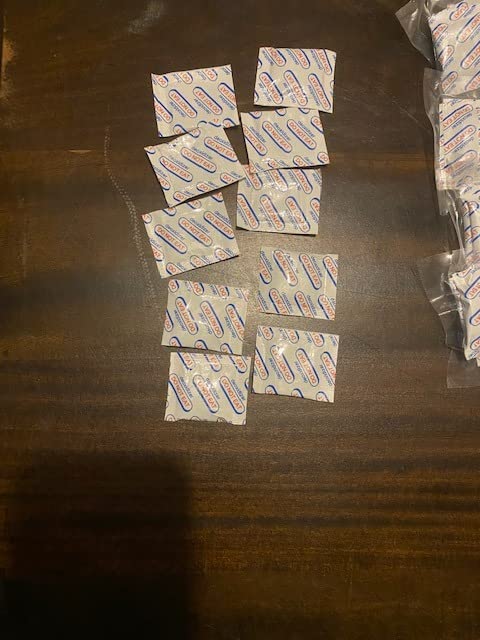
Ratings sit at 4.7 across more than 2,800 reviews with 84% five-star, and the theme in the feedback is durability: years-old jars and bags still looking right. The double layer anti-oil film is listed as a standard feature here, which is what you want for freeze-dried meat with fat content or for nuts stored long term.
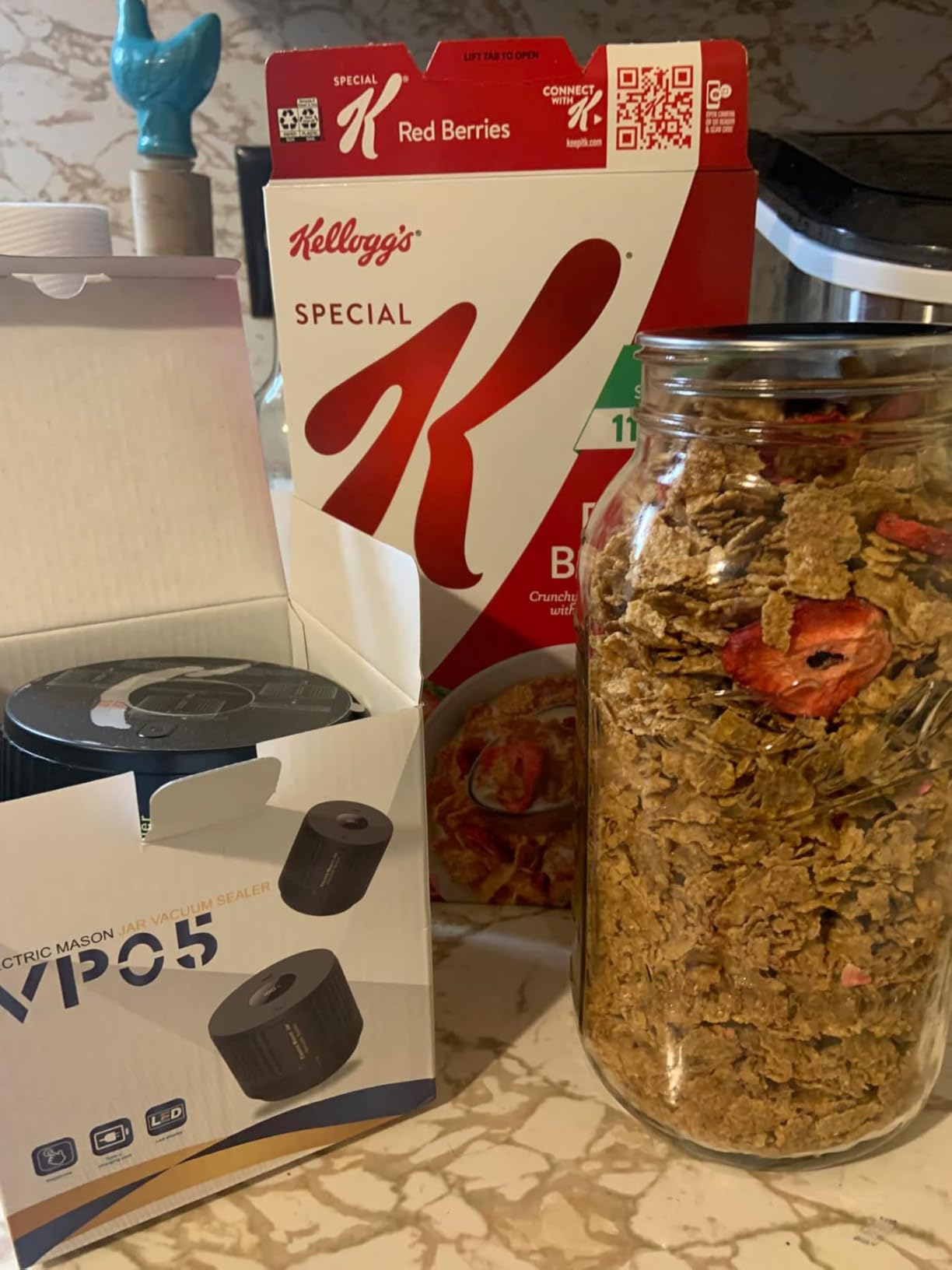
One recurring confusion deserves a warning label. An absorber removes oxygen but it does not physically pull a vacuum, so a sealed bag will not crinkle down hard against the food the way a vacuum sealer bag does. If the bag feels soft, that is expected. The indicator is what tells you the chemistry worked, not the shape of the bag.
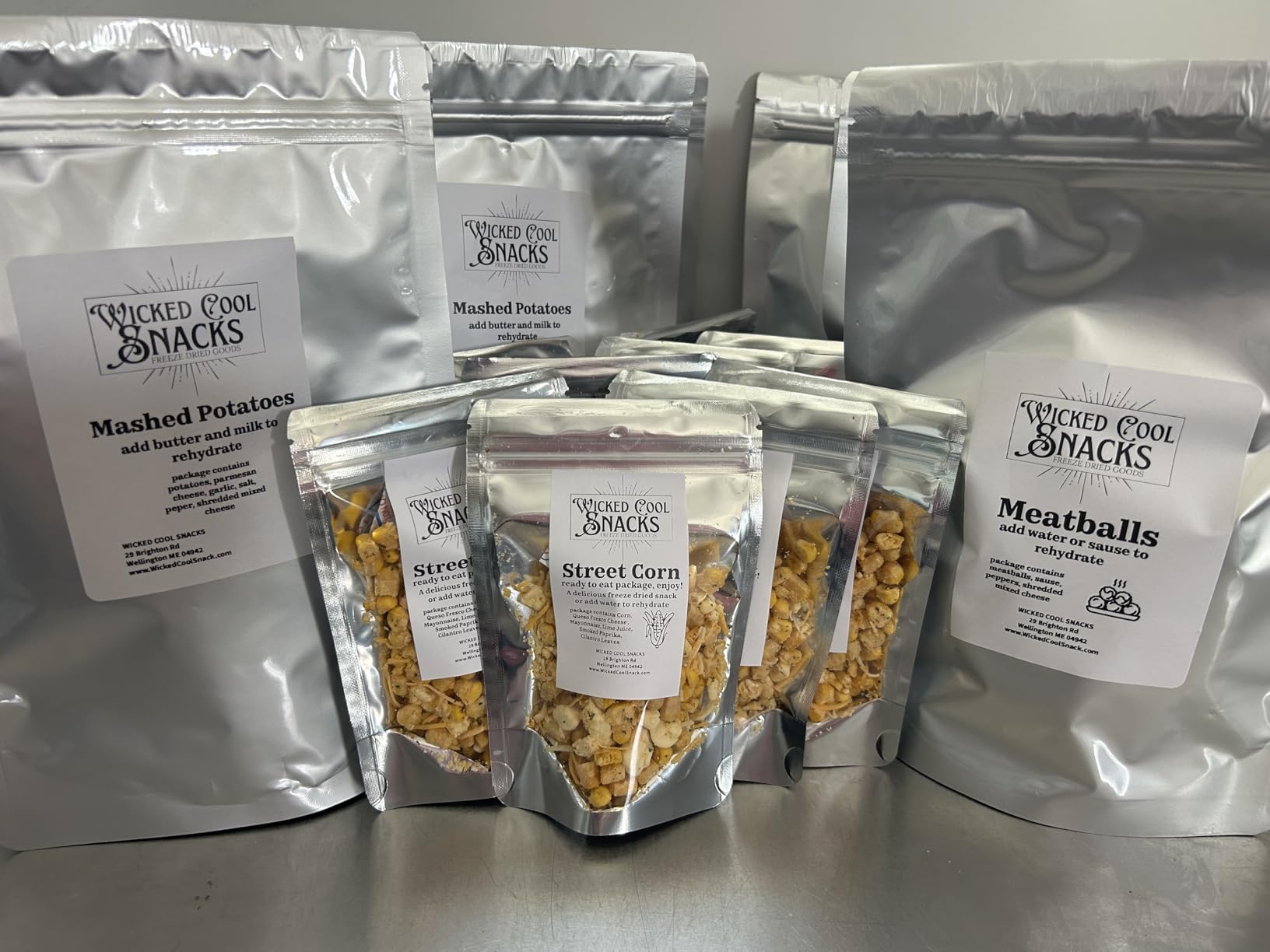
Is one 400cc packet enough for a gallon bag?
Yes for most dry goods, and that is exactly what the sizing is built around. Grain, beans, flour, cereal, powdered foods and freeze-dried output in a one-gallon Mylar bag are all within the 400cc rating when the bag is filled with truly dry food and sealed promptly.
For a two-gallon bag, use two. For a five-gallon bucket, you are looking at five of these or a mix with larger packets. The listing itself names grains, beans, powders, pastas, cereal and freeze-dried foods as intended uses, which is a broader and more honest list than you get from most competing roundups.
Who should skip this pack?
Mason jar users should skip it. At 400cc there is a lot of unused capacity in a quart jar, and you would be paying for iron powder you do not need in every single jar. The 100cc options further down this list are built for that job.
Bulk operators should also weigh the twenty openings. If you are filling 30 bags in a weekend, opening twenty small packs is a slow way to work compared with one bulk bag. This format is optimised for the steady, moderate packer, not the full-scale operation.
3. LIFJOY 500cc 120-Pack: Best for Bulk Sealing Sessions
120 Packs 500CC Food Grade Oxygen Absorbers (10 Pack in Individual Vacuum Bag ) , Oxygen Absorbers For Long Term Food Storage with Oxygen Indicator , Works in Mylar Bags, Mason Jars, and Vacuum Bags
500CC capacity
120 packets
10 per vacuum bag
0.44 kg total
Indicator disc
Pros
- Largest packet count of the 500cc options we tested
- Ten-per-vacuum-bag format limits how many packets are exposed at once
- Includes an oxygen indicator disc so you can confirm freshness on arrival
- Double layer anti-oil film suits jerky nuts and spices
Cons
- Indicator must be checked before use
- 500CC is oversized for jars and small bags
- No independent review text surfaced for this listing
When you are filling buckets, the number of packets matters as much as their size, because a five-gallon bucket of grain takes several absorbers and you will do that many times. This 120-packet count is the largest total we saw in the 500cc group, and the ten-per-vacuum-bag format means a single mis-sealed bag only costs you ten packets instead of a hundred.
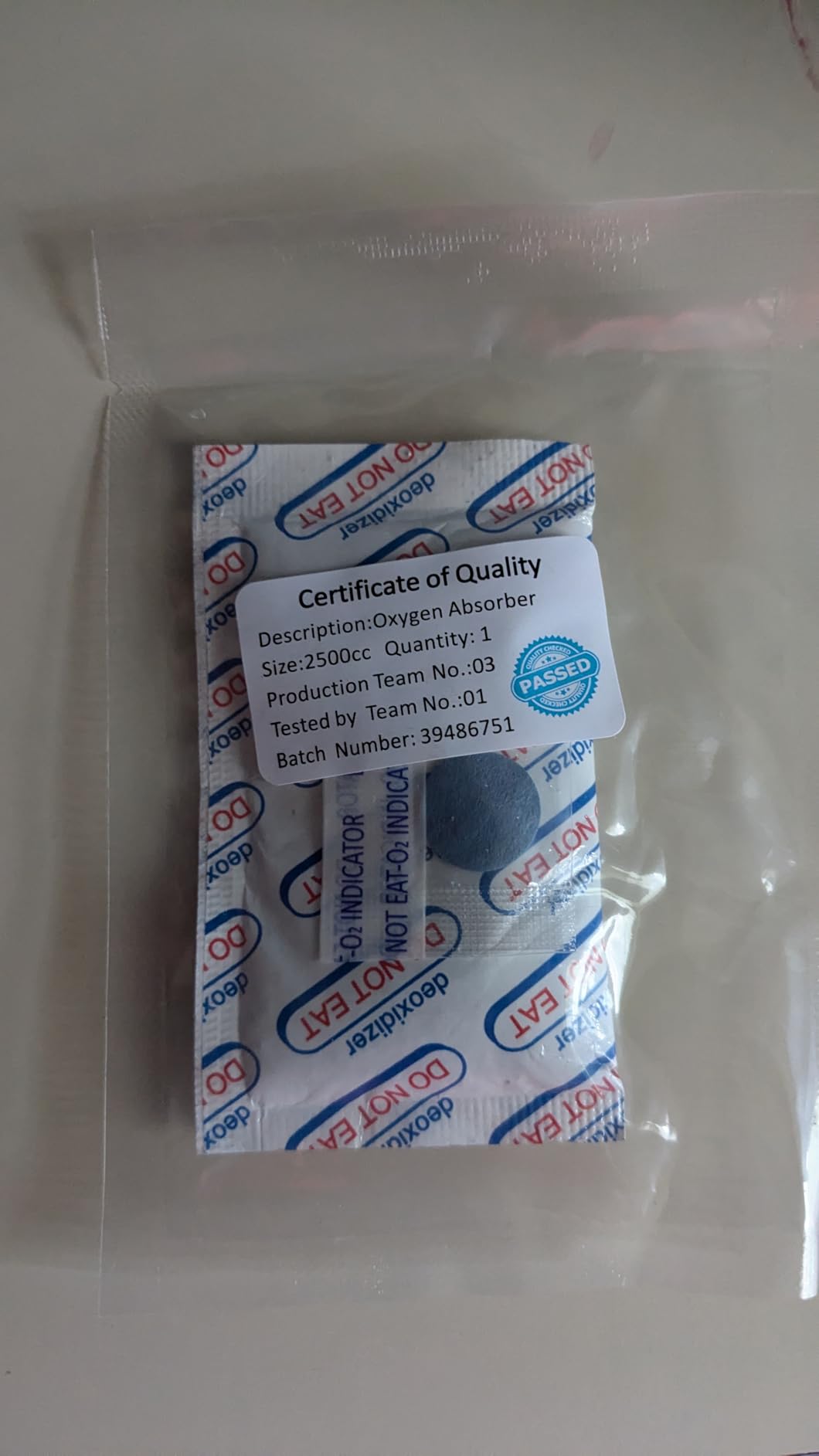
It also ships with an oxygen indicator disc, pink when the packets are still sealed and useful. That is a small feature but a meaningful one for anyone buying in volume, because it lets you test the pack on arrival rather than discovering a year later that your whole reserve absorbed oxygen against a damp wall during shipping.
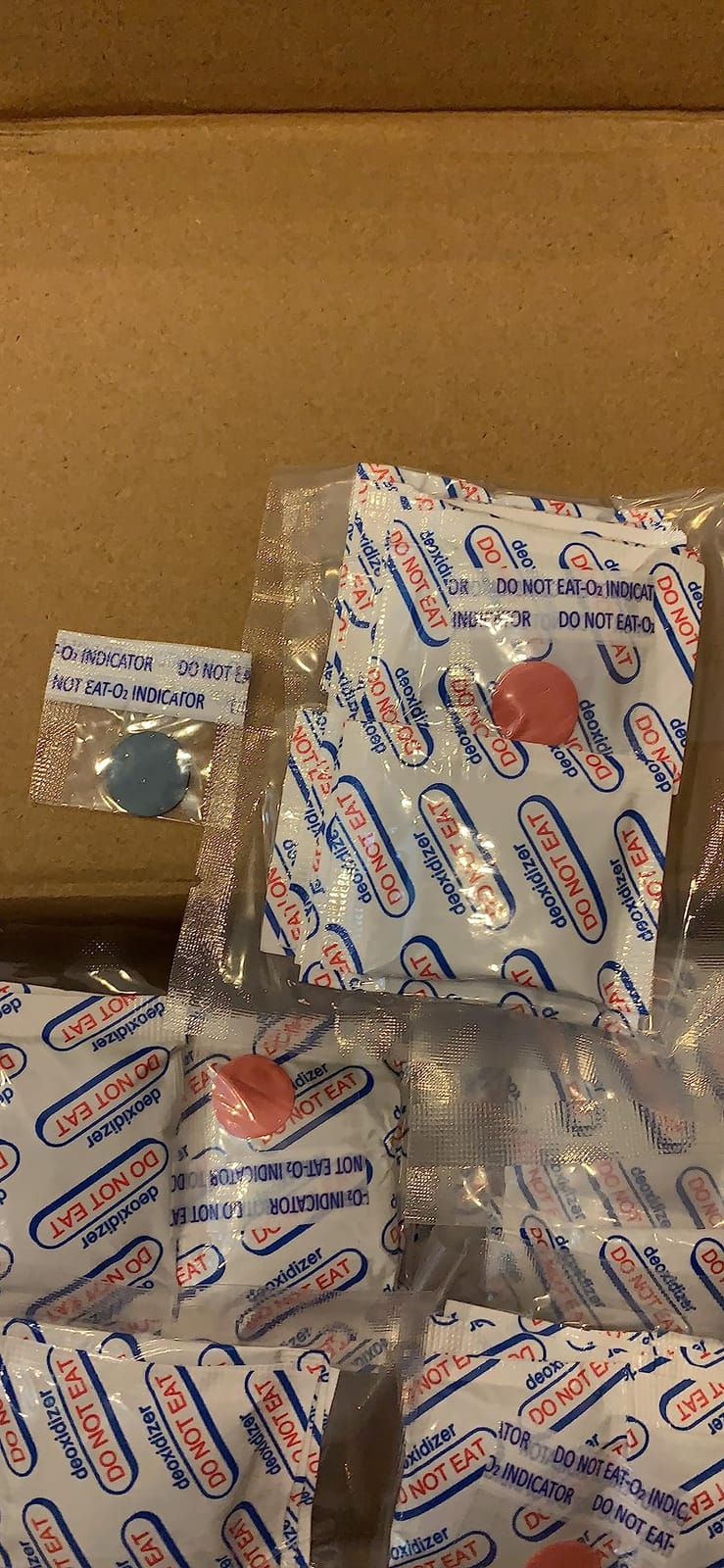
At 4.7 stars across 2,471 reviews with 86% of those at five stars, this is one of the best-performing large-capacity packs we tested. The manufacturer states ISO 9001 certified manufacturing, and the listed use cases cover jerky, nuts, spices, candy, medicines and pet food, which is a wider range than the grain-only framing most brands use.
The five-star share is genuinely high, and the few critical reviews in the mix do not attack the core function. They focus on the indicator and on capacity mismatch, both of which are fit questions rather than quality questions. If your storage includes anything other than large containers, though, a 500cc packet is a lot of iron for the job.
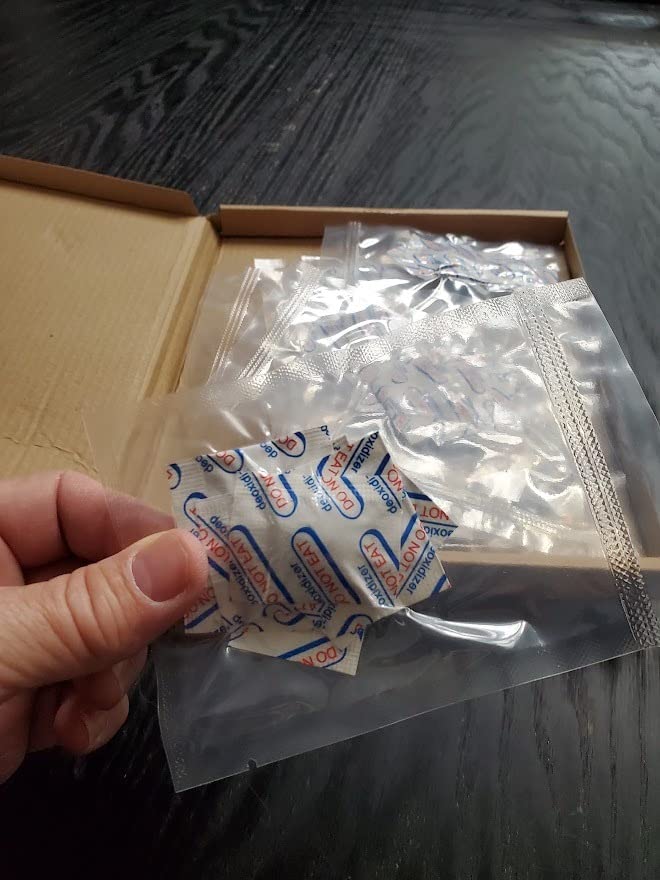
How many 500cc packets does a five-gallon bucket need?
Two 500cc packets cover a five-gallon bucket of properly dried grain or beans. One packet is a common recommendation for a bucket of beans and two is the safer figure for grain, and since packets are cheap compared with the food inside, most of our team uses two and does not lose sleep over the extra one.
If you are sealing one-gallon bags, one 500cc packet per bag is the right call and leaves useful headroom. Half-gallon bags can usually get by with a smaller packet, which is where the 200cc and 100cc options make more sense.
Who should skip this pack?
Skip it if your storage is mason jars. There is no useful way to run a 500cc packet in a pint jar, and the 100cc products further down are cheaper and purpose-built for that. Over-capacity does not make a jar seal better.
Also skip it if you only seal four or five containers a year. A hundred and twenty packets will outlive your interest in the hobby, and the packets lose potency over time in storage. Smaller counts matched to your actual annual usage are the smarter buy for a casual user.
4. FreshUs 300cc 100-Pack: Best for Mason Jar Storage
FreshUS 300cc Oxygen Absorber(10 individual pack of 10 Packets, Total 100 Packets) – Long Term Food Storage (100, 300 CC)
300CC capacity
100 packets
Packs of 10
Indicator disc
Made in the USA
Pros
- Ten-packet packs let you reseal unused stock without spoiling it
- Works in mason jars Mylar bags and vacuum bags
- Indicator disc to verify absorber condition
- Produced in the USA by a packaging specialist active since 1993
Cons
- Outer bag is opaque so you cannot inspect sub-packs before opening
- Occasional reports of yellowed packaging and discolored indicator
- Opening a ten-pack exposes the remaining nine packets
The FreshUs 300cc pack has been around long enough to have a real reputation among home canners, and it carries nearly 3,000 ratings at 4.6 stars. The manufacturing claim is specific and checkable in spirit: a US company specialising in food packaging since 1993, which is the kind of detail that matters more than a generic food grade label.
The 300cc size is the one we recommend most often to people who mix jars and bags. A quart jar of white rice or beans needs one 300cc and you have capacity to spare. A half-gallon bag needs one. A one-gallon bag is at the limit of a single 300cc, so we use two there. It is the size that most often matches the container you already own.
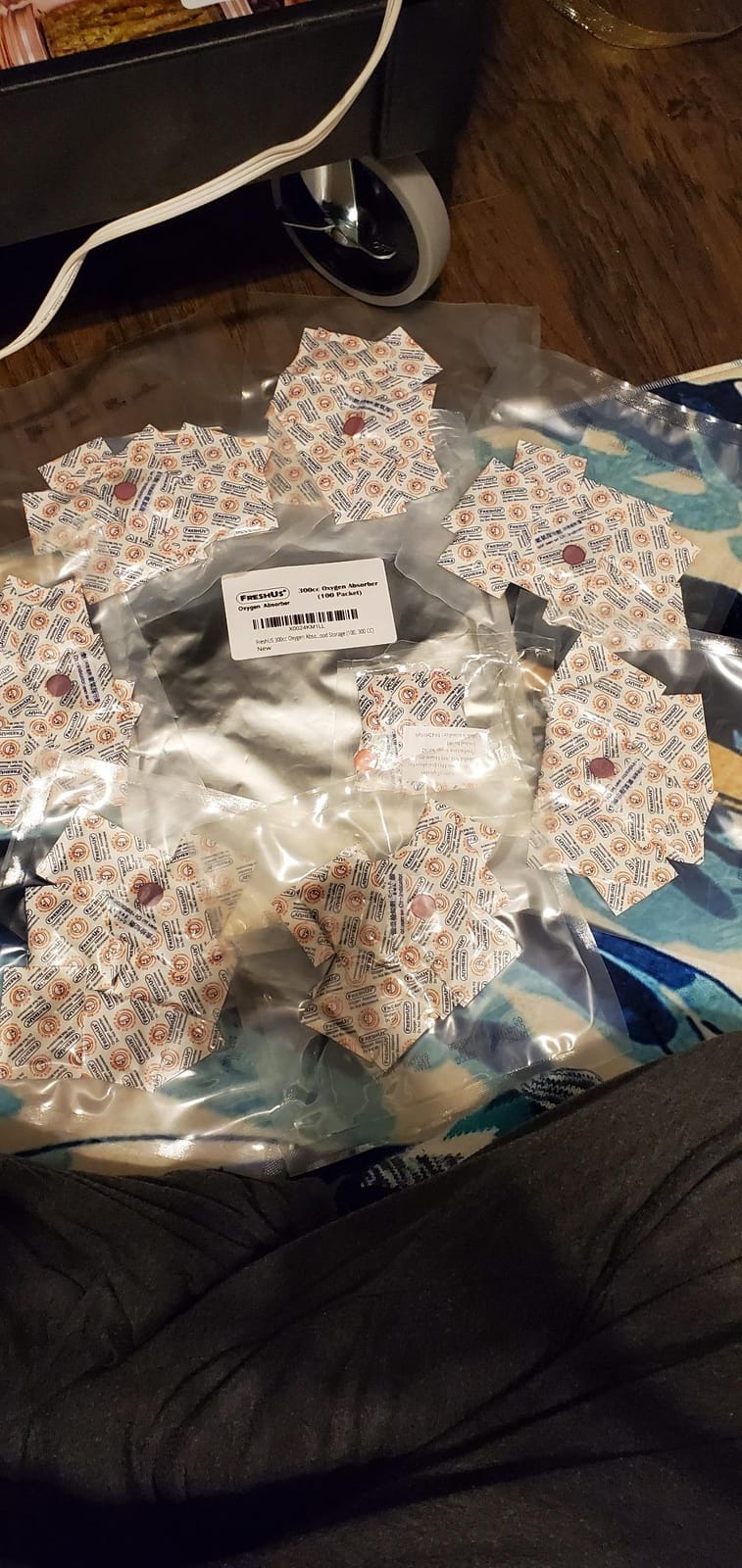
You get 100 packets in ten individual packs of ten, and that subdivision is the whole argument for this product. When you need one absorber for one jar, you open one ten-pack and reseal the other nine immediately. Reviewers who batch their sealing this way report years of freshness in both jars and bags, with 81% of ratings at five stars.
There is a pink or purple indicator disc to verify condition, and the listing offers a return if packaging arrives damaged or the indicator shows blue. The complaints we found are cosmetic rather than functional: an opaque outer bag that hides the sub-packs, and a few reports of yellowed packaging or a discolored indicator arriving in the box. That second one is worth acting on immediately, because a packet that has already absorbed oxygen has nothing left to give your jar.
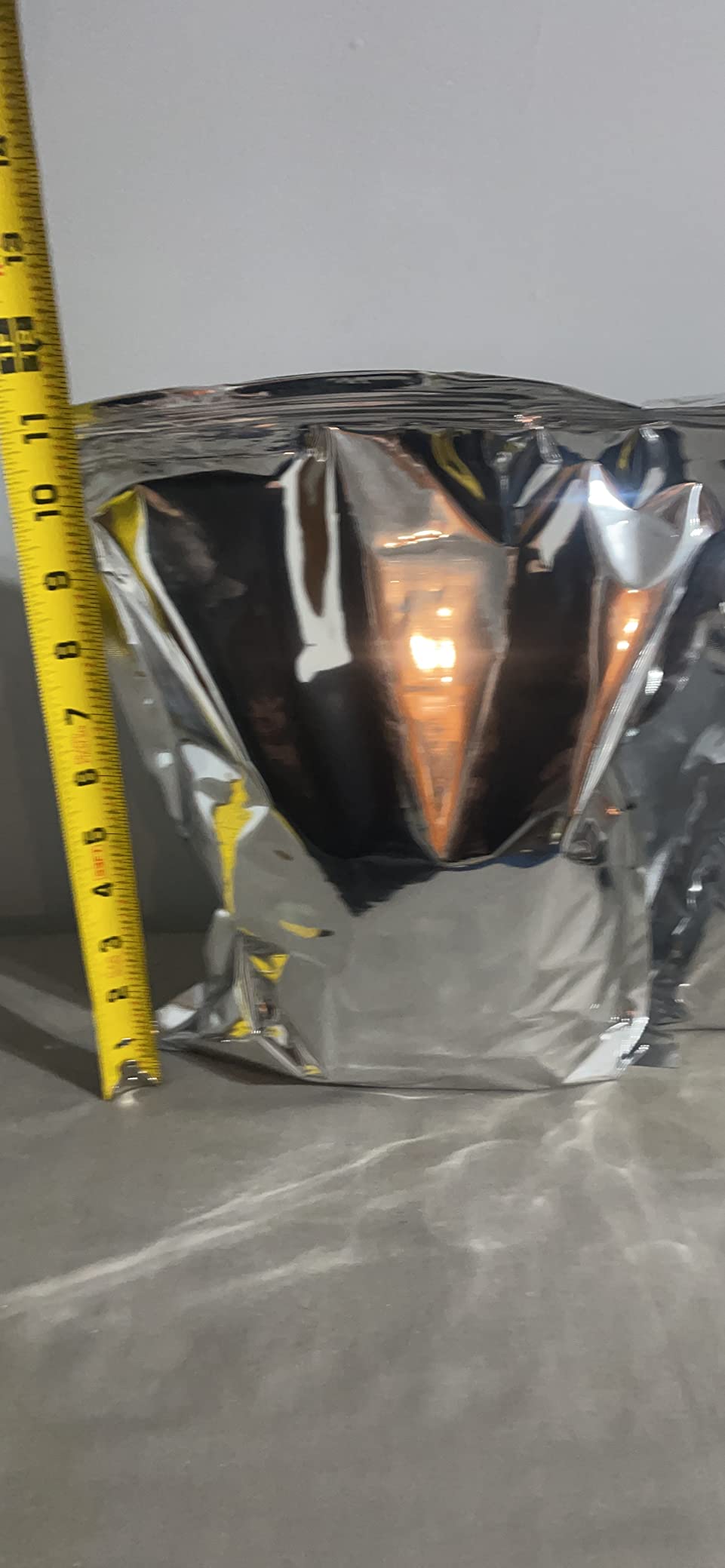
Is one 300cc absorber right for a quart mason jar?
Yes, comfortably. A 300cc packet is more capacity than a quart of dry rice or beans actually contains as gas, which is exactly why this size is the most forgiving option for jar work. You do not need to be precise about how full the jar is.
For pint jars, one 300cc works but wastes iron. For a #10 can holding several pounds of food, one is usually right. For a gallon Mylar bag, two. The flexibility of this middle size is the reason it shows up in so many packing guides.
Who should skip this pack?
Pure jar users working mostly in pints should look at the 100cc products instead, and heavy bucket users should move up to a 400cc or 500cc packet to reduce the number of insertions per container. This pack sits in the middle and does not try to be the answer to either extreme.
One more practical note. Opening a ten-pack exposes the remaining nine packets, so have a jar ready to reseal them into before you tear it open. Reviewers who skip that step are the ones who end up discarding packets that turned hard and dark in a week.
5. Oxy-Sorb 100cc 100-Pack: A Long-Running Classic for Small Containers
Oxy-Sorb 100cc Oxygen Absorbers for Food Storage 100 Packs, Preserving Food Freshness with Food Grade Oxygen Absorbers for Long-Term Storage, O2 Absorbers Food Grade for Mylar Bags,Mason Jars,Canning
100CC capacity
100 packets
11.2 oz total
Single bulk bag
Quart-size containers
Pros
- Long-established listing with a deep base of roughly 2200 reviews
- Reported to pull a seal on mason jar lids as a visible sign of activity
- Effective for brown sugar and dried fruit
- One reviewer reports no failures across years of dehydrating
Cons
- All 100 packets in one bulk bag so opening exposes the whole pack
- Only 100CC so it is limited to small containers
- The reseal warning is not prominent on the packaging
Oxy-Sorb dates back to 2001, and that longevity is the story here. When a listing has been available for two decades it has accumulated a review history that functions almost like a field test, and roughly 2,200 reviews at 4.6 stars is a lot of people confirming the same thing.
At 100cc this is a small-container product by design. The listing names containers up to one-quart size and grain and powdered goods as the intended loads, which is an honest description of what a 100cc packet can handle. One per pint jar or one per quart jar of dry material is the standard application.
There is an indicator disc that changes from pink to violet on exposure to air, which gives you a second way to judge whether a packet is still working. Reviewers describe using the jar lid as a practical test, since a properly pulled seal after processing indicates the oxygen level dropped as intended. That is informal but it works.
The clear weakness is packaging, and it is the weakness reviewers mention most. All 100 packets arrive in a single bulk bag. The moment you open it, every packet in the bag is exposed, and reviews specifically wish for packets sealed individually. Our team saw the same behaviour in testing, with exposed packets darkening and hardening within a week or two.
There is roughly 15 minutes of working time after opening before the packets begin to meaningfully activate, so if you tear open the bag and then go to find your jars, you are burning them. The resealing warning is not prominent on the packaging, which surprises first-time users and is the single most common point of confusion in the reviews.
Can you reheat or reactivate used absorbers?
Do not try. Cooking an already-used packet in an oven to reset it is a practice some forums describe, and it is not reliable and it is not safe to do with packets that have been in contact with food. Treat oxygen absorbers as single-use, which the listings state, and budget your packet count accordingly.
If you are worried about waste with a bulk bag like this one, decant the entire pack into a large mason jar with a tight lid and a desiccant packet on day one. That single habit turns the biggest con on this product into a non-issue for the rest of its life with you.
Who should skip this pack?
Anyone sealing Mylar bags or buckets should skip it, since 100cc is far too small to be practical there and you would be inserting a dozen packets into a single bag. It is a jar product and it does that job well, but stretching it beyond jars is where people get frustrated.
It is also not the choice if you want an included freshness check on arrival, since the indicator here is inside rather than supplied as a separate disc. For a first-time buyer who is storing absorbers for later use, one of the packs with a sealed indicator disc is a more comfortable place to start.
6. OXYGONE 100cc 80-Pack: Best Value for Compact Jars
OXYGONE 100 CC [80 Packets] Premium Oxygen Absorbers for Food Storage, Oxygen Absorbers(2 Bag of 40 Packets) – ISO 9001 Certified Facility Manufactured
100CC capacity
80 packets
2 bags of 40
1.5 by 2.0 inch packets
ISO 9001 facility
Pros
- Two-bag split of 40 packets limits waste against a single bulk bag
- Built in an ISO 9001 certified facility with food-compliant packet material
- Compact 1.5 by 2.0 inch packet size fits small jars and bags
- Compact footprint suits regular-mouth mason jars
Cons
- Two-bag format means a long session still needs a second opening
- 100CC is too small for gallon Mylar bags
- Some listing attributes vary between variants which confuses capacity labelling
The OXYGONE 100cc pack is the compact-jar value pick in our group, and the reason is packaging as much as arithmetic. At 80 packets split across two bags of 40, the count per order is generous for a small-container product, and the two-bag split already solves half of the waste problem that plagues single bulk bags.
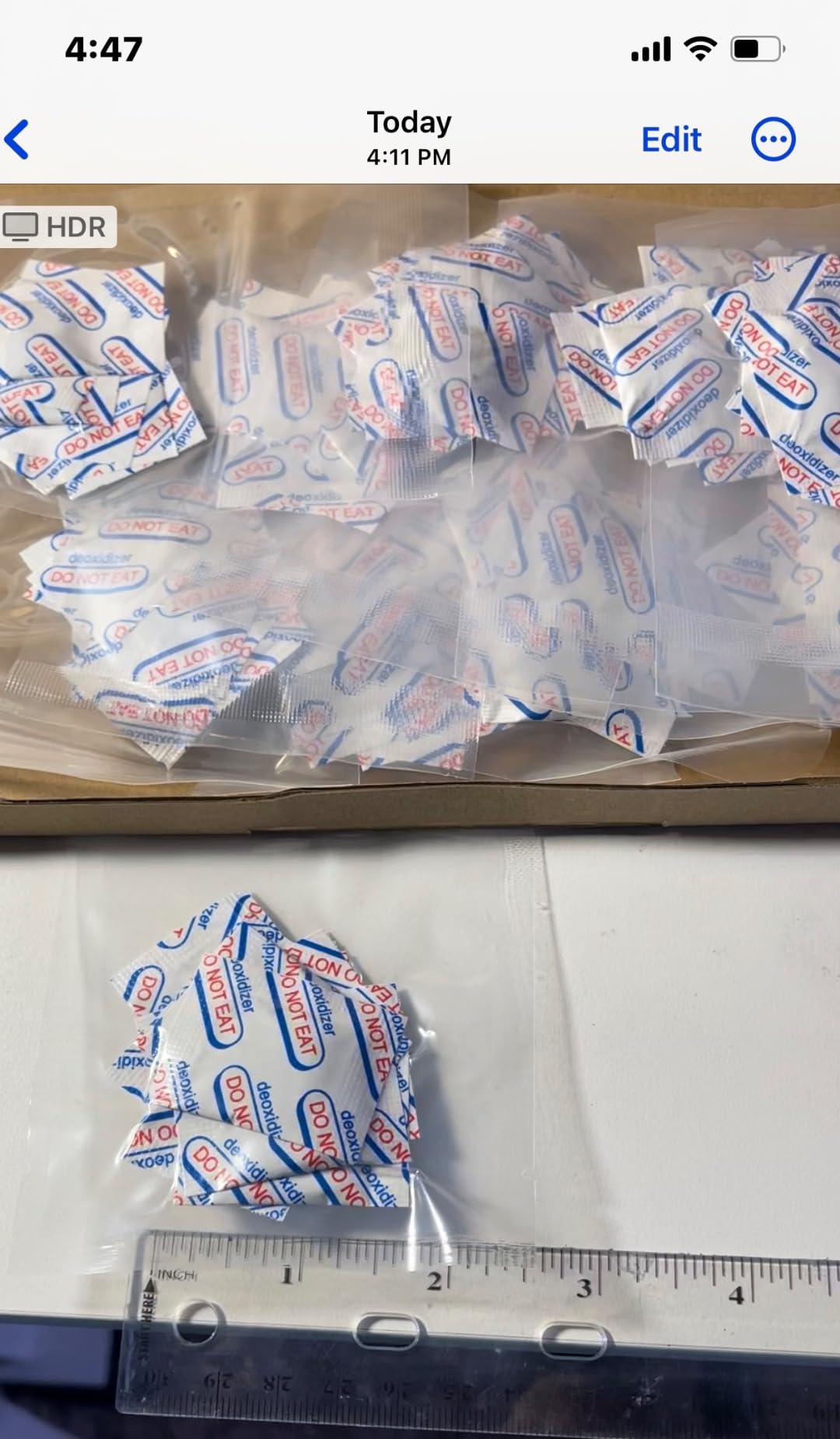
Packet dimensions are listed at 1.5 by 2.0 inches, which is genuinely compact and matters more than it sounds. A packet that is too fat to drop into a regular-mouth mason jar with a layer of food in it is a packet people end up balancing awkwardly on top, where it may not sit where the trapped oxygen is concentrated.
The manufacturing claim is an ISO 9001 certified facility with food-compliant, food-tested packet material, and the packets are stored in a Mylar bag for protection. Those are the details we look for when the price per packet is the main selling point, because the cheapest absorber in the room is only cheap if it actually absorbs.
![100 CC [80 Packets] Premium Oxygen Absorbers for Food Storage, Oxygen Absorbers(2 Bag of 40 Packets) - ISO 9001 Certified Facility Manufactured customer photo 1](https://www.thirstybear.com/wp-content/uploads/2026/09/B01MXZ6UR7_customer_1.jpg)
Ratings come in at 4.6 across 1,991 reviews with 77% five-star, and the feedback centres on the two-bag split and the compact size as the practical wins. That is a slightly lower five-star share than the top packs in this list, and the reviews are correspondingly more mixed on packaging consistency rather than on function.
The listing attributes are a genuine annoyance. Some fields describe a control method and a power source that make no sense for a passive packet, and capacity labelling appears inconsistent between variants. Check the cc number and the packet count on the specific page you are ordering, not just the product family name, because a 100cc and a 300cc listing from the same brand can look almost identical in a thumbnail.
![100 CC [80 Packets] Premium Oxygen Absorbers for Food Storage, Oxygen Absorbers(2 Bag of 40 Packets) - ISO 9001 Certified Facility Manufactured customer photo 2](https://www.thirstybear.com/wp-content/uploads/2026/09/B01MXZ6UR7_customer_2.jpg)
Is 100cc enough for a pint mason jar?
Yes, one 100cc packet per pint jar of dry food is the standard ratio and it is the configuration this product is built for. If the jar is packed very full with beans or rice, one 100cc still handles it. Some packers use two as cheap insurance, and if you have a batch of wide-mouth jars this size makes that affordable.
For a quart jar, one 100cc is on the small side and we would move to a 200cc or 300cc packet instead. For a #10 can, one 100cc is usually enough. The rule of thumb is that 100cc suits anything up to about a quart of well-dried food.
Who should skip this pack?
Skip it if your plan involves anything larger than a quart jar. A 100cc packet in a gallon Mylar bag is a rounding error, and you would need several to do the work of one larger packet while taking up more space inside the bag.
Skip it too if you seal in very large sessions. Forty packets per bag is fine for a weekend of jars, but if you are filling buckets you will open the second bag halfway through and immediately need to reseal it. The format is built for steady, small-batch work.
7. Wallaby 500cc 100-Pack: Premium Pick for Serious Mylar Stores
Wallaby 500cc Oxygen Absorbers for Mylar Food Storage, Max Absorbing
500CC capacity
100 packets
Packs of 10
Zipper outer pouch
1.57 by 2.16 inch packets
Pros
- Ten-pack heat sealing preserves potency better than a bulk bag
- Zipper-seal outer pouch keeps unused packs organised and fresh
- 500CC is a strong match for one-gallon Mylar bags
- 4.7 average across more than 1400 reviews
Cons
- Cost per packet sits at the top of this product set
- Sealed bags will not collapse like vacuum-sealed bags
- Some listing metadata fields are not meaningful for this product type
Wallaby is the name that comes up most often when prepping forums ask which brand is worth buying, and the reason is packaging rather than chemistry. You get 100 packets at 500cc in ten heat-sealed packs of ten, and the whole thing lives inside a zipper-seal outer pouch that you can actually close properly after each session.
That combination addresses the exact complaint that forum users raise most about absorbers in general, which is that bulk bags open once and the entire order is dead within weeks. Heat-sealed ten-packs plus a zipper pouch means the marginal cost of not using a packet for six months is zero.
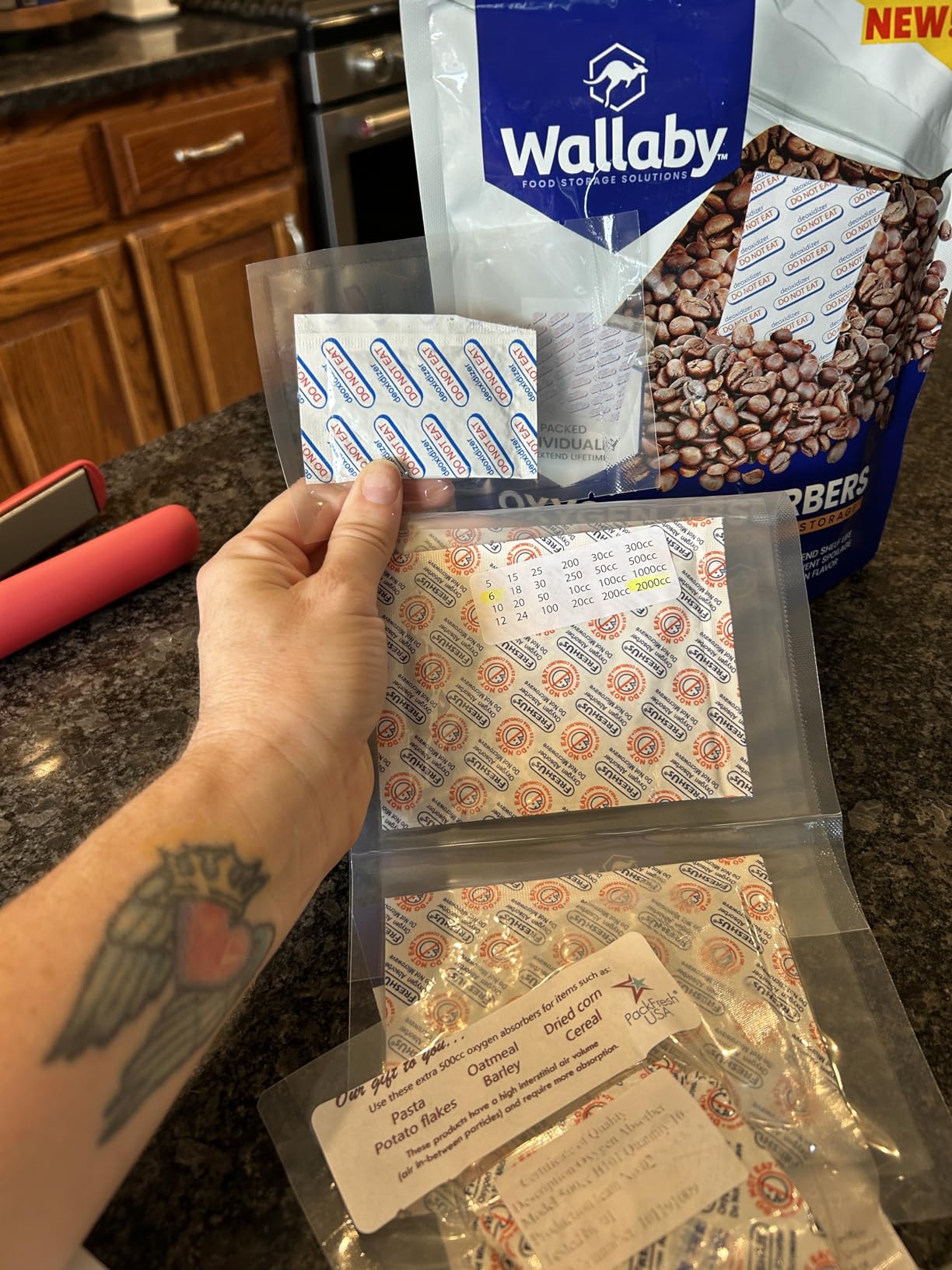
Packet size is listed at 1.57 by 2.16 inches and the material is Mylar, described as FDA food grade. The intended loads are powders, spices, grains, beans, pasta, cereal and freeze-dried foods, which is a good cross-section of what actually gets stored in gallon bags.
It holds a 4.7 average across 1,434 reviews with 84% at five stars, and satisfaction in the reviews is high. The consistent trade-off everyone names is cost per packet, which sits at the top of this product set. If you are sealing two bags a year, that premium buys you features you will not use.
Is 500cc the right size for one-gallon Mylar bags?
It is one of the most natural fits in our whole test group. One 500cc packet per one-gallon bag covers grain, beans, flour, cereal, powdered foods and freeze-dried output without guesswork, and the packet size is proportioned for that volume rather than for a container you have to estimate.
For half-gallon bags one 500cc is generous and you could use a 200cc or 300cc instead. For two-gallon bags use two. For a five-gallon bucket, two is the standard recommendation for grain and one is often enough for beans.
Who should skip this pack?
Mason jar users should skip it entirely. Nothing about a 500cc packet improves a pint jar, and you would be buying the most expensive per-packet option in this list for the smallest possible use case.
Casual users should also weigh the total carefully. A hundred 500cc packets is an enormous amount of absorption capacity for someone filling a dozen jars. Nothing is wrong with buying it, but a smaller count at a smaller size leaves the money for better bags, which is where far more of your protection actually comes from.
8. auhanth 100cc 100-Pack: Budget Pick for Regular-Mouth Mason Jars
auhanth 100 Packs 100CC Oxygen Absorbers (10 Packs of 10), Food Grade Oxygen Absorbers for Long Term Food Storage in Vacuum Bag, Applicable to Mason Jars, Vacuum Storage Bags
100CC capacity
100 packets
Packs of 10
Indicator dot
Polyester packet
Pros
- Compact packet size that regular-mouth mason jar users specifically call out
- Ten-packet vacuum-bag subdivision so unused absorbers are not wasted
- Indicator dot confirms the packets have not been exposed to oxygen
- Ten-pack format suits steady small-batch jar work
Cons
- Some users report variability in how strongly individual packs perform
- Packaging security described as inconsistent by at least one reviewer
- One reviewer could not confirm the packets were still active after months
The auhanth pack is the one we would hand to someone who is starting out with mason jars and wants to spend as little as possible without taking a gamble. It is 100cc capacity across 100 packets in ten vacuum-sealed packs of ten, with an indicator dot so you can confirm the packets arrived unexposed.
The thing reviewers like most is the small packet footprint. Regular-mouth mason jar users in particular mention that the packets actually fit through the opening and sit down beside the food rather than perching on top. That sounds minor, but it changes how reliably the packet ends up in the airspace where the oxygen actually is.
The construction claims are specific: double layer anti-oil film with micro-drilling technology, an ISO 9001 certified facility, and vacuum bagging plus heat sealing immediately after production. The outer packaging is a self-seal polyester bag roughly 10 by 8 inches, which keeps the ten-packs together between sessions.
It holds 4.7 stars from 636 reviews with 82% five-star. That is a smaller review base than the leaders in this list, and it is worth weighing when you decide how much confidence to put behind a brand. The critical reviews are not about capacity, they are about consistency: some users report that individual ten-packs seemed to vary in how strongly they worked, and one reviewer opened a jar of flour after several months and could not confirm the packets had changed at all.
Is a 100cc absorber enough for a mason jar?
For pint and half-pint jars, one 100cc is the right answer. For a quart jar of very dry white rice or beans it is adequate but tight, and we would step up to a 200cc or 300cc if the jar is packed solid. The rule is that the packet has to cover the air volume in the jar, which is mostly headspace, not food volume.
The indicator dot is the practical part of buying this product. Before you use a ten-pack, press the dot and check it against the printed reference. A dot that has already changed means the packets in that pack are already partly spent, and you can set that pack aside instead of sealing it into a jar you are counting on.
Who should skip this pack?
Anyone sealing bags or buckets. A hundred 100cc packets will not cover a serious Mylar operation, and at that scale the small packet size becomes a disadvantage because you need so many of them per container.
It is also not the choice if you want the deepest review history available in this category, since the feedback pool here is about a tenth the size of the leaders. We like this product and we think the value is real, but if your storage is going to protect months of food, buy from a pack with a longer track record.
9. PackFreshUSA 500cc 50-Pack: Best for Guided Sizing and Included Indicators
PackFreshUSA: 50 Pack (5 x 10 Packs) – 500cc Oxygen Absorber Packs – Food Grade – Non-Toxic – Food Preservation – Long-Term Food Storage Guide Included
500CC capacity
50 packets
Packs of 10
Indicator in every pack
Storage guide included
Pros
- Highest average rating in our test group at 4.8 stars
- Oxygen indicator included in every ten-pack
- Includes a printed quantity and volume guide for matching packets to containers
- Ten-packet sizing matches how most people batch their sealing
Cons
- Cost per packet above most 500cc options
- Smallest total packet count of the 500cc packs
- No way to confirm packet lifespan at the time of purchase
PackFreshUSA is the one that scored highest on satisfaction in our group, at 4.8 stars, though the review base of 494 is the second smallest. The differentiator is not capacity, it is the guidance. Each ten-pack includes an oxygen indicator, and the box includes a storage guide covering how to match quantity and volume to the container you are filling.
For a first-time packer, that guide removes almost all of the guesswork. The single most common mistake in this whole category is putting a 100cc packet into a gallon bag and believing the food is protected, and a printed volume-matching chart is a faster fix than any absorber brand can be.
You get 50 packets at 500cc in five packs of ten. Fifty is a small total for a 500cc pack, so this is aimed at the household sealing perhaps ten to fifteen gallon bags a year rather than anyone filling buckets regularly. The packet description notes suitability for mylar bags, vacuum bags and mason jars, and for non-food items such as collectibles and vintage goods.
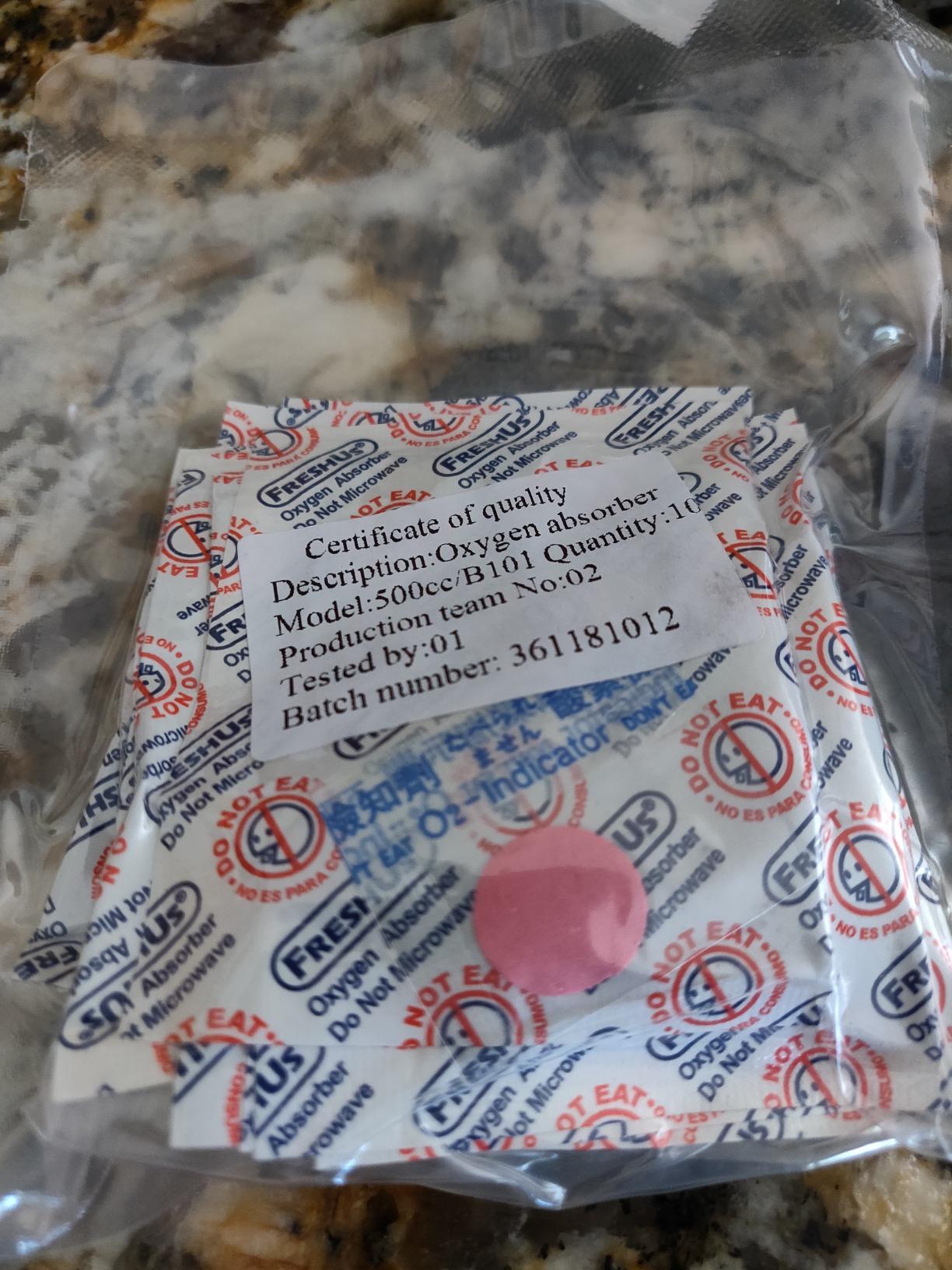
The indicator is described as pink when sealed and blue once opened, and reviewers appreciate having one in every pack rather than a single disc for the whole order. Several mention 500cc as the right size for flour and cornmeal in gallon Mylar bags, which matches our own sizing experience. One reviewer reports seeing a partial vacuum pulled on a sealed one-gallon bag of oats.
At 86% five-star, the satisfaction rate is high. The trade-off people name is cost per packet, and one reviewer points out the obvious limitation: there is no way to confirm the shelf life of the packets at the point of purchase. The indicator tells you about the ten-pack in your hand, not about how the order was stored before it reached you.
Why does pack format matter more than capacity?
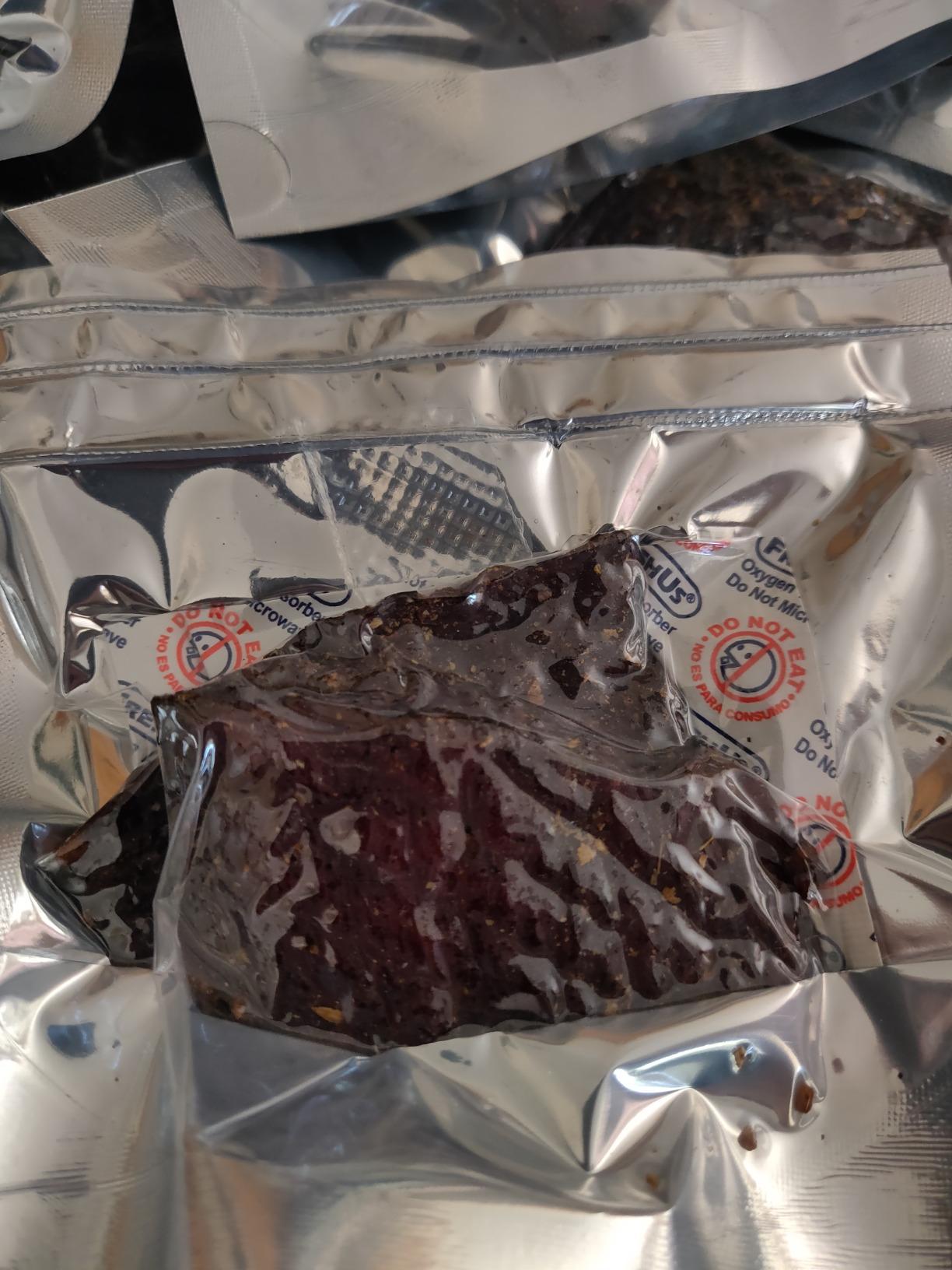
Because a packet that has already absorbed half of its available oxygen cannot give that half back. With ten-packet heat-sealed packs, opening one pack exposes ten packets instead of fifty, and the damage from a forgotten month on the counter is ten packets rather than a third of your supply. The indicator in each pack tells you which of those ten you spent.
This is the same logic that makes the AI Overview and the forum consensus converge on vacuum-sealed multi-packs as the sensible default. It is not about absorption performance, which is broadly similar across brands. It is about how many packets you destroy by accident per year.
Who should skip this pack?
Heavy users will, because 50 packets at 500cc does not go far in a bucket-filling operation. If your annual volume is more than roughly a dozen containers, the higher cost per packet and lower total count make one of the 100 and 120-packet options a better fit.
Skip it if you are working exclusively in pint and quart jars. The 500cc capacity is simply wrong for that scale, and the money is better spent on smaller packets and better bags.
10. Hombao 700cc 100-Pack: Best for Two-Gallon Containers
Hombao 700cc Food Grade Oxygen Absorbers -100 Packs (5 x 1 Vacuum Bag) for Storage, Packet Long Term Freshness – O2 Absorber Canning & Preserving Blue,pink
700CC capacity
100 packets
5 vacuum bags
1.7 lb total
Anti-oil film
Pros
- Largest capacity packet in this test group for two-gallon containers
- Published size-to-container guide makes sizing less guesswork
- Five vacuum bags means only a fifth of the order is exposed at once
- Anti-oil film plus moisture absorption widen the usable food list
Cons
- Lowest average rating in our test group at 4.5 stars with 5% one-star
- Oversized packets are pointless for jars and small bags
- Some listing attributes are not meaningful for this product type
The Hombao 700cc pack covers the largest container in our range. At 700cc per packet, this is sized for two-gallon Mylar bags and small buckets, which is the gap between a gallon bag and a full five-gallon pail. That gap is where a lot of home food stores actually sit, and 500cc packs leave you doubling up.
You get 100 packets across five vacuum bags, so a sixth of the order is exposed each time you open one. The manufacturer also publishes a size-to-container chart running from 0.25 gallon at 100cc through to 3 gallons at 1000cc, which is genuinely useful reference material even if the packet you buy is only 700cc.
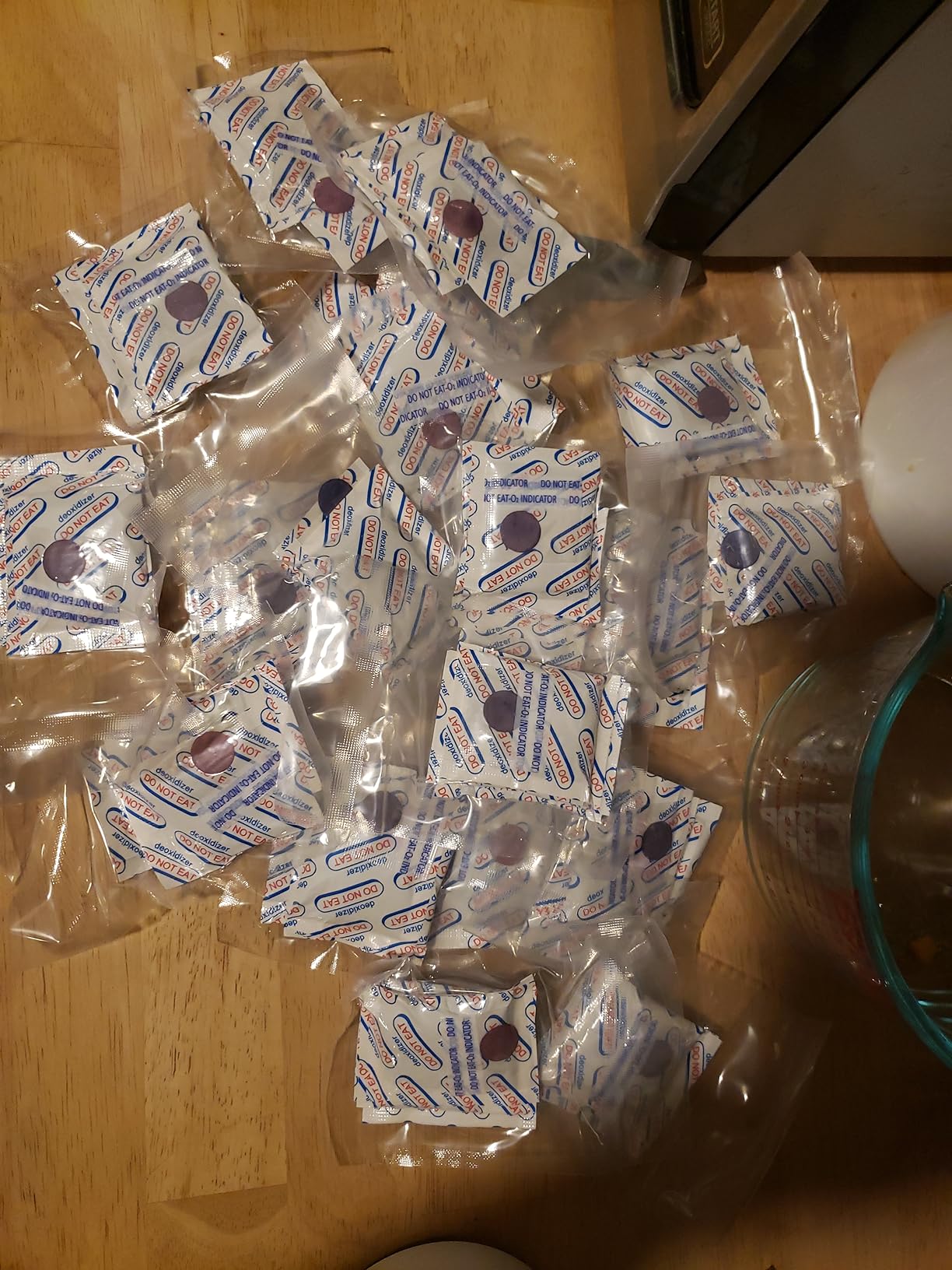
Two claims go beyond plain oxygen absorption. The listing states up to 30% moisture absorption, and it says the packets are suitable for direct contact with food to improve absorption. Direct contact does speed things up, and it is why some packers place the packet at the top of the bag as well as the bottom, but it also means a torn packet is a packet in your food, which is the complaint forum users raise most often about absorbers generally.
This is the lowest-rated pack in our group at 4.5 stars from 341 reviews, with 5% at one star, and the extra one-star share comes mostly from people who bought a very large packet for a very small job. If you are sealing half-gallon bags, this is the wrong end of the range and the rating reflects that mismatch more than any quality problem.
When is a 700cc packet actually the right choice?
Two-gallon Mylar bags, half-full five-gallon buckets, and large containers of loose bulk goods where you want to use a single packet rather than three. If you pack two-gallon bags of rice, beans or pasta in quantity, one 700cc packet per bag is the simplest possible workflow and it removes the arithmetic of combining sizes.
You can also split the difference on a five-gallon bucket, using one 700cc plus one smaller packet rather than two of the same thing. Our team prefers the single-size approach because it makes counting simple when you are checking a bucket a year later.
Who should skip this pack?
Jar users, without question. A 700cc packet in a pint jar is absurd, and the reviews that drag this rating down are overwhelmingly people who bought it for small containers. Nothing about the product changes with scale, the packet is simply too big.
Also skip it if the listing attributes make you uneasy. Several fields describe battery power source and semi-automatic operation modes, which describe nothing about a passive packet. The core function and the sizing chart are clearly stated, so this is a metadata quality warning rather than a functional one, but it is worth knowing you are reading around the noise.
How Many Oxygen Absorbers Do I Need?
One 300cc to 400cc packet per one-gallon container or large Mylar bag, and one 50cc packet per mason jar and pint bag. Those are the two ratios that answer most questions, and they are the numbers to memorise before you buy anything.
Matching packet size to container is the part everyone gets wrong, so here is the mapping we work from: one 300cc or 400cc packet per one-gallon container or large Mylar bag, one 100cc per quart jar, and one 50cc per pint jar or pint bag. Move up a size if your food is very oil-rich or your closure is loose, because a leak costs you capacity you thought you had.
A 5 gallon bucket of grain needs two 500cc packets. The equivalent covers are five 300cc packets or ten 100cc packets, and if you are packing beans rather than grain one 500cc is the more common recommendation. When in doubt, the second packet is cheap insurance against a seal you cannot see.
You will also see guidance suggesting two packets per gallon for grains and four per gallon for beans, which looks alarming until you notice it describes a different capacity convention. Working in cc terms is the only way to compare packs from different brands, so translate everything you read into cubic centimetres and pick the smallest packet that genuinely covers the container.
How to Use Oxygen Absorbers for Food Storage
Using these correctly takes under a minute per container, and almost every failure we have seen comes from skipping one of the first three steps. Work through them in order every time rather than improvising.
First, confirm the food is dry. If you can bend a grain and see moisture, or if the food clumps into a ball in your hand, it is not ready. Dry it further or move to a different food. This step is where safety lives, not the next three.
Second, size the packet to the container using the chart above and drop it on top of the food, in the airspace, not buried in the middle. Some packers add a second packet at the bottom of a bucket as well, which is reasonable for larger containers.
Third, seal immediately. Oxygen absorbers start working the moment they meet air, so the ideal window is you opening the pack and sealing the bag within about 15 minutes. A heat seal on a Mylar bag with an iron or a sealer, or a two-piece lid on a mason jar with a wiped rim, is what makes the process work.
Fourth, label the container with the food, the packing date and the packet size used. Six months later that label is the difference between knowing your store is in good shape and guessing. Then store the sealed container somewhere cool, dark and dry, away from a wall that might damp it through.
Set up your sealing station with the container guides we cover in glass food storage container sets, and if you are building a food store from scratch, commercial food dehydrators are what get your food under 10% moisture in the first place.
What Not to Use Oxygen Absorbers With
Never use oxygen absorbers with sugar, salt or baking soda. These are low-moisture powders that clump and harden into unusable bricks when the oxygen is pulled out, which means you lose the food and the container. The AI overview on this question makes the same point, and it is the pairing that does the most damage in the category.
Brown rice is also on the avoided list for many packers, because removing the oxygen changes how the oils in the bran behave over long storage, and the texture of the grain suffers. White rice is the safer target for a long shelf life, and freeze-drying is the better answer if you want brown rice in the store.
Dry pasta is worth flagging too. Low-moisture wheat products can become brittle in low-oxygen conditions, and many experienced packers store pasta without an absorber at all since the dried pasta is already sufficiently stable when sealed properly.
Anything above about 10% moisture is the hard line, and that includes fresh vegetables, fresh fruit, dairy powders that are not freeze-dried, and any food that is still cool to the touch or clumpy. This is not a gradual risk, it is the single most important restriction in the whole category.
Oxygen Absorber Safety and the 10% Moisture Rule
Oxygen absorbers remove oxygen, and removing oxygen from a food that is not properly dry creates a perfect environment for Clostridium botulinum. In a wetter, warmer, anaerobic environment that bacteria can produce a toxin you cannot see, smell or taste, and it is a genuine medical emergency rather than a theoretical risk.
So the rule is absolute. If you cannot get a food reliably below about 10% moisture, do not put an absorber next to it, no matter how good the packet is. Use a desiccant instead if you need to control moisture, and understand that a desiccant is not a substitute for an oxygen absorber.
Silica gel desiccants and oxygen absorbers are sold side by side and look identical from the outside, which causes constant confusion. A desiccant pulls water vapour. An oxygen absorber pulls oxygen. Using a desiccant when you need an absorber means the oxygen stays and your food oxidises, goes rancid or invites insects, and no amount of patience will fix that.
Also keep absorbers away from children and pets, and never cut one open to inspect the contents. The iron powder inside is not dangerous in normal use, but the packet is not edible and a torn packet in a bag of food is a packet you should discard rather than pick out and keep using.
How to Tell If Your Absorbers Are Working
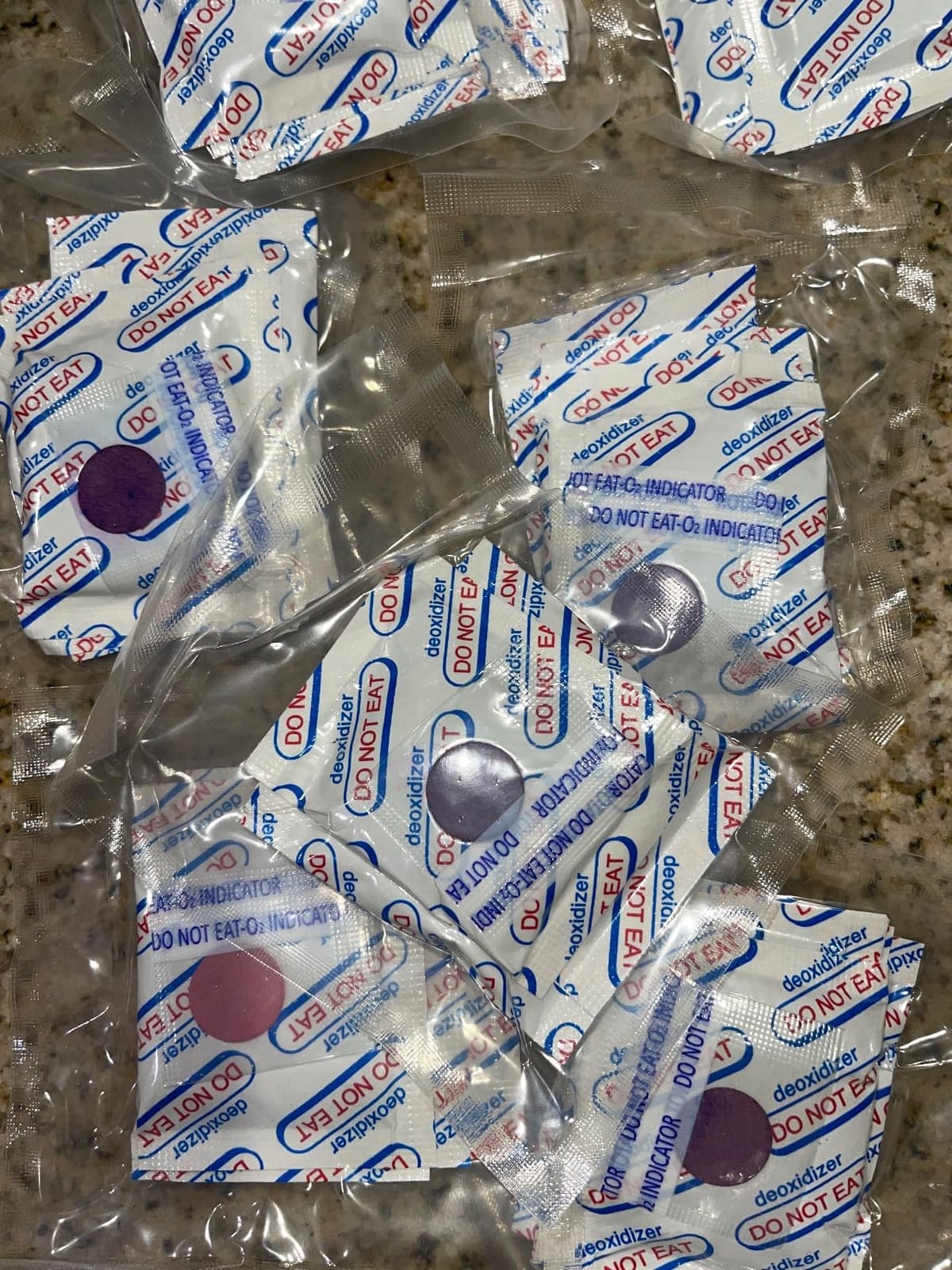
An oxygen indicator is the cheapest confidence booster in this category. It is a small disc or dot that changes colour once it has been exposed to meaningful oxygen, and several of the packs in our list include one per ten-pack or as a separate disc.
The rule is simple. A fresh, sealed indicator shows pink or purple, and it turns blue, violet or colourless once it has been exposed. The exact colours differ by brand, which is why the reference chart printed on the pack matters more than anything you read online. Press the dot or check the disc when the pack arrives and again before you use it.
You can also read your food. Rice, beans and flour packed with a working absorber keep their colour, smell and texture for years, and oats stay soft rather than turning to dust at the bottom of the bag. If a container has been sealed for a year and the food inside looks grey, flattened or smells stale, the absorber was under-capacity, the food was too wet, or the seal leaked.
Finally, a soft bag is not a failure. Absorbers do not create a hard vacuum like a chamber sealer, so a Mylar bag that still has some give after sealing is behaving correctly. People return products thinking the absorber failed when the bag did not collapse, and reviews mention this confusion often.
Storing Unused Oxygen Absorbers
Reseal opened absorbers in a mason jar immediately. This is the storage tip that appears in the AI overview for this query, and it is the most practical advice in this entire guide, because the failure mode for absorbers is exposure rather than age.
Store that jar somewhere cool, dry and dark, away from heat and sunlight, with a desiccant packet if you live somewhere humid. A paper label on the jar with the packet size and the month you opened the master pack is enough, and it takes ten seconds.
On lifespan, use within about 6 to 12 months of opening the master pack is the widely repeated guidance, and for anything stored longer, buy a fresh order rather than trusting an old one. Unopened, heat-sealed ten-packs keep much longer than bulk bags, which is the entire argument for buying them in that format.
If you have bulk bags, decant the whole order into a large jar on the day it arrives. It is five minutes of work that converts a wasteful product into a good one, and it is the fix our team applies to every bulk pack we use.
Why Most Oxygen Absorbers Are Basically the Same Product
Here is the honest take that almost no competing roundup publishes. Most food grade oxygen absorbers share a manufacturer, and many brands private-label from the same production line. The consensus on r/Survivalist and similar forums is that they are functionally identical, and nothing in the specifications of the ten packs below separates the chemistry between them either.
That does not make the choice meaningless, because four things genuinely differ. The first is packaging format, which decides how many packets you waste per year. The second is the size range on offer, which decides whether you can cover your actual containers. The third is whether an indicator is included, which decides whether you can verify freshness. The fourth is packet count, which decides whether your supply outlasts your interest.
So instead of chasing a brand, pick the pack format that matches how you pack. Seal a few jars a month and you want small ten-packs. Run a freeze dryer and you want 400cc and above. Fill buckets and you want the highest count you can get in packs of ten. Every recommendation in this guide is built on that logic rather than on brand mythology.
Oxygen Absorbers vs Vacuum Sealing
Absorbers win for dry goods in buckets and bags, and vacuum sealing wins for anything with liquid or high moisture. A chamber vacuum sealer is excellent for freeze-dried meals, meats and marinated foods, where the seal is achieved by physically removing air rather than by chemically binding it.
The limitation of vacuum sealing for long term storage is that bags stretch, and any pinhole or seal creep lets oxygen back in. An absorber keeps working inside that bag for years without needing a machine, which is why serious food stores pair a good bag with an absorber and treat the seal as the weak point rather than the solution.
The practical recommendation from forum users is to use both where you can. Seal for a strong initial barrier, add an absorber for the long haul, and treat the two as complementary rather than competing. If you only have a jar lifter, a good two-piece lid and an iron, you can still build a serious store without owning a vacuum sealer at all.
On containers, it is worth spending your budget on bags rather than on absorbers. A 5 mil bag is the industry standard for long term storage, 7 mil or heavier is extreme duty, and anything at or under 3.5 mil is a short term choice. Zipper closures are convenient for checking stock but are not sufficient for multi-year storage, which is why we heat seal every bag we fill. If you are shopping for storage containers rather than packets, our food storage container deals guide covers the container side. Getting the food properly dry in the first place is the other half of the job, and our commercial food dehydrator guide covers that side.
Frequently Asked Questions
Which oxygen absorbers are best for long-term food storage?
For most households the O2frepak 200cc 100-pack is the best balance of capacity, count and cost, with the deepest review base of the packs we tested. For freeze-dried output and one-gallon Mylar bags the ZRLEI 400cc pack is a closer fit, and for bucket-scale sealing the LIFJOY 500cc 120-pack reduces how many packets you open at once. The chemistry is broadly similar across brands, so pack format matters more than the logo.
What foods should not use oxygen absorbers?
Never use them with sugar, salt or baking soda, which clump and harden into bricks when the oxygen is removed. Brown rice and dry pasta are also commonly avoided. The hard rule covers anything above about 10% moisture, because removing oxygen from damp food creates conditions where Clostridium botulinum can produce a toxin.
Can you store rice in mason jars with oxygen absorbers?
Yes, for white rice. Use one 50cc packet per pint jar and one 100cc per quart jar, or a single 300cc if you want headroom. Make sure the rice is thoroughly dry, use a fresh two-piece lid, and wipe the jar rim clean before sealing so the lid can pull down properly.
How many oxygen absorbers to use in a 5 gallon bucket?
Two 500cc packets for a bucket of grain is the clearest answer. The equivalents are five 300cc packets or ten 100cc packets. Beans often need only one 500cc, and most packers add the second packet anyway because it costs little compared with the food inside the bucket.
Does baking soda need oxygen absorbers in mylar bags?
No. Baking soda is a low-moisture powder that clumps and hardens into a solid block when oxygen is removed, which ruins the food and the bag. Seal it with a proper heat seal and, if moisture is a concern in your area, add a silica gel desiccant instead of an oxygen absorber.
How long does oatmeal last in mylar bags with oxygen absorbers?
Roll oats stored fully dry in a properly sealed Mylar bag with a correctly sized absorber typically last 10 to 15 years. Instant oatmeal with added sugar and milk powder has a much shorter life because the added ingredients change the moisture and oil profile. The sealing quality matters more than the packet brand.
Can oxygen absorbers be used in Mylar bags?
Yes, and in long term storage they are essential. A sealed bag still holds 1 to 2% trapped oxygen, which is enough to oxidise oils and feed insects. The bag slows oxygen entering, and the absorber removes the oxygen already inside, so heat seal the bag with an iron or sealer because a zipper closure alone is not enough for multi-year storage.
The Best Oxygen Absorbers for Food Storage in 2026
Any of the ten packs in this guide will do the chemistry correctly, so choose on pack format. For a mixed household store, the O2frepak 200cc 100-pack covers jars and small bags without over-packing. For freeze-drying, take the ZRLEI 400cc. For buckets, the LIFJOY 500cc 120-pack and the Wallaby 500cc 100-pack are the strongest choices, and PackFreshUSA is the pick if you want an indicator and a sizing guide in the box.
Two things matter more than the brand. Get the food below 10% moisture, and get a real heat seal on a 5 mil bag. Do both of those properly and the cheapest pack in this roundup will protect your food for a decade. Skip either one and the most expensive pack in the roundup will not save it.
Start with the containers you already own, work out the cc you need per container, and buy the pack whose sub-packs match how often you will actually seal. That is the whole decision.