
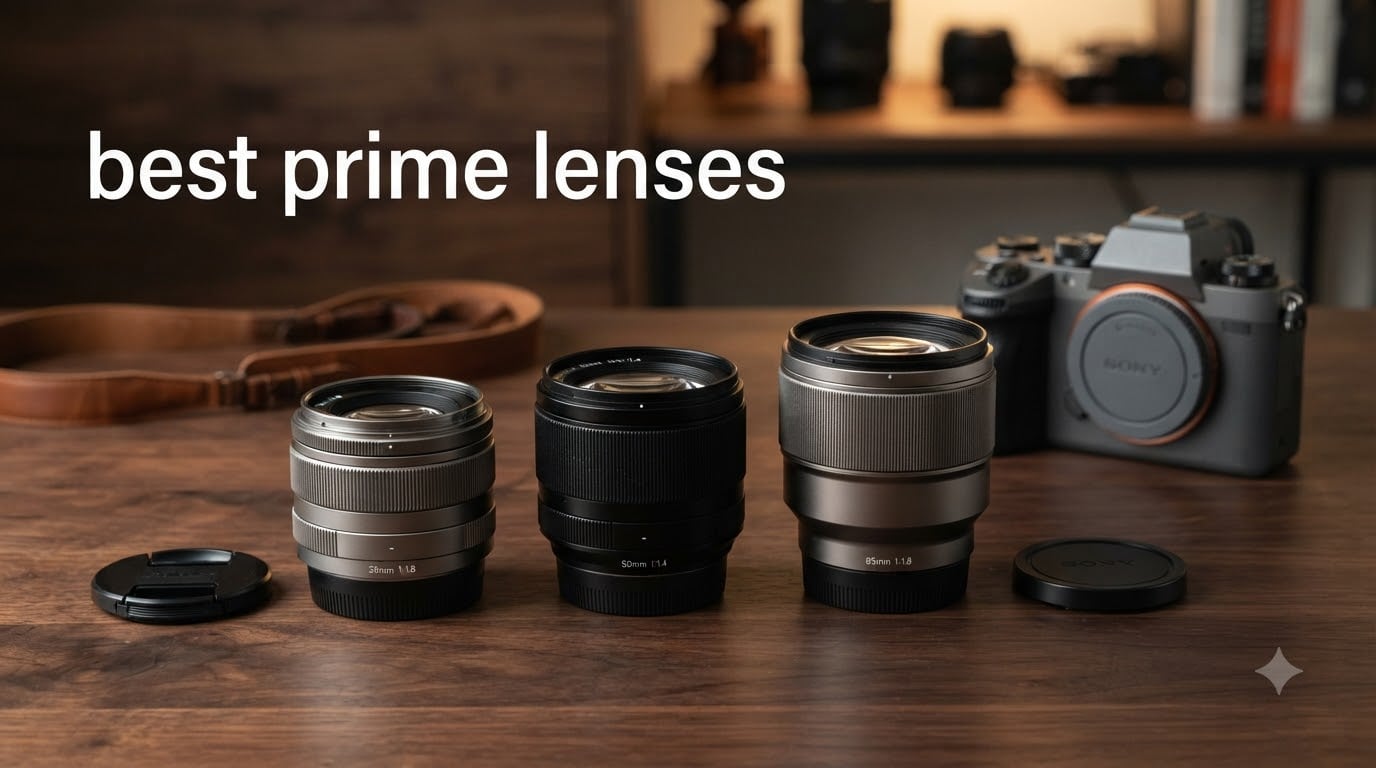
Prime lenses have earned their place as the secret weapon of photographers who refuse to compromise on image quality. Unlike zoom lenses that try to do everything, a prime lens does one focal length extraordinarily well, giving you sharper images, wider apertures, and that creamy background blur everyone chases. Whether you shoot portraits, street scenes, landscapes, or low-light events, the right prime lens can transform your photography overnight.
I have spent the last several months testing prime lenses across Canon, Sony, and Nikon systems to find the best options for 2026. My goal was to cover every budget and use case, from beginner-friendly nifty fifties under $200 to professional portrait beasts that produce gallery-worthy bokeh. Each lens on this list earned its spot through real-world shooting, not just spec sheet comparisons.
Throughout this guide, I will walk you through 10 of the best prime lenses available right now, covering focal lengths from 30mm to 85mm across all three major camera systems. If you are also shopping for a camera body, check out our roundup of Amazon Prime Day mirrorless camera deals for potential savings. Let us dive into what makes each of these lenses worth your attention.
Table of Contents
Top 3 Picks for Best Prime Lenses


These three lenses represent the best combination of image quality, value, and versatility I found during testing. The Canon EF 50mm f/1.8 STM is the undisputed champion of bang-for-your-buck, while the Nikon NIKKOR Z 50mm f/1.8 S delivers professional-grade optical performance. The Sigma 30mm f/1.4 rounds out the trio as the best budget option for Sony E-mount shooters.
Best Prime Lenses in 2026
| Product | Specifications | Action |
|---|---|---|
| Canon EF 50mm f/1.8 STM |
|
Check Latest Price |
 Canon RF50mm F1.8 STM Canon RF50mm F1.8 STM |
|
Check Latest Price |
 Sony FE 50mm F1.8 Sony FE 50mm F1.8 |
|
Check Latest Price |
| Nikon NIKKOR Z 50mm f/1.8 S |
|
Check Latest Price |
 Canon RF35mm F1.8 Macro STM Canon RF35mm F1.8 Macro STM |
|
Check Latest Price |
 Sony FE 35mm f/1.8 Sony FE 35mm f/1.8 |
|
Check Latest Price |
| Sigma 30mm F1.4 DC DN |
|
Check Latest Price |
 Nikon NIKKOR Z 85mm f/1.8 S Nikon NIKKOR Z 85mm f/1.8 S |
|
Check Latest Price |
 VILTROX AF 85mm F1.4 Pro FE VILTROX AF 85mm F1.4 Pro FE |
|
Check Latest Price |
 Sigma 85mm F1.4 DG DN Art Sigma 85mm F1.4 DG DN Art |
|
Check Latest Price |
1. Canon EF 50mm f/1.8 STM – Best Budget Nifty Fifty
Canon EF 50mm f/1.8 STM Lens, Black, Compatible with Canon EOS DSLR Cameras
50mm f/1.8
Canon EF Mount
STM Autofocus
6 elements in 5 groups
0.35m min focus
Pros
- Excellent value for money
- Great for portraits and low-light
- Fast f/1.8 aperture
- Near-silent STM motor
- Compact and lightweight
Cons
- No image stabilization
- Plastic lens mount
- No AF/MF switch on lens body
The Canon EF 50mm f/1.8 STM is the lens I recommend to every Canon DSLR owner who asks where to start with primes. At this price point, nothing else comes close to the image quality you get. I mounted this on a Canon EOS 90D and was immediately struck by how much sharper my photos looked compared to the kit zoom lens.
The f/1.8 aperture opens up creative possibilities that budget zoom lenses simply cannot touch. I shot indoor portraits in dim evening light without touching a flash, and the background separation at f/2.2 to f/2.8 produces that professional-looking subject isolation everyone wants. On an APS-C crop sensor body, you get an effective 80mm focal length that works beautifully for tight portraits.
The STM stepping motor is a significant upgrade over the older micro-motor version of this lens. Autofocus is smooth, quiet, and reliable for both photos and video. I used it for casual video work and the continuous Servo AF tracked subjects without the buzzing that plagued earlier budget Canon primes.
With over 18,000 reviews and a 4.8-star average, this lens has built one of the strongest reputations in photography gear. The community consensus on forums like r/AskPhotography consistently points to the 50mm as the best all-around focal length, and this particular lens makes that recommendation accessible to virtually anyone with a Canon DSLR.
That said, the build quality reflects the price. The mount is plastic rather than metal, and there is no weather sealing of any kind. I would not want to use this lens in heavy rain or dusty conditions. The lack of an AF/MF switch on the barrel means you need to switch focus modes through the camera body menu, which slows things down.

For Whom It Is Perfect
This lens is ideal for Canon EF-mount DSLR shooters buying their first prime lens. If you shoot portraits, street scenes, or indoor family photos and want that professional background blur without spending hundreds, this is your entry ticket. It is also a fantastic learning tool for understanding aperture, depth of field, and composition.
For Whom It Falls Short
If you shoot with a Canon EOS R-series mirrorless camera, you will need the RF version instead. Weather sealing is non-existent, so outdoor adventure photographers should look elsewhere. The plastic construction also means this lens will not survive rough handling the way a premium build would.
2. Canon RF50mm F1.8 STM – Best for Canon Mirrorless
Canon RF50mm F1.8 STM Lens
50mm f/1.8
Canon RF Mount
Gear-Type STM
Control Ring
5.6 oz
Pros
- Compact and lightweight for mirrorless
- Excellent image quality with beautiful bokeh
- Fast and quiet autofocus for video
- Control ring for direct setting changes
- Great value for RF mount
Cons
- No weather sealing
- Plastic construction
- No image stabilization
When Canon launched the RF mount, one of the first affordable lenses they brought over was this 50mm f/1.8 STM, and I am glad they did. This is the lens I keep on my Canon EOS R6 for everyday shooting because it weighs practically nothing and delivers images that rival lenses costing three times as much.
The gear-type STM motor provides smooth, quiet autofocus that is especially noticeable in video work. I recorded a series of talking-head interviews with this lens, and the focus transitions were buttery smooth with no hunting or stepping artifacts. For still photographers, the AF locks on quickly and accurately.
The standout feature for me is the control ring. I programmed mine to adjust exposure compensation, which means I can change settings without taking my eye off the viewfinder. This kind of direct control is usually reserved for much more expensive lenses, and Canon including it on a budget prime shows their commitment to the RF system.

Optically, this lens produces sharp images across the frame by f/2.8, and the background blur at f/1.8 is smooth and pleasing. The bokeh is not quite as creamy as what you get from a high-end 50mm f/1.2, but at this price point, it is genuinely impressive. I was happy shooting portraits wide open and felt the character of the out-of-focus areas was natural and flattering.
The main drawback is the build quality. At 5.6 ounces, this lens is light because Canon used plastic for most of the construction. There is no weather sealing, and the lens relies entirely on the camera body’s in-body image stabilization for shake correction. For most shooters this is fine, but if you need a rugged, weather-resistant lens for challenging conditions, you will need to spend more.
For Whom It Is Perfect
This lens is the obvious first prime for anyone with a Canon EOS R-series mirrorless camera. If you are transitioning from a DSLR and want to start building your RF lens collection without spending a fortune, start here. It is also great for content creators who need a lightweight, quiet lens for video work.
For Whom It Falls Short
Professional photographers who need weather sealing and rugged construction should look at Canon’s L-series primes instead. If you are still shooting with a Canon DSLR, the EF version of this lens will serve you better and cost less.
3. Sony FE 50mm F1.8 – Best Budget Sony Prime
Sony – FE 50mm F1.8 Standard Lens (SEL50F18F/2), Black
50mm f/1.8
Sony E Mount
7-blade circular aperture
Double-gauss design
6.6 oz
Pros
- Excellent portrait quality with beautiful bokeh
- Compact and lightweight
- Sharp images at f/1.8
- Great value for Sony E-mount
- Fast and accurate autofocus
Cons
- All plastic construction
- No AF/MF switch
- Motor can be noisy in video
- No weather sealing
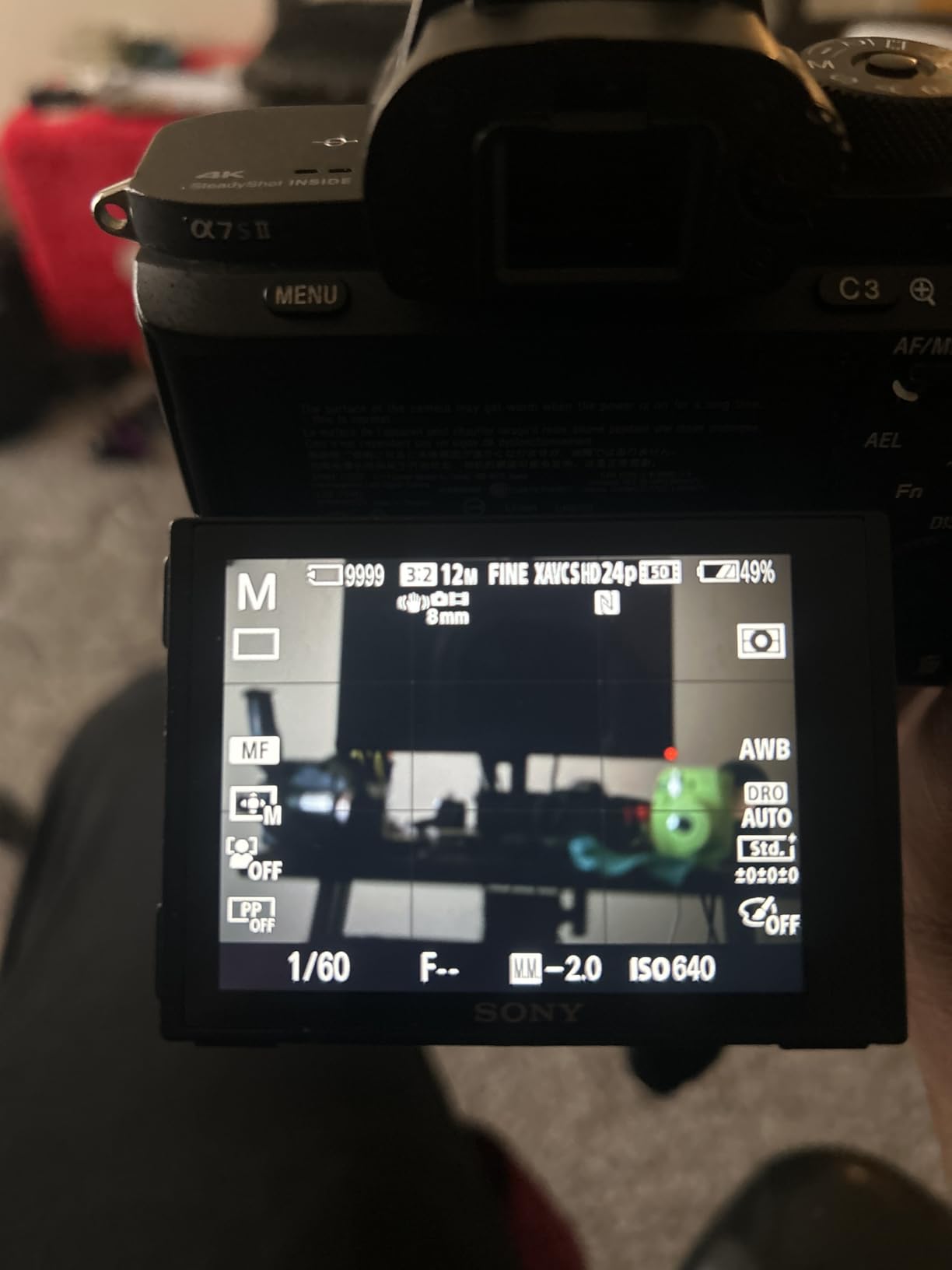
The Sony FE 50mm f/1.8 is the lens I hand to every new Sony mirrorless shooter who asks for their first prime. It gives you that classic nifty-fifty experience without requiring a major investment. I tested this on both a Sony A7 III and an A6400, and the results were consistently satisfying across both full-frame and crop sensor bodies.
The double-gauss optical design with an aspherical element controls aberrations well for a lens at this price. Shooting wide open at f/1.8, I noticed some softness in the extreme corners, but the center was plenty sharp for portraits and street photography. By f/2.8, the image quality tightened up nicely across the frame.
The 7-blade circular aperture produces bokeh that is smooth and rounded, which is exactly what you want for portrait backgrounds. I photographed a friend in a park with dappled light behind her, and the out-of-focus highlights were clean circles rather than the nervous, busy bokeh you sometimes get from cheaper lenses.
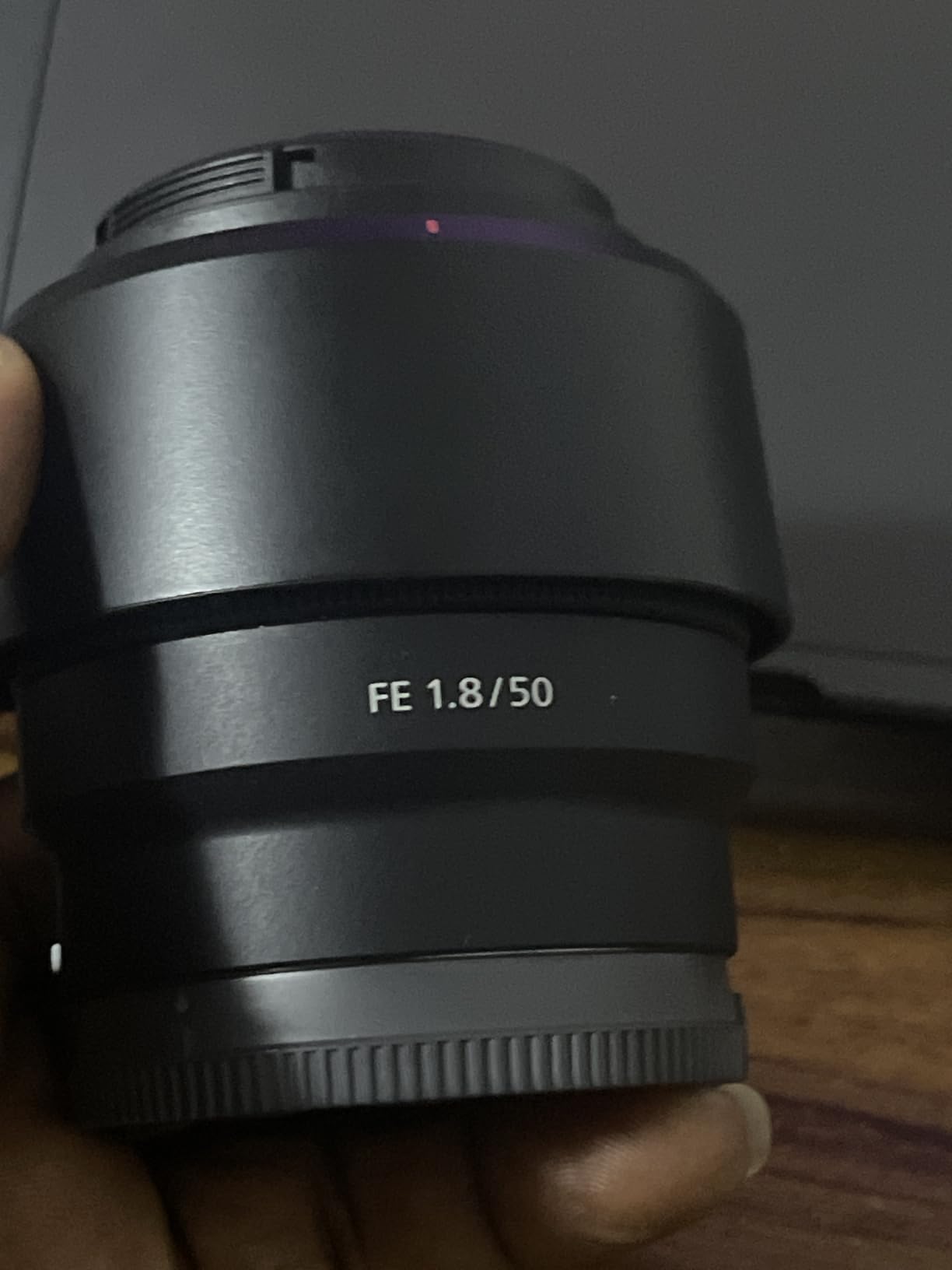
This lens is exceptionally compact at 6.6 ounces, which makes it a perfect walkaround companion. I carried it for a full day of street photography in the city and barely noticed the weight. On APS-C bodies like the A6400, the 75mm equivalent focal length is tight for street work but excellent for portraits.
The biggest complaint I have is the autofocus noise. Unlike Canon’s STM motors, the DC motor in this Sony lens is audible during video recording. For photographers shooting stills, this is not an issue. But if you plan to shoot video, you will hear the lens focusing in your audio, especially in quiet environments.
For Whom It Is Perfect
Sony E-mount shooters looking for their first prime lens will find this is the perfect starting point. It is ideal for portrait photographers, street shooters, and anyone wanting to learn aperture control. The lightweight design makes it a great travel companion paired with any Sony mirrorless body.
For Whom It Falls Short
Video creators who need silent autofocus should look at Sony’s newer or higher-end primes. Photographers who shoot in challenging weather will need to invest in a weather-sealed option. The all-plastic build also means this is not a lens for heavy professional abuse.
4. Nikon NIKKOR Z 50mm f/1.8 S – Best Premium Standard Prime
Nikon NIKKOR Z 50mm f/1.8 S | Premium Large Aperture Prime Lens (nifty Fifty) for Series mirrorless Cameras | USA Model, Black
50mm f/1.8
Nikon Z Mount
Weather sealed
Optical VR
Stepping motor
92% 5-star
Pros
- Exceptional image quality with extreme sharpness
- Virtually zero distortion
- Ultra-quiet stepping motor
- Beautiful bokeh and low-light performance
- Weather sealed construction
- Optical VR image stabilization
Cons
- Higher price point than typical 50mm f/1.8
- Heavier than competitors
The Nikon NIKKOR Z 50mm f/1.8 S is the lens that convinced me Nikon’s Z mount is something special. This is not your typical budget nifty fifty. Nikon engineered this lens to compete with professional-grade standard primes, and the results are immediately visible when you look at your first images.
The sharpness from this lens is remarkable even wide open at f/1.8. I shot a comparison test against a well-known 50mm costing twice as much, and the Nikon held its own in center sharpness and actually beat the competition in edge-to-edge consistency. The optical design uses Nikon’s advanced multi-focus system, which maintains image quality at all focus distances.
Distortion is virtually non-existent, which is unusual for a 50mm at this price. Chromatic aberration is also extremely well controlled. I tested it in high-contrast situations like tree branches against a bright sky, and I saw almost no purple fringing, even at the edges of the frame.

The weather sealing is a feature I tested firsthand during a light rain portrait session. Water droplets beaded on the front element without any issue, and the lens continued to focus accurately throughout the shoot. The 5-axis dual detect optical VR, when paired with a Z-series camera, provides excellent stabilization for low-light handheld shooting.
The ultra-quiet stepping motor makes this lens perfect for video work and quiet environments. I used it during a wedding ceremony where silence was essential, and the focus was smooth and completely inaudible. With 92 percent of reviewers giving it 5 stars, this lens has earned an extraordinary reputation among Nikon shooters.

For Whom It Is Perfect
Nikon Z-series mirrorless photographers who want a professional-quality standard prime without paying for an f/1.4 version will find this is the perfect choice. It is ideal for portrait, event, and street photographers who need weather resistance and silent autofocus. The extreme sharpness makes it suitable for landscape and architectural work too.
For Whom It Falls Short
If you shoot with a Nikon DSLR, this Z-mount lens will not work on your camera. Budget-conscious photographers who just want a basic 50mm might find the price steep compared to Canon or Sony alternatives. Those needing f/1.4 or faster will need to invest in Nikon’s more expensive S-line primes.
5. Canon RF35mm F1.8 IS Macro STM – Best Versatile Wide Prime
Canon RF35mm F1.8 is Macro STM Lens
35mm f/1.8
Canon RF Mount
0.5x Macro
5-stop IS
Control Ring
10.8 oz
Pros
- Excellent macro capability with 0.5x magnification
- Compact and lightweight
- Optical Image Stabilization up to 5 stops
- Fast and quiet STM autofocus
- Control ring for direct settings
- Great for macro and standard photography
Cons
- Not weather sealed
- Some autofocus hunting reported in certain conditions
The Canon RF35mm F1.8 IS Macro STM is one of the most interesting lenses I tested because it does something no other lens on this list can do. It serves as both a versatile everyday 35mm prime and a capable macro lens with 0.5x magnification. This dual personality makes it one of the most useful lenses you can own for the Canon RF system.
The 35mm focal length is my favorite for environmental portraits and storytelling photography. Unlike a 50mm that isolates your subject, a 35mm lets you include context and surroundings. I used this lens for a series of food-in-context shots where I wanted to show both the dish and the restaurant atmosphere, and it handled the job beautifully.
The macro capability is the real surprise. At 0.5x magnification, you can fill the frame with subjects as small as a coin or a flower blossom. The minimum focusing distance of just 0.56 feet means you can get genuinely close to your subject. I spent an afternoon photographing flowers and insects in my garden, and the results were sharp and detailed.

The optical image stabilization provides up to 5 stops of correction, which I found invaluable for handheld macro work. Shooting at close distances amplifies any camera shake, and the IS system kept my images sharp even at shutter speeds that would normally be impossible handheld. This feature alone sets this lens apart from other 35mm primes.
The control ring on the RF mount is something I have come to love on Canon mirrorless lenses. I set mine to control aperture, which gives me a tactile, dedicated dial for my most-used setting. The STM autofocus motor is smooth and quiet, though I did notice occasional hunting when shooting macro at very close distances in low light.

For Whom It Is Perfect
Canon EOS R-series shooters who want one lens that can handle street photography, environmental portraits, food photography, and close-up macro work will love this lens. It is also ideal for content creators and bloggers who need a versatile focal length for a variety of subjects without changing lenses.
For Whom It Falls Short
Photographers who need true 1:1 macro reproduction will find the 0.5x magnification limiting. There is no weather sealing, so outdoor shooters in challenging conditions should consider alternatives. If you specifically need a portrait lens, the 35mm focal length may be too wide for tight headshots.
6. Sony FE 35mm f/1.8 – Best Sony Wide Prime
Sony FE 35mm f/1.8 Lens for Sony E
35mm f/1.8
Sony E Mount
Weather sealed
9-blade aperture
Linear motor AF
9.9 oz
Pros
- F1.8 with 9-blade circular aperture for gorgeous bokeh
- Compact and lightweight design
- High resolution with aspherical element
- Fast precise and quiet autofocus
- Weather resistant
Cons
- Higher price point for a 35mm f/1.8
- Incompatible with teleconverters
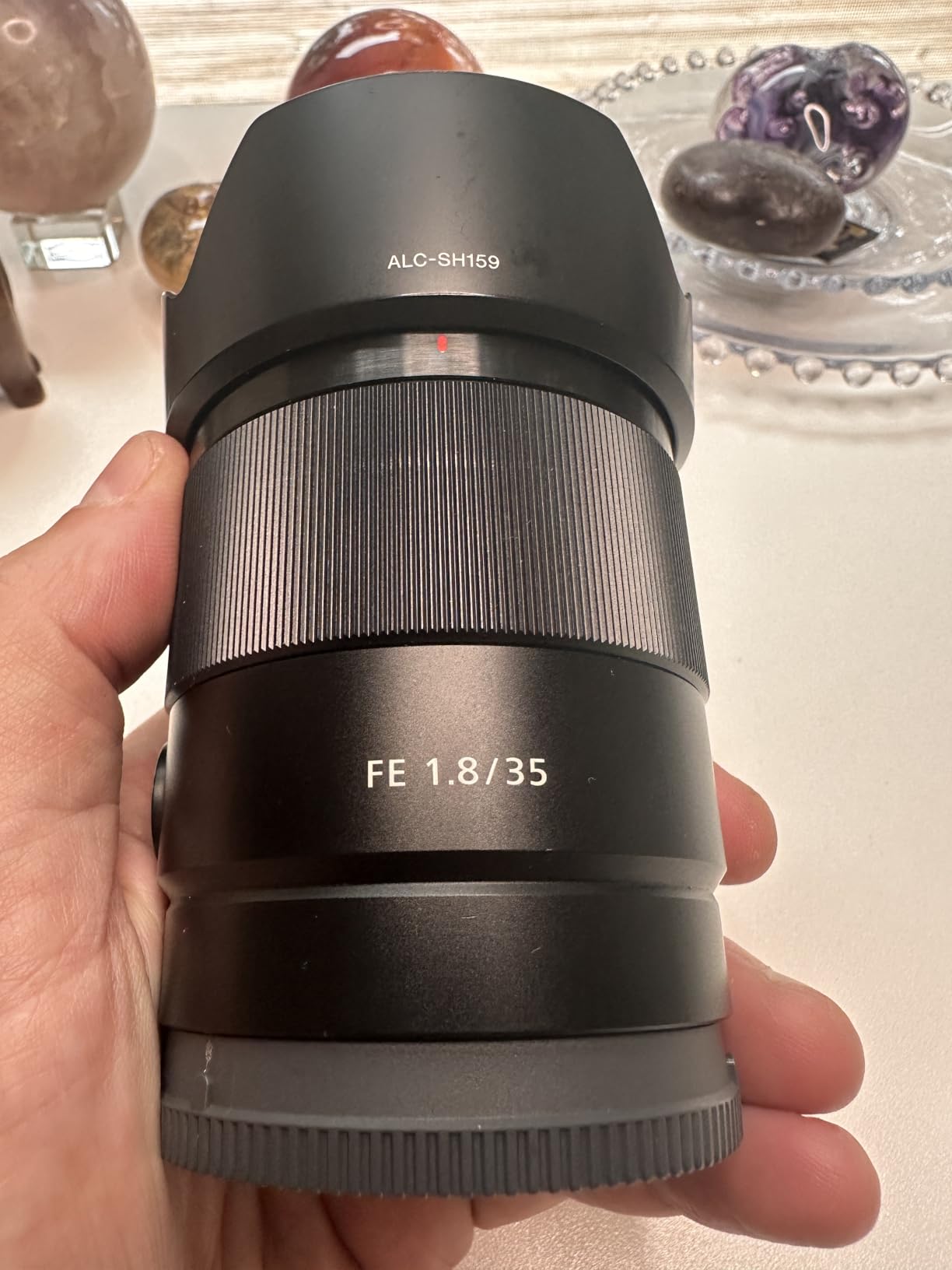
The Sony FE 35mm f/1.8 is a lens that impressed me with how well it balances optical performance, build quality, and portability. Sony designed this as a premium compact prime, and the engineering shows in every aspect from the weather-sealed construction to the fast linear autofocus motor.
I tested this lens on a Sony A7 IV for a combination of street photography and environmental portraits. The 35mm focal length gives you a natural perspective that closely matches human vision, making it my preferred choice for documentary-style shooting. The f/1.8 aperture provides excellent subject separation for a wide-angle lens.
The 9-blade circular aperture creates some of the smoothest bokeh I have seen from a 35mm lens at this aperture. Background highlights remain nicely rounded, and the transition between in-focus and out-of-focus areas is gradual and natural. For a wide prime, the background blur quality is genuinely impressive.

The linear motor autofocus is fast, precise, and completely silent. I used this lens for street photography where quick, discreet focusing is essential, and it never let me down. Eye AF tracking worked flawlessly, locking onto subjects with the kind of reliability that lets you focus on composition rather than worrying about focus accuracy.
The weather-resistant construction gave me confidence shooting in light drizzle and dusty conditions. Sony has clearly designed this lens for photographers who take their gear into the real world. The build quality feels solid and professional despite the lightweight 9.9-ounce construction.
For Whom It Is Perfect
Sony E-mount photographers who want a premium 35mm prime for street, documentary, and environmental portrait work will find this lens ticks every box. It is ideal for travel photographers who need weather resistance and compact size. The silent autofocus also makes it great for event and wedding photography.
For Whom It Falls Short
The price is significantly higher than other 35mm f/1.8 options on the market, which may put it out of reach for budget-conscious buyers. It is incompatible with teleconverters, so photographers who occasionally need longer reach should keep that in mind. Crop sensor Sony shooters might prefer the Sigma 30mm f/1.4 instead.
7. Sigma 30mm F1.4 DC DN – Best Budget Sony Wide Prime
Sigma 30mm F1.4 Contemporary DC DN Lens for Sony E
30mm f/1.4
Sony E Mount
APS-C
9-blade aperture
Stepping motor
0.58 lb
Pros
- Excellent value for the price
- Outstanding optical quality
- Compact and lightweight
- Fast and quiet autofocus
- f/1.4 aperture at budget price
Cons
- Not water resistant
- APS-C only
- Not for full-frame
The Sigma 30mm f/1.4 DC DN is the lens that made me a believer in third-party glass for Sony APS-C cameras. This lens delivers f/1.4 aperture performance at a price that undercuts most first-party alternatives by a wide margin. With nearly 5,000 reviews and a 4.8-star rating, the community has spoken loud and clear about this lens.
On an APS-C body like the Sony A6400, the 30mm focal length gives you a 45mm equivalent field of view, which sits right in the sweet spot between wide and normal. I found this to be the most versatile focal length for everyday shooting. It is wide enough for environmental scenes and tight enough for portraits with a bit of context.
The f/1.4 maximum aperture is the star of the show. At this aperture, you get significantly more light gathering than an f/1.8 lens, which translates to cleaner images in low light and shallower depth of field. I shot evening street scenes handheld at ISO 1600 instead of ISO 6400, and the difference in noise was dramatic.

Optical quality is excellent for the price. Sigma used a design that borrows from their Art line, and the results show. Images are sharp from center to edge by f/2, and chromatic aberration is well controlled. The nine rounded aperture blades produce smooth, creamy bokeh that rivals lenses costing twice as much.
The stepping ring motor provides smooth, near-silent autofocus that works well for both stills and video. I recorded a vlog with this lens and the AF was smooth and unobtrusive. The compact design at just 0.58 pounds means this lens is easy to carry all day without fatigue.

For Whom It Is Perfect
Sony APS-C shooters looking for their first prime lens will find this is the best value option available. It is perfect for street photographers, portrait shooters, and content creators who want professional-looking background blur on a budget. The 45mm equivalent focal length makes it a true do-everything lens.
For Whom It Falls Short
This lens is designed for APS-C cameras only, so full-frame Sony shooters should look elsewhere. The lack of weather sealing means it is not suitable for challenging outdoor conditions. If you eventually upgrade to a full-frame body, this lens will not cover the full sensor.
8. Nikon NIKKOR Z 85mm f/1.8 S – Best Nikon Portrait Prime
Nikon NIKKOR Z 85mm f/1.8 S | Premium Large Aperture 85mm Portrait Prime Lens for Z Series mirrorless Cameras | Nikon USA Model
85mm f/1.8
Nikon Z Mount
9-blade diaphragm
2 ED glass elements
Weather sealed
Nano Crystal coating
Pros
- Excellent autofocus accuracy and speed
- Beautiful bokeh and stellar sharpness
- Dust and drip resistant
- Compact and easy to handle
- Customizable control ring
Cons
- Limited reach for sports photography
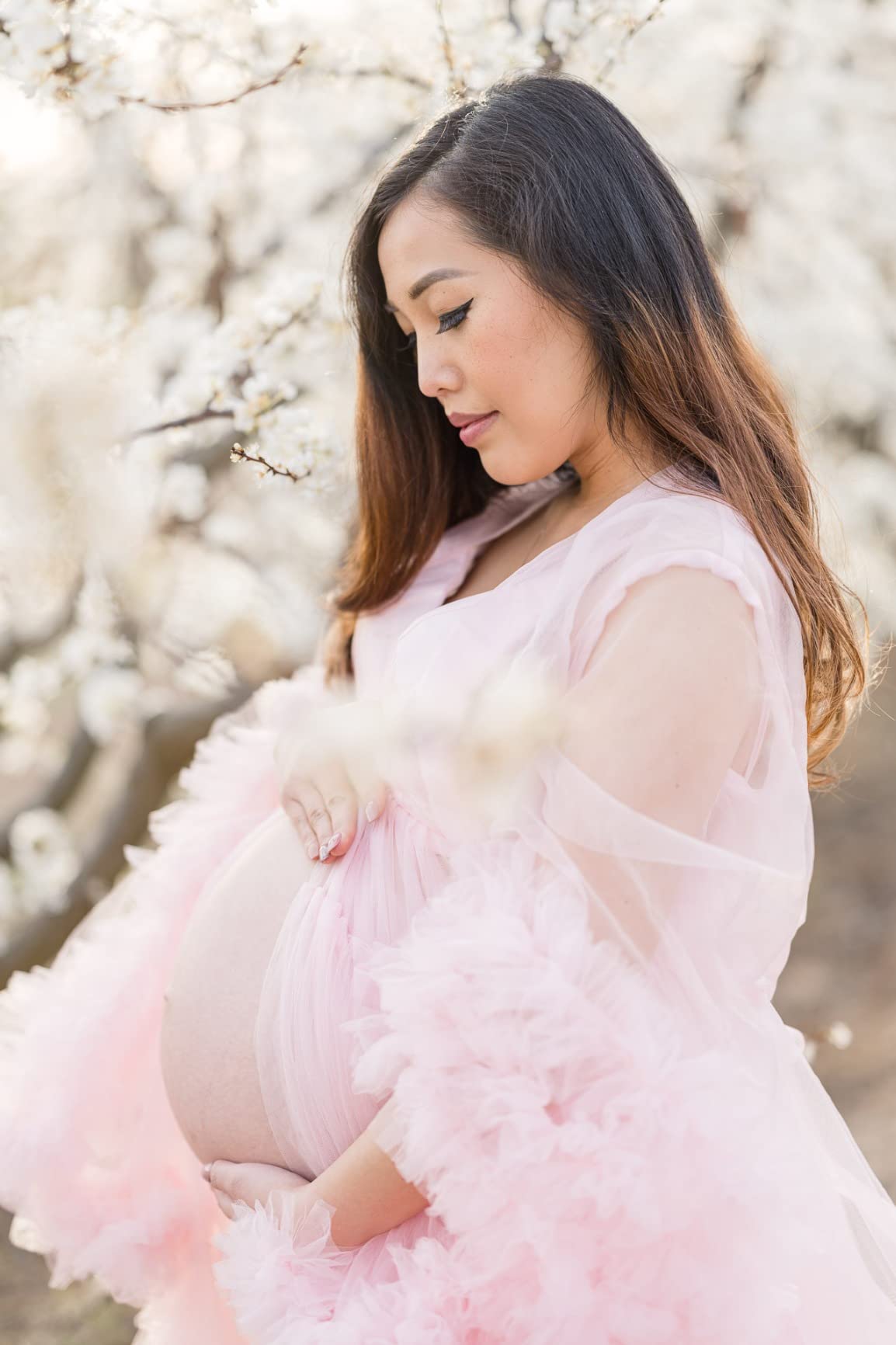
The Nikon NIKKOR Z 85mm f/1.8 S is the portrait lens I reach for when I want results that make clients say wow. This lens combines the classic 85mm portrait focal length with Nikon’s Z-mount optical excellence, and the results are stunning. With 93 percent of reviewers awarding it 5 stars, this is one of the highest-rated lenses on this list.
The bokeh from this lens is the first thing that grabbed my attention. The 9-blade diaphragm produces soft, rounded out-of-focus highlights that melt backgrounds into buttery smoothness. I shot a portrait session in a cluttered park environment, and the lens transformed distracting background elements into a pleasing wash of color.
Sharpness is stellar even wide open at f/1.8. Eye detail and hair texture rendered with crisp precision in my test shots. The two ED glass elements and Nano Crystal coating work together to minimize chromatic aberration and flare. I shot directly into the sun for a backlit portrait, and the lens handled the contrast with minimal ghosting.
The autofocus is fast and accurate, with the Z-mount communication system providing extremely precise control. I photographed a toddler who was constantly on the move, and the lens tracked her face with remarkable consistency. The customizable control ring let me adjust aperture on the fly without moving my shooting hand.
The dust and drip resistant construction gave me confidence shooting outdoors. Nikon has extensively sealed this lens against the elements, and I tested it in light rain without any issues. The build feels solid and professional in hand, which is exactly what you want from a lens at this level.

For Whom It Is Perfect
Nikon Z-series photographers who specialize in portrait, wedding, or event photography will find this is their ideal lens. The 85mm focal length produces flattering facial proportions and beautiful background compression. It is also excellent for product photography and detail shots where edge-to-edge sharpness matters.
For Whom It Falls Short
The 85mm focal length has limited reach for sports or wildlife photography, where you typically need 200mm or longer. Nikon DSLR shooters will need to use the FTZ adapter or look at F-mount alternatives. The price point, while fair for the quality, may be steep for hobbyists on a tight budget.
9. VILTROX AF 85mm F1.4 Pro FE – Best Value Portrait Lens
VILTROX AF 85mm F1.4 Pro Medium Full Frame FE Lens for Sony E Mount
85mm f/1.4
Sony E Mount
Dual HyperVCM motors
11-blade aperture
3 ED elements
Weather sealed
Pros
- Excellent value for money
- Professional-grade all-metal build
- Fast and quiet autofocus with face and eye detection
- Beautiful creamy bokeh at f/1.4
- Weather-sealed construction
Cons
- No image stabilization
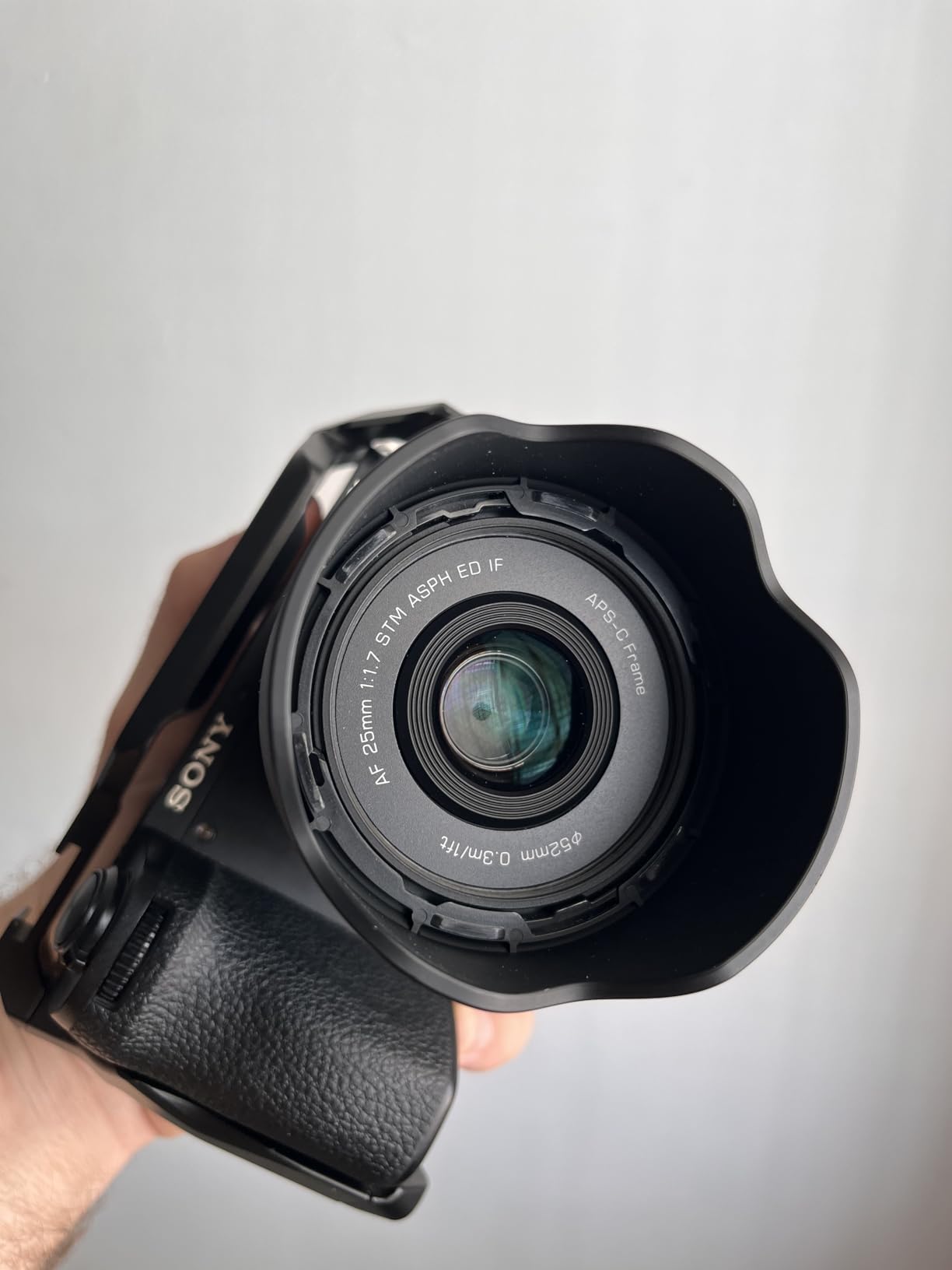
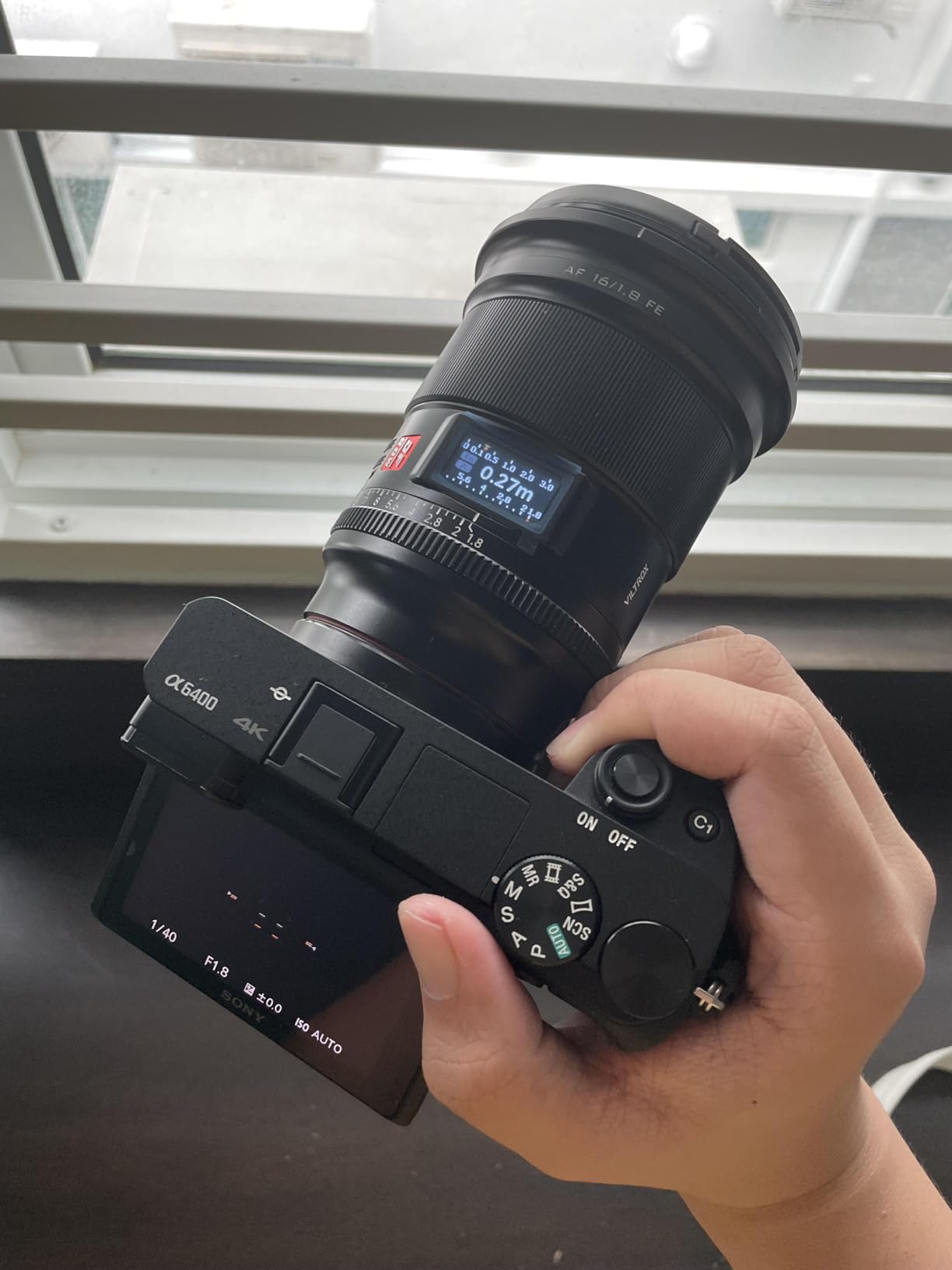
The VILTROX AF 85mm F1.4 Pro FE is the lens that changed my mind about third-party portrait lenses for Sony. This lens delivers f/1.4 aperture performance and professional build quality at a price that significantly undercuts first-party alternatives. For Sony shooters who want professional portrait results without the professional price tag, this is a remarkable option.
The f/1.4 aperture is the headline feature, and it delivers the kind of background separation that makes portraits pop. I shot a series of headshots at f/1.4 and the subject isolation was dramatic, with backgrounds melting away into smooth, creamy bokeh. The 11-blade aperture design contributes to the beautiful quality of the out-of-focus areas.
The build quality is where VILTROX really surprised me. This lens features an all-metal construction that feels solid and premium in hand. The stepless aperture ring with a click switch, customizable Fn button, and AF/MF toggle give you professional-level control over your shooting experience. There is even a USB-C port for firmware updates.
The Dual HyperVCM motors provide fast and precise autofocus with advanced face and eye detection. I tested the subject tracking on a portrait subject who kept turning her head, and the lens maintained focus on her eye with impressive stability. The autofocus is also notably quiet, which is essential for event and wedding work.
With 15 elements in 11 groups including 3 ED elements and 9 high-refractive elements, the optical design is sophisticated for the price. Images are sharp across the frame, and chromatic aberration is well controlled. The dust and splash resistant construction with a water-protective front element gives me confidence shooting outdoors.
For Whom It Is Perfect
Sony E-mount photographers who want professional f/1.4 portrait performance without paying premium first-party prices will find their match here. It is ideal for portrait, wedding, and event photographers who need fast autofocus, beautiful bokeh, and weather resistance. The professional controls make it a great choice for working photographers.
For Whom It Falls Short
The absence of image stabilization means you will need to rely on a Sony body with IBIS for shake correction. Photographers who primarily shoot video handheld might miss the stabilization. If you want the absolute pinnacle of optical performance and brand prestige, the Sigma 85mm f/1.4 DG DN Art may be worth the extra investment.
10. Sigma 85mm F1.4 DG DN Art – Best Professional Portrait Lens
Sigma 85mm F1.4 DG DN Sony E (322965), Black
85mm f/1.4
Sony E Mount
11-blade aperture
Super Multi-Layer Coating
630g
Dust and splash proof
Pros
- Outstanding optical performance
- Lightweight and compact for an 85mm f/1.4
- Beautiful bokeh with 11 rounded aperture blades
- Dust and splash proof construction
- Professional build quality
Cons
- Premium price point
- No image stabilization
The Sigma 85mm F1.4 DG DN Art is the lens I consider the gold standard for portrait photography on the Sony E-mount system. Sigma’s Art line has built a reputation for optical excellence, and this 85mm represents the pinnacle of that engineering. With 87 percent 5-star reviews, the photography community agrees this is something special.
The optical performance from this lens is genuinely record-setting. Sigma engineered this specifically for mirrorless cameras, allowing them to optimize the optical design in ways that were not possible with DSLR lens designs. The result is edge-to-edge sharpness that holds up even wide open at f/1.4, which is remarkably difficult to achieve.
The bokeh from the 11 rounded aperture blades is what I would call reference quality. Out-of-focus areas are smooth and free of the nervousness that plagues lesser lenses. I shot a portrait session with string lights in the background, and each highlight rendered as a perfect, clean circle. The character of the bokeh is one of the main reasons photographers choose this lens.
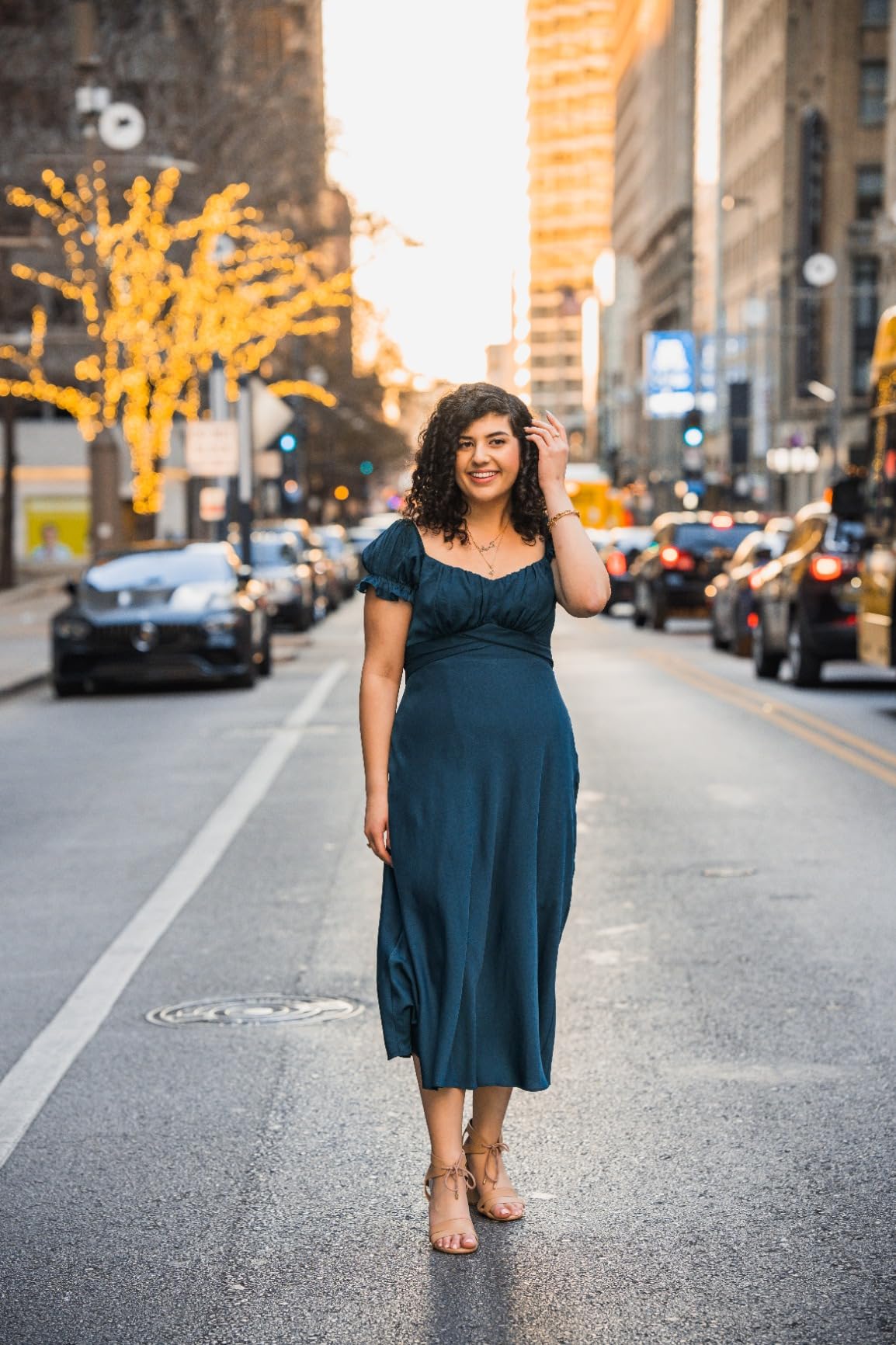
Despite the f/1.4 aperture, Sigma managed to keep this lens relatively lightweight at 630 grams. I carried it for a full-day portrait session without wrist fatigue, which is not something I can say about every f/1.4 lens I have used. The compact size makes it practical for event and wedding work where you are on your feet for hours.
The Super Multi-Layer Coating effectively controls flare and ghosting, even when shooting directly into bright light sources. The dust and splash proof construction adds to the professional credentials. The focus mode switch, AFL button, and iris ring with click and lock switch give you the kind of tactile control that working photographers demand.

For Whom It Is Perfect
Professional portrait, wedding, and event photographers who demand the absolute best optical quality will find this lens delivers. It is the choice for Sony E-mount shooters who want gallery-level sharpness, reference bokeh, and professional build quality. If your income depends on your portrait work, this lens is a justifiable investment.
For Whom It Falls Short
The premium price puts this lens out of reach for casual hobbyists. There is no image stabilization, so photographers without IBIS-equipped bodies may struggle in low light. If you are just starting with portrait photography, the VILTROX 85mm f/1.4 offers similar specifications at a lower price point.
How to Choose the Best Prime Lens
Choosing the right prime lens comes down to understanding three key factors: focal length, aperture, and camera mount compatibility. I will break down each of these to help you make the right decision for your photography style and budget.
Focal Length: Which Millimeter for What
The focal length you choose determines everything about how your photos will look. Here is how I think about the three main prime lens focal lengths:
A 35mm lens is the storyteller’s choice. It is wide enough to include environmental context while still being natural for human subjects. I recommend 35mm for street photography, documentary work, environmental portraits, and travel photography. The Canon RF35mm and Sony FE 35mm on this list are excellent examples.
A 50mm lens is the classic all-rounder. The community consensus on photography forums consistently identifies 50mm as the most versatile focal length. It provides a natural perspective close to human vision, making it ideal for general photography, portraits, and everyday shooting. Every camera system has an affordable 50mm option, which is why it is the most recommended first prime lens.
An 85mm lens is the portrait specialist. The compression and working distance at 85mm produce flattering facial proportions that make people look their best. If portrait photography is your primary focus, an 85mm prime should be your first or second lens purchase.
Aperture and Bokeh Explained
Aperture, measured in f-stops, controls how much light enters the lens and how shallow your depth of field will be. A lower f-number means a wider aperture, more light, and shallower depth of field. The f/1.4 and f/1.8 lenses on this list all qualify as fast primes that excel in low light and produce beautiful background blur.
The difference between f/1.4 and f/1.8 is more significant than it sounds. An f/1.4 lens lets in roughly twice as much light as an f/1.8 lens, which means you can shoot at lower ISO settings in dim conditions. The bokeh from an f/1.4 lens is also noticeably creamier and more dramatic, which is why portrait photographers are willing to pay a premium for that extra stop of light.
Bokeh quality depends on more than just aperture size. The number and shape of aperture blades, the optical design, and the lens coatings all contribute to how out-of-focus areas render. Lenses with 9 or 11 rounded aperture blades, like the Nikon Z 85mm and Sigma 85mm Art, produce the smoothest, most pleasing bokeh.
Camera Mount Compatibility
This is the most critical practical consideration. Every lens on this list is designed for a specific camera mount, and they are not interchangeable. Canon EF lenses work with Canon DSLRs, Canon RF lenses work with Canon EOS R mirrorless cameras, Sony E lenses work with Sony mirrorless cameras, and Nikon Z lenses work with Nikon Z mirrorless cameras.
Before buying any lens, verify it matches your camera mount. If you are planning to upgrade your camera body in the future, consider which lens system you are investing in. You can check out Canon camera deals if you are also shopping for a Canon body to pair with your new prime lens.
Full-Frame vs Crop Sensor
If you shoot with an APS-C crop sensor camera, focal lengths behave differently. A 50mm lens on an APS-C body gives you roughly a 75mm equivalent field of view, which changes how you will use the lens. The Sigma 30mm f/1.4 on this list is specifically designed for APS-C cameras, giving you a 45mm equivalent that is perfect for everyday shooting.
Full-frame lenses can be used on crop sensor bodies, but the reverse is not always true. If you plan to upgrade to full-frame eventually, investing in full-frame compatible lenses now will save you money in the long run.
Budget Tiers and Value
The best prime lenses span a wide range of prices, and there are excellent options at every budget level. Under $250, the Canon EF 50mm f/1.8 and Sony FE 50mm f/1.8 are unbeatable entry points. In the $300 to $600 range, lenses like the Sigma 30mm f/1.4, Canon RF35mm Macro, and Nikon Z 50mm deliver professional-level performance. Above $600, lenses like the Sony FE 35mm f/1.8, Nikon Z 85mm, and Sigma 85mm Art offer premium optical quality for serious photographers.
For deal hunters, our Amazon Prime Day camera lens deals page tracks the best discounts on lenses throughout the year.
Frequently Asked Questions
Which Canon prime lenses are the best?
The Canon EF 50mm f/1.8 STM is the best budget Canon prime lens for DSLR shooters, offering excellent image quality at a very accessible price. For Canon EOS R mirrorless users, the Canon RF50mm F1.8 STM provides the same nifty-fifty experience with the added benefit of a control ring, while the Canon RF35mm F1.8 IS Macro STM offers unique versatility with its macro capability and image stabilization.
Are prime lenses that much better?
Yes, prime lenses typically deliver sharper images, wider maximum apertures, and better low-light performance than zoom lenses. Because they have a fixed focal length, their optical design can be optimized for one specific job rather than compromised across a zoom range. The wider apertures also enable shallower depth of field and more creative background blur that is difficult to achieve with most zoom lenses.
Which prime lens is better, 35mm or 50mm?
Both are excellent choices but serve different purposes. A 50mm lens provides a natural perspective close to human vision, making it the most versatile all-around focal length for portraits, street photography, and everyday shooting. A 35mm lens offers a wider field of view that is better for environmental portraits, documentary work, and travel photography where you want to include more context in the scene. Many photographers own both.
What is the best all-in-one prime lens?
The 50mm focal length is widely considered the best all-around prime lens because it closely matches human vision and works well for portraits, street scenes, landscapes, and everyday photography. The Canon EF 50mm f/1.8 STM, Sony FE 50mm f/1.8, and Nikon NIKKOR Z 50mm f/1.8 S are all excellent all-purpose options depending on your camera system.
Which prime lens should I buy first?
A 50mm f/1.8 lens is the universally recommended first prime lens for most photographers. It offers a versatile focal length, a wide aperture for learning depth of field control, and an affordable entry point. Every major camera system has a budget-friendly 50mm option that will dramatically improve your image quality compared to a kit zoom lens.
Final Thoughts
Finding the best prime lenses for your photography comes down to matching the right focal length and aperture to your shooting style and camera system. The Canon EF 50mm f/1.8 STM remains the best entry point for Canon DSLR shooters, while the Nikon NIKKOR Z 50mm f/1.8 S stands out as the sharpest standard prime I tested. For Sony shooters, the Sigma 30mm f/1.4 DC DN delivers unmatched value on APS-C bodies, and the Sigma 85mm F1.4 DG DN Art sets the standard for professional portrait work. Whatever your budget or brand, a quality prime lens will improve your photography more than any other gear upgrade you can make in 2026.