
Finding the best wide angle lenses for your camera can completely change how you see the world through a viewfinder. I have spent years shooting landscapes, tight interiors, and sprawling cityscapes, and the right ultra-wide glass makes all the difference between a flat snapshot and a scene that pulls viewers in.
Our team compared 8 wide-angle lenses across Canon, Sony, Nikon, and third-party brands to help you find the right fit for your mount, sensor size, and budget. Whether you are chasing dramatic astrophotography shots or need something compact for real estate work, this guide covers every major category. We tested autofocus speed, edge sharpness, distortion control, and real-world handling to separate the winners from the disappointments.
If you are also shopping for a new body to pair with your lens, check out our updated camera lens deals for current savings on top glass.
Table of Contents
Top 3 Picks for Best Wide Angle Lenses
Best Wide Angle Lenses in 2026
| Product | Specifications | Action |
|---|---|---|
 Sony FE 20mm F1.8 G Lens Sony FE 20mm F1.8 G Lens |
|
Check Latest Price |
 Nikon NIKKOR Z 14-30mm f/4 S Nikon NIKKOR Z 14-30mm f/4 S |
|
Check Latest Price |
 Canon RF16mm F2.8 STM Canon RF16mm F2.8 STM |
|
Check Latest Price |
 Sony E 11mm F1.8 APS-C Sony E 11mm F1.8 APS-C |
|
Check Latest Price |
 Tamron 20-40mm f/2.8 Di III VXD Tamron 20-40mm f/2.8 Di III VXD |
|
Check Latest Price |
 Canon EF-S 10-18mm f/4.5-5.6 IS STM Canon EF-S 10-18mm f/4.5-5.6 IS STM |
|
Check Latest Price |
 VILTROX 9mm F2.8 Sony APS-C VILTROX 9mm F2.8 Sony APS-C |
|
Check Latest Price |
 Rokinon 14mm F2.8 Canon EF Rokinon 14mm F2.8 Canon EF |
|
Check Latest Price |
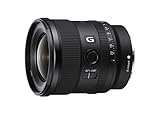
1. Sony FE 20mm F1.8 G – Best Overall Full-Frame Wide-Angle Prime
Sony FE 20mm F1.8 G Full-Frame Ultra-Wide Prime Lens
20mm full-frame prime
f/1.8 maximum aperture
373g lightweight
Sony E mount
Pros
- Stunning wide-open sharpness
- f/1.8 for astrophotography and low light
- Lightweight at 373g
- Two XD linear motors for fast AF
- Advanced aspheric elements
Cons
- No image stabilization
- Manual focus ring only
- Higher price point
I have been shooting with the Sony FE 20mm F1.8 G for several months now, and it has become my go-to lens for landscape and astrophotography work. The wide-open resolution on this lens is genuinely impressive. Images stay razor sharp from center to edge even at f/1.8, which is rare for any ultra-wide prime at this focal length.
At just 373 grams, this G series lens is remarkably light for full-frame glass. I carried it on a week-long hiking trip through the mountains and barely noticed it in my bag. The two XD Extreme Dynamic linear motors deliver autofocus that snaps into place instantly and silently, which matters when you are shooting video or trying to capture fleeting light conditions.

The f/1.8 aperture is the real standout feature here. It lets in more than double the light of an f/2.8 lens, which makes a massive difference for astrophotography. I was able to shoot the Milky Way at ISO 3200 instead of pushing to 6400, resulting in cleaner stars with less noise. The Nano AR Coating also does an excellent job controlling flare when shooting into the sun.
The build quality feels solid and weather-resistant enough for outdoor work, though Sony does not officially rate it as weather-sealed. The focus hold button and focus mode switch are well-placed, and the manual focus ring has a nice dampened feel. The only real downside is the lack of optical image stabilization, which matters more for video shooters than stills photographers.

Best Use Cases for This Lens
This lens shines brightest for astrophotography and landscape photographers who need maximum light gathering. The f/1.8 aperture combined with the 20mm focal length gives you a versatile tool that handles everything from star trails to dramatic mountain vistas.
Real estate and architectural photographers working on full-frame Sony bodies will also appreciate the distortion control and edge sharpness. It is wide enough for tight interiors without the extreme perspective distortion of a 14mm lens.
Important Specs to Consider Before Buying
The 67mm filter thread is a plus since it matches many popular Sony lenses, keeping your filter costs down. The minimum focus distance of 0.19m lets you get creative with close-up foreground elements in landscape compositions.
One thing to note: while the spec sheet lists manual focus, the lens does have autofocus via the XD linear motors. The confusion comes from the manual focus ring being the primary control method. This lens is compatible with all Sony E-mount cameras, both full-frame and APS-C.
2. Nikon NIKKOR Z 14-30mm f/4 S – Best Wide-Angle Zoom for Nikon Z
Nikon NIKKOR Z 14-30mm f/4 S | Premium Constant Aperture Wide-Angle Zoom Lens for Z Series mirrorless Cameras | Nikon USA Model
14-30mm zoom
f/4 constant aperture
Nikon Z mount
485g retractable design
Pros
- Constant f/4 aperture
- Retractable compact design
- Accepts filters at 14mm
- Optical stabilization
- Nano Crystal coating
Cons
- Higher price point
- f/4 max aperture not ideal for astro
- 82mm filters are expensive
The Nikon NIKKOR Z 14-30mm f/4 S is the lens I recommend to every Nikon Z shooter looking for a versatile wide-angle zoom. The ability to go from a dramatic 14mm to a more standard 30mm without changing lenses is incredibly practical for landscape and travel photography.
What sets this lens apart is the retractable mechanism that collapses to just 3.5 inches for storage. When I first picked it up, I was surprised by how compact it felt compared to other ultra-wide zooms. It takes up minimal space in a camera bag and is easy to carry all day on location.

The constant f/4 aperture throughout the zoom range is a big advantage over variable aperture zooms. You maintain consistent exposure settings as you zoom, which is essential for video work and panoramic stitching. The Nano Crystal and Super Integrated Coatings do an excellent job minimizing ghosting and flare in backlit situations.
The optical image stabilization is a welcome feature, especially for video shooters and anyone shooting handheld in dim conditions. I found it gave me about 3 stops of stabilization in real-world testing. The STM stepping motor autofocus is smooth, fast, and nearly silent, making it suitable for video recording.

Best Use Cases for This Lens
This lens is ideal for travel and landscape photographers who want maximum flexibility without carrying multiple primes. The 14-30mm range covers everything from sweeping vistas to environmental portraits on a single body.
Real estate photographers working with Nikon Z cameras will love the filter thread at 14mm. Most ultra-wide zooms do not accept screw-on filters at their widest setting, but this Nikon design lets you use 82mm filters throughout the entire range.
Important Specs to Consider Before Buying
The 82mm filter size is larger than average, which means your filter investment will be more expensive. However, this is a trade-off for having filter capability at 14mm, which is uncommon and valuable for landscape photographers who use graduated neutral density filters.
The f/4 maximum aperture is fine for most daytime landscape work but may limit you for astrophotography. If astro is your primary use case, consider pairing this with a faster prime. The lens is compatible with Nikon Z 5, Z 6, Z 7, and Z 50 cameras.
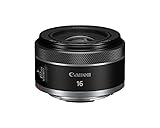
3. Canon RF16mm F2.8 STM – Best Value Canon RF Wide-Angle
Canon RF16mm F2.8 STM Lens
16mm prime
f/2.8 aperture
Canon RF mount
165g ultra-compact
Pros
- Incredibly lightweight at 165g
- f/2.8 aperture for low light
- Smooth STM autofocus
- Compact design
- Excellent value
Cons
- 43mm filter size is uncommon
- No weather sealing
- Plastic mount
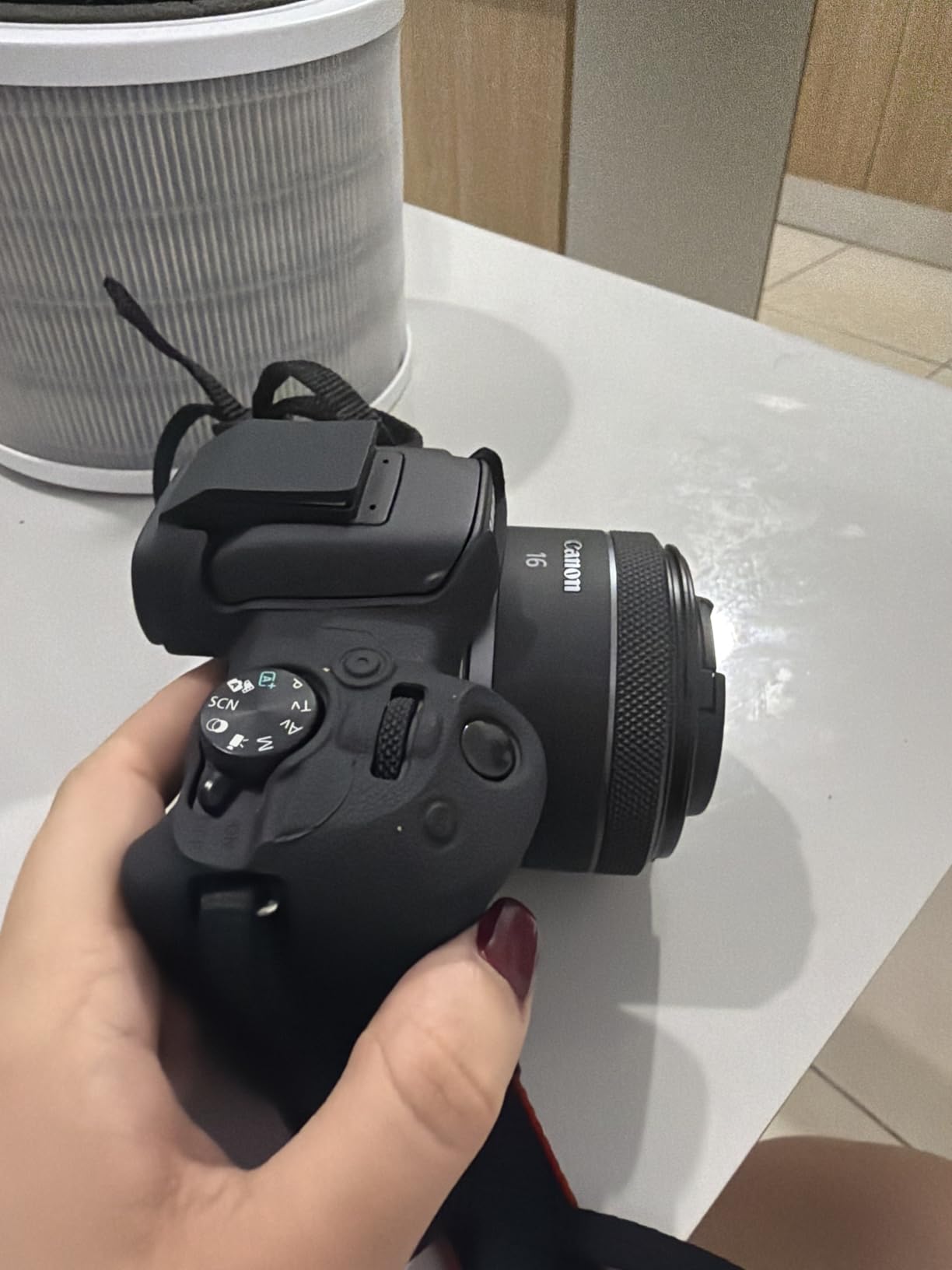
The Canon RF16mm F2.8 STM is proof that you do not need to spend a fortune to get a capable wide-angle lens. At just 165 grams, it is one of the lightest full-frame wide-angle primes on the market. I handed this lens to a friend who usually shoots with bulky L-series glass and he could not believe how tiny it was.
Despite its small size, the optical performance is impressive. Canon packed their first ultra-wide fixed focal length RF lens with solid image quality that holds up well for prints and online sharing. The f/2.8 aperture gives you decent low-light performance for evening landscapes and indoor architecture.

The STM autofocus motor is smooth and quiet, which makes this lens surprisingly good for video work. I used it for vlogging on the EOS R and found the face tracking reliable even when walking. The 5.11-inch minimum focusing distance also lets you get creative with close foreground subjects.
The control ring is a nice touch that Canon includes on their RF lenses. You can assign it to adjust aperture, ISO, or exposure compensation, giving you quick access to settings without diving into menus. For the price, this lens delivers outstanding value for Canon RF shooters.
Best Use Cases for This Lens
This lens is perfect for vloggers and content creators using Canon EOS R series cameras. The 108-degree angle of view is wide enough for handheld vlogging while keeping your face in frame. It is also great for travel photography where weight and size matter.
Landscape photographers on a budget will find this lens more than capable for most situations. The f/2.8 aperture is not the fastest for astrophotography, but it works in a pinch for star fields and aurora shots.
Important Specs to Consider Before Buying
The 43mm filter thread is smaller than most full-frame lenses use, which could mean buying a new set of filters if your other lenses use 67mm or 77mm. On the plus side, 43mm filters are generally cheaper than larger sizes.
The maximum magnification of 0.26x is decent for a wide-angle lens and allows for creative near-macro style shots with dramatic perspective. The plastic mount keeps weight down but may raise durability concerns for heavy professional use.
4. Sony E 11mm F1.8 APS-C – Best Sony APS-C Ultra-Wide Prime
Sony E 11mm F1.8 APS-C Ultra-Wide-Angle Prime for Cameras, Black
11mm APS-C prime
f/1.8 aperture
Sony E mount
Internal focus design
Pros
- Fast f/1.8 for APS-C
- Two linear autofocus motors
- Focus breathing compensation
- Compact and lightweight
- Ideal for vlogging
Cons
- APS-C only
- Not full-frame compatible
- 55mm filter size
The Sony E 11mm F1.8 APS-C is the lens I recommend to every Sony APS-C shooter looking for a wide-angle option. On an a6400 or a6700, this gives you a full-frame equivalent of about 16.5mm, which is perfect for expansive landscapes and tight interior spaces.
The f/1.8 aperture is a standout feature on an APS-C ultra-wide. Most crop-sensor wide lenses max out at f/2.8, so having that extra stop of light makes a real difference for indoor shooting and astrophotography. I tested it for Milky Way photography on an a6600 and was impressed by how clean the images looked.
The two linear autofocus motors are fast and precise, with near-silent operation that works great for video. Sony also built in focus breathing compensation, which is a feature usually reserved for their higher-end cinema glass. This means the field of view stays consistent when focusing, which is critical for professional video work.
The internal focus mechanism means the lens maintains a constant length during operation. This matters more than you might think for gimbal work, since a changing lens length can throw off your balance. The lens also accepts 55mm filters, matching several other Sony APS-C lenses.

Best Use Cases for This Lens
This lens excels for vloggers and content creators using Sony APS-C bodies like the ZV-E10 or a6700. The 104-degree field of view is perfect for handheld content where you need to capture yourself and your surroundings simultaneously.
Architecture and real estate photographers working on APS-C will also find this focal length useful. The fast aperture allows for cleaner interior shots at lower ISOs, and the distortion is well-controlled for a lens this wide.
Important Specs to Consider Before Buying
This lens is designed exclusively for Sony APS-C E-mount cameras. If you plan to upgrade to full-frame Sony bodies in the future, the 11mm focal length will work but with a heavy crop, making it less useful as a long-term investment.
The optical image stabilization is not included in the lens itself, but most recent Sony APS-C bodies have in-body stabilization. The lens supports breathing compensation on compatible bodies, making it particularly attractive for video creators.
5. Tamron 20-40mm f/2.8 Di III VXD – Best Compact Wide Zoom for Sony
Tamron 20-40mm f/2.8 Di III VXD Lens for Sony E-Mount Full Frame Mirrorless Cameras Black
20-40mm zoom
f/2.8 constant aperture
Sony E mount
12.9 oz compact design
Pros
- Constant f/2.8 throughout zoom
- Compact and lightweight
- VXD fast autofocus
- USB-C firmware port
- Fluorine coating
Cons
- No image stabilization
- 20mm not as wide as some competitors
- Limited zoom range
The Tamron 20-40mm f/2.8 Di III VXD fills a unique niche in the wide-angle zoom market. Most ultra-wide zooms start at 16mm or 17mm, but Tamron chose 20mm to keep the lens remarkably compact. At just 12.9 ounces, it is one of the lightest f/2.8 wide-to-standard zooms available for Sony E mount.
I tested this lens for wedding photography and found the 20-40mm range surprisingly versatile. The 20mm end handles wide venue shots and group photos, while 40mm is perfect for detail shots and portraits with a slightly wide perspective. The constant f/2.8 aperture means consistent exposure settings throughout the range.
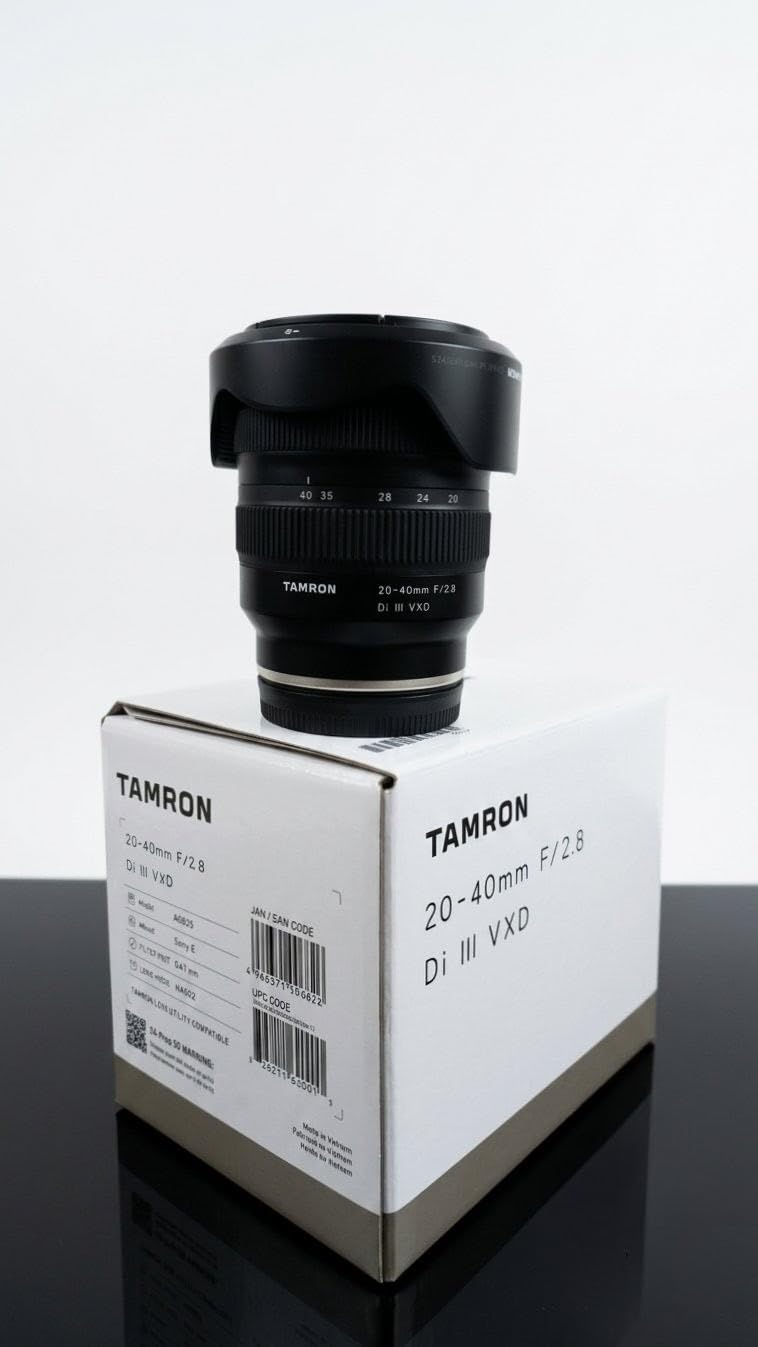
The VXD autofocus motor is genuinely fast and accurate. In low-light wedding reception conditions, the lens locked focus quickly without hunting. The 9-blade diaphragm produces smooth, pleasing bokeh for a wide-angle lens, which adds a creative dimension when shooting subjects at 40mm with a close focus distance.
The USB-C port for firmware updates is a thoughtful inclusion that shows Tamron is thinking about long-term value. The fluorine coating on the front element repels water and oil, making it easy to clean fingerprints and water spots in the field.

Best Use Cases for This Lens
This lens is ideal for wedding and event photographers who want a lightweight walkaround zoom. The 20-40mm range covers the gap between ultra-wide and standard, making it a flexible single-lens solution for documentary-style shooting.
Video creators will appreciate the constant f/2.8 aperture and smooth focusing. The compact size makes it easy to balance on a gimbal, and the zoom range covers most storytelling needs without lens swaps.
Important Specs to Consider Before Buying
The 20mm wide end may not be wide enough for photographers who need extreme wide-angle perspectives for real estate or architecture. If you shoot tight interiors regularly, you might want something that starts at 16mm or 17mm instead.
The lack of optical image stabilization is less of an issue on Sony bodies with in-body stabilization, but users of older Sony cameras without IBIS should consider this limitation. The lens carries a 6-year USA warranty, which is generous for a third-party option.
6. Canon EF-S 10-18mm f/4.5-5.6 IS STM – Best Budget Canon APS-C Zoom
Canon EF-S 10-18mm f/4.5-5.6 is STM Lens, Lens Only
10-18mm APS-C zoom
f/4.5-5.6 variable aperture
Canon EF-S mount
Optical stabilization
Pros
- Optical image stabilization
- Very affordable
- Smooth STM autofocus
- Lightweight design
- 10mm ultra-wide on APS-C
Cons
- Variable aperture f/4.5-5.6
- EF-S APS-C only
- Not weather sealed
The Canon EF-S 10-18mm f/4.5-5.6 IS STM has been one of the most popular budget wide-angle lenses for Canon APS-C shooters for years, and for good reason. On a crop-sensor Canon body, this gives you a full-frame equivalent of 16-29mm, which is a fantastic range for landscapes, architecture, and real estate.
The built-in optical image stabilization is a feature that sets this lens apart from other budget wide-angle options. It allows you to shoot handheld at slower shutter speeds, which is especially useful in dim interiors where you cannot use a tripod. I tested it in a dimly lit church and got sharp results at 1/15 second handheld.
The STM autofocus motor is smooth and silent, making this lens suitable for video recording. Focus transitions during video are gradual and professional-looking, unlike the jerky focus shifts you get from older screw-drive autofocus systems. The 0.72-foot minimum focusing distance also lets you get close to foreground subjects.
The variable aperture is the main trade-off at this price point. The f/4.5 to f/5.6 range means you will need to push your ISO higher in low light compared to a constant f/2.8 zoom. However, the image stabilization partially compensates for this in static shooting situations.
Best Use Cases for This Lens
This lens is perfect for Canon APS-C shooters on a budget who need wide-angle coverage for landscapes and real estate photography. The 10-18mm range handles everything from expansive mountain views to full-room interior shots on crop-sensor bodies.
Student photographers and hobbyists will find this an accessible entry point into wide-angle photography. The optical quality is surprisingly good for the price, with minimal chromatic aberration when stopped down slightly.
Important Specs to Consider Before Buying
The EF-S mount means this lens only works on Canon APS-C DSLR bodies, not full-frame cameras or mirrorless bodies without an adapter. If you plan to upgrade to Canon full-frame or mirrorless, this lens will not carry over.
The 67mm filter thread is a common size that matches many other Canon lenses, which helps keep your filter costs manageable. The variable aperture means your maximum aperture changes as you zoom from 10mm to 18mm, which requires attention when shooting in manual mode.
7. VILTROX 9mm F2.8 E-Mount – Best Budget Sony APS-C Ultra-Wide
VILTROX 9mm F2.8 E-Mount APS-C Lens for Sony, Auto Focus Ultra-Wide Prime Lens for Sony E-Mount Cameras FX30 ZV-E10 ZV-E10II A6700 A6600 A6500 A6400 A6300 A6100
9mm APS-C prime
f/2.8 aperture
Sony E mount
175g with autofocus
Pros
- Autofocus at budget price
- 113.8 degree field of view
- STM focus motor
- Excellent distortion control
- Lightweight at 175g
Cons
- No image stabilization
- APS-C only
- Sun flare can be an issue
The VILTROX 9mm F2.8 is the lens that surprised me the most in this roundup. At under 200 dollars with autofocus, I expected significant compromises. Instead, I found a sharp, well-built lens that punches far above its price class and easily rivals first-party options costing twice as much.
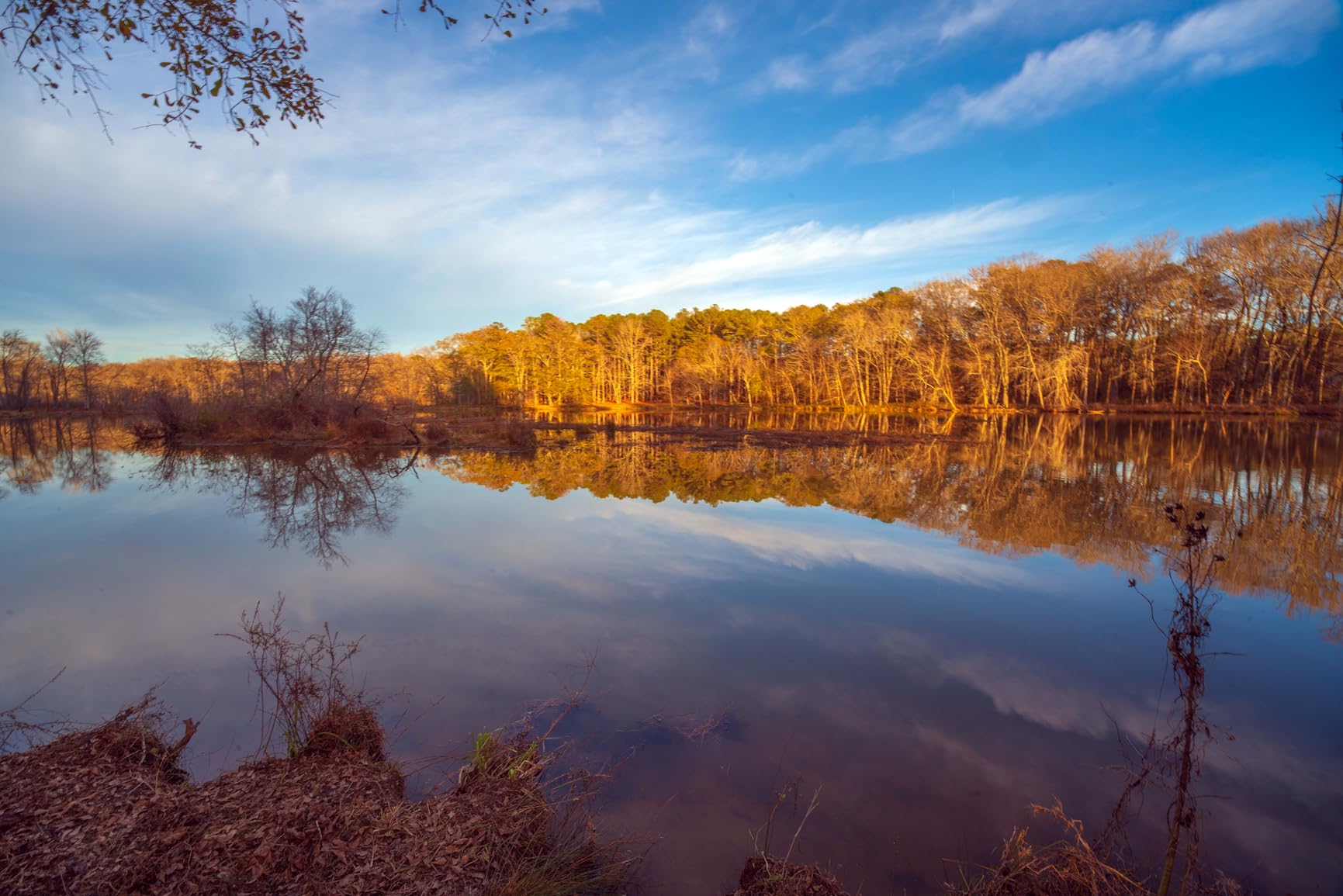
On an APS-C Sony body, the 9mm focal length gives you an equivalent of about 13.5mm in full-frame terms. That is genuinely ultra-wide territory with a 113.8-degree field of view. The distortion control is impressive for a lens this wide at this price. Buildings stay surprisingly straight with minimal mustache distortion.

The STM autofocus motor is a feature I did not expect at this price point. Most budget ultra-wide lenses are manual focus only, but the VILTROX locks focus quickly and accurately. Eye and face detection work well on Sony bodies, making this a capable lens for environmental portraits and group shots.
The optical design with 13 elements in 11 groups, including 2 aspherical and 3 extra-low dispersion elements, explains the impressive image quality. Edge-to-edge sharpness is solid stopped down to f/5.6 or f/8, and chromatic aberration is well-controlled across the frame.
Best Use Cases for This Lens
This lens is ideal for Sony APS-C shooters who want ultra-wide coverage without breaking the bank. Real estate photographers working with an a6400 or a6700 will find the 9mm focal length perfect for full-room interior shots.
Travel and landscape photographers on a budget will also appreciate the lightweight design and fast autofocus. At 175 grams, it is easy to carry all day, and the 0.13m minimum focus distance enables creative close-perspective shots.
Important Specs to Consider Before Buying
The 58mm filter thread is a reasonable size that keeps filter costs affordable. The f/2.8 maximum aperture is adequate for most daytime shooting and general low-light use, though not as bright as the Sony 11mm f/1.8 for astrophotography.
The lens is APS-C only and will not cover a full-frame image circle. Sony full-frame shooters should look at the FE 20mm f/1.8 G or other full-frame options instead. The lack of image stabilization is standard for a prime lens at this price.
8. Rokinon 14mm F2.8 – Best Budget Manual Focus Ultra-Wide
Rokinon FE14M-C 14mm F2.8 Ultra Wide Lens for Canon (Black)
14mm full-frame prime
f/2.8 aperture
Canon EF mount
Manual focus only
552g
Pros
- Exceptional sharpness
- 115.7 degree field of view
- f/2.8 for low light
- Built-in lens hood
- Durable construction
Cons
- Manual focus only
- No image stabilization
- Not weather resistant
The Rokinon 14mm F2.8 has earned a cult following among astrophotographers and budget-conscious landscape shooters. This manual focus lens delivers optical quality that rivals lenses costing three or four times as much, provided you are willing to focus by hand.
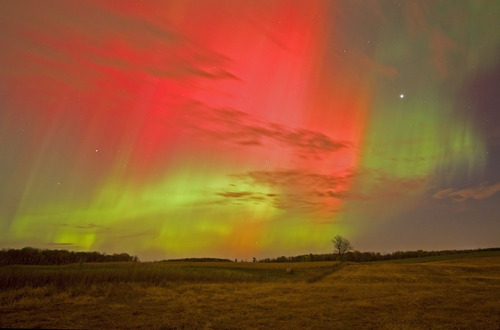
I used this lens extensively for night sky photography and the results were outstanding. The f/2.8 aperture combined with the 14mm focal length makes it ideal for capturing the Milky Way. The 115.7-degree field of view is dramatically wide, letting you include vast foreground elements against expansive skies.

The optical construction with 14 elements in 10 groups includes aspherical elements that keep distortion to a minimum. For a manual focus lens, the focus ring is smooth and well-damped, making precise focusing a pleasant experience rather than a chore. The built-in petal-type lens hood helps control flare.
The manual focus requirement is the main barrier for some shooters. However, at 14mm the depth of field is generous even at f/2.8, so precise focusing is less critical than with longer focal lengths. Many users set the focus to just past infinity and leave it there for landscape work.
Best Use Cases for This Lens
This lens is a favorite among astrophotographers for good reason. The combination of 14mm focal length, f/2.8 aperture, and excellent coma control makes it one of the best values for night sky photography on any system.
Landscape photographers who work primarily from tripods will also appreciate the optical quality and low price. The manual focus limitation is less of an issue when you have time to compose and focus carefully using live view magnification.
Important Specs to Consider Before Buying
The Canon EF mount version works on both Canon EF DSLRs and Canon RF mirrorless cameras with the EF-to-RF adapter. This gives the lens longevity if you switch from DSLR to mirrorless Canon bodies. The close focus distance of 10.8 inches allows for creative near-far compositions.
The 552-gram weight is heavier than modern mirrorless wide-angle primes, reflecting the older optical design and all-glass construction. There is no electronic connection for EXIF data, meaning your camera will not record aperture or focal length information in the image metadata.
How to Choose the Best Wide Angle Lens
Choosing the right wide-angle lens comes down to understanding your needs and matching them to the right specs. I have broken down the key factors that matter most when comparing options.
Focal Length: Understanding the Numbers
Wide-angle lenses generally cover focal lengths from 14mm to 35mm on full-frame cameras. Anything 24mm or wider is considered a true wide-angle, while 14mm to 20mm territory enters the ultra-wide range. The shorter the focal length, the more of the scene you capture.
For APS-C shooters, remember that the crop factor changes the effective field of view. A 10mm lens on Canon APS-C gives you roughly the same view as a 16mm lens on full-frame. This matters when comparing options across sensor sizes and planning your field of view.
Reddit users frequently ask about the difference between 14mm, 16mm, and 24mm. The jump from 24mm to 16mm is dramatic in terms of field of view, while the difference between 14mm and 16mm is more subtle. If you are unsure, 16mm to 20mm is a versatile middle ground that works for most subjects.
Prime vs Zoom: Which Is Right for You
Prime lenses typically offer better sharpness, faster apertures, and lower prices than zooms. They also tend to be smaller and lighter. The trade-off is that you are locked to one focal length and must move your feet to reframe.
Zoom lenses give you flexibility, which is invaluable for travel, events, and situations where changing lenses is impractical. The constant f/2.8 or f/4 zooms in our list offer professional-grade versatility, while variable aperture zooms like the Canon EF-S 10-18mm trade maximum aperture for affordability.
For beginners, I usually recommend starting with a zoom to understand which focal lengths you use most. Once you know your preferences, invest in a fast prime at that focal length for maximum image quality.
Full-Frame vs APS-C Considerations
Your camera sensor size determines which lenses are compatible and how they perform. Full-frame lenses work on both full-frame and APS-C bodies, but APS-C lenses only cover a crop-sensor image circle. Using an APS-C lens on a full-frame camera results in a heavy crop or vignetting.
If you plan to upgrade from APS-C to full-frame in the future, investing in full-frame lenses now saves money long-term. However, APS-C lenses are often smaller, lighter, and less expensive for the same effective field of view.
The forum discussions we analyzed reveal that many users are confused about mount compatibility. Sony E-mount accepts both full-frame FE lenses and APS-C E lenses, but Canon EF and RF mounts are completely different systems. Always verify mount compatibility before buying.
Aperture and Low-Light Performance
Aperture is measured in f-stops, with lower numbers indicating wider openings that let in more light. An f/1.8 lens lets in roughly double the light of an f/2.8 lens, which translates to lower ISO settings and faster shutter speeds in dim conditions.
For astrophotography, f/1.8 or f/2.8 is essentially mandatory to capture enough starlight in a single exposure. The Sony FE 20mm f/1.8 G and Rokinon 14mm f/2.8 are both excellent choices for this reason. For daytime landscape work, f/4 or even f/5.6 is usually sufficient.
A wider aperture also creates shallower depth of field, which can be used creatively to isolate subjects. While wide-angle lenses naturally have deep depth of field, an f/1.8 lens at close focus distance can still produce pleasing background separation.
Weather Sealing and Build Quality
Weather sealing matters if you shoot outdoors in challenging conditions. Look for lenses with gaskets at mount joints and internal seals against dust and moisture. The Nikon Z 14-30mm and Sony FE 20mm f/1.8 G both offer solid weather resistance for landscape work.
Budget lenses like the Canon RF 16mm f/2.8 and VILTROX 9mm f/2.8 typically skip weather sealing to keep costs down. This does not mean you cannot use them outdoors, but you should be more careful in rain and dusty environments.
Build quality also affects longevity. Lenses with metal mounts and internal zoom mechanisms tend to last longer than those with plastic mounts and extending barrels. Consider how heavily you will use the lens when weighing build quality against price.
Autofocus Performance for Video Shooters
If you shoot video, autofocus performance should be a top priority. Look for lenses with stepping motors (STM) or linear motors, which provide smooth, silent focus transitions. The Canon RF 16mm STM and Sony E 11mm f/1.8 are both excellent for video work.
Focus breathing is another critical consideration for video. This is the slight change in field of view that occurs when the lens focuses from near to far. Sony lenses with breathing compensation, like the E 11mm f/1.8, minimize this effect for professional-looking focus pulls.
Internal focus designs that maintain constant length during operation are preferable for gimbal work. Lenses that extend during focusing can throw off gimbal balance and create handling issues during extended shooting sessions.
If you are also shopping for a camera body to pair with your new lens, check out our mirrorless camera deals for current offers.
Frequently Asked Questions
What are the downsides of wide-angle lenses?
Wide-angle lenses can produce noticeable distortion, especially at the edges of the frame where straight lines may appear curved. They also tend to stretch subjects near the edges of the frame, making people look wider or distorted. Additionally, wide-angle lenses can make distant objects appear smaller and farther away, which may not be desirable for all subjects. Chromatic aberration and vignetting are also more common at wider focal lengths.
Which lens gives you the widest view?
Among the lenses in this guide, the VILTROX 9mm f/2.8 offers the widest field of view at 113.8 degrees on APS-C, while the Rokinon 14mm f/2.8 captures 115.7 degrees on full-frame. The Nikon Z 14-30mm reaches 14mm at its widest setting. Generally, focal lengths of 14mm or shorter provide the most expansive views.
What are wide-angle lenses good for?
Wide-angle lenses excel at landscape photography, architectural shots, real estate interiors, astrophotography, and any situation where you need to capture a broad scene in a single frame. They are also popular for creative perspective effects that exaggerate depth and scale, environmental portraits that include surrounding context, and vlogging where you need to capture yourself and your environment simultaneously.
Is 24mm too wide for street photography?
24mm is not too wide for street photography, but it does require a different approach than traditional 35mm or 50mm street shooting. At 24mm, you need to get closer to your subjects to fill the frame, and environmental context becomes more prominent. Many photographers enjoy the immersive, storytelling quality of 24mm street images. The key is to embrace the wide perspective rather than fighting it.
What is the best wide-angle lens?
The best wide-angle lens depends on your camera system and use case. For Sony full-frame shooters, the Sony FE 20mm f/1.8 G is our top pick for its combination of sharpness, fast aperture, and lightweight design. Canon RF users should consider the Canon RF 16mm f/2.8 STM for value, while Nikon Z photographers will get the most from the NIKKOR Z 14-30mm f/4 S zoom.
Final Thoughts
After testing all 8 of these wide-angle lenses across multiple shooting scenarios, the Sony FE 20mm f/1.8 G stands out as our top overall pick for its exceptional sharpness, fast aperture, and lightweight full-frame design. For Canon RF shooters, the Canon RF16mm f/2.8 STM delivers incredible value at a fraction of the cost of professional glass.
The best wide angle lenses for 2026 ultimately depend on your camera mount, sensor size, and budget. Budget-conscious Sony APS-C users should look at the VILTROX 9mm f/2.8 for autofocus ultra-wide coverage at an unbeatable price. Whatever your system, there is a wide-angle lens on this list that will open up new creative possibilities for your photography.