
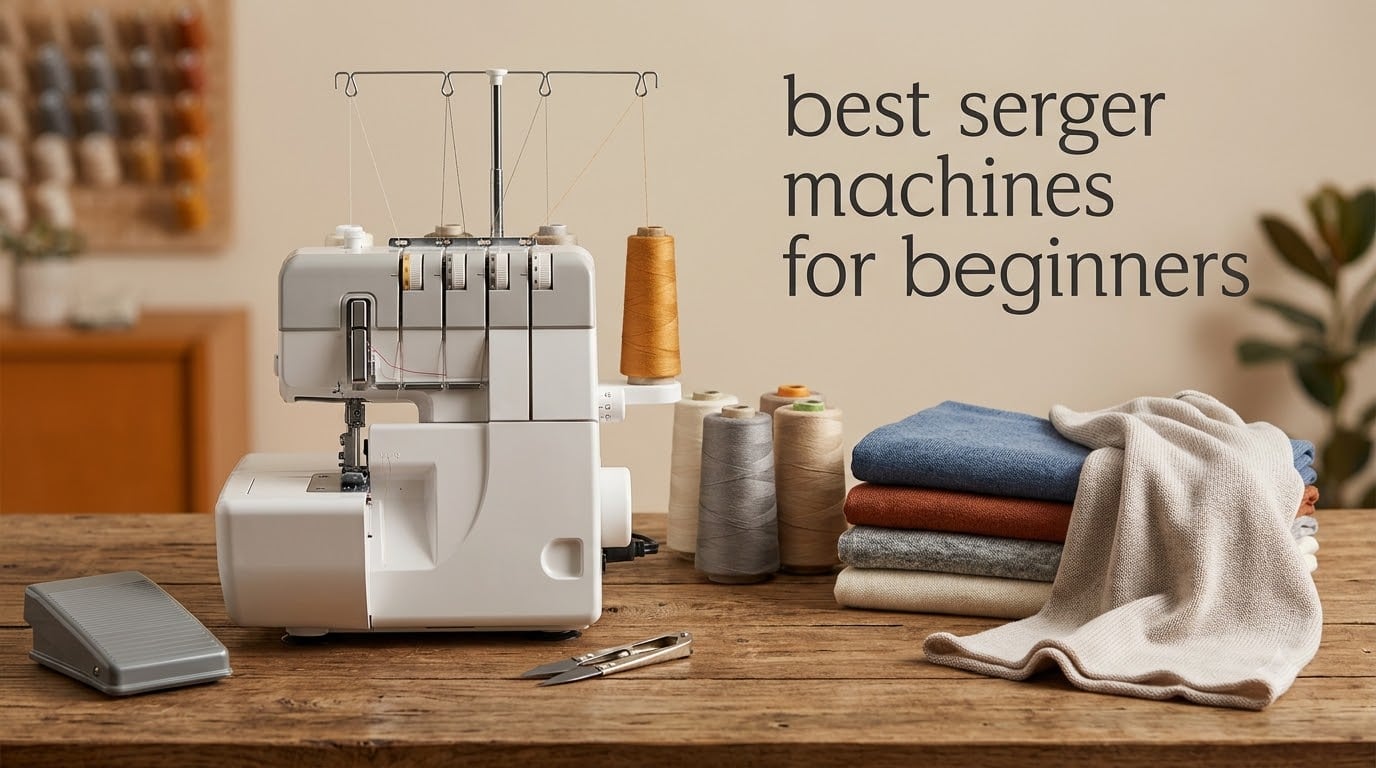
The fastest way to a clean, stretchy seam is a serger, also called an overlocker, and the machines on this list trim, stitch and wrap your raw edge in a single pass. The problem for anyone shopping for the best serger machines for beginners is that almost every listing sells the same three promises: easy threading, clean stitching and durability. Fewer explain what actually makes a machine friendly to learn on, and the forums fill the gap with people asking whether sergers are hard to learn at all.
So we built this roundup around the things beginners actually get stuck on. Threading order, differential feed on jersey, rolled hems, the noise a machine makes at speed, and whether it needs oiling before you touch it. Every pick below was assessed on specifications, owner reviews and the specific pain points that show up again and again in sewing discussions, so you can tell in a few minutes which machine suits the fabrics you actually sew.
Eight machines made the cut, spanning roughly the range a first-time buyer is likely to shop. Two are metal-framed Brother models, two are JUKI machines with different threading philosophies, three are SINGER machines at different capability levels, and one is a Janome with a long warranty. If you also enjoy research-buying entry-level gear for other hobbies, our guide to the best espresso machines for beginners follows the same pick-by-pick method.
Can a beginner really use a serger? Yes. Every serger threads the same way in principle: thread comes off cones, runs through guides and tension dials, and into needles and loopers above and below the fabric. The learning curve is mostly muscle memory and knowing which thread path goes first. Most beginners in sewing forums report being productive with a basic four-thread machine within a day or two of taking it out of the box, and the machines below are the ones that make that first day least painful.
Table of Contents
Top 3 Picks for the Best Serger Machines for Beginners in 2026


SINGER X5004-HD Serger
- Heavy-duty metal frame
- 60 percent larger knife
- 1300 stitches per minute
The Brother 1034D takes our top slot because it does the fewest things to help a beginner get going: a metal frame that does not bounce, colour-coded thread guides, a removable trim trap and three accessory feet in the box. The SINGER S0230 offers the widest thread combination range in the group with a free arm for cuffs. The SINGER X5004-HD earns its spot for anyone sewing denim or heavier cloth on day one.
All 8 Beginner Sergers Compared in 2026
| Product | Specifications | Action |
|---|---|---|
| Brother 1034D Serger Overlock Sewing Machine |
|
Check Latest Price |
 SINGER S0230 High Speed Overlock Serger SINGER S0230 High Speed Overlock Serger |
|
Check Latest Price |
| SINGER X5004-HD Serger Overlock Machine |
|
Check Latest Price |
 SINGER S0100 High Speed Serger SINGER S0100 High Speed Serger |
|
Check Latest Price |
 Brother ST4031HD Strong and Tough Serger Brother ST4031HD Strong and Tough Serger |
|
Check Latest Price |
 JUKI MO-644D Portable Serger JUKI MO-644D Portable Serger |
|
Check Latest Price |
 Janome MOD-8933 Lay-In Threading Serger Janome MOD-8933 Lay-In Threading Serger |
|
Check Latest Price |
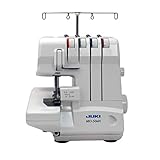 JUKI MO-50E Serger with Auto Looper Threader JUKI MO-50E Serger with Auto Looper Threader |
|
Check Latest Price |
1. Brother 1034D Serger – Best Overall for Beginners
Brother 1034D Serger Overlock Sewing Machine
3/4 thread
Color-coded guides
1300 spm
8 lb metal frame
Pros
- Color-coded threading path
- Metal frame holds stitch quality on denim
- Handles multiple layers of heavy fabric
- Three accessory feet included
- Bright work light and responsive foot pedal
Cons
- Must be oiled before first use and about monthly
- Noisy at speed and warms up quickly
- Heavy with a weak carry handle
This is the machine that shows up in almost every beginner thread, and after reading thousands of owner reviews it is hard to argue with. The 1034D runs at up to 1,300 stitches per minute on a metal frame, which means it does not creep across the table or skip when you feed it two layers of denim. Owners who were afraid of sergers report being productive within a day, and the praise for even stitching is consistent across the review set.
Threading is the headline. The upper thread guide is colour-coded and the lower looper has its own guide, so you are following marks rather than guessing. An underlooper threader is fitted, which takes the fiddliest part of the process down to a few seconds. The box also carries four spools of serger thread, a soft cover, an accessory bag with a needle set, thread nets, tweezers, a cleaning brush, a hex driver and a trim trap, so you can practise the same evening it arrives.
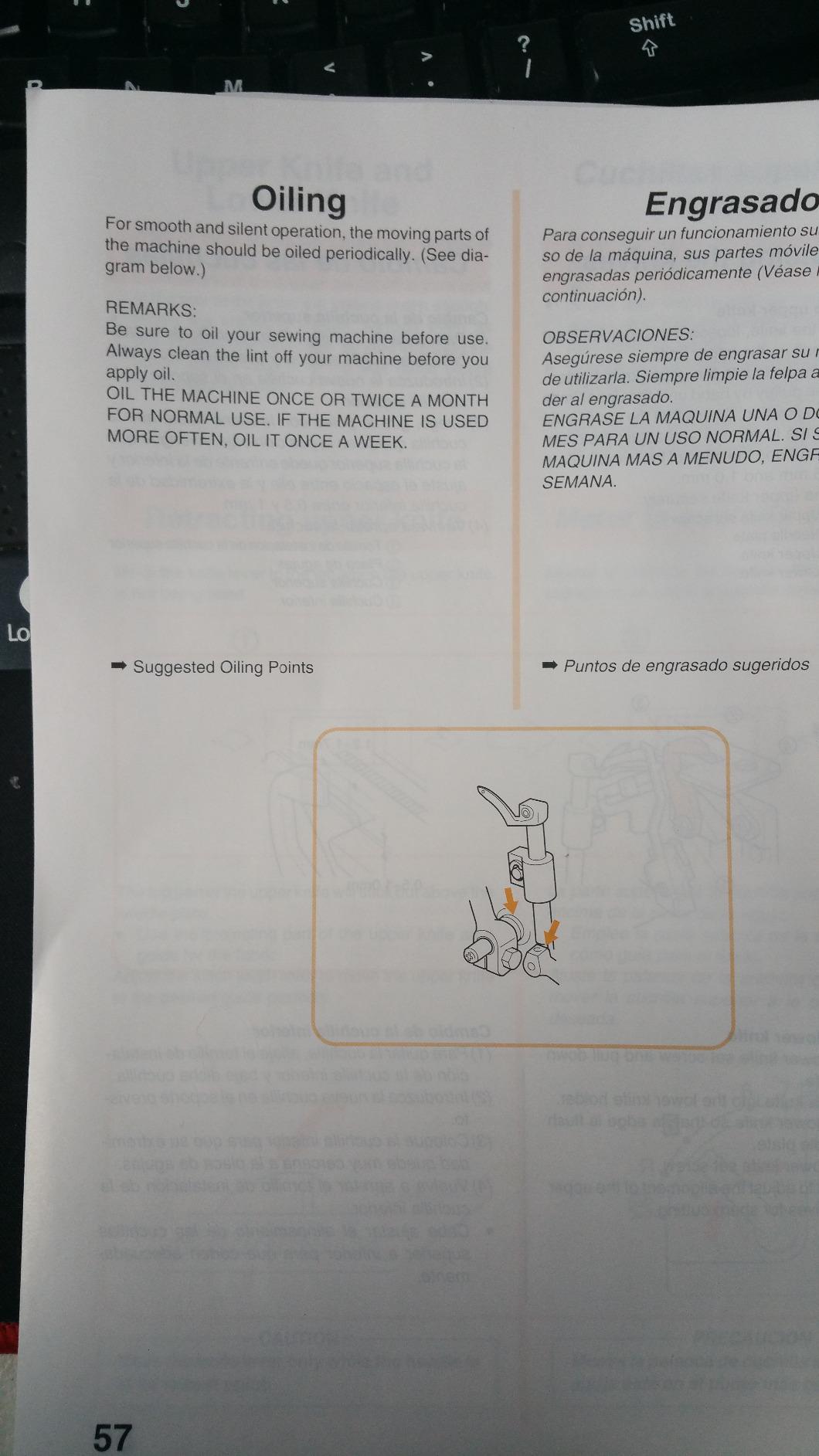
The honest drawback is maintenance. This machine must be oiled before the first use and roughly every month after, and the instruction for that sits deep in the manual where most owners never find it. Owners who skip oiling report a dry, rough sound within weeks. The included instruction video is also too small to read clearly for threading detail, so plan on following a proper walkthrough for your first session.
It is also a loud machine that heats up quickly, and at 8 pounds with a weak carry handle, moving it between machines is a two-hand job. None of that matters much if it lives on one table, which is where it will spend its life.
Why beginners end up keeping this one
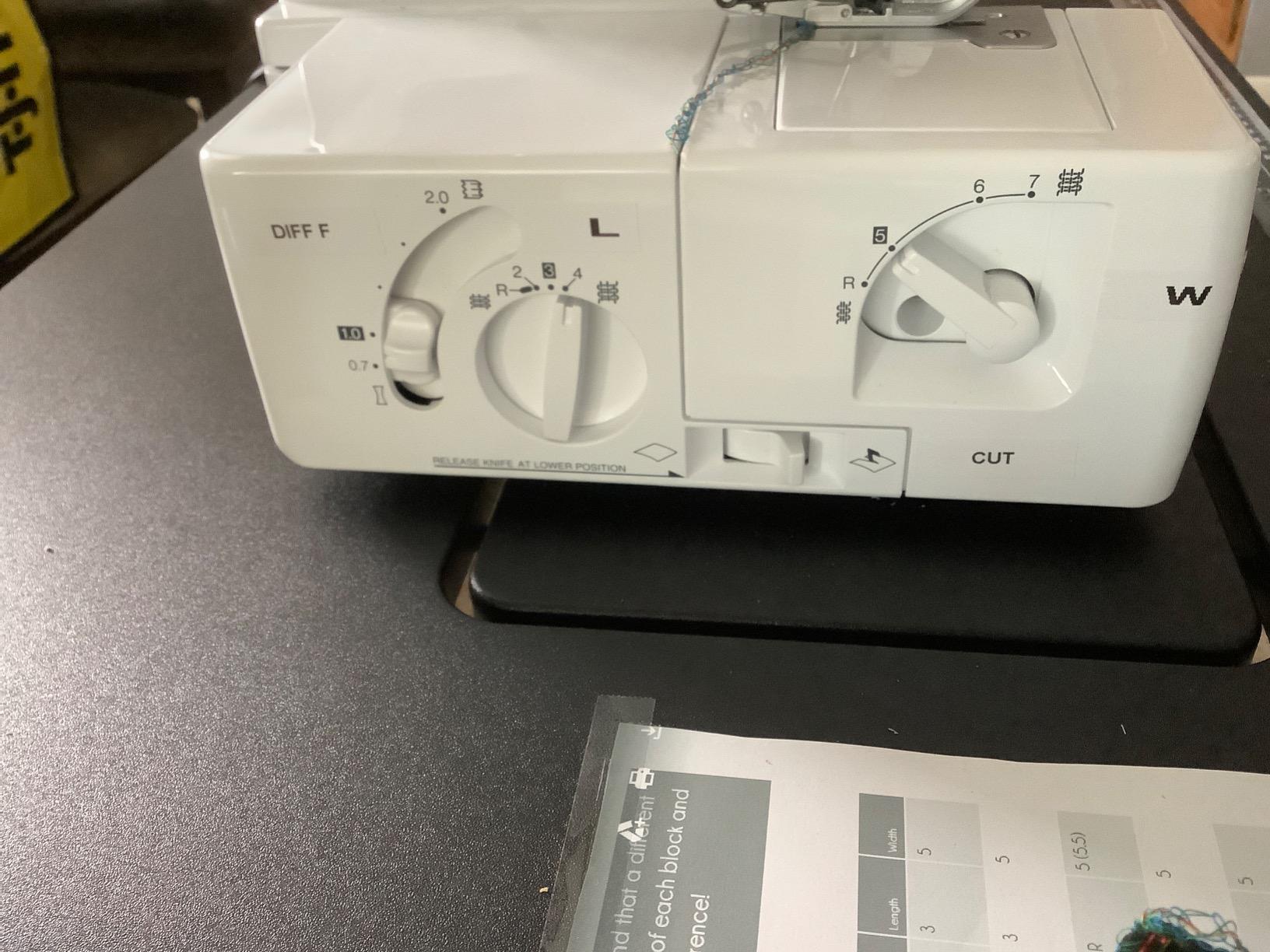
The 1034D does only the stitches a beginner needs: three and four thread overlock, rolled hem, flatlock and blind hem. That is a complete toolkit for garments, jersey and home decor, and it leaves out the decorative stitching that beginners try once and never again. With 1,300 stitches per minute it finishes a simple knit top faster than most people expect.
It also arrives pre-threaded, so you can sew a scrap immediately and learn the foot pedal and the speed control before you learn anything else. That first hour of muscle memory is the part beginners find hardest, and this machine lets you have it on day one.
Where it falls short
If your sewing is heavy fabric work, a bigger machine with a larger extension table will serve you better over time. If you sew a lot of very fine knits, the 8-pound footprint is compact, which means a small free arm for narrow items such as sleeve hems. The warranty is 5 years limited parts and 90 days labor, which is worth knowing before you compare it with longer coverage elsewhere in this list.
2. SINGER S0230 Overlock Serger – Top Rated 2/3/4 Thread Machine
SINGER® S0230 Navy Blue High Speed Overlock Serger, 2-3-4 Thread Capability
2/3/4 thread
Adjustable feed
1300 spm
Free arm
Pros
- Widest thread option range in the lineup
- Color-coded threading
- Adjustable differential feed for knits and sheers
- Built-in free arm for cuffs and sleeves
- Accessories stored in the cloth plate
Cons
- Basic stitch range with no decorative options
- 13.5 lb body is not portable
The S0230 is the most flexible machine here for a beginner, because 2, 3 or 4 thread capability covers seams, rolled hems and decorative edges from a single body. That flexibility matters more than it sounds. A two-thread overcast is fast on light woven edges, a three-thread flatlock is the one you will use on jersey, and four-thread is what finishes a garment seam properly.
Reviewers repeatedly single out two things: the colour-coded threading system and the adjustable differential feed. The first cuts setup time on every project. The second is the feature that stops jersey seams from growing, and owners confirm it holds flat across knits and does not pucker lightweight wovens. At up to 1,300 stitches per minute it sews, trims and finishes in one pass.
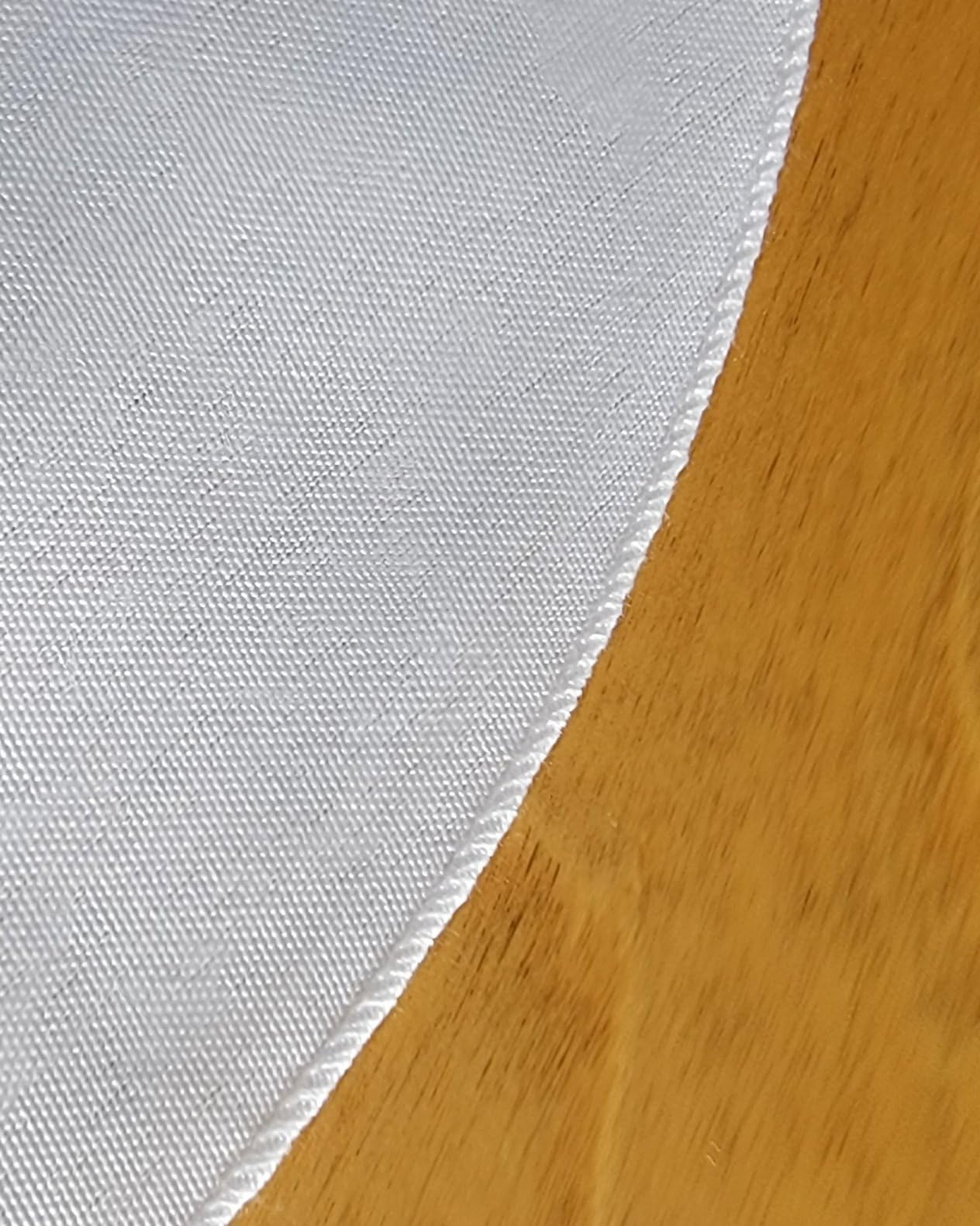
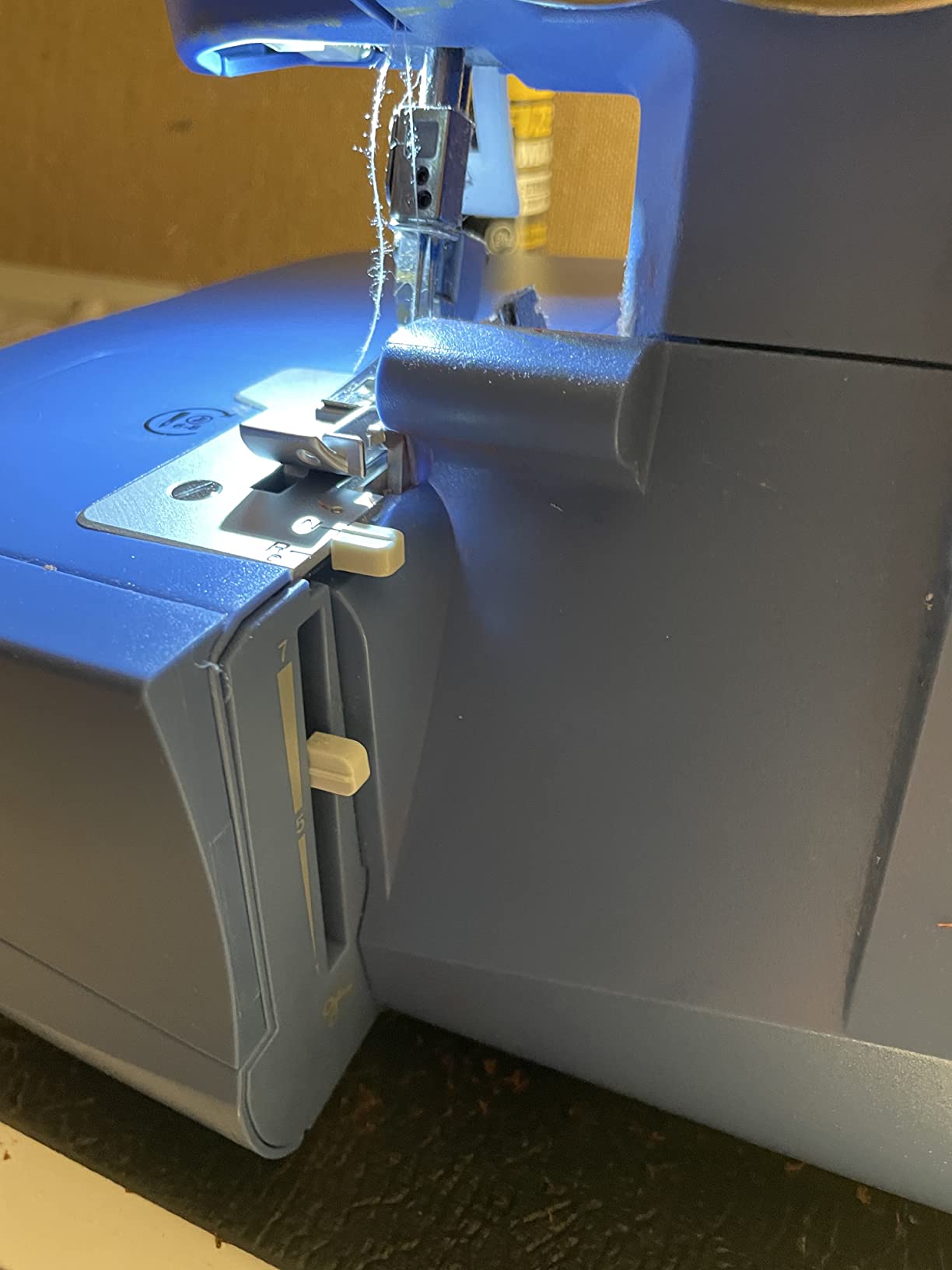
The built-in free arm is the sleeper benefit for beginners. It is what makes sleeve cuffs, children’s clothing and narrow pant hems possible, and plenty of first-time owners discover that after a few frustrating attempts on bulkier machines. Tweezers, needles and a screwdriver come in the box and live in the cloth plate, so they are always in the same place.
What you give up is a fairly plain feature set. There are no decorative or advanced stitches beyond the core finishes, and at 13.5 pounds with a 14 inch depth this is not a machine you will carry between classes or take to a craft group. Plan a permanent spot for it.
Best fit if you sew a mixed pile of fabrics
Choosing a serger means choosing which fabric you will sew least. This one loses the least. If your projects range from cotton napkins to stretch jersey to the occasional denim, the 2/3/4 thread spread handles all three without menu diving, and the differential feed dial means you adjust one knob instead of relearning a new machine.
The free arm also makes it the better pick of the two entry SINGER machines here for anyone sewing sleeves and children’s clothes as a first project. Color-coded threading means your first session is about fabric, not thread paths.
Where it falls short
If you want interesting visible seams on woven fabric, this machine will not give them to you, and you may find yourself wanting a coverstitch later. The 13.5 pound weight also means a sturdy table, not a sewing desk you move around. Neither is a dealbreaker for a first serger, but both are worth weighing against the metal-framed options in this list.
3. SINGER X5004-HD Serger – Best for Heavy Fabrics and Denim
SINGER® X5004-HD Serger Overlock Machine, 2-3-4 Thread Capability
2/3/4 thread
Metal frame
60% larger knife
1300 spm
Pros
- Heavy-duty metal frame for skip-free stitching
- Oversized cutting knife for denim and upholstery
- Suction cups stop it walking across the table
- Eight stitches plus 2/3/4 thread options
- Dual LED lights
Cons
- Threading is the hardest part
- Included tweezers are the wrong shape
- One screw holds both needles so mode changes are slow
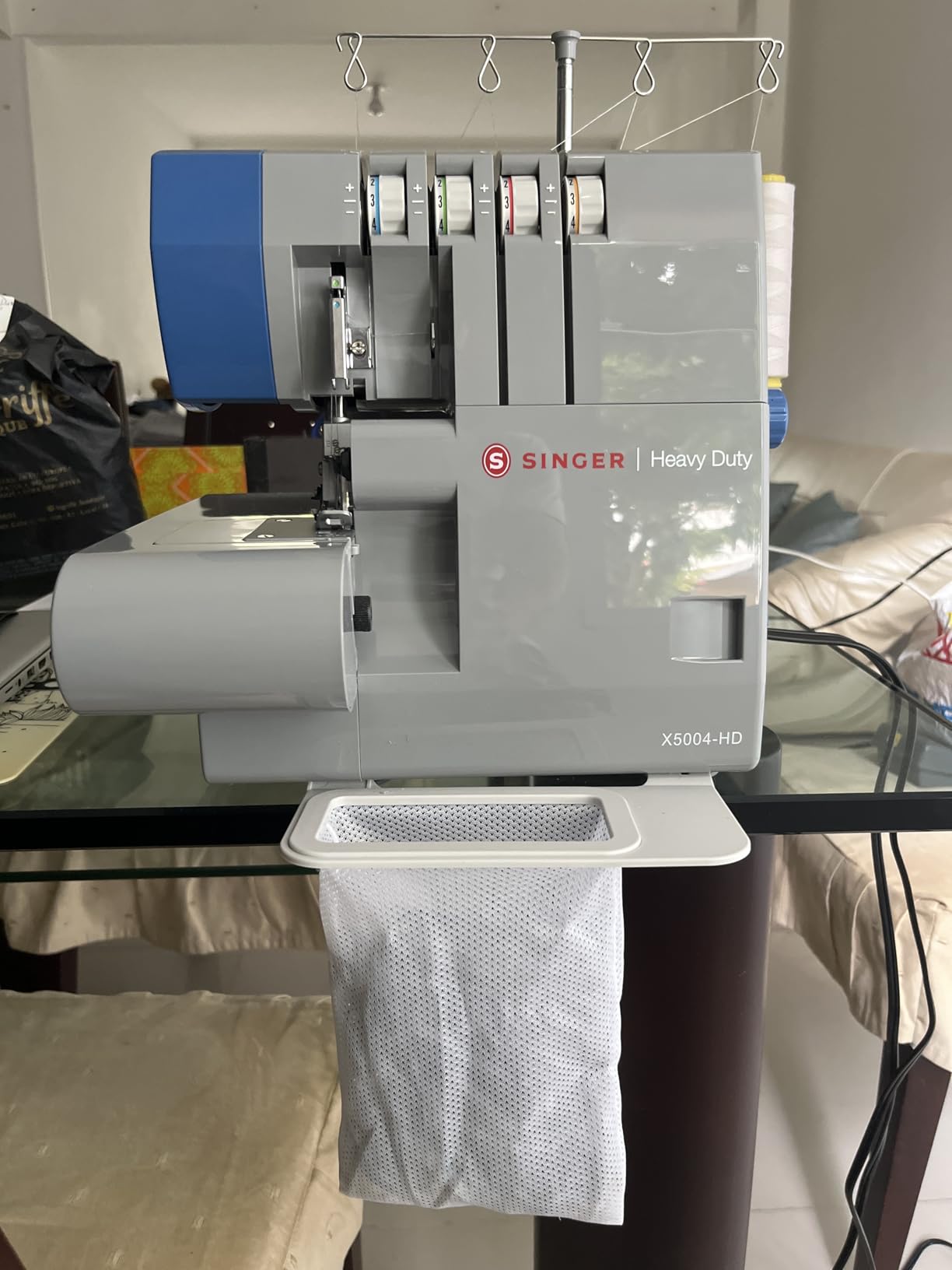
If your first serger is going to see denim, canvas and multi-layer seams, this is the one built for it. The heavy-duty metal frame is the reason owners report no skipped stitching on thicker cloth, and the cutting knife is 60 percent larger than the standard fitted to entry sergers, which makes a visible difference when trimming several layers of denim in one pass.
It runs at up to 1,300 stitches per minute with adjustable differential feed, which owners use both to stop puckering and to create a gathering effect on lighter fabric. Suction cups on the base stop it moving across the table, a small detail that makes a noticeable difference at speed. The accessory kit is unusually complete, including a spare lower knife, four spool holders, a lint brush and a scrap bag.
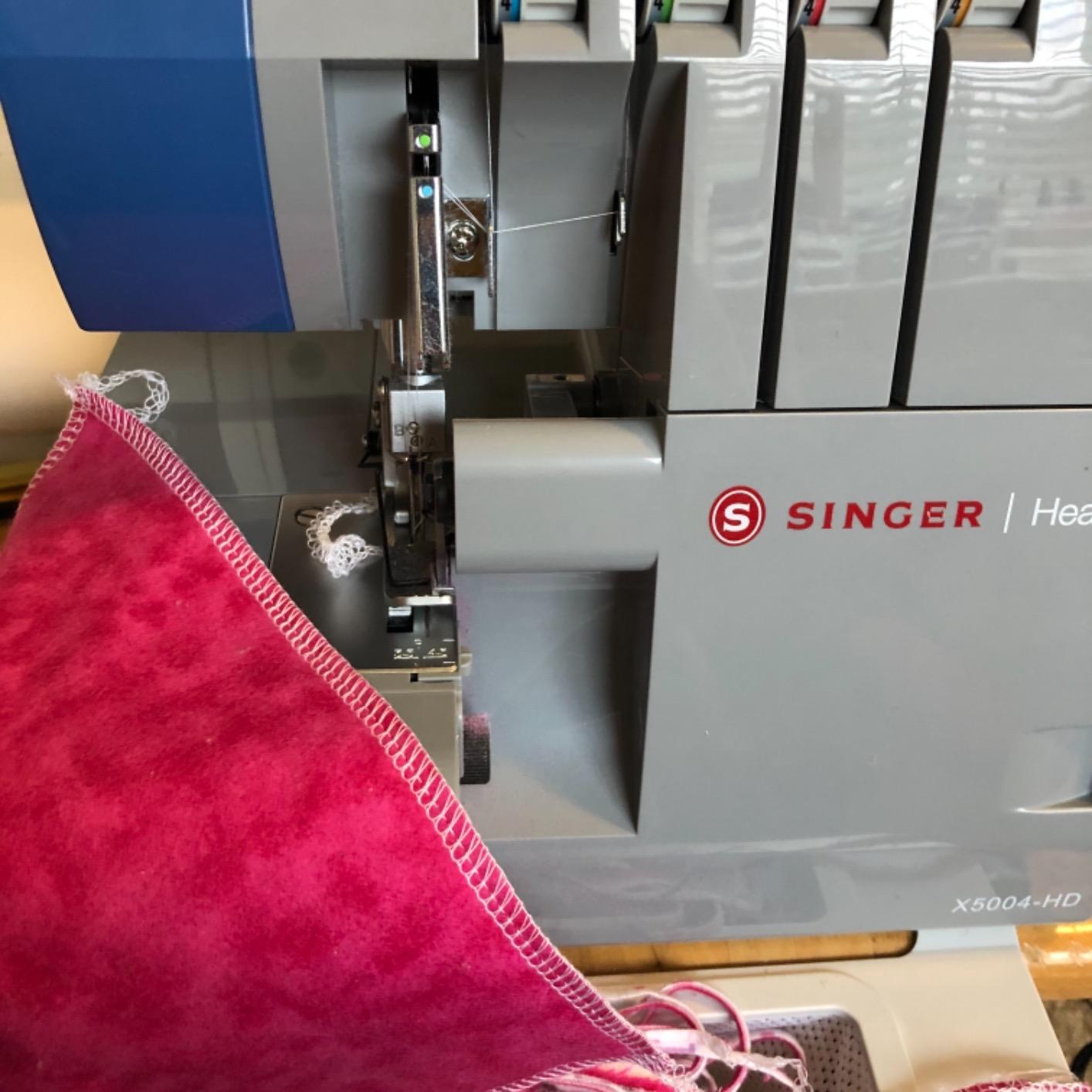
Threading is where this machine asks the most of you. Owners report spending an hour or more on the first attempt and leaning on video tutorials because the printed documentation is minimal. The supplied tweezers are the wrong shape for the threading guides, and many buyers add angled-tip tweezers of their own. Low contrast printed guide dots and the plastic housing add to the first-session friction.
Two other things catch beginners out. Both needles share one screw, so switching to three thread or rolled hem is an unhurried job rather than a quick one. The presser foot barely lifts and the foot lever is hard to locate, which makes small pieces fiddly until you learn where it is.
Who this machine rewards
Sewists who work in sturdy fabrics or who like quilting and heavy home decor will notice the knife size and the frame rigidity immediately. It is a machine that rewards patience on the first day and pays that back over years of hard use, and the dual LED lights help with the darker work that usually trips people up on heavier cloth.
If your first projects are all knits and jersey, none of that extra capability will get used yet, and a lighter machine would serve you better. The eight stitch options give more variety than the plain models, but beginners rarely choose a serger for decorative seams.
Where it falls short
The plastic housing makes it noticeably louder than older metal-framed sergers, which matters if you sew in the evening. The threading experience is the weakest part of the package, and it pairs badly with buying used without a manual. If intimidation around threading is your main worry, the models with lay-in or automatic threading will serve you better.
4. SINGER S0100 Serger – Budget Pick for Your First Machine
SINGER® S0100 High Speed Serger Overlock Machine, 2-3-4 Thread Capability
2/3/4 thread
Six stitches
1300 spm
Metal frame
Pros
- Color-coded threading with on-machine diagrams
- Metal frame in a compact body
- Adjustable differential feed handles sheers to thick knits
- Lowest cost machine in this roundup
- Not especially loud in use
Cons
- No printed manual and unclear quick start photos
- Tweezers and manual often reported missing from the box
- Tight threading space is hard to thread with larger hands
The S0100 is the cheapest route into this roundup, and the machine itself does more than its rating suggests. It offers 2, 3 or 4 thread options across six built-in stitches, runs at 1,300 stitches per minute and has adjustable differential feed and tension. The metal frame helps it stay steady, and owners generally report it sewing well for the money.
Its color-coded threading system includes diagrams on the machine itself, which is exactly the kind of help a beginner needs, and the differential feed is described as handling everything from delicate sheers to thick knits. It is also not particularly noisy and the body is easy to shift on a table, unusual in this category.
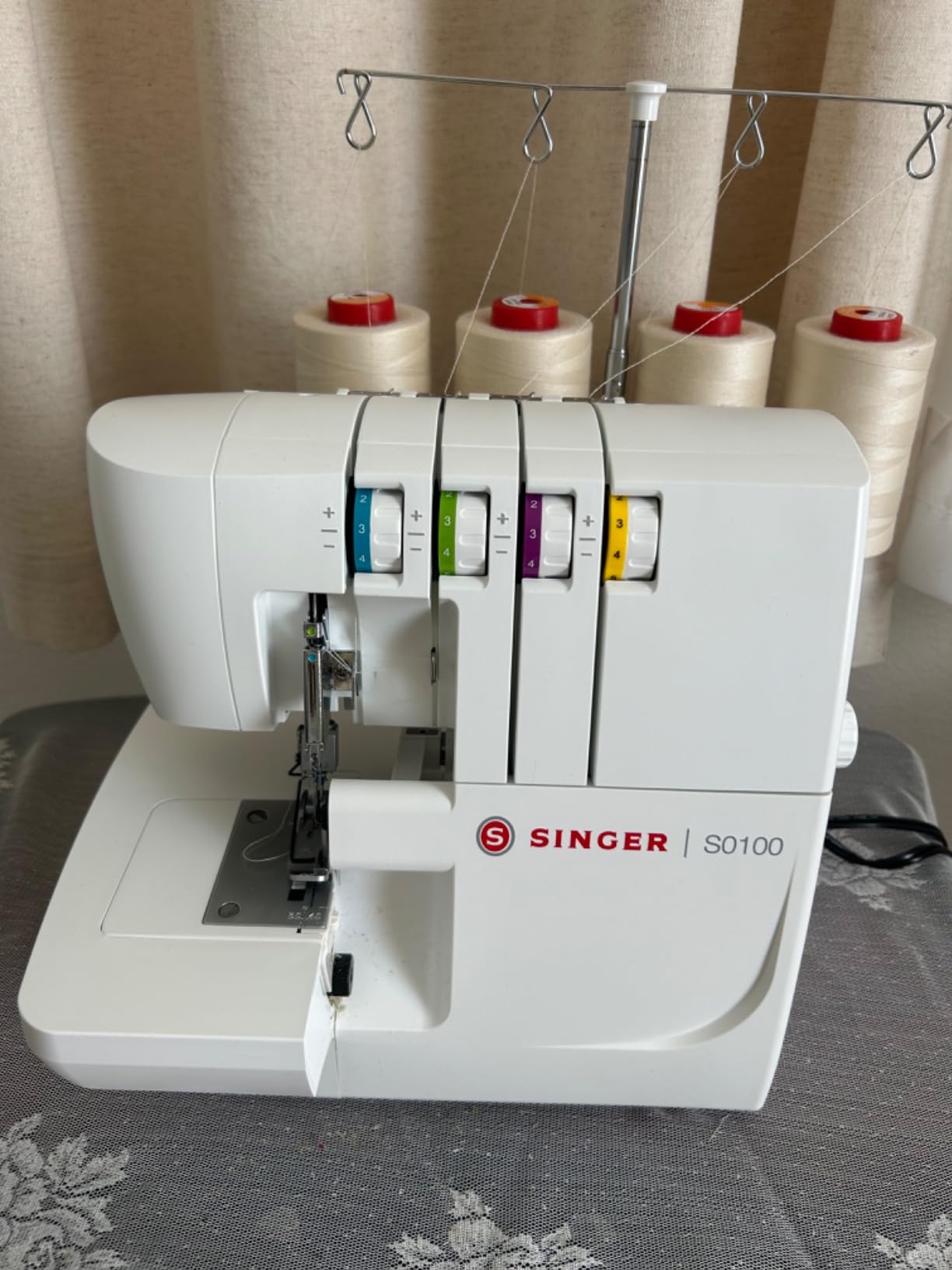
The problems are about setup, not stitching. There is no printed manual in the box, the quick start guide photos are unclear, and online instructions conflict with one another on symbols. Multiple reviews report tweezers or the manual arriving missing. The threading space is tight, which is genuinely difficult if you have larger hands, and it vibrates enough that you want a heavy surface under it.
It is also the lowest-rated machine in this lineup at 4.2 from 875 reviews, with the highest share of one-star feedback, and that feedback clusters around documentation and threading rather than stitch quality. A few units have reported foot pedal failure, so treat the pedal as a part you may replace.
Where this budget pick makes sense
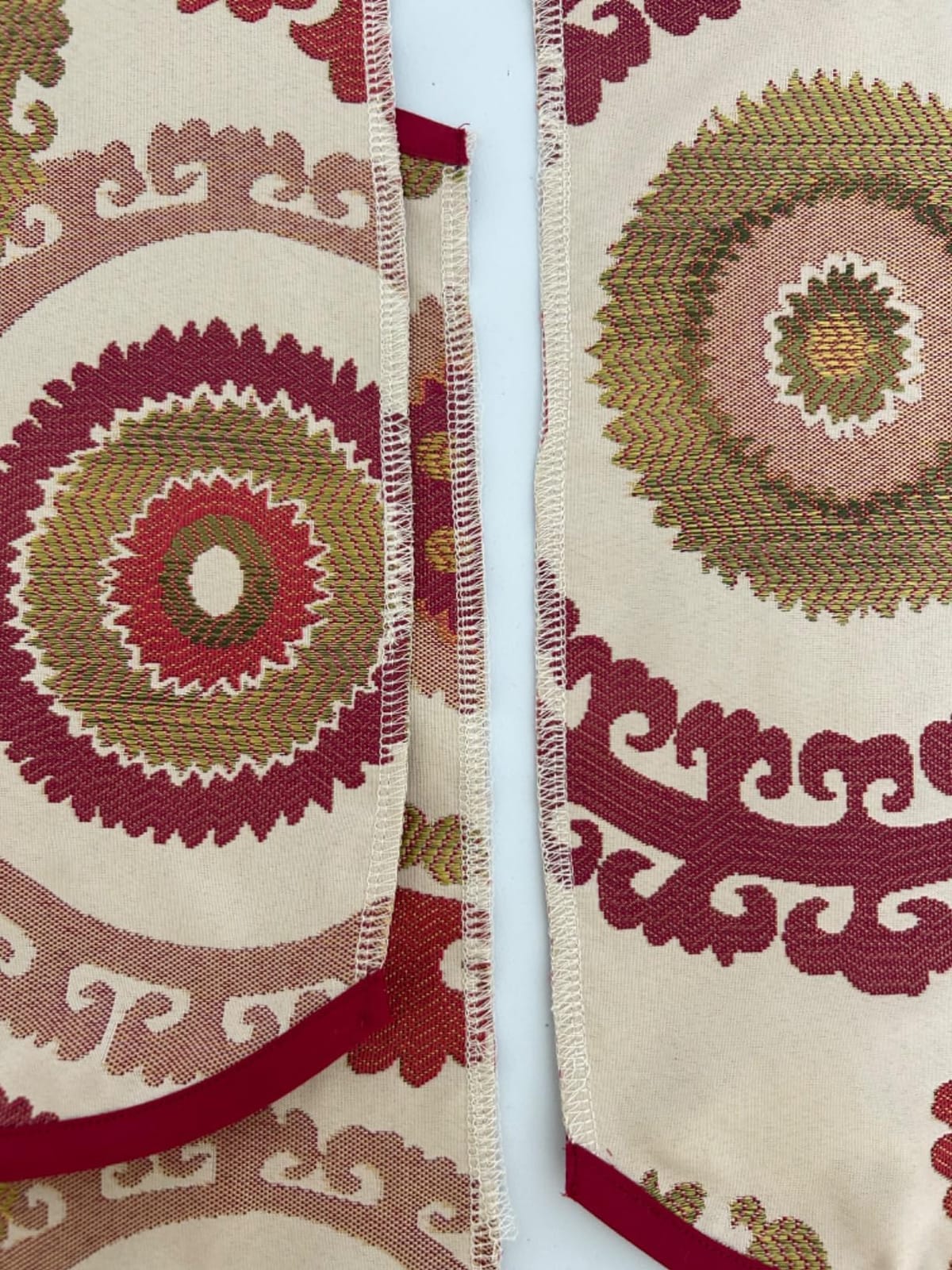
If your goal is basic pant hems, simple seam finishing on cotton and the occasional rolled hem, this machine covers all of it at the lowest cost in the group. You give up nothing you will use in the first year, and you gain a metal frame that most entry machines at this level do not have.
It is also a reasonable first machine to learn on, because the mistakes beginners make are cheap here. Cut a needle, snag a thread, over-trim a seam allowance, and none of it costs a project. That makes it a low-stakes place to build the foot pedal control and thread path memory.
Where it falls short
Threading is the real test here. If you struggle to see into a tight space, the missing tweezers and the absent manual will slow your first sessions down, and a machine that arrives unthreaded with no instructions is a poor learning environment. If you want a large thread selection or a quiet machine for evening sewing, look elsewhere on this list.
5. Brother ST4031HD Serger – Best for Big Projects
Brother ST4031HD Serger, Strong & Tough Serger, 1,300 Stitches Per Minute, Durable Metal Frame Overlock Machine, Large Extension Table, 3 Included Accessory Feet, 12.99 x 14.37 x 17.01 in., White
3/4 thread
Large extension table
1300 spm
17.6 lb
Pros
- Large extension table guides fabric one-handed
- Comes pre-threaded so you can sew straight away
- Quiet running when properly oiled
- Carbon steel blade cuts cleanly
- Removable deck for small items
Cons
- Faster speed is harder for first-timers to control
- Needs regular oiling or it runs dry and loud
- 17.6 lb body stays where you put it
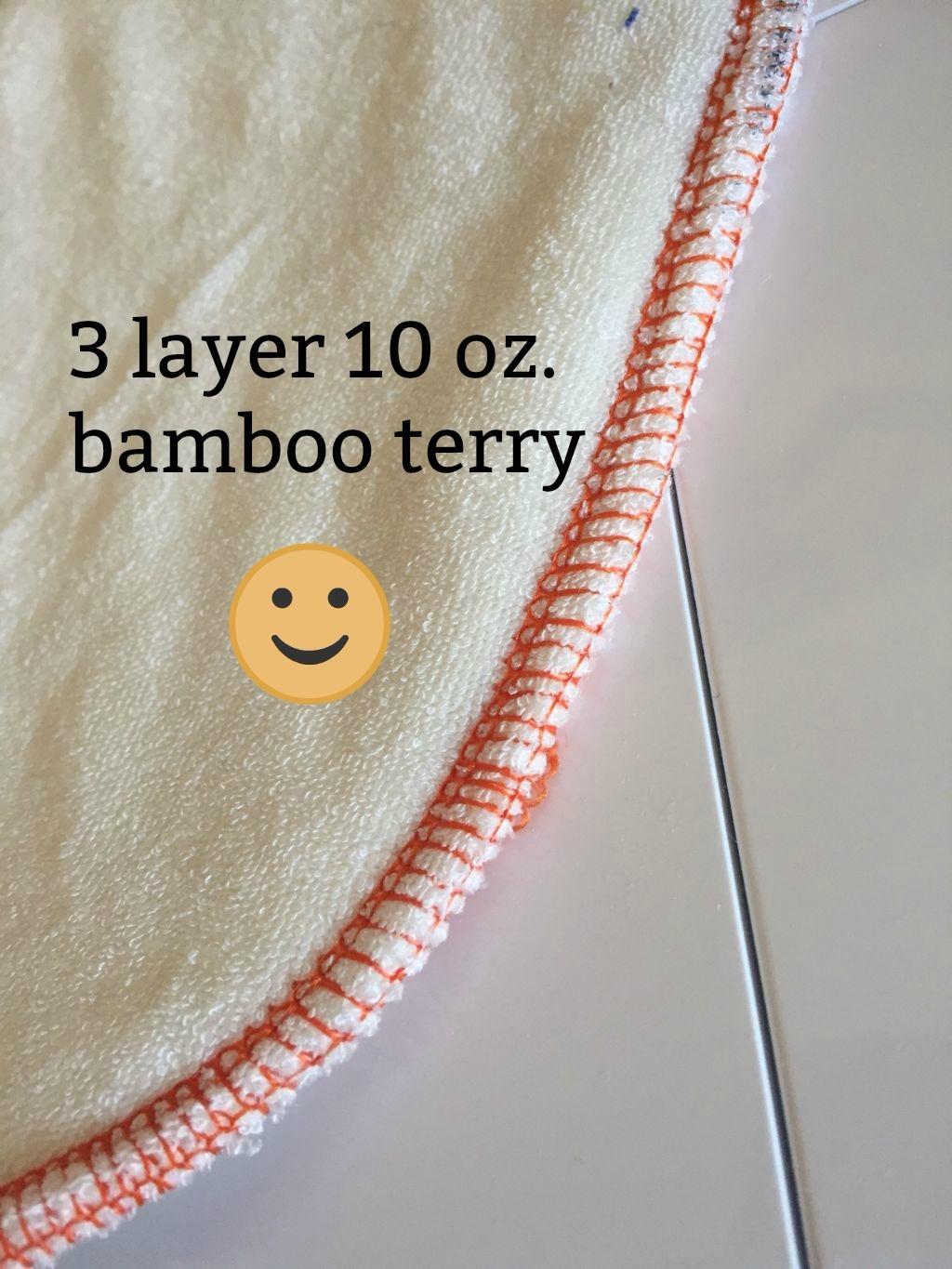
The ST4031HD is the strongest argument for buying the largest machine you can fit on your table. The extension table is genuinely large, and owners note you can guide bulky fabric through with one hand, which changes how quilt backs, blankets and heavy garment panels feel. The deck section comes out for small items, so you get both a wide work surface and a narrow one.
It arrives pre-threaded in different colours, which makes the lower needle positions easy to see, and threading takes roughly ten minutes for a first-timer using the colour-coded guides and numbered upper and lower loopers. The blade is made from extra-hard carbon steel for a smoother cut edge, and three feet plus a dust cover, trim trap and four-piece needle set are included.
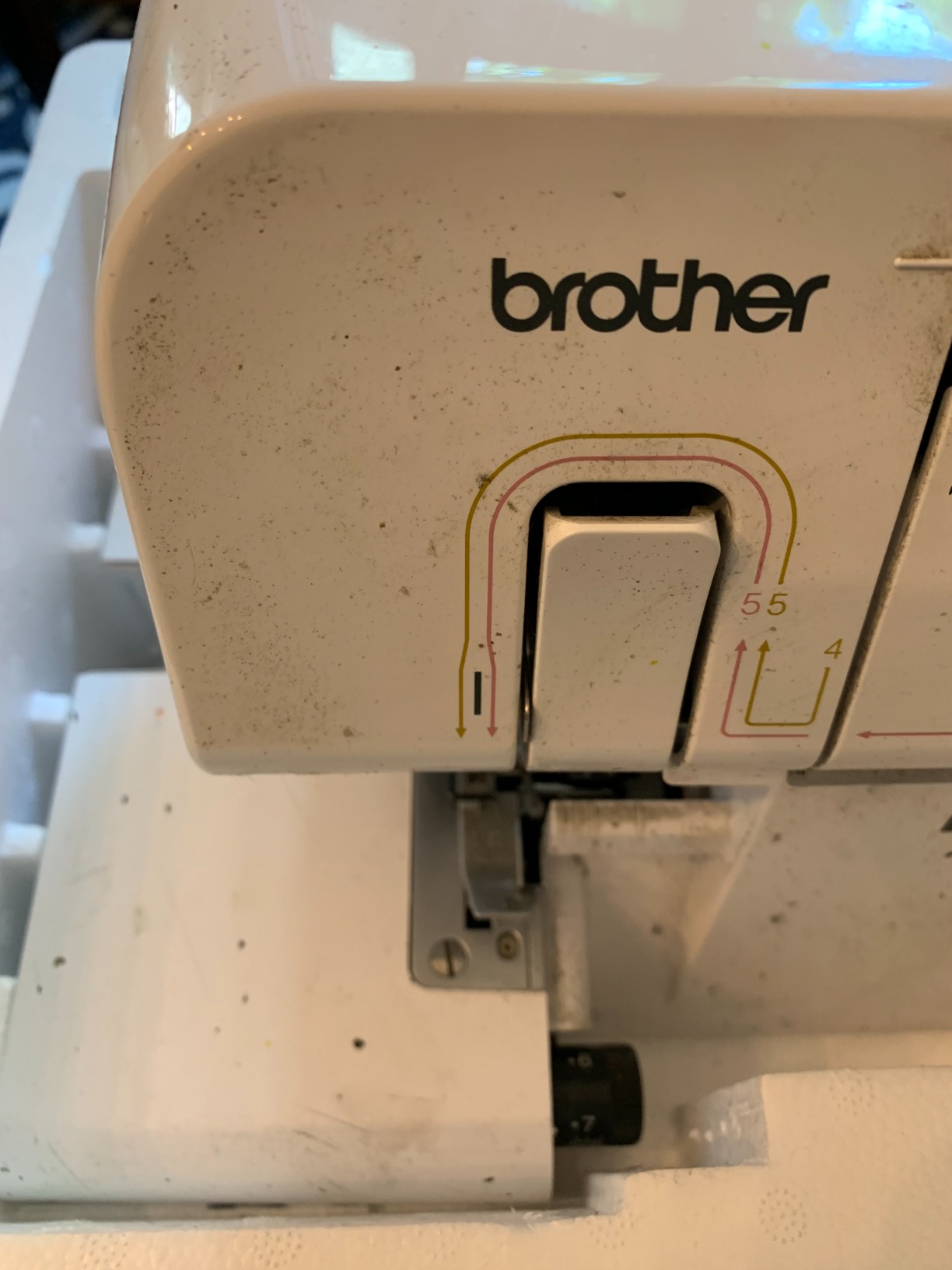
The standout finding in owner reviews is noise. Once oiled, several people describe it as quiet enough to compare to a purring kitten, and the same reviewers say it becomes noticeably louder when dry, which makes the maintenance routine feel worthwhile rather than fussy. It handles thick fabric and multiple layers of denim without tension adjustments, and it includes a catch tray for offcuts that many competitors leave out.
The catch is weight and pace. At 17.6 pounds it stays exactly where you put it, and the 1,300 stitches per minute top speed is fast enough that some first-time buyers find it harder to control than a slower machine. The retractable upper thread section also takes extra effort on the first thread of each colour.
Best fit for quilting and home decor
Anyone finishing a quilt, a table runner or a large pillowcase will feel the extension table immediately. The removable deck means the same machine handles a small cuff afterwards, which is what a beginner sewing garments and decor in the same week will actually need.
It is also the most reassuring machine here to start on, because it arrives ready to sew and the work light and colour coding remove guesswork. If you were afraid of sergers, owners of this model report being productive within an hour of the first session.
Where it falls short
This is a 3 and 4 thread machine, so you do not get the two-thread overcast or the flatlock variety the SINGER models offer. The speed plus the weight makes it a poor choice for a small desk or a machine you carry to classes. It also needs oiling right away and roughly monthly, and some buyers are unhappy with the warranty terms.
6. JUKI MO-644D Serger – Best Automatic Rolled Hem
JUKI MO644D Portable Serger, White
2/3/4 thread
Auto rolled hem
1500 spm
Dedicated knife drive
Pros
- Automatic rolled hem saves real setup time
- Dedicated knife drive gives clean consistent cuts
- 1500 stitches per minute is the fastest here
- Color-coded threading with breakaway looper
- 5 year limited warranty
Cons
- Highest cost machine in this roundup
- Built for light to medium weight fabric only
- 19 lb weight limits portability
The MO-644D is the machine to buy if rolled hems are on your project list. Instead of removing a needle and shifting the looper for a three-thread rolled hem, the automatic conversion does it for you, and beginners report that this single feature removes the most intimidating adjustment on any entry serger. Scarf edges, napkins, lightweight knit hems and pajama cuffs all become quick jobs.
The dedicated knife drive is the second reason to like it. A separately driven blade cuts more predictably than a shared shaft, and owners report the edge stays even across repeated seams. Top speed is 1,500 stitches per minute, the highest figure in this roundup, and the breakaway looper makes stitch length and differential feed adjustments quick.
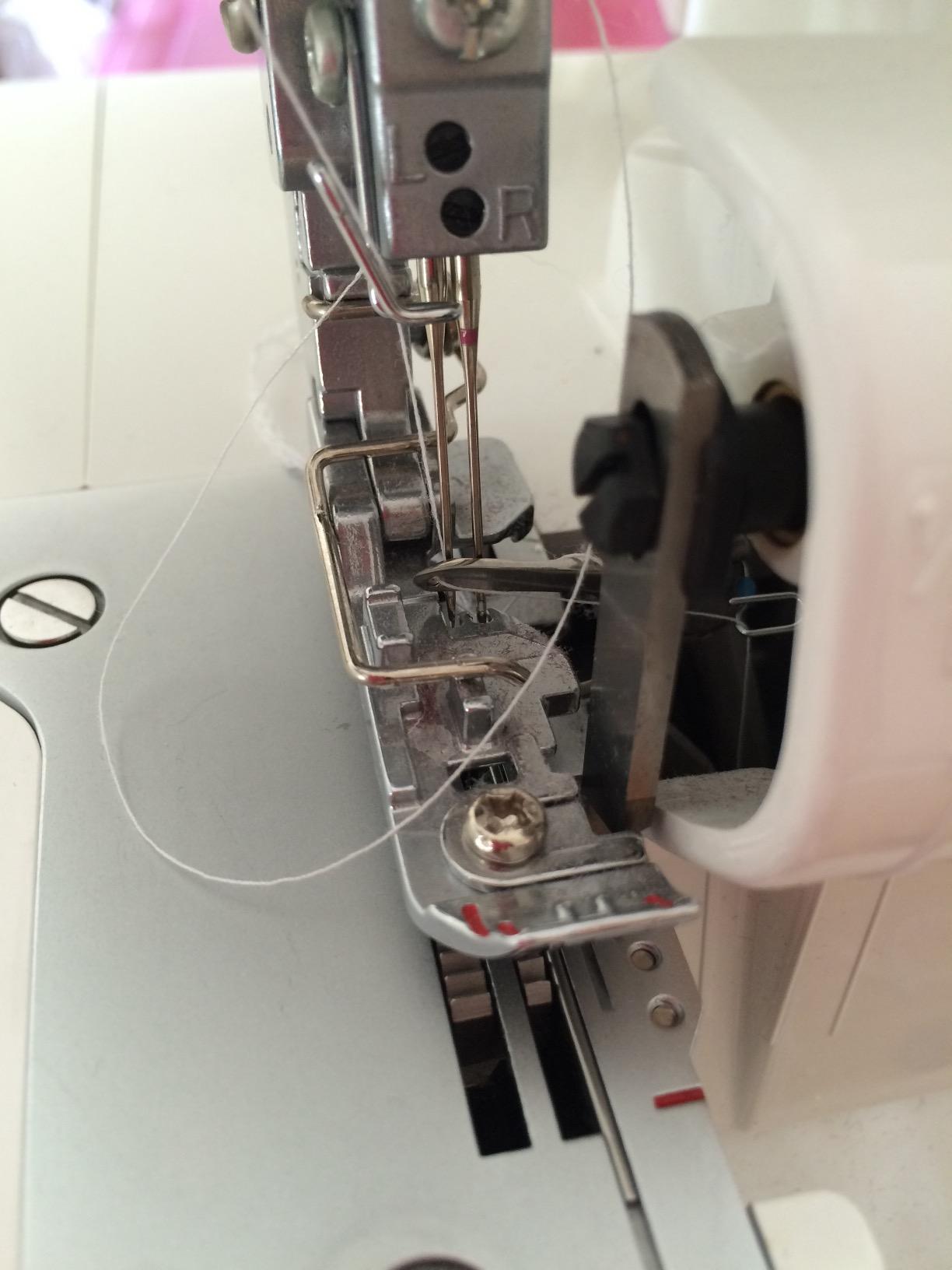
Colour-coded threading keeps the path clear, and the whole footprint stays compact at 10.6 by 13.4 by 11.6 inches despite being a full-size machine. That matters in a small sewing room. The warranty is 5 years limited, and parts for JUKI machines are easy to source, which is a real advantage for a machine you may own for a decade.
The limitation is fabric weight. It is built for light to medium materials, so heavy upholstery and multi-layer denim are outside its comfort zone, and that rules it out for anyone whose first love is denim. At 19 pounds it is heavy for a portable model, and it is the most expensive machine on this list.
Why the rolled hem conversion matters
A rolled hem is the finish that makes a homemade scarf look store-bought, and it is also the adjustment that trips up beginners most. On machines that need the needle moved, switching takes a minute and a small screwdriver. Here it happens as a setting, so you will use it constantly instead of avoiding it.
Combined with the top speed, this makes the MO-644D the fastest machine here for long, light jobs like finishing knit panels or batch hemming. If your plan is garments and light home decor rather than heavy fabric, that is a strong argument for this one over a bigger knife.
Where it falls short
Skip it if you sew denim, canvas or multi-layer seams regularly, because the fabric range stops short of heavy cloth. The listed power source also does not match what most buyers expect, so check the machine is supplied with a proper foot controller before you commit. Budget is the other honest limitation: this is the priciest machine in the group.
7. Janome MOD-8933 Serger – Best Warranty and Lay-In Threading
Janome MOD-8933 Serger with Lay-In Threading, 3 and 4 Thread Convertible with Differential Feed
3/4 thread
Lay-in threading
Quick change rolled hem
25 yr warranty
Pros
- 25 year limited warranty is the longest here
- Lay-in threading with color-coded guides and pretension slider
- Quick change rolled hem conversion
- Sturdy metal internals
- Comes pre-threaded with sample spools
Cons
- No free arm for cuffs and small items
- Upper knife positioner is awkward to operate
- Tension can drift and need readjusting
The Janome is the one to buy if long-term support matters more than headline features. Its warranty runs 25 years limited, easily the longest coverage in this roundup, and long-term owners describe the internals as mechanical workhorses that have needed nothing over years of use. For a first machine that usually stays in a family, that is a real difference.
The lay-in threading system with color-coded guides and a pretension setting slider is the main technical feature, and it is genuinely the most considered tension design here. The lower looper is easy to reach, differential feed adjusts smoothly, and the quick change rolled hem conversion means you are not hunting for a screwdriver at the start of a project.
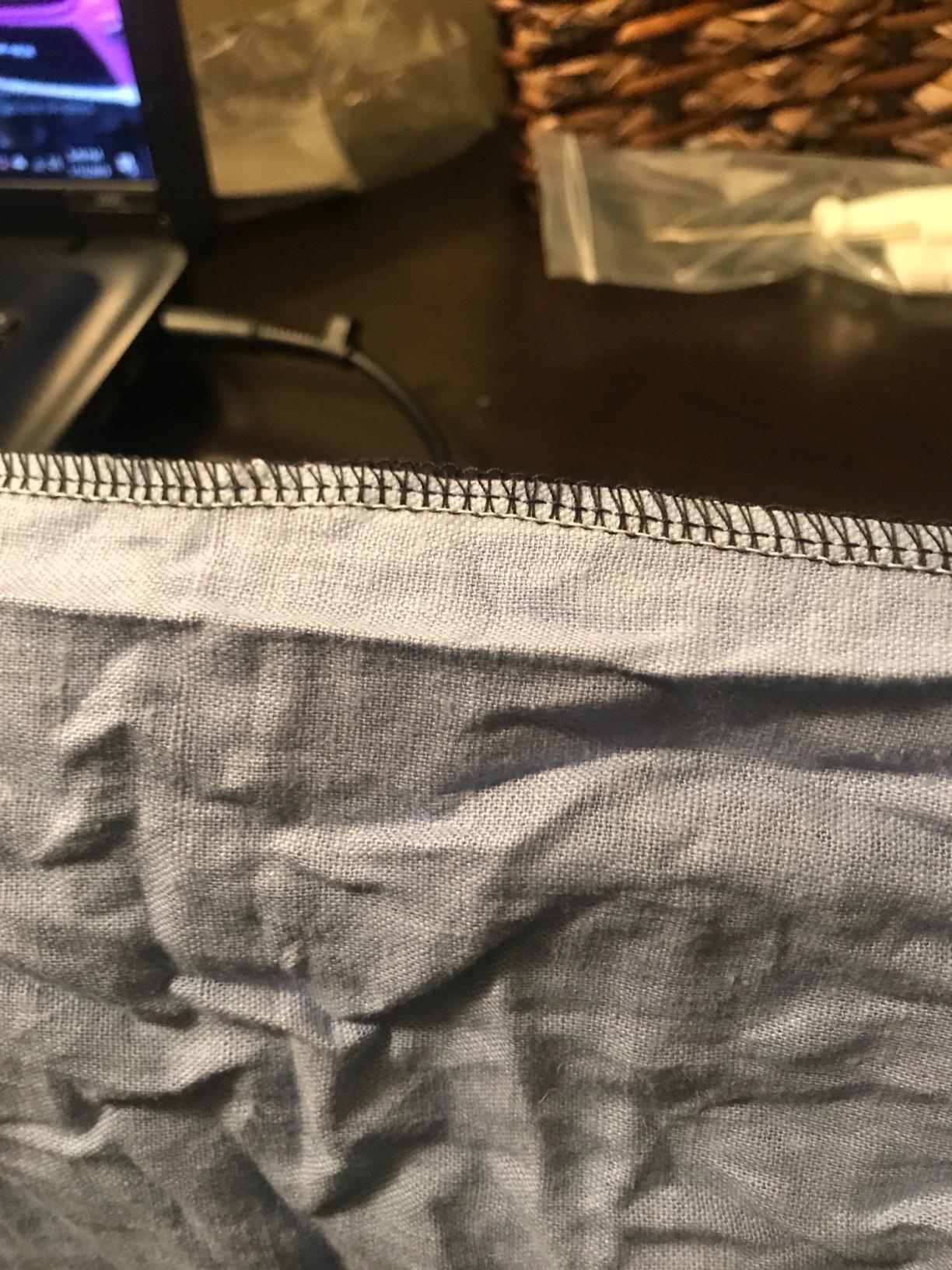
Stitch quality is what experienced sewists rate it on, and reviewers describe the stitching as even and consistent, with a differential feed that works well and is easy to adjust. It runs quietly at normal speeds, arrives pre-threaded with sample spools so you can start sewing immediately, and adjustable presser foot pressure lets you fine-tune for the fabric in front of you.
The honest weaknesses are real. There is no free arm, which limits you on cuffs and small tubular items. The upper knife must be pushed hard before the knob turns, which is an awkward motion. Tension can walk out of setting over time and need a correction mid-project, and the machine gets noticeably noisy at high speed.
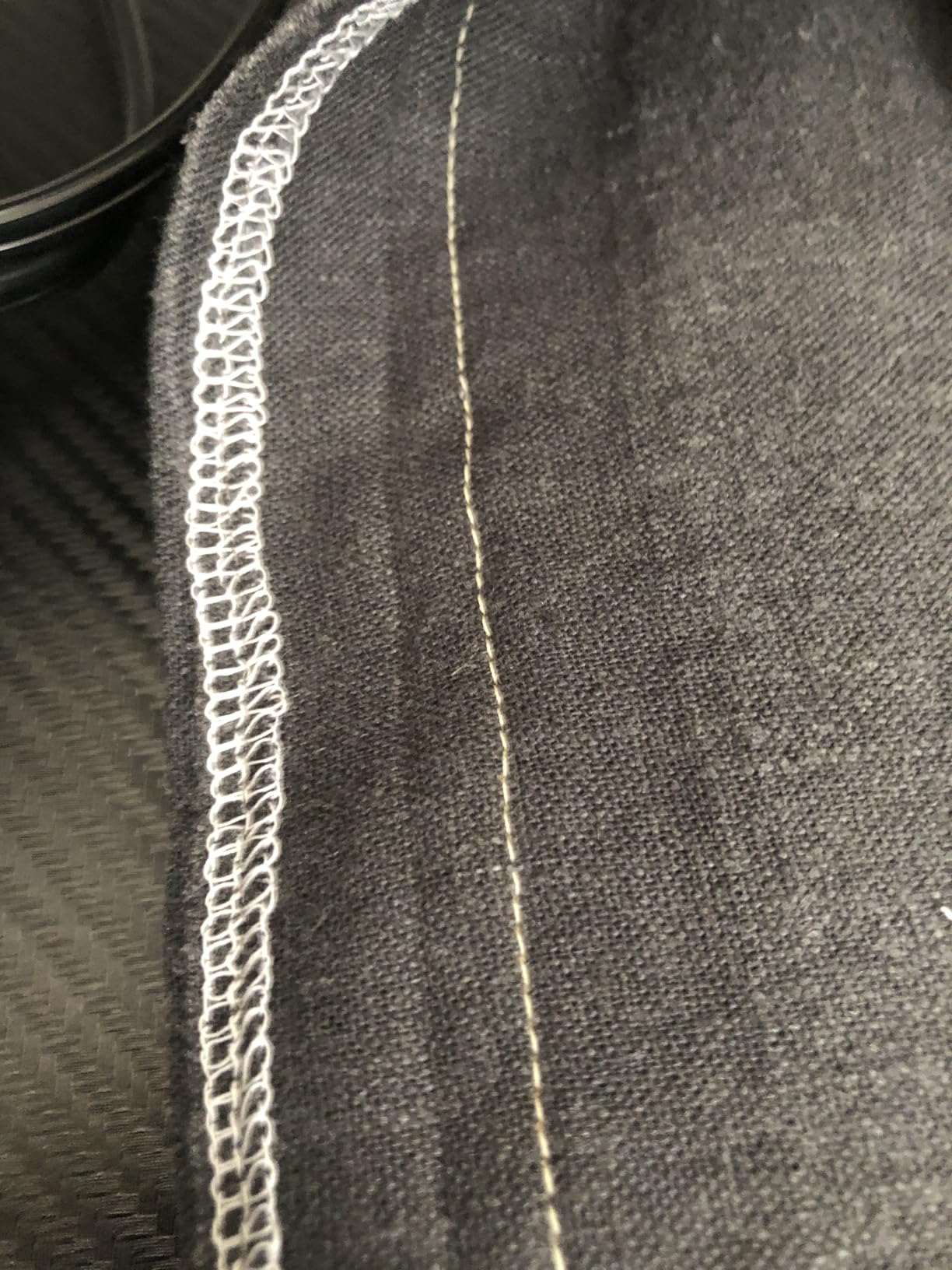
Why experienced sewists rate this one highly
Reviewers with more than one machine in the room describe the Janome as the one they reach for when the fabric matters, because the stitch is even and the tension controls hold. The lay-in dials are physically larger and easier to set precisely than small pull-thread dials, which is why the tension drift issue is usually a small correction rather than a real fault.
For a beginner it is a good place to learn proper tension habits, because setting it deliberately is part of the process rather than something you avoid. Metal internals, a 14.3 pound weight and a 25 year warranty also make it a sensible long-term first machine.
Where it falls short
The lack of a free arm is the biggest functional limit if you plan to sew sleeves or children clothing early on, and it is a structural thing you cannot work around. Threading, particularly the lower looper, is described as frustrating to redo, and the instruction DVD is dated, so budget time for the threading practice described later in this guide.
8. JUKI MO-50E Serger – Best Automatic Looper Threader
Juki, MO-50E, 3 or 4 Thread Serger, Lay In Tensions, Adjustable Differential Feed, Built In Rolled Hem, Automatic Lower Looper Threader, Retractable Upper Knife (MO-50E/UL)
3/4 thread
Auto looper threader
Retractable knife
16 lb aluminum
Pros
- Automatic lower looper threader saves real setup time
- Does not bounce or vibrate on the table
- Built-in rolled hem plus retractable upper knife
- Lay-in tension dials are easy to adjust
- Clear readable manual included
Cons
- Threading is still finicky without air threading
- Loopers can unthread mid-project and force a full rethread
- Often arrives without serger thread or accessories
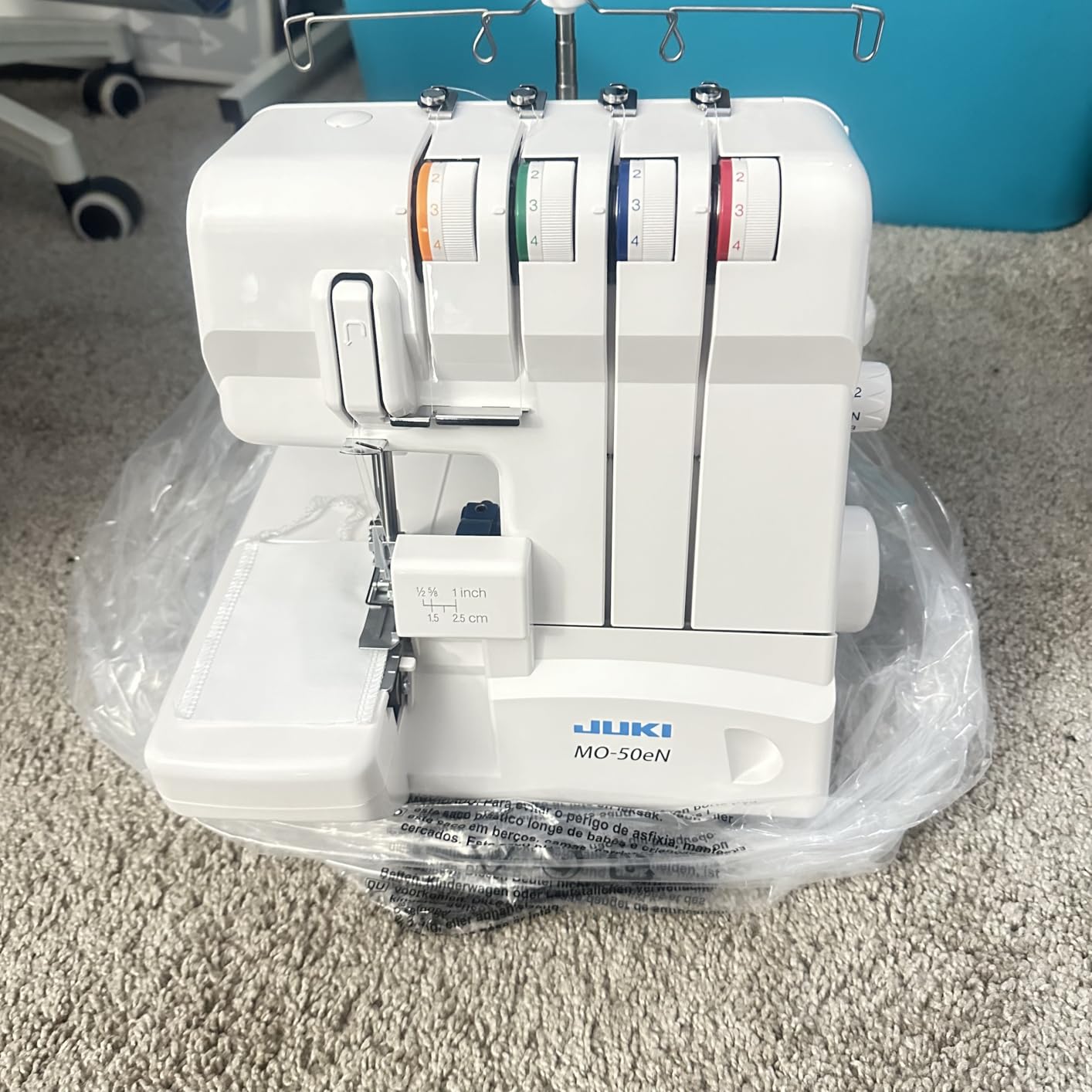
The MO-50E solves one specific beginner problem better than anything else here: the lower looper. An automatic lower looper threader takes the hardest step in the process and turns it into a button press, and owners regularly describe it as the reason they stopped dreading restarts mid-project. It is the closest thing to air threading in this roundup without jumping to a higher price band.
Everything else is solid rather than flashy. The aluminum body does not bounce or vibrate, there is a built-in rolled hem, and the retractable upper knife retracts when you switch to flatlock, which removes one of the fiddly configuration steps. Lay-in tension dials and adjustable differential feed are both straightforward to set, and the manual is clear and readable.
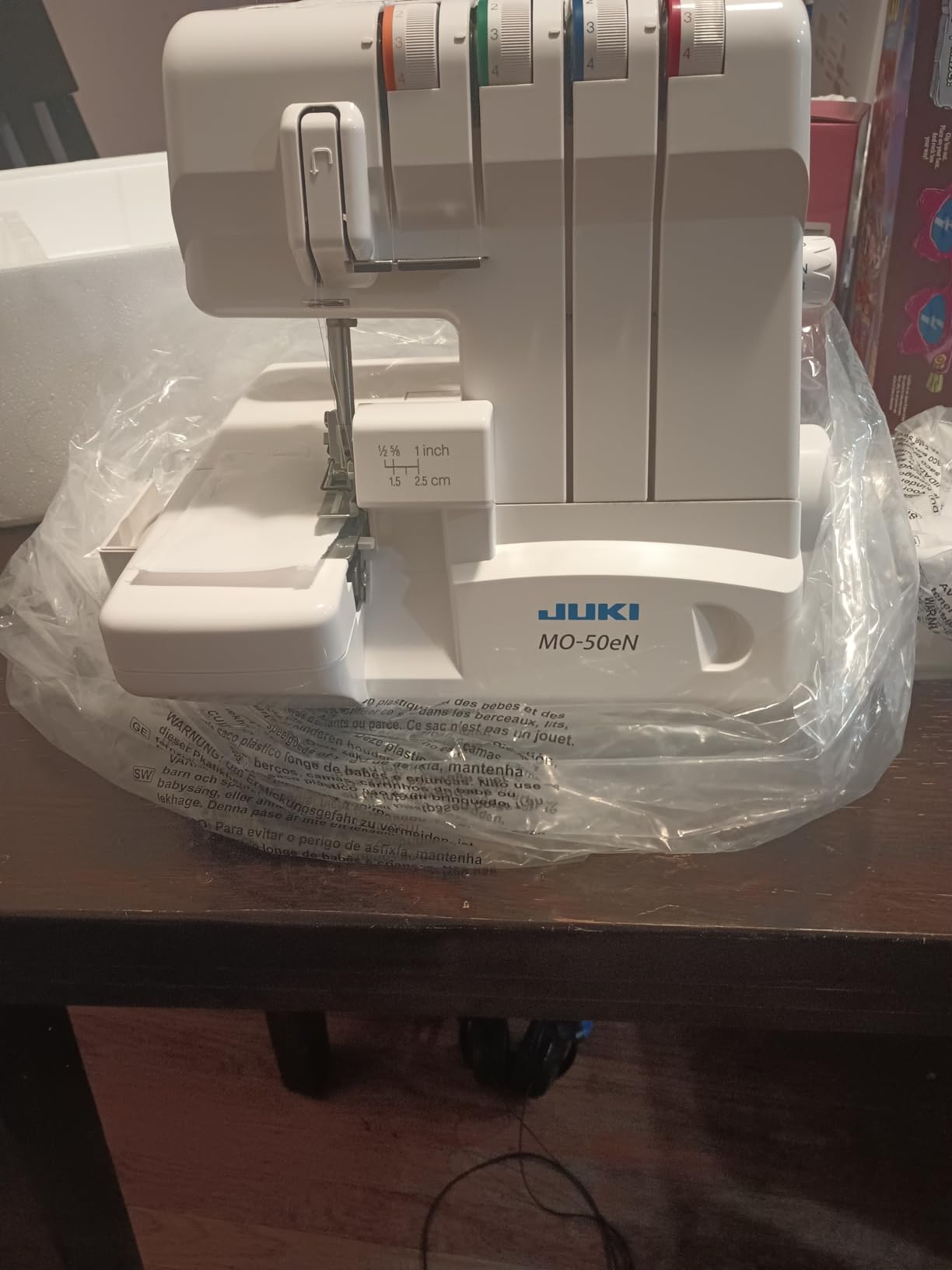
Owners report it gliding through thicker seams with no skipped stitching, handling multiple layers cleanly, and running quietly even at higher speeds. The warranty is limited to the original purchaser at five years parts and two years electronics, and consumable parts are excluded, which is worth comparing with the Janome coverage on the next page.
The catch is that the automatic threader does not make the upper path beginner-proof. Threading is still described as finicky and can take several attempts, and the loopers can unthread mid-seam, forcing a full rethread. Accessories and serger thread are often reported missing from the box, including the special screwdriver the machine needs, so check the contents the moment it arrives.
Best fit if restarting projects annoys you
If your sewing session gets interrupted, an automatic looper threader is a genuine quality-of-life upgrade rather than a gimmick. Coming back after twenty minutes and picking the thread path up again is the moment many beginners decide they do not like sergers, and this machine removes the hardest part of that restart.
The retractable upper knife is the second quiet win. Instead of removing a component to change stitch type, you flip a control, so switching between rolled hem, flatlock and standard overlock stays low-stress while you are still learning what each stitch does.
Where it falls short
It is a 3 or 4 thread machine, so you give up the two-thread overcast. The upper threading path is still the weak point if large hands struggle, and loopers coming loose mid-project is a genuine complaint among owners. Verify the box contents carefully on arrival, because the special screwdriver is required to operate it.
How to Choose a Beginner Serger: Threading, Feed and Thread
Threading systems ranked for a beginner. The three systems in this roundup, from most to least forgiving, are air threading where the looper is blown through automatically, automatic looper threading as on the JUKI MO-50E, lay-in threading with a pretension slider as on the Janome MOD-8933, and manual threading with colour-coded guides as on the Brother 1034D. Air threaders sit above this price range, so the realistic choice is between an automatic looper threader and a machine that makes manual threading as painless as possible. Forum posters buying a first serger almost always prioritise this over every other feature.
Thread count: 3 and 4 thread is the sweet spot. A 2/3/4 thread machine gives you the widest set of useful finishes on a single body, which is why the SINGER S0230, X5004-HD and S0100 earn their places. 5 thread machines add a safety stitch you will rarely use as a beginner, so it is not worth paying up for one.
Stitches per minute matters less than you think. Everything here runs between 1,300 and 1,500 stitches per minute, so the difference is marginal on small projects and only shows on long seams and quilting. The exception is if a higher speed is harder for you to control, in which case the slower-feeling machines may suit you better despite the headline number.
Metal frame versus plastic shell. Metal frames run steadier, quieter and skip-free on thick fabric, and they heat less near the hand. The Brother 1034D, SINGER X5004-HD, SINGER S0100 and Janome MOD-8933 all have metal frames. The SINGER X5004-HD is the counterexample to look at, because its heavy frame keeps the stitching excellent while the plastic housing still makes it louder than older machines.
Free arm and extension table. These answer opposite problems. A free arm is what lets you finish cuffs, sleeves and children’s clothing, which the SINGER S0230, S0100 and X5004-HD all offer. An extension table is what lets you feed quilt backs and large panels, which the Brother ST4031HD handles best. The Janome MOD-8933 has neither, which is the main thing you accept when you buy it.
Serger thread and needles. Buy cones of polyester serger thread rather than using regular sewing machine thread, which is thinner and breaks under the constant tension. A 4-spool set of cones plus a 4/90 needle set covers most beginner work, and a spare lower knife is worth ordering at the same time because it is the consumable you will replace first. If you like researching entry-level kit for other hobbies, our best CNC machines tested follows the same approach of matching capability to the project instead of buying on headline numbers.
Serger vs Sewing Machine: Do You Need Both?
Yes, and most home sewists who buy a serger keep their sewing machine. A serger cannot make buttonholes, install zips, topstitch a waistband or sew darts, so it finishes seams rather than constructing garments. What it does instead is cut your finishing time sharply and give knit seams a stretch that a straight stitch cannot match.
The practical pattern is simple: assemble on the sewing machine, finish on the serger. If your current machine is a basic mechanical model, spending on a serger before upgrading it usually delivers more visible improvement for less money. It is the same rule we follow whenever we test a first-time purchase, such as our pick-by-pick guide to the best tattoo machines tested.
Your First 10 Serger Projects, Easiest to Hardest
Nobody covers this and it is the fastest route to confidence. Work in this order and each project adds exactly one new skill.
Scrape test on fabric scraps to learn the foot pedal and speed control
Simple rolled hem on cotton napkins
Two-thread overcast on a woven scarf edge
Four-thread overlock seam on a cotton pillowcase
Three-thread flatlock seam on jersey
T-Shirt side seams with differential feed adjusted
Stretchy leggings waistband finish
Simple knit top with rolled sleeve hems
Swimwear seams in stretchy performance fabric
Quilt binding edge on cotton batting
Keep cotton scraps for the first three, then move to jersey before you attempt anything heavier. If a seam looks wrong, the usual cause is differential feed left at its default setting rather than a machine fault, and adjusting it is the first habit worth building.
Five Beginner Serger Mistakes to Avoid
Threading out of order. Upper path and lower looper have a sequence. Follow the colour-coded marks in order rather than jumping ahead, and rethread from the beginning if you are unsure.
Ignoring differential feed on knits. Wavy, stretched seams are almost always this, not a broken machine. Turn the dial before you change anything else.
Puckering lightweight wovens. Raise the differential feed slightly and lighten the presser foot pressure before loosening tension.
Keeping the same needle forever. A blunt needle bends the thread and skips stitches. Change it on a regular schedule and never reuse a needle that has hit hard material.
Forgetting oiling. Several machines here, including the Brother models, need oiling before first use and about monthly. A dry machine sounds rough and stitches worse, and the step is easy to miss.
Two safety habits matter as well. Keep your fingers clear of the moving knife when feeding narrow items, and never reach under the machine while it is running to clear a thread break. Cut the power first.
Frequently Asked Questions
What is the easiest serger for a beginner to learn to use?
The easiest serger for a beginner is usually the one with colour-coded thread guides and lay-in or automatic looper threading, such as the Brother 1034D or the JUKI MO-50E with its automatic lower looper threader. Machines with an underlooper threader, pre-threaded delivery and a removable trim trap let you start sewing scraps in minutes instead of hours.
Can a beginner use a serger?
Yes. A serger always follows the same thread path in principle, so the learning curve is muscle memory rather than a new skill. Most beginners sew usable seams within a day or two, and the first three projects on any machine can be scrap practice to build foot pedal control and confidence.
What is the best inexpensive serger?
The SINGER S0100 covers the basics at the lowest cost in this roundup, offering 2, 3 or 4 thread options, six built-in stitches, adjustable differential feed and a metal frame. Its weak point is documentation, with no printed manual and reports of missing tweezers, so budget extra time for threading practice.
What is the best home serger for my money?
The Brother 1034D is the strongest overall pick for a home sewist, combining a metal frame, colour-coded threading, 1,300 stitches per minute and three accessory feet in the box. It handles denim and multiple layers, and it is the machine most beginner owners recommend as a first serger.
Which serger is better for my money, Juki or Baby Lock?
Among the models here, JUKI wins on threading convenience and easy-to-source parts, with the MO-50E offering an automatic lower looper threader and the MO-644D offering an automatic rolled hem at 1,500 stitches per minute. Choose JUKI for stitch quality, quiet running and long-term serviceability, and pick a machine by fabric weight rather than brand alone.
Is Singer or Brother a better serger machine?
Brother is generally stronger for heavy fabrics, since the 1034D and ST4031HD both use metal frames and handle multiple layers of denim. SINGER gives you more choice at the entry level, since the S0230, X5004-HD and S0100 cover 2, 3 and 4 thread work with adjustable differential feed and free arms.
Conclusion: The Best Serger Machines for Beginners in 2026
After comparing all eight machines on threading, stitch capability, fabric range and the complaints owners actually report, the Brother 1034D remains our pick for the best serger machines for beginners in 2026. It threads with the least drama, runs on a metal frame, and covers every stitch a first-time owner will realistically use.
Go with the SINGER S0230 if you want the widest thread options and a free arm, the SINGER X5004-HD if denim and heavy fabric come first, and the Janome MOD-8933 if a 25 year warranty matters more than a free arm. Whichever you choose, practice on scraps, set your differential feed before you sew, and oil the machine on schedule.