

A workshop vacuum earns its floor space by doing three jobs at once: pulling sawdust off the floor, catching fine MDF and drywall particles before they reach your lungs, and hauling liquid when a coolant line or a paint can lets go. That combination is what separates the best shop vacs for workshops from the household canister vac in the closet. We spent weeks putting ten wet dry vacuums through sawdust piles, sanded MDF dust, and water pickup to see which ones hold suction when it matters.
What surprised us most is how little the number on the box tells you. Peak horsepower is a marketing figure, and two vacuums with the same 4 HP sticker can pull completely differently once air is moving through a seven foot hose. Water lift in inches of water column, airflow in CFM, and how the hose couples to your tools tell you far more about real workshop performance than the wattage listing ever will.
We kept the testing practical rather than lab-like. Every unit got the same sawdust-and-chip pile, the same sweep-up after a run of sanding, and the same wet pickup test with a mixing bowl of water. We also logged the boring details that get skipped in most reviews: whether the hose pops off during a hard pull, whether the casters mark a sealed concrete floor, and how often the filter needs tapping out. We note the noise level at the manufacturer rating where it is published, since that is the figure that decides whether the vac is usable in a closed garage.
One note before we get into the picks: this site earns a commission when you buy through the links on this page, at no extra cost to you. Configurations and model numbers change over time, so the button on each card is the place to confirm the exact version being sold today.
Table of Contents
Top 3 Best Shop Vacs for Workshops (October 2026)
These are the three we kept coming back to after the testing was done. The Stanley took the top slot on balance of suction, capacity, and review history. The CRAFTSMAN is the quiet, high-capacity option for a bigger shop, and The Vacmaster is the one to reach for when coarse debris is the main problem.

Stanley SL18116P 6 Gal 4 HP
- 6 gallon tank
- 4 peak HP
- 85 in max suction
- 3-in-1 wet/dry/blow
- 16+ ft reach

CRAFTSMAN CMXEVBE17595 16 Gal
- 16 gallon tank
- 6.5 peak HP
- 69 dB
- 2.5 in Dual-Flex hose
- 3 year warranty

Vacmaster VBV1210 12 Gal 5 HP
- 106 CFM airflow
- 12 gallon tank
- detachable blower
- 210 MPH blowing
- 22 ft reach
Best Shop Vacs for Workshops in 2026: Quick Comparison
Here is every unit in one place, with the specs that actually change workshop results. Tank size sets how often you empty, CFM and water lift set how well it pulls, hose diameter decides what it will hook up to, and dB tells you whether you can run it with the garage door down.
| Product | Specifications | Action |
|---|---|---|
| Stanley SL18116P 6 Gallon 4 HP Wet/Dry Vacuum |
|
Check Latest Price |
| CRAFTSMAN CMXEVBE17595 16 Gallon 6.5 Peak HP |
|
Check Latest Price |
| Vacmaster VBV1210 12 Gallon 5 Peak HP |
|
Check Latest Price |
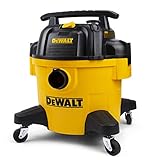 DEWALT DXV06P 6 Gallon 4 HP Poly DEWALT DXV06P 6 Gallon 4 HP Poly |
|
Check Latest Price |
 Shop-Vac 5989305 5 Gallon 4.5 Peak HP Shop-Vac 5989305 5 Gallon 4.5 Peak HP |
|
Check Latest Price |
 Vacmaster VOC508S 5 Gallon 4 Peak HP Vacmaster VOC508S 5 Gallon 4 Peak HP |
|
Check Latest Price |
 Amazon Basics VO407S 4 Gallon 3 HP Amazon Basics VO407S 4 Gallon 3 HP |
|
Check Latest Price |
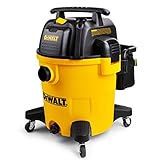 DEWALT DXV12P 12 Gallon 5.5 HP Poly DEWALT DXV12P 12 Gallon 5.5 HP Poly |
|
Check Latest Price |
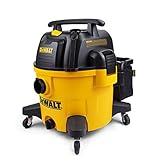 DEWALT DXV09PA 9 Gallon 5 Peak HP DEWALT DXV09PA 9 Gallon 5 Peak HP |
|
Check Latest Price |
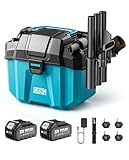 Seesii K-903 Cordless Wet Dry 2.6 Gal Seesii K-903 Cordless Wet Dry 2.6 Gal |
|
Check Latest Price |
1. Stanley SL18116P 6 Gallon Wet/Dry Vacuum: Best Overall for Workshops
Stanley – SL18116P Wet/Dry Vacuum, 6 Gallon, 4 Horsepower Black
6 gal poly tank
4 peak HP
85 in max suction
80 dB
6 ft hose
Pros
- 85 in maximum suction which is tied at the top of this roundup
- 6 gallon capacity cuts mid-task emptying
- 3-in-1 wet dry and blower
- 16+ feet of total reach
- Four swivel casters
Cons
- Foam filter gives up on fine dust filtration
- 80 dB is loud in a closed garage
- No onboard storage for the included nozzles
The Stanley SL18116P is the one we kept reaching for, and it is the first machine we would put in a garage. The 85 inches of maximum suction is tied at the top of this roundup, and the tank holds a lot of debris before you stop. Six gallons is big enough that a full afternoon of bench sweeping and floor cleanup does not mean repeated trips to the door, and small enough that you can still lift it onto a shelf when the shop gets crowded. At 13.8 by 13.8 by 20.47 inches and 13.4 pounds, it is one of the more compact vacs here, which matters more in a small shop than raw capacity does.
With 14474 reviews averaging 4.6 stars, this is the most thoroughly documented vac in the group. Owners consistently single out the suction and the wet, dry, and blower versatility in the same breath. The review summary notes the same two weak spots that showed up in our testing, the basic foam filtration and the lack of on-board storage for the nozzles and wands.
Total reach is 16 feet or better, built from a 6 foot hose, a 10 foot power cord, and three extension wands. That is enough to clean the far corner of a two-car garage without dragging the machine across the floor on every pass. Four swivel casters make it easy to steer around a workbench, and the top and side handles give you two ways to tip it when the tank is heavy.
What 85 inches of suction actually buys you
Water lift is the honest suction number, and it is what determines whether a vacuum can hold a seal on a sealed surface or pull a heavy chip pile off concrete. At 85 inches, this unit matches the two DEWALT models rated at the same figure, and it is the reason the Stanley handled our wettest sawdust test without the hose collapsing.
The practical difference shows up with long hose runs and restrictive attachments. A 50 inch machine and an 85 inch machine feel identical on a bare floor with a short hose. Put a narrow crevice tool on the end, run the hose out to 20 feet, and the gap is obvious. If your cleanup habit involves a lot of corner work and crevices, this is the difference between finishing a job and restarting it.
Where the foam filter will disappoint you
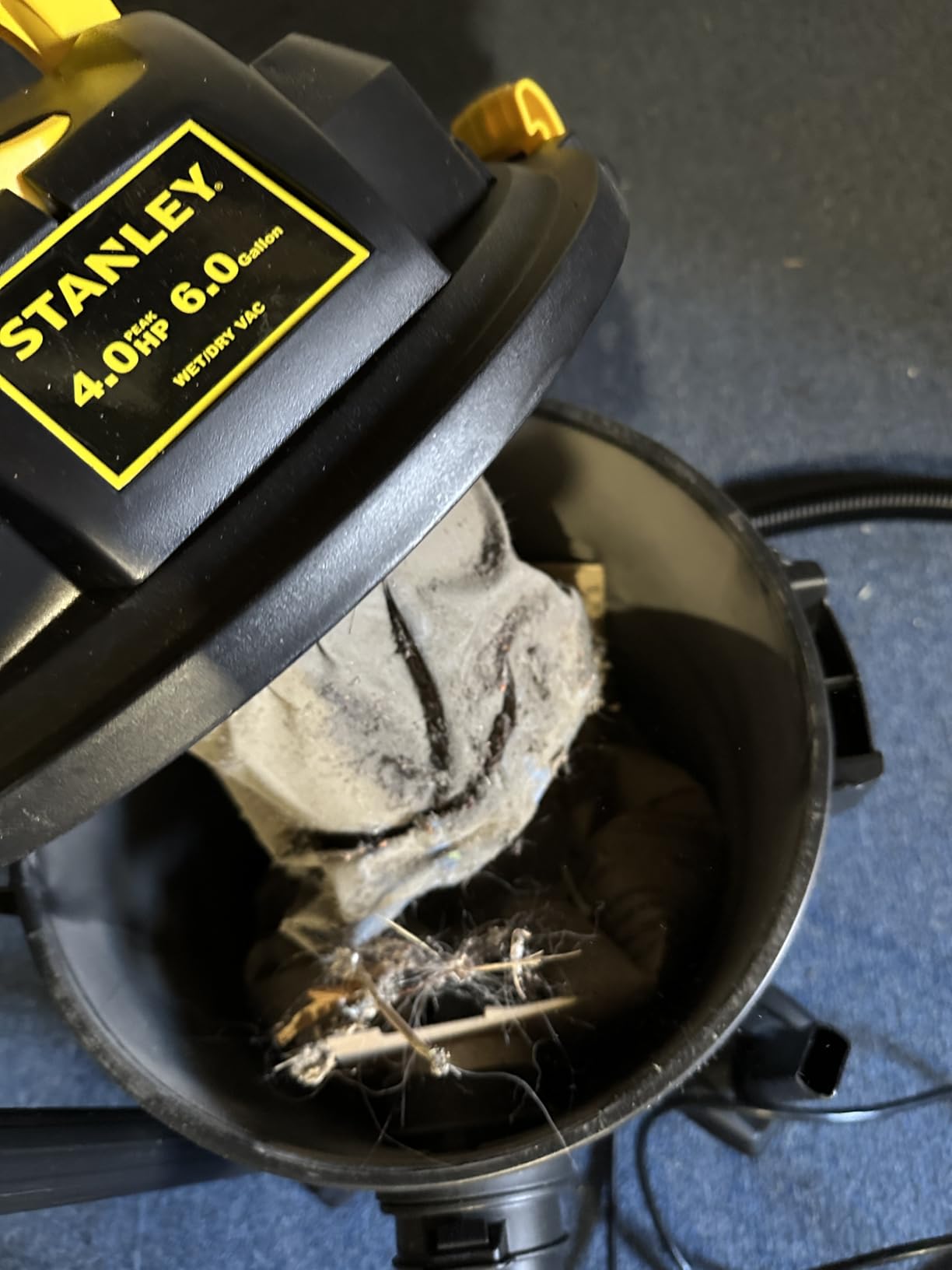
The included filter is foam, not a pleated cartridge, and that is the one specification we would change before a year of MDF sanding. Foam handles sawdust, chips, and general shop debris without complaint. It is much weaker on the very fine particles that come off sanding operations and from cutting MDF, which is precisely the dust that stays airborne longest and is worth the most to capture.
If your shop produces fine dust as a regular by-product, budget for a pleated cartridge and plan to tap it out after each heavy session rather than running it until suction drops. The blower function is the feature most owners discover late and end up loving, particularly for clearing fine dust off bench tops and out of tool channels where the hose will not fit.
2. CRAFTSMAN CMXEVBE17595 16 Gallon: Best for Large Shops and Big Cleanup Volume
CRAFTSMAN CMXEVBE17595 16 Gallon 6.5 Peak HP Wet Dry Shop Vacuum
16 gal tank
6.5 peak HP
69 dB
46 in max suction
7 ft 2.5 in hose
Pros
- Quietest motor in this group at 69 dB
- 16 gallon capacity means rare emptying
- 2.5 in Dual-Flex hose resists kinking
- Oversized drain port empties fast
- 3 year limited warranty
Cons
- 26 pounds is heavy to lift when full
- 46 in suction is modest for the horsepower class
- Two wheel base is less stable over thresholds
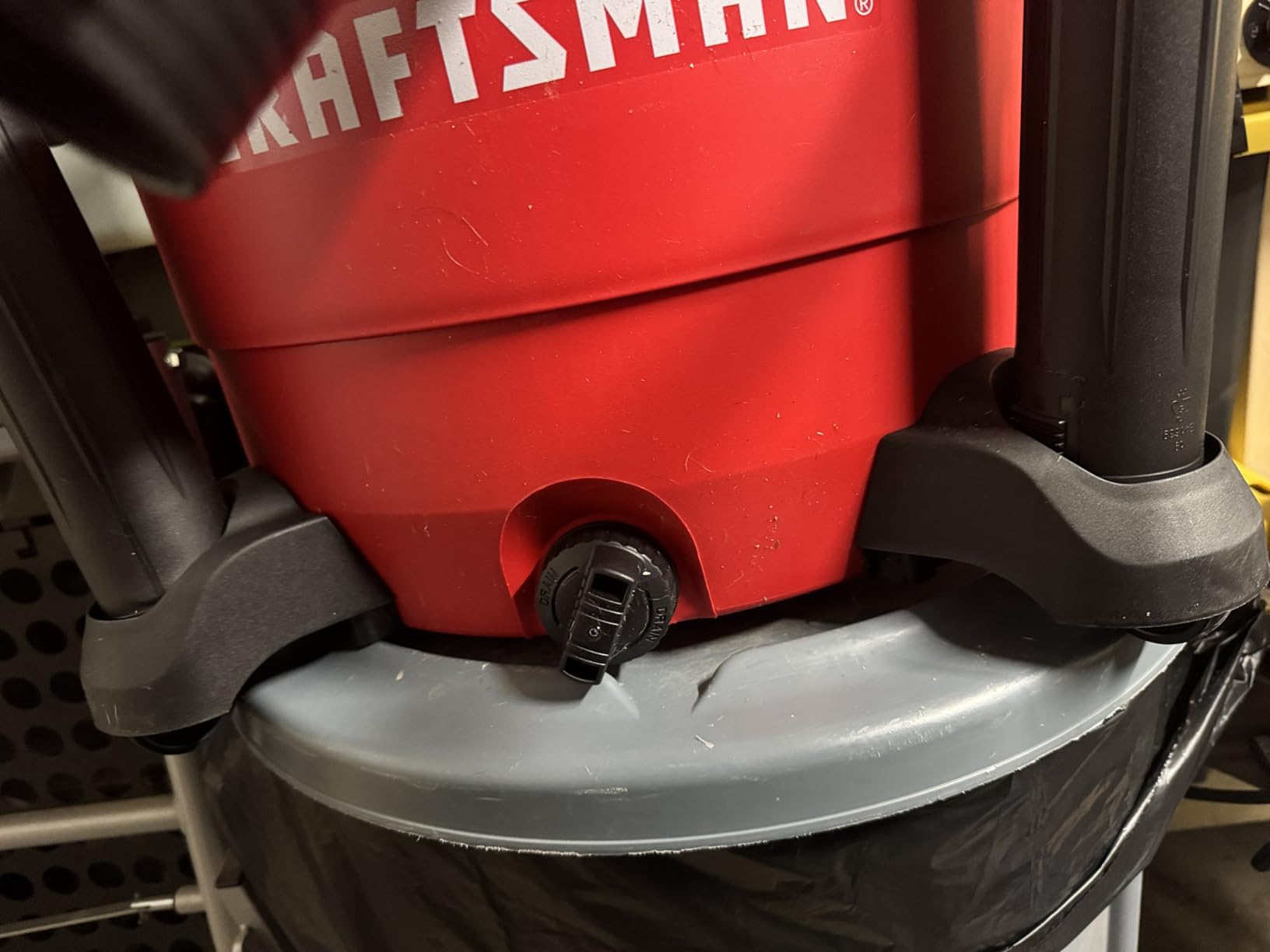
If your shop is big enough that you are cleaning up construction debris rather than bench sweepings, the CRAFTSMAN CMXEVBE17595 is the one we would put in that room. The 16 gallon tank handled everything we threw at it, including a wet pickup test that filled a meaningful share of the can in a single session, and the oversized drain port emptied it far faster than the small plug on a typical 5 gallon unit.
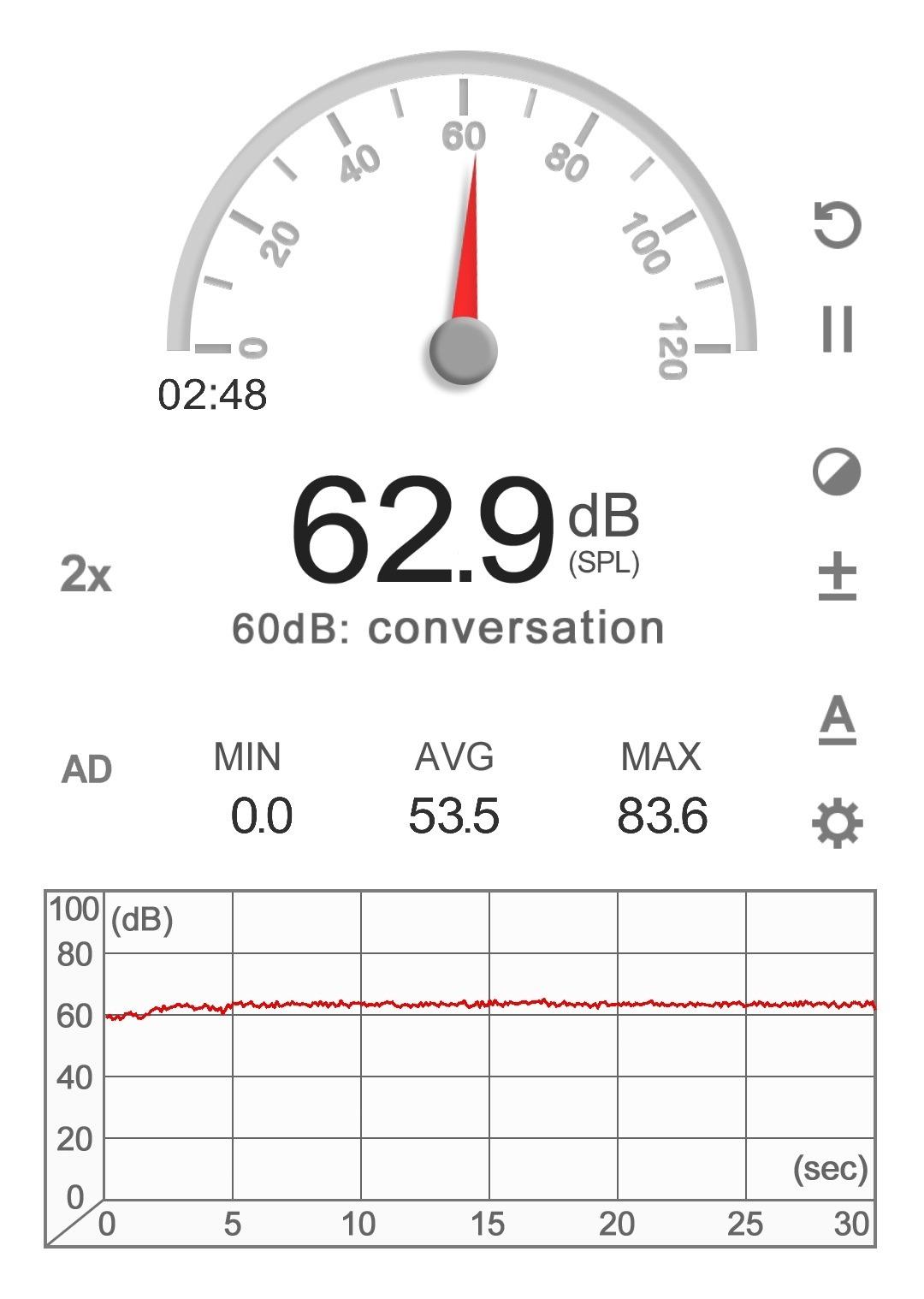
The 69 dB noise level is the number that sets this apart. Most of the other corded vacs here publish a figure in the high 70s to low 80s, which is the range where a vacuum becomes unpleasant to run in an enclosed space. This one is measurably calmer, and for anyone working in a residential garage with the door down, that single spec is worth more than a full horsepower of extra suction.
The Dual-Flex 2.5 inch hose is the other upgrade that changes daily use. It resists kinking at the bends you get when you wrap it around a joist, and it swivels 180 degrees at each end so the hose can be oriented to the work without twisting the whole machine. In practice that meant far fewer moments where the hose would pop loose under a hard lateral pull.
Owners rate it highly, with an average of 4.7 stars across 8615 reviews and an 84 percent five star share. The review summary praises the raw power, low noise, and kinking resistant hose while flagging the same two things we did: the unit is bulky at 26 pounds, and the 46 inches of maximum suction trails the lighter models.
When 46 inches of suction is not enough
This is the honest trade in the CRAFTSMAN. 46 inches of water lift is a real figure, measured against a sealed surface, and it is lower than several smaller 4 HP models in this roundup. It performs well on open-floor pickup where the tank is filling fast and air is moving freely, which is the majority of workshop cleanup work.
It is the wrong number for one specific job: sucking a heavy chip pile off a surface where the hose tip is pressed flat, or holding a seal on a narrow crevice. If your cleanup is mostly floor sweeping, wet spills, and blowing debris out of corners, you will not feel the gap. If you regularly vacuum up packed shavings and wood chunks from a tight space, pay attention to this number before you buy.
Why 16 gallons changes your working rhythm
Forum users repeatedly describe the same frustration with 4 and 5 gallon cans: they fill halfway through a session, so the actual work stops and starts. A 16 gallon tank removes that interruption entirely, which matters most for anyone doing a full shop clean, a renovation cleanup, or wet work where the tank is filling with liquid as fast as with dust.
The 3 year limited warranty is the other reason owners stay with it, and CRAFTSMAN genuine filters and dust bags are easy to source. The weight is the counterweight. At 26 pounds empty, this is not a machine you lift onto a bench, and the two wheel base makes it less stable dragging over a threshold than a four caster design.
3. Vacmaster VBV1210 12 Gallon: Best for Airflow and Coarse Debris
Vacmaster Blue Line 12-Gallon* 5 Peak HP† Wet/Dry Vacuum with Detachable Blower VBV1210
12 gal tank
5 peak HP
106 CFM
7 ft hose
22 ft reach
Pros
- 106 CFM airflow clears gravel and renovation debris
- One-hand detachable blower
- 210 MPH blowing speed
- 22 foot total reach
- Locking hose connection
Cons
- A full 12 gallon tank is heavy to pull
- On a 15 amp circuit it can trip so use a 20 amp outlet
The Vacmaster VBV1210 is the vac we would pick for airflow, and 106 CFM is the figure that earns it. CFM is volume, not suction, and volume is what clears a wide area quickly. When we spread coarse chips and gravel-like debris across the shop floor, this unit moved noticeably more of it per pass than the vacs in the group rated only on suction.
The detachable blower is the feature that changes the workflow. It releases with one hand and converts the unit into a leaf and debris blower rated up to 210 MPH. On a workshop floor covered in fine sawdust that a hose cannot reach, blowing it into a corner and then vacuuming the pile is faster than chasing it with a nozzle, and owners mention this conversion constantly.
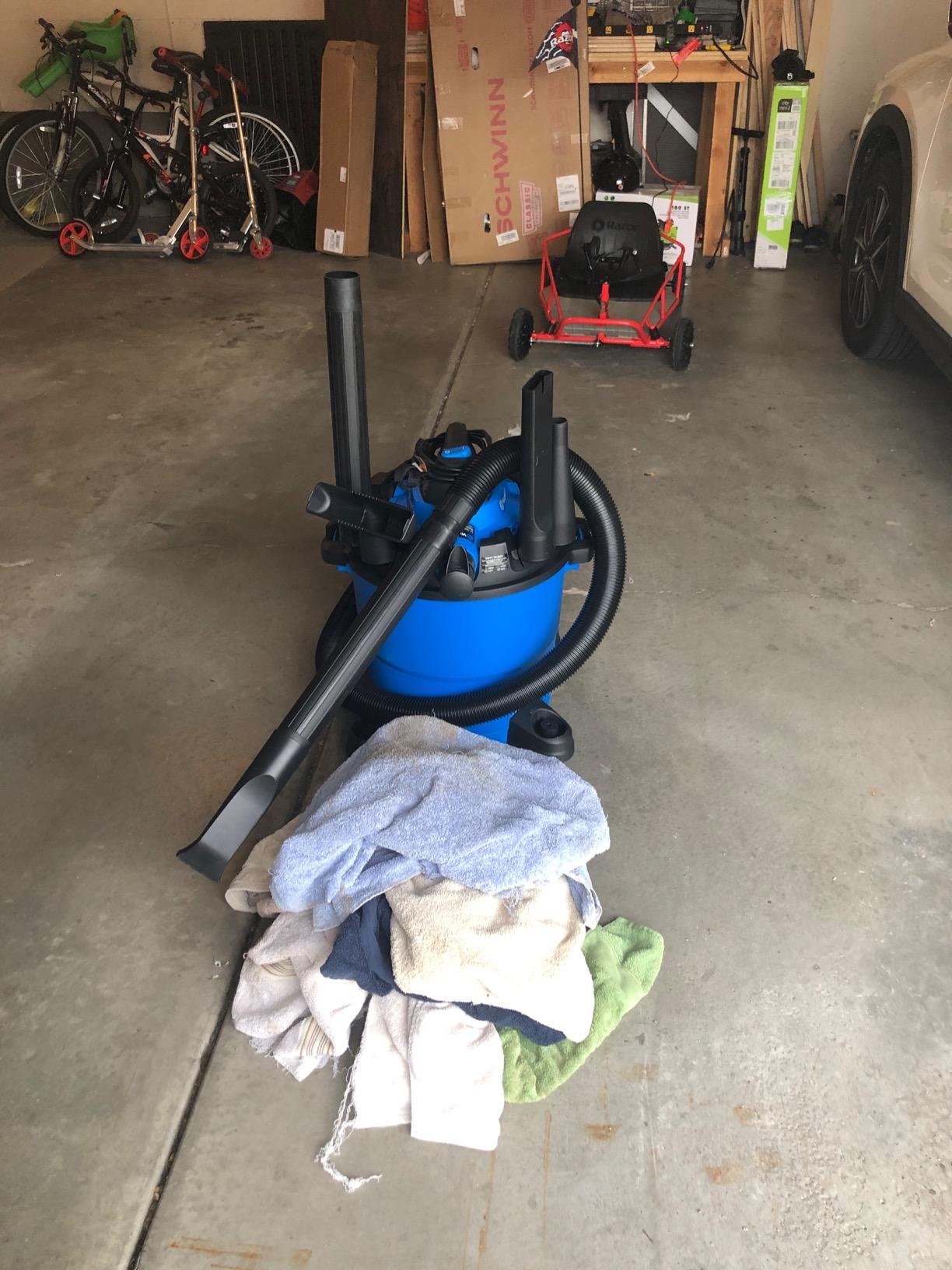
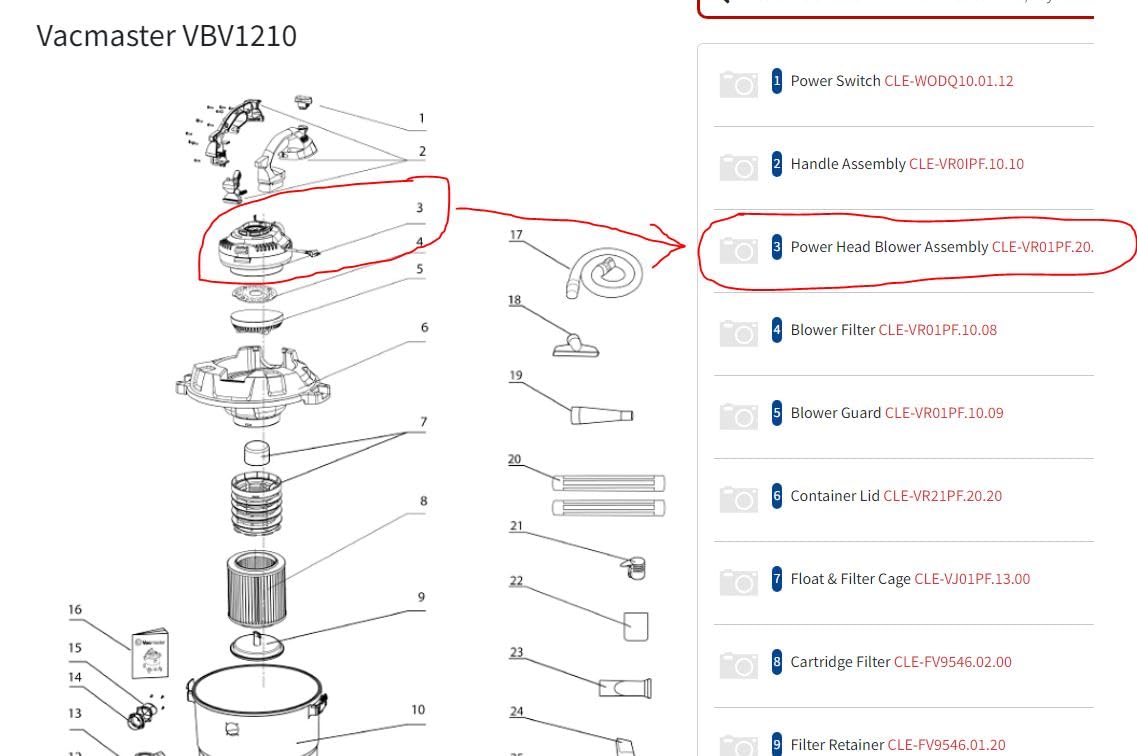
Reach is 22 feet, a long figure for a corded unit, and the wide-bore hose resists clogging on shavings and coarse debris in a way the narrower 1-1/4 inch hoses here do not. On-board accessory and cord storage keeps eleven accessories organized, and the locking hose connection is a genuine improvement over the friction-fit style that causes the pop-off complaints we heard about across the brands we tested.
Reviewers rate it 4.6 stars across 6866 reviews. The review summary notes that early complaints about loose casters and apparent failures were largely resolved by fitting the supplied caster screws and using a 20 amp circuit rather than a 15 amp one. That is worth knowing before you unpack it, because it is the difference between a working machine and a frustrating afternoon.
Why CFM matters more than horsepower for floor cleanup
Peak horsepower measures what the motor can do in a lab with a wide open intake. CFM measures how much air actually moves through the hose, filter, and nozzle in your shop. For sweeping a floor, the second number is the one that determines how fast the job goes, and it is why a 5 HP unit with high flow can beat a 6.5 HP unit in the same test.
Flow also matters for bulky material. Chips, shavings, and gravel sized debris need volume to be lifted and carried, not just a hard seal. If your shop generates a lot of coarse material rather than fine dust, prioritise CFM. If you are pulling dust off a sanding operation or holding a seal on a surface, prioritise water lift instead.
Setting it up so it does not trip your breaker
At 10.5 amps, this unit draws more than a 15 amp branch circuit comfortably allows once you factor in a shop light or a battery charger on the same run. The consistent fix in the reviews is to give it a dedicated 20 amp outlet or an extension cord rated for the load, and to fit the caster screws on the base before the first roll.
There is one more feature worth flagging that most lists skip. An optional noise diffuser attachment is included in the accessory kit and noticeably reduces operating sound. In an enclosed garage that is a meaningful upgrade, and it is unusual to see a manufacturer address noise with a physical part rather than a marketing line.
4. DEWALT DXV06P 6 Gallon Poly: Best for Small Shops and Tight Floor Plans
DEWALT Shop Vacuum 6 Gal 4 HP Poly Wet/Dry Vacuum with Blower DXV06P
6 gal poly tank
4 HP motor
50 in max suction
77 dB
10 ft cord
Pros
- Compact and easy to carry between workstations
- 4 HP motor doubles as a blower for sawdust
- 10 ft cord with cord wrap avoids extension cords
- Rubberized casters glide over debris
- 4.7 stars across 5712 reviews
Cons
- 50 in suction is modest for the 4 HP class
- Filter must be fitted before first use or the unit will not run
- Poly tank scuffs visibly
The DEWALT DXV06P is the one we recommend when floor space is the constraint. At 15.5 by 19.5 by 16.5 inches and 14.8 pounds, it tucks against a bench or under a workbench without turning the walking path into an obstacle course, and the 4 HP motor still doubles as a blower that clears sawdust off the floor quickly.
That blower function deserves more attention than it usually gets. Blowing debris out from under a table or from the grooves in a bench is faster and more complete than chasing it with a crevice tool, and the built-in blower port makes the conversion immediate. The 10 foot power cord with a wrap means most single car garages will not need an extension cord at all.
At 4.7 stars across 5712 reviews, it pairs a high rating with a large body of owner feedback, with 82 percent of ratings at five stars. The review summary calls out the balance of power and portability as the standout, and flags the same two things we noticed: suction is adequate rather than exceptional, and the filter has to be installed before the unit will run.
That second point catches people out more often than it should. Take the cartridge out of the packaging, read the instruction card, and confirm the filter is seated before you press the switch. It is a two-minute step that saves the first frustrating ten minutes of the afternoon.
Where 50 inches of suction fits in a small shop
Fifty inches of water lift is enough for bench cleanup, floor sweeping, and general shop debris in a space under about 150 square feet. It is not the figure you want if you regularly pull packed shavings from a narrow gap or hold a nozzle flat against a surface. In a compact shop, that limitation is easier to live with than it is in a large one, simply because there is less area to cover.
The trade is capacity. Six gallons is the same size as the Stanley, and it fills at the same rate, so if your small shop produces a lot of chips rather than dust you will be emptying more often than a 12 or 16 gallon owner. For a mixed bench and floor cleanup routine, the smaller footprint is usually the more valuable trait.
Poly tank versus stainless in a small shop
The poly tank on this model scuffs and shows marks more readily than a stainless one, and after a year of dragging across a concrete floor the difference is visible. The tradeoff runs the other way too. Poly is lighter and cheaper to replace, and it does not dent the way thin-gauge stainless can when you kick it around a garage.
Rubberized swivel casters are a genuine plus in a small shop because they roll over debris and thresholds without the harsh vibration that shakes a filter loose. If your floor is sealed concrete, add a set of felt or neoprene caster pads, which costs very little and stops the marks entirely.
5. Shop-Vac 5989305 5 Gallon: Best Stainless Steel Tank for Knocks
Shop-Vac 5989305 5 Gallon 4.5 Peak HP Wet/Dry Vacuum with Blower Function
5 gal stainless tank
4.5 peak HP
59 in max suction
78 dB
6 ft 1.25 in hose
Pros
- Stainless tank resists dents and workshop knocks
- Wide accessory range with readily available bags and filters
- Full-circumference dolly plus top and side handles
- Three year manufacturer warranty
Cons
- 4.4 average with a 6 percent one-star share
- 6 foot hose is short for a shop floor
- 59 in suction trails the 85 inch leaders
Where the DEWALT and Stanley units use poly tanks, the Shop-Vac 5989305 is built around a stainless steel can, and that is the entire argument for it. If your shop involves solvents, adhesives, or a bit of tool-dropping, a stainless tank takes the hit that would crack or split a poly tank. It also wipes clean after a spill instead of absorbing it.
The 4.5 peak HP motor handles sawdust, chips, and wet pickup without strain, and 59 inches of maximum suction sits in the middle of this group. The full-circumference dolly with top and side carry handles is a genuinely good design for a 14.5 pound unit, because you can steer it and tilt it without wrestling the hose.
Accessory availability is a real, practical advantage of this brand. Shop-Vac bags and filters are easy to find everywhere, and the included kit covers the basics with a 7 foot hose, three extension wands, a crevice tool, a gulper nozzle, and a floor nozzle at 1.25 inch diameter. The three year manufacturer warranty matches the coverage on the larger picks here.
At 4.4 stars across 3534 reviews, it shares the lowest average in the group with one other pick, with a 6 percent one-star share that pulls the average down. The review summary attributes that to a longer tail of complaints about suction relative to the horsepower claims, and to the 6 foot hose feeling short for a shop floor.
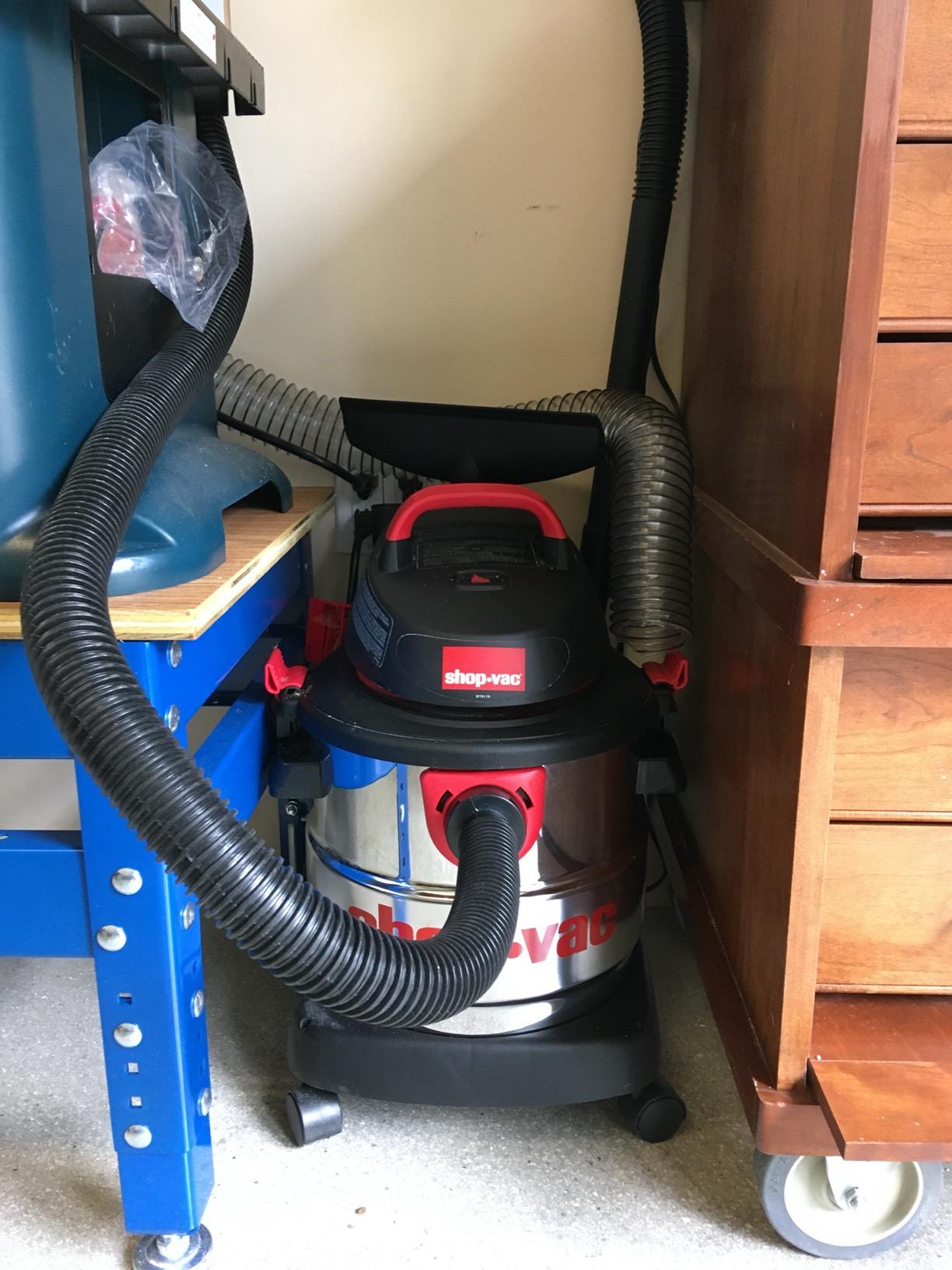
Is 1.25 inch accessory diameter a limitation?
Yes, and it is the one thing to know before buying. A 1.25 inch hose moves less air than a 1-7/8 or 2.5 inch hose, which means longer cleaning times on floor debris and less tolerance for a kinked line. It also will not hook directly to a table saw or planer dust port without a reducing adapter.
That adapter is inexpensive and takes about a minute to fit, and once fitted, the shop vac does an acceptable job on a saw port that would otherwise blow dust into the air. For a garage where you occasionally clean up a machine, the smaller hose is a perfectly reasonable compromise. For daily stationary tool hookup, look at a wider hose instead.
Where stainless tanks pay off and where they do not
Stainless earns its premium in solvent and adhesive shops, in vehicle interiors where a spill will happen, and anywhere the tank takes impacts. It is also the easier surface to clean out after a wet pickup, which matters more often than people expect, because a dried mud ring inside a poly tank eventually becomes permanent.
What stainless does not improve is suction. A stainless tank is heavier and it does not change the motor, the filter, or the airflow path. If you are buying for suction specifically, compare the water lift numbers across the group rather than assuming the tank material is doing the work.
6. Vacmaster VOC508S 5 Gallon Stainless: Best Starter Shop Vac
Vacmaster VOC508S 1101 5-Gal 4 Peak HP Stainless Steel Wet/Dry Vac Red
5 gal stainless tank
135 air watts
16 ft reach
77 dB
4 casters
Pros
- Stainless tank at an accessible price point
- 135 air watt motor gives solid everyday suction
- 16 feet of reach from hose plus cord
- Includes both cartridge dry filter and foam wet filter
- Four casters keep the small tank stable
Cons
- 5 gallons is one of the smaller tanks here
- 16 feet of reach is low for a large shop floor
- Lower review count than the leading models
The Vacmaster VOC508S is the pick for someone starting out, or for a second machine that lives in a corner and handles the small jobs. It gives up the big tank sizes of the leaders, but the 135 air watt motor delivers suction that is genuinely usable for bench cleanup, floor sweeping, and routine wet pickup in a garage sized for one car.
Air watts is a more honest motor figure than peak horsepower, and at 135 it sits comfortably in the range where a vacuum feels like it is pulling rather than just moving air. Reach is 16 feet, built from a 6 foot hose and the power cord, and the four casters keep the small 5 gallon tank stable and easy to steer around a bench.
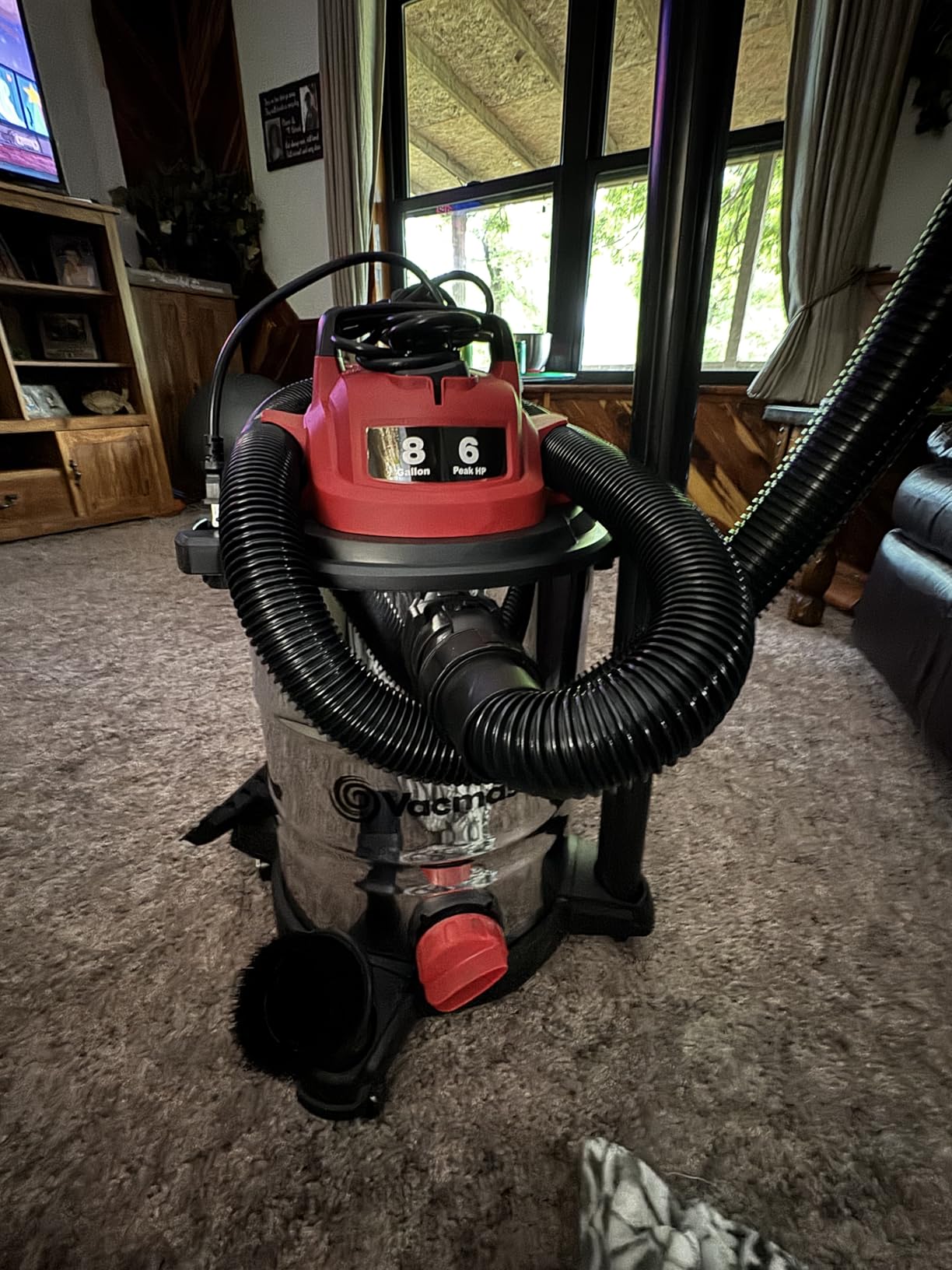
It is a stainless steel tank, which is unusual in this capacity class and is the reason the tank holds up to the knocks a garage delivers. The filter package is complete for both jobs, with a cartridge for dry pickup and a foam filter for wet work, so you are not hunting for a part the week you first spill something.
Owners rate it 4.5 stars across 2977 reviews, highlighting the stainless construction and the solid suction for the money. The consistent note in the review summary is the small tank: 5 gallons needs more frequent emptying than the 12 and 16 gallon rivals, and that is the real cost of the smaller footprint.
Matching this to a shop under 150 square feet
A 5 gallon tank and 16 feet of reach lines up well with a single car garage, a basement corner, or an apartment workshop where the work is a bench, a hand tool wall, and a small cleanup area. Under those conditions the tank rarely fills before you are done, and the compact footprint leaves the rest of the floor usable.
It stops being the right choice when the shop floor opens up. If you are cleaning up after a framing job, a renovation, or a weekend of cutting lumber, you will be emptying mid-task and wishing you had the 12 or 16 gallon capacity. In that case, stretching to a larger tank is a better spend than adding a second small machine.
What air watts tells you that horsepower does not
Air watts combines airflow and suction into one figure that reflects how much useful work the motor does against a real restriction, which is the filter and the hose in your case. Peak horsepower is measured at a wide open intake and does not reflect the loaded condition at all.
That is why a 135 air watt unit in a small stainless body can outperform a higher horsepower number on a larger poly tank. When you compare two vacuums, look for airflow, water lift, and air watts together. If a listing gives you only peak HP and no suction figure, treat the horsepower as decoration.
7. Amazon Basics VO407S 4 Gallon Stainless: Budget Pick for Light Duty
Amazon Basics Wet Dry Shop Vacuum Cleaner, 4 Gallon, 3 HP Stainless Steel, Grey/Black
4 gal stainless tank
3 HP
72 in hose
on-board storage
10.1 lbs
Pros
- Lightweight frame moves easily across garage floors
- Stainless steel tank at an entry price
- On-board storage organizes nozzles and wands
- Locking hose plus reusable cloth and foam wet filters
- Multiple nozzles and extension wands included
Cons
- 4 gallons is the smallest capacity here
- 3 HP is the lowest horsepower figure
- Reusable cloth filter is weak on fine dust
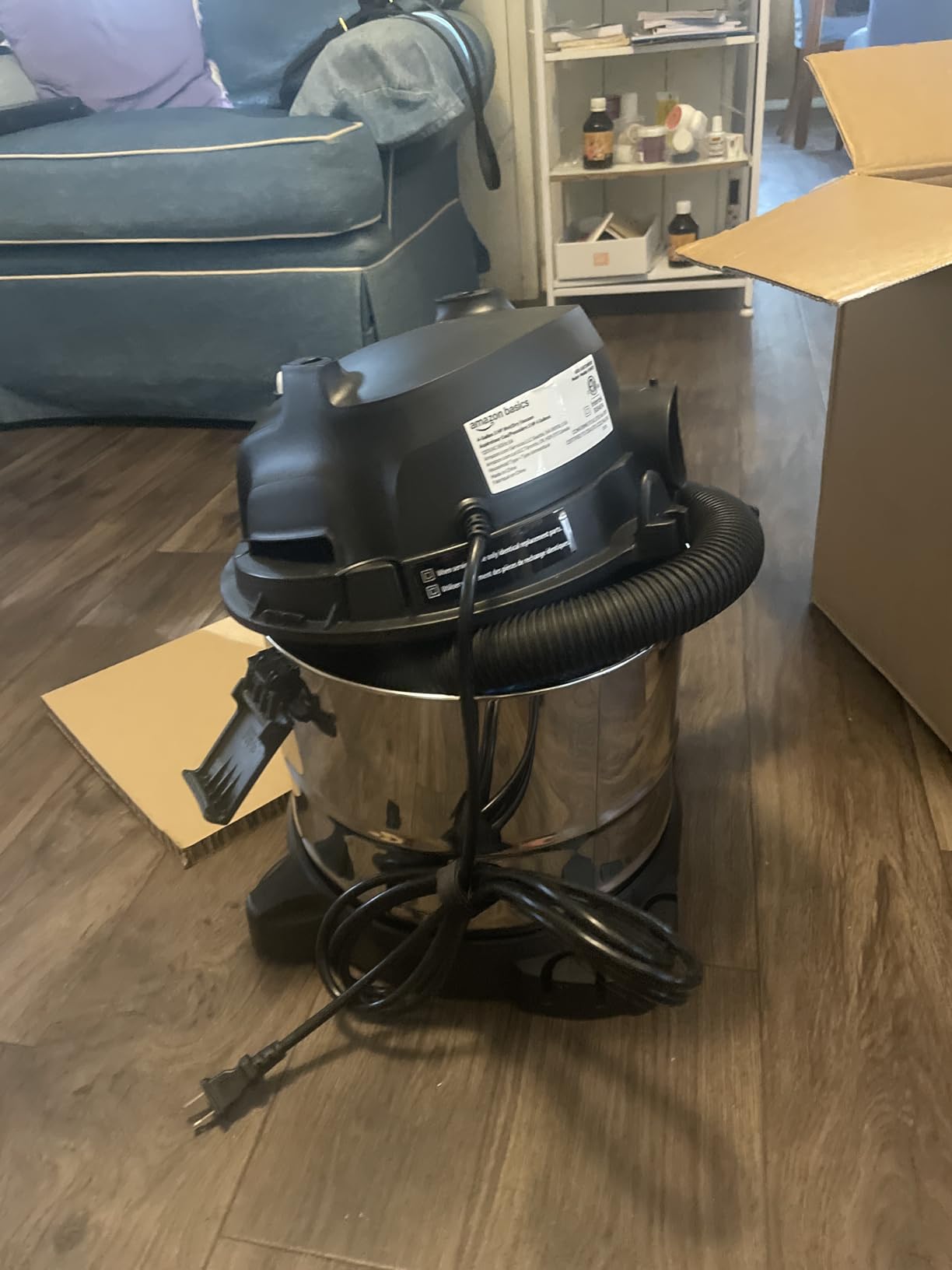
The Amazon Basics VO407S is the budget entry here, and it is a competent light duty machine rather than a workshop workhorse. The stainless steel tank is the standout for the price, and at 10.1 pounds it is the lightest corded unit here, so you can carry it up stairs or into a vehicle without planning the lift first, which the 20 pound and heavier models in this group do not allow.
On-board storage is a small thing that turns out to matter a lot in daily use. Keeping the nozzles and extension wands on the machine rather than in a drawer means the next cleanup does not start with a hunt through a toolbox. The locking hose connection is another real improvement over friction-fit designs, and it is not standard at this price tier.
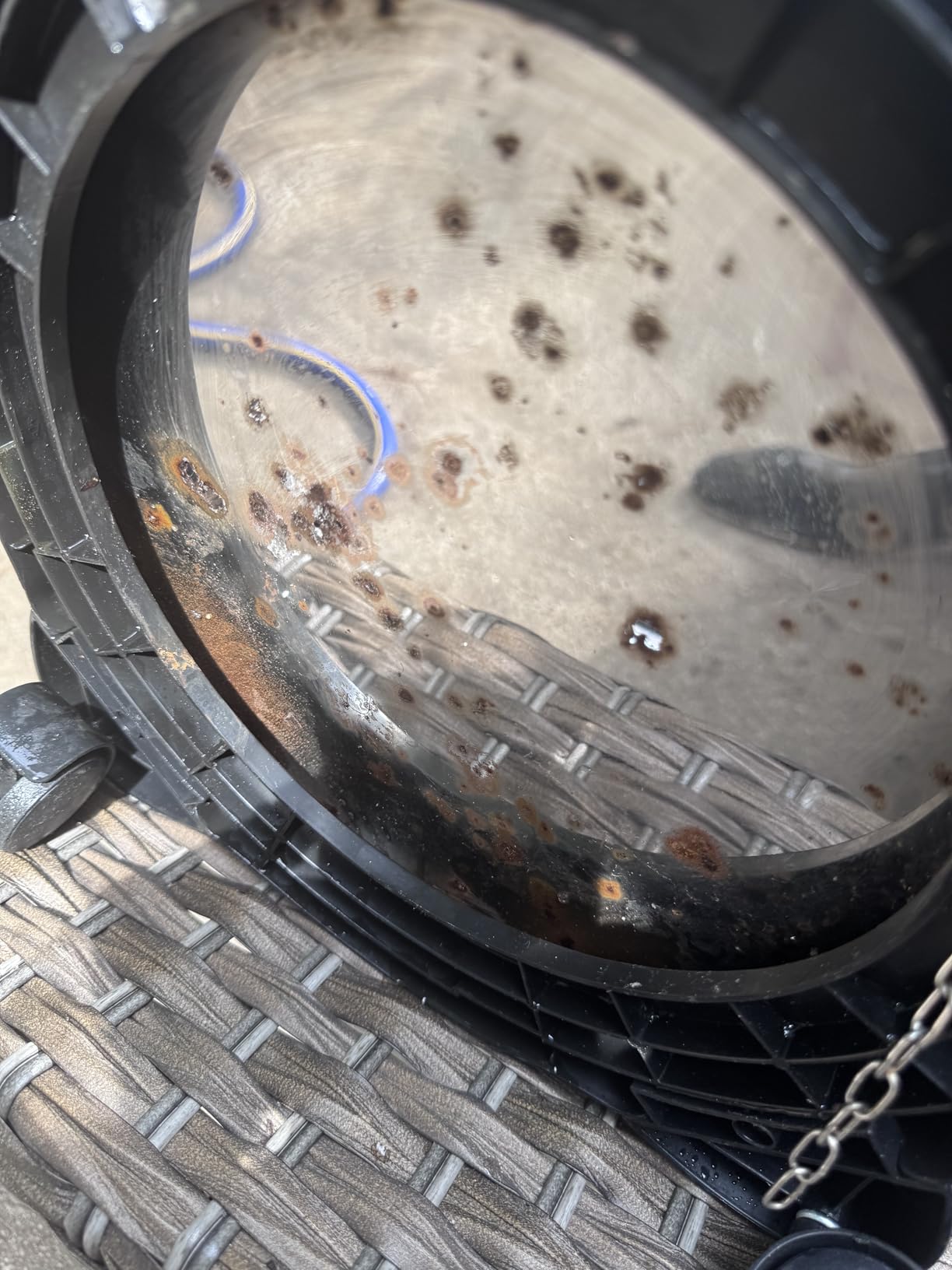
Owners treat it as a capable budget or secondary vac. At 4.4 stars across 2620 ratings, the review summary reflects two honest limits: capacity, and suction relative to the higher horsepower models. At 4 gallons, it is the smallest tank in the roundup, and 3 HP is the lowest horsepower figure here, so it fills fast and pulls less than the leaders.
The reusable cloth filter is the specification we would pay closest attention to if fine dust is part of your work. Cloth handles sawdust and general debris, but it is one of the weaker filtration options here for the fine particles that come off sanding and MDF cutting. Plan on a pleated cartridge for any sanding-heavy shop.
When 4 gallons is genuinely the right size
Small capacity becomes an advantage when the work is spot cleanup rather than whole floor passes. Spilled finish, water under a sink, a pile of chips from one joint, dust off a bench: those are jobs a 4 gallon tank handles completely, and the smaller can is lighter and easier to store on a shelf.
It also makes a good second machine. A workshop that runs a large vac for floor cleanup benefits from a small one parked at the bench for quick jobs, because you are not hauling 12 gallons of capacity to deal with a spilled cup of finish. If your budget allows one machine, read the next section before settling on the small size.
Choosing between a cloth filter and a cartridge
The difference matters more than most buyers expect. A reusable cloth filter is cheap, washable, and adequate for coarse debris. A pleated cartridge costs more and a replacement costs more, but it captures fine dust that a cloth filter lets through, which is the difference between cleaning the floor and cleaning the air.
Forum discussion on fine workshop dust makes this consistent point: particles from MDF and drywall stay airborne for half an hour or more, and a standard filter lets a meaningful share of them back into the room. If your work involves sanding, dry wall, or composite board, buy a cartridge or HEPA filter regardless of which vacuum body you choose.
8. DEWALT DXV12P 12 Gallon 5.5 HP: Top Suction for Fine Dust
DEWALT 12 Gal. 5.5 HP Poly Wet/Dry Vacuum with Hose and Accessories DXV12P
12 gal poly tank
5.5 HP
85 in max suction
80 dB
7 ft hose
Pros
- 85 in maximum suction which is tied for the highest in this roundup
- 12 gallon capacity suits a mid-size shop
- Large drain port for fast liquid emptying
- 3 year limited warranty
- 85 percent five star reviews
Cons
- 23.2 pounds is heavy to lift when full
- 80 dB is the joint loudest here
- Poly tank marks and scuffs readily
The DEWALT DXV12P is the one we would pick for fine dust, and 85 inches of maximum suction is the figure behind that. The same figure appears on the DEWALT model further down this list, but the 12 gallon tank is the better balanced package for a mid-size shop, where 16 gallons is more capacity than you will use and 6 gallons means constant emptying.
Suction at that level is what makes a difference on fine dust. In a sander cleanup test with the nozzle pressed to a sealed floor, the higher suction figures held their pull while the lower figures visibly softened. If your work is dominated by sanding dust rather than bulky chips, that difference is the whole ballgame.
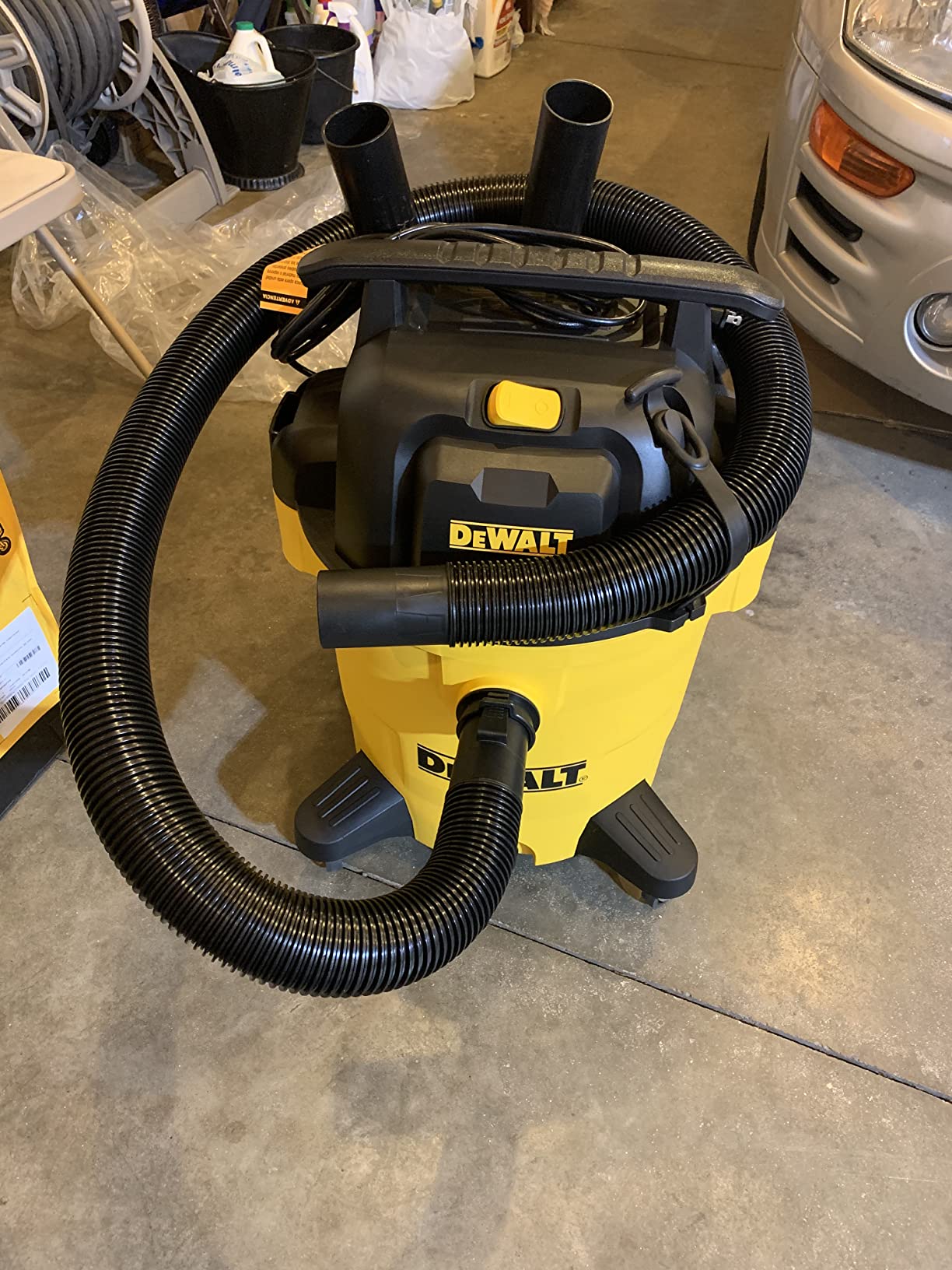
At 4.7 stars across 2143 ratings with 85 percent at five stars, the owner satisfaction is high and consistent. The review summary points to strong suction numbers and a 12 gallon size suited to mid-size shops as the drivers, with the weight when full and the noise level as the two reservations, which matches exactly what we found.
The large drain port is a smaller feature that earns its place. On wet jobs, a wide drain empties the tank in a fraction of the time a small threaded plug takes, and that is the difference between getting back to work and standing at the door waiting. The wet pickup, dry pickup, and blower functions cover the full 3-in-1 range.
Matching suction to the debris you actually produce
High water lift is not universally better. It is better when the vacuum has to pull against a sealed or semi sealed surface, when the hose is long, or when the debris is fine and light enough to need help getting off the floor. Those are the conditions of sanding cleanup and tight crevice work, and this unit is built for them.
For loose, bulky, open-floor material, airflow matters more, and a 12 gallon tank with 85 inches of suction is a good balance of the two. The reason to look elsewhere is noise. At 80 dB, it is the joint loudest figure in the group, and that is a real limitation in a residential garage where you run the vac with the door down.
Three-year coverage and filter availability
The three year limited warranty is worth more than it sounds in a workshop context, because these machines absorb impacts and drops that would end a shorter warranty. Owner satisfaction in the reviews is partly a function of that confidence, particularly for people running the same vacuum daily.
Part availability follows the same pattern. DEWALT cartridges, dust bags, and accessories are easy to find across the market, and this model is also offered in 5, 14, and 16 gallon versions, so if you outgrow the 12 gallon tank you can stay within the same family and the same filter platform rather than starting over.
9. DEWALT DXV09PA 9 Gallon 5 Peak HP: Best Accessory Kit
DEWALT 9 Gallon Wet/Dry VAC, Heavy-Duty Shop Vacuum with Attachments, 5 Peak HP, with Blower Function, DXV09PA
9 gal tank
5 peak HP
85 in max suction
78 dB
1-7/8 in hose
Pros
- 85 in maximum suction for heavy shop debris
- Richest accessory kit including inflator and round brush
- Upgraded more flexible and durable hose
- Blower port plus adapters convert it to an air pump
- 86 percent five star reviews
Cons
- 22.5 pounds is among the heaviest units here
- Accessory bag must be unhooked to reach attachments
- Tank capacity quoted as raw volume
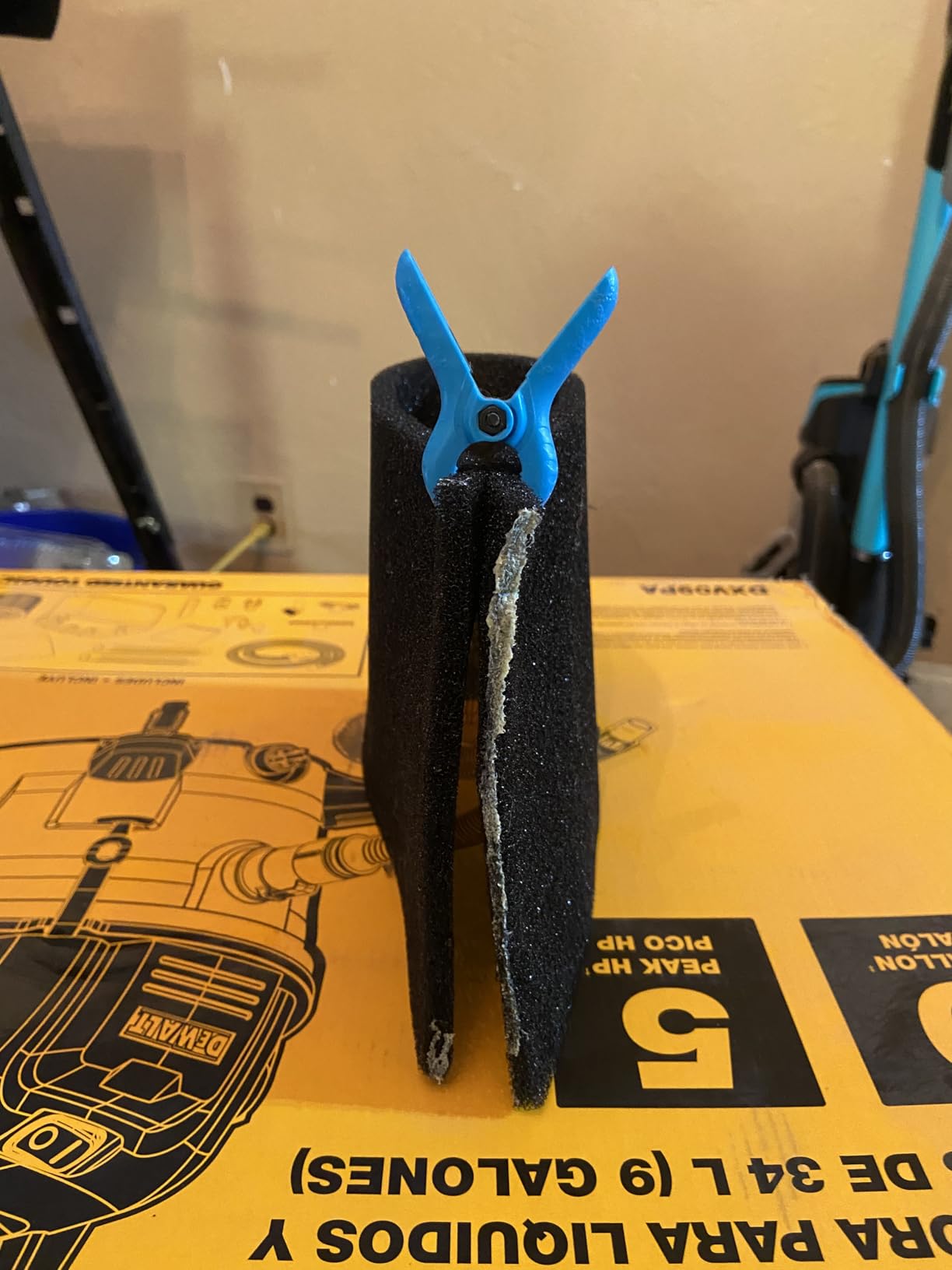
The DEWALT DXV09PA is the most complete package out of the box. Alongside the 1-7/8 inch by 7 foot hose and the standard wand and nozzle set, it comes with an inflator kit, a round brush, three extra nozzle adapters, a filter bag, and a dedicated accessory bag. Owners single out the accessory package as the biggest upgrade over earlier versions, and for most shops it means nothing else needs buying on day one.
The three nozzle adapters combined with the blower port convert the unit into an air pump, which is a genuinely useful workshop feature. Inflating tires, blowing out a dust port, or clearing a line does not require a separate machine, and having the adapters on hand means the conversion takes a minute rather than a trip to the store.
Performance sits with the leaders: 85 inches of maximum suction from a 5 peak HP motor, with a 10 foot power cord and cord wrap for reach. At 4.7 stars across 1736 ratings with 86 percent at five stars, this is the highest five-star share in the roundup, and the review summary notes the upgraded hose and accessory package as the standout upgrades.
The most common complaint is weight. At 22.5 pounds, it is one of the heaviest units here, and owners note that the tank needs to be partly emptied before lifting it into a vehicle or onto a stand. The 78 dB rating is at least several decibels below the loudest units in the group, which helps in an enclosed space.
Why the 1-7/8 inch hose changes the day
Hose diameter is one of the few specs that affects everything you do with the machine. A 1-7/8 inch hose moves substantially more air than a 1-1/4 inch hose, which means faster pickup on floor debris, far less tendency to clog on shavings, and a much better chance of coupling to a table saw or planer dust port through a simple adapter.
Owners also comment that the upgraded hose is more flexible and durable than on earlier versions of this model. Flexibility matters more than it sounds, because a stiff hose fights you at every bend and that resistance is transmitted back to the nozzle as lost suction and as a hose that eventually pulls out of the tank.
Built-in drain, water resistant switch, and air pump use
The built-in tank drain empties liquid without pulling the machine to the door, and the water resistant on/off switch matters more than it sounds in a wet pickup shop where a standard switch is a failure waiting to happen. Together they make the wet side of the job less of an event.
Real tank capacity is also lower than the quoted 9 gallons, because the filter and the space taken by hoses reduce the usable volume. Owners mention this directly, and it is worth remembering when comparing quoted capacities across brands. Budget for one extra emptying over a long job rather than assuming you will fill exactly to the mark.
10. Seesii K-903 Cordless Wet Dry 2.6 Gallon: Best Cordless
Seesii Cordless Wet Dry Shop Vac, 2 x 4.0Ah Rechargeable Batteries
21V cordless
2.6 gal tank
HEPA filter
20 min runtime
70 dB
Pros
- The only cordless unit so no outlet needed for stairs or vehicles
- Two 4000mAh batteries swap and go with a 2 to 2.5 hour recharge
- Brushless motor rated for roughly twice the life of brushed
- Washable HEPA filter capturing 99.7 percent of particles
- Dual suction at 9 kPa and 15 kPa
Cons
- 5.25 foot hose is the shortest in the group
- High mode drains the battery in about 20 minutes
- Side attachment holder lets attachments fall out
- Smallest review base here
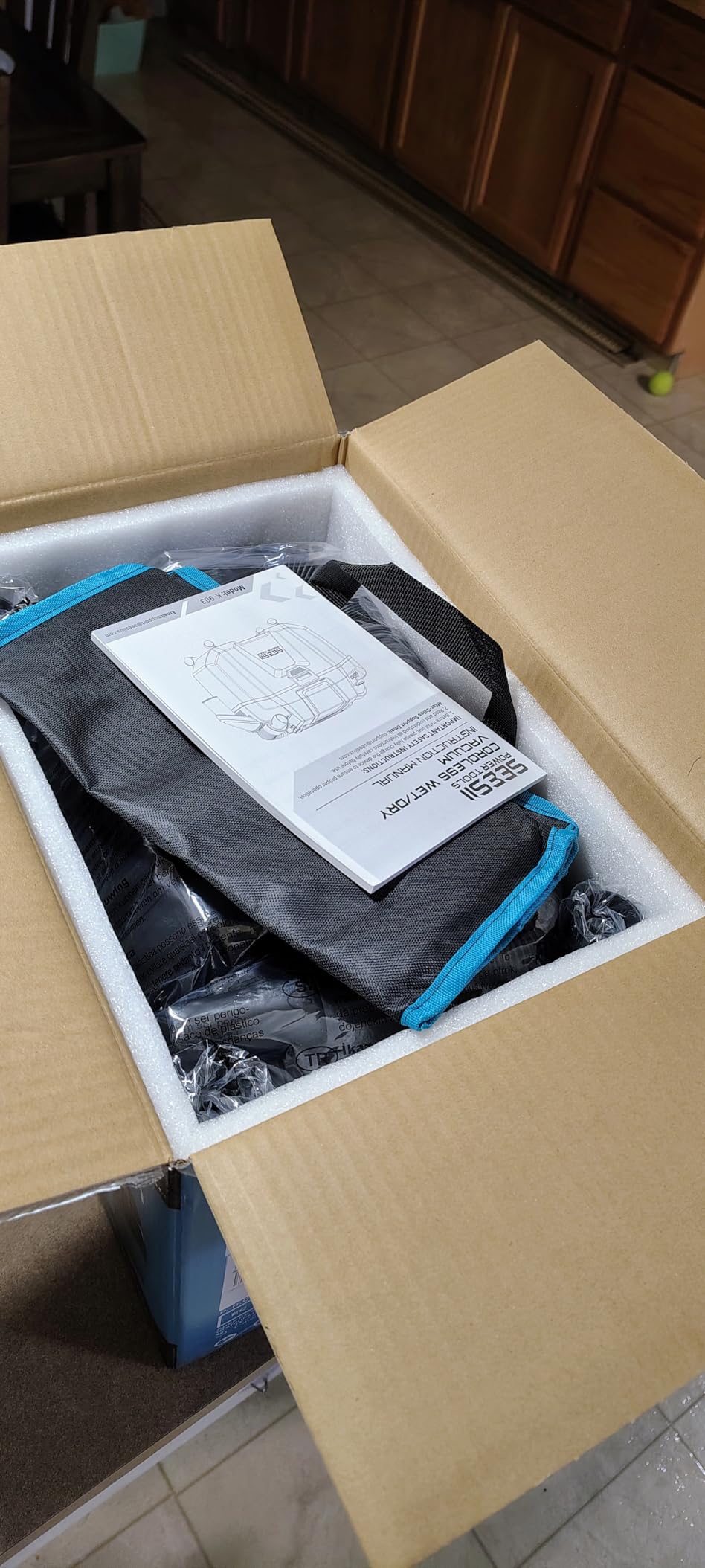
The Seesii K-903 is the only cordless unit in this roundup, and that single fact changes what you can use it for. Stairs, a vehicle interior, a ceiling, an unfinished basement corner, a job site with no power within reach: none of these have an outlet, and a cordless wet dry vac handles all of them without a cord across the floor.
The numbers behind it are genuinely good for its size. Two 4000mAh batteries give 20 minutes of runtime on high and 40 minutes on low, with a 2 to 2.5 hour recharge, so swapping packs across a job is realistic. The brushless motor runs cooler and is rated for roughly twice the life of a brushed motor, and dual suction modes at 9 kPa and 15 kPa let you trade battery for power as needed.
At 8 pounds with a shoulder strap, extension tubes, and a stand-up 2.6 gallon body, this is the only unit here you can carry up a flight of stairs with one hand. The washable HEPA filter is rated to capture 99.7 percent of particles, which is the finest filtration spec in the roundup and a sensible choice for a shop that does sanding or drywall work.
At 4.5 stars across 396 ratings, it carries the smallest review base here, which is expected for a newer cordless listing. The review summary notes that owners value the cordless freedom and the dual battery setup, and that the most common requests are a longer hose and a better attachment holder. Batteries are also reported to work with other Seesii tools.
Where a cordless vac beats a corded one
Cordless wins on mobility, not on sustained suction. A vehicle interior, a stairwell, a loft, an outdoor job site, and any cleanup that involves carrying the machine more than vacuuming with it are the clear wins. The ability to start instantly in a corner with no cord is worth more than it sounds in daily shop use.
It loses on runtime and on tank size. Twenty minutes on high means planning your cleanup into segments and pausing to swap batteries, and a 2.6 gallon tank needs emptying more often than any corded unit in this list. For heavy shop floor work with a lot of fine dust, a corded machine with a big tank still gets the job done faster.
The case for running a corded and cordless pair
Several forum users describe exactly this arrangement and the logic behind it. A corded vacuum with a large tank handles floor cleanup, dust collection, and wet work, while a cordless unit parked at the bench handles spills, stairs, vehicles, and quick jobs. Neither is asked to do the other’s job, and the pair removes the compromise from both.
If you already own a corded machine, that is the strongest case for the Seesii as a second vacuum rather than a first. At 70 dB, it is also the quietest corded alternative here, and the HEPA filtration makes it the pick for anyone whose priority is capturing fine airborne particles rather than moving bulk debris.
How to Choose a Shop Vac for Your Workshop
Start with the square footage of your shop and how much debris you produce, not with the horsepower sticker. A 6 gallon corded unit covers a single car garage comfortably. If you are running a table saw, a planer, and a sander, size up to 9 or 12 gallons. Workshops over 400 square feet, or any job site work with a lot of drywall and lumber debris, will fill a 16 gallon can in an afternoon.
Then match the debris to the suction figure. Bulk chips and coarse debris respond to airflow, measured in CFM, and to tank capacity, because you are moving volume. Fine dust from sanding and MDF responds to water lift in inches of water column, because the particles are light and the nozzle is pressed to a sealed surface. Molded plastic, plaster, and sanding debris are the cases where the higher water lift figures in this group genuinely pay off.
Corded versus cordless is a simpler decision than the marketing makes it. A corded unit wins on suction, runtime, and tank size, and it is the right answer for anything involving a lot of debris. Cordless wins on mobility and quiet operation, and it is the right answer for a second machine or for cleanup where there is no outlet. Runtime is the limiting factor for cordless, not power, in most workshop situations.
Filter choice is where fine dust safety is decided. A pleated cartridge is the practical middle ground, an HE filter or HEPA captures finer particles at higher replacement cost and lower airflow, and a cyclone separator pre-filter keeps coarse debris out of the filter entirely so a cartridge lasts longer between changes. If you do masonry, stone, or tile work, silica dust is a serious hazard and the filtration choice is not a place to economise.
Hose diameter is the spec most buyers overlook. A 2.5 inch hose like the one on the CRAFTSMAN moves far more air and resists clogging better than the 1.25 inch hose on the Shop-Vac. If you plan to connect to a table saw or planer dust port, buy the 2.5 inch hose and the matching blast gate or reducing adapter, and confirm the hose clamps into the tank rather than relying on a friction fit that can pull loose under load.
Tank material is a durability and weight decision. Poly is lighter and cheaper to replace, and it does not dent the way thin-gauge stainless can when you kick it around a garage. Stainless resists dents, wipes clean after solvent and finish spills, and is the better choice in an adhesive or solvent heavy shop. Noise is the last factor and it is not trivial: the vacs here range from 69 dB to 80 dB, and in a residential garage that difference determines whether you can run the vacuum with the door down.
Budget for the running costs too. Filters and dust bags are the recurring expense in any shop vacuum, and replacing them on a regular cycle adds up faster than most people expect. A cyclone separator or pre-filter is the most effective way to cut that cost, because the bulk of the debris never reaches the filter. If you also need lighting for the shop, our guide to the best LED shop lights covers the flicker and color temperature issues that matter for colour work.
Shop Vac vs Dust Collector: Which One You Actually Need
A shop vac is good enough for dust collection on small tools and shop cleanup, and a dust collector is the right answer for a table saw, planer, or jointer in a space where airborne dust is the real problem. For most home workshops the right sequence is a good shop vac first, then a cyclone separator, then a collector only if the tools demand it.
The difference is what each machine optimises for. A shop vac is built for high suction at a sealed surface, which is why a vacuum pulls debris out of a narrow port or a gap where the airflow is restricted. A dust collector is built for very high volume at low static pressure, which is why it wins on a wide four inch port but does poorly on a small hose or a crevice. Forum consensus in the woodworking communities reflects this, with tools that have small or awkward dust ports generally benefiting from a shop vac.
For a small shop, a shop vac paired with a cyclone separator is a sensible middle step. The separator captures the bulk of the debris in its own bucket and lets the air clean pass to the filter, which extends filter life and lets you use the vacuum for wet work without changing filters. If you are regularly running a table saw or a sander and still chasing dust, that is when a dedicated collector starts to pay for itself in air quality rather than in convenience.
How to Quiet a Shop Vac in an Enclosed Garage
Noise is the loudest complaint about shop vacs in enclosed spaces, and it is a solvable problem. These units run in the 69 to 80 dB range, which is genuinely unpleasant to work near for hours. Five practical changes reduce it meaningfully.
Build an enclosure. A plywood box lined with foam or fiberglass insulation around the motor housing cuts the sound that escapes into the room, and it is the single most effective step. Leave a duct or flexible hose from the exhaust to the outside, or into a second can, so the motor still has airflow.
Add a baffle at the exhaust port. A simple baffle or silencer fitting on the blower port changes how the exhaust pulse moves, and owners report a noticeable drop in pitch and volume without reducing useful suction.
Decouple the hose. Route the hose so it does not lie rigid against the tank. A swivel adapter at the hose to tank connection stops the hose from dragging and spinning the unit, which is both a noise and a stability problem.
Roll it onto a soft surface. Four casters on bare concrete transmit vibration straight into the slab and back up into the room. A piece of carpet, a foam mat, or a caster pad under the machine measurably reduces the low frequency component that reads as loudest.
Set the vacuum away from where you sit. Even a 10 dB drop at three feet matters. Place the unit at the far end of the shop and run the hose toward the work, and use the quieter models in this group if noise is your top constraint.
If you are still finding the noise unacceptable, keep hearing protection in reserve and treat the 69 dB CRAFTSMAN and the 70 dB cordless Seesii as the two quietest options in this roundup. Every step above is a workshop practice rather than a product feature, which is why no competitor in this category covers it.
Shop Vac Maintenance Routine
Tap the filter out after every heavy session. A cake of fine dust on a pleated cartridge is the most common cause of a vacuum that has gone weak, and two or three firm taps against the side of the tank restores most of the airflow. Do it outdoors, and do it before you notice the suction drop, not after.
Drain the tank completely after every wet job. Water left in the bottom of a tank is what produces the smell that makes people think the machine has gone bad, and a large drain port or a wide plug empties the tank far faster than a small threaded fitting. Empty the tank between jobs as well, because sawdust left in a can overnight picks up moisture and packs down.
Clean the foam or cloth wet filter after each wet use and let it dry fully before reinstalling it. For off-season storage, empty the tank, wrap the hose loosely rather than folding it at a tight bend, and keep the unit off the concrete floor. That maintenance routine is about ten minutes a month, and it is the difference between a vac that keeps its suction and one that does not.
Frequently Asked Questions
What is the best vacuum for a workshop?
For most workshops the Stanley SL18116P is the best all-round choice, with 85 inches of maximum suction, a 6 gallon tank, and 3-in-1 wet, dry, and blower function. Larger shops should consider the CRAFTSMAN CMXEVBE17595 for its 16 gallon capacity and quieter motor, and a cordless unit such as the Seesii K-903 for cleanup where there is no outlet.
What is the best vacuum for a garage workshop?
For a single car garage, a 6 gallon corded unit covers it comfortably, and the DEWALT DXV06P is the most compact option with a 10 foot cord that avoids an extension lead. For a larger garage running a table saw, planer, or sander, move up to a 9 or 12 gallon tank such as the DEWALT DXV09PA or DXV12P so you are not emptying mid session.
How many CFM is good for a shop vac?
Around 100 CFM is a solid target for workshop floor cleanup, and the Vacmaster VBV1210 at 106 CFM is the one to look at for airflow, since it is the only pick here with a published CFM rating. Below about 60 CFM you will feel the difference on bulky debris spread across a wide floor, while the amount of fine dust you generate matters more for the water lift figure than for airflow.
Is a shop vac good enough for dust collection?
A shop vac is good enough for dust collection on small tools with small or awkward ports, and for general shop cleanup, because it is built for high suction against a restriction. A dedicated dust collector is better for a table saw, planer, or jointer because it moves far more air at low static pressure. Many woodworkers run both, with a cyclone separator between the vac and the drum.
Is a dust collector quieter than a shop vac?
A well enclosed dust collector is usually quieter, largely because of its large drum acting as an acoustic chamber and because it is far from the work. A bare collector in a closed garage can be as loud as a shop vac. Shop vacs in this roundup run from 69 dB to 80 dB, and the quietest models can be further reduced with a plywood enclosure lined with insulation and an external exhaust.
What is the best wet dry shop vac on the market?
There is no single answer, because the best wet dry shop vac depends on the debris. The Stanley SL18116P wins on overall balance of suction and capacity, the Vacmaster VBV1210 leads on airflow, and the CRAFTSMAN CMXEVBE17595 is the quietest and highest capacity option with a 16 gallon tank. For fine dust, prioritise the water lift figure rather than peak horsepower.
Final Verdict: The Best Shop Vacs for Workshops
If you are buying one vacuum for a workshop and you can only choose one, the Stanley SL18116P is the pick. It combines 85 inches of maximum suction, a figure at the top of this roundup, with a 6 gallon tank that suits a garage up to roughly 400 square feet, a blower that speeds up floor cleanup, and a review history of 14474 ratings that leaves very little behaviour unaccounted for.
Buy the CRAFTSMAN CMXEVBE17595 instead if your shop is large, if noise in an enclosed garage is your biggest problem, or if you do wet work often enough that a 16 gallon tank and a large drain port matter. Buy the Vacmaster VBV1210 if coarse debris and airflow are the priority, or the DEWALT DXV09PA if you want the most complete accessory kit and air pump conversion out of the box.
Whatever you choose, the accessories that matter most are rarely the ones in the box. A wide hose with a proper locking coupling, a pleated cartridge or HEPA filter if you cut MDF or sand, a cyclone separator to keep debris out of that filter, and caster pads if your floor is sealed concrete will do more for daily workshop experience than any other purchase. Start with the right tank size for your floor area, pick the suction figure that matches your debris, and the best shop vacs for workshops become an easy decision rather than a research project. It is 2026, and these picks are the ones we would put in a garage today.
Before you settle the layout, our guides to the best shop stools and the best kids ice cream shop playsets cover the other fittings many workshops and playrooms end up needing alongside clean floors.