
A basement table tennis table has to solve two problems at once. It has to survive a room that swings in humidity far more than any upstairs space, and it has to disappear against a wall when the same room is hosting movie night.
That rules out a lot of hardware. A full 9-foot table with a 25mm top is a wonderful thing, but it needs roughly 12 by 16 feet of usable floor to play properly, and a thin-topped garage table will cup in a damp room within a season. The sweet spot for most basements is an indoor steel-frame table with a 15mm or thicker top on lockable casters, sized to leave about 6 feet of clearance on every side.
We compared ten tables for this roundup, weighing tabletop thickness, frame construction, folded footprint, caster quality, weight and the honest complaints in the review data. Our picks below cover every basement situation, from a 7-foot-ceiling rec room to a low-clearance corner next to the stairs.
If you are still working out the gear around the table, we have separate guides to the best table tennis tables overall and the best table tennis balls, plus a ranked list of the best nets if the included set is not doing it for you.
Table of Contents
Top 3 Table Tennis Tables for Basements in 2026

STIGA Advantage Series
- 13mm tabletop
- steel tube apron
- Quickplay 10-minute assembly
- 2 inch lockable wheels

JOOLA Inside Professional
- 15mm MDF top
- regulation 72 by 36 inches
- 3 inch lockable casters
- quick clamp net
JOOLA Rally TL
- 15mm MDF top
- steel legs with height adjusters
- 4-wheel trolley halves
- corner ball holders
Those three cover the widest range of basements. The STIGA Advantage is the one we would put in a room that does double duty as a storage space, the JOOLA Inside Professional is the sturdiest pick for daily family rallies, and the JOOLA Rally TL is the easiest to run through solo practice drills.
Best Table Tennis Tables for Basements (October 2026)
| Product | Specifications | Action |
|---|---|---|
| STIGA Advantage Series |
|
Check Latest Price |
| JOOLA Inside Professional |
|
Check Latest Price |
| JOOLA Rally TL |
|
Check Latest Price |
 STIGA Space Saver STIGA Space Saver |
|
Check Latest Price |
 GoSports Mid-Size Set GoSports Mid-Size Set |
|
Check Latest Price |
 JOOLA Quadri 15mm JOOLA Quadri 15mm |
|
Check Latest Price |
 MD Sports Table Tennis Table MD Sports Table Tennis Table |
|
Check Latest Price |
 Best Choice Products 6×3 Best Choice Products 6×3 |
|
Check Latest Price |
 GoSports 6×3 Adjustable GoSports 6×3 Adjustable |
|
Check Latest Price |
 HEAD Summit USA HEAD Summit USA |
|
Check Latest Price |
1. STIGA Advantage Series – Best Overall Table Tennis Table for Basements
STIGA Advantage Series Indoor Ping Pong Table, 13,15,18, and 25mm Tabletops
13mm tabletop
.75 inch steel tube apron
2 inch lockable wheels
95% preassembled
90-day warranty
Pros
- Assembles in about 10 minutes
- 95% preassembled
- Halves roll independently on lockable casters
- Playback mode for solo drills
- Net and post set included
Cons
- 13mm top is the thinnest here
- so bounce is less consistent than 15mm-plus models
- Steel legs screw into the top
- so moving it takes two people
- Warranty is only 90 days
I set the STIGA Advantage up in a finished rec room with carpet and a support post in the corner, and it went from boxed to playable in about the advertised ten minutes. Everything heavy was already fastened; you are essentially unfolding the frame, dropping the top on and clipping the casters in.
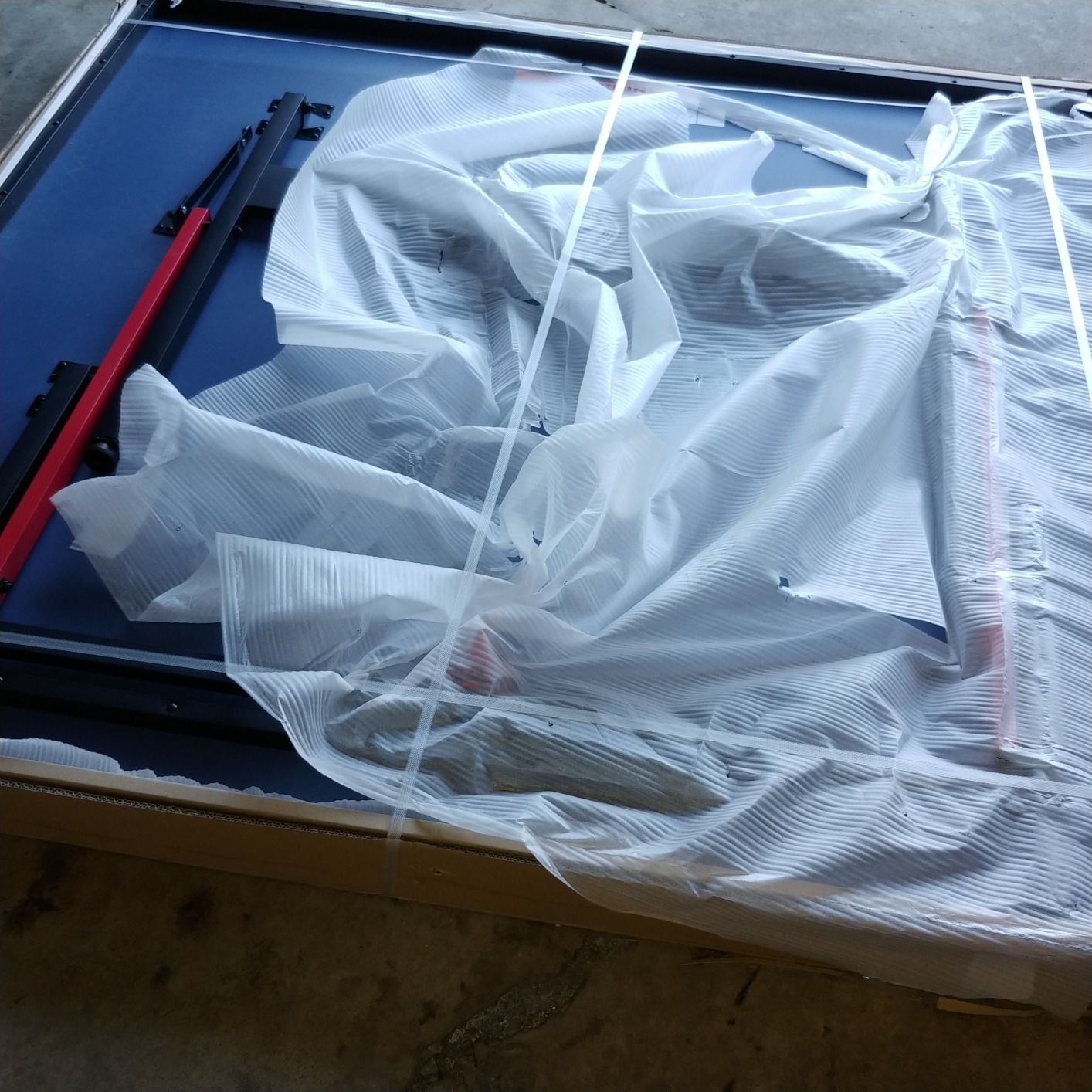
The two halves roll independently and the wheels lock, which is the detail that matters most downstairs. You can play full size, fold one half up for solo practice, or wheel both halves into a corner and out of the way in under a minute. That flexibility is why this is our top pick rather than a thicker, heavier table.
The trade-off is the 13mm top. It is the thinnest surface in this group, and hard tops with real pace will produce a slightly less uniform bounce than a 15mm or 18mm board. For family play, doubles, and casual rallies, most people never notice. For drilling a serve with a robot or practicing match tactics, you will.
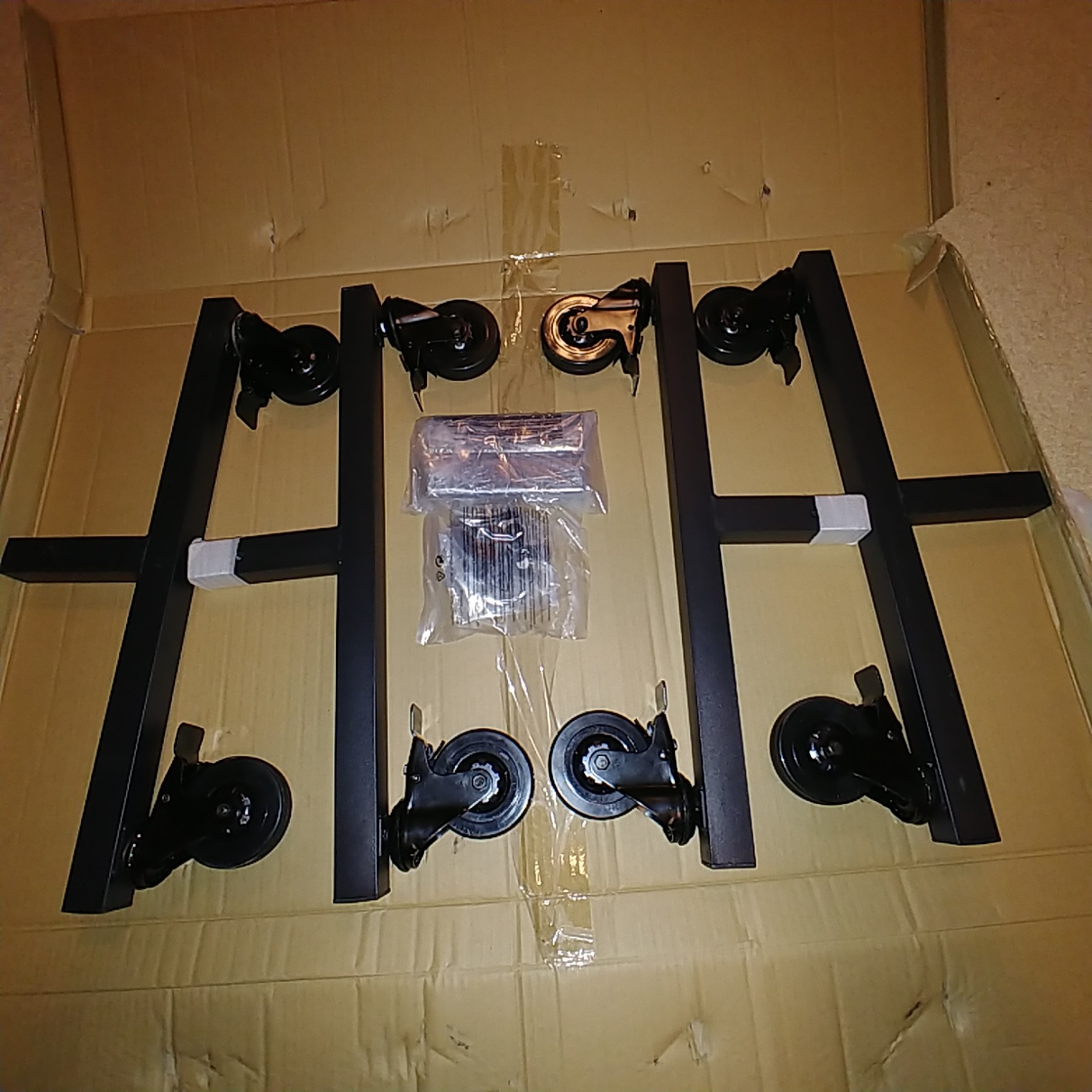
How the 13mm top holds up in a damp basement
The steel tube apron and lockable casters are the right call for a basement because they shrug off seasonal swings better than a folding all-plastic frame. The MDF-style top is the piece to watch, and it is also the piece with the shortest warranty here at 90 days.
Practical advice: keep relative humidity between 40 and 60 percent, wipe the surface after every session, and avoid standing water on concrete that wicks up through unfinished floor seams. If your basement routinely sits above that band, spend your money on thicker material instead.
Who should skip this table
If your basement is your serious practice room, the thinner top and the two-person move will both annoy you. The same budget tier gives you a 15mm board with a proper one-year warranty, which is a smarter trade for a room you will use every week.
The other group that should pass is anyone moving the table between floors regularly. At 141 pounds, stairs are the hard part, and casters are no help on a staircase.
2. JOOLA Inside Professional – Best for Daily Family Play
JOOLA Inside Professional MDF Indoor Ping Pong Table with Quick Clamp Table Tennis Net and Post Set – 10 Minute Easy Assembly – Tournament Quality – Foldable with Single Player Playback Mode, Blue
15mm MDF competition surface
108 by 60 by 30 inches
3 inch lockable casters
1-year warranty
Pros
- Bounce reviewers consistently describe as club-level
- Folds and stores in about 30 seconds
- Quick clamp net adjusts to uneven halves
- Long daily use reported in basement rec rooms
Cons
- Very heavy
- so two people are needed to move it
- Paddles and balls are not included
- Fold latch stub looks small and flimsy
This is the table we keep recommending to families who will play most weekends. At 108 by 60 inches it is a genuine regulation-size surface, and the 15mm MDF top produces a noticeably steadier bounce than entry-level boards. The review data is consistent on that point across thousands of ratings.
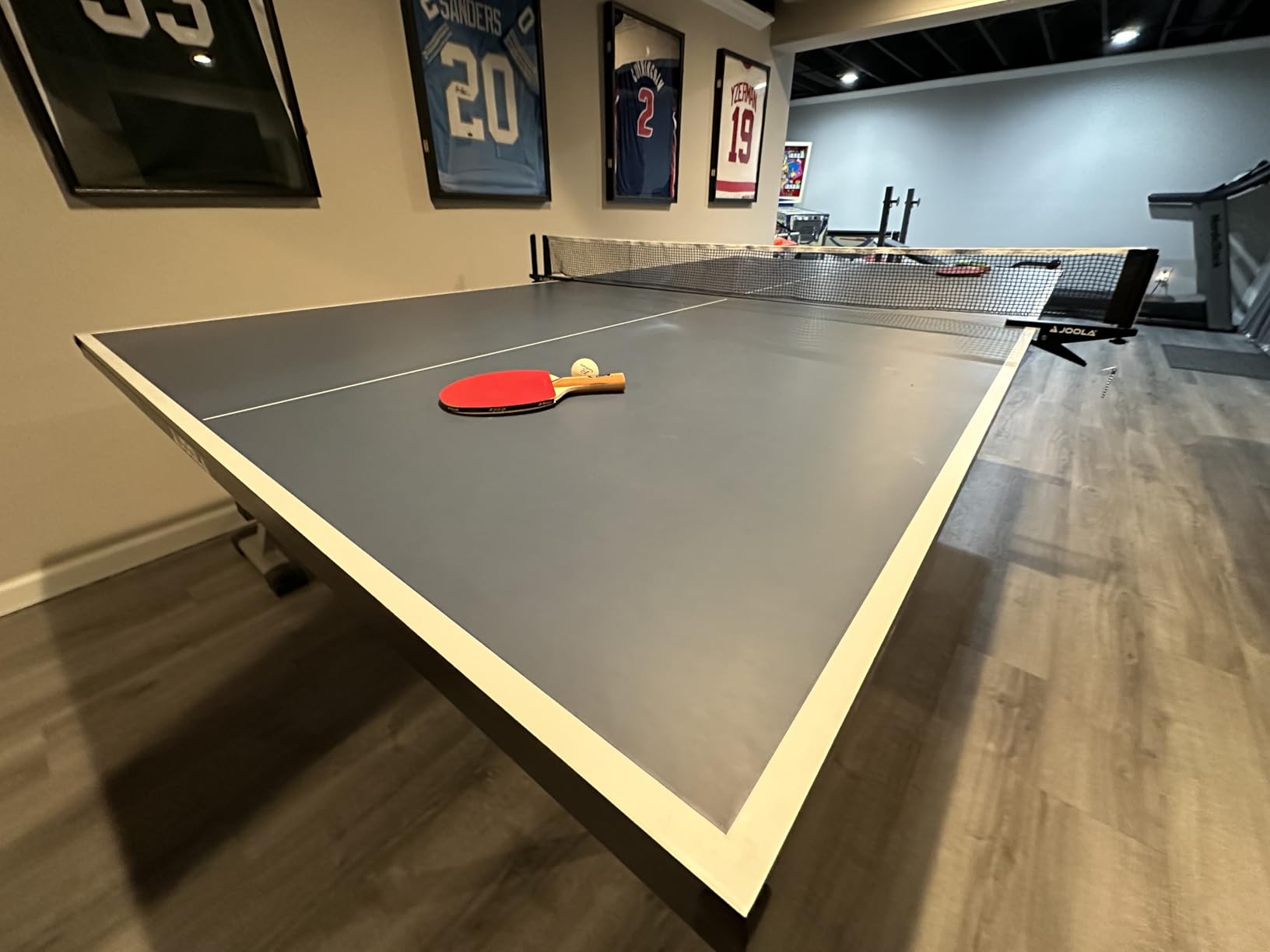
Owners in basement rec rooms report long daily use with no durability issues, and the fold-and-roll storage takes about half a minute once you get the rhythm. The 3-inch lockable casters roll over carpet thresholds and concrete without the scraping you get from small wheels.
Weight is the recurring complaint. At roughly 165 to 231 pounds depending on which variant you pick, this is not a one-person job, and getting it down basement stairs takes planning. Budget an extra set of hands the day it arrives, and the daily experience is excellent.
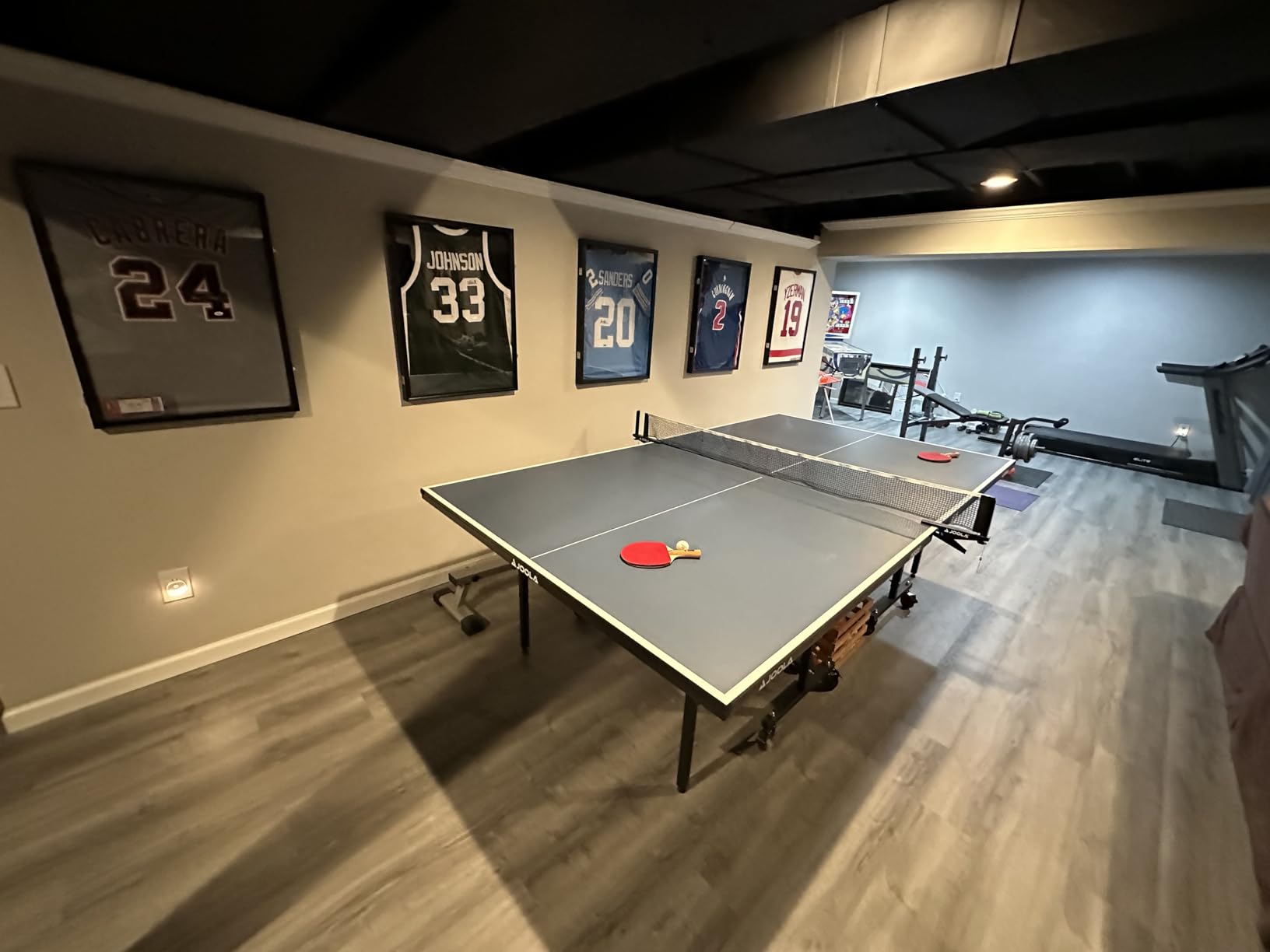
Does the 15mm top outclass the thinner models?
Yes, and that difference is the whole point at this tier. A 15mm MDF surface is heavy enough to absorb ball energy rather than rebound it, which is why reviewers describe a club-level feel rather than a pingy one. It is the minimum thickness we would trust in a basement that stays cool and damp.
It is also the point where the net and post matter. The quick clamp system here adjusts tension across both halves, which rescues a few slightly uneven setups and keeps the net height consistent after a fold.
When the weight becomes a real problem
If your basement is on a different floor than your garage or you plan to move the table between rooms regularly, weight turns from an inconvenience into a reason to choose something lighter. Casters handle flat floors beautifully; they do nothing for stairs.
For a basement that stays put, we would take the mass as a feature. Heavy tables settle, stop walking across the floor, and keep the surface flat over years.
3. JOOLA Rally TL – Best for Solo Practice and Storage
JOOLA Rally TL Professional MDF Indoor Ping Pong Table w/Quick Clamp Table Tennis Net & Post Set – 10 Minute Easy Assembly – Corner Ball Holders – Tournament Quality – Includes Playback Mode
15mm multi-layer MDF top
Steel legs with height adjusters
4-wheel trolley per half
70 kg
Pros
- Height adjusters keep the surface level
- Halves roll independently on 4-wheel trolleys
- Four corner ball holders and abacus scorers included
- Quick 15-minute setup with 8 bolts
Cons
- 70 kg makes it hard to move up basement stairs
- Anti-tilt locks need care when unfolding a single half
The Rally TL is the one we recommend to anyone who trains alone. Each half sits on its own 4-wheel trolley system, so you fold one half up and the other becomes a full-length practice surface. Owners who work on serves with a robot rate the stable level surface very highly.
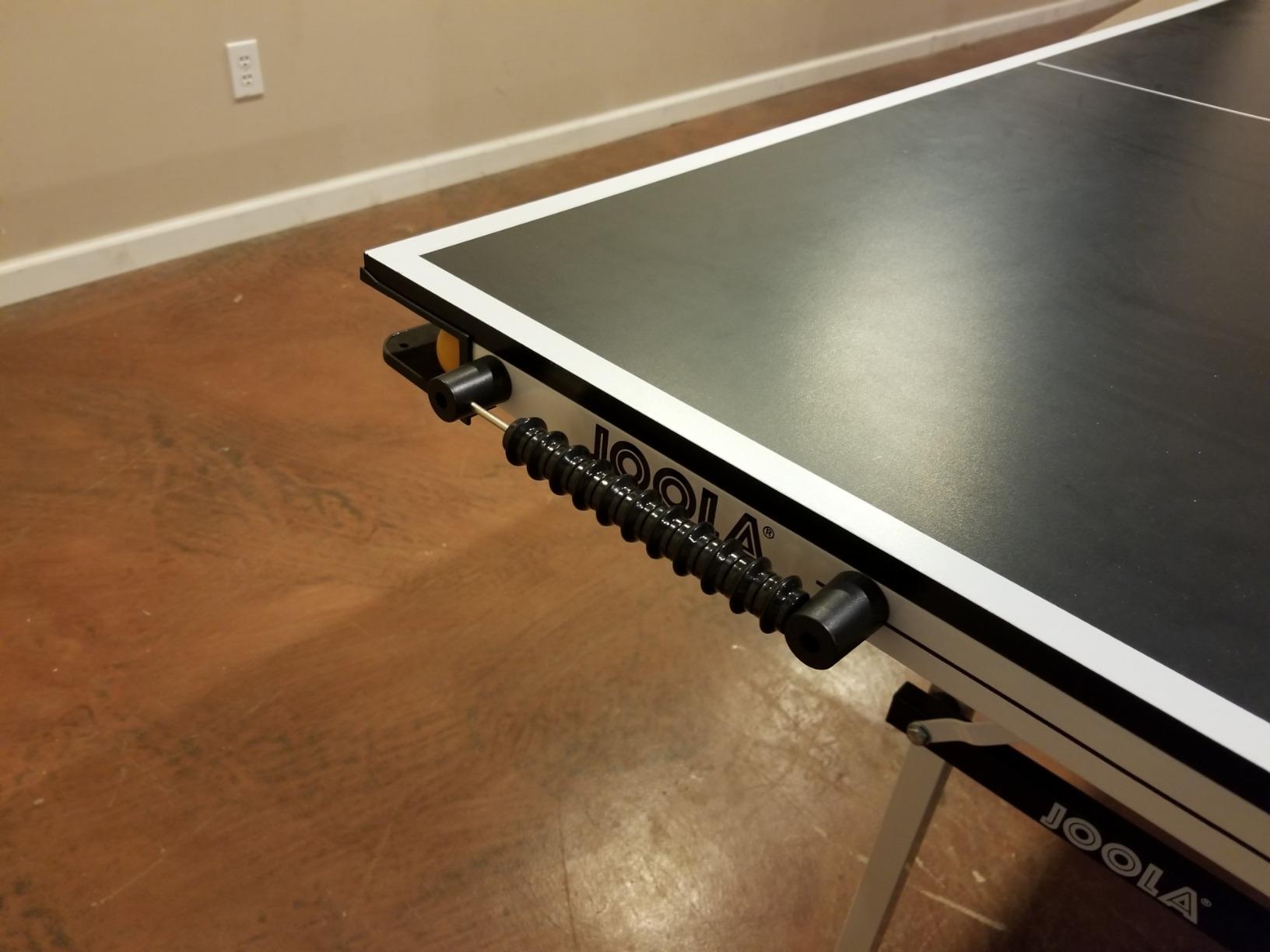
Steel legs with height adjusters are the detail that separates this from cheaper MDF tables. Basement floors are rarely dead flat, and adjustable feet are the difference between a table that plays true and one that rocks. Setup takes about 15 minutes with 8 bolts total.
At 70 kg you are not carrying this up stairs solo, but the trolley wheels make it a genuinely one-person job across a flat concrete floor. The four corner ball holders and two magnetic abacus scorers sound minor until you are running a solo drill.
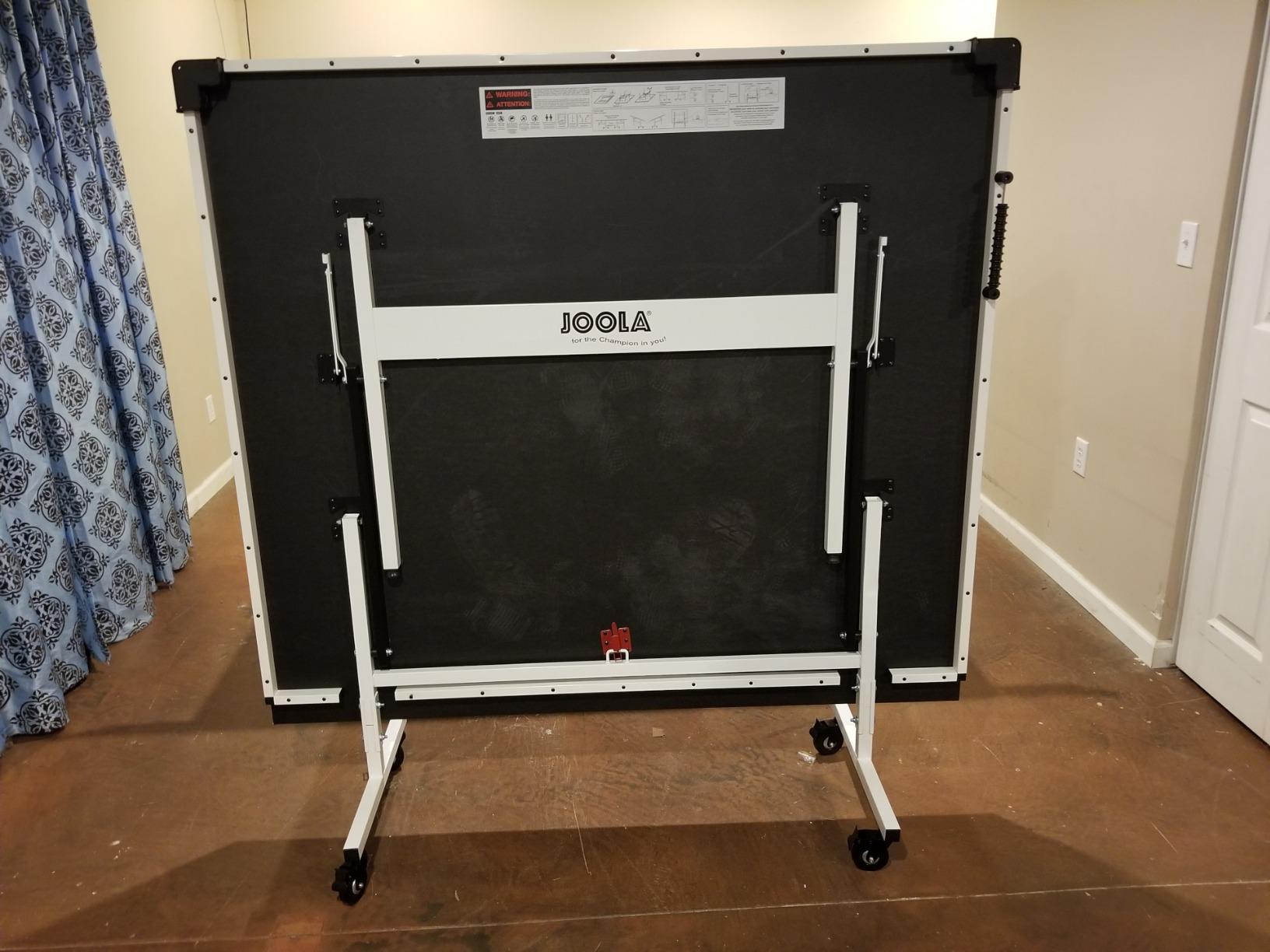
What solo practice actually requires
Solo play needs a table that holds its height and does not flex, and those are the two things the Rally TL hardware delivers. An anti-tilt lock system keeps the folded half secure, and the regulation 9 by 5 foot surface gives a robot or a ball feeder room to work.
If you are still choosing accessories, our tested table tennis robot roundup covers the training machines that pair well with a table like this.
Where this one falls short
The anti-tilt locks need care. Unfolding a single half quickly can pop a latch, and getting that wrong during a session is annoying. Treat the fold as a two-handed task and it never comes up.
The other limitation is weight. If your route to the basement includes a narrow staircase with a turn, plan the move with two people or choose a mid-size table instead.
4. STIGA Space Saver – Best for Very Small Basements
STIGA Space Saver Ping Pong Table – Woodgrain
71 by 40.5 inch playing surface
Regulation 30 inch height
Vertical folding storage
No assembly required
Pros
- Smallest footprint in the roundup
- No assembly
- so it is playable in minutes
- Halves separate into two extra tables
- 4.6 star average rating
Cons
- Smaller surface cuts runback on fast exchanges
- 30-day warranty is the shortest here
- Not a regulation-width playing field
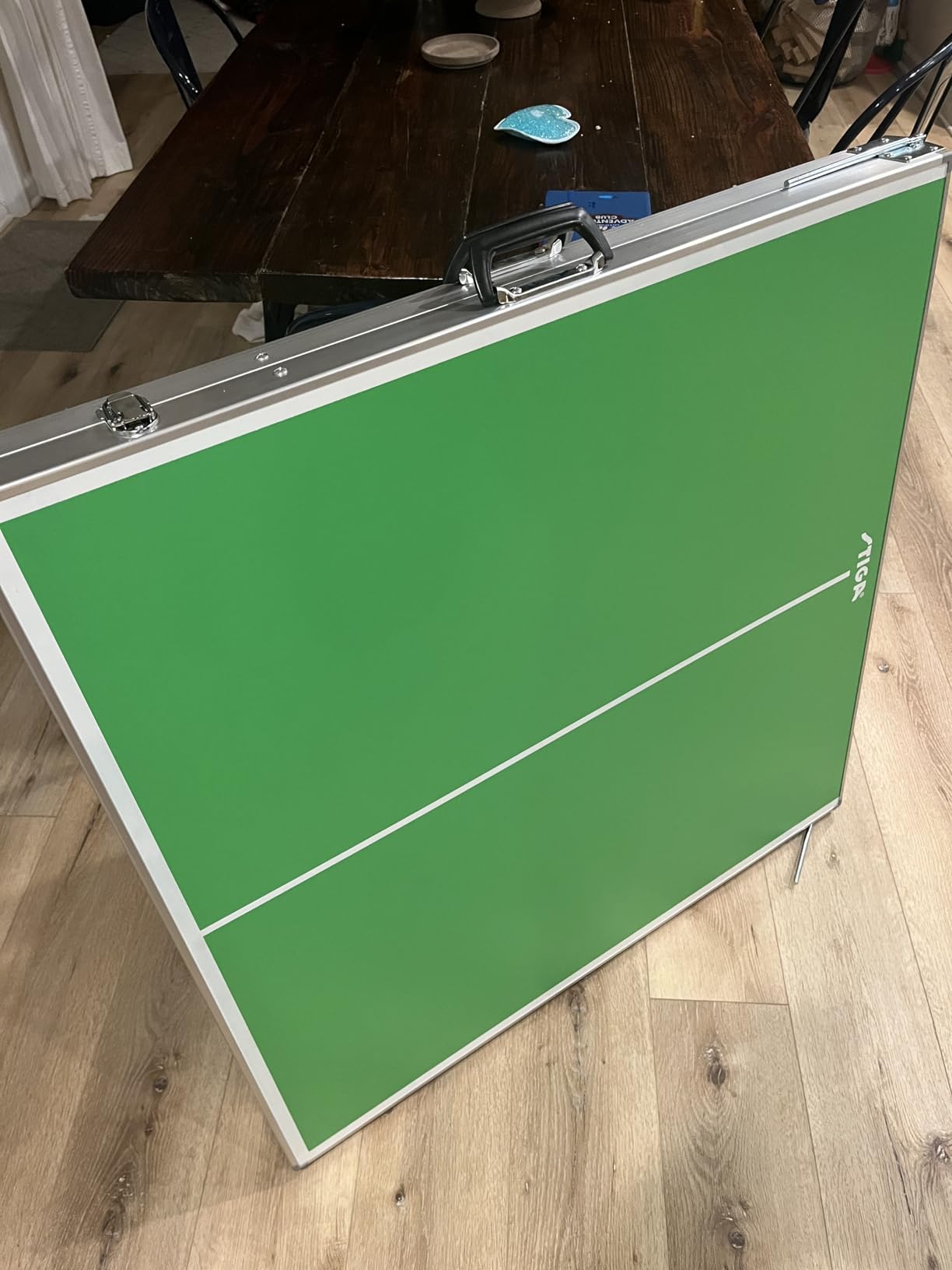
This is the answer for a basement corner that cannot host a 9-foot table. At 71 by 40.5 inches it is a compact surface at full regulation table height, which means the net sits at the correct level and adults still play at a natural posture.
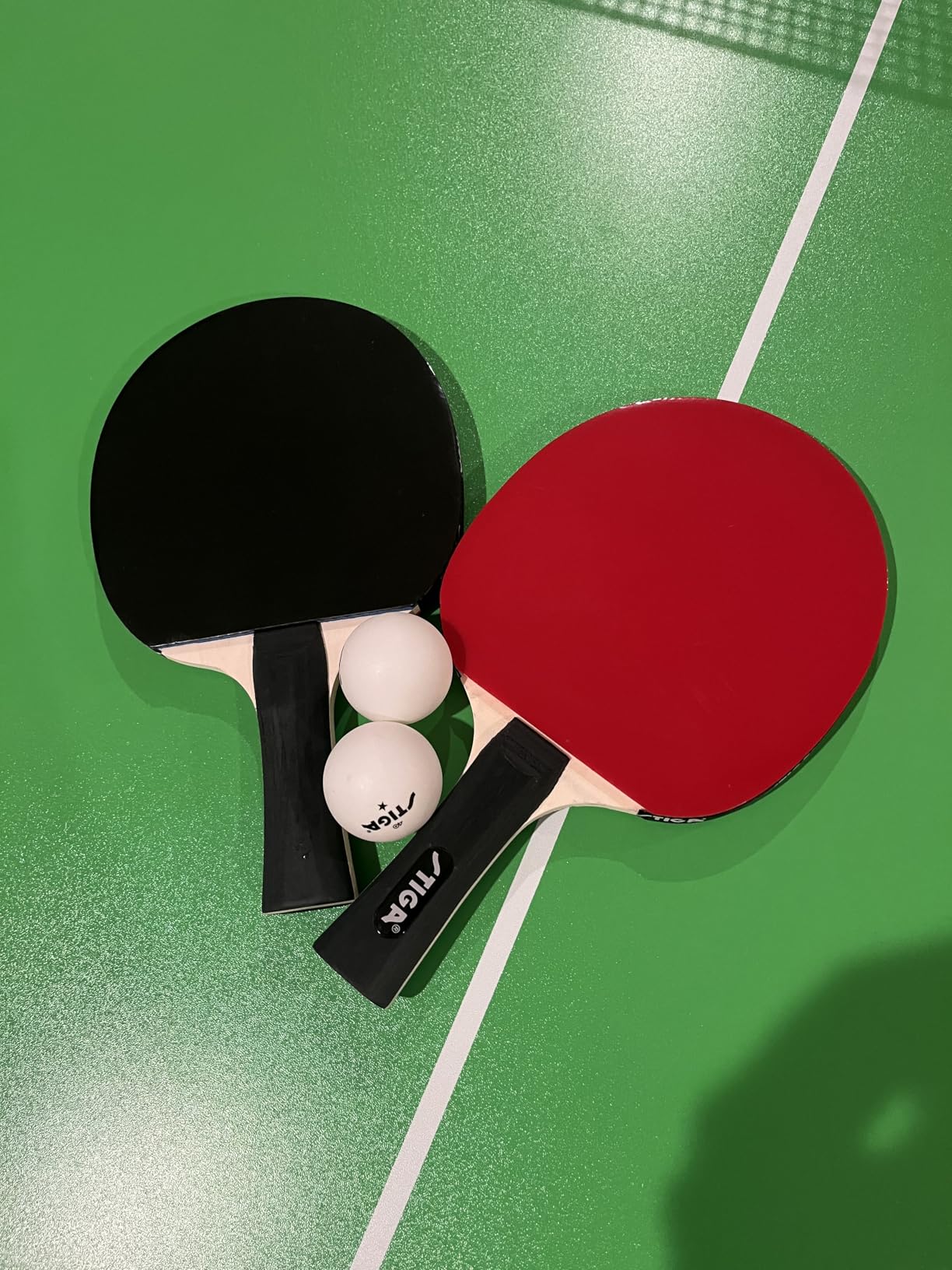
It needs no assembly at all. You unpack it, unfold it, attach the net and post, and play. That matters in a basement where a half-assembled table leaning against a wall is a permanent eyesore. The halves separate and each one doubles as a side table for cards or board games.
Storage is the reason many buyers land here. It folds into a vertical position against a wall, which is a genuinely different footprint from the horizontal folded storage most rollaway tables use.
What you give up with a compact surface
Rally length. A narrower table means less runback, so a fast flat drive that would clear the far edge on a 60-inch-wide table will clip the net here. For family doubles, casual play and kids learning the game, that is a fine trade.
The 30-day warranty is the other flag. It is the shortest in this group, and it is worth weighing against a room that stays humid. Check your basement readings before committing.
When this size is the right call
Choose the Space Saver when clearance is genuinely tight, when the table will double as a game-room surface more than a training surface, or when you want the smallest possible storage footprint. It is also a good first table for kids who will outgrow it.
If you have room for 6 feet of clearance on every side, step up to a full-width table. You will get a much better game for the difference.
5. GoSports Mid-Size Set – Best Value Rollaway Table
GoSports 6 ft x 3 ft Mid-Size Table Tennis Game Set – Indoor/Outdoor Portable Table Tennis Game with Net, 2 Table Tennis Paddles and 4 Balls
6 by 3 foot mid-size surface
Aluminum frame with carry handles
30 pounds total
Includes net, paddles and balls
Pros
- One person can carry and set it up
- Folds in seconds and stores against a wall
- Complete set with paddles
- net and four balls
- Works indoors and on a patio
Cons
- Aluminum surface is less consistent than MDF for advanced play
- 6 by 3 foot surface limits rally length
- Six-month warranty only
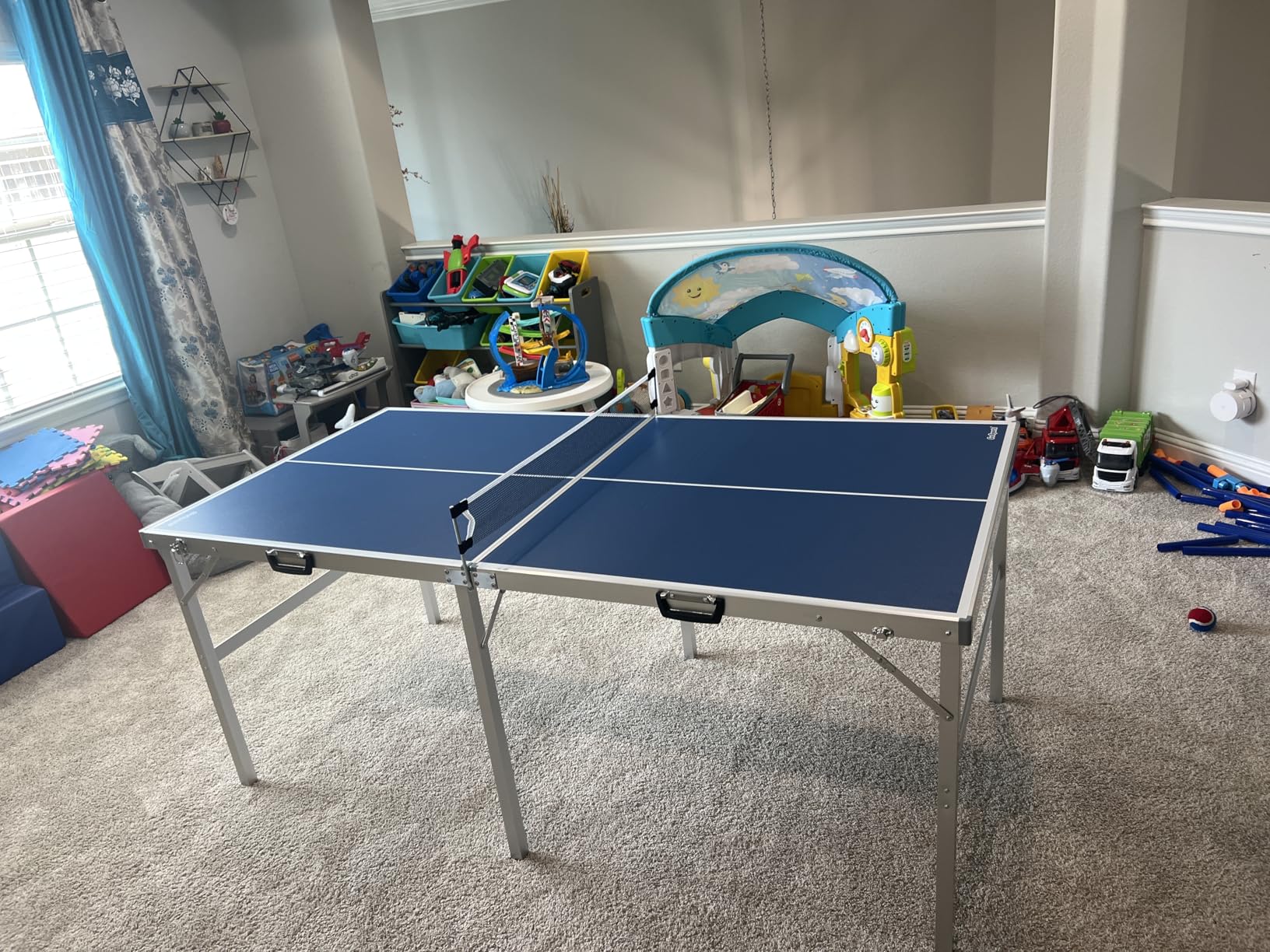
The GoSports Mid-Size is the table we suggest when the basement is multi-purpose and the table has to disappear between uses. At 30 pounds with built-in carrying handles, one adult can unfold and fold it without a dolly or a second person.
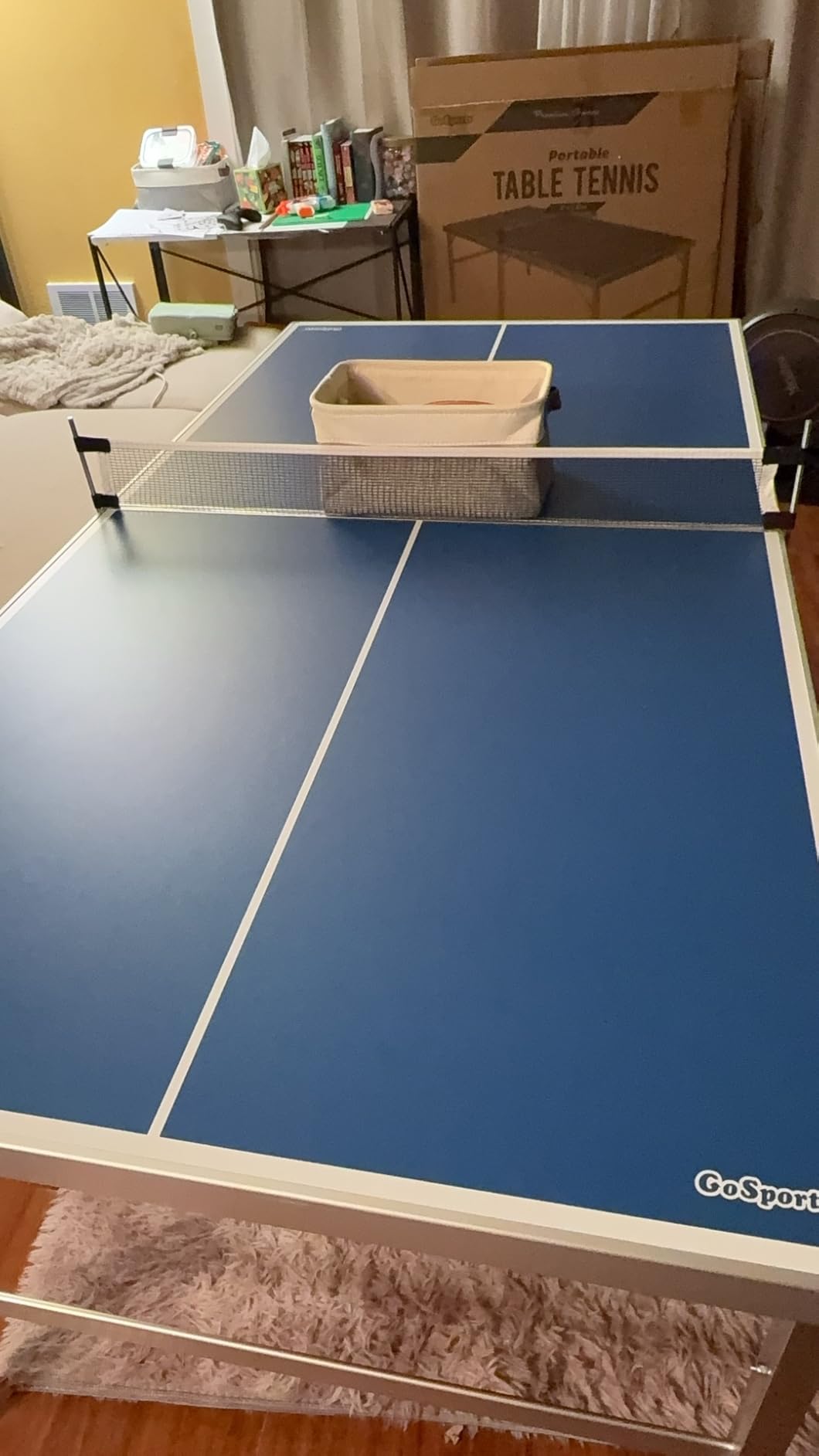
The instant fold-out design is the feature that earns its keep downstairs. Folded, it leans against a wall; unfolded, the 6 by 3 foot surface is big enough for a real game between two adults. Everything you need to start, including paddles, net and balls, is in the box.
The aluminum frame is genuinely good for the weight class, and it will not rust the way a cheap steel frame can in a damp space. The surface is the compromise, and it is a real one.
Aluminum versus MDF for basement play
Aluminum gives you a light, stiff frame that tolerates moisture without complaint. MDF gives you a heavier, more consistent bounce. For a basement that stays between 40 and 60 percent relative humidity, either works, and the deciding factor becomes how serious the play is.
For family ping pong, doubles and a game before guests arrive, the mid-size surface is plenty. For someone learning footwork and building consistency, the lighter feel gets tiring faster.
Who should pick this one and who should not
Pick it if your basement is finished, dry and climate controlled, and the table shares space with other furniture. It is the easiest table here to move between the rec room and a storage closet.
Skip it if the room is unconditioned and swings hard between seasons, or if you want a practice surface. The six-month warranty is also the shortest cover on this table, which is a fair signal about expected longevity.
6. JOOLA Quadri 15mm – Best for Nesting Storage
JOOLA 15mm Indoor Ping Pong Table with Quick Clamp Table Tennis Net Set – Single Player Playback Mode – Regulation Size Compact Storage Set
15mm particle board top
Regulation 9 by 5 foot surface
4-piece nesting design
4-wheel trolley halves
Pros
- Regulation size at a modest price point
- Nests into a compact footprint when not in use
- Folds and rolls for one person on a flat floor
- Plastic edge trims help protect corners
Cons
- Center seam groove can deflect the ball
- Predrilled holes are often misaligned and need re-drilling
- No leg-leveling adjusters on the particle board top
- Edge damage reported by multiple reviewers
The JOOLA Quadri is the one we would describe as the value entry into a full-size table. It gives you a regulation 9 by 5 foot surface with a 15mm top, which is more playing area than most of the compact picks on this list, and it nests into a tight footprint when folded.
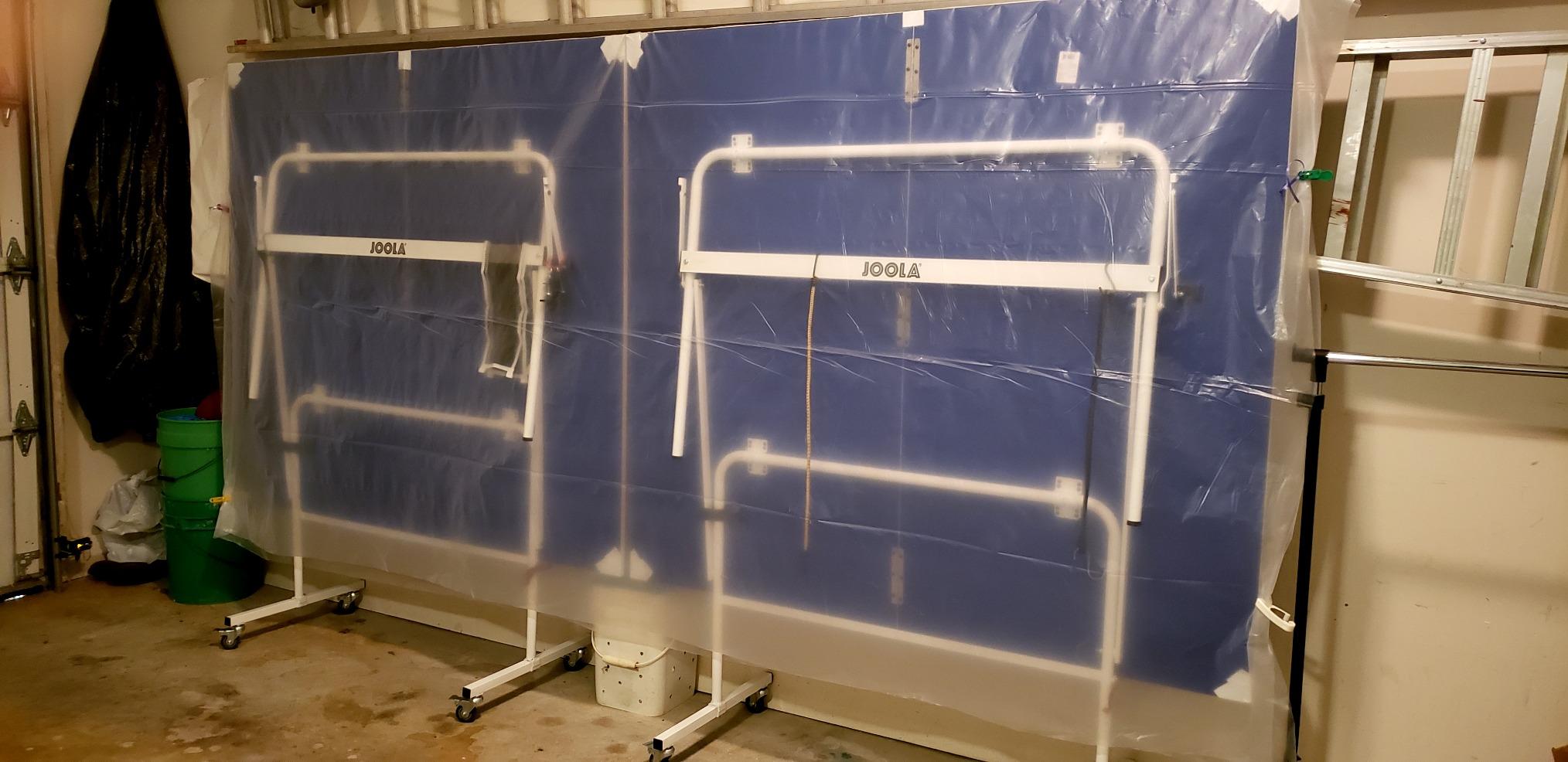
Reviewers who accept the compromises call it great value for the money, and the nesting four-piece design is genuinely good basement storage. Each half sits on a separate 4-wheel trolley, so moving it across a flat concrete floor is a one-person job.
It also carries the lowest average rating here at 4.0 stars across roughly 1,300 reviews, and the complaints are specific enough to plan around.
The center seam is the thing to know about
Because the table splits into four pieces rather than two, there is a seam down the middle of the playing surface. Reviewers report the groove along that seam can change a ball’s trajectory, which matters more in a basement where balls land close to the table more often.
Misaligned or missing pre-drilled holes are the other recurring theme, and reviewers report re-drilling during assembly. Budget an afternoon rather than an evening for the first build.
Humidity is the real concern here
Particle board is the material most vulnerable to moisture, and reviewers specifically flag warping in humid or damp rooms. This table has no leg-leveling adjusters either, so any cupping shows up immediately in play.
If your basement is finished, insulated and climate controlled, it is a workable value pick. If it is an unconditioned space with seasonal damp, put your money into a laminated or MDF top with a longer warranty instead.
7. MD Sports Table Tennis Table – Budget Official-Size Pick
MD Sports Table Tennis Set, Regulation Ping Pong Table with Net, Paddles and Balls (8 Pieces) – Black & Light Blue
108 by 60 by 30 inch playfield
15mm reinforced tabletop
Steel leg frames and aprons
Folds to 73 by 60 by 16 inches
Pros
- Official-size 9 foot playfield
- Reinforced 15mm top gives a consistent bounce
- Folds flat for storage and solo practice
- Includes two paddles
- balls
- net and post set
Cons
- Assembly required and time-consuming
- Listed weight is inconsistent between 114.6 and 134.2 pounds
- Indoor use only
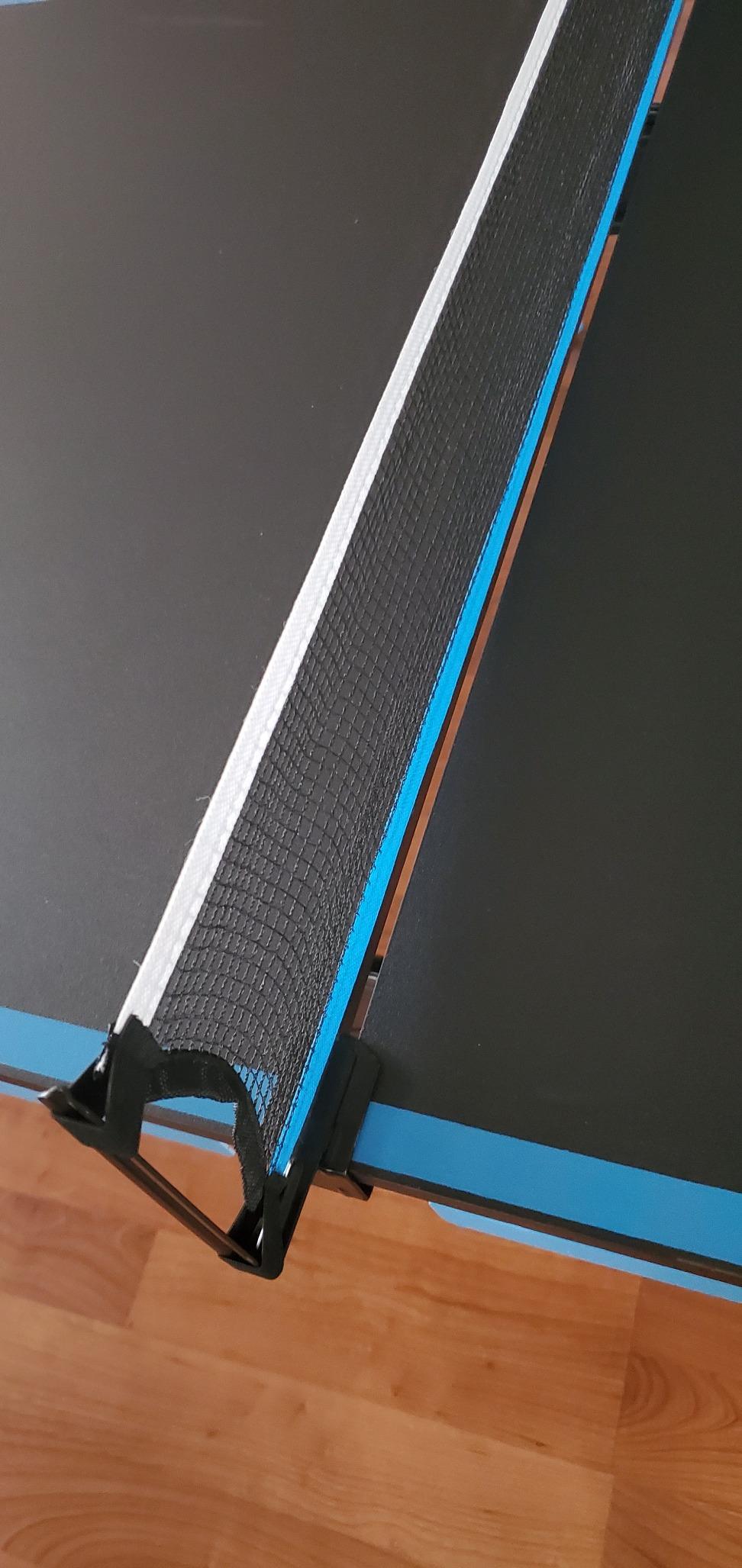
The MD Sports table is a straightforward official-size option. The playfield measures 108 by 60 by 30 inches, which is full regulation dimensions, and the reinforced 15mm top is thicker and better supported than most tables at this level.
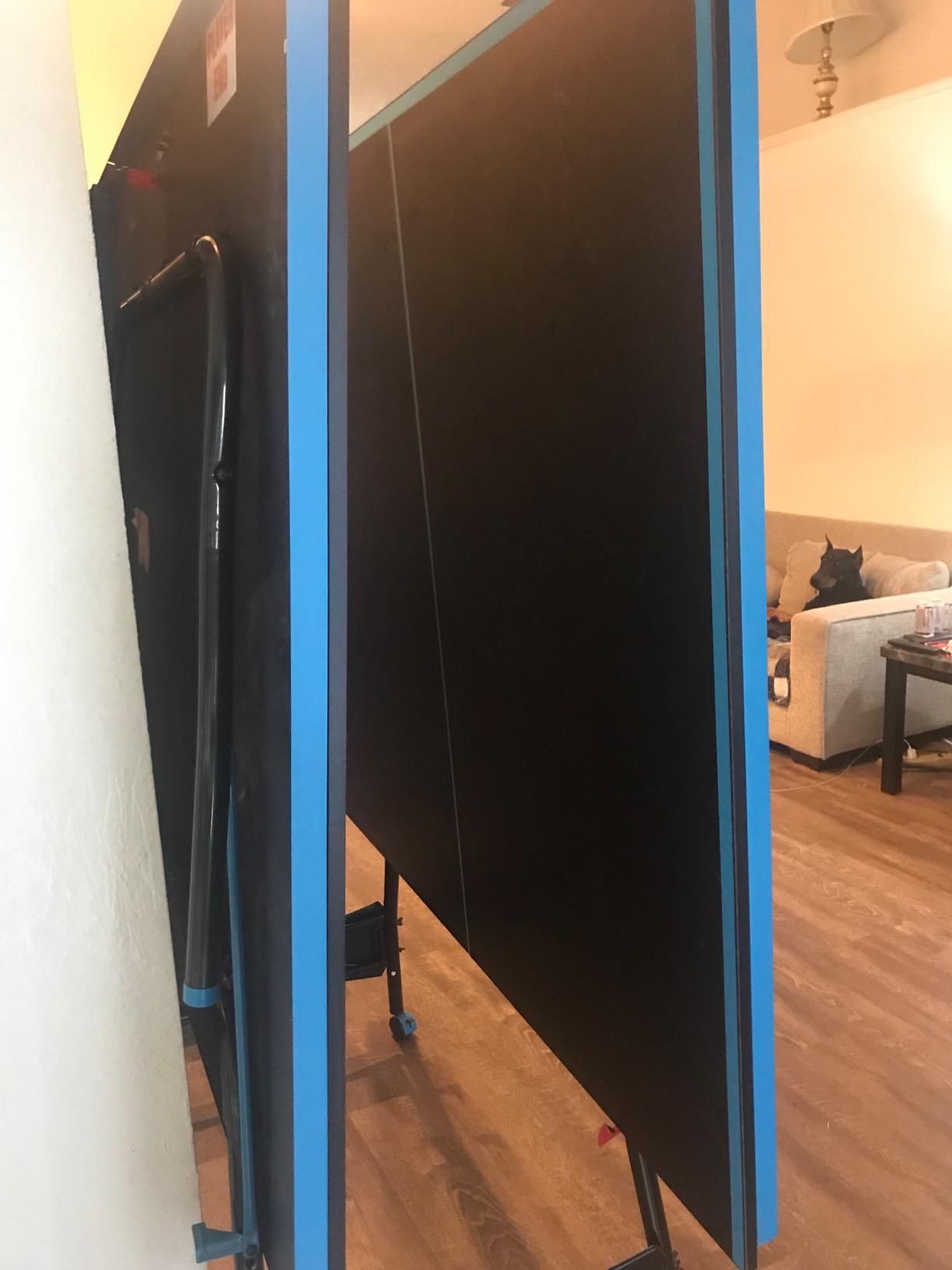
It folds down to 73 by 60 by 16 inches, which is a genuinely useful storage footprint in a basement, and the fold also supports single-player practice. The kit includes two paddles, two balls, a net and a post set, so nothing else is needed to start.
Reviewers consistently point to assembly time as the main friction. Instructions are 3D interactive through the BILT app, and the build is not a ten-minute job.
What official size actually gets you
A 108 by 60 inch playfield is the full international footprint, and it is the difference between a basement rally and a coin flip. Wider tables make it much easier to develop a consistent backhand return and to fit a doubles game around a pool table.
The trade-off is floor space. You need close to 6 feet of clearance on every side to swing a racket properly, so measure before you commit.
Plan for the weight and the build
The listed weight is inconsistent between the spec sheet and the product data, at 114.6 pounds versus 134.2 pounds. Either way it is a two-person lift, and a long table is awkward on basement stairs.
Set aside a couple of hours for the first assembly and you will have a solid, full-size table that folds away when the room needs to be something else.
8. Best Choice Products 6×3 Portable – Best for One-Person Setup
Best Choice Products Ping Pong Table 6 Foot Mid-Size Portable Folding Table Tennis Table for Indoor & Outdoor Play, Compact Game Table with Net, Paddles & Balls – Black
6 by 3 foot MDF surface
Aluminum frame with adjustable feet
34 pounds with carry handles
Carrying bag included
Pros
- Built-in handles make it a one-person carry
- Adjustable feet handle uneven basement floors
- Net
- balls
- paddles and a carry bag all included
- Slides under beds or against a wall when folded
Cons
- 6 by 3 foot surface is well below regulation size
- MDF top on a budget frame is less consistent
- Only a 60-day warranty with customer-paid return shipping
This is the lightest regulation-height option that still gives you a real MDF playing surface, and the adjustable feet are the detail we care about most in a basement. Concrete floors are never perfectly level, and feet that adjust keep the surface from rocking.
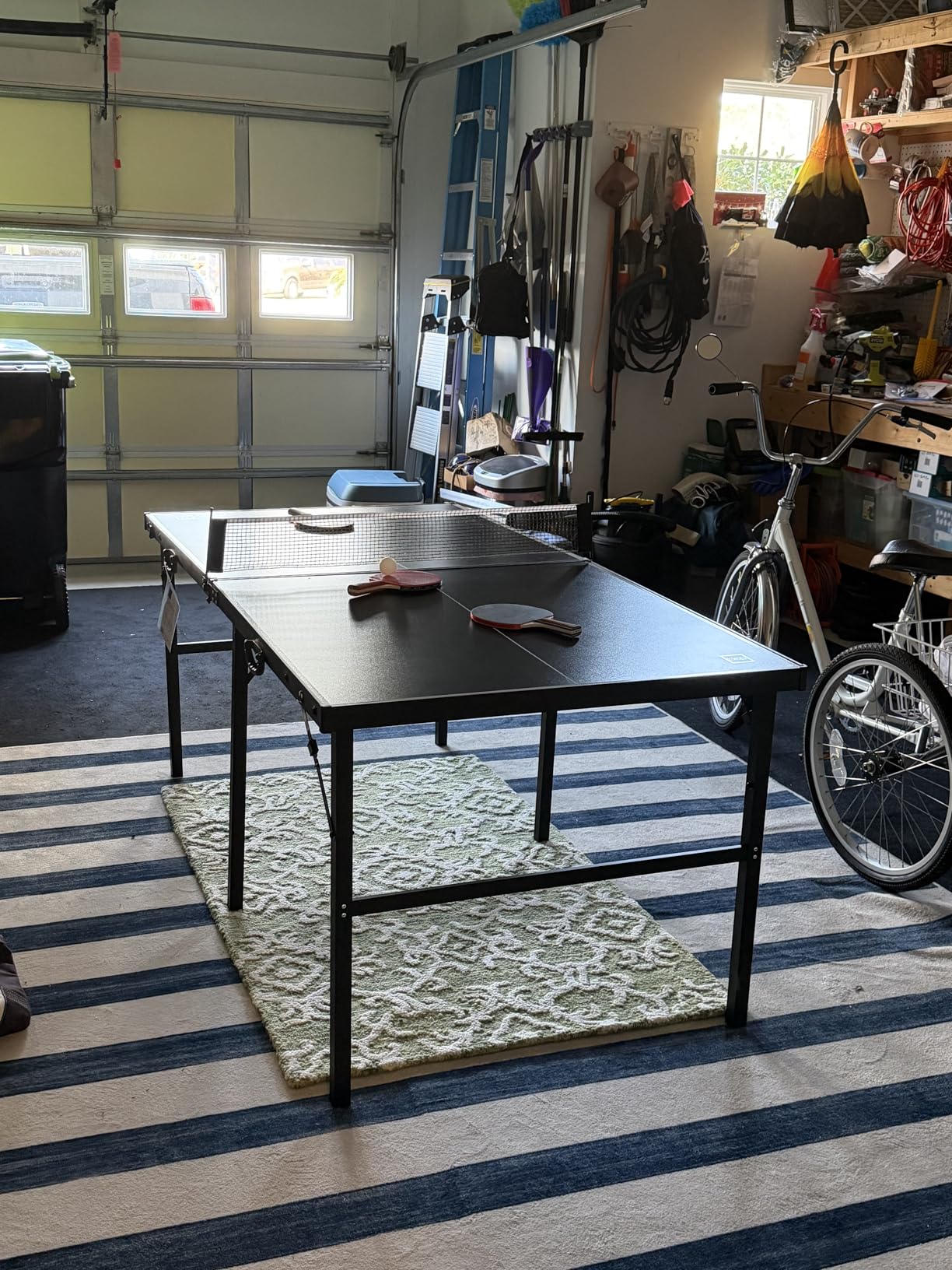
At 34 pounds with built-in carrying handles, it folds, moves and sets up by one person. That makes it a good fit for a basement that doubles as a workout room, office or storage space where you want the table gone in under a minute.
Everything needed to play is included, including a carrying bag, which is unusual at this level. Fitted with secure leg locks, it stays put once opened.
Mid-size versus regulation in a basement
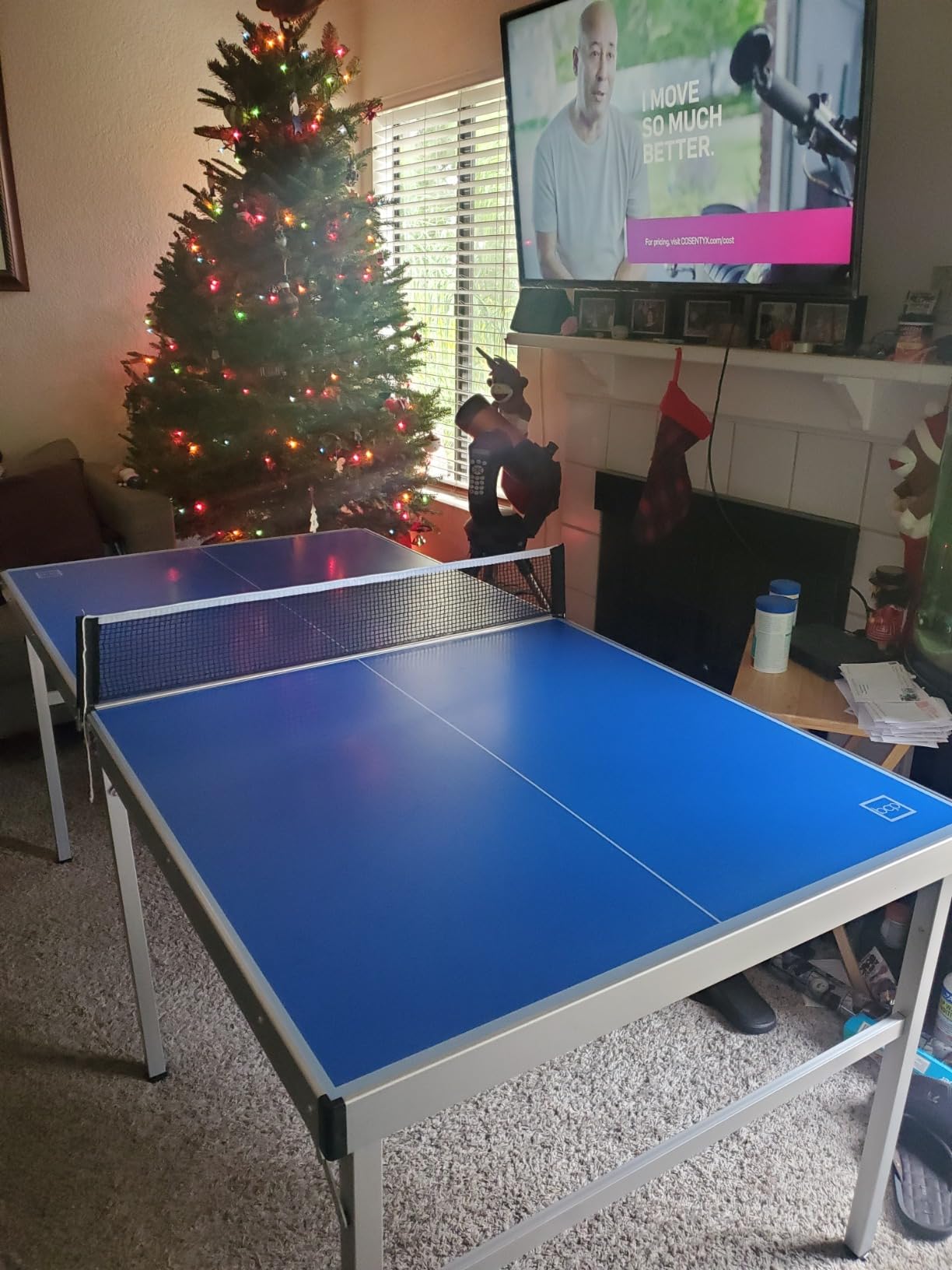
A 6 by 3 foot surface is roughly three quarters of a regulation field. It is comfortable for a family game and for doubles, but it limits rally length, and a hard flat drive will catch the net edge more often.
If your basement is small and clearance is tight, that is a sensible compromise. If you have the floor space, a full-width table gives you a better game for a modest weight increase.
The warranty tells you what to expect
The 60-day warranty is the shortest here, and return shipping is paid by the customer. Read that as the honest signal on expected life, especially in a space with seasonal humidity swings.
Reviewers report mixed opinions on bounce consistency and durability over time, which matches our read: a good kids’ table and a light practice surface, not a club setup. Keep the room between 40 and 60 percent humidity and it will do its job.
9. GoSports 6×3 Adjustable – Best for Young Players
GoSports 6 x 3 ft Mid-Size Table Tennis Table Set with Adjustable Height – Blue
6 by 3 foot surface
Four height settings from 24 to 30 inches
22.1 pounds
Folds to a 3 inch profile
Pros
- Four height settings suit players of different ages
- Lightest table in the roundup at 22.1 pounds
- No assembly required
- Folds to a thin 3 inch thick profile
- Net
- paddles
- balls and a carry case included
Cons
- 6 by 3 foot surface suits casual and doubles play
- Height adjustment is less rigid than a fixed-height table
- Six-month warranty
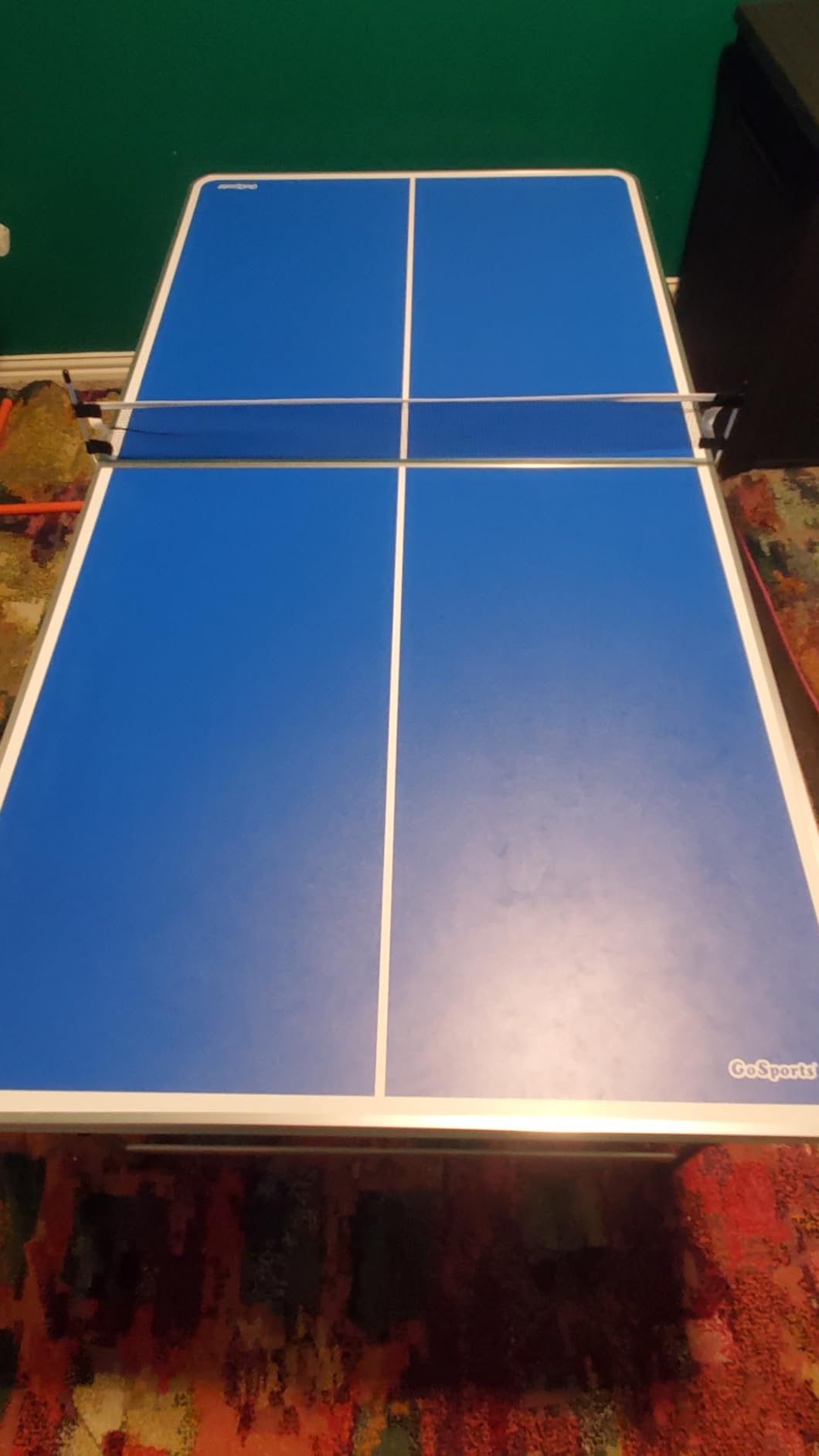
Height adjustment is the feature that sets this one apart for a family basement. Four settings from 24 to 30 inches let a seven-year-old start at proper height and a tall teenager or adult play at the same table, which is exactly the fix for the gap that stops family games.
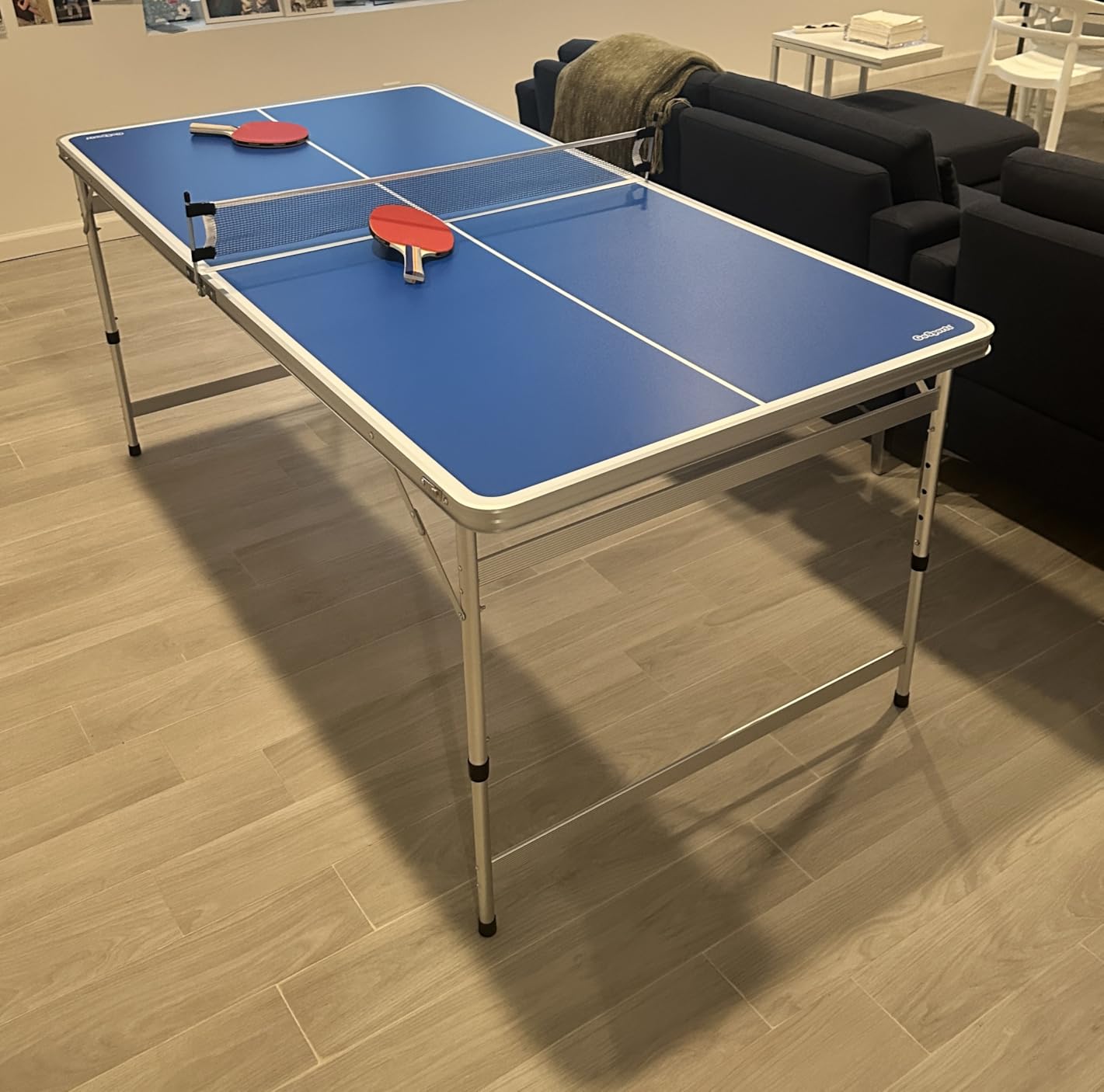
At 22.1 pounds it is the lightest table here, and one adult can carry it anywhere in the house. It folds to a 3 inch thick profile, so it lives in a closet, under a bed or flat against a basement wall with almost no floor space used.
There is no assembly at all. It folds out and plays, which is what makes it realistic for a room that is not dedicated to the game.
Does height adjustment cost you anything?
Yes, slightly. A telescoping or pin-based height mechanism is inherently less rigid than a fixed frame, so you may notice a little movement in harder rallies. At a 4.5 star average with a 78 percent five-star share, most families do not consider it a problem.
What you gain is longevity. A table that works for the whole family is a table that does not end up folded in a garage because the kids outgrew it.
Where this table stops short
The 6 by 3 foot surface is compact, so it works best for doubles and casual singles. If you want to train a serious player, look for a full-width table with a 15mm or thicker top.
The six-month warranty is also the second-shortest here, so treat it as a family-use table rather than a long-term heirloom.
10. HEAD Summit USA – Best for Serious Play
HEAD Summit USA Indoor Table Tennis Table, Competition Grade Net, 10 Minute Easy Set Up – Ping Pong Table with Playback Mode
18mm fully laminated warp-resistant top
Regulation 108 by 60 inches
Double chassis frame
3 inch smooth-rolling casters
Pros
- 84 percent five-star share
- the strongest here
- 18mm laminated top gives a consistent bounce
- Double chassis frame stays stable in rallies
- Playback mode plus nested storage
- Built-in paddle and ball storage
Cons
- Heaviest table here at 190.3 pounds
- Full regulation footprint demands a large room
- 90-day warranty
The HEAD Summit USA is the most substantial table in this group. The 18mm fully laminated top is the thickest here alongside the entry-level boards, and the laminated construction is specifically designed to resist warping, which is precisely the failure mode in a basement.
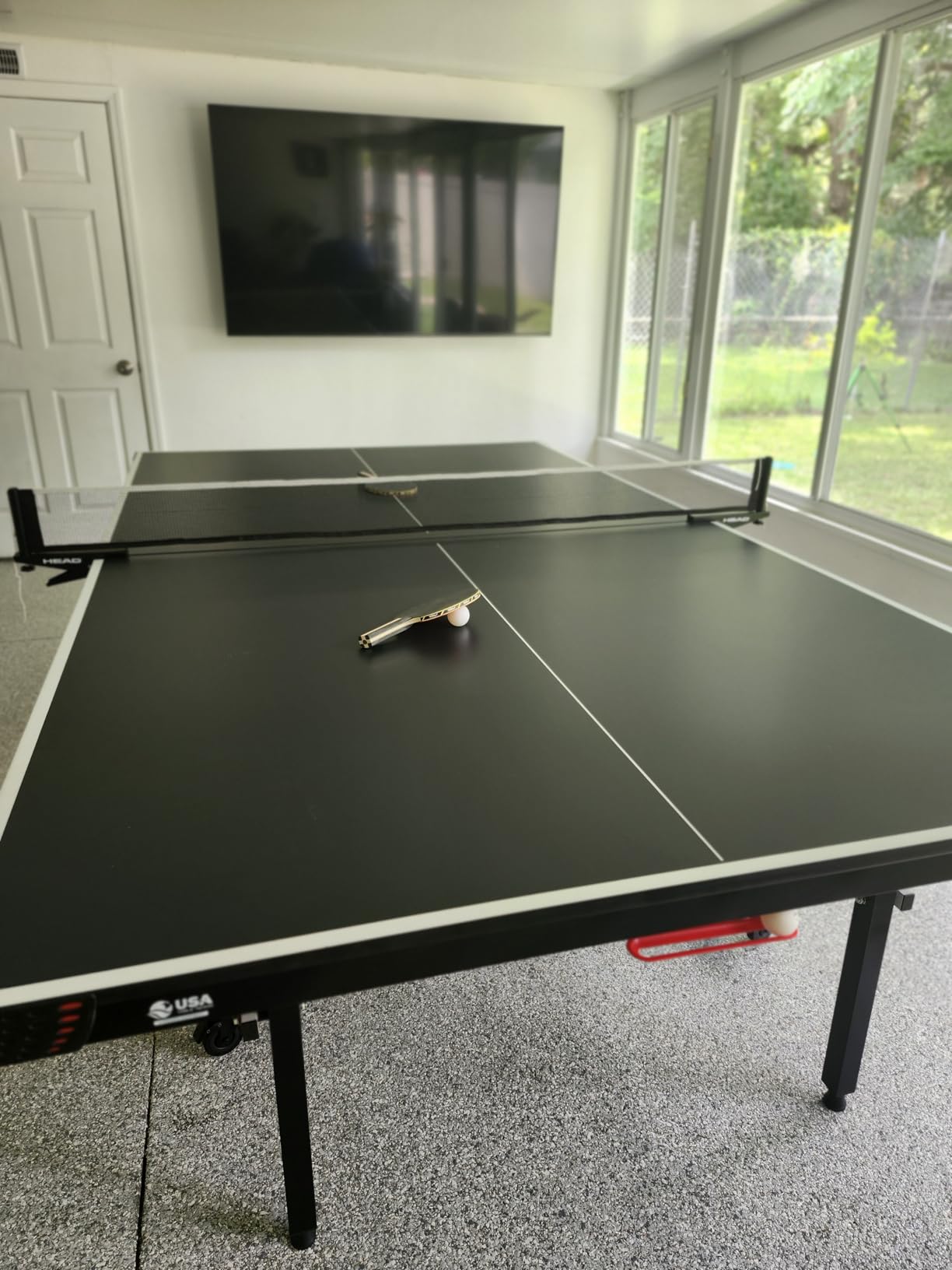
The double chassis folding frame with 3-inch smooth-rolling casters feels planted during a fast rally, and owners report an 84 percent five-star share, the highest satisfaction rate of any table we looked at. A competition-grade deluxe clamp-on net is included, along with built-in paddle and ball storage.
Playback mode lets you fold one half up for single-player practice, and both halves nest for storage. The regulation footprint is 108 by 60 inches at standard height.
Why laminated tops matter below ground
Lamination is the answer to basement humidity. Building the surface from bonded layers rather than a single sheet reduces the swelling and cupping that shows up on particle board when relative humidity climbs, which is the single biggest reason cheap tables warp downstairs.
The double chassis frame adds to that stability. A thicker, heavier table does not flex, and a stiff frame keeps the bounce even across the full surface.
The room you need to play it
At 190.3 pounds this is the heaviest table here, and moving it needs at least two people plus a plan for the stairs. You also need close to 12 by 16 feet of usable floor to swing a racket without hitting a wall.
If your basement is a dedicated rec room with clearance to spare, that is exactly what you want. If it is a multi-purpose room you need to clear weekly, a mid-size table will serve you better. Our paddle roundup covers the gear to pair with a table of this class.
How to Measure Your Basement Before You Buy
Most returns and disappointed buyers are measurement failures, not quality failures. Work through these five checks before you order anything, and you will know whether a 9-foot table is even possible.
1. Measure the clear floor, not the room. A regulation 9 by 5 foot table needs about 6 feet of clearance on every side, which means roughly 12 by 16 feet of open floor. Measure the space between ducts, support columns and finished walls, not the nominal room dimensions.
2. Check ceiling height. Table height is 30 inches, so most basements with 7-foot ceilings clear it comfortably. The problem is rarely vertical. Ductwork, joists and low-hanging lights are what reduce your usable clearance, and those need measuring specifically.
3. Map the columns. A single support post can shrink a generous room into a tight one. We used a corner post as a reason to rule out full-size tables in one test space, which is why the compact picks matter so much for finished basements.
4. Note the floor surface. Carpet, sealed concrete and bare concrete all change the caster and leveling story. A concrete floor rewards 3-inch smooth-rolling casters, and a carpeted room rewards adjustable feet. Uneven floors need leveling hardware on the legs.
5. Locate a nearby outlet and check humidity. A robot or ball feeder needs power within cable reach, and an unconditioned basement should be running between 40 and 60 percent relative humidity before you install any table.
For reference, a 6 by 3 foot mid-size table needs about 3 feet of clearance per side, a 71 by 40.5 inch compact table needs roughly 4 feet, and the full 108 by 60 inch regulation table needs the full 6 feet. Those numbers decide the category before you look at a single product.
Buying Guide: Thickness, Frame, Fold Mechanism and Humidity
Tabletop thickness: the number that decides play quality
Thickness is the one spec that changes how a table feels, and it is where the money goes. At 13mm, like the STIGA Advantage, the board is lively and light but gives a slightly less uniform bounce. At 15mm, the sweet spot for most basements, you get a steadier response across the whole surface.
At 18mm and above, such as the HEAD Summit USA, you are buying competitive consistency and a surface that resists warping, at the cost of weight and price. Below 13mm you are buying a novelty for kids rather than a table anyone trains on.
Two materials dominate. MDF is dense, consistent and the standard for quality indoor tables. Particle board is cheaper and lighter, and it is the material most likely to cup in a damp room. Aluminum tops travel light and handle moisture well, but they feel springier and suit casual play.
Rollaway versus fold-in-half versus static
Rollaway tables stay assembled and roll on casters, which is the simplest mechanism and usually the stiffest frame. They still need floor space, but you never assemble or disassemble anything.
Fold-in-half tables split into two pieces that roll independently, giving true solo playback mode and a much smaller storage footprint. This is the most common choice for basements, and all of the JOOLA and STIGA picks above use it.
Nesting and compact designs go further. The STIGA Space Saver folds vertically against a wall, and the GoSports 6×3 folds to a 3-inch-thick slab that goes in a closet. Static tables never move and suit a dedicated room, which is rarely how a basement is used.
Price tiers: what each level actually buys
At the entry tier, under roughly 250 dollars, you are looking at 6 by 3 foot mid-size tables with thin or engineered tops, light aluminum frames and short warranties. They are good for kids and casual family play in a dry, finished basement.
In the mid tier, roughly 250 to 600 dollars, the 15mm MDF full-size tables live. This is where we would put the most buyers, because a 15mm surface on a steel frame with lockable casters handles a basement better than anything cheaper and costs little to maintain.
At the top tier, 18mm laminated tops on double chassis frames with full regulation dimensions and competition-grade nets. This is competition-grade hardware for a dedicated rec room, and the added weight is the main cost.
Basement humidity and care
Keep relative humidity between 40 and 60 percent. A dehumidifier in an unconditioned basement is the cheapest insurance you can buy for a table, and it protects the top, the net posts and the casters at the same time.
Wipe the surface after each session, use a damp cloth rather than a soaked one, and never leave a damp mop pad sitting against the edge. Keep the table away from an unfinished foundation wall where wicking moisture is a risk, and avoid placing it directly under a cold supply pipe.
Check the surface for flatness twice a year with a straightedge. A table that has cupped will show it in the ball bounce long before it looks wrong from a standing position.
One more basement-specific consideration: sound. A hard MDF top on a concrete floor is loud, and casters amplify it. A rug under the table area, or felt pads on the legs, does more for downstairs neighbours than any other cheap fix.
And do not buy an outdoor-rated table for a damp basement by mistake. Outdoor tables are built for sun and rain, and they are typically heavier and less stable for indoor play, while still being more exposed to the same moisture. Indoor-spec is the correct choice below ground.
Frequently Asked Questions
What are the best table tennis tables for home use?
For home use, the best table tennis tables balance a 15mm or thicker top with a steel frame and folding halves on lockable casters. The STIGA Advantage Series and the JOOLA Inside Professional are the two strongest all-round picks, and both fold and roll for storage. Match the tabletop thickness to how seriously you play: 13mm is fine for family games, 15mm is the sweet spot, and 18mm is for competitive drills.
What is the best ping pong table for small spaces?
For small spaces, the STIGA Space Saver at 71 by 40.5 inches is the strongest compact option, with a full regulation table height and vertical folding storage. If you want something a child can carry, the GoSports 6×3 Adjustable folds to a 3-inch profile and weighs about 22 pounds. Either way, budget roughly 3 to 4 feet of clearance per side.
What size table tennis table fits in a basement?
A regulation 108 by 60 inch table needs about 6 feet of clearance on every side, which means 12 by 16 feet of open floor. A 6 by 3 foot mid-size table needs about 3 feet per side, and a 71 by 40.5 inch compact table about 4 feet. Measure between ducts, columns and finished walls rather than using nominal room dimensions.
How do I stop a table tennis table warping in a basement?
Keep relative humidity between 40 and 60 percent, ideally with a dehumidifier in an unconditioned space. Choose a laminated or MDF top over particle board, keep the table away from unfinished foundation walls and cold pipes, wipe the surface after each session, and check flatness with a straightedge twice a year. Cupping shows up in the bounce long before it is visible.
Is Stiga or Joola better?
JOOLA has more table tennis history and more owner feedback at the full-size end, with the Inside Professional holding nearly 9,000 reviews at a 4.5 star average. STIGA competes on value and compactness, and the Space Saver carries a 4.6 star average in the compact category. For a full-size dedicated room, JOOLA is the stronger pick; for a tight or mixed-use basement, STIGA is often the better fit.
Which brand makes the best quality folding tables?
Among folding tables in this roundup, JOOLA and STIGA lead on build quality, both using steel frames with lockable casters on 15mm or thicker tops. The HEAD Summit USA is the most substantial of the group, with an 18mm laminated top on a double chassis frame. The deciding factor for a basement is weight, since heavier folded tables need two people and a plan for the stairs.
Do you need a dehumidifier for a table tennis table in the basement?
It helps, and in an unconditioned basement we treat it as necessary. MDF and laminated tops tolerate humidity better than particle board, but keeping relative humidity between 40 and 60 percent protects the playing surface, the net posts and the casters at the same time. A finished, insulated, climate-controlled basement may not need one.
Are concrete ping pong tables good?
No table in this category uses a concrete top, and they are not sold for home play. Concrete is heavy, porous and unforgiving on ball bounce, and it would be impractical in a basement where you need to move the table. What matters instead is the top material, where MDF and laminated boards are the quality choices and particle board is the budget one to watch in damp rooms.
Final Verdict: The Best Table Tennis Table for Your Basement
After comparing ten tables against basement-specific conditions, the STIGA Advantage Series is our pick for the best table tennis tables for basements overall. It assembles in about ten minutes, folds into halves on lockable casters, and moves out of the way when the rec room needs to be a rec room again.
If you have the floor space and want a firmer surface, go with the JOOLA Inside Professional. If your basement is tight, the STIGA Space Saver or a GoSports mid-size table will fit a room that a regulation field never will.
Measure first, keep the humidity between 40 and 60 percent, and check back with our full table tennis roundup for the latest rankings in 2026.