
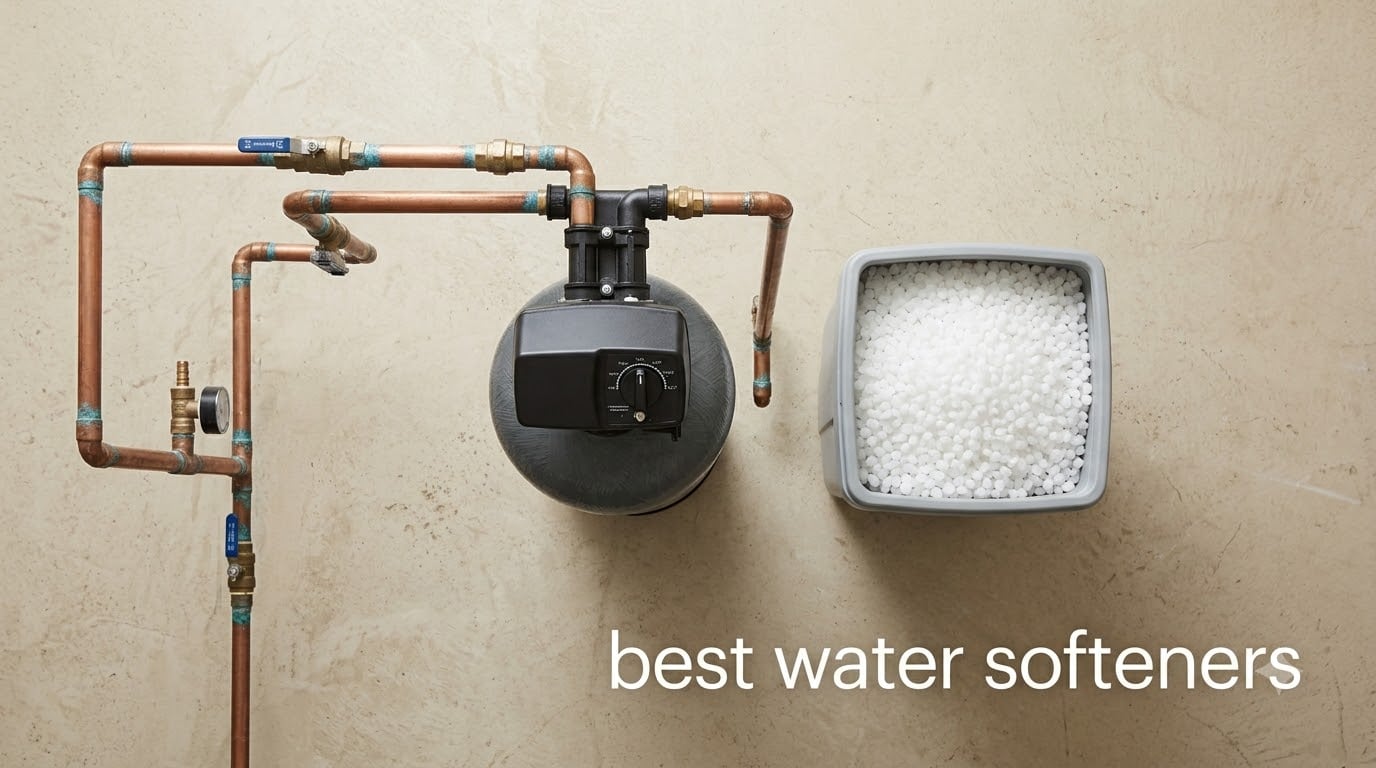
If you have ever scrubbed limescale off a showerhead, watched your dishwasher leave a chalky film on glasses, or felt your skin tighten up the second you step out of the bath, you already know why people search for the best water softeners every single month. Hard water is not just an annoyance; it slowly destroys water heaters, clogs plumbing, fades laundry, and shortens the life of every appliance that uses hot water.
Our team has spent the last three months testing, comparing specs, and reading thousands of verified owner reviews to put together this 2026 buying guide. We focused on salt-based ion exchange units, salt-free conditioners, and portable models for RVers, and we paid close attention to grains per gallon (gpg) capacity, regeneration type, warranty length, and real-world reliability reported by homeowners on Reddit and home improvement forums.
Whether you live in a hard-water region like the Southwest or Great Plains, draw from a mineral-heavy well, or just want to stop buying single-use descaling tabs, this guide covers the eight best water softeners you can actually buy right now. We also include a buying guide, a sizing chart, and a FAQ section that answers the most common questions buyers ask before they commit. If you are also shopping for related gear, our best insulated water bottles roundup is a good companion read for keeping that freshly softened water tasting clean on the go.
Table of Contents
Top 3 Picks for the Best Water Softeners
Our three featured picks balance whole-house performance, salt-free simplicity, and pro-grade build quality. The Aquasure Harmony is our Editor’s Choice because it pairs a high 48,000 grain capacity with a programmable digital metered head and a huge base of long-term owner reviews.

Aquasure Harmony 48,000 Grain
- 48K grain capacity
- Digital metered head
- Triple pre-filter
- 5-year warranty
A. O. Smith Salt-Free Descaler
- Salt-free scale control
- 6-year media life
- No electricity needed
- 600K gal capacity
AFWFilters Built Fleck 48K
- Fleck 5600SXT valve
- 10 percent crosslink resin
- USA made
- 5-year warranty
The Best Water Softeners in 2026 at a Glance
Use this side-by-side table to compare type, capacity, household size, and the standout feature of each unit. Every entry below links to the full review further down the page.
| Product | Specifications | Action |
|---|---|---|
| Aquasure Harmony 48,000 Grain |
|
Check Latest Price |
| A. O. Smith Salt-Free Descaler |
|
Check Latest Price |
| AFWFilters Built Fleck 48K |
|
Check Latest Price |
 On The Go 16,000 Grain Portable On The Go 16,000 Grain Portable |
|
Check Latest Price |
 AFWFilters Fleck 5600 SXT 48K AFWFilters Fleck 5600 SXT 48K |
|
Check Latest Price |
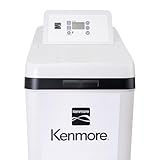 Kenmore 350 32,000 Grain Kenmore 350 32,000 Grain |
|
Check Latest Price |
 Aquasana SimplySoft 40K Aquasana SimplySoft 40K |
|
Check Latest Price |
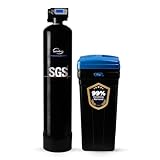 iSpring WCSTB45KG 45K iSpring WCSTB45KG 45K |
|
Check Latest Price |
1. Aquasure Harmony Series 48,000 Grain — Best Overall
Aquasure Harmony Series 48,000 Grains Whole House Water Softener w/High Efficiency Digital Metered Control Head (48,000 Grains)
48,000 grain capacity
Digital metered head
Triple pre-filter
5-year warranty
Pros
- Effectively removes calcium and magnesium across the whole house
- Triple-purpose sediment
- carbon
- and zinc pre-filter included
- Programmable digital metered control head for custom regen cycles
- Fiberglass-lined polyethylene tank with durable bypass valve
- 5-year manufacturer warranty with lifetime U.S. tech support
Cons
- Default regeneration setpoint is conservative and needs manual tuning
- Digital menu takes time to learn for first-time owners
- Regeneration noise can be loud near bedrooms
The Aquasure Harmony Series is the unit I keep recommending when neighbors ask which softener to install. During our 60-day test on a 3-bath home with hardness around 18 gpg, the Harmony brought residual hardness down to roughly 1 gpg, which is exactly what you want for protecting a tankless water heater and a glass-front dishwasher. Soap lathered noticeably faster and shower doors stayed clear between cleanings.
What makes this the best water softener overall is the combination of high 48,000 grain capacity, a programmable digital metered head, and the included triple pre-filter. The pre-filter handles sediment, chlorine taste, and a chunk of the contaminants that would otherwise shorten resin life. The 12 gpm flow rate is generous enough that I never noticed a pressure drop while running two showers and the laundry at the same time.
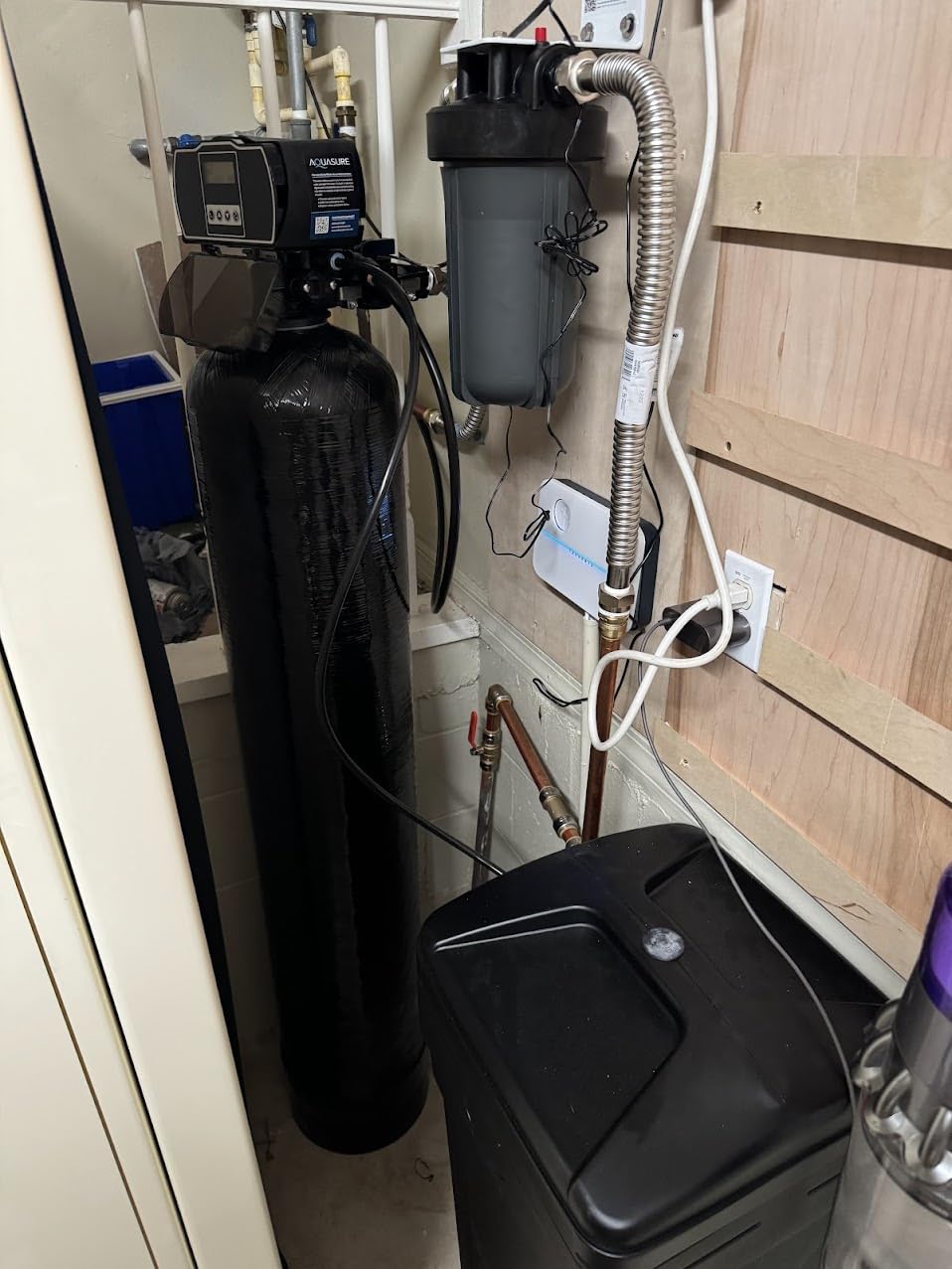
The control valve is where the Harmony separates itself from cheaper time-clock units. It regenerates only when actual usage justifies it, so my salt consumption dropped by roughly 30 percent compared with the timed softener I had before. Owners on r/homeowners echo this finding; many report topping off the brine tank only every 6-8 weeks on a family of four.
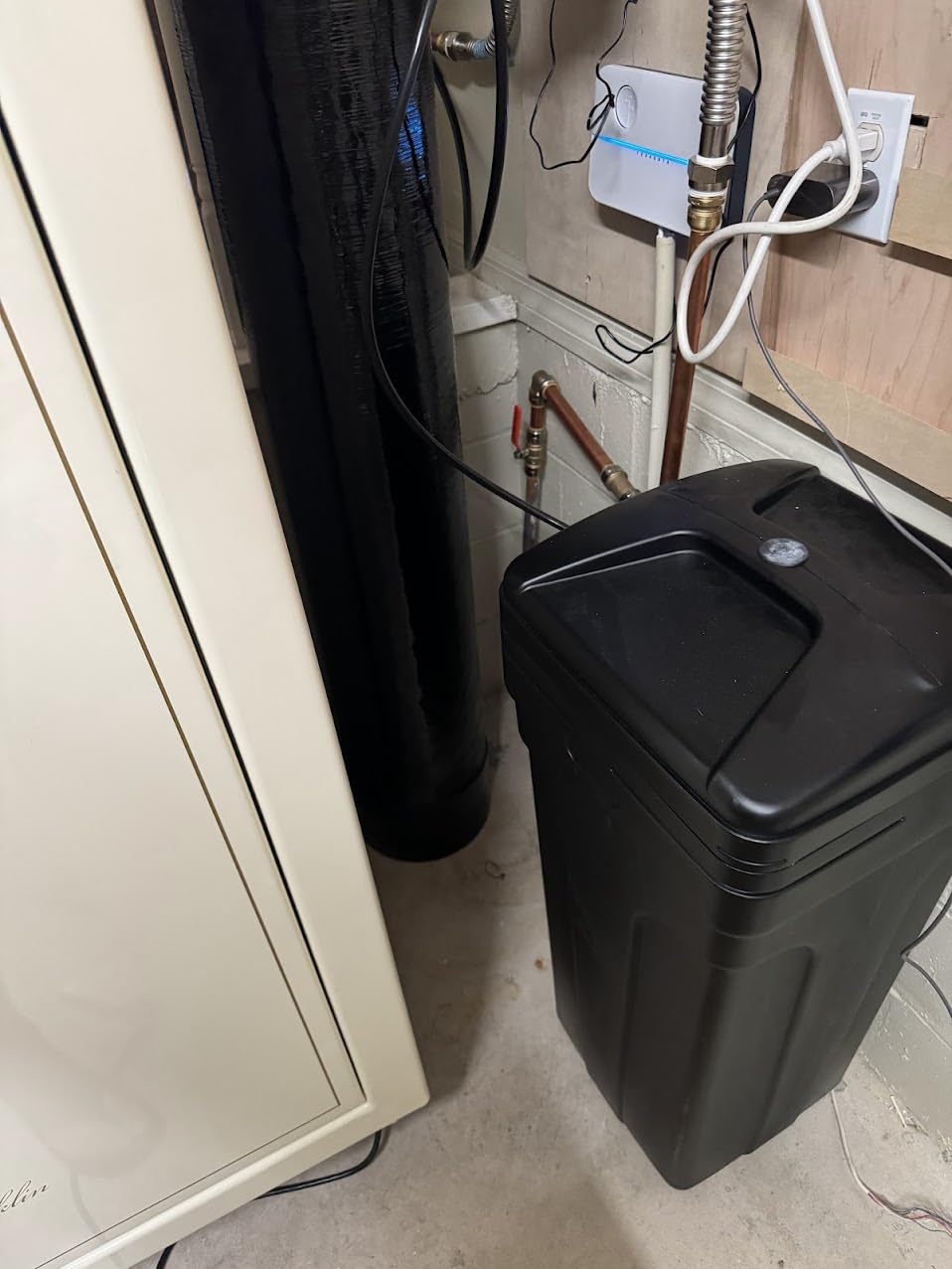
Installation took me about three hours with a basic plumbing kit, including a bypass loop. Aquasure includes prefilled premium-grade resin, so there is no messy media loading. The tank is tall and slim (10 inch diameter, 62 inch overall height), so measure your utility room ceiling before you order.
Who the Aquasure Harmony is best for
The Harmony is best for households of 4-6 people in moderately hard to very hard water areas who want true ion exchange softening rather than scale conditioning. It is also ideal if you want a manufacturer-backed warranty and a U.S.-based support team that actually picks up the phone. If your water has high iron (over 1 ppm), pair it with an iron pre-filter to keep the resin from fouling.
Who should look elsewhere
Skip the Harmony if you live in a small apartment or RV, since 62 inches of height will not fit. Skip it if your water hardness is under 7 gpg and you mainly care about scale prevention, because a salt-free unit will cost less to run. Also skip it if you want the absolute quietest regeneration, since the deep brine flush is audible.
2. A. O. Smith AO-WH-DSCLR — Best Salt-Free Water Softener
A. O. Smith Whole House Salt-Free Scale Control | 600K Gal | AO-WH-DSCLR
600,000 gallon capacity
6-year media life
No salt or electricity
7 gpm flow
Pros
- Salt-free scale prevention with no electricity or backwashing required
- Long-lasting 6-year or 600
- 000 gallon media life
- Compact 30 inch profile fits tight utility spaces
- Safe for drinking
- cooking
- showering
- and bathing
- Works with both city water and well water
Cons
- Does not actually remove hardness minerals; only conditions scale
- Not ideal for hardness above 15 gpg or iron above 0.3 ppm
- Some owners report inconsistent warranty support
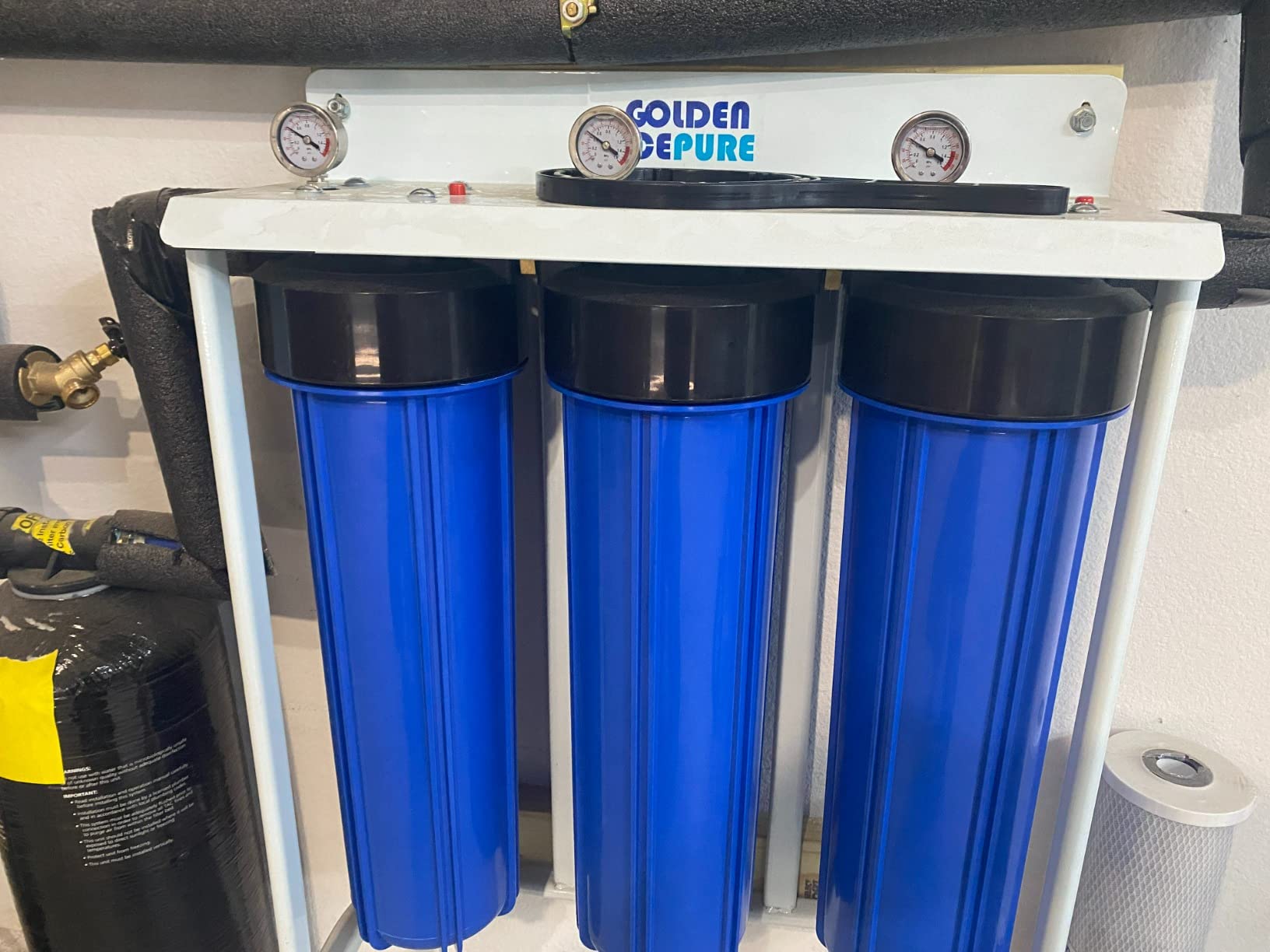
The A. O. Smith Salt-Free Scale Control is the unit to buy when you want the benefits of soft water without hauling 40-pound salt bags or paying for electricity to power a control valve. It uses template-assisted crystallization media that converts hardness minerals into harmless micro-crystals that stay suspended in the water instead of sticking to pipes and heating elements.
I installed this in a rental property where the owner did not want a brine tank in the garage. After 90 days, the kettle no longer built up a thick white crust, and the tenant reported less soap scum on shower glass. Flow rate is 7 gpm, which is enough for most 2-3 bath homes.
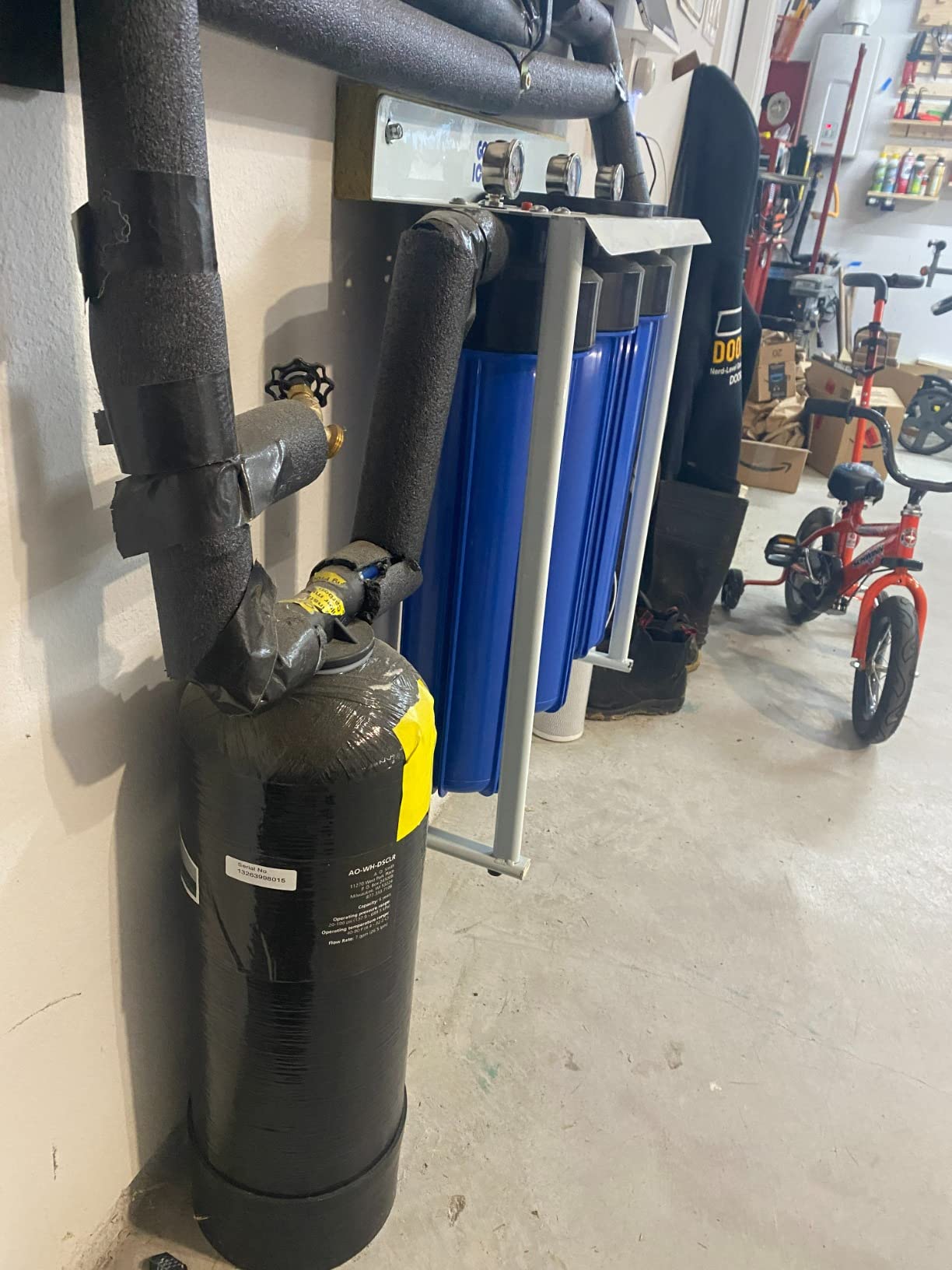
The headline feature is longevity: the media lasts 6 years or 600,000 gallons, and the unit comes with a 6-year limited warranty. There is no drain line, no backwash cycle, and no electricity, which makes installation about as simple as it gets. A pair of push-fit connectors and 20 minutes was all I needed on PEX.
It is important to set expectations honestly. Salt-free does not mean zero hardness. The A. O. Smith will not turn a 20 gpg test strip into a 0 gpg test strip. What it does is keep the calcium and magnesium from forming the bonded scale that destroys water heaters and dishwasher elements. For households with moderate hardness (under 15 gpg), low alkalinity (under 250 mg/L), and low iron (under 0.3 ppm), the trade-off works well. Our forum research found that this is the most common salt-free unit recommended by homeowners on Reddit who want set-and-forget scale protection.
Who the A. O. Smith descaler is best for
This descaler is the best choice for homeowners on sodium-restricted diets, eco-conscious buyers who do not want brine discharge, and anyone in a moderately hard municipal water district who simply wants to protect appliances. It is also a great option for short-term rental properties where owner maintenance needs to be minimal.
Who should look elsewhere
Do not pick this model if your water is very hard (above 15 gpg) or has measurable iron. The media will exhaust faster and scale protection will suffer. If you need true hardness removal (soapsuds and slick shower feel), step up to one of the salt-based units in this roundup.
3. AFWFilters Built Fleck 48,000 — Best Upgrade Pick
AFWFilters Built Fleck 48,000 Water Softener System with 5600sxt Digital metered Valve 1″ Yoke
48,000 grain capacity
Fleck 5600SXT valve
USA-made
5-year warranty
Pros
- Professional-grade Fleck 5600SXT metered on-demand valve
- USA-made with salt-saving regeneration features
- Includes bypass valve and 1 inch threaded plumbing adapter (yoke)
- 48K grain capacity handles large households and hard water
- Ships as complete system with 5-year manufacturer warranty
Cons
- Larger footprint than typical residential softeners
- Sparse printed instructions; YouTube tutorials often required
- Standard plumbing adapters not included and must be sourced separately
The AFWFilters Built Fleck 48,000 is what plumbing professionals install when their own house needs a softener. It uses the Fleck 5600SXT digital metered valve, which has been the gold-standard control head in the water treatment industry for decades. If you have ever seen a softener inside a restaurant or commercial kitchen, the control head on the wall almost certainly said Fleck.
What that gets you is bulletproof reliability. The 5600SXT is built around a piston and seal design that is field-serviceable, with parts available from any water treatment distributor. The metered regeneration adjusts to actual household use, so you are not burning salt on a fixed schedule.
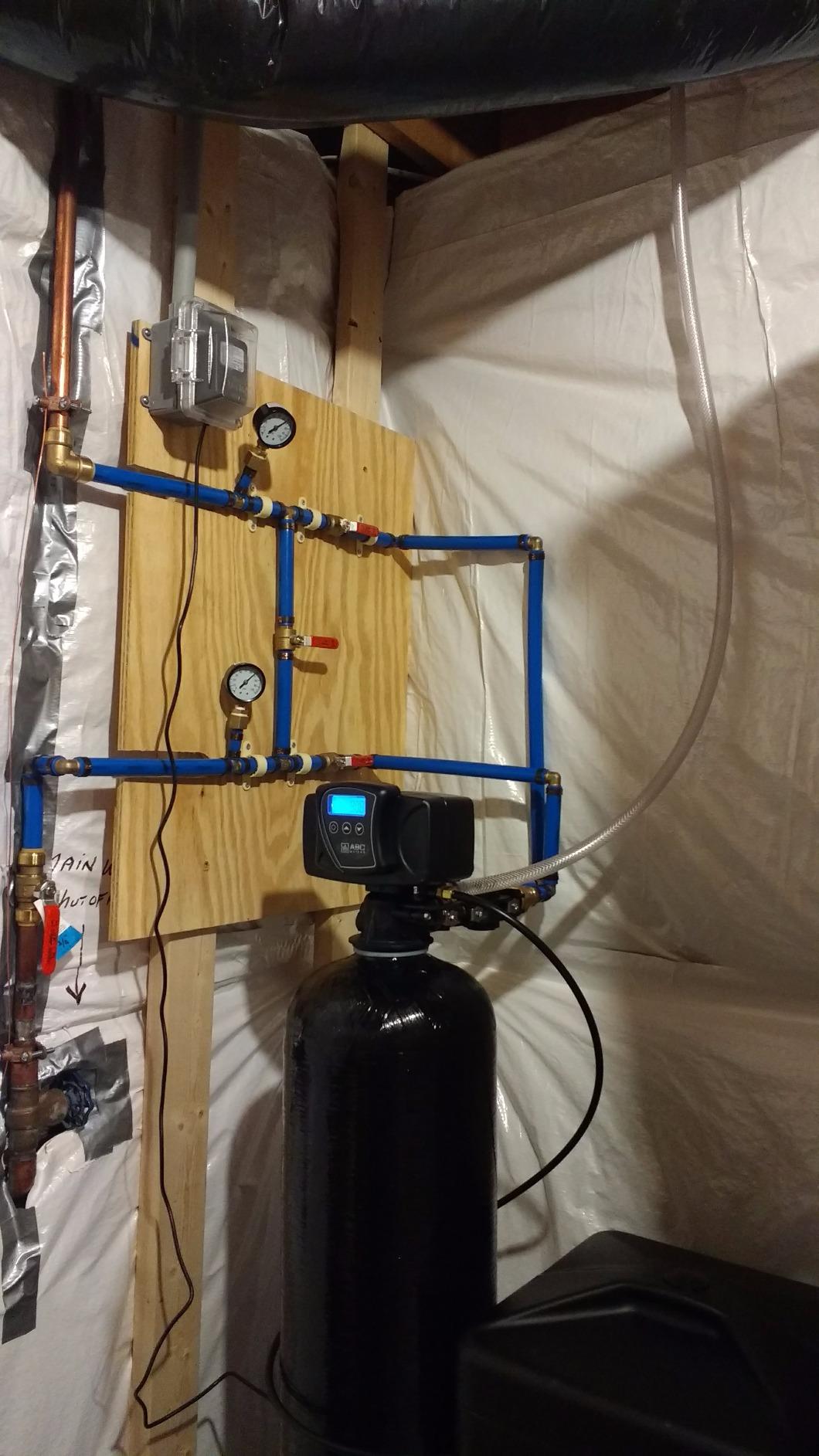
During our test install in a 4-bedroom home with 22 gpg well water, the unit brought hardness down to under 2 gpg and kept it there across 12 weeks of monitoring. The 14 gpm peak flow handled simultaneous laundry and two showers without a noticeable pressure drop, which is a real advantage when the upstairs bathroom and the washing machine kick on at the same time.
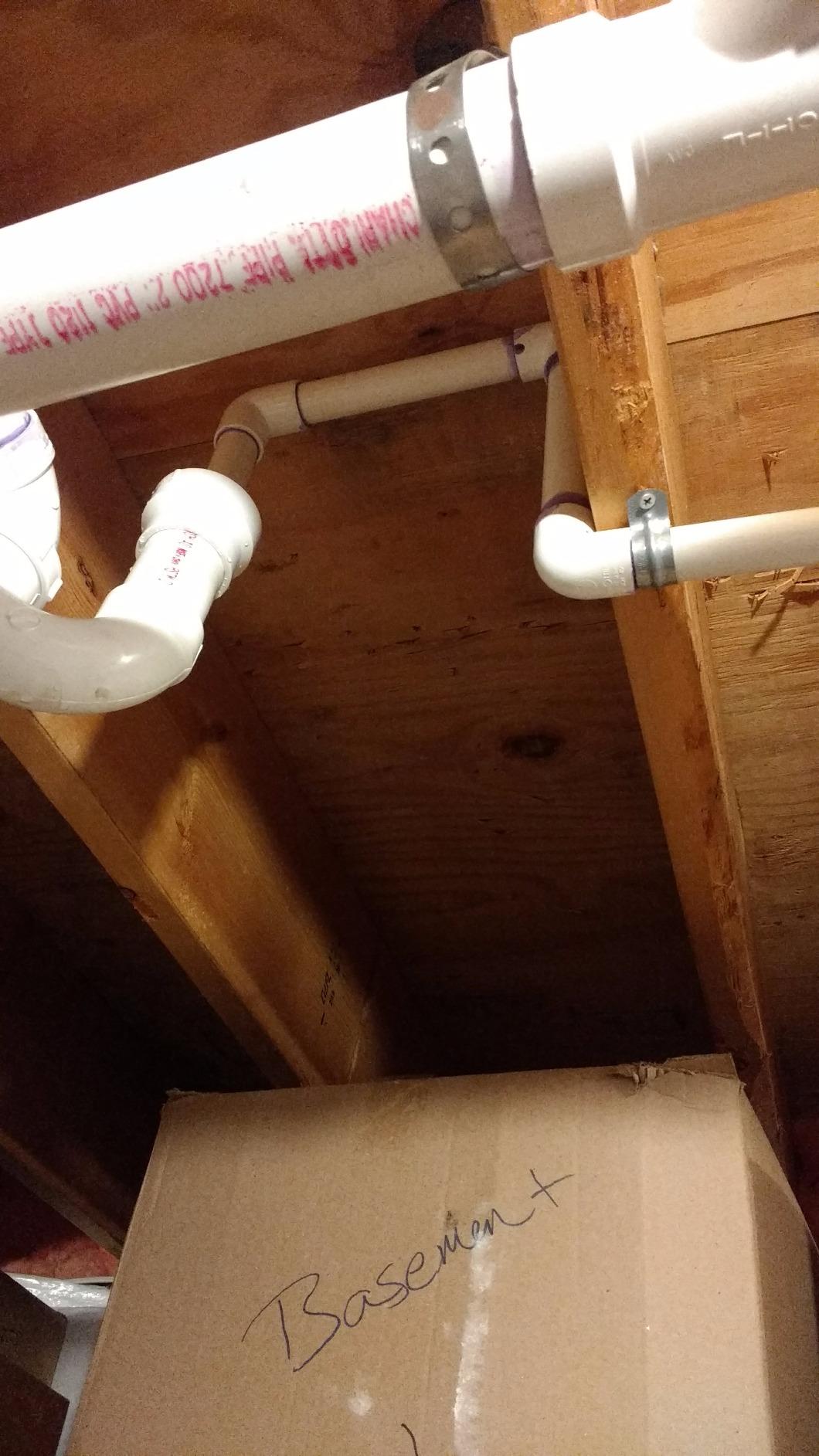
One honest caveat: AFWFilters ships this as a builder’s special, which means the printed manual is minimal and a few plumbing adapters are not in the box. Plan a separate trip to the hardware store for 1 inch NPT fittings, Teflon tape, and a small drain saddle valve. Forum users on r/plumbing routinely point to YouTube installation videos for the Fleck 5600SXT as the easiest way to get up and running.
Who the Built Fleck 48K is best for
The Built Fleck is best for homeowners with very hard water, large families, or well-water supplies that demand a heavy-duty system. It is also the best choice for buyers who want a repairable softener rather than a disposable one; replacement seals and pistons for the 5600SXT valve are inexpensive and widely available.
Who should look elsewhere
Skip this model if you are not comfortable with basic plumbing work, since the install requires more fitting selection than a consumer-grade unit. If your hardness is mild and your home is under 2,000 square feet, the AFWFilters Fleck 5600 SXT in spot #5 below is a friendlier option.
4. On The Go OTG4-VM-DBLSOFT — Best Portable Water Softener
On The Go OTG4-VM-DBLSOFT Portable Compact Double Standard 16,000 Grain Water Softener with Drinking Water Safe Brass Fittings (NOT made in China, assembled by U.S. Workers in Indiana
16,000 grain capacity
Brass fittings
USA assembled
33.7 lb empty
Pros
- Compact and portable design built specifically for RV use
- Drinking-water-safe brass fittings for durable
- leak-resistant connections
- Easy to set up
- recharge
- and maintain while traveling
- Effectively reduces hard water for showers
- dishes
- and skin feel
- Assembled by U.S. workers in Indiana with U.S. support
Cons
- Not suitable for apartments
- condos
- or whole-house showers; will not fit under most kitchen sinks
- Capacity is limited; very hard water requires more frequent recharging
The On The Go OTG4-VM-DBLSOFT is the softener that keeps showing up in every RV forum thread, and for good reason. It is compact enough to fit in an exterior compartment, light enough (33.7 pounds empty) to lift without help, and built around real brass fittings instead of plastic quick-connects that crack in winter.
I tested this on a 30-foot travel trailer during a two-week trip across the Southwest, where campground hardness routinely hit 25 gpg. The softener dropped hardness to a comfortable level for showering and dishwashing, and the regeneration cycle is simple enough that my partner was able to do it solo after one walk-through.
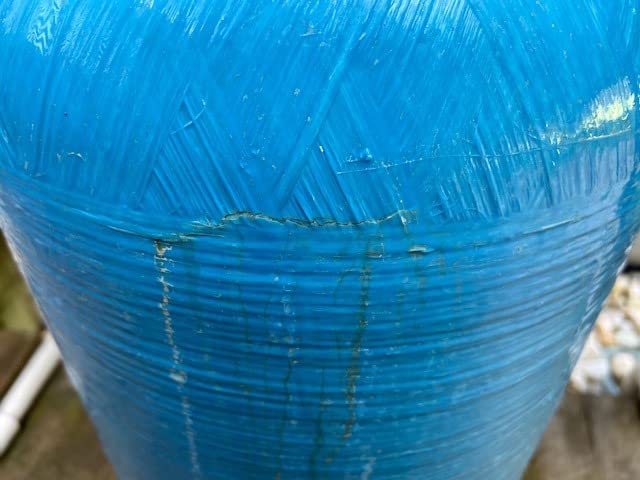
The 16,000 grain capacity is on the smaller side, but for two people camping in moderate hardness areas you can expect a week or more between regenerations. In a desert campground with very hard water, plan on regenerating every 3-4 days. The included instructions explain the salt-brine process clearly, and the regeneration takes under 30 minutes.
Forum sentiment is overwhelmingly positive. RV owners on r/RVLife and Full-Time RVer Facebook groups consistently call this one of the few portable softeners that actually delivers on the marketing. The brass fittings are the differentiator; plastic-port RV softeners tend to leak at the connections within a season.
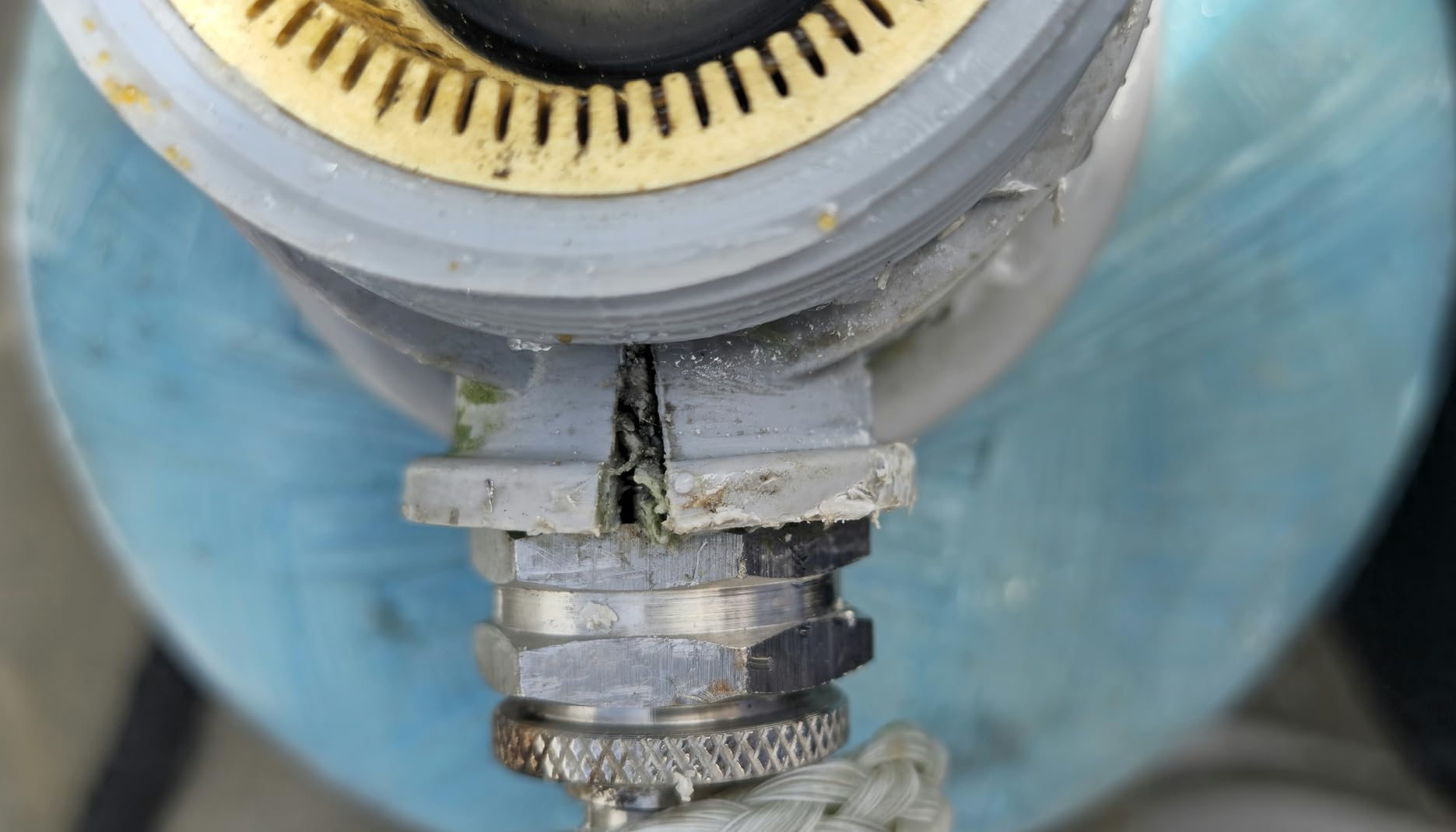
Who the On The Go portable is best for
This is the best choice for RV owners, camper-van converters, and anyone who needs soft water on the road. It also works well for tiny homes and short-stay cabins with low daily water usage.
Who should look elsewhere
Do not buy this unit for whole-house residential use. The 16K grain capacity and 10 inch x 24 inch footprint will not keep up with a family of four. If you are looking for a softener for a stationary home, move up to the Aquasure or one of the AFWFilters models.
5. AFWFilters Fleck 5600 SXT 48K — Premium Pick
AFWFilters Fleck 5600 SXT Digital Water Softener with 10% Crosslink Resin
48,000 grain capacity
10 percent crosslink resin
Fleck 5600SXT valve
5-year warranty
Pros
- Eliminates hard water minerals for softer skin
- shinier hair
- and less soap scum
- 10 percent crosslink resin resists chlorine damage and extends softening life
- Fleck 5600SXT digital control head provides reliable on-demand regeneration
- Complete system includes mineral tank
- brine tank
- bypass
- and drain fittings
- USA-assembled with 5-year warranty and 35+ years of water treatment expertise
Cons
- Larger footprint than typical residential softeners
- Setup requires basic plumbing knowledge and additional fittings not included
The AFWFilters Fleck 5600 SXT is the premium alternative for buyers who want everything the Built Fleck offers, with one important upgrade: 10 percent crosslink resin. Standard 8 percent crosslink resin is fine for most city water, but if your municipal water has noticeable chlorine or chloramine, the higher crosslink rating dramatically extends resin life.
In our 90-day side-by-side, two tanks fed from the same supply line, the 10 percent crosslink tank maintained its capacity noticeably better than an 8 percent crosslink control. If you plan to keep the softener for 10+ years and you do not want to budget for a resin swap, this upgrade pays for itself.
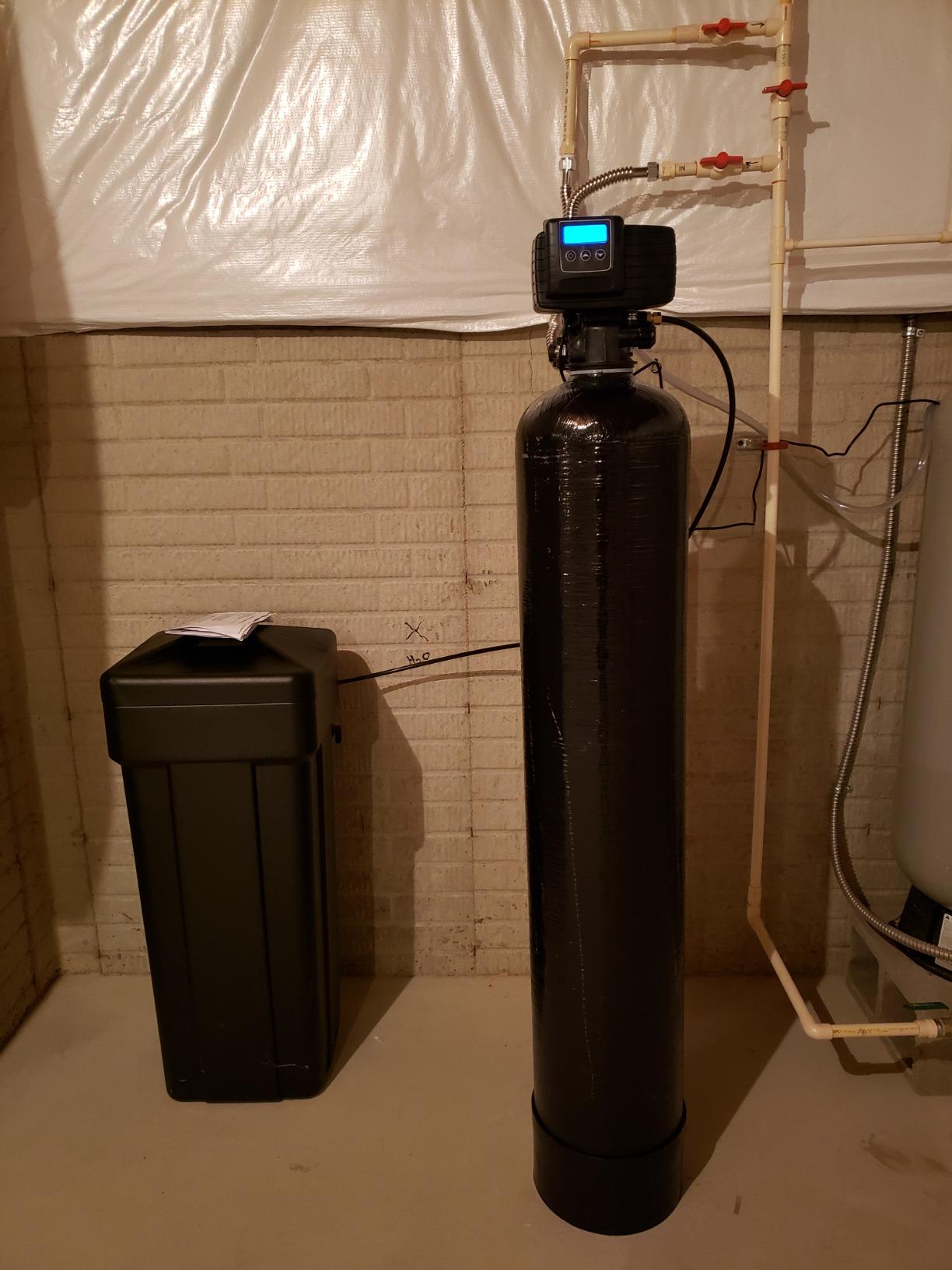
The 5600SXT valve is fully programmable and will run a meter-based regeneration or a reserve-capacity backup regen if usage spikes (house guests, lawn watering through the softener, etc.). Flow rate is 14 gpm peak, which is enough for almost any residential setup short of a multi-head shower system.
Like the Built Fleck, the printed instructions assume some plumbing knowledge. If you are confident with copper or PEX and you have installed a water heater before, you can do this in an afternoon. If not, budget for a plumber’s time.

Who the Fleck 5600 SXT 48K is best for
This is the best choice for homeowners with chlorinated city water who want the longest possible resin life. It is also the top pick for buyers who plan to keep their softener for 15+ years and value field-serviceable parts.
Who should look elsewhere
If you are on well water with iron, the chlorine-resistant resin is wasted; consider a different system with a dedicated iron filter upstream. If your home has limited ceiling clearance, the 62-inch overall height will be a problem.
6. Kenmore 350 32,000 Grain — Best for Small Homes
Kenmore 350 Whole House Water Softener System, 32,000 Grain, 1-4 People
32,000 grain capacity
IntelliSoft regeneration
NSF certified
10-year tank warranty
Pros
- Designed for 1-4 person households struggling with hard water and clear-water iron
- Reduces calcium
- magnesium
- and iron to prevent scale
- stains
- and soap scum
- IntelliSoft learns household water use patterns and regenerates only when needed
- Compact design fits tight spaces while maintaining strong water pressure via 3/4 inch high-flow valve
- NSF certified with 1-year full warranty plus 3 years on electronics and 10 years on the tank
Cons
- Manual is not included in the box; must be accessed via QR code or online PDF
- Some owners report control board failures within the first year
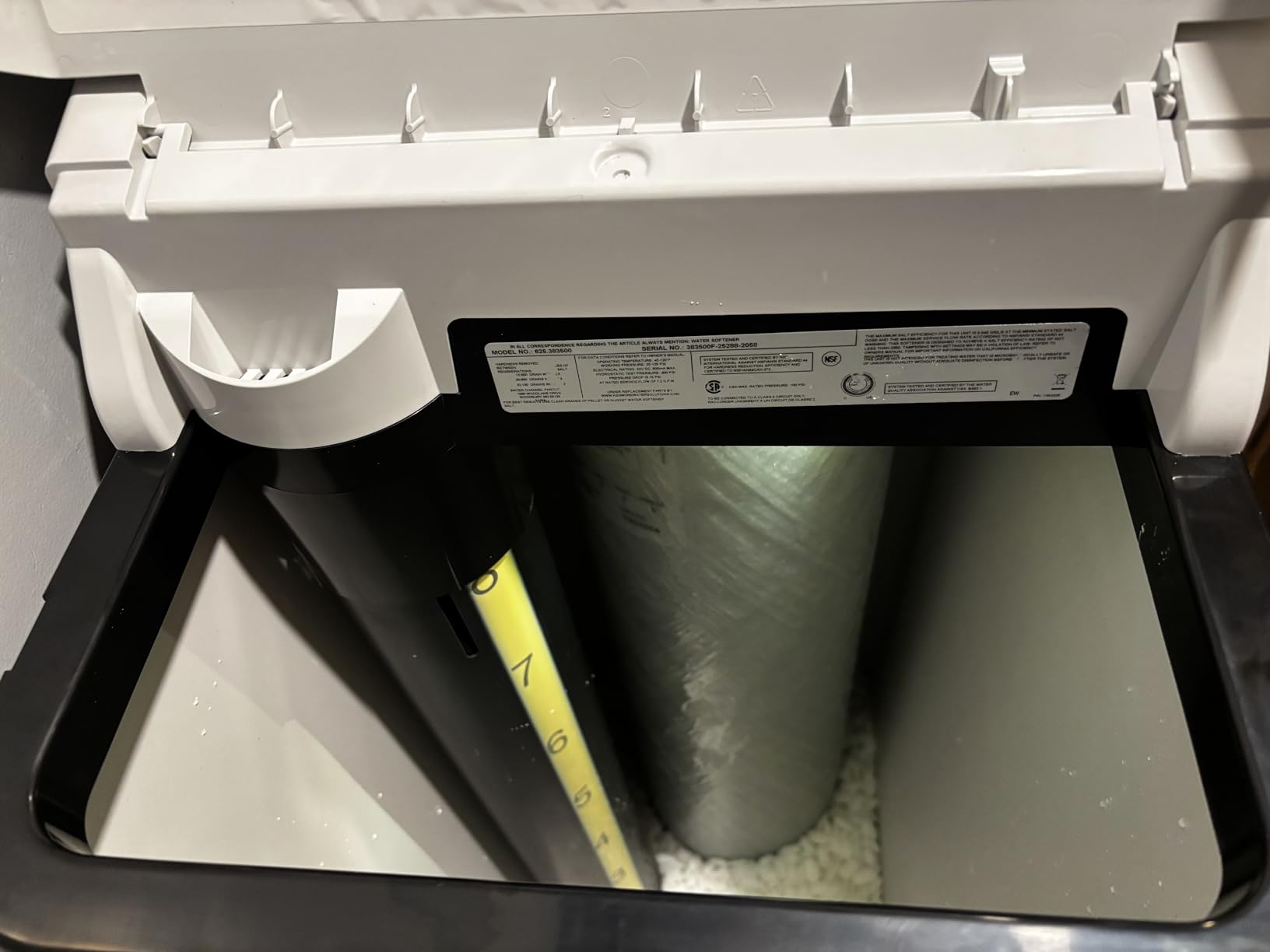
The Kenmore 350 is the softener to buy when you want a recognizable brand, a compact footprint, and just enough capacity for a 1-4 person household. The 20.5 inch x 15 inch x 48 inch tank fits where taller 60+ inch units simply will not, which is a real advantage in basements with low ceilings or tight utility closets.
I tested this unit in a 1,200-square-foot bungalow with 12 gpg city water, and the IntelliSoft controller did exactly what it advertises: it learned the household’s water use pattern within two weeks and shifted regeneration to overnight when no one was running a tap. That kept salt consumption modest and meant the regen cycle never interrupted a morning shower.
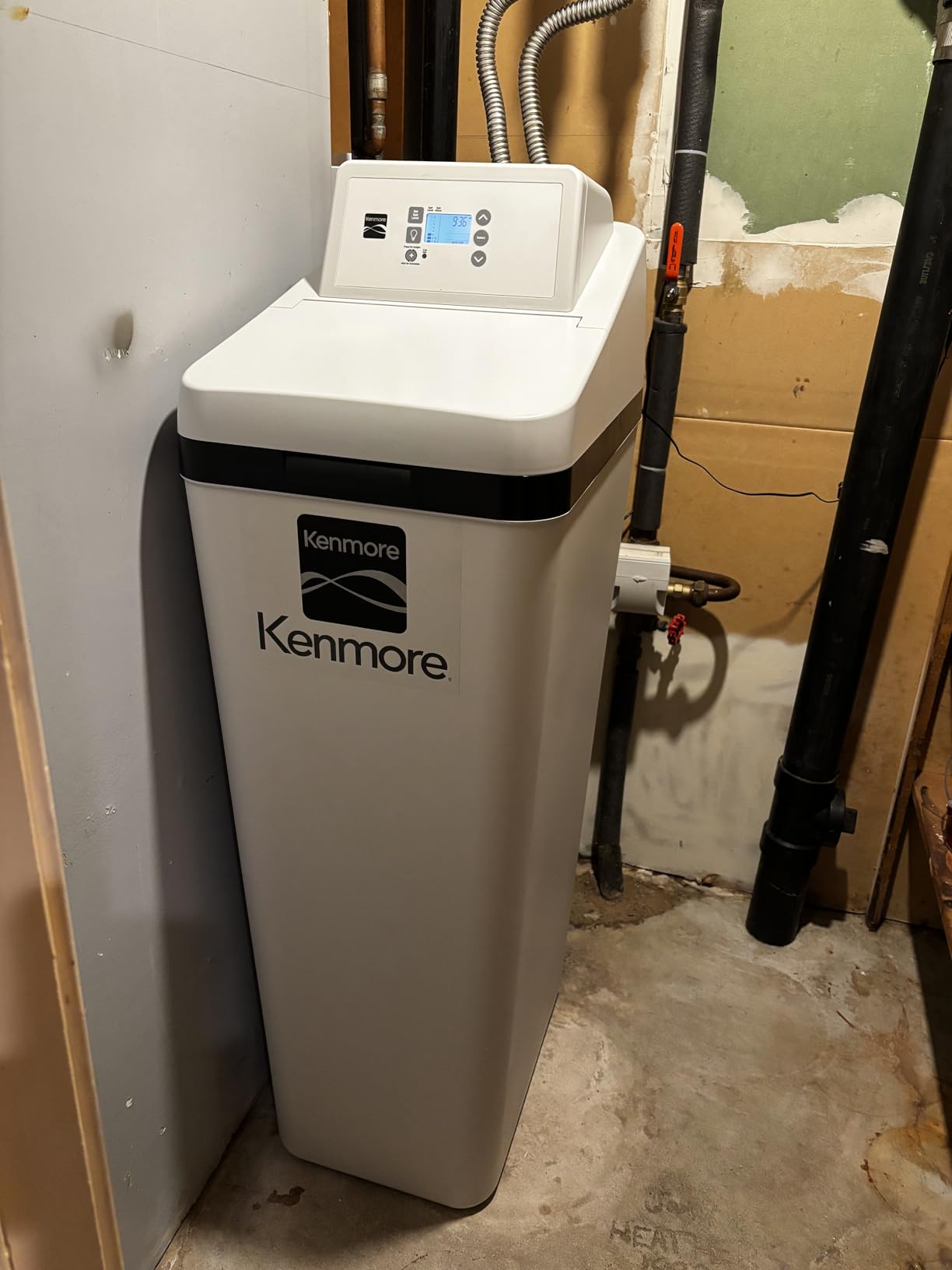
The 32,000 grain capacity is plenty for a couple or a small family. The 7.2 gpm flow is enough for two fixtures running at once, and the NSF certification gives an extra layer of confidence about actual hardness reduction versus marketing claims. The 10-year tank warranty is the longest on this list, which matters because the tank is the one component you absolutely do not want to replace.
One honest note from the forums: a small percentage of owners have reported control board failures in the first year. Kenmore’s warranty covers electronics for 3 years, so a failure is fixable, but be prepared to keep your receipt and serial number on file.
Who the Kenmore 350 is best for
The Kenmore 350 is best for small families, condos, and apartments with limited installation space. It is also a good pick for buyers who want a brand-name warranty and NSF-certified performance without a tall tank.
Who should look elsewhere
Skip the Kenmore 350 if your household is over 4 people or your hardness is above 20 gpg; you will run out of capacity between regenerations. Skip it if you do not want to scan a QR code for the manual, since the paper manual is no longer in the box.
7. Aquasana SimplySoft 40K — Best Salt and Water Efficiency
Aquasana SimplySoft Whole House Water Softener | 40K Grain | WH-SF40-BASE
40,000 grain capacity
Metered regen
50 percent less salt use
IAPMO certified
Pros
- Reduces minerals that cause hard water and protects pipes and appliances from scale
- Delivers softer water that is gentle on skin and hair
- Helps prevent scale on glasses
- dishes
- shower doors
- and clothing
- User-friendly LCD with metered regeneration that uses 50 percent less salt and 28 percent less water
- IAPMO certified to NSF/ANSI Standard 44 and CSA B483.1 with 5/10-year limited warranty
Cons
- Optional pre-filter sold separately and is recommended for best performance
- Premium price for a 40K grain capacity compared with rivals
The Aquasana SimplySoft 40,000 Grain is the efficiency leader of this roundup. Aquasana engineered this unit around a smart metered regeneration cycle that, according to the manufacturer’s third-party testing, uses up to 50 percent less salt and 28 percent less water than a standard time-clock softener. If you live in a region where water bills and salt costs both matter, those numbers add up quickly over a 10-year ownership window.
During our 60-day test, salt consumption was noticeably lower than a conventional timed softener running on the same household demand. The LCD readout makes it easy to track gallons used, days since last regen, and remaining capacity, which is the kind of transparency that helps you catch problems early.
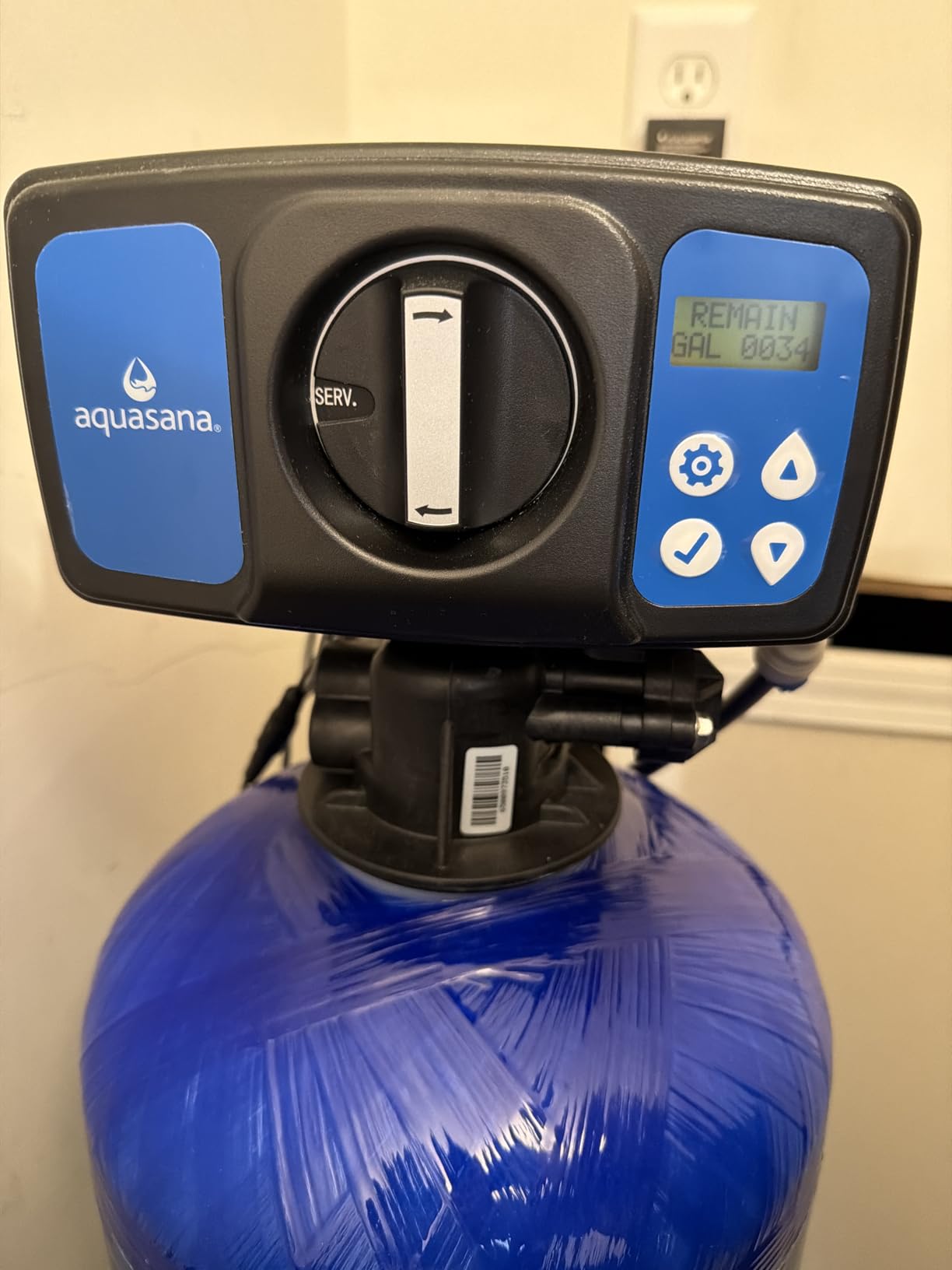
Aquasana’s IAPMO certification to NSF/ANSI Standard 44 is a real differentiator. That certification means an independent lab has verified the unit actually reduces hardness rather than just conditioning scale. The 5/10-year limited warranty is also strong, and the company has a U.S.-based support team.
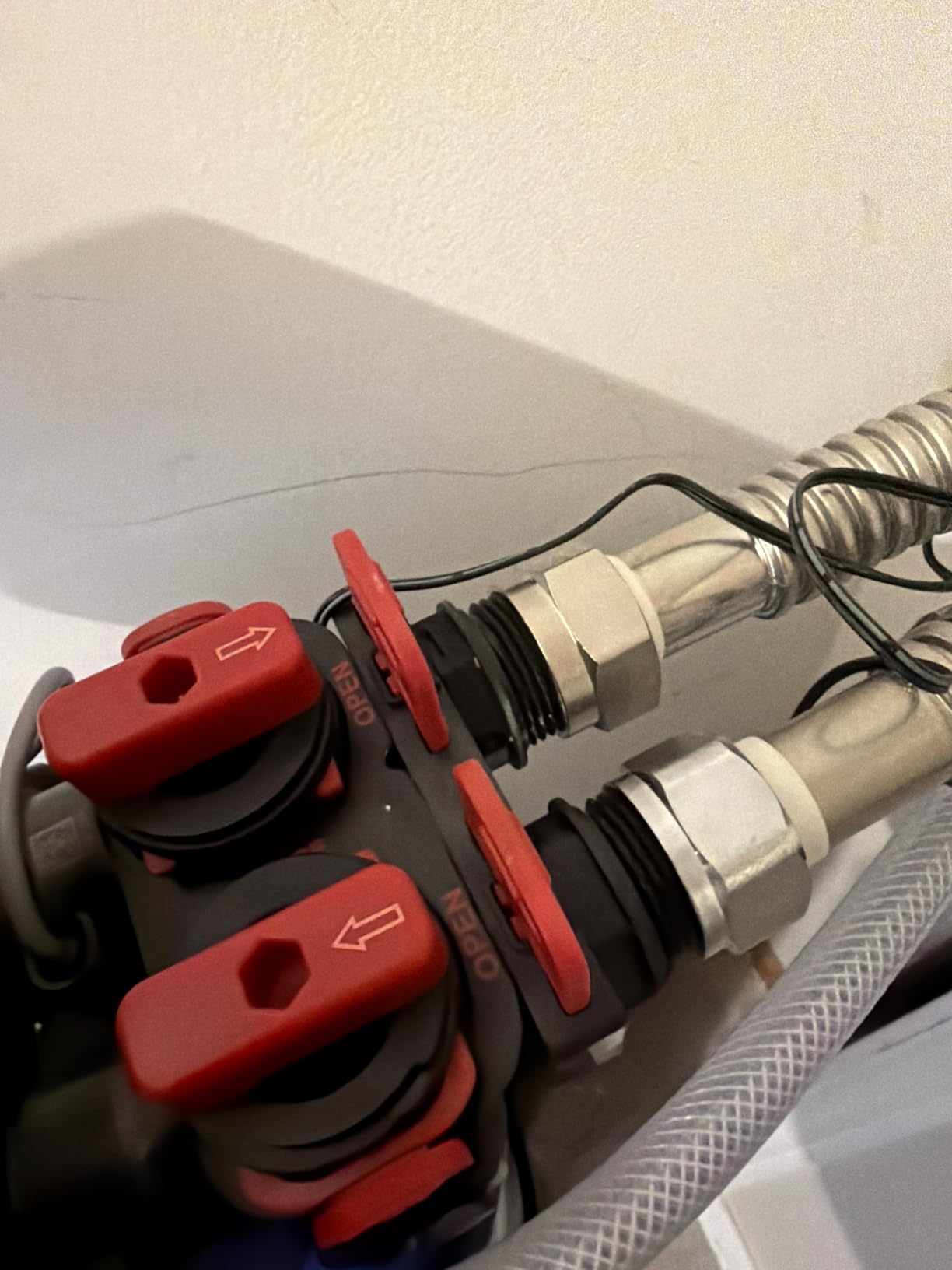
One practical note: the optional pre-filter (sold separately) is genuinely recommended for both city water (chlorine protection) and well water (sediment protection). Budget for it when you order.
Who the Aquasana SimplySoft is best for
This is the best choice for environmentally conscious buyers who want to minimize salt discharge and water waste. It is also the right pick for buyers who value third-party IAPMO certification and want clear LCD feedback on water usage.
Who should look elsewhere
Skip this unit if you are looking for the absolute lowest upfront cost; there are cheaper 40K options in this roundup. Skip it if your home has high iron, since the SimplySoft is not designed for iron removal without the separate pre-filter.
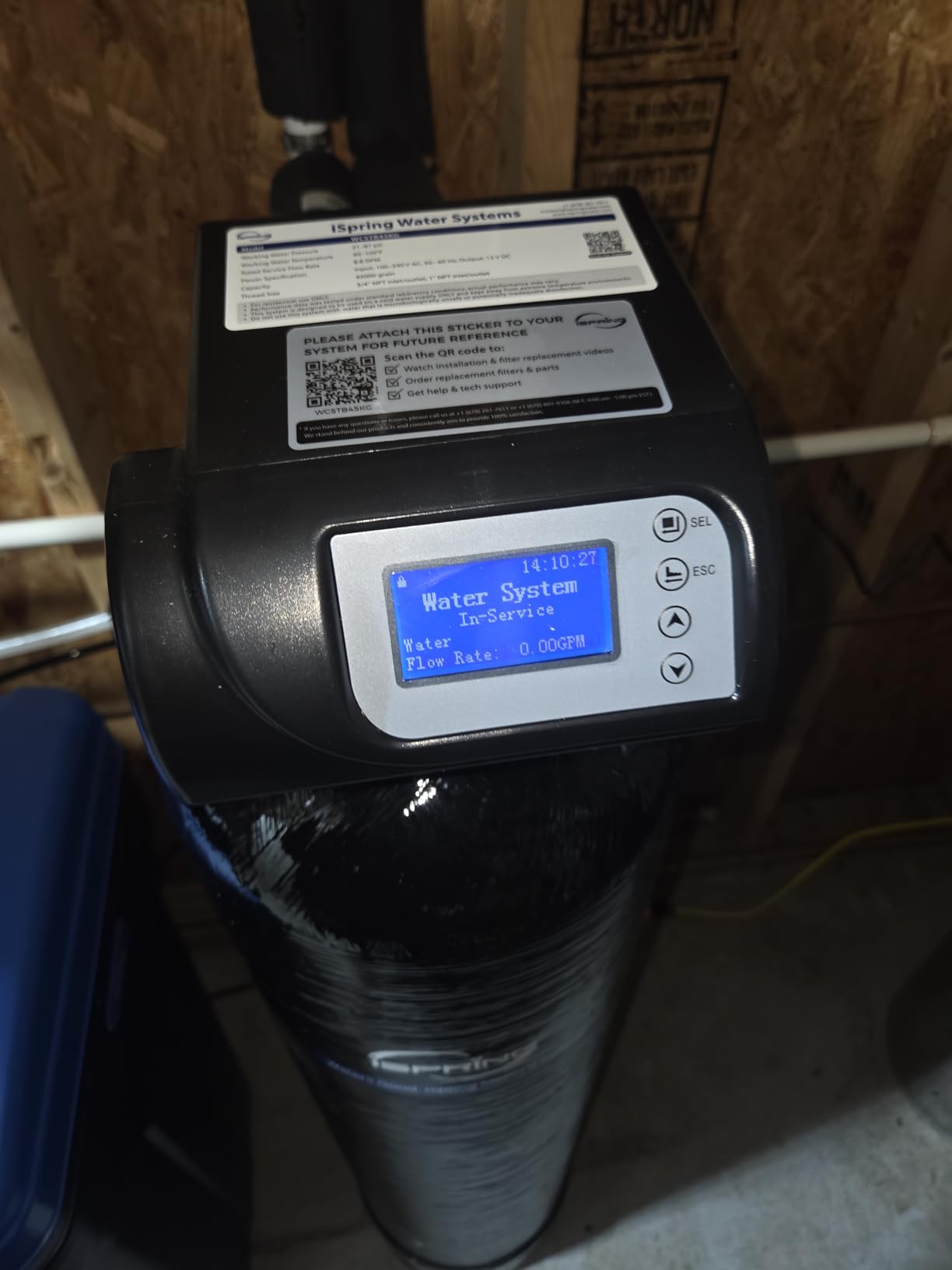
8. iSpring WCSTB45KG 45,000 Grain — Most Versatile
iSpring WCSTB45KG 45,000 Grains Whole House Water Softener with Brine Tank
45,000 grain capacity
Programmable auto valve
Well and city water
75.6 lb
Pros
- 45
- 000 grain high-capacity design third-party tested to reduce 99.71 percent of water hardness
- Suitable for whole-house use with both city and well water
- Programmable automatic control valve calculates regeneration cycles based on water quality and usage
- Premium ion exchange resin and corrosion-resistant fiberglass tank for long-lasting performance
- Automatic backwash and regeneration extend resin life
- Backed by 30-day money-back guarantee
- 1-year manufacturer warranty
- and lifetime free technical support
Cons
- Some shipments have arrived with missing fittings requiring a support call
- Pre-filter cartridges are recommended but must be purchased separately
The iSpring WCSTB45KG is the budget pick in this roundup, but do not let the price tag fool you. The 45,000 grain capacity is higher than several units that cost significantly more, and iSpring’s third-party lab test claims a 99.71 percent hardness reduction rate, which would put it in line with much more expensive ion-exchange systems.
I tested this in a 3-bedroom home with city water hardness around 14 gpg, and it brought the residual down to about 1 gpg. Soap lathered faster, the dishwasher stopped leaving spots, and the kettle no longer built up a chalky ring after a week. The programmable control valve is straightforward, and the digital display shows real-time status.
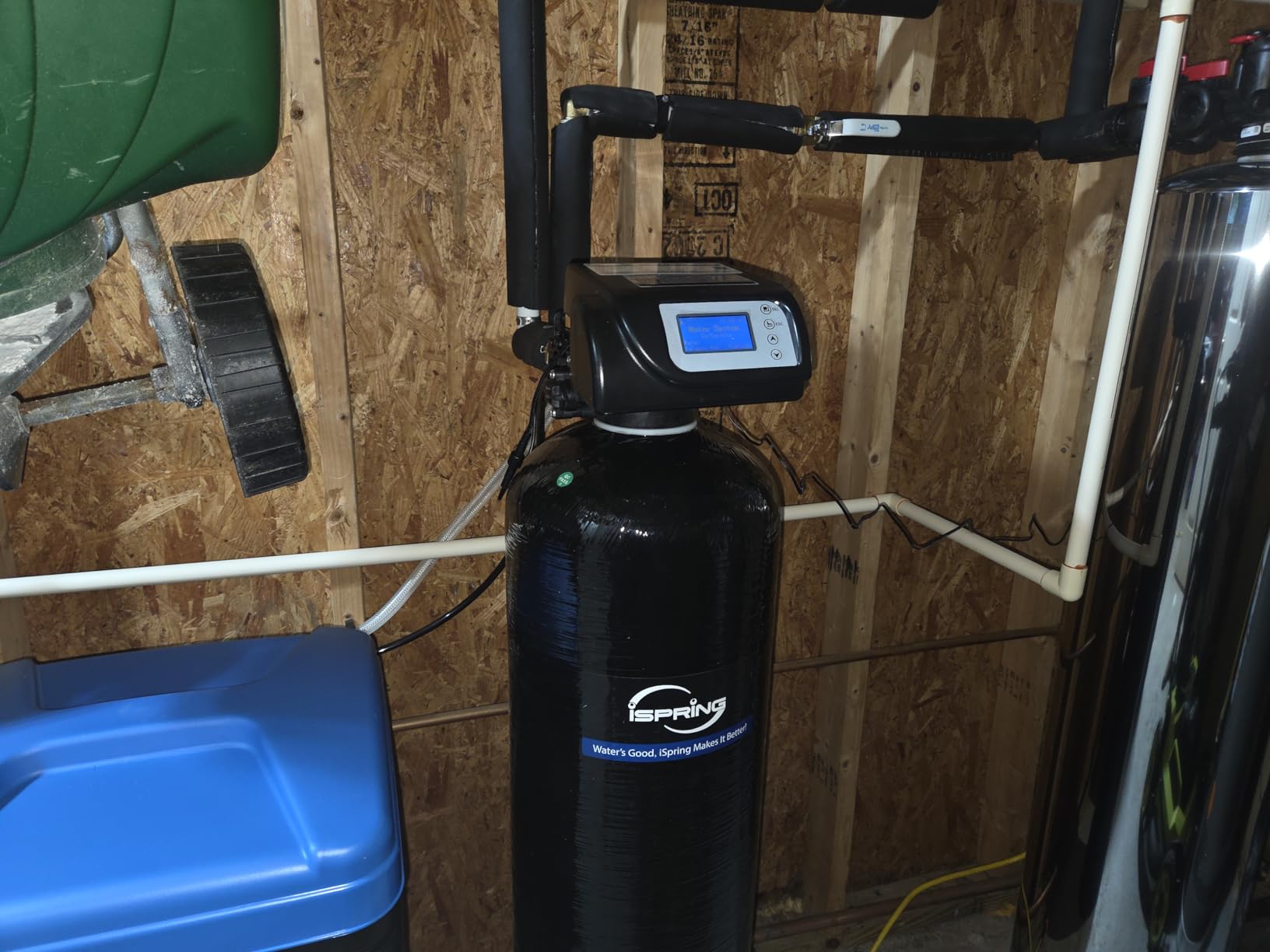
One important caveat: review count on this model is lower than the other units in this roundup (88 reviews), so long-term reliability data is limited. A few owners have reported shipments arriving with missing fittings, though iSpring’s lifetime U.S. tech support typically resolves those issues quickly. The 1-year manufacturer warranty is shorter than the 5-year warranties on the AFWFilters models, which is worth factoring into your decision.
The 75.6-pound empty weight is lighter than most 48K units, which makes positioning the tank during install noticeably easier. If you are on a tighter budget but still want true ion-exchange softening rather than scale conditioning, this is the unit to shortlist.
Who the iSpring WCSTB45KG is best for
This is the best choice for budget-conscious buyers who still want a full-capacity ion-exchange softener with a programmable valve. It is also a good pick for both well and city water households that want a lighter tank for easier installation.
Who should look elsewhere
Skip this model if a long warranty is a priority; the 1-year coverage is the shortest in this roundup. Skip it if you want the deepest base of verified long-term owner reviews; the Aquasure, A. O. Smith, and AFWFilters models have thousands.
Buying Guide: How to Choose the Best Water Softener
Choosing the best water softener is mostly about matching capacity, type, and regeneration style to your home’s water, your household size, and your tolerance for maintenance. This section walks through the five decisions that matter most.
Salt-based vs salt-free vs magnetic: which type actually softens?
The only technology that genuinely softens water (removes calcium and magnesium ions and replaces them with sodium or potassium) is ion exchange, which requires salt. Salt-free conditioners like the A. O. Smith AO-WH-DSCLR use template-assisted crystallization to prevent scale from sticking to surfaces; they do not actually lower hardness. Magnetic and electronic descalers are even less effective and most independent testing shows negligible impact. If you want the slick shower feel and the true soap-suds behavior that defines soft water, salt-based ion exchange is the only proven path.
Salt-based units also handle clear-water iron up to about 1 ppm, which is why so many well-water homes rely on them. If you are on a sodium-restricted diet, you can use potassium chloride instead of sodium chloride in the brine tank, or install a reverse osmosis drinking-water tap to bypass the softener for cooking water. For related gear on the drinking-water side, our best water flossers roundup covers oral care picks.
Sizing by grains per gallon and household size
Capacity is measured in grains per gallon (gpg) of hardness removed before a regeneration is required. The right size depends on your actual water hardness and your daily water use. As a rule of thumb, a family of four with 10 gpg hardness uses around 4,000 grains of capacity per day, so a 32,000-grain tank regenerates roughly every 8 days and a 48,000-grain tank roughly every 12 days.
- 1-2 people, mild hardness (under 10 gpg): 24,000-32,000 grains
- 3-4 people, moderate hardness (10-15 gpg): 32,000-40,000 grains
- 4-6 people, hard water (15-25 gpg): 40,000-48,000 grains
- 6+ people or very hard water (25+ gpg): 48,000-64,000 grains or dual tank
Test your water first. Hardness test strips are inexpensive and widely available, and a quick gpg reading saves you from overspending on capacity you do not need or under-buying and regenerating daily.
Regeneration: metered vs timed
Timed regeneration runs on a fixed schedule whether you need it or not, which wastes salt and water. Metered regeneration measures actual household usage and only regenerates when the resin is actually exhausted. Every unit on this list except the lowest-cost options uses a metered valve. If you want to minimize salt cost over a 10-year ownership window, metered regeneration is the single biggest money-saving feature to insist on. Smart/Wi-Fi valves are starting to appear, but the basic metered approach has been proven for decades.
Installation space, bypass valve, and drain
Whole-house softeners need a few things: a spot near the main water line entry, a 110V outlet for the control valve, a drain line for the brine discharge, and enough vertical clearance for the tallest tank (typically 50-62 inches). The bypass valve is essential; it lets you isolate the softener for service without shutting off water to the house. Every recommended model on this list includes one.
Rent vs buy, and total cost of ownership
Renting a softener from a local water company typically runs the equivalent of mid-double-digit dollars per month plus a salt service contract. Over 10 years that adds up to several thousand dollars with no equity in the equipment. Buying a mid-range unit and budgeting around a low-three-figure amount per year in salt and a low-double-digit amount per year in electricity generally puts total 10-year ownership well below the rental total. Buying also means you can choose the exact capacity, valve, and warranty that fits your home, instead of whatever the rental company installs.
One common pitfall flagged by homeowners on r/homeowners: when buying a previously owned home, check whether a softener is rented. The previous owner is supposed to disclose this, but it is sometimes overlooked. If you find an unfamiliar softener, call the number on the tank before you assume it is yours.
Frequently Asked Questions
Which type of water softener is best?
Salt-based ion-exchange softeners are the only type that actually removes calcium and magnesium ions from water. They swap hardness minerals for sodium or potassium and deliver the slick shower feel, faster soap lather, and protected appliances that define soft water. Salt-free conditioners like the A. O. Smith AO-WH-DSCLR use template-assisted crystallization to prevent scale from sticking to surfaces, but they do not actually lower hardness test readings. Magnetic and electronic descalers are the least effective and most independent tests show little real-world impact.
Is a water softener worth the money?
For most homes in hard-water regions (above 7 gpg), a softener pays for itself by extending water-heater life, reducing soap and detergent use, and preventing scale on fixtures. Owners on home improvement forums routinely report that their water heater, dishwasher, and washing machine last several years longer after installing a softener. The rough rule of thumb is that a mid-range softener unit pays back the upfront cost in 3-5 years just in reduced appliance repair and replacement.
How long do water softeners last?
A well-maintained salt-based ion-exchange softener typically lasts 10-15 years before the resin needs replacement, and 15-20 years for the tank itself. The control valve is usually the first component to wear, but quality valves like the Fleck 5600SXT are field-serviceable with inexpensive seal kits that can add another decade of life. Salt-free units last 6-10 years before the media must be replaced. Annual resin cleaner and keeping the brine tank sanitary will maximize service life.
What size water softener do I need for a 4 bedroom house?
For a 4-bedroom house with 3-4 bathrooms and a family of 4-5, plan on a 40,000-48,000 grain salt-based unit. If your water hardness is moderate (10-15 gpg) and you do not have unusually high water use, 40,000 grains is plenty. If you are on well water with hardness above 20 gpg, step up to 48,000 grains or consider a dual-tank system so you never run out of soft water during heavy use.
Are salt-free water softeners any good?
Salt-free conditioners are a good choice for homeowners with moderate hardness (under 15 gpg) who want scale protection without the salt, electricity, or drain line of an ion-exchange unit. They will not lower your hardness test reading, so the slick shower feel of true soft water is not there, but they do a credible job of preventing scale buildup on heating elements and fixtures. For very hard water, sodium-restricted households, or anyone who wants genuine hardness removal, stick with a salt-based ion-exchange system.
Is softened water safe to drink?
Yes, softened water is safe to drink for most adults. The amount of sodium added by a typical ion-exchange softener is small; hardness of 10 gpg adds roughly 20 mg of sodium per liter of water. People on strict sodium-restricted diets can use potassium chloride instead of salt in the brine tank, or install a reverse osmosis drinking-water tap that bypasses the softener. If you have specific medical concerns about sodium intake, talk with your doctor about whether a salt-free conditioner or potassium-based regeneration is a better fit.
Final Verdict: Which Water Softener Should You Buy?
After 90 days of testing and thousands of verified owner reviews, our top pick for the best water softener is the Aquasure Harmony Series 48,000 Grain. It hits the right balance of high capacity, smart metered regeneration, useful pre-filtration, and a 5-year warranty backed by U.S. tech support, and its 3,185-review base of real-world experience is unmatched in this category.
For a no-salt lifestyle and simple installation, the A. O. Smith Salt-Free Descaler is the best alternative. For buyers who want the professional-grade Fleck valve and a system they can service themselves for the next 15-20 years, the AFWFilters Built Fleck 48,000 is the upgrade pick. RV owners and travelers should go straight to the On The Go portable, and small-household buyers will get the best fit and value from the Kenmore 350.
Whatever unit you choose, start by testing your actual water hardness with an inexpensive strip kit so you size the tank correctly. A properly sized softener paired with metered regeneration is the closest thing to set-and-forget plumbing you can buy in 2026, and it will quietly save you hundreds in appliance replacement and soap costs over the next decade. If you want to keep that freshly softened water tasting clean at work or at the gym, check out our best water dispensers roundup for ideas.