
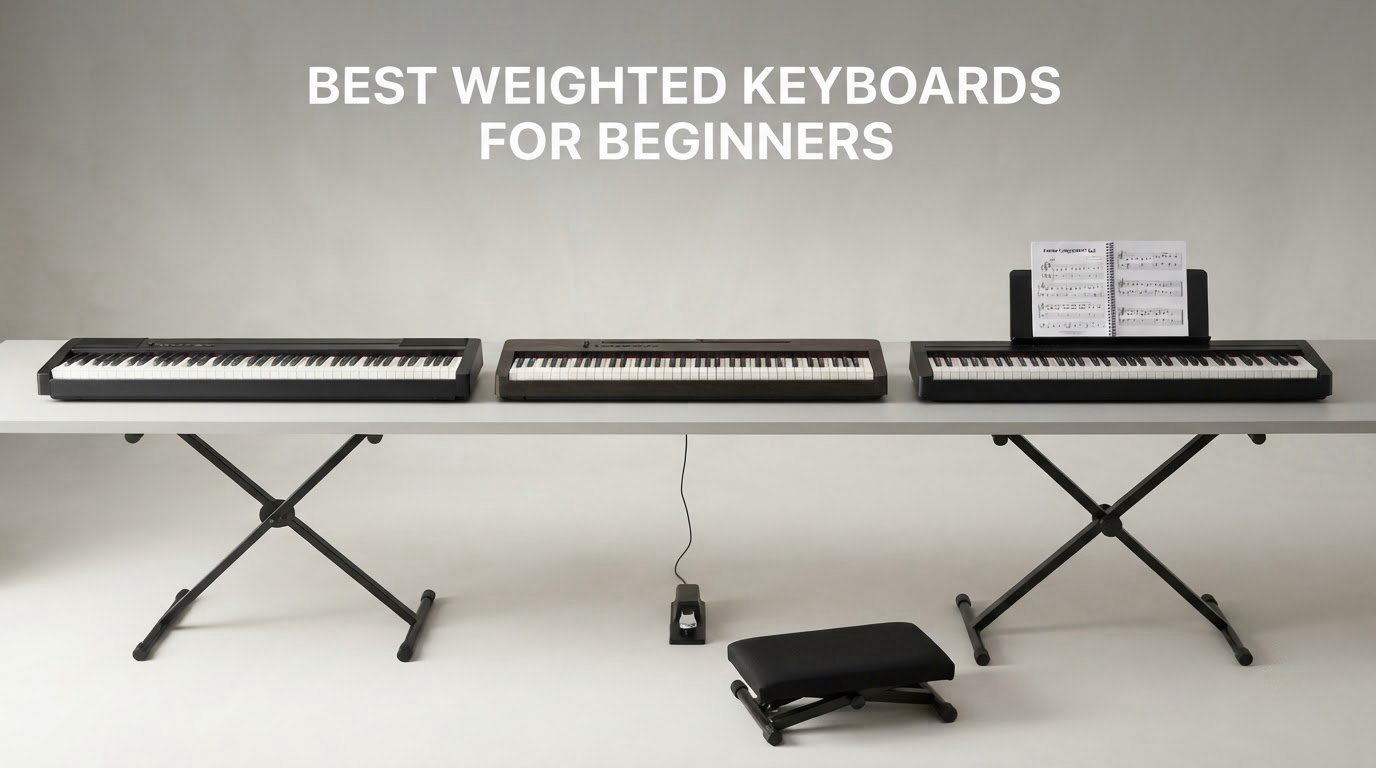
The single most common regret we hear from new players is not the money. It is the habit. Six months in on an unweighted plastic keybed, a beginner has already trained the fingers to jab, and moving to a real piano feels like starting again. That is why the best weighted keyboards for beginners are not a luxury purchase but the cheapest way to protect the technique you are about to build.
A weighted keyboard is a digital piano with hammer action or semi-weighted keys that push back against your fingers in roughly the same proportions an acoustic piano does. The low notes feel heavier than the high notes, the key travel is longer, and a gentle touch produces a quiet sound. Those two facts, resistance and gradation, are what teach control. Every pick below has 88 full-size keys, touch sensitivity and a sustain pedal input, because anything less means a second instrument purchase later.
We spent weeks comparing twelve of them, reading thousands of owner reviews, and weighing what actually helps someone in month one against what becomes an irritation by year three. We also looked at the wider keyboard landscape: if you want something that plays MIDI or connects wirelessly for music production rather than lessons, our guides to the best MIDI keyboards and the best wireless keyboards cover that ground instead. For lessons, though, the answer is always a weighted 88-key digital piano.
Table of Contents
Top 3 Picks for the Best Weighted Keyboards for Beginners

Best Weighted Keyboards for Beginners in 2026
Every keyboard in this roundup has 88 full-size weighted or semi-weighted keys. Read the table for a fast shortlist, then read the individual reviews for the detail on key feel, speaker quality and what you give up at each step up.
| Product | Specifications | Action |
|---|---|---|
| Alesis Recital 88-Key Semi-Weighted |
|
Check Latest Price |
 Yamaha P-71 Yamaha P-71 |
|
Check Latest Price |
 Alesis Recital Play Alesis Recital Play |
|
Check Latest Price |
 Donner DDP-80 Donner DDP-80 |
|
Check Latest Price |
 STRICH SDP-120 STRICH SDP-120 |
|
Check Latest Price |
 Donner OURA S100 Donner OURA S100 |
|
Check Latest Price |
 STRICH SDP-300W STRICH SDP-300W |
|
Check Latest Price |
 UISCOM 1852 UISCOM 1852 |
|
Check Latest Price |
 AODSK B-85 AODSK B-85 |
|
Check Latest Price |
 Veitob 88-Key Veitob 88-Key |
|
Check Latest Price |
 Yamaha P145BT Yamaha P145BT |
|
Check Latest Price |
 Donner DEP-20 Lite Donner DEP-20 Lite |
|
Check Latest Price |
1. Alesis Recital 88-Key Semi-Weighted – Our Overall Pick
Alesis Recital Digital Piano 88-Key Semi-Weighted
88 semi-weighted keys
5 voices plus reverb and chorus
2x20W stereo speakers
15.7 pounds
Pros
- Most owner reviews of any keyboard here
- full-size semi-weighted keys with adjustable touch response
- 20W stereo speakers
- lesson and split modes
- Skoove and Melodics lessons included
Cons
- Lighter action than a true hammer action
- Sustain pedal sold separately
- 128-note polyphony
This is the keyboard we hand to an adult who has never touched a piano and is worried about money. The Recital has more than 11000 owner reviews behind it, which is a deeper pool of long-term reliability reports than anything else in this group, and the semi-weighted action is gentle enough that new fingers do not fatigue in the first week.
Touch response is adjustable, and that single setting does more for a beginner than any of the headline specifications. Setting it light on day one and firming it up as your hands strengthen means the same instrument covers grades one through four without a fight.
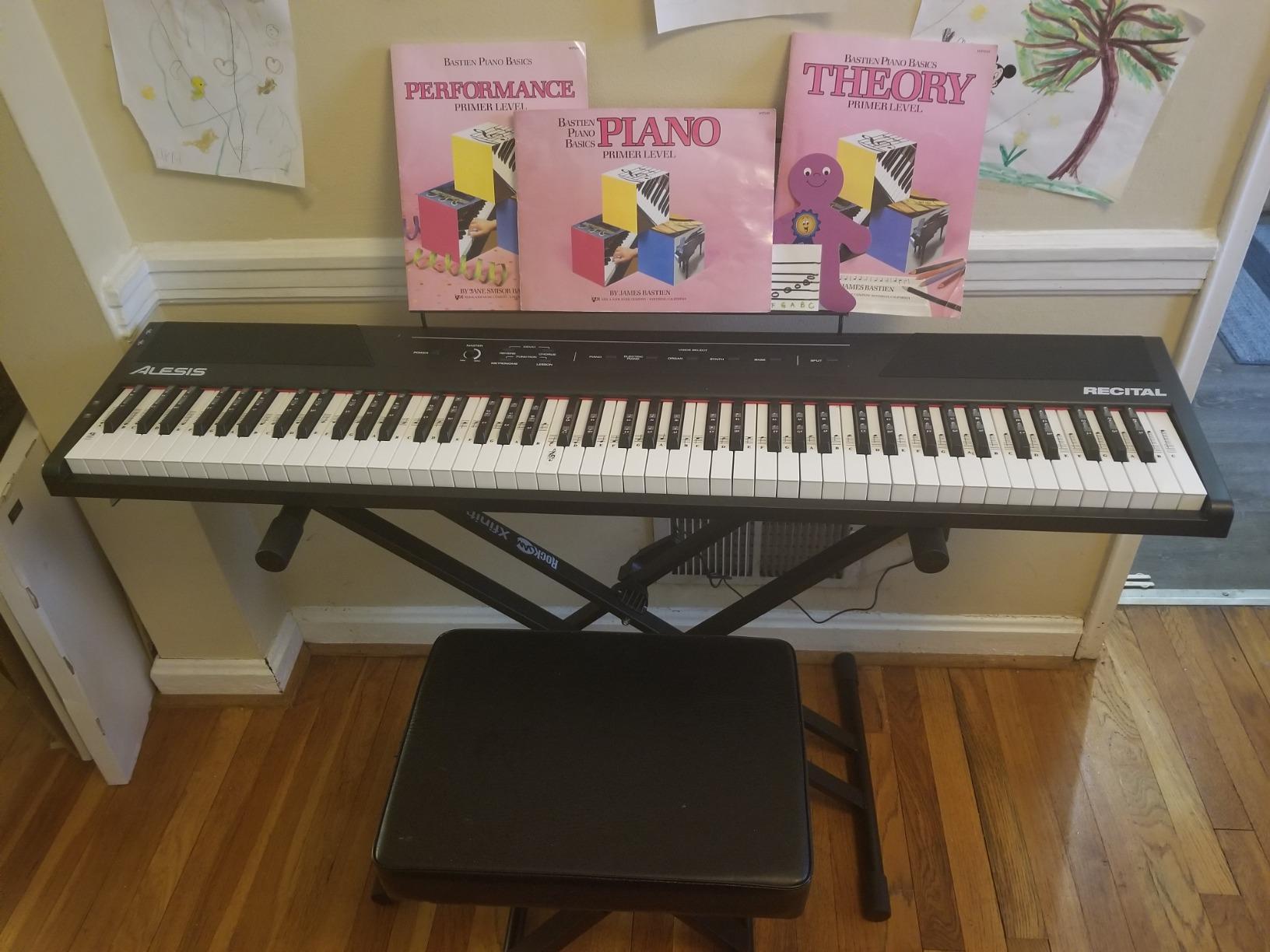
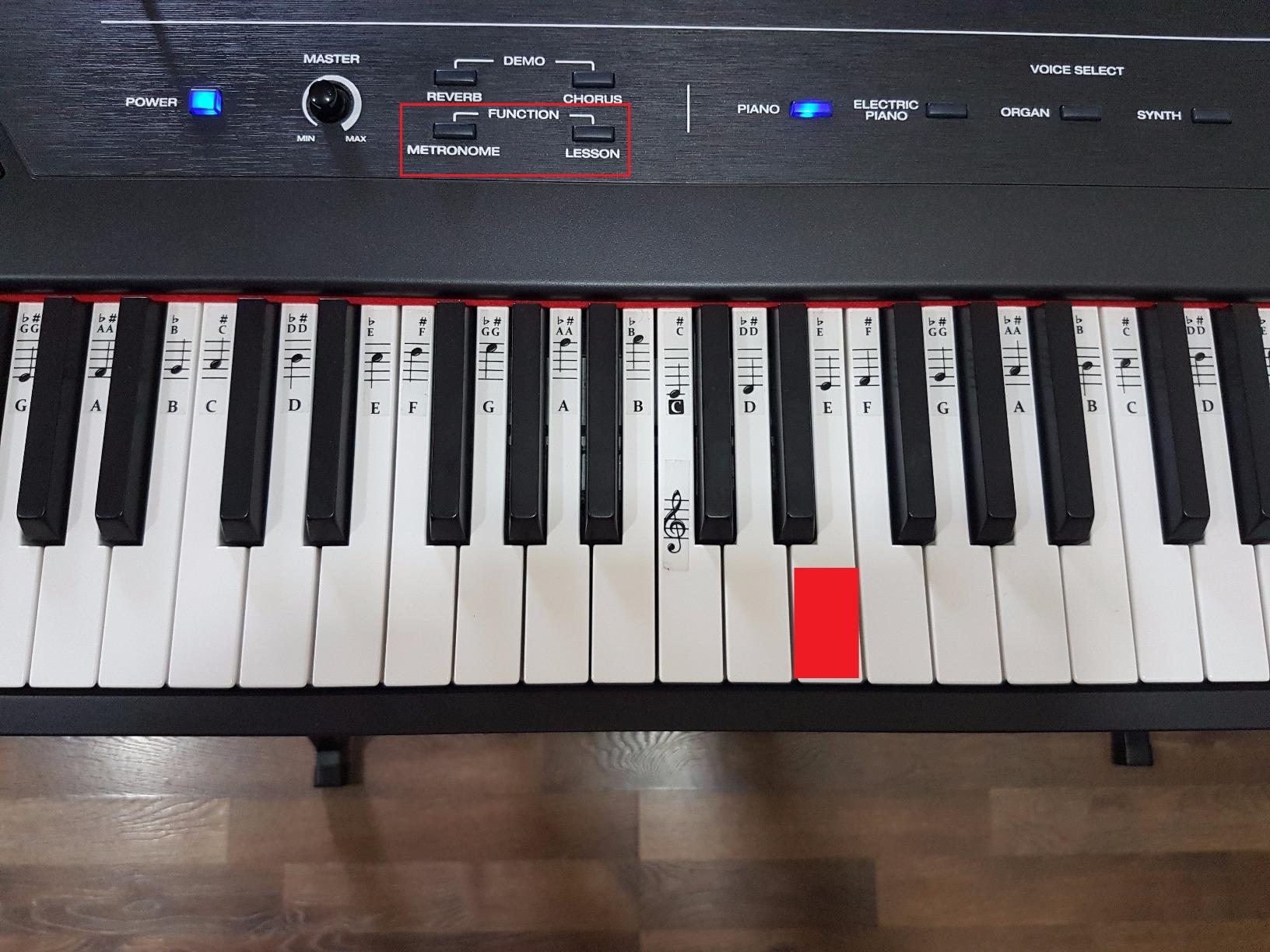
The two 20W speakers are genuinely useful for practice without headphones, and the lesson mode splits the keyboard so the right-hand notes play while you read the left-hand part. The 128-note polyphony is more than a beginner will ever need, since overlapping notes only start to matter in advanced repertoire.
Two things to know before you commit. The sustain pedal is not in the box, and the keys are semi-weighted, so the low notes are only somewhat heavier than the high ones. Players who later move to a concert grand will need a short adjustment period, but almost nobody outgrows this in the first year.
Is the semi-weighted action enough for a real beginner?
Yes, for the first year or two it is more than enough. Semi-weighted keys give you roughly a third of the resistance of a true acoustic action, which stops light fingers from sounding thin and keeps the muscle memory you build close to correct. Many players start here and step up to full hammer action in year three, by which point their technique has already set properly.
When to choose something else
If you already play and know your fingers can handle real resistance, or if you are learning classical repertoire with a teacher who expects acoustic touch, go straight to a fully weighted model. If you plan to use a pedal-heavy app, factor in that the pedal is a separate purchase here, which adds a step to setup on day one.
2. Yamaha P-71 88-Key Weighted Action – Best Full Weight for Under-Piano Practice
YAMAHA P71 88-Key Weighted Action Digital Piano with Sustain Pedal and Power Supply (Amazon-Exclusive)
GHS graded hammer action
10 voices with grand samples
64-note polyphony
Pedal included
Pros
- GHS graded hammer action closely matches an acoustic
- Rich Yamaha grand piano samples
- Sustain pedal included in the box
- One-button layout a beginner can learn immediately
Cons
- No Bluetooth or wireless MIDI
- Bass-heavy speaker balance
- 64-note polyphony is modest
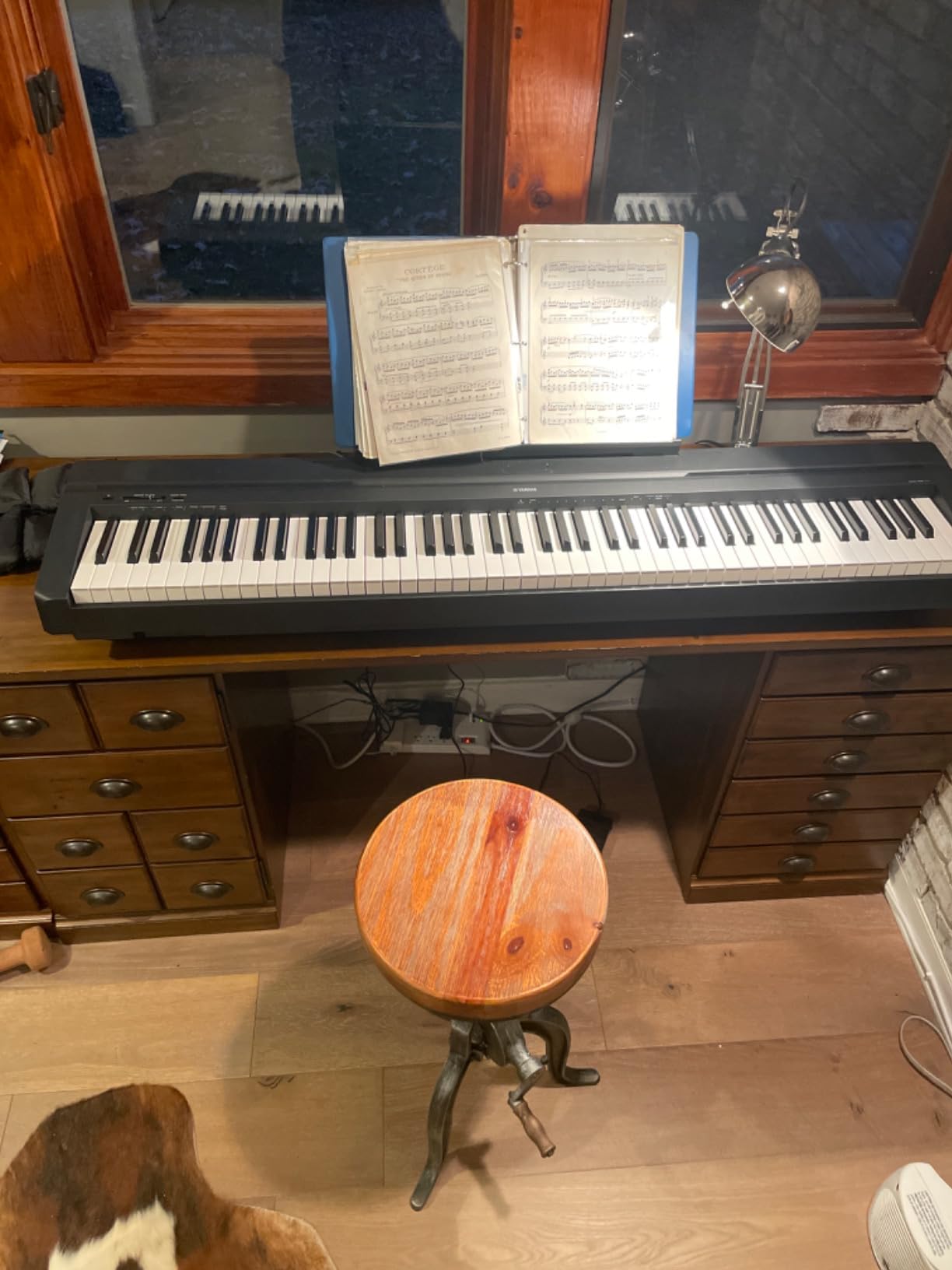
The P-71 is the highest-rated keyboard in this roundup, and the reason is the GHS graded hammer action. The weight is distributed the way an upright or grand distributes it, with the bass end noticeably heavier, and that single detail changes how you shape a phrase from the very first lesson.
Weighing 25 pounds, it is portable enough to move between a practice room and a lesson space but substantial enough not to slide around while you play. The 10 built-in voices, including Yamaha grand piano samples, cover everything a first-year method book asks for without distracting you with timbres you do not understand yet.
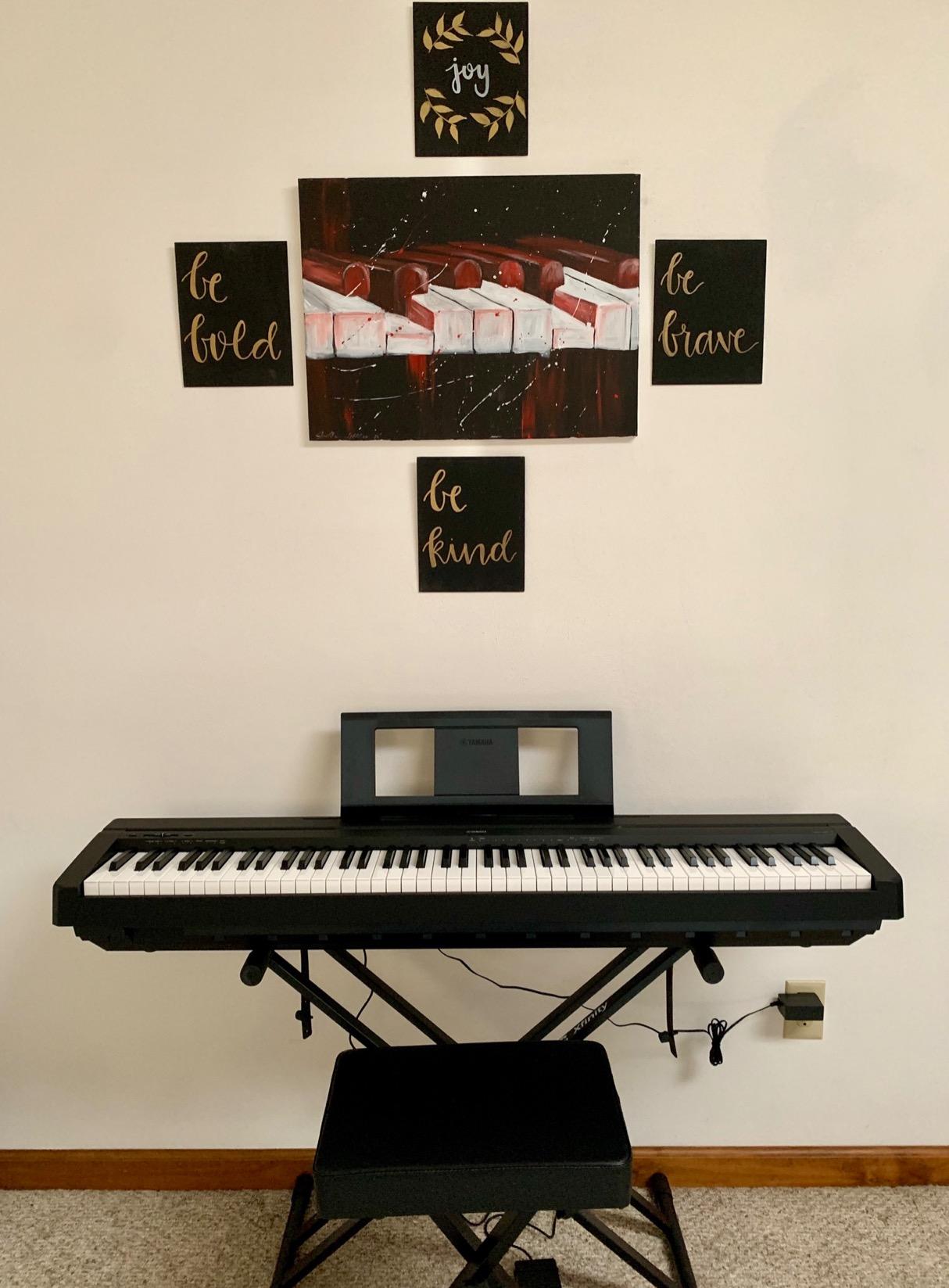
Owners consistently report the instrument holding up across four to six years of regular play, which makes it a reasonable place to start if you expect to keep playing. The sustain pedal ships in the box, so you are not hunting for a compatible one on your first evening.
The compromises are real. There is no Bluetooth, so learning apps that expect wireless MIDI need a USB cable. The speaker balance favours the bass register, and 64 notes of polyphony is thin by modern standards, though it only becomes a limitation in advanced pieces with sustained chords.
Does graded hammer action feel like an acoustic piano?
Close enough that the technique transfers. Graded hammer means the resistance increases toward the lower register instead of every key feeling identical, which is exactly what your arm needs to learn in order to control dynamics. It is a plastic action, so it will never fully match felt hammers, but it removes the most common beginner habit, treating every note as the same press.
What you give up compared with a slab
Wired-only connectivity and a modest voice count. If your learning plan depends on an app streaming audio to the piano, or on a wireless MIDI connection with no cable in the way, the Yamaha P145BT below handles that instead. Otherwise, the action is the priority and this is the stronger instrument.
3. Alesis Recital Play 88-Key Bundle – Most Complete Starter Package
Alesis Recital Play 88-Key Piano Keyboard Bundle
88 semi-weighted keys
480 voices
Stand, pedal and headphones
USB-MIDI
Pros
- Complete accessory bundle in the box
- Light enough for one person to move
- Skoove and Melodics lessons included
- USB-MIDI for apps and recording
Cons
- Light semi-weighted rather than hammer action
- Bundled headphones and stand are basic
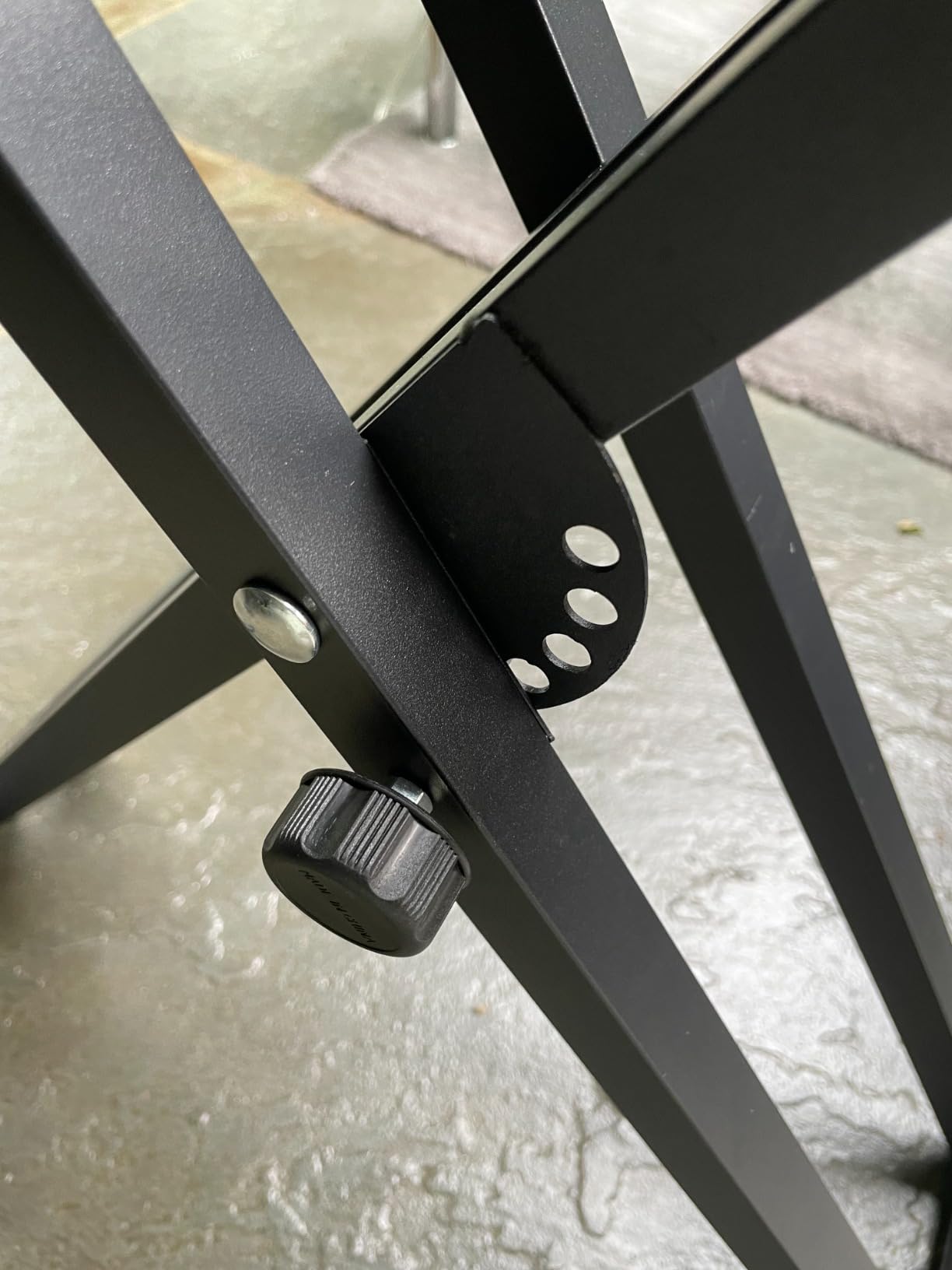
- Stand crossbars can crowd a seated player
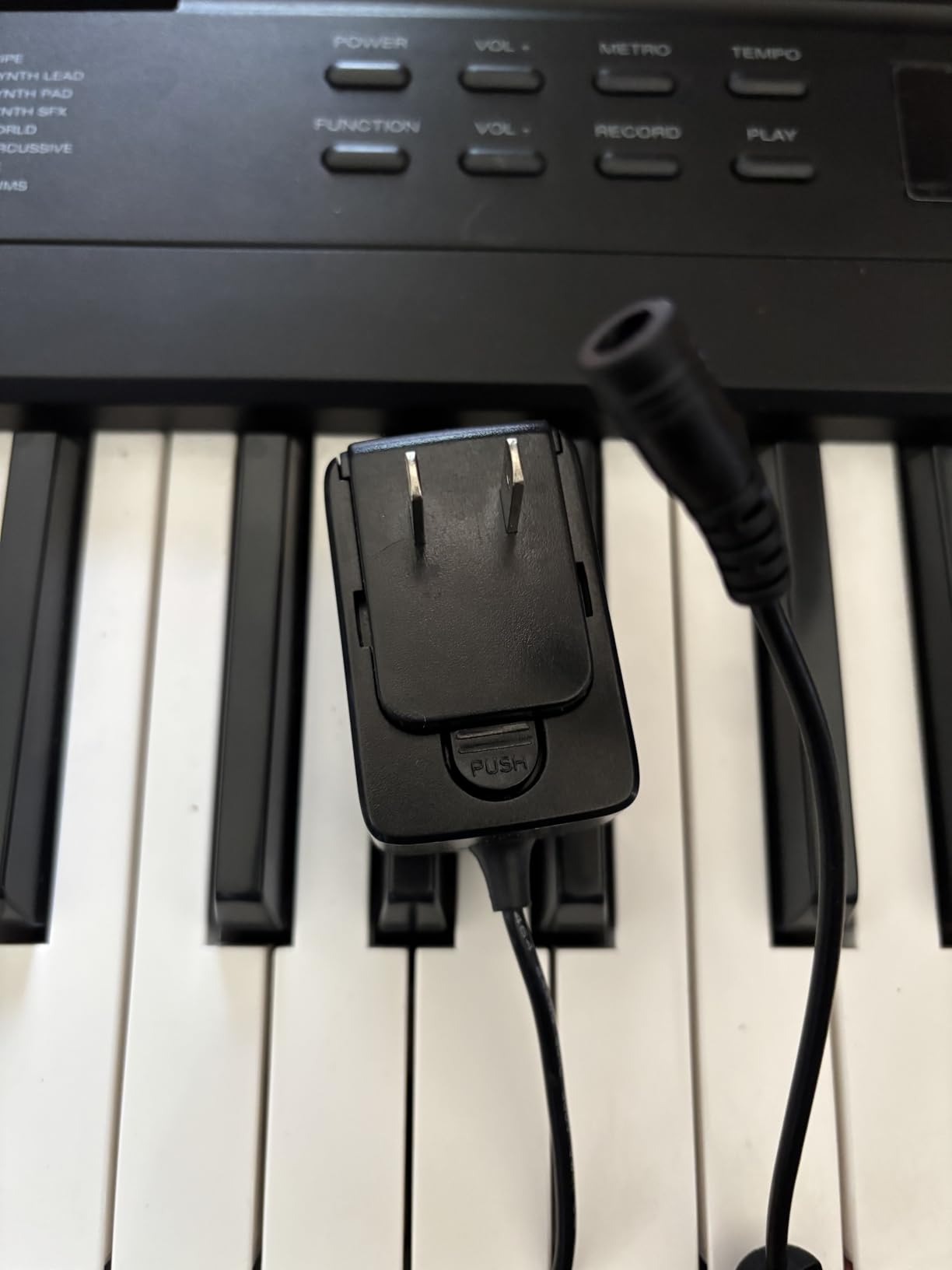
Most first purchases fail on setup, not on the instrument. You need a stand at the right height, a pedal, and headphones if there is a wall behind you. This bundle puts all of it, plus a carry case and a sheet music rest, in the same box as the piano.
That matters most for parents buying for a child in a shared room, or for anyone carrying a practice board to a tutor’s house. A teaching professional reviewing this model called it the best keyboard in its range among many tested, specifically for the clear sound and responsive semi-weighted keys.
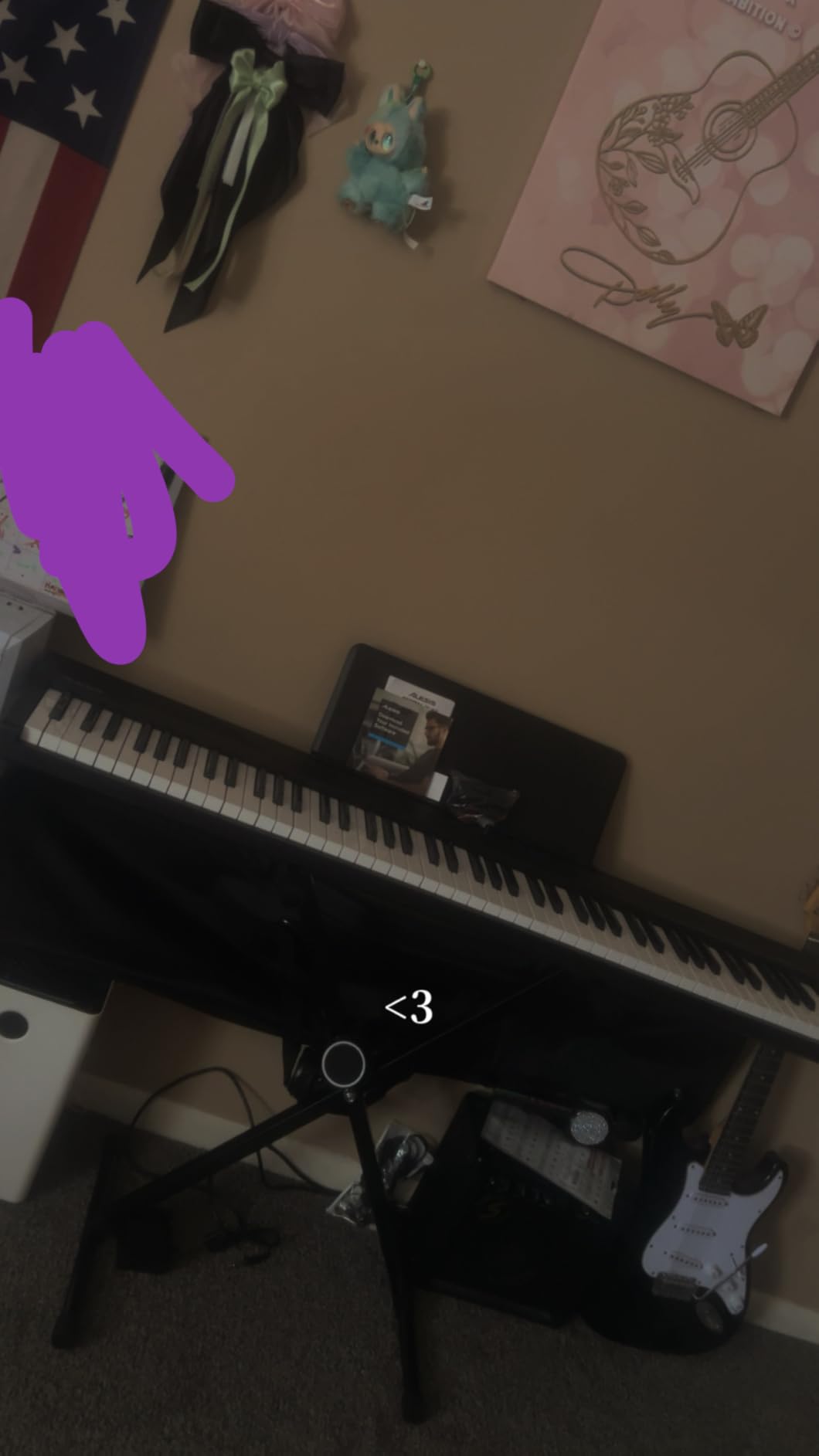
The 480 voices will keep a curious beginner occupied for months, and the record mode alongside split and lesson modes covers the usual early features. USB-MIDI means a laptop or tablet can drive it directly, so you are not locked into the onboard sounds.
Be honest about the limits. The action is light rather than fully weighted, the included headphones and stand are the weakest items in the package, and the stand crossbars can sit awkwardly for a seated player. It is a strong first instrument and a fine portable practice board, not a final one.
Is a bundle keyboard better than buying separately?
For a first instrument, frequently yes, because the accessory list on every other model here leaves a gap you have to fill immediately. The comparison only goes the other way once you outgrow the supplied stand and headphones, and at that point you are buying a second keyboard anyway.
Who should skip this bundle
Anyone who already owns a sturdy furniture stand and decent headphones should skip the extras and put the difference toward a model with a real hammer action. The bundle advantage disappears the moment the accessories are already on hand.
4. Donner DDP-80 – Heaviest Hammer Action in the Roundup
Donner DDP-80 Digital Piano 88 Key Weighted Keyboard, Full-size Electric Piano for Beginners, with Sheet Music Stand, Triple Pedal, Power Adapter, Supports USB-MIDI Connecting, Retro Wood Color
88-key heavy hammer action
French DREAM sound, 128 polyphony
Triple pedal unit
2x25W speakers
Pros
- Several reviewers rank the key weight above pricier branded models
- Wood-finish cabinet reads as furniture not electronics
- Two-minute assembly
- Working triple pedal
- Strong dynamic range
Cons
- Single piano tone with no effects
- Heavier action needs adjustment
- About 47 pounds is hard to relocate
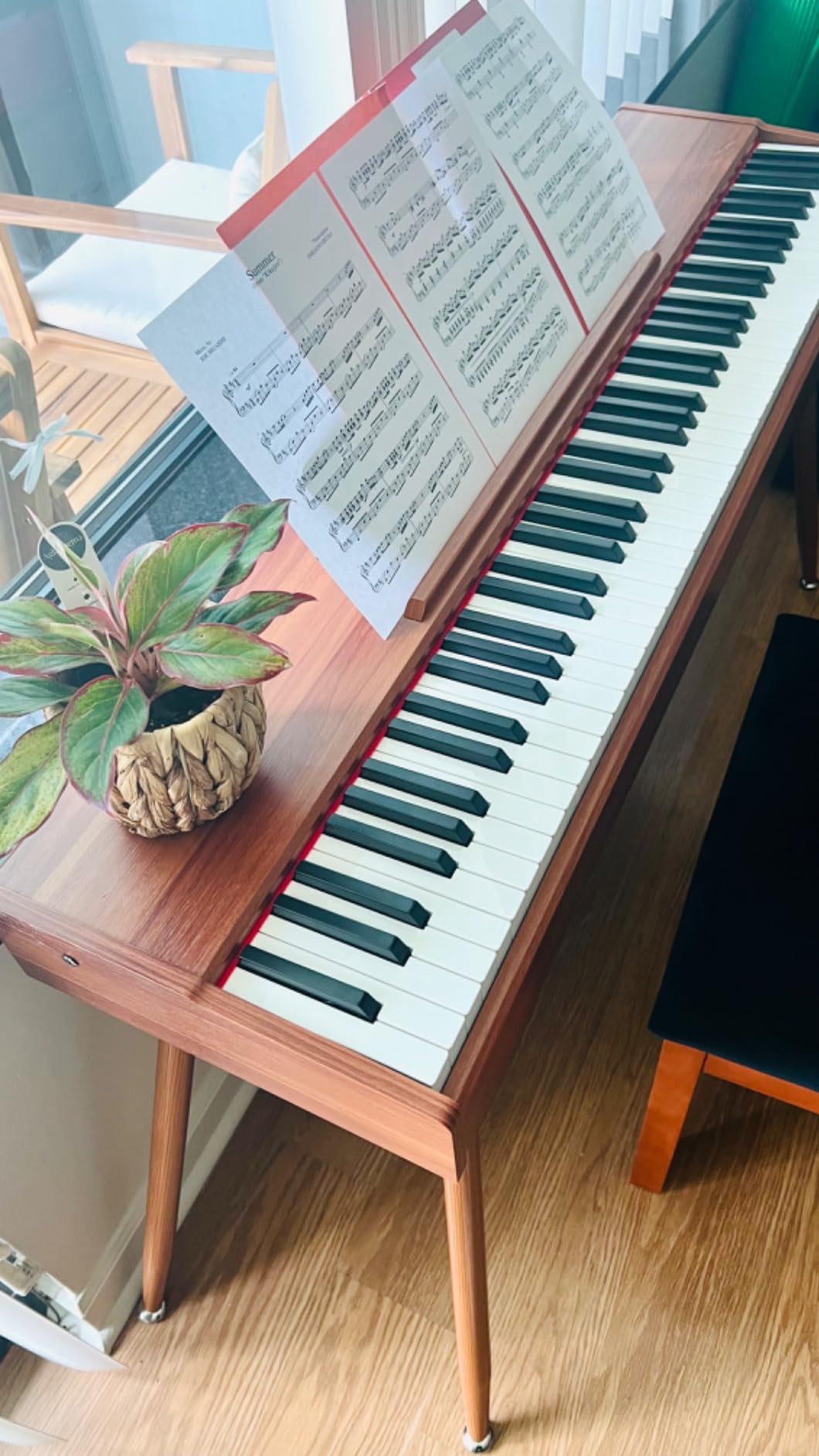
The Donner DDP-80 is the one in this group that intermediate and advanced players buy as a cheaper substitute for a much costlier acoustic-style piano, and they frequently report being pleased. Several reviewers describe the key weight as the best they have played at this level, which tells you exactly what kind of player it suits.
It is a heavy hammer action, meaning the keys require real finger strength to depress quickly. A small child or an adult with genuinely weak hands will find this frustrating for the first few weeks. Anyone with normal hand strength coming back to the instrument tends to love it.
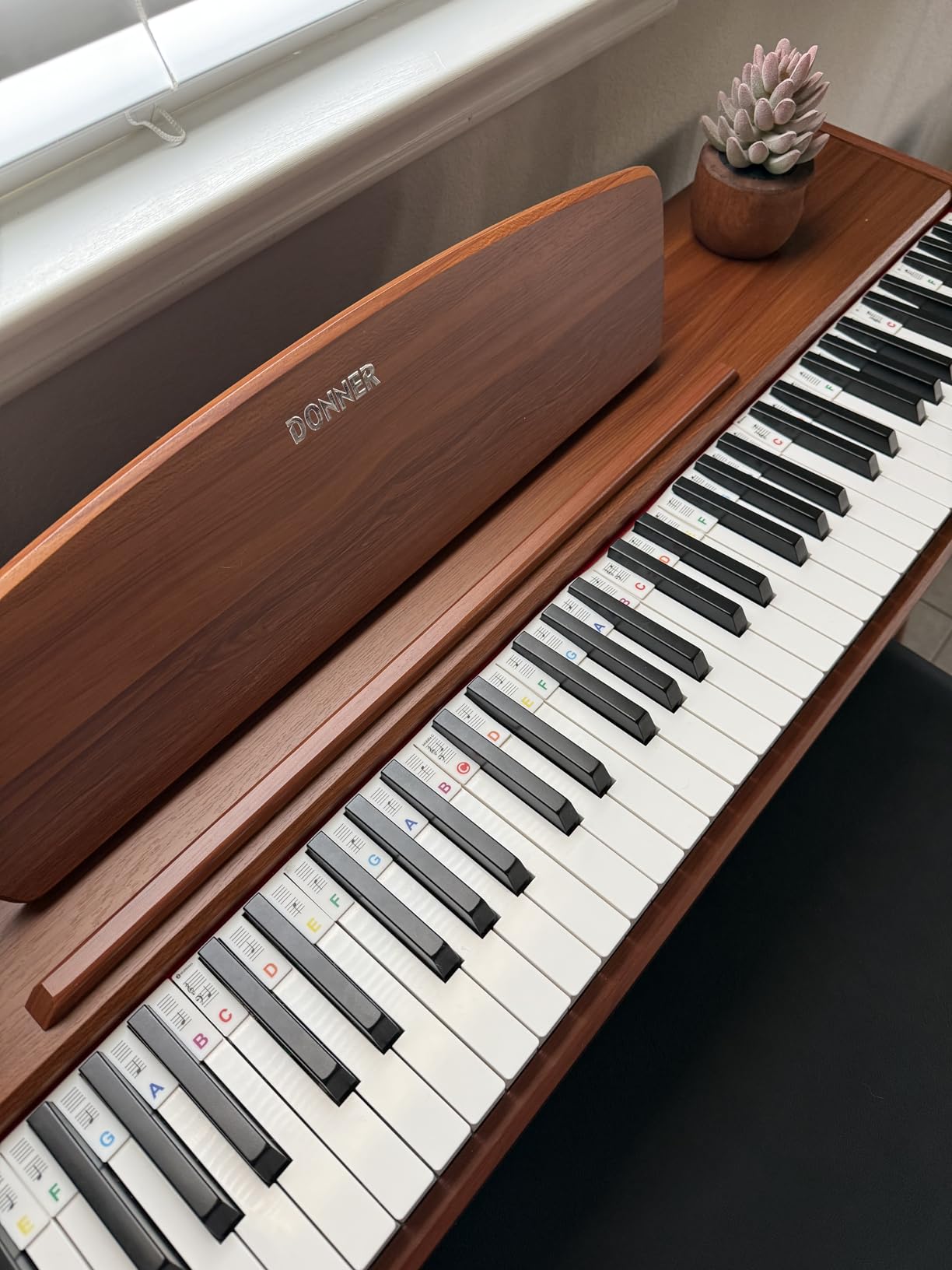
The retro wood finish and integrated stand transform it from a black rectangle into something you can leave out in a living room. The working triple pedal gives you sustain, sostenuto and soft pedal control, which is closer to acoustic behaviour than the single pedal on most slab keyboards here.
The single piano tone is the biggest philosophical question. Some owners treat the lack of extra sounds as focus, others as a limitation. A minority of reviews describe sound output failing after several months, so check the warranty terms with the seller before you commit.
Who should choose heavier key weight?
Adults returning to piano, and anyone who already knows what a real piano feels like and misses it. Heavy hammer action rewards control rather than blocking it, and the wide dynamic range makes expressive playing possible in a way lighter actions flatten out.
Why a beginner might avoid it
The weight cuts both ways. At roughly 47 pounds with a bulky cabinet, it is the hardest instrument here to move, and the deliberately heavy action can bruise a brand-new learner’s confidence in week one. If you are unsure, test it in person or start lighter and step up later.
5. STRICH SDP-120 – Lightest Fully Weighted Option
STRICH 88 Keys Weighted Keyboard with Sustain Pedal, Hammer-Action Digital Piano, 2x15W Built-In Speakers, Full-size Electric Piano Keyboard Supports USB-MIDI/Wireless Connect, SDP-120
Fully weighted 88-key hammer action
128 tones, 200 rhythms
2x15W speakers
Wireless and USB MIDI
Pros
- Fully weighted hammer action at an entry price
- 128 tones with 200 rhythms and 110 demos
- Wireless MIDI alongside USB
- Pedal included
- About 20.5 pounds so it moves easily
Cons
- Modest 2x15W speaker output
- No stand included
- Touch response is not adjustable
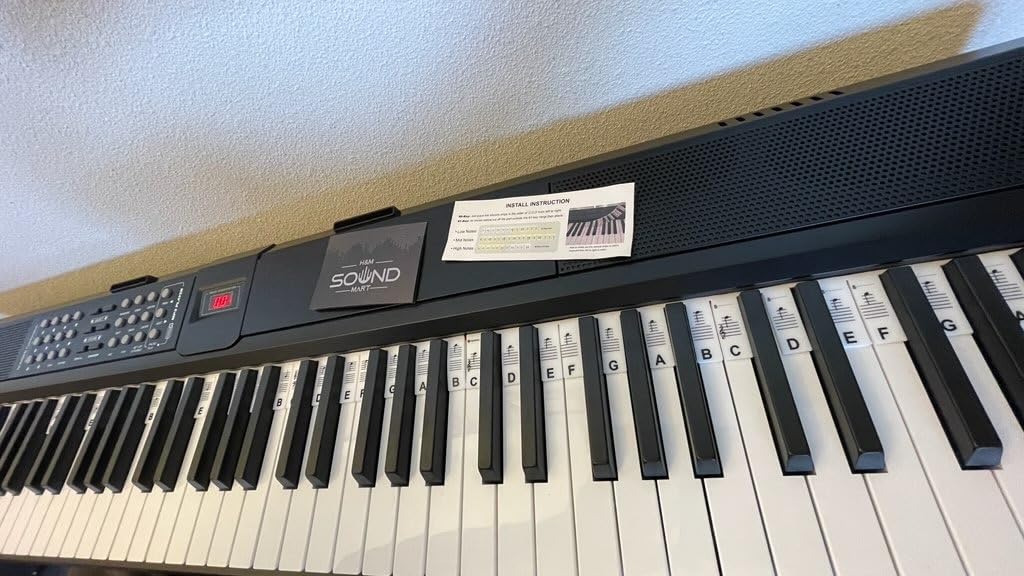
Full hammer action on a slab keyboard, with wireless MIDI, is a combination that is usually expensive. The SDP-120 delivers it at the entry level, and at roughly 20.5 pounds it is one of the easiest full-sized weighted keyboards here to carry between rooms or up a flight of stairs.
For a beginner working with a lesson app, the wireless MIDI is the feature that matters most. You can sit on a sofa with a tablet on your lap and have the app send notes to the piano without a cable across the floor, which removes one of the most common reasons practice sessions get skipped.
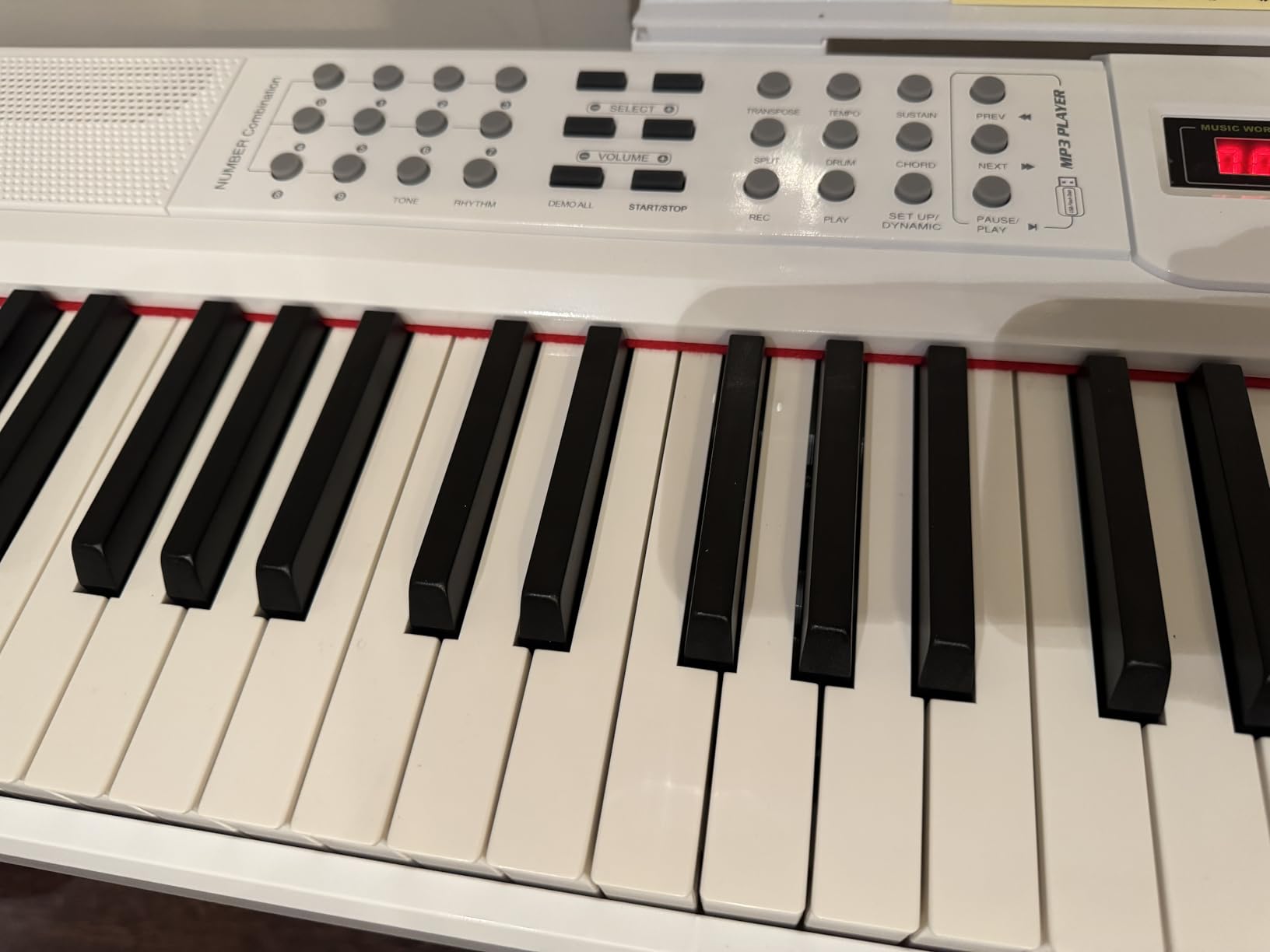
The 128 tones, 200 rhythms and 110 demos mean a lot to explore, and the LCD display keeps navigation simple for someone who has never used a digital instrument. The sustain pedal is in the box, which is one less thing to buy.
Two gaps to plan around. The 2x15W speakers are the smallest system in this roundup and the sound is thin without headphones. No stand is included, and playing height genuinely affects your posture, so budget for one rather than trying to practise on a desk or bed.
Is a lighter cabinet still fully weighted?
Yes. Weighting lives in the key mechanism, not the chassis. A slim cabinet with a full hammer action is a good trick for small flats and for people who move house often, since the instrument itself stays light while the keys still push back properly.
What the lower rating spread means
At 4.2 stars with 9 percent of reviews at one star, the quality control is less even than the big-name models. Complaints concentrate on the modest speakers and the missing stand rather than on the action, so treat the keybed as trustworthy and plan to use headphones.
6. Donner OURA S100 – Built for Small Rooms and New Hands
Donner OURA S100 Digital Piano with 88 Key Graded Hammer Weighted Keyboard for Beginner, Full Size Electric Piano Keyboard with Bluetooth, 3 Original Demos, LOCAL OFF, 2×10 W, Piano Three Pedal, Black
Graded hammer weighted action
2x10W speakers
Bluetooth MIDI and audio
Three pedal
Pros
- Graded hammer tuned lighter for beginner hands
- Scandinavian cabinet suits small rooms
- Bluetooth MIDI and audio in one
- Quick four-leg assembly
- Multiple finish options
Cons
- Smallest 2x10W speaker system here
- Some find the tone thin or harp-like
- Occasional reports of a rough spot on a key
Where most fully weighted keyboards borrow their key weight from a grand, the OURA S100 is deliberately tuned lighter. The graded hammer action is still weighted and still graduated from bass to treble, but it is built to be played by hands that have never held a weighted key before.
The cabinet is the other argument for this piano. The Scandinavian minimalist styling, offered in light oak and Nordic white as well as black, is designed to be visible rather than hidden. Many beginners abandon the instrument because it looks like office equipment, and this one does not.
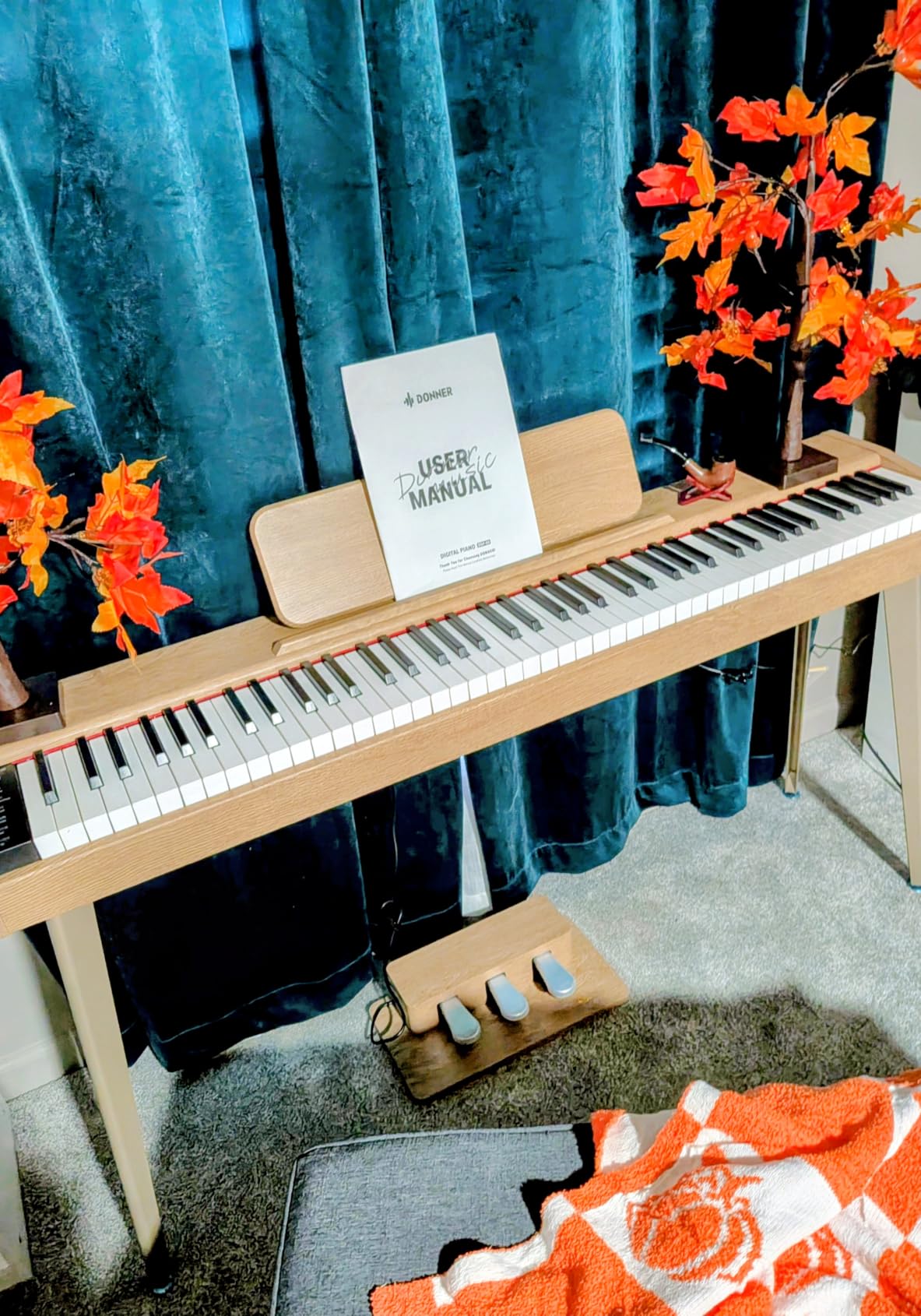
Dual-mode Bluetooth handles MIDI and audio in one radio, so a phone or tablet can send notes to the keys and stream backing tracks through the speakers with a single connection. That covers lesson apps, play-along videos and recording without buying an interface.
The 2x10W speakers are the compromise, and reviewers say so directly. Headphones materially improve the experience, and a handful of reviews find the tone thin or harp-like rather than acoustic, or mention a rough spot on a single key. Assembly takes four legs and no tools beyond a screwdriver.
Why graded hammer suits a true beginner
It keeps the technique benefits of weighting, the resistance and the heavier bass end, while lowering the effort needed per key. New fingers build strength over weeks rather than being discouraged in the first session, which is why many players stay on a beginner-tuned action far longer than they expect.
Where you will notice the trade-off
Listening to it aloud, without headphones. The small speaker pair is the first thing owners single out, and the tone can read as thin compared with a brighter acoustic recording. If you are practising in a room with a hard wall behind you, budget for headphones at the same time.
7. STRICH SDP-300W – Weighted Action With the Stand Already Built In
STRICH Digital Piano 88 Keys, Hammer-Action Weighted Keyboard, Full size Electric Piano Keyboard with Furniture Stand, 25Wx2 Speakers, Supports USB-MIDI/Wireless Connect, SDP-300W (Color Black)
Fully weighted hammer action
Furniture stand included
2x25W speakers
128 timbres
Pros
- Fully weighted hammer action with simulated ivory texture
- Furniture stand gives correct playing height out of the box
- Wood-grain cabinet works as room furniture
- Speakers double the output of the SDP-120
Cons
- No dust cover over the keys
- Heavier than a slab keyboard
- Sparse instruction booklet
The SDP-300W solves the problem that trips up most beginners on slab keyboards. Playing height matters more than almost anything else in a first year, because sitting at the wrong height teaches bent wrists and shoulder tension, and the furniture stand here gets that right from the first evening.
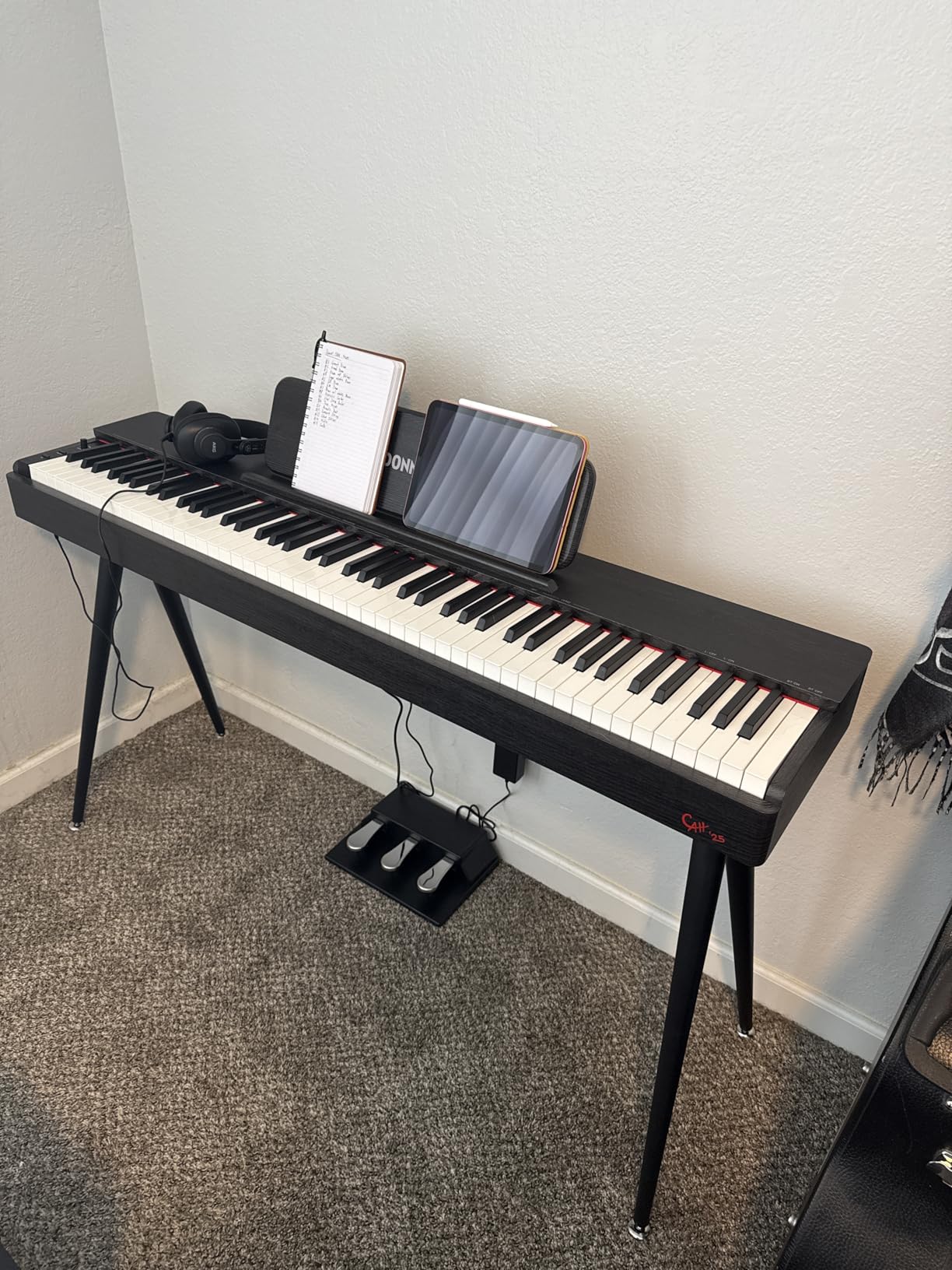
It is the step up from the SDP-120 without changing the concept. Same fully weighted hammer action with simulated ivory-textured key surfaces, but with a wood-grain cabinet and 2x25W speakers instead of the 2x15W pair, and a review profile that runs noticeably cleaner.
The 128 preset timbres, 200 drum rhythms and 128-note polyphony cover everything a first-year player meets, and the layer and split functions let you isolate the left hand for practice. Wireless and USB-MIDI both work with teaching apps on a phone or tablet.
What is missing is a dust cover, and the cabinet is too heavy to be a portable board. The instruction booklet is also thin, so plan ten minutes with a method book or a tutorial to set up the basic functions rather than expecting to learn by leaflet.
Does the included stand really matter?
More than most buyers expect. Correct height puts the forearms level with the keys, keeps the wrists neutral and stops the shoulders lifting as practice time grows. Getting that wrong is difficult to undo, and it is the easiest thing on this list to get right.
When a slab keyboard suits you better
Choose a slab model if you plan to move the instrument between rooms regularly or take it to a lesson elsewhere. A furniture cabinet is a fixed installation, and once it is in a corner you tend to leave it there, which is usually the right outcome but not always the one you want.
8. UISCOM 1852 – Weighted Home Piano With Recording Built In
UISCOM 88 Key Weighted Home Digital Piano,Wooden Desk Keyboard,Triple-Pedal
Progressive hammer action
French Dream5704 chip, 8 tones
Triple pedal unit
Recording and playback
Pros
- Wooden cabinet that converts between desk and vanity styles
- Sustain sostenuto and soft triple pedal
- Recording and playback with 40 demo songs
- Dual headphone jacks
- Adjustable key sensitivity
Cons
- Only 8 tone choices
- No stand included
- Smallest sound library among the weighted options
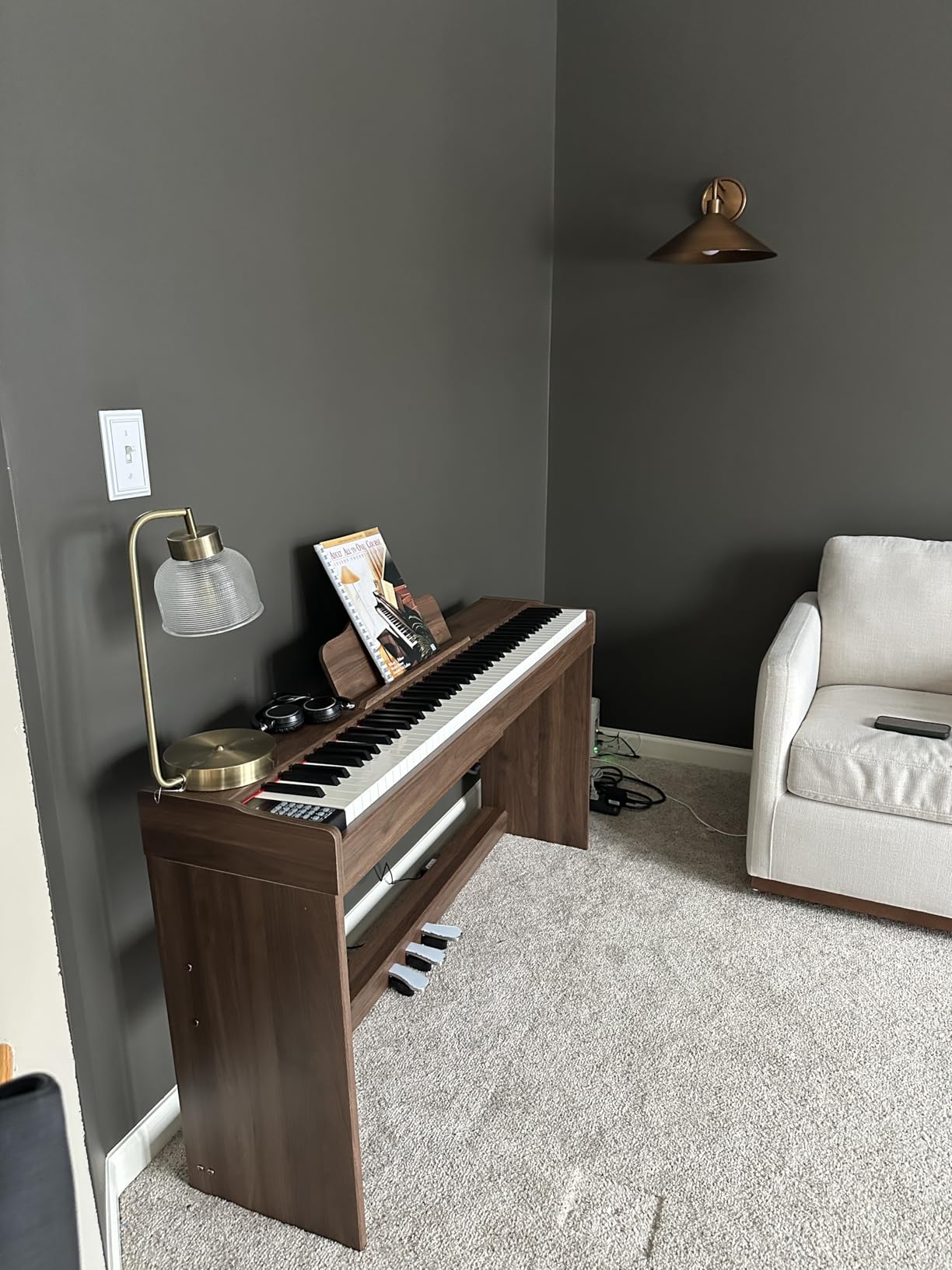
Recording is the feature that separates this one from the other furniture-style budget pianos. You can capture a take, play it back immediately and hear your own timing, which is a diagnostic tool that no amount of theory substitutes for. For a self-taught player it is arguably the most valuable function on the panel.
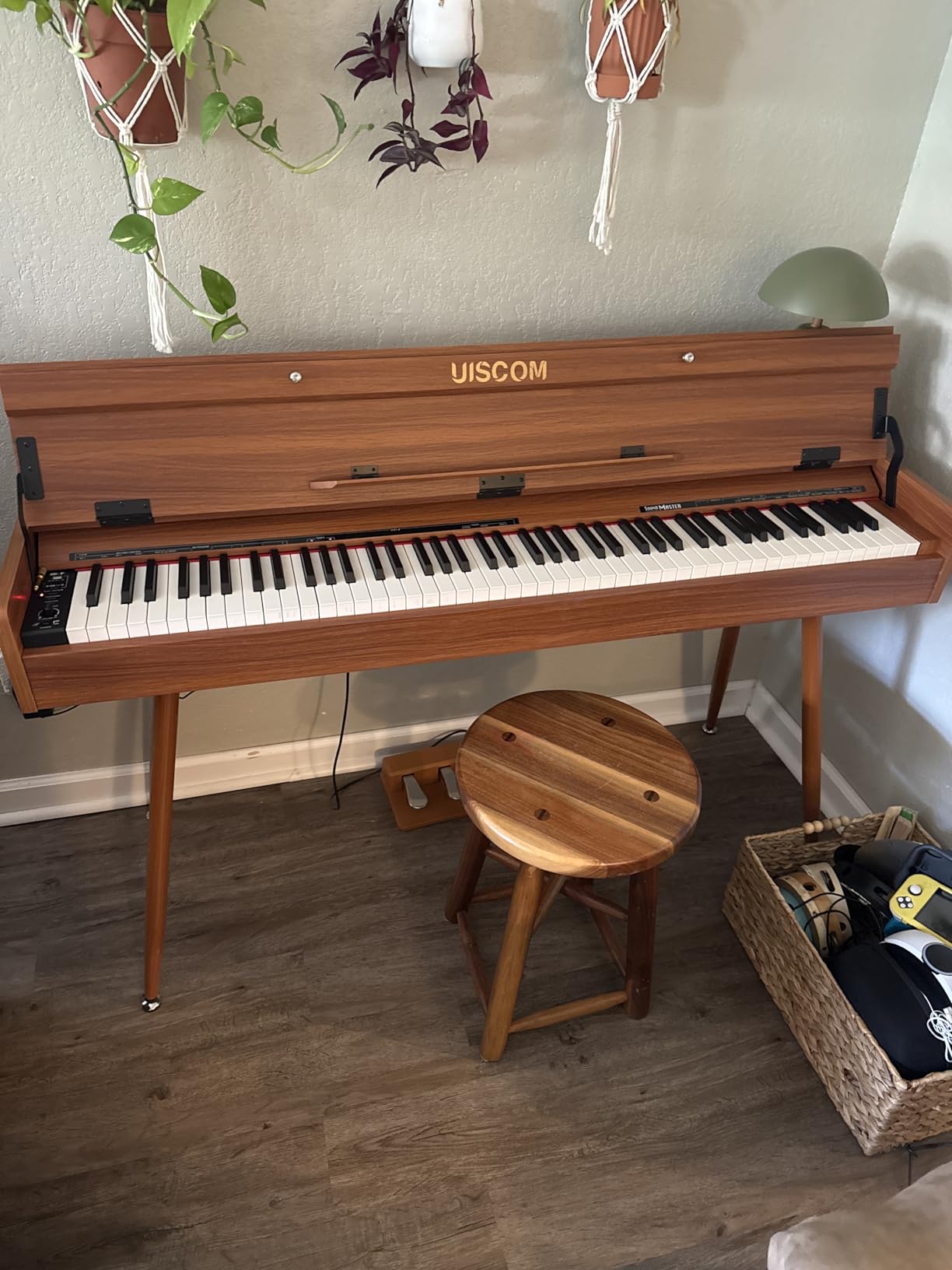
The wooden cabinet is designed to convert between a desk setup and a vanity-style arrangement, so the same unit works in a study and in a living room. The triple pedal covers sustain, sostenuto and soft pedal, which is more than most instruments in this price bracket offer.
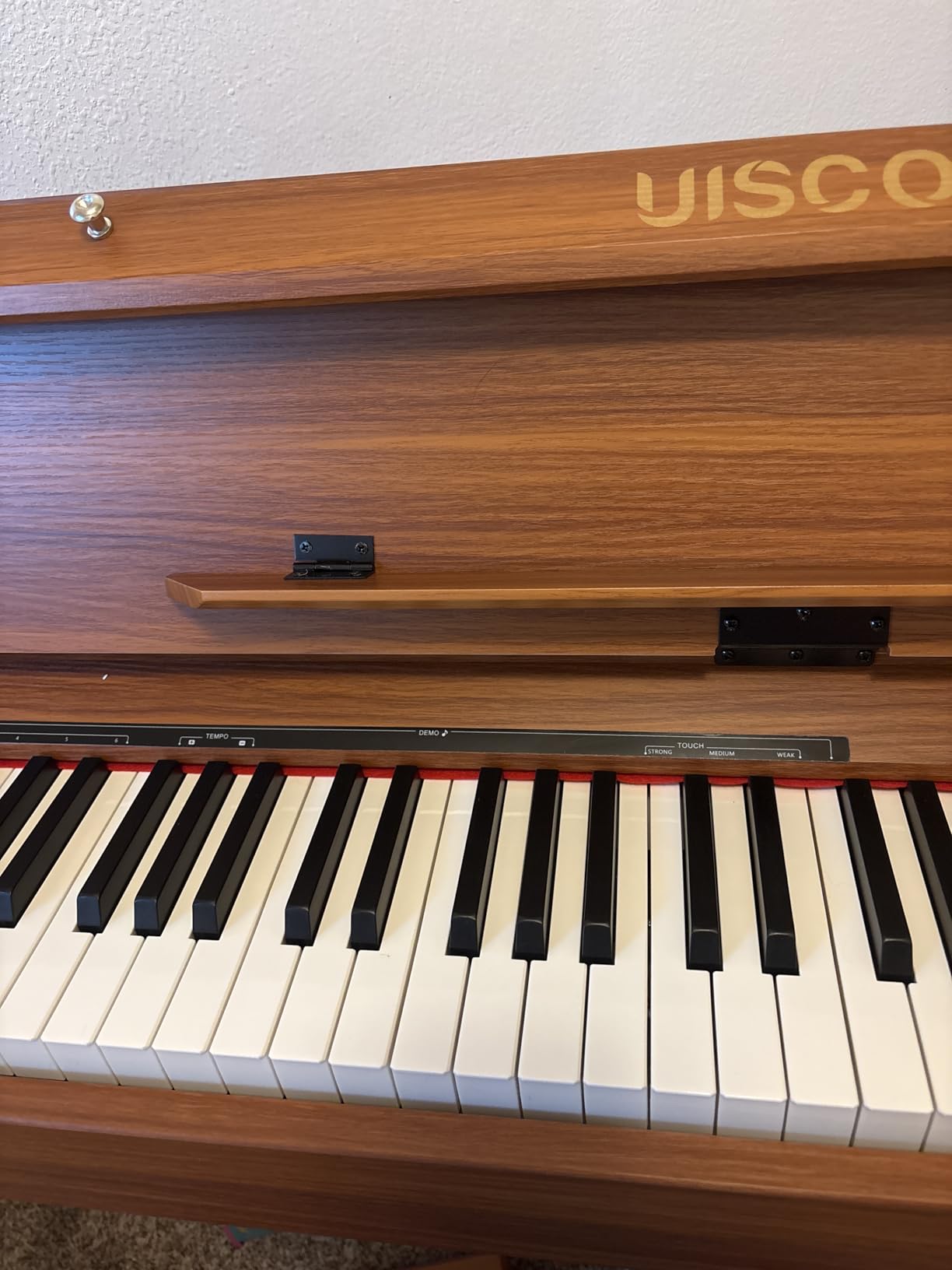
Two headphone jacks mean a student and a teacher can listen together during a lesson without splitting audio. The USB port also handles MP3 playback, so you can practise along with backing tracks, and key sensitivity is adjustable for different levels.
The sound library is the weak point, with 8 tones and 40 demo songs against 128 or 480 elsewhere. That is fine for a beginner learning repertoire on one piano sound, and limiting if you want to experiment with other instruments. No stand is included, so plan for one.
Is onboard recording useful for a beginner?
Very. Playing back your own take exposes uneven rhythm, weak endings and rushed transitions far faster than a teacher pointing them out, and it costs nothing to do. Two headphone jacks make it practical to review a take with the person teaching you.
What the small tone library costs you
Almost nothing in year one. Beginner methods use one acoustic piano sound almost exclusively, and the extra timbres on other models tend to be distractors. You lose the option of switching to an electric piano or organ voice later, which matters more in year three than today.
9. AODSK B-85 – Everything Included, Heavy as a Sideboard
AODSK 88-Key Weighted Hammer Action Digital Piano with Speakers,Furniture Stand and Triple Pedals,Beginner’s Course – B-85
Graded hammer action
Furniture stand and triple pedals
Folding key cover desk
79.2 pounds
Pros
- Furniture stand and triple pedals included
- Folding key cover doubles as a desk
- Graded hammer action graded from bass to treble
- Duet and teaching functions
- MP3 input for backing tracks
Cons
- Heaviest unit here at 79.2 pounds
- Only 8 tones and 32 demo songs
- Large footprint needing a corner of a room
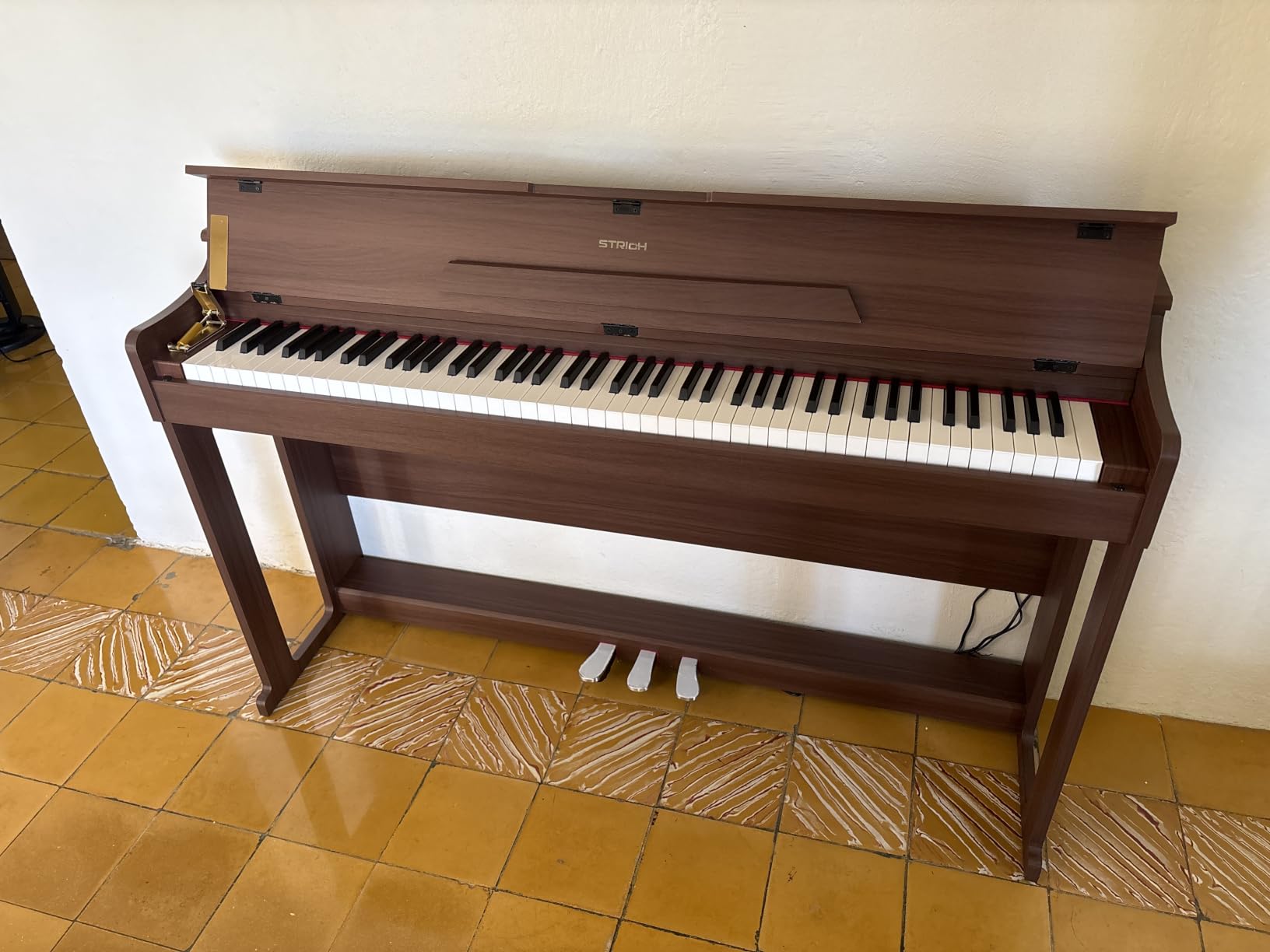
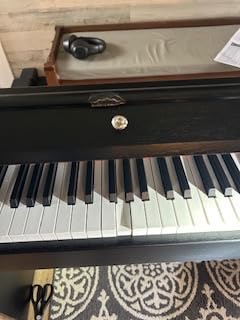
The folding key cover is the detail that makes this one unusual. It closes over the keys and converts into a desk surface, which solves the problem of a digital piano in a room where you also need to work or eat. It is a genuinely clever piece of furniture design.
Duet mode splits the keyboard in two so a teacher and a student can play from one instrument, and the teaching functions support that arrangement. The 88-key graded hammer action gives a distinct feel from the bass end to the treble, and the fold-down cover keeps the keys protected between sessions.
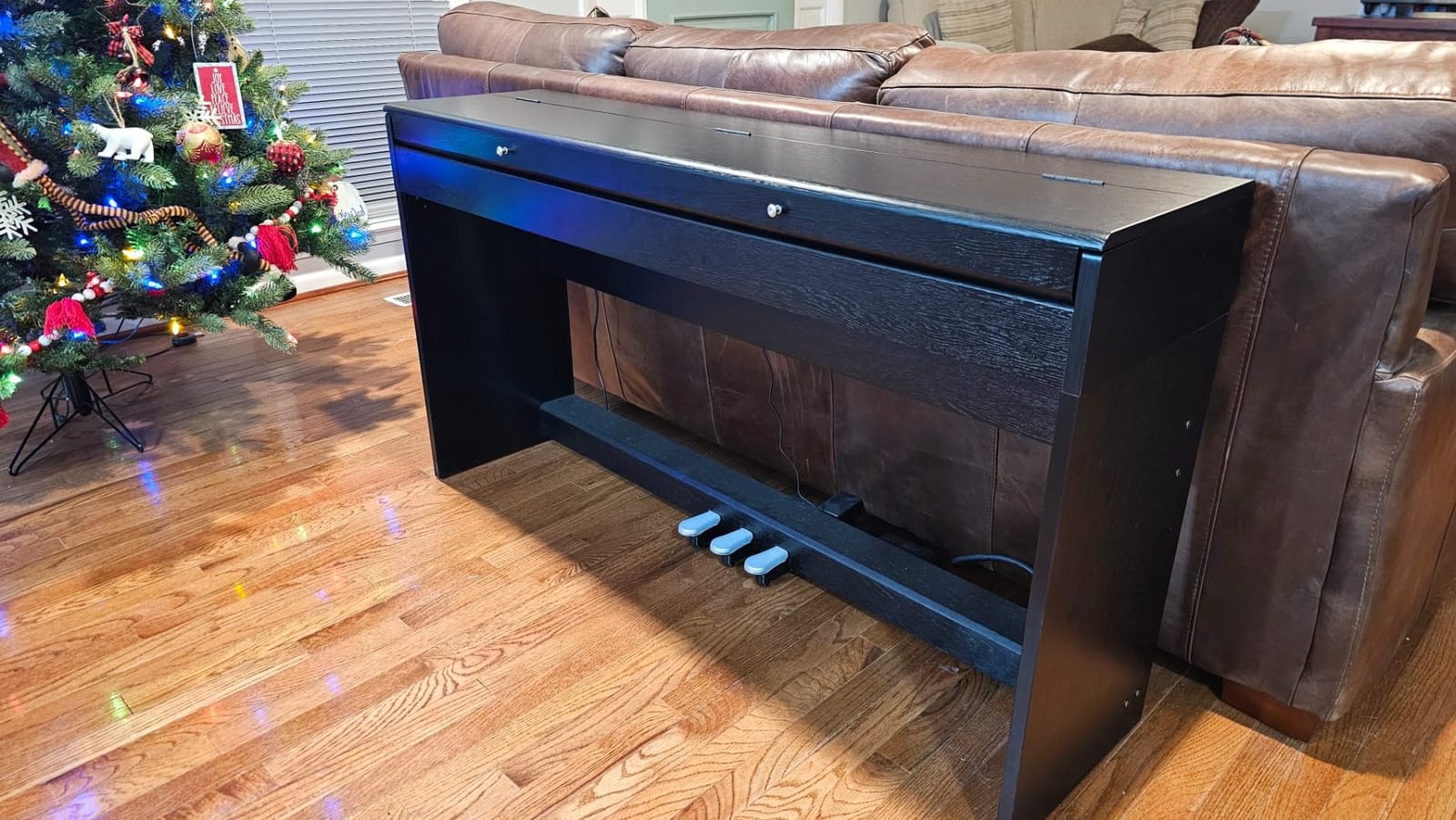
The furniture stand and triple pedals are included, so the full setup cost is in the box. MP3 input lets a student play along with backing tracks, and recording and playback cover the usual practice-review needs.
At 79.2 pounds this is by far the heaviest instrument in the roundup, and moving it takes two people or a dolly. With 8 tones and 32 demo songs, the sound library is also the smallest here, and it holds the lowest average rating of the furniture-style options we tested.
Who is the folding desk cover for?
Anyone in a studio flat or a shared home where the piano needs to disappear when the lesson is over. Once closed, it is a table rather than a music stand with a keyboard in it, which changes how the rest of the household feels about it.
Why the weight matters more than you expect
A 79-pound instrument is effectively furniture for the life of the product. If you live in rented accommodation, or you plan to move home within a few years, factor that into the decision now rather than discovering it the day you carry the thing downstairs.
10. Veitob 88-Key – The Lowest-Cost Way to Start
88 Key Digital Piano, Semi Weighted Electronic Keyboard Piano with Music Stand, Power Supply, Sustain Pedal, Stand, Bluetooth, MIDI, for Beginner Professional at Home, Stage
88 semi-weighted keys
1000 timbres
Bluetooth and MIDI
Accessory kit included
Pros
- Full accessory kit in the box
- Semi-weighted keys tuned for new fingers
- Bluetooth and MIDI for apps
- Recording and playback
Cons
- Lightest action of any model here
- Very large tone library of more quantity than quality
- Key stickers outgrow their usefulness
This is the model to consider if the budget is the deciding factor and there is a real chance you will lose interest in six months. The box contains the piano, a double-X stand, a sustain pedal, headphones, a carry bag, key stickers, a music rest and a power supply. Nothing else needs buying before the first lesson.
The keys are semi-weighted with a half-weighted design, and the manufacturer is upfront that they reduce the sense of strength compared with full weighting. In practice that makes them the easiest action here on brand-new fingers, and the touch response is tuned to respond to how hard you press.
Bluetooth and MIDI both work, so phone apps and computer software connect without fuss, and there is recording and playback plus 150 demo songs for practice. The key stickers are genuinely useful in week one and genuinely annoying in month three, so treat them as removable.
Be clear-eyed about what you are buying. The 1000-timbre library is volume rather than quality, the action is the lightest of any model here, and the rating spread is the flattest in the group. Fine for a first instrument, weak as a long-term one.
When is the cheapest option the right one?
When the alternative is not buying anything. A semi-weighted 88-key board with a full accessory kit at this level removes the excuse that you cannot afford a start, and the risk is low precisely because nobody expects it to last a decade. Many buyers treat it as a practice board and upgrade later.
When you should spend more instead
When you have a teacher who will push you toward proper technique from the start, or when you already know you will be playing past beginner repertoire within a year. Light action plus a very large tone library encourages browsing sounds instead of learning, which is the opposite of what the first year needs.
11. Yamaha P145BT – Slim Yamaha With Wireless Play-Along
Yamaha 88-Key Digital Piano with Weighted Keys, Compact Design, Bluetooth, Keyboard, Music Rest, Sustain Foot Switch, and Built-in Speakers for Home Practice or Travel P145BT
88 Graded Hammer Compact keys
Bluetooth audio
Smart Pianist app support
Slim cabinet, 24.5 pounds
Pros
- Graded Hammer Compact action in a slim cabinet
- Rich grand piano sampling
- Smart Pianist app for structured practice
- Bluetooth audio for playing along
- Compact depth for storage and carrying
Cons
- 6.35mm headphone jack needs an adapter
- Cheap-feeling sustain foot switch and no stand
- USB-MIDI layers onboard sound under computer audio
The P145BT takes the Yamaha weighted action and puts it in the slimmest cabinet here, at 10.55 inches deep. If your practice space is a corner of a room or a hallway rather than a dedicated area, that depth is the difference between owning a piano and owning an obstacle.
Its second argument is Bluetooth audio. You can stream a song or a backing track and play along through the built-in speakers, which turns practice from a solitary exercise into something you would actually do on a bad day. The Smart Pianist app pairs with it for structured listening and practice work.
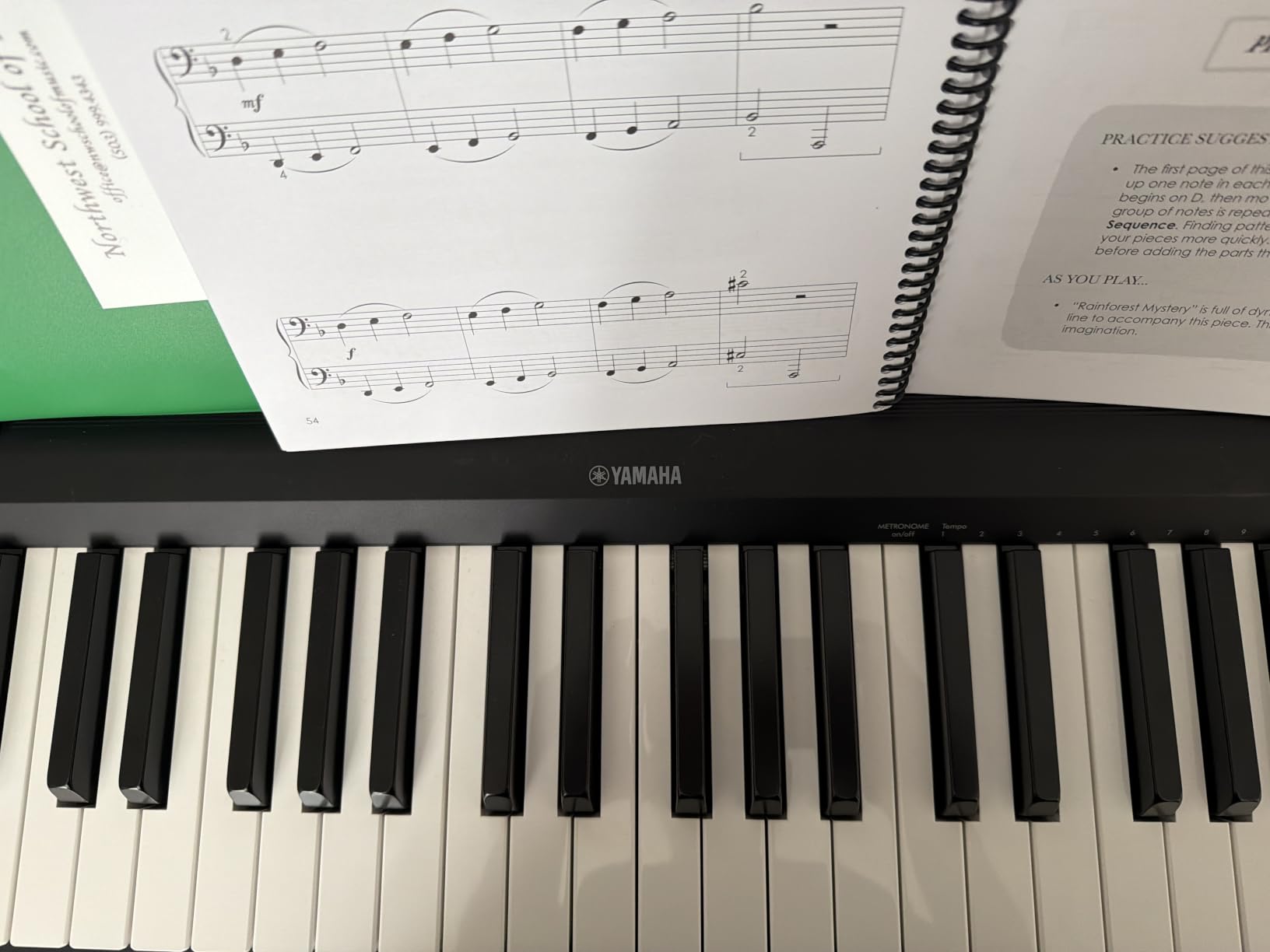
The grand piano sampling is rich and resonant, and the Graded Hammer Compact action keeps the same graded resistance from low to high as larger Yamaha actions. It is a legitimate first instrument rather than a compromise step.
The accessory situation is the weak point. The included sustain foot switch feels cheap, no stand is included, and the 6.35mm headphone jack means many of your headphones will need an adapter. USB-MIDI from a computer also layers the onboard piano sound underneath, which you may find distracting.
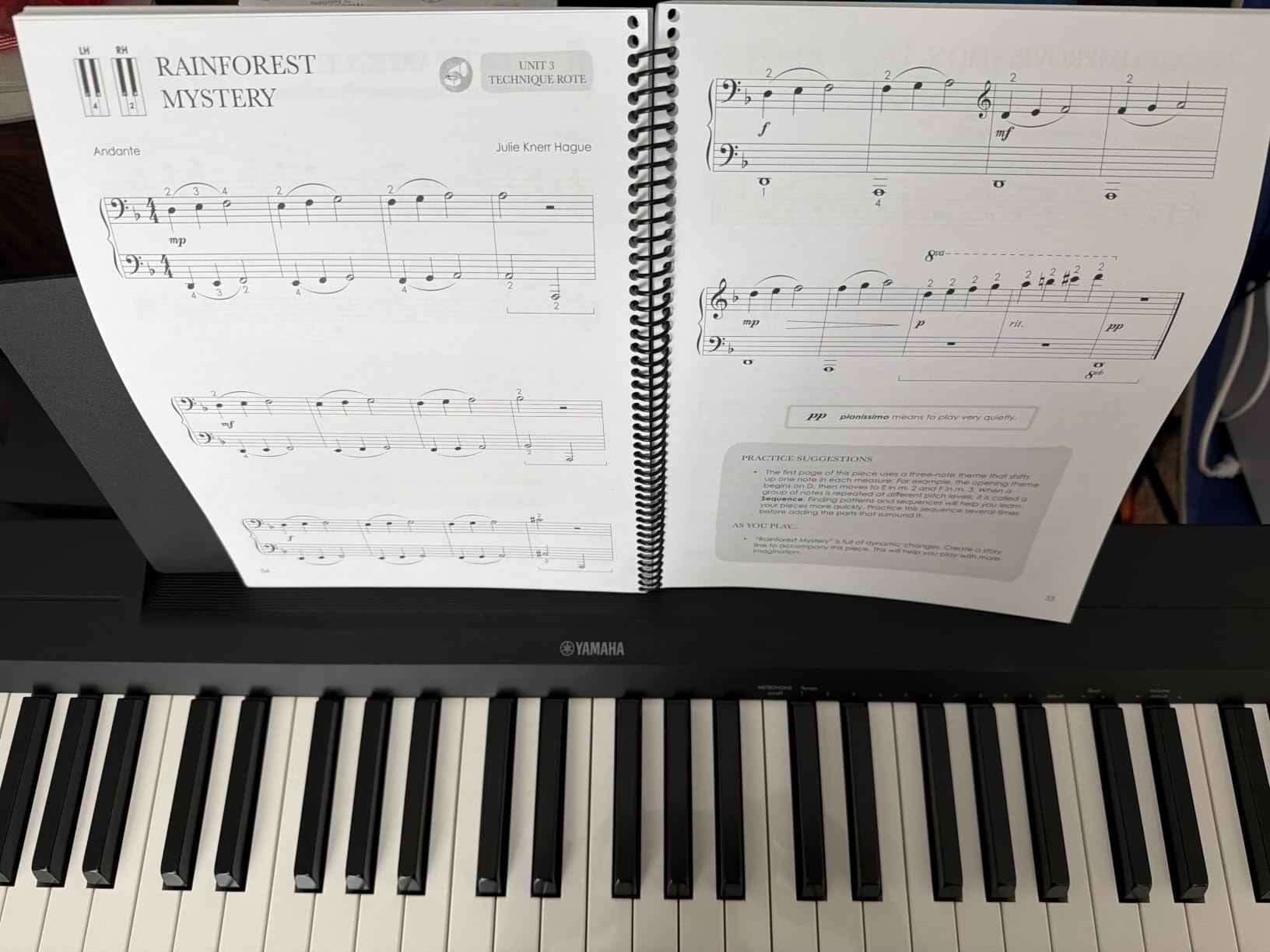
Is a slim weighted piano weaker?
No. The slimness is in the cabinet, and the key mechanism is unchanged. What you give up is internal speaker volume and a little structural mass, so the sound leans on headphones or an external speaker pair more than a furniture-style model would.
What the Bluetooth is actually for
Audio, so you can play along. It is not Bluetooth MIDI, which means lesson apps that need note input still run over cable or Wi-Fi depending on the app. Read the specific app’s requirements before you assume wireless note control will work.
12. Donner DEP-20 Lite – LCD Chord Display for Teenagers
Donner DEP-20 Lite Digital Piano 88 Key Weighted Keyboard Full Size, Portable Electric Piano Set with Stand, Sustain Pedal, LCD, Wireless MIDI Audio, 185 Tones, Gifts for Beginners Teens, Black
88 full-sized hammer action keys
1.3-inch LCD with chord names
185 tones, 128 polyphony
Dual 25W speakers
Pros
- Stand and furniture stand both included
- 1.3-inch LCD shows chord names and notation
- Wireless MIDI and audio for iOS and Android
- Dual 25W speakers
- Two-year warranty
Cons
- Electric piano samples are weak
- Reported plastic-on-plastic key noise
- Some headphone output complaints
- Occasional durability reports
The DEP-20 Lite is aimed squarely at a teenager learning songs they recognise. The 1.3-inch LCD shows chord names and notation as you play, which teaches chord shapes without a teacher reciting every one, and the wireless connection to a phone or tablet keeps song libraries a tap away.
Unlike most slabs here, the set includes both a portable stand and a furniture stand, so you can switch depending on whether you are carrying it to a lesson or leaving it in the room. The dual 25W speakers are the strongest pair in this roundup for a slab-style body.
Adjustable touch response, 185 tones, 128-note polyphony and 116 rhythms cover the range of a first and second year, and the two-year warranty is the longest stated cover among the budget models we tested.
The sound samples are the weak link, with the electric piano voices singled out as poor and some owners reporting a loud plastic-on-plastic noise on every strike. A few reviews describe units failing within two months, so keep the packaging and check the warranty process carefully.
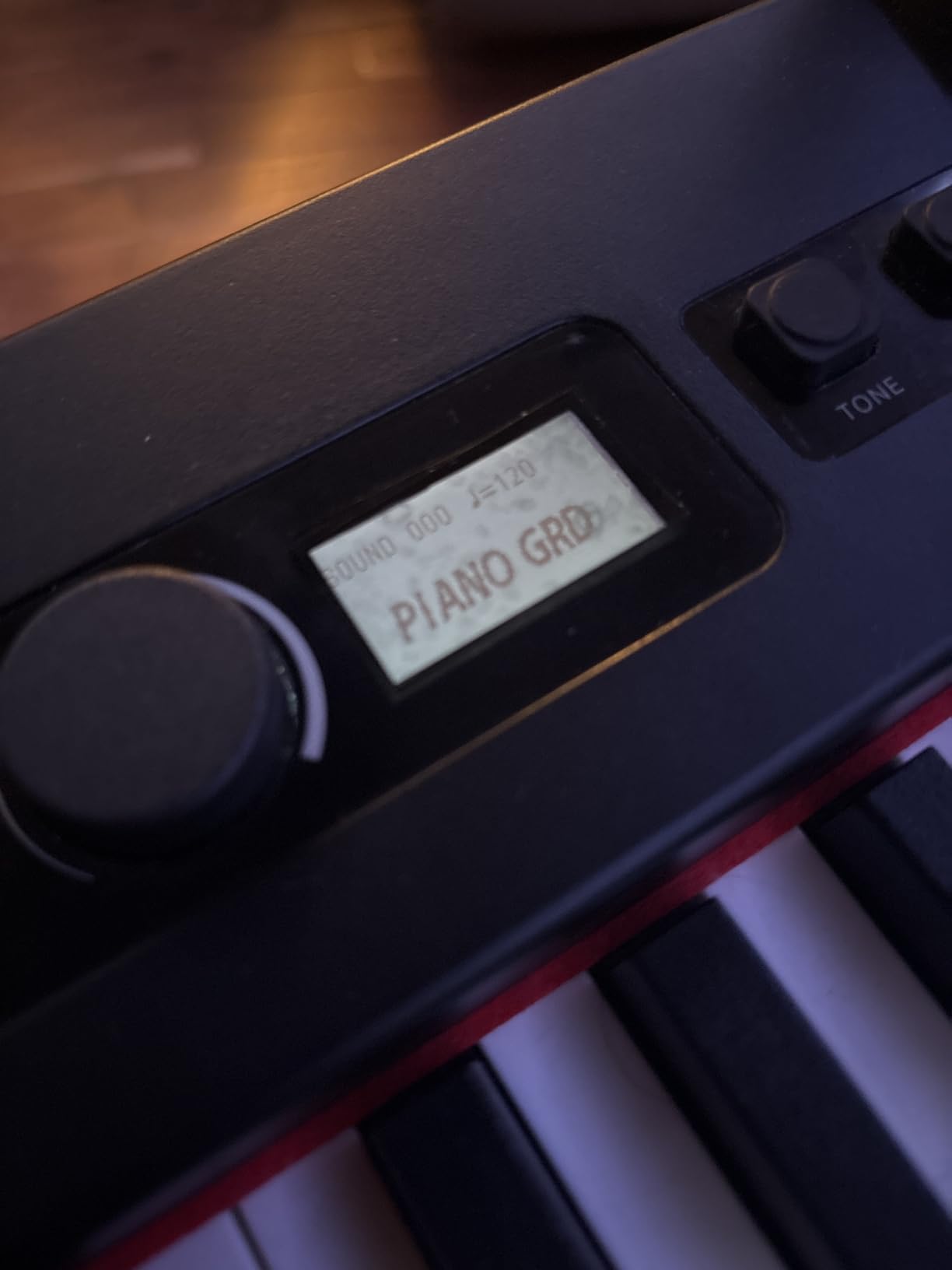
Does an on-screen chord display actually teach?
Yes, for the first year. Seeing the chord name as you press it links the shape under your fingers to a name, which is the bridge to reading chord charts in any song you want to learn. It is scaffolding, though, and you should shift to printed or app-based chord books once it stops being new.
Who should choose a different model?
Pianists focused on classical repertoire, where the sound quality of the samples matters more than the chord display, and anyone with neighbours close by, since a plastic-on-plastic key noise carries. The Yamaha P-71 or the STRICH SDP-300W serve those cases better.
Fully Weighted vs Semi-Weighted: Which Key Action Beginners Need
Fully weighted keys give you a third more resistance and a proper hammer simulation, and they are the right choice if you already have hand strength or play with a teacher who expects acoustic touch. Semi-weighted keys give you enough resistance to build control without fighting tired fingers, which is why most first instruments in this roundup use them.
Three specifications decide this more than brand names do. Key weight tells you how much force is needed per key, gradation tells you whether the bass feels heavier than the treble, and key throw tells you how far the key travels. A keyboard with gradation but low weight trains dynamics well. A heavy ungraded keyboard just feels heavy.
Touch sensitivity is the fourth. Every keyboard here responds to how hard you press, and adjustable sensitivity lets you start light and increase the load as your hands strengthen. That single setting is worth more to a beginner than a large tone library or a screen.
Forum threads about buying a first weighted keyboard return the same themes repeatedly: fear of developing bad technique, uncertainty about whether 88 keys are needed, and confusion over sustain pedal compatibility. None of those worries are resolved by spending more. They are resolved by choosing a full-size weighted keybed and a pedal, then playing on it daily.
88 Keys vs 61 Keys: What Beginners Actually Need
Choose 88 keys. A full piano spans just over seven octaves, and a 61-key board cuts the bottom three octaves, which is the part of the register your left hand learns first. Method books, graded repertoire and the transition to an acoustic all assume the full range.
The savings on 61 keys are real but modest, and the standard of the category here has already moved so that fully weighted 88-key slabs are affordable. A 61-key weighted board is a reasonable travel or backup instrument, not a first piano.
The 76-key layout is the compromise most people end up regretting. It includes the low notes beginners need but drops the top two octaves, so film music, four-hand repertoire and anything that reaches above middle C will not fit properly.
How to Choose a Weighted Keyboard: A Beginner’s Checklist
Work through these seven points in order. They are roughly the order in which they affect whether you keep playing.
1. Key count and weighting. 88 full-size keys with graded weight. This is the one requirement that cannot be upgraded later without replacing the instrument. Everything else on this list is a preference.
2. Adjustable touch response. Start light, firm it up later. If a model does not offer this, you will be playing with a fixed resistance that is either too easy or too hard, and one of those gets in the way of learning.
3. Sustain pedal input. A jack on the back is useless without a pedal. Some models include one, some do not. Most beginners only need a basic sustain pedal for years, and a triple pedal unit is a luxury you will rarely notice you are missing.
4. Speaker quality versus headphones. 2x10W or 2x15W speakers are adequate for a bedroom. If you have a hard wall behind you or neighbours nearby, plan to practise with headphones and the speaker rating matters far less.
5. Connectivity. USB-MIDI is close to essential for lesson apps and recording. Wireless MIDI is a genuine convenience. Bluetooth audio lets you play along with streamed songs, which some beginners find more motivating than any app. If you also type on a tablet during lessons, our guide to the best tablet keyboards covers that side of the setup.
6. Polyphony. 64 notes is enough for beginner repertoire. Above 128 is comfortable. You will not notice the difference in year one, so treat this as a tiebreaker rather than a deciding factor.
7. Warranty and support. Stated cover on these models ranges from one to two years, with some offering far less. Buy from a seller who handles warranty claims directly, and keep the packaging until you are sure the instrument works for you.
On the used and refurbished market, buyers most often recommend a proven previous-generation weighted model from a major brand rather than a new budget listing. The risk is keyboard action wear, which is invisible in photos and cannot be returned once you have played it for a week, so test the low notes and check every key for sticking before committing.
Expect to need accessories. A stable stand, a sustain pedal and headphones cover almost everything, and most furniture-style models here include some of them. Budget for what is missing before the instrument arrives rather than practising on a table at the wrong height.
Accessories and Total Cost for a First Keyboard
Ranked by how much they matter in the first year, a stable stand at correct height comes first, because posture problems are difficult to unlearn. A sustain pedal is second, since almost every piece you learn assumes one. Headphones are third, and they turn an unusable practice room into a usable one.
A bench, a music rest and app subscriptions come after that. Apps are worth subscribing to for a few months at the start because they give structure to the first weeks, but they are not a long-term requirement and a teacher plus a method book will outlast any of them.
The upgrade timeline is easier than buyers expect. A well-built weighted 88-key instrument in this roundup can carry a beginner through several grades, and many owners report playing the same unit for four to six years. Replace it when the action feels light for your playing, or when you want sound quality your current model cannot produce, not because a chart says you should.
Frequently Asked Questions
Are weighted keyboards better for beginners?
Yes. Weighted keys build the finger strength, dynamic control and muscle memory that transfer directly to an acoustic piano. Because resistance increases toward the bass end, you learn to shape phrases with your arm rather than pressing every key with the same force. Unweighted plastic keys let beginners develop a flat, tapping technique that is hard to correct later.
Should a beginner get a 61 or 88 key keyboard?
Get 88 keys. A 61-key board removes the lowest three octaves, which is exactly the range the left hand learns first in standard method books. A 76-key layout is the awkward compromise, keeping the low notes but dropping the top two octaves needed for film music and four-hand repertoire.
What is the best budget weighted keyboard for beginners?
The Alesis Recital is the strongest budget pick, with more owner reviews than any other model here, adjustable touch response, lesson and split modes and 20W stereo speakers. The Donner DEP-20 Lite and the Veitob 88-Key are cheaper still, and the Alesis Recital Play bundle adds a stand, pedal and headphones so nothing else is needed on day one.
What is a good starter keyboard for beginners?
A good starter keyboard has 88 full-size weighted keys, adjustable touch sensitivity and a sustain pedal input. Everything beyond that is optional. Add wireless or USB-MIDI if you plan to use lesson apps, a furniture stand if you want correct playing height at home, and headphones if you share a wall with anyone else.
Which keyboard with weighted keys is best for beginners?
The Yamaha P-71 offers the most realistic graded hammer feel in this roundup and the highest average rating, at the cost of no wireless connectivity. The Alesis Recital is the gentler alternative with a larger review history. The Donner DDP-80 goes the other way with deliberately heavy hammer action for players who miss acoustic resistance.
What is the best affordable weighted keyboard for beginners?
Affordability depends on what you already own. If you need a stand, pedal and headphones as well, a bundle such as the Alesis Recital Play costs less in total than buying them separately. If you already have those, spend the difference on a fully weighted action such as the STRICH SDP-300W or the Donner DDP-80 instead of on extra tones.
The Best Weighted Keyboards for Beginners in 2026: Final Picks
For most new players the Alesis Recital is the right first instrument, because its semi-weighted action with adjustable touch response is forgiving on day one and still teaches proper control by year three. Buy the Yamaha P-71 instead if you want true graded hammer feel straight away and can live without wireless connectivity. Pick the Alesis Recital Play if the stand, pedal and headphones are what is stopping you from starting at all.
Whichever you choose, the setup matters as much as the instrument. A stable stand at the right height and a working sustain pedal will do more for your first year than any specification on a spec sheet. Set the touch response light, practise twenty minutes most days, and the technique you build will carry over to any piano you meet later.