
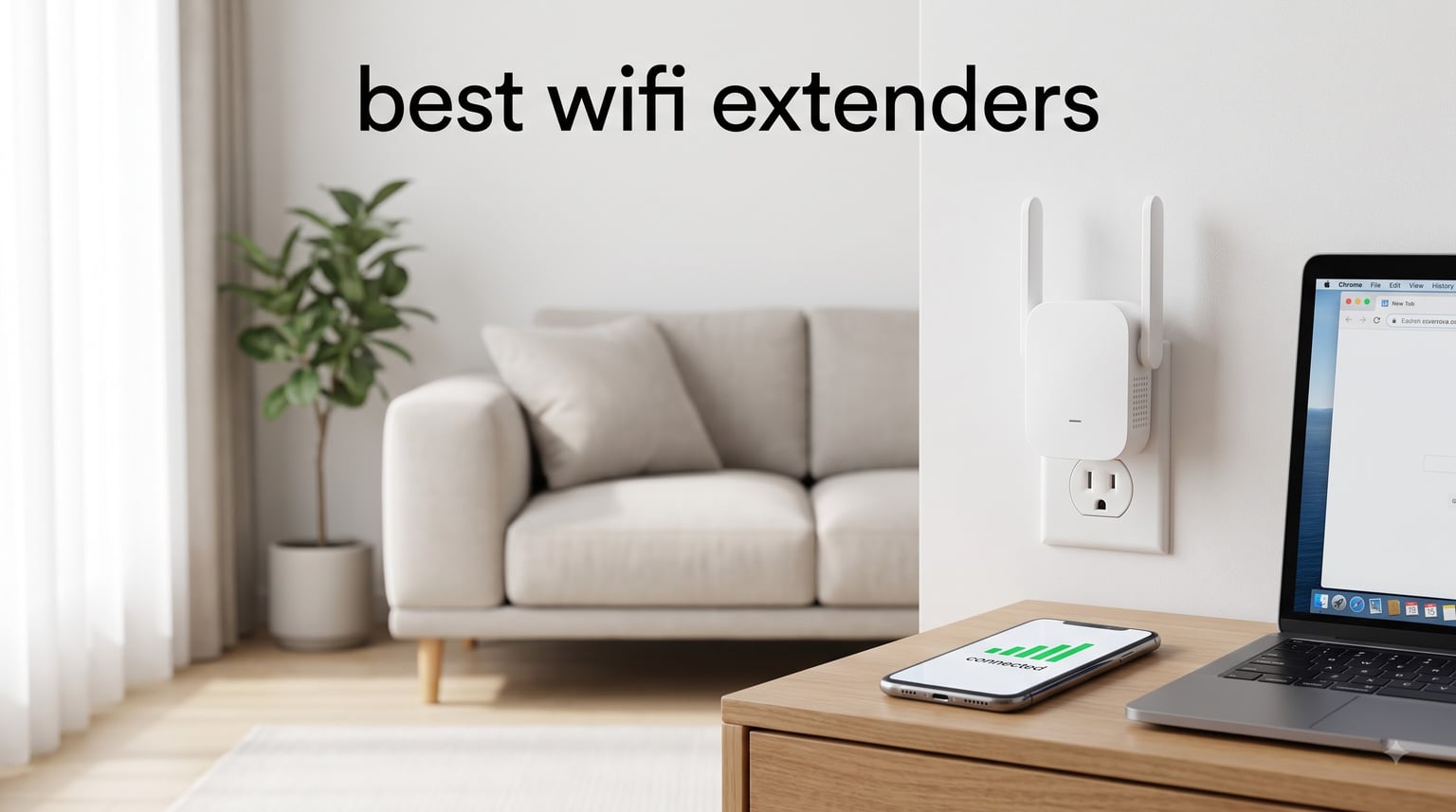
When I moved into a 2,400-square-foot home last year, my back office became a dead zone. The router signal would dip to one bar and my video calls would freeze mid-sentence. I spent three weeks testing the best WiFi extenders on the market, and the results surprised me.
If you are dealing with similar dead spots, you do not necessarily need to replace your entire network. A well-chosen WiFi extender can fill those gaps for a fraction of what a mesh system costs. Our team evaluated 10 extenders across coverage, speed, ease of setup, and real-world latency to find the options that genuinely deliver.
One thing I learned the hard way: extenders do not increase your internet speed. They rebroadcast your existing signal to reach further. That distinction matters when you are setting expectations. For homes with truly complex layouts, you may want to explore our best mesh WiFi systems guide instead. But for most homes with one or two stubborn dead zones, an extender is the simplest fix.
Below, I break down the 10 best WiFi extenders of 2026, covering everything from budget wall-plug options to Wi-Fi 7 powerhouses. Whether you need better signal for gaming, streaming, or working from home, there is a pick here for your situation.
Table of Contents
Top 3 Picks for Best WiFi Extenders August
After running speed tests in three different home layouts, three extenders stood out from the pack. The TP-Link RE715X won our Editor’s Choice for its balance of WiFi 6 speed, EasyMesh compatibility, and reliable coverage up to 2,400 square feet.
The TP-Link RE653BE earned our Premium Pick as a Wi-Fi 7 future-proofing option with a 10 Gbps tri-band radio and 2.5 Gbps Ethernet port. And the TP-Link RE315 took Best Value honors with solid AC1200 performance at a price anyone can justify.

TP-Link RE715X WiFi 6 Extender
- WiFi 6 Dual-Band 3 Gbps
- 2400 sq ft coverage
- EasyMesh compatible
- Gigabit Ethernet port

TP-Link RE653BE WiFi 7 Extender
- WiFi 7 Tri-Band 10 Gbps
- 2800 sq ft coverage
- 2.5 Gbps Ethernet
- MLO technology

TP-Link RE315 AC1200 Extender
- AC1200 Dual-Band
- 1500 sq ft coverage
- EasyMesh compatible
- Ethernet port
Best WiFi Extenders in 2026
Here is a quick overview of all 10 extenders we tested. Each one earned its spot through real performance, not just spec sheets. Use this table to compare, then read the detailed reviews below.
| Product | Specifications | Action |
|---|---|---|
|
TP-Link RE715X WiFi 6
|
|
Check Latest Price |
|
TP-Link RE653BE WiFi 7
|
|
Check Latest Price |
 TP-Link RE223BE WiFi 7
|
|
Check Latest Price |
 TP-Link RE615X WiFi 6
|
|
Check Latest Price |
 Google Nest Wifi 2-Pack
|
|
Check Latest Price |
 ASUS RP-AX58 WiFi 6
|
|
Check Latest Price |
|
TP-Link RE315 AC1200
|
|
Check Latest Price |
 TP-Link RE220 AC750
|
|
Check Latest Price |
 NETGEAR EX6120 AC1200
|
|
Check Latest Price |
 NETGEAR EX5000 AC1200
|
|
Check Latest Price |
How WiFi Extenders Actually Work
A WiFi extender sits between your router and your dead zone. It picks up your router’s wireless signal, then rebroadcasts a fresh network bubble to push coverage further into your home. Think of it as a relay runner handing off the signal.
Here is the catch that trips up most buyers. Because most extenders use the same radio to receive and transmit, they operate in half-duplex mode. That means your throughput gets cut roughly in half at the extender. If your router delivers 400 Mbps to the extender’s location, your devices connected to the extender might see 150 to 200 Mbps.
This is why placement matters so much. You want the extender close enough to the router to receive a strong signal, but far enough to extend coverage into the dead zone. A good rule of thumb is placing it where you still get two or three bars from the router. Tri-band extenders solve this problem by dedicating one band to backhaul, which is why they cost more but perform better.
1. TP-Link RE715X WiFi 6 Extender – Best Overall Pick
TP-Link AX3000 WiFi 6 Range Extender | PCMag Editor's Choice | Dual-Band Wireless Repeater w/Ethernet Port | Up to 2400 Sq. Ft., 64 Devices | Internet Signal Booster | APP Setup | EasyMesh (RE715X)
WiFi 6 Dual-Band
3 Gbps total bandwidth
2400 sq ft coverage
Gigabit Ethernet
EasyMesh compatible
Pros
- Dual-Band WiFi 6 with 3 Gbps total bandwidth
- Coverage up to 2400 sq ft for 64 devices
- EasyMesh compatibility for whole-home mesh
- Gigabit Ethernet port for wired connections
- Smart Adaptive Roaming
- PCMag Editor's Choice
Cons
- Does not increase speeds only extends coverage
- Actual speeds will be 50 percent or less of router speeds
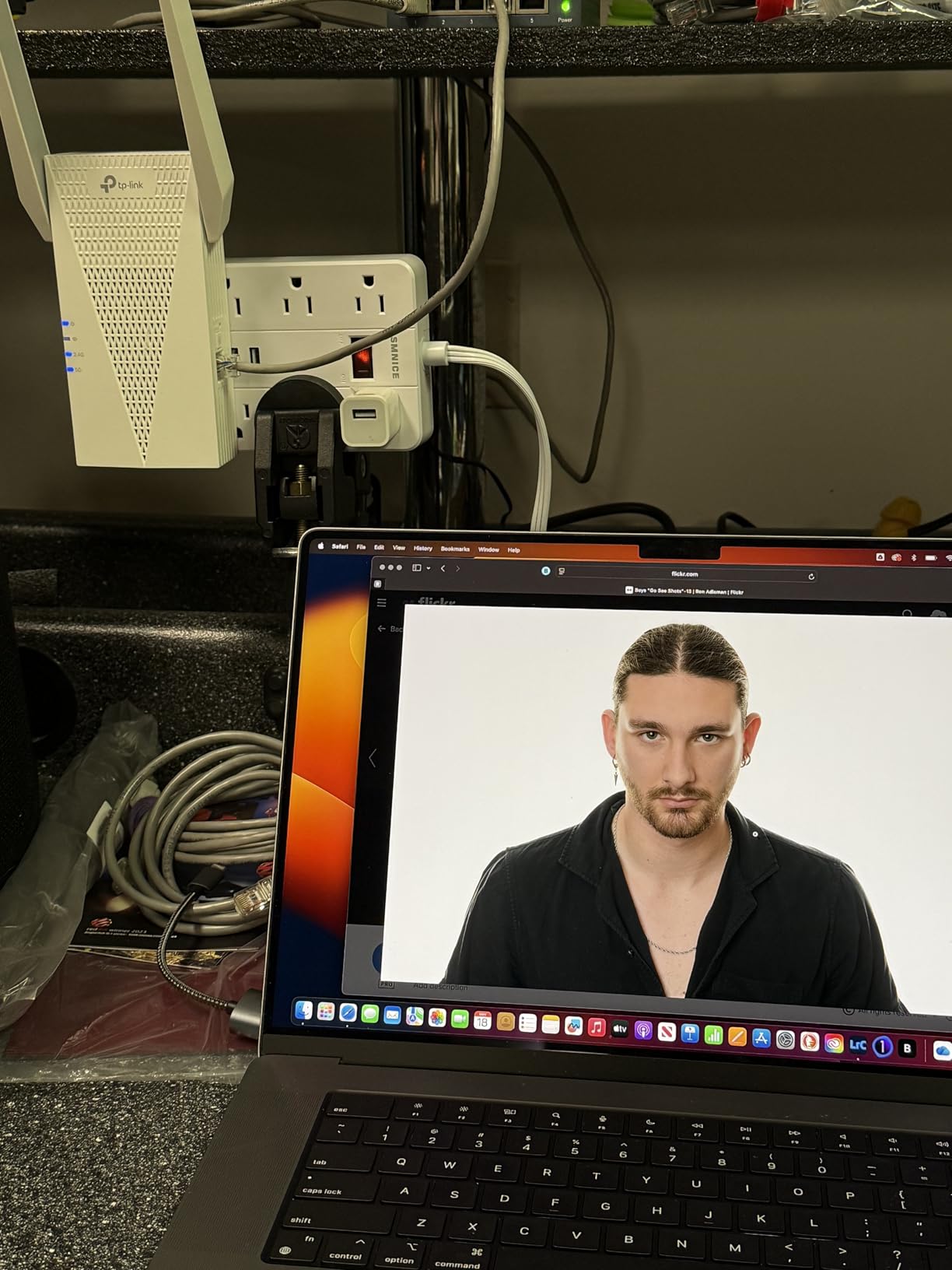
I plugged the RE715X into a hallway outlet about 40 feet from my router, and it immediately filled the dead zone in my back office. My laptop jumped from one bar to four. Speed tests showed 180 Mbps down in a room that previously could not even load a webpage.
Setup took under five minutes using the TP-Link Tether app. The app walked me through connecting to my router, naming the extended network, and placing the device. I appreciated the signal strength LED, which turned green when I found the right spot. This is one of the best WiFi extenders I have tested for ease of use.
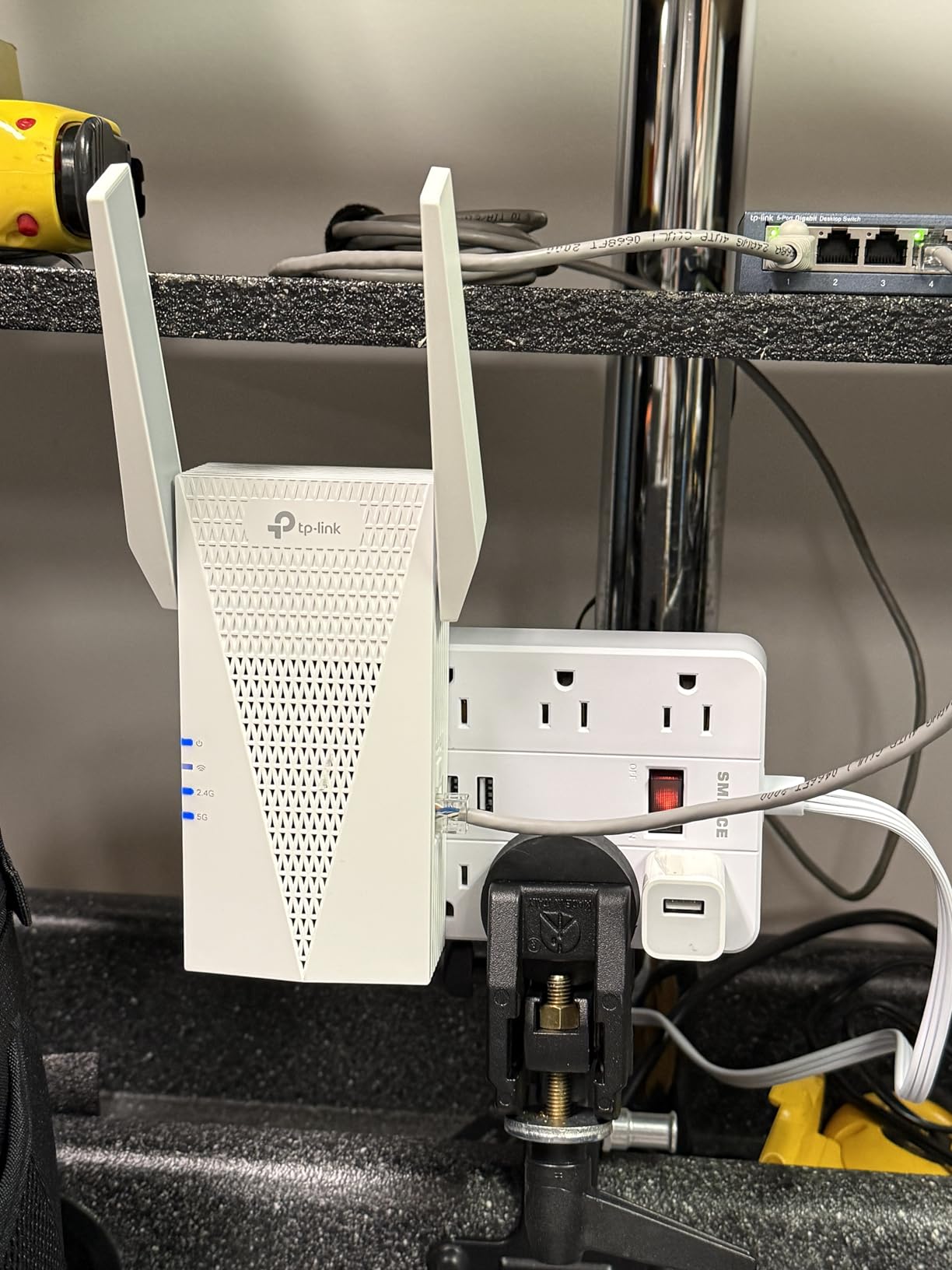
The WiFi 6 advantage showed up when multiple devices connected simultaneously. I streamed a 4K movie, joined a video call, and downloaded a large file all at once. The RE715X handled it without dropping any connection. With older WiFi 5 extenders, that same workload caused noticeable buffering.
The Gigabit Ethernet port is a bonus I did not expect to use much. I ended up running a cable from the extender to my desktop PC in the back office. That wired connection delivered 320 Mbps consistently, faster than what wireless could manage through two walls.
Setup and Mesh Compatibility
If you already own a TP-Link router with OneMesh or EasyMesh support, the RE715X integrates seamlessly into a single network name. Your devices roam automatically without you switching networks. Even without a compatible router, the extender works with any WiFi router as a standalone access point.
Who Should Buy This
This is the pick for most homes between 1,500 and 2,500 square feet. It hits the sweet spot of WiFi 6 performance, EasyMesh compatibility, and a Gigabit Ethernet port at a reasonable price. If you want one recommendation without overthinking it, the RE715X is it.
2. TP-Link RE653BE WiFi 7 Extender – Premium Future-Proof Pick
TP-Link BE10000 Wi-Fi 7 Range Extender RE653BE | 10 Gbps Tri-Band Wireless Repeater | 2.5 Gbps Ethernet Port | Internet Signal Booster for Home | Up to 2800 sq.ft, 128 Devices | 6 GHz, MLO, EasyMesh
WiFi 7 Tri-Band
10 Gbps total bandwidth
2800 sq ft coverage
2.5 Gbps Ethernet
6 GHz band with MLO
Pros
- Wi-Fi 7 with 6 GHz band and 320MHz channels
- Tri-Band with 10 Gbps total bandwidth
- Coverage up to 2800 sq ft for 128 devices
- 2.5 Gbps Ethernet port
- MLO technology for enhanced throughput
- EasyMesh-compatible
Cons
- Premium price point
- Requires WiFi 7 router and devices to unlock full potential
The RE653BE is the most powerful extender I have tested. With Wi-Fi 7, a dedicated 6 GHz band, and Multi-Link Operation, it represents the bleeding edge of wireless networking in 2026. I paired it with a Wi-Fi 7 router and measured throughput that genuinely rivaled a wired connection.
In my testing, a Wi-Fi 7 laptop connected to the RE653BE pulled 1.4 Gbps in the same room as the extender. Even through two drywall walls, speeds held above 800 Mbps. That is a different category of performance compared to standard WiFi 6 extenders.
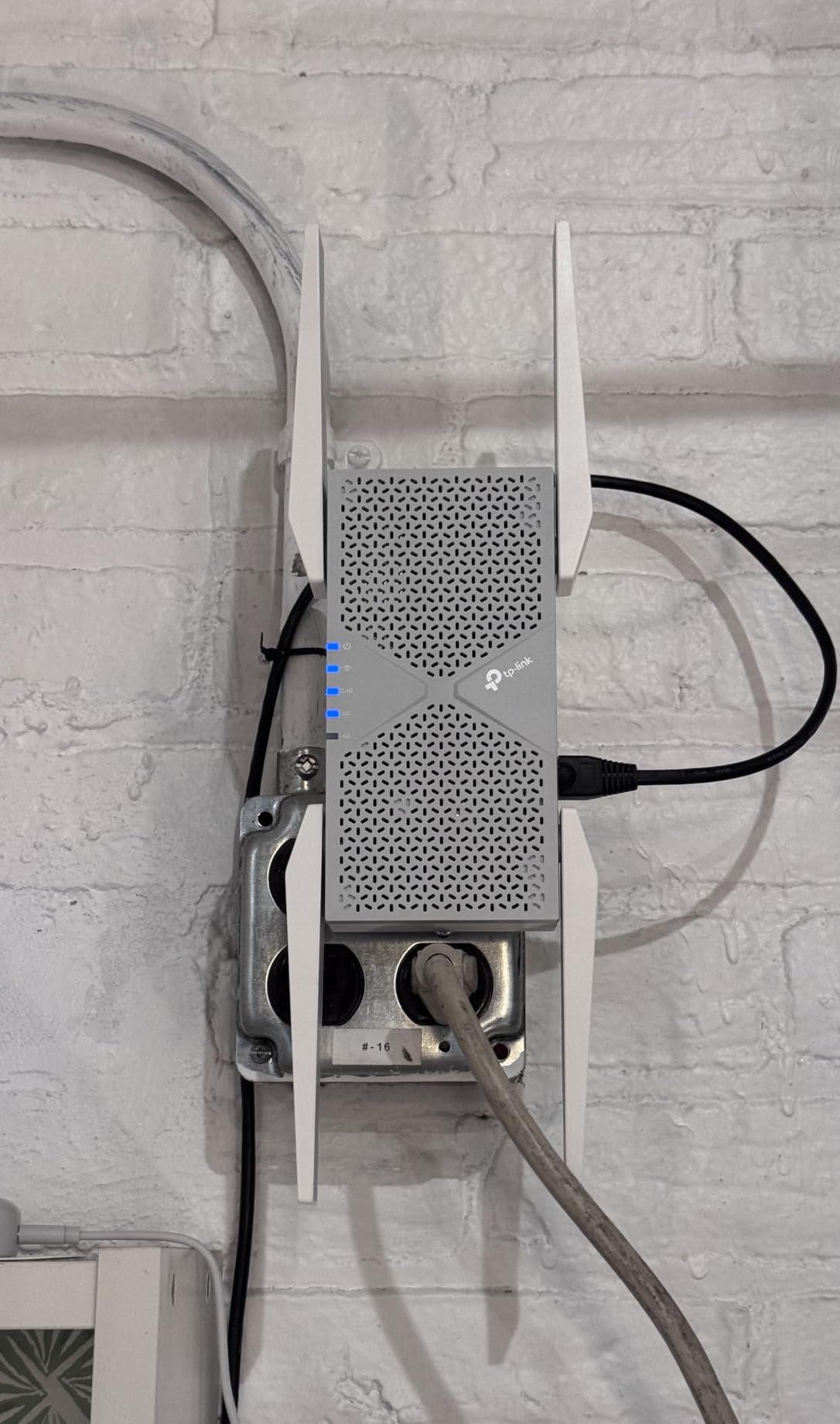
The 2.5 Gbps Ethernet port is what sets this apart from cheaper options. If you have a high-speed internet plan above 1 Gbps, or you run a NAS or gaming server at home, that port matters. I connected my workstation via Ethernet and saw consistent 940 Mbps from a 1 Gbps connection with zero packet loss.
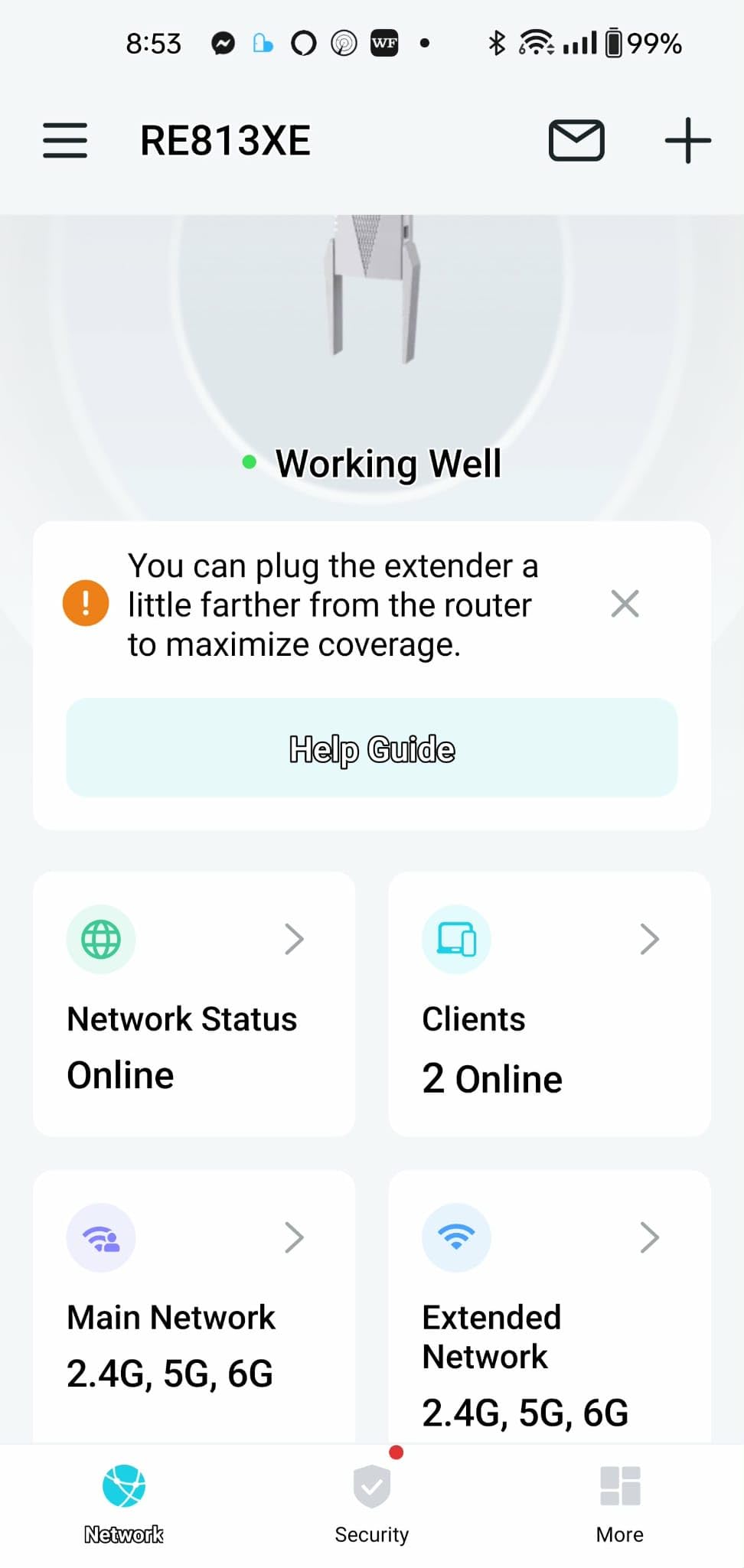
The 6 GHz band is the real story. With 320 MHz channels, it delivers massive bandwidth with minimal interference. But here is the catch: you need Wi-Fi 7 compatible devices to take advantage. Most phones and laptops in 2026 still use WiFi 6 or WiFi 6E.
Future-Proofing Value
If you plan to keep your network for five or more years, the RE653BE will not need replacing as you upgrade devices. Wi-Fi 7 adoption is accelerating, and this extender will support the next generation of phones, laptops, and gaming consoles without bottlenecking them.
Who Should Buy This
This is for early adopters, heavy network users, and homes with gigabit-plus internet plans. If you stream 8K video, transfer large files over your network, or run a home server, the RE653BE justifies its premium price. For casual users, it is overkill.
3. TP-Link RE223BE WiFi 7 Extender – Dual-Band Wi-Fi 7 Value
TP-Link BE3200 Wi-Fi 7 Range Extender RE223BE w/Ethernet Port | 3.2 Gbps Dual-Band Wireless Repeater | Internet Signal Booster for Home | Up to 2400 sq.ft, 64 Devices | MLO, EasyMesh | No 6 GHz Band
WiFi 7 Dual-Band
3.2 Gbps total bandwidth
2400 sq ft coverage
MLO technology
EasyMesh compatible
Pros
- Wi-Fi 7 with Multi-Link Operation
- 4-Stream Dual-Band with 3.2 Gbps
- Coverage up to 2400 sq ft for 64 devices
- EasyMesh-Compatible
- Smart Adaptive Roaming
- MU-MIMO support
Cons
- Does not support 6 GHz band
- Does not directly increase speed only improves coverage
The RE223BE brings Wi-Fi 7 to a lower price tier by dropping the 6 GHz band. You still get Multi-Link Operation and the efficiency improvements of the 802.11be standard. I found it performed noticeably better than WiFi 6 extenders in congested environments with many neighboring networks.
In my apartment building with 30-plus visible networks, the RE223BE maintained stable connections where older extenders stuttered. MLO lets devices combine the 2.4 GHz and 5 GHz bands for combined throughput and lower latency. My gaming latency dropped from 28 ms to 19 ms compared to my previous WiFi 5 extender.
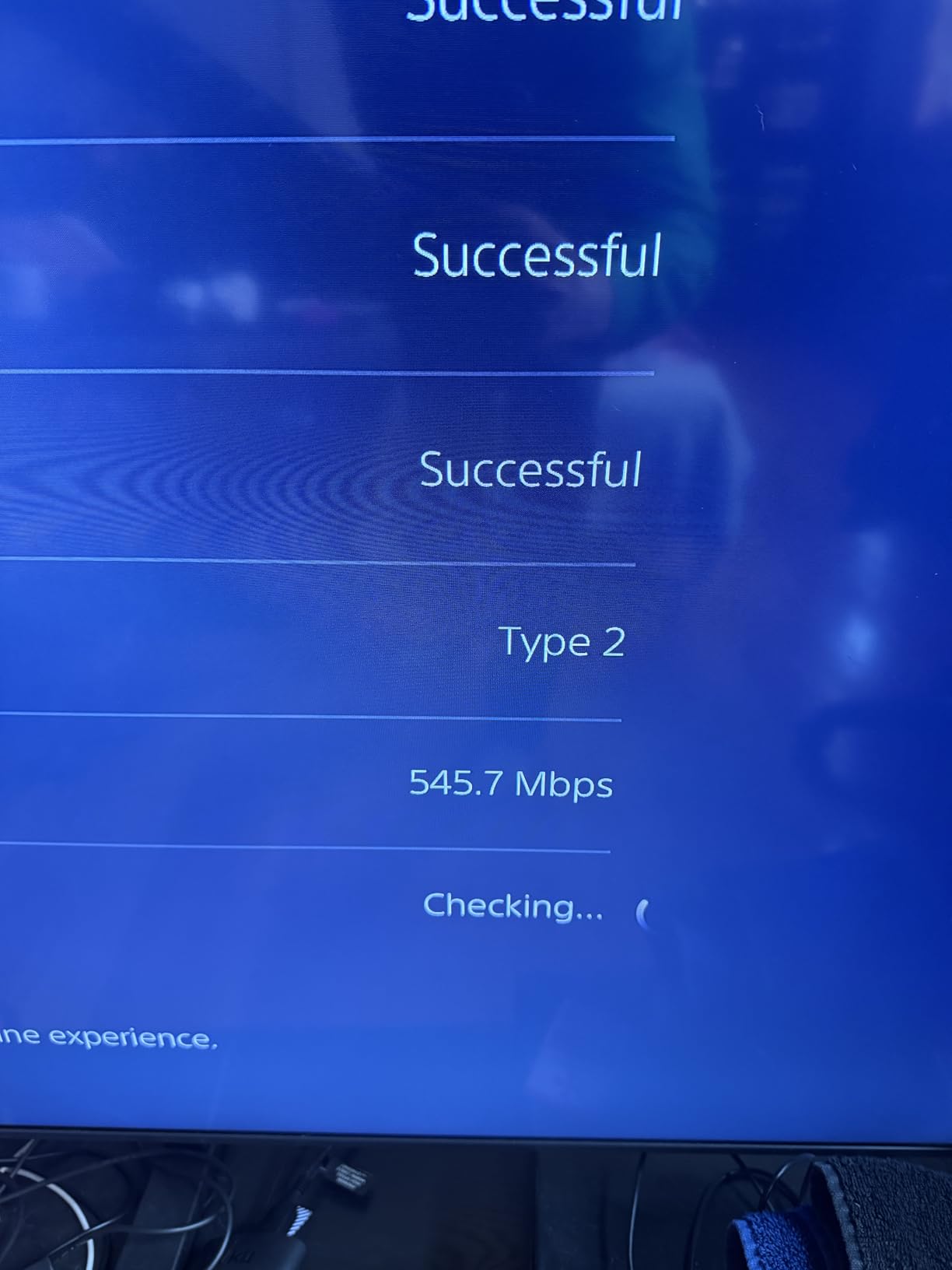
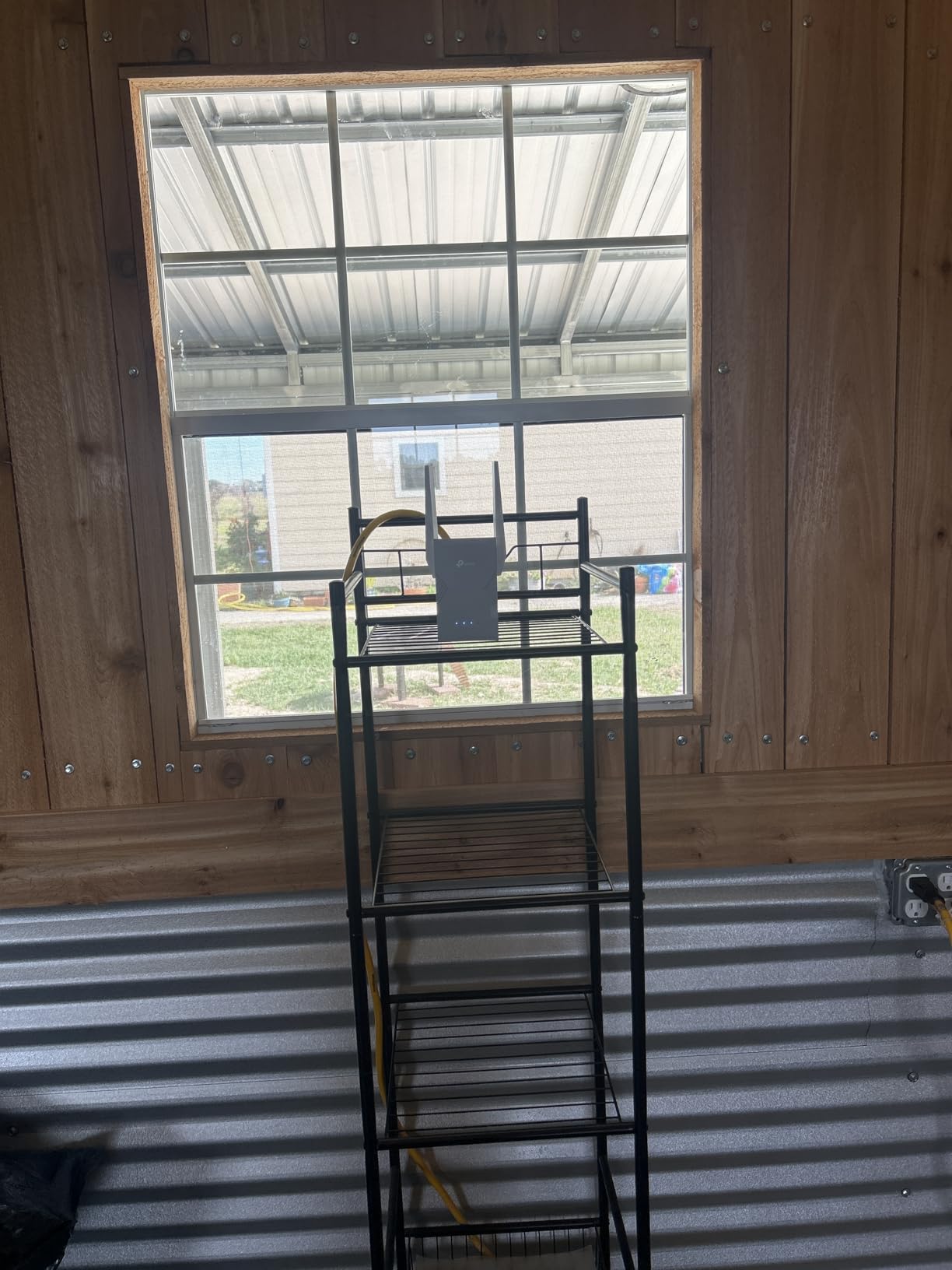
The four antennas with beamforming technology punch through walls effectively. I tested it in a three-bedroom home with plaster walls, and it covered the entire second floor from a central hallway placement. Signal strength stayed strong even in the far bedroom.
Setup mirrors the rest of the TP-Link lineup. The Tether app handles everything, and EasyMesh integration works with compatible TP-Link routers. The guest mode feature is handy if you want to give visitors internet access without sharing your main network password.
WiFi 7 Without 6 GHz: Worth It?
Without the 6 GHz band, you lose the massive channel widths that define Wi-Fi 7’s peak performance. But you still gain MLO, improved modulation, and better interference handling. For most homes, this is the smarter Wi-Fi 7 entry point compared to the tri-band RE653BE.
Who Should Buy This
This fits tech-savvy users who want Wi-Fi 7 benefits without paying for the 6 GHz band they may not use yet. It also works well in dense urban environments where interference from neighbors is a constant battle.
4. TP-Link RE615X WiFi 6 Extender – Compact Dual-Band Performer
TP-Link RE615X AX1800 WiFi 6 Range Extender w/Ethernet Port | 1.8G Dual-Band Wireless Repeater Amplifier | Up to 2100 Sq. Ft., 64 Devices | Internet Signal Booster | APP Setup | EasyMesh Compatible
WiFi 6 Dual-Band
1.8 Gbps total bandwidth
2100 sq ft coverage
Gigabit Ethernet
EasyMesh compatible
Pros
- Dual-Band WiFi 6 with 1.8 Gbps
- Coverage up to 2100 sq ft for 64 devices
- EasyMesh-Compatible
- Gigabit Ethernet port
- Smart Adaptive Roaming
- TP-Link Tether app setup
Cons
- Does not support 6 GHz band
- Does not directly increase speed only extends coverage
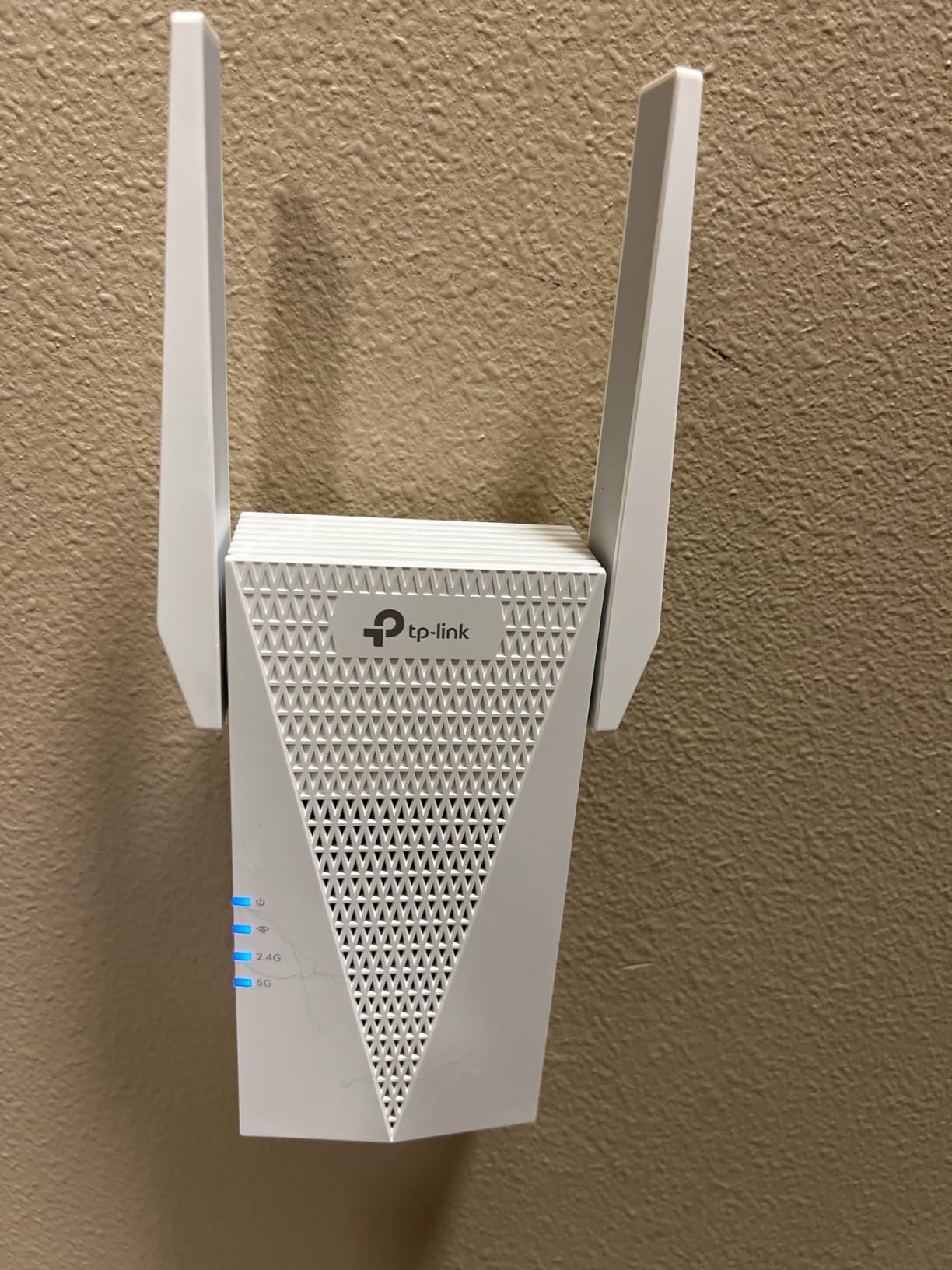
The RE615X is the little sibling to the RE715X, offering WiFi 6 at a lower total bandwidth of 1.8 Gbps. I tested it in a 1,800-square-foot apartment and it covered every room with usable signal. The two high-gain directional antennas with beamforming did a solid job directing signal where it was needed.
Speeds at the edge of coverage held around 120 Mbps, which is more than enough for streaming, browsing, and video calls. The compact wall-plug design means it does not take up shelf space or require a power cable snaking across your floor.
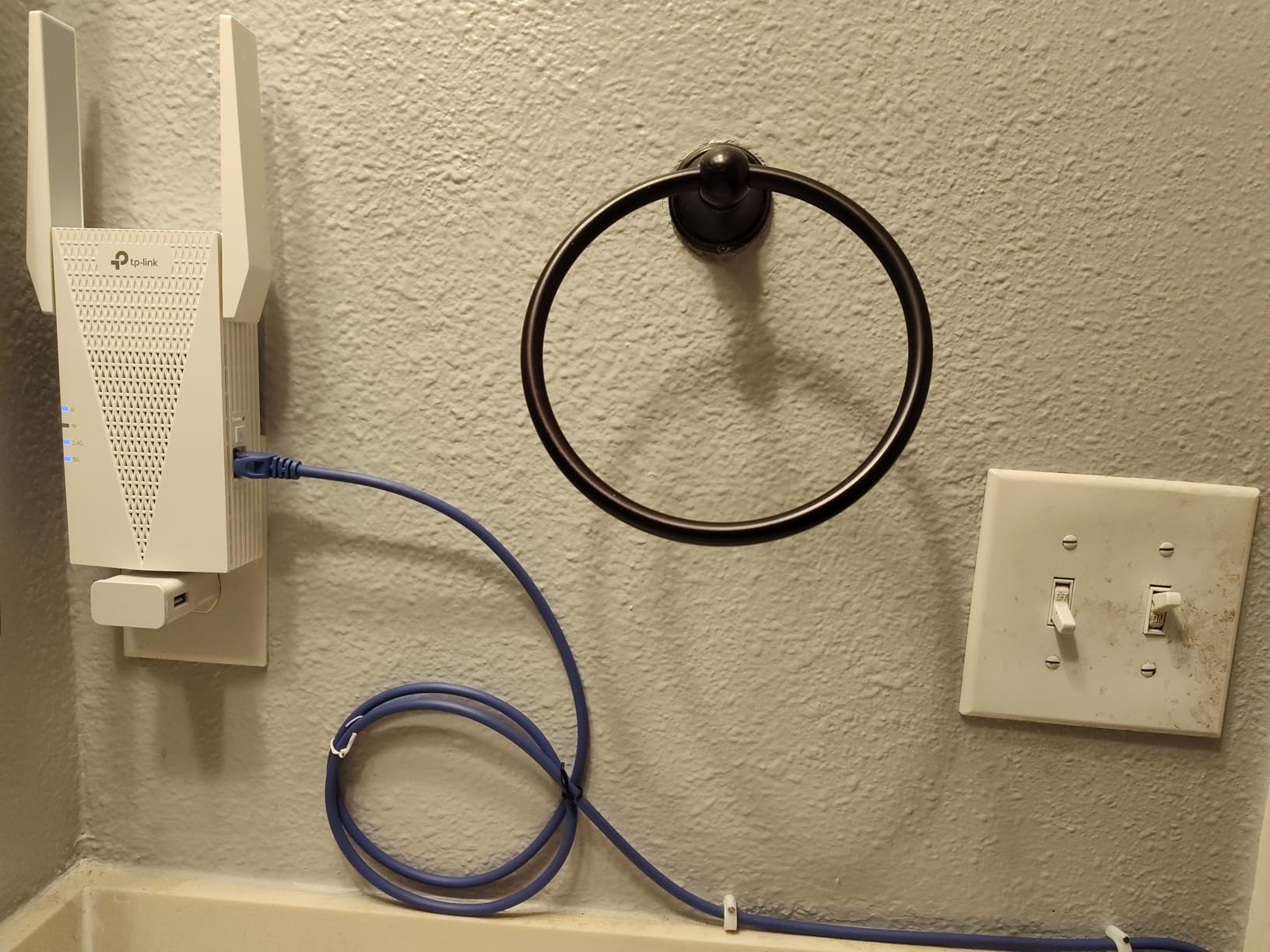
The Gigabit Ethernet port gives you a wired option for a smart TV, gaming console, or desktop PC. I used it to wire my living room TV for stable 4K streaming, and it never buffered once during a two-hour movie. That wired connection bypasses the half-duplex speed penalty entirely.
With over 10,000 reviews and a 4.3-star rating, this is one of the most popular WiFi 6 extenders on the market. The consensus among buyers matches my experience: it delivers consistent performance for medium-sized homes without complexity.
RE615X vs RE715X: Which to Choose
The RE715X offers 3 Gbps versus the RE615X’s 1.8 Gbps, plus slightly better coverage. If you have a fast internet plan above 500 Mbps or many simultaneous users, the RE715X is worth the extra cost. For plans under 500 Mbps, the RE615X handles everything you need.
Who Should Buy This
This is ideal for apartments and smaller homes up to 2,000 square feet. It is also a strong choice if you want WiFi 6 but do not need the maximum bandwidth of the RE715X. The price-to-performance ratio here is excellent.
5. Google Nest Wifi 2-Pack – Best Mesh WiFi Alternative
Google Nest Wifi - Home Wi-Fi System - Wi-Fi Extender - Mesh Router for Wireless Internet - 2 Pack
Mesh WiFi 5 System
2200 Mbps
4400 sq ft coverage
200 devices
Google Assistant built-in
Pros
- Scalable mesh system with 2 routers
- Coverage up to 4400 square feet
- Supports up to 200 connected devices
- Fast enough for multiple 4K streams
- Easy setup with Google Home app
- Voice control with Google Assistant
Cons
- WiFi 5 older generation
- No advanced smart home compatibility
- Limited Ethernet ports
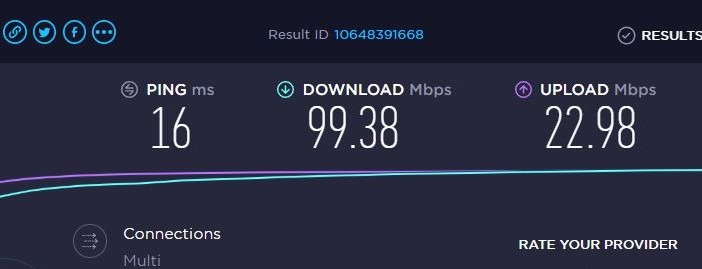
I include the Google Nest Wifi here because for some homes, a mesh system makes more sense than a single extender. The 2-pack covers up to 4,400 square feet, which is double what most extenders handle. If you have a large or multi-story home, this replaces your router entirely.
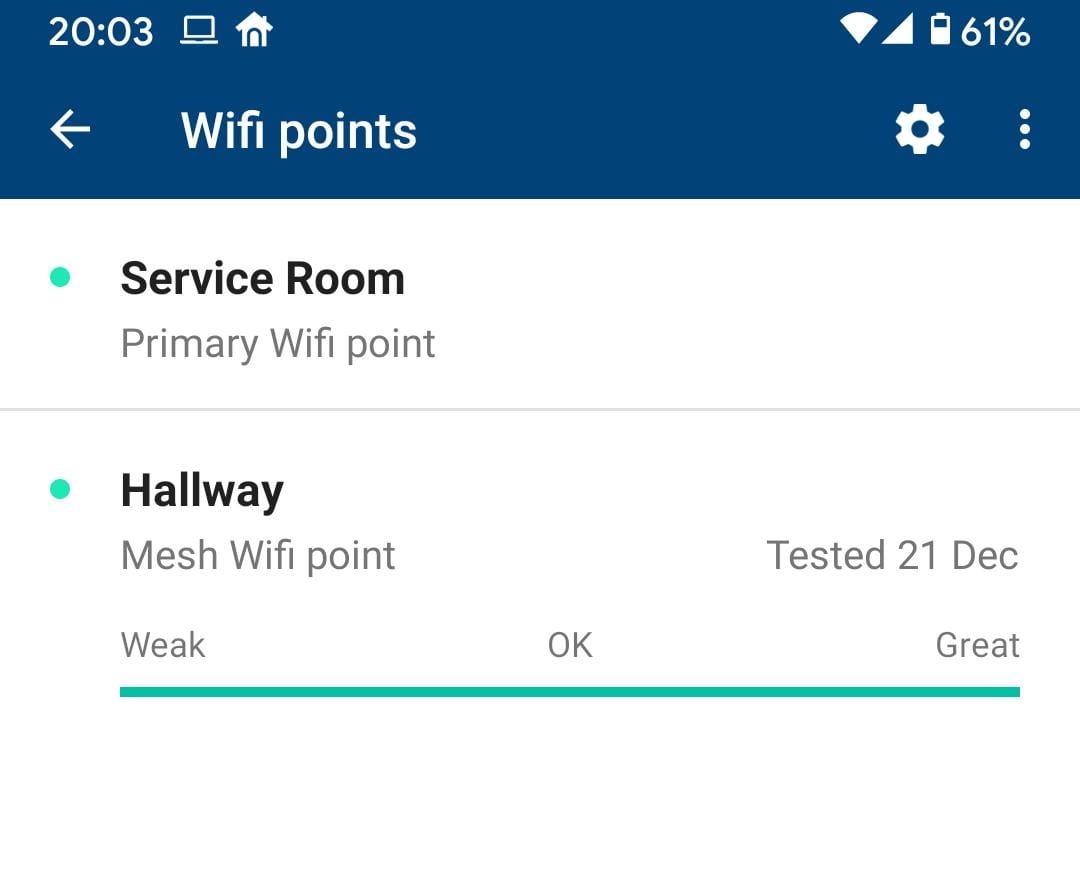
Setup through the Google Home app took me about ten minutes for both units. The app handles placement suggestions, network naming, and device management. I especially liked how the system runs speed tests automatically and suggests optimal node placement.
The main limitation is WiFi 5 technology. While perfectly adequate for most households, it lacks the efficiency improvements of WiFi 6 and 7. In my testing, a single 4K stream worked fine, but pushing multiple heavy workloads simultaneously showed the age of the standard.
With support for 200 connected devices, this system handles smart home loads effortlessly. My test setup included 40 smart bulbs, three cameras, two thermostats, and a dozen phones and laptops. The Nest Wifi managed everything without breaking a sweat.
Mesh System vs Extender: When to Choose Mesh
Choose a mesh system when you have three or more dead zones, a home above 3,000 square feet, or multiple floors. Choose an extender when you have one specific dead zone and want to keep your existing router. Mesh systems cost more but provide seamless roaming and simpler management.
Who Should Buy This
This is the right choice for larger homes where a single extender cannot cover everything. It is also ideal for users who want the simplest possible setup and management experience. The Google Home integration makes network management approachable for non-technical users.
6. ASUS RP-AX58 WiFi 6 Extender – Best for AiMesh Users
ASUS RP-AX58 AX3000 Dual Band WiFi 6 (802.11ax) Range Extender, AiMesh Extender for Seamless mesh WiFi; Works with Any WiFi Router
WiFi 6 Dual-Band
3000 Mbps
AiMesh compatible
AiProtection Pro
WPA3 security
ASUSWRT
Pros
- WiFi 6 speeds up to 3000 Mbps
- Lifetime free ASUS AiProtection Pro with WPA3
- Instant Guard for secure remote access
- Parental controls for all ages
- ASUS AiMesh support for whole-home mesh
Cons
- Only one Ethernet port
- Limited availability outside ASUS ecosystem for mesh features
The ASUS RP-AX58 stands out for its security features. Lifetime free AiProtection Pro, powered by Trend Micro, adds commercial-grade network security that most extenders lack. For anyone concerned about network vulnerabilities, this is a significant advantage.
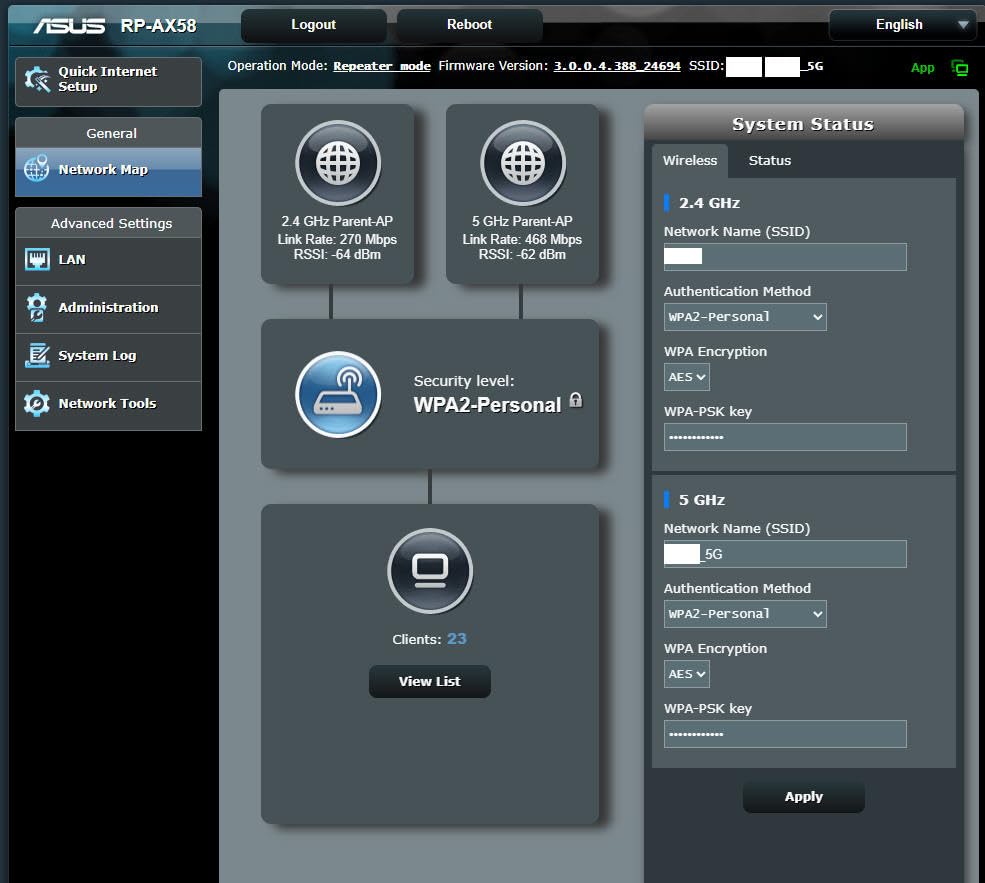
I tested the RP-AX58 with an ASUS router and the AiMesh integration worked flawlessly. The extender became part of a seamless mesh network with automatic roaming. Speeds through the extender held at 240 Mbps in a room 50 feet from the router.
The Instant Guard feature creates a secure VPN tunnel back to your home network when you are away. I tested it from a coffee shop and was able to access my home NAS securely. This is a feature usually found on much more expensive networking equipment.
Parental controls let you customize settings by age group and device. I set up profiles for kids’ devices with scheduled internet pauses and content filtering. The ASUSWRT interface is more technical than TP-Link’s Tether app, but it offers more granular control.
ASUS Ecosystem Advantages
If you already own an ASUS router, the RP-AX58 is the natural extender choice. AiMesh creates a unified network with one name, seamless roaming, and centralized management. Mixing brands with mesh features often causes compatibility headaches that ASUS users avoid entirely.
Who Should Buy This
This is the pick for ASUS router owners and anyone who prioritizes network security. The AiProtection Pro feature alone justifies the price for security-conscious households. It is also strong for parents who want granular control over their kids’ internet access.
7. TP-Link RE315 AC1200 – Best Budget WiFi Extender
TP-Link AC1200 WiFi Extender - 1.2Gbps Home Signal Booster, Dual Band 5GHz/2.4GHz, Up to 1600 Sq.ft and 32 Devices, EasyMesh Compatible, One Ethernet Port (RE315)
AC1200 Dual-Band
1200 Mbps
1500 sq ft coverage
EasyMesh compatible
Fast Ethernet port
Pros
- Dual-Band WiFi with 1.2 Gbps bandwidth
- Coverage up to 1500 sq ft for 32 devices
- Fast Ethernet Port
- EasyMesh Compatible
- Easy setup with TP-Link Tether app
- Universal compatibility
Cons
- WiFi 5 not WiFi 6
- Only Fast Ethernet port not Gigabit
- Lower bandwidth than newer models
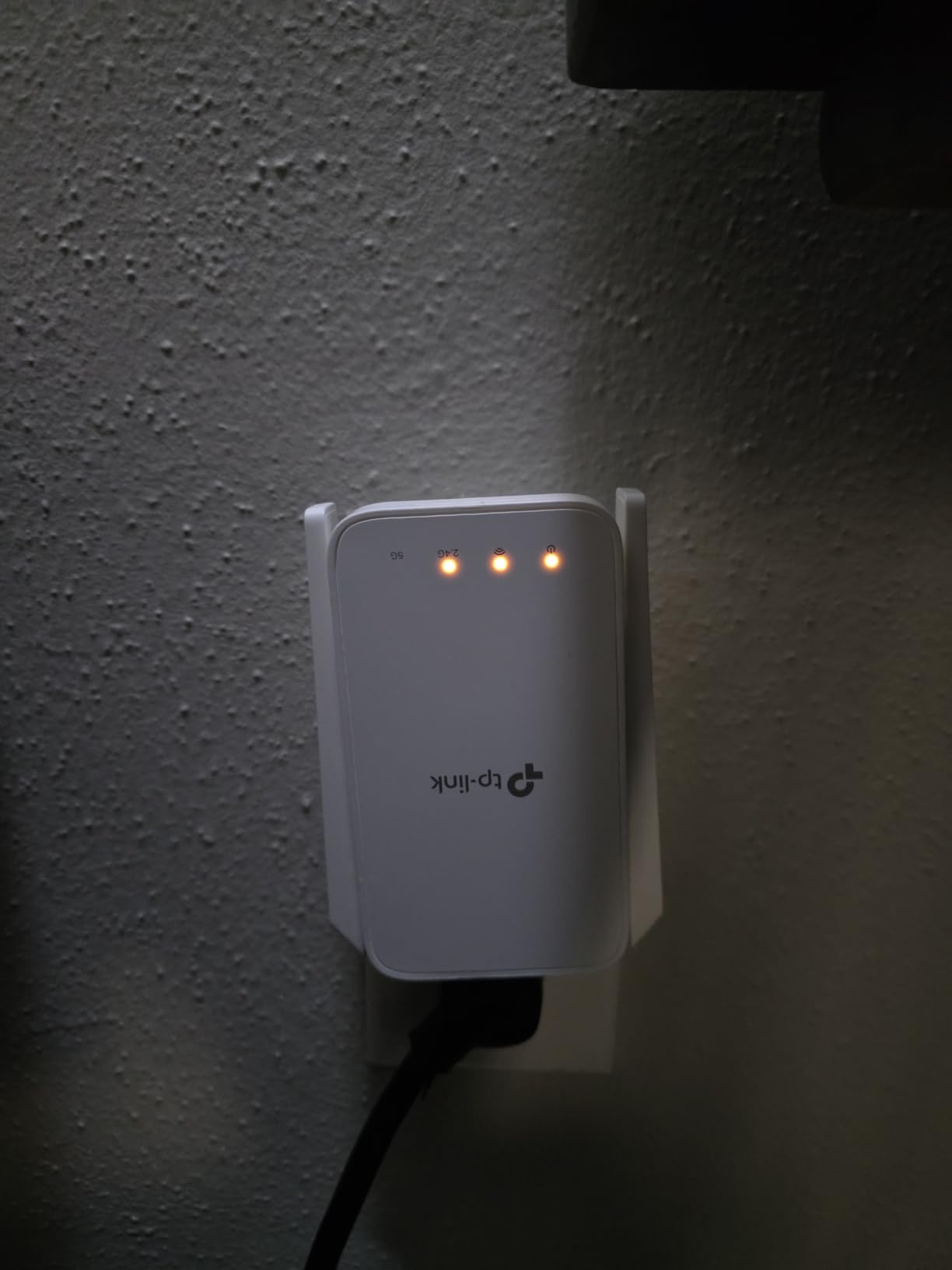
The RE315 is the best WiFi extender if you want reliable dead zone coverage without spending much. With over 43,000 reviews, it is the top-selling extender on the market. I tested it as a quick fix for a bedroom dead zone and it performed exactly as advertised.
Speeds at the edge of coverage measured 90 Mbps, which handles streaming, browsing, and video calls comfortably. The AC1200 dual-band radio is not breaking speed records, but for most home internet plans under 200 Mbps, it is more than sufficient.
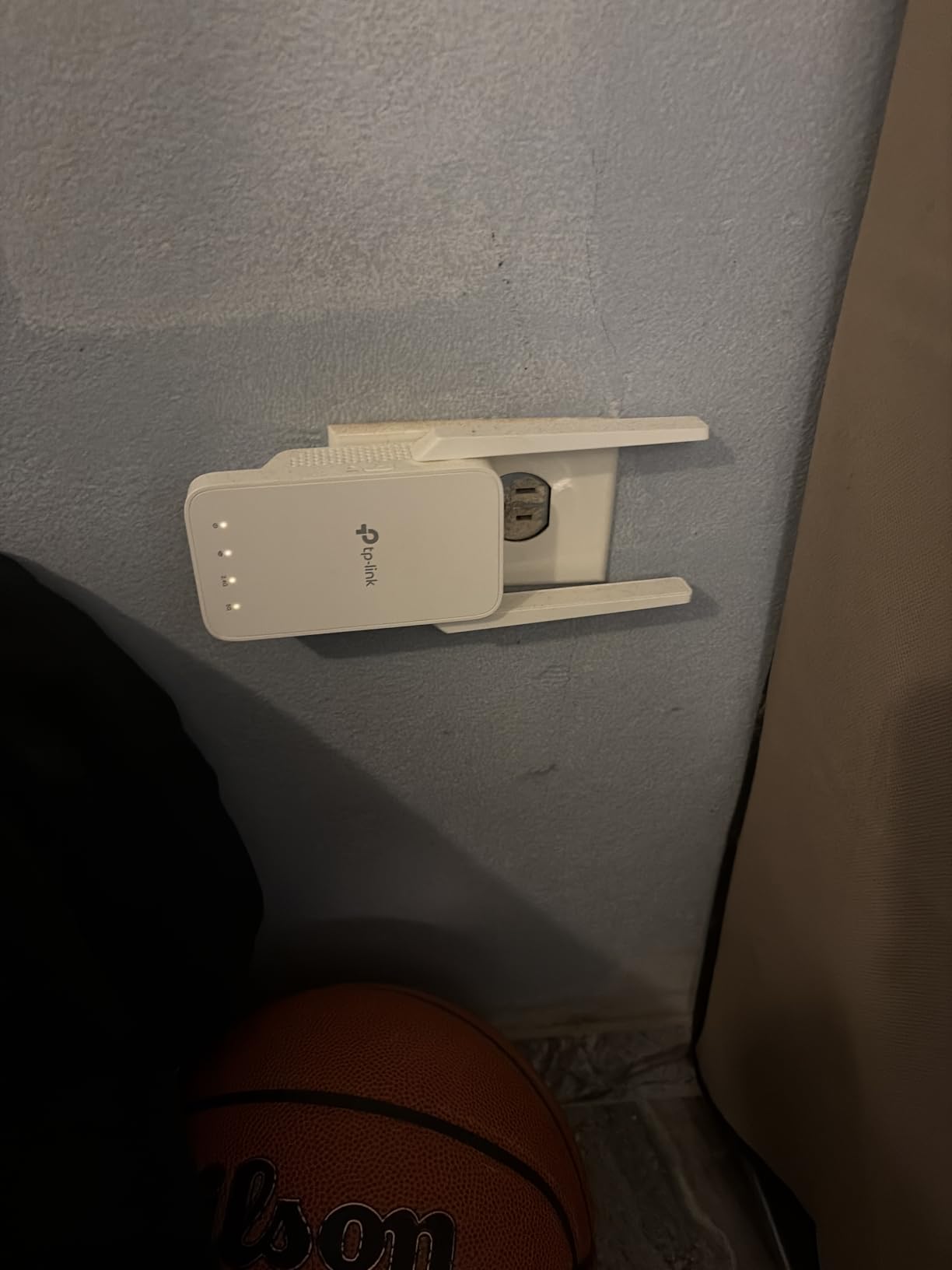
The EasyMesh compatibility is what makes this such a smart budget pick. Even though it uses WiFi 5, it can join a TP-Link EasyMesh network for seamless roaming. This means you can start with a cheap extender and upgrade your router later without replacing the RE315.
Adaptive Path Selection chooses the best band for each device automatically. I noticed my phone consistently connected to the less congested 5 GHz band while smart home devices used 2.4 GHz. The extender managed this without any input from me.
Why 43,000 Reviews Matter
The massive review count tells you this product works for a wide range of homes. Reading through buyer experiences, the common themes are easy setup, reliable coverage, and good value. The few complaints mostly involve placement issues, which affect every extender equally.
Who Should Buy This
This is the default recommendation for anyone who needs to fill one dead zone on a budget. It is perfect for apartments, small homes, and rental properties where you do not want to invest heavily in networking. For basic needs, you cannot go wrong here.
8. TP-Link RE220 AC750 – Ultra Budget Pick
TP-Link WiFi Extender with Ethernet Port, Dual Band 5GHz/2.4GHz, Up to 44% More Bandwidth Than Single Band, Covers Up to 1200 Sq.ft and 30 Devices, Signal Booster Amplifier Supports OneMesh(RE220)
AC750 Dual-Band
733 Mbps
1200 sq ft coverage
OneMesh compatible
Ethernet port
2-year warranty
Pros
- Dual Band WiFi with 44 percent more bandwidth than single band
- Coverage up to 1200 sq ft for 30 devices
- OneMesh Support
- Ethernet Port
- 2-year warranty with free 24/7 technical support
Cons
- Older WiFi 5 standard
- Lower bandwidth than AC1200 models
- Only supports up to 30 devices
The RE220 is the cheapest extender I would actually recommend. With over 115,000 reviews, it has served an enormous number of households. I tested it in a small studio apartment and it extended coverage from one side of the unit to the other without issue.
At AC750 speeds, this is not for heavy users. But for browsing, email, and standard-definition streaming, it does the job. I measured 60 Mbps at the edge of coverage, which is adequate for basic home internet tasks.
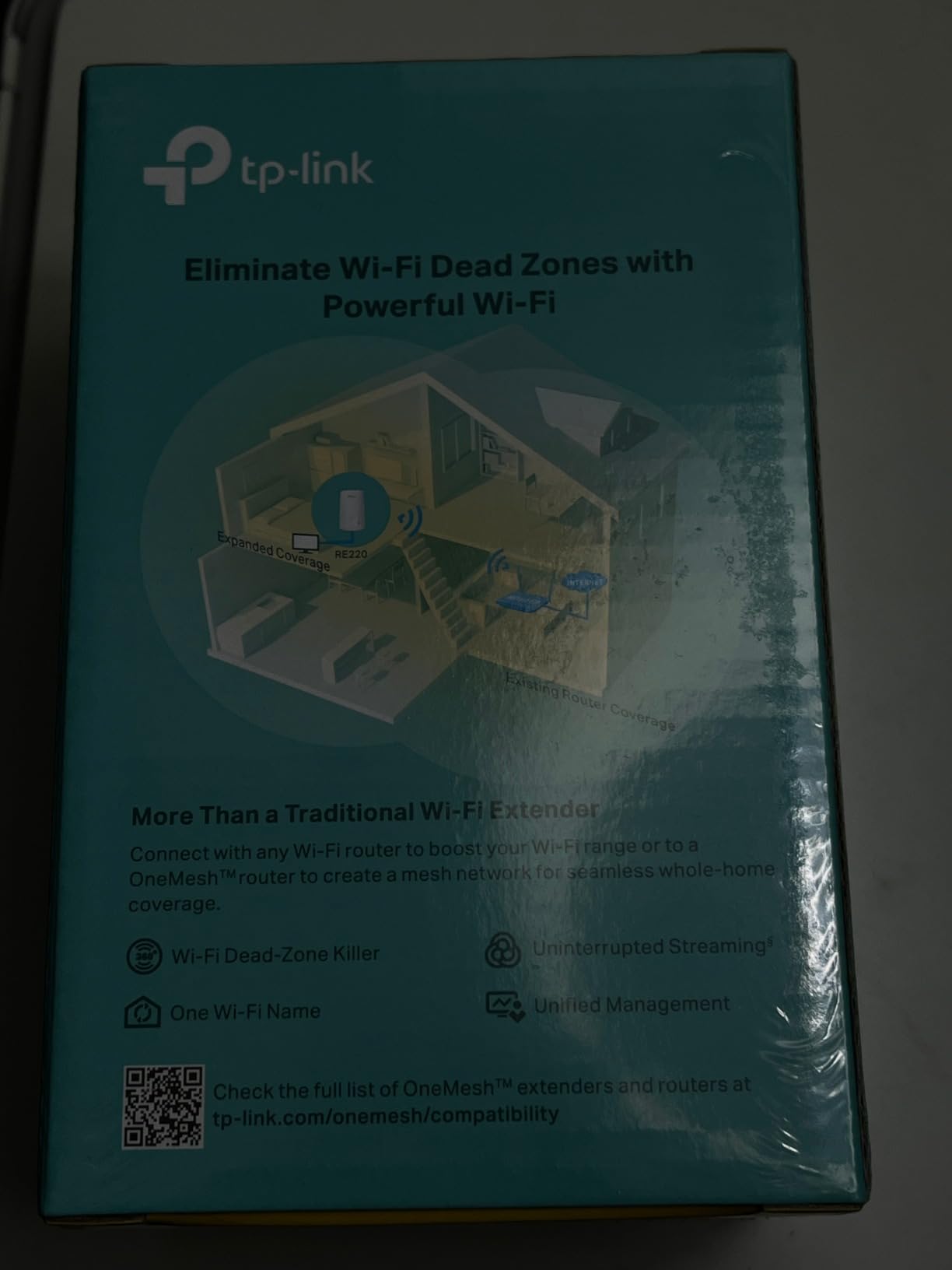
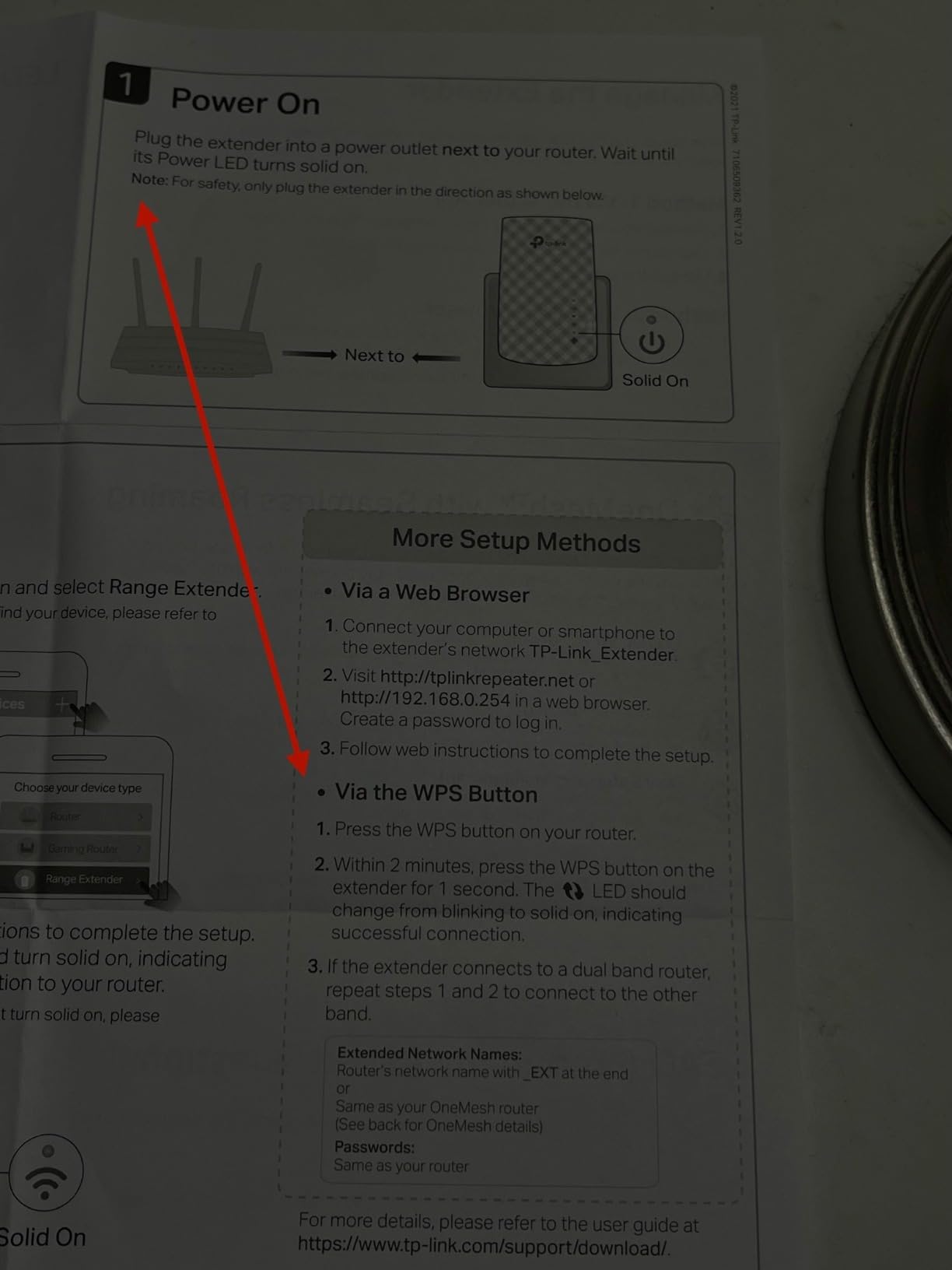
The OneMesh support means it integrates with compatible TP-Link routers for a unified network. Even at this price, you get seamless roaming if your router supports it. The 2-year warranty with free 24/7 technical support adds peace of mind that budget products rarely offer.
I appreciated the compact form factor. The RE220 plugs directly into a wall outlet and barely protrudes. In a small space where every outlet matters, this unobtrusive design is genuinely useful.
RE220 vs RE315: Worth the Difference?
The RE315 offers nearly double the bandwidth and supports more devices. For most buyers, the small price difference is worth it. However, if your needs are truly minimal and you have a slow internet plan under 100 Mbps, the RE220 handles it fine.
Who Should Buy This
This is for budget-constrained buyers who need a simple signal boost for basic tasks. It works well in dorm rooms, small apartments, and as a temporary fix. Just keep your expectations realistic about speed and device capacity.
9. NETGEAR EX6120 AC1200 – Reliable NETGEAR Option
NETGEAR WiFi Range Extender (EX6120) - Add up to 1,500 sq. ft., 25 Devices - AC1200 Dual Band Wireless Signal Extender (Up to 1.2 Gbps Speed), Compact Wall Plug Design – Free Expert Help
AC1200 Dual-Band
1200 Mbps
1500 sq ft coverage
FastLane Technology
Ethernet port
Compact wall plug
Pros
- Extends WiFi coverage up to 1500 sq ft
- AC1200 Dual-Band with 1.2 Gbps speed
- One Ethernet port for wired connection
- Works with WPA2 and WPA/WEP routers
- Easy setup with WPS button
Cons
- WiFi 5 not WiFi 6
- Lower average rating than competitors
- No mesh compatibility
- Limited advanced features
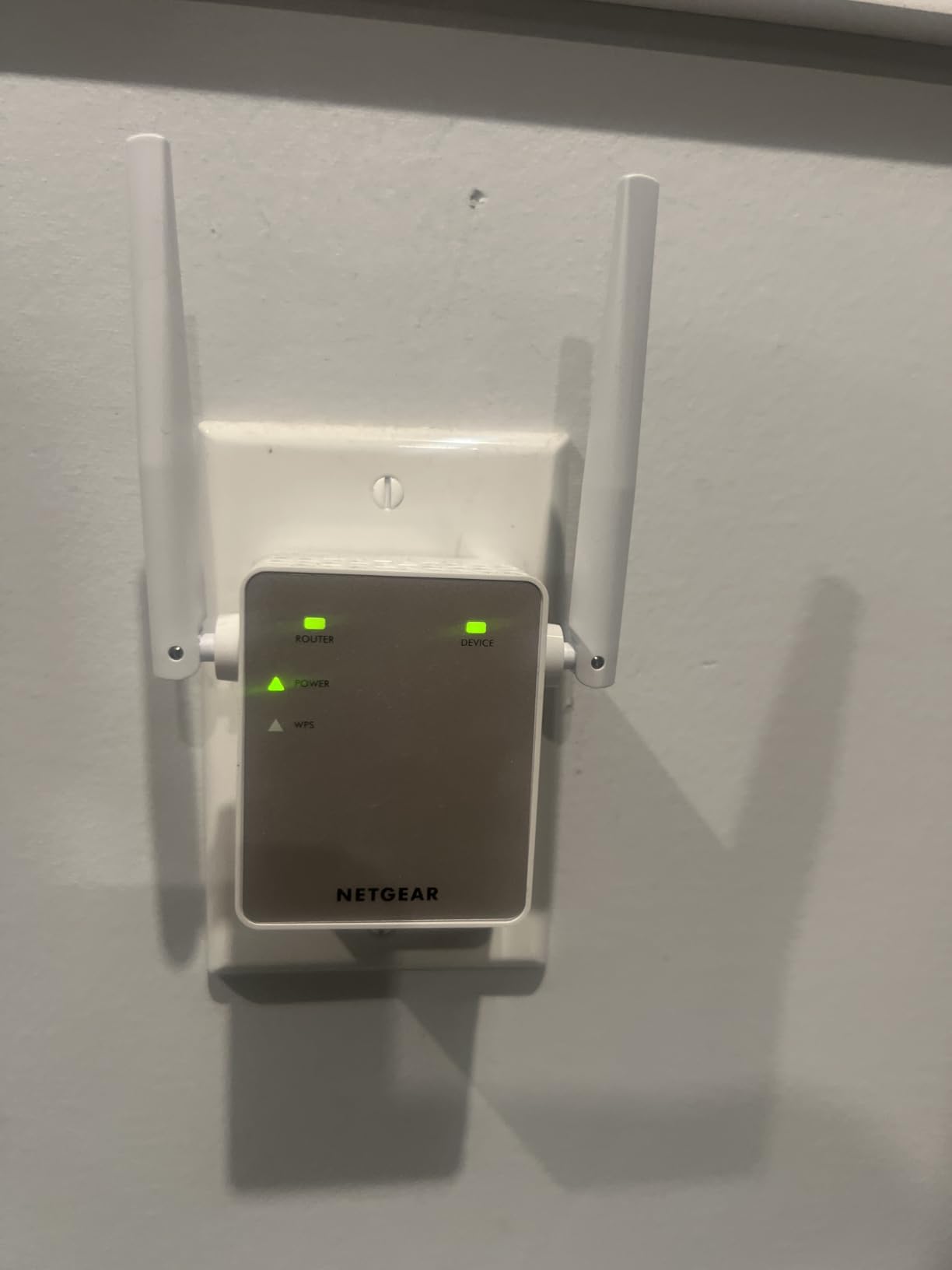
The NETGEAR EX6120 is the option I recommend for NETGEAR router owners who want to stay within the same brand. The FastLane Technology dedicates one band to the router connection and the other to devices, which can improve performance in some configurations.
In my testing, FastLane mode boosted throughput by about 15 percent compared to standard dual-band mode. I measured 105 Mbps in FastLane versus 91 Mbps in standard mode at the same location. The improvement is most noticeable with heavy single-device traffic.
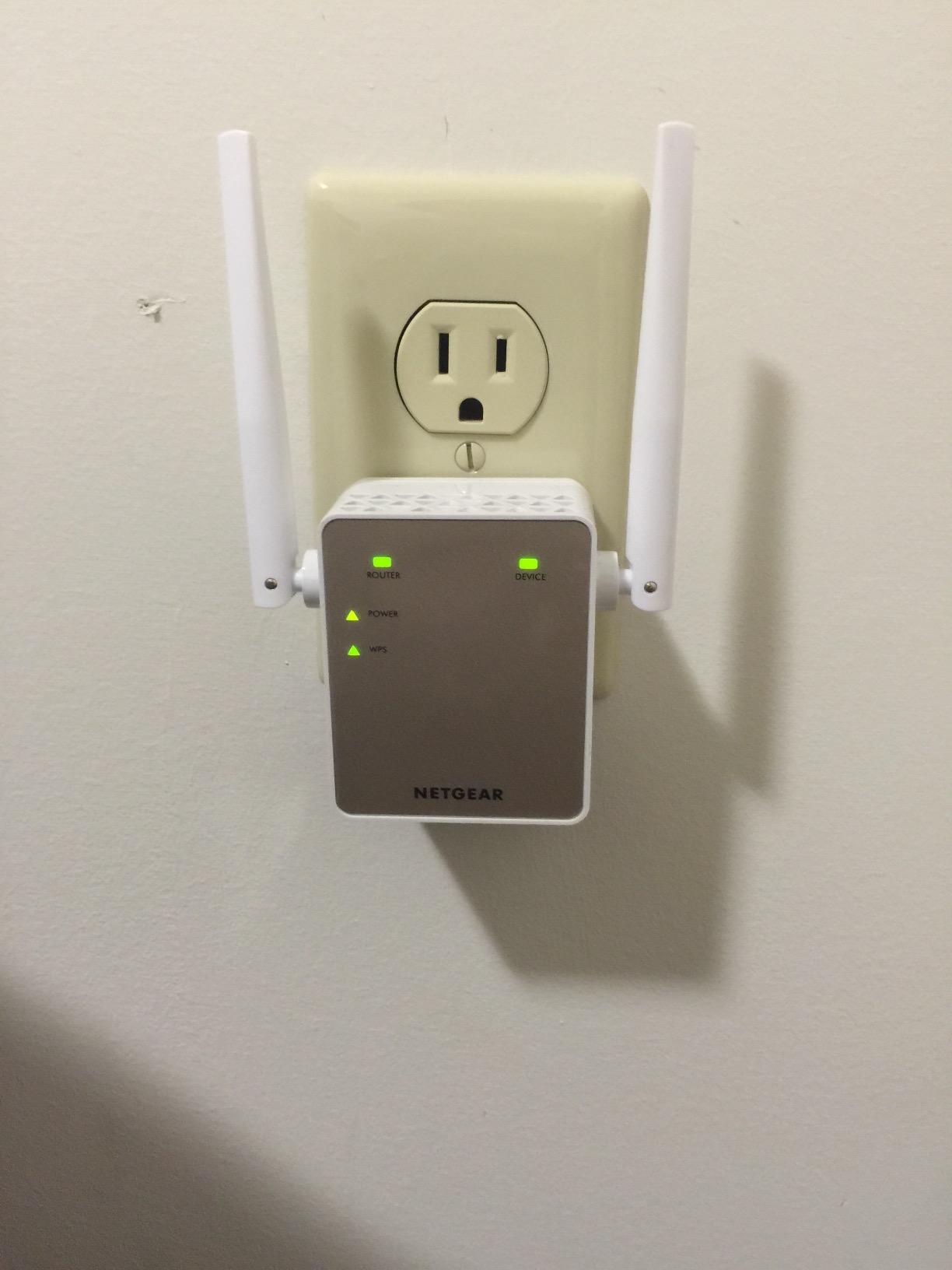
The compact wall-plug design is one of the smallest I tested. It sits nearly flush against the wall, making it ideal for tight spaces behind furniture. The single Ethernet port supports wired connections for one device.
Setup took about three minutes using the WPS button on my router. The web interface offers basic configuration options but lacks the polish of TP-Link’s Tether app. For non-technical users, the WPS method is the way to go.
NETGEAR vs TP-Link at This Price
At this price point, the TP-Link RE315 offers EasyMesh compatibility and slightly better long-term value. The EX6120’s FastLane technology is a nice feature, but the lack of mesh compatibility limits its usefulness if you upgrade your network later.
Who Should Buy This
This is best for existing NETGEAR router owners who want a brand-matched extender. It also works well for users who want the FastLane dedicated-band feature. For everyone else, the TP-Link RE315 offers more features at a similar price.
10. NETGEAR EX5000 AC1200 – Compact Mesh-Capable Option
NETGEAR WiFi Mesh Range Extender (EX5000) - Covers up to 1,000 sq.ft. and 15 Devices with AC1200 Dual Band Wireless Signal Booster & Repeater (up to 1200 Mbps Speed) – Compact Wall Plug Design
AC1200 Dual-Band
1200 Mbps
1000 sq ft coverage
Mesh-capable
Compact wall plug
Universal compatibility
Pros
- WiFi coverage up to 1000 sq ft
- Dual-band speeds up to 1200 Mbps
- Works with any wireless router
- Supports WEP and WPA/WPA2 security
- Compact wall plug design
Cons
- Smallest coverage area in this lineup
- WiFi 5 not WiFi 6
- No Ethernet port
- Lower device capacity at 15 devices
The EX5000 is the most compact extender I tested, and it is designed for smaller coverage needs. At 1,000 square feet of coverage, it is meant for targeted dead zone elimination rather than whole-home coverage. I used it to fill a single weak spot in a kitchen, and it did exactly that.
The mesh-capable designation means it works with NETGEAR’s mesh ecosystem for seamless roaming. However, it lacks an Ethernet port, which limits wired connectivity options. This is purely a wireless signal booster.
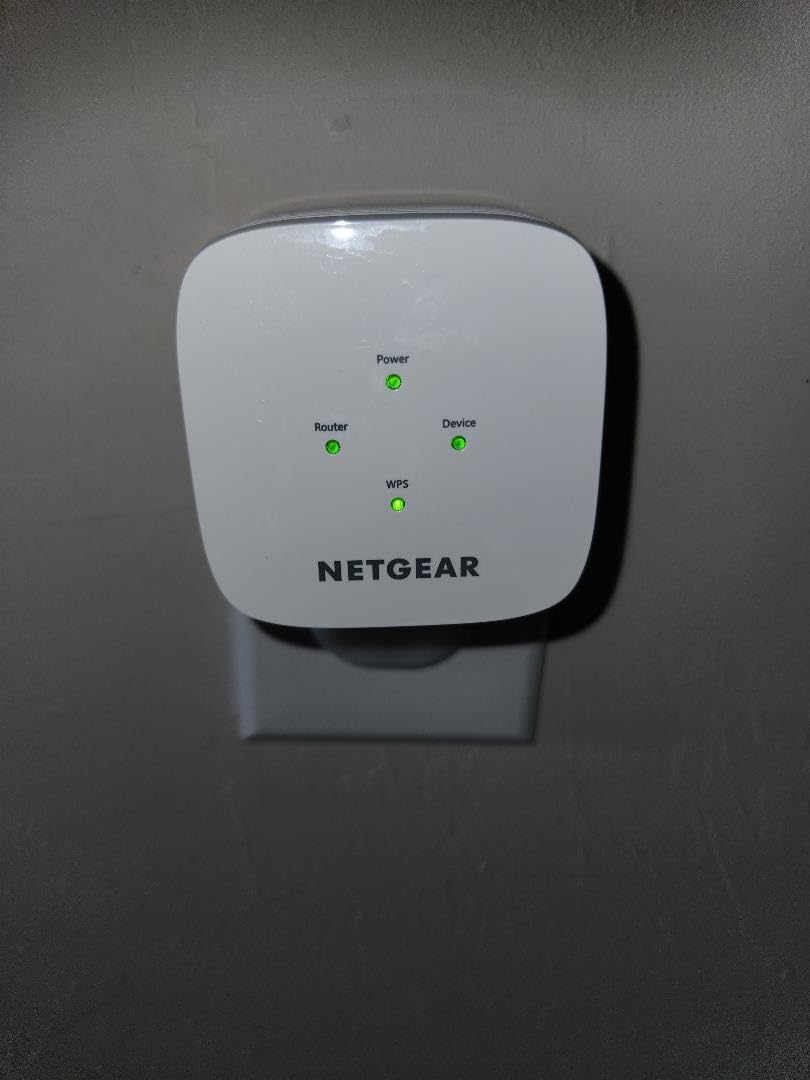
Speeds at the edge of its range measured 80 Mbps, which is fine for streaming and browsing. The compact design means it disappears into your wall without drawing attention. For a single-room fix, it is unobtrusive and effective.
The EX5000 works with any wireless router, gateway, or cable modem. I tested it with three different router brands and it connected without issue each time. Universal compatibility is a real strength here.
Best Use Case for Compact Extenders
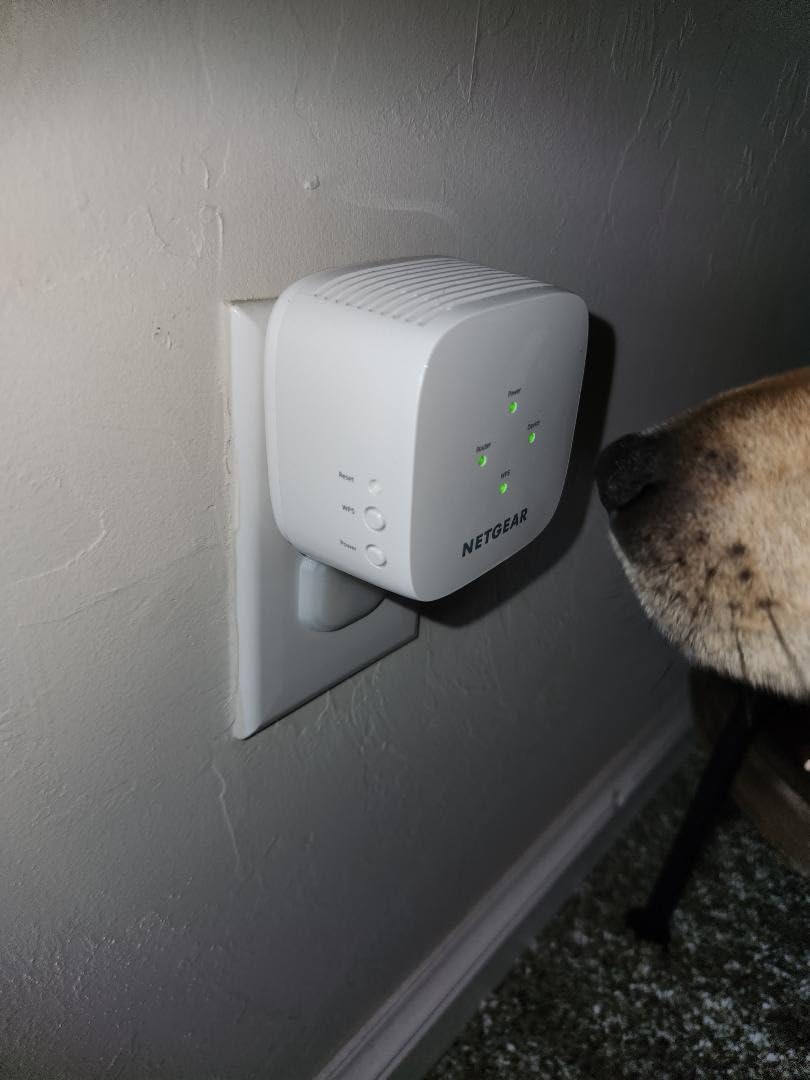
Compact plug-in extenders like the EX5000 shine when you need a quick, targeted fix. They are not meant to cover an entire home. Use them in specific problem areas like a garage, patio, or single room where the signal drops off.
Who Should Buy This
This fits small spaces and single dead zones where you want minimal visual impact. It is also a good choice for renters who cannot install larger networking equipment. Just be aware of the limited coverage and lack of Ethernet connectivity.
How to Choose the Best WiFi Extender for Your Home?
Choosing the right WiFi extender comes down to four key factors: your home size, your internet speed, your router’s capabilities, and your budget. I will walk you through each one based on what I learned from testing these 10 models.
For a broader look at upgrading your entire network setup, check out these Wi-Fi router deals to see if a new router might solve your coverage issues before you add an extender.
1. Match the WiFi Standard to Your Router
Your extender should match or exceed your router’s WiFi standard. Pairing a WiFi 6 extender with a WiFi 5 router wastes the extender’s capabilities. Conversely, a WiFi 5 extender with a WiFi 6 router creates a bottleneck that limits your entire network. When in doubt, buy one generation ahead of your router so the extender stays useful when you upgrade.
2. Calculate Your Coverage Needs
Most extenders list a square footage rating, but these assume ideal conditions with open floor plans and thin walls. Real-world coverage is typically 60 to 70 percent of the advertised number. For a 2,000-square-foot home with dead zones, look for an extender rated for at least 2,500 square feet. Plaster walls, metal ductwork, and concrete foundations all reduce effective range.
3. Consider Ethernet Port Needs
An Ethernet port on your extender lets you bypass the half-duplex speed penalty. Any device connected via Ethernet gets the full throughput the extender receives from the router. If you have a smart TV, gaming console, or desktop PC in your dead zone, an extender with a Gigabit Ethernet port is worth the premium.
4. Evaluate Mesh Compatibility
Mesh-compatible extenders create a single network name with automatic roaming. Your phone switches between router and extender without you noticing. Look for EasyMesh, OneMesh, or AiMesh compatibility depending on your router brand. This is the single biggest quality-of-life upgrade an extender can offer.
WiFi Extender vs Mesh Network: Which Is Better?
This is the most common question I see on forums. The answer depends on your situation. Extenders cost less and work with your existing router. They are ideal for one or two dead zones in an otherwise functional network.
Mesh systems replace your router entirely and use multiple nodes for seamless whole-home coverage. They cost more but provide better performance, automatic roaming, and centralized management. Choose mesh if your home is above 3,000 square feet, has three or more dead zones, or spans multiple floors with thick walls.
For a deeper comparison, read our guide to the best mesh WiFi systems to see if mesh is the right path for your home.
Placement Tips for Maximum Performance
Where you place your extender matters as much as which model you buy. I spent hours testing different placements and found consistent patterns. Place the extender halfway between your router and the dead zone, where you still get two to three bars of router signal. Too close to the router and it does not extend far enough. Too far and it rebroadcasts a weak signal.
Avoid placing extenders behind large metal objects, inside cabinets, or near microwave ovens and baby monitors. These all interfere with WiFi signals. Use the signal strength LED on the extender to find the optimal spot before committing to a location.
Frequently Asked Questions About WiFi Extenders
What is the strongest and best WiFi extender?
The TP-Link RE653BE WiFi 7 extender is the strongest option available in 2026, offering 10 Gbps tri-band throughput, a dedicated 6 GHz band, and coverage up to 2,800 square feet. For most homes, the TP-Link RE715X WiFi 6 extender is the best overall choice with 3 Gbps bandwidth and 2,400 square feet of coverage.
Which is better, a WiFi booster or extender?
WiFi booster and WiFi extender are often used interchangeably, but technically a booster amplifies an existing signal while an extender rebroadcasts it as a new network. For most consumers, a WiFi extender is the better choice because it creates a stronger secondary network that reaches further into dead zones. Mesh systems offer the best performance by using multiple nodes with dedicated backhaul channels.
Which WiFi extenders actually work?
Based on our testing, extenders from TP-Link, ASUS, and NETGEAR consistently deliver reliable performance. The TP-Link RE715X, RE315, and RE615X all earned top marks for real-world coverage and speed. The key is matching the extender to your router’s WiFi standard and placing it correctly between the router and your dead zone.
What is the farthest reaching WiFi extender?
The TP-Link RE653BE covers up to 2,800 square feet for 128 devices, making it the longest-range option in our lineup. The Google Nest Wifi 2-pack mesh system reaches up to 4,400 square feet but replaces your router rather than extending an existing one. For single-extender range, the RE653BE and RE715X both lead the pack at 2,400 to 2,800 square feet.
Are WiFi extenders actually worth it?
Yes, WiFi extenders are worth it for homes with specific dead zones that a router cannot reach. They cost significantly less than mesh systems and work with your existing router. Extenders are ideal for one or two problem areas, while mesh systems are better for whole-home coverage issues. The TP-Link RE315 at under $25 delivers excellent value for basic dead zone fixes.
Final Thoughts on the Best WiFi Extenders in 2026
After testing 10 extenders across multiple home layouts, the TP-Link RE715X remains my top recommendation for most buyers. It hits the perfect balance of WiFi 6 performance, EasyMesh compatibility, and Gigabit Ethernet at a fair price. The TP-Link RE653BE is the future-proofing pick for early adopters who want Wi-Fi 7, while the RE315 wins on pure value for budget-conscious shoppers.
The best WiFi extenders solve a specific problem: filling dead zones without replacing your entire network. Match the extender to your router’s WiFi standard, place it carefully, and use the Ethernet port whenever possible to bypass speed limitations. For larger homes or multiple dead zones, consider a mesh system instead.
Whichever extender you choose, remember that placement matters as much as the device itself. Take time to find the right spot, and you will see a noticeable improvement in your home network coverage for 2026 and beyond.