
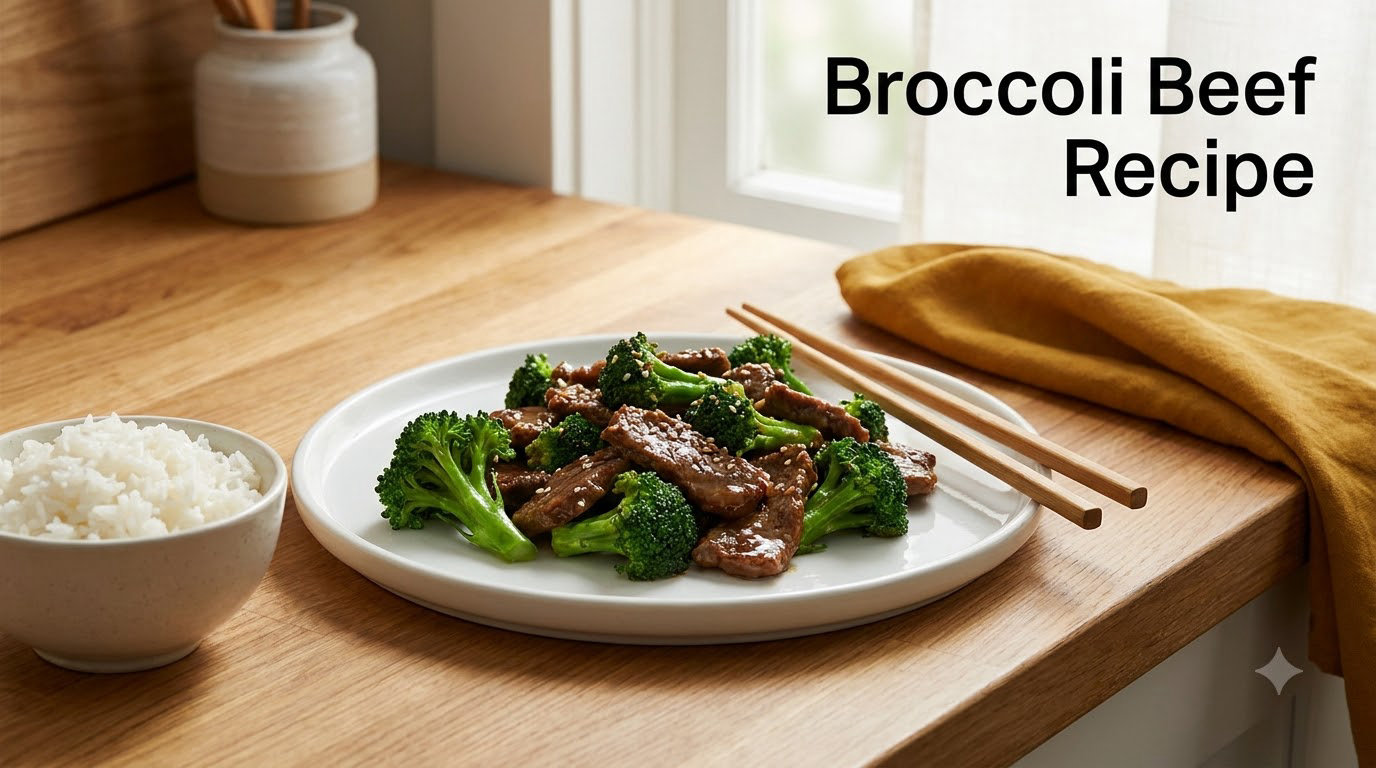
If you have ever craved Chinese takeout on a Tuesday night but wanted something fresher, healthier, and faster than delivery, this broccoli beef recipe is the answer. It is a classic Chinese-American stir-fry featuring tender slices of beef and crisp-tender broccoli coated in a savory, slightly sweet sauce — all done in one pan and ready in about 30 minutes.
I have tested this recipe more times than I can count, tweaking the marinade, adjusting the sauce ratios, and refining the cooking technique until it consistently beats anything from a takeout box. The result is a family-friendly, protein-packed dinner that even vegetable-averse kids ask for again.
This guide covers everything you need: the best cut of beef to use, the velveting technique that guarantees tender meat every time, a detailed ingredient breakdown with substitution options, step-by-step instructions, common mistakes to avoid, storage and reheating tips, and answers to the most frequently asked questions. For more easy recipes you can explore, this one belongs in your weekly rotation.
Table of Contents
Why This Broccoli Beef Recipe Works?
This broccoli beef recipe works because it combines three restaurant secrets that most home cooks skip: velveting the beef, cooking in batches, and building the sauce separately. Each technique addresses a specific problem that ruins homemade stir-fry.
Velveting — a brief marinade in cornstarch, soy sauce, and a little oil — coats the meat in a protective layer that locks in moisture during high-heat cooking. This is the single biggest difference between tough, chewy beef and the melt-in-your-mouth texture you get at a restaurant.
Cooking the beef and broccoli separately ensures neither ingredient overcooks while the other finishes. The beef gets a proper sear, and the broccoli stays bright green and crisp-tender instead of turning mushy.
Building the sauce in the same pan after the proteins come out means you capture every bit of fond — those caramelized bits stuck to the bottom — for deeper flavor. The cornstarch slurry added at the end creates that glossy, clingy coating that makes the dish look and taste professional.
If you want a similar stir-fry with a different protein, try our chicken and green beans stir fry — it uses the same technique with equally satisfying results.
Ingredients for Broccoli Beef Recipe
The Beef
Use 1 pound of flank steak for the best balance of flavor, tenderness, and price. Flank steak has a pronounced grain that makes slicing easy once you know what to look for. Sirloin works as a backup, and flat iron steak is excellent if you can find it.
Freeze the steak for 30 to 45 minutes before slicing. Firming up the meat this way makes it dramatically easier to cut thin, even slices — and thin slices are the foundation of tender stir-fry beef.
The Marinade (Velveting Mixture)
You will need 2 tablespoons soy sauce (use low-sodium to avoid an overly salty finished dish), 1 tablespoon cornstarch, 1 tablespoon vegetable oil, and 1 teaspoon sesame oil. The cornstarch is the active tenderizing agent, while the oils prevent the slices from sticking together in the pan.
Some cooks add a pinch of baking soda to the marinade. This raises the pH of the meat surface, which physically prevents the proteins from tightening and squeezing out moisture during cooking. Use no more than 1/4 teaspoon — too much leaves a soapy taste.
The Stir-Fry Sauce
The sauce is what makes this broccoli beef recipe taste like the takeout version — only better. Combine the following in a small bowl before you start cooking:
1/3 cup low-sodium soy sauce, 2 tablespoons oyster sauce, 2 tablespoons brown sugar, 1 tablespoon rice vinegar (or substitute dry sherry), 1 teaspoon toasted sesame oil, 1/2 teaspoon freshly ground black pepper, and 1 cup beef broth or water.
Oyster sauce is the ingredient most people are missing. It adds a deep, savory umami that soy sauce alone cannot provide. If you cannot find it or have an allergy, see the substitution section below.
If you prefer a natural sweetener, you could experiment with whipped honey as a natural sweetener in place of the brown sugar.
The Aromatics
3 cloves garlic, minced; 1 tablespoon fresh ginger, grated or finely minced; and 2 to 3 green onions, sliced thin and separated into white and green parts. Fresh aromatics are non-negotiable here — dried ginger and garlic powder will not give you the same punch.
The Broccoli
Use 1 large head of fresh broccoli (about 1 pound), cut into bite-sized florets. Fresh broccoli holds its texture far better than frozen, which releases too much water and turns mushy almost instantly in a hot pan.
The Thickening Agent
Mix 2 tablespoons cornstarch with 2 tablespoons cold water to create a slurry. This is added at the very end of cooking to thicken the sauce into that glossy, clingy consistency. Add it slowly and stir constantly to avoid lumps.
Cooking Oil
Use 2 to 3 tablespoons of a high-smoke-point oil like avocado, peanut, or canola oil. Olive oil has too low a smoke point for proper stir-frying and will burn before the beef sears.
Equipment You Need
A wok is the traditional choice and the best tool for stir-frying because its shape allows you to push cooked ingredients up the sides while you sear the next batch. The high walls also contain splatter. If you cook stir-fry regularly, a carbon steel wok is worth the investment.
A large cast-iron or stainless steel skillet works nearly as well. The key is using the largest pan you have so the ingredients have room to sear rather than steam. Overcrowding is the enemy of a good stir-fry.
You will also need a sharp chef’s knife and cutting board for slicing the beef, a small bowl for the sauce, a bowl for the cornstarch slurry, tongs or a wooden spatula for stirring, and a plate for holding cooked beef between batches.
One piece of equipment worth mentioning: a fine-mesh strainer. If your sauce does develop lumps from the cornstarch, straining it before adding to the pan saves the dish.
How to Make Broccoli Beef Recipe (Step-by-Step)?
Step 1: Prep and Marinate the Beef
Place the flank steak in the freezer for 30 to 45 minutes until firm but not frozen solid. This makes thin slicing much easier.
Using a sharp knife, slice the steak across the grain into strips about 1/4 inch thick. Slicing across the grain shortens the muscle fibers, which is what makes each bite tender.
Place the slices in a bowl and add the soy sauce, cornstarch, vegetable oil, sesame oil, and baking soda if using. Toss with your hands or tongs until every piece is coated. Let it sit at room temperature for 15 to 20 minutes while you prep everything else.
Step 2: Prepare the Sauce
In a small bowl, whisk together the soy sauce, oyster sauce, brown sugar, rice vinegar, sesame oil, black pepper, and beef broth. Set aside. In a separate small bowl, mix the cornstarch and cold water for the slurry and set aside.
Having both mixtures ready before you start cooking is essential. Stir-frying moves fast — once the pan is hot you will not have time to measure ingredients.
Step 3: Blanch the Broccoli
Bring a large pot of salted water to a boil. Add the broccoli florets and cook for 1 to 2 minutes until bright green and barely tender. Drain immediately and rinse with cold water to stop the cooking.
This step is optional but recommended. Blanching gives the broccoli a head start so it finishes cooking evenly with the beef without turning mushy. If you skip it, steam the broccoli in the pan with a splash of water before adding it back at the end.
Step 4: Sear the Beef
Heat your wok or skillet over high heat until it is smoking lightly. Add 1 tablespoon of oil and swirl to coat. Add half the beef in a single layer — do not overcrowd the pan.
Let it sear undisturbed for about 60 seconds to develop a brown crust, then stir and cook another 1 to 2 minutes until just cooked through. Transfer to a plate and repeat with the remaining beef.
Step 5: Cook the Aromatics
With the pan still over high heat, add another tablespoon of oil. Add the garlic, ginger, and white parts of the green onions. Stir constantly for 15 to 30 seconds until fragrant — they burn quickly, so keep them moving.
Step 6: Build the Sauce
Pour the sauce mixture into the pan and bring it to a simmer, scraping up any browned bits from the bottom of the pan. Give the cornstarch slurry a quick stir (it settles as it sits) and slowly pour it into the simmering sauce while whisking constantly.
Cook for 1 to 2 minutes until the sauce thickens to a glossy consistency that coats the back of a spoon. If it gets too thick, add a splash of broth or water to loosen it.
Step 7: Combine Everything
Add the cooked beef and blanched broccoli back to the pan. Toss everything together for 30 to 60 seconds until the beef and broccoli are evenly coated in sauce and heated through.
Taste and adjust the seasoning. If the sauce is too salty, add a splash of water or a pinch more sugar. If it is too sweet, add a dash of soy sauce or vinegar.
Step 8: Serve
Transfer to a serving dish and top with the green parts of the scallions and a sprinkle of toasted sesame seeds. Serve immediately over steamed rice or noodles.
The Velveting Technique Explained
Velveting is a Chinese cooking technique where meat is coated in a mixture of cornstarch, liquid, and sometimes egg white or oil before cooking. The coating creates a barrier that protects the meat from the intense heat of the wok, locking in moisture and producing that signature silky, tender texture.
Think of it as a thin glove around each slice of beef. Without it, the high heat causes the protein fibers to contract rapidly, squeezing out moisture and leaving the meat tough and dry. The cornstarch coating slows that process down.
There are two main approaches to velveting. The dry method — what this recipe uses — simply mixes cornstarch and seasonings with the meat and lets it sit. The wet method involves briefly poaching the coated meat in oil or water before stir-frying, which restaurants use for an even more luxurious texture.
For home cooking, the dry method is more than enough. Just 15 to 20 minutes of marinating time makes a difference you can feel and taste. The baking soda trick, mentioned earlier, takes it one step further by gently altering the meat’s surface chemistry.
Common Mistakes to Avoid
After reading through hundreds of forum threads and reader questions, the same problems come up over and over. Here are the mistakes that ruin broccoli beef — and how to fix them.
Tough, chewy beef. This almost always comes down to slicing with the grain instead of across it, or skipping the velveting step. Look for the direction of the muscle fibers and cut perpendicular to them.
Mushy broccoli. Overcrowding the pan causes the broccoli to steam instead of stir-fry. Cook in batches, and do not skip the blanching-and-shocking step if you want that crisp-tender texture.
Sauce that will not thicken. The cornstarch slurry needs to be added to a simmering liquid while you stir constantly. If the sauce is cold when you add it, or if you add the cornstarch directly without mixing it with water first, you will get lumps.
Sauce that is too salty. Always use low-sodium soy sauce. Regular soy sauce combined with oyster sauce pushes the sodium level past the point of no return. You can always add salt at the end if needed.
Burned garlic and ginger. Aromatics burn in seconds at high heat. Add them after the oil is hot but before the liquid sauce, and keep them moving with your spatula.
Overcooking the beef. The beef continues to cook when you add it back to the hot sauce, so pull it from the pan when it is just barely done. It should still be slightly pink in the center when you transfer it to the plate.
Variations and Substitutions
This broccoli beef recipe is endlessly adaptable. Here are the most useful variations for dietary restrictions and pantry limitations.
Gluten-free: Replace the soy sauce with tamari or coconut aminos. Check that your oyster sauce is gluten-free, or use a gluten-free hoisin sauce instead.
No oyster sauce: Substitute with an equal amount of hoisin sauce, or use a mixture of 1 tablespoon mushroom soy sauce and 1 tablespoon fish sauce. The flavor will be slightly different but still rich and savory.
Lower carb: Replace the brown sugar with a sugar substitute like monk fruit sweetener. Serve over cauliflower rice instead of steamed white rice.
Extra vegetables: Add sliced carrots, water chestnuts, snap peas, mushrooms, or bell peppers. Add harder vegetables with the broccoli and softer ones at the end.
Different protein: Swap the beef for chicken thighs, shrimp, or tofu. The technique stays the same — just adjust cooking times accordingly. For a complete meal plan, this fits well into a family meal planning guide.
Spicy version: Add 1 to 2 teaspoons of chili garlic sauce, sriracha, or red pepper flakes to the sauce mixture. A spoonful of chili oil at the end adds both heat and richness.
Storage and Reheating Tips
Store leftover broccoli beef in an airtight container in the refrigerator for up to 3 days. The flavors actually deepen overnight, which makes this a great meal-prep recipe.
To reheat, use a skillet over medium heat with a splash of water or broth to loosen the sauce. Microwave reheating works in a pinch, but the beef can toughen and the broccoli can overcook. Cover the dish and heat in 30-second intervals, stirring between each.
Freezing is possible but not ideal. The beef freezes well, but the broccoli loses its texture and becomes soft after thawing. If you want to freeze, consider freezing just the beef and sauce, then adding fresh broccoli when you reheat.
For meal prep, store the beef and broccoli separately from the rice. This keeps everything tasting fresh and prevents the rice from absorbing all the sauce.
Serving Suggestions
Serve this broccoli beef recipe over steamed jasmine or basmati rice for the classic takeout experience. Lo mein noodles or rice noodles are also excellent bases that soak up the sauce beautifully.
For a more substantial spread, pair it with a creamy mac and cheese side dish for a fusion meal, or keep it traditional with egg rolls, hot and sour soup, or a simple cucumber salad.
A light lager or a dry riesling pairs well with the savory-sweet flavors of the dish. If you prefer non-alcoholic options, jasmine tea or sparkling water with lime cleanses the palate between bites.
Frequently Asked Questions
What is the secret to good beef and broccoli?
The secret is velveting the beef — marinating thin slices in cornstarch, soy sauce, and oil for 15 to 20 minutes before cooking. This creates a protective coating that locks in moisture and produces the tender, silky texture found in restaurant versions. Slicing across the grain and cooking the beef and broccoli separately are also essential.
What is the sauce for broccoli beef made of?
The sauce is made of low-sodium soy sauce, oyster sauce, brown sugar, rice vinegar, sesame oil, black pepper, and beef broth, thickened with a cornstarch slurry. Garlic, ginger, and green onions are added as aromatics for depth of flavor.
What are the common mistakes when making beef broccoli?
The most common mistakes are slicing with the grain instead of across it (causing tough beef), skipping the velveting step, overcrowding the pan (causing mushy broccoli), using regular instead of low-sodium soy sauce (making it too salty), adding cornstarch directly instead of as a slurry (causing lumps), and overcooking the beef before combining.
What is a good marinade for beef and broccoli?
A simple marinade of 2 tablespoons soy sauce, 1 tablespoon cornstarch, 1 tablespoon vegetable oil, and 1 teaspoon sesame oil works best. The cornstarch is the key tenderizing agent, while the oils prevent sticking. Adding a pinch of baking soda (no more than 1/4 teaspoon) further tenderizes the meat by raising its surface pH.
What are some common mistakes to avoid when cooking broccoli?
Common broccoli mistakes include overcooking until mushy, overcrowding the pan so it steams instead of stir-fries, skipping the blanch-and-shock step that preserves crisp-tender texture, and using frozen broccoli which releases excess water. Blanch florets for 1 to 2 minutes, then rinse with cold water immediately to stop the cooking.
What is the thickening agent for beef and broccoli?
The thickening agent is a cornstarch slurry made by mixing 2 tablespoons cornstarch with 2 tablespoons cold water. It is added to the simmering sauce while whisking constantly. The sauce thickens within 1 to 2 minutes as the cornstarch activates at boiling temperature. Tapioca flour or arrowroot powder can be used as alternatives.
Can I make beef and broccoli ahead of time?
Yes, you can prep components ahead. Marinate the beef and store it in the fridge for up to 24 hours. Mix the sauce and store separately. Blanch the broccoli and keep it chilled. When ready to serve, the actual cooking takes about 10 minutes. Fully cooked leftovers keep in the refrigerator for up to 3 days.
Conclusion
This broccoli beef recipe delivers everything you want from Chinese takeout — tender beef, crisp-tender broccoli, and a glossy sauce — in about 30 minutes and one pan. The combination of velveting, batch cooking, and a properly built sauce is what separates this from recipes that turn out tough and bland.
Once you master the technique, you can adapt it to whatever protein and vegetables you have on hand. Start with the classic version here, then experiment with the variations to make it your own. The recipe scales easily for meal prep, and the leftovers reheat beautifully.
Give it a try this week — I think you will find it earns a permanent spot in your dinner rotation. To discover more dishes like this one, explore more recipes on the site.