
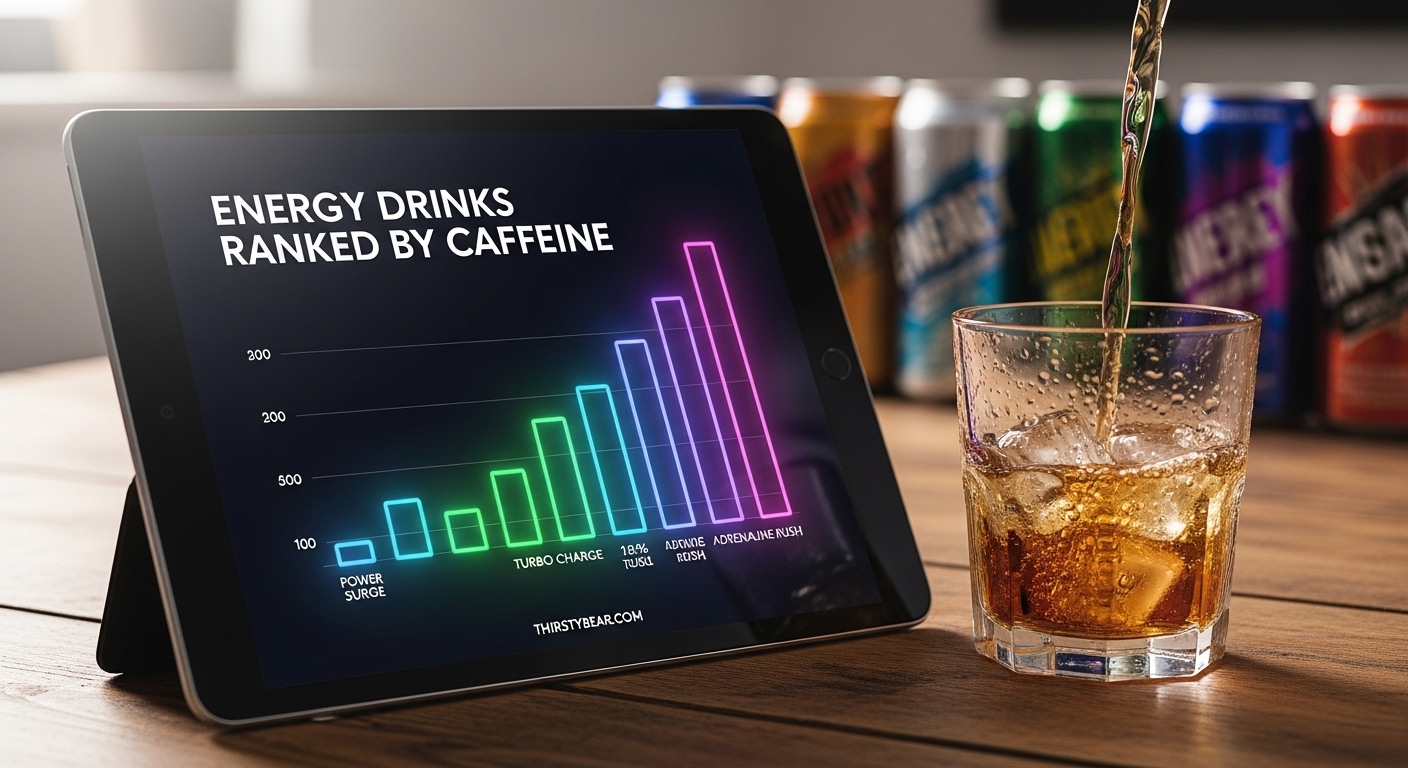
Energy drinks ranked by caffeine content reveal a surprising range that most consumers never consider. One can might contain 80mg while another packs over 300mg into the same serving size. That is nearly a 4x difference between brands.
I spent weeks comparing labels, checking manufacturer data, and cross-referencing third-party testing results to build this complete ranking. Whether you are looking for a gentle morning boost or need to power through an all-night gaming session, understanding these caffeine levels helps you make smarter choices.
The FDA recommends limiting caffeine intake to 400mg per day for healthy adults. With some energy drinks containing 300mg in a single can, you could hit that limit faster than expected. This guide breaks down exactly what you are drinking, mg by mg. If you enjoyed our Red Bull flavors ranking, you will find this caffeine comparison just as eye-opening.
Table of Contents
Quick Overview: Energy Drinks Ranked by Caffeine
This table shows the most popular energy drinks arranged from lowest to highest caffeine content. All amounts are for standard single-serving cans unless noted otherwise.
| Brand | Serving Size | Caffeine (mg) | Sugar (g) |
|---|---|---|---|
| Red Bull | 8.4 oz | 80mg | 27g |
| Rockstar Unplugged | 12 oz | 80mg | 0g |
| V8 Energy | 8 oz | 80mg | 10g |
| Essential Amino Energy | 12 oz | 100mg | 0g |
| Celsius BCAA | 12 oz | 100mg | 0g |
| Uptime | 12 oz | 142mg | 0g |
| Monster Hydro | 20 oz | 150mg | 0g |
| Juice Monster | 16 oz | 160mg | 46g |
| Monster Ultra | 16 oz | 150mg | 0g |
| Monster Energy | 16 oz | 160mg | 54g |
| Rockstar | 16 oz | 160mg | 63g |
| NOS | 16 oz | 160mg | 54g |
| Full Throttle | 16 oz | 160mg | 55g |
| Starbucks Baya Energy | 12 oz | 170mg | 22g |
| Celsius | 12 oz | 200mg | 0g |
| C4 Energy | 16 oz | 200mg | 0g |
| Alani Nu Energy | 12 oz | 200mg | 0g |
| Gatorade Fast Twitch | 12 oz | 200mg | 0g |
| Java Monster | 15 oz | 200mg | 35g |
| Prime Energy | 12 oz | 200mg | 0g |
| Ghost Energy | 16 oz | 200mg | 0g |
| 5-Hour Energy | 1.93 oz | 200mg | 0g |
| Rockstar Punched | 16 oz | 240mg | 63g |
| Cocain Energy Drink | 8.4 oz | 280mg | 0g |
| Celsius Heat | 12 oz | 300mg | 0g |
| Bang Energy | 16 oz | 300mg | 0g |
| Rockstar Xdurance | 16 oz | 300mg | 0g |
| G Fuel Energy | 16 oz | 300mg | 0g |
Notice how serving sizes vary significantly. An 8.4oz Red Bull and 16oz Monster Energy both deliver different caffeine totals despite being single cans. Always check both the milligram amount and the volume before drinking.
Low Caffeine Energy Drinks (80-100mg)
These options work best for caffeine-sensitive individuals, first-time energy drink users, or anyone who wants a mild boost without jitters. The 80-100mg range roughly equals one small cup of coffee.
Red Bull (80mg per 8.4oz can)
The original energy drink contains 80mg of caffeine in its iconic slim can. That is about the same as a standard home-brewed cup of coffee. Red Bull also packs 27g of sugar, which contributes to the energy boost but can lead to a crash later.
Red Bull uses synthetic caffeine combined with taurine and B vitamins. Many users report the effects feel smoother than higher-caffeine alternatives, making it a popular choice for afternoon focus sessions.
Rockstar Unplugged (80mg per 12oz can)
Rockstar Unplugged targets those who want the brand’s flavor profile with less stimulation. At 80mg, it contains half the caffeine of a regular Rockstar. The zero-sugar formula uses stevia and erythritol for sweetness.
This option suits evening social situations where you want an energy drink taste without affecting sleep later. The larger 12oz serving means more hydration alongside your caffeine.
V8 Energy (80mg per 8oz can)
V8 takes a different approach by deriving caffeine from green tea rather than synthetic sources. Each 8oz can delivers 80mg alongside vegetable and fruit juices. The 10g of sugar comes from natural juice concentrates rather than added sugars.
Users often describe the effect as cleaner and less jittery than synthetic caffeine products. The smaller serving size makes portion control easy.
Essential Amino Energy (100mg per 12oz can)
Optimum Nutrition’s energy drink combines 100mg of caffeine with 5g of amino acids. The formula targets fitness enthusiasts who want pre-workout benefits without overwhelming stimulation. It is sugar-free and contains only 5 calories.
The amino acid blend includes beta-alanine and citrulline, which may support exercise performance. This makes it ideal for morning gym sessions.
Celsius BCAA (100mg per 12oz can)
Celsius offers several product lines with different caffeine levels. Their BCAA version contains 100mg alongside branched-chain amino acids. Like other Celsius products, it is sugar-free and uses natural caffeine from green tea and guarana.
The lighter caffeine load combined with exercise-focused ingredients makes this a smart choice for cardio sessions where you want sustained energy without heart rate spikes.
Moderate Caffeine Energy Drinks (140-170mg)
This middle range hits the sweet spot for most regular energy drink consumers. These options provide noticeable energy boosts while typically staying within safe single-serving limits. Most people can drink one of these and still have room for a morning coffee under the 400mg daily limit.
Uptime (142mg per 12oz bottle)
Uptime positions itself as a premium option with a clean label and glass bottle packaging. The 142mg caffeine comes from natural green tea extract. It is completely sugar-free and contains only 5 calories.
The bottle format makes it feel more like a premium beverage than a canned energy drink. Users report sustained energy without the sharp peaks and crashes associated with higher-sugar options.
Monster Hydro (150mg per 20oz bottle)
Monster Hydro delivers 150mg in a larger 20oz serving, making it one of the more diluted energy drinks on the market. It is non-carbonated and sugar-free, marketed as a hydration-focused energy beverage.
The lower caffeine concentration per ounce means you can sip it over time without getting overwhelmed. It works well for all-day events like gaming tournaments or long drives.
Monster Ultra Line (150mg per 16oz can)
Monster’s Ultra series includes multiple flavors, all containing 150mg of caffeine and zero sugar. The white can (Ultra White) remains the most popular, but the line has expanded to include blue, red, gold, and other varieties.
At 150mg, these sit slightly below the original Monster Energy line. The sugar-free formula reduces crash risk while maintaining the full Monster can experience.
Juice Monster (160mg per 16oz can)
Juice Monster blends traditional energy drink ingredients with real fruit juice. The 160mg caffeine content matches the original Monster line, but the juice adds natural sugars and flavors.
With 46g of sugar per can, this option delivers a significant carbohydrate load alongside the caffeine. It works well for athletes needing both energy and glycogen replenishment.
Monster Energy Original (160mg per 16oz can)
The classic green Monster can contains 160mg of caffeine and 54g of sugar. This formula defined the category for years and remains one of the best-selling energy drinks worldwide.
The 160mg level provides a strong boost without approaching dangerous territory. However, the high sugar content means the crash can feel more pronounced than sugar-free alternatives.
Rockstar (160mg per 16oz can)
Rockstar matches Monster with 160mg of caffeine but pushes higher on sugar at 63g per can. The brand offers multiple flavor variations, most following the same caffeine template.
The higher sugar load creates a more immediate energy surge, which some users prefer. Others find the subsequent crash too severe for regular consumption.
NOS (160mg per 16oz can)
NOS shares the 160mg standard for major brands but distinguishes itself with a higher 54g sugar content and unique automotive-themed branding. The name references nitrous oxide systems, suggesting speed and power.
The formula includes taurine, B vitamins, and L-carnitine alongside caffeine. These additional ingredients may enhance the energizing effects beyond pure caffeine alone.
Full Throttle (160mg per 16oz can)
Coca-Cola’s Full Throttle contains 160mg of caffeine and 55g of sugar. The brand targets a more mainstream audience than gaming or extreme sports focused competitors.
The flavor profile tends sweeter than Monster or Rockstar, appealing to those who want an energy boost without the medicinal taste some competitors carry.
Mountain Dew Amp (160mg per 16oz can)
Amp combines Mountain Dew’s citrus flavor with 160mg of caffeine. It contains 58g of sugar, among the highest in this category. The familiar soda branding appeals to younger consumers transitioning from soft drinks to energy drinks.
Rehab Monster (160mg per 15.5oz can)
Monster’s Rehab line offers tea-based energy drinks with 160mg of caffeine. These are non-carbonated and contain only 6g of sugar, significantly less than the original formula. The tea base creates a different flavor profile that many find more refreshing.
Rockstar Recovery (160mg per 16oz can)
Similar to Monster Rehab, Rockstar Recovery targets the hydration and recovery market with 160mg of caffeine and only 6g of sugar. The lighter formula works well for post-workout consumption when you want energy without heavy sweetness.
Starbucks Baya Energy (170mg per 12oz can)
Starbucks entered the energy drink market with Baya, containing 170mg of caffeine derived from coffee fruit extract. At 22g of sugar, it sits between sugar-free options and traditional energy drinks.
The coffee fruit extract provides a different caffeine source than synthetic alternatives. Some users report a smoother onset and offset compared to traditional energy drinks.
High Caffeine Energy Drinks (200mg)
The 200mg mark represents a significant jump in stimulation. At this level, one drink equals half the FDA’s recommended daily limit for healthy adults. These options suit people with high caffeine tolerance, those needing serious focus for demanding tasks, or anyone splitting their daily caffeine across fewer servings.
Celsius (200mg per 12oz can)
Celsius became a phenomenon through fitness community recommendations. Each can delivers 200mg of natural caffeine from green tea and guarana extracts. It is completely sugar-free and contains no artificial preservatives or flavors.
The brand claims thermogenic properties that increase calorie burning, though individual results vary. The 200mg level provides substantial energy without requiring multiple cans.
C4 Energy (200mg per 16oz can)
Cellucor brought their pre-workout expertise to the ready-to-drink market with C4 Energy. The 200mg caffeine comes alongside CarnoSyn beta-alanine and citrulline for pumps and performance.
This drink blurs the line between energy drinks and pre-workouts. The tingling sensation from beta-alanine lets you know it is working, which some users love and others find distracting.
Alani Nu Energy (200mg per 12oz can)
Alani Nu targets women with bright packaging and 200mg of caffeine per can. The brand emphasizes low calories (10 per can) and zero sugar. Flavors like Hawaiian Shave Ice and Mimosa differentiate it from traditional energy drink profiles.
The 12oz serving delivers the same caffeine as larger competitors, making it more concentrated. This efficiency appeals to those who want maximum effect without drinking large volumes.
Gatorade Fast Twitch (200mg per 12oz can)
Gatorade’s Fast Twitch line represents the sports drink giant’s entry into energy drinks. Each bottle contains 200mg of caffeine alongside electrolytes for hydration.
The formula bridges the gap between traditional sports drinks and energy drinks. Athletes appreciate the familiar Gatorade taste with added caffeine for competition.
Java Monster (200mg per 15oz can)
Java Monster combines coffee and energy drink ingredients for a hybrid experience. The 200mg caffeine comes from coffee rather than synthetic sources, alongside 35g of sugar.
This option appeals to coffee drinkers wanting energy drink convenience. The milk-based formula creates a latte-like experience different from carbonated alternatives.
Prime Energy (200mg per 12oz can)
Prime, founded by social media personalities Logan Paul and KSI, generated massive attention upon launch. Each can contains 200mg of caffeine and zero sugar.
The brand faced scrutiny for marketing to younger audiences given the high caffeine content. For adults, the 200mg level provides serious energy in a compact 12oz format.
Ghost Energy (200mg per 16oz can)
Ghost Lifestyle built a following in fitness communities before expanding to energy drinks. Their 200mg formula includes nootropics like Alpha-GPC and NeuroFactor for cognitive enhancement.
The brand is known for unique flavor collaborations with candy and cereal brands. The 200mg caffeine delivers the expected physical boost while the nootropics target mental focus.
5-Hour Energy (200mg per 1.93oz shot)
5-Hour Energy takes a different approach, packing 200mg into a tiny 1.93oz shot. This makes it by far the most concentrated option on the market. It contains zero sugar and only 4 calories.
The extreme concentration means rapid absorption and effects. Some users report feeling the impact within minutes. However, the intensity can feel overwhelming for caffeine-sensitive individuals.
Extreme Caffeine Energy Drinks (240-350mg)
These are the strongest energy drinks legally available in the United States. At these levels, a single serving approaches the FDA’s daily limit. These products demand respect and careful consumption.
Rockstar Punched (240mg per 16oz can)
Rockstar Punched pushes past the standard 160mg with 240mg of caffeine per can. It also contains 63g of sugar, among the highest sugar loads in the category. The fruit punch flavor masks the intensity, which can lead to overconsumption.
One can equals 60% of the FDA daily limit. Drinking two puts you over the safe threshold. The sugar content compounds the effects, creating both a caffeine and sugar rush followed by a significant crash.
Cocain Energy Drink (280mg per 8.4oz can)
Despite the provocative name, Cocain Energy Drink is a legitimate (if controversial) product. Each 8.4oz can contains 280mg of caffeine, making it one of the most concentrated options available.
The small can size masks the danger. Users might drink it like a Red Bull, unaware it contains 3.5x the caffeine. The sugar-free formula uses artificial sweeteners, which helps avoid sugar crashes but does nothing to mitigate caffeine overload.
Celsius Heat (300mg per 12oz can)
Celsius Heat takes the standard Celsius formula and adds extra caffeine for 300mg per can. It is marketed as a pre-workout energy drink for intense training sessions.
At 300mg, a single can equals 75% of the FDA daily limit. The compact 12oz serving makes it easy to consume quickly, potentially leading to rapid caffeine spikes. Users should approach this as a pre-workout tool, not a casual beverage.
Bang Energy (300mg per 16oz can)
Bang built its brand on extreme caffeine content, originally advertising even higher amounts before reformulating. The current formula contains 300mg alongside creatine and EAAs.
The large 16oz can encourages consumption over time, which helps prevent rapid absorption. However, finishing a whole can still delivers a massive caffeine load. The brand also offers 473ml international versions with adjusted formulas.
Rockstar Xdurance (300mg per 16oz can)
Rockstar Xdurance matches Bang with 300mg of caffeine but distinguishes itself with a BCAA blend for endurance athletes. The sugar-free formula avoids additional carbohydrates.
The endurance-focused marketing suggests sustained energy for long activities. However, at 300mg, the initial stimulation may be too intense for some users to handle comfortably during exercise.
G Fuel (300mg per 16oz can)
G Fuel started as a gaming supplement powder before expanding to ready-to-drink cans. Each 16oz can delivers 300mg of caffeine alongside focus-enhancing ingredients like tyrosine and choline.
The gaming angle suggests use during long streaming or competition sessions. At 300mg, it provides sustained energy but requires tolerance. The brand’s sugar-free formula helps avoid the crashes that would disrupt gaming performance.
How Energy Drinks Compare to Coffee
Many people wonder whether energy drinks or coffee provide better caffeine delivery. The answer depends on your goals and tolerance.
A standard 8oz cup of drip coffee contains approximately 95mg of caffeine. An espresso shot contains about 63mg. This means a Red Bull (80mg) roughly equals a small coffee, while a Bang (300mg) equals more than three cups.
However, the experience differs beyond just caffeine amounts. Energy drinks typically contain additional ingredients that alter the effects:
- Taurine: This amino acid appears in most energy drinks. It may reduce jitteriness and anxiety from caffeine while maintaining alertness. Some studies suggest it protects against caffeine-induced blood pressure spikes.
- Sugar: Most energy drinks contain significant sugar (27-63g), which creates an immediate energy spike followed by a crash. Sugar-free options avoid this but may use artificial sweeteners that some people prefer to avoid.
- B Vitamins: Energy drinks often contain high doses of B6 and B12. While these support energy metabolism, excessive amounts provide no additional benefit and are simply excreted.
- Caffeine Sources: Coffee contains natural caffeine with accompanying compounds that modulate absorption. Energy drinks often use synthetic caffeine, which absorbs faster and may feel more intense.
Forums reveal interesting patterns about these differences. Reddit users frequently report that energy drinks cause more anxiety and jitters than equivalent coffee doses. Others note that coffee provides steadier energy while energy drinks create sharper peaks and crashes.
People with ADHD often report different responses. Some find caffeine calming in ways that help focus. Others experience heightened anxiety from energy drinks specifically, possibly due to the taurine and sugar combinations.
Sugar-Free vs Regular: What You Need to Know
Sugar content varies dramatically across energy drinks. Understanding these differences helps you choose options aligned with your health goals.
The highest sugar options include Rockstar (63g), Rockstar Punched (63g), and Monster Energy (54g). For context, the American Heart Association recommends limiting added sugar to 36g per day for men and 25g for women. A single can of these drinks exceeds daily recommendations.
Sugar-free alternatives use artificial sweeteners like sucralose, ace-K, and stevia. Popular sugar-free options include:
- 80-100mg caffeine (sugar-free): Rockstar Unplugged, Essential Amino Energy, Celsius BCAA, V8 Energy (low sugar from juice)
- 140-200mg caffeine (sugar-free): Monster Ultra line, Uptime, Celsius, C4 Energy, Alani Nu, Ghost Energy, Prime Energy
- 240-300mg caffeine (sugar-free): Celsius Heat, Bang, Rockstar Xdurance, G Fuel, Cocain Energy
Sugar-free options eliminate the blood sugar spikes and subsequent crashes. However, some research suggests artificial sweeteners may affect gut bacteria and glucose tolerance in certain individuals. The research remains inconclusive, but moderation applies to sugar-free options too.
For those seeking the healthiest balance, options like V8 Energy offer naturally occurring sugars in smaller amounts (10g) alongside vegetable and fruit juice benefits. Celsius and Alani Nu provide zero sugar with natural caffeine sources.
Health Considerations and Safety Guidelines
Understanding caffeine safety helps you enjoy energy drinks without negative consequences. The FDA recommends healthy adults limit caffeine intake to 400mg per day. This is not a target but a maximum safe threshold.
Exceeding 400mg regularly can lead to insomnia, anxiety, digestive issues, rapid heartbeat, and dependency. Individual tolerance varies based on genetics, body weight, and habitual consumption. Some people experience side effects at much lower doses.
Certain populations should avoid or strictly limit energy drinks:
- Pregnant women: The American College of Obstetricians and Gynecologists recommends limiting caffeine to 200mg daily during pregnancy. Most energy drinks approach or exceed this in a single serving.
- Children and adolescents: The American Academy of Pediatrics advises against caffeine consumption for children under 12 and suggests limits for teenagers. Energy drinks are not appropriate for younger consumers.
- People with heart conditions: Caffeine raises heart rate and blood pressure. Those with arrhythmias, hypertension, or heart disease should consult doctors before consuming energy drinks.
- Anxiety sufferers: Forum discussions reveal numerous reports of panic attacks triggered by energy drinks. The combination of caffeine, taurine, and sugar can exacerbate anxiety disorders.
Avoiding the Caffeine Crash
The dreaded caffeine crash occurs when stimulant effects wear off, leaving you tired and irritable. Several strategies help minimize this effect:
Never consume energy drinks on an empty stomach. Food slows caffeine absorption and provides sustained energy to offset the crash. Choose options with lower sugar content to avoid the double crash from both caffeine decline and blood sugar drops.
Stay hydrated throughout the day. Dehydration amplifies fatigue and makes crashes feel worse. Some users report that spreading consumption over 30-60 minutes rather than chugging reduces the severity of the eventual decline.
Consider L-theanine supplements or green tea-based energy drinks. The L-theanine in tea modulates caffeine’s effects, creating smoother energy curves with less crash potential.
Signs You Have Had Too Much
Recognizing caffeine overdose symptoms helps you respond appropriately. Mild overdose signs include restlessness, anxiety, rapid heartbeat, and insomnia. Moderate overdose brings nausea, headaches, and tremors.
Severe overdose requires immediate medical attention. Symptoms include vomiting, chest pain, confusion, and seizures. Documented cases of caffeine toxicity have occurred with doses exceeding 1,200mg in short periods.
If you experience concerning symptoms after consuming energy drinks, stop consumption immediately, hydrate with water, and seek medical help if symptoms worsen. Do not attempt to “sleep it off” if your heart rate feels dangerously elevated.
Frequently Asked Questions
Which energy drink has the most caffeine?
Bang Energy, Celsius Heat, Rockstar Xdurance, and G Fuel all contain 300mg of caffeine per serving, making them the strongest widely available energy drinks. Cocain Energy Drink contains 280mg in a smaller 8.4oz can, making it the most concentrated. These amounts approach 75% of the FDA’s recommended 400mg daily limit for healthy adults.
Is 300mg of caffeine a lot?
Yes, 300mg represents a significant caffeine dose. It equals approximately 75% of the FDA’s recommended daily maximum of 400mg for healthy adults. For context, 300mg equals about three cups of brewed coffee consumed at once. People with lower body weight, caffeine sensitivity, or those unaccustomed to high caffeine should approach 300mg drinks with caution.
How much caffeine is too much?
The FDA recommends healthy adults limit caffeine to 400mg per day. Consuming more than this regularly increases risks of insomnia, anxiety, rapid heartbeat, and digestive issues. Single doses exceeding 200mg may cause jitters in caffeine-sensitive individuals. The European Food Safety Authority suggests spreading caffeine consumption throughout rather than taking large single doses.
What are the top 5 strongest energy drinks?
The five strongest widely available energy drinks are: 1) Bang Energy (300mg), 2) Celsius Heat (300mg), 3) Rockstar Xdurance (300mg), 4) G Fuel (300mg), and 5) Cocain Energy Drink (280mg). Rockstar Punched follows closely at 240mg. All these options approach or exceed half the FDA daily limit in a single serving.
Final Thoughts
Energy drinks ranked by caffeine content span an enormous range, from 80mg gentle boosts to 300mg extreme stimulation. Understanding these differences empowers you to choose options matching your tolerance and needs.
Remember that serving sizes vary significantly. Always check both the milligram amount and the can size before consuming. The FDA’s 400mg daily limit exists for good reason, and the strongest drinks approach that threshold in a single serving.
For daily consumption, most people do best with the 100-160mg range. Reserve the 200mg+ options for occasional use when you genuinely need maximum focus. And always read labels, formulas change and caffeine content can be adjusted without major announcement.
If you are looking for healthier hydration options without caffeine, check out our guide to the best purified bottled water brands. Stay informed, stay safe, and enjoy your energy drinks responsibly.