
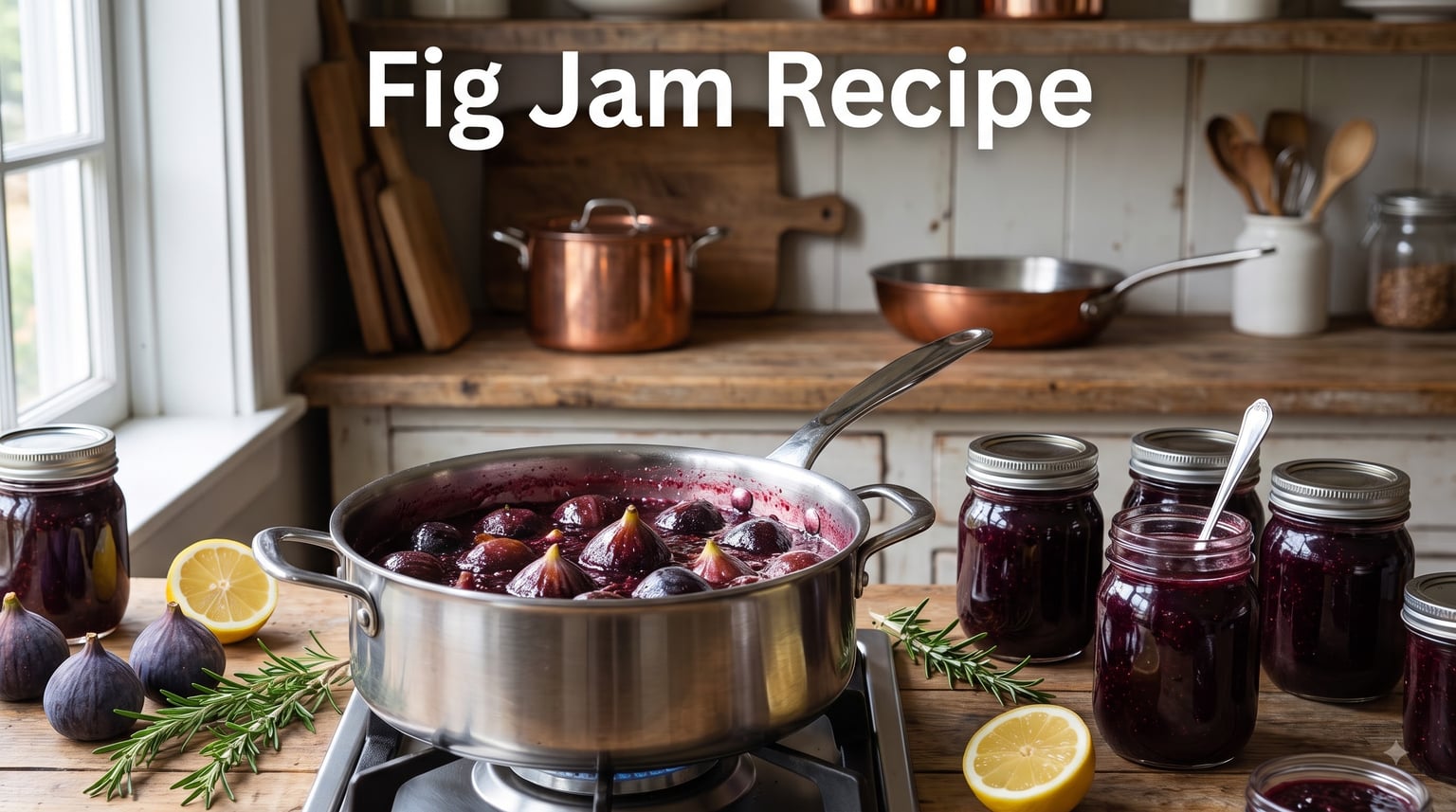
Every August, my neighbor drops off a paper bag bursting with fresh figs from her backyard tree. For years, I would eat a few, share the rest, and watch the surplus go soft on the counter. That changed the summer I learned to make fig jam. This simple fig jam recipe takes about 45 minutes of hands-on time, uses four ingredients you probably already have, and requires no pectin, no canning equipment, and no special skills.
Homemade fig jam is nothing like the overly sweet, slightly metallic stuff on supermarket shelves. It tastes like concentrated late summer: honeyed, floral, and just tart enough to keep things interesting. Spread it on toast with butter, spoon it over a wedge of brie, or swirl it into yogurt. Once you taste the real thing, you will not go back to store-bought.
People often confuse fig jam with fig preserves. Jam is cooked until the fruit breaks down into a smooth, spreadable puree. Preserves leave the fruit in larger pieces or even whole. This recipe leans toward a jam texture with a few tender chunks, which I think gives the best of both worlds. If you want it perfectly smooth, a quick pass with a potato masher or immersion blender does the trick.
Fresh figs have a notoriously short shelf life of three to five days. If you grow figs or shop at farmers markets, you know the panic of a sudden abundance. This fig jam recipe solves that problem by turning a perishable luxury into something you can enjoy for months. If you are also interested in preserving other fruits, check out our water bath canning method for shelf-stable apple pie filling.
Table of Contents
Ingredients and Equipment for Fig Jam
The beauty of this fig jam recipe is its simplicity. You need just four core ingredients and a handful of basic kitchen tools. No specialty shopping required.
Ingredients
Fresh figs (2 pounds, about 24 to 30 figs): This is your foundation. Use ripe but not mushy figs. Overripe figs still work but will produce a softer set.
Granulated sugar (1 cup): Sugar preserves the jam and helps it reach the proper consistency. I use a 2:1 ratio of figs to sugar by weight, which produces a balanced sweetness without being cloying. You can adjust slightly based on how sweet your figs are.
Fresh lemon juice (3 tablespoons): The acid in lemon juice does two things. It brightens the flavor and it helps the natural pectin in fig skins do its job. Do not skip this ingredient or substitute bottled juice, which is less acidic.
Lemon zest (from one lemon): Optional but highly recommended. The citrus oils add a fragrant top note that makes the jam taste more complex than a four-ingredient recipe should.
Optional flavorings: One split vanilla bean, a cinnamon stick, a sprig of rosemary, or a splash of balsamic vinegar. Add any of these during cooking and remove before jarring.
Which Fig Varieties Are Best for Jam?
Not all figs make the same jam. Here is a quick guide to the most common varieties you will encounter:
Mission figs: Dark purple to black skin with strawberry-colored flesh. They produce a rich, jammy preserve with a deep color and complex flavor. My top pick for fig jam.
Brown Turkey figs: Brownish-purple skin with amber flesh. Milder and sweeter than Mission figs, with a lighter-colored jam. Very common in home gardens.
Adriatic figs: Pale green or yellowish skin with bright pink flesh. Extremely sweet with a delicate berry flavor. They make a beautiful golden-pink jam.
Calimyrna figs: Greenish-yellow skin with amber flesh. Nutty and honey-like in flavor. Less common fresh but excellent if you can find them.
If your figs are a mix of varieties, even better. Blending different figs creates a more layered, interesting jam. I have made batches with half Mission and half Brown Turkey that were outstanding.
Equipment
Large non-reactive pot or Dutch oven: Avoid aluminum and unlined cast iron, which can react with the acid in lemon juice and give your jam a metallic taste. Stainless steel and enameled cast iron are ideal.
Candy or instant-read thermometer: Helps you hit the set point precisely at 220 degrees Fahrenheit. If you do not have one, you can use the freezer test described below.
Wooden spoon or heatproof spatula: For stirring. A flat-edged spatula works well for scraping the bottom of the pot to prevent scorching.
Potato masher or fork: For breaking down the figs as they soften.
Clean glass jars with lids: For refrigerator or freezer storage, any clean glass container works. For canning, use proper Mason jars with new lids. Our homemade pickle recipes also cover jar sterilization basics if you want to go deeper.
How to Make Fig Jam: Step by Step
This fig jam recipe comes together in under an hour. I will walk you through every step so nothing is left to guesswork. Read through the whole process once before you start cooking.
Step 1: Prepare the Figs
Rinse the figs gently under cool water and pat them dry. Pull off the stems with your fingers or trim them with a paring knife. You do not need to peel figs for jam. The skins soften completely during cooking and actually contribute the natural pectin that helps the jam set.
Quarter the figs or cut them into rough chunks depending on their size. Small figs can simply be halved. Place the cut figs in your non-reactive pot.
Step 2: Macerate the Figs with Sugar
Add the sugar and lemon juice to the pot. Stir gently to coat the figs. Let the mixture sit at room temperature for 20 to 30 minutes, or cover and refrigerate for up to 12 hours.
This process is called maceration. The sugar draws moisture out of the figs, creating a syrupy liquid that becomes the base of your jam. Macerating also helps the figs hold their shape slightly better during cooking. If you are short on time, you can skip this step and start cooking immediately, but the texture will be slightly less refined.
Step 3: Cook to a Rolling Boil
Place the pot over medium-high heat and bring the mixture to a boil, stirring frequently to dissolve any remaining sugar. The figs will release more liquid and begin to soften within a few minutes.
Once the mixture reaches a rolling boil, one that does not stop when you stir it, reduce the heat to medium. Use your potato masher or fork to break the figs down to your desired texture. Some people prefer a chunky jam with visible pieces of fruit. Others like it completely smooth. There is no wrong answer here.
If you are using a vanilla bean, cinnamon stick, or herb sprig, add it now.
Step 4: Simmer Until Thickened
Continue cooking the jam at a gentle but steady boil for 20 to 35 minutes, stirring every few minutes to prevent sticking. Skim off any thick foam that rises to the surface with a spoon. The foam is harmless but makes the final jam look cloudy.
As the water evaporates, you will notice the mixture darken, thicken, and become glossy. The bubbles will change from large and watery to smaller and slower. This visual shift tells you the jam is getting close to the set point.
Step 5: Test for Doneness
Start testing for doneness after about 20 minutes of active boiling. This is the most critical step in any fig jam recipe, and I cover it in detail in the next section. Remove the pot from heat while you test so the jam does not overcook.
If the jam passes the test, you are done cooking. If not, return the pot to the heat and cook for another 3 to 5 minutes before testing again.
Step 6: Jar and Store
Remove any whole spices, vanilla bean, or herb sprigs. Ladle the hot jam into clean jars, leaving about a half inch of headspace at the top. Let the jars cool to room temperature on the counter, then seal with lids.
For refrigerator storage, the jam is ready to eat as soon as it cools. For freezer storage, let it cool completely before freezing. For water bath canning, process the sealed jars according to USDA guidelines for your altitude.
Tip: The jam will look loose and liquidy when you first pour it into jars. Do not panic. It continues to thicken as it cools, and the final set may take 12 to 24 hours to fully develop.
How to Tell When Fig Jam Is Ready
This is the single most common question in every fig jam discussion I have read. Figs are naturally low in pectin compared to fruits like apples or cranberries, which means fig jam takes longer to set and is more prone to ending up too runny. Here are three reliable methods for testing doneness.
The Thermometer Method
Jam reaches its set point at 220 degrees Fahrenheit. Clip a candy thermometer to the side of your pot and watch the temperature closely as the jam approaches the 20-minute mark. When the thermometer reads 220 degrees Fahrenheit, the jam is done.
This is the most precise method and the one I recommend for beginners. Forum users consistently report that a thermometer gives the most reliable, repeatable results.
The Freezer Test
Place two or three small saucers in the freezer before you start cooking. When you think the jam might be ready, spoon a small amount onto one of the cold saucers. Return it to the freezer for 60 seconds.
Push the edge of the jam with your finger. If it wrinkles and holds its shape, the jam has set. If it runs back to fill the gap or feels liquidy, cook for another few minutes and test again with a fresh saucer.
This is also called the wrinkle test or cold plate test. It works because the cold surface rapidly cools the jam, simulating what will happen as it cools in the jar.
The Sheet Test
Dip a cool metal spoon into the jam and lift it horizontally. Watch how the jam drips off the edge. Early in cooking, it will drip in thin, fast streams. When the jam is ready, it will sheet off the spoon in a single, thick, slow layer that hangs briefly before dropping.
All three methods work. I use the thermometer for consistency and the freezer test as backup confirmation. Try all three and see which gives you the most confidence.
Fig Jam Variations to Try
Once you have mastered the basic fig jam recipe, the fun really begins. Figs have a mellow, honeyed sweetness that pairs beautifully with a wide range of flavors. Here are my favorite variations, each tested in my own kitchen.
Vanilla Bean Fig Jam: Split one vanilla bean lengthwise and scrape the seeds into the pot along with the pod. Remove the pod before jarring. The vanilla adds warmth and depth that makes this version taste like something from a fancy gourmet shop.
Spiced Fig Jam: Add one cinnamon stick, two cracked cardamom pods, or one whole star anise during cooking. These warm spices complement the figs natural sweetness and make the jam perfect for holiday gifting.
Balsamic Fig Jam: Stir in one tablespoon of good-quality balsamic vinegar during the last five minutes of cooking. The acidity and subtle sweetness of balsamic elevate the jam to cheese-board status. This is my go-to for entertaining.
Rosemary Fig Jam: Toss in a fresh sprig of rosemary while the jam cooks and remove it before jarring. The piney, herbal aroma is surprisingly good with figs. Try this version on a turkey sandwich or alongside roasted pork.
Dried Fig Jam: When fresh figs are out of season, you can make jam from dried figs. Simmer 12 ounces of dried figs (stems trimmed and chopped) in 2 cups of water for 20 minutes until soft. Then add sugar and lemon juice and cook as you would for fresh fig jam. The texture is slightly denser and more caramel-like, but it is a fantastic off-season option that no competitor I found covers.
Low-Sugar and Sugar-Free Fig Jam
Every person I have talked to about fig jam asks the same question: can I reduce the sugar? The answer is yes, with some important caveats. Sugar does more than sweeten the jam. It acts as a preservative, helps the jam reach its set point, and prevents spoilage. When you reduce sugar, you need to adjust your expectations and storage.
Honey-Sweetened Fig Jam
Replace the granulated sugar with 3/4 cup of mild honey. Honey is sweeter than sugar by volume, so you need less. The jam will have a more floral flavor and a slightly softer set. Store it in the refrigerator and consume within two weeks, or freeze for longer storage.
Reduced-Sugar Fig Jam
Cut the sugar in half, down to 1/2 cup. The jam will be softer, more fruit-forward, and less shelf-stable. You must store it in the refrigerator and eat it within one week, or freeze it. Reduced-sugar jam does not can safely without added acid and tested ratios, so skip water bath canning for this version.
Sugar-Free Fig Jam
For a truly sugar-free option, use 1/3 cup of stevia or monk fruit sweetener blend designed for baking. These sweeteners do not provide the preservative or structural benefits of sugar, so the jam will be loose and must be refrigerated or frozen. It will also have a shorter shelf life of about five days in the fridge. The flavor is still excellent over yogurt or oatmeal.
Troubleshooting Common Fig Jam Problems
Even experienced jam makers run into issues. Here are the most common fig jam problems and exactly how to fix them. These solutions come from my own experience and from hundreds of forum discussions on r/Canning and r/Figs.
Problem: Jam Is Too Runny
This is the number one complaint. Your jam did not reach the set point of 220 degrees Fahrenheit, or you did not cook it long enough. Pour the jam back into the pot and bring it to a rolling boil. Cook for another 5 to 10 minutes, testing for doneness every few minutes. If the jam still will not set after extended cooking, the figs may have been underripe or too low in natural pectin. Next time, add the juice of an additional half lemon or a commercial pectin packet.
Problem: Jam Is Too Thick or Crystallized
You cooked it past the set point or the sugar content was too high. Crystallization happens when sugar re-forms into crystals as the jam cools. To fix, gently reheat the jam with one or two tablespoons of water, stirring until the crystals dissolve. For future batches, pull the jam from heat the moment it passes the set test.
Problem: Jam Tastes Burnt
Sugar burns quickly at the bottom of the pot if the heat is too high or if you stop stirring. Once jam burns, the burnt flavor permeates the entire batch and cannot be fixed. Prevention is the only solution. Cook at medium heat, not high. Stir every two to three minutes, scraping the bottom of the pot with a flat-edged spatula. If you smell caramelization that seems off, immediately reduce the heat.
Problem: Mold on Stored Jam
Mold means the jam was not sealed properly or the jar was not clean. Discard any jam with visible mold. To prevent this, always use sterilized jars, fill them while the jam is still hot, and seal promptly. Refrigerator jam should last 2 to 3 weeks in a clean, tightly sealed jar.
Problem: Jam Foams Excessively
Foam is caused by air bubbles trapped in the fruit. It is harmless but looks unappealing. Add half a teaspoon of butter during cooking to reduce foam, or skim it off with a spoon before jarring. Some cooks save the foam to stir into yogurt or oatmeal since it tastes the same as the jam.
Storage and Shelf Life
How you store your fig jam determines how long it lasts. Here is a breakdown of the three main storage methods, from simplest to longest-lasting.
Refrigerator Storage
Let the jam cool to room temperature in sealed jars, then refrigerate. Refrigerator fig jam lasts 2 to 3 weeks in clean, sterilized jars. This is the easiest method and the one I use most often for small batches. The jam stays bright in flavor and fresh-tasting throughout.
Freezer Storage
Cool the jam completely, then transfer to freezer-safe containers leaving at least a half inch of headspace for expansion. Frozen fig jam lasts up to 6 months. Thaw it overnight in the refrigerator. Freezer jam has the freshest flavor of any storage method because it skips the high-heat canning process.
Water Bath Canning
For shelf-stable jam that lasts up to 18 months, use the water bath canning method. Process sealed jars in a boiling water bath for 10 minutes at sea level, adjusting for altitude. Always follow tested USDA canning guidelines for safe ratios of acid and sugar. If you want to learn the full canning process, our canned apple pie filling recipe walks through the method step by step.
How to tell if jam has gone bad: Check for mold, bulging lids, an off smell, or fermentation bubbles. When in doubt, throw it out. Properly sealed and stored jam rarely spoils, but it is always better to be safe.
Ways to Use Fig Jam
Fifteen years ago, fig jam was a specialty item you only found at cheese shops. Today it is one of the most versatile condiments in my kitchen. Here are my favorite ways to use it beyond plain toast.
Cheese and Charcuterie
Fig jam belongs on every cheese board. Pair it with sharp aged cheeses like Manchego, blue cheeses like Roquefort, and soft cheeses like brie or goat cheese. A small dollop next to a slice of prosciutto and a cracker is a bite people remember. For party inspiration, check out these party appetizer recipes with preserves that use jams and jellies in creative ways.
Breakfast and Brunch
Spoon fig jam over Greek yogurt, oatmeal, or ricotta toast. Swirl it into pancake batter for figgy pancakes, or use it as a filling for crepes. It also makes an excellent layer in a breakfast parfait with granola.
Savory Cooking
Fig jam is a natural glaze for roasted meats. Brush it on pork tenderloin, duck breast, or chicken thighs in the last 10 minutes of roasting. Spread it on a grilled cheese sandwich with sharp cheddar. Use it as a condiment for a turkey and brie panini. For more ideas on cooking with preserves and marmalade, our orange chicken recipe shows how well fruit-based glazes work in savory dishes.
Desserts
Bake a wheel of brie topped with fig jam wrapped in puff pastry for an easy showstopper. Use it as a cake filling between vanilla layers. Swirl it into ice cream base before churning. Spread it on thumbprint cookies or sandwich it between shortbread rounds.
Frequently Asked Questions
Do you have to peel figs for jam?
No, you do not need to peel figs for jam. The skins soften completely during cooking and contain the natural pectin that helps the jam set. Simply remove the stems, chop the figs, and cook them whole with the skins on.
What is the difference between fig jam and fig preserves?
Fig jam is cooked until the fruit breaks down into a smooth, spreadable puree. Fig preserves leave the fruit in larger pieces or even whole, resulting in a chunkier texture. Jam is easier to spread, while preserves have more bite and visible fruit structure.
Should I add pectin to fig jam?
You do not need to add commercial pectin to fig jam. Figs contain natural pectin in their skins, which activates when cooked with sugar and lemon juice to 220 degrees Fahrenheit. Adding commercial pectin will give a firmer set faster, but it is optional and not required for a successful batch.
How long does homemade fig jam last?
Refrigerator fig jam lasts 2 to 3 weeks in sterilized jars. Frozen fig jam lasts up to 6 months. Water bath canned fig jam lasts up to 18 months in a cool, dark pantry. Always check for mold, off smells, or bulging lids before eating stored jam.
Can you freeze fig jam?
Yes, fig jam freezes very well. Cool it completely, then transfer to freezer-safe containers leaving half an inch of headspace for expansion. Freeze for up to 6 months and thaw overnight in the refrigerator before using.
Can I use dried figs for jam?
Yes, you can make jam from dried figs when fresh are out of season. Simmer 12 ounces of chopped dried figs in 2 cups of water for 20 minutes until soft, then add sugar and lemon juice and cook as you would for fresh fig jam. The result is denser and more caramel-like.
What figs are best for jam?
Mission figs are the top choice for jam because they produce a rich, deeply flavored preserve with a beautiful dark color. Brown Turkey figs are a close second with a milder, sweeter profile. Adriatic and Calimyrna figs also work well. Blending multiple varieties creates the most complex flavor.
Conclusion
This fig jam recipe turns a short-season luxury into something you can enjoy year-round. With just fresh figs, sugar, lemon juice, and about 45 minutes of your time, you get a jar of homemade jam that puts anything from the store to shame. No pectin, no canning equipment, and no experience required.
The recipe is forgiving enough for beginners but versatile enough for experienced cooks. Try the basic version first, then experiment with vanilla, spices, balsamic, or dried figs. Whatever variation you choose, you are preserving a taste of summer that would otherwise be gone in a few days.