
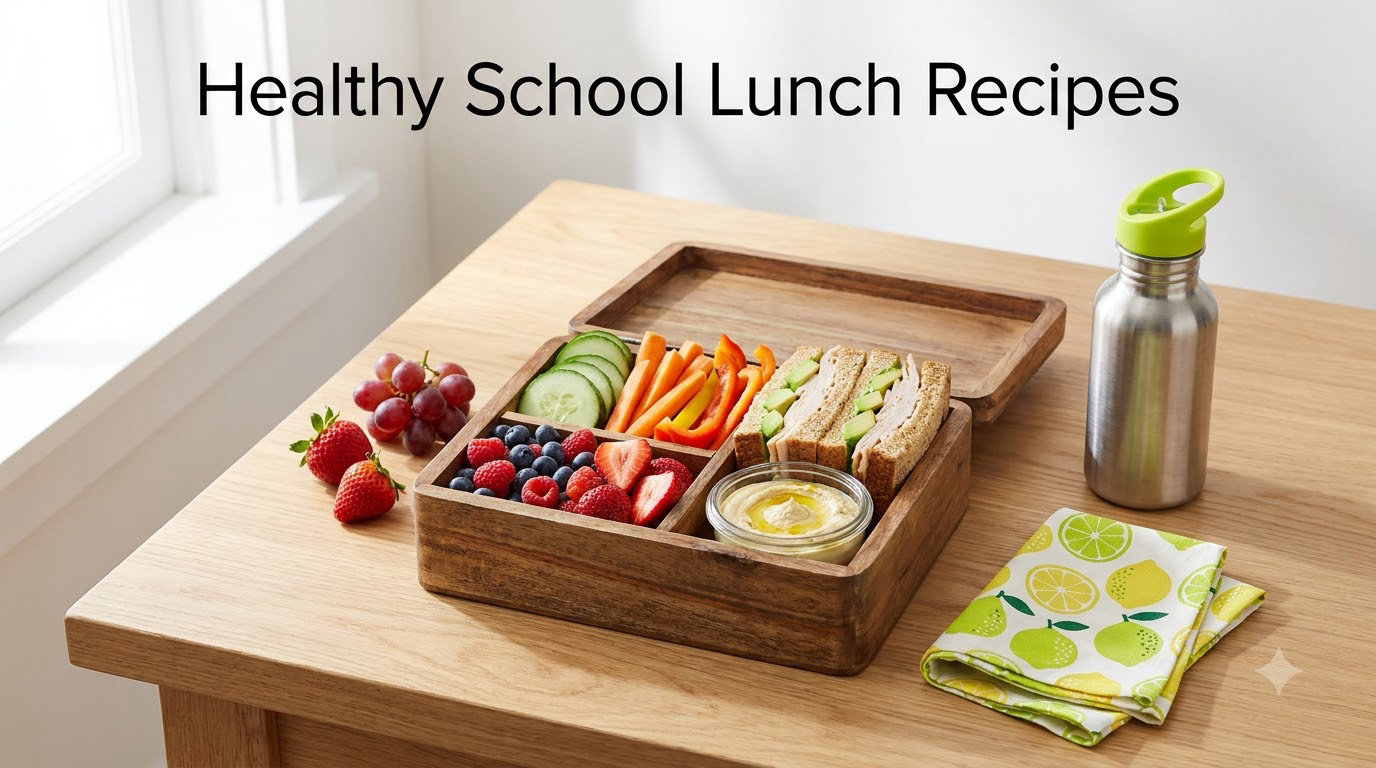
Packing a lunchbox every morning for a kid who would rather eat goldfish crackers and call it a day is a real parenting sport. After three kids and roughly 1,200 packed lunches between us, our team has learned what actually makes it home empty and what comes back at 3:15 p.m. looking exactly like it went in.
This guide to healthy school lunch recipes pulls together the meal combinations that survived our kids, our nieces, our friends’ classrooms, and a couple of picky taste-testers we recruited. We cover sandwiches and roll-ups, bento boxes, thermos meals, and no-cook options. We also address what to do about nut-free classrooms, teen-sized appetites, and the mornings when you have exactly four minutes to pack a lunch.
If you’re looking for one resource to bookmark and use every school week, this is it. You’ll find kid-approved recipes, portion guidance by age, and a built-in FAQ at the end that answers the questions parents ask us most.
Before we get into the recipes, let’s cover the framework that keeps every lunchbox balanced no matter what you pack.
Table of Contents
The Building Blocks of a Balanced School Lunch
A balanced school lunch is built on four components: a protein anchor, a whole grain or starch, one to two servings of produce, and a small treat or dip. This formula keeps kids full, focused, and energized through afternoon classes and sports practice.
Here’s the breakdown our dietitian consultant uses when building lunchbox menus for elementary and middle school kids:
Protein: 2 to 4 ounces (roughly the size of a deck of cards) for elementary; 4 to 6 ounces for teens
Whole grain or starch: One serving, about the size of the kid’s fist
Produce: At least two colors of fruits or vegetables daily
Treat or dip: One small item, ideally homemade or low-sugar
For elementary kids, expect around 450 to 600 calories per lunch. For teens, bump that up to 600 to 800 calories, especially on practice days. The protein portion is the part most parents under-pack, which is why so many lunches come back half-eaten by 1 p.m.
When we audited our own kids’ lunches last fall, the average protein was only 8 grams. Once we bumped that to 15 to 20 grams per lunch, my own daughter stopped raiding the kitchen the second she walked in the door. Hunger isn’t a willpower issue, it’s a planning issue.
The 4-Component Visual Rule
Picture the lunchbox as a divided plate. One quarter for protein, one quarter for the grain, and half for produce plus a treat. That mental image prevents the most common mistake: packing a sandwich, a juice box, and calling it done.
How to Build a Healthy School Lunch Your Kid Will Actually Eat
The fastest way to pack a healthy school lunch your kid will actually eat is to start with one protein they already love, then add a familiar starch, two colors of produce, and one small treat. Five steps, five minutes, and you can rotate the protein throughout the week.
Follow this sequence every morning and you will never stare into an empty lunchbox again:
Pick one protein anchor. Turkey roll-ups, cheese, hummus, hard-boiled eggs, edamame, or leftover chicken all work.
Add a whole grain or starch. Whole-grain bread, pita, crackers, rice, pasta, or a small tortilla.
Pack two colors of produce. Orange carrots and red grapes, green cucumber and yellow pepper, blueberries and celery.
Include one small treat or dip. A cookie, a few chocolate chips, ranch dip, or a homemade muffin.
Test and adjust weekly. If something comes home untouched three days in a row, swap it out.
The reason this framework works is because it removes decision fatigue. You’re not inventing a new lunch every day, you’re rotating four slots. That alone cuts morning stress by half.
If you want even more family meal ideas, our recipe collection at Thirsty Bear is a great place to find inspiration beyond sandwiches.
Sandwiches, Wraps, and Roll-Ups That Travel Well
Sandwiches, wraps, and roll-ups are the workhorses of the lunchbox because they pack tight, travel without leaking, and use up leftovers from dinner. The trick is choosing bread that holds up and fillings that don’t make everything soggy by 11 a.m.
Turkey and Avocado Pinwheels
Flatten a whole-grain tortilla, spread mashed avocado, layer turkey and spinach, roll tight, and slice into pinwheels. Kids eat them like sushi. Ours pick them up cold and never complain.
Hummus and Roasted Veggie Wrap
Spread hummus on a spinach wrap, add roasted red peppers, shredded carrots, cucumber, and feta. Wrap in parchment, then foil, and slice in half. The parchment prevents sogginess.
Sunbutter and Banana Roll-Up (Nut-Free)
Sunflower seed butter and banana on a whole-wheat tortilla, rolled and sliced. It’s the perfect swap for nut-free classrooms and tastes close enough to the classic version that kids rarely notice.
Italian-Style Sub on Whole-Grain Bread
Sliced turkey, ham, provolone, lettuce, tomato, and a drizzle of olive oil and red wine vinegar on a hoagie roll. Pack the oil and vinegar separately in a small container to prevent sogginess if your kid eats lunch late.
For more handheld ideas that use pantry staples, our ground beef recipe collection can be repurposed into meatballs or sliders for the lunchbox the next day.
Protein-Packed Bento Boxes
Bento boxes are the easiest way to deliver variety, control portions, and keep picky eaters engaged. The compartments also double as a visual cue: kids see the variety and feel like they have choices, even though you packed one lunch.
Build-Your-Own Taco Bento
One compartment for seasoned ground beef or black beans, one for mini tortillas or corn chips, one for shredded cheese, one for salsa, and one for diced avocado. Kids assemble at lunch and feel in charge of the meal.
Chicken and Cheese Skewers
Alternate cubes of cooked chicken, cheese, and grapes on a small skewer (cut the tip off for younger kids). Two skewers fit neatly into a bento compartment and deliver around 18 grams of protein.
Hard-Boiled Egg Bento
One hard-boiled egg, a small handful of crackers, cucumber slices, cherry tomatoes, and a few olives. Add a sprinkle of everything bagel seasoning on the egg for extra flavor.
Edamame and Cheese Combo
Shelled edamame (frozen is fine, it thaws by lunch), cheddar cubes, whole-grain crackers, and a small bunch of grapes. This combination travels beautifully and provides plant-based protein.
Looking for international flavor inspiration? Our guide to traditional dishes reinvented for 2026 includes recipes that translate well into bento portions.
Hot Lunches in a Thermos
Thermos lunches are perfect for cold-weather months, after a chilly recess, or for kids who refuse anything cold by 11 a.m. The trick is to preheat the thermos with boiling water for five minutes, then add hot food. Food stays at safe temperature for around four hours that way.
Mini Meatballs with Marinara
Make a batch of turkey or beef meatballs on Sunday, portion into a thermos with warm marinara, and add a side of whole-grain pasta. Around 22 grams of protein per serving.
Mac and Cheese Cups
Cooked elbows, shredded sharp cheddar, a splash of milk, and a pinch of salt. Pack hot in a thermos. For a nutrition boost, stir in pureed butternut squash or cauliflower before adding the cheese.
Chicken and Rice Bowl
Leftover chicken thighs or breast over brown rice with steamed broccoli and a drizzle of soy sauce. This is our highest-rated thermos meal across our test families.
For warmer months, our cold soup recipes can be packed in the same insulated container and stay cool until lunchtime.
No-Cook and Cold Lunch Ideas
No-cook lunches save you in the mornings when there’s literally no time to heat anything up. They also work for schools that don’t allow microwaves, which is most elementary schools.
Lunchable-Style DIY Plates
Sliced cheese, whole-grain crackers, rolled deli meat, grapes, and cucumber rounds on a divided plate. Costs less than the store version and lets you control the sodium.
Yogurt Parfait Jars
Plain Greek yogurt layered with berries and a sprinkle of low-sugar granola in a small jar. Add a tiny spoon and the kids feel like they’re eating dessert.
Antipasto Skewers
Cherry tomato, mozzarella ball, folded salami, and a basil leaf on a toothpick. Two skewers per lunch with a handful of crackers on the side.
Cheese and Crackers With Fruit
String cheese or sliced cheddar, whole-grain crackers, apple slices with a small container of almond-free sunbutter for dipping, and a few strawberries.
Snacks, Sides, and Treats to Round Out the Lunchbox
Snacks and sides keep the lunchbox exciting and prevent the dreaded mid-afternoon energy crash. Aim for one protein-rich snack and one fresh option daily.
Veggie Sticks With Dip
Carrot sticks, cucumber rounds, and bell pepper strips with a small container of ranch, hummus, or tzatziki. Dipping makes vegetables more appealing, especially for reluctant eaters.
Energy Bites and Homemade Granola Bars
Oats, honey, sunbutter, mini chocolate chips, and ground flaxseed rolled into balls. No baking required. Make a batch on Sunday and they last all week in the fridge.
Frozen Fruit and Yogurt Tubes
Frozen berries or a yogurt tube acts as its own ice pack and thaws by lunchtime. Our kids love these on hot days.
Muffins Made With Hidden Veggies
Zucchini, carrot, or sweet potato muffins sweetened with mashed banana and a touch of honey. They pack in extra fiber and vitamins without tasting like vegetables.
For nostalgic comfort food ideas that translate well to lunchboxes, our timeless vintage recipe collection includes classics your own parents probably packed in your lunch.
Make-Ahead and Storage Tips That Actually Work
The difference between a packed lunch that comes home eaten and one that comes back untouched usually comes down to three things: temperature, texture, and visual appeal. These are the storage and prep tips we use every week.
Sunday Batch Prep
Spend 60 minutes on Sunday washing and chopping produce, cooking a protein (chicken, meatballs, hard-boiled eggs), and portioning dips into small containers. The rest of the week, lunch assembly takes under five minutes.
Insulated Bags and Ice Packs
One ice pack per lunch, plus an insulated lunch bag, keeps perishables safe until lunch. Frozen items like yogurt tubes double as the ice pack and thaw by eating time.
Separate Wet From Dry
Dressings, dips, and juicy items go in small leak-proof containers on the side. Pack the crackers, chips, and dry snacks in their own compartment. Nothing ruins a lunchbox faster than a soggy cracker.
Rotate the Menu Weekly
Build a four-week rotation: Week A focuses on sandwiches, Week B on bento boxes, Week C on thermos meals, and Week D on no-cook options. After four weeks, repeat. Kids get variety without you running out of ideas.
Allergy-Friendly Swaps and Special Diets
Most elementary classrooms are nut-free these days, and many kids also need gluten-free or dairy-free options. Here is the swap sheet we share with every parent who asks.
Nut-Free Protein Swaps
Sunflower seed butter (sunbutter) for peanut butter. Pumpkin seeds or soy nut butter for tree nut butters. Always check the label for “may contain” warnings if cross-contamination is a concern.
Gluten-Free Bread and Wraps
Look for whole-grain gluten-free bread that holds up to fillings. Rice tortillas, corn tortillas, and lettuce wraps are reliable alternatives for sandwiches.
Dairy-Free Options
Nut-free dairy-free cheese shreds work for thermos mac and cheese. Coconut yogurt or soy yogurt works for parfaits. Many deli meats now offer nitrate-free, dairy-free options.
Egg-Free Lunchbox Protein
Hummus, bean spreads, deli meats, seed butters, edamame, and cheese alternatives keep lunches protein-rich without eggs.
Teen-Specific Lunch Strategies
Teenagers need more calories, more protein, and more autonomy in their lunch choices. The elementary lunchbox formula still works, but portions need to nearly double and convenience matters even more.
Bump Up the Protein
Teens need 25 to 35 grams of protein at lunch to support growth, sports, and concentration. Double the protein portion of the elementary formula and add a protein-rich snack on the side.
Substantial and Filling
A teen lunch might be a chicken burrito bowl, a hearty pasta salad, or a leftover dinner portion. Mini portions leave them hungry by second period.
Reheating-Friendly
If the school allows microwaves, pack leftovers in a microwave-safe container. If not, invest in a quality thermos that holds heat for four-plus hours.
Let Them Choose
Teens are more likely to eat what they pick. Stock the fridge with approved options and let them assemble their own lunch the night before. It also frees up your morning.
For more substantial meal inspiration that scales to teenage appetites, our classic ground beef recipes produce leftovers that work great in next-day lunch portions.
Frequently Asked Questions
What are some healthy school lunch recipes high in protein?
The highest-protein healthy school lunch recipes include turkey and avocado pinwheels (around 18g protein), chicken and cheese skewers (20g), hard-boiled egg bento boxes (12g), Greek yogurt parfaits (15g), and leftover chicken burrito bowls (28g). Pair any of these with a piece of fruit and a small treat for a complete lunch that keeps kids full until after-school practice.
What are healthy school lunch recipes for picky eaters?
For picky eaters, stick to familiar flavors with healthy twists: sunbutter and banana roll-ups on whole-wheat tortillas, cheese and cracker plates with grapes, mini pizza muffins made with whole-grain English muffins, and homemade chicken nuggets with hidden zucchini. Visual presentation matters, so use cookie cutters to shape sandwiches and pack lunch in a divided container so kids see variety without feeling overwhelmed.
What are healthy school lunch recipes that require no cooking?
No-cook healthy school lunch recipes include lunchable-style plates with cheese, deli meat, and crackers, hummus and veggie wraps, yogurt parfaits with berries and granola, antipasto skewers with mozzarella and tomato, and sunbutter and jelly sandwiches. These assembly-only options save time on busy mornings and work for schools without microwave access.
What are easy healthy school lunch recipes?
The easiest healthy school lunch recipes take 10 minutes or less: turkey and cheese roll-ups, hummus and pita with veggies, hard-boiled eggs with crackers and fruit, leftover chicken with grapes, and yogurt tubes with a homemade muffin. Prep your proteins and chopped produce on Sunday so weekday assembly takes just a few minutes.
What are 30 ideas for school lunches?
Here are 30 healthy school lunch ideas: turkey pinwheels, hummus wraps, sunbutter roll-ups, Italian subs, taco bento, chicken skewers, egg bento, edamame box, meatballs in marinara, mac and cheese cups, chicken rice bowls, cold pasta salad, DIY lunchables, yogurt parfaits, antipasto skewers, cheese and crackers, veggie sticks with dip, energy bites, granola bars, frozen berries, zucchini muffins, carrot muffins, quesadillas, pizza muffins, tuna salad, chicken salad, pasta salad, mini frittatas, overnight oats, and banana pancakes.
What are healthy lunch ideas for teens?
Healthy lunch ideas for teens include hearty burrito bowls with chicken and rice, large pasta salads with chickpeas, leftover dinner portions in a thermos, sub sandwiches loaded with protein, two-bagger combos (sandwich plus protein-rich snack), and DIY poke bowls if the school has a cooler. Teens need 25 to 35 grams of protein at lunch and 600 to 800 calories, especially on sports days.
How do you pack a school lunch that stays safe to eat?
To keep a school lunch safe to eat, use an insulated lunch bag with one frozen ice pack (a frozen yogurt tube works as both snack and ice pack), separate wet ingredients like dressings into leak-proof containers, preheat thermoses with boiling water before adding hot food, and refrigerate lunch ingredients the night before. Food stays at a safe temperature for about four hours with proper insulation.
What are nut-free school lunch ideas?
Nut-free school lunch ideas include sunflower seed butter (sunbutter) sandwiches, hummus and veggie wraps, seed butter and banana roll-ups, cheese and cracker plates, hard-boiled eggs, deli meat roll-ups, edamame pods, yogurt parfaits, and homemade energy bites made with oats and seeds. Always check labels for cross-contamination warnings and choose schoolsafe-certified products when possible.
Final Thoughts on Building a Lunchbox That Works
Healthy school lunch recipes are not about perfection. They are about giving kids the energy to learn, play, and grow while introducing them to a variety of flavors and food groups. Start with the four-component framework, lean on the recipes in this guide, and rotate your menu so the same five lunches do not repeat every week.
Bookmark this page, save your favorites to a note on your phone, and remember that even an imperfect lunch you actually pack is better than a Pinterest-perfect lunch you never get around to. If you want more meal inspiration that translates from family dinner to next-day lunch, browse our full recipe library at Thirsty Bear.