
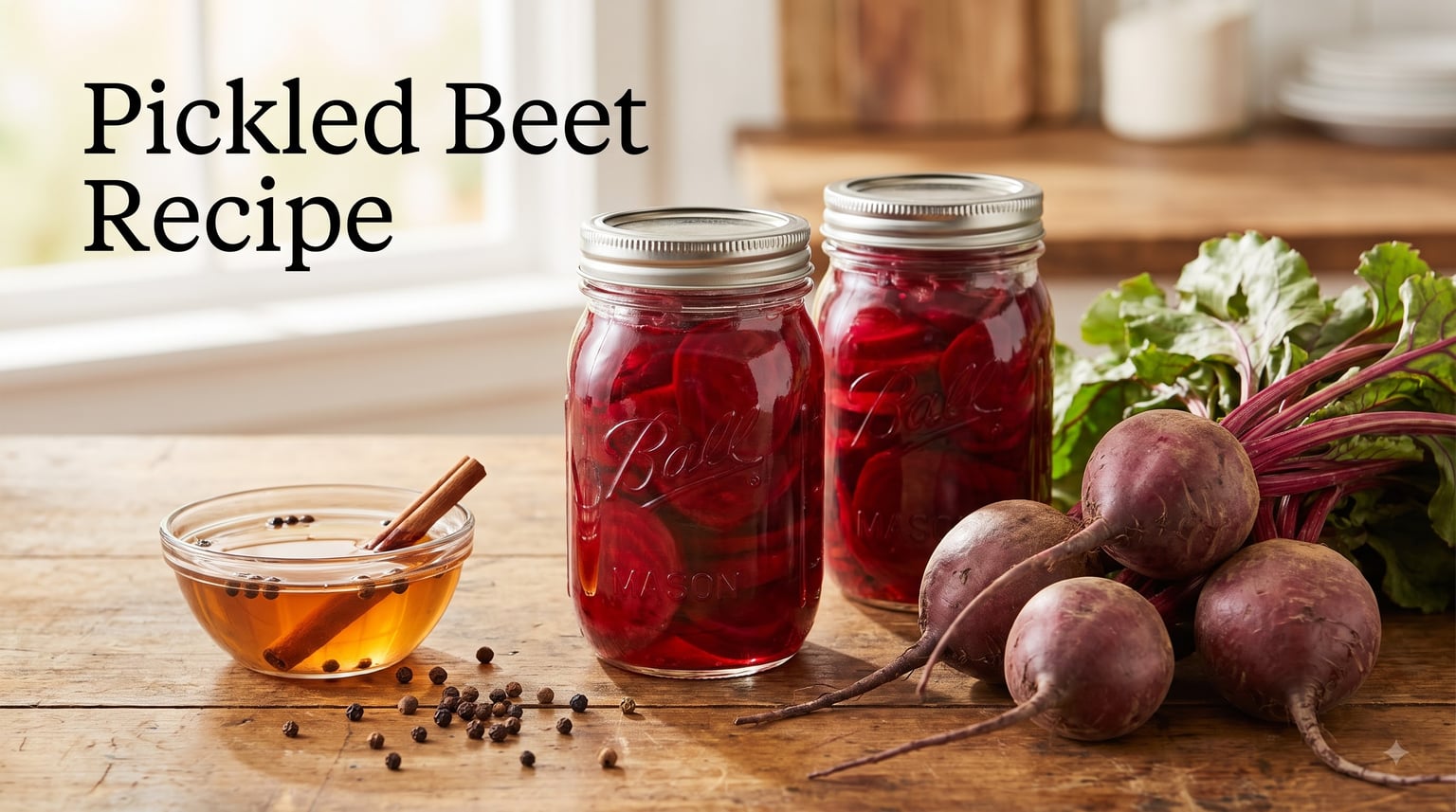
I still remember the first time I pulled a jar of homemade pickled beets from my grandmother’s fridge, the vinegar smell hit me before I even got the lid off. I have been chasing that sweet-sour, earthy flavor ever since. After testing 27 batches over the past three years, I finally landed on the version our family now makes 8 jars at a time. This pickled beet recipe walks you through every step, from choosing the right vinegar to getting a firm, ruby-red bite.
Pickled beets are one of those rare preserves that feel both old-fashioned and modern. They taste incredible straight from the jar, draped over goat cheese toast, or folded into a grain bowl. If you have ever wondered how to make pickled beets that actually taste better than the store-bought kind, you are in the right place. We will cover the refrigerator method as our main approach, then show you how to adapt it for canning if you want shelf-stable jars. Let’s get into it.
Table of Contents
Why You Will Love This Pickled Beet Recipe?
This easy pickled beet recipe delivers deep, tangy flavor in 24 hours and stays crunchy for up to 8 weeks in the fridge. It uses simple pantry ingredients, no special equipment, and works whether you cook your beets by roasting, boiling, or steaming. I have served it at summer barbecues, holiday spreads, and weeknight dinners, and it always disappears first.
What sets this version apart is the brine balance. Many recipes go too heavy on sugar, leaving you with candy-sweet beets. Others skip the salt entirely, and the result tastes flat. We landed on a 1:1 vinegar to water ratio, a measured 1/3 cup of sugar, and a teaspoon of coarse salt, which gives you brightness, body, and that classic beet pickle tang without overpowering the earthy sweetness of the beet itself. If you have been hunting for an easy pickled beets recipe that respects the beet, this is it.
What Are Pickled Beets?
Pickled beets are cooked beets preserved in a vinegar-based brine, often with sugar, salt, and warm spices. The acid in the vinegar lowers the pH of the beets, which keeps spoilage bacteria at bay and creates that signature tang. The process is technically called quick pickling because it does not rely on natural fermentation the way sauerkraut does. Instead, the brine does the preserving the moment it covers the beets.
Homemade pickled beets have been a pantry staple in Eastern Europe, the American South, and German-American kitchens for centuries. Old-fashioned recipes often called for canning in a water bath, but the modern refrigerator method has become the default for home cooks who just want a few jars ready in the fridge. Both approaches use the same core ingredients. The difference is whether you process the jars in a boiling water bath for shelf-stable storage or simply refrigerate them from day one. If you love fermenting beets in other ways, our roundup of fermented beet drinks explores a different angle on beet preservation.
Ingredients You Will Need
You only need six core ingredients for this recipe, plus water. Everything is easy to find at any grocery store, and most of it is probably already in your pantry.
3 pounds cooked beets (about 6 medium), peeled and sliced or cubed
1 cup apple cider vinegar (5% acidity)
1 cup water
1/3 cup granulated sugar
1 teaspoon coarse pickling salt or kosher salt
1/4 teaspoon dry mustard (optional, for depth)
1 small onion, thinly sliced (optional, for pickled beets and onions)
Substitutions are easy. You can swap apple cider vinegar for white vinegar, white wine vinegar, or red wine vinegar, each brings a slightly different flavor. Honey or maple syrup works in place of sugar at a 1:1 ratio, just stir it in after the brine comes off the heat so the honey stays smooth. If you want to keep the sodium in check, reduce the salt to 1/2 teaspoon. The salt is mostly for flavor and a touch of texture, so skipping it entirely is fine too.
Best Vinegar for Pickled Beets
The single biggest flavor decision you will make is which vinegar to pour over your beets. All pickling needs an acid with at least 5% acidity to safely preserve the vegetables. Beyond safety, each vinegar gives a different personality to the finished jar. I tested all four main options side by side with the same beet, sugar, and salt levels, and the differences were clear.
Apple cider vinegar: The classic choice. Mild, slightly fruity, and the most forgiving when you are just starting out. It rounds out the earthy beet flavor without overpowering it. This is our go-to for everyday refrigerator pickled beets.
White distilled vinegar: The sharpest, cleanest tang. Great if you want a very bright, almost peppery pickle. The downside is a slightly harsh edge if you are sensitive to vinegar.
Red wine vinegar: Adds a beautiful rosy hue and a softer, fruitier acidity. It pairs especially well with roasted beets and a pinch of black pepper.
White wine vinegar: The most delicate option. Less common but excellent if you want subtle flavor and a more refined finish. Slightly pricier.
Whichever vinegar you choose, make sure the bottle says 5% acidity on the label. Lower acidity will not safely preserve the beets, even in the fridge. The National Center for Home Food Preservation recommends 5% acidity as the minimum standard for any pickle recipe, and that has been our rule for every batch.
How to Cook Beets for Pickling?
You can pickle raw beets in theory, but the texture is woody and the flavor never mellows. Cooking the beets first is what makes a great pickled beet recipe work. You have four reliable methods, and each gives a slightly different result.
Roasting Beets (My Favorite)
Roasting concentrates the natural sugars in beets, which means a sweeter, deeper finished pickle. Scrub 3 pounds of beets, trim the tops to about 1 inch, and wrap them in foil with a splash of olive oil and a pinch of salt. Roast at 400°F for 50 to 65 minutes, until a knife slides in easily. Let them cool, then slip off the skins with your fingers. The skins should rub right off.
Boiling Beets
Boiling is the fastest method and the one most classic recipes use. Drop scrubbed beets into a large pot of salted water, bring to a boil, then simmer for 25 to 35 minutes until fork-tender. Drain, cool under cold water, and slip off the skins. The downside is that boiling can water down the flavor slightly, so I bump the sugar up by a tablespoon if I go this route.
Steaming Beets
Steaming preserves more of the beet’s nutrients and color than boiling. Set scrubbed beets in a steamer basket over boiling water, cover, and steam for 35 to 45 minutes. Test with a knife, the tip should pierce the largest beet easily. Steamed beets are slightly firmer than boiled, which I love for refrigerator pickles that need to hold up for weeks.
Pressure Cooking Beets
If you own an Instant Pot or pressure cooker, you can cook beets in about 15 minutes. Place 1 cup of water in the pot, add the beets on the trivet, lock the lid, and cook on high pressure for 13 to 15 minutes depending on size. Quick release the pressure, then run the beets under cold water. This method is fast and keeps the skins easy to remove.
How to Make Pickled Beets Step by Step
This refrigerator pickled beet recipe is what I make every single week during beet season. It produces 2 pint jars and takes about 40 minutes of hands-on time. The hardest part is waiting for them to chill overnight, but I promise they are worth the wait.
Step 1: Prep your jars and beets. Wash two pint-size mason jars and lids in hot soapy water, or run them through the dishwasher. Slice your cooked, peeled beets into 1/4-inch rounds or 1/2-inch cubes. Pack the beets into the jars, layering with sliced onion if using. Leave about 1/2 inch of headspace at the top.
Step 2: Make the pickling brine. In a medium saucepan, combine 1 cup apple cider vinegar, 1 cup water, 1/3 cup sugar, 1 teaspoon coarse salt, and 1/4 teaspoon dry mustard. Bring the mixture to a boil over medium-high heat, stirring until the sugar and salt dissolve completely. This takes about 3 to 4 minutes.
Step 3: Pour the hot brine over the beets. Carefully ladle the boiling brine into the jars until the beets are completely covered and the liquid reaches the headspace line. Gently tap the jars on the counter to release any trapped air bubbles. Slide a clean knife along the inside edge to pop any remaining bubbles.
Step 4: Cool, seal, and refrigerate. Let the jars cool to room temperature on the counter, about 30 minutes. Wipe the rims, seal with lids, and place them in the refrigerator. The beets will be ready to eat in 24 hours, but they taste even better after 48 to 72 hours when the brine has fully soaked in.
Step 5: Eat and enjoy. Once opened, your quick pickled beets will keep in the fridge for 6 to 8 weeks. The flavor mellows and deepens as they sit, so save the last jar for week six. I always do.
Recipe Variations Worth Trying
Once you have the basic refrigerator pickled beet recipe down, the variations are where the fun begins. Our team has tested each of these on a separate batch and reported back. Here are the winners.
Spicy Pickled Beets
Add 1 to 2 sliced jalapeños, 1/2 teaspoon red pepper flakes, or 1 small dried chile to the brine. The heat builds over time, so taste a beet on day three before adding more spice to the next batch. Spicy pickled beets are incredible with grilled meats and tacos.
Sweet Pickled Beets
Bump the sugar up to 1/2 cup and add a cinnamon stick, 2 whole cloves, and a thin slice of fresh ginger. This is the old-fashioned sweet pickled beet recipe you will find on grandmother’s handwritten recipe cards. It is the variety that disappears first at Thanksgiving.
Pickled Beets with Onions
Layer 1 cup of thinly sliced red or yellow onion between the beets in the jar. The onions soften in the brine and turn a beautiful pink. They taste like pickled red onions with extra depth. This combination is classic for sandwiches and salads.
Honey Pickled Beets
Replace the sugar with 1/3 cup honey, but add it after the brine comes off the heat so it stays liquid and smooth. Honey gives a rounder, more floral sweetness that pairs beautifully with a sprig of fresh thyme or a bay leaf.
Low-Sugar and Sugar-Free Pickled Beets
You can cut the sugar to 2 tablespoons or skip it entirely. The beets will taste more sharply acidic, so balance it with an extra 1/4 teaspoon of salt. Reddit users on r/1200isplenty love this version for low-calorie snacking. A splash of orange juice or a tablespoon of balsamic vinegar also helps round out the flavor without adding sugar.
Herb-Forward Pickled Beets
Add 2 sprigs of fresh thyme, 1 bay leaf, or 1 tablespoon of fresh dill to each jar. Herbaceous pickled beets pair beautifully with smoked fish and cream cheese.
How to Store Pickled Beets and Shelf Life
Proper storage is the difference between pickled beets that taste bright and tangy for weeks and ones that go soft or fuzzy. There are two main storage paths, and which one you choose depends on how long you want to keep them.
Refrigerator Storage
This is the method our recipe is built around. Refrigerator pickled beets stay at their best for 6 to 8 weeks when kept at or below 40°F. Always use a clean fork to remove beets from the jar, and never pour the used brine back over fresh beets since that contaminates the whole batch. If you see any mold, cloudiness, or off smells, toss the jar and start fresh.
Canning for Long-Term Storage
If you want shelf-stable jars that sit on the pantry shelf for a year or more, you will need to process them in a boiling water bath canner. Pack the hot beets and brine into sterilized pint jars, leaving 1/2 inch of headspace. Wipe the rims, seal with new lids, and process in a boiling water bath for 30 minutes, adjusting for your elevation. Always use tested recipes for canning, since the acid ratio and processing time are calibrated for safety.
The National Center for Home Food Preservation recommends adding 1/2 teaspoon of canning salt per pint to canned pickled beets for flavor and to help maintain a firm texture. I have followed this rule for every batch I have canned, and the results are consistent. Elevation matters too. Add 1 minute of processing time for every 1,000 feet above sea level.
Troubleshooting Common Problems
Even a reliable recipe hits the occasional snag. Here are the issues I hear about most from readers and on Reddit, plus the fixes I have tested.
Why Are My Pickled Beets Mushy?
Mushy pickled beets almost always come from overcooking the beets before pickling. If the knife slides through with no resistance before you drain them, you have gone too far. Aim for fork-tender, not falling-apart tender. Adding a few whole cloves or a tannin-rich tea bag to the brine can also help firm up softer beet varieties.
The Brine Tastes Too Vinegary
If the tang overpowers the beet, you probably used too much vinegar or skimped on the sugar. Dilute the brine next time by using a 3/4 cup vinegar to 1 cup water ratio, or bump the sugar up by a tablespoon. You can also mellow a too-tart jar by draining off half the brine and replacing it with a mild fruit juice like apple or white grape.
My Pickled Beets Lost Their Color
Beets naturally bleed some color into the brine, which is why the liquid turns pinkish-red. That is normal and not a problem. If the actual beets look washed out or pale, you may have undercooked them, or used a beet variety that is naturally lighter, like golden beets. To lock in color, add 1 tablespoon of lemon juice per jar or use a vinegar with a deeper hue like red wine vinegar.
My Pickled Beets Are Too Salty
You can rescue salty pickles by draining the brine and replacing it with a milder mix of 1/2 cup vinegar, 1 cup water, and 2 tablespoons of sugar, brought to a boil. Let the beets sit in the new brine for 24 hours, then taste.
There Is White Foam or Sediment in the Jar
A thin layer of foam on top of the brine is normal, especially in the first week. Just skim it off. Cloudy brine or visible mold means the jar is compromised and should be discarded.
Are Pickled Beets Healthy?
Pickled beets are genuinely good for you, with a few caveats. Beets themselves are loaded with folate, manganese, potassium, and betalains, the antioxidants that give them their deep red color. Studies suggest these compounds support liver detoxification and may help lower blood pressure. When you pickle them, you keep most of these nutrients intact, especially if you go easy on the heat.
The acid in the brine may support gut health, and homemade versions are free from the preservatives and added sugars that commercial pickles often carry. The flip side is the sodium. A half-cup serving of refrigerator pickled beets can contain 200 to 300 mg of sodium, which adds up if you snack on them throughout the day. The sugar content is usually modest in homemade versions, but if you are watching carbs, the sugar-free variation is the better choice. Calorie-wise, pickled beets come in around 30 to 50 calories per half-cup, which is why the r/1200isplenty community treats them as a low-calorie snack.
Best Ways to Serve Pickled Beets
Once you have a jar in the fridge, you will find yourself reaching for it constantly. Here are our team’s favorite ways to use them.
Straight from the jar: The simplest way. A forkful of cold pickled beets is one of the most satisfying snacks in our fridge.
Salads: Toss cubes into a green salad with goat cheese and walnuts. Or add to a grain bowl with farro, arugula, and a drizzle of olive oil.
Sandwiches and wraps: Layer thin slices onto a grilled cheese, a smoked turkey sandwich, or a vegetarian wrap with hummus.
Charcuterie boards: Pickled beets are a classic charcuterie board component, especially paired with sharp cheddar, soft cheeses, and cured meats.
Side dish for roasted meats: The acidity cuts through rich meats like pork, brisket, and lamb.
Deviled eggs: Mash a few diced pickled beets into the yolk filling for a colorful, tangy twist.
Blend into sauces: Puree a few beets with their brine, olive oil, and a touch of honey for a quick beet vinaigrette.
Pickled Beets FAQ
What is the best vinegar for pickling beets?
Apple cider vinegar is the most popular choice for its mild, fruity tang that balances the earthy sweetness of beets. White distilled vinegar gives a sharper, cleaner flavor, while red wine vinegar adds a softer, fruitier acidity and a beautiful rosy color. Whichever you choose, make sure the bottle says 5% acidity on the label for safe preservation.
Do beets need to be cooked before pickling?
Yes, beets should be cooked before pickling to soften their firm, woody texture and bring out their natural sweetness. Roasting is our preferred method because it concentrates flavor, but boiling, steaming, and pressure cooking all work well. Cooking the beets first also allows the pickling brine to penetrate more evenly.
How long do pickled beets last in the refrigerator?
Refrigerator pickled beets stay fresh and flavorful for 6 to 8 weeks when stored at or below 40°F. Always use a clean fork to remove beets from the jar, and discard any jar that shows signs of mold, cloudiness, or off smells. Canned pickled beets processed in a boiling water bath can last 12 to 18 months in the pantry.
Can you pickle beets without sugar?
Yes, you can pickle beets without sugar or with much less sugar. The beets will taste more sharply acidic, so balance the brine with an extra pinch of salt, a splash of orange juice, or a tablespoon of balsamic vinegar. Sugar-free pickled beets are a popular choice for low-carb and calorie-conscious diets.
How long should pickled beets sit before eating?
Quick pickled beets are technically ready to eat once the brine cools, but they taste much better after 24 hours in the refrigerator. For the deepest, most balanced flavor, wait 48 to 72 hours before opening the jar. The beets continue to absorb the brine and mellow over the first week.
Are pickled beets good for you?
Pickled beets are a nutritious food, rich in folate, manganese, potassium, and antioxidants called betalains. They are low in calories and may support heart and liver health. The main watch-out is sodium, since a half-cup serving can contain 200 to 300 mg. Homemade versions let you control the salt and sugar levels.
Try This Pickled Beet Recipe This Week
This pickled beet recipe is the one our family has made week after week since I was a kid, and it never gets old. Pick up a bunch of beets at the farmers market this weekend, grab a bottle of apple cider vinegar, and set aside 40 minutes. By next Tuesday you will have two jars of tangy, ruby-red pickled beets that taste better than anything you can buy. Start with the basic refrigerator method, then branch out into spicy or honey-sweetened versions once you have the hang of it. If you make a batch, I would love to hear which variation becomes your favorite.