
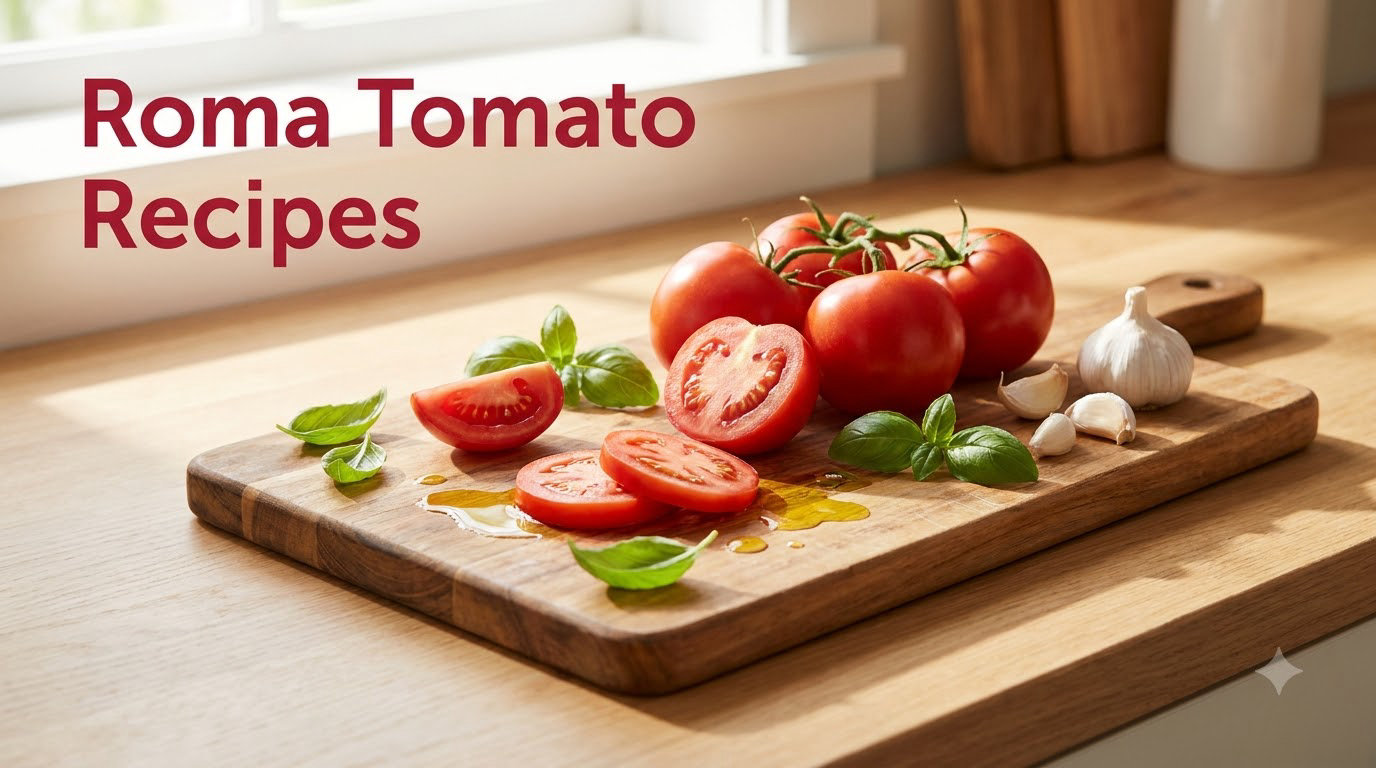
If you have ever stared at a pile of Roma tomatoes and wondered what to do with them, you are in the right place. Roma tomato recipes cover everything from rich pasta sauces to fresh bruschetta, and these meaty plum tomatoes handle nearly every cooking method better than their juicier cousins. I have spent years cooking through bushels of Roma tomatoes every summer, and this guide distills everything I have learned into practical, foolproof recipes and techniques.
Roma tomatoes (also called paste tomatoes or plum tomatoes) have low moisture content, few seeds, and thick flesh. That dense texture makes them the go-to choice for sauces, roasting, canning, and salsas. They hold their shape under heat instead of breaking down into a watery mess.
In this guide, I will walk you through my favorite Roma tomato recipes, share step-by-step preparation techniques, and cover storage and preservation methods so nothing goes to waste. Whether you have five tomatoes or fifty pounds from the garden, you will find a recipe that fits. If you are also looking for refreshing summer options, check out these cold soup recipes with tomatoes that pair beautifully with Roma-based dishes.
Table of Contents
Why Roma Tomatoes Are Perfect for Cooking?
Roma tomatoes earn their reputation as the best cooking tomato because of what they lack: excess water. A standard slicing tomato runs around 94% water, while Roma tomatoes sit closer to 89%. That difference sounds small, but it changes everything when you cook them down into a sauce.
Here is what makes Roma tomatoes special compared to regular round tomatoes:
Meaty texture — Their thick, dense flesh holds up to long simmering, roasting, and canning without turning mushy.
Fewer seeds — Each Roma tomato contains only two small seed chambers, meaning less prep work and smoother sauces.
Low moisture content — Sauces thicken faster because you are not boiling off cups of extra water.
Sweet-tart flavor — Roma tomatoes have a concentrated, rich taste that deepens beautifully when cooked.
Firm skin — The sturdy skin peels easily after blanching, making preparation straightforward.
I tested side-by-side batches of marinara using Roma tomatoes versus standard slicing tomatoes, and the Roma version reached the right consistency in about 35 minutes. The slicing tomato batch took over an hour and still came out thinner.
San Marzano tomatoes, grown in volcanic Italian soil, are a premium cousin of Roma tomatoes. They share similar characteristics but carry a more complex, slightly sweeter flavor. For everyday cooking, Roma tomatoes deliver outstanding results at a fraction of the cost. If you are exploring dietary-specific cooking, our low histamine recipes include tomato-friendly options worth exploring.
Essential Roma Tomato Recipes You Need to Try
These are the recipes I return to again and again during tomato season. Each one highlights a different strength of the Roma tomato, from sauce-making to roasting to fresh preparation. I have organized them from simplest to most involved so you can match the recipe to your time and ingredient supply.
Classic Homemade Roma Tomato Sauce Recipe
This is the recipe most people are looking for when they search for Roma tomato recipes. It produces a thick, rich pasta sauce that beats anything from a jar. I make this in large batches every August and freeze portions for quick weeknight dinners all winter.
Ingredients:
3 pounds Roma tomatoes (about 15-18 tomatoes), cored and quartered
3 tablespoons extra virgin olive oil
1 medium yellow onion, finely diced
4 garlic cloves, minced
1/2 cup fresh basil leaves, torn
1 teaspoon Italian seasoning (or 1 teaspoon dried oregano)
Salt and black pepper to taste
Instructions:
Step 1: Bring a large pot of water to a rolling boil. Score the bottom of each Roma tomato with a shallow X. Drop tomatoes in batches into the boiling water for 30-60 seconds until the skins split. Transfer immediately to an ice bath.
Step 2: Peel off the loosened skins (they should slide right off). Quarter the tomatoes and gently squeeze out the seeds, or pass them through a food mill for a smoother sauce.
Step 3: Heat olive oil in a large Dutch oven or heavy-bottomed pot over medium heat. Add the diced onion and cook for 5-7 minutes until soft and translucent. Add the garlic and cook for 30 seconds until fragrant.
Step 4: Add the prepared tomatoes, Italian seasoning, salt, and pepper. Bring to a gentle simmer, then reduce heat to low. Cook uncovered for 35-45 minutes, stirring occasionally, until the sauce thickens to your desired consistency.
Step 5: Stir in the fresh basil during the last 5 minutes of cooking. Taste and adjust seasoning. Serve immediately over pasta, or let cool completely before freezing.
This sauce pairs wonderfully with a low sodium pesto sauce if you want to layer flavors for a more complex pasta dish.
Roasted Roma Tomatoes with Garlic and Herbs
Roasting is my favorite way to handle a large quantity of Roma tomatoes with almost zero effort. The oven does all the work, and the result is deeply caramelized, intensely flavored tomatoes you can serve as a side dish, blend into soup, or toss with pasta.
Ingredients:
2 pounds Roma tomatoes, halved lengthwise
3 tablespoons extra virgin olive oil
6 garlic cloves, smashed but not peeled
1 tablespoon fresh thyme leaves (or 1 teaspoon dried)
1 tablespoon balsamic vinegar
1/2 teaspoon kosher salt
1/4 teaspoon black pepper
Instructions:
Step 1: Preheat your oven to 400 degrees F. Line a rimmed baking sheet with parchment paper.
Step 2: Arrange the tomato halves cut-side up on the baking sheet. Tuck the smashed garlic cloves between the tomatoes.
Step 3: Drizzle with olive oil and balsamic vinegar. Sprinkle evenly with thyme, salt, and pepper.
Step 4: Roast for 45-55 minutes until the tomatoes are soft, slightly shriveled, and caramelized at the edges. The garlic should be golden and soft.
Step 5: Serve warm as a side dish, or let cool and refrigerate for up to 5 days. You can also blend them with a little vegetable broth for an instant roasted tomato soup.
Forum cooks on Reddit consistently recommend this roasting method as the easiest way to use up excess Roma tomatoes. Several users noted that roasting whole tomatoes with olive oil, basil, garlic, salt, and pepper, then blending the result, gives you a finished sauce with almost no hands-on time.
Fresh Roma Tomato Bruschetta
When tomatoes are at peak ripeness, sometimes the best recipe is the simplest one. This bruschetta lets the sweet-tart flavor of fresh Roma tomatoes shine. The firm flesh holds its dice beautifully without making the bread soggy.
Ingredients:
6 ripe Roma tomatoes, seeded and diced small
1 small shallot, finely minced
2 tablespoons extra virgin olive oil
1 tablespoon balsamic vinegar
1/4 cup fresh basil, chiffonade (thinly sliced)
1/2 teaspoon kosher salt
1/4 teaspoon black pepper
1 baguette, sliced and toasted
Instructions:
Step 1: Cut the Roma tomatoes in half lengthwise. Gently scoop out the seeds with a spoon, then dice the flesh into small, uniform pieces.
Step 2: Combine the diced tomatoes, shallot, olive oil, balsamic vinegar, basil, salt, and pepper in a bowl. Toss gently to combine.
Step 3: Let the mixture sit at room temperature for 15-20 minutes so the flavors meld.
Step 4: Toast the baguette slices until golden. Spoon the tomato mixture generously onto each slice just before serving. Do not let it sit on the bread or it will soften.
For seeding Roma tomatoes for bruschetta, I just cut them in half and squeeze gently. The seeds pop right out because Roma tomatoes have so few of them compared to round tomatoes.
Homemade Salsa with Roma Tomatoes
Roma tomatoes are the secret to restaurant-quality salsa. Their firm texture gives the salsa body, and the low water content means your dip will not separate or get soupy after a day in the fridge. This is a staple at every barbecue I host.
Ingredients:
8 Roma tomatoes, cored and finely diced
1/2 white onion, finely diced
1-2 jalapeno peppers, seeded and minced (keep seeds for more heat)
1/3 cup fresh cilantro, chopped
2 tablespoons fresh lime juice
1 garlic clove, minced
1/2 teaspoon ground cumin
Salt to taste
Instructions:
Step 1: Core the Roma tomatoes and dice them into small, even pieces. Leave the skin on for texture and color.
Step 2: Combine the diced tomatoes, onion, jalapeno, cilantro, lime juice, garlic, and cumin in a medium bowl. Stir well.
Step 3: Season with salt, starting with 1/2 teaspoon and adding more to taste. Let the salsa rest for 20-30 minutes before serving so the flavors develop.
Step 4: Serve with tortilla chips, over grilled chicken, or spooned onto tacos. Store in an airtight container in the refrigerator for up to 5 days.
Many home cooks on Reddit ask what Mexicans use Roma tomatoes for, and salsa is one of the top answers. Roma tomatoes provide the ideal balance of firmness and flavor for both fresh pico de gallo and cooked salsa verde variations.
Slow-Roasted Roma Tomato Soup
This soup takes the roasted Roma tomato concept and turns it into a comforting meal. Slow-roasting concentrates the natural sugars in Roma tomatoes, creating a depth of flavor that canned soup cannot match. It is one of the most-requested recipes in my household during cooler months.
Ingredients:
3 pounds Roma tomatoes, halved
1 head of garlic, top sliced off to expose cloves
2 tablespoons olive oil
1 large yellow onion, roughly chopped
4 cups vegetable broth
1/2 cup heavy cream (optional)
1 teaspoon smoked paprika
Fresh thyme sprigs
Salt and pepper to taste
Freshly grated Parmesan cheese for serving
Instructions:
Step 1: Preheat oven to 400 degrees F. Spread the tomato halves cut-side up on a rimmed baking sheet. Place the head of garlic in a small piece of foil, drizzle with olive oil, and wrap loosely.
Step 2: Drizzle the tomatoes with olive oil, sprinkle with salt and pepper, and add fresh thyme sprigs on top. Roast the tomatoes and garlic for 45 minutes until the tomatoes are caramelized and soft.
Step 3: Squeeze the soft roasted garlic from its skins. In a large pot, saute the chopped onion in a tablespoon of olive oil until translucent, about 5 minutes.
Step 4: Add the roasted tomatoes, roasted garlic, smoked paprika, and vegetable broth. Simmer for 10 minutes to blend the flavors.
Step 5: Use an immersion blender or regular blender to puree until smooth. Stir in the cream if using, and season with salt and pepper. Serve topped with freshly grated Parmesan cheese and crusty bread.
This soup freezes beautifully. I ladle cooled portions into quart-sized freezer bags, lay them flat, and stack them for efficient freezer storage.
How to Prepare Roma Tomatoes for Any Recipe
Most Roma tomato recipes call for one of three preparation steps: peeling, seeding, or coring. Knowing when each step is necessary saves time and produces better results. I wasted plenty of tomatoes learning these techniques the hard way, so here is the shortcut.
Coring: Use a paring knife to cut around the tough stem end in a small cone shape and pop it out. This takes about 3 seconds per tomato and removes the tough, fibrous core that does not break down during cooking.
Peeling (blanching method): Score a shallow X on the bottom of each tomato. Drop into boiling water for 30-60 seconds until the skin cracks. Transfer immediately to an ice bath. The skins will slip off easily. This is the most reliable method for large batches.
Do you have to peel Roma tomatoes for sauce? For a smooth, classic marinara, yes, peel them. For a rustic sauce, roasted dishes, or salsa, you can leave the skins on. The skins do not break down fully and can create a slightly chewy texture in smooth sauces. In a food mill, skins get caught and separated automatically, so peeling is optional if you use one.
Seeding: Cut the tomato in half lengthwise and gently squeeze or use a spoon to scrape out the seeds. Roma tomatoes have so few seeds that this step is quick. Seeding matters most for bruschetta and salsa where you want a clean dice without extra moisture.
Storing and Preserving Roma Tomatoes
When tomato season hits, you need a storage strategy. These methods cover everything from a few days to a full year of shelf life.
Counter storage (3-5 days): Keep Roma tomatoes at room temperature stem-side down. Never refrigerate fresh tomatoes, because temperatures below 55 degrees F destroy their flavor compounds and turn the texture mealy.
Freezing whole (up to 8 months): This is the easiest preservation method by far. Wash and dry the tomatoes, spread them on a baking sheet, and freeze solid. Transfer to freezer bags. The skins crack when frozen, so when you are ready to use them, hold the frozen tomato under warm running water and the skin slides right off. Drop the peeled frozen tomato directly into simmering sauce.
Freezing cooked sauce (up to 6 months): Make a large batch of Roma tomato sauce, let it cool completely, and freeze in portion-sized containers or freezer bags laid flat for efficient stacking.
Canning (12+ months): Roma tomatoes are the preferred canning tomato because their low moisture and high acidity create a safe, stable product. Use a water bath canner and follow tested recipes from the National Center for Home Food Preservation. Add lemon juice or citric acid per jar to ensure safe acidity levels.
Making tomato juice: If you have a massive supply of Roma tomatoes, you can also juice them for cocktails. Our Bloody Mary recipe shows how fresh tomato juice transforms this classic drink.
Troubleshooting Common Roma Tomato Recipe Problems
Even experienced cooks run into issues. Here are the problems I hear about most often, with straightforward fixes.
Sauce too watery: If your Roma tomato sauce is thinner than you want, simmer it uncovered for 15-20 more minutes to evaporate excess liquid. Do not cover the pot, because that traps steam and prevents reduction. If it is still thin, add a tablespoon of tomato paste to thicken it.
Sauce too acidic: Tomatoes can taste sharp, especially early in the season. Add a pinch of sugar (about 1/4 teaspoon per batch) or a grated carrot to balance the acidity. Simmering longer also mellows acidic flavors naturally.
Small quantity adjustments: Many forum users ask about making sauce with only 4-5 Roma tomatoes. For a small batch, halve all ingredients in the sauce recipe above and simmer for 20-25 minutes. A single pound of Roma tomatoes (about 5-6 tomatoes) yields roughly 1.5 cups of finished sauce.
Green Roma tomatoes: If you end up with unripe green Roma tomatoes at the end of the season, fry them. Slice them into 1/4-inch rounds, dredge in seasoned cornmeal, and pan-fry in oil until golden. Fried green tomatoes are a Southern classic that turns a gardening disappointment into a crispy, tangy treat.
Frequently Asked Questions
What can I do with excess Roma tomatoes?
Freeze them whole on a baking sheet, then transfer to freezer bags for up to 8 months. You can also roast large batches with olive oil and garlic, then blend into sauce or soup. Canning is ideal for bumper crops, and Roma tomatoes are the best variety for water-bath canning due to their low moisture and high acidity.
Do I have to peel Roma tomatoes for sauce?
For a smooth marinara, yes, peel them using the blanching method (score, boil 30-60 seconds, ice bath, slip off skins). For rustic sauces, roasted dishes, or when using a food mill, peeling is optional. Roma tomato skins do not break down fully during cooking, so they can create a slightly chewy texture in blended sauces.
What are Roma tomatoes best used for?
Roma tomatoes are best for making sauces, salsa, roasting, canning, and bruschetta. Their dense, meaty texture and low moisture content produce thicker sauces faster than regular slicing tomatoes, and their firm flesh holds its shape when diced for fresh preparations.
Can you freeze Roma tomatoes?
Yes. Wash and dry Roma tomatoes, freeze them whole on a baking sheet, then transfer to freezer bags for up to 8 months. The skins crack during freezing and slip off easily under warm water when you are ready to use them. Drop frozen peeled tomatoes directly into simmering sauce.
How many Roma tomatoes equal one can of crushed tomatoes?
One 28-ounce can of crushed tomatoes equals approximately 10-12 Roma tomatoes (about 2 pounds). For a recipe calling for one can, use about 2 pounds of fresh Roma tomatoes, cored and chopped. The yield is slightly lower because fresh tomatoes have not been concentrated like canned ones.
Wrapping Up: Making the Most of Roma Tomatoes
Roma tomato recipes are all about letting these hardworking paste tomatoes do what they do best: deliver concentrated flavor and thick texture to whatever you cook. Whether you are simmering a pot of homemade marinara, roasting a sheet pan for soup, or tossing fresh diced tomatoes with basil for bruschetta, Roma tomatoes give you consistently better results than juicier varieties.
The key takeaways are simple: peel for smooth sauces, skip peeling for rustic dishes, freeze whole tomatoes for easy storage, and never refrigerate fresh ones. Start with the classic sauce recipe, then branch out into roasting, salsa, and bruschetta as you get comfortable.
Grab a few pounds of Roma tomatoes and start cooking. Once you taste the difference these meaty plum tomatoes make, you will never go back to using slicing tomatoes for sauce again.