
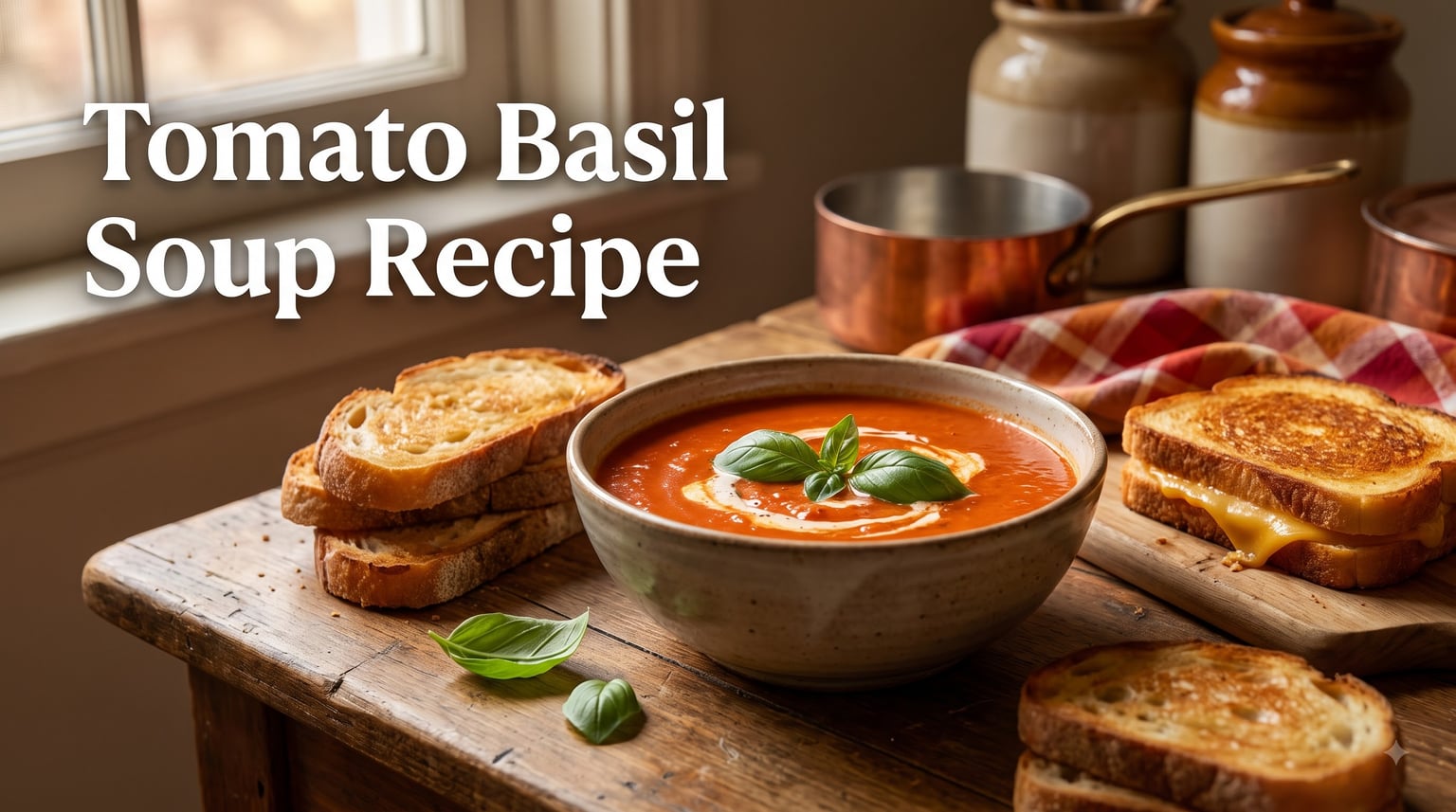
There is something deeply comforting about a bowl of homemade tomato basil soup on a chilly evening. Our team has tested dozens of variations over the past year, and this tomato basil soup recipe is the one we keep coming back to. It delivers that rich, restaurant-quality flavor using simple ingredients you likely already have in your kitchen.
Whether you are using fresh roma tomatoes from the garden or a can of San Marzano tomatoes from the pantry, this recipe walks you through every step. We cover the secret ingredient that transforms ordinary soup into something memorable, plus troubleshooting tips for common mistakes like acidity and thin texture. If you love exploring other delicious soup recipes, this one belongs in your regular rotation.
By the end of this guide, you will know exactly how to make creamy tomato basil soup from scratch, how to store and freeze it, and how to adapt it for vegan, slow cooker, or Instant Pot methods. Let us get cooking.
Table of Contents
Tomato Basil Soup Recipe: Quick Overview
This tomato basil soup recipe strikes the balance between weeknight convenience and scratch-made quality. You can have it on the table in about 45 minutes, with roughly 15 minutes of active prep and 30 minutes of simmering. It yields 6 generous servings, making it perfect for family dinners or meal prep for the week ahead.
The flavor profile is rich and savory, with deep tomato flavor balanced by the sweetness of fresh basil and a subtle richness from cream or your preferred dairy-free alternative. It pairs beautifully with a grilled cheese sandwich but stands on its own as a satisfying lunch.
Difficulty: Easy to intermediate. The only technical step is blending the soup until smooth, which an immersion blender handles in minutes. Even beginner cooks can achieve excellent results on the first try.
Ingredients You Will Need
Here is everything required to make this tomato basil soup recipe. We have organized the list by category so you can check your pantry before starting.
The tomato base:
28 oz canned crushed tomatoes (San Marzano preferred) or 2.5 lbs fresh roma tomatoes, cored and halved
2 tbsp tomato paste for concentrated depth of flavor
3 cups chicken broth or vegetable broth for a vegetarian version
Aromatics and vegetables:
1 medium yellow onion, diced
2 medium carrots, peeled and chopped (these add natural sweetness and help balance acidity)
4 cloves garlic, minced
2 tbsp olive oil
Herbs and seasoning:
1/2 cup fresh basil leaves, loosely packed, plus extra for garnish
1 tsp dried oregano
1 tsp salt (adjust to taste)
1/2 tsp black pepper
1 tbsp balsamic vinegar (this is a game-changer for depth)
For the creamy finish:
1/2 cup heavy cream, half and half, or coconut milk for a vegan option
1/4 cup grated parmesan cheese (optional but highly recommended)
The secret ingredient: 2 tbsp basil pesto stirred in at the end. Many home cooks on Reddit swear by this trick, and our testing confirmed it adds a punch of fresh basil flavor that cooked basil alone cannot deliver. This is what separates good soup from restaurant-quality soup.
Substitutions: No heavy cream? Use coconut milk, cashew cream, or blend in a quarter cup of raw cashews soaked in hot water. No fresh basil? Double the pesto or use 1 tbsp dried basil added during simmering. For a lower-fat version, skip the cream entirely and rely on the natural creaminess from blended carrots.
How to Make Tomato Basil Soup?
Follow these steps for a foolproof batch of creamy tomato basil soup. Each step builds flavor, so resist the urge to rush.
Step 1: Prepare your vegetables. Dice the onion, peel and chop the carrots into small pieces, and mince the garlic. If using fresh roma tomatoes, cut them in half lengthwise. Having everything prepped before you turn on the stove makes the process smooth and stress-free.
Step 2: Build the flavor base. Heat 2 tablespoons of olive oil in a large pot or Dutch oven over medium heat. Add the diced onion and chopped carrots, cooking for about 5 to 7 minutes until the onion is translucent and soft. Add the minced garlic and cook for 30 seconds until fragrant. Do not let the garlic brown, as it will turn bitter.
Step 3: Add the tomatoes and paste. Stir in the tomato paste and cook it for 2 minutes. This step caramelizes the paste and removes any metallic canned taste. Add your crushed tomatoes (or fresh roma tomato halves), stirring everything together until well combined.
Step 4: Pour in the broth and seasonings. Add the chicken or vegetable broth, dried oregano, salt, and pepper. Stir well, bring the mixture to a gentle boil, then reduce the heat to low. Cover the pot and let everything simmer for 20 to 25 minutes. The carrots should be fork-tender when the soup is ready to blend.
Step 5: Add the fresh basil. Drop in the fresh basil leaves and let them wilt in the hot soup for about 1 minute. This infuses the soup with bright, herbaceous flavor right before blending.
Step 6: Blend until silky smooth. Use an immersion blender directly in the pot, or carefully transfer the soup in batches to a standing blender. Blend until completely smooth with no chunks remaining. If using a standing blender, remove the center cap and cover with a towel to let steam escape safely.
Step 7: Add cream and the secret ingredient. Return the blended soup to low heat. Slowly stir in the heavy cream, parmesan cheese, balsamic vinegar, and basil pesto. Stir gently until the cream is fully incorporated and the cheese has melted. Taste and adjust salt and pepper as needed.
Step 8: Serve warm. Ladle into bowls and top with fresh basil leaves, a drizzle of olive oil, extra parmesan, or a dollop of pesto. Serve immediately with crusty bread or grilled cheese.
Fresh vs Canned Tomatoes: Which Should You Use
This is one of the most common questions we see in cooking forums, and the answer depends on the season and the quality of your tomatoes.
Canned San Marzano tomatoes are the reliable choice year-round. They are picked and canned at peak ripeness, which means consistent flavor regardless of the season. They also have less water content than fresh tomatoes, resulting in a thicker, more concentrated soup. Most restaurant-quality tomato basil soup recipes rely on canned tomatoes for this reason.
Fresh roma tomatoes shine during peak summer when they are vine-ripened and bursting with flavor. If you grow your own or visit a farmers market in July or August, fresh tomatoes will give your soup a brighter, sweeter taste. The trade-off is that fresh tomatoes contain more water, so you may need to simmer the soup longer to reach the right consistency.
Our recommendation: use canned San Marzano tomatoes for consistent results, and switch to fresh when you have access to high-quality, in-season roma tomatoes. If using fresh, roasting them first intensifies their flavor dramatically.
Serving Suggestions and Pairings
A great tomato basil soup recipe deserves equally great accompaniments. Here are our favorite ways to serve it.
The classic: grilled cheese sandwich. This is the undisputed champion of tomato soup pairings. Use a sturdy bread like sourdough, good melting cheese like sharp cheddar or Gruyere, and butter the outside of the bread for an extra crispy crust. Cut it into strips for dipping.
Bread and crackers: A thick slice of warm crusty bread or a handful of garlic croutons adds satisfying texture contrast to the smooth soup. A toasted baguette slice topped with melted mozzarella is a lighter alternative to a full grilled cheese.
Fresh salads: A simple arugula salad with lemon vinaigrette cuts through the richness of the soup. A caprese salad with fresh mozzarella, tomatoes, and basil reinforces the Italian flavors.
Protein additions: For a heartier meal, top the soup with crispy prosciutto, roasted chickpeas, or a poached egg. A scoop of cooked white beans stirred in adds protein and makes it a complete meal.
Garnish ideas: Fresh basil leaves, a swirl of cream, pesto drizzle, toasted pine nuts, red pepper flakes, parmesan crisps, or a dash of olive oil all add visual appeal and extra flavor. If you are looking for soup inspiration beyond tomato basil, there are plenty of seasonal options to explore.
Recipe Tips and Variations
This tomato basil soup recipe is endlessly adaptable. Here are the variations and tips our team has tested and loved.
Vegan tomato basil soup: Replace the chicken broth with vegetable broth, swap heavy cream for full-fat coconut milk or cashew cream, and skip the parmesan. A tablespoon of nutritional yeast adds cheesy depth without dairy. The result is just as creamy and satisfying. You can find dietary-friendly soup alternatives for more specialized needs.
Slow cooker method: Add all ingredients except the cream and pesto to your slow cooker. Cook on low for 6 to 8 hours or high for 3 to 4 hours. Blend with an immersion blender, then stir in the cream and pesto just before serving. This is perfect for busy days when you want to come home to a ready meal.
Instant Pot method: Use the saute function to cook the onions, carrots, and garlic. Add remaining ingredients, seal the lid, and cook on high pressure for 10 minutes with a quick release. Blend and add cream. For more instant pot soup variations, there are additional recipes to explore.
Roasted tomato variation: Toss halved roma tomatoes with olive oil, salt, and pepper. Roast at 400 degrees F for 30 to 35 minutes until caramelized. Add them to the soup in place of canned tomatoes. This method creates the deepest, most complex flavor of any approach.
20-minute version: Skip the carrot and use pre-minced garlic. Use canned crushed tomatoes and simmer for only 10 minutes. Blend, add cream, and serve. This quick version sacrifices a little depth but is perfect for busy weeknights.
No-cream version: Skip the dairy entirely and add an extra tablespoon of pesto plus a handful of raw cashews blended into the soup. The cashews create a velvety texture without any cream.
Common Mistakes and How to Fix Them
Even experienced cooks run into issues with tomato soup. Here is how to troubleshoot the most frequent problems, based on real pain points from cooking forums.
Problem: Soup tastes too acidic or bitter. This is the number one complaint. Fix it by adding a pinch of sugar, a grated carrot during simmering, or a tiny amount of baking soda (start with 1/4 tsp). The carrot trick is our favorite because it adds natural sweetness without making the soup taste sugary. Tomatoes vary in acidity, so always taste and adjust at the end.
Problem: Soup is too thin or watery. Simmer uncovered for 10 to 15 more minutes to reduce. Alternatively, make a quick roux with 1 tablespoon of butter and 1 tablespoon of flour, then whisk it in. You can also blend in a piece of bread or a handful of raw cashews to thicken naturally.
Problem: Cream separates when reheating. This happens when you reheat too quickly or at too high a temperature. Always reheat gently over low heat, stirring frequently. If the soup has already separated, blend it briefly with an immersion blender to bring it back together.
Problem: Texture is grainy instead of smooth. You likely did not blend long enough or your blender is not powerful enough. An immersion blender run for a full 2 minutes usually solves this. If using a standing blender, blend each batch for at least 30 seconds. Straining through a fine mesh sieve after blending removes any remaining fibers.
Problem: Not enough basil flavor. Cooked basil loses much of its punch. The fix is the secret ingredient: stir in 2 tablespoons of basil pesto right at the end. You can also reserve a few fresh basil leaves to chiffonade and sprinkle on top as garnish for a bright, fresh hit.
Problem: Soup curdles when adding dairy. Never pour cold cream directly into boiling soup. Temper the cream by stirring a ladle of hot soup into it first, then add the warmed mixture slowly. Keep the heat on low when adding any dairy.
Storage, Freezing, and Make-Ahead Tips
Tomato basil soup is one of the best make-ahead meals you can make. Here is how to store it properly.
Refrigerator storage: Let the soup cool completely, then transfer to an airtight container. It will keep for 4 to 5 days in the refrigerator. In fact, the flavor improves on the second day as the ingredients meld together. Many home cooks on Reddit specifically recommend making it a day ahead.
Freezing instructions: Tomato basil soup freezes beautifully for up to 3 months. If your soup contains cream, it may separate slightly upon thawing. To prevent this, either freeze before adding the cream and stir it in after reheating, or use coconut milk which freezes more reliably than dairy. Store in freezer-safe containers leaving an inch of space for expansion, or freeze in individual portions using silicone bags for easy single servings.
Reheating: Thaw frozen soup overnight in the refrigerator. Reheat gently on the stovetop over low heat, stirring occasionally. Avoid boiling, especially if the soup contains dairy. Microwave reheating works for single servings in 60-second intervals with stirring in between.
Batch cooking: Double or triple the recipe and freeze in portion-sized containers. This gives you homemade soup ready in minutes for busy lunches or quick dinners throughout the month.
Frequently Asked Questions
What is the secret ingredient in tomato basil soup?
The secret ingredient is basil pesto, stirred in at the very end of cooking. While fresh basil adds flavor during simmering, much of its brightness gets lost in heat. Adding 2 tablespoons of pesto right before serving delivers a concentrated punch of fresh basil and garlic that elevates the soup to restaurant quality. Many home cooks also swear by a splash of balsamic vinegar for added depth.
What are the ingredients in tomato basil soup?
The core ingredients are tomatoes (canned or fresh), fresh basil, onion, garlic, carrots, olive oil, broth, and seasoning. Optional additions include heavy cream or coconut milk for richness, parmesan cheese, tomato paste for depth, balsamic vinegar, and basil pesto as a secret ingredient. Salt, pepper, and dried oregano round out the seasoning.
Can you freeze tomato basil soup with cream in it?
Yes, you can freeze tomato basil soup with cream, but it may separate slightly when reheated. For best results, freeze the soup before adding dairy and stir in the cream after reheating. If you have already added cream, use coconut milk instead of dairy as it freezes more reliably. Reheat gently over low heat and blend briefly if separation occurs.
Why is my tomato basil soup acidic and how do I fix it?
Tomato soup becomes acidic due to the natural acidity of tomatoes, which varies by variety and ripeness. To fix it, add a pinch of sugar, grate a carrot into the simmering soup for natural sweetness, or add a small amount of baking soda (start with 1/4 teaspoon) to neutralize the acid. Always taste and adjust seasoning at the end of cooking.
What goes well with tomato basil soup?
Tomato basil soup pairs perfectly with grilled cheese sandwiches, crusty bread, garlic croutons, and toasted baguette slices. For salads, a simple arugula salad with lemon vinaigrette or a caprese salad complements the flavors. For protein, try topping with crispy prosciutto, roasted chickpeas, or a poached egg. Garnish with fresh basil, parmesan, or a pesto drizzle.
Final Thoughts
This tomato basil soup recipe proves that comfort food does not require complicated techniques or hard-to-find ingredients. With a can of San Marzano tomatoes, fresh basil, and a spoonful of pesto, you can create a bowl of soup that rivals any restaurant version. The key steps are caramelizing the tomato paste, simmering long enough for the flavors to develop, and adding the cream and pesto at the very end.
We encourage you to try the variations and make this recipe your own. Whether you prefer the stovetop method, the slow cooker approach, or a fully vegan version, the foundation remains the same. Batch cook it, freeze it, and enjoy homemade comfort food any day of the week.