
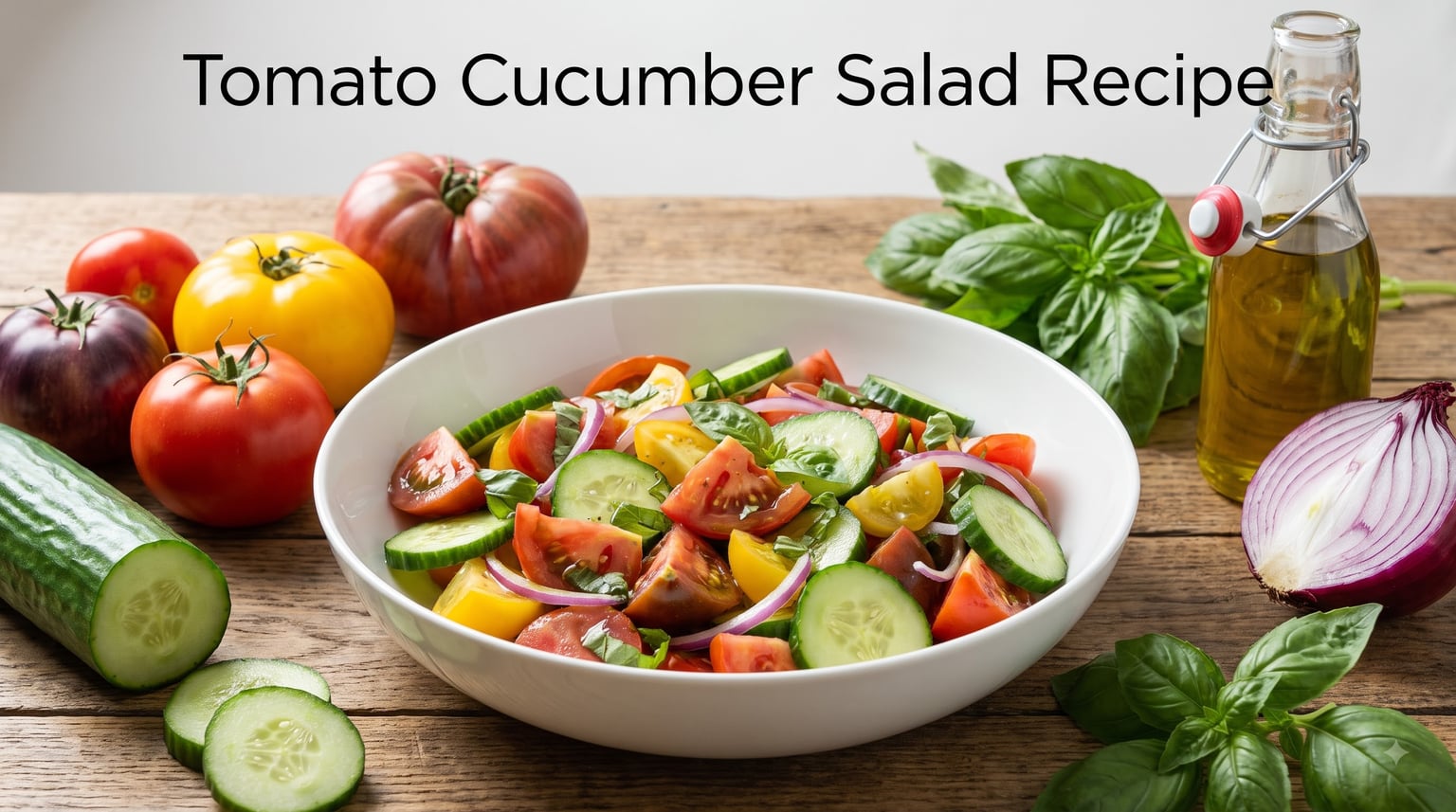
If you have ever stood in your kitchen in August with a pile of garden tomatoes and a few cucumbers on the counter, this tomato cucumber salad recipe is exactly what you need. It takes about 15 minutes, uses no special equipment, and delivers a side dish that tastes like summer in a bowl. I have made this salad dozens of times for backyard barbecues, weekday lunches, and last-minute potluck contributions, and it has never disappointed.
What makes this recipe stand out is the balance. Juicy tomatoes, crunchy cucumbers, and sharp red onion get a tangy vinaigrette that ties everything together without overpowering the vegetables. Our team tested multiple dressing ratios, marinating times, and ingredient combinations to find the version that consistently gets the best reaction from guests.
In this guide, you will find a complete tomato cucumber salad recipe with exact measurements, a step-by-step preparation walkthrough, a full ingredient selection guide, and every tip and trick you need to avoid common mistakes like watery or bland salad. We will also cover make-ahead instructions, storage, variations, and answers to the most frequently asked questions.
This recipe is naturally vegan, gluten-free, low-carb, and ready in under 20 minutes. Whether you call it cucumber tomato salad, tomato and cucumber salad, or a simple garden salad, this is the version you will keep coming back to all summer long.
Table of Contents
Why This Recipe Works?
This tomato cucumber salad recipe works because it relies on a few simple principles that bring out the best in raw vegetables. First, salting the cucumbers briefly draws out excess water so the final salad stays crisp instead of soggy. Second, marinating the red onions in the dressing mellows their sharp bite and infuses the vinaigrette with flavor before it even touches the tomatoes.
The dressing ratio matters more than most people realize. Too much vinegar and the salad tastes harsh. Too much oil and it feels greasy. After testing ratios ranging from 1:1 to 3:1 oil-to-vinegar, we landed on a 2:1 ratio of extra virgin olive oil to red wine vinegar as the sweet spot for this particular combination of vegetables.
Using peak-season produce is the single biggest factor in how this salad tastes. A pale, out-of-season tomato will never deliver the juicy sweetness that a ripe heirloom or beefsteak brings. The good news is that this recipe is forgiving. Even with average supermarket tomatoes, the dressing and marinating technique elevate the final result significantly.
Tomato Cucumber Salad Recipe: Ingredients
Here is everything you need for a classic tomato cucumber salad that serves 4 to 6 people as a side dish. All quantities are adjustable based on what you have available.
For the salad:
3 medium tomatoes (about 1.5 lbs) — heirloom, beefsteak, or on-the-vine, cored and cut into wedges or chunks
2 English cucumbers or 4 Persian cucumbers — sliced into half-moons about 1/4 inch thick
1/2 medium red onion — thinly sliced (about 1 cup)
1/4 cup fresh herbs — chopped basil, parsley, dill, or a combination
1/2 teaspoon kosher salt (plus more for drawing water from cucumbers)
1/4 teaspoon freshly ground black pepper
For the vinaigrette dressing:
3 tablespoons extra virgin olive oil
1.5 tablespoons red wine vinegar
1/2 teaspoon Dijon mustard (optional, helps emulsify the dressing)
1/2 teaspoon kosher salt
1/4 teaspoon freshly ground black pepper
1/2 teaspoon sugar or honey (optional, to balance acidity)
Optional additions:
1/2 cup crumbled feta cheese
1/3 cup pitted and halved Kalamata olives
1/4 cup diced avocado
1 tablespoon capers
1 cup cooked chickpeas for extra protein
This tomato cucumber salad recipe is designed to be flexible. The core five ingredients are tomatoes, cucumbers, red onion, olive oil, and vinegar. Everything else is a matter of personal taste and what you happen to have on hand.
Choosing the Best Ingredients
The quality of your ingredients directly determines how good this salad will be. Here is a detailed guide to selecting the right vegetables, herbs, and pantry staples.
Which Cucumbers to Use
English cucumbers are the top choice for this salad because they have thin skins, minimal seeds, and a crisp texture that holds up well in dressing. They come wrapped in plastic at most grocery stores and do not need peeling or seeding. Persian cucumbers are a close second and are ideal if you prefer smaller, bite-sized pieces.
Regular garden cucumbers or slicing cucumbers work too, but they have thicker skins and more water content. If you use them, peel the skin off and scoop out the seeds with a spoon before slicing. This prevents the salad from turning watery during marinating.
Here is a quick comparison to help you decide:
English cucumber: Long, thin, dark green skin, virtually seedless, no peeling needed. Best overall choice.
Persian cucumber: Shorter and slightly thicker than English, crisp texture, very few seeds. Great for small bite-sized pieces.
Garden or slicing cucumber: Thicker, waxy skin, large seed cavity. Peel and seed before using.
Kirby cucumber: Short and bumpy, very crunchy. Traditionally used for pickling but works well in salads if peeled.
Which Tomatoes to Use
Ripe, in-season tomatoes are non-negotiable for the best flavor. Here is how to choose:
Heirloom tomatoes: Available in a range of colors and sizes, with rich, complex flavor. The top pick for this salad. Cut into wedges to showcase their shape.
Beefsteak tomatoes: Large and meaty with classic tomato flavor. Great for chunky salads. Core them and cut into 1-inch pieces.
On-the-vine tomatoes: Reliable supermarket option with decent flavor year-round. A solid choice when heirlooms are not available.
Cherry or grape tomatoes: Sweet and convenient. Halve them for this salad. They work well as a mix-in or as the primary tomato if you want a more uniform texture.
Avoid tomatoes that are rock-hard, pale pink, or refrigerated in the store. Cold temperatures destroy tomato flavor and texture. Store your tomatoes at room temperature until they are fully ripe.
Red Onion and Herb Selection
Red onion is the standard for this salad because its sharp flavor cuts through the richness of olive oil and balances the sweetness of ripe tomatoes. If you find raw red onion too pungent, soak the slices in cold water for 10 minutes before adding them. This technique removes the harsh bite while keeping the crunch.
For herbs, fresh is always better than dried here. Basil is the most popular choice and pairs beautifully with tomatoes. Parsley adds a clean, fresh note. Dill brings a slightly tangy, Mediterranean quality. You can use one herb or combine two or three for a more complex flavor profile.
Olive Oil and Vinegar
Use extra virgin olive oil for the best flavor. You do not need the most expensive bottle, but a decent quality oil makes a noticeable difference in a raw dressing where the oil is not cooked.
Red wine vinegar is the classic choice and provides a bright, tangy acidity. White wine vinegar is slightly milder and works well if you prefer a less assertive dressing. Apple cider vinegar adds a fruity undertone. Balsamic vinegar is delicious but darker and sweeter, so it will change the appearance and flavor profile of the salad.
Equipment You Will Need
You do not need any special equipment for this recipe. Here is what to have ready:
A large mixing bowl for combining the salad
A small bowl or jar for whisking the dressing
A sharp chef knife and cutting board
A colander (for salting and draining cucumbers)
A whisk or fork for the dressing
Measuring spoons
That is it. This is one of the simplest recipes you can make in terms of equipment, which is part of its appeal for busy weeknights and outdoor gatherings.
How to Make Tomato Cucumber Salad: Step by Step
Follow these steps for a perfect tomato cucumber salad every time. The total active time is about 15 minutes, with a recommended marinating period of 15 to 30 minutes for best flavor.
Step 1: Prep the cucumbers. Slice your English or Persian cucumbers into half-moons about 1/4 inch thick. If using garden cucumbers, peel them, cut in half lengthwise, and scoop out the seeds with a spoon before slicing. Place the slices in a colander set over a bowl, sprinkle with 1/2 teaspoon of kosher salt, toss to coat, and let them sit for 10 minutes. This step draws out excess moisture and prevents a watery salad.
Step 2: Slice the onion. Cut the red onion in half from root to stem. Peel off the papery skin and lay one half flat on the cutting board. Slice across as thinly as possible to get delicate, translucent strips. If the onion is very pungent, place the slices in a bowl of cold water and let them soak for 10 minutes, then drain.
Step 3: Cut the tomatoes. Core the tomatoes and cut them into wedges or chunks depending on the variety. Heirloom and beefsteak tomatoes look beautiful cut into wedges. Cherry tomatoes should be halved. Try to keep the pieces relatively uniform in size for even coating and easy eating. Place the cut tomatoes in your large mixing bowl.
Step 4: Combine the vegetables. Add the drained cucumbers and the sliced red onion to the bowl with the tomatoes. Add the chopped fresh herbs. Toss everything gently with your hands or a large spoon to distribute the ingredients evenly. Avoid aggressive tossing, which can break up the tomatoes.
Step 5: Make the dressing. In a small bowl or jar, combine the extra virgin olive oil, red wine vinegar, Dijon mustard, salt, pepper, and sugar if using. Whisk vigorously or shake the jar until the dressing is well combined and slightly thickened. The mustard helps emulsify the oil and vinegar so they do not separate immediately.
Step 6: Dress the salad. Pour the dressing over the vegetables and toss gently to coat everything. Start with about three-quarters of the dressing, taste, and add more as needed. The vegetables should be lightly coated, not drowning.
Step 7: Let it marinate. Let the salad sit at room temperature for 15 to 30 minutes before serving. This resting time is the secret to a deeply flavorful salad. The salt in the dressing pulls juices from the tomatoes, which mix with the oil and vinegar to create a natural, flavorful sauce at the bottom of the bowl.
Step 8: Taste and adjust. Before serving, taste the salad and adjust the seasoning. Add more salt, pepper, vinegar, or oil to taste. Transfer to a serving platter or bowl and serve at room temperature.
How to Make the Dressing
The dressing is what turns plain vegetables into a memorable salad. The classic vinaigrette for this recipe uses a 2:1 ratio of olive oil to red wine vinegar, which provides enough acidity to brighten the tomatoes without being harsh.
To make the basic dressing, combine 3 tablespoons of extra virgin olive oil, 1.5 tablespoons of red wine vinegar, 1/2 teaspoon of Dijon mustard, 1/2 teaspoon of kosher salt, 1/4 teaspoon of black pepper, and an optional 1/2 teaspoon of sugar or honey. Whisk until the mixture is cloudy and slightly thickened. The mustard acts as an emulsifier, binding the oil and vinegar together so they do not separate immediately.
If you want to experiment with different flavors, here are some dressing variations that all work beautifully with this salad:
Lemon herb dressing: Replace the red wine vinegar with fresh lemon juice. Add 1 minced garlic clove and 1 tablespoon of chopped fresh oregano.
Balsamic dressing: Swap the red wine vinegar for balsamic vinegar and skip the sugar. This version is darker, sweeter, and pairs well with feta.
Creamy dressing: Whisk 2 tablespoons of plain Greek yogurt or mayonnaise into the basic vinaigrette. This creates a richer, creamier coating.
Garlic and herb dressing: Add 1 minced garlic clove and 1 tablespoon of mixed chopped herbs to the basic recipe.
Apple cider dressing: Replace the red wine vinegar with apple cider vinegar for a slightly fruity, milder acidity.
One important tip: always taste your dressing on a piece of cucumber or tomato before dressing the entire salad. This lets you adjust the seasoning before it is too late.
Recipe Tips and Tricks
After making this salad dozens of times and reading through hundreds of home cook experiences on cooking forums, here are the tips that make the biggest difference.
Salt the cucumbers first. This is the number one way to prevent a watery salad. Tossing sliced cucumbers with salt and letting them drain for 10 minutes pulls out significant moisture. Pat them dry with a paper towel before adding to the salad.
Marinate the onions in the dressing. Many experienced home cooks recommend combining the sliced onion with the dressing 15 minutes before assembling the salad. The acid in the vinegar mellows the raw onion bite and infuses the dressing with onion flavor at the same time.
Do not refrigerate the tomatoes. Cold temperatures destroy the texture and flavor of tomatoes. Keep them at room temperature until just before serving. If the salad needs to be chilled for a potluck, bring it back to room temperature for 15 minutes before serving.
Use kosher salt, not table salt. Kosher salt has larger crystals that distribute more evenly and taste cleaner. Table salt contains anti-caking agents and can taste metallic. If you only have table salt, use half the amount called for.
Cut vegetables to similar sizes. Uniform pieces mean every bite has a balanced mix of tomato, cucumber, and onion. It also makes the salad easier to eat and more visually appealing.
Dress just before the right moment. For the best texture, dress the salad 15 to 30 minutes before serving. Less than that and the flavors will not meld. More than an hour and the tomatoes start to break down and release too much liquid.
Taste and adjust at the end. Vegetables vary in flavor and moisture content. Always taste the finished salad and adjust salt, acid, or oil as needed. A splash of extra vinegar can wake up a flat-tasting salad instantly.
Variations and Additions
This tomato cucumber salad recipe is a blank canvas. Here are some popular variations that take it in different directions.
Mediterranean version: Add 1/2 cup of crumbled feta cheese, 1/3 cup of Kalamata olives, and a handful of fresh oregano. This turns the salad into something closer to a Greek salad and makes it substantial enough to serve as a light main course.
Creamy version: Replace the vinaigrette with a dressing made from sour cream or Greek yogurt, a splash of lemon juice, minced garlic, and fresh dill. This version is especially popular at Midwestern potlucks and picnics.
Indian-style version: Add 1 finely chopped green chili, 1 teaspoon of chaat masala, and a squeeze of lemon juice. Substitute cilantro for basil or parsley. This version, known as kachumber salad, is a staple in Indian cuisine and pairs beautifully with curries.
Avocado addition: Add 1 diced avocado just before serving for creaminess and healthy fats. The avocado coats the vegetables and adds richness without needing more oil in the dressing.
Grilled version: Grill thick slices of tomato and cucumber for 2 to 3 minutes per side before adding to the salad. The char adds a smoky depth that pairs well with grilled meats.
Chickpea protein boost: Add 1 cup of rinsed and drained chickpeas to turn this side salad into a satisfying vegetarian main. This works especially well for meal prep and lunch bowls.
Make-Ahead and Storage Instructions
One of the best things about this tomato cucumber salad recipe is how well it handles advance preparation, as long as you follow a few guidelines.
What you can prep ahead: You can wash and slice the cucumbers, slice the onion, make the dressing, and chop the herbs up to 24 hours in advance. Store each component separately in airtight containers in the refrigerator. Do not cut the tomatoes more than a few hours ahead, as they lose flavor and texture quickly once cut.
How far ahead to assemble: For the best results, assemble and dress the salad 15 to 30 minutes before serving. This gives the flavors time to meld without letting the vegetables break down. If you are taking it to a potluck, you can assemble it at home and transport it in a sealed container.
Storing leftovers: Leftover salad will keep in the refrigerator for 1 to 2 days in an airtight container. The cucumbers will lose some of their crunch and the tomatoes will release more liquid, but the flavor will still be good. Drain off excess liquid before serving leftovers.
What not to do: Do not freeze this salad. The texture of tomatoes and cucumbers degrades badly when frozen and thawed. Do not dress the salad more than 2 hours before serving if you want the best texture.
Serving Suggestions and Pairings
This salad is incredibly versatile and pairs with almost any summer main dish. Here are some of the best serving suggestions.
For barbecues and cookouts: Serve alongside grilled chicken, burgers, hot dogs, or ribs. The acidity and freshness of the salad cut through rich, smoky grilled meats perfectly.
For Mediterranean meals: Pair with grilled lamb, chicken souvlaki, or falafel. Add warm pita bread and hummus for a complete spread.
For weeknight dinners: Serve with roasted chicken, baked fish, or a simple pasta dish. The salad adds freshness and vegetables to any plate without requiring extra cooking.
As a light lunch: Add chickpeas, grilled chicken, or canned tuna to make the salad a complete meal on its own. Serve with crusty bread to soak up the flavorful dressing at the bottom of the bowl.
Serving temperature: This salad is best served at room temperature, not cold. If you have refrigerated it, let it sit out for 15 minutes before serving to take the chill off. Cold mutes the flavor of tomatoes and herbs.
Portion guidance: This recipe makes about 4 to 6 side-dish servings. For a party of 8 to 10, double the recipe. For a crowd of 15 or more, triple it and consider making two batches rather than one enormous bowl, which is hard to toss evenly.
Nutrition Information
This tomato cucumber salad recipe is naturally healthy, light, and packed with vitamins. Here is the approximate nutrition per serving (based on 6 servings, without optional additions):
Calories: approximately 90
fat: 7g
Carbohydrates: 7g
Fiber: 2g
Sugar: 4g (natural sugars from tomatoes)
Protein: 1g
Sodium: 290mg
This recipe is vegan, gluten-free, vegetarian, low-carb, and dairy-free (without feta). It is rich in vitamin C, vitamin K, and potassium from the fresh vegetables. Adding feta or chickpeas will increase the calorie and protein content accordingly.
Frequently Asked Questions
What is the best dressing for cucumber and tomato salad?
The best dressing is a simple vinaigrette made with 3 tablespoons of extra virgin olive oil, 1.5 tablespoons of red wine vinegar, 1/2 teaspoon of Dijon mustard, salt, and pepper. The 2:1 oil-to-vinegar ratio provides bright acidity without being harsh. For variations, try lemon juice, balsamic vinegar, or a creamy yogurt-based dressing.
How do you keep cucumber tomato salad from getting watery?
Salt the sliced cucumbers with 1/2 teaspoon of kosher salt and let them drain in a colander for 10 minutes before adding to the salad. This draws out excess moisture. Also avoid cutting tomatoes too far in advance and do not dress the salad more than 30 minutes before serving.
Can you make cucumber tomato salad ahead of time?
Yes, you can prep the components up to 24 hours ahead. Slice cucumbers and onions, make the dressing, and chop herbs in advance, storing each separately. Cut tomatoes no more than a few hours ahead. Assemble and dress the salad 15 to 30 minutes before serving for best flavor and texture.
What are the three ingredients in a simple cucumber salad recipe?
The three core ingredients are cucumbers, vinegar, and salt. A basic cucumber salad needs nothing more than sliced cucumbers dressed with vinegar and a pinch of salt. For a full tomato cucumber salad, the essential five ingredients are tomatoes, cucumbers, red onion, olive oil, and vinegar.
What is the trick for the most flavorful cucumber salad every time?
The trick is to let the dressed salad rest at room temperature for 15 to 30 minutes before serving. This resting period allows the salt to draw juices from the vegetables, which mix with the oil and vinegar to create a natural, flavorful sauce. Also marinate the onions in the dressing first to mellow their sharpness and infuse the dressing with flavor.
How long does cucumber tomato salad last in the fridge?
Leftover cucumber tomato salad will keep for 1 to 2 days in an airtight container in the refrigerator. The cucumbers will lose some crunch and the tomatoes will release more liquid over time. Drain off excess liquid before serving leftovers. Do not freeze this salad.
Conclusion
This tomato cucumber salad recipe is proof that the simplest dishes are often the best. With just a few fresh vegetables, a quick vinaigrette, and about 15 minutes of prep time, you get a side dish that rivals anything from a restaurant. The key techniques of salting the cucumbers, marinating the onions in the dressing, and letting the assembled salad rest at room temperature are what separate a good salad from a great one.
Keep this recipe in your back pocket for summer barbecues, potlucks, weeknight dinners, and last-minute gatherings. It scales easily, adapts to whatever vegetables and herbs you have on hand, and works with multiple dressing styles. Once you master the basic version, the variations are endless.
Grab some ripe tomatoes, crisp cucumbers, and a red onion, and make this tomato cucumber salad recipe today. It might just become your most-requested summer side dish.