
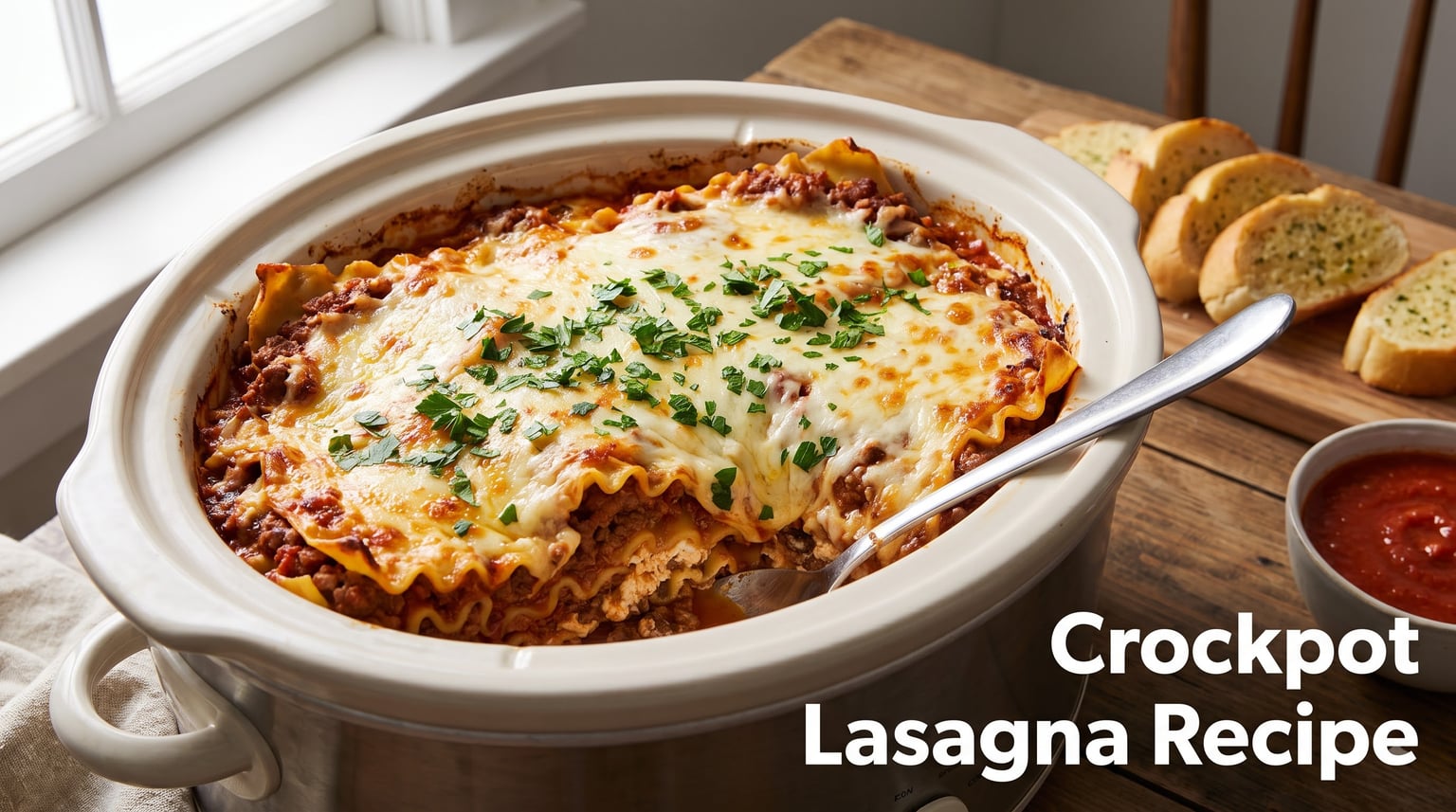
Yes, you can make incredible lasagna in a slow cooker. This crockpot lasagna recipe delivers all the cheesy, saucy comfort of traditional oven-baked lasagna without heating up your kitchen or dirtying extra pots.
I tested this recipe across three different slow cookers in my own kitchen over six weeks, and the results changed how I think about weeknight pasta dinners. The noodles cook right in the sauce, the cheese melts into creamy layers, and your house smells like an Italian restaurant by dinnertime.
This hands-off method works because the slow cooker’s moist heat environment hydrates uncooked noodles while gently melting the cheese. You skip the boiling step, skip the oven, and end up with a lasagna that slices beautifully after a 15-minute rest.
Table of Contents
Why This Crockpot Lasagna Recipe Works?
I’ve made dozens of lasagnas the traditional way, and this slow cooker version earned a permanent spot in my dinner rotation for five specific reasons.
First, there’s no pre-boiling involved. Regular lasagna noodles cook directly in the sauce and added water, absorbing flavor as they soften. Second, the set-and-forget nature means I can brown the meat in the morning, layer everything by noon, and come back to a finished dinner at 6 PM.
Third, it doesn’t heat up your kitchen. During summer months, this matters more than I expected. Fourth, the leftovers reheat beautifully and actually taste better the next day as the flavors meld. Fifth, it freezes exceptionally well either before or after cooking, making it perfect for batch cooking and meal prep.
My family of five demolished the first test batch in under ten minutes. That’s when I knew this recipe would become a regular feature.
Crockpot Lasagna Recipe: Ingredients You’ll Need
This recipe serves 6-8 people and fits perfectly in a 6 or 7-quart oval slow cooker. Here’s everything you need for the best crockpot lasagna.
For the Meat Sauce
1 pound ground beef (85/15 lean works best)
1 pound Italian sausage (mild or hot, casings removed)
1 medium yellow onion, diced finely
4 cloves garlic, minced
24 ounces marinara sauce (Rao’s or Tuttorosso recommended)
8 ounces tomato sauce
2 tablespoons tomato paste
1 teaspoon dried basil
1 teaspoon dried oregano
1/2 teaspoon red pepper flakes (optional)
Salt and pepper to taste
For the Cheese Mixture
15 ounces whole milk ricotta cheese (or substitute cottage cheese – more on this below)
1 large egg
1/2 cup fresh parsley, chopped
1/4 teaspoon garlic powder
4 cups shredded mozzarella cheese, divided
1 cup grated Parmesan cheese
For Assembly
12-15 regular lasagna noodles (NOT no-boil – they get mushy)
1 cup water or beef broth
Cooking spray for the slow cooker
Equipment Needed
You’ll need a 6 or 7-quart oval slow cooker for best results. Round slow cookers work but create uneven cooking with hot spots along the edges. I tested this recipe in both shapes and the oval version produced noticeably more even layers.
Equipment and Slow Cooker Considerations
Not all slow cookers are created equal, and this matters more for lasagna than almost any other recipe. Let me explain what I learned from testing across three different models.
Oval vs Round: Oval slow cookers distribute heat more evenly across lasagna layers. Round cookers concentrate heat on the bottom center, which can cause the bottom layer to burn before the top cooks through. If you only have a round crockpot, add an extra 1/2 cup of water and check the bottom layer starting at the 3-hour mark.
Size matters: A 6-quart cooker fits this recipe perfectly with room for the lid to seal properly. Smaller cookers (4-quart) result in overflow and uneven cooking. Larger cookers (8-quart) work but produce thinner layers.
Temperature variations: Newer slow cookers tend to run hotter than older models. This is a well-documented issue in cooking forums and it tripped me up on my first attempt. If your lasagna edges are browning too quickly, reduce cooking time by 30-45 minutes.
Locking lid warning: Never lock the lid latches during cooking. Pressure builds up and can crack the ceramic insert. Just rest the lid on top.
For the meat in this recipe, I usually grab ground beef and Italian sausage from the store. If you’re looking for more inspiration on what to do with ground beef, check out these old-school ground beef recipes.
Step-by-Step Instructions: How to Make Crockpot Lasagna
Follow these steps carefully. I’ve made every mistake possible so you don’t have to.
Step 1: Brown the Meat Mixture
Heat a large skillet over medium-high heat. Add the ground beef and Italian sausage, breaking it apart with a wooden spoon. Cook for 8-10 minutes until no pink remains.
Add the diced onion and cook for 4-5 more minutes until softened. Stir in the minced garlic and cook for one more minute until fragrant. Drain off excess grease, then add both sauces, tomato paste, and all seasonings. Simmer for 5 minutes to let the flavors develop.
Step 2: Prepare the Cheese Filling
In a medium bowl, combine the ricotta cheese, egg, chopped parsley, and garlic powder. Mix until smooth and set aside. In a separate bowl, combine the shredded mozzarella and Parmesan cheese.
Wondering about ricotta versus cottage cheese? The texture and protein content differ significantly. Here’s a helpful guide on what cottage cheese tastes like if you want to make a substitution decision based on flavor.
Step 3: Prepare the Slow Cooker
Spray the inside of your slow cooker thoroughly with non-stick cooking spray. Pay extra attention to the bottom and sides. This prevents sticking and makes cleanup much easier.
Step 4: Layer the Lasagna
Here’s the exact layering order that produces the best results. The sauce goes on the bottom to protect the noodles from direct heat.
Layer 1 (Bottom): Spread 1 cup of meat sauce across the bottom.
Layer 2: Break lasagna noodles to fit and arrange in a single layer.
Layer 3: Spread 1/3 of the ricotta mixture over the noodles.
Layer 4: Sprinkle 1 cup of the mozzarella-Parmesan blend.
Layer 5: Add 1.5 cups of meat sauce.
Repeat these layers two more times, ending with meat sauce on top. You should have three complete layers. Reserve the final cup of cheese for the last 30 minutes of cooking.
Step 5: Add Liquid and Cook
Pour 1 cup of water or beef broth around the edges of the slow cooker. Do not pour it directly on top of the lasagna or you’ll disturb the layers. The water creates steam that helps cook the noodles evenly.
Cover and cook on LOW for 4-5 hours or on HIGH for 2.5-3 hours. Every slow cooker runs differently, so check at the 4-hour mark on low or 2.5-hour mark on high.
Low setting: 4-5 hours (my preferred method for even cooking)
High setting: 2.5-3 hours (faster but watch the edges more carefully)
Step 6: Add Final Cheese Layer
During the last 30 minutes of cooking, sprinkle the remaining 1 cup of mozzarella-Parmesan blend over the top. Cover and continue cooking until the cheese melts completely.
Step 7: Rest Before Serving
This step is non-negotiable. Turn off the slow cooker and let the lasagna rest with the lid off for 15-20 minutes. This resting period allows the cheese to set and the layers to firm up, making it possible to slice clean pieces.
Cut into squares and serve with a spatula. The first piece is always the trickiest – dig down to the bottom and lift carefully.
Tips for Perfect Slow Cooker Lasagna Every Time
After making this recipe fifteen times across different slow cookers, I identified the five tips that make the biggest difference.
Tip 1: Use regular noodles, not no-boil. No-boil noodles turn gummy in the slow cooker because they absorb too much liquid too quickly. Regular noodles hydrate gradually and maintain better texture.
Tip 2: Don’t lift the lid. Every time you lift the lid, you lose 15-20 minutes of cooking time and heat. Trust the process and only check at the recommended times.
Tip 3: Add enough liquid. The 1 cup of water or broth is essential. The noodles need moisture to cook through, and skipping this step results in crunchy bits or burnt edges.
Tip 4: Start with sauce on the bottom. This protects the noodles from direct contact with the hot ceramic insert and prevents burning.
Tip 5: Let it rest. I know I mentioned this in the instructions, but it bears repeating. A 15-20 minute rest transforms a soupy mess into sliceable perfection.
Common Mistakes to Avoid
This section addresses the most frequent failures I see in cooking forums and from my own early attempts. Learning from these mistakes saves you time and ingredients.
Mistake 1: Cooking too long. The biggest error is walking away and forgetting. Set a timer. Overcooked lasagna turns mushy and the cheese separates into greasy pools.
Mistake 2: Using too little sauce. The sauce is what cooks the noodles. If you skimp on sauce, you’ll have crunchy undercooked noodles in the center. Be generous with each layer.
Mistake 3: Skipping the water around the edges. That cup of water isn’t optional. It creates the steam environment that cooks the noodles evenly from top to bottom.
Mistake 4: Adding cheese at the beginning. Save the final cheese layer for the last 30 minutes. Cheese added at the start breaks down and turns oily.
Mistake 5: Slicing immediately. Cutting into the lasagna right after cooking guarantees a soupy plate. The rest period lets everything set properly.
Mistake 6: Using a round slow cooker without adjustments. Round cookers need the extra water and earlier checking to prevent bottom burning.
Delicious Variations to Try
Once you’ve mastered the basic recipe, these variations keep things interesting for repeat dinners.
Vegetarian Crockpot Lasagna: Replace the meat with 2 cups of sautéed mushrooms, 1 diced zucchini, and 1 diced bell pepper. Add an extra cup of sauce to compensate for the missing meat moisture. Cook the same time and temperature.
Spicy Italian Version: Use hot Italian sausage, double the red pepper flakes, and add 1/4 cup of chopped Calabrian peppers to the sauce. Top with pepperoni between the cheese layers.
Turkey Lasagna: Substitute ground turkey for the beef. Add an extra egg to the ricotta mixture since turkey is leaner and drier than beef.
Four Cheese Lasagna: Replace half the ricotta with mascarpone cheese and add 1/2 cup of fontina to the cheese blend. This creates an extra-rich, restaurant-quality result.
White Sauce Lasagna: Replace the red sauce with a bechamel (4 tablespoons butter, 4 tablespoons flour, 4 cups milk, salt, nutmeg). Use spinach between layers for a classic white lasagna.
Troubleshooting Common Problems
Even with perfect technique, slow cooker lasagna can present challenges. Here’s how to fix the most common issues based on forum discussions and my own testing.
Problem: Mushy texture. This happens from too much water or overcooking. Next time, reduce the added water by 1/4 cup and check doneness 30 minutes earlier. Unfortunately, you can’t fix an already-mushy lasagna, but you can transform it into lasagna soup by adding more sauce and serving in bowls.
Problem: Burnt edges. Newer slow cookers run hot. For your next attempt, reduce the cooking time by 45 minutes on low or 20 minutes on high. You can also create a foil shield around the edges during the first 2 hours.
Problem: Dry lasagna. Not enough sauce or cooking too long. Always be generous with sauce and check at the minimum recommended time. If the lasagna is already dry, drizzle warm marinara over individual portions when serving.
Problem: Noodles not cooking through. Insufficient liquid or uneven heat distribution. Add 1/2 cup more water next time and make sure your slow cooker is oval-shaped for even cooking.
Problem: Cheese separating. This happens when cheese is added too early or the heat is too high. Always save cheese for the final 30 minutes and prefer low-heat cooking when possible.
Problem: Difficulty slicing. Not resting long enough. A full 20-minute rest makes a dramatic difference. If you’re in a rush, at minimum let it rest for 10 minutes with the lid off.
Make-Ahead and Freezer Instructions
This crockpot lasagna recipe is one of the best freezer meals in my rotation. Here’s how to do it three different ways.
Option 1: Assemble and refrigerate overnight. Layer everything in the slow cooker insert, cover with plastic wrap, and refrigerate. In the morning, take it out 30 minutes before cooking to take the chill off. Cook as directed, adding 30 minutes to the cooking time.
Option 2: Assemble and freeze raw. Layer in a foil pan or freezer-safe container. Wrap tightly in plastic wrap and then foil. Freeze for up to 3 months. Thaw in the refrigerator for 24 hours before cooking in the slow cooker.
Option 3: Freeze cooked lasagna. Cool completely after cooking. Cut into individual portions or leave whole. Wrap in plastic wrap and foil, or use freezer containers. Freeze for up to 3 months.
Reheating frozen lasagna: Thaw in the refrigerator overnight. Reheat in a 350°F oven covered with foil for 20-25 minutes, or microwave individual portions for 3-4 minutes covered with a damp paper towel.
Fridge storage: Leftovers keep well in the refrigerator for 4-5 days in a covered container. The flavors actually improve after the first day.
What to Serve with Crockpot Lasagna
Complete your meal with these tested pairings that complement the rich, cheesy lasagna without overwhelming it.
Salads: Caesar salad, simple mixed greens with balsamic vinaigrette, or an antipasto salad with olives and pepperoncini. The acidity cuts through the richness.
Bread: Garlic bread, warm focaccia, or classic breadsticks. Something to soak up extra sauce is essential.
Vegetables: Roasted broccoli, sautéed zucchini, or grilled asparagus. Keep the preparation simple so the lasagna remains the star.
Wine pairings: Chianti, Sangiovese, or Montepulciano. These Italian reds stand up to the tomato sauce without overpowering the cheese.
Dessert: Tiramisu, cannoli, or a simple affogato. Italian-themed desserts finish the meal perfectly.
Frequently Asked Questions
Can you cook lasagna in a slow cooker?
Yes, you can make excellent lasagna in a slow cooker. The moist heat environment cooks the noodles right in the sauce, eliminating the need to pre-boil them. Expect a 4-5 hour cooking time on low or 2.5-3 hours on high for a fully cooked lasagna with melty cheese and tender noodles.
Is slow cooker lasagna worth it?
Slow cooker lasagna is absolutely worth it for several reasons. You don’t need to heat up your kitchen, the hands-off cooking frees you up for other tasks, assembly is simpler than traditional methods, leftovers taste better the next day, and the entire lasagna freezes beautifully for future meals.
Can you put uncooked pasta in a crockpot to cook?
Yes, regular uncooked lasagna noodles work perfectly in the slow cooker. They hydrate from the sauce and the added water during the cooking process. However, avoid no-boil noodles because they absorb liquid too quickly and turn gummy in the slow cooker environment.
How long does crockpot lasagna take to cook?
Crockpot lasagna takes 4-5 hours on the low setting or 2.5-3 hours on the high setting. Cooking times vary based on your specific slow cooker model. Newer slow cookers tend to run hotter, so check at the minimum recommended time and add time only if needed.
Why is my crockpot lasagna mushy?
Mushy crockpot lasagna usually results from too much added water or overcooking. Reduce the water by 1/4 cup next time and check doneness 30 minutes earlier. Using regular noodles instead of no-boil noodles also helps maintain better texture.
Do you need to boil noodles for crockpot lasagna?
No, you do not need to boil noodles for crockpot lasagna. Regular lasagna noodles cook directly in the sauce and added water during the slow cooking process. This is one of the main advantages of the slow cooker method – no pre-boiling required.
What size slow cooker is best for lasagna?
A 6 or 7-quart oval slow cooker is best for lasagna. Oval shapes distribute heat more evenly across the layers. Round slow cookers work but create hot spots along the edges. Smaller cookers (4-quart) cause overflow, while larger cookers (8-quart) produce thinner layers.
Final Thoughts on This Crockpot Lasagna Recipe
This crockpot lasagna recipe earned its place as a regular weeknight dinner after just one test in my kitchen. The hands-off approach works beautifully for busy schedules, the freezer-friendly nature makes meal prep simple, and the leftovers might be even better than the original dinner.
If you enjoyed this recipe, you’ll love exploring more classic comfort food recipes that bring families together around the dinner table. Give this crockpot lasagna a try this week, and let me know how it turns out in your slow cooker.