
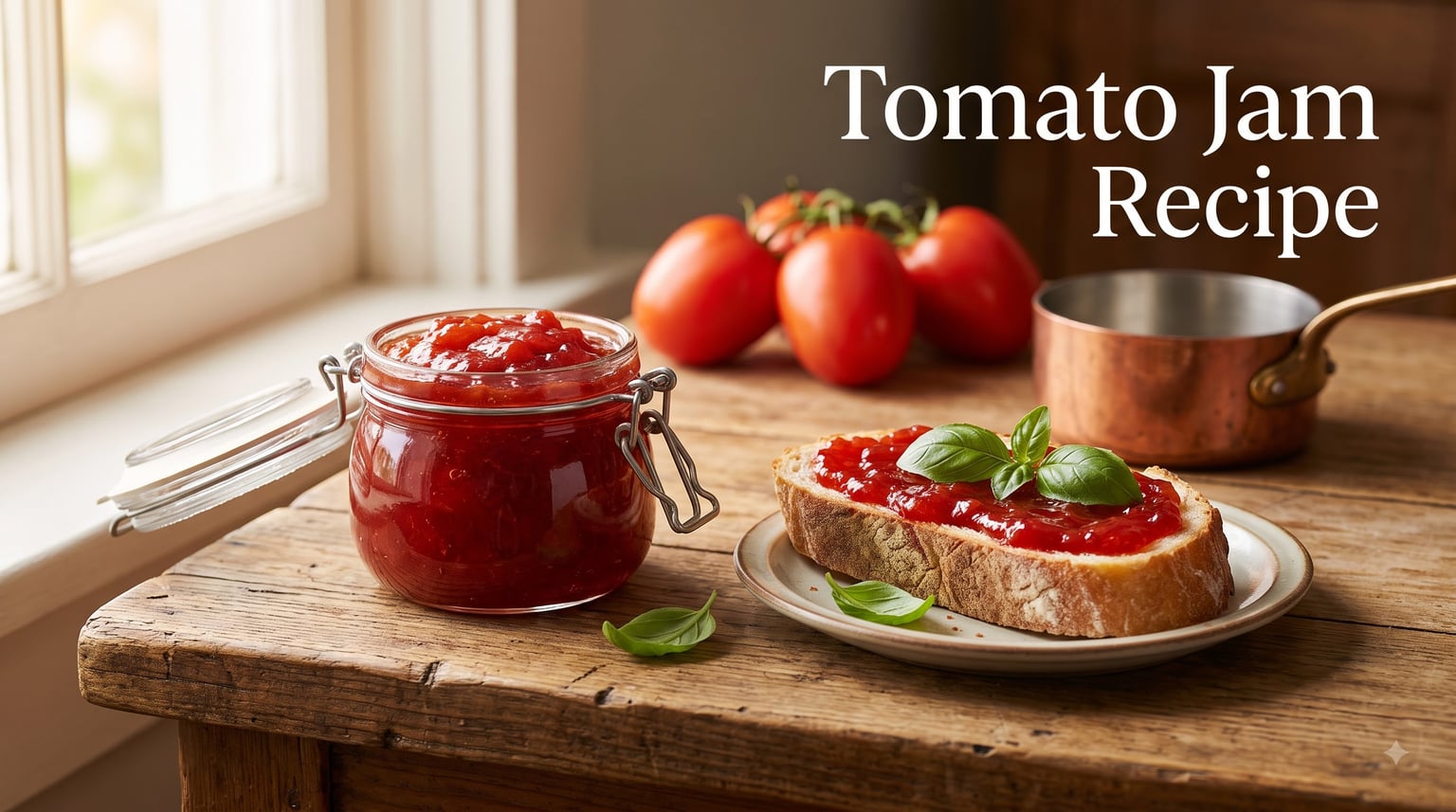
I made my first batch of tomato jam on a sweltering August afternoon three years ago, and I’ve been hooked ever since. There is something magical about turning a basket of ripe summer tomatoes into a glossy, sweet-tangy spread that tastes like summer captured in a jar.
After testing this tomato jam recipe more than 20 times across different tomato varieties and sugar levels, I’ve landed on a version that strikes the perfect balance of sweet, savory, and slightly spiced. If you’ve ever wondered how to make tomato jam at home, this guide walks you through every step.
Below, you’ll find the exact ingredients, step-by-step instructions, flavor variations, storage tips, and answers to the most common questions home cooks ask. Whether you’re working with a surplus garden harvest or just picked up a few pounds at the farmer’s market, this recipe will turn them into something special.
Table of Contents
What Is Tomato Jam?
Tomato jam is a sweet and tangy condiment made by slowly cooking fresh tomatoes with sugar, vinegar, and warm spices until thick and spreadable. Think of it as a bridge between traditional fruit preserves and savory ketchup, with a deeper, more complex flavor than either.
The texture is closer to a thick relish or chutney than a classic fruit jam. You’ll get a glossy, spoonable consistency with small pieces of tomato suspended in a syrupy base. The flavor leans sweet-savory rather than purely sweet, with warm spices like ginger, cinnamon, and chili flakes adding depth.
Tomato jam has roots in traditional preservation, similar to other vintage tomato preservation methods that date back generations. While it never became as popular as grape or strawberry jam, it has had a quiet revival among home cooks and chefs who appreciate its versatility.
One common question: is tomato jam the same as ketchup? No. Ketchup is smoother, more heavily spiced, and shelf-stable through commercial processing. Tomato jam has visible fruit pieces, a softer sweet-savory profile, and is typically homemade without commercial stabilizers.
Tomato Jam Recipe Ingredients
Before you start cooking, gather everything on the list below. Most of these ingredients are pantry staples, and the measurements are forgiving if you need to adjust slightly.
Core Ingredients You Will Need
1.5 pounds ripe Roma tomatoes (about 6-7 medium), cored and coarsely chopped
1 cup light brown sugar, packed
2 tablespoons apple cider vinegar
1 tablespoon freshly squeezed lemon juice
1 tablespoon fresh ginger, grated
1 teaspoon red pepper flakes (adjust to taste)
0.5 teaspoon ground cinnamon
0.25 teaspoon ground cloves
0.5 teaspoon kosher salt
1 small yellow onion, finely diced (optional, for depth)
The Roma tomatoes give you the best balance of flesh and low moisture, which means a thicker jam without excessive cooking time. Brown sugar adds caramel notes that white sugar cannot match, and the vinegar balances the sweetness while helping the jam keep safely.
Fresh ginger is non-negotiable in my testing. Ground ginger works in a pinch but loses the bright, almost peppery quality that makes the jam feel alive. The cinnamon and cloves add warmth without making the jam taste like dessert.
How to Make Tomato Jam?
This is the part where the magic happens. The process is mostly hands-off once you get things started, so you can prep your storage jars while the jam simmers.
Step-by-Step Instructions
Step 1: Prep your ingredients. Wash and core the tomatoes, then chop them into roughly half-inch pieces. Smaller pieces break down faster. Finely dice the onion if using, and grate the fresh ginger.
Step 2: Combine everything in a heavy pot. Add the tomatoes, brown sugar, apple cider vinegar, lemon juice, ginger, red pepper flakes, cinnamon, cloves, salt, and onion to a wide, heavy-bottomed pot or Dutch oven. A wider pot helps the moisture evaporate faster.
Step 3: Bring to a boil. Set the heat to medium-high and stir until the sugar dissolves. Once it reaches a boil, reduce the heat to medium-low. You want a gentle simmer, not a rolling boil.
Step 4: Simmer for 60-90 minutes. Stir every 10-15 minutes to prevent scorching. The jam will gradually thicken and the volume will reduce by about half. Skim off any foam that forms on the surface.
Step 5: Test for doneness. Place a small spoonful on a chilled plate and put it in the freezer for 2 minutes. If it wrinkles when you push it with your finger, it’s ready. If it runs, keep cooking.
Step 6: Cool and store. Remove from heat and let cool for 10 minutes. Transfer to clean jars, leaving 0.5 inch of headspace. Refrigerate once fully cooled.
The total cook time depends on how juicy your tomatoes are. Roma tomatoes typically need about 75 minutes, but very ripe heirlooms may take closer to 90 minutes to reach the right thickness.
Best Tomatoes for Tomato Jam
Tomato variety matters more than most recipes admit. The water content, acidity, and natural sweetness all change how the jam sets and tastes. Here’s what I learned after testing six different varieties.
Roma tomatoes are the gold standard. They have dense flesh, low moisture, and few seeds, which means a thicker jam with less cooking time. They also have a balanced acidity that pairs well with the sugar and spices.
San Marzano tomatoes work beautifully if you can find them. They’re a type of Roma with even more concentrated flavor and slightly less moisture. The jam tastes a bit more savory than sweet.
Heirloom tomatoes like Brandywine or Cherokee Purple make a more complex jam with deeper, almost wine-like notes. The downside is they are much juicier, so expect a longer cook time (closer to 2 hours).
Cherry or grape tomatoes are not recommended. Despite their sweetness, they have too much skin relative to flesh, and the skins stay tough even after long cooking. Save those for roasting.
Green tomatoes make a fantastic variation with a tangier, more savory profile. They need slightly more sugar to balance the acidity.
Tips for Perfect Tomato Jam Every Time
After making this recipe dozens of times, I’ve picked up a few tricks that consistently produce better results. These are the same techniques used in professional kitchens and informed by classic tomato glaze techniques passed down through generations.
Use a wide pot. A wide Dutch oven or saucier allows moisture to evaporate faster, which concentrates flavor and reduces cook time. A tall, narrow pot will trap steam and water down your jam.
Don’t walk away. Stir every 10-15 minutes, especially in the last 30 minutes. Jam can scorch quickly once it thickens, and burnt jam is not salvageable.
Trust the plate test. The freezer plate test is more reliable than timing alone. Tomatoes vary in moisture content, so visual cues always beat the clock.
Adjust sugar to your tomatoes. If your tomatoes are very sweet and ripe, you can reduce the sugar to 0.75 cup. If they are underripe or bland, stick with the full cup.
Skim the foam. That pinkish foam that rises during cooking can create a bitter flavor and grainy texture. Use a spoon to skim it off in the first 20 minutes.
Flavor Variations to Try
Once you’ve mastered the basic tomato jam recipe, the fun really begins. These variations all start with the base recipe above, then layer in additional flavors. If you want more inspiration, check out these modern tomato jam variations for contemporary twists.
Spicy Tomato Jam: Double the red pepper flakes and add one finely minced jalapeño (seeds removed for less heat). The result tastes incredible on grilled pork or burgers.
Smoky Tomato Jam: Add 0.5 teaspoon of smoked paprika and a pinch of chipotle powder. This version is fantastic with smoked meats, tacos, and breakfast scrambles.
Herb-Infused Tomato Jam: Stir in 2 tablespoons of fresh basil and 1 tablespoon of fresh thyme during the last 10 minutes of cooking. Pairs beautifully with fresh mozzarella and crusty bread.
Sweet and Fruity Tomato Jam: Add 0.25 cup of raisins or dried apricots (chopped) along with the tomatoes. The dried fruit adds depth and a hint of complexity.
Bourbon Tomato Jam: Stir in 2 tablespoons of bourbon during the last 5 minutes. The alcohol cooks off, leaving warm, caramel notes that complement the tomatoes beautifully.
How to Store Tomato Jam?
Proper storage is essential for both safety and flavor. How you store your jam depends on how long you want it to last and whether you want to can it for shelf stability.
Refrigerator Storage
The simplest method is refrigeration. Once the jam has cooled completely, transfer it to clean glass jars with tight-fitting lids. Leave about 0.5 inch of headspace to allow for expansion. Store in the refrigerator for up to 3 weeks.
Always use a clean spoon when scooping out jam. Introducing food particles or moisture can shorten the shelf life and lead to spoilage.
If you see any signs of mold, off smells, or unusual bubbling, discard the entire jar. Tomato jam is acidic enough to discourage most bacterial growth, but it is not foolproof.
Freezer Storage: For longer storage, freeze the jam in freezer-safe containers, leaving 1 inch of headspace for expansion. Properly frozen tomato jam keeps for up to 6 months with excellent flavor retention.
Canning for Shelf Stability: If you want shelf-stable jars that don’t need refrigeration, you’ll need to process the jam in a water bath canner. Ladle hot jam into sterilized half-pint jars, leaving 0.25 inch of headspace. Process for 15 minutes (adjust for altitude). Properly canned jam keeps for 12-18 months in a cool, dark pantry.
Canning requires attention to acid levels and processing times to be safe. If you’re new to canning, read up on safe practices from a trusted source like the National Center for Home Food Preservation before attempting it.
What to Serve with Tomato Jam
This is where tomato jam really shines. The sweet-savory profile makes it one of the most versatile condiments you can have in your fridge. Here are my favorite ways to use it.
On burgers and sandwiches: Spread a generous layer on burgers instead of ketchup. It works equally well on grilled cheese, BLTs, and roasted vegetable sandwiches.
With cheese boards: Tomato jam pairs beautifully with creamy cheeses like goat cheese, brie, and cream cheese. Spoon it over a wheel of baked brie for an unforgettable appetizer.
As a glaze for meats: Brush it on grilled pork chops, chicken thighs, or salmon during the last few minutes of cooking. The sugars caramelize and create a glossy, flavorful crust.
With breakfast: Stir a spoonful into scrambled eggs or spread it on toast with avocado. It also works as a condiment for breakfast sandwiches and omelets.
As a dip: Mix equal parts tomato jam and cream cheese for a quick party dip. Serve with crackers or crostini.
With pizza and flatbreads: Drizzle it over homemade pizza after baking, or use it as a base sauce for white pizzas. It adds a bright, tangy contrast to rich cheeses.
Frequently Asked Questions
How to make a simple tomato jam?
Combine 1.5 pounds of chopped Roma tomatoes with 1 cup brown sugar, 2 tablespoons apple cider vinegar, 1 tablespoon lemon juice, 1 tablespoon grated ginger, 1 teaspoon red pepper flakes, 0.5 teaspoon cinnamon, 0.25 teaspoon cloves, and 0.5 teaspoon salt in a heavy pot. Bring to a boil, then simmer for 60-90 minutes until thickened. Test doneness by placing a small spoonful on a chilled plate; if it wrinkles when pushed, it’s ready.
Do you need to peel tomatoes for tomato jam?
No, you do not need to peel tomatoes for tomato jam. The skins break down during the long simmer and become tender. If you prefer a smoother texture, you can blanch the tomatoes in boiling water for 30 seconds, then peel them before cooking. For chunkier jams, skip the peeling entirely.
What do you use tomato jam for?
Tomato jam works as a condiment for burgers and sandwiches, a topping for cheese boards with goat cheese or brie, a glaze for grilled pork and chicken, a spread for avocado toast, a dip mixed with cream cheese, and a sauce for homemade pizza. It is one of the most versatile condiments you can make.
Do you need pectin for tomato jam?
No, you do not need pectin for tomato jam. Tomatoes naturally contain enough pectin, especially when combined with lemon juice and sugar, to set into a thick, spoonable consistency. The slow cooking process concentrates the natural pectins and creates a jam-like texture without any added thickeners.
Is tomato jam the same as ketchup?
No, tomato jam and ketchup are different condiments. Ketchup is smoother, more heavily spiced, and commercially processed for long shelf life. Tomato jam has visible pieces of fruit, a sweeter and more complex flavor profile with warm spices like ginger and cinnamon, and is typically homemade without stabilizers or preservatives.
How long does tomato jam last in the refrigerator?
Properly stored tomato jam keeps in the refrigerator for up to 3 weeks. Store it in clean glass jars with tight-fitting lids, leave about 0.5 inch of headspace, and always use a clean spoon when scooping. If you notice any mold, off smells, or unusual bubbling, discard the entire jar immediately.
Can you freeze tomato jam?
Yes, you can freeze tomato jam for up to 6 months. Ladle cooled jam into freezer-safe containers, leaving 1 inch of headspace for expansion. Thaw in the refrigerator overnight before using. Freezing may slightly change the texture, but the flavor remains excellent.
How do you know when tomato jam is done?
Use the freezer plate test to check doneness. Place a small spoonful of jam on a chilled plate and put it in the freezer for 2 minutes. If it wrinkles when you push it with your finger, the jam is ready. If it runs or stays liquid, continue cooking for another 10-15 minutes and test again.
Final Thoughts
This tomato jam recipe is the one I come back to every summer. It’s forgiving enough for beginners, interesting enough for experienced cooks, and versatile enough to dress up everything from a plain burger to a fancy cheese board.
Give it a try with whatever ripe tomatoes you can find, and don’t be afraid to experiment with the flavor variations. Once you taste homemade tomato jam, you’ll never look at that jar of store-bought ketchup the same way again.