
A power inverter takes the 12V DC from a car socket or a battery bank and turns it into the 120V AC your outlets expect, which is the difference between a campsite full of devices you cannot charge and a setup that runs a fridge, a coffee maker and a laptop at the same time. There is no single best power inverter for everyone, though. A truck driver topping up a laptop wants a small plug-in unit, an RV owner needs clean pure sine wave power for electronics, and a homeowner covering an outage needs far more capacity than either.
So we sorted all ten of our picks by use case first, then by the failure modes owners actually report. The categories below are the four that matter in 2026: plug-in inverters for cars and trucks, pure sine wave inverters for home and RV, inverter-chargers and app-controlled units for monitoring, and heavy-duty 5000W-class boxes for whole-site loads. Each product below got the same look at its waveform, its continuous and surge ratings, its protection circuitry, its warranty length and the pattern of complaints in its reviews.
One note before we start, because it comes up constantly in the search results. Inverter generators are a different product category. They are engines with a built-in alternator, not battery conversion boxes, and they do not belong in this list. If you want to run a microwave during a power cut without a battery bank, you want a generator instead.
We also flag what each unit cannot do. Forum threads on r/diySolar and r/SolarDIY reward that honesty more than any spec sheet, and it saves buyers from pairing the wrong inverter with a sensitive load. For a deeper look at RV-specific sizing, our 12 Best RV Inverters Tested Picks for Boondocking guide covers the marine and trailer angles in more detail.
Table of Contents
Top 3 Picks for the Best Power Inverters in 2026

BESTEK 300W Pure Sine Wave
- 300W continuous and 700W peak
- 2 AC outlets plus 2 USB ports
- 11-17V input for modern vehicles
- ETL
- RoHS and FCC listed

Renogy 2000W Pure Sine Wave
- 2000W continuous and 4000W surge
- Over 90% conversion efficiency
- 3 outlets plus AC terminal block
- UL 458 and CSA certified

Giandel 4000W Pure Sine Wave
- 4000W continuous and 7000W surge
- UL listed 20A GFCI outlets
- Adjustable 9.5V to 11.5V low voltage cutoff
- 30ft wired and 20m wireless remote
Best Power Inverters at a Glance in 2026
The table below is the fastest way to narrow the field. Continuous power is the number that matters for anything you run for more than a few seconds, and surge is the short burst a motor or compressor needs to start. Wave type decides whether sensitive electronics are safe.
| Product | Specifications | Action |
|---|---|---|
| BESTEK 300W Pure Sine Wave Inverter |
|
Check Latest Price |
| Renogy 2000W Pure Sine Wave Inverter |
|
Check Latest Price |
 TOPBULL 3000W Power Inverter TOPBULL 3000W Power Inverter |
|
Check Latest Price |
| Giandel 4000W Pure Sine Wave Inverter |
|
Check Latest Price |
 BELTTT 2000W Pure Sine Wave Inverter BELTTT 2000W Pure Sine Wave Inverter |
|
Check Latest Price |
 LANDERPOW 3000W Pure Sine Wave Inverter LANDERPOW 3000W Pure Sine Wave Inverter |
|
Check Latest Price |
 VEVOR 5000W Pure Sine Wave Inverter VEVOR 5000W Pure Sine Wave Inverter |
|
Check Latest Price |
 ZETAWALE 3000W Pure Sine Wave Inverter ZETAWALE 3000W Pure Sine Wave Inverter |
|
Check Latest Price |
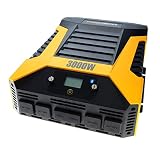 PowerDrive PWD3000P 3000W Bluetooth Inverter PowerDrive PWD3000P 3000W Bluetooth Inverter |
|
Check Latest Price |
 PiSFAU 200W Car Power Inverter PiSFAU 200W Car Power Inverter |
|
Check Latest Price |
1. BESTEK 300W Pure Sine Wave Inverter – Best Plug-In Pick for Cars and Trucks
BESTEK Pure Sine Wave Power Inverter, 300W DC 12-17V to 110V AC Car Adapter
300W continuous and 700W peak
Pure sine wave, 60 hertz
2 AC outlets plus 2 USB ports
1.4 pounds, ETL and FCC listed
Pros
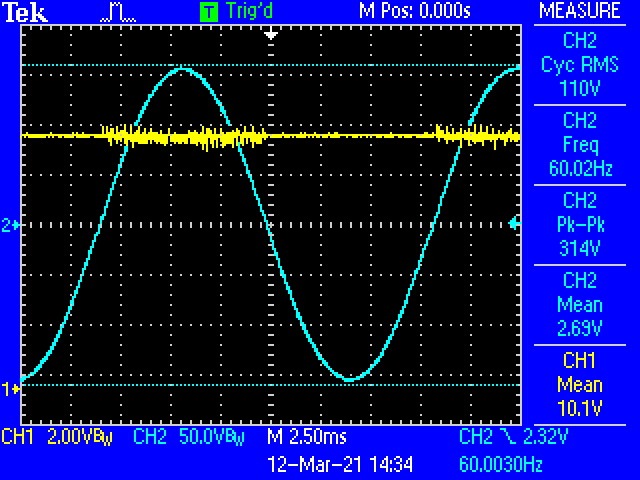
- True pure sine wave confirmed on an oscilloscope
- Stable output from 10V to 14.4V input
- Runs cool and quiet under a 253W load
- 11-17V input works with modern vehicles
- Compact enough for a glove box
Cons
- Internal 40 amp fuse is soldered to the board
- Cord is fixed and cannot be swapped for clamps
- Vehicle sockets are often fused at 10A
- Small standby draw when parked
This is the unit I keep in the truck, and after months of daily use it remains the one I reach for first. The waveform is genuinely pure, which matters more than the marketing on most competitors at this size. Owners with an oscilloscope report clean output with low harmonics, and the voltage holds steady from a 10V input up to 14.4V.
It runs quietly. Owners who loaded it with incandescent bulbs up to 253W report it staying cool rather than roaring, which is rare at this output level. The 11-17V input range is the detail that matters most in 2026, because it works with newer vehicles whose alternators and battery management systems sit at the higher end of the 12V nominal band.
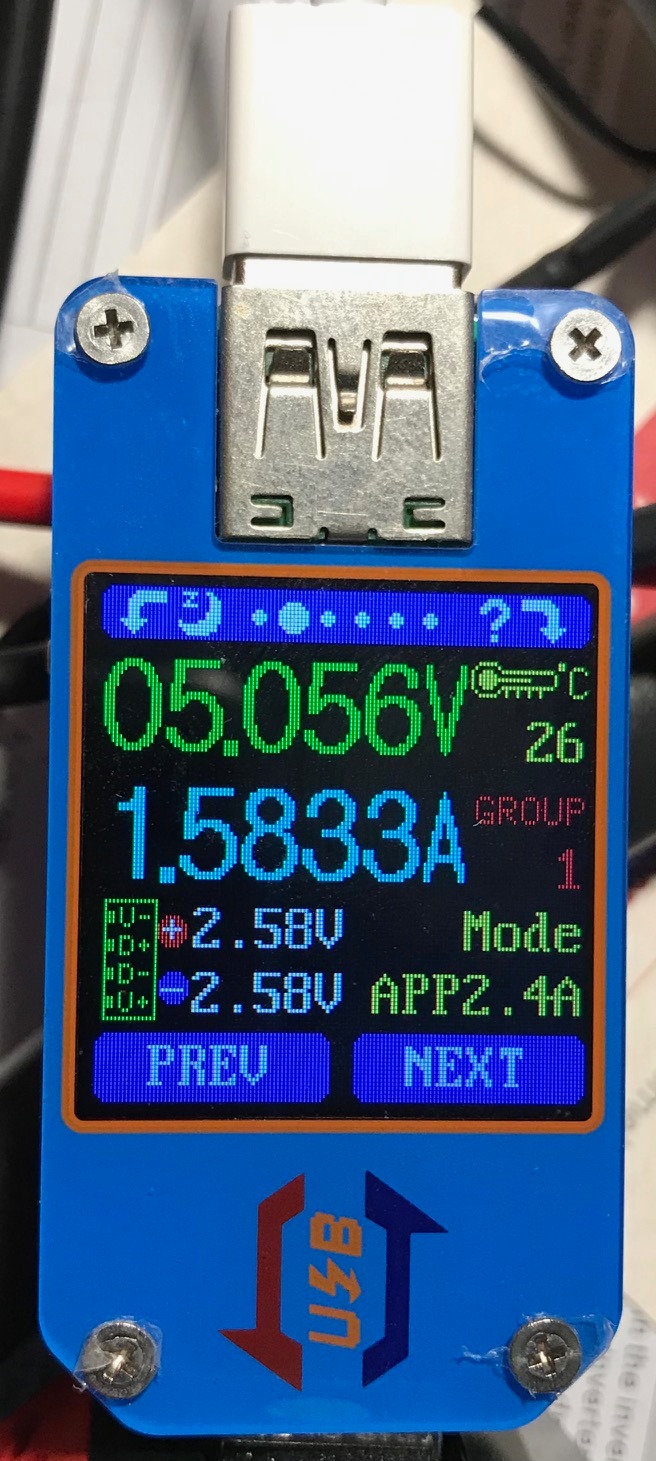
The honest limit is the socket, not the inverter. Most vehicle accessory circuits are fused at 10A, which caps usable output at roughly 120W even though the box is rated for 300W continuous. The two USB ports are properly wired for fast charging at up to 2.4A each, so phones and tablets charge at full rate.
There is one design decision that annoys people. The internal 40 amp fuse is soldered to the board, so replacing it means opening the case, and the 12V cord is permanently attached so you cannot swap in battery clamp leads. For a unit you might want to run from a deep-cycle battery rather than the starter bank, that is a real constraint.
What you need to know before buying it
Buy this one if your loads are electronics, small appliances, chargers and light power tools. The pure sine wave output means laptops, cameras, monitors and CPAP machines behave properly rather than humming or heating up.
Do not expect 300W through a stock cigarette lighter. If you need more, move to a clamp-based install with a proper deep-cycle battery, which means a larger unit such as the Renogy or BELTTT further down.
Where it falls short
It draws a small standby current even with nothing plugged in, so switch it off when parked rather than leaving it connected overnight. Owners also note the fan occasionally spins at idle with no load.
If your goal is running a coffee maker or a power tool, skip this and size up. The 300W ceiling will disappoint you faster than any other spec on this list.
2. Renogy 2000W Pure Sine Wave Inverter – Best for Home Backup and RV
Renogy Inverter P2 2000W Pure Sine Wave Inverter 12V DC to 110V AC Converter, Off-Grid Solar Power Inverters for Vehicles, Truck, RV, Home, with Built-in 5V/2.1A USB/Hardwire Port, Remote Controller
2000W continuous and 4000W surge
Pure sine wave, over 90% efficiency
3 AC outlets plus terminal block
UL 458 and CSA certified
Pros
- Clean output that runs electronics quietly
- Conversion efficiency above 90%
- UL and CSA certified in a metal housing
- 16.4ft wired remote for hidden mounting
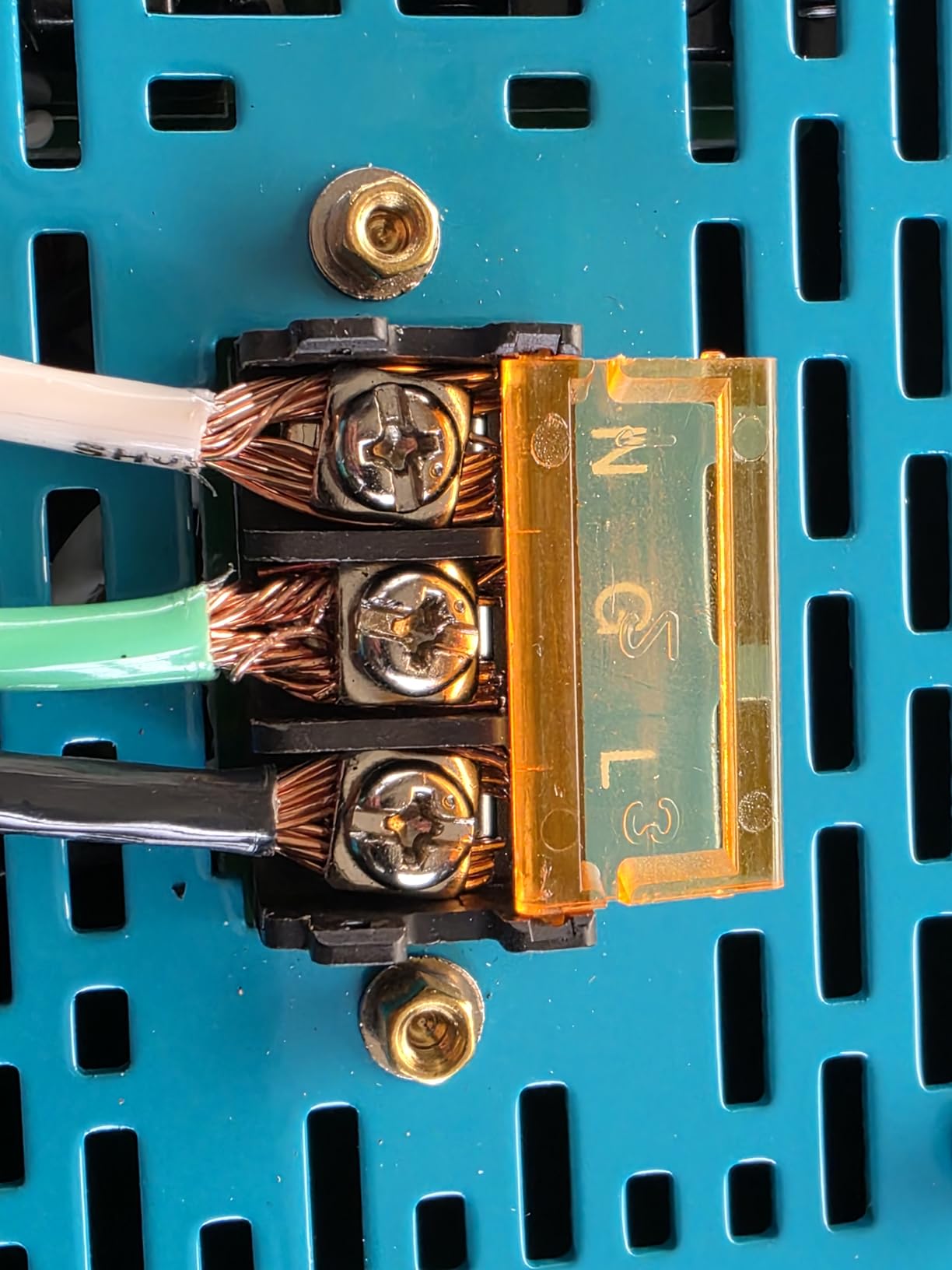
- AC terminal block for hardwired loads
Cons
- About 10% of reviews are 1-star
- Idle draw is not negligible on a battery bank
- Needs a deep-cycle battery for best results
- 11.7 pounds is heavy for mobile installs
The Renogy 2000W is the most complete install-ready unit in this group, and it is the one I recommend when you want one box to cover an RV, a workshop or a modest outage. It puts out 2000W continuous with 4000W of surge headroom and converts at better than 90% efficiency, so you lose relatively little power to the conversion itself.
It comes with two 1/0 AWG three-foot cables and a 16.4 foot wired remote, which is enough cable to mount the inverter out of sight and still shut it down or read status from the cab. Three AC outlets plus a dedicated terminal block means you can hardwire a load instead of relying on a travel adapter.
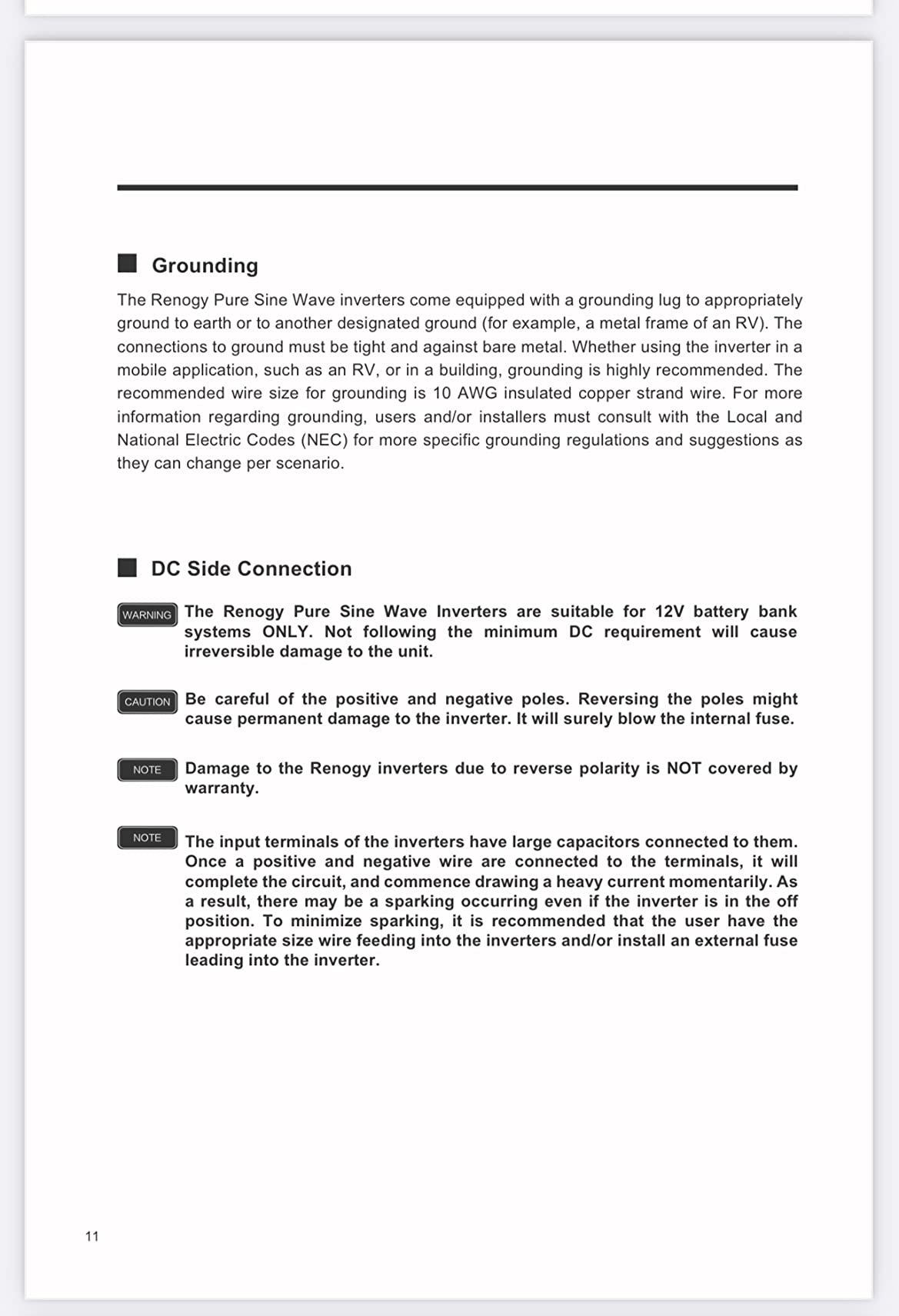
The LED indicators cover under-voltage, over-voltage, over-temperature, overload and short circuit, and there is GFCI protection on board. Renogy specifies a deep-cycle battery with at least 80% usable depth of discharge, which is worth heeding. Connecting it to a vehicle starter battery and then flattening the battery is the single most common owner mistake in the RV world.
Now the part nobody advertises. About 10% of its reviews are one star, and the complaints cluster around long-term durability rather than anything that happens in the first month. That is why the rating sits below the rest of this list even with a large review base. Treat it as a solid unit with a support question mark, not a flawless one.
Check the efficiency curve and the idle draw
Buyers on r/vandwellers read the efficiency curve before committing, and they make a good point. Expensive high-frequency inverters are frequently most efficient at roughly a quarter of rated output, not at full load, so running it near half capacity wastes less than the headline number suggests.
Its idle draw is not zero. On a deep-cycle bank it is a slow leak, and it will flatten a small house bank if the inverter is never switched off. Plan to use the wired remote to shut it down when you are not drawing power.
Who should skip it
At 11.7 pounds and nearly 18 inches long, it is not a glove-box unit. Anyone building a minimal weekend vehicle should look at the plug-in pick instead.
Owners chasing the quietest possible fan for a sleeper cabin should also weigh the alternatives, since noise complaints appear more often in the reviews than the spec sheet suggests.
3. TOPBULL 3000W Inverter – Best for High-Draw Appliances
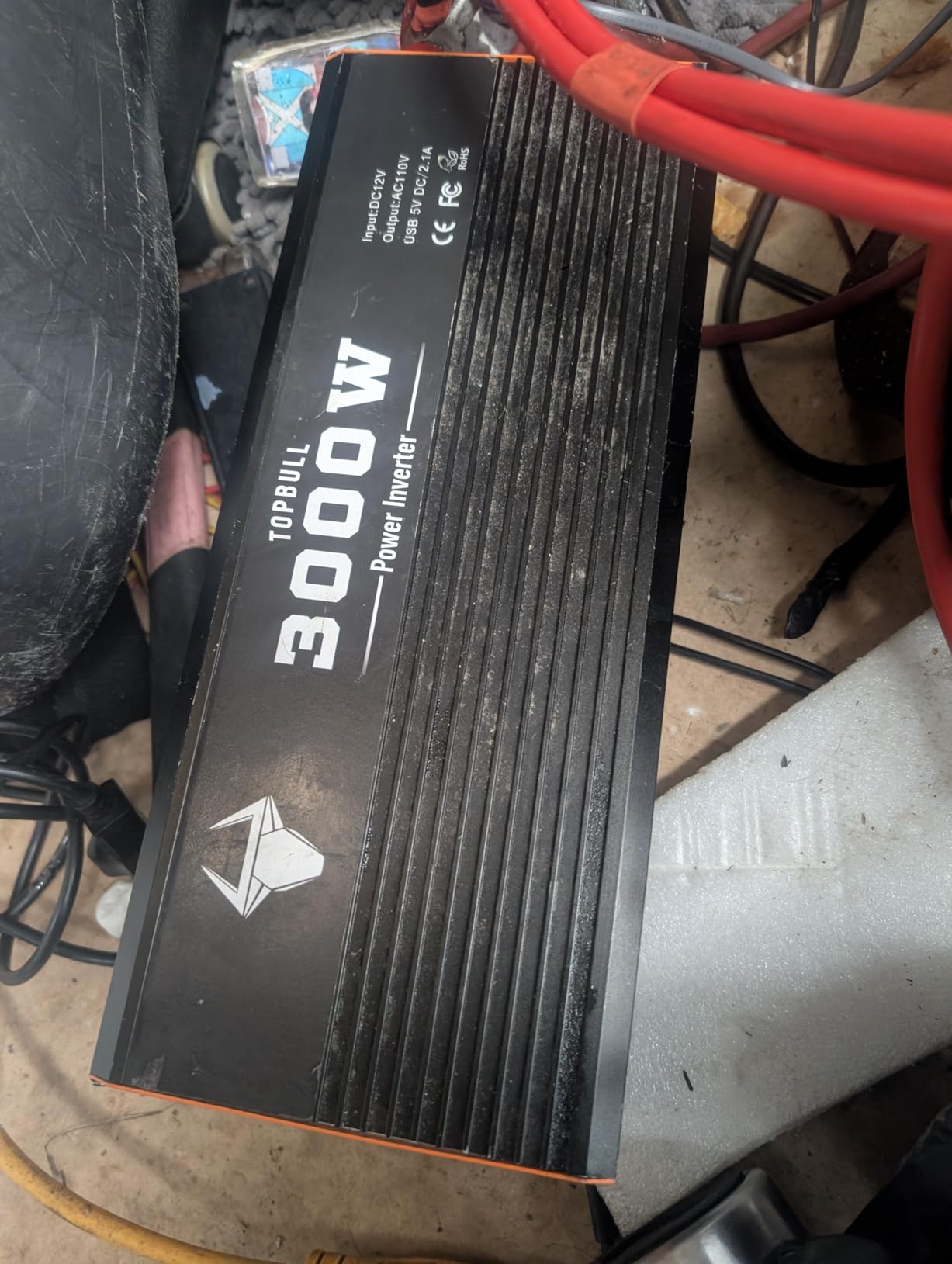
3000W Power Inverter Car/Home 12V DC to 110V/120V AC Car Converter
3000W continuous and 6000W peak
Modified sine wave output
2x 20A outlets plus 30W Type-C
Ten-layer protection
Pros
- Delivers a true 120V rather than an under-volted 110V
- Handles several high-draw appliances at once
- Color LED display tracks battery and output
- Very quiet fans under load
- Battery clamps attach without tools
Cons
- Modified sine wave rules out sensitive electronics
- Some display modules fail after the return window
- Warranty terms are listed inconsistently
What separates this unit from the crowd is the voltage. A lot of budget inverters advertise 110V and deliver an under-volted 103V or so, which is why microwaves and coffee makers trip or brown at the wrong temperature. Owners specifically call out that this one delivers a genuine 120V, and that it holds there with several high-draw appliances running simultaneously.
Conversion efficiency is listed above 93% with low no-load losses, and the housing is thickened aluminium alloy with dual smart fans. Owners report it staying warm rather than hot during sustained high-current use, which is what you want from a box that lives in a hot vehicle.
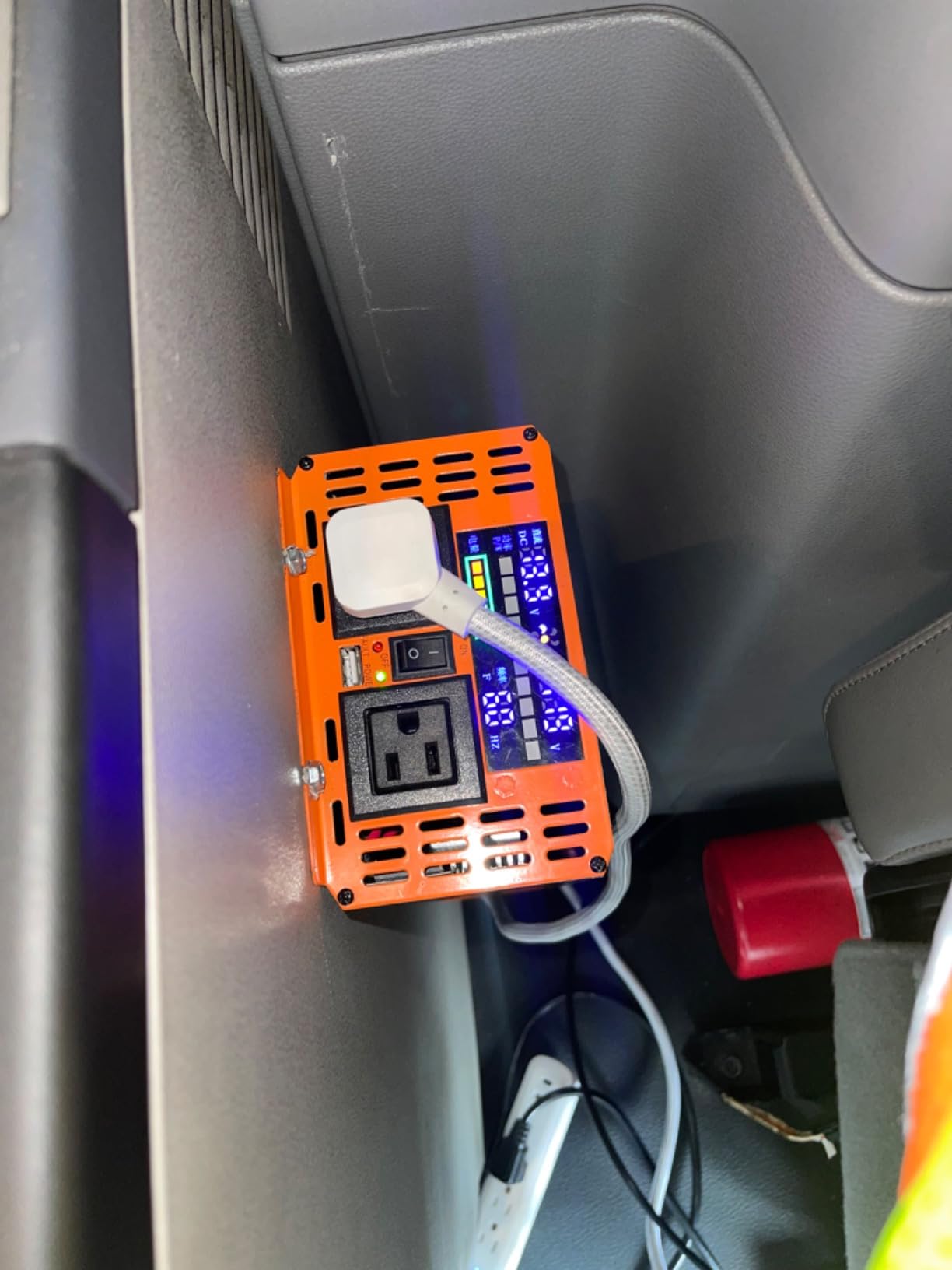
The 200-foot wireless remote is unusually generous. You can start or shut the inverter down from the passenger seat of a truck, which no other unit in the 3000W class here offers, and the colour LED display shows battery charge, output power, input voltage, fan status and output frequency at a glance.
The catch is the waveform. This is a modified sine wave unit, so it is a poor match for medical equipment, audio gear, clocks and anything with a sensitive power supply. It is well suited to resistive and heating loads like a coffee maker, a toaster or a hair dryer.
Why the protection list matters here
Ten protection layers are specified, covering low voltage, high voltage, overload, short circuit, overheat, reverse connection, ground fault, overcurrent, earth leakage and battery protection. Reverse connection protection is the one that saves you, because a reversed clamp cable is the most common way people fry an inverter.
Two 20A outlets is the right call for this class. A single household outlet that cannot pass current is what causes the frustrating warm-plug and tripped-breaker experience with cheaper units.
Where it falls short
Do not run a CPAP machine, a sound system or a laser printer on a modified sine wave. If your loads mix sensitive electronics with heating appliances, a pure sine wave unit such as the LANDERPOW 3000W is the safer buy.
Some owners report the display module failing after the return period, and the marketing and spec sheet describe warranty coverage differently. Factor that in before you rely on it for a seasonal build.
4. Giandel 4000W Pure Sine Wave Inverter – Best for RV Air Conditioners
GIANDEL 4000W Pure Sine Wave Power Inverter 12V to 120V AC,7000W Max,Compatible with LiFepo4 Batteries,Dual Remote Control,GFCI Outlets, RV Campers Off-Grid Solar Systems
4000W continuous and 7000W surge for 2 seconds
Pure sine wave, UL listed 20A GFCI
Large LCD with protection codes
Adjustable 9.5V to 11.5V cutoff
Pros
- 7000W surge starts RV air conditioners and microwaves
- GFCI outlets remove the need for a bonding plug
- Cutoff adjustable for LiFePO4 and lead-acid
- Quiet enough for a bedroom or office
- Same-day support that replaced defective units
Cons
- Trips its breaker above roughly 90F
- Some units stop outputting after thermal shutdown
- Needs an hour powered but unloaded after install
- Supplied cables on some models are undersized
If your goal is starting an RV air conditioner or a microwave, surge headroom is the number that matters, and this is where the Giandel earns its place. It holds 7000W of surge for two full seconds, which is long enough to bring a compressor up to speed and then settle into its running draw.
The pure sine output was confirmed on an oscilloscope by owners at about 120V and 59Hz, and the slow power-on ramp reduces inrush sparking during installation. That last detail matters if you are wiring a transfer switch or contactors, because a hard inrush can trip them.
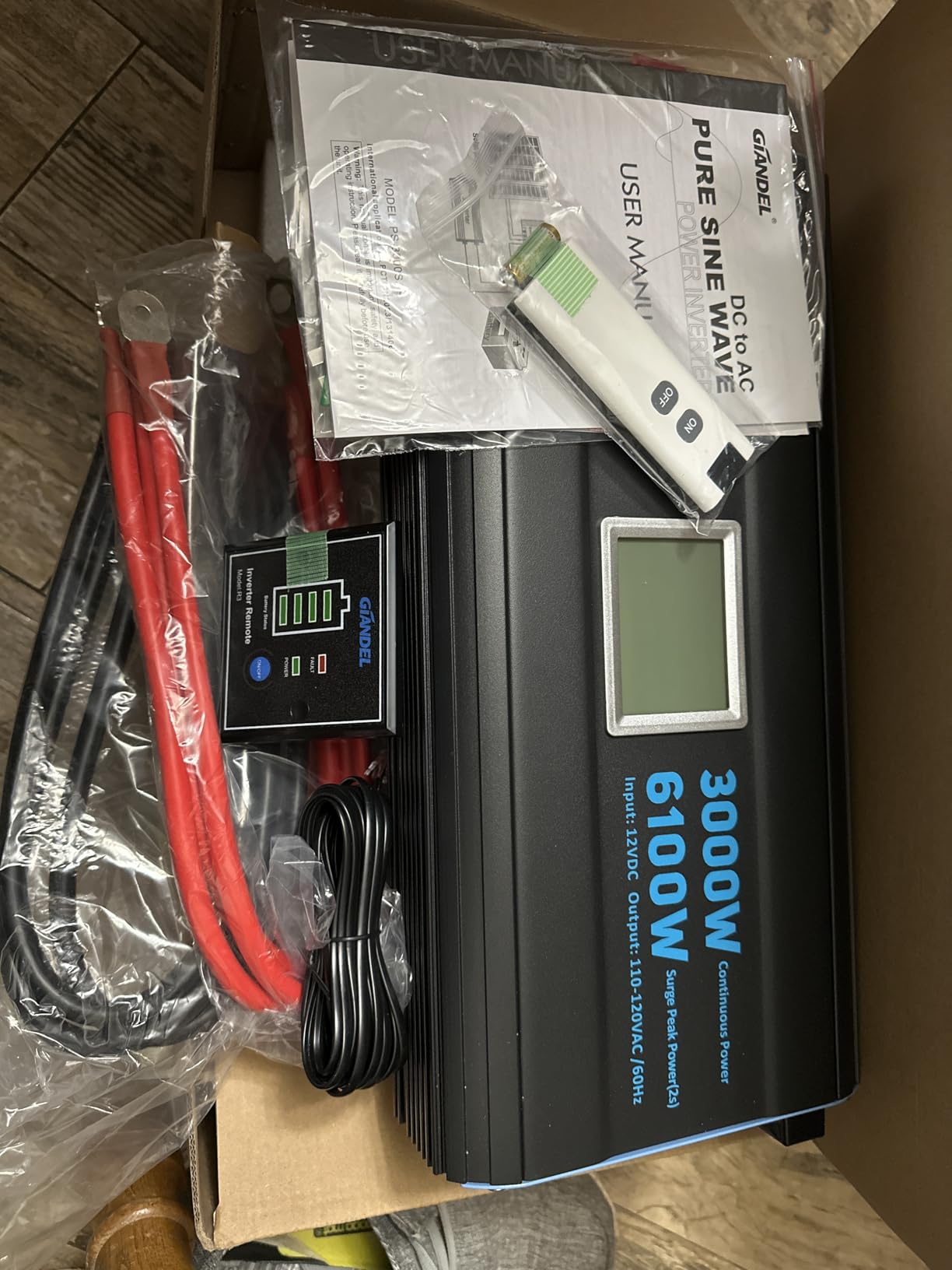
Two features make it stand out from other 4000W boxes. The UL listed 20A GFCI outlets mean you do not need a separate bonding plug with a surge protector to get ground fault protection. And the low voltage cutoff is adjustable from 9.5V to 11.5V, so the same unit works properly with LiFePO4, lead-acid and ternary lithium banks instead of cutting out early on lithium.
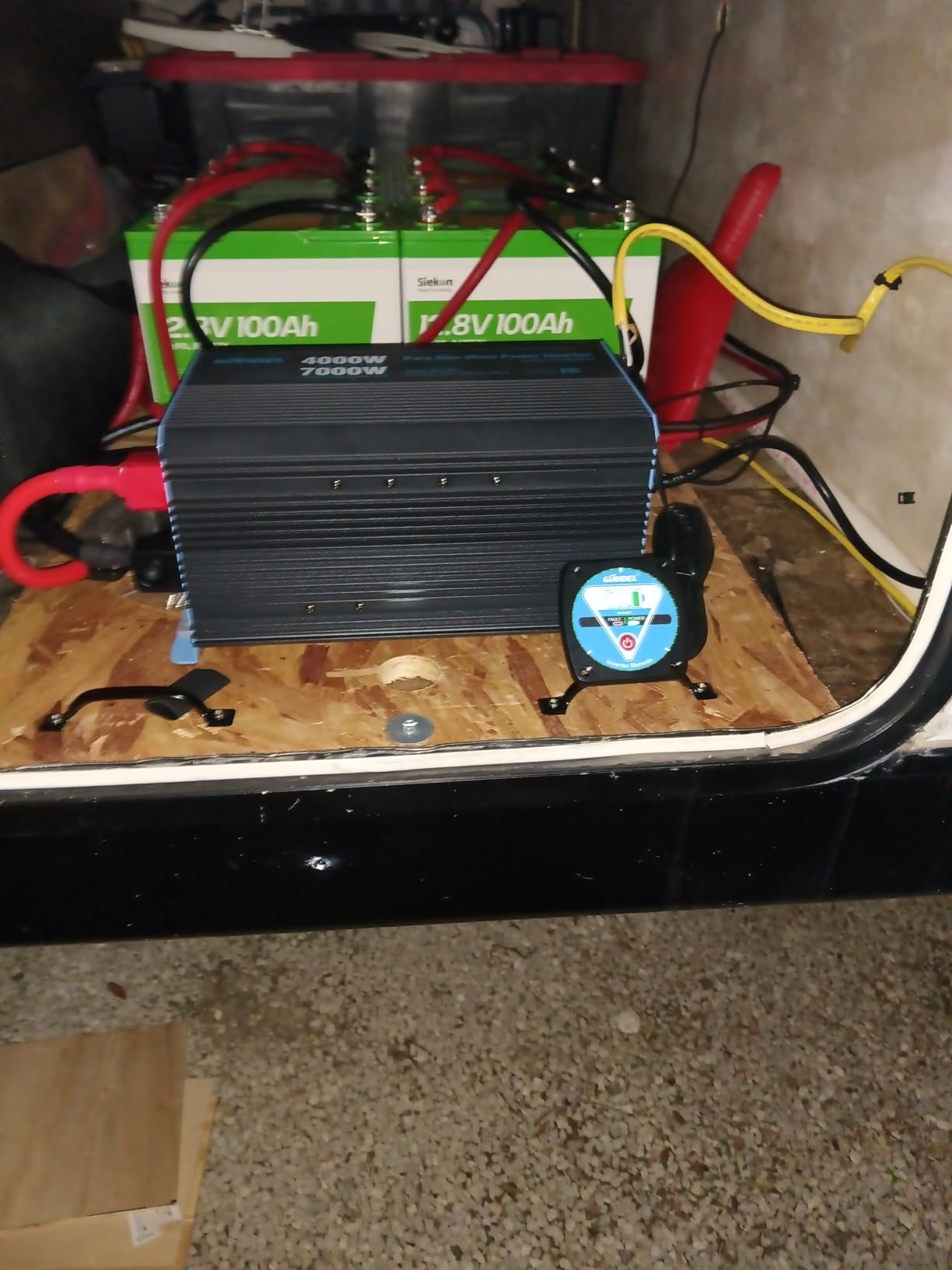
You get two remotes, a 30 foot wired on/off panel and a 20-meter wireless backup, plus a large LCD showing input voltage, output voltage, load power, frequency and protection codes. The aluminium alloy housing is listed as fire-resistant and ships with insulated ring terminal cables.
The heat question, answered plainly
Thermal performance is the most repeated criticism in the reviews. Several owners report it overheating and tripping its breaker above roughly 90F, with the cooling fan described as inadequate for the job. If you are installing it in a hot Arizona, Texas or desert trailer, plan on shade and airflow.
This is a genuine failure pattern and it is the main reason it does not take our top spot despite the strong rating. The manufacturer also requires you to leave the inverter powered but unloaded for an hour after installation so the capacitors can charge.
Who should skip it
Skip it in a hot climate with poor ventilation, or if you cannot reach the unit once it is installed. The new design also dropped the direct three-wire hardwire connection some installers rely on.
Check the cable gauge too. Some units ship with undersized 8 AWG battery cables that run hot under heavy load, and swapping in proper 4 AWG is cheap insurance.
5. BELTTT 2000W Pure Sine Wave Inverter – Best for Efficiency and Clean Output
BELTTT 2000W Pure Sine Wave Inverter 12V DC to 120V AC, 4000W Surge
2000W continuous and 4000W surge
Over 93% conversion efficiency
Pure sine wave, UL and ETL certified
7.7 pounds with 23ft remote
Pros
- Over 93% efficiency with low no-load losses
- Grid-matched pure sine wave output
- UL and ETL certified with six protections
- Remote monitoring from 23ft away
- Spare fuses and a thimble spanner in the box
Cons
- Costs more than comparable 2000W pure sine units
- The separate 20A outlet layout can be awkward
This is the efficiency pick. Owners consistently cite conversion efficiency above 93% with low no-load losses, and that number matters more than most buyers expect because every watt lost becomes extra battery drain. On a weekend camping run where the inverter is your only power source, the gap between 90% and 93% shows up as meaningful extra amp hours.
The output is rated for both inductive and capacitive loads, so motors and switch-mode power supplies both behave. At 7.7 pounds it is light enough to lift into a cabinet rather than needing a floor mount, which matters on a first install.
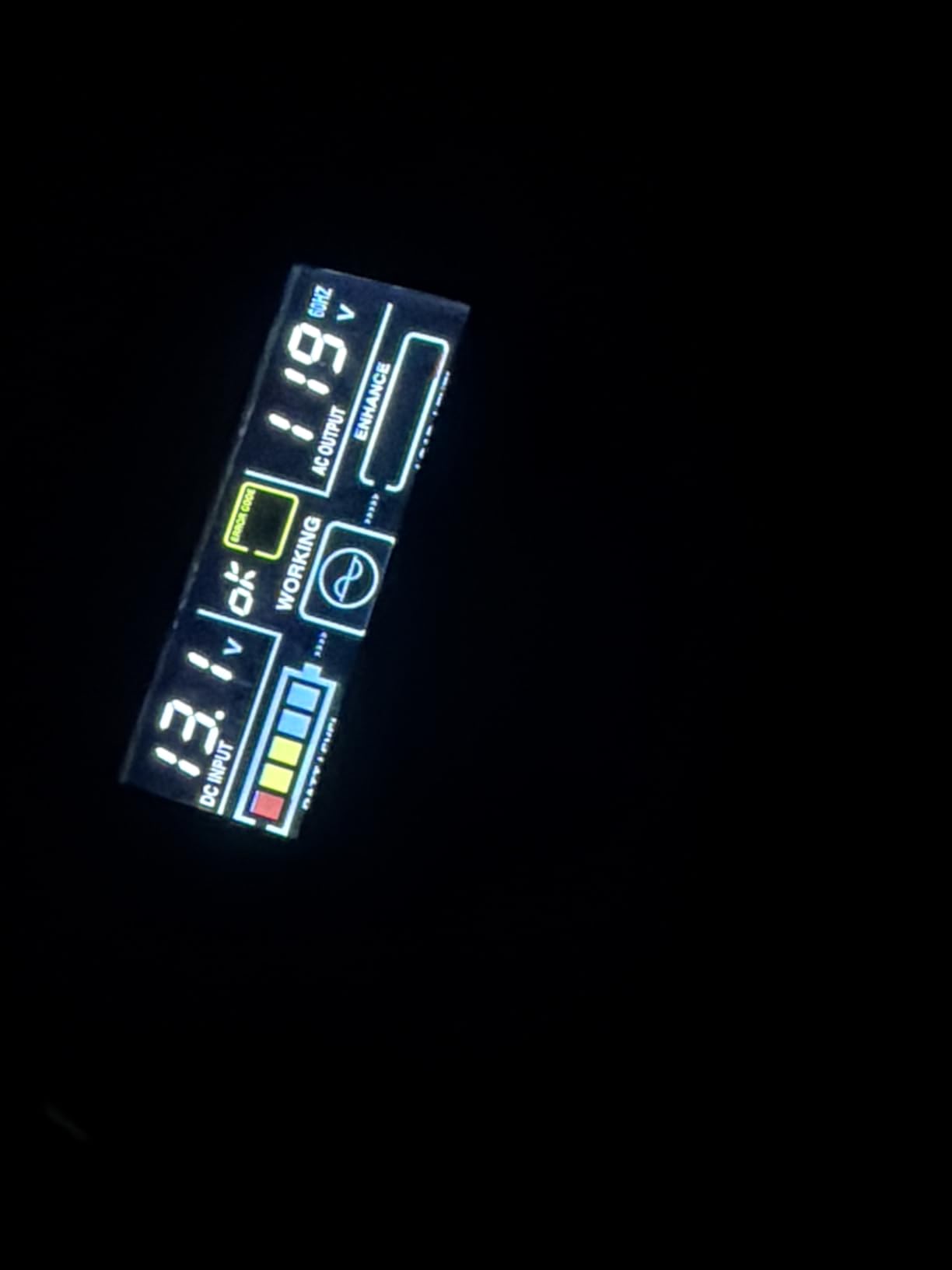
The output voltage and screen brightness are adjustable independently within a small range, which is a nice touch when you want a dim display for night driving. Ports cover a dual AC socket, a dedicated 20A outlet, a 5V/2.1A USB port and a hardwire port, so you are not forced through a travel adapter.
Owners like that the box ships with two 2 AWG three-foot battery cables, six spare 45A fuses and a thimble spanner. The fuse spares alone have saved more than one weekend trip.
How to set it up for battery life
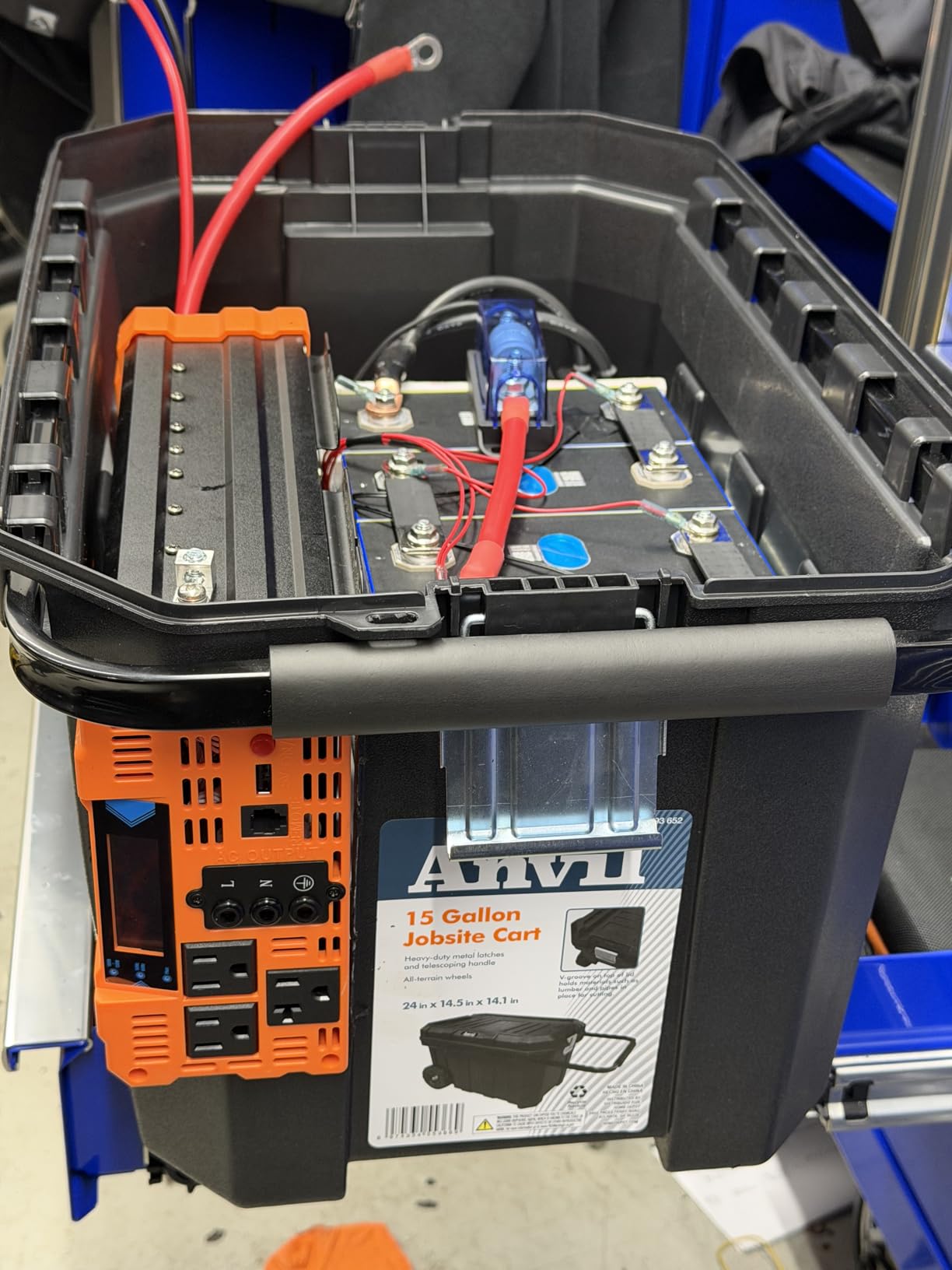
Use the included hardwire port for anything permanent and the AC outlets for temporary loads. Hardwiring drops the connection losses at high current, and at 2000W those losses are real.
Set the shutdown thresholds conservatively and monitor from the 23 foot remote rather than opening the unit. Protection covers under-voltage, over-voltage, overload, over-temperature, short circuit and reverse connection.
Is it worth the extra spend?
A minority of reviewers think it costs more than similarly rated 2000W pure sine units from other brands, and that is a fair criticism. You are paying for efficiency, certification and the included spares.
If your budget is the deciding factor, the LANDERPOW 3000W further down gives you more capacity in a metal shell. If the lowest possible idle loss is what you are buying, this is the one.
6. LANDERPOW 3000W Pure Sine Wave Inverter – Best 3000W Pure Sine Value
LANDERPOW 3000W Pure Sine Wave Inverter 12V DC to 120V AC 6000W Peak for RV
3000W continuous and 6000W surge
Over 91% conversion efficiency
Pure sine wave, full metal shell
15ft wired remote with LED screen
Pros
- Clean output runs window AC and refrigerators without hum
- Full metal shell dissipates heat well
- 15ft remote works from a truck cab
- 30W USB-C PD port plus 3 AC outlets
- 1AWG copper battery cables included
Cons
- Output slightly under rated in some real-world loads
- A small share of owners report fan noise under sustained load
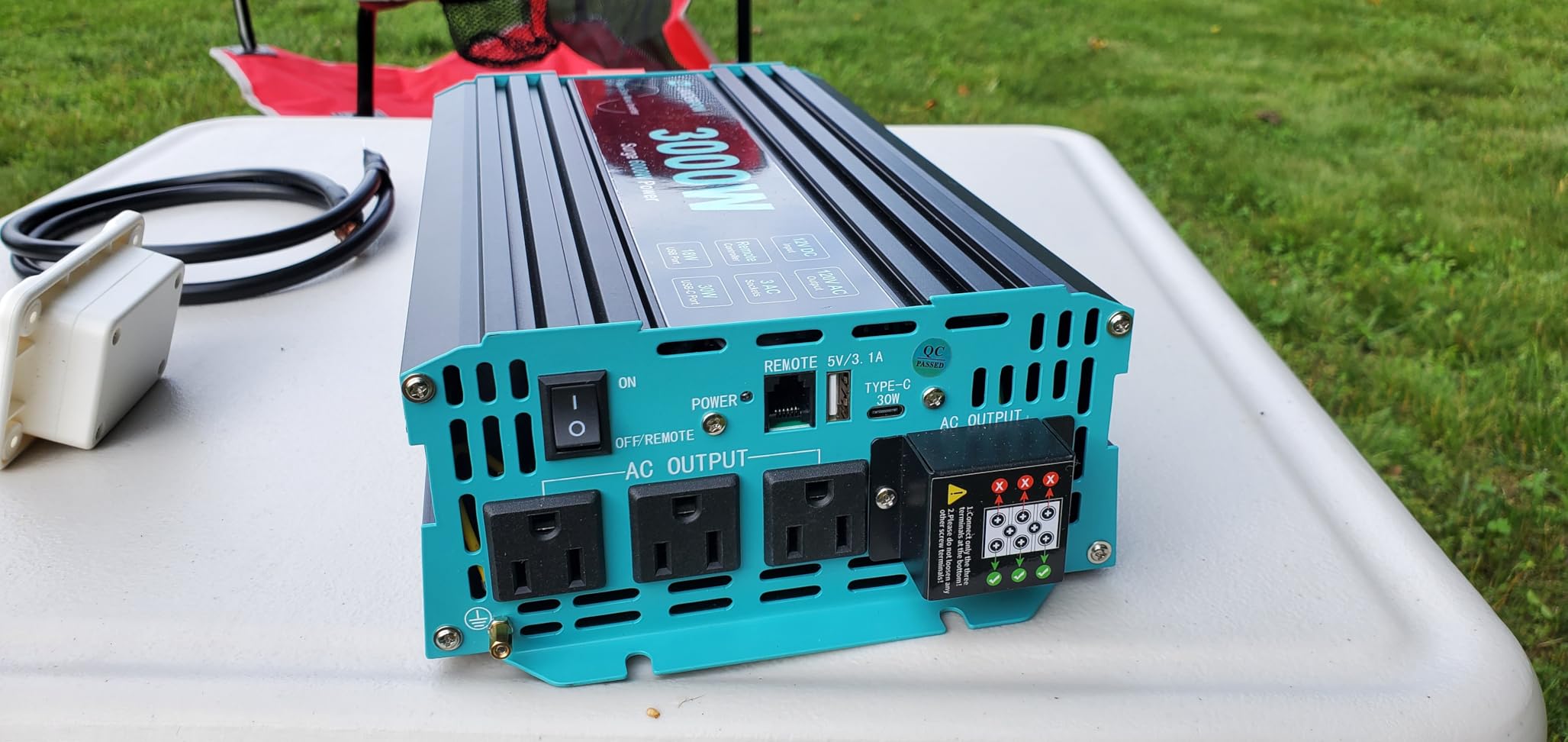
This is the one I recommend most often to vanlife builders asking for a 3000W unit, because it gives you a true pure sine wave in a full metal heat-dissipating shell at a class where most competitors ship modified sine. Owners report it running window air conditioners, coffee makers and refrigerators with no hum and no flicker.
Port selection is unusually generous for the size. You get three AC outlets, a hardwired AC terminal, a 5V/3.1A USB port and a 30W USB-C PD port, so a phone, a laptop and a kettle can all be live at once without hunting for an adapter.
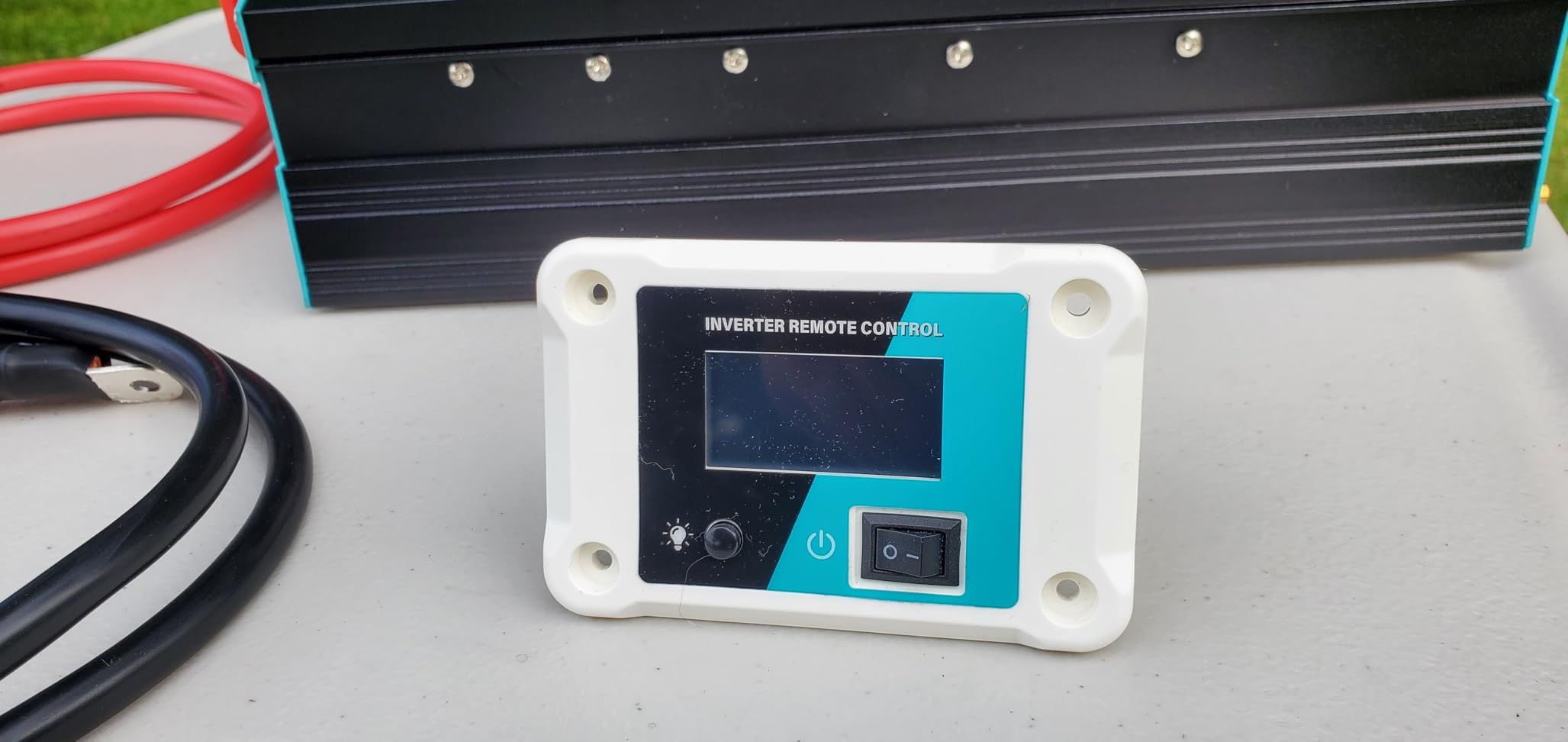
The 15 foot wired remote has an LED screen tracking battery level, output and fault errors, with a one-touch shutdown and restart. That reach is enough to mount the unit behind a cabinet and still control it from the cab, which is exactly the vanlife use case. The two 1 AWG copper battery cables are thicker than what most units at this output include.
Coverage is three years total, structured as one year of no-hassle replacement plus two years of extended support. That is longer than several rivals on this list, and it is worth factoring into your decision if the unit will be installed permanently.
Headroom is the reason to buy at 3000W
Most 2000W units are fine for a fridge, a laptop and lights. They are not fine the moment you add a microwave, a vacuum or a small window unit, because the compressor surge exceeds the continuous rating long before the inverter feels stressed.
At 3000W continuous and 6000W surge you can start those loads without wondering whether the unit will fault. Pair it with a 200Ah to 300Ah lithium bank and you have a weekend of comfortable power.
What you might not like
Some buyers report output that lands slightly below the advertised 3000W continuous under real-world loads, so if you are planning to sit right at the ceiling, build in margin. A small share also note fan noise during sustained heavy load, which matters in a sleeping compartment.
Only 636 reviews is the thinnest evidence base in the pure sine wave group here. It is a well-regarded unit, but the long-term record is shorter than the Renogy’s.
7. VEVOR 5000W Pure Sine Wave Inverter – Best Heavy-Duty Pick
VEVOR Pure Sine Wave Inverter, 5000 Watt, Power Inverter, DC 12V to AC 120V Car Inverter, with LCD Display, USB Port and Remote Controller, Power Converter for Car RV Truck Solar System Travel Camping
5000W continuous and 10000W surge
Pure sine wave, 88%+ efficiency
4 AC outlets plus LCD display
175F thermal cutoff, 21 pounds
Pros
- 175F cutoff runs a trailer air conditioner in heat
- Clean wave confirmed on an oscilloscope
- 4 AC outlets for several rooms
- Aluminium alloy housing resists corrosion
- Remote shutdown and restart
Cons
- Some units shut down well below the rated output
- Output watts readout dead on some units
- 21 pounds needs two people to install
- 88% efficiency trails cheaper rivals
The VEVOR is the capacity pick, at 5000W continuous and 10000W of surge, and it has one thermal advantage none of the others here can claim. Its high temperature cutoff is rated at 175F, so it keeps running a trailer air conditioner on a hot afternoon when smaller units fault out.
Owners running solar report continuous 24/7 operation, and the aluminium alloy shell is described as well built for the output class. There are four AC outlets plus one USB port, so a single box can cover a trailer rather than a single socket.
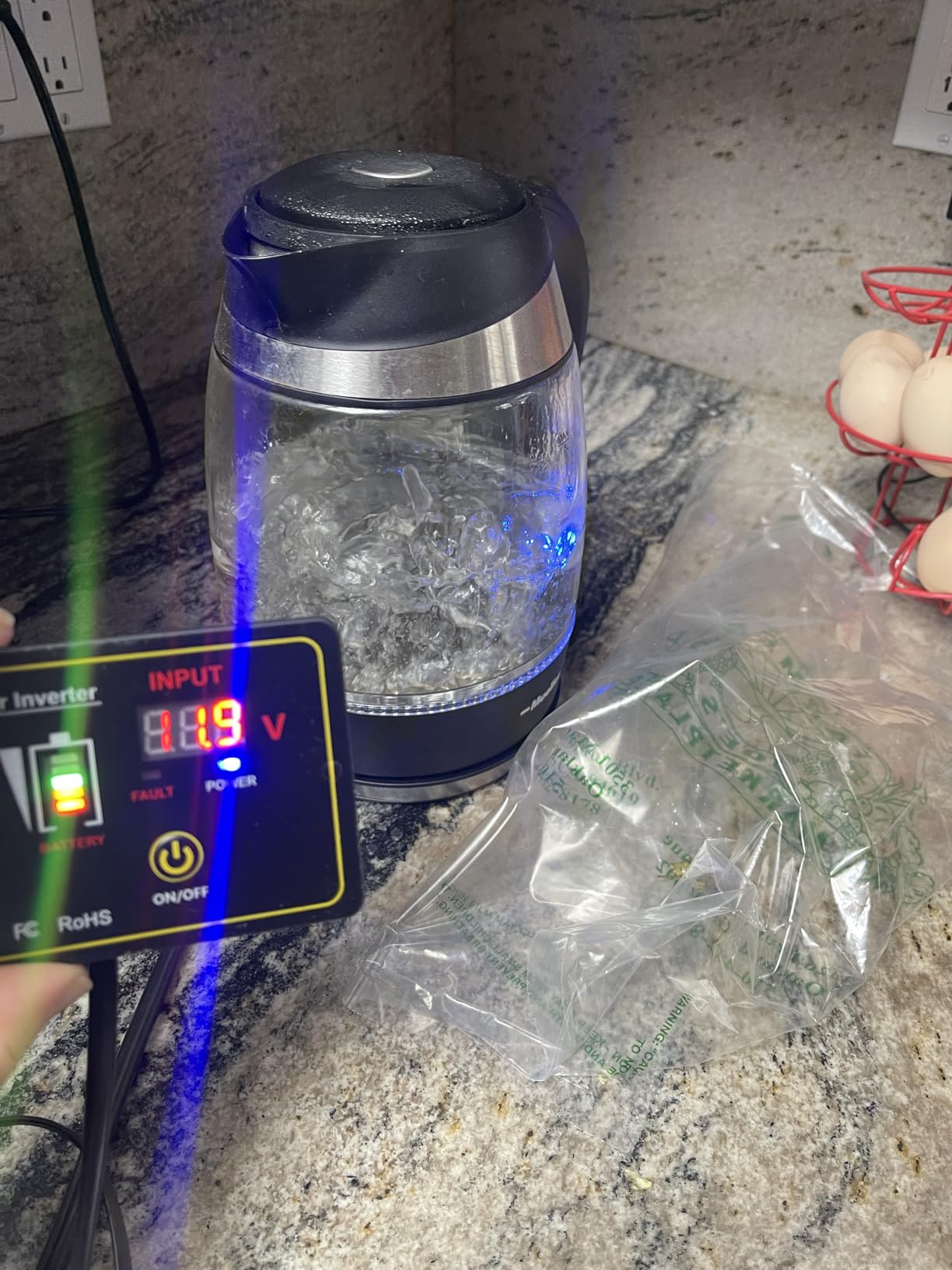
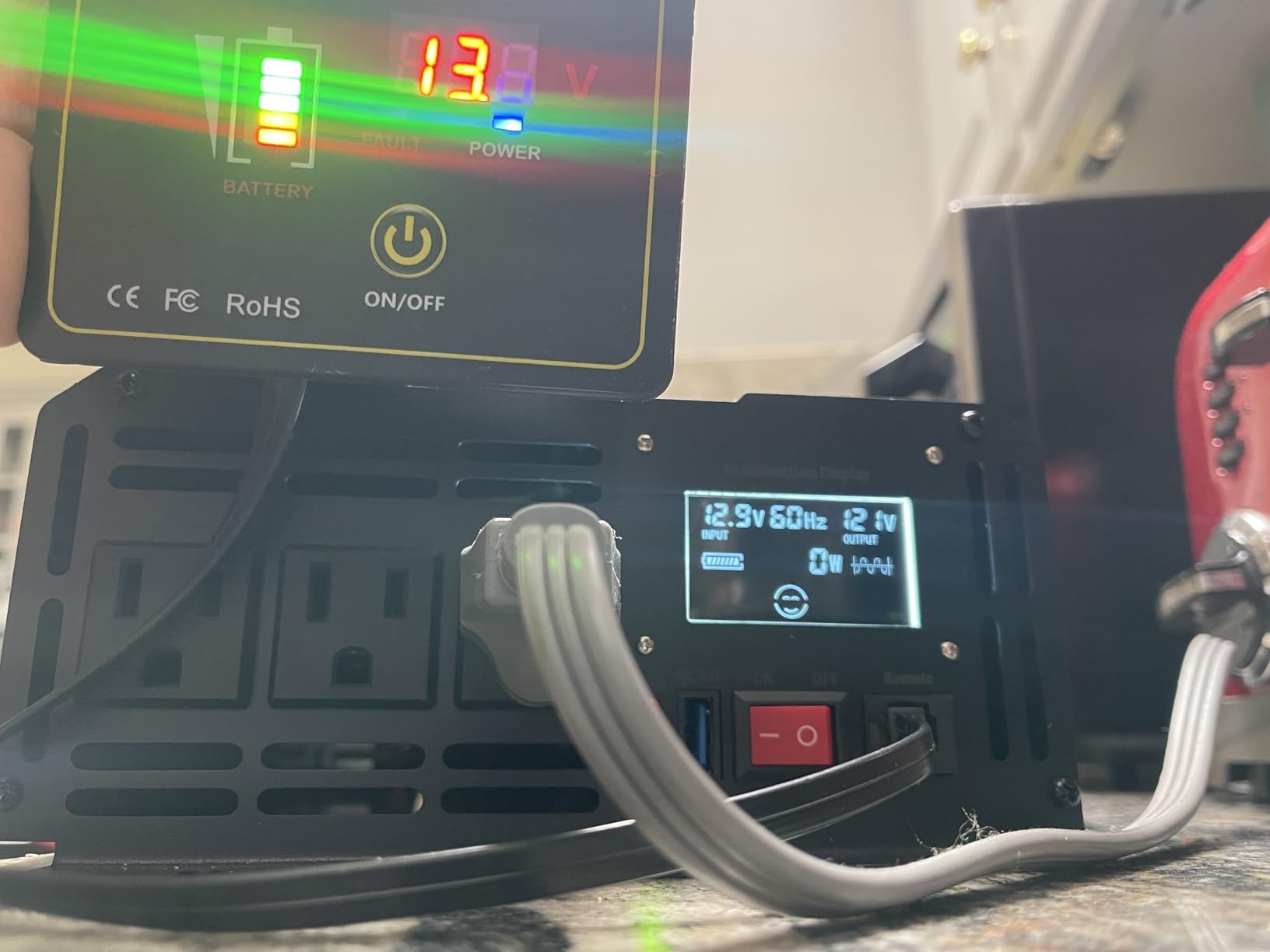
The LCD shows input voltage, frequency, output voltage, battery power, output power, waveform and working status, backed up by LED indicators, and a 9.8 foot wired remote lets you shut it down from a distance. It ships with twelve 40A fuses and four battery cables, so you have spares from day one.
Efficiency is listed at 88% or better with no-load current under 1A, which is the weakest efficiency figure in this roundup. In a large solar system that gap is real money in lost generation, and it is why we do not rank this unit higher despite the capacity.
Heat tolerance versus output accuracy
Two competing things define this unit. The 175F cutoff gives it genuine tolerance for hot-weather air conditioning, and no other inverter on this list has that. In exchange, some owners report the unit shutting down well below its rating on loads like a 900W microwave or a 1200W coffee maker.
Size your system for the real output you observe, not the nameplate. If your peak simultaneous load is over 3000W, test before you commit to running a whole trailer from it.
Installation realities
At 21 pounds and 17.7 inches long, this is a two-person job in a vehicle. Budget for mounting brackets and cable runs, and remember it draws from a 12V bank at over 400A at full output, which no single deep-cycle battery can support.
The output watts readout on the display does not work on some units, so verify your draw with a clamp meter rather than trusting the screen.
8. ZETAWALE 3000W Pure Sine Wave Inverter – Best for Terminal Block Installs
3000W Pure Sine Wave Inverter 12V DC to 120V AC Converter with LCD Remote
3000W continuous and 6000W peak
Pure sine wave at 110V/120V
4 AC outlets plus USB and Type-C
Heavy-duty AC terminal blocks
Pros
- Clean output suits refrigerators and CPAP machines
- Four outlets plus USB and Type-C
- Terminal blocks support high-demand loads
- 14.76ft remote monitors voltage and wattage
- Broad battery chemistry compatibility
Cons
- Costs more than most competing 3000W units
- Only 12 months of warranty coverage
The ZETAWALE is the pick when your install is a fixed one and you want screw terminals instead of adapters. It carries heavy-duty AC terminal blocks alongside four outlets, a USB port and a Type-C port, and those blocks are what let you wire a circuit properly rather than relying on a loose plug.
Owners confirm clean, stable pure sine output across refrigerators, microwaves, coffee makers, CPAP machines and power tools, which is a wide spread of load types and a good sign for a waveform this clean. The 14.76 foot wired remote shows live battery voltage, AC output voltage and load wattage.
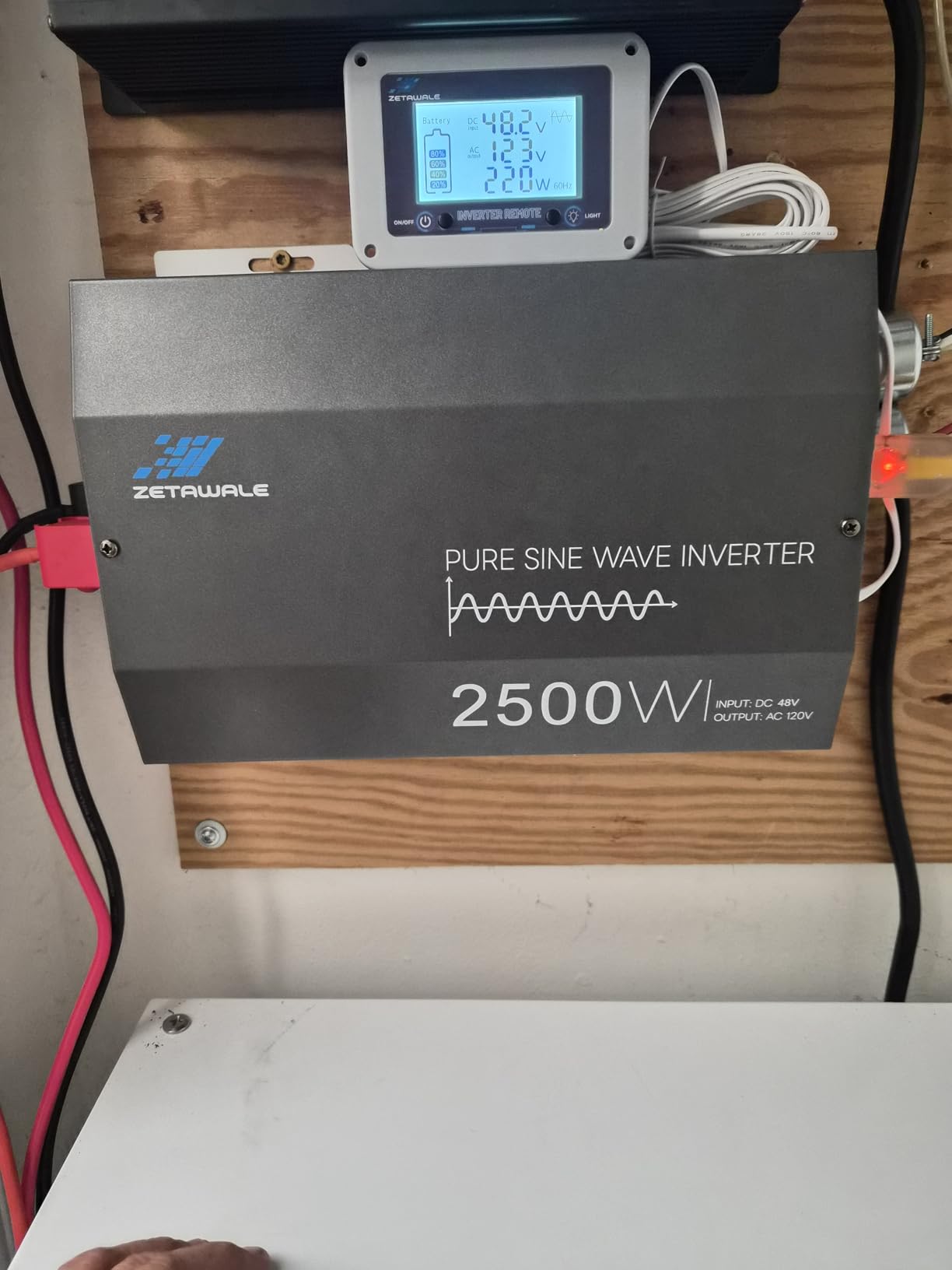
Two intelligent cooling fans handle heat under load, and the unit is compatible with lithium, AGM, deep-cycle and lead-acid 12V batteries. At 9.9 pounds it is heavier than the LANDERPOW but still manageable for a fixed install.
Protection covers overload, over-voltage, low voltage, over-temperature and short circuits. That is a slightly shorter list than the ten-layer unit earlier in this roundup, and it is the main technical difference between the two.
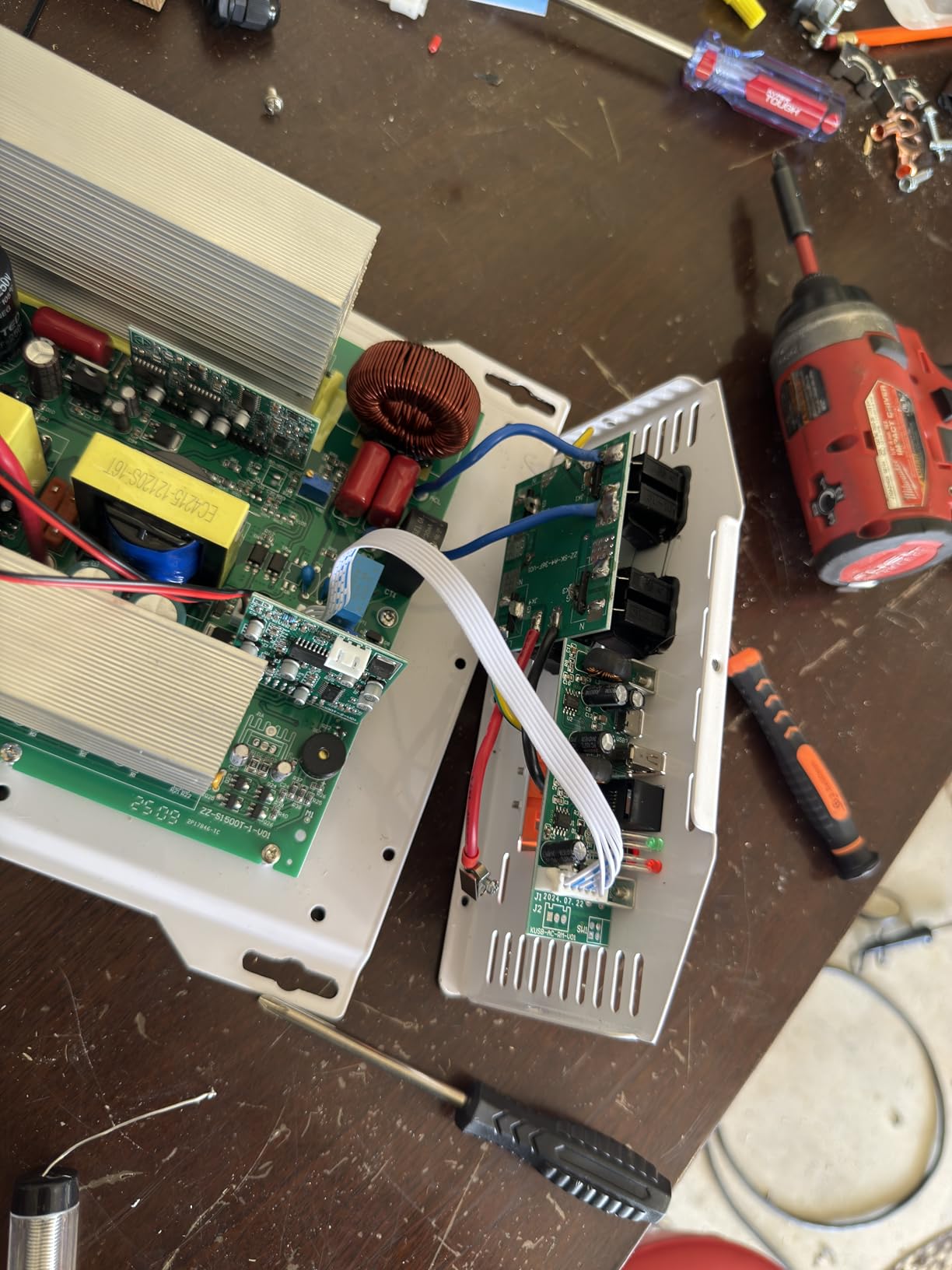
Why terminal blocks change the decision
A household plug at 15 amps wastes energy as heat in the connector and can loosen under vibration, which is a constant problem in a driving vehicle. Screw terminals remove both issues, and for a permanently installed inverter they are the correct choice.
The tradeoff is that the terminals are not detachable quick-disconnects. If you want to pull the inverter out for a repair or move it between vehicles, plan for four screws rather than two plugs.
Where it falls short
Buyers most often raise the cost, since several competing 3000W pure sine units sit lower. The 12-month warranty is also shorter than the three-year coverage on the LANDERPOW and the eighteen-month terms on the Giandel.
If you are installing permanently and staying with it, those are acceptable. If you want to move it around, the plug-and-play units suit you better.
9. PowerDrive PWD3000P 3000W Bluetooth Inverter – Best for App-Controlled Monitoring
PowerDrive PWD3000P 3000 Watt Power Inverter with Bluetooth Technology
3000W continuous and 6000W peak
Modified sine wave output
Bluetooth app plus removable LCD
Four 3-prong AC outlets
Pros
- Phone app control for monitoring and settings
- Removable LCD can be repositioned
- Handles a full truck load of appliances
- Four 3-prong outlets plus USB-A and USB-C
- Includes 39-inch cables and mounting brackets
Cons
- App was unavailable in the App Store for some buyers
- Some units faulted on a fully charged battery
- Customer support is hard to reach
- Modified sine wave limits load choice
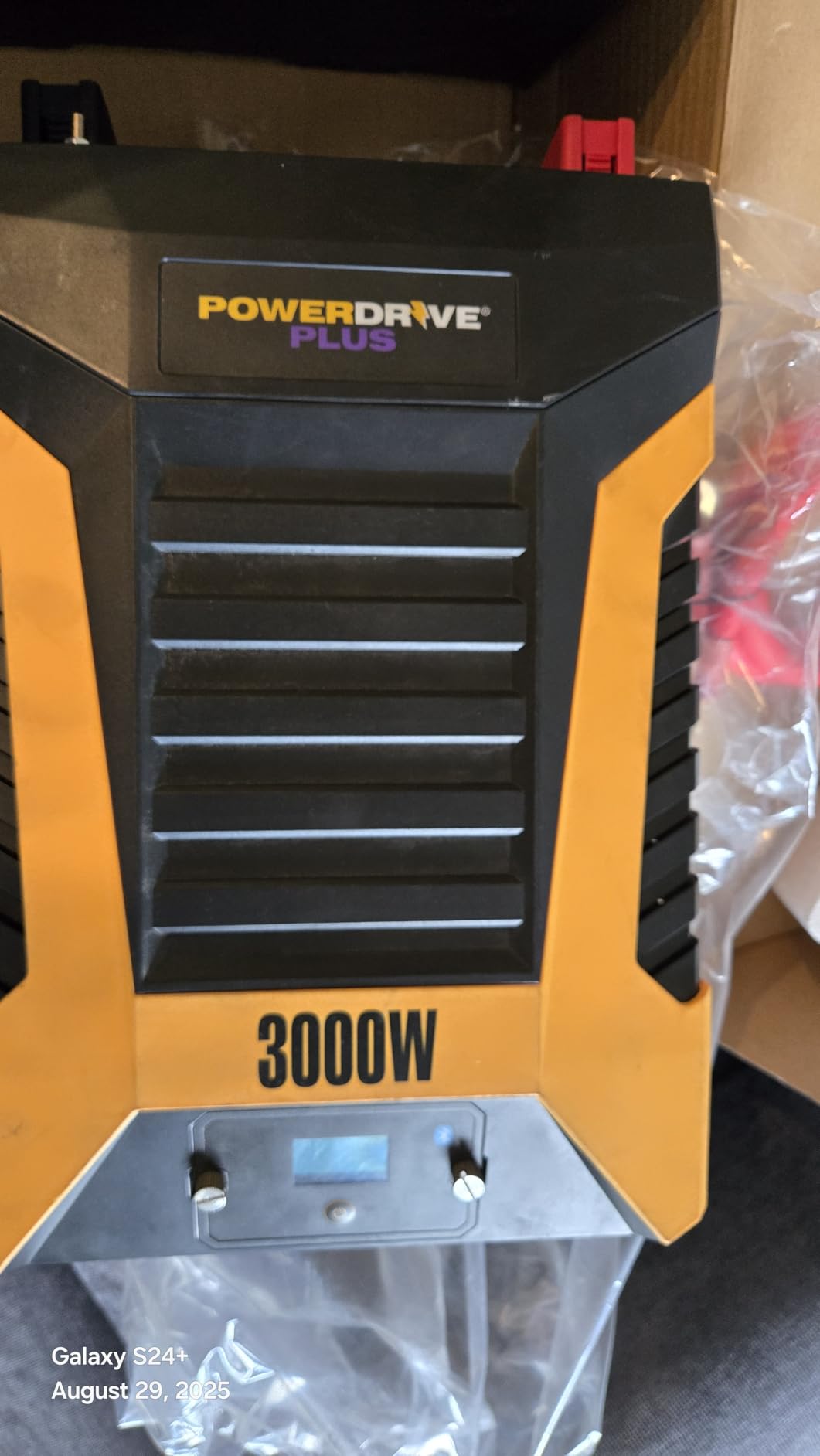
This is the only unit in the roundup where you can open a phone app and change settings, and for long-haul drivers that turns out to matter more than waveform purity. The detachable LCD is the second clever part: pull it off and mount it where you can read it, or use it to test the inverter before you install it.
Truck owners report running a fridge or freezer, coffee maker, microwave, laser printer, toaster and laptop charger off it at once, and they specifically note it does not noticeably drain the vehicle battery while running. Four 3-prong outlets plus a USB-A 2.4A port and a USB-C 3.0A port cover most loads without adapters.
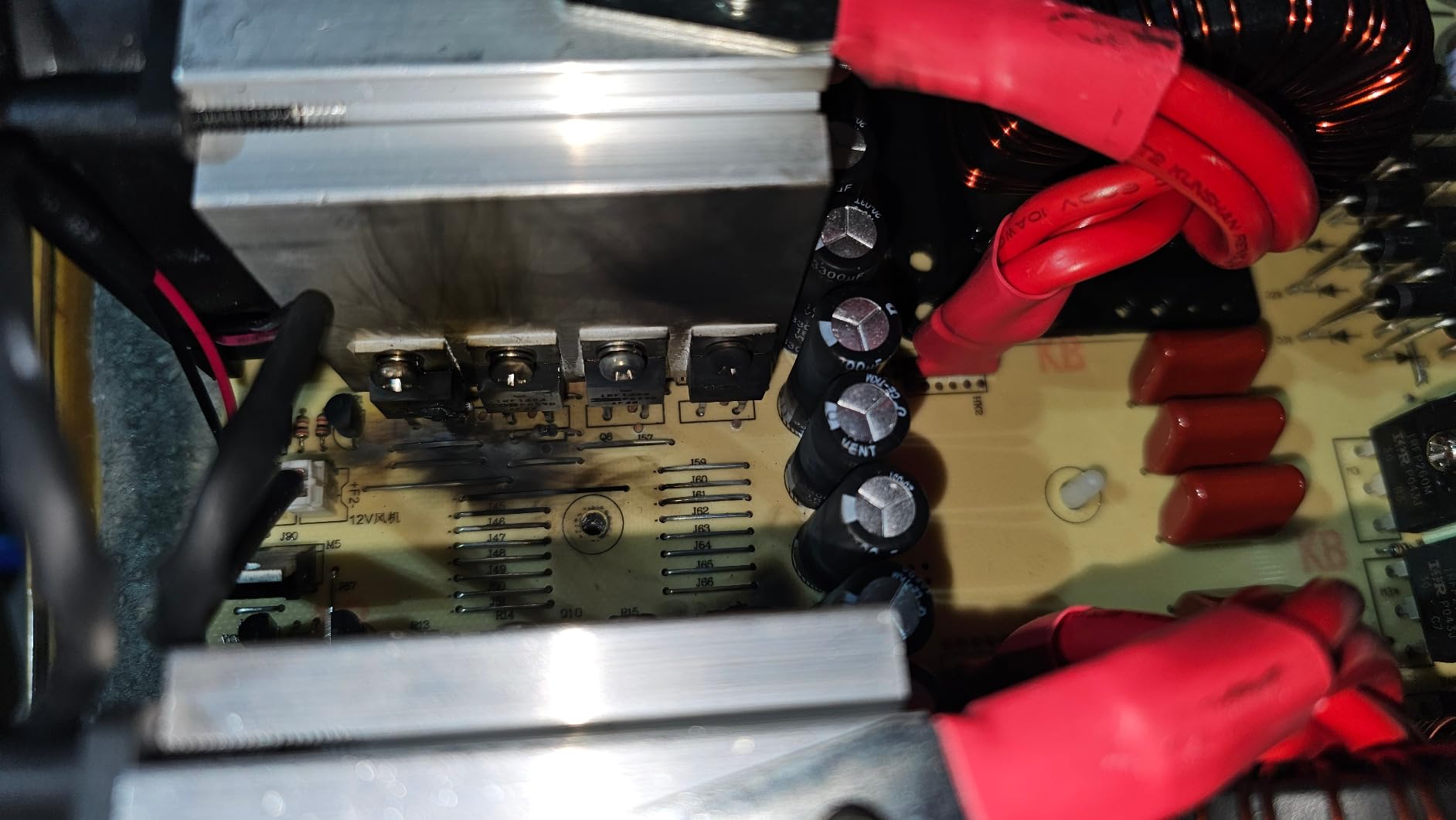
Mounting brackets and 39-inch heavy-duty battery cables are included, so the install is genuinely complete out of the box. A high-speed cooling fan runs only when needed, with LED power and voltage indicators for basic status.
There are two real problems though. Some buyers found the companion app unavailable in their region store, which makes the headline feature a decoration. And a small number of units faulted with a low battery warning on a battery reading a full 13.3V, which is a fault condition, not a real low-voltage event.
Who actually wants Bluetooth control
It earns its keep when the inverter is mounted somewhere out of reach, like under a truck bed or behind a camper cabinet. Being able to read voltage and error codes from the seat turns a diagnostic problem into a thirty-second check instead of a panel removal.
If your inverter is within arm reach and you already have a wired remote, the app adds little. Several competing units here include a 15 foot wired remote at the same price point.
Limits to plan around
Output is modified sine wave, so keep it away from CPAP machines, audio equipment and anything with a fussy switch-mode supply. Laser printers, ironically, are listed by owners as loads it handles well, but that is a device-specific result rather than a general rule.
Warranty coverage is one year limited, and owners report difficulty reaching support on defective units. If you cannot handle that risk, pick a longer warranty elsewhere on this list.
10. PiSFAU 200W Car Power Inverter – Best Budget Pick for Light Loads
PiSFAU 200W Car Power Inverter – DC 12V to 110V AC Car Plug Adapter Outlet
200W continuous DC 12V to AC 110V
Modified sine wave, UL listed
2 AC outlets plus 4 USB ports
8.8 ounces, 1-year warranty
Pros
- Roughly phone sized and glove-box friendly
- Two AC outlets plus four USB ports
- UL listed with an insulated ABS shell
- Fan stays silent on light loads
- Cord reaches a back console socket
Cons
- Modified sine wave rules out sensitive loads
- 200W ceiling with no real surge headroom
- Plug feels cheaply made
- Best suited to occasional light use
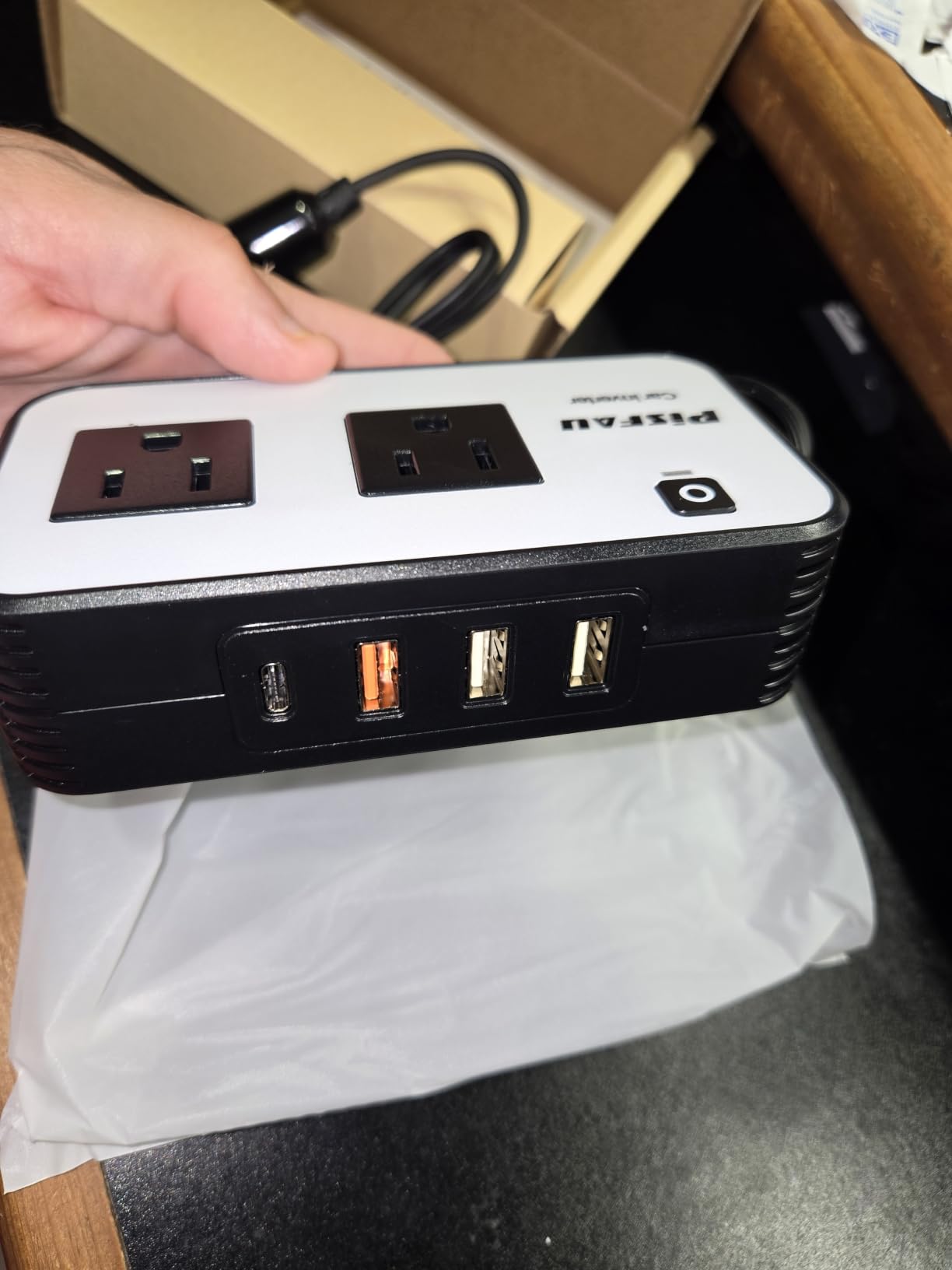
At 200W and 8.8 ounces this is close to a phone charger with an AC outlet, and that is exactly the right comparison. If you want to charge laptops, tablets and phones on a road trip without installing anything, it does the job at a size nothing else here matches.
Two AC outlets plus four USB charging ports with fast charging including USB-C means several devices can run at once, and the cord is long enough to reach a back console socket rather than forcing you to rearrange the cabin.
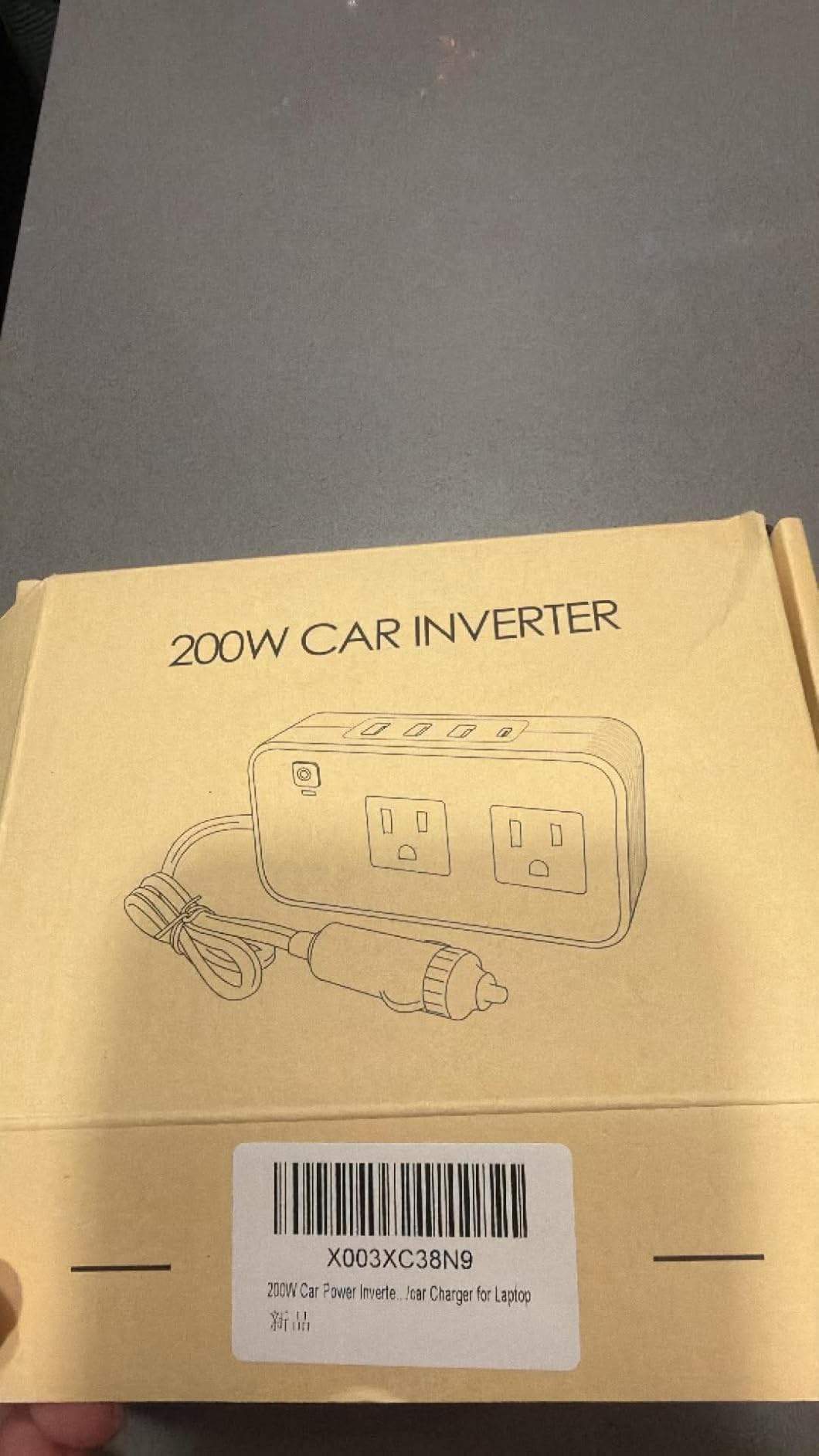
It is UL listed with a fully insulated ABS shell and protection against overheating, under-voltage, over-voltage, overload and short circuit. Owners like that the cooling fan only runs when needed, so it stays silent on light loads, which is the normal case for a unit this size.
It is one of the highest ranked options in Power Inverters in the Automotive category, and the 4771 review count reflects how many people buy it for exactly that narrow purpose. It is a good car inverter, just not a general purpose one.
What 200W actually covers
Think of it as roughly two laptops, or a phone and a tablet with room to spare. It will not run a hair dryer, a coffee maker, a microwave or a portable air conditioner, and the 200W figure is the continuous ceiling with no meaningful surge headroom for a compressor.
The waveform is modified sine, so sensitive electronics get a rough supply. Charging phones and basic chargers is fine, and that is what most owners use it for.
Who should skip it
Skip it if you plan to run the same loads every weekend for months. A few owners reported a unit failing after about a week of camping use, and the plug itself is a common weak point. Treat it as occasional or backup equipment.
If you need sustained power in a vehicle, the BESTEK 300W at the top of this list gives you a pure sine wave, more headroom and a much stronger protection package for a small step up.
Pure Sine Wave vs Modified Sine Wave: What You Should Never Plug In
A pure sine wave inverter reproduces the smooth, continuous wave your grid delivers. A modified sine wave unit produces a blocky stepped approximation. Cheap, and fine for a resistive heating element, which does not care about waveform quality.
Smart devices care. Anything with a switch-mode power supply, including laptops, televisions, phone chargers, medical equipment, audio amplifiers and variable speed tools, can hum, run hot, reset or fail on a modified wave. A CPAP machine is the clearest case: it is a medical device running from a supply that is not shaped like the one it was designed for, and it belongs on a pure sine wave inverter and nothing else.
In practical terms, pure sine wave is the right choice for anything with electronics, anything with a motor, and anything you would be upset to damage. Modified sine wave is fine for a hair dryer, a space heater, an incandescent lamp or a basic power tool with a universal motor. The two units in this roundup that are modified sine, the TOPBULL and the PowerDrive, are both strong performers for heating and resistive loads. If you are covering a whole room during an outage, our 10 Best Power Towers Honest Reviews roundup lists the fan and heater draws worth sizing for.
How Much Power Do You Need?
Add up the running watts of everything you will use at the same moment, then add a quarter on top. That headroom covers startup surge from motors and compressors, which is where first-time buyers consistently underestimate.
Typical running draws give a good starting point for sizing.
Laptop and phone chargers: 20W to 100W combined
65W laptop charger: about 65W
Hair dryer: 1000W to 1800W
Coffee maker: 800W to 1200W
Small microwave: 900W to 1200W
Standard refrigerator with compressor: 100W to 400W while running, several times that at startup
Window air conditioner: 800W to 1500W
Circular saw or angle grinder: 1200W to 2500W with a brief surge
The VEVOR 5000W covers a trailer with several of these running together. The 3000W units cover a fridge, a coffee maker and a charge station at once. The 300W plug-in units cover electronics and nothing more.
Home equipment adds up faster than most people expect. If a gym, treadmill or garage freezer has to stay on through an outage, size the bank for it, and our 12 Best Power Racks Expert Reviews guide covers the running draws for a typical rack setup.
How Big a Battery Do You Need for a 3000W Inverter?
Here is the worked calculation that comes up most often on solar forums. A 3000W inverter at roughly 93% efficiency draws about 3225W from the bank. On a 12V system that is around 270 amps. That is not a battery, that is a bank.
Step one, divide inverter watts by efficiency to get DC watts. Step two, divide DC watts by 12V to get required amps. Step three, divide required amp hours by your usable depth of discharge. For lead-acid assume 50% usable, for LiFePO4 roughly 80 to 100% depending on the cells.
For a 3000W inverter running one hour you need about 270Ah of usable capacity, which means roughly 540Ah of lead-acid or 300Ah to 340Ah of LiFePO4 at 12V. Scaling that to real runtimes gives the picture below. These are worked estimates at full inverter load, and real runtime improves at lower loads because efficiency is highest around a quarter of rated output.
1000W inverter, 100Ah lead-acid: about 0.6 hours
1000W inverter, 100Ah LiFePO4: about 1.1 hours
2000W inverter, 200Ah lead-acid: about 1.1 hours
2000W inverter, 200Ah LiFePO4: about 2.3 hours
3000W inverter, 300Ah LiFePO4: about 1.1 hours
3000W inverter, 500Ah lead-acid: about 1.7 hours
Idle draw is the quiet killer. Forum users point out that a 100Ah battery can be flattened in under four days by a high idle draw, so switch the inverter off between uses rather than leaving it on standby.
Power Inverter vs Portable Power Station: Which One Do You Need?
This is the first question in most vanlife and truck camper threads, and the answer comes down to whether you already have a battery you trust. A power inverter converts a battery you own, which means the battery is your problem and your choice of chemistry. A portable power station is a battery and inverter in one sealed box, which means you can carry it and skip the wiring.
A portable power station is the right call if you want zero installation, want lithium chemistry, and only need a few hundred to a couple of thousand watts for weekend trips. The trade-off is that once it is discharged it is finished, and internal batteries degrade with cycles.
A power inverter with your own deep-cycle bank is the right call if you already have a house battery, want to add solar later, or need to size the bank for a sustained load. It also scales, since adding a second battery in parallel just extends runtime. Truck campers often combine both, using rooftop solar and an alternator feed to keep the house batteries topped up.
One caution carried over from the forums. Never use a vehicle’s starting battery as a deep-cycle bank. It is designed for a large short discharge, not for hours of draw, and you will shorten its life considerably.
Safety and Installation Basics for Power Inverters
Fuse the battery connection. Every unit here has internal protection, but the wiring between inverter and battery is unprotected unless you fit a correctly rated fuse right at the battery terminal. A shorted cable with no fuse is how vehicles catch fire.
Use the right cable gauge. A 3000W inverter on 12V moves over 250 amps, which needs 4 AWG or heavier, not the 8 AWG that sometimes ships in the box. Undersized cables run hot, and heat is a failure before any protection trips.
Give it airflow. The thermal complaints we saw on the Giandel and the fan noise complaints on the LANDERPOW both come back to ventilation. Leave clearance around the housing and never install it inside a sealed compartment.
Ground it properly. Run the ground terminal to the battery negative, and do not skip it because the inverter works fine in testing.
Do not run high-draw heating appliances on a modified sine wave unit, and keep lasers, power tools with variable speed motors and medical equipment off anything but a pure sine wave inverter. For any mains wiring beyond swapping a plug, use a qualified electrician and a transfer switch.
Brand Reliability, Warranty and Support Tiers
Buyers ask this constantly across r/diySolar and r/SolarDIY, and the consensus is worth passing on. The experienced DIY solar crowd consistently names Victron, Schneider and Meanwell for the best firmware and the lowest idle consumption, and describes Xantrex and Tripp Lite as previous-generation leaders that remain solid but cost more. Members on escapeforum make the same recommendation for mobile and marine installs.
Second tier, AIMS is described as good value but inconsistent, with genuinely mixed reviews depending on the unit. In this roundup we favour units with clear fault indication, published idle draw and manufacturer certification such as UL, ETL or CSA, because those are the signals that separate a buildable product from a disposable one.
On warranty length, the spread here is meaningful. The LANDERPOW and ZETAWALE sit at opposite ends, with three years of coverage against twelve months, and the Giandel and BESTEK both carry eighteen months. Longer coverage is worth real weight when a unit is permanently installed and hard to reach.
Support quality is the least predictable factor. Owners report same-day replacements from Giandel and TOPBULL, while PowMr draws repeated complaints about support and firmware configuration, and the PowerDrive unit drew criticism for being hard to reach. Ask yourself whether you can get help before you commit.
Frequently Asked Questions
What brand of power inverter is the best?
There is no single winner, and the honest answer depends on the job. Victron, Schneider and Meanwell are the names experienced DIY solar builders on r/diySolar and r/SolarDIY name most often for firmware quality and low idle consumption. For vehicle and weekend use in 2026, the BESTEK, Renogy and BELTTT units in this roundup combine pure sine wave output with published certifications and adequate warranty terms.
What should you not plug into an inverter?
Avoid medical equipment such as a CPAP machine, audio amplifiers, laser printers, variable speed tools and anything with a sensitive switch-mode supply on a modified sine wave inverter. High-draw heating appliances and hair dryers are also poor matches. These loads belong on a pure sine wave unit, and even then check startup surge against the surge rating before you connect them.
How big of a battery do I need to run a 3000W inverter?
Divide 3000W by roughly 0.93 efficiency to get about 3225W from the bank, then divide by 12V for around 270 amps. For one hour of runtime you need about 270Ah usable, which is roughly 540Ah of lead-acid or 300Ah to 340Ah of LiFePO4 at 12V. Running a 3000W inverter continuously from a single battery is not possible.
Can a 5000W inverter run a house?
It can run parts of one, not the whole thing. A 5000W continuous unit handles a refrigerator, several lights, a television, a laptop and a microwave on a staggered schedule, but not electric heat, a well pump and an air conditioner at once. A typical house peaks far above 5000W, and a whole-home outage needs a much larger system with a transfer switch.
Can I leave my truck inverter on all the time?
You can, but you should not. Every inverter draws standby current even with nothing plugged in, and forum users report that a 100Ah battery can be flattened in under four days by a high idle draw. Switch it off at the switch or through the wired remote when you are not drawing power, and never use the vehicle starting battery as a deep-cycle bank.
Do I need a pure or modified sine wave inverter?
Choose pure sine wave if you will run laptops, phones, televisions, cameras, CPAP machines, audio gear or variable speed tools. Modified sine wave is acceptable for resistive heating loads such as hair dryers, toasters and space heaters, and it costs less. Many buyers simply choose pure sine throughout to avoid having to check the waveform of every future load.
How long will a 100Ah battery run a 1000W inverter?
A 1000W inverter at 93% efficiency draws about 1075W, so a 100Ah lead-acid battery with 50% usable depth gives roughly half an hour. The same 100Ah in LiFePO4 with 80 to 100% usable depth gives about one hour. Real runtime is usually better because inverters are most efficient at around a quarter of their rated output.
Which power inverter is best for van life?
The LANDERPOW 3000W pure sine wave unit suits most vanlife builds because it gives clean output, a 15 foot wired remote for a hidden install and a 30W USB-C port, in a full metal shell. For a minimal weekend vehicle, the smaller 300W plug-in units are more appropriate. Full metal housings matter more than most specs in a hot, vibrating vehicle.
Final Verdict: The Best Power Inverters in 2026
For most people the answer is the BESTEK 300W pure sine wave inverter, because clean output in a package that fits in a glove box solves the most common problem people actually have. If you need real capacity, the Renogy 2000W is the value pick and the LANDERPOW 3000W gives you more headroom in a metal shell. The Giandel 4000W takes RV air conditioners seriously with 7000W of surge, and the VEVOR 5000W is there when heat tolerance matters more than efficiency.
Pick by waveform first, then by continuous watts, then by where the battery is coming from. Check the surge rating before you buy anything for a compressor, and switch the unit off when you are not using it. Those three habits prevent nearly every complaint we found in the reviews.