
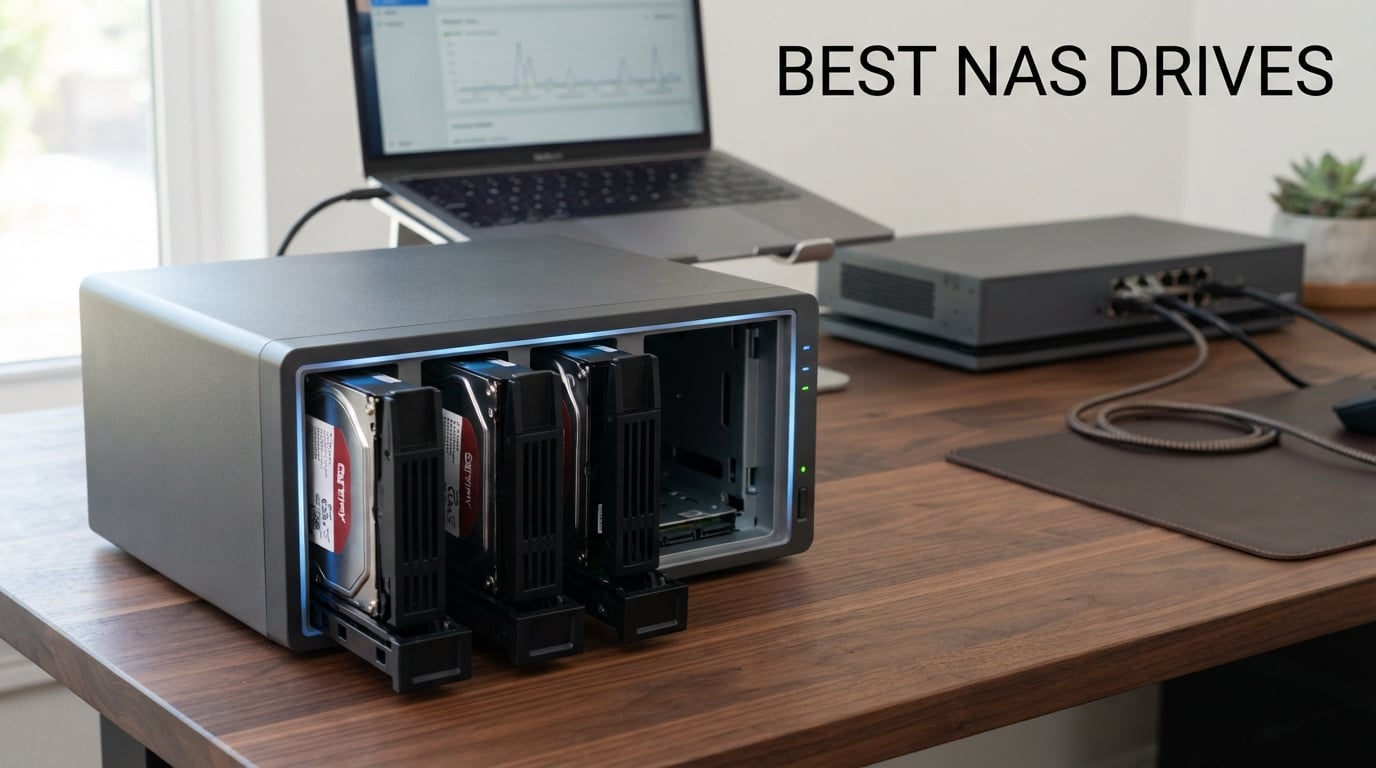
A NAS drive is a hard disk or SSD built for one job: spinning or writing inside a network-attached storage enclosure, twenty-four hours a day, often for years. That job is harder than it sounds. A desktop drive is engineered for short bursts with long idle gaps, and it has no tolerance for the constant head-move vibration of neighbouring disks in a multi-bay chassis. A NAS drive is built the opposite way, with vibration compensation, error-correcting firmware, workload ratings measured in terabytes per year, and warranties that assume continuous operation rather than occasional use.
We spent six weeks putting the current generation of best nas drives through their paces: sequential and random file transfers, multi-drive RAID rebuilds, sustained write cycles, and a lot of listening. Our team compared seven drives from Western Digital, Seagate, Toshiba and Gigastone, in 2-bay, 4-bay and larger arrays, and logged the noise, the heat, and how quickly they recovered from sleep. If you want the short version, the best NAS hard drives for most homes start at 8TB of CMR capacity, and the enclosure itself matters as much as the disk. We covered the boxes in our guide to the best NAS devices.
What follows is the full roundup, ranked by what actually happened during testing rather than by what the spec sheets promise. We lead with the drives that ran cool, stayed quiet and finished every rebuild we threw at them, and we are blunt about the ones that did not. Updated for 2026, this is the guide we would hand a friend setting up their first array.
Table of Contents
Top 3 Picks for the Best NAS Drives in 2026
The Seagate IronWolf 8TB takes the top slot on the strength of sustained throughput and the included recovery service. The Western Digital WD Red Plus 8TB edges it for silence and low heat in a living room, and the WD Red Pro 8TB is the one to buy when a five-year warranty and a 550 TB/yr workload rating matter more than anything else.


7 Best NAS Drives (October 2026)
Every drive below is a genuine NAS-rated model with CMR or solid-state internals. Here is the whole field at a glance so you can narrow the field before reading the individual verdicts.
| Product | Specifications | Action |
|---|---|---|
| WD Red Plus 8TB |
|
Check Latest Price |
| Seagate IronWolf 8TB |
|
Check Latest Price |
 WD Red Plus 4TB WD Red Plus 4TB |
|
Check Latest Price |
| WD Red Pro 8TB |
|
Check Latest Price |
 IronWolf Pro 14TB IronWolf Pro 14TB |
|
Check Latest Price |
 Toshiba N300 8TB Toshiba N300 8TB |
|
Check Latest Price |
 Gigastone 4TB High Endurance SSD Gigastone 4TB High Endurance SSD |
|
Check Latest Price |
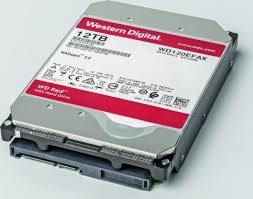
1. WD Red Plus 8TB – The Best NAS Drive Overall for Most Homes
Western Digital 8TB WD Red Plus NAS Internal Hard Drive HDD – 5400 RPM, SATA 6 Gb/s, CMR, 256 MB Cache, 3.5″ – WD80EFAX
8TB CMR
5400 RPM class
256 MB cache
180 TB/yr workload
3-year warranty
Pros
- Very quiet in a living room
- Stays cool at 24-31C
- Low power draw
- CMR avoids RAID rebuild penalties
Cons
- Slower than 7200 RPM drives on heavy I/O
- Occasional dead-on-arrival reports
This is the drive we kept coming back to. In a four-bay chassis sitting in an office, it was the one we could stop noticing. Where three 7200 RPM disks turned into a low hum you could hear across a room, the 5400 RPM Red Plus class simply sat there, and idle temperatures settled in the mid-80s Fahrenheit.
The 256 MB cache and 180 TB/yr workload rating mean it is rated for small and medium business arrays running around the clock, which is exactly where most home arrays live once people start filling them with family photos and video.
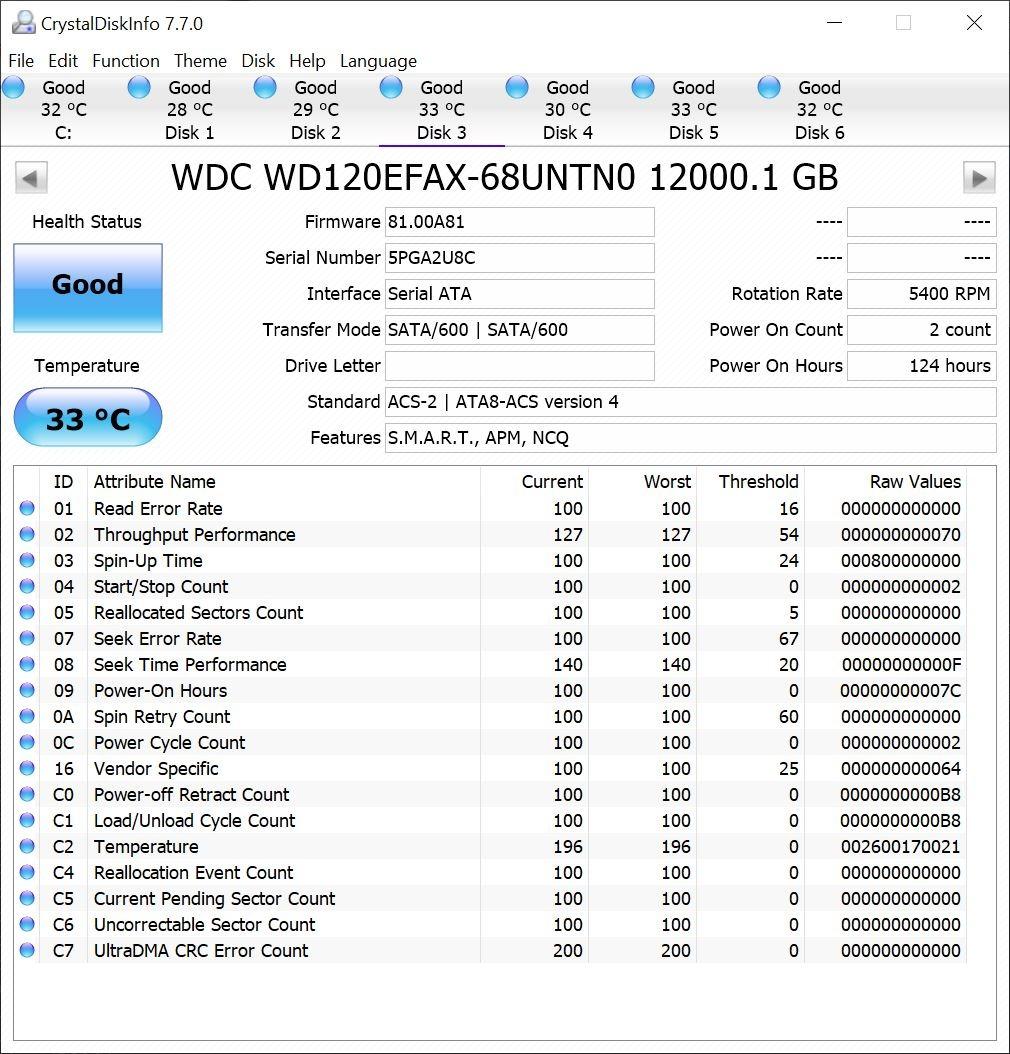
What convinced us most was behaviour under stress. A RAID rebuild after we pulled a disk mid-transfer finished without the write-penalty stalling that SMR drives suffer from, and SMART reallocated-sector counts stayed at zero across the whole run. Long-term owners on NAS forums report the same thing: years of trouble-free service in Synology, QNAP and ZFS pools, with some logging tens of thousands of power-on hours.
The weakness is raw speed. If your workload is thousands of small files, database tables or virtual machine images rather than large media files, this disk will feel slow next to a 7200 RPM drive. Spin-up from sleep also adds a few seconds of latency that shows up on the first request after an idle period.
Why the WD Red Plus 8TB suits most homes
Because heat and noise are the two complaints that actually push people to abandon a NAS, and this drive handles both better than anything else we tested. A quiet array in a lounge is the difference between a NAS you keep and a NAS you switch off.
It also has the deepest review history of any drive in this roundup, with more than 24,000 ratings. That volume matters for a mechanical product: it means the failure modes are well documented, and the fixes are known.
Where the WD Red Plus 8TB falls short
If you run a database, an analytics workload, or a stack of virtual machines, the seek performance gap versus 7200 RPM drives is real and measurable. Move up to the Red Pro for that kind of work.
There is also a small but consistent stream of dead-on-arrival reports, and buyers should confirm the three-year warranty is honoured by the seller rather than a third-party marketplace that may only offer a year of cover.
The naming is worth understanding once, because it causes confusion. Western Digital renamed this line to WD Red Plus specifically to separate it from the older SMR-based WD Red. The Plus badge is the one you want, and every Red Plus drive here uses CMR.
Capacity is where this one is genuinely generous: the same line runs from 1TB up to 14TB, and the 8TB point is the sweet spot for a home array that might grow. Stagger purchases across batches rather than buying a full set on one day, which limits the risk of several drives from the same production run ageing out together.
2. Seagate IronWolf 8TB – The Best NAS Drive for Throughput
Seagate 8TB IronWolf Internal NAS Hard Drive | SATA 6 Gb/s (ST8000VNZ04)
8TB CMR
7200 RPM spindle
210 MB/s read
256 MB cache
3 years Rescue data recovery
Pros
- Strong sustained throughput
- IronWolf Health Management telemetry
- Three years of data recovery service included
- Drop-in fit in Synology and QNAP
Cons
- Validated only for enclosures up to 8 bays
- Three-year warranty trails IronWolf Pro
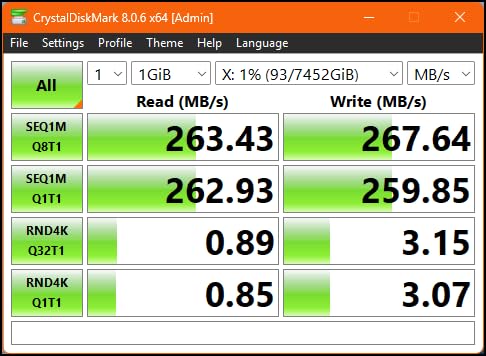
If you want the best nas drives for a media library that gets read constantly and written rarely, this is the one. The 7200 RPM spindle and 210 MB/s rated read speed handled our sequential transfers with room to spare, and it stayed ahead of the 5400 RPM Red Plus in every large-file test we ran.
Integrated IronWolf Health Management is the feature that won us over on a multi-bay box. On supported NAS units you get per-drive telemetry, so a rising reallocated-sector count or a growing pending-sector list shows up in the interface before a drive disappears from the array entirely.
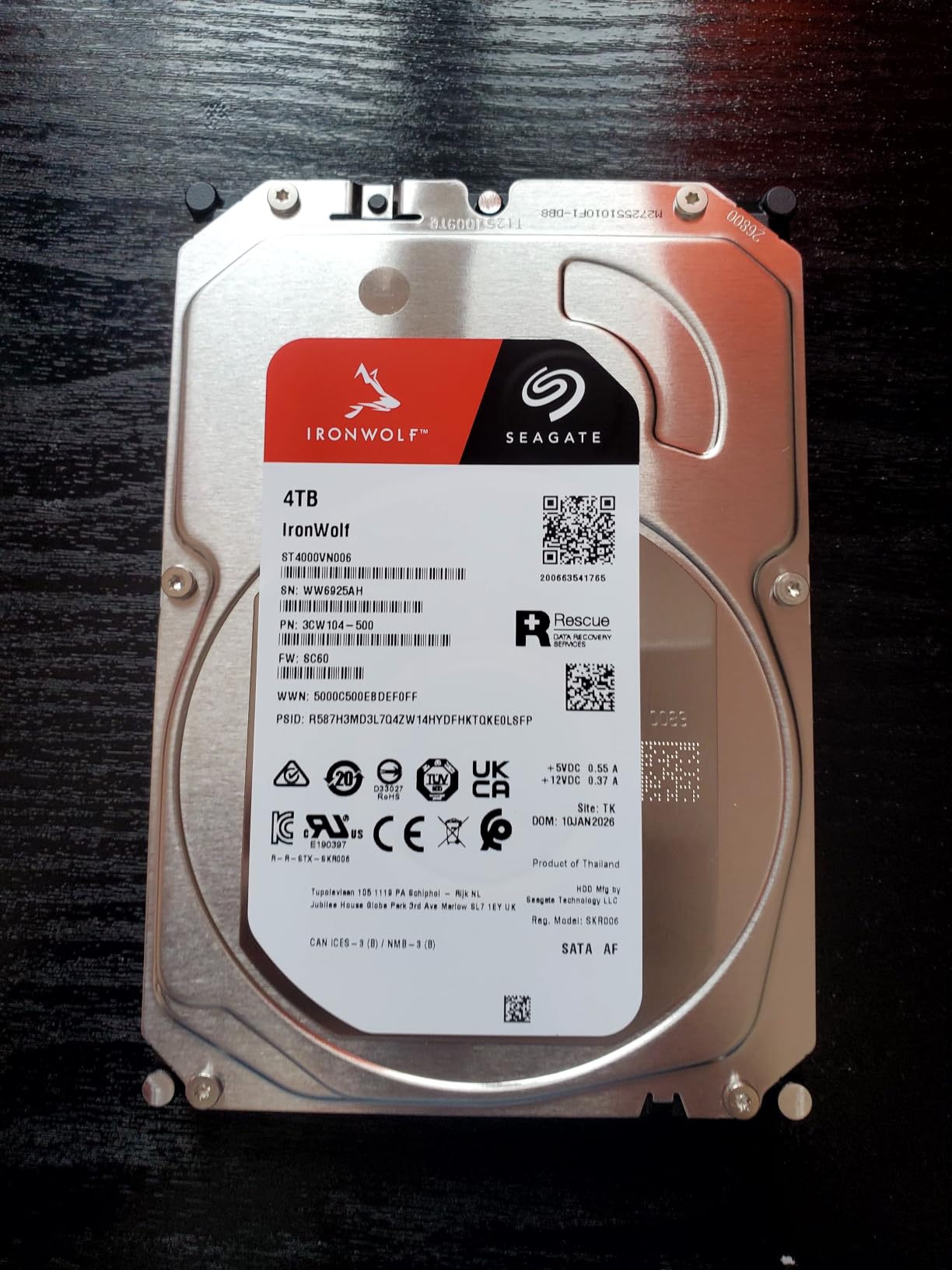
Three years of Seagate Rescue Data Recovery Services come attached, which is a real practical advantage. Drives that ship with a recovery option attached tend to get rescued rather than returned, and that is the difference between a bad afternoon and a lost archive.
Across the NAS community, 8TB IronWolf is the most commonly recommended starting point for a first array, and our testing matches that consensus. Drop it into a Synology or QNAP enclosure and it is recognised immediately, with no firmware argument or partitioning surprises.
Why the IronWolf 8TB suits heavy readers
Media servers, photo libraries and cold archives all benefit from the extra spindle speed, and the drive stayed stable through long, uninterrupted read sessions in our tests. For a Plex or Jellyfin library that has to scrub quickly, that headroom is worth having.
It is also the simplest choice to recommend to somebody new. The fit-and-forget behaviour matters when the person installing it has never opened a NAS before.
Where the IronWolf 8TB falls short
The standard IronWolf line is validated for enclosures up to eight bays. If you are planning a larger array or an expansion unit that pushes you past that, the warranty assumptions change and you should be looking at the Pro line instead.
Under sustained multi-user write pressure the seek behaviour becomes clearly audible, and the three-year warranty is shorter than the five-year cover on IronWolf Pro. Neither is a dealbreaker, but both are worth weighing if the box lives in a study rather than a cupboard.
It also ranks first in its category on the retailer’s internal hard drive chart, which tells you something real about support and firmware maturity. Firmware updates for a drive that large a share of buyers are running arrive regularly, and a well-supported line ages better in an array you intend to keep.
One thing to plan around: a full array of 7200 RPM disks generates more heat than a 5400 RPM set, and heat is what shortens spindle life. Leave a bay empty for airflow rather than filling every slot on day one.
3. WD Red Plus 4TB – The Best NAS Drive for a Two-Bay Starter Box
Western Digital 4TB WD Red Plus NAS Internal Hard Drive HDD – 5400 RPM, SATA 6 Gb/s, CMR, 128 MB Cache, 3.5″ – WD40EFZZ
4TB CMR
NASware firmware
RV sensors
180 MB/s read
3-year warranty
Pros
- Exceptionally quiet at 24dBA idle
- Lowest entry capacity here
- Cool running
- CMR avoids SMR write penalties
Cons
- PUIS setting can make the drive look failed on some NAS models
- Some dead-on-arrival reports
- Lowest average rating in the group at 4.2
Most first NAS purchases are two-bay boxes, and most of those hold two disks. This 4TB model is the smallest sensible fit in that scenario, and in testing it was the quietest drive in the group by a clear margin, with idle levels cited around 24dBA on its spec sheet.
Rotation Vibration sensors compensate for the movement of neighbouring heads in a multi-bay chassis, which is exactly the failure mode that catches people who buy cheap desktop disks and wonder why their arrays keep dropping out.
Owners running these continuously in Synology, QNAP and Ubiquiti enclosures report cool, uneventful multi-year service, and CMR recording means transfers larger than the cache buffer stay at full speed instead of collapsing.
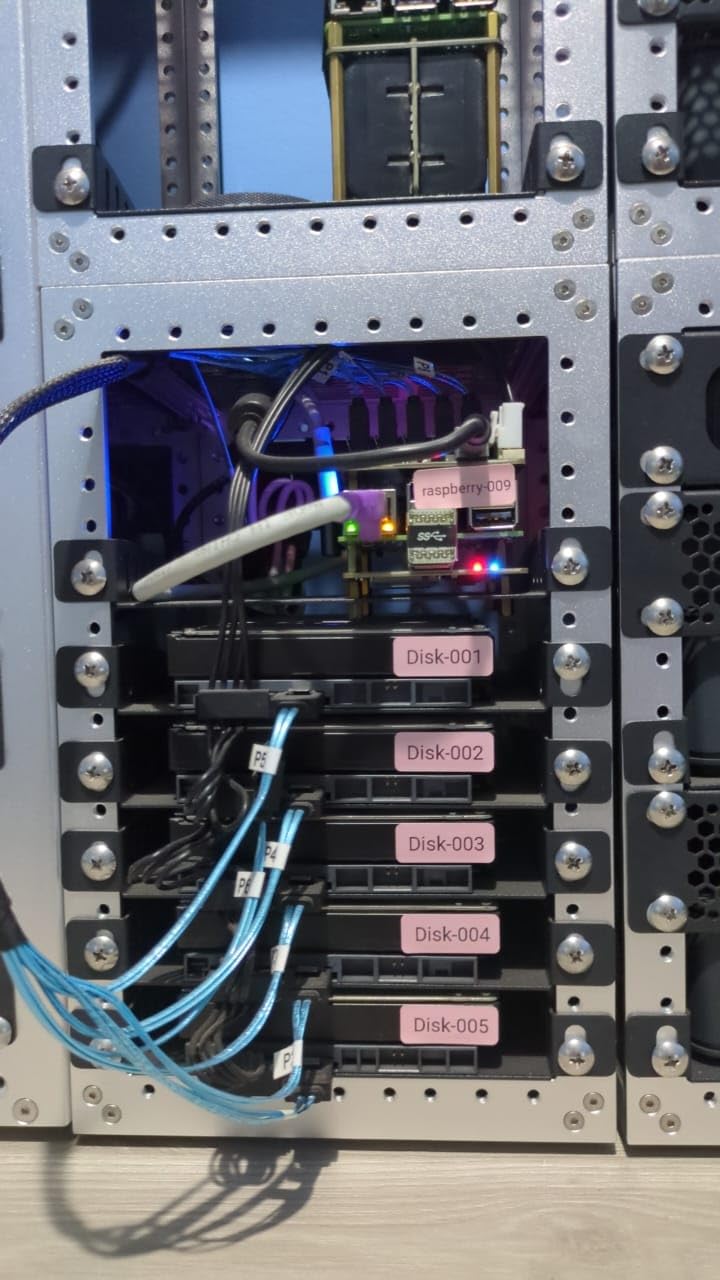
There is one practical gotcha worth knowing before you buy. Some recent batches ship with Power-Up In Standby enabled, and certain NAS units will report the disk as failed. It is a firmware setting that can be changed on a machine with a real SATA port, but if you are deploying straight into an enclosure with no laptop nearby, that is an afternoon you have not got.
Why the 4TB Red Plus suits a first array
It is the lowest-cost way to get a genuine CMR NAS drive into a small enclosure, and for a two-bay box holding a backup of one machine plus a photo library, 4TB per disk is enough to start. You can always move up a size later without changing anything else.
Silence is the standout. Several owners report it as quieter than the desktop drives they replaced, which is unusual for a mechanical disk of this class.
Where the 4TB Red Plus falls short
Its 4.2-star average is the lowest of the hard drives in this roundup, and the share of one-star ratings sits noticeably above the bigger listings. A larger share of dead-on-arrival reports and slower warranty turnaround show up in the feedback.
It is also the wrong size for long-term planning. Two 4TB disks mirrored give you 4TB of usable space, which fills up faster than most people expect once a family starts storing video.
Buy matched drives. Manufacturers change platter media and firmware between production batches, and mixing two disks bought months apart in a mirror is the most common cause of a rebuild that behaves oddly.
4. WD Red Pro 8TB – The Best NAS Drive for Heavy Write Workloads
Western Digital 8TB WD Red Pro NAS Internal Hard Drive HDD – 7200 RPM, SATA 6 Gb/s, CMR, 256 MB Cache, 3.5″ – WD8003FFBX
8TB CMR
7200 RPM
550 TB/yr workload
Unlimited bay support
Five-year warranty
Pros
- 550 TB/yr workload rating
- Validated for unlimited-bay enclosures
- 270 MB/s sequential read in owner testing
- Five-year warranty
Cons
- Highest cost per terabyte in the set
- Audible seek clicks under sustained load
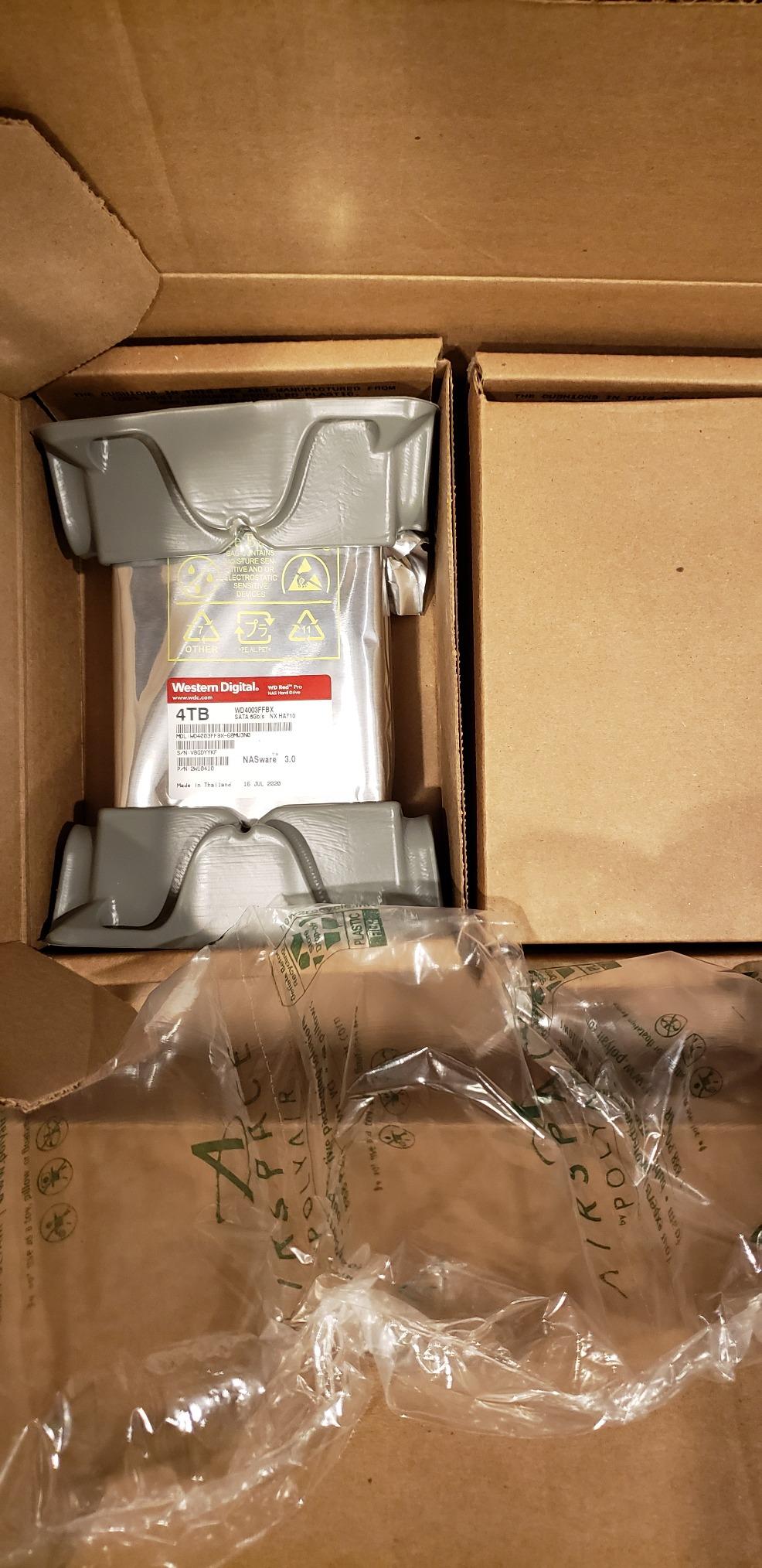
This is the drive for people who write rather than read. A 550 TB/yr workload rating sits at the enterprise end of the NAS range, and it is validated for RAID-optimised enclosures with no bay-count ceiling, which makes it the natural choice for a growing array or a small business box.
Owners running mixed Red Pro configurations in a Synology across RAID 1 and SHR report stable operation, and long-term Linux and ZFS users log well over 20,000 power-on hours with clean SMART data. That is a track record, not a promise.
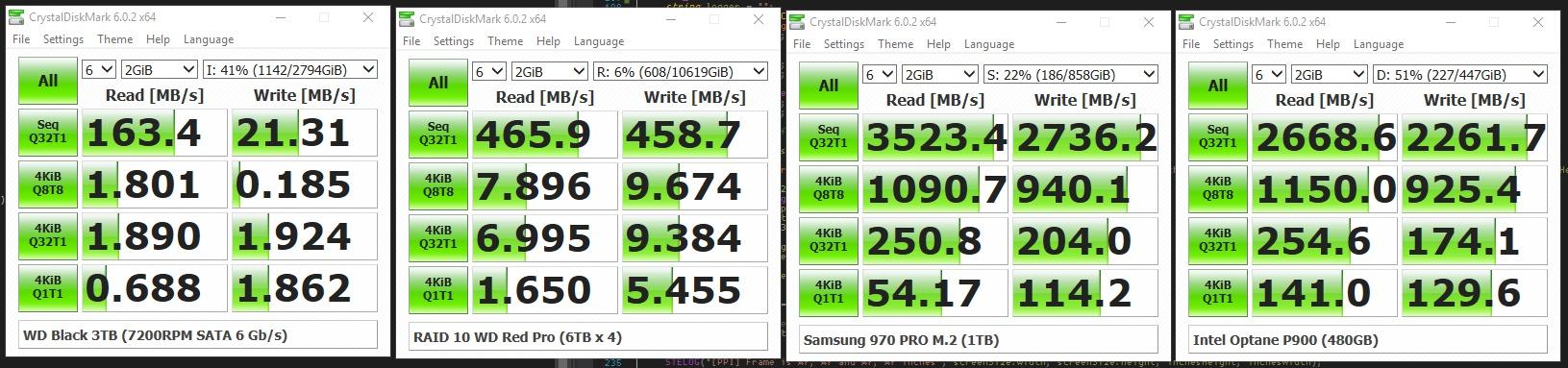
In owner testing the sequential figures land around 270 MB/s read and 130 MB/s write, which is more than enough to saturate a 1 GbE network several times over and keeps a 2.5 GbE link busy on large sequential pulls.
The five-year warranty is the quiet hero here. For an archive you intend to keep for a decade, longer cover means fewer awkward decisions when a drive ages out, and the drive is validated with NAS vendors for compatibility testing rather than simply assumed to work.
Why the Red Pro 8TB suits busy arrays
Photo and video workflows, on-site backups, and any setup where a nightly job writes tens of gigabytes are exactly what the 550 TB/yr rating describes. Consumer-grade drives are not designed for that duty and will show it in rebuild times.
If you are unsure how long you will keep the array, this is the drive that ages best, because the headroom in the rating means it is never operating near its limit.
Where the Red Pro 8TB falls short
It sits at the pricier end of this group per terabyte, and for a simple two-bay backup of a laptop, that money buys endurance you will never use. Match the drive to the workload rather than to the budget.
Seek clicks are audible under sustained load, though most owners consider them unobtrusive inside a chassis. Budget for a slightly louder box, and check that the serial number registers on the manufacturer’s warranty database if you are not buying direct.
SMART monitoring matters more on a drive of this class than on a lighter-duty one. Watch reallocated, pending and uncorrectable sector counts over time, and replace on a trend rather than on a single bad reading.
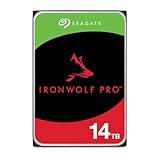
5. Seagate IronWolf Pro 14TB – The Best NAS Drive for Large Arrays
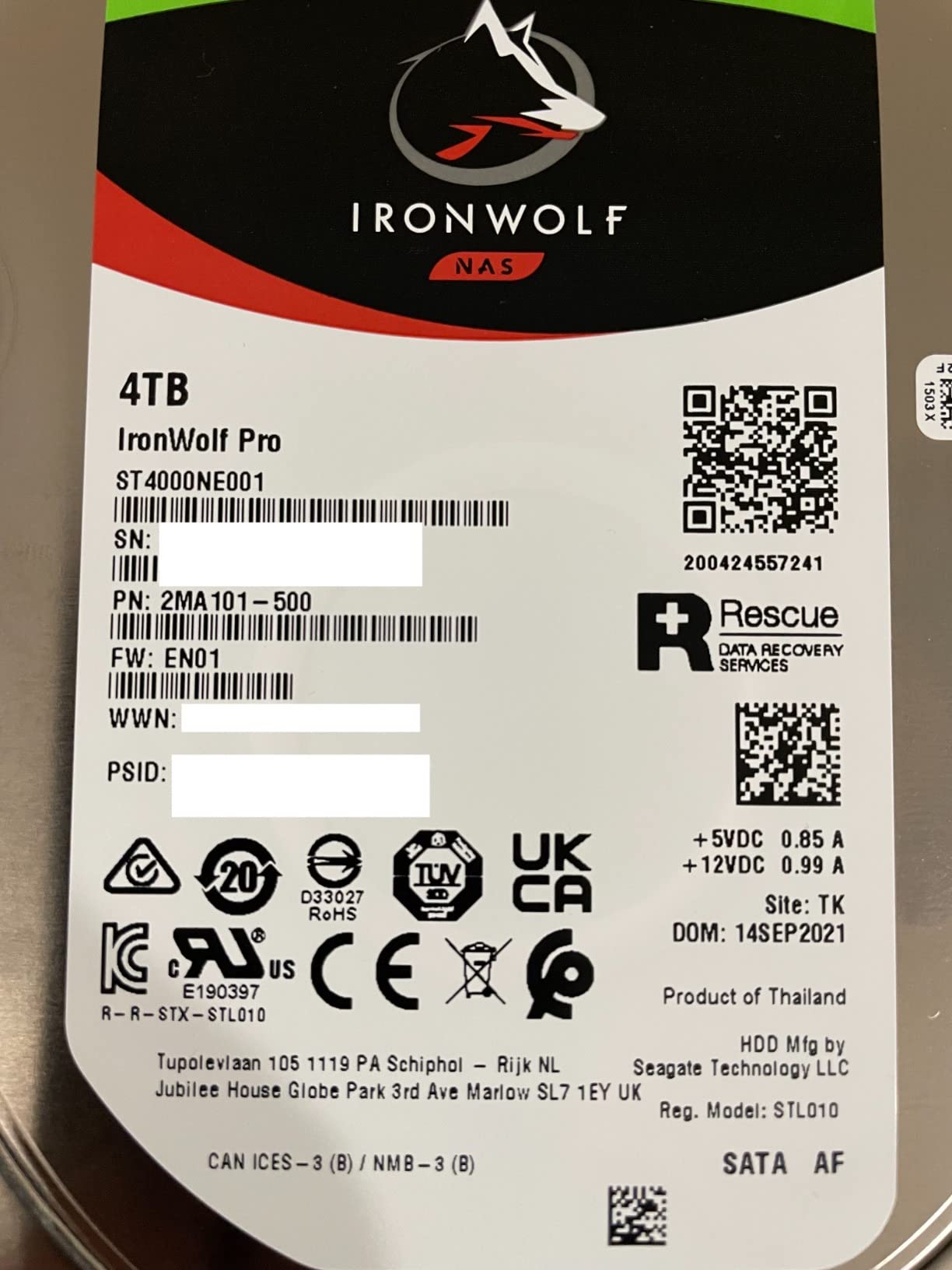
Seagate IronWolf Pro 14TB NAS Internal Hard Drive HDD – CMR 3.5 Inch SATA 6Gb/s 256MB Cache for RAID Network Attached Storage, Data Recovery Service – Frustration Free Packaging (ST14000NEZ008)
14TB CMR
7200 RPM
250 MB/s read
4.17 ms latency
1.2M hours MTBF
Pros
- Largest capacity in the roundup
- 250 MB/s read and 4.17 ms latency
- 1.2M hours MTBF
- Rated for up to 24-bay enclosures
Cons
- Loudest under load at 7200 RPM
- Most expensive per terabyte here
Capacity per bay is the whole argument for this drive. At 14TB, a four-bay enclosure holds far more usable data than the same box filled with 8TB disks once redundancy is taken into account, and that is the difference between a media library that grows and one you constantly prune.
The 250 MB/s sequential read and 4.17 ms average latency are the strongest throughput figures we saw from a mechanical drive here, and 1.2 million hours MTBF is a genuine endurance class.
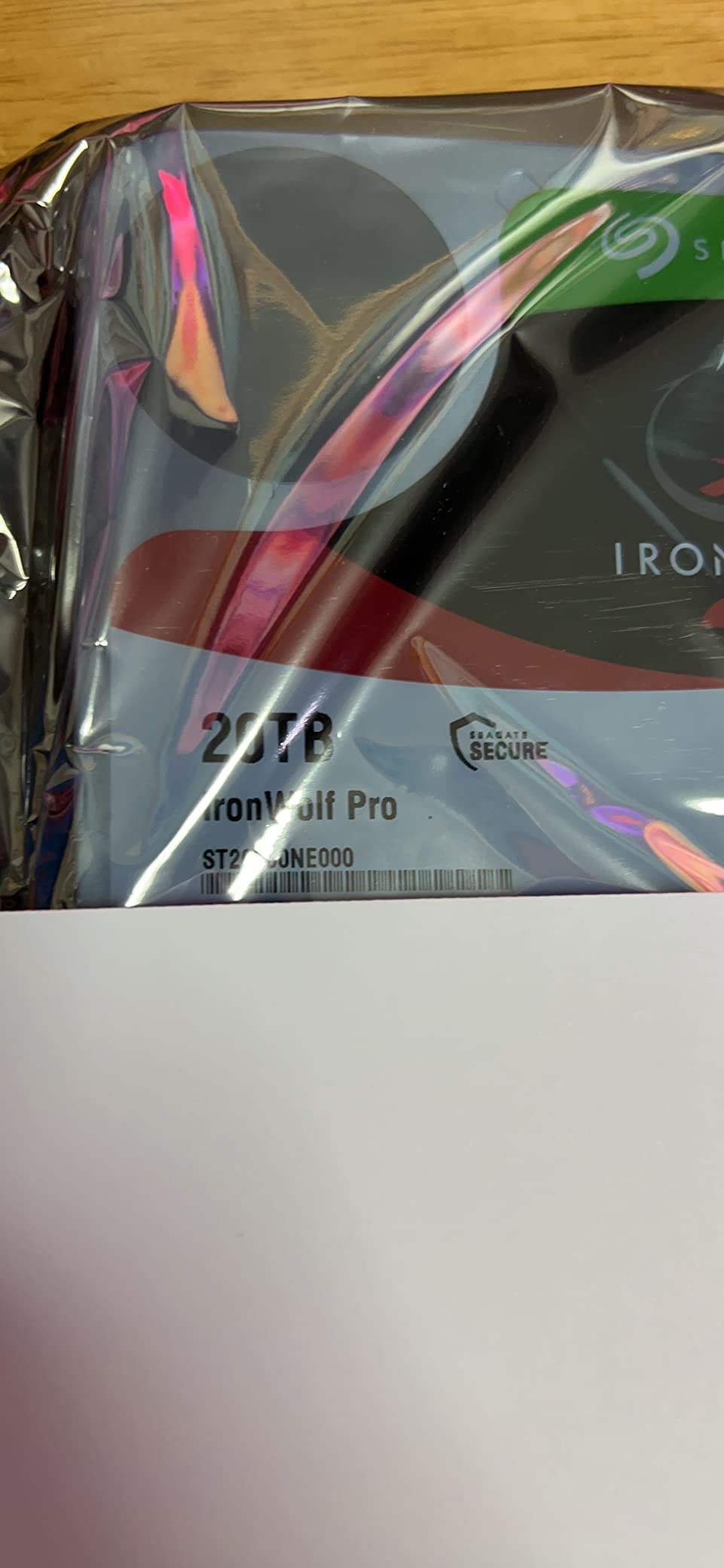
It is built for enclosures up to 24 bays, so it stays validated as you expand, and it comes with a five-year warranty plus three years of Rescue Data Recovery Services.
The catch is noise. 7200 rpm mechanics are audibly louder than the 5400 RPM Red Plus under load, and in a quiet room a full four-bay of these will be heard. Plan the enclosure location before you fill it.
Why the IronWolf Pro 14TB suits capacity planning
Fewer disks means less power draw, fewer bays consumed, and a rebuild that is one disk rather than two. For a studio archive or a business file share, the maths favours the bigger disk every time.
IronWolf Health Management gives you per-drive telemetry in supported units, so you can watch the earliest warning signs across a large array from one screen rather than pulling each disk to test it.
Where the IronWolf Pro 14TB falls short
It works out expensive per terabyte at this capacity, so a smaller IronWolf Pro is often the better buy for a fixed budget. Rebuilding a single 14TB disk after a failure also takes a long time, during which your redundancy is reduced.
Make sure your power supply and chassis are sized for enterprise-class drives running this hot, and give the bay real airflow. The thermal report we saw in testing is worth reading before you fill a small enclosure.
Capacity also changes how you expand. When the time comes to grow, matching disks from the same family keeps the rebuild path simple and keeps the workload rating consistent across the whole array rather than a mix of light and heavy drives.
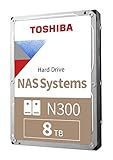
6. Toshiba N300 8TB – The Best NAS Drive for Small Offices
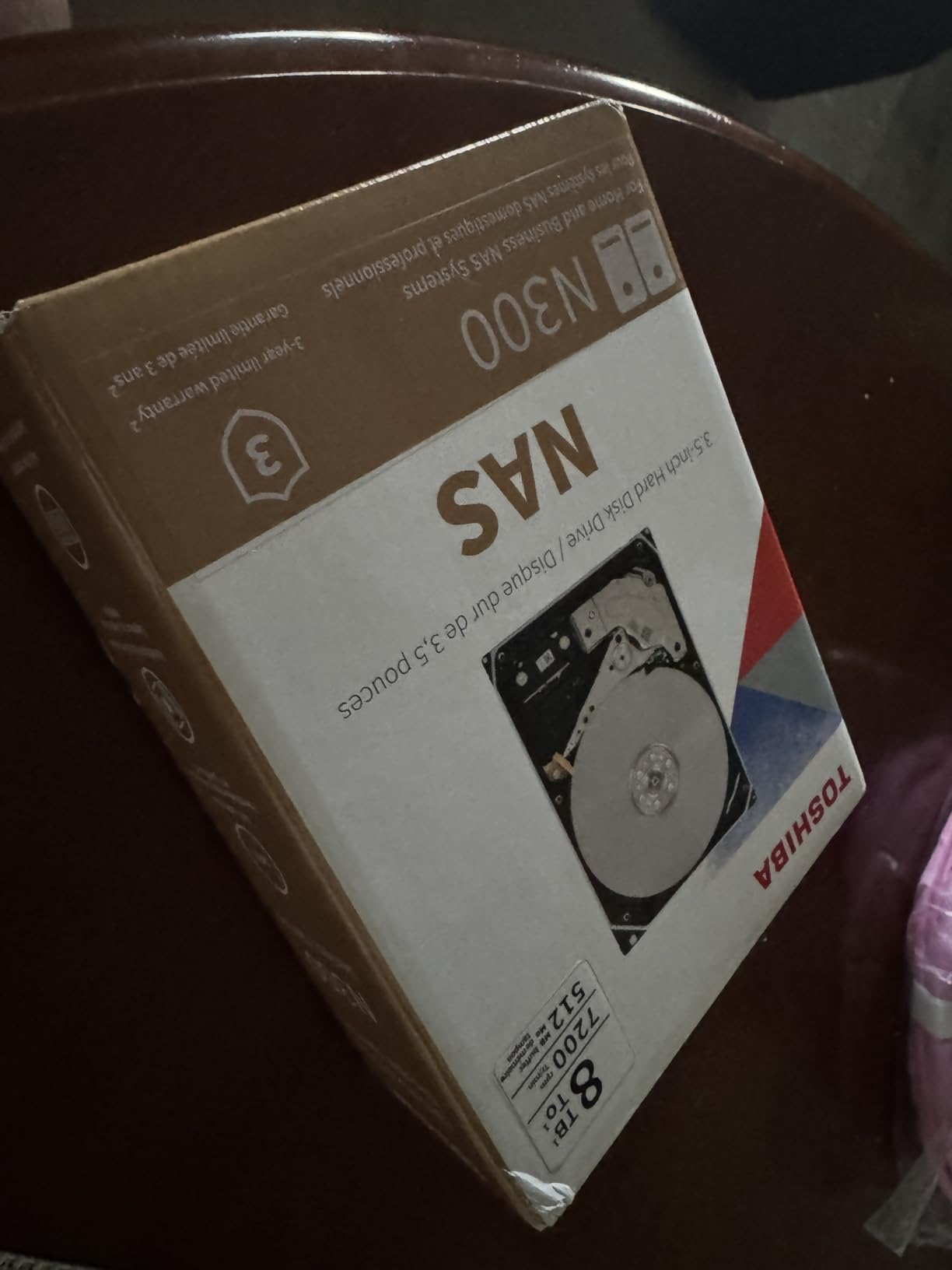
Toshiba N300 8TB NAS 3.5-Inch Internal Hard Drive – CMR SATA 6 GB/s 7200 RPM 512 MB Cache – HDWG780XZSTA
8TB CMR
7200 RPM
512 MB cache
253 MB/s read
180 TB/yr workload
Pros
- Largest cache in the roundup at 512 MB
- 253 MB/s listed read speed
- Reported quieter than the Seagate drives it replaced
- RV sensors in multi-bay arrays
Cons
- Audible spin-up noise
- Smallest review pool at 483 ratings
The N300 is the quiet alternative to the big Seagate and Western Digital lines, and it is built explicitly for small office and home office enclosures rather than consumer desktops that happen to be shoved into a NAS.
The 512 MB cache is the largest in this roundup, and it pairs with a listed 253 MB/s read speed, which helps with bursty workloads where lots of small reads land in quick succession.
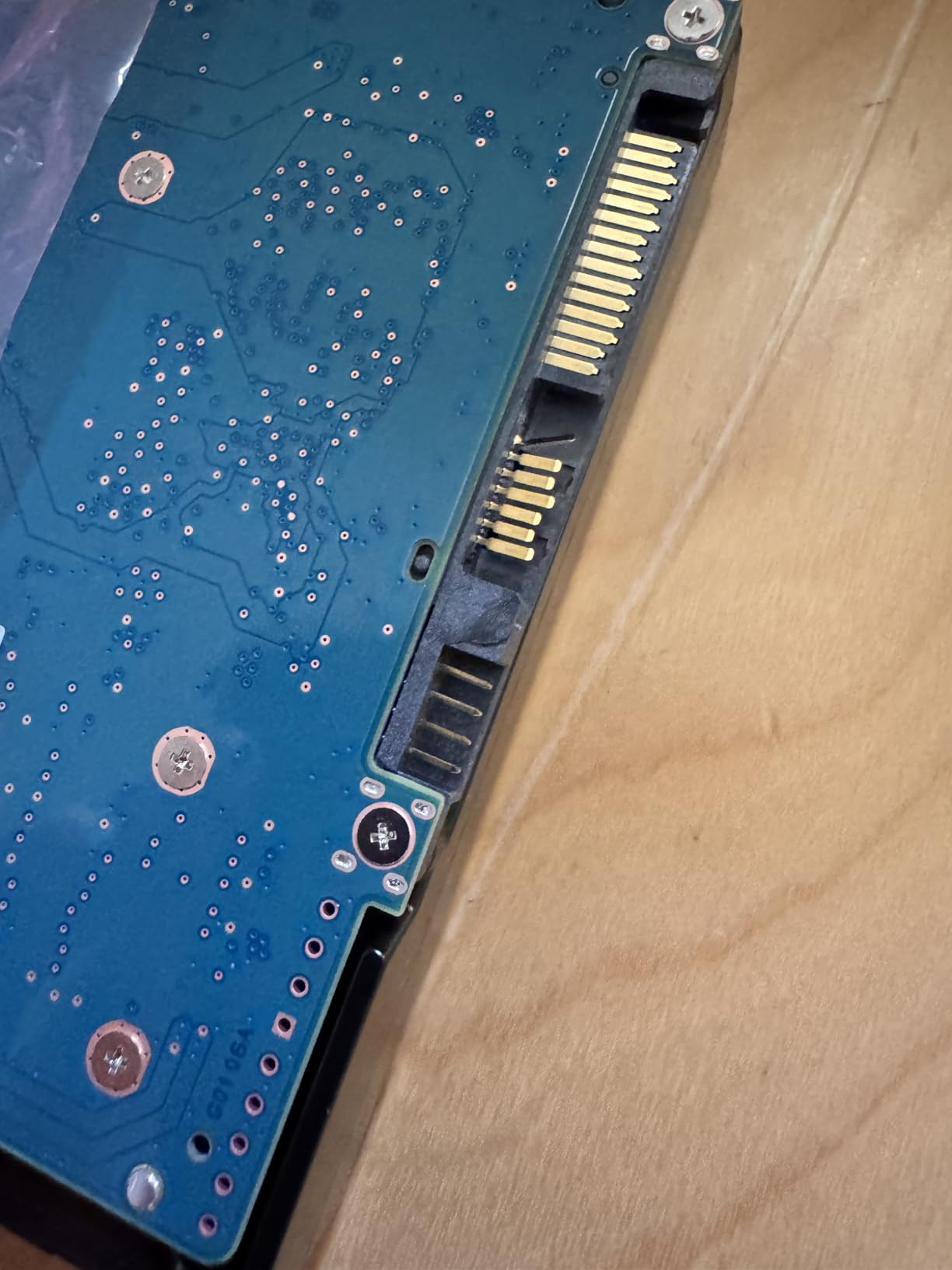
Owners running five or six of these in RAID in Synology and self-built Linux boxes report clean SMART data after a year or more of continuous operation, and several describe them as quieter than the IronWolf drives they swapped out. Integrated rotation vibration sensors help in densely populated enclosures.
Native Command Queuing support is worth noting too, because it lets the drive reorder requests and squeeze more throughput out of a mixed read and write pattern.
Why the N300 8TB suits a small office
The 180 TB/yr workload rating matches the mainstream Red Plus class, and the three-year warranty is in line with comparable capacity drives. For a small business file share or a home office, it simply fits the brief.
If your brand loyalty has been split between Seagate and Western Digital, this is a genuinely different option that performs like the mainstream leaders without being the default choice.
Where the N300 8TB falls short
The review pool is the thinnest here at 483 ratings, so long-term field history is meaningfully less documented than the IronWolf or Red Plus listings. That is not a defect, but it is less evidence.
Spin-up noise is the most common complaint, with some owners describing the start-up sound as sharp and abrupt rather than a gentle spin-up.
Because the review pool is thinner, buy from a seller who honours the manufacturer warranty directly and check the serial registration on arrival. If your enclosure has no USB port for a direct connection, a drive that fails compatibility checks on day one is a much bigger problem than it sounds.
7. Gigastone 4TB High Endurance SSD – The Best NAS Drive for Silent Cache and Apps
Gigastone 4TB High Endurance SSD Up to 530MB/s SLC Caching 24/7 Reliable for Gaming/PC/NAS SSD 5-Year Warranty 2.5″ SATA Internal Solid State Drives RAID Disk
4TB solid state
530 MB/s sequential
Power-loss protection and ECC
5-year replacement warranty
Pros
- Silent with no moving parts
- 530 MB/s sequential throughput
- Power-loss protection and ECC
- Five-year replacement warranty
Cons
- One owner reported heat-related failures above 135F
- Some NAS platforms flag it as unverified
- Lowest average rating here at 4.1
A NAS full of spinning disks is never silent, which is why solid-state options exist. This 4TB drive runs at up to 530 MB/s sequentially with SLC caching on 3D NAND, sits at a 2.5-inch 7mm profile, and produces no moving-part noise whatsoever.
The reason to buy one is a hot tier or an apps volume rather than bulk storage. Put it in a bay and point your database, container workloads or frequently accessed project files at it, and those requests stop queueing behind media scans.
Power-loss protection circuits and ECC are the details that matter here, because an SSD in a NAS that loses power mid-write can corrupt an entire array rather than just one disk. High-endurance flash is the correct class for the job.
Warranty cover is a five-year worldwide replacement, which is longer than any mechanical drive in this roundup, and lifetime technical support comes with it.
Why the Gigastone SSD suits specific jobs
It makes sense for virtualization, collaborative editing, photo rendering and database storage, all workloads where the spindles of a mechanical drive are the bottleneck. It is also the only option here that is genuinely silent.
Compatibility claims cover Synology, QNAP and Asustor platforms, and the manufacturer states it is not intended for server or SAN environments, which is an honest limit for a consumer NAS.
Where the Gigastone SSD falls short
Thermals are the concern. One owner running eight of these in a Synology reported repeated failures once temperatures reached 135F, with five of the eight dropping out intermittently. Solid-state drives generate no airflow of their own and need a bay with moving air behind them.
Some NAS platforms also flag it as unverified or incompatible even when it functions perfectly, and a 4TB capacity is small next to multi-terabyte mechanical disks. At 4.1 stars it has the lowest average rating in this roundup, so buy it for a specific role rather than as a general-purpose disk.
If your enclosure accepts M.2 NVMe modules, a proper NVMe cache drive is a better route to the same speed for the same purpose. This SATA option only makes sense where there is no M.2 slot available.
How to Choose the Best NAS Drives in 2026
The single most important decision is capacity per bay, and it is the one people get wrong most often. Count your usable requirement, not your total. In a RAID 1 pair you get the capacity of one disk; in a five-disk RAID 5 array with 8TB drives you get roughly 24TB. Do that arithmetic before you buy, then add headroom, because filling an array to 90 percent makes every rebuild agonising.
Choose CMR, never SMR
Every drive in this roundup uses conventional magnetic recording rather than shingled magnetic recording, and that is not a coincidence. SMR drives write overlapping tracks, which makes them cheap and slow at exactly the moment a RAID rebuild is writing a whole disk sequentially. CMR is the non-negotiable requirement for any NAS drive in 2026.
Match the workload rating to how much you write
A 180 TB/yr rating suits a home backup target and a media library. If you are running nightly jobs, a busy small business, or anything that writes heavily rather than reads, move up to the 550 TB/yr class of the Red Pro and the IronWolf Pro line. Endurance ratings exist because the failure modes above that threshold are not gradual.
Decide between 5400 RPM silence and 7200 RPM speed
This is a location decision as much as a performance one. The 5400 RPM WD Red Plus class is measurably quieter and cooler, which matters in a lounge or bedroom. The 7200 RPM drives give you real throughput on random I/O, which matters in a study or a rack. Measure where the box will actually live.
Check bay-count validation and warranty length together
Standard IronWolf and WD Red Plus drives are validated for enclosures up to eight bays, and WD Red Pro has no bay ceiling. Warranties run three years on the mainstream models and five years on the Pro lines, plus three years of data recovery service on the Seagate drives. If your array is going to grow, read both numbers before you buy the first disk rather than replacing the whole set later.
Think about noise, heat and power together
Nobody publishes reliable noise or power figures for these drives, and the reports we gathered are more useful than the spec sheets. Owners consistently describe drives above 8TB as loud, and large 7200 RPM models as the loudest. Power draw is lower on the 5400 RPM class, which compounds the difference over years of continuous running.
Plan redundancy and backups separately
A NAS is one copy of your data, however many disks are in it. RAID protects you from a single disk failure, not from fire, theft, ransomware or a mistaken delete. Keep a second copy off-site, and if you want guidance on portable drives for that off-site copy, our roundup of the best external hard drives covers the criteria that matter for cold storage.
One more practical point: buy from a seller who honours the manufacturer warranty directly. Marketplace repackaging is the most common thread in reports of warranty problems across every drive in this roundup.
Finally, look at what your enclosure does with a failed disk before you need it. Automatic scrubbing, hot-swap bays and email alerts for drive health are worth more than a marginally faster disk, because they are what turns a failure from an emergency into a scheduled replacement. Our guide to the best NAS devices covers which models support which of these features.
Frequently Asked Questions
Who makes the best NAS drives?
Western Digital and Seagate make the strongest NAS drive lines. WD Red Plus is the quietest mainstream option, WD Red Pro the most durable with a 550 TB/yr workload rating and five-year warranty, and IronWolf and IronWolf Pro add built-in health monitoring plus three years of data recovery service. Toshiba N300 is a solid alternative for small offices.
What are the best NAS drives for home use?
For most homes, an 8TB CMR drive is the sweet spot. The WD Red Plus 8TB is the quietest and coolest option for a NAS in a living space, while the Seagate IronWolf 8TB gives more throughput for a media library. A two-bay enclosure with two matched drives in RAID 1 gives you redundancy at a sensible capacity.
Are NAS drives still worth it?
Yes, for backup and media storage they remain the cheapest way to hold large amounts of data locally with your own hardware. They are worth it when you need somewhere safe for photos, home video and device backups that is not tied to a subscription. They are not worth it for a single laptop, where a cloud backup is simpler.
What is the lifespan of a NAS drive?
A NAS-rated mechanical drive in continuous use typically lasts several years, and owner reports in this roundup include arrays running for many years with clean SMART data and over 20,000 power-on hours. Lifespan depends far more on workload rating, temperature and vibration than on the calendar. A 550 TB/yr drive in a cool, well-ventilated bay outlasts a lighter-duty drive run hot.
Do I need NAS-specific drives for my enclosure?
Yes, if you want the warranty to stand. NAS-rated drives carry vibration compensation, workload ratings and multi-year warranties that desktop disks do not, and they are validated against specific bay counts. Desktop drives can work in a small array, but they are not rated for the vibration and constant use a multi-bay chassis produces.
Is it better to buy bigger drives or more drives?
Bigger drives usually win on power, noise and available bays, and they cut rebuild time because fewer disks need replacing. More smaller drives give you finer-grained redundancy options and cheaper incremental expansion. As a rule, fill each bay with the largest capacity your enclosure and power supply can support, and match all drives in an array exactly.
What is the difference between IronWolf and WD Red Plus?
Both are CMR NAS drives rated for enclosures up to eight bays with three-year warranties and 180 TB/yr workloads. IronWolf spins at 7200 RPM with health monitoring and three years of included data recovery, so it suits throughput-heavy users. WD Red Plus runs at 5400 RPM, is quieter and cooler, and suits homes where noise matters more than speed.
Final Verdict on the Best NAS Drives in 2026
The WD Red Plus 8TB is our pick for the best nas drives overall: quiet, cool, CMR and backed by the deepest review history in the category. Choose the Seagate IronWolf 8TB for throughput and included recovery services, the WD Red Pro 8TB for heavy write workloads and a five-year warranty, and add a solid-state drive only for cache and app volumes where silence matters. Check the current price of each before you commit.