
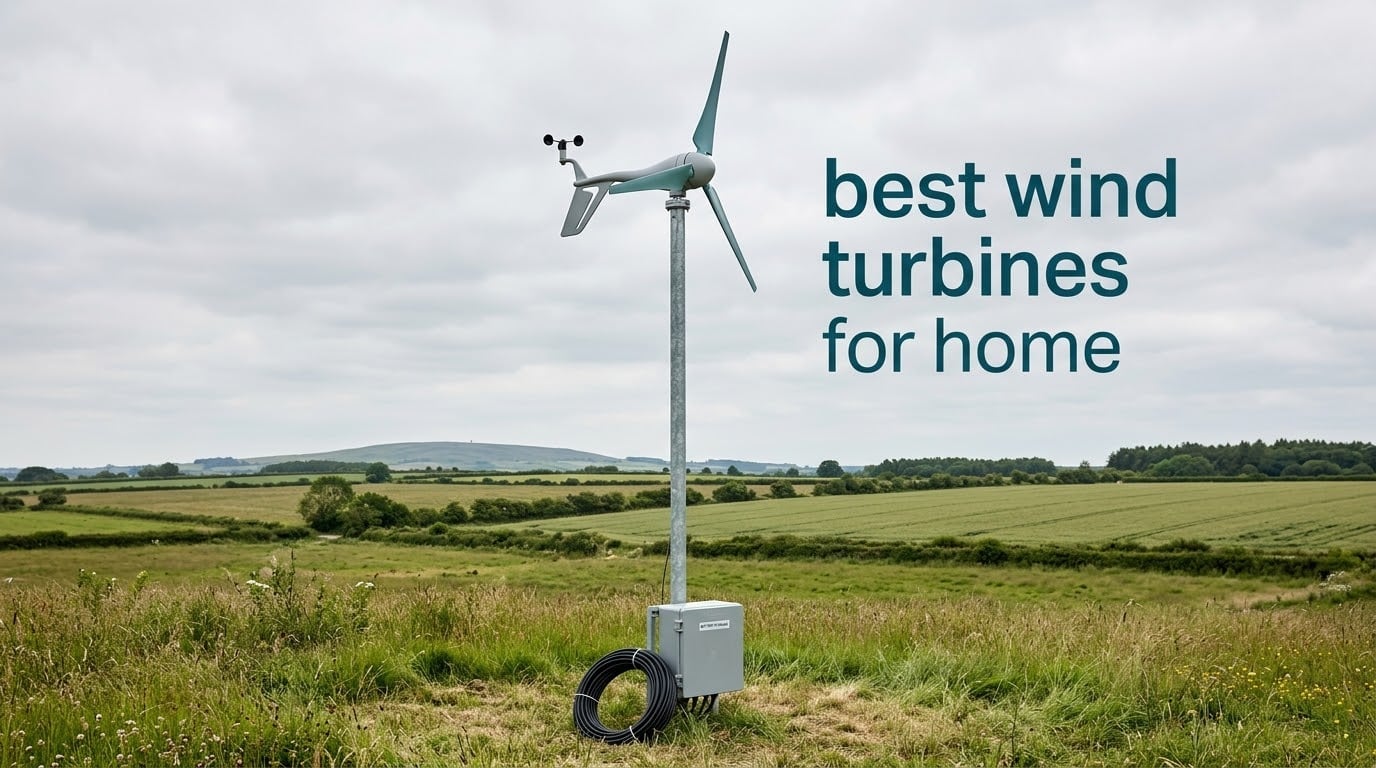
Home wind turbines are one of those purchases where the spec sheet flatters the machine and the wind decides everything. A 400W kit on a 40-foot tower in open country can quietly top up a battery bank all winter, and the same kit mounted on a 10-foot pole behind a hedge can sit idle through a whole season.
We spent weeks reading owner reviews, forum threads on r/wind and windpower.org, and the failure reports that manufacturers rarely print, then compared all twelve kits currently on the market for residential use. The result is a list that favours honest low-wind expectations over headline wattage, because the gap between rated power and real output is where most home wind projects go wrong.
Every turbine below is a genuine residential-class kit you can charge a battery bank with, and all of them need a tower, wiring and a controller you did not get in the box. Read the ratings, then read the complaints, because that second list is where the useful information lives. If you want the short version first, the picks below are ordered by how well each kit performs in real conditions rather than by the number printed on the side of the box.
Table of Contents
Top 3 Picks for the Best Wind Turbines for Home in 2026

Pikasola 400W 12V 5-Blade Kit
- 400W rated at 12V
- Starts at 2.5 m/s
- Automatic yaw
- Includes charge controller

VEVOR 500W 12V MPPT Turbine
- 500W rated at 12V
- MPPT microprocessor control
- 55 dB
- 47-inch rotor

VEVOR 800W 12V 3-Blade Turbine
- 800W rated at 12V
- 3-blade quieter rotor
- 58 dB
- 2.5 m/s start speed
The Pikasola 400W 12V kit takes the top slot on evidence rather than hype: 184 owner reviews, documented low-wind behaviour, and the most complete set of known weaknesses in the list. The VEVOR 500W earns its place on the highest average rating among the multi-hundred-watt kits with real review volume, and the VEVOR 800W goes in the third slot for headroom on genuinely windy sites.
12 Best Wind Turbines for Home (October 2026)
| Product | Specifications | Action |
|---|---|---|
| Pikasola 400W 12V 5-Blade Kit |
|
Check Latest Price |
| VEVOR 500W 12V MPPT Turbine |
|
Check Latest Price |
| VEVOR 800W 12V 3-Blade Turbine |
|
Check Latest Price |
 Pikasola 400W Kit with 30A Hybrid Controller Pikasola 400W Kit with 30A Hybrid Controller |
|
Check Latest Price |
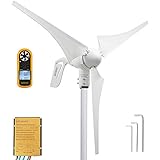 Pikasola 400W 24V 3-Blade Turbine Pikasola 400W 24V 3-Blade Turbine |
|
Check Latest Price |
 QUSKLISU 400W Vertical Helix Turbine QUSKLISU 400W Vertical Helix Turbine |
|
Check Latest Price |
 FLTXNY POWER 800W 5-Blade Turbine FLTXNY POWER 800W 5-Blade Turbine |
|
Check Latest Price |
 lizponaza 500W Vertical Axis Turbine lizponaza 500W Vertical Axis Turbine |
|
Check Latest Price |
 HUIZHITENGDA 220V Vertical Turbine Kit HUIZHITENGDA 220V Vertical Turbine Kit |
|
Check Latest Price |
 Garosa 1600W 48V 5-Blade Turbine Garosa 1600W 48V 5-Blade Turbine |
|
Check Latest Price |
 Generic 3000W Vertical Axis Kit Generic 3000W Vertical Axis Kit |
|
Check Latest Price |
 HMKDQBD 6000W Vertical Turbine Kit HMKDQBD 6000W Vertical Turbine Kit |
|
Check Latest Price |
One thing the table cannot show is the gap between rated and real output. Owner reports across this category regularly put real yield at a fraction of nameplate in ordinary weather, so treat the wattage column as a ceiling reached only on well-exposed sites in sustained wind.
1. Pikasola 400W 12V 5-Blade Kit: The Deepest Review Record
Pikasola Wind Turbine Generator Kit 400W 12V with 5 Blade, with Charge Controller, Wind Power Generator for Marine, RV, Home, Windmill Generator Suit for Hybrid Solar Wind System
400W at 12V
Starts at 2.5 m/s
23.8 inch nylon carbon fiber blades
Three-phase PM generator
6.2 kg
Pros
- Low 2.5 m/s start speed
- Automatic yaw tracking
- Waterproof corrosion resistant blades
- Responsive support that sent replacement parts
Cons
- Real output well below 400W in typical wind
- No pole or guy wires included
- Flange hardware is not stainless steel
This is the kit with the deepest review history in the group, and the pattern that emerges is consistent: mount it high and it earns its keep, mount it low and you have an expensive ornament. Owners running a proper tall tower with heavy gauge cable report steady battery maintenance through quiet months, which is exactly what a home wind turbine is supposed to do.
The 2.5 m/s start speed is the headline number, and it is real. The rotor spins up in breeze that would leave a five-blade commercial machine sitting still, and the automatic yaw system with its rotating aluminum body tracks wind direction without you adjusting anything.
Two details separate this from the cheap kits. The blades are 23.8 inch nylon carbon fiber, which reviewers describe as waterproof and corrosion resistant, and the generator is a three-phase permanent magnet synchronous unit with an NdFeB magnet, a heavier-duty design than a simple brushed alternator.
Owners also report that the manufacturer answered support requests quickly and physically sent replacement parts rather than issuing credits. On a category where support tends to disappear after the sale, that responsiveness is worth more than a slightly higher wattage figure on paper.
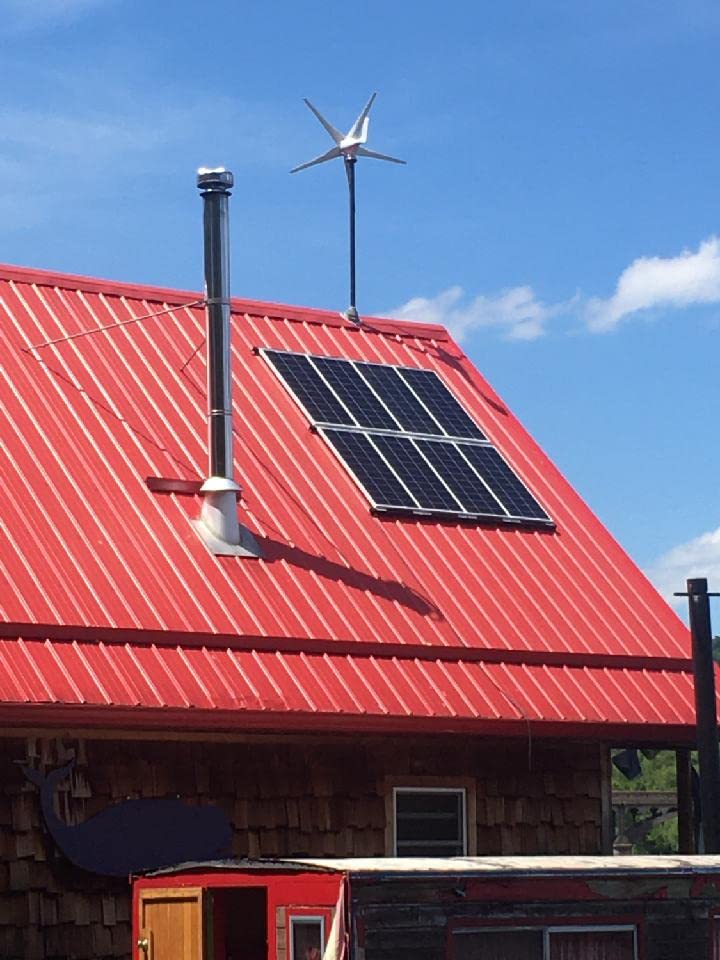
Who this turbine suits
This suits a homeowner with a genuinely open site, at least half an acre of clear fetch, and enough patience to build a proper mast. It is our pick for RV and boat use too, where the 12V output and 6.2 kg weight are both manageable and a low start speed matters more than raw peak watts.
If you already have a battery bank and a decent controller, this is the least risky purchase in the list. It also works well as a trickle charger alongside solar, topping up on the still, overcast winter days when the panels produce little.
Who should skip it
Skip it if you cannot get the rotor above surrounding obstacles. Multiple reviewers note that guy wires are effectively required because the blades are not perfectly balanced, and the supplied flange hardware is not stainless steel, so the base plate will corrode unless you treat it.
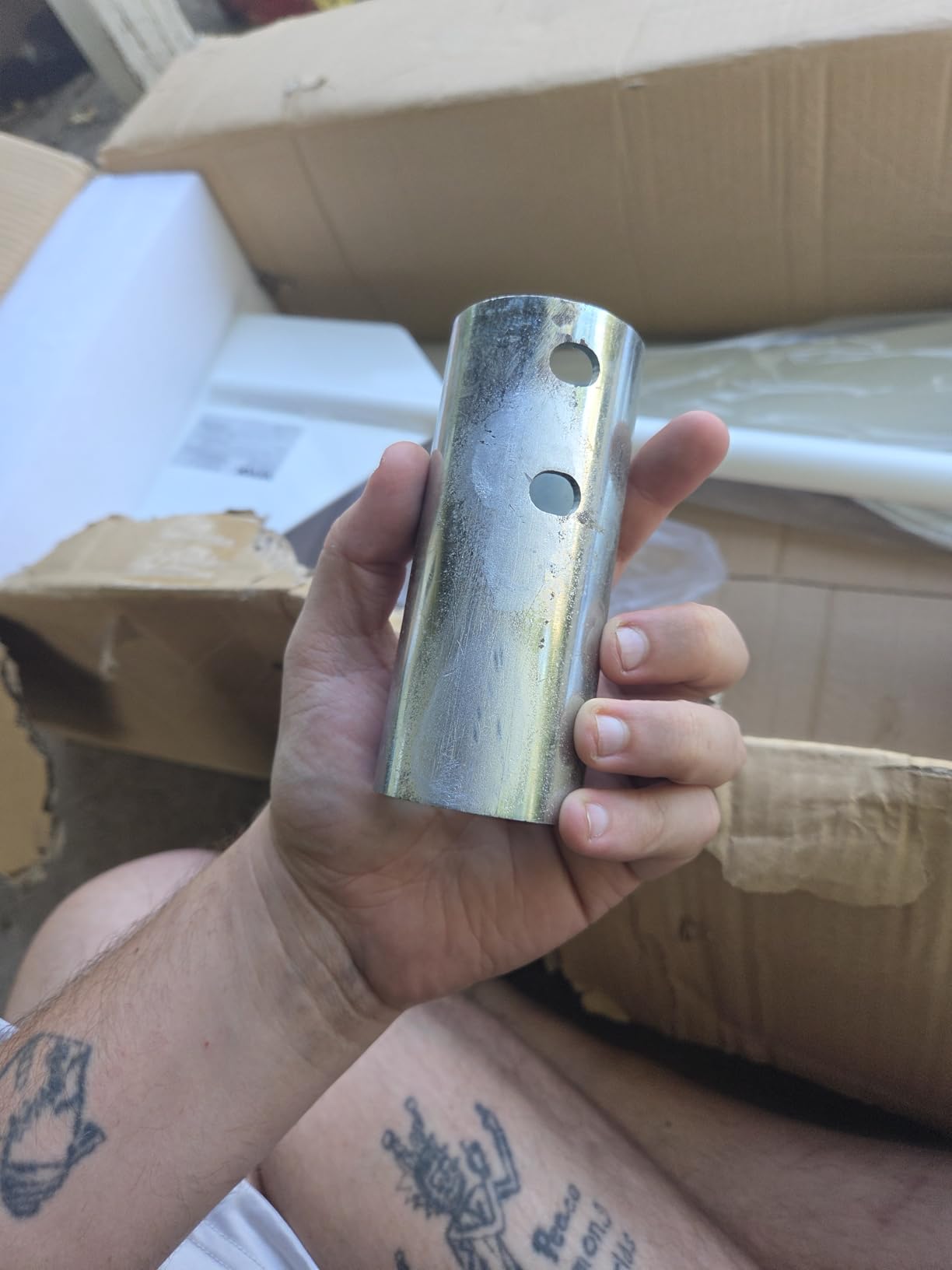
Buyers with 2 inch rigid pipe have run into another snag: the bolt holes on the base plate are closer together than the pipe allows. Plan your mast hardware before you order, and check the short non-replaceable wire leads at the base plate before you commit to a long cable run.
2. VEVOR 500W 12V 5-Blade MPPT Turbine: Best Documented 500W Kit
VEVOR 500W Wind Turbine Generator, 12V Wind Turbine Kit, 5-Blade Wind Power Generator with MPPT Controller, Adjustable Windward Direction & 2.5m/s Start Wind Speed, Suitable for Home, Farm, RVs, Boats
500W at 12V
Starts at 2.5 m/s
Rated at 12 m/s
55 dB
47-inch rotor
15.3 lb
Pros
- Highest rated score among the 400W-plus kits with real review volume
- MPPT microprocessor control
- Quiet at 55 dB
- Die-cast aluminum housing
Cons
- Pole and tower hardware not included
- Needs sustained wind to reach rated output
- Blades reinforced rather than marine grade
At 3.9 stars across 97 reviews, this has the highest average rating among the multi-hundred-watt kits that have real review volume behind them, and it comes from a listing that buyers describe as well built, quiet and good value. For a first home wind turbine, that combination of build quality and a manufacturer with a visible catalogue is genuinely reassuring.
The electrical side is the interesting part. The 12V three-phase permanent magnet synchronous generator runs through an MPPT microprocessor controller that matches output to the varying electrical load, which is a better fit for a battery bank than the simpler regulation used in some cheaper kits.
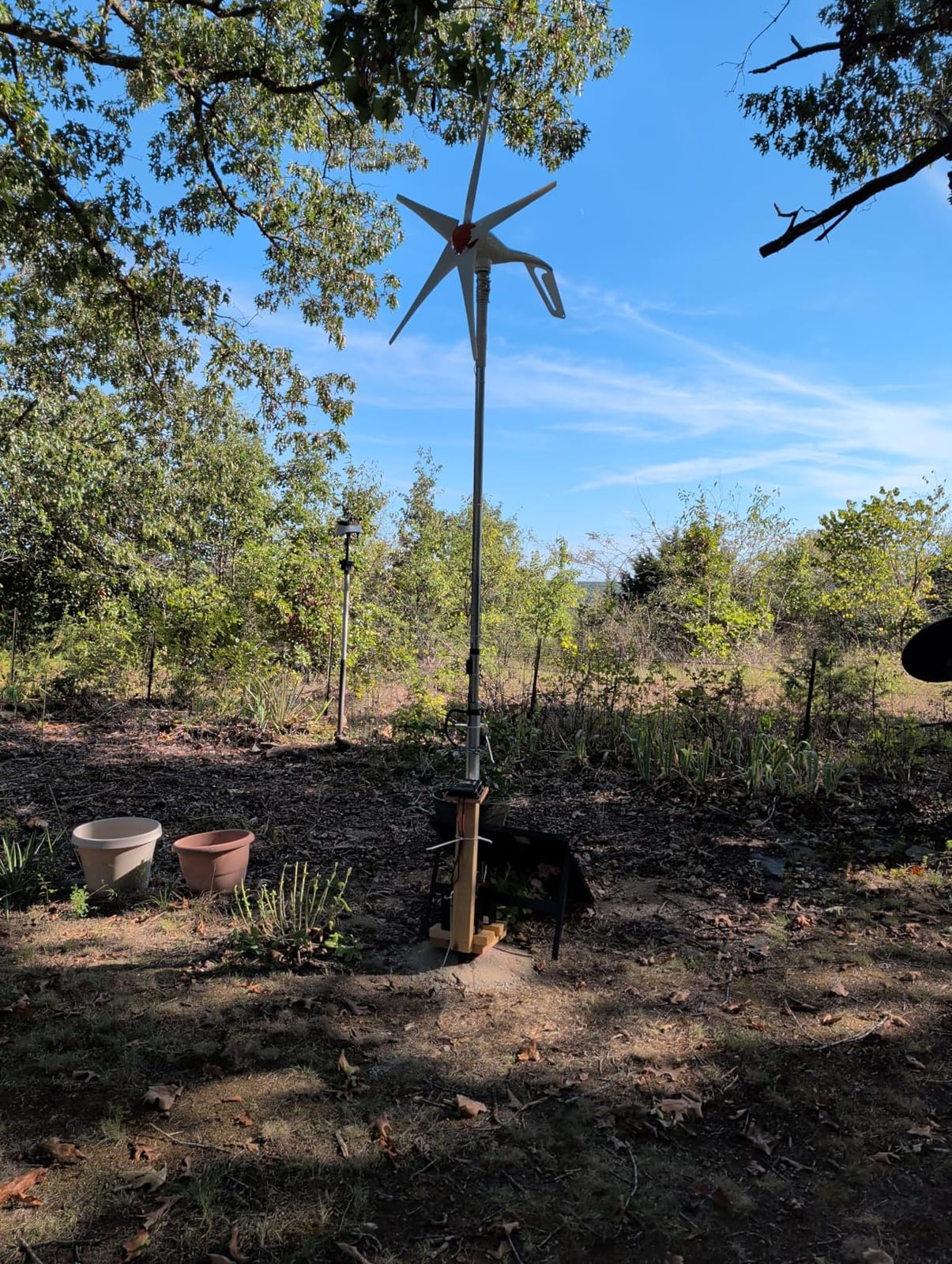
Specification-wise it is properly documented too: 2.5 m/s start-up, 12 m/s rated, an operating range of 3 to 25 m/s, a 47-inch rotor, and blades rated from minus 40 to 80 degrees C. The die-cast aluminum body is described as waterproof and corrosion resistant, and dual bearings keep it steady.
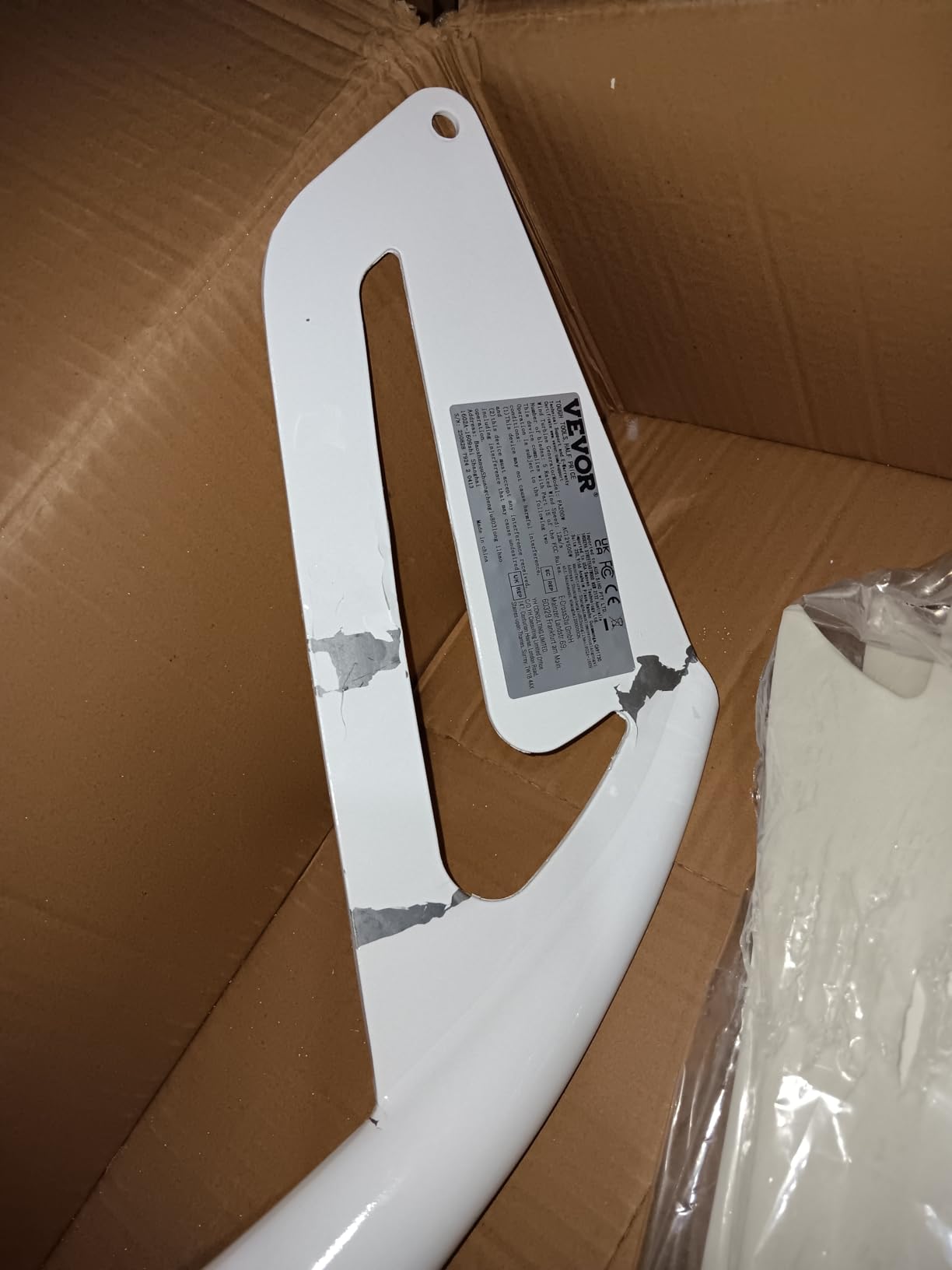
The most common owner note is about expectations rather than quality. Reaching rated output needs average wind above Beaufort 3 with genuinely sustained gusts, and most reviewers point out that the tower is the main extra cost, since no pole, hardware or guy wires come in the box.
Who this turbine suits
It suits owners of rural acreage, farms and smallholdings with a consistent wind resource and room to build a mast. At 55 dB it sits in the lower half of the noise figures published in this roundup, which matters if you want the turbine near a house rather than at the far boundary.
Anyone who values a documented power curve over marketing adjectives will like the published wind speeds. It is also a good companion to an existing solar array, filling in on windy nights when the panels have nothing to give.
Who should skip it
Skip it on a sheltered suburban lot. The 5-blade rotor is optimised for a decent airflow, and in turbulent air behind trees and buildings the machine spends most of its time waiting for the wind you do not have.
One further caution: the blades are described as reinforced fiberglass nylon rather than marine grade, and reviewers considering boat mounting should weigh that before committing. For RV and home use it is unremarkable, for salt water it is worth thinking twice.
3. VEVOR 800W 12V 3-Blade Turbine: Extra Power for Windy Land
VEVOR 800W Wind Turbine Generator, 12V Wind-Turbine Kit, 3-Blade Power Generator with MPPT Controller & 2.5m/s Startup Speed, Suitable for Home, Farm, RVs, Boats (Tower Pole Not Included)
800W rated at 12V
Starts at 2.5 m/s
Rated at 12 m/s
58 dB
59-inch rotor
12.2 kg
Pros
- Rated 800W suits a standard 12V bank
- Three-blade rotor is quieter than the 5-blade model
- Handles 60 mph storm winds once broken in
- Dual bearing design
Cons
- Bundled MPPT controller brakes too early
- Too large for small boats and RVs
- Achieves closer to 600W than advertised
The logic of this one is simple: if you have a windy site and the space to exploit it, more rated power on a standard 12V bank is worth the extra size. Experienced owners rate the build quality highly relative to what the machine delivers, and the reported real output of roughly 600W is still more than most kits here manage in practice.
Switching from five blades to three at this power level also helps noise. Operating noise is around 58 dB, and owners consistently report the three-blade design is quieter than the smaller 500W five-blade model, which is a useful data point when siting near a property boundary.
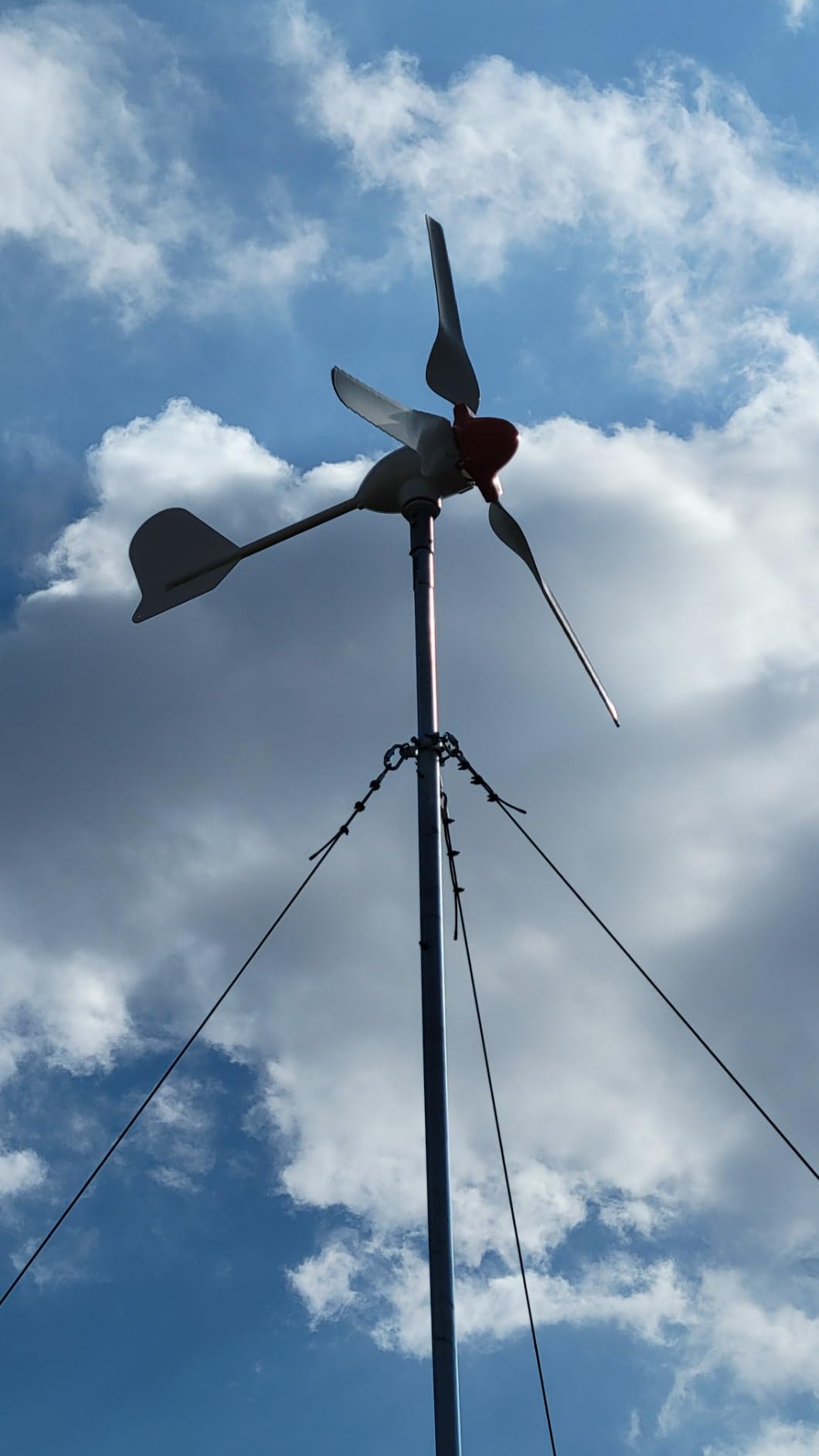
The package includes a controller, screw pack, sleeve, wind cap, the generator and three blades. The electrical specification is the familiar 12V three-phase permanent magnet synchronous generator with MPPT microprocessor control, rated from 2.5 m/s start through 12 m/s rated to a 3 to 25 m/s operating range.
Owners with the machine on a properly guyed 50-foot tower report steady output, and one reviewer notes it has handled 60 mph storm winds once broken in. Newcomers, though, frequently misjudge how much structure a rotor this size demands, and the tower is not included.
Who this turbine suits
This suits an owner with open land, a genuine tall-tower plan and a battery bank that can accept the load. It also pairs well with a solar panel for camping and off-grid setups where you need more than a trickle.
Experienced builders who are comfortable designing a mast and guy wire system get the most from it. The 59-inch rotor needs clearance, so a tight plot is a poor fit even where the wind is good.
Who should skip it
Skip it for small boats and RVs. At 59 inches across and 12.2 kg it is simply too large, which reviewers raise as a recurring complaint alongside the missing tower pole.
Be prepared to replace the controller. The bundled MPPT unit auto-brakes too early and is not adjustable, blades can flex, new bearings are noisy, and some machines arrive with an off-centre drilled nose cone nut that causes shake. The machine is good, the accessories are cheap, and the controller is the weak link.
4. Pikasola 400W Kit with 30A Hybrid Controller: Best for Solar Hybrids
PIKASOLA Wind Turbine Generator 12V 400W with a 30A Hybrid Charge Controller. As Solar and Wind Charge Controller which can Add Max 500W Solar Panel for 12V Battery.
400W at 12V
30A hybrid controller
Accepts up to 500W solar
23.4 inch blades
8.28 kg
Pros
- Controller handles wind and a 500W solar panel together
- Support replaced a defective controller
- Easy first-time assembly
- Waterproof corrosion resistant blades
Cons
- Underperforms without sustained 25 to 30 mph wind
- Controller tuned for lead-acid batteries
- Instructions specify a 2 inch pole that does not fit the clamp
What makes this kit different is the controller. It is a 30A hybrid solar and wind charge controller that can also manage up to 500W of solar panel, so one box handles the whole renewable side of an off-grid system instead of two separate units competing for the same battery bank.
For a first build, that simplicity has real value. The box includes the wind turbine body, blades, hub, screws, controller and manual, and reviewers describe the assembly and wiring as straightforward enough for someone who has never wired a renewable system before.
Customer service is the other strength here. A defective controller was replaced free of charge, and support is consistently praised across reviews, which matters when the alternative is diagnosing your own electronics.
Who this turbine suits
It suits someone building a small cabin, an RV setup or a hybrid solar and wind system where one controller doing both jobs is simpler than two. The 12V output and 8.28 kg weight also suit mobile installations.
If you already run lead-acid batteries and want the wind turbine to share a controller with your panels, this is a tidy solution. Read the battery configuration carefully before wiring anything in.
Who should skip it
Skip it if your site does not produce sustained 25 to 30 mph winds. That is the condition reviewers name for useful output, and the complaints consistently describe heavy underperformance in normal wind.
Lithium owners should look elsewhere. The bundled controller is not configurable and is tuned for lead-acid, and the listing does not state LiFePO4 compatibility clearly. There are also smaller details worth planning around: all the wires are red with no ground wire indicated, and the instructions specify a 2 inch pole that does not fit the supplied clamp.
5. Pikasola 400W 24V 3-Blade Turbine: Best Match for 24V Battery Banks
Pikasola Wind Turbine Generator 400W 24V – 3 Blade 2.5m/s Low Speed Starting With Charge Controller, Windmill for Home
400W at 24V
Starts at 2.5 m/s
MPPT microprocessor control
Automatic yaw
8.43 kg
Pros
- MPPT control regulates current and voltage
- Integrated regulator shuts down at full charge
- Automatic yaw with aerodynamic tail
- Waterproof corrosion resistant blades
Cons
- Output well below 400W in ordinary wind
- No pole or tower included
- 24V only so it will not suit a 12V bank
If your battery bank already runs at 24V, this is the kit that fits it. The 24V configuration is the whole point: it matches a pair of 12V batteries in series without a converter, and the three-phase permanent magnet synchronous generator handles the higher voltage natively.
Control electronics are the strength. The MPPT intelligent microprocessor control regulates both current and voltage, and an integrated voltage regulator shuts the unit down when the bank is fully charged, which protects batteries from overcharging on windy nights.
The mechanical package is familiar: 23.4 inch nylon carbon fiber blades, a rotating body with an automatic yaw system driven by an aerodynamic tail fin, and a box that includes the turbine body, three blades, hub, screw set, controller and manual.
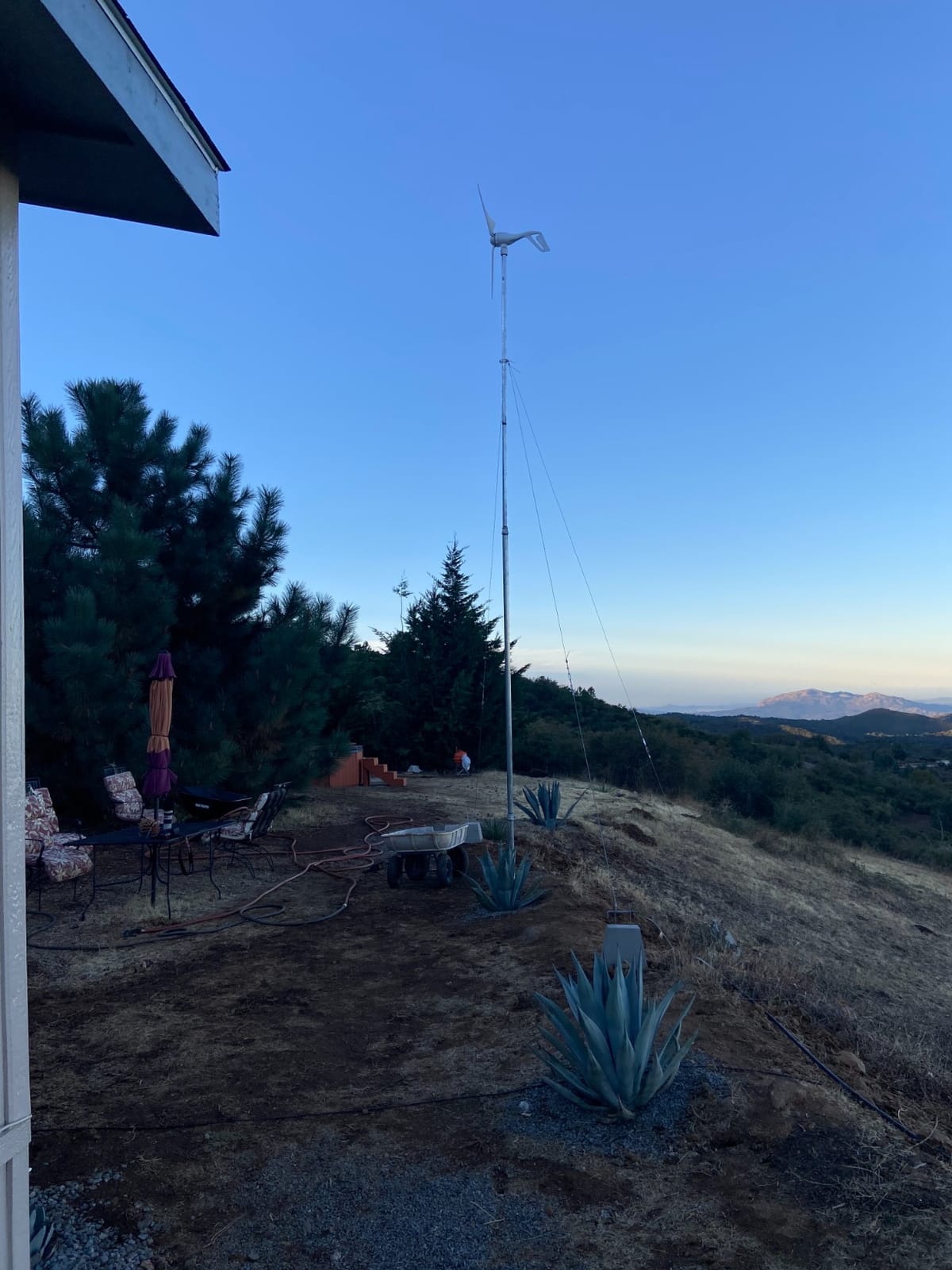
At 8.43 kg the unit is light enough to raise over a ladder, and the single year warranty on the listing reflects how this category is usually covered.
Who this turbine suits
It suits owners of a 24V off-grid system who want wind as a third source alongside solar and a generator. The 8.43 kg weight is manageable and the automatic yaw means you are not climbing a ladder to turn the tail.
The integrated charge regulation is useful for anyone who does not want to add a separate controller. It is a 24V-focused sibling of the 12V Pikasola kits, so the handling and blade construction carry over.
Who should skip it
Skip it if your bank is 12V. The 24V output limits compatibility and there is no field adjustment, so this kit is not a drop-in option for the most common residential battery setup.
Also skip it if your headline expectation is a 400W output in ordinary weather. Reviews focus on straightforward installation and the low-speed start claim, but measured output in typical conditions falls well short of the headline wattage. Expect it to be a maintainer, not a primary supply.
6. QUSKLISU 400W Vertical Helix Turbine: The Quietest Option Here
400W Wind Turbine Generator Kit, 24V Vertical Helix Wind Power System with Controller, 3 Blades, for Marine, RV, Home, Outdoor Energy, Garden, Hybrid Solar Wind System, Portable, for DIY Users
400W vertical axis
Under 30 dB
Neodymium iron boron parts
Automatic overspeed shutdown
10 kg
Pros
- Very quiet at under 30 dB
- Works from any wind direction without yaw
- Sits well alongside an existing solar bank
- Oxidation treated parts resist rust
Cons
- Only 3 reviews so output data is thin
- Assembly instructions unclear and partly untranslated
- No pole or tower hardware included
Noise is usually the first objection raised about a home wind turbine, and this vertical helix design answers it well. Operating noise is under 30 dB thanks to an aircraft-inspired blade profile, quieter than a normal conversation in the yard.
The vertical axis layout means it captures wind from any direction without a yaw system. That removes the tail, removes the alignment chore, and makes it a much easier unit to site on a small plot where you cannot control exactly where the wind comes from.
Construction is a permanent magnet generator running at 60 hertz, and the body uses oxidation-treated ABS with neodymium iron boron components treated against rust and deformation. Automatic overspeed shutdown protects the unit if the wind spikes, and the warranty runs two years.
Who this turbine suits
It suits a suburban household close to neighbours who has ruled out anything that spins audibly. The low noise also makes it reasonable for rooftop-adjacent or patio installations where a horizontal axis machine would be intrusive.
Owners with an existing solar battery bank like it as an addition, since vertical turbines start in light air and help maintain charge between sunny spells. The double-bearing rotor keeps vibration low, which matters on a deck or a small outbuilding.
Who should skip it
Skip it if you want hard evidence of output. There are only three customer reviews, so real-world generation data is thin, and vertical machines generally trade peak power for direction independence and low-speed pickup.
Buyers should also budget for assembly time. The instructions are described as unclear and not translated for every market, and one substantive review notes the unit assembled well in light wind and helped hold battery charge, while still asking for better documentation. No pole or tower hardware is included.
7. FLTXNY POWER 800W 5-Blade Turbine: A 2.0 m/s Start Speed
FLTXNY POWER 800W Wind Turbine 5 Blades 12V / 24V / 48V with MPPT Charge Controller for Home Boat Farm (12, Volts)
800W rated
Starts at 2.0 m/s
MPPT charge controller
Magnetic bearing generator
22 lb
Pros
- Very low 2.0 m/s start-up speed
- MPPT microprocessor control
- Magnetic bearing generator reduces drag torque
- Anti-typhoon die-cast aluminum housing
Cons
- Only 2 reviews so reliability is unproven
- Voltage is chosen as a purchase variant
- No tower pole or mounting hardware
A 2.0 m/s start-up speed is among the lowest published figures in this roundup, and it matters more than any other spec if you live somewhere with a modest average wind. A machine that begins turning in a light breeze accumulates energy on days when a 2.5 m/s machine sits still, and those are the majority of days in most of the country.
The generator is described as a patented magnetic bearing permanent magnet unit with a special stator design, intended to reduce resistance torque. The die-cast aluminum housing has double bearing support and anti-typhoon capability, and the blades are high-quality nylon fiber.
Voltage is offered as a 12V, 24V or 48V variant chosen at purchase, with an MPPT charge controller running voltage and current regulation. The rotor uses high-quality nylon fiber blades, and the unit weighs 22 pounds with dimensions of 49 by 49 by 57 inches, so plan a mast that can carry it well clear of obstructions.
Who this turbine suits
It suits buyers in moderate or light-wind locations who have already measured their site and found marginal average wind speeds. The 12V option works with a standard residential battery bank without a converter.
It also suits anyone who wants a generator that draws hard in a breeze rather than one that behaves well in storms. The low start speed complements a solar system in exactly the conditions where panels produce least.
Who should skip it
Skip it if you want a long record of field performance. There are only two customer reviews, and while they are positive, two data points cannot tell you how the bearings, controller and blades behave after a few winters.
Plan the voltage before you order, because it is fixed as a variant rather than adjustable in the field. As with almost every kit here, the tower pole and mounting hardware are not included, so budget for a mast and guy wires separately.
8. lizponaza 500W Vertical Axis Turbine: Compact Two-Blade Helical Design
lizponaza Wind Turbine 500W Vertical Axis Wind Turbine Generator Kit with Controller, 2 Blades Permanent Magnet Design for Home & Hybrid Solar Windy System (White, 12V, 2 Blades)
500W helical vertical axis
Permanent magnet generator
Under 62 dB
Compact 16x28 inch body
Pros
- Helical design works at low wind speeds
- Easy installation and low maintenance
- Double-bearing design under 62 dB
- Microprocessor controller tracks output
Cons
- Only 1 review so no reliability history
- Listing contradicts itself on 500W versus 100W
- No pole or tower hardware included
The appeal here is size and simplicity. At roughly 16 inches square by 28 inches tall with two aluminum alloy blades in a helical vertical layout, it is one of the smaller units in the list, and vertical rotors capture wind from any direction without a tail or yaw drive.
It is described as easy to install and low maintenance, with a double-bearing design holding noise under 62 dB and a high-power tracking microprocessor controller regulating current and voltage. The permanent magnet iron core generator is the working heart of the unit.
One detail we appreciate is that the listing names its intended locations clearly: home, business, boats, gazebos and cabins. The compact white housing is also easier to blend into a garden setting than a large white rotor on a mast.
Who this turbine suits
It suits a homeowner who wants to try wind generation without committing to a large tower, or anyone adding a small charger to a gazebo, cabin or boat shelter. The helical layout is built for low-speed pickup rather than high-wind peak power.
If footprint matters more than output, this is one of the more sensible options. Two blades and a slim body take up very little space for a wind generator of this class.
Who should skip it
Skip it if you need documented performance. There is a single customer review, which provides no reliability history at all, and the specification block contradicts itself, listing 500 watts in the title and wattage field but 100 watts for output wattage.
That inconsistency is not unusual in this category, but it means you should treat the power figure as unconfirmed and size your controller and cable for the lower number. Mounting pole and tower hardware are not included either.
9. HUIZHITENGDA 220V Vertical Turbine Kit: For AC Output Rather Than Battery Charging
HUIZHITENGDA 220v, 10000W Wind Turbine Vertical Wind Generator Kit, 220V Wind Power Generator for Marine, RV, Home, Windmill Generator Suit for Hybrid Solar Wind System
220V AC wind power
Coreless permanent magnet generator
Three fiberglass blades
Double bearing
Pros
- Coreless generator with high-strength fiberglass blades
- Aerodynamic spiral blades run smoothly
- Double bearing keeps vibration low
- Compact shape with large windward area
Cons
- One reviewer measured about 6 volts against a 10000W claim
- No weight or dimension data published
- Needs a 220V circuit not a battery bank
This is the odd one out in the list, and that is worth understanding before you buy. It produces 220V AC rather than low-voltage DC for battery charging, which points it at grid-tie style supplementation or whole-house support rather than an off-grid bank.
The mechanical description is a vertical spiral axis with a coreless permanent magnet generator and three high-strength fiberglass blades. The rotor uses double bearings for low vibration, and the aircraft-wing inspired horizontal rotation is the reason the manufacturer claims near-silent running.
The compact shape and large windward area are the stated reason it can generate at lower wind speeds, which is the vertical architecture advantage showing up in the design intent.
Who this turbine suits
It suits buyers whose plan is to feed household AC circuits or interface with grid-tie equipment rather than trickle charge a bank. The 220V output suits that role far better than any of the 12V kits here.
The low-noise vertical design also suits a site where audible clutter matters, and the fiberglass blades and coreless generator suggest a construction aimed at durability rather than weight.
Who should skip it
Skip it if you are charging batteries. Requiring a 220V AC circuit rules out a standard battery bank without an inverter and extra wiring, which is a much larger project than most people buying a home wind turbine intend.
You should also treat the headline rating with real caution. One reviewer reports output of only about 6 volts, far below the 10000W claim, and with six reviews total there is very little independent measurement behind the specification. No weight or dimension data is published either, which makes planning a mast harder than it should be.
10. Garosa 1600W 48V 5-Blade Turbine: Big Claim, Thin Record
1600W Wind Turbine Generator, 5 Blade 48V Windmill Kit with Controller, Low Speed Starting, Nylon Fiber Blades for Home Marine Industrial Energy
1600W claimed at 48V
Starts at 2.0 m/s
Rated at 12 m/s
50 m/s wind tolerance
Pros
- Customer service replaced an entire generator
- 2.0 m/s start and 12 m/s rated speeds
- Patented permanent magnet rotor
- Low vibration and simple maintenance
Cons
- Outputs about half the advertised 1600W
- Can break down in the first strong wind
- Central axis bore sometimes misdrilled
- Some units never functioned
We include this one because the 48V rating is genuinely useful information for anyone with a larger battery bank, and because the failure reports are a useful illustration of what to watch for in this category. At 3 stars across 10 reviews, it sits at the bottom of our rating table.
The headline specification is 1600W at 48V with a 2.0 m/s start-up speed, 12 m/s rated speed, and a maximum wind tolerance listed at 50 m/s, the highest published maximum among these kits. The rotor is five nylon carbon fiber composite blades of roughly 600 mm on a patented permanent magnet generator.
Owners report real output of roughly half the advertised 1600W and the 48V figure, breakdowns in the first strong wind, a central axis bore that can be misdrilled so blades will not attach, and paint that chips and runs. Some machines reportedly never functioned at all, and manual requests go unanswered, though one buyer did receive a complete replacement generator rather than just new blades.
Who this turbine suits
It suits a buyer who specifically needs 48V output and who is prepared to inspect the unit on arrival. Checking the axis bore and blade fit before you mount anything saves a lot of frustration.
The support story is worth weighing too. When the company engaged, it replaced the entire generator, which is better than most budget brands manage, and the design brief is sound: low vibration, a user-friendly maintenance layout and a patented permanent magnet rotor that reduces drag torque.
Who should skip it
Most people should skip it. The evidence that the swept area can ever produce 1600W is thin, and an off-grid expert quoted in the review discussion questioned the physics, which tells you how far the specification stretches credibility.
Check your package carefully on arrival. Bullet points in the listing describe an 800W kit despite the 1600W title, the published weight of 0.1 kg is clearly wrong, and no UPC is listed. Build your purchase decision on what you can verify, not on the heading.
11. Generic 3000W Vertical Axis Kit: Solid Protection, Unreliable Numbers
3000W Wind Turbine Generator Kit,12V/24V Vertical Axis Wind Turbine
3000W claimed, 2000W running
12V or 24V
Starts at 2 m/s
IP67 generator
Pros
- Coreless generator with a 10 to 20 year design life
- FRP spiral blades run smoothly and quietly
- IP67 generator protection
- Electromagnetic overspeed braking
Cons
- Rated wattage contradicts the 800W figure in the same block
- Weight figure conflicts with the assembly weight
- Limited documentation and Generic branding
The engineering description on this listing is the most credible in the group, which makes the inconsistent numbers all the more annoying. A coreless permanent magnet generator, FRP high-strength spiral blades, double bearing swivel with automatic locking and a one-year warranty against manufacturer defects is a serious-sounding specification sheet.
Protection is where it stands out. The generator carries an IP67 rating, the die-cast aluminum housing is UV protected and acid-rain resistant, and overspeed is handled by an electromagnetic brake rather than a passive tail. Operating temperature is rated from minus 40 to plus 60 degrees C.
Wind performance is specified as 2 m/s start, 10 m/s rated and up to 45 m/s maximum, with a 0.6 m rotor diameter and 0.86 m blade height on three coloured blades. The vertical shape and large windward area are aimed at low-speed pickup.
Who this turbine suits
It suits a buyer who cares most about weather resistance rather than headline power, and who is experienced enough to verify the electrical output themselves before committing to a controller. IP67 protection and the operating temperature range are meaningful for exposed sites.
It is also a reasonable choice if you want a vertical machine for a mixed-direction site and prefer electromagnetic braking to a furling tail that can fail in a storm.
Who should skip it
Skip it if you are ordering on published figures. The rated wattage of 3000W sits alongside an 800W output wattage in the same specification block, and the listed 26.5 pound weight conflicts with a sub-10 kg assembly weight, so neither number can be trusted.
Documentation is limited and the product carries Generic branding, which means parts availability and support are a real question. Confirm the real output against your battery bank voltage before you build anything around it.
12. HMKDQBD 6000W Vertical Turbine Kit: Widest Voltage Choice
HMKDQBD 6000W Wind Turbine Kit – Low Speed 3 Blades Wind Generator with Controller for Renewable Energy Vertical Wind Power System
220V, 12V, 24V or 48V options
Starts at 2 m/s
Galvanized aluminum body
Dual bearings
Pros
- 360 degree capture with no yaw tracking
- Captures wind from 2 m/s
- Permanent magnet alternator with low resistance torque
- Dual bearings cut vibration and noise
Cons
- Only 1 review and no independent data
- 6000W rating unverified for this size
- Higher mounting needed for useful wind
- No pole or tower hardware included
Voltage flexibility is the standout feature here. Output is offered as 220V, 12V, 24V or 48V, which is the widest range in the lineup and lets you match an existing bank without a converter, or step up to AC later without buying a new turbine.
The rotor is a true 360-degree vertical design with three arc-shaped injection-moulded nylon fiber blades rated from minus 40 to 80 degrees C, capturing wind from 2 m/s. The body is galvanized aluminum alloy, and dual bearings are specified to reduce vibration and noise.
The generator is a permanent magnet alternator with minimised resistance torque, which should help in the light winds this design targets. A single customer review gives the machine a 5.0 rating, but that is a single rating and no performance narrative.
Who this turbine suits
It suits a buyer who is still working out their system architecture and wants voltage options under one roof. The direction-independent rotor also removes the yaw question entirely, which helps on constrained urban and suburban plots.
The galvanized aluminum body and dual bearings suggest a machine aimed at outdoor durability, and the arc-shaped blade profile is a sensible choice for a helical vertical layout.
Who should skip it
Skip it if you need trustworthy output data. There is one customer review and no independent performance figures, and the 6000W headline is unverified for a unit of this physical size, which is a pattern repeated across the higher-numbered listings in this category.
Also plan on a taller mast. Higher mounting is required to reach useful wind speeds, and the mounting pole and tower hardware are not included. Treat the power rating as marketing until you have measured it yourself.
How to Choose the Right Home Wind Turbine in 2026
Measure your wind before you buy anything
Most disappointing home wind projects are decided at this stage rather than at the purchase stage. Owners on r/wind and windpower.org repeatedly describe buying first and measuring afterwards as the expensive order, because a turbine that cuts in at 2.5 m/s still needs that wind to arrive at hub height.
A simple approach is to place a calibrated cup anemometer at your intended hub height and log readings across several weeks, including the still summer nights you hope to power through. Record both average and gust figures, because turbines are rated at gust speeds while your bank pays out on average.
Mind the turbulence zone as well. Buildings, tree lines and ridges create turbulent air that shakes small rotors and shortens bearing life, and a site that looks open on a map can sit in a wake much closer to home than you think.
Understand the cost of a tower
Every kit in this list ships without a pole, and that is not a minor accessory. Hub height drives output more than any other single factor at this scale, because wind speed increases with height and the wall of a house or hedge will wreck a low mount.
Count the full picture: mast and tower hardware, guy wires and anchors, heavy gauge cable from the turbine to the controller, a proper circuit, an electrician, and any permits your local authority requires. Forum discussion suggests DIY installs can add 15 to 30 extra labour hours compared with a turnkey system, and anchor selection is where amateurs underestimate the ground work involved.
On our list the VEVOR 800W is the clearest example of a rotor that needs structure thinking about before anything else, and a machine with a hub this size is still untested until it is on a pole. Our best wind chimes roundup is a low-commitment way to feel how the wind actually behaves on your land first.
Match the voltage to your battery bank
Most home systems run on 12V, so the 12V Pikasola and VEVOR kits drop straight into an existing bank. The 24V units suit a pair of batteries in series, and the 220V machines are AC output devices for a different job entirely.
Wind charging is not the same as solar charging. A wind turbine produces in short bursts at unpredictable times, often at night, so the controller has to handle rapid input changes and regulate a battery that may be sitting at a partial state of charge rather than near capacity.
MPPT control is the feature to look for, and several kits here have it. A hybrid solar and wind controller is worth considering if you already run panels, since it manages both sources through a single unit and avoids two regulators fighting over one bank.
Set realistic output expectations
Owners report real yield well below nameplate in ordinary weather, and part of that gap is simply physics: rated power is measured at a rated wind speed that most sites only see in brief windows. The rest is tower height, wiring losses and controller behaviour.
Vertical machines like the QUSKLISU, lizponaza, HMKDQBD and generic 3000W kit trade peak output for direction independence and quiet running. Horizontal machines like the VEVORs and Pikasola kits extract more from steady wind but need a tail pointed correctly and clear air.
A sensible mental model is to expect a fraction of the headline number in average conditions and the headline number only in sustained wind. If a listing’s marketing depends on you believing otherwise, that is a reason to look elsewhere.
Check the paperwork before the tower goes up
Grid-tie installations run into certification requirements that small kits rarely meet. UL 1741 and IEEE 1547 certification, plus NEC Article 705 compliance for interconnected systems, are the standards your utility and inspector will ask about, and most budget turbines have no documentation for any of them.
Talk to your local authority and your homeowners association before ordering. Zoning restrictions, architectural committee approval and height limits are the most common reason an otherwise sound project never gets built, and a 40-foot mast can trigger a full planning application.
Check your homeowners association rules and your local height limits before the rotor turns. If a mast is going on the property line, having a wind-tested umbrella base already on the patio is a reasonable way to see how gusty the site gets in practice.
Frequently Asked Questions
What is the most effective wind turbine for a home?
The most effective home wind turbine is the one that matches your site and load, not the one with the highest wattage. For most homeowners a 400W to 500W 12V kit on a properly guyed mast of 30 feet or more gives the best balance of cost and output. Effectiveness depends on average wind speed at hub height, clear fetch, and a charge controller matched to your battery bank.
How big of a wind turbine do you need to power a house?
A typical American home uses around 30 kWh per day, which no residential kit in this roundup will supply on its own. These turbines are 400W to 800W devices intended to charge a battery bank, run electronics, or offset part of a consumption bill. Treat them as a supplement to grid or solar rather than a whole-house supply.
Which wind turbine is best for a home?
Our pick is the Pikasola 400W 12V 5-Blade Kit, with 184 owner reviews and consistent reports of low-wind generation when mounted high on a proper tower. The VEVOR 500W has the highest average rating at 3.9 stars and is a strong alternative, while the VEVOR 800W suits sites with genuinely strong wind and space for a tall mast.
Are residential wind turbines worth it?
They are worth it for battery maintenance, off-grid resilience, and partial bill reduction, but not as a full replacement for grid or solar power. Real output commonly lands well below rated power in ordinary weather, and tower, wiring, permits and electrician labour often cost more than the turbine. A wind and solar hybrid usually returns better results than wind alone.
What wind speed do you need for a home wind turbine?
Most small residential turbines start generating between 2.0 and 2.5 meters per second and reach rated output around 12 meters per second. A site with average wind above 10 mph at hub height is generally workable, while sheltered suburban lots with buildings and trees close by will disappoint regardless of turbine size.
Can you install a wind turbine on a roof?
It is possible but rarely advisable. Roof mounting puts the rotor in turbulent air near the building, increases structural load on the roof frame, and complicates wiring and service access. Most owner reports favour a separate mast set well clear of obstructions, even at a lower hub height, because the improved airflow outweighs the roof option.
How long do home wind turbines last?
It depends heavily on build quality and site conditions. Budget kits with a one-year warranty have owners reporting major repairs within three to seven years, while better-built machines with replaceable bearings and documented parts can run far longer. Bearing life, blade condition and controller quality are the three components that decide how long a unit keeps generating.
Can a wind turbine work with solar panels?
Yes, and the pairing is often the most practical setup. A hybrid solar and wind charge controller can manage a turbine and a solar panel from the same battery bank, with wind covering overcast winter days and night-time hours and solar covering still, bright periods. Check that the controller supports your battery chemistry, since many bundled units are tuned for lead-acid only.
Final Word on the Best Wind Turbines for Home in 2026
For most homeowners the Pikasola 400W 12V 5-Blade Kit is the best wind turbine for home use, simply because the evidence behind it is thicker than anything else in the category. Its 2.5 m/s start speed, automatic yaw and responsive parts support make it forgiving, and 184 reviews mean the failure modes are already documented.
Choose the VEVOR 500W if you want the best build quality and highest rating in the 400W-plus class, and the VEVOR 800W if your site is windy and open enough to justify a serious mast. Go vertical and quiet with the QUSKLISU kit if neighbours are close, and pair anything you buy with solar so the system keeps producing when the wind does not.
Whatever you pick, measure your wind first, budget for a real tower, and check zoning and certification before the rotor turns. That homework is worth more than any wattage figure on a listing.